Planning an Australia itinerary 7 days long means making one honest decision early: you can’t see the whole country in a week. Australia is roughly the size of mainland USA, so the trips that work are the ones that pick a single region and go deep.
This guide maps the route that gives you the most in seven days without living on planes: the East Coast drive from Sydney to Brisbane. It’s built around a campervan, which rolls your transport and your bed into one booking and lets you stop wherever the coast looks good.
Whether you’re a first-time visitor or back for more, this 7-day Australia itinerary covers the cities, the beaches, the wildlife, and the practical details that make a week on the road feel relaxed instead of rushed.
Key Takeaways
- Best route for a week: Sydney to Brisbane along the East Coast, roughly 1,000 km (620 miles) over 7 days.
- Iconic stops: Sydney Harbour, Byron Bay, and the Gold Coast are the three you don’t skip.
- Hidden gems: Port Stephens sand dunes and the Gold Coast hinterland rainforest.
- Recommended transport: a campervan rental in Australia from Indie Campers, since it combines accommodation and transport and supports one-way pick-up and drop-off.
- Recommended budget: AUD 875 to 1,855 (about USD 575 to 1,225) per person for the week, plus the campervan hire, covering campgrounds, fuel, food, and attractions.
- Best time to go: spring (September to November) or autumn (March to May) for warm days and thinner crowds.
Australia Itinerary 7 Days: At a Glance
| Day | Location | Top Highlights |
| Day 1 | Sydney, NSW | Opera House, Harbour Bridge, Bondi to Coogee coastal walk. Pick up your campervan. Try fresh Sydney rock oysters. |
| Day 2 | Hunter Valley & Port Stephens, NSW | Wine tasting in the Hunter, sandboarding the Stockton dunes, dolphin cruise. Try local Semillon and a cheese board. |
| Day 3 | Port Macquarie & Coffs Harbour, NSW | Koala Hospital, Sealy Lookout, and the Big Banana. Try fish and chips on the jetty. |
| Day 4 | Byron Bay, NSW | Cape Byron Lighthouse, whale watching, Wategos Beach. Try fish tacos and an acai bowl. |
| Day 5 | Gold Coast, QLD | Surfers Paradise, Burleigh Heads, and Currumbin Wildlife Sanctuary. Try a seafood basket on the beach. |
| Day 6 | Gold Coast Hinterland, QLD | Lamington rainforest walks, Natural Bridge glow worms, Tamborine Mountain. Try a hinterland brewery lunch. |
| Day 7 | Brisbane, QLD | South Bank, Story Bridge, City Botanic Gardens. Drop off your campervan. Try modern Australian at a riverside spot. |
Table of Contents
- Why You’ll Love a 7-Day Trip to Australia
- Best Time to Visit Australia
- How to Get Around Australia?
- The Ultimate Australia Itinerary: 7 Days of Adventure
- Exploring Australia’s Regions: Alternative Itineraries
- Map of Your 7-Day Australia Itinerary
- Budgeting for Your Trip: How Much Does 7 Days in Australia Cost?
- Plan Your Australia Road Trip with Indie Campers
- Australia Itinerary 7 Days: Your Final Planning Recap
- Frequently Asked Questions (FAQs)
Why You’ll Love a 7-Day Trip to Australia
A week is short for a country this size, and that’s exactly why the East Coast works so well. If you’re wondering what to do in Australia for a week, this corridor answers it: the Sydney to Brisbane drive packs a big-city harbour, wine country, surf towns, rainforest, and serious wildlife into a stretch you can cover comfortably in seven days.
The key is your transport. Domestic flights between Australian cities eat half a day each in airport time and lock you into one base per stop. Driving the coast gives you the in-between bits that people remember most, like the dolphin bays, the lighthouse headlands, and the empty beaches with no name on the map.
A campervan flips the usual trade-off. You sleep where you park, wake up near the water, and skip both hotel check-ins and the daily pack-and-move. Your home travels with you, which keeps costs down and keeps the day flexible when a town turns out to be worth an extra few hours.
Seven days is also a clean half of a longer trip. If you have more time, you can extend the same drive north into our 14-day Australia itinerary, or go coast to coast with the 3-week Australia itinerary. For one week, though, Sydney to Brisbane is the sweet spot. Here’s how it all fits together.
The food tracks the drive, too. You start with Sydney rock oysters and harbourside seafood, pass through Hunter Valley wine country, graze Byron’s cafe and surf-town scene, then finish on the Gold Coast and Brisbane seafood from Queensland waters.
Best Time to Visit Australia
The season shapes this trip more than anything else, since the East Coast runs from temperate Sydney to subtropical Queensland. Here’s what each one means for a week on the road.
Spring (September to November)
Spring is one of the best windows for the drive, with warm, settled weather and the tail of the whale migration along the coast. Days are comfortable for both city walking and the beach, and crowds stay manageable before the summer holidays.
- Average Temperatures: 18 to 26°C (64 to 79°F)
- What to expect: warm days, blooming national parks, moderate crowds, mid-range prices.
Summer (December to February)
Summer brings the best beach weather but the highest prices and the biggest crowds, especially over the Christmas and January school holidays. Queensland turns hot and humid, with short afternoon storms common in the north.
- Average Temperatures: 25 to 35°C (77 to 95°F)
- What to expect: hot, humid days, peak crowds, top prices, long daylight hours. Book campgrounds well ahead.
Autumn (March to May)
Autumn rivals spring for ideal conditions on this route. The summer heat fades, the ocean stays warm for swimming, and the holiday crowds thin out, which makes it a relaxed time to drive the coast.
- Average Temperatures: 17 to 25°C (63 to 77°F)
- What to expect: mild days, warm sea, thinning crowds, lower prices than summer.
Winter (June to August)
Winter is cooler in Sydney but mild and sunny in Queensland, and it’s prime whale-watching season as humpbacks pass Byron Bay on their way north. Prices are at their lowest, and the northern half of the route stays pleasant.
- Average Temperatures: 10 to 22°C (50 to 72°F)
- What to expect: cool southern nights, mild Queensland days, fewest crowds, lowest prices, whale sightings.
How to Get Around Australia?
For a one-region route like this, a campervan is the most practical way to travel. Flying between cities adds cost and airport time, and a regular rental car still leaves you paying for a hotel in every town you stop in.
A campervan rolls both into one. You drive the coast at your own pace, park at beachfront campgrounds that cost a fraction of a city hotel, and carry your kitchen and bed with you the whole way. On a route with this many small detours, that flexibility is the whole point.
Indie Campers runs RV rentals in Australia with pick-up and drop-off in Sydney, Brisbane, and other major cities, so one-way routing on this drive is straightforward. Pick up in Sydney, drop off in Brisbane, and skip the backtrack.
The fleet covers a range of vehicle types, from compact campervans for couples to larger motorhomes for families, and company-owned vehicles come with unlimited mileage, which matters on a 1,000 km coastal run. Flexible cancellation up to 31 days before pick-up and the book-now-pay-later option let you lock in dates without a high upfront cost.
The East Coast is well set up for campervans, with holiday parks, council-run sites, and national park campgrounds strung along the route.
Powered holiday-park sites add showers and laundry near the towns, while national park sites trade facilities for quieter, more scenic spots. Book ahead in summer and the school holidays, when the coastal parks fill fast.
The Ultimate Australia Itinerary: 7 Days of Adventure
Here’s the full day-by-day plan. Each day covers a morning, afternoon, and evening, plus a food recommendation and one practical tip for travelling by campervan.
Day 1: Sydney, New South Wales
Morning (9:00 AM): Circular Quay & the Opera House
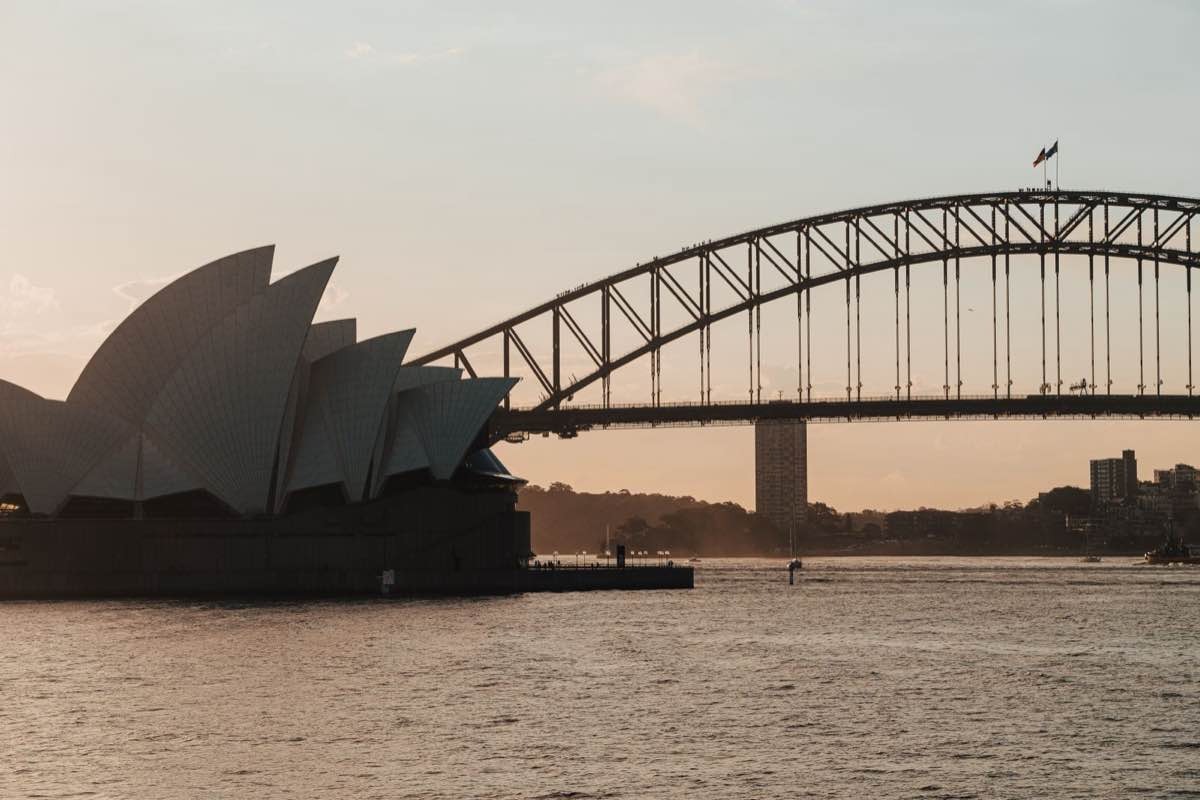
Collect your campervan from the RV rental in Sydney pick-up point and head into the city, or spend the first morning on foot before you take the van. Start at Circular Quay for the Sydney Opera House and the Harbour Bridge, the two sights that tell you instantly where you are. Walk through the Royal Botanic Garden to Mrs Macquarie’s Chair for the classic harbour photo.
Allow a couple of hours here, since it is free and easy to walk. For a bigger view, the Sydney BridgeClimb and the guided Opera House tour both run through the day and are worth booking ahead in peak season.
Afternoon (1:00 PM): Bondi to Coogee Coastal Walk
Take the Bondi to Coogee coastal walk, a 6 km clifftop path past Tamarama and Bronte beaches. It’s the best free thing to do in the city and a fast introduction to how Sydneysiders actually spend their weekends.
The walk takes 2 to 3 hours at an easy pace, with swimming spots and the Bronte ocean pool to cool off along the way. Bring sunscreen and water, since the clifftops are exposed with little shade.
Evening (6:30 PM): Harbour Sunset & Seafood
Watch sunset from the harbour, then eat at a seafood spot in Bondi or the city. Order fresh Sydney rock oysters and grilled barramundi, two things Australia does better than almost anyone.
Sydney’s harbourside dining runs from casual fish-and-chip shops to higher-end restaurants, so you can pick to suit your budget. A relaxed spot by the water suits a first night still in road-trip mode.
Practical tip: Campervans are hard to park in central Sydney. Stay at a holiday park like Lane Cove River or Sydney Lakeside in Narrabeen and take public transport into the center on day one.
Day 2: Hunter Valley & Port Stephens, New South Wales
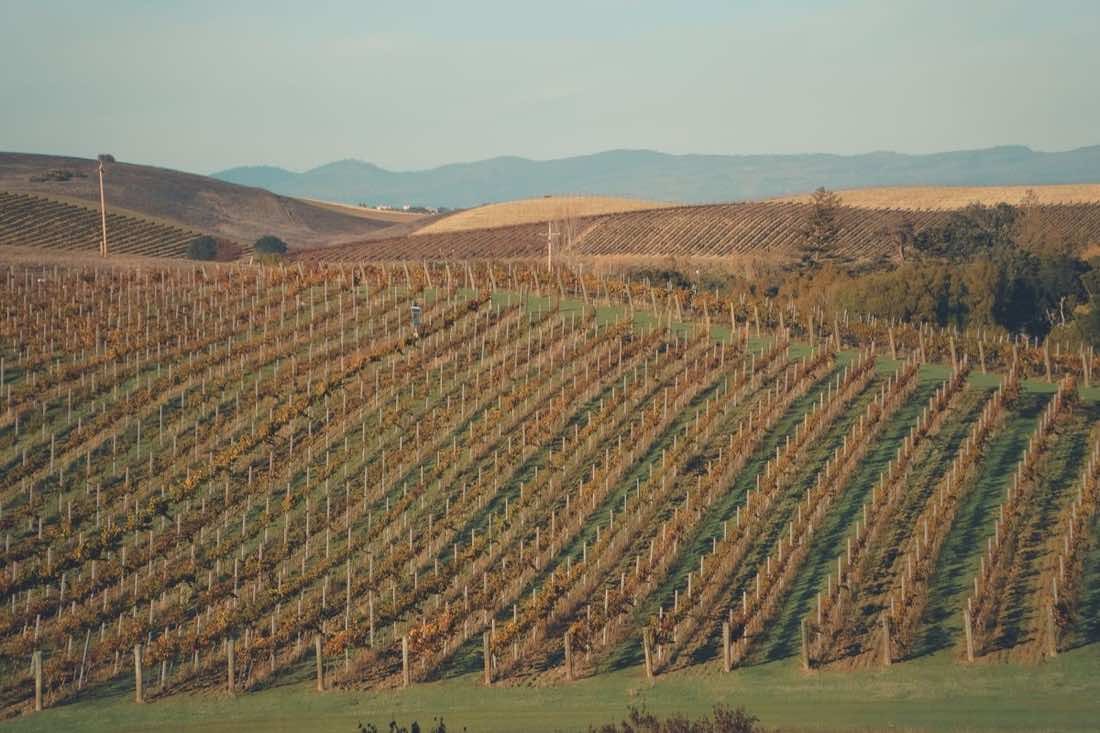
Morning (9:00 AM): Hunter Valley Cellar Doors
Drive about 2 hours north to the Hunter Valley, Australia’s oldest wine region. Visit a cellar door or two for a tasting; the Hunter is known for Semillon and Shiraz. Keep it to the morning so your driver stays under the limit for the afternoon.
The Hunter is compact, so two or three cellar doors in a morning is realistic without rushing. Many charge a small tasting fee that is often waived if you buy a bottle, and most can point you to a designated-driver route.
Afternoon (1:00 PM): Stockton Sand Dunes
Continue to Port Stephens, a bay system with a string of beaches and a big resident dolphin population. The Stockton Bight sand dunes are a vast stretch of moving sand, where you can sandboard down the slopes or take a 4WD tour.
The Stockton Bight dunes run for around 32 km, the longest moving sand mass in the southern hemisphere. You can only reach the inner dunes on foot or by guided 4WD tour, so allow extra time if you want to sandboard.
Evening (6:00 PM): Nelson Bay Dolphin Cruise
Park up near Nelson Bay and book a sunset dolphin cruise. Grab fish and chips by the marina and eat by the water.
Port Stephens has a large resident bottlenose dolphin population, and sunset cruises run most evenings in the warmer months. Book a day ahead in peak season, since the popular boats fill quickly.
Practical tip: Many cellar doors have parking for larger vehicles, but call ahead if you’re in a motorhome. Designate a non-drinking driver, since Australia enforces strict drink-driving limits.
Day 3: Port Macquarie & Coffs Harbour, New South Wales
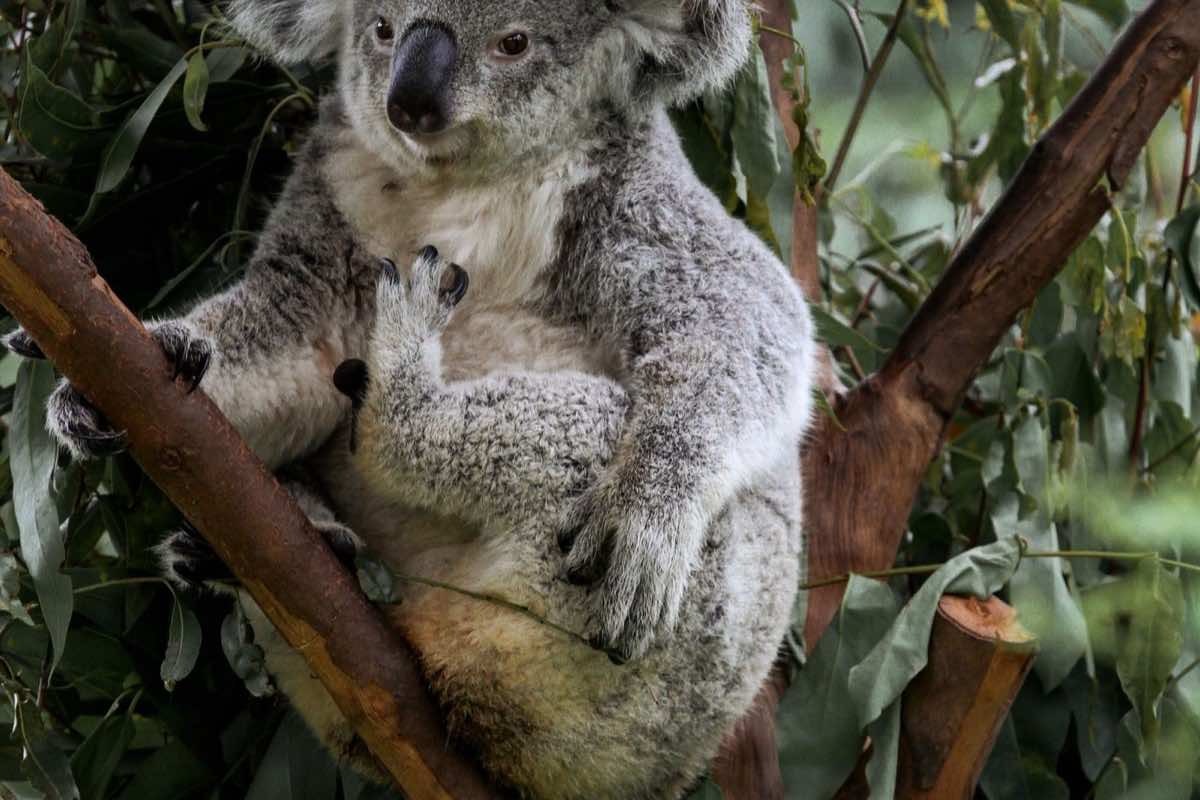
Morning (9:00 AM): Port Macquarie Koala Hospital
Drive north along the coast to Port Macquarie and visit the Koala Hospital, a small, genuine rescue center where you can see the work up close on a short self-guided walk. It’s free to enter, though donations keep it running.
The hospital is one of the oldest koala rehabilitation centres in the country, and the short walk lets you see recovering animals up close. Allow 30 to 45 minutes, and check the posted feeding times when you arrive.
Afternoon (1:00 PM): Coffs Harbour & Sealy Lookout
Carry on to Coffs Harbour. Stop at Sealy Lookout in the Orara East State Forest for views over the coast, then visit the Big Banana, the original and most cheerful of Australia’s roadside big things.
Sealy Lookout sits in the forest behind town and has a sky pier with views back over the coast. The Big Banana is free to walk up to, with paid rides and a water park if you are travelling with kids.
Evening (6:00 PM): Jetty Sunset & Fish and Chips
Set up at a beachfront holiday park in Coffs or Sawtell. Walk the jetty at sunset and have fish and chips from a local co-op, where the catch is often the same day.
Coffs Harbour and nearby Sawtell both have beachfront holiday parks that make an easy overnight stop. Arrive before dark to set up, since the jetty is at its best around sunset.
Practical tip: This is the longest driving day, around 3.5 hours total. Fuel up in the morning, since prices climb on the highway, and split the drive with a swim stop at one of the patrolled beaches.
Day 4: Byron Bay, New South Wales
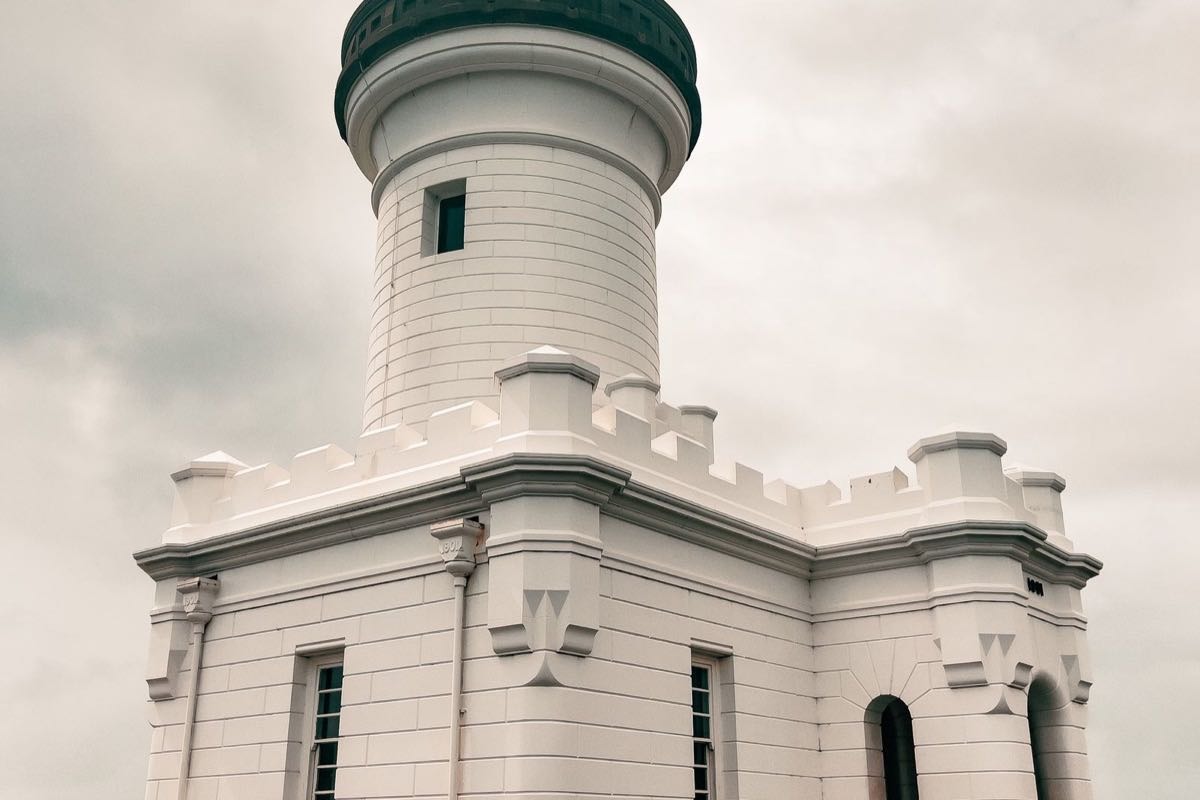
Morning (8:00 AM): Cape Byron Lighthouse Walk
Drive to Byron Bay and walk the lighthouse track to Cape Byron, the most easterly point of the Australian mainland. Go early to beat the heat and the crowds, and watch for dolphins and turtles in the bay below.
The lighthouse loop is about 3.7 km with some steep sections, and it passes the most easterly point of mainland Australia. Go early, since the car park at the top is small and fills fast through the morning.
Afternoon (12:30 PM): Wategos Beach & Town
Swim at Wategos or Main Beach, then wander Byron’s town center, which trades in markets, surf shops, and good coffee. If the timing’s right, a surf lesson here is as good as any in the country.
Byron’s town centre is small and walkable, with markets, surf shops, and cafes within a few streets. Surf schools run group lessons on the main beach most mornings and afternoons.
Evening (6:00 PM): Whale Watching & Dinner
Byron does food well. Order fish tacos and a cold drink, and if you’re here between June and November, scan the horizon for humpback whales passing on their migration.
The humpback migration runs roughly from June to November, and the headland is one of the best free vantage points on the coast. Bring binoculars if you have them, since whales often pass close to shore here.
Practical tip: Byron’s parking is tight and strictly enforced for campervans. Stay at a holiday park outside the center, like in Suffolk Park, and cycle or walk in.
Day 5: Gold Coast, Queensland
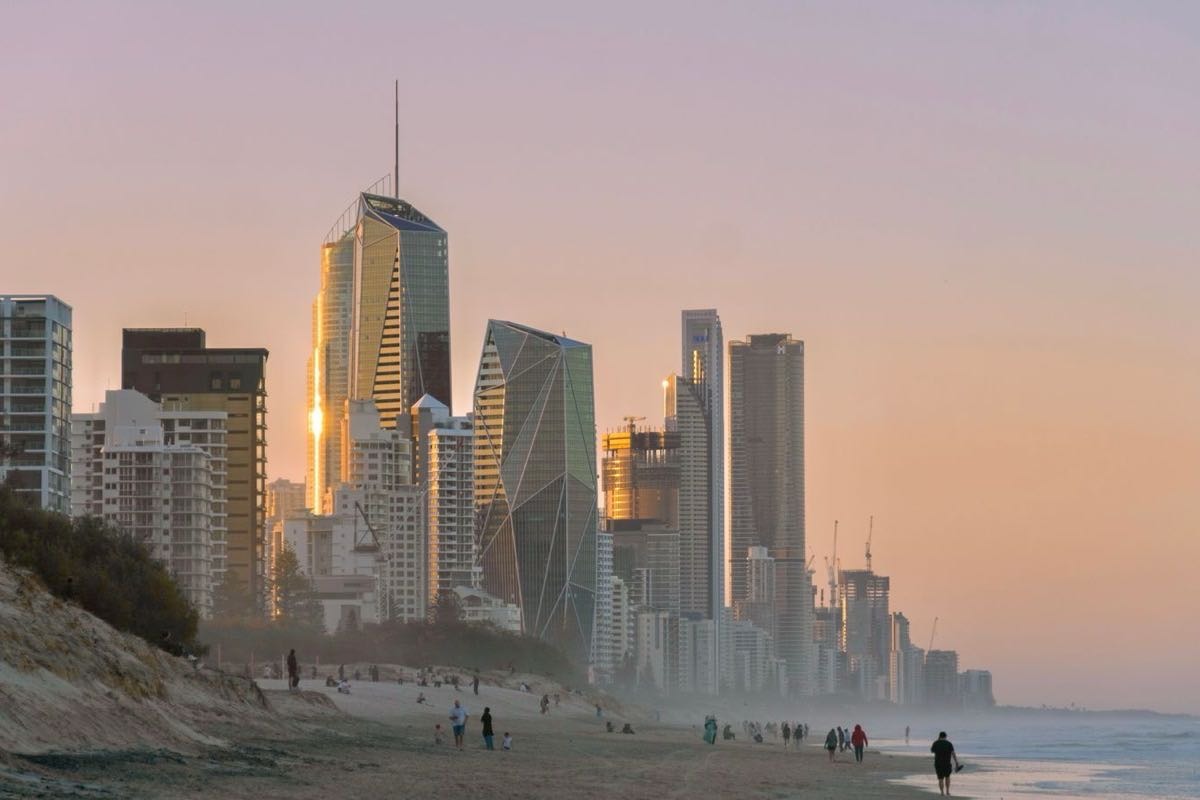
Morning (9:00 AM): Burleigh Heads
Cross into Queensland and reach the Gold Coast in about an hour. Start at Burleigh Heads, where the headland walk and the surf beach are a calmer counterpoint to the high-rise strip up the road.
Burleigh Heads National Park has a short, shaded headland walk through rainforest with ocean lookouts, often with surfers on the point below. It is an easy 30 to 45-minute loop and a calm start before the busier afternoon.
Afternoon (1:00 PM): Currumbin Wildlife Sanctuary
Visit Currumbin Wildlife Sanctuary to see koalas, kangaroos, and the lorikeet feeding up close, then head to Surfers Paradise if you want the full beach-and-skyline contrast.
Currumbin Wildlife Sanctuary is a long-running non-profit park with koalas, kangaroos, and a twice-daily wild lorikeet feeding. Allow two to three hours, and check the feeding times when you arrive.
Evening (6:00 PM): Beach Dinner & Surfers Paradise
Eat a seafood basket on the sand at Burleigh, then catch sunset over the hinterland behind the city. The Gold Coast runs late, so there’s plenty open if you want a night out.
Surfers Paradise has the high-rise nightlife, while Burleigh and Broadbeach are more relaxed for an evening meal. Parking a van is easier at the southern beaches than in the centre of Surfers.
Practical tip: Queensland time can differ from New South Wales in summer, since Queensland doesn’t observe daylight saving. Check your clock when you cross the border so you don’t miss a booking.
Day 6: Gold Coast Hinterland, Queensland
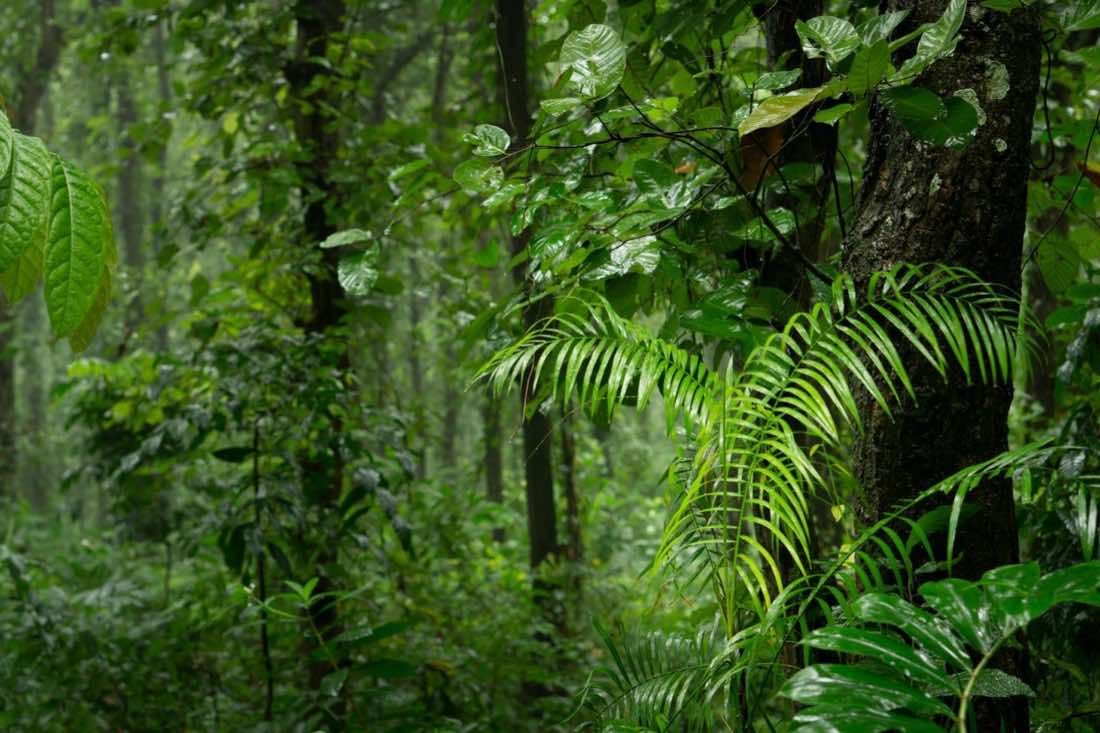
Morning (9:00 AM): Lamington National Park
Trade the coast for the rainforest and drive up into the hinterland. Lamington National Park has some of the best walking tracks in Queensland, from short loops to the longer tracks through ancient Antarctic beech forest.
Lamington is part of the Gondwana Rainforests World Heritage area, and its tracks range from 20-minute strolls to all-day hikes. The Tree Top Walk near O’Reilly’s is a short, family-friendly option through the canopy.
Afternoon (1:00 PM): Tamborine Mountain
Visit Tamborine Mountain for its rainforest skywalk, waterfalls, and a cluster of breweries and cafes along Gallery Walk. It’s an easy half-day and a cool break from the beach heat.
Gallery Walk is the main strip on Tamborine Mountain, lined with cafes, galleries, and small producers. The rainforest skywalk and the local waterfalls are a short drive apart, so half a day covers both comfortably.
Evening (7:30 PM): Natural Bridge Glow Worms
After dark, head to the Natural Bridge section of Springbrook National Park to see the glow worms light up the cave around the waterfall. Bring a torch with a red light so you don’t disturb them.
Natural Bridge is a short rainforest walk to a cave where glow worms light up after dark, best seen on a moonless night. Go quietly and avoid white torchlight, which makes the worms dim their glow.
Practical tip: Hinterland roads are narrow and winding. Take them slowly in a larger van, use the pullover bays for faster traffic, and avoid the drive after dark when wildlife is most active on the road.
Day 7: Brisbane, Queensland
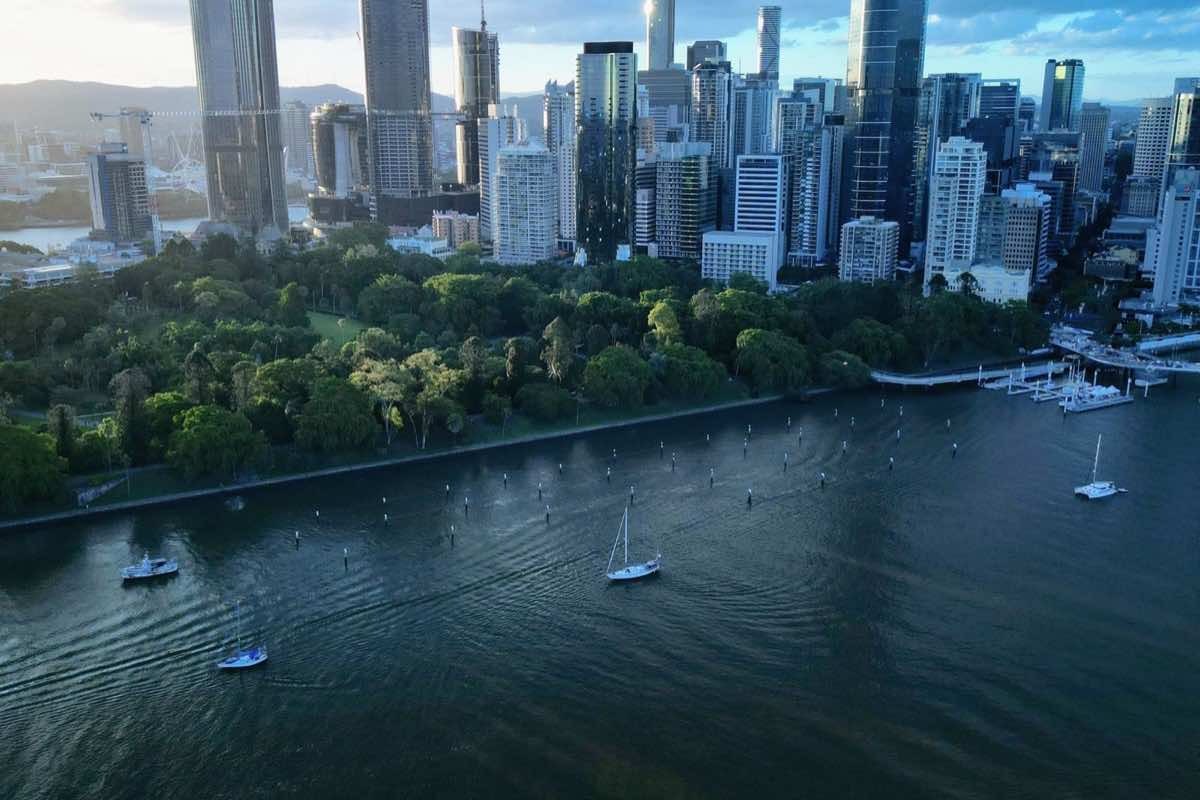
Morning (9:00 AM): South Bank
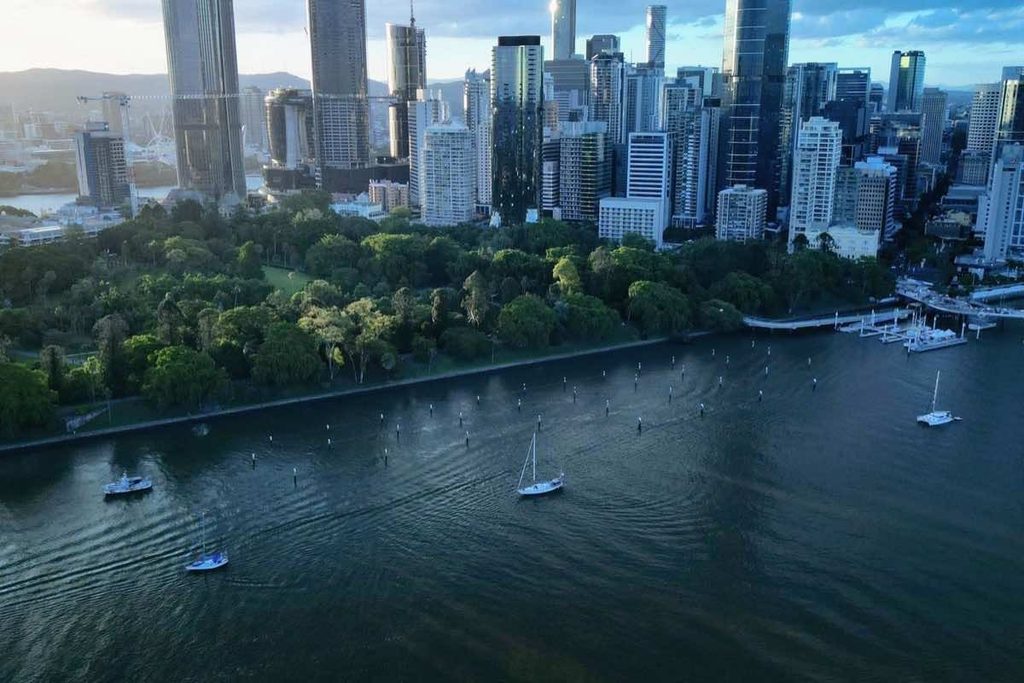
Drive into Brisbane, about an hour north, and base yourself around South Bank. The man-made Streets Beach lagoon, the riverside parklands, and the Gallery of Modern Art are all walkable from one another.
Streets Beach at South Bank is the only inner-city beach in Australia, a free lagoon ringed by parkland and cafes. The Gallery of Modern Art nearby is also free and easy to fill an hour or two.
Afternoon (1:00 PM): City Botanic Gardens & Story Bridge
Walk or cycle the river to the City Botanic Gardens and the Story Bridge, or climb the bridge if you want a last big view. The CityCat ferry is a cheap, scenic way to see Brisbane from the water.
The CityCat ferry runs the length of the river and is one of the cheapest ways to see the city. The Story Bridge Adventure Climb is the local counterpart to Sydney’s BridgeClimb if you want a final big view.
Evening (6:00 PM): Campervan Drop-Off & Riverside Dinner
Drop off your campervan, since RV rental in Brisbane includes city drop-off points, then have a final dinner at a riverside restaurant in South Bank or Fortitude Valley. Modern Australian cooking here leans on local seafood and Queensland produce.
South Bank and Fortitude Valley have the best run of restaurants for a final night. Both are an easy walk or ferry ride once you have dropped the van, so the evening stays relaxed.
Practical tip: Return the van with a clean kitchen and the fuel level your rental requires to avoid extra fees. Brisbane Airport sits close to the city, which makes a same-day flight out simple after drop-off.
Exploring Australia’s Regions: Alternative Itineraries
The Sydney to Brisbane drive is the strongest all-rounder, but it isn’t the only way to spend a week. Here are five regional routes worth considering, each built around a different campervan base.
- Tropical North Queensland (Cairns): Base a week around an RV rental in Cairns for the reef and rainforest in one trip. The Great Barrier Reef, which NOAA calls the largest living structure on Earth, sits offshore, while the Daintree and the Atherton Tablelands fill the rest of the week. Most stops sit within a couple of hours of the city, so a week comfortably combines reef snorkelling, rainforest walks, and a waterfall circuit.
- Victoria & the Great Ocean Road (Melbourne): Start with an RV rental in Melbourne and spend two days in the city’s laneways before driving the Great Ocean Road to the Twelve Apostles, with koalas at Kennett River along the way. From there, you can carry on to the Grampians or the Mornington Peninsula, both within easy reach for a week-long loop back to the city.
- Tasmania (Hobart): Pick up an RV rental in Hobart for a compact island loop taking in Hobart and MONA, Freycinet and Wineglass Bay, and the highland wilderness around Cradle Mountain. Distances are short by Australian standards, which makes Tasmania a relaxed island circuit you can finish comfortably in seven days.
- The Top End (Darwin): Use RV rental in Darwin as a base for Kakadu’s rock art and Litchfield’s waterfalls. Travel in the dry season, from May to October, when the roads and falls are at their best. Both parks are within day-trip distance of Darwin, so you can base loosely and return to the city between trips.
- Western Australia (Perth): Begin with RV rental in Perth and head south to Margaret River for wineries, surf, and tall-tree forests, with a day trip to Rottnest Island to meet the quokkas. The southwest is compact and green, with short drives between the wineries, beaches, and tall-tree forests around Margaret River.
Map of Your 7-Day Australia Itinerary
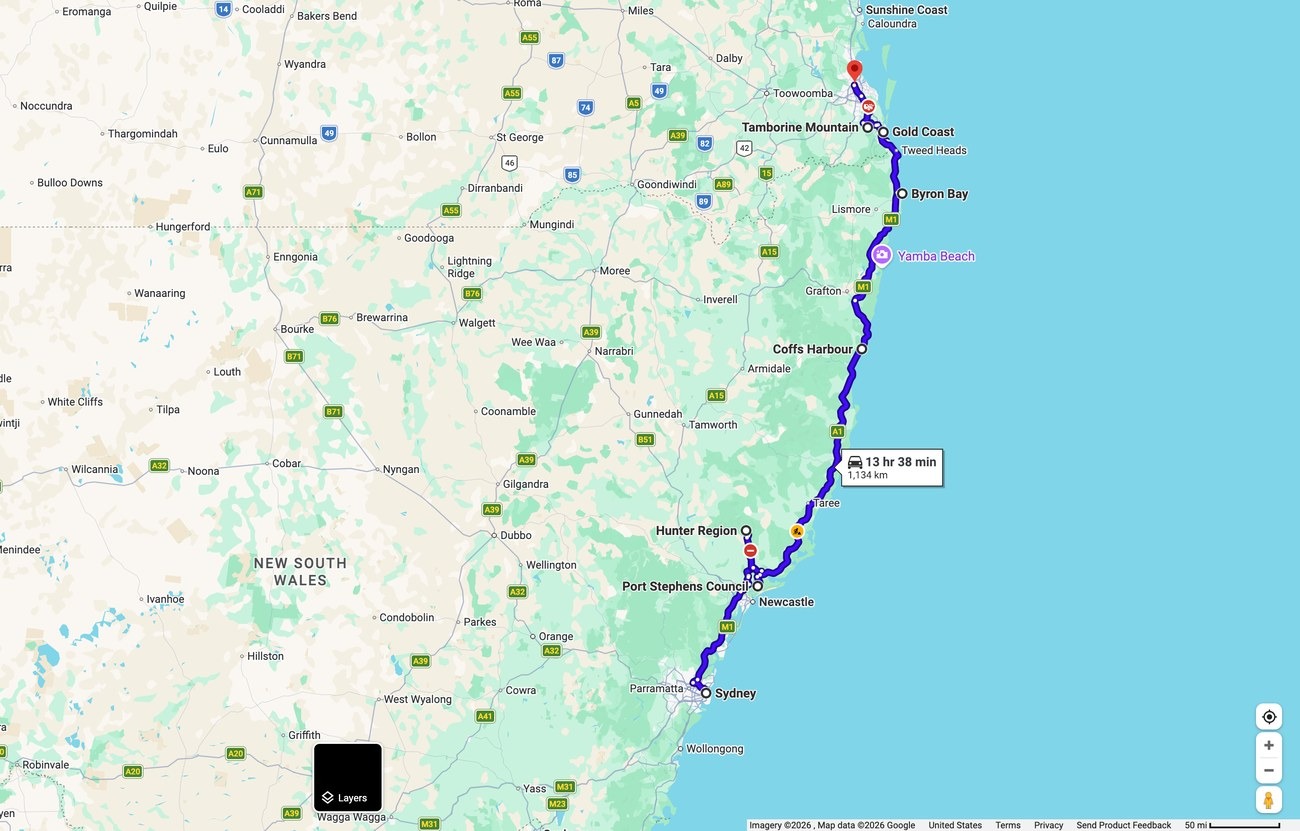
Here’s the whole route at a glance, running north from Sydney to Brisbane along the East Coast, roughly 1,000 km (620 miles) in total.
Budgeting for Your Trip: How Much Does 7 Days in Australia Cost?
A week on the East Coast fits a wide range of budgets, and renting a campervan is the single biggest saving. You’re paying campground fees of AUD 35 to 55 a night instead of city hotels at AUD 180 to 350, which changes the math on the whole trip. Fuel is the other variable, since prices climb on the highway between towns, so filling up in the larger centres keeps the daily cost down.
Here’s a realistic per-person breakdown, not counting the campervan hire or international flights.
| Category | Budget | Mid-Range | High-End |
| Campground (powered site) | AUD 35-45/night | AUD 45-60/night | AUD 60+/night |
| Food & Drink | AUD 40-55/day | AUD 60-90/day | AUD 120+/day |
| Fuel | AUD 30-45/day | AUD 40-55/day | AUD 55+/day |
| Attractions | AUD 15-30/day | AUD 35-55/day | AUD 70+/day |
| Daily Total | AUD 120-175 | AUD 180-260 | AUD 305+ |
| 7-Day Total | ~AUD 840-1,225 | ~AUD 1,260-1,820 | ~AUD 2,135+ |
- Budget traveler: Cook most meals in the van, stay at national park and showground sites, and stick to free attractions like the coastal walks, Cape Byron, and Currumbin’s gardens. Around AUD 900 per person for the week is realistic.
- Mid-range traveler: Mix cooking with a daily cafe or pub meal, pay for the dolphin cruise and wildlife sanctuary, and stay at beachfront holiday parks. Budget AUD 1,300 to 1,800 per person.
- High-end traveler: Eat out for most meals, add a Hunter Valley wine tour and a surf lesson, and choose premium powered sites. Expect AUD 2,100 or more per person.
Plan Your Australia Road Trip with Indie Campers
Seven days on the East Coast comes down to one practical call: sort your transport and your bed in a single booking, so the week is about the coast and not the logistics. That’s what a campervan from Indie Campers does.
With over 7,000 vehicles and one-way rentals across major Australian cities, you can pick up in Sydney and drop off in Brisbane with no backtracking.
Unlimited mileage on company-owned vehicles takes the worry out of a 1,000 km run, and flexible cancellation up to 31 days before pick-up, plus book-now-pay-later lets you commit early without a high upfront cost.
It’s built for couples, families, and first-time road-trippers who want the freedom to stop where the coast looks good. So what are you waiting for? Book your campervan and kickstart an adventurous Australia trip now!
Australia Itinerary 7 Days: Your Final Planning Recap
| Category | Details |
| Best Route | Sydney to Brisbane along the East Coast, one-way by campervan |
| Total Distance | Roughly 1,000 km (620 miles) over 7 days |
| Best Time to Go | Spring (September to November) or autumn (March to May) for warm days and fewer crowds |
| Recommended Budget | AUD 875 to 1,855 per person, plus campervan hire |
| Cities to Visit | Sydney (1 day), Port Stephens, Coffs Harbour, Byron Bay, Gold Coast, Brisbane (1 day) |
| Recommended Transport | Campervan rental combines transport and accommodation and supports one-way routing |
| Must-Do Experiences | Bondi to Coogee walk, Stockton dunes, Cape Byron Lighthouse, Currumbin Wildlife Sanctuary, Natural Bridge glow worms |
| Must-Try Foods | Sydney rock oysters, Hunter Valley Semillon, Byron fish tacos, Gold Coast seafood |
| Perfect For | First-time visitors, couples, and families wanting beaches, wildlife, and city life in one week |
Frequently Asked Questions (FAQs)
How much does a 7-day trip to Australia cost?
A 7-day trip to Australia costs around AUD 875 to 1,855 (about USD 575 to 1,225) per person at a budget-to-mid-range level, plus campervan hire and international flights. That covers campground fees of AUD 35 to 55 a night, fuel, food, and attractions. Renting a campervan instead of booking hotels is the biggest saving, since powered sites cost a fraction of a city hotel. High-end travelers eating out for every meal can expect AUD 2,100 or more per person.
Is 7 days enough to see Australia?
7 days is enough to see one region of Australia well, but not the whole country. The East Coast from Sydney to Brisbane covers three cities, beaches, wine country, and rainforest across roughly 1,000 km without a domestic flight. Australia is about the size of mainland USA, so adding Uluru or the Great Barrier Reef to the same week means most of your time goes to airports. A focused single-region route makes a week feel full rather than rushed.
What are the top 3 places to visit in Australia for first-timers?
For first-timers, the top three places to visit in Australia on this route are Sydney, Byron Bay, and the Gold Coast. Sydney delivers the Opera House, the Harbour Bridge, and the Bondi to Coogee walk; Byron Bay adds the mainland’s most easterly lighthouse and whale watching, and the Gold Coast brings surf beaches and wildlife. Each is worth a full day or more without rushing. Together, they cover city, coast, and nature in a single week.
What is the most beautiful place in Australia?
The most beautiful place in Australia is hard to crown, but on this route, Cape Byron at Byron Bay is a strong contender, with a white lighthouse on the mainland’s most easterly point above a turquoise bay. Beyond the East Coast, the Whitsunday Islands, Uluru at sunset, and Tasmania’s Wineglass Bay top most lists. The Gold Coast hinterland rainforest is the quiet surprise of this particular drive. Beauty here usually means contrast: reef, coast, and rainforest within a day’s drive.
What is the best way to travel Australia in 7 days?
The best way to travel Australia in 7 days is by campervan on a single-region route like Sydney to Brisbane. It combines transport and accommodation into one cost, removes airport waits, and lets you stop at beaches and lookouts that flights and tours skip. Indie Campers runs one-way rentals across major Australian cities, so you can pick up in Sydney and drop off in Brisbane. Domestic flights work for big distances but eat into a short week.
What is the best route for a 7-day Australia road trip?
The best route for a 7-day Australia road trip is the East Coast drive from Sydney to Brisbane, roughly 1,000 km over seven days. It runs through the Hunter Valley wine region, Port Stephens, Coffs Harbour, Byron Bay, the Gold Coast, and the rainforest hinterland. Daily driving stays between 1 and 3.5 hours, which leaves plenty of time for the stops. A one-way campervan rental makes the point-to-point route simple.
Is Australia safe for solo travelers?
Yes, Australia is one of the safest countries in the world for solo travelers, including solo women. Violent crime against tourists is rare, and standard precautions cover most situations. On the East Coast, the real risks are practical: strong sun, ocean rips (always swim between the flags), and driving tired on long stretches. Traveling by campervan adds a secure, flexible base that many solo travelers find reassuring.
Do I need to book Australian attractions in advance?
You should book Australia’s major attractions in advance during peak season, though many East Coast highlights are free. Reserve the Sydney Opera House tour, the BridgeClimb, and any reef or dolphin cruise a few days to a few weeks ahead, especially over summer and school holidays. The coastal walks, Cape Byron lighthouse, and most beaches need no booking. Campgrounds near Byron Bay and the Gold Coast fill fast in summer, so book those early too.
Can I drive a campervan in Australia’s city centers?
You can drive a campervan in Australia’s city centers, but parking is the real challenge, especially in central Sydney and Byron Bay. The simplest approach is to stay at a holiday park on the edge of each city and use public transport, ferries, or a bike to reach the center. Most campgrounds sit a short ride from the action and cost far less than city parking. Larger motorhomes are fine on highways but slower on narrow hinterland roads.