Last Updated: May 8, 2026
Key Takeaways (TL;DR)
- Why Go to New Zealand: Few countries pack as much variety into such a compact area. You can drive from a glacier to a black-sand beach in a single afternoon, and the road infrastructure is built for self-drive travel.
- Top Best Places to Visit in New Zealand 2026: Queenstown, Rotorua, Bay of Islands, Wanaka, Milford Sound, Wellington, Coromandel Peninsula, Aoraki/Mount Cook, Abel Tasman, and Auckland.
- Don’t Miss Experience: Driving the road into Milford Sound at first light, with mist rising off the fiord walls and the Mitre Peak reflection still untouched on the water surface.
- Ideal Trip Length: 14-21 days. New Zealand looks small on the map, but the roads are winding, and the scenery rewards frequent stops. A two- to three-week trip covers both islands without rushing.
- How to Choose Your Route: Stick to the South Island for dramatic mountains, fiords, and glacier country. Choose the North Island for geothermal landscapes, Maori cultural sites, and warmer beaches. Combine both if you have more than 14 days.
- Recommended Budget Per Person: $75-$135 per day. This covers campsites, fuel, groceries, and a few paid activities, excluding RV rental costs.
- Watch Out For: Distances are deceiving. A 125-mile drive on the South Island can take five hours when you factor in mountain passes and photography stops.
- Where To Stay: An RV rental gives you the freedom to follow good weather, change plans, and stay close to trailheads, fiords, and viewpoints – without the booking pressure of fixed accommodation.
- Best For: First-time visitors who want a self-drive trip, outdoor travelers, photographers, and couples or families looking for a country where the journey is the destination.
Table of Contents
Best Places to Visit in New Zealand: at a Glance
Best Places to Visit in New Zealand
1. Queenstown, South Island
2. Rotorua, North Island
3. Bay of Islands, North Island
4. Wanaka, South Island
5. Milford Sound, South Island
6. Wellington, North Island
7. Coromandel Peninsula, North Island
8. Aoraki/Mount Cook, South Island
9. Abel Tasman National Park, South Island
10. Auckland, North Island
What Should You Pack for a New Zealand Road Trip
Final Expert Tips for Travel in New Zealand
Plan Your New Zealand Adventure with Indie Campers
Everything You Need to Know About New Zealand RV Road Trips
FAQs About Where To Go in New Zealand
Best Places to Visit in New Zealand: at a Glance
| Destination | Island | Vibe | Best For | Top Activities | Avg Summer Temp | Ideal Stay | Crowd Level | RV-Friendly |
| Queenstown | South | Adventure & Alpine | Adrenaline seekers | Bungee, Skiing, Lake cruises | 72°F (22°C) | 4-6 Days | High | Yes |
| Rotorua | North | Geothermal & Cultural | Maori culture | Geysers, Mud pools, Hangi feasts | 73°F (23°C) | 2-3 Days | Moderate | Yes |
| Bay of Islands | North | Coastal & Subtropical | Sailing & beaches | Sailing, Dolphin tours, Kayaking | 77°F (25°C) | 3-5 Days | Moderate | Yes |
| Wanaka | South | Lakeside & Quiet | Hikers | Roys Peak, Lone Tree, Skydiving | 70°F (21°C) | 3-4 Days | Moderate | Yes |
| Milford Sound | South | Wild & Remote | Bucket-list scenery | Cruises, Kayaking, Hiking | 64°F (18°C) | 2-3 Days | Moderate | Yes |
| Wellington | North | Creative & Compact | City & culture | Te Papa, Cuba Street, Cable Car | 66°F (19°C) | 2-3 Days | Mixed | Yes |
| Coromandel | North | Beach & Forest | Couples & families | Hot Water Beach, Cathedral Cove | 75°F (24°C) | 3-4 Days | Moderate | Yes |
| Aoraki/Mount Cook | South | Alpine & Stargazing | Hikers & stargazers | Hooker Valley, Tasman Glacier, Dark Sky | 61°F (16°C) | 2-3 Days | Low | Yes |
| Abel Tasman | South | Coastal & Lush | Kayakers & walkers | Coast Track, Kayaking, Beaches | 72°F (22°C) | 3-4 Days | Moderate | Yes |
| Auckland | North | Urban & Harbor | Arrival base | Sky Tower, Waiheke, Volcanoes | 73°F (23°C) | 2-3 Days | High | Yes |
Best Places to Visit in New Zealand
1. Queenstown, South Island
The Vibe
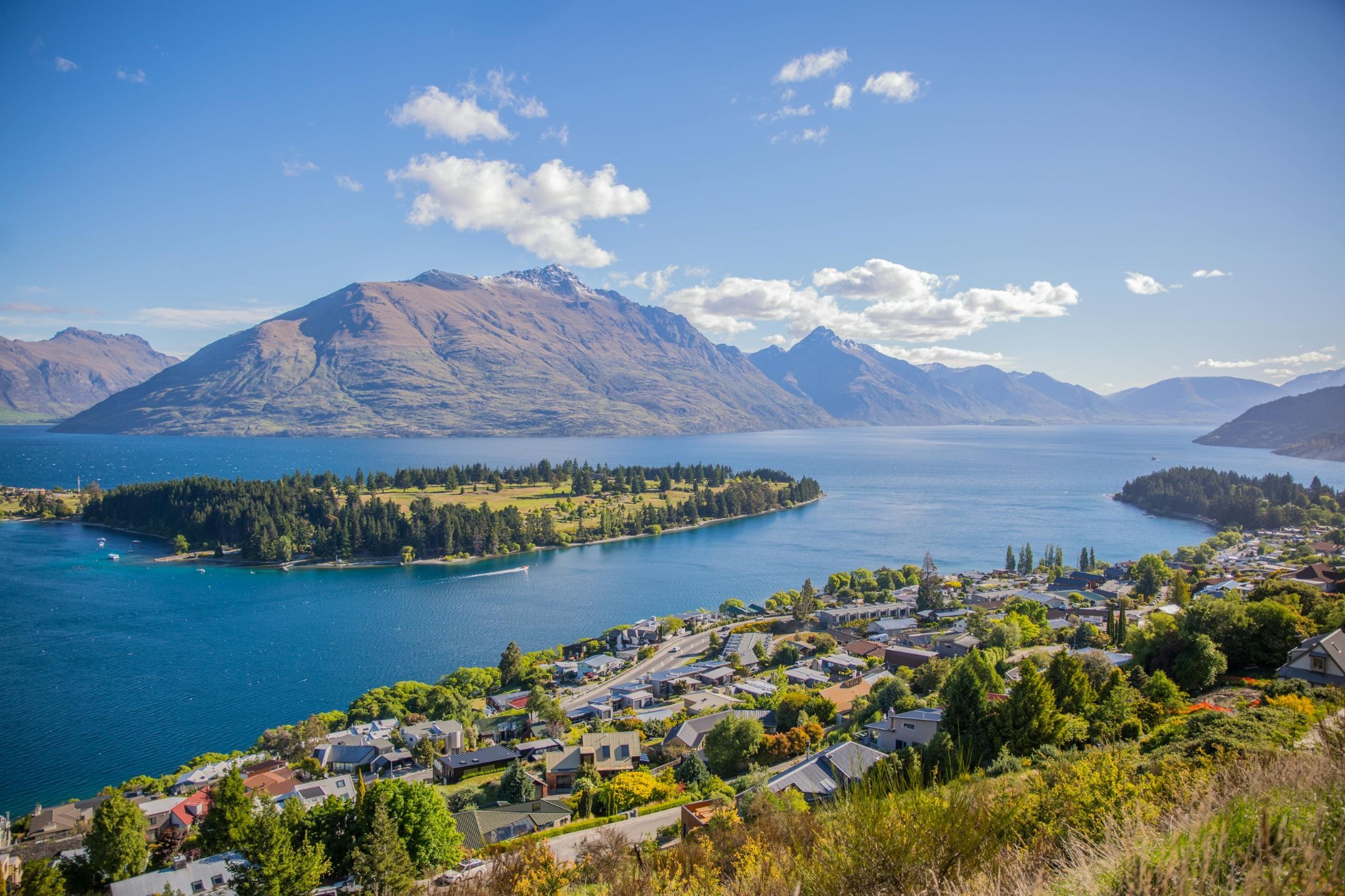
Queenstown sits on the shore of Lake Wakatipu, surrounded by a jagged mountain range called The Remarkables. The town has built its reputation on adventure tourism since the 1980s, when commercial bungee jumping was invented at the nearby Kawarau Bridge. That spirit is still here, it is where New Zealanders go when they want to throw themselves off, into, or down something.
The town itself is compact and walkable. Cafés, bars, and outdoor gear shops line streets that look directly onto the lake. The pace is energetic year-round: skiers in winter, hikers and mountain bikers in summer, and a steady international crowd in between.
In summer (December to February), the temperature hovers around 72°F, the lake is warm enough to swim in, and the days stretch until almost 10 pm. In autumn (March to May), the surrounding hills turn gold and red, and the crowds thin out considerably.
Top Things to Do
1. Ride the Skyline Gondola: The gondola climbs 1,475 feet above the town to the Bob’s Peak viewing platform. The view across the lake to The Remarkables is the most iconic in Queenstown. Stay for the luge track, the mountain bike trails, or sunset.
2. Bungee Jump at Kawarau Bridge: The world’s first commercial bungee jumping site, operating since 1988, still runs from the original 141-foot bridge over the Kawarau River. The setup is quick, the jump is genuine, and the river below has the same vivid blue-green color you see in the brochures.
3. Cruise on the TSS Earnslaw: A coal-fired steamship that has been running on Lake Wakatipu since 1912. The cruise to Walter Peak Farm is one of the most relaxed ways to see the lake, and the engine room is open to passengers throughout the trip.
4. Drive to Glenorchy: The 45-minute drive along the lake’s western shore to Glenorchy is one of the most scenic in New Zealand. The road follows the water past beech forests and small bays. Glenorchy itself is a tiny settlement at the head of the lake, with views back toward the Mount Aspiring National Park.
5. Hike the Ben Lomond Track: A serious 6.8-mile return hike from the top of the gondola to the 5,735-foot summit. The reward is a 360-degree view across Queenstown, Lake Wakatipu, and the surrounding ranges. Allow six to eight hours and start early.
6. Wine Tasting in Gibbston Valley: The valley, 25 minutes east of Queenstown, is one of the world’s southernmost wine regions, producing exceptional Pinot Noir from the schist soils. Several cellar doors offer tastings with food pairings.
Don’t Leave Without…
Eating a Fergburger – the legendary burger chain that started in 2001 and now has lines down the block at all hours. The “Big Al” with double beef, bacon, cheese, and beetroot is the order most regulars recommend.
RV Practical Info
- Roads: The drive into Queenstown over the Crown Range from Wanaka is the highest sealed road in New Zealand. It’s well-surfaced but steep – take it slowly in a motorhome.
- Campsites: Queenstown Lakeview Holiday Park sits within walking distance of town and has full hookups. Book ahead in summer, when sites fill weeks in advance.
- Freedom Camping: Restricted in the Queenstown Lakes District. Self-contained vehicles only, in designated areas. The council enforces fines actively.
- Scenic Route: Drive the Crown Range Road to Wanaka, stopping at the lookout for one of the country’s best views.
Who Is It Best For?
- Adventure travelers chasing a long list of activities in one base
- First-time visitors who want a strong introduction to South Island scenery
- Couples looking for a lively town with strong food and wine
Recommended Budget
- Campsites: $28-$42 per night with hookups
- Meals: $15-$24 for casual dining; Queenstown is more expensive than rural areas
- Activities: $36-$180 depending on the activity (gondola is at the lower end, bungee at the higher)
2. Rotorua, North Island
The Vibe
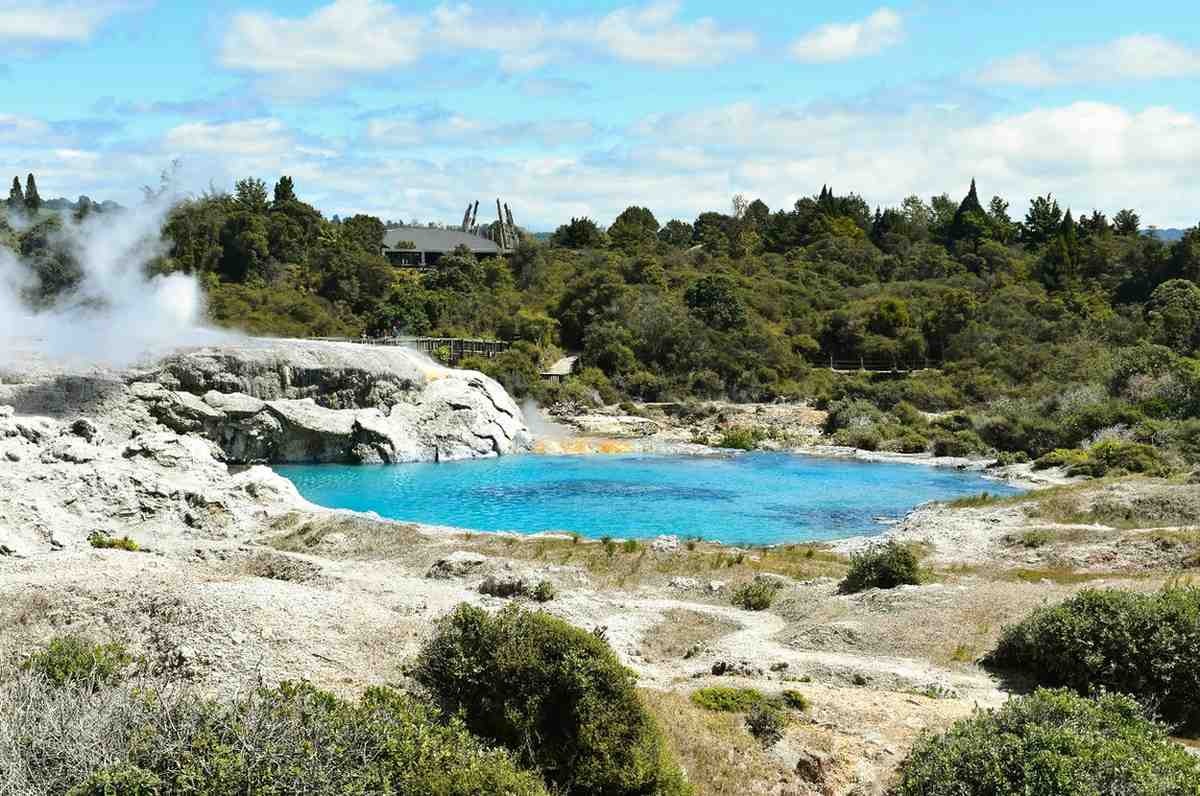
Rotorua is the cultural and geothermal heart of the North Island. The town sits on top of one of the world’s most active geothermal fields, and the smell of sulfur is a permanent feature of the air that locals stop noticing within a few hours.
This is also the most important center for Maori culture in New Zealand. Around 35% of Rotorua’s population identifies as Maori, and several of the most visited cultural sites in the country are based here. The traditions are living, not staged for tourism: cultural performances, hangi feasts, and marae visits are run by Maori communities themselves.
In summer, Rotorua sits around 73°F with reliable sunshine. The lakes are warm enough to swim in, and the geothermal valleys stand out against the bright blue sky.
Top Things to Do
1. Visit Te Puia: The most established Maori cultural center in New Zealand, set within a working geothermal valley. The Pohutu Geyser erupts up to 100 feet several times an hour. The traditional carving and weaving schools (NZ Maori Arts and Crafts Institute) are based on-site.
2. Soak in the Polynesian Spa: A lakeside spa complex with several geothermal pools at different temperatures, ranging from 97°F to 108°F. Open year-round with views over Lake Rotorua. The acidic and alkaline pools both come from natural mineral springs on the property.
3. Walk Through Wai-O-Tapu: “Sacred Waters” – a geothermal park 30 minutes south of town with the country’s most colorful geothermal features. The Champagne Pool, ringed in bright orange mineral deposits, and the Lady Knox Geyser (which erupts daily at 10:15 am after being prompted with soap) are the standouts.
4. Experience a Hangi Feast: A traditional Maori meal cooked underground using heated stones. Several operators in Rotorua run hangi-and-cultural-performance evenings, but the most authentic experiences are at Mitai Maori Village or Tamaki Maori Village. The food – usually chicken, lamb, kumara, and potatoes – takes on a distinct earthy flavor.
5. Mountain Bike the Whakarewarewa Forest: Also called the “Redwoods Forest” because of the towering Californian redwoods planted in 1901, this is one of the best mountain biking destinations in New Zealand. There are over 110 miles of trails for every skill level. The Treewalk – a series of suspended walkways through the redwood canopy – is excellent at sunset.
6. Boat Across Lake Tarawera: The 1886 eruption of Mount Tarawera buried the famous Pink and White Terraces – often called the “eighth wonder of the world” before they vanished. Boat tours from Lake Tarawera explore the volcanic shoreline and the buried village of Te Wairoa.
Don’t Leave Without…
Trying steamed corn or kumara cooked in a public boiling pool at Whakarewarewa Living Maori Village. Locals have used the geothermal heat for cooking for generations, and the technique still works exactly as it did 200 years ago.
RV Practical Info
- Roads: State Highway 5 from Auckland is direct and well-maintained. The drive takes around three hours.
- Campsites: Rotorua Top 10 Holiday Park is within walking distance of town and has thermal pools on-site. Cosy Cottage Thermal Holiday Park has its own geothermal foot pools.
- Freedom Camping: Permitted in self-contained vehicles at designated sites only. Lake Okareka has limited freedom camping spaces.
- Scenic Route: Drive the Thermal Explorer Highway between Rotorua and Taupo, stopping at Wai-O-Tapu, Craters of the Moon, and Huka Falls.
Who Is It Best For?
- Travelers interested in Maori culture and history
- Families with kids who’ll be fascinated by geysers, mud pools, and bubbling springs
- Mountain bikers looking for high-quality trails
Recommended Budget
- Campsites: $24-$36 per night
- Meals: $12-$21; cultural dinner experiences run $80-$110 per person
- Activities: $24-$48 for geothermal park entries
3. Bay of Islands, North Island

The Vibe
The Bay of Islands is a 144-island archipelago on the eastern coast of the Northland region. The water is genuinely subtropical; clear, warm, and the deep blue of the open Pacific. The main towns of Paihia and Russell sit on opposite sides of a sheltered harbor, connected by a 15-minute passenger ferry.
This region holds particular significance in New Zealand history. The Treaty of Waitangi, which is the founding document between the British Crown and Maori chiefs was signed at Waitangi in 1840. The Treaty Grounds are open to visitors and remain the country’s most important historical site.
In summer (December to March), the Bay of Islands is at its best. Temperatures sit around 77°F, the water is warm enough for extended swimming, and the days are long and bright. Sailing season is in full swing.
Top Things to Do
1. Sail the Bay: Multiple operators run day sailing trips through the islands. The Hole in the Rock at Cape Brett is the standard destination – a natural sea arch large enough for a boat to pass through. Catamaran trips include swimming stops at uninhabited islands and dolphin spotting along the way.
2. Visit the Waitangi Treaty Grounds: The site of the 1840 signing of the Treaty of Waitangi is one of the most thoughtfully presented historical sites in New Zealand. The museum, the meeting house, and the world’s largest ceremonial war canoe are all on the property. Guided tours by Maori cultural ambassadors are included with admission.
3. Take the Ferry to Russell: The ferry from Paihia to Russell runs every 20 minutes. Russell was New Zealand’s first capital and was once known as the “Hellhole of the Pacific” for its lawless 19th-century reputation. Today it’s the opposite – quiet, historic, and one of the prettiest small towns in the country.
4. Kayak in the Mangroves: Guided kayak trips run from Paihia into the mangrove forests of the Waitangi River. The mangroves are unusual at this latitude and form a calm, sheltered network of channels. Half-day trips include short walks to a hidden waterfall.
5. Drive to Cape Reinga: The northernmost point of New Zealand, where the Tasman Sea meets the Pacific Ocean. The drive from the Bay of Islands takes around three hours each way. The lighthouse and the sacred 800-year-old pohutukawa tree at the cape are deeply important in Maori cosmology – the spirits of the dead are said to depart from this point.
6. Swim with Dolphins: Bottlenose and common dolphins are resident in the bay year-round. Several licensed operators run dolphin encounters with strict conservation guidelines. Sightings are not guaranteed, but the standard policy is a free repeat trip if dolphins aren’t seen on your first.
Don’t Leave Without…
Eating fresh fish and chips on the Russell waterfront, sitting on the grass with a view of the harbor. The local snapper is caught daily and the chips are cooked in beef dripping at most takeaway shops – a holdover from the British tradition.
RV Practical Info
- Roads: State Highway 1 from Auckland is direct but slow in places. The drive takes around three and a half hours.
- Campsites: Bay of Islands Holiday Park near Paihia is well-equipped with full hookups. Russell Top 10 Holiday Park has lake views and is quieter.
- Freedom Camping: Restricted in the Far North District. Self-contained vehicles only at marked sites.
- Scenic Route: Drive State Highway 10 along the Twin Coast Discovery Route, looping back to Auckland via the Hokianga Harbour for a different perspective.
Who Is It Best For?
- Families looking for warm-water beaches and gentle activities
- History buffs interested in colonial and Maori heritage
- Sailors and ocean enthusiasts
Recommended Budget
- Campsites: $24-$39 per night
- Meals: $15-$27; seafood is generally good value
- Activities: $48-$96 for sailing and dolphin trips; $36 for Waitangi Treaty Grounds
4. Wanaka, South Island
The Vibe
Wanaka is what Queenstown was 30 years ago; smaller, quieter, and built around the same kind of alpine lake scenery. The town sits on the southern shore of Lake Wanaka, with the Southern Alps rising directly behind it. Most residents would prefer it stayed relatively undiscovered.
The pace here is meaningfully slower than Queenstown, just an hour’s drive away. The town has good restaurants, a cinema that pre-dates most of its customers, and a single main street. The mountains and the lake do most of the work.
In summer (December to February), Wanaka temperatures sit around 70°F and the lake is warm enough to swim in. Autumn here is exceptional; the willow and poplar trees around the lake turn deep gold from late April.
Top Things to Do
1. Hike Roys Peak: A 10-mile return hike that climbs 4,030 feet to one of the most photographed viewpoints in New Zealand. The famous switchback ridge and the lake-view photo spot draw a steady stream of hikers, but early-morning starts (before 6 am) reward you with empty trails and good light. Allow 5-7 hours.
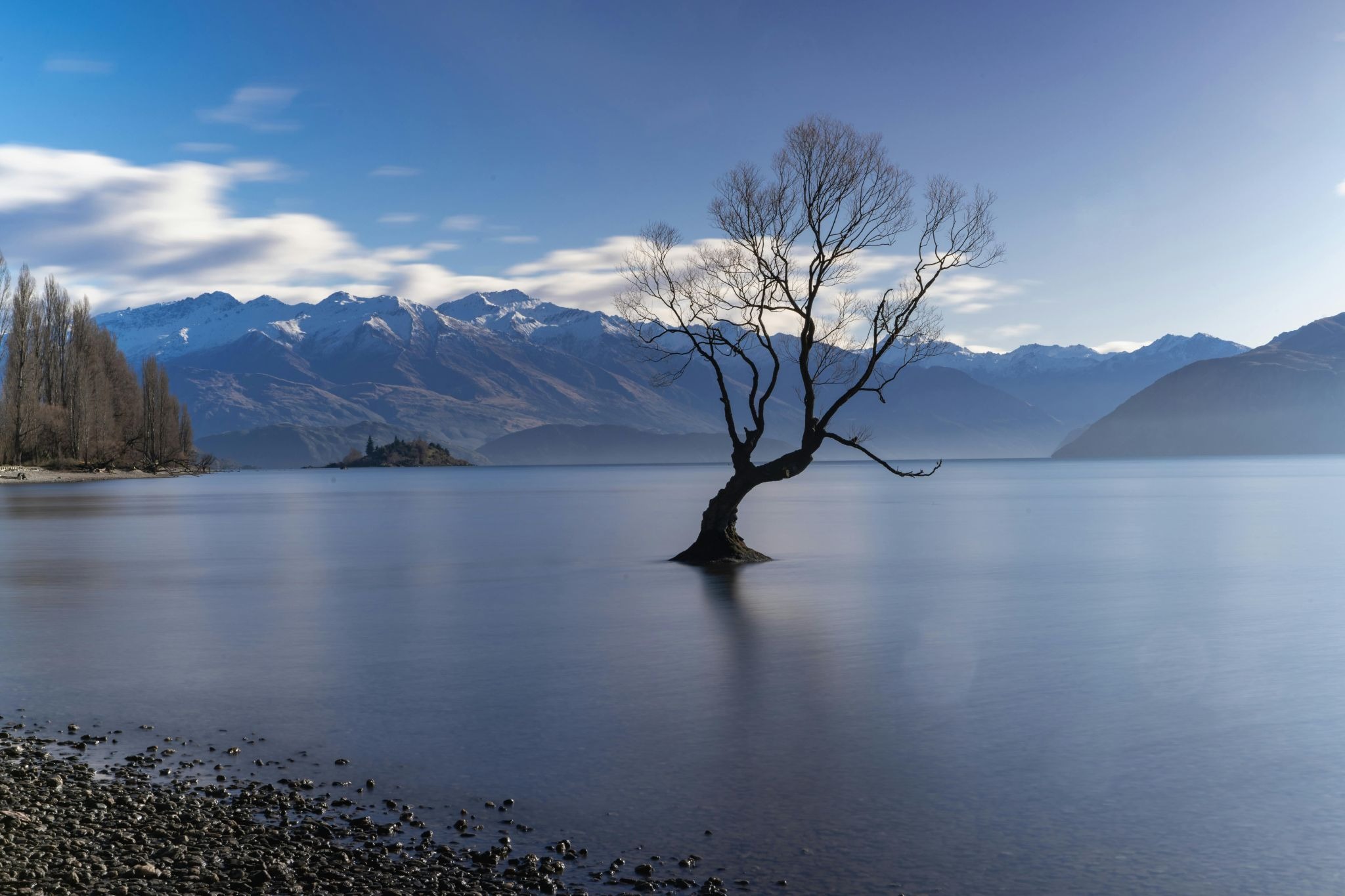
2. Photograph #ThatWanakaTree: A solitary willow tree growing out of the lake at Roys Bay. It’s become one of the most photographed trees in the world. Visit at sunrise or sunset for the best light, and bring a wide-angle lens.
3. Skydive over the Lake: Skydive Wanaka offers tandem jumps from up to 15,000 feet. The drop zone has views across Lake Wanaka, the Clutha River, and the Southern Alps – widely considered one of the most scenic skydive locations in the world.
4. Drive the Crown Range: The 31-mile drive over the Crown Range to Queenstown is the highest sealed road in New Zealand, peaking at 3,678 feet. The lookout near the summit offers a panoramic view of the Wakatipu basin. Don’t miss the historic Cardrona Hotel on the way down.
5. Mountain Bike or Walk the Lake Trail: A flat 12-mile trail along the western shore of Lake Wanaka, accessible to walkers and cyclists. Bike rentals are available in town. The trail passes Glendhu Bay and several quiet swimming spots.
6. Explore Mount Aspiring National Park: The 30-minute drive to the Mount Aspiring National Park access road leads to the Rob Roy Glacier Track – a 6.2-mile return hike through beech forest to a hanging glacier. This is the South Island’s third-largest national park, and far less visited than Fiordland or Aoraki/Mount Cook.
Don’t Leave Without…
Stopping at the Cardrona Hotel on the Crown Range Road. The pub has been operating since 1863 and is one of the oldest hotels in the country. Order a flat white and a venison pie in the garden bar, surrounded by the original timber buildings.
RV Practical Info
- Roads: State Highway 6 from Queenstown to Wanaka via the Cardrona Valley is well-maintained. Avoid the Crown Range in winter conditions if you’re not comfortable with snow chains.
- Campsites: Wanaka Lakeview Holiday Park has lake-edge sites with hookups. Glendhu Bay Motor Camp sits 7.5 miles outside town with direct lake access.
- Freedom Camping: Restricted around Wanaka itself. Glendhu Bay and Albert Town have campground options at modest rates.
- Scenic Route: Drive the Crown Range Road to Queenstown for the full alpine pass experience.
Who Is It Best For?
- Hikers who want serious mountain trails without Queenstown’s crowds
- Photographers chasing classic New Zealand landscapes
- Couples looking for a quiet, scenic base
Recommended Budget
- Campsites: $24-$39 per night
- Meals: $13-$24
- Activities: $36-$300 (skydiving is the high end)
5. Milford Sound, South Island
The Vibe
Milford Sound is a 9-mile fiord carved by glaciers into the Fiordland National Park – a UNESCO World Heritage Area on the southwestern corner of the South Island. The road in (State Highway 94) is one of the most dramatic drives anywhere in the world, climbing through alpine valleys, through the Homer Tunnel, and descending into a landscape that feels untouched.
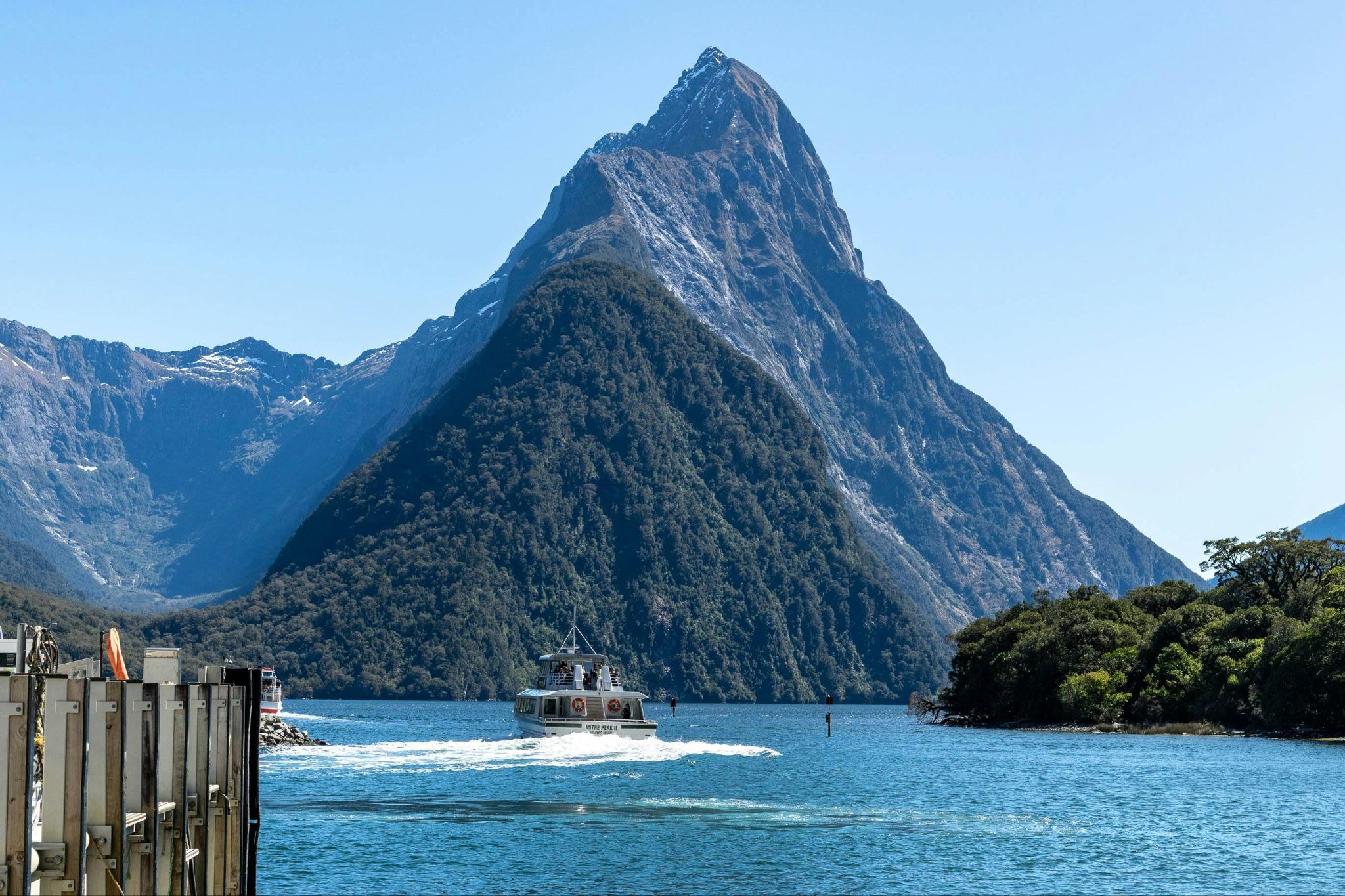
Rudyard Kipling reportedly called Milford Sound the “eighth wonder of the world.” The sheer cliffs of Mitre Peak rise 5,551 feet straight out of the water. Waterfalls cascade from the cliff tops, and the rainforest grows directly on rock walls. The fiord receives over 22 feet of rainfall annually – more than almost anywhere else in New Zealand – and the rain is part of the experience.
There is no town at Milford Sound itself, only a small terminal. Most visitors stay in Te Anau (75 miles away) and drive in for the day.
Top Things to Do
1. Take a Fiord Cruise: The standard activity. Several operators run two-hour cruises through the fiord, sailing under waterfalls and out to the Tasman Sea. Morning cruises typically have the calmest water and best reflections; afternoon cruises have stronger waterfall flows after morning rain.
2. Kayak the Fiord: Guided kayak trips offer a much closer connection with the water. Trips depart from Deepwater Basin in calm morning conditions. Seals, dolphins, and Fiordland crested penguins are common sightings.
3. Visit the Underwater Observatory: Milford Discovery Centre is a floating observatory at Harrison Cove, accessible only by boat. The freshwater layer floating on top of the saltwater creates conditions where deep-sea black coral grows 33 feet below the surface – a species normally found at 230+ feet elsewhere.
4. Hike the Milford Track: The 33-mile Great Walk from Te Anau Downs to Milford Sound is one of the most famous multi-day hikes in the world. It must be booked months in advance during the October-April season. Day trips on shorter sections of the track are also possible.
5. Drive the Milford Road: The 74-mile drive from Te Anau is an attraction in itself. Stops at the Mirror Lakes, the Chasm, and the Eglinton Valley are all worthwhile. The Homer Tunnel – a 0.75-mile tunnel carved through solid rock – has alternating one-way traffic in summer.
6. Spot Wildlife at Stirling Falls: The 495-foot waterfall is the second-tallest in the fiord. Cruises typically pass directly under it, allowing the spray to soak the bow. The rocky ledges around the base are a regular haul-out for New Zealand fur seals.
Don’t Leave Without…
Driving the Milford Road in both directions. The view changes completely between the inbound and outbound journey – the Eglinton Valley in particular is dramatic from the south but almost unrecognizable from the north.
RV Practical Info
- Roads: State Highway 94 is winding, narrow in places, and prone to avalanche closures in winter. Check conditions before departing. Allow 2.5 hours each way from Te Anau, plus stops.
- Campsites: Milford Sound Lodge has motorhome sites at the head of the fiord. Most travelers base in Te Anau, where Te Anau Top 10 Holiday Park is the standard option.
- Freedom Camping: Strictly prohibited along the Milford Road. There are several DOC (Department of Conservation) campsites along the route, including Henry Creek, Kiosk Creek, and Cascade Creek, which are inexpensive and well-maintained.
- Scenic Route: Drive the Milford Road early in the morning to beat the tour bus traffic, which typically arrives between 10 am and 2 pm.
Who Is It Best For?
- First-time visitors looking for the country’s most iconic landscape
- Photographers willing to deal with rain in exchange for dramatic conditions
- Outdoor travelers who appreciate genuinely wild scenery
Recommended Budget
- Campsites: $9-$15 per night at DOC sites; $30-$42 at holiday parks in Te Anau
- Meals: $15-$24 in Te Anau; bring food for day trips to Milford
- Activities: $66-$90 for fiord cruises; $130 for kayak trips
6. Wellington, North Island
The Vibe
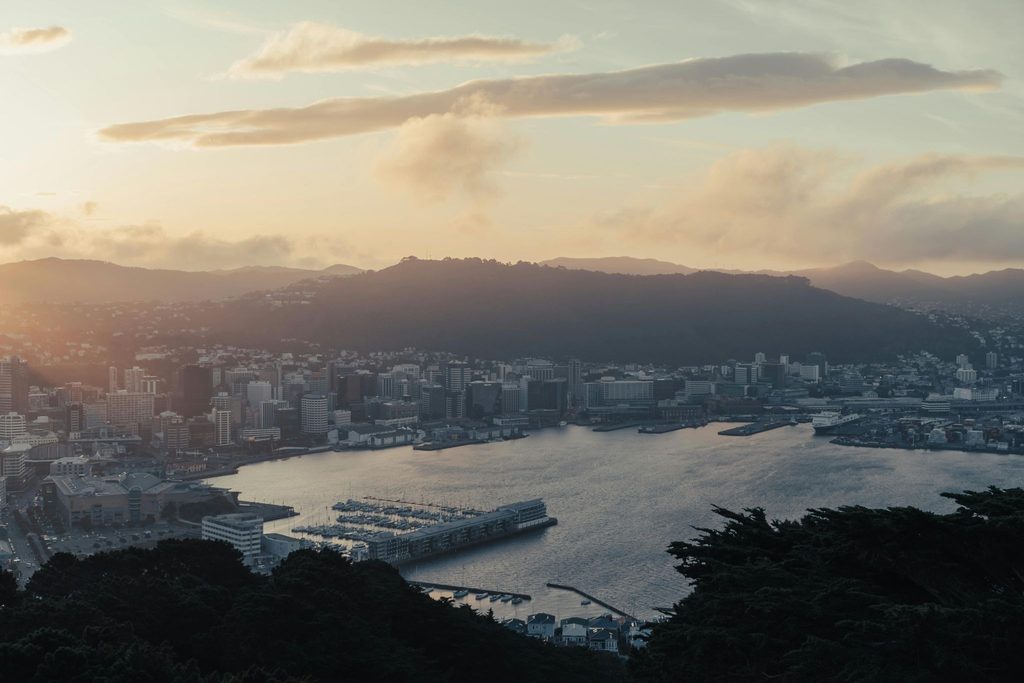
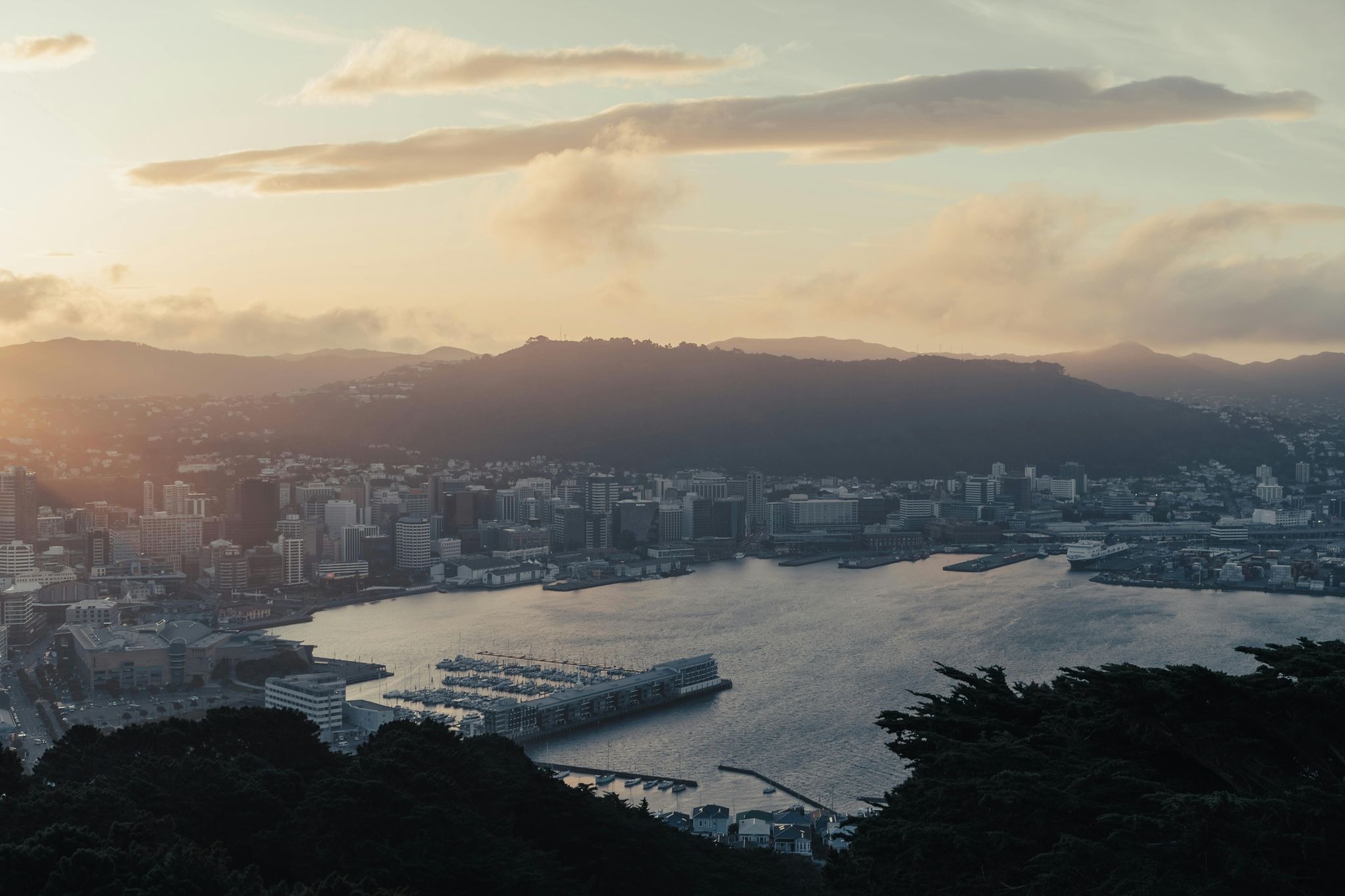
Wellington is New Zealand’s capital and its most concentrated cultural city. It sits on a natural harbor at the southern tip of the North Island, with green hills rising directly from the water. The city is small enough to walk across in 30 minutes, but it punches well above its weight in cafés, music venues, and museums.
Wellington has a reputation as the country’s creative capital. Peter Jackson’s film studios are based here, the New Zealand Symphony Orchestra performs at the Michael Fowler Centre, and Cuba Street is one of the most concentrated arts and dining strips in the country. The coffee culture is genuinely strong; Wellingtonians take their flat whites very seriously.
The wind is the city’s defining weather feature. Wellington averages over 170 days a year with gusts above 37 mph, and locals wear it as a badge of honor.
Top Things to Do
1. Visit Te Papa: The Museum of New Zealand Te Papa Tongarewa, is the country’s national museum, and admission is free. The collections cover natural history, Maori cultural treasures (taonga), the colossal squid (the largest specimen ever recovered), and major rotating art exhibitions. Allow at least three hours.
2. Ride the Cable Car: The historic red cable car climbs from Lambton Quay to Kelburn in five minutes. The viewing platform at the top offers the city’s best harbor view. The Cable Car Museum at the top is small but free.
3. Walk Cuba Street: Wellington’s most distinctive street, is closed to cars in its central blocks, with vintage shops, independent cafés, vinyl record stores, and street performers. The Bucket Fountain – a kinetic sculpture from 1969 – is at the heart of it. Cuba Street is at its best in the late afternoon, when the cafés transition to bars and the atmosphere shifts.
4. Hike Mount Victoria: A 643-foot hill in the middle of the city with a sealed road to the summit and several walking tracks. The 360-degree view covers the harbor, the city, the airport runway, and the South Island on clear days. Used as a filming location in The Lord of the Rings movies.
5. Explore the Weta Workshop: The film effects studio behind Lord of the Rings, The Hobbit, Avatar, and several other major productions runs guided tours of its workshop. The level of detail in the props and miniatures is genuinely impressive, even for non-fans.
6. Drive the Miramar Peninsula: The peninsula east of central Wellington has dramatic coastal scenery, a seal colony at Red Rocks, and the Karori Wildlife Sanctuary (Zealandia) on the way. The drive takes about 90 minutes with stops.
Don’t Leave Without…
Eating breakfast at one of the small cafés on Cuba Street. The eggs benedict with hollandaise on potato rosti and the flat whites are the definitive Wellington morning – worth booking ahead at popular spots like Fidel’s or Loretta.
RV Practical Info
- Roads: Wellington’s narrow, hilly streets are not ideal for large motorhomes in the city center. State Highway 1 north and south is straightforward.
- Campsites: Wellington Top 10 Holiday Park (in Lower Hutt, 30 minutes from the center) and Capital Gateway Motor Inn are the standard options. Both have good public transport links.
- Freedom Camping: Prohibited within Wellington City. Self-contained vehicles can use limited spaces in the wider region.
- Scenic Route: Drive south to take the Interislander Ferry to the South Island – the three-hour crossing through the Marlborough Sounds is one of the most scenic ferry routes in the world.
Who Is It Best For?
- Culture lovers who want museums, theater, and live music
- Coffee enthusiasts looking for a city built around café culture
- Film fans interested in the Lord of the Rings legacy
Recommended Budget
- Campsites: $27-$42 per night
- Meals: $15-$27; coffee is $3-$3.60 standard
- Activities: $18-$36 for paid attractions; many highlights (Te Papa, Mount Victoria) are free
7. Coromandel Peninsula, North Island
The Vibe
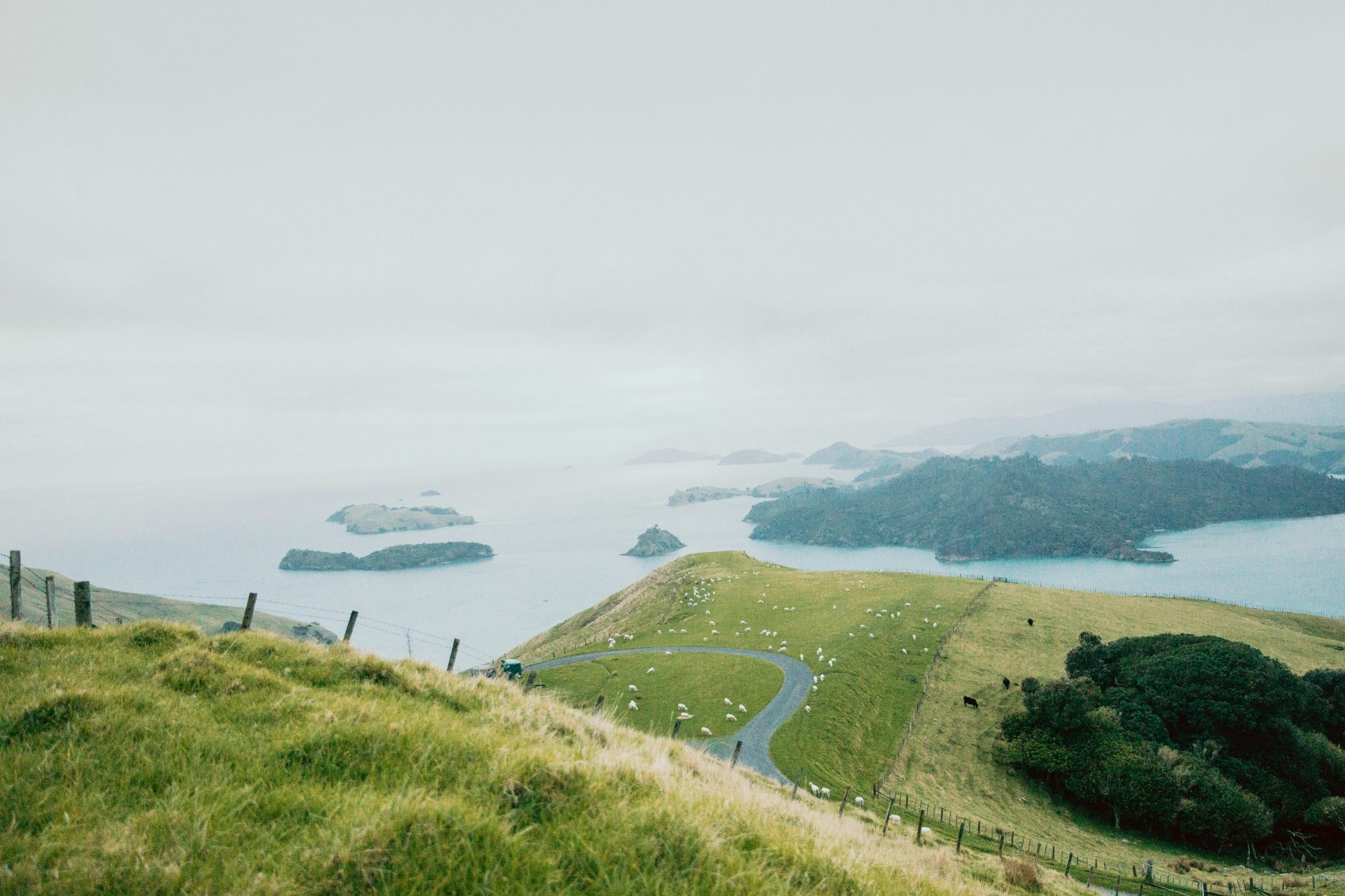
The Coromandel Peninsula sits east of Auckland, separated from the city by the Hauraki Gulf. It’s the closest place to the city where the landscape feels genuinely remote – dense kauri forest interior, white-sand beaches, and a coastline that rewards slow exploration.
Coromandel has a long history as an alternative-living destination. Several small communities of artists, potters, and craftspeople have lived in the peninsula’s hills since the 1970s. The towns – Coromandel, Whitianga, Whangamata – maintain a relaxed, slightly bohemian feel even in peak summer.
In summer (December to February), Coromandel is one of the warmest parts of New Zealand, sitting around 75°F with sea temperatures warm enough for full days at the beach.
Top Things to Do
1. Dig Your Own Spa at Hot Water Beach: The beach is named for an underground hot spring that flows beneath the sand. Two hours either side of low tide, you can dig a hole on the beach and watch it fill with water hot enough to require careful mixing with cold seawater. A unique experience that’s free and surprisingly relaxing.
2. Walk to Cathedral Cove: A 90-minute return walk through coastal headlands to one of New Zealand’s most photographed beaches. The natural rock arch on the beach featured in The Chronicles of Narnia. The walk is moderately steep but well-maintained.
3. Drive the 309 Road: A 13.7-mile gravel road that crosses the peninsula’s spine through dense kauri forest. The road passes the Waiau Kauri Grove – a stand of ancient kauri trees over 600 years old. A genuinely remote drive on a sealed road, with small surprises throughout (a pig sanctuary, a stoneskipping museum).
4. Take the Driving Creek Railway: A narrow-gauge railway built by potter Barry Brickell over 30 years, climbing through native bush to a viewing platform called the Eyefull Tower. The trains are still running daily. The art studio at the base is also worth a visit.
5. Snorkel at Gemstone Bay: A protected marine reserve at Cathedral Cove. The marked underwater snorkel trail passes kelp forests and rocky outcrops with abundant fish. Snapper, kingfish, and maori wrasse are common sightings.
6. Visit Waikawau Bay: A remote, undeveloped beach on the peninsula’s northeastern coast. Reached by a long winding road, but the reward is a 1.9-mile arc of white sand with no commercial development at all – the beach and a DOC campsite.
Don’t Leave Without…
Picking up fresh oysters from a roadside stand near Coromandel town. The Coromandel oysters are farmed in the Hauraki Gulf and sold by the dozen straight from the rack. Eat them on the spot with a squeeze of lemon.
RV Practical Info
- Roads: The main highways are well-sealed but the secondary roads (309 Road, Tapu-Coroglen Road) are narrow and winding. Take them slowly.
- Campsites: Hot Water Beach Top 10 Holiday Park and Cathedral Cove Holiday Park are the most-used coastal options. DOC campsites at Waikawau Bay and Stony Bay are inexpensive and remote.
- Freedom Camping: Restricted across the peninsula. Self-contained vehicles only at designated sites. The Thames-Coromandel District Council enforces fines.
- Scenic Route: Drive State Highway 25 around the entire peninsula loop – a full day’s drive with stops.
Who Is It Best For?
- Couples looking for a relaxed beach getaway from Auckland
- Families with kids who’ll love Hot Water Beach and Cathedral Cove
- Travelers who want a taste of “old” North Island coastal life
Recommended Budget
- Campsites: $9-$15 at DOC sites; $27-$42 at holiday parks
- Meals: $15-$24
- Activities: Most highlights are free; railway tickets are around $27
8. Aoraki/Mount Cook, South Island
The Vibe
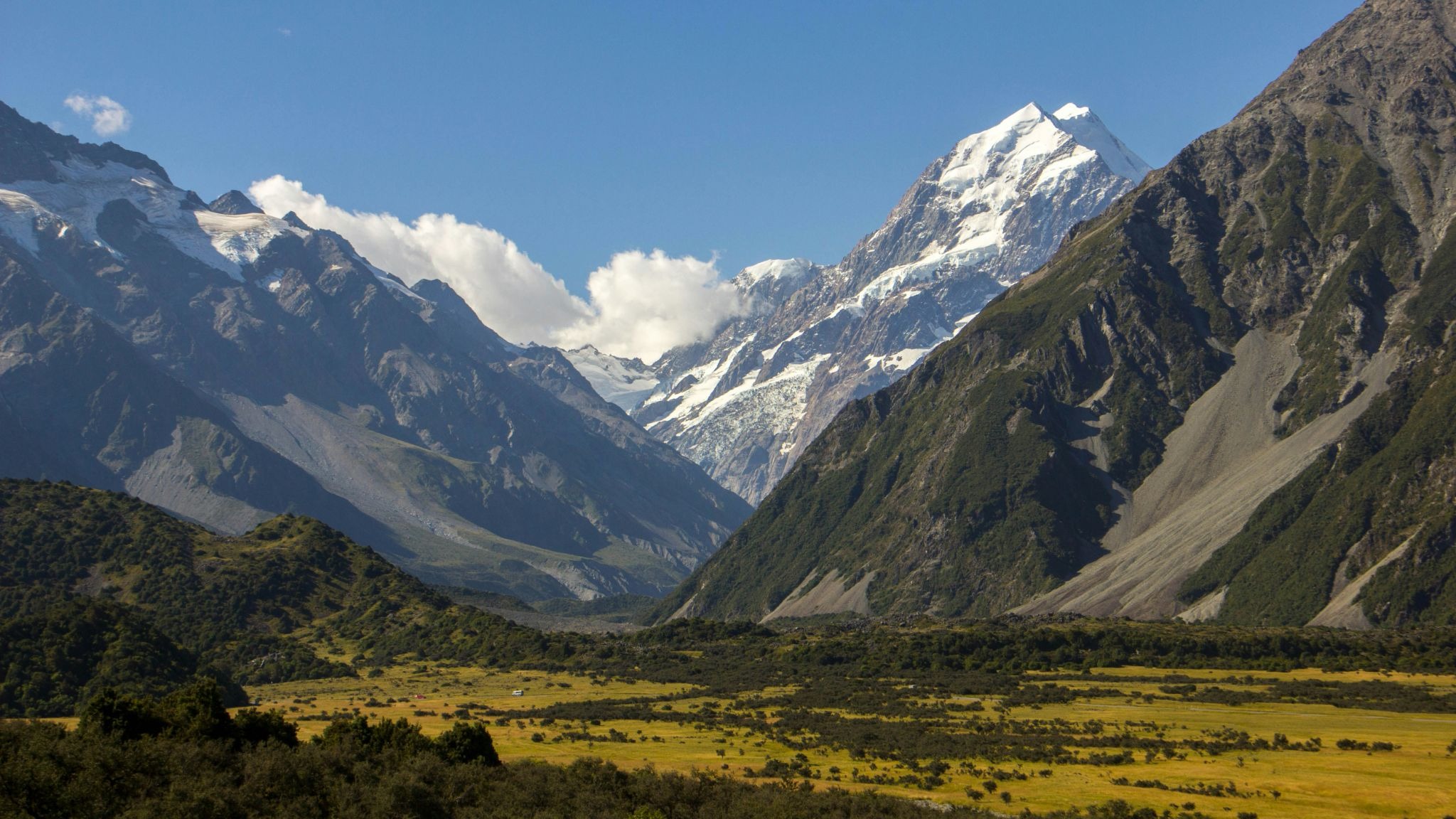
Aoraki/Mount Cook National Park contains the highest peak in New Zealand – Aoraki, at 12,218 feet – and 18 other peaks above 9,840 feet. The valley running into the park, with the Hooker River cutting through and the mountain rising directly ahead, is one of the most arresting drives in the country.
The park is also part of the Aoraki Mackenzie International Dark Sky Reserve – one of only a handful of gold-tier dark-sky reserves in the world. Light pollution is strictly controlled across the wider Mackenzie Basin, and on a clear night, the Milky Way is visible with extraordinary clarity.
The settlement at Mount Cook Village is small – a hotel, a couple of restaurants, and a campground. The point of being here is the mountains and the sky.
Top Things to Do
1. Walk the Hooker Valley Track: A 6.2-mile return walk along the Hooker Valley to the terminal lake of the Hooker Glacier. Three swing bridges cross the river along the route. The walk is mostly flat and accessible to almost any fitness level. The view of Aoraki at the end is unforgettable.
2. Stargaze in the Dark Sky Reserve: On clear, moonless nights, the night sky in the Mackenzie Basin is genuinely overwhelming. Big Sky Stargazing tours run from the Hermitage Hotel and use professional telescopes. The Magellanic Clouds, the Southern Cross, and the galactic core of the Milky Way are all visible.
3. Take a Glacier-Landing Flight: Ski-plane and helicopter tours land on the Tasman Glacier – the largest glacier in New Zealand. Flights typically include 30 minutes of flight time and 10-20 minutes on the ice. The aerial view of the surrounding peaks is unmatched by any ground-based viewpoint.
4. Boat on the Tasman Glacier Lake: The terminal lake of the Tasman Glacier didn’t exist 50 years ago – it formed as the glacier retreated and now contains floating icebergs the size of houses. Boat tours from the Tasman Valley road end navigate around the icebergs.
5. Drive Past Lake Pukaki: The 37-mile drive from Twizel to Mount Cook Village runs along the eastern shore of Lake Pukaki. The lake is a brilliant turquoise color caused by glacial flour, and Aoraki is visible at the head of the lake on clear days. The view from the Lake Pukaki lookout is one of the best photo stops in the South Island.
6. Hike Sealy Tarns: A challenging 2,200-step climb to a series of small alpine tarns with panoramic views back across the Hooker Valley. Often called the “Stairway to Heaven.” A good half-day hike for fit walkers.
Don’t Leave Without…
Spending one full night in the park to see the stars. Most visitors come on a day trip from Christchurch or Queenstown and miss the night sky entirely. The campground at White Horse Hill, 1.2 miles outside the village, is one of the best places in the country for unaided stargazing.
RV Practical Info
- Roads: State Highway 80 from Twizel is a dead-end road into the park. Well-sealed and straightforward in a motorhome.
- Campsites: White Horse Hill Campground is the only campsite at Mount Cook Village. It’s basic (no power, but with toilets and water) and inexpensive. Glentanner Holiday Park, 15 miles outside the park, has full hookups.
- Freedom Camping: Prohibited within the national park. Use designated DOC sites.
- Scenic Route: Drive the Lake Pukaki shore road for the iconic “lake leading to the mountain” view.
Who Is It Best For?
- Hikers who want straightforward access to spectacular alpine scenery
- Stargazers and astrophotographers
- Photographers chasing classic mountain reflections
Recommended Budget
- Campsites: $9-$15 at White Horse Hill; $30-$42 at Glentanner
- Meals: $18-$30 in the village; cooking in your RV is significantly cheaper
- Activities: $48 for boat tours; $240+ for glacier landing flights
9. Abel Tasman National Park, South Island
The Vibe
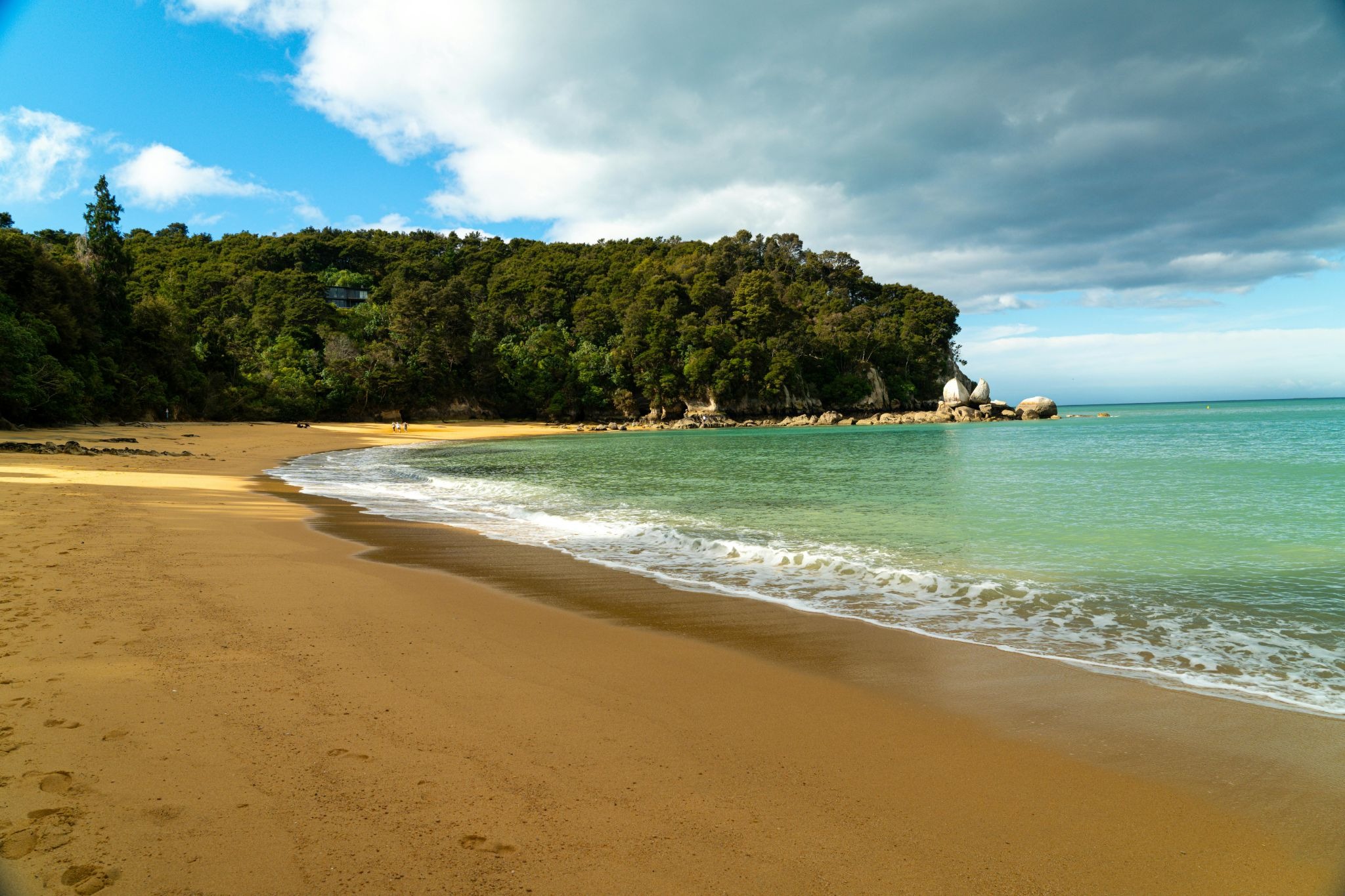
Abel Tasman is New Zealand’s smallest national park but consistently ranked among the most beautiful. The park covers the northwest tip of the South Island, with a coastline of golden beaches, granite headlands, and turquoise water that looks more Mediterranean than Pacific.
The interior is dense, regenerating forest – mostly beech, kanuka, and manuka. Native birds (tui, bellbirds, kereru wood pigeons) are present throughout. The park has no roads – access is by water taxi or foot via the Abel Tasman Coast Track.
In summer (December to March), Abel Tasman is consistently sunny and warm – the “sunniest corner” of New Zealand, with Marlborough’s wine country to the east. Water temperatures in the park’s bays reach around 66°F in February.
Top Things to Do
1. Walk the Abel Tasman Coast Track: One of New Zealand’s nine Great Walks, the 37-mile track follows the coastline through beaches, headlands, and tidal estuaries. Most visitors do it as a 3-5 day hike with hut or campsite bookings, but day-walk sections are easy to organize using water taxi drop-offs.
2. Kayak the Coastline: Sea kayaking is the classic Abel Tasman activity. Guided trips run from Marahau, with full-day, multi-day, and overnight options. The granite outcrops at Split Apple Rock, Pinnacle Island, and Adele Island are common destinations.
3. Take a Water Taxi: Water taxis from Marahau or Kaiteriteri run scheduled services along the coast. They’re used both for transport (drop-off and pickup for hikers) and for sightseeing. Day trips with multiple stops are popular.
4. Visit Split Apple Rock: A perfectly split granite boulder sitting in shallow water just offshore from Kaiteriteri Beach. The rock’s geological story is straightforward (water freezing in a crack split it in two), but the result is genuinely striking. Best photographed at low tide.
5. Swim at Anchorage Bay: A protected horseshoe bay with golden sand, accessed by water taxi or by walking 4 hours from Marahau. The water is clear, calm, and warmer than most New Zealand beaches. The bay also has a DOC campsite for hikers.
6. Explore Cleopatra’s Pool: A natural rock pool with a smooth granite waterslide, accessed by a 30-minute walk from Torrent Bay. The water is fresh and cold but the slide is genuinely fun. A well-known but rarely crowded spot.
Don’t Leave Without…
Visiting one of the cellar doors in Marlborough on the way back from Abel Tasman. The Marlborough Sauvignon Blanc is internationally known, and several wineries (Brancott Estate, Cloudy Bay) have tasting rooms within an hour’s drive of the park.
RV Practical Info
- Roads: State Highway 60 from Nelson to Marahau is straightforward but winding in places. Allow about 90 minutes from Nelson.
- Campsites: Marahau Beach Camp and Old MacDonald’s Farm in Marahau are well-positioned for the park entrance. Kaiteriteri Recreation Reserve has a large campground with full facilities.
- Freedom Camping: Prohibited within the park and in Tasman District. Use designated holiday parks or DOC campsites within the park itself (booking required).
- Scenic Route: Drive State Highway 60 along Tasman Bay through Motueka and Riwaka before reaching the park entrance at Marahau.
Who Is It Best For?
- Kayakers and walkers looking for a coastal multi-day experience
- Travelers who want a warmer, more relaxed alternative to alpine destinations
- Photographers chasing the contrast of golden sand and turquoise water
Recommended Budget
- Campsites: $9-$15 at DOC sites; $27-$42 at holiday parks
- Meals: $15-$24 in Marahau and Motueka
- Activities: $48-$60 for water taxi day trips; $72-$120 for guided kayak trips
10. Auckland, North Island
The Vibe
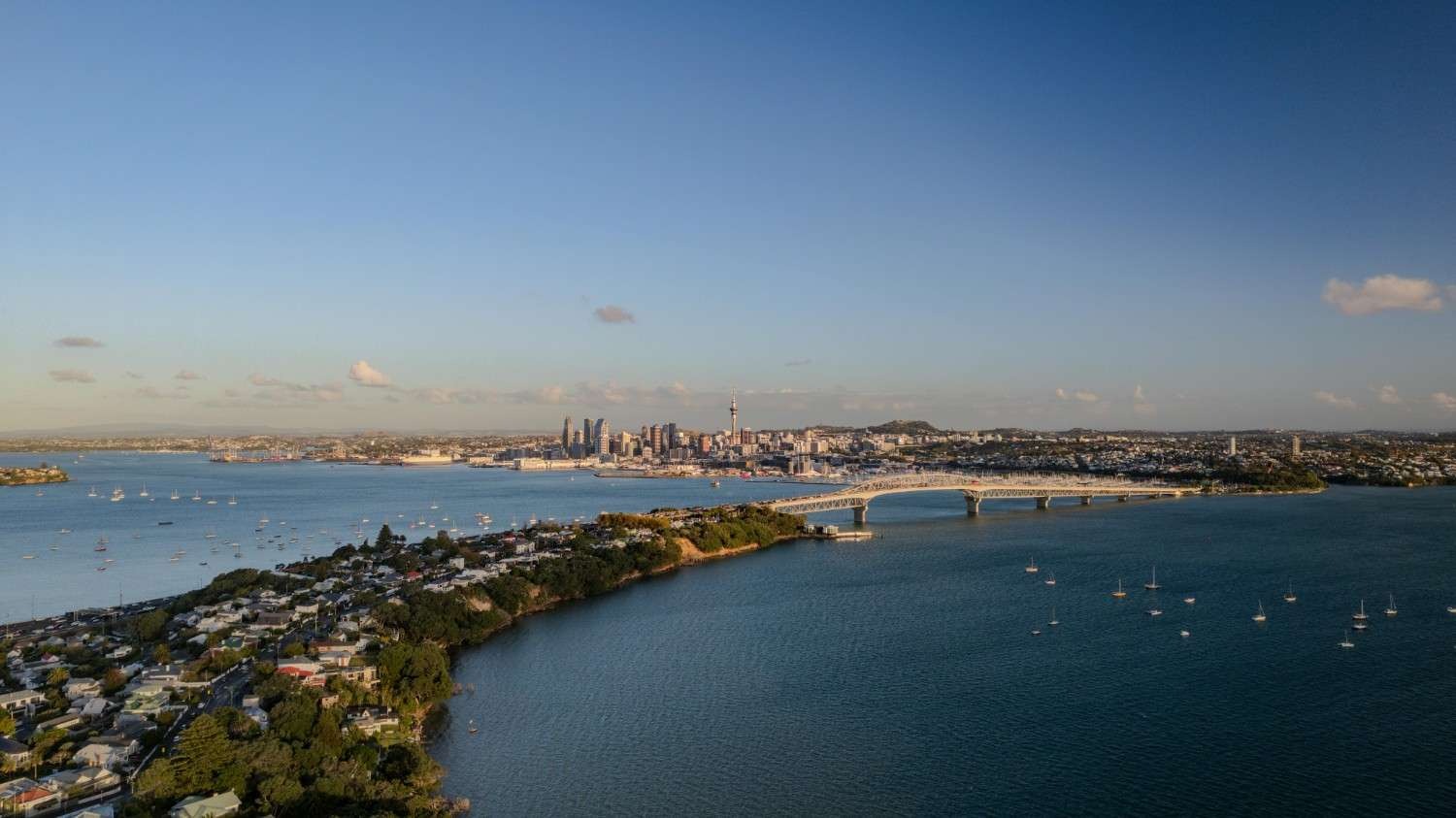
Auckland is New Zealand’s largest city, with around 1.7 million residents – nearly a third of the country’s population. The city sits on an isthmus between two harbors (Waitemata and Manukau), with 53 dormant volcanoes scattered across the urban area. Almost every Aucklander lives within 30 minutes of a beach.
The city has the largest Polynesian population of any city in the world. South Auckland has substantial Samoan, Tongan, Niuean, and Cook Island Maori communities, and the cultural and culinary impact is significant. The Pasifika Festival in March is one of the largest celebrations of Pacific Island culture anywhere.
For most international visitors, Auckland is the arrival point for a New Zealand trip rather than a destination in itself. Two or three days here at the start of a longer journey is typical.
Top Things to Do
1. Climb the Sky Tower: At 1,076 feet, the Sky Tower is the tallest freestanding structure in the southern hemisphere. The observation decks have 360-degree views across Auckland and the Hauraki Gulf. The SkyJump (a controlled-fall base jump) and SkyWalk (an outdoor walk around the rim) are available for those who want them.
2. Take the Ferry to Waiheke Island: A 40-minute ferry from downtown Auckland reaches Waiheke Island – a wine-producing island with over 30 vineyards, beautiful beaches, and a relaxed pace. Day trips with a couple of cellar door visits and lunch at Mudbrick or Cable Bay are the standard format.
3. Climb Mount Eden: The 643-foot volcanic cone in central Auckland has a walking path to the summit and a clearly visible volcanic crater at the top. The 360-degree view of the city is the best free vantage point. Walk down the Domain side for the museum.
4. Visit Auckland War Memorial Museum: The museum’s natural history and Maori cultural collections are extensive, and the museum building itself – sitting on a volcanic crater rim in the Auckland Domain – is one of the city’s landmarks. The cultural performance held three times daily is one of the more reliable Maori cultural shows in the city.
5. Surf at Piha Beach: A 40-minute drive west of central Auckland on the Tasman Sea coast. The black-sand beach with its iconic Lion Rock is one of the most photogenic beaches in the country. The surf is genuinely powerful – swimming should only be done between the lifeguard flags.
6. Walk the Coast to Coast Walkway: A 10-mile urban walking track that crosses Auckland from Waitemata Harbour in the north to Manukau Harbour in the south, linking volcanic cones and parks along the way. A good full-day option for active travelers.
Don’t Leave Without…
Eating at a Pacific Island food market in South Auckland – the Otara Flea Market on Saturday mornings is the most established. Fresh fish, taro, breadfruit, raw fish in coconut cream (oka), and pork buns from Tongan vendors are all available. Most stalls accept cash only.
RV Practical Info
- Roads: Auckland’s motorway network is extensive but congested at peak times (7-9 am and 4-6 pm). Plan around it.
- Campsites: Auckland Top 10 Holiday Park (in North Shore) and Remuera Motor Lodge (in central-east Auckland) are well-positioned for the city. Both have full hookups.
- Freedom Camping: Prohibited in central Auckland. Self-contained vehicles only at limited designated sites in the wider region.
- Scenic Route: Drive west to the Waitakere Ranges and Piha Beach, or north over the Auckland Harbour Bridge toward the Whangaparaoa Peninsula.
Who Is It Best For?
- Travelers arriving in New Zealand who need a base before heading further
- Wine and food lovers planning to visit Waiheke Island
- City explorers who appreciate Polynesian culture and harbor views
Recommended Budget
- Campsites: $30-$48 per night
- Meals: $15-$30; central Auckland is the most expensive eating in New Zealand
- Activities: $27 for Sky Tower; $30-$72 for ferry-and-tasting trips on Waiheke
What Should You Pack for a New Zealand Road Trip
New Zealand weather is famous for changing rapidly – locals call it “four seasons in one day.” The key to packing is layers, waterproof gear, and flexibility.
| Category | Items to Pack | Why You Need It |
| Clothing | Mid-weight insulating layer, waterproof shell jacket, merino wool base layers, smart-casual evening outfits, sturdy walking boots, sun hat, swimwear | Temperatures can swing 27°F in a day on the South Island; UV is intense even on cloudy days |
| RV Essentials | Adapter (Type I plug), levelling blocks, extra blankets, headlamp, condensation cloth, insect repellent, toll transponder | Sandflies in Fiordland are persistent; condensation is significant in cooler highland regions |
| Gear for Activities | Wetsuit (3/2mm for summer surfing), trekking poles, dry bag, snorkel mask, binoculars | Useful for kayaking, snorkeling at marine reserves, and spotting wildlife in protected areas |
| Country-Specific Items | Reef-safe sunscreen (UV index regularly above 11), insect repellent for sandflies, biosecurity-compliant footwear (cleaned thoroughly), eftpos card | Customs is strict about hiking boots brought from overseas; sandfly bites can be severe |
Expert Tips for Travel in New Zealand
1. Don’t Underestimate your daily driving distance: Google Maps drive times are often optimistic. Mountain passes, narrow two-lane roads, and the constant temptation to stop for photos mean a 155-mile drive can easily take six hours. Plan no more than 185 miles of driving per day on the South Island.
2. Book Great Walks and ferry crossings well ahead: The Milford Track, Routeburn Track, and Abel Tasman Coast Track open booking in May for the following October-April season, and popular dates fill within hours. Interislander ferry crossings between Wellington and Picton should be booked at least three months ahead in summer.
3. Use the DOC campsite network: The Department of Conservation maintains over 200 campsites across New Zealand, ranging from basic ($5-$9 per person) to standard ($12-$15). Most are in genuinely scenic locations and many have remarkable views. Download the DOC Campsite app before you arrive to filter by features.
4. Respect freedom camping rules: Freedom camping (overnight stays outside designated sites) is increasingly restricted in New Zealand and requires a self-contained vehicle (with toilet and waste tanks). Fines for non-compliance are $120-$240 and are actively enforced. Use the CamperMate app to find legal stops.
5. Buy a SuperShuttle SIM or Skinny SIM at the airport: Most international roaming plans are slow or expensive in New Zealand. A local prepaid SIM (around $18-$30 with a generous data allowance) is significantly cheaper and gives you usable data in remote areas. Vodafone has the strongest rural coverage.
6. Carry cash for the South Island’s smaller towns: While New Zealand is largely cashless, small fishing towns, DOC campground self-pay boxes, and rural farmers’ markets often only accept cash. Carry $30-$60 in small bills as a backup.
7. Watch for weather windows in Fiordland and the West Coast: Both regions receive heavy rainfall – Milford Sound averages over 22 feet per year. Use the MetService 10-day forecast to plan your visit during a clearer window. The Milford Road sometimes closes for avalanche risk, even in summer.
8. Plan your Cook Strait crossing carefully: The Interislander or Bluebridge ferry between Wellington and Picton is the only way to take an RV between the two islands. Crossings can be rough in southerly weather. Take the morning crossing for the calmest conditions and best views of the Marlborough Sounds.
9. Drive on the left – and pay attention: For visitors from countries that drive on the right, the first day is when accidents happen. Take it slowly, especially at intersections. Many rural intersections are unsignaled and require defensive driving. The road signs use a unique color system (yellow for permanent signs, white for advisory) that takes a moment to adjust to.
Plan Your New Zealand Adventure with Indie Campers
A New Zealand road trip involves more moving parts than most trips; two islands, a ferry crossing, Great Walks that book out months ahead, and freedom camping rules that vary by district. Indie Campers handles the vehicle side of that so you can focus on the route.
- Find the right campervan: Choose from over 8,000 vehicles for RV rental worldwide – from a compact two-berth for a couple’s South Island loop to a six-berth motorhome for a family trip across both islands. Indie Campers’ fleet includes both its own vehicles and vehicles listed by private and professional hosts, which means more options across a wider range of price points.
- No need to retrace your route: Most rental companies require you to return the vehicle where you picked it up – which means either retracing 1,000 miles or paying to fly back. With Indie Campers, pick up your RV rental in New Zealand in Auckland and drop off in Queenstown or Christchurch, and pay for the trip once. The same flexibility applies if you continue to an RV rental in the USA after your New Zealand trip.
- Reserve now, commit later: Booking a New Zealand trip 6-12 months out means plans can change. Reserve your vehicle now and pay in full only 30 days before pick-up. Cancel up to 31 days before with no penalty.
If you’ve never rented a campervan before, the booking is fully digital and support is available 24/7 if anything changes on the road – from Milford Road closures to last-minute route adjustments. If you’ve done it before, you already know what to look for: fleet size, one-way flexibility, and the ability to not pay until 30 days out.
Find Your Campervan for New Zealand →
Everything You Need to Know About New Zealand RV Road Trips
| Destination | Island | Vibe | Best For | Top Things to Do | Budget/Day | Top Campsites | RV Rating | Freedom Camping? | Best Stay |
| Queenstown | South | Adventure | Adrenaline | Bungee, Skiing, Lake cruises | 💰💰💰💰 | Queenstown Lakeview Holiday Park | ★★★★☆ | Restricted | Indie Campers |
| Rotorua | North | Geothermal | Maori culture | Geysers, Mud pools, Hangi | 💰💰 | Rotorua Top 10 | ★★★★☆ | Restricted | Indie Campers |
| Bay of Islands | North | Coastal | Sailing | Sailing, Dolphins, Waitangi | 💰💰💰 | Bay of Islands Holiday Park | ★★★★☆ | Restricted | Indie Campers |
| Wanaka | South | Lakeside | Hiking | Roys Peak, Lone Tree, Skydive | 💰💰💰 | Wanaka Lakeview | ★★★★☆ | Restricted | Indie Campers |
| Milford Sound | South | Wild | Bucket-list | Cruises, Kayaking | 💰💰 | DOC Cascade Creek | ★★★☆☆ | No | Indie Campers |
| Wellington | North | Creative | Culture | Te Papa, Cuba Street | 💰💰💰 | Wellington Top 10 | ★★★☆☆ | No | Indie Campers |
| Coromandel | North | Beach | Couples | Hot Water Beach, Cathedral Cove | 💰💰 | Hot Water Beach Top 10 | ★★★★☆ | Restricted | Indie Campers |
| Aoraki/Mt Cook | South | Alpine | Stargazing | Hooker Valley, Tasman Glacier | 💰💰 | White Horse Hill | ★★★★★ | No | Indie Campers |
| Abel Tasman | South | Coastal | Kayaking | Coast Track, Kayaks | 💰💰 | Marahau Beach Camp | ★★★★☆ | No | Indie Campers |
| Auckland | North | Urban | Arrival | Sky Tower, Waiheke | 💰💰💰💰 | Auckland Top 10 | ★★★☆☆ | No | Indie Campers |
FAQs About Where To Go in New Zealand
What are the best places to visit in New Zealand?
The best places to visit in New Zealand are Queenstown, Milford Sound, Rotorua, the Bay of Islands, and Aoraki/Mount Cook. Together they cover the country’s alpine, fiord, geothermal, coastal, and stargazing attractions across both islands. Add Wanaka, the Coromandel Peninsula, and Wellington for a complete picture.
What is the best time of year to visit New Zealand?
The best time of year to visit New Zealand is December through February, when daytime temperatures range from 64°F to 77°F and daylight runs up to 15 hours per day. This is peak season for hiking, beach activity, kayaking, and Great Walks.
March brings warm weather with smaller crowds and lower prices. June through August is best for skiing in Queenstown and Wanaka, and for clear-sky stargazing in the Mackenzie Basin.
How many days do you need in New Zealand?
You need 14 to 21 days in New Zealand to cover both islands and the main regions. Seven days work for one island; the rest go toward Milford Sound, Aoraki/Mount Cook, the Bay of Islands, and either Rotorua or the Coromandel. Less than 14 days means cutting one of the islands entirely.
What is New Zealand best known for?
New Zealand is best known for its dramatic landscapes packed into a small country, with mountains, fiords, glaciers, beaches, and geothermal fields all reachable within a few hours’ drive.
Other claims to fame include the Lord of the Rings filming locations, the All Blacks rugby team, the world’s first commercial bungee jump at Kawarau Bridge, and Maori culture as a living national identity.
The country’s 1.7-mile-deep Milford Sound and 12,218-foot Aoraki/Mount Cook are among the most photographed natural sites in the southern hemisphere.
Is New Zealand worth visiting?
New Zealand is worth visiting as one of the best self-drive destinations in the world, with a road network and campsite infrastructure built around independent travel.
The country rewards 14 days of attention; the surrounding fiords, alpine parks, and geothermal fields fill the time without repetition. With over 200 DOC campsites, nine Great Walks, and active wildlife including kiwi, whales, and fur seals, the experience starts the moment you leave the airport.
What are the best day trips in New Zealand?
The best day trips in New Zealand are Milford Sound from Te Anau (75 miles south), Cape Reinga from the Bay of Islands (140 miles north), Cathedral Cove from Auckland (110 miles east), and Waiheke Island from Auckland (a 40-minute ferry).
The Crown Range drive between Queenstown and Wanaka is one of the best scenic routes in the country, with the highest sealed road in New Zealand and regular alpine views.
Can you see the stars in New Zealand?
You can see the stars exceptionally well in New Zealand, with the Aoraki Mackenzie International Dark Sky Reserve being one of only a handful of gold-tier reserves in the world.
Peak viewing is from May through August, when nights are longest, and skies are clearest, but year-round visibility is strong outside the main cities.
The Mt John Observatory near Lake Tekapo and the Hermitage Hotel at Aoraki/Mount Cook both run guided stargazing tours with professional telescopes, and the Magellanic Clouds and southern Milky Way core are visible to the naked eye on clear nights.
What is the best place to visit in New Zealand for couples?
The best place to visit in New Zealand for couples is Wanaka, paired with a sunset hike up Roys Peak on a long summer evening when the lake-view photo spot stays lit until past 9 pm.
The 10-mile round-trip trail is challenging but is rewarded with one of the country’s most photographed viewpoints across Lake Wanaka and the Southern Alps.
For a slower-paced alternative, the Tuscan-style cellar doors of Gibbston Valley near Queenstown deliver Pinot Noir tastings without the elevation gain.
What is the best place to visit in New Zealand with family?
The best place to visit in New Zealand with family is Rotorua, where children can see geysers, mud pools, and Maori cultural performances within easy walking distance of each other.
Time the visit around the 10:15 am Lady Knox Geyser eruption at Wai-O-Tapu for the most active viewing, and stop at Whakarewarewa Living Maori Village for a hangi feast cooked underground.
The Polynesian Spa adds geothermal pools at family-friendly temperatures that work especially well with younger kids.
What is the best place to visit in New Zealand with kids?
The best place to visit in New Zealand with kids is the Coromandel Peninsula, where Hot Water Beach and Cathedral Cove hold attention easily for a full day with sand digging, swimming, and short coastal walks.
The wider peninsula covers the Driving Creek Railway, the Waiau Kauri Grove, and Gemstone Bay snorkeling in a way that engages school-age children without overwhelming them. Pair it with a stop at the Auckland War Memorial Museum on the way south for an easy, mostly indoor day.
What is the best place to visit in New Zealand with friends?
The best place to visit in New Zealand with friends is Queenstown, a 6-hour drive south of Christchurch for bungee jumping, jet boating, and skiing. The original 141-foot Kawarau Bridge bungee from AJ Hackett costs around $200-$300 per person and ends with a dunk in the Kawarau River below.
Queenstown’s downtown has a dense lineup of bars, restaurants, and the legendary Fergburger still operating into the early hours, which makes it a strong base for groups.
What are the best places to visit in New Zealand for first-timers?
The best places to visit in New Zealand for first-timers are Queenstown and Milford Sound on the South Island, followed by Rotorua and the Bay of Islands on the North Island.
This combination covers the country’s alpine landscapes, fiord scenery, Maori cultural heritage, and subtropical coastline in a 14-day window. Add Aoraki/Mount Cook or Wanaka as a fifth-stop trip to round out the experience.
What are the best places to visit in New Zealand for solo travellers?
The best places to visit in New Zealand for solo travellers are Wellington and Wanaka, both safe, walkable, and easy to navigate without a group. Renting a bike for the 12-mile Lake Wanaka trail gives you a half-day of independent activity with consistent views and regular passers-by.
The Te Papa museum in Wellington and the Hooker Valley Track at Aoraki/Mount Cook work well as the next solo days – both are accessible by public transport or a short drive from a campervan base.
What are the best places to visit in New Zealand for nature?
The best places to visit in New Zealand for nature are Fiordland National Park for fiord and rainforest access, Aoraki/Mount Cook for alpine hiking and dark-sky stargazing, and Abel Tasman for coastal kayaking with guaranteed wildlife sightings.
A full nature itinerary should also include a Doubtful Sound or Milford Sound overnight cruise, where 8 to 12-hour boat trips regularly produce dolphin, fur seal, Fiordland crested penguin, and waterfall-cliff scenery on a single trip.
New Zealand’s combination of compact geography and immediate wilderness access makes it the most efficient nature country in the southern hemisphere.
Is New Zealand too touristy compared to other destinations?
New Zealand is not too touristy compared to other major destinations and is generally less crowded than comparable European or North American national parks in peak summer. The country handles around 3.4 million international visitors per year, but with a permanent population of just over 5 million spread across 103,000 square miles, the visitor density stays manageable.
Queenstown and Milford Sound can feel busy in January and February, but the Coromandel Peninsula, the Catlins, and the West Coast feel local and uncrowded year-round.