Last Updated: August 21, 2026
Planning an Italy and Greece itinerary 14 days long comes down to one decision, which is how you cross the Adriatic. Most two-week plans answer it the same way, with a flight to Athens and a boat to Santorini.
This guide takes the road-trip version, seven days from Rome down to Bari by campervan, then seven days looping Delphi, Meteora, Olympia, and the Peloponnese out of Athens.
That second week is the part almost nobody writes about, and it’s where mainland Greece hands you the best archaeology and the emptiest roads.
Key Takeaways
- Iconic stops: Rome’s Colosseum, the Amalfi Coast, the Acropolis, and the Meteora monasteries anchor the two weeks.
- Hidden gems: the trulli of the Valle d’Itria in Puglia, and Ancient Olympia at 8 am with nobody else in the stadium.
- Recommended transport: two campervan rentals from Indie Campers, one Italian and one Greek, since there’s no one-way option between the two countries.
- Recommended budget: €1,300 to €2,100 per person for 14 days, plus the two campervan hires and one short flight, covering campsites, fuel, tolls, food, and site entries.
- Best time to go: late April to mid-June, or September, for warm days, open campsites, and archaeological sites you can walk without queuing.
Italy and Greece Itinerary 14 Days: At a Glance
| Day | Base | Top Highlights |
| Day 1 | Rome, Italy | Colosseum, Roman Forum, Palatine Hill, Pantheon, Trastevere. Try cacio e pepe and a supplì. |
| Day 2 | Rome, Italy | Vatican Museums, Sistine Chapel, St Peter’s, Trevi Fountain, Villa Borghese. Try a maritozzo. |
| Day 3 | Sorrento peninsula, Italy | Drive to Naples, Pompeii’s excavated streets, a Neapolitan pizza. Try a sfogliatella. |
| Day 4 | Sorrento peninsula, Italy | Positano, Amalfi, and Ravello by bus and ferry, van left parked. Try delizia al limone. |
| Day 5 | Matera, Italy | The Sassi cave districts, rock-cut churches, the Murgia viewpoint. Try peperoni cruschi. |
| Day 6 | Valle d’Itria, Italy | Alberobello’s trulli, Locorotondo, Cisternino, Martina Franca. Try bombette and burrata. |
| Day 7 | Bari, Italy | Polignano a Mare’s cliff cove, Bari Vecchia, campervan drop-off. Try focaccia barese. |
| Day 8 | Athenian Riviera, Greece | Fly to Athens, pick up the Greek van, sunset at the Temple of Poseidon. Try grilled octopus. |
| Day 9 | Delphi, Greece | Drive to Mount Parnassus, the Sanctuary of Apollo, the Charioteer, Arachova. Try formaela cheese. |
| Day 10 | Kalambaka, Greece | Delphi at opening, then north to Meteora for sunset over the rock pillars. Try local lamb. |
| Day 11 | Ancient Olympia, Greece | Great Meteoron and Varlaam monasteries, then the Rio-Antirrio bridge south. Try Messinian olive oil. |
| Day 12 | Nafplio, Greece | Ancient Olympia’s stadium at opening, Palamidi fortress, Nafplio’s old town. Try seafood by the water. |
| Day 13 | Corinthia, Greece | The theater at Epidaurus, Mycenae’s Lion Gate, the Corinth Canal. Try Nemea red wine. |
| Day 14 | Athens, Greece | Acropolis at 8 am, the Acropolis Museum, Plaka, Monastiraki, drop-off. Try a proper souvlaki. |
Table of Contents
- Why You’ll Love a 14-Day Trip to Italy and Greece
- Best Time to Visit Italy and Greece
- Are 14 Days Enough to Visit Italy and Greece?
- How to Travel Between Italy and Greece
- How to Get Around Italy and Greece
- The Best Italy and Greece Itinerary: 14 Days Day by Day
- Alternative Italy and Greece Itineraries
- Map of Your 14-Day Italy and Greece Itinerary
- Budgeting: How Much Does 14 Days in Italy and Greece Cost?
- Plan Your Italy and Greece Road Trip with Indie Campers
- Italy and Greece Itinerary 14 Days: Your Final Planning Recap
- Frequently Asked Questions (FAQs)
Why You’ll Love a 14-Day Trip to Italy and Greece
These two countries reward the same travel habit, which is showing up early and staying late. Rome, Pompeii, Delphi, and Mycenae all run on the same rhythm: quiet at opening, packed by eleven, and quiet again after four. Two weeks gives you enough mornings to catch the good half of that cycle.
Pairing them also gives you a story that runs in order. You walk the Roman Forum in week one, then in week two you stand in the sanctuary the Romans were copying, and the Charioteer at Delphi predates the Colosseum by roughly five centuries. Our 14-day Europe itinerary runs a wider version of the same road-trip logic across the continent.
The other reason is the contrast in what the driving feels like. Southern Italy is dense, with a UNESCO site or a hilltop town every 40 kilometers and traffic to match. Mainland Greece is the opposite, long empty motorway stretches broken by mountain roads and a coastline that stays in view for hours.
Food splits the same way. Week one moves from Roman pasta to Neapolitan pizza to Puglian orecchiette and burrata, all of it wheat, tomato, and dairy. Week two swaps in grilled fish, lamb, olive oil poured like it costs nothing, and taverna bills roughly a third lower than the Italian equivalent.
And a campervan is what makes the whole thing affordable. A July hotel night in Rome, Sorrento, or the Amalfi towns runs €180 to €450, while a campground pitch in the Italian countryside runs €25 to €50 and a Greek mainland pitch runs €18 to €35. Over 13 nights, that gap covers both rentals.
Best Time to Visit Italy and Greece
Season shapes this trip more than any other choice, because it changes crowd levels at the archaeological sites, whether mountain campsites are open, and how brutal the midday heat gets in both the Peloponnese interior and the Italian south. Here’s what each window means for two weeks across both countries.
Spring (April to June)
Spring is the strongest window for a 14-day Italy and Greece itinerary. Sites are green and quiet, campsites are open without booking months ahead, and daytime temperatures sit in the range where walking Pompeii or Olympia is pleasant rather than punishing.
Average Temperatures: 15 to 26°C (59 to 79°F)
What to expect: mild days, wildflowers across the Peloponnese and the Murgia, moderate crowds, mid-range prices. Late April to mid-June is close to ideal.
Summer (July to August)
Summer is peak season in both countries and the hardest version of this route. The Peloponnese interior and the ground around Meteora regularly clear 35°C, the Amalfi Coast road jams solid, and Italy’s own Ferragosto holiday around 15 August fills coastal campgrounds nationwide.
Average Temperatures: 26 to 36°C (79 to 97°F)
What to expect: hot, long days, warm swimming, top prices, heavy crowds. Book Italian coastal campsites two to four months ahead and plan sightseeing for early morning or late afternoon.
Autumn (September to October)
Autumn is the other sweet spot, and arguably the best overall. September keeps the sea warm on both coasts while the coach traffic thins, and October brings harvest season to Puglia’s olive groves and the Nemea vineyards.
Average Temperatures: 18 to 29°C (64 to 84°F)
What to expect: warm early, quieter sites, lower prices, excellent food. September is the single best month if you can only pick one.
Winter (November to March)
Winter strips the crowds out entirely and drops prices to their floor, but it also closes a lot of the route. Many coastal campgrounds in Puglia and on the Greek mainland reduce hours or shut from November until Easter, and snow can dust the roads around Meteora and the Pindus range.
Average Temperatures: 6 to 16°C (43 to 61°F)
What to expect: cool, short days, empty archaeological sites, lowest prices, patchy campsite availability. Check winter opening for every pitch before you commit to a night.
Are 14 Days Enough to Visit Italy and Greece?
Yes, 14 days is enough for both countries, provided you pick one region of Italy instead of trying to cover the whole peninsula. Seven days runs Rome to Bari comfortably, and seven days covers a genuine mainland Greek loop. Trying to add Venice, Florence, and Santorini to the same fortnight is what turns this trip into a series of airports.
The split that works is one country per week, with the transfer falling on Day 8. That gives you two full days in Rome, two on the Bay of Naples and the Amalfi Coast, three across Basilicata and Puglia, then a Greek week with an easy first evening and an easy last morning either side of five driving days.
If you’re tighter on time, Days 1 to 7 stand alone as a strong southern Italy road trip, and Days 8 to 14 work as a standalone mainland Greece loop. Our 5-day Rome itinerary covers the city end in more depth if you’d rather slow the first week down.
What you walk away with after two weeks is the full arc, from imperial Rome and a buried Roman town to the oracle at Delphi, monasteries on 400-meter rock pillars, the original Olympic stadium, and the Acropolis. Roughly 1,900 kilometers of driving links all of it.
How to Travel Between Italy and Greece
This is the question that decides your whole itinerary, and most two-week guides answer it in one line. You have two real options, a flight or an Adriatic ferry, and they lead to genuinely different trips.
A flight is the right call for most 14-day plans. You drop the Italian van in Bari or Rome, fly to Athens the same morning, and pick up a Greek van that afternoon, which costs you a few hours rather than a full day. Aegean runs direct Bari to Athens flights, and Rome has year-round service if your Italian leg finishes further north.
A ferry is the right call if you want one continuous drive and don’t mind spending a day at sea. Grimaldi Lines sails Brindisi to Igoumenitsa daily, and its published Brindisi to Igoumenitsa timetable shows a 13:00 departure arriving 22:00, plus a 22:30 overnight sailing, with check-in closing two hours before departure. Cars, vans, and campers all board.
Here’s how the crossings compare for a two-week trip.
| Route option | Crossing time | Carries your vehicle | Best for |
| Flight from Bari or Rome to Athens | About 2 hours in the air | No | Most 14-day plans, using one Italian van and one Greek van |
| Ferry from Brindisi to Igoumenitsa | 9 hours by day, or overnight | Yes | Drivers who want a single continuous road trip |
| Ferry from Ancona or Bari to Patras | Roughly 15 to 25 hours, depending on port | Yes | Northern Italian starts, and the closest landing to Athens |
| Ferry from Brindisi or Ancona to Corfu | Half a day | Yes | Adding an Ionian island leg to the Greek week |
One thing to settle before you book a ferry with a rental vehicle on board. Taking a hire campervan out of the country it was rented in, and onto a boat, needs written confirmation from the rental company first, so ask at booking rather than at the port. And because there’s no one-way drop-off between Italian and Greek depots, a ferry crossing means driving the same van back to Italy at the end.
That’s why this guide uses the flight. It hands you a fresh van, a full tank, and a Greek depot that already sits inside your Peloponnese driving radius.
How to Get Around Italy and Greece
Both countries reward a campervan for the same reason, which is that their best sights sit where hotels are scarce or expensive and public transport is thin. Getting the vehicle logistics right is most of the planning work, so here’s what actually matters on this route.
Two rentals, not one: Indie Campers runs multiple Italian depots and a single Greek depot in Athens, so pick up and drop off in Italy, then start fresh in Greece. An RV rental in Rome opens the Italian week, and an RV rental in Athens opens the Greek one, and both include unlimited mileage on company-owned vehicles.
One-way inside Italy: the Italian leg is a genuine point-to-point route, Rome down to Bari, with no backtracking. One-way pick-up and drop-off across Italian depots is what makes that possible, and it saves you the 450-kilometer drive back up the peninsula.
Park outside, walk or ride in: Rome, Naples, Bari Vecchia, and Lecce all run camera-enforced restricted-traffic zones, and Nafplio and Kalambaka have old-town streets no van fits down. Base at a campsite on the edge and use the metro, the bus, or your feet.
Tolls are a real line item in Greece: Greek motorways charge roughly €0.04 to €0.06 per kilometer, and larger vehicles sometimes fall into a higher toll class by height or axle count. Budget for them explicitly on the A7, A8, and A1, and carry both cash and a card.
Licensed campsites, not roadside pitches: Greece tightened its rules on roadside camping in 2025, replacing a long-standing gray area with clearer restrictions and real fines. Book a licensed site even for a single night, and plan your campervan rental in Greece around campsites rather than scenic pull-offs.
Book Italian pitches earlier than Greek ones: Italy’s camping culture is domestic and dense, so Amalfi and Puglia coastal sites fill two to four months ahead for July and August. Greek mainland sites near Meteora and Nafplio are easier, though they still tighten from June onward.
One admin note for 2026 arrivals from outside the EU. The EU’s Entry/Exit System became fully operational on 10 April 2026, replacing passport stamps with a digital record of entries and exits at Schengen borders. Italy and Greece are both inside Schengen, so you register once on arrival, and the flight between them counts as an internal hop with no second check.
The Best Italy and Greece Itinerary: 14 Days Day by Day
Here’s the full day-by-day plan, seven days driving from Rome to Bari and seven days looping out of Athens. Each day covers a morning, afternoon, and evening, plus named places to eat, distances between stops, and one practical tip for travelling by campervan.
Day 1: Ancient Rome
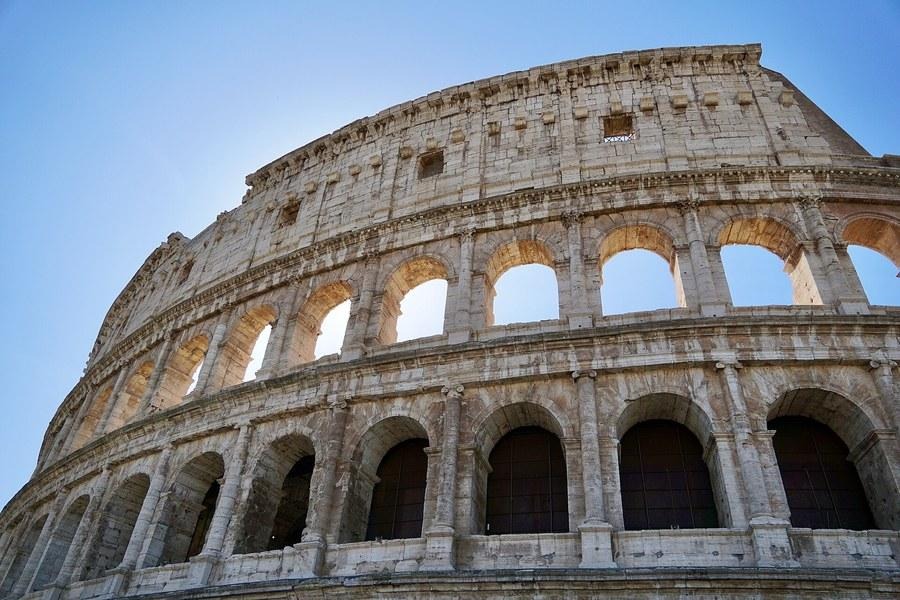
Morning (8:30 AM): Colosseum, Roman Forum & Palatine Hill
Start at the Colosseum at opening, before the amphitheater’s arena floor fills with tour groups. The standard ticket bundles the Roman Forum and the Palatine Hill on the same entry, so you can walk straight from the arena into the Forum’s ruined basilicas and up onto the imperial palace hill above it.
Give the Forum longer than you think you need. The Palatine’s viewpoints over it, from the Farnese Gardens at the top, are where the scale of the place finally lands.
Practical tip: book timed entry online the moment your dates are fixed, and leave the van at a campsite on the Aurelia side of the city. Central Rome is a camera-enforced restricted zone and street parking for a large vehicle doesn’t exist.
Afternoon (1:00 PM): Pantheon, Piazza Navona & Campo de’ Fiori
Walk north into the old center for the Pantheon, the best-preserved building of ancient Rome and still roofed by the largest unreinforced concrete dome ever built. From there it’s a five-minute walk to Piazza Navona and another five to Campo de’ Fiori’s market square.
Lunch here is street food territory. A supplì, the fried rice ball with a molten mozzarella center, plus a slice of pizza al taglio, costs a few euros and keeps the afternoon moving.
Evening (7:00 PM): Trastevere
Cross the Tiber into Trastevere, the ivy-covered neighborhood that stays busy until late without feeling staged. Santa Maria in Trastevere’s gold mosaics are worth ten minutes before dinner.
Da Enzo al 29 is the classic small trattoria for Roman pasta, though the queue starts early and they don’t take late bookings. Order cacio e pepe or carbonara, both Roman inventions built on cheese, pepper, and restraint.
Day 2: Vatican City & Baroque Rome
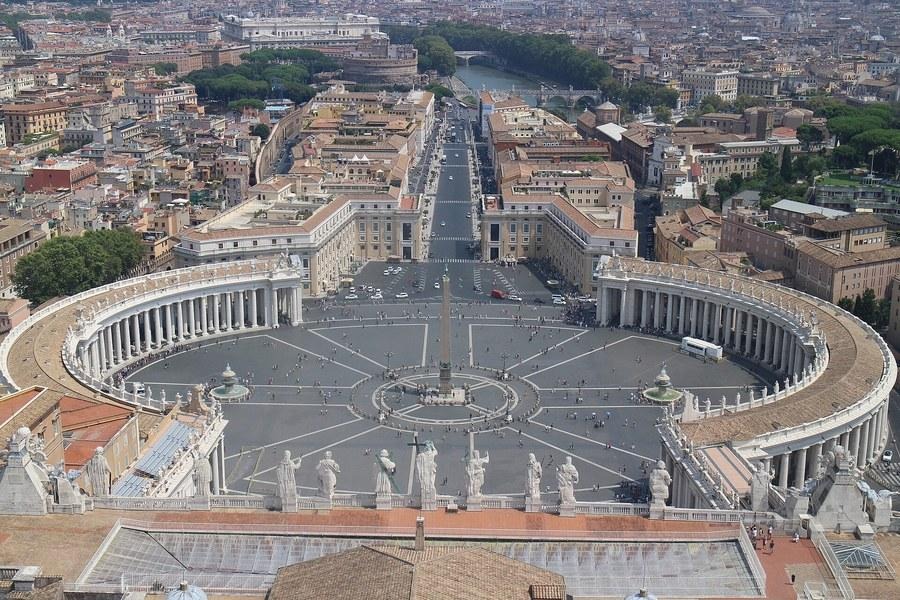
Morning (8:00 AM): Vatican Museums & the Sistine Chapel
Book the earliest Vatican Museums slot you can get. The route through the museums runs about two kilometers of galleries before it reaches the Sistine Chapel, and the crowd density roughly triples between 9am and 11am.
St Peter’s Basilica is free to enter and sits just outside the museum exit, though the security queue across the square moves slowly by mid-morning. The dome climb is worth it for the view down onto Bernini’s colonnade.
Practical tip: the Vatican closes on Sundays except the last Sunday of the month, when entry is free and the queues are enormous. Check the calendar against your Day 2 before locking the rest of the week.
Afternoon (1:30 PM): Castel Sant’Angelo & the Trevi Fountain
Walk the Ponte Sant’Angelo to Hadrian’s mausoleum, later a papal fortress, and climb to its roof terrace for a clean line of sight back to St Peter’s. From there the Trevi Fountain and the Spanish Steps are a linked 25-minute walk east.
Both are busy at any hour, so treat them as photo stops rather than destinations. The quieter reward nearby is Sant’Ignazio’s painted ceiling, which is free and usually near-empty.
Evening (6:00 PM): Villa Borghese & Monti
Head up to the Villa Borghese gardens and the Pincio terrace for sunset over the rooftops and the dome. The Galleria Borghese inside the park holds Bernini’s marble sculptures and runs strictly timed two-hour entries, so book ahead if you want it.
For dinner, Monti sits between the park and the Colosseum and is the neighborhood Romans actually eat in. Finish with a maritozzo, the split sweet bun packed with whipped cream that Rome treats as breakfast and everyone else treats as dessert.
Day 3: Naples & Pompeii
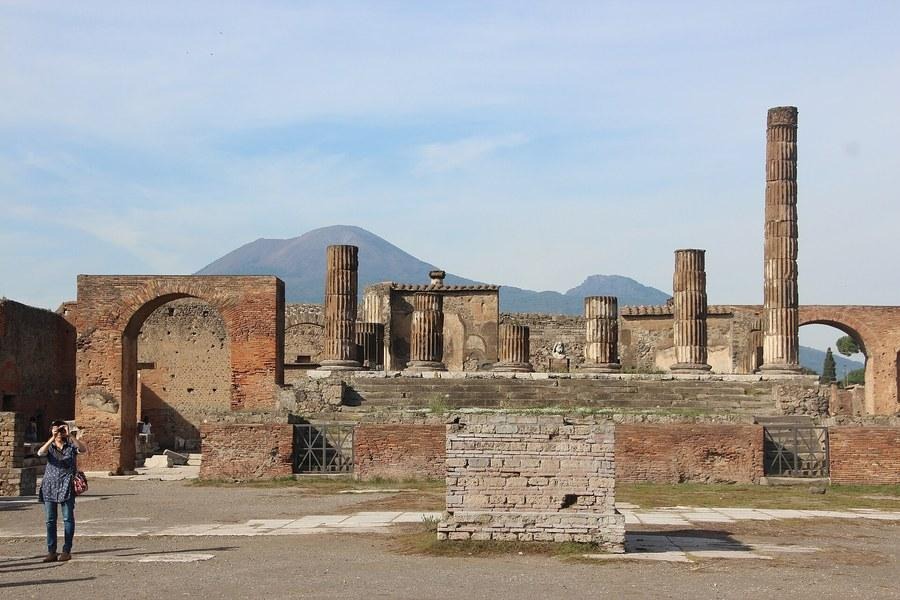
Morning (8:30 AM): Drive from Rome to Naples
Leave Rome early and take the A1 south to Naples, roughly 225 kilometers and 2 hours 30 minutes with tolls. Traffic thickens badly on the approach, so aim to be past the ring road before 11 AM.
Naples itself rewards a walk down Spaccanapoli, the dead-straight alley that splits the old city, though parking a van anywhere near it isn’t realistic. Leave it at your Sorrento-peninsula campsite and take the Circumvesuviana train in if you want the city on foot.
Practical tip: book an RV rental in Naples instead if you’d rather skip Rome and start the trip here, which cuts the first driving day out entirely.
Afternoon (1:00 PM): Pompeii
Pompeii sits between Naples and Sorrento, so it slots into the drive with no detour. Allow three hours minimum for the excavated streets, the forum, the amphitheater, and the plaster casts, and bring more water than feels sensible because shade is scarce.
If Pompeii’s scale feels overwhelming, Herculaneum nearby is a quarter of the size and better preserved, with wooden beams and upper floors still standing. Doing one properly beats rushing both.
Evening (6:30 PM): Naples Pizza & the Sorrento Peninsula
Pizza in Naples is the point of the day’s end. L’Antica Pizzeria da Michele has been serving two toppings, marinara and margherita, since 1870, and the queue outside is part of the deal.
Then drive on to a campsite on the Sorrento peninsula, about 50 kilometers and an hour and a quarter from Naples. Sleeping here rather than in Naples puts you 20 minutes from Positano tomorrow, which is the whole trick to the Amalfi Coast.
Day 4: The Amalfi Coast Without the SS163 Stress
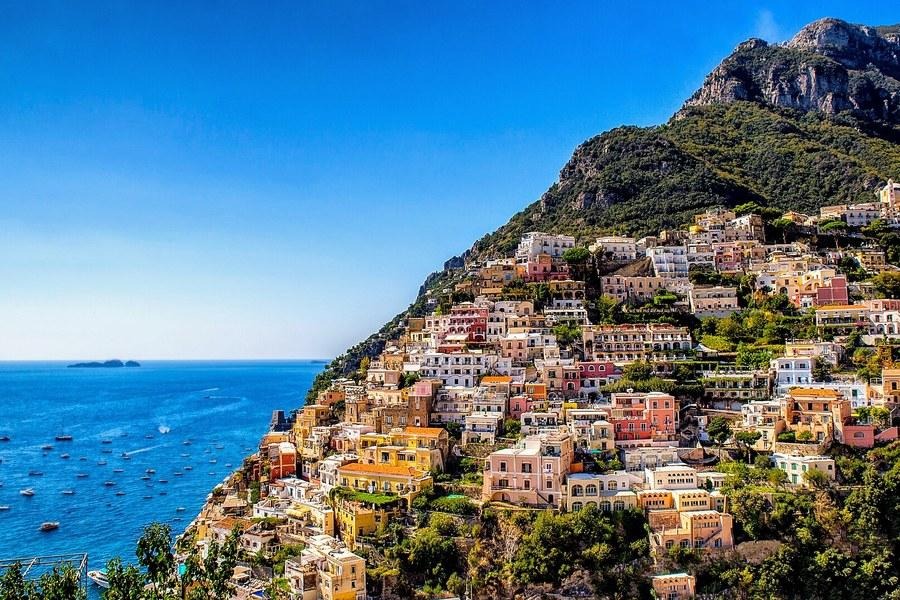
Morning (8:30 AM): Positano by Bus or Ferry
The Amalfi Coast is the one day on this route where you should leave the van parked. The SS163 coast road threads more than a thousand hairpins with stone walls on one side and a drop on the other, and it runs a limited alternating number-plate scheme around the spring holidays that catches out rental drivers.
Take the SITA bus or the seasonal ferry from Sorrento to Positano instead. The bus rides the cliff edge without you having to steer it, and the ferry gives you the postcard view of the town stacked up the hillside.
Practical tip: buy bus tickets before boarding at a tabaccheria, and start early. Both the buses and the ferries fill from mid-morning in summer, and the return legs are worse than the outbound ones.
Afternoon (1:00 PM): Amalfi & Ravello
Continue along the coast to Amalfi for the striped cathedral and its steep flight of steps, then take the local bus up to Ravello, 350 meters above the sea. Villa Rufolo and Villa Cimbrone’s terrace gardens are the two best coastal viewpoints on this stretch, and both are quieter than anything down at sea level.
Lunch in Amalfi means scialatielli ai frutti di mare, the thick hand-cut pasta the coast serves with whatever came in that morning. Finish with a delizia al limone, the lemon-cream dome that’s the local answer to a cake.
Evening (7:00 PM): Back to the Peninsula
Head back to Sorrento in the late afternoon and eat on the peninsula, where prices drop noticeably compared with Positano. Sorrento’s own center is walkable and busy in a manageable way.
This is also the night to sort provisions for the drive east tomorrow. Basilicata’s roads are good but sparse, and stocking the van’s kitchen here is cheaper than doing it on the way.
Day 5: Matera & the Sassi
Morning (8:00 AM): Drive to Basilicata
Today is the trip’s longest Italian drive, roughly 300 kilometers and 3 hours 30 minutes from the Sorrento peninsula across to Matera. The route climbs inland over the Apennines and the landscape changes completely, from citrus terraces to bare limestone plateau.
Break the drive at a service stop on the A16 rather than pushing straight through. Matera’s approach roads are narrow enough that arriving tired isn’t the plan.
Practical tip: stay at a masseria-style site near the Basilicata border, from around €20 a night, with a maximum vehicle length of about 7 meters given the farm access road. Confirm electric hookup directly, since some of these sites take only a handful of vans a night.
Afternoon (1:30 PM): The Sassi Cave Districts
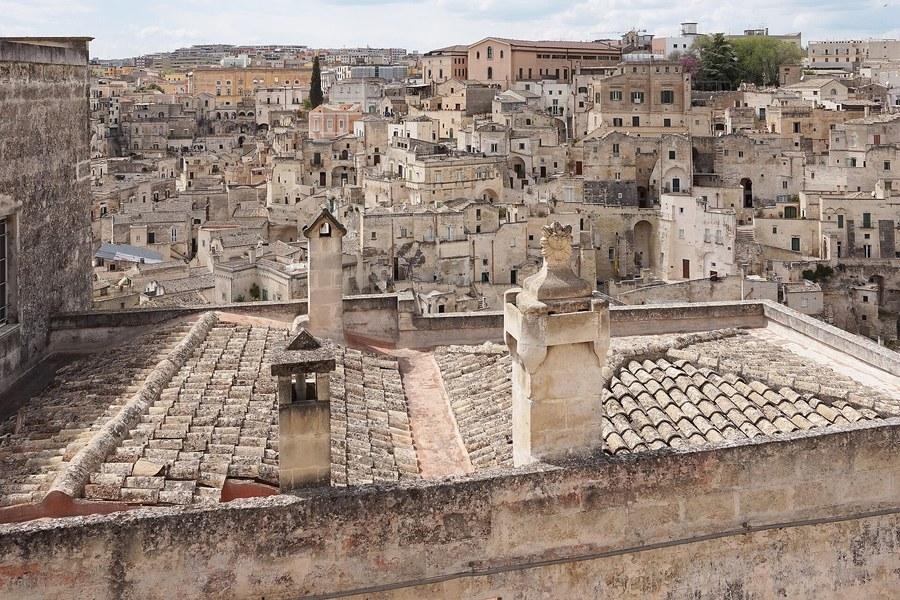
Matera’s two Sassi districts are cave dwellings cut into a ravine and inhabited continuously for thousands of years, abandoned as slums in the 1950s and now a UNESCO site. Walk down through Sasso Caveoso, visit a preserved Casa Grotta to see how families and livestock shared one room, and cross to the rock-cut churches on the far side of the gorge.
The stairs are relentless, and the stone throws heat back at you all afternoon. Go slowly and stop for a granita.
Evening (7:00 PM): The Murgia Viewpoint
Drive or walk out to the Belvedere di Murgia Timone on the opposite side of the ravine for the view back at the whole city. At sunset, the Sassi light up in tiers, and it’s the single best photograph of the Italian week.
Dinner is Matera’s own bread, a huge sourdough loaf with a protected designation, alongside peperoni cruschi, the dried sweet peppers fried until they shatter. Crapiata, the local pulse and grain soup, is the other dish to look for.
Day 6: Alberobello & the Valle d’Itria
Morning (9:00 AM): Alberobello’s Trulli
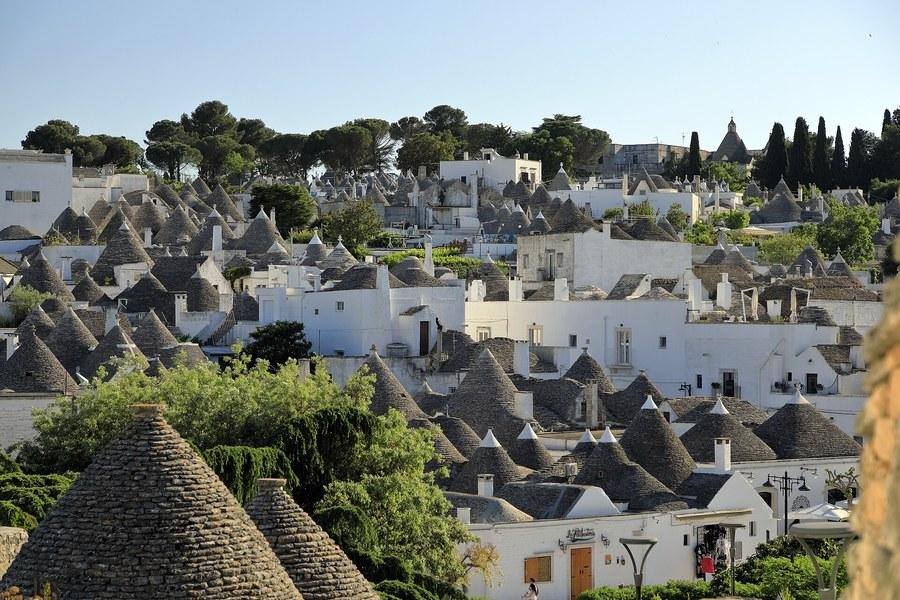
Alberobello sits about 70 kilometers east of Matera, a little over an hour on the SS96 and SS100. Its two trulli districts, Rione Monti and Rione Aia Piccola, hold more than a thousand of the conical dry-stone houses found nowhere else on earth.
Rione Monti is the busier and more commercial of the two, so start in Aia Piccola, where people still live in them. Both districts are pedestrian-only with no vehicle access whatsoever, and the streets narrow past the point any van could pass.
Practical tip: park at a designated lot on the edge of town and walk in. Aree di sosta serving camper traffic are signposted from the SP237 approach and most have dump and fresh-water points.
Afternoon (1:00 PM): Locorotondo, Cisternino & Martina Franca
The Valle d’Itria’s three white hill towns sit within 15 kilometers of each other, threaded together by provincial roads cutting through olive groves and dry-stone walls. Locorotondo is the prettiest, Cisternino the most lived-in, and Martina Franca the grandest, with a baroque center out of scale with its size.
Cisternino is where to eat. Its butcher shops grill bombette, rolled pork parcels stuffed with cheese, to order at the counter, and you eat them at a plastic table with a glass of local red.
Evening (6:00 PM): A Night Among the Olive Groves
Camping dei Trulli near Alberobello runs from around €22 a night with electric hookup and takes vans up to 8 meters, with pitches set among olive trees and trulli visible from several spots on the property. Book a week ahead in shoulder season and a month ahead in July or August.
This is the night the campervan justifies itself in Puglia. Waking up inside the trulli landscape isn’t something a day trip from a Bari hotel replicates.
Day 7: Polignano a Mare & Bari
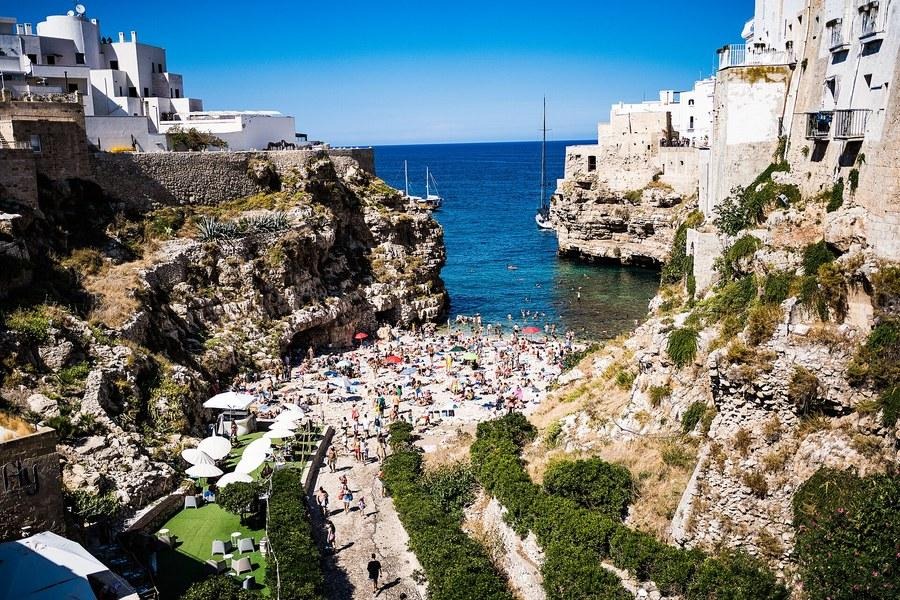
Morning (9:00 AM): Polignano a Mare
Drive north to Polignano a Mare, about 35 kilometers down the SS16 Adriatica, where the old town sits directly on a limestone cliff above the sea. Lama Monachile, the pebble cove wedged in a ravine beneath a Roman bridge, is the view everyone comes for.
Walk the clifftop lanes and out to the terraces cut into the rock. Then stop for a caffè speciale, the local iced coffee with lemon zest and amaretto that Polignano claims as its own.
Afternoon (12:30 PM): Bari Vecchia
Bari’s old town is a tangle of alleys narrow enough for laundry lines to cross overhead, with the Basilica di San Nicola at its heart and grandmothers rolling orecchiette on doorstep tables in the mornings. It’s a working neighborhood rather than a museum piece.
Lunch is focaccia barese, the tomato and olive flatbread sold by weight from bakeries around the old town. Add a panzerotto, the fried filled turnover, if you’re eating on the move.
Practical tip: Bari Vecchia is camera-enforced and restricted to residents and permit holders. Park along the Lungomare or in a bordering car park and walk in, and use the area di sosta near the Lungomare for a dump and water fill before drop-off.
Evening (5:00 PM): Campervan Drop-Off
Return the van to the Bari depot at the end of the Italian leg. An RV rental in Bari also works as a starting point if you’d rather run this route in reverse, from Puglia up to Rome.
If your flight is early tomorrow, the campsite at San Giorgio near Torre a Mare is the closest pitch to the depot, from around €26 a night with electric and water hookup and space for vans up to 9 meters. Bari’s airport sits 8 kilometers northwest of the center, with a shuttle bus to Bari Centrale in about 20 minutes.
Day 8: Fly to Athens & Cape Sounion
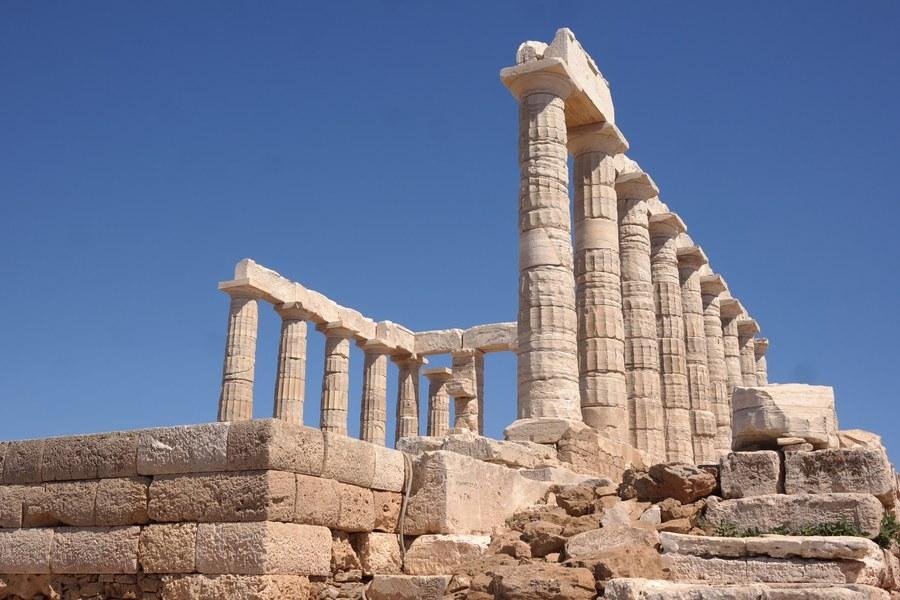
Morning (8:00 AM): Bari to Athens
Fly Bari to Athens in the morning and you’ll be at the Greek depot by early afternoon with most of the day intact. Athens International sits roughly 30 kilometers southeast of the center, connected by the M3 metro in about 40 minutes or a flat-rate taxi.
Pick up the Greek campervan, stock up at a supermarket on the way out, and point the van at the coast road. Greek supermarket prices run below Italian ones, so this is a good shop to make count.
Practical tip: carry an International Driving Permit alongside your licence if you hold a non-EU one, and check the young-driver policy if anyone in the group is under 25.
Afternoon (1:00 PM): The Athenian Riviera
Drive south out of the city along the Athenian Riviera, the coast road that strings together beach towns, coves, and Lake Vouliagmeni, a geothermal lake fed by underground springs and warm year-round at around 24°C. It sits 25 kilometers from central Athens, about half an hour, and makes an easy first swim.
Keep going down the coast toward Sounion, stopping at Varkiza or one of the smaller coves. The whole run to the cape is about 70 kilometers and an hour without stops.
Evening (5:00 PM): Sunset at the Temple of Poseidon
Cape Sounion’s Temple of Poseidon stands on a cliff at the tip of the Attic peninsula, and its surviving marble columns catch the light directly at sunset once the day-trip coaches have left. It’s the best possible first evening in Greece, and it costs you a single short drive.
Camp on the Athenian Riviera afterwards. You’re an hour from Athens, an hour from the Corinth Canal, and already inside the driving radius that makes the rest of this week work.
Day 9: Delphi & Mount Parnassus
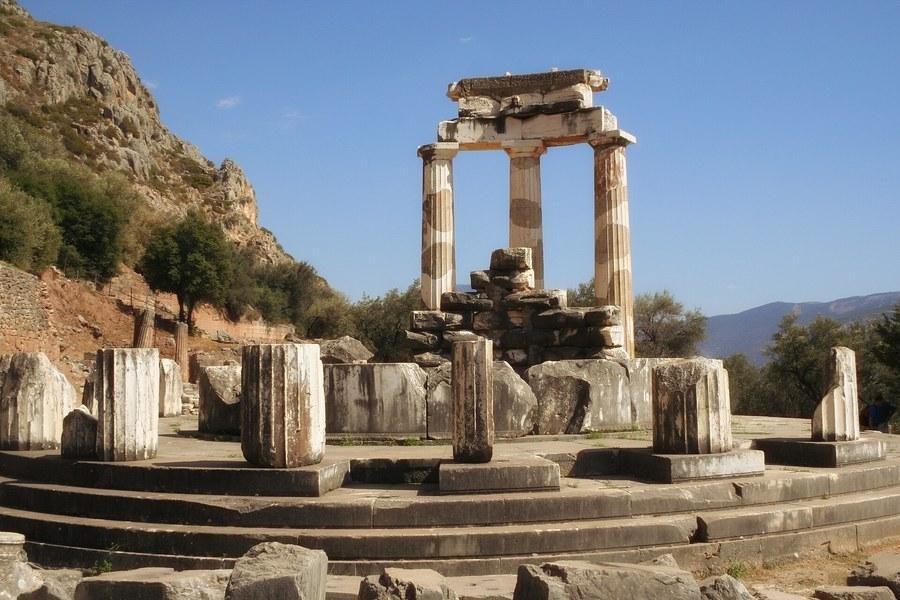
Morning (8:00 AM): Drive to Delphi
Delphi sits 180 kilometers northwest of Athens, about 2 hours 30 minutes, with the last stretch climbing the slopes of Mount Parnassus. The drive is straightforward motorway until the mountain road, which is well surfaced but tight in places.
Fuel up before you leave the Athens basin. Stations thin out on the climb and the mountain villages beyond Delphi aren’t the place to run low.
Practical tip: the Delphi site is built on a slope, and the walk up to the stadium is steeper than it looks on the map. Go before the afternoon heat if you can, and carry water because there’s little shade on the Sacred Way.
Afternoon (12:30 PM): The Sanctuary of Apollo
Delphi was the place the ancient Greek world came to ask questions, and the site climbs from the Sacred Way past treasuries and the Temple of Apollo to a theater and a stadium cut into the mountainside. The view down the valley of olive groves toward the Gulf of Corinth is as much the point as the ruins.
The museum next door holds the Charioteer of Delphi, a life-size bronze from around 470 BCE with inlaid eyes still in place. It predates the Colosseum you walked through in week one by roughly five centuries, and seeing them eight days apart is the argument for pairing these two countries.
Evening (6:00 PM): Arachova
Arachova sits 12 kilometers east of Delphi on the mountainside, a stone-built village that doubles as Greece’s ski town in winter and stays busy in summer. It’s the best food stop on this leg.
Look for formaela, the local hard cheese served grilled and squeezed with lemon, plus mountain lamb and hilopites, the hand-cut egg pasta. Camp near Delphi or Arachova and you’ll be at the site gate at opening if you want a second pass tomorrow.
Day 10: Delphi to Meteora
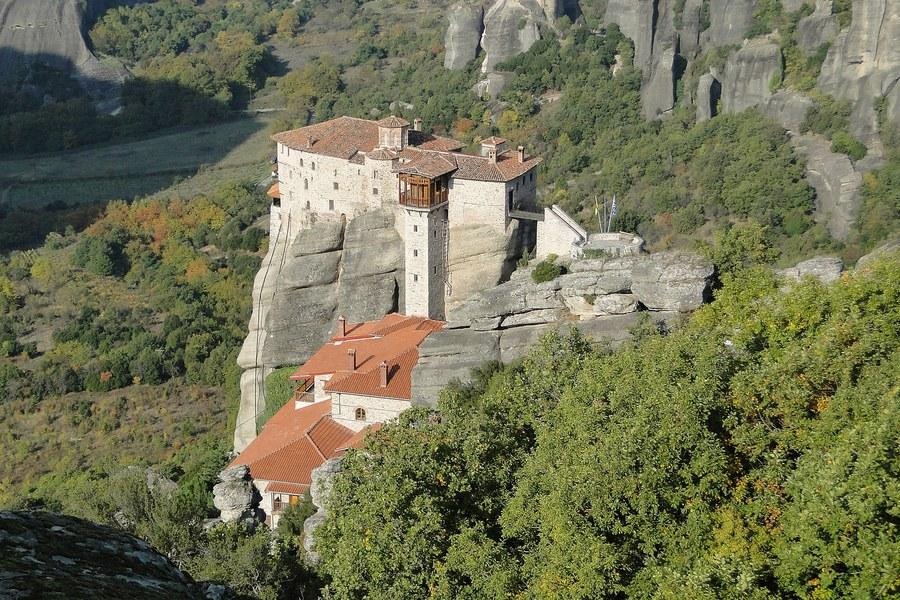
Morning (8:00 AM): Delphi at Opening or the Gorge
If yesterday’s afternoon ran short, be at the Delphi gate at opening for the empty version of the site. Otherwise, walk part of the gorge below the sanctuary or drive up to the Corycian Cave on Parnassus for a completely different landscape.
Either way, be on the road north by late morning. Today is a driving day with a good payoff.
Afternoon (12:00 PM): North to Kalambaka
The drive from Delphi to Kalambaka runs about 235 kilometers and three hours, crossing central Greece through Lamia and up into Thessaly. The last half hour is the one you’ll remember, as the Meteora rock pillars come into view above the plain.
Kalambaka sits directly beneath them. Park at a designated lot on the edge of the old town rather than trying the narrow streets, and set up at a campsite in the town or at Kastraki just north of it.
Practical tip: each Meteora monastery closes on a different weekday and the schedules shift seasonally, so confirm current opening days before you plan tomorrow morning. Getting this wrong is the most common way visitors lose the Meteora day.
Evening (6:00 PM): Sunset Over the Rock Pillars
Drive the loop road up between the monasteries in the late afternoon and stop at the Psaropetra viewpoint for sunset. The pillars go orange, the monasteries sit on top of them like they were dropped there, and there’s almost nobody around because the coach tours run mornings.
Dinner in Kalambaka is Thessalian, which means slow-cooked lamb, wild greens, and local Tsipouro if you’re not driving again tonight. Eat early, because tomorrow starts at the monastery gates.
Day 11: Meteora Monasteries & the Drive South
Morning (8:30 AM): Great Meteoron & Varlaam
Six of the original monasteries are still active, and two are enough. The Great Meteoron is the largest and oldest, founded in the 14th century on the highest pillar, and Varlaam sits a short drive away with a rope-and-net winch still hanging from the tower that hauled supplies up before the steps were cut.
Be at the gates at opening. By 10 am the coach parks fill and the stairways turn into single-file queues.
Practical tip: the dress code is enforced, so shoulders and knees covered for everyone and skirts for women, though most monasteries lend wrap skirts at the entrance. Each charges a small separate entry fee in cash.
Afternoon (12:30 PM): South Over the Rio-Antirrio Bridge
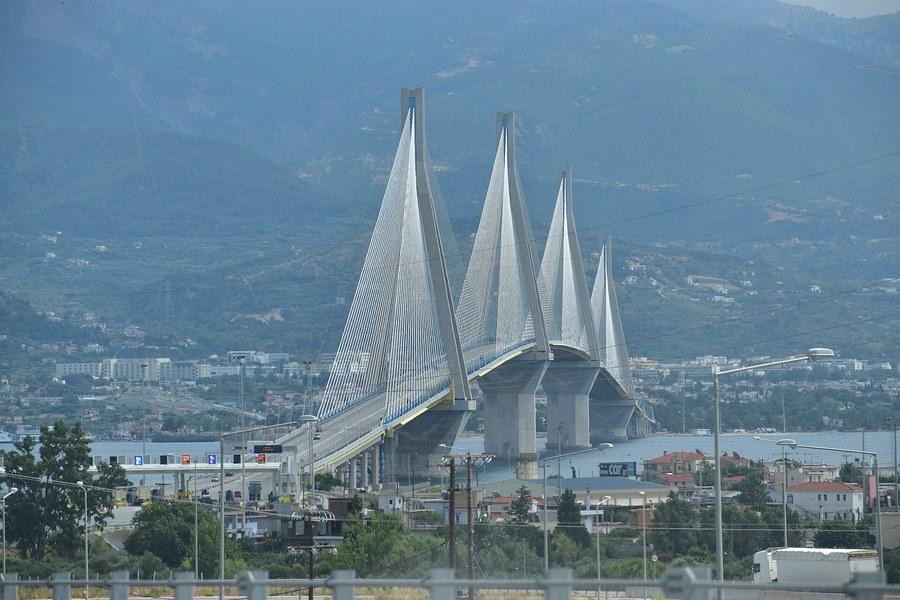
The drive from Meteora to Ancient Olympia is the trip’s longest, roughly 350 kilometers and four hours, running south through central Greece and crossing the Gulf of Corinth on the Rio-Antirrio bridge. The bridge is a toll crossing and one of the longest cable-stayed spans in the world, and the approach view is worth the fee on its own.
Break the drive around Nafpaktos on the northern shore, a small Venetian-walled harbour town that almost nobody stops at. From the bridge it’s another 90 minutes to Olympia.
Evening (7:00 PM): Ancient Olympia Village
Camp at Olympia so you’re at the site for opening tomorrow. The modern village is small and geared entirely to the ruins, which works in your favor for a quiet night.
Messinia’s olive oil is the regional product here, and it’s genuinely worth carrying home. Dinner is kokoretsi or grilled lamb chops with a Peloponnese red.
Day 12: Ancient Olympia to Nafplio
Morning (8:00 AM): The Original Olympic Stadium
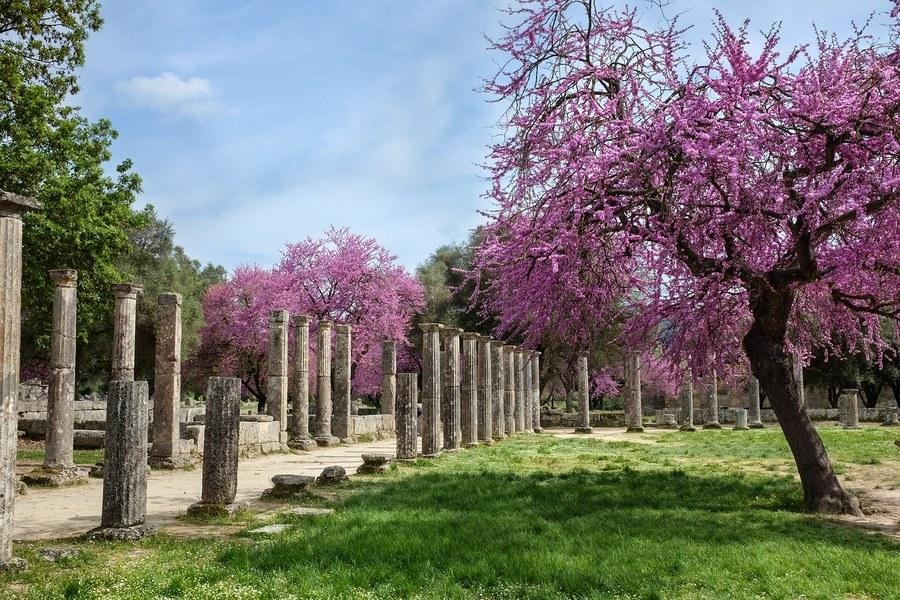
Be at Ancient Olympia at opening and walk into the stadium before anyone else does. The site holds the Temple of Zeus, the workshop where Pheidias built the lost 12-meter statue of the god, and the running track where the Games ran every four years for a millennium.
The museum across the road holds the Hermes of Praxiteles and the Nike of Paionios. Entry to the site and museum together runs around €12 per adult.
Practical tip: the stadium tunnel and the track are exposed with no shade at all. In July or August, the difference between 8 am and 11 am here is the difference between a good morning and a miserable one.
Afternoon (12:30 PM): Drive to Nafplio
Nafplio sits about 175 kilometers east, roughly 2 hours 15 minutes across the Peloponnese. The route crosses the peninsula’s interior, which is emptier and more mountainous than the coastal drives you’ve done so far.
Nafplio was Greece’s first capital after independence and it looks the part, with Venetian houses, marble streets, and two fortresses above the harbour. Park at a lot on the edge of the old town and walk in, because the streets weren’t built for a campervan.
Evening (6:00 PM): Palamidi & the Old Town
The Palamidi fortress sits on the hill above town, reached by a road or by a staircase locals will tell you has 999 steps. Either way, the view over the Argolic Gulf at golden hour is the best in the Peloponnese.
Eat by the water in the old town, where a seaside restaurant runs €20 to €35 a head against €12 to €20 at a village taverna. Order whatever fish came in and a bottle of Nemea red.
Day 13: Epidaurus, Mycenae & the Corinth Canal
Morning (8:30 AM): The Theater at Epidaurus
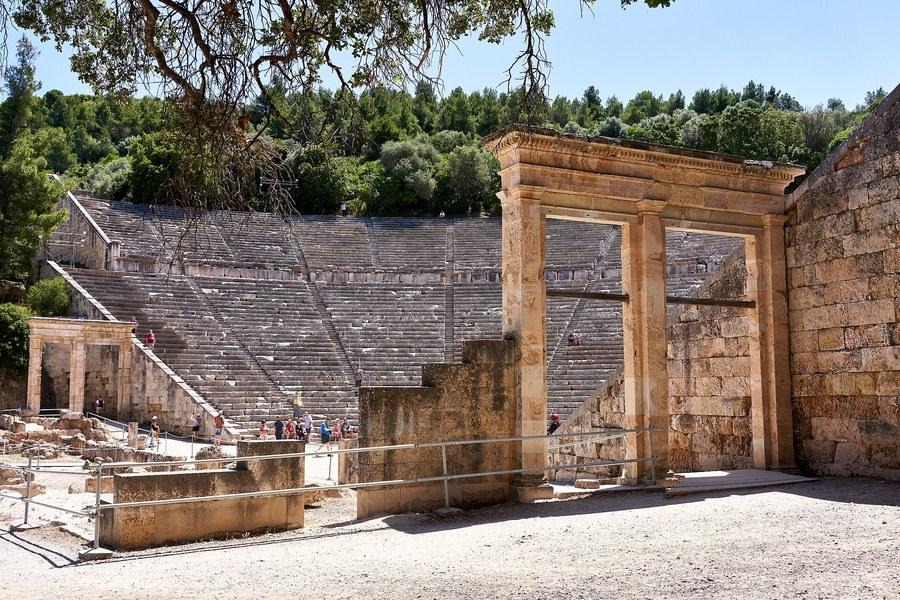
Epidaurus is 30 kilometers east of Nafplio and holds the best-preserved ancient theater in Greece, a 14,000-seat bowl built into the hillside in the 4th century BCE with acoustics that still carry a whisper from the stage to the back row. Somebody will test it while you’re there, and it works.
The surrounding sanctuary was a healing complex dedicated to Asklepios, with a stadium, baths, and dormitories where patients slept for curative dreams. Entry runs around €12 per adult.
Practical tip: if your trip falls in July or August, check the Athens and Epidaurus Festival schedule. Ancient drama is still staged in this theater on summer weekends, and seeing a performance there is a different experience from touring it.
Afternoon (12:30 PM): Mycenae’s Lion Gate
Mycenae sits 55 kilometers northwest, the fortified hilltop citadel that gave the Bronze Age Mycenaean civilisation its name and the setting Homer used for Agamemnon. Walk in under the Lion Gate, the oldest monumental sculpture in Europe, then down into the cistern and out to the Treasury of Atreus, a beehive tomb with a corbelled dome 13 meters across.
Entry runs around €12 per adult and the site is compact enough for two hours. The Nemea wine region, home of the Agiorgitiko grape, sits 20 minutes off the motorway from here if you want a tasting stop.
Evening (5:00 PM): The Corinth Canal
Stop at the Corinth Canal on the way back toward Athens, about 60 kilometers north. The canal is a six-kilometer cut through solid rock joining the Aegean and the Ionian, narrow enough that ships pass one at a time, and you watch it from a pedestrian bridge directly overhead.
Ancient Corinth and the Acrocorinth fortress hill sit seven kilometers south if you have the light for it. Then camp near the Athens coast, an hour from the canal, ready for an early Acropolis.
Day 14: Athens & Drop-Off
Morning (8:00 AM): The Acropolis at Opening
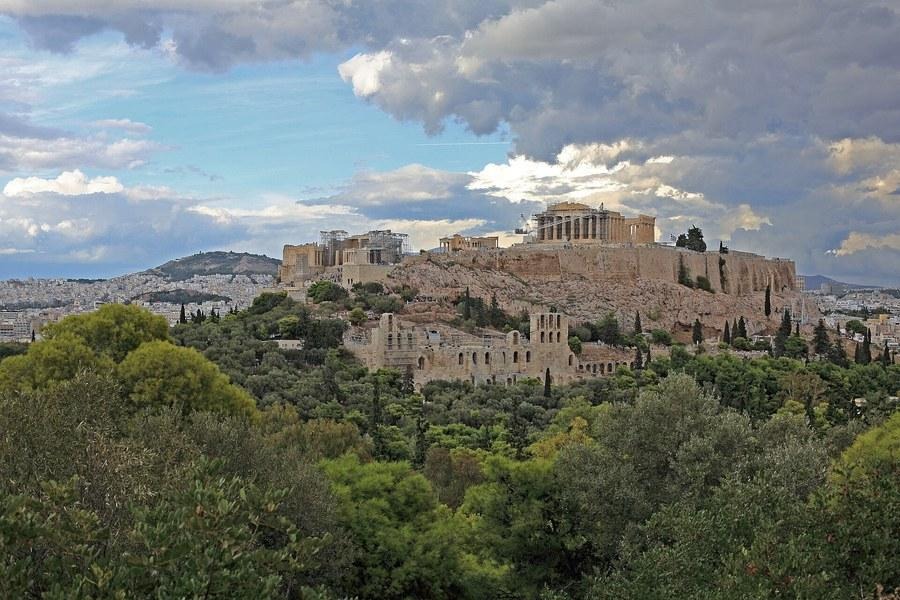
Be at the Acropolis for the 8am gate. This is the single most crowded site in Greece and the first hour is the only one where you can stand in front of the Parthenon without a crowd, which is exactly what sleeping in a van an hour away buys you.
Walk the Propylaea, the Parthenon, the Erechtheion with its Caryatid porch, and the Temple of Athena Nike, then down past the Theater of Dionysus. A combined Acropolis and Acropolis Museum ticket runs around €20 per adult.
Practical tip: the marble on the Acropolis rock is polished slick by two and a half thousand years of feet, so wear something with grip. The site closes early on the hottest summer afternoons, which is another reason to go at opening.
Afternoon (12:00 PM): The Acropolis Museum, Plaka & Monastiraki
The Acropolis Museum sits at the foot of the rock and displays the surviving Parthenon sculptures on a top floor aligned with the temple itself, with the building visible through the glass. It makes far more sense after you’ve walked the site than before.
Then wander Plaka’s neoclassical lanes and Monastiraki’s flea market, and eat a last proper souvlaki. Psyrri and Koukaki are the neighborhoods for a sit-down final meal, and both are a short walk from the museum.
Evening (4:00 PM): Campervan Drop-Off
Return the van to the Athens depot, then take the M3 metro or a taxi to the airport. Leave 90 minutes more than you think you need, because Athens traffic and a refuelling stop both take longer than planned.
That’s the full 14-day Italy and Greece itinerary, roughly 1,900 kilometers of driving, two campervans, one flight, and about 4,000 years of history walked in order.
Alternative Italy and Greece Itineraries
The route above splits the fortnight evenly and uses a flight to cross the Adriatic. Here are three ways to reshape it depending on your time, your start point, and whether you want one van or two.
14-Day Route With the Adriatic Ferry
- Days 1 to 5: Rome, Naples, Pompeii, and the Amalfi Coast, exactly as above.
- Day 6: Drive east to Matera and Alberobello, then on to Brindisi, about 115 kilometers south of Bari.
- Day 7: the daytime Brindisi to Igoumenitsa sailing, arriving on the Greek Ionian coast the same evening.
- Days 8 to 12: Ioannina and the Zagorochoria stone villages, the Vikos Gorge, then Meteora and Delphi.
- Days 13 to 14: drive back to Igoumenitsa and sail to Brindisi, returning the van in Italy. Confirm ferry permission with the rental company first, since there’s no one-way drop-off between the two countries.
10-Day Italy and Greece Highlights Route
- Days 1 to 2: Rome, the Colosseum, the Forum, and the Vatican.
- Days 3 to 4: Naples, Pompeii, and one day on the Amalfi Coast from the Sorrento peninsula.
- Day 5: Matera and the Sassi, then drop off in Bari.
- Days 6 to 7: fly to Athens, the Acropolis, and Cape Sounion.
- Days 8 to 10: the Peloponnese loop, Corinth, Mycenae, Nafplio, and Epidaurus, back to Athens.
14-Day Northern Italy & Peloponnese Route
- Days 1 to 3: Start further north, where an RV rental in Venice opens the trip with the lagoon and the Veneto.
- Days 4 to 6: Tuscany, the Val d’Orcia, and Siena, picking up or dropping off at an RV rental in Florence if you want a one-way leg. Our Rome and Florence itinerary covers this stretch in detail.
- Day 7: Rome, then fly out of Rome to Athens.
- Days 8 to 11: the full Peloponnese circuit, Corinth, Mycenae, Nafplio, Epidaurus, Olympia, and the Mani peninsula’s stone-tower villages.
- Days 12 to 14: Delphi on the way back north, then the Athenian Riviera and Cape Sounion before drop-off.
Map of Your 14-Day Italy and Greece Itinerary
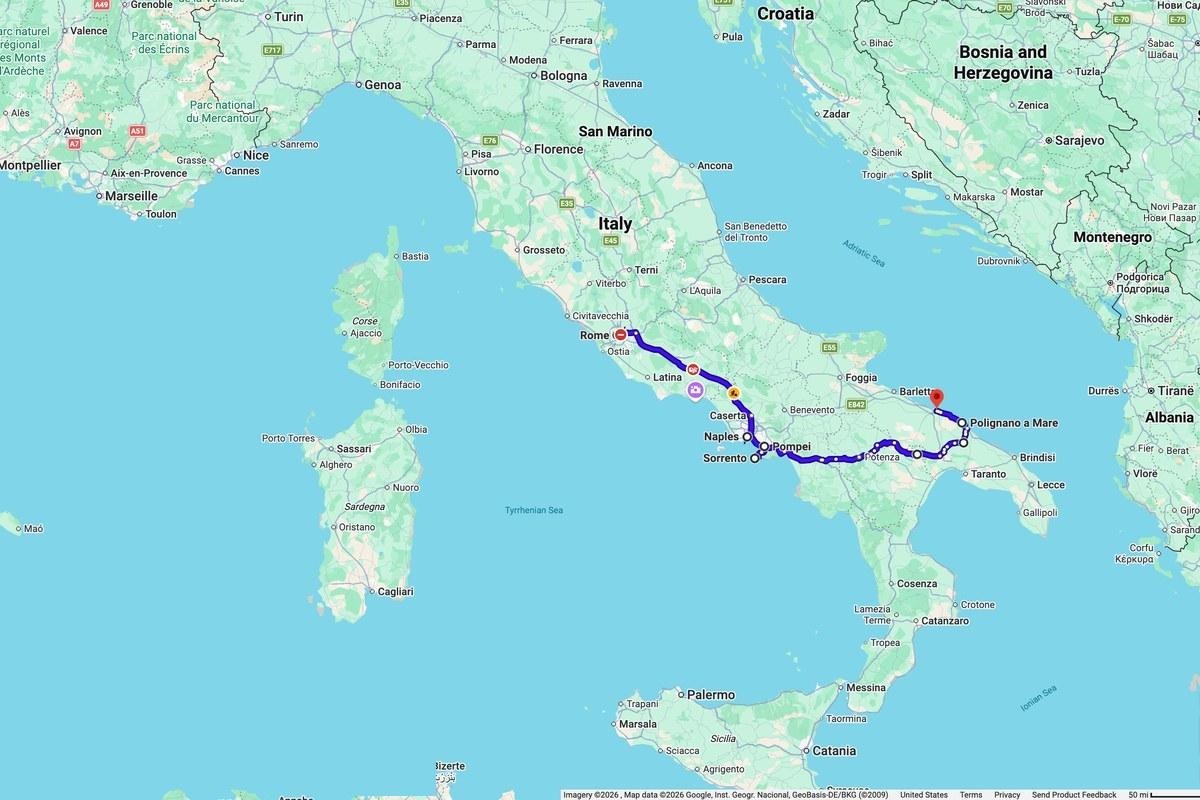
The Italian week runs a single line south, from Rome through Naples and the Sorrento peninsula, inland to Matera, then east across Puglia to Alberobello, Polignano a Mare, and Bari. That’s roughly 730 kilometers in five driving legs, none longer than three and a half hours.
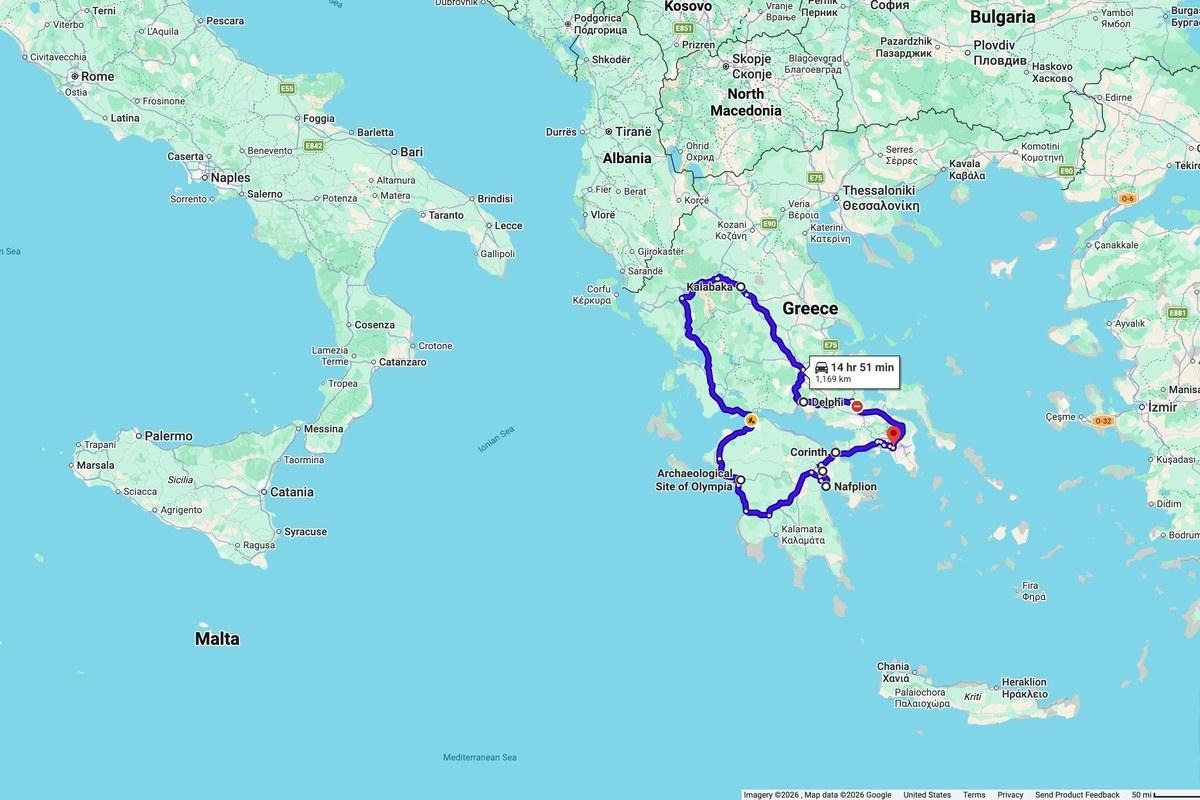
The Greek week is a loop out of Athens and back, north to Delphi and Meteora, south over the Rio-Antirrio bridge to Ancient Olympia, then east across the Peloponnese through Nafplio, Epidaurus, Mycenae, and the Corinth Canal. That’s roughly 1,200 kilometers, with the Meteora to Olympia leg the longest single drive of the fortnight.
Budgeting: How Much Does 14 Days in Italy and Greece Cost?
Two weeks across both countries fits a wide range of budgets, and the campervan is the biggest lever on any of them. Swapping hotels for campsites is the change that does the work, since an Italian pitch runs €25 to €50 against €180 to €450 for a July hotel room in Rome or on the Amalfi Coast, and Greek mainland pitches run lower again at €18 to €35.
Here’s a realistic per-person breakdown, not counting the two campervan hires or the flight between countries.
| Category | Budget | Mid-Range | High-End |
| Campsites | €18 to €28/night | €28 to €45/night | N/A (hotels) |
| Food & Drink | €18 to €30/day | €35 to €55/day | €80+/day |
| Sites & Attractions | €8 to €15/day | €15 to €28/day | €40+/day |
| Fuel & Tolls | €12 to €20/day | €20 to €30/day | €35+/day |
| Daily Total | €56 to €93 | €98 to €158 | €235+ |
| 14-Day Total | ~€780 to €1,300 | ~€1,370 to €2,210 | ~€3,290+ |
Budget traveler: cook most meals from Italian markets and Greek supermarkets, camp outside the expensive coastal zones, and pick your paid sites rather than buying every ticket. Around €1,000 per person for the fortnight is realistic, plus roughly €60 to €150 for the one-way flight.
Mid-range traveler: eat lunch out, cook some dinners in the van, and pay for the headline sites, the Colosseum, the Vatican, Pompeii, Delphi, Olympia, Mycenae, and the Acropolis. Budget €1,400 to €2,100 per person.
High-end traveler: eat out for every meal, add guided tours and skip-the-line access, and book a hotel night or two in Rome and Athens. Expect €3,300 or more per person.
Two costs catch people out on this specific route. Greek motorway tolls run roughly €0.04 to €0.06 per kilometer, and campervans sometimes fall into a higher toll class, so a 1,200-kilometer Greek loop can add €70 to €110 on its own. And a campervan burns 20 to 25 liters per 100 kilometers, so budget fuel by distance rather than by day.
Plan Your Italy and Greece Road Trip with Indie Campers
Two weeks across Italy and Greece ask two things a hotel-and-flights plan can’t give you. You need to be parked outside Pompeii, Delphi, Olympia, and the Acropolis before the coaches arrive, and you need a bed in places where a July room costs more than the rest of the day.
A campervan from Indie Campers covers both. Unlimited mileage on company-owned vehicles means the 1,900-kilometer route adds no fees, one-way drop-off across Italian depots keeps the Rome to Bari leg in a straight line, and flexible cancellation up to 31 days before pick-up lets you hold your dates without paying yet.
Book your campervan and kickstart an adventurous Italy trip now!
Italy and Greece Itinerary 14 Days: Your Final Planning Recap
| Category | Details |
| Best Time to Go | Late April to mid-June, or September, for warm days, open campsites, and manageable crowds at the archaeological sites. |
| Recommended Budget | €1,300 to €2,100 per person for 14 days, plus two campervan hires and one flight. |
| Split Between Countries | 7 days Italy (Rome to Bari), 7 days Greece (an Athens loop). Day 8 is the transfer. |
| Crossing the Adriatic | A direct Bari or Rome flight to Athens for most trips, or a Brindisi to Igoumenitsa ferry if you want to carry the van. |
| Cities & Sites to Visit | Rome (2 days), Naples and Pompeii, the Amalfi Coast, Matera, Alberobello, Bari, Athens, Delphi, Meteora, Olympia, Nafplio, Mycenae. |
| Best Food | Cacio e pepe in Rome, pizza in Naples, bombette in Cisternino, formaela in Arachova, grilled fish in Nafplio. |
| Recommended Transport | Two campervan rentals, one Italian and one Greek, since there’s no one-way drop-off between the countries. |
| Total Driving | Roughly 1,900 km, about 730 km in Italy and 1,200 km in Greece. |
| Accommodation | Campsites, €18 to €35 a pitch in Greece and €25 to €50 in Italy. |
| Perfect For | History travelers, couples, and families who want two countries without living in airports. |
Frequently Asked Questions (FAQs)
How many days do you need for Italy and Greece?
You need at least 14 days for Italy and Greece, split one week per country, because each needs five clear days on the ground once you subtract arrival and transfer time. Seven days runs Rome to Bari through Naples, the Amalfi Coast, Matera, and Puglia, and seven days covers a mainland Greek loop through Delphi, Meteora, Olympia, and the Peloponnese. Ten days works if you cut Italy to Rome, the Bay of Naples, and Matera and keep Greece to Athens and the Peloponnese. Anything under ten days means picking one country.
Can you drive from Italy to Greece?
You can’t drive directly from Italy to Greece, since there’s no land border between them, but you can drive onto a ferry and continue on Greek roads. Grimaldi Lines runs a daily Brindisi to Igoumenitsa crossing that leaves at 13:00 and arrives at 22:00, carrying cars, vans, and campers, and longer sailings run from Ancona and Bari to Patras. The alternative is driving to Rome or Bari, flying to Athens in about two hours, and picking up a second vehicle there. With a rental vehicle, get written permission for the ferry crossing before you book.
Is 14 days enough for Italy and Greece?
Fourteen days is enough for Italy and Greece if you commit to one region of each country rather than trying to cover both in full. This itinerary uses seven days for southern Italy from Rome to Bari and seven for a mainland Greek loop from Athens, which comes to about 1,900 kilometers of driving. Adding Venice, Florence, and Santorini to the same fortnight is what breaks these plans, because each one costs you a travel day. Two countries, two regions, one transfer is the version that works.
Should you start in Italy or Greece?
Start in Italy for a 14-day trip, because Rome has more long-haul flight options than Athens and the historical timeline runs better in reverse. Beginning in Rome also means your longest Italian driving day comes early, while the Greek week finishes with the Acropolis and a short transfer to the airport. Starting in Athens works if your inbound flight is cheaper that way, and the route reverses cleanly from Bari back up to Rome. The transfer day sits at Day 8 either direction.
Can you take a rental campervan on the ferry from Italy to Greece?
Ferry operators on the Adriatic routes do carry campers, and Grimaldi Lines even runs a Camper and Meals discount on its Greek crossings for bookings that include a camper or minibus. Your rental agreement is the constraint, not the ship, so confirm in writing that your vehicle is permitted to leave the country and board a ferry before you book either one. Indie Campers has no one-way drop-off between Italian and Greek depots, which means a ferry crossing commits you to driving the same van back to Italy. For most 14-day plans, two separate rentals and a flight is the simpler and cheaper structure.
Is wild camping allowed in Greece?
Wild camping is not allowed in Greece, and the rules tightened in 2025 in a way that replaced a long-standing gray area with clearer restrictions and real fines. Plan on licensed campsites for every night, including single-night stops, and budget €18 to €35 a pitch on the mainland. Parking a campervan for sightseeing or a rest is a separate matter from camping in it, so the practical test is whether you’re set up to sleep, cook, or put out chairs. Greece’s reputation for easy roadside overnights is out of date.
How much does 2 weeks in Italy and Greece cost?
Two weeks in Italy and Greece by campervan costs roughly €1,000 per person for budget travelers, €1,400 to €2,100 for mid-range, and €3,300 or more for high-end, excluding the two vehicle hires and the flight between countries. Campsites are the main saving, at €18 to €35 a pitch in Greece and €25 to €50 in Italy against €180 to €450 for a July hotel room in Rome or on the Amalfi Coast. Greek motorway tolls add €70 to €110 across a 1,200-kilometer loop, and a campervan burns 20 to 25 liters per 100 kilometers. The one-way flight runs about €60 to €150.
Do you need a visa or ETIAS for Italy and Greece in 2026?
Visitors from the US, Canada, Australia, the UK, and most other non-EU countries don’t need a visa for tourist stays of up to 90 days in any 180-day period, and Italy and Greece share the same Schengen allowance rather than each granting their own. The EU’s Entry/Exit System became fully operational on 10 April 2026, so your face and fingerprints are recorded digitally on arrival instead of your passport being stamped. ETIAS, the separate travel authorization, has not started yet, so check the official EU guidance close to your travel dates. The flight between Italy and Greece is an internal Schengen hop with no second check.
Can you visit the Greek islands with a campervan?
You can’t practically visit the Greek islands with a rental campervan, because ferry rules on vehicle size, cost, and seasonal capacity make the crossing impractical for most rental motorhomes. Treat the Greek leg of a 14-day trip as a mainland route through Delphi, Meteora, Olympia, and the Peloponnese, which is where the country’s best archaeology sits anyway. If you want Santorini or Mykonos, add them as a separate trip by plane or as a foot-passenger ferry side trip. The mainland loop is also the part almost no two-week itinerary covers.
When is the best time for an Italy and Greece itinerary 14 days long?
The best time for an Italy and Greece itinerary 14 days long is late April to mid June or the month of September, when daytime temperatures sit between 18 and 29°C and the archaeological sites are walkable without a queue. July and August push the Peloponnese interior and the ground around Meteora past 35°C, fill Italian coastal campgrounds, and bring Italy’s Ferragosto holiday around 15 August. Winter empties the sites and drops prices to their lowest, though many campsites on both coasts close from November until Easter. September is the single strongest month if you can only pick one.