Last Updated: July 30, 2026
Planning a 3-day itinerary for Bologna? This guide covers the Two Towers, the university quarter, and how to eat your way through Italy’s food capital.
Here’s a quick overview of what to expect:
Key Takeaways
- Iconic Stops: Piazza Maggiore, the Two Towers, and the Quadrilatero market
- Hidden Gems: The Portico di San Luca and the Archiginnasio’s Anatomical Theatre
- Recommended Transport: You can opt for an RV campervan parked outside the ZTL, and then walking through Bologna’s covered porticoes
- Recommended Budget: $150 to $300 per person for 3 days, covering accommodation, food, transport, and entry tickets
- Best Time to Go: Spring (April to May) for mild weather and manageable crowds
Table of Contents
- Bologna Itinerary 3 Days: At a Glance
- Why You’ll Love a 3-Day Trip to Bologna
- Best Time to Visit Bologna
- Are 3 Days Enough to Visit Bologna?
- How to Get Around Bologna?
- The Best 3-day Itinerary for Bologna
- Day 1: Piazza Maggiore and City Center in Bologna
- Day 2: University Quarter in Bologna
- Day 3: Porticoes and San Luca in Bologna
- Exploring Bologna’s Regions: Alternative Itineraries
- Map of Your 3-Day Itinerary for Bologna
- Budgeting for Your Trip: How Much Is a Trip to Bologna for 3 Days?
- Plan Your Dream Bologna Road Trip with Indie Campers
- 3-Day Itinerary for Bologna: Your Final Planning Recap
- FAQs About Bologna Itinerary 3 Days
Bologna Itinerary 3 Days: At a Glance
| Day | Location(s) | Top Highlights |
| Day 1 | Piazza Maggiore and City Center | Basilica di San Petronio, Two Towers, Quadrilatero market. Try tagliatelle al ragù. |
| Day 2 | University Quarter | Archiginnasio, Anatomical Theatre, Pinacoteca Nazionale. Try tortellini in brodo. |
| Day 3 | Porticoes and San Luca | Portico di San Luca, Sanctuary of Madonna di San Luca, Santo Stefano. Try mortadella. |
Why You’ll Love a 3-Day Trip to Bologna?
Bologna carries three nicknames, and each one tells you something different about the city. Locals call it La Dotta for its university, founded in 1088 and the oldest in the Western world.
They also call it La Grassa, the fat one, for a food scene that gave the world tagliatelle al ragù and tortellini. The third nickname, La Rossa, refers to both the terracotta rooftops and the city’s long political history, since Bologna has leaned left in Italian politics for generations.
An RV adds real flexibility to this trip. Bologna’s historic center runs a camera-enforced limited traffic zone, so parking on the edge of the city and walking in works better than trying to drive through the center.
That same RV can carry you on to Modena or Parma once Bologna wraps up, both less than an hour away and packed with their own food traditions.
Food and culture are inseparable here. Bologna is the birthplace of ragù alla bolognese, tortellini in brodo, and mortadella, and the Quadrilatero market district has sold these ingredients for centuries.
Even a short walk through the market means passing stalls stacked with parmesan wheels and cured meats hanging from the ceiling.
Cooking classes and food tours have become common ways to experience this side of the city. Watching pasta made by hand teaches you more than any Bologna travel guide can explain on paper.
Most sessions end with the chance to eat what you learned to make.
That’s the balance this guide is built around: enough structure to see Bologna’s icons, enough room to eat your way through them.
Best Time to Visit Bologna
The season you visit shapes both the crowds you’ll deal with and how comfortable it feels to walk under Bologna’s porticoes. Bologna runs on a university calendar as much as a weather one, so a few extra factors come into play compared to other Italian cities.
Here’s a quick breakdown to help figure the best time to plan your 3-day itinerary for Bologna:
Spring (March to May)
Spring brings mild temperatures and blooming gardens, making it one of the most comfortable seasons for walking the city’s long covered walkways.
Crowds stay manageable compared to summer, and outdoor dining season kicks off across the university quarter.
- Average Temperatures: 48 to 68°F (9 to 20°C)
- What to expect: mild and occasionally rainy weather, moderate crowds, and mid-range prices.
Summer (June to August)
Summer in Bologna gets hot and humid, and the covered porticoes become genuinely useful for shade rather than decoration. Many university students leave for the summer, which quiets the city’s usual student-driven energy.
- Average Temperatures: 66 to 87°F (19 to 31°C)
- What to expect: hot and humid weather, moderate crowds, and peak-season prices.
Autumn (September to November)
Autumn brings cooler, comfortable weather along with the start of the university year, which fills the city with new energy.
This is also truffle season in the surrounding Emilia-Romagna countryside, adding a seasonal draw to nearby day trips.
- Average Temperatures: 50 to 70°F (10 to 21°C)
- What to expect: mild and increasingly cool weather, moderate crowds, and mid-range prices.
Winter (December to February)
Winter is cold and often damp, but the porticoes come into their own, letting you walk between sights while staying mostly dry.
Christmas markets fill Piazza Maggiore in December, adding a festive layer to the historic center.
- Average Temperatures: 34 to 48°F (1 to 9°C)
- What to expect: cold and often damp weather, light crowds, and low-season prices.
Spring and autumn both offer the easiest balance of good weather and manageable crowds for a first visit.
Are 3 Days Enough to Visit Bologna?
Yes, 3 days in Bologna is enough to see the city’s main landmarks and still leave room for slow, food-focused wandering. The trick is picking a focused route instead of trying to add day trips on top of an already packed schedule.
This itinerary spends day one in Piazza Maggiore and the city center, day two in the university quarter, and day three on the porticoes leading up to San Luca.
With that structure, you’ll see the Two Towers, the Quadrilatero market, the Anatomical Theatre, and the longest portico in the world, along with plenty of time for proper meals.
A common mistake is trying to squeeze in Modena or Parma as a day trip on top of these three days. That usually means rushing through both Bologna and whichever second city you add.
Save that extension for a fourth day instead.
Bologna rewards visitors who slow down enough to actually taste it, so this 3-day itinerary for Bologna leaves room to do exactly that.
How to Get Around Bologna?
Bologna’s historic center runs a camera-enforced limited traffic zone, active daily from 7 AM to 8 PM. Driving in without authorization risks a fine starting around €84, so parking outside the zone and walking in is the simpler choice.
The zone is monitored by a system called Sirio, which reads license plates at every entry point. Plates are then checked against a database of authorized vehicles and daily tickets purchased in advance.
Bologna is also compact and famously walkable, with roughly 24 miles of covered porticoes connecting most of the historic center. That means once you’re parked, you rarely need public transport to get between sights.
Bologna also runs a citywide 30 kilometer per hour speed limit across most streets, a separate rule from the ZTL that applies whether or not you’re inside the restricted zone.
An RV still works well for the trip overall, since it beats booking separate hotels if Bologna is one stop on a longer Italy route. Park outside the historic center, close to a bus stop, and use the RV as your base while you explore on foot.
Booking RV rentals in Bologna through Indie Campers gives you unlimited mileage on company-owned vehicles. Extending your trip to Modena, Parma, or the Emilia-Romagna countryside costs nothing extra in mileage fees.
If Bologna is one stop on a longer route, RV rentals in Italy can cover pickup locations across the country, from Milan to Rome to Florence.
The Best 3-day Itinerary for Bologna
Here’s a step-by-step breakdown of the 3-day itinerary for Bologna to help you spend each day more efficiently:
Day 1: Piazza Maggiore and City Center in Bologna
Morning (9 AM): Piazza Maggiore and San Petronio
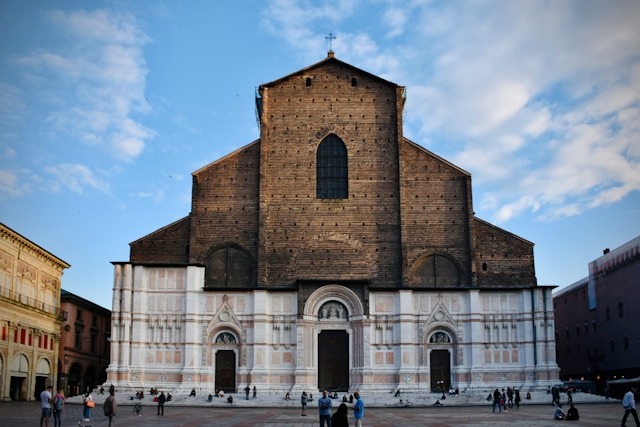
Start at Piazza Maggiore, the wide central square that has anchored Bologna’s civic life since the 13th century.
The Basilica di San Petronio dominates one side, and its facade was never fully finished. That’s part of what makes it visually striking today, with rough brick still visible above the finished marble base.
Construction on the basilica began in 1390, and early plans called for a church larger than St. Peter’s in Rome, a scale the city eventually scaled back.
Step inside to see the sundial running the length of the nave, once used to help calibrate calendars across Europe.
Then walk over to the Fountain of Neptune nearby, a bronze statue completed in 1566 that has become one of the city’s signature landmarks. The sculptor, Jean de Boulogne, later became known by the Italianized name Giambologna after settling in the region.
Give yourself about an hour and a half for the square, the basilica, and the fountain combined. If you arrive by train, Bologna’s central station sits about a 15-minute walk from the square, making this an easy first stop after checking into your accommodation.
Practical tip: The basilica is free to enter, but a small donation is requested if you want to see the sundial area up close.
Afternoon (12 PM): The Two Towers and Lunch
For lunch, find a trattoria near Piazza Maggiore and order tagliatelle al ragù, Bologna’s most famous dish and the true original behind what much of the world calls spaghetti bolognese.
Locals will tell you the pairing with flat tagliatelle, not spaghetti, is the correct one. The official recipe is even registered with Bologna’s Chamber of Commerce, right down to the width of the noodles.
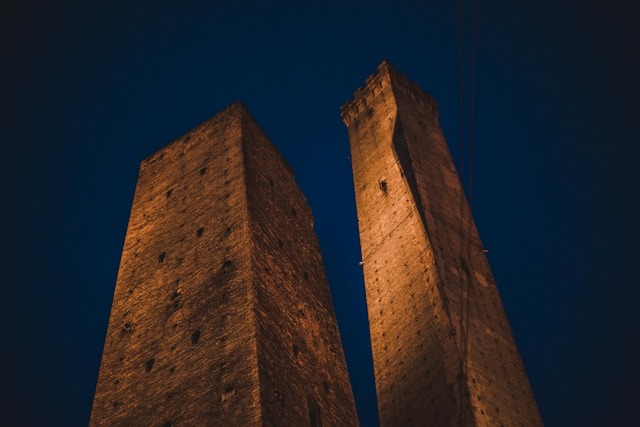
Afterward, walk to Piazza di Porta Ravegnana to see the Two Towers, Asinelli and Garisenda.
Both were built in the early 12th century by rival families competing to show off their wealth and status. This was part of a wider trend that once saw more than 100 similar towers rise across the city.
Climb the taller Asinelli Tower for a 360-degree view over Bologna’s terracotta rooftops, a climb of 498 wooden steps to a height of about 97 meters. The Garisenda tower leans even more sharply than Asinelli but has been closed to climbers for safety reasons.
Practical tip: Book your Asinelli Tower ticket online in advance, since walk-up tickets are no longer available and time slots fill quickly.
Evening (6 PM): Quadrilatero Market and Dinner
As the afternoon fades, wander into the Quadrilatero, Bologna’s historic market district, where stalls have sold fresh food since medieval times. Even if you’re not buying anything, the smell of aging parmesan and cured meats is worth the walk alone.
The narrow streets here follow the same layout they had centuries ago, with each street historically dedicated to a different trade or craft. Via Pescherie Vecchie once housed the fish market, while nearby streets specialized in poultry, herbs, and gold work.
For dinner, stay in the city center and try tortellini in brodo, small pasta parcels served in a light broth that Bologna claims as its own.
According to local legend, the shape was inspired by the navel of Venus. Historians treat that story as a charming myth rather than fact passed down through generations of home cooks.
Ending your first night with a plate of tortellini and a glass of local Sangiovese is a fitting way to close out the day.
Day 2: University Quarter in Bologna
Morning (9 AM): The Archiginnasio and Anatomical Theatre
Spend your second morning at the Archiginnasio, the original seat of the University of Bologna and one of the oldest university buildings in the world.
Its walls are covered in thousands of coats of arms left by students and professors over the centuries. That tradition turned the hallways into an unofficial historical archive documenting nearly every graduate who passed through.
Inside, the Anatomical Theatre is a small wood-paneled room where anatomy lessons were once taught using human cadavers, watched over by carved wooden figures on the ceiling.
It’s a strange and memorable stop that most first-time visitors don’t expect, and the original theater was largely rebuilt after bombing damage in World War II.
Practical tip: The Anatomical Theatre closes for a midday break, so check opening hours before planning your visit around lunch.
Afternoon (12:30 PM): Pinacoteca Nazionale and Via Zamboni
After the Archiginnasio, have lunch at a small osteria along Via Zamboni, the university quarter’s main street lined with student bars and bookshops.
The street has a noticeably younger, more relaxed energy than the tourist-heavy center. Prices here tend to run lower too, since much of the neighborhood caters to students rather than visitors.
Spend the rest of the afternoon at the Pinacoteca Nazionale di Bologna, home to major works from the Bolognese school of painting, including pieces by Guido Reni.
The museum occupies a former Jesuit novitiate building, which adds its own quiet, contemplative atmosphere to the visit. That’s a contrast to the busier squares you passed through earlier in the day.
The collection is manageable in size, so an hour and a half is usually enough to see the highlights.
Practical tip: The university quarter is one of the best areas in Bologna for browsing secondhand bookshops, so leave a little time to wander without a fixed plan.
Evening (6 PM): Aperitivo and Dinner Near the University

In the evening, find an aperitivo spot along Via del Pratello or Via Zamboni, both known for lively bars that fill up with students as the sun sets.
Bologna’s aperitivo culture leans more casual than Milan’s, with generous snack spreads included in the price of a drink. The spread is sometimes generous enough to double as an early dinner on its own.
For dinner, try lasagne verde alla bolognese, a green pasta lasagne colored with spinach and layered with the same ragù used in tagliatelle.
The green pasta tradition dates back centuries in Bologna and sets it apart from the plain egg pasta used in most other Italian regions. The spinach gets worked directly into the dough rather than served as a separate side.
Music spills out of bars and students fill the streets as the university quarter comes alive at night. It’s one of the best ways to end a day in Bologna.
Day 3: Porticoes and San Luca in Bologna
Morning (9 AM): The Portico di San Luca
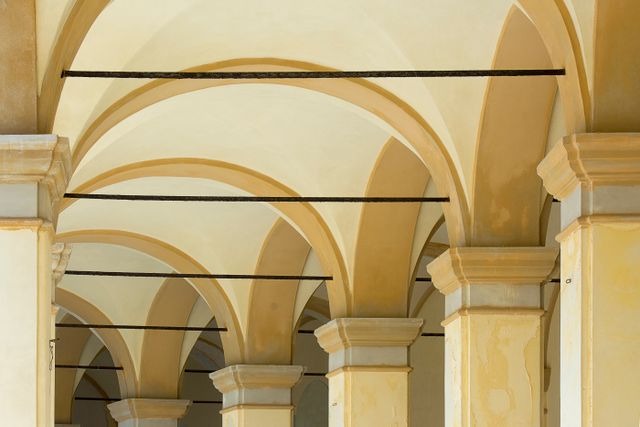
Start your final day at the Portico di San Luca, a continuous covered walkway of 666 arches stretching 3.8 kilometers from Porta Saragozza up to a hilltop sanctuary. It’s the longest portico in the world and was built between 1674 and 1793 so pilgrims could walk to the sanctuary without getting wet.
The walk uphill takes about 50 to 60 minutes at a steady pace, and the incline is gentle enough for most fitness levels.
Along the way, small numbered markers show your progress toward the top, and several benches offer a chance to rest along the climb, especially useful on a warm afternoon.
Practical tip: Wear comfortable shoes, since the cobblestones underfoot stay uneven for the entire walk.
Afternoon (12:30 PM): Sanctuary of Madonna di San Luca
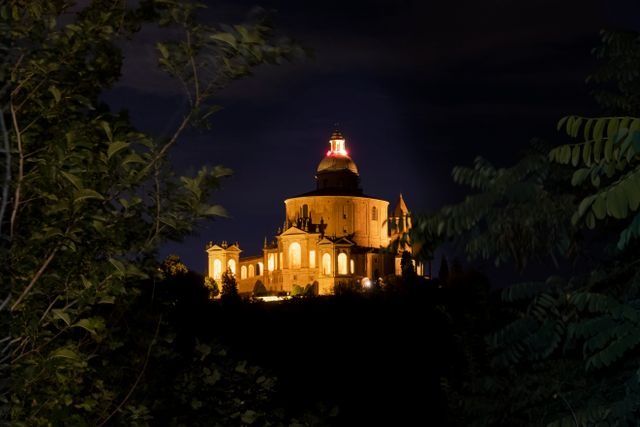
At the top, the Sanctuary of Madonna di San Luca offers a baroque interior and a terrace with sweeping views back over Bologna and the surrounding hills. Entry to the sanctuary is free, and the view rivals what you’d get from the Asinelli Tower without the ticket cost.
The sanctuary has housed a Byzantine icon of the Madonna for centuries. Every year, the painting is carried down the entire portico in a procession that draws large crowds, typically held over the Ascension holiday in late spring.
Have a simple lunch at one of the small cafes near the base of the hill before or after your walk, since options at the summit itself are limited.
Practical tip: The sanctuary closes for a midday break, so plan your visit for the morning or mid-afternoon rather than right at noon.
Evening (5:30 PM): Santo Stefano and Final Dinner
Walk back down through the portico, then take a short bus ride or taxi to the Basilica di Santo Stefano. It sits on the opposite side of the historic center from San Luca, so walking the whole way isn’t practical after the portico climb.
The complex includes seven interconnected churches dating back to the 5th century, each with a distinct atmosphere. It’s free to enter and quieter than the main square. A small courtyard known locally as the Cortile di Pilato sits at its center, named for a basin once mistakenly linked to Pontius Pilate.
For your final dinner, order mortadella served with fresh bread, since Bologna’s version bears little resemblance to the mass-produced deli meat sold under the same name elsewhere.
Close out your trip with a plate of proper mortadella and a view of the city that gave the world its name.
It’s a fitting way to end three days in Bologna.
Exploring Bologna’s Regions: Alternative Itineraries
If 3 days leaves you wanting more, here are two ways to extend the trip into the wider Emilia-Romagna region, which locals sometimes call Italy’s Food Valley for good reason.
4-Day Bologna and Modena Itinerary
This version keeps the same 3 days in Bologna, then uses your RV to reach Modena, less than an hour’s drive away.
Modena is home to traditional balsamic vinegar producers and the Ferrari Museum, making it a good fit for anyone with even a passing interest in cars or condiments.
- Day 1 to 3: Bologna, Piazza Maggiore, the university quarter, and San Luca
- Day 4: Modena, a balsamic vinegar tasting and the Ferrari Museum
5-Day Bologna and Parma Itinerary
For travelers who want to go deeper into Emilia-Romagna’s food scene, this variant adds Parma, famous for parmesan cheese and prosciutto.
Between the two extensions, you’ll cover most of what the region calls Italy’s Food Valley.
- Day 1 to 3: Bologna, Piazza Maggiore, the university quarter, and San Luca
- Day 4: Modena, balsamic vinegar and the Ferrari Museum
- Day 5: Parma, a parmesan dairy tour and the historic center around Piazza Duomo
Map of Your 3-Day Itinerary for Bologna
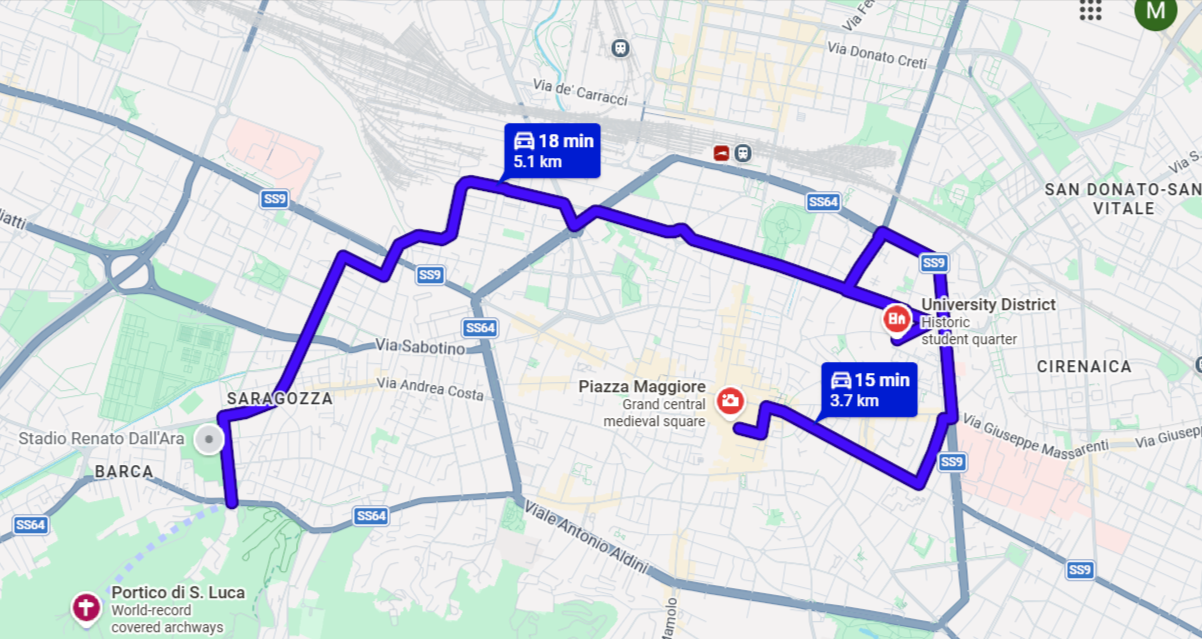
This route stays compact and mostly on foot. Day one covers Piazza Maggiore and the Two Towers, both a short walk apart, so you can cover the entire day without needing any transport at all.
Day two moves into the university quarter, a few minutes further from the Two Towers on foot, in the streets northeast of Piazza Maggiore.
Day three heads southwest along the Portico di San Luca, the longest single walk of the trip and the only day that takes you outside the immediate historic center.
That evening, a short bus ride carries you back across town to Santo Stefano, since the two stops sit on opposite sides of the city center.
If you’re basing yourself outside the ZTL, add the walk or short bus ride from your campsite to Piazza Maggiore as the starting and ending point of each day’s route.
Budgeting for Your Trip: How Much Is a Trip to Bologna for 3 Days?
A trip to Bologna can fit almost any budget, and traveling by RV helps keep accommodation and food costs down compared to booking hotels and restaurants for every meal.
Since driving into the historic center means risking a ZTL fine, parking outside the zone is one of the easiest ways to avoid an unexpected cost.
Bologna also tends to run cheaper than Florence, Venice, or Milan, especially for food, since it’s less dependent on tourism and more on its own university population and food industry.
| Category | Budget | Mid-Range | High-End |
| Accommodation | $20 to $40 | $40 to $80 | N/A |
| Food and Drink | $30 to $50 | $50 to $90 | $90+ |
| Attractions | $10 to $25 | $25 to $50 | $50+ |
| Transport | $5 to $15 | $15 to $30 | $30+ |
| Daily Total | $65 to $130 | $130 to $250 | $250+ |
| 3-Day Total | ~$195 to $390 | ~$390 to $750 | ~$750+ |
- Budget Traveler: You can stay at a campsite outside the ZTL and cook some meals in the RV. As a traveler, you can stick to free sights like Piazza Maggiore, the basilica exterior, and the walk to San Luca. The Asinelli Tower and paid museums get skipped in favor of the free views from the sanctuary.
- Mid-Range Traveler: You can mix cooking in the RV with sit-down meals, pay for the Asinelli Tower and Pinacoteca tickets, and add a proper aperitivo each evening. This is the most common approach for a first-time visit, since it balances cost with a real taste of the city.
- High-End Traveler: You can book dinners at well-known trattorias in the city center and pay for a guided food tour through the Quadrilatero. A day trip to Modena with a private driver rounds out the itinerary. Make sure to budget for a proper balsamic vinegar tasting and a multi-course tasting menu on at least one night. A cooking class focused on making fresh pasta by hand further rounds out the experience.
Plan Your Dream Bologna Road Trip with Indie Campers
Indie Campers gives you a large fleet of campervans and motorhomes, one-way rentals across 70+ locations, and unlimited mileage on company-owned vehicles.
That means your Bologna trip can extend to Modena, Parma, or anywhere else in Emilia-Romagna without extra planning or added fees. Flexible cancellation up to 31 days before pick-up and a book now, pay later option also mean you can lock in your dates without paying the full amount upfront.
This works best for travelers who want Bologna as one stop on a bigger Italian road trip rather than an isolated city break. Park outside the historic center, walk the porticoes to explore, and let the same vehicle carry you on to your next stop when you’re ready.
Whether you’re a first-time renter or an experienced road-tripper, the same digital booking process applies. Browse the fleet, compare vehicle sizes, and pick the pickup point that fits your route.
If you’re planning a longer route through Italy, our 7-day Italy itinerary covers how to connect Bologna with other major cities by road.
Book your campervan with Indie Campers today!
3-Day Itinerary for Bologna: Your Final Planning Recap
| Category | Details |
| Best Time to Go | Spring (April to May), for mild weather and manageable crowds |
| Recommended Budget | $150 to $300 per person for 3 days |
| Areas to Visit | Piazza Maggiore and city center (day 1), university quarter (day 2), porticoes and San Luca (day 3) |
| Best Restaurants | Trattorias near Piazza Maggiore (tagliatelle al ragù); osterias on Via Zamboni (tortellini in brodo) |
| What to Visit? | Day 1: San Petronio, Two Towers, Quadrilatero / Day 2: Archiginnasio, Anatomical Theatre, Pinacoteca Nazionale / Day 3: Portico di San Luca, Sanctuary, Santo Stefano |
| Recommended Transport | RV parked outside the ZTL, then walking through the covered porticoes |
| Total Distance | Approx. 6 to 8 miles (10 to 13 km) on foot across the three days |
| Must-Try Foods | Tagliatelle al ragù, tortellini in brodo, mortadella, lasagne verde alla bolognese |
| Accommodation | Campsite pitch with RV: $20 to $80 per night |
| Perfect For | First-time visitors wanting classic landmarks alongside a serious food scene |
| ZTL Charge | Around €6 a day for non-residents entering the historic center by car, active 7 AM to 8 PM |
| Nearby Day Trips | Modena (balsamic vinegar, Ferrari Museum) and Parma (parmesan, prosciutto), both under an hour away |
FAQs About Bologna Itinerary 3 Days
How much is a trip to Bologna for 3 days?
A 3-day itinerary for Bologna costs around $150 to $300 per person in the mid-range budget. That figure includes accommodation, food, local transport, and entry tickets to the main sights. It does not include RV rental, which is priced separately based on vehicle type and season. Basing yourself outside the ZTL zone is one of the easiest ways to bring that daily cost down.
Is 3 days enough to see Bologna?
Yes, 3 days is enough to see Bologna if you focus on one area per day instead of trying to cover the whole city. This itinerary spends day one in Piazza Maggiore and the city center, day two in the university quarter, and day three on the porticoes leading to San Luca. That split lets you see the major landmarks and still fit in a proper food tour through the Quadrilatero.
What are the top 3 places to visit in Bologna for first-timers?
The top 3 places to visit in Bologna for first-timers are Piazza Maggiore, the Two Towers, and the Portico di San Luca. Piazza Maggiore anchors the city’s history and its most famous buildings. The Two Towers offer the best rooftop view in the historic center. The Portico di San Luca adds a longer, quieter walk with one of the best panoramic views in the region.
What is the most beautiful spot in Bologna?
The most beautiful spot in Bologna is widely considered to be the terrace at the Sanctuary of Madonna di San Luca, where the whole city spreads out below the hills. The view from the top of the Asinelli Tower and the Quadrilatero market at golden hour are close runners-up. Each offers a different kind of beauty, from sweeping panoramas to close-up daily life. On a clear day, the sanctuary terrace can even offer a glimpse of the distant Apennine mountains – which makes it a must-have on your 3-day itinerary for Bologna.
What is the best way to travel in Bologna for 3 days?
The best way to travel during your 3-day itinerary for Bologna is on foot, using the city’s covered porticoes to move between sights. You can pair that with an Indie Campers’ RV parked outside the historic center for the rest of your route. Driving into the ZTL risks a fine starting around €84, which public transport and walking avoid entirely. This combination gives you the flexibility of a road trip without the hassle of navigating central Bologna by car.
What is Bologna best known for?
Bologna is best known for being Italy’s food capital, home to tagliatelle al ragù, tortellini, and mortadella. The city is also famous for having the oldest university in the Western world, founded in 1088, and for its UNESCO-listed porticoes stretching roughly 24 miles through the city. The Two Towers and the red terracotta rooftops give Bologna a distinct look compared to Florence or Venice. Its three nicknames, La Dotta, La Grassa, and La Rossa, sum up its identity as learned, well-fed, and historically political.
Do I need to book Bologna attractions in advance?
Yes, booking Bologna attractions in advance is worth it for the Asinelli Tower, since walk-up tickets are no longer sold and time slots fill quickly during peak season. The Anatomical Theatre and Pinacoteca Nazionale are usually easier to visit without advance booking. If you’re visiting during a university event or graduation season, expect the streets around Via Zamboni to be busier than usual. Reserving a table for dinner is also worth doing on weekends, since Bologna’s best-known trattorias fill up fast with both locals and visitors.
How do I get from Bologna airport to the city center?
You can get from Bologna’s Guglielmo Marconi Airport to the city center by the Marconi Express monorail, which takes about 7 minutes to the main train station. From there, most of the historic center is a 10 to 15 minute walk or a short bus ride. A taxi from the airport to the center takes a similar amount of time and costs more, though it can be worth it with heavy luggage. If you’re picking up an RV, most rental locations near the airport offer a shuttle to the depot.
Is renting an RV worth it for a Bologna trip?
Renting an RV is worth it for a Bologna trip if you’re combining the city with other stops in Emilia-Romagna, since Bologna itself only takes 3 days to enjoy properly. The RV works as your accommodation and transport for the rest of the route, while you park it outside the ZTL for the Bologna portion. For a Bologna-only weekend with no other stops, a hotel or short-term apartment may be simpler. The math tends to favor the RV once your trip includes Modena, Parma, or another nearby destination, since those extra stops are where a rented vehicle pays for itself.