Last Updated: May 9, 2026
Planning a trip to New York? This guide covers the best places to visit in New York, from the energy of Manhattan and the gorges of the Finger Lakes to Niagara Falls and the wilderness of the Adirondacks.
Whether you’re road-tripping through upstate or anchoring in New York City, there’s a lot more to this state than Times Square.
Key Takeaways (TL;DR)
- Why New York: New York State spans more than 54,000 square miles, from one of the world’s most visited cities to six million acres of protected wilderness. Few U.S. states offer this range in a single road trip.
- Top Places to Visit in New York in 2026: New York City, Niagara Falls, the Finger Lakes, the Adirondacks, the Hudson Valley, the Catskills, Saratoga Springs, Letchworth State Park, the Thousand Islands, and Long Island.
- Don’t Miss: Standing in the mist at the base of Niagara Falls on a Maid of the Mist tour, where more than 3,100 tons of water crash over the edge every second, and no photograph comes close.
- Ideal Trip Length: 10 to 14 days. New York City alone can absorb 4 to 5 days. Add a week to cover the Hudson Valley, Finger Lakes, and either the Adirondacks or Niagara Falls.
- How to Choose Your Route: Start in NYC and head north through the Hudson Valley for history and farm-to-table food. Cut west for Finger Lakes wine country and Niagara Falls. Drive northeast for the Adirondacks if you want wilderness and mountain roads.
- Recommended Budget Per Person: $100 to $180 per day. This covers campsite fees, fuel, meals, and key attraction entry, excluding RV rental costs.
- Watch Out For: RV-restricted zones in Manhattan. Do not attempt to drive a campervan onto the island. Park in New Jersey or the outer boroughs and take the subway in.
- Where To Stay: An Indie Campers RV rental lets you follow the route without rebooking accommodation at every stop. Park beside Seneca Lake in the Finger Lakes one night and wake up near the Adirondacks the next.
- Best For: First-time USA road-trippers, couples who want city culture and outdoor scenery in one trip, families looking for accessible natural wonders.
Table of Contents
- Best Places to Visit in New York: at a Glance
- Best Places to Visit in New York
- Expert Tips for a New York RV Road Trip
- Rent an RV in New York with Indie Campers
- Everything You Need to Know About New York Road Trips
- FAQs About the Best Places to Visit in New York
Best Places to Visit in New York: at a Glance
| Place | Region | Vibe | Best For | Top Activity | Avg Temp (Summer) | Ideal Stay | Crowd Level | RV-Friendly |
| New York City | NYC | Electric and iconic | First-timers, culture lovers | Central Park, The Met, Brooklyn Bridge | 28°C (82°F) | 4 to 5 days | Very high | Limited |
| Niagara Falls | Western NY | Powerful and dramatic | Families, nature lovers | Maid of the Mist boat tour | 26°C (79°F) | 1 to 2 days | High | Yes |
| Finger Lakes | Central NY | Scenic and relaxed | Wine lovers, hikers | Watkins Glen gorge, winery trails | 25°C (77°F) | 3 to 5 days | Moderate | Yes |
| The Adirondacks | Upstate NY | Wild and remote | Hikers, paddlers | Lake Placid, High Peaks trails | 22°C (72°F) | 3 to 5 days | Low to moderate | Yes |
| Hudson Valley | Mid-NY | Historic and bucolic | Couples, foodies | Rhinebeck, Sleepy Hollow, estate drives | 27°C (81°F) | 2 to 3 days | Moderate | Yes |
| The Catskills | Mid-NY | Artsy and rugged | Weekend road-trippers | Hiking, craft breweries, farm dining | 24°C (75°F) | 2 to 3 days | Moderate | Yes |
| Saratoga Springs | Capital Region | Elegant and spirited | History buffs, spa-goers | Mineral springs, horse racing | 26°C (79°F) | 1 to 2 days | Moderate | Yes |
| Letchworth State Park | Western NY | Dramatic and natural | Hikers, photographers | Triple waterfalls, gorge trails | 24°C (75°F) | 1 to 2 days | Low to moderate | Yes |
| Thousand Islands | Northern NY | Waterside and historic | Boat lovers, castle hunters | Scenic boat tours, Boldt Castle | 24°C (75°F) | 2 to 3 days | Low | Yes |
| Long Island | NYC surrounds | Coastal and lively | Beach lovers | Hamptons beaches, Fire Island | 27°C (81°F) | 2 to 3 days | High in summer | Mixed |
Best Places to Visit in New York
1. New York City

The Vibe
New York City sits at the southern tip of New York State, on a cluster of islands and peninsulas between the Hudson River and the Atlantic Ocean. It is one of the most visited cities in the world, home to 8.3 million residents, more than 800 languages, and a density of culture, food, art, and architecture that no other American city matches.
The five boroughs, Manhattan, Brooklyn, Queens, the Bronx, and Staten Island, each have a distinct identity. Manhattan moves fast, with the vertical scale of Midtown giving way to the tree-lined streets of Greenwich Village and the financial towers of Lower Manhattan.
Brooklyn is where much of the city’s creative and culinary energy has shifted over the past decade, while Queens is the most ethnically diverse urban area on earth. New York City rewards wandering.
Many of the best experiences here, walking across the Brooklyn Bridge at dawn, spending an afternoon in Central Park, eating at a counter restaurant in Flushing, cost little or nothing.
Top Things to Do
1. Walk the Brooklyn Bridge: The 1.3-mile pedestrian crossing connects Lower Manhattan to Brooklyn’s DUMBO neighborhood. Walk from the Manhattan side and arrive in Brooklyn for coffee at one of the cafés along the waterfront. The views back across the East River toward the Manhattan skyline are best in the morning before the midday haze sets in.
2. Visit the Metropolitan Museum of Art: The Met houses more than 5,000 years of art across 17 curatorial departments, including Egyptian antiquities, European Old Masters, American decorative arts, and modern photography. A full visit takes most of a day. The suggested admission fee covers same-day entry to the Met Cloisters in upper Manhattan, which is worth the separate trip.
3. Walk the High Line: A 1.45-mile elevated park built on a former freight rail line on Manhattan’s West Side. The planting shifts through the seasons, and the views down into Chelsea and toward the Hudson River are a constant throughout. The southern end of the Hudson Yards development is the most architecturally interesting section.
4. Explore Central Park: 843 acres in the middle of Manhattan, with running paths, rowing lakes, a zoo, outdoor concert stages, and some of the best people-watching in the city. The Jacqueline Kennedy Onassis Reservoir is the park’s central feature. The Ramble, a 36-acre woodland in the middle of the park, feels genuinely quiet even on busy weekends.
5. Take the Staten Island Ferry: The free 25-minute crossing between Lower Manhattan and Staten Island passes close to the Statue of Liberty and gives you the same view that most visitors pay $25 or more for on a harbor tour. It runs 24 hours a day, every day. Board at Whitehall Terminal in Lower Manhattan and ride it back without getting off at Staten Island unless you want to.
6. Eat through a neighborhood: New York’s dining scene is deep and geographically varied. Jackson Heights in Queens is the best place in the city for South Asian and Latin American food; Flushing’s food court is the go-to for regional Chinese dishes; and Arthur Avenue in the Bronx still has the red-sauce Italian restaurants that defined New York’s culinary identity for generations.
Don’t Leave Without…
A plain bagel with lox and cream cheese from a proper New York bagel shop, not a chain. Russ & Daughters on the Lower East Side has been doing this since 1914. Eat it at the counter.
RV Practical Info
- Parking: Manhattan is not navigable in an RV. Park at Liberty Harbor RV Park in Jersey City, which has direct PATH train access to Manhattan in 15 minutes.
- Getting Around: The subway is the most efficient way to cover the city. A 7-day unlimited MetroCard covers all borough travel.
- Scenic Route: Drive the Belt Parkway around Brooklyn and Queens for a view of the outer-borough shoreline, ending at Jacob Riis Park on the Rockaway Peninsula.
Who Is It Best For?
- First-time visitors to the USA who want a high concentration of culture and experience
- Foodies who want to eat across six continents without leaving a single borough
- City walkers who cover 10 to 15 miles a day without noticing
Recommended Budget
- Campsite: $60 to $90 per night at Liberty Harbor RV Park, NJ
- Meals: $20 to $50 per person; street food and food halls keep costs manageable
- Activities: $0 to $30; most parks and many museums are free or pay-what-you-wish
2. Niagara Falls
The Vibe
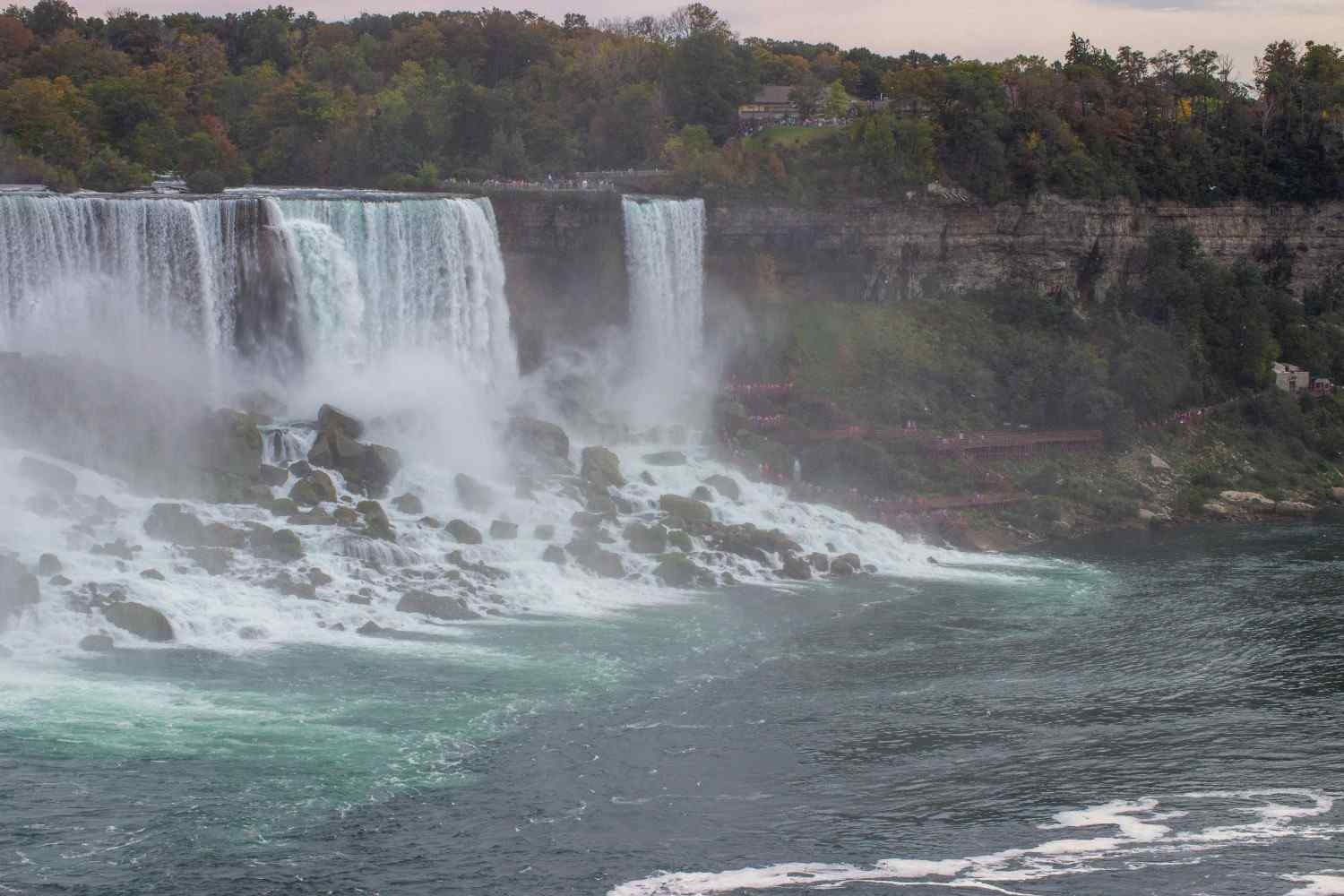
Niagara Falls sits on New York’s western edge, where the Niagara River drops between Lake Erie and Lake Ontario on the US-Canada border. It consists of three waterfalls, Horseshoe Falls, American Falls, and Bridal Veil Falls, and the combined flow exceeds 3,100 tons of water per second.
Nothing else in New York State hits with this kind of physical force. The American side of the falls is managed as Niagara Falls State Park, the oldest state park in the United States, established in 1885.
The Canadian side offers a more developed tourist town, but the American side has better proximity to the falls themselves and far less commercial sprawl.
Top Things to Do
1. Maid of the Mist boat tour: The electric tour boats take you directly under the falls and into the basin of Horseshoe Falls. A rain poncho is included in the ticket price. Boats run from May through November from the base of Niagara Falls State Park.
2. Cave of the Winds: A guided descent to the Hurricane Deck, a platform within 20 feet of Bridal Veil Falls. The water hits with enough force to make walking difficult, and this is the closest any visitor gets to the falls on foot. Sandals are provided.
3. Niagara Gorge Trail: The trail along the lower Niagara River gorge ranges from an easy scenic overlook hike to the challenging Whirlpool Rapids Adventure Hike, which drops into the gorge and requires scrambling over large boulders. The Whirlpool section is one of the most dramatic trail experiences in the state.
Don’t Leave Without…
Standing at Terrapin Point on Goat Island at sunset. The entire span of Horseshoe Falls spreads out directly in front of you, and in summer, the evening light catches the mist in a way photographs can’t reproduce.
RV Practical Info
- Campsites: Niagara Falls State Park Campground is directly within the park and books up early in summer. Branches of Niagara Campground and Resort is a strong alternative.
- Day Trip Option: If doing a western New York circuit, Niagara Falls works well as a one-night stop between the Finger Lakes and the Buffalo area.
Who Is It Best For?
- Families with children; the boat tour is accessible for all ages and delivers on the drama
- Travelers doing a western New York loop from NYC or the Finger Lakes
- Cross-border road-trippers combining with a stop on the Canadian side
Recommended Budget
- Campsite: $30 to $50 per night
- Meals: $20 to $35 for casual dining in Niagara Falls
- Activities: $35 to $55 for Maid of the Mist and Cave of the Winds combined
3. The Finger Lakes
The Vibe
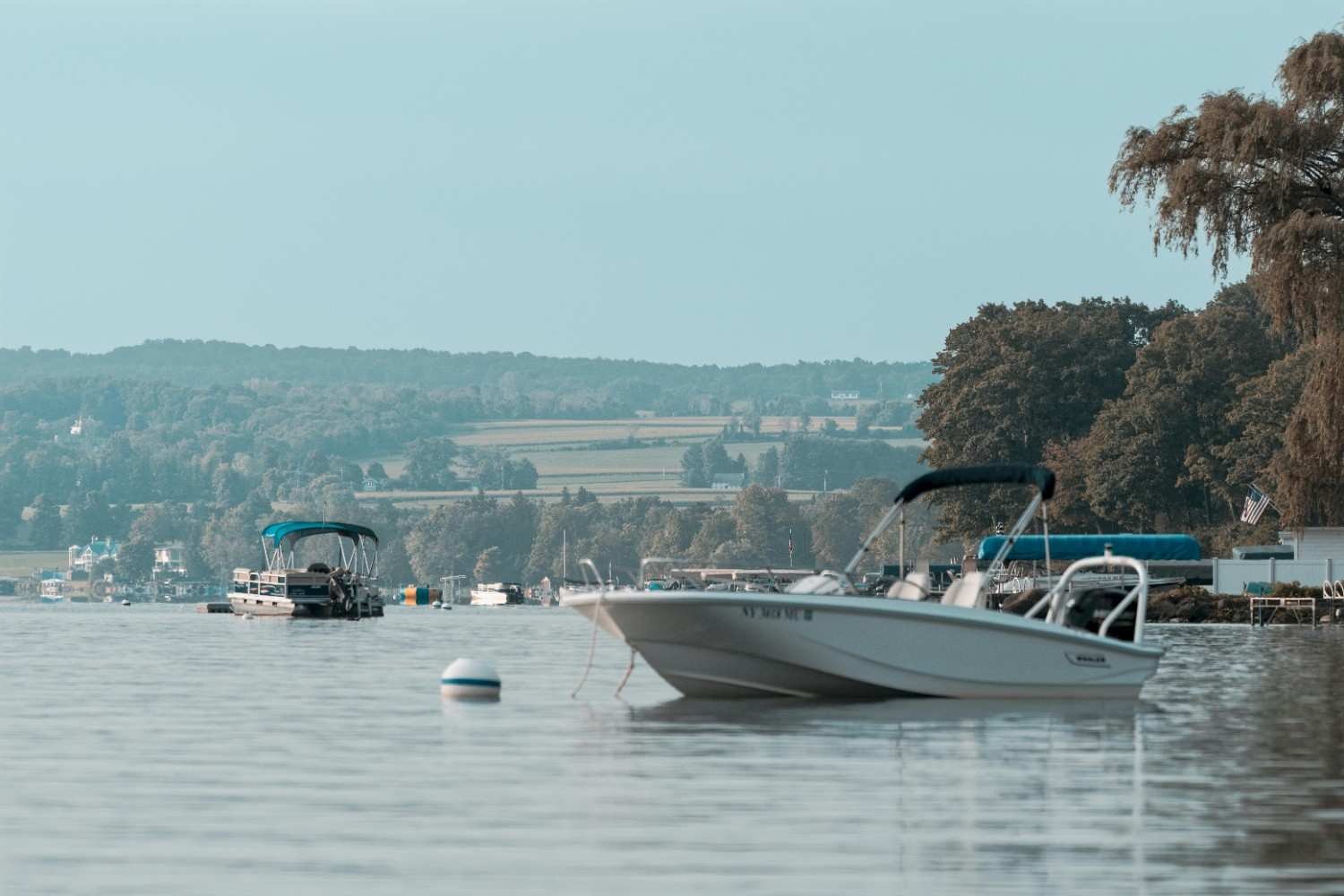
Eleven long, narrow glacial lakes stretch across central New York State like the fingers of an outstretched hand. The two largest, Cayuga and Seneca, are more than 60 km long and among the deepest lakes in the United States.
The region between them is covered in vineyard-lined ridges, wooded gorges, dairy farms, and small college towns. The Finger Lakes is New York’s most important wine region, with more than 100 wineries focused on cool-climate varieties including Riesling, Gewürztraminer, and Pinot Noir.
Ithaca, home to Cornell University, anchors the southern end of Cayuga Lake and gives the region an intellectual, slightly unconventional character.
Top Things to Do
1. Walk the Watkins Glen State Park gorge trail: The gorge at Watkins Glen, carved by Glen Creek through layers of shale and sandstone, contains 19 waterfalls within 1.5 miles of trail. The main gorge trail stays close to the creek bed, passing through tunnels and alongside near-vertical walls covered in moss and ferns. Go early in the morning before the parking area fills.
2. Drive the Seneca Lake Wine Trail: Route 14 runs along the western shore of Seneca Lake through a concentration of the region’s best wineries, including Boundary Breaks, Bloomer Creek, and Lamoreaux Landing. Most wineries charge a small tasting fee of $5 to $15 and are open daily through the summer and fall.
3. Swim and hike at Taughannock Falls State Park: The waterfall at Taughannock, just north of Ithaca on Cayuga Lake, drops 215 feet, which is taller than Niagara Falls. The main gorge trail runs about 1.5 miles to the base of the falls, and the park also has a lakefront swimming area and a campground directly on Cayuga Lake.
4. Explore Ithaca’s gorges: Cornell’s campus sits above two steep gorges, Cascadilla Gorge and Fall Creek Gorge, both accessible via trail from downtown. Buttermilk Falls State Park and Robert H. Treman State Park, both just south of the city, add more waterfall hiking within a few miles of each other.
Don’t Leave Without…
A Riesling tasting at a small, family-run winery on one of the lake slopes, ideally sitting on a deck overlooking the water in the late afternoon. The dry and off-dry Rieslings from Seneca Lake are among the most underrated American wines.
RV Practical Info
- Campsites: Watkins Glen State Park campground sits within walking distance of the gorge. Taughannock Falls State Park has excellent lakeside spots.
- Roads: Secondary roads through the wine country are narrow and winding; take them slowly, as farm equipment and cyclists share the lanes frequently.
- Scenic Route: Drive Route 89 along the western shore of Cayuga Lake from Ithaca to Taughannock Falls, then continue north to Seneca Falls before crossing to Seneca Lake.
Who Is It Best For?
- Wine lovers who want to taste directly at the estate with a vineyard view
- Waterfall hikers, as the concentration of accessible falls here is unmatched in the eastern US
- Road-trippers who want a slower pace than NYC, with scenery at every stop
Recommended Budget
- Campsite: $25 to $45 per night at state park campgrounds
- Meals: $20 to $40; farm stands and local diners keep costs low
- Activities: $15 to $30 for winery tastings and state park entry
4. The Adirondacks
The Vibe
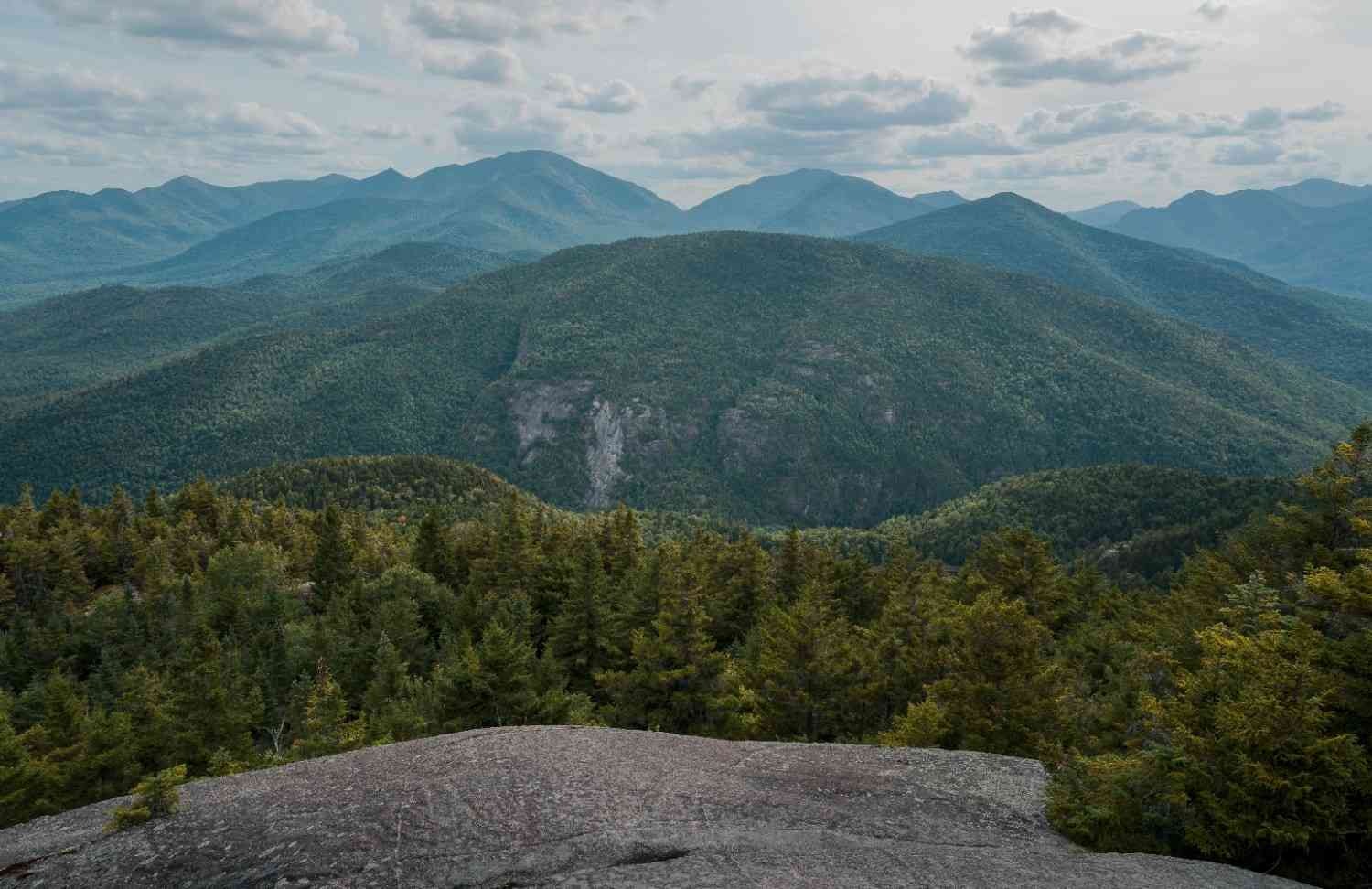
The Adirondack Park covers roughly six million acres in northeastern New York, making it the largest protected area in the contiguous United States, larger than Yellowstone, Yosemite, Glacier, and Grand Canyon combined.
The park is not federally managed like a national park; it is a patchwork of state land and private property, with communities, farms, and lodges operating throughout. Within the park: 46 peaks above 4,000 feet, more than 3,000 lakes and ponds, 1,200 miles of rivers, and 2,000 miles of marked hiking trails.
Lake Placid, which hosted the Winter Olympics in 1932 and 1980, is the main gateway town and has the strongest visitor infrastructure in the region.
Top Things to Do
1. Hike the High Peaks: The 46 peaks above 4,000 feet attract serious hikers from across the Northeast. Mount Marcy, at 5,344 feet, the highest point in New York State, is the most climbed; the round trip from the Adirondak Loj trailhead takes 7 to 9 hours. Wright Peak and Algonquin Peak offer slightly shorter routes with exceptional above-treeline views.
2. Paddle the lakes: Saranac Lake and Tupper Lake are the most accessible for RV-based paddlers, with launch sites and parking at both. The St. Regis Canoe Area, northwest of Saranac Lake, is a designated non-motorized zone covering 18 interconnected ponds and one of the best flatwater paddling areas in the eastern US.
3. Visit Lake Placid’s Olympic sites: The Olympic Museum covers the 1932 and 1980 Games with film, equipment, and athlete stories. The Whiteface Veterans Memorial Highway winds to within 500 feet of the summit of Whiteface Mountain, where the alpine ski events were held. The bobsled track at Mount Van Hoevenberg offers passenger rides from June through March.
4. Drive Route 73 through the High Peaks: The stretch of Route 73 between Lake Placid and Keene Valley passes the Cascade Lakes, Johns Brook Valley, and the base of the High Peaks. In autumn, the hardwood forest turns deep orange and red along this road, making it one of the most scenic drives in upstate New York.
Don’t Leave Without…
Paddling to a backcountry lean-to shelter on one of the Adirondack interior lakes and cooking dinner while watching the light fade on the surrounding ridgeline. No other experience in New York State delivers this kind of quiet.
RV Practical Info
- Campsites: Meadowbrook State Campground near Lake Placid is a reliable base. Many state campgrounds along the Adirondack corridor are open from May through October.
- Roads: Route 73 and Route 86 are well-surfaced but narrow in places through the peaks. Avoid large RVs on minor forest roads.
- Wildlife: Black bears are active throughout the park. Use designated bear boxes at campsites and never store food in your vehicle overnight.
Who Is It Best For?
- Hikers who want serious mountain terrain without the crowds of national parks
- Paddlers and canoeists looking for multi-day flatwater routes
- Anyone who wants genuine backcountry quiet within a day’s drive of New York City
Recommended Budget
- Campsite: $20 to $35 per night at state campgrounds
- Meals: $15 to $30; stock up in Lake Placid before heading into remote areas
- Activities: $20 to $40 for guided tours; hiking is free on state land
5. Hudson Valley
The Vibe
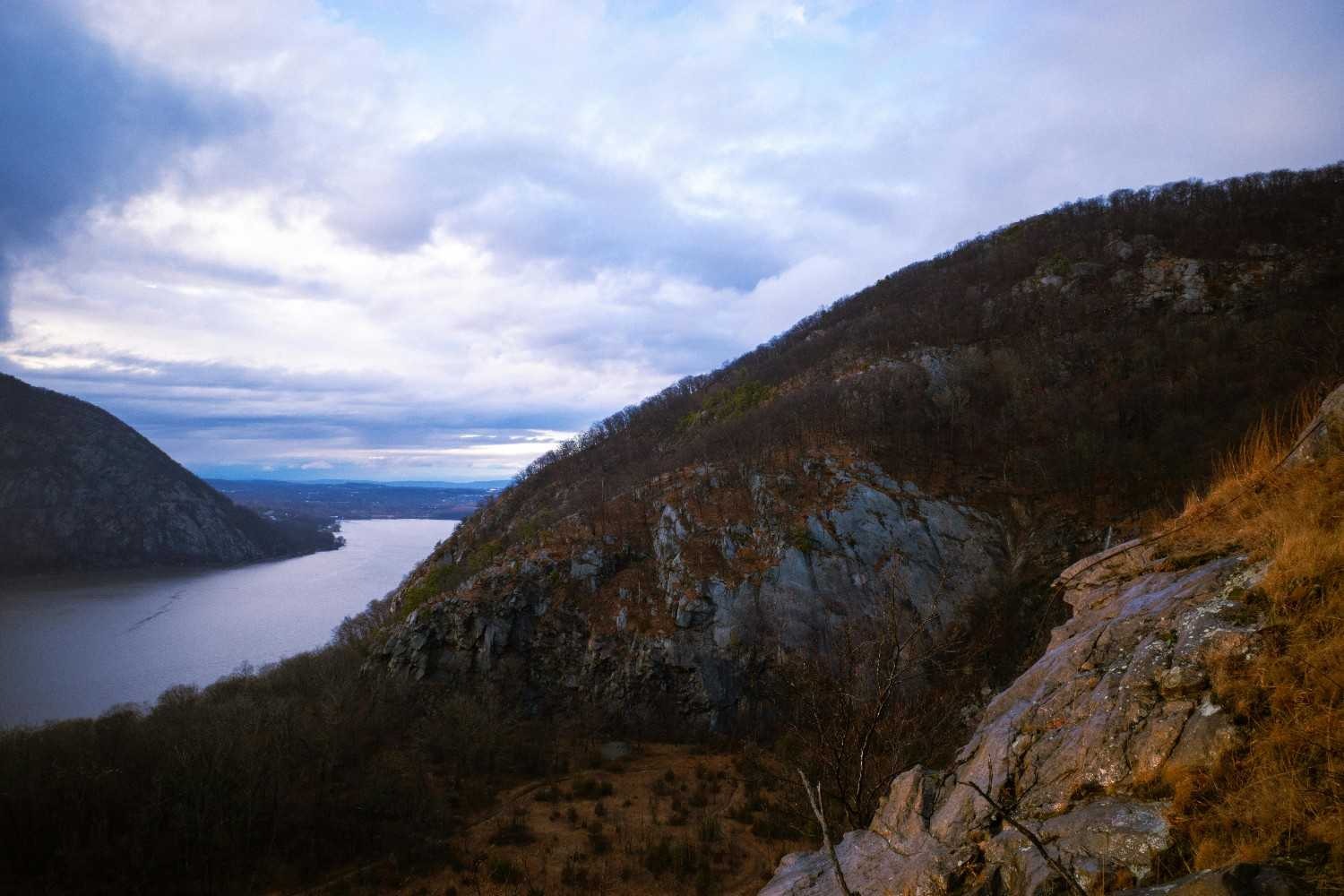
The Hudson River flows 315 miles from the Adirondacks to New York Harbor, and the valley it carved is one of the most historically significant landscapes in the country.
The mid-Hudson Valley, between Poughkeepsie in the south and Hudson in the north, was the setting for the Hudson River School of painting in the 19th century, and the visual drama that inspired those artists is still very much intact.
The towns along the river, Beacon, Cold Spring, Rhinebeck, and Hudson, each balance historic architecture with a contemporary arts and food scene. The Culinary Institute of America operates its flagship campus in Hyde Park, and the density of serious restaurants per square mile is unusually high for a rural region.
Top Things to Do
1. Explore Beacon and Dia Beacon: Beacon is a former industrial town on the Hudson that has reinvented itself around art and food. Dia Beacon occupies a former Nabisco factory and houses one of the largest collections of large-scale art from the 1960s to the present, with works by Richard Serra, Donald Judd, and Dan Flavin. The building’s design uses natural light throughout.
2. Drive to Sleepy Hollow: The town of Sleepy Hollow, 30 miles north of Manhattan, is where Washington Irving set his 1820 story “The Legend of Sleepy Hollow.” The Sleepy Hollow Cemetery, where Irving is buried, is one of the most evocative historic cemeteries in the country. Kykuit, the Rockefeller estate above the Hudson, is accessible on guided tours from nearby Tarrytown.
3. Visit the Roosevelt estate in Hyde Park: Springwood, the birthplace and home of Franklin D. Roosevelt, is managed as a National Historic Site. The adjacent FDR Presidential Library is the oldest presidential library in the country, and Val-Kill, Eleanor Roosevelt’s personal cottage nearby, is a separate site worth the short drive.
4. Drive the Millbrook Vineyards wine route: The Hudson Valley wine region clusters around the towns of Millbrook, Red Hook, and Rhinebeck. Millbrook Vineyards and Winery is the largest estate and offers tastings in a working barn with views over the rolling property. The drive between estates on back roads through the valley’s farmland is worth the detour.
Don’t Leave Without…
Dinner at a farmhouse restaurant in the valley, somewhere with a visible kitchen garden and a menu that changes with the season. The Hudson Valley farm-to-table scene is genuinely good, and prices are more reasonable than you’d expect this close to New York City.
RV Practical Info
- Campsites: Mills-Norrie State Park in Staatsburg has RV sites with Hudson River access. Taconic State Park campground is a reliable alternative on the eastern side of the valley.
- Scenic Route: Drive Route 9 from Tarrytown north to Hudson, threading through the historic river towns and past most of the major estate entrances.
Who Is It Best For?
- History and architecture enthusiasts drawn to the estate culture and Revolutionary War sites.
- Couples who want a scenic, slower-paced alternative to New York City
- Foodies interested in the farm-to-table dining scene
Recommended Budget
- Campsite: $30 to $50 per night
- Meals: $25 to $50 at farm restaurants; casual options run considerably cheaper
- Activities: $10 to $20 for historic site entry; Dia Beacon admission is around $25
6. The Catskills
The Vibe
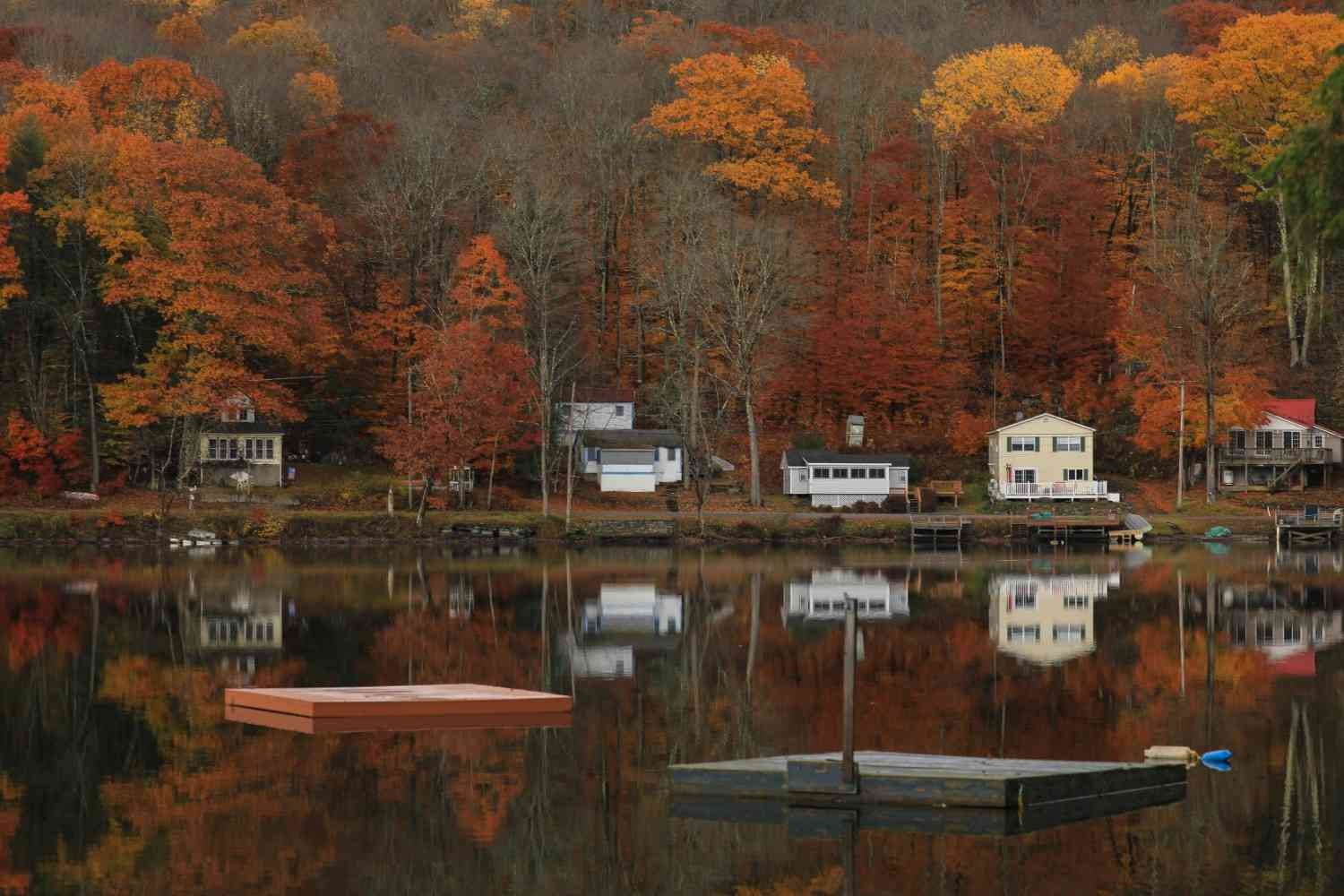
The Catskill Mountains rise abruptly from the west bank of the Hudson River, reaching their highest point at Slide Mountain at 4,180 feet. The park covers 280,000 acres of protected forestry, with dense deciduous woodland, hemlock ravines, and fast-moving streams.
Three hours from New York City, the Catskills have drawn city residents since the 19th century. The contemporary Catskills are a mix of old traditions and newer arrivals. There are still diners, bait shops, and hunting camps; alongside them are natural wine bars, ceramics studios, and farm stays.
Towns like Woodstock, Phoenicia, and Narrowsburg reflect the arts and craft brewery culture that has taken hold over the past decade.
Top Things to Do
1. Swim in the swimming holes: The Catskills’ streams are cold, clear, and accessible from the road. Peekamoose Blue Hole requires a day-use permit in peak season and is among the most visited spots in the park. The pools below Kaaterskill Falls are a good alternative. Arrive before 9 am on summer weekends to beat the crowds.
2. Hike to Kaaterskill Falls: At 260 feet, Kaaterskill Falls is the tallest two-tiered waterfall in New York State. The upper viewpoint is a short, steep hike from the Route 23A trailhead. For the full drop, the lower trail adds another mile each way. The falls were a recurring subject for Hudson River School painters in the 19th century.
3. Eat and drink your way through Phoenicia and Woodstock: Phoenicia has the Peekamoose Restaurant and the classic Sweet Sue’s for breakfast. Woodstock has a concentration of galleries, record stores, and good restaurants within easy walking distance. Both towns work well as a central base for a Catskills road trip.
Don’t Leave Without…
A craft beer at a Catskills brewery with outdoor seating, either Catskill Brewery in Livingston Manor or Woodstock Brewing Co. Order a pint and sit outside with the forested hills in the background.
RV Practical Info
- Campsites: North-South Lake State Campground is the most scenic option, with two lakes, beaches, and direct access to the Escarpment Trail. North Lake beach is among the best in the state park system.
- Roads: Many Catskills roads are narrow, steep, and switch-backed. Route 23A through Kaaterskill Clove is particularly tight; drive slowly and use your horn on blind curves.
Who Is It Best For?
- Weekend road-trippers from New York City looking for a natural counterbalance to city life
- Hikers who want accessible trail systems within three hours of Manhattan
- Those drawn to the arts and craft food scene, rather than purely outdoor recreation
Recommended Budget
- Campsite: $25 to $40 per night
- Meals: $20 to $45, ranging from classic diner breakfasts to farm restaurant dinners
- Activities: $0 to $20; most hiking and swimming are on public land
7. Saratoga Springs
The Vibe
Saratoga Springs sits in the Capital Region of New York, about 35 miles north of Albany, and has been drawing visitors since the 18th century, when its natural mineral springs were first promoted for their supposed healing properties.
The city has a distinct elegance for upstate New York, with a handsome Victorian downtown, a thriving arts scene anchored by Saratoga Performing Arts Center, and the Saratoga Race Course, the oldest active thoroughbred racetrack in the United States, which has been running since 1863. In summer, the city fills with racing fans and arts visitors.
In spring and fall, it is noticeably quieter, and the mineral springs, scattered throughout Congress Park and the surrounding neighborhood, are genuinely easy to visit at a slow pace.
Top Things to Do
1. Drink from the mineral springs: Twenty-one public springs are scattered throughout the city and surrounding Saratoga Spa State Park, each with its own mineral composition and flavor. The springs are free to taste, and each one is labeled. Bring a cup. Some are quite carbonated and iron-rich; others are milder. Hathorn Spring No. 1 in Congress Park is the most central starting point.
2. Watch the horse racing: The Saratoga Race Course runs its 40-day summer meet from mid-July through Labor Day. General admission is inexpensive, around $5 to $7, and morning training sessions from 7 to 9:30 am are free to watch from the backstretch rail. In 2026, the track hosts the prestigious Belmont Stakes on June 6 for its third and final time at this venue.
3. Visit Saratoga Spa State Park: The 2,379-acre park surrounding the springs has a public pool, two golf courses, a performing arts venue, and trails through the mineral spring complex. The Gideon Putnam Hotel, built in the 1930s, anchors the center of the park. The Lincoln and Roosevelt Bath Houses are National Historic Landmarks.
Don’t Leave Without…
A morning at Mrs. London’s Bakery, a local institution on Broadway. The pastries are outstanding, the coffee is good, and the sidewalk tables are the best spot in the city to watch Saratoga’s summer visitors go by.
RV Practical Info
- Campsites: Moreau Lake State Park, about 10 miles south of Saratoga Springs, is the most practical RV base and is open from May through October. Sites book quickly in July and August.
- Parking: Downtown Saratoga Springs is compact and walkable; park the RV at the campground and drive a regular vehicle or bike into town on race days, when parking is extremely limited.
Who Is It Best For?
- History buffs interested in the spa culture and racing traditions of 19th-century America
- Summer arts travelers combining the racetrack with SPAC concerts and gallery visits
- Road-trippers connecting the Hudson Valley and the Adirondacks on one route north
Recommended Budget
- Campsite: $30 to $45 per night at Moreau Lake State Park
- Meals: $20 to $40; downtown has a solid mix of casual and destination restaurants
- Activities: $5 to $25 for race day admission; springs and the state park are free to enter
8. Letchworth State Park
The Vibe
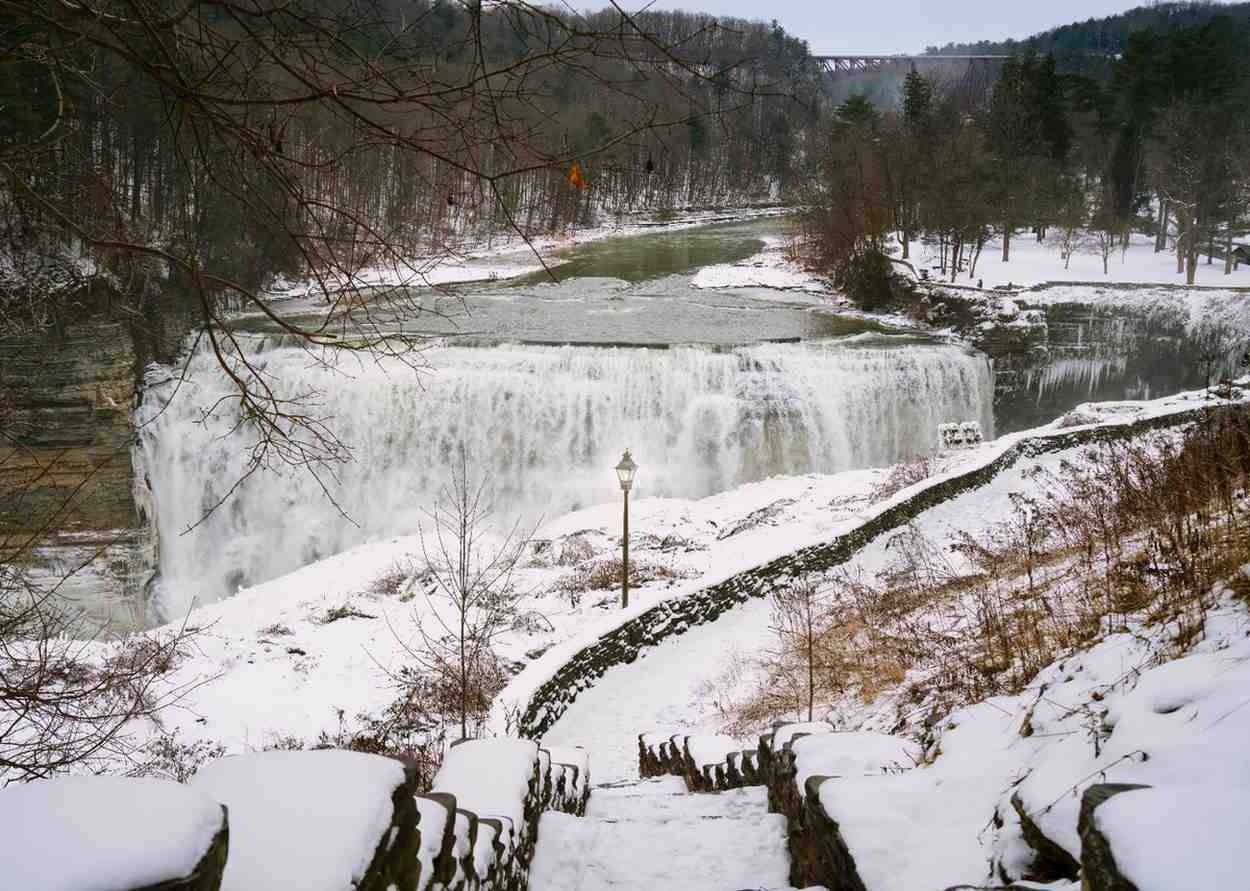
Letchworth State Park in western New York is built around a 17-mile stretch of the Genesee River gorge, where the river drops through three major waterfalls and past canyon walls that reach 600 feet in places. It is frequently called the Grand Canyon of the East, and the comparison holds up.
The park covers more than 14,000 acres of forest, meadow, and river corridor. Unlike the Adirondacks or Catskills, Letchworth is a manageable size for a one or two-night stay, with the main attractions concentrated along a well-developed road through the canyon rim.
The park has excellent RV facilities, a full calendar of summer activities including hot air balloon rides over the gorge, and trail systems ranging from easy rim walks to challenging river-level descents.
Top Things to Do
1. Walk the Gorge Rim Trail: The 7-mile Gorge Trail runs along the rim of the canyon from the Upper Falls at the north end of the park to the Mount Morris Dam at the south. The three main waterfalls, Upper Falls, Middle Falls, and Lower Falls, are all accessible along this trail, with Middle Falls being the most photogenic. The trail is well-maintained and suitable for families.
2. Take a hot air balloon ride over the gorge: Several operators run balloon flights over Letchworth from May through October. The gorge from above is a genuinely different experience from the rim views, showing the full depth of the canyon and the curve of the Genesee River through the park. Book ahead; flight windows depend on weather and slots fill on summer weekends.
3. Swim at the Letchworth Pool: The park’s large outdoor swimming pool near the visitor center is open in summer and is one of the best free facilities in the New York State park system. On hot days in July and August, it is the most crowded spot in the park; arrive early or visit in the late afternoon when families start leaving.
Don’t Leave Without…
Standing at the overlook above Middle Falls at dusk, when the orange light drops into the gorge, and the sound of the water carries up from 100 feet below. The park is much quieter in the evenings once the day-tripper crowds leave, and the light is better.
RV Practical Info
- Campsites: Letchworth State Park Campground has more than 270 sites and is one of the best-equipped state park campgrounds in New York. Tent and RV sites are both available, and the campground is open from May through October.
- Roads: The main park road along the gorge rim is wide and well-surfaced, suitable for larger RVs. The descent roads to the river level are narrower and steeper; check clearance before attempting.
Who Is It Best For?
- Photographers and hikers who want dramatic gorge scenery without a long drive into the Adirondacks
- Families who want a well-organized state park with swimming, trails, and activities in one place
- Western New York road-trippers connecting Letchworth with Niagara Falls on a two to three-day circuit
Recommended Budget
- Campsite: $20 to $35 per night
- Meals: $15 to $25; the nearest full-service town is Castile, a few miles from the park entrance
- Activities: $20 to $80 for hot air balloon rides; park entry is free with a valid Empire Pass or included with campsite fees
9. Thousand Islands
The Vibe
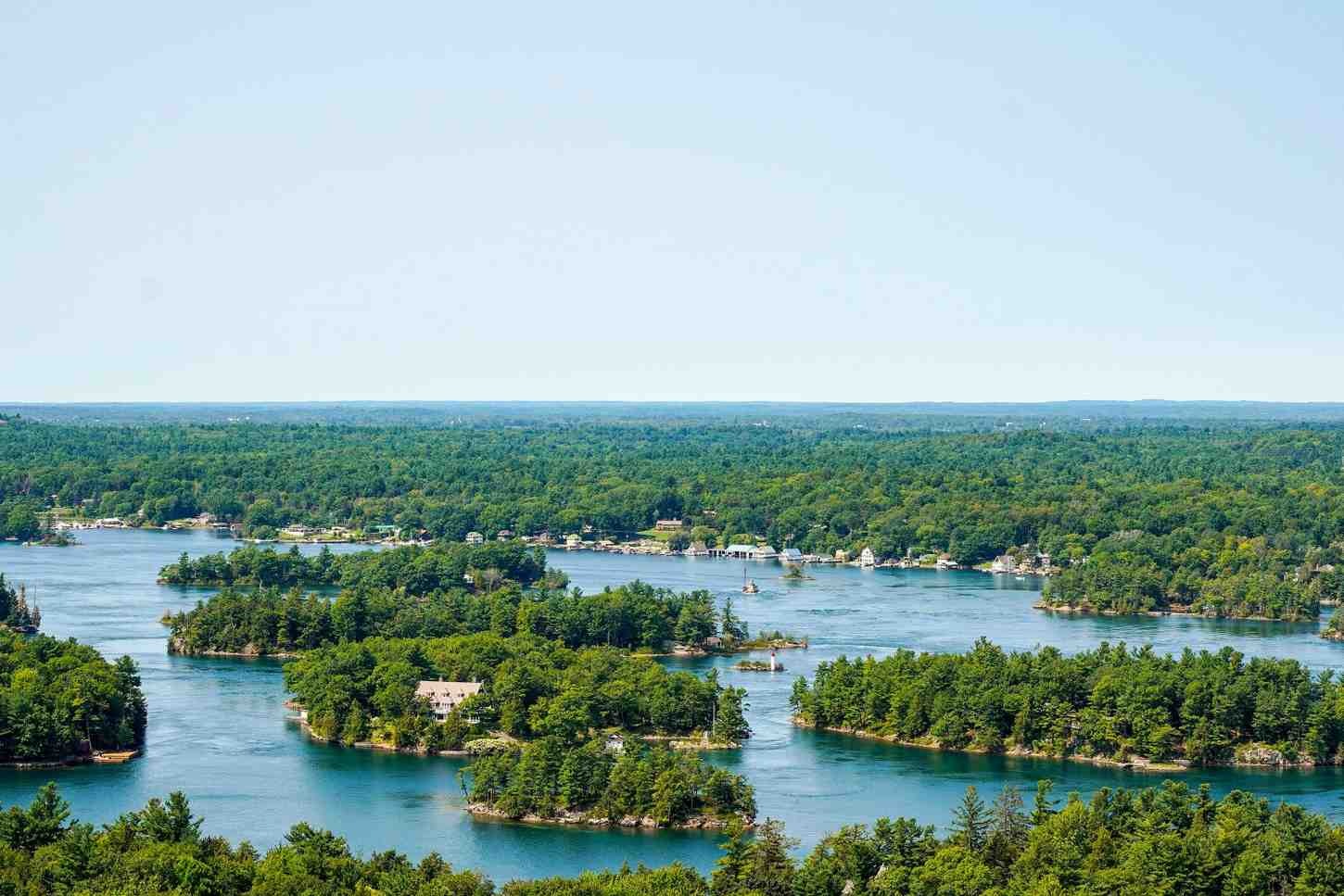
The Thousand Islands region straddles the US-Canada border along the upper St. Lawrence River, where the river leaves Lake Ontario and begins its journey northeast to the Atlantic.
The name is technically accurate: more than 1,800 islands dot the river between Kingston, Ontario, and Brockport, New York, ranging from large forested landmasses to tiny outcroppings barely large enough for a single building.
The main gateway on the American side is Alexandria Bay, a small riverside town with boat tour operators, waterfront restaurants, and direct views of Boldt Castle on Heart Island.
The region is one of New York State’s most scenic and most undervisited stretches of shoreline, particularly good for road-trippers who want to spend time on the water without a complex logistics chain.
Top Things to Do
1. Visit Boldt Castle: George Boldt, proprietor of the Waldorf Astoria Hotel in New York City, began construction of this 120-room Rhine-style castle on Heart Island in 1900 as a gift for his wife. She died in 1904, construction stopped, and the castle sat abandoned for 70 years before restoration began. Today, it is accessible by boat tour from Alexandria Bay and is one of the most unusual historic sites in the state.
2. Take a scenic boat tour: Several operators in Alexandria Bay run two-hour boat tours through the islands, passing the international border, private island estates, and the preserved lighthouse towers that marked the river shipping lane in the 19th century. Uncle Sam Boat Tours runs the most established service and operates from May through October.
3. Drive Route 12 along the river: Route 12 runs along the American shore of the St. Lawrence from Ogdensburg in the east to Cape Vincent in the west, threading through small river towns and past water views that open and close as the road cuts through woodland and farmland. In autumn, the combination of fall foliage and river light makes this one of the most scenic drives in upstate New York.
Don’t Leave Without…
A plate of freshly caught walleye or perch at a riverside restaurant in Clayton or Cape Vincent. The St. Lawrence River fishing is serious here, and the local fish houses are the best expression of it. Eat outside if the weather allows; the river views from the waterfront tables are what the meal is about.
RV Practical Info
- Campsites: Kring Point State Park near Redwood has RV sites directly on the St. Lawrence and is among the best-positioned campgrounds in the region. Open from May through Columbus Day weekend.
- Roads: Route 12 is well-surfaced and RV-suitable throughout. The bridge to Wellesley Island State Park has a weight limit; check before crossing with a larger vehicle.
Who Is It Best For?
- Travelers who want a scenic, off-the-beaten-path stretch of New York State with a genuine waterway character
- Families interested in history alongside outdoor recreation; Boldt Castle is accessible and engaging for children
- Road-trippers connecting the Adirondacks and the Finger Lakes who want a riverside detour on the northern route
Recommended Budget
- Campsite: $25 to $40 per night at Kring Point or Wellesley Island State Park
- Meals: $20 to $40; waterfront restaurants in Alexandria Bay and Clayton are the main options
- Activities: $12 to $20 for boat tours; Boldt Castle entry is included in most tour prices
10. Long Island
The Vibe
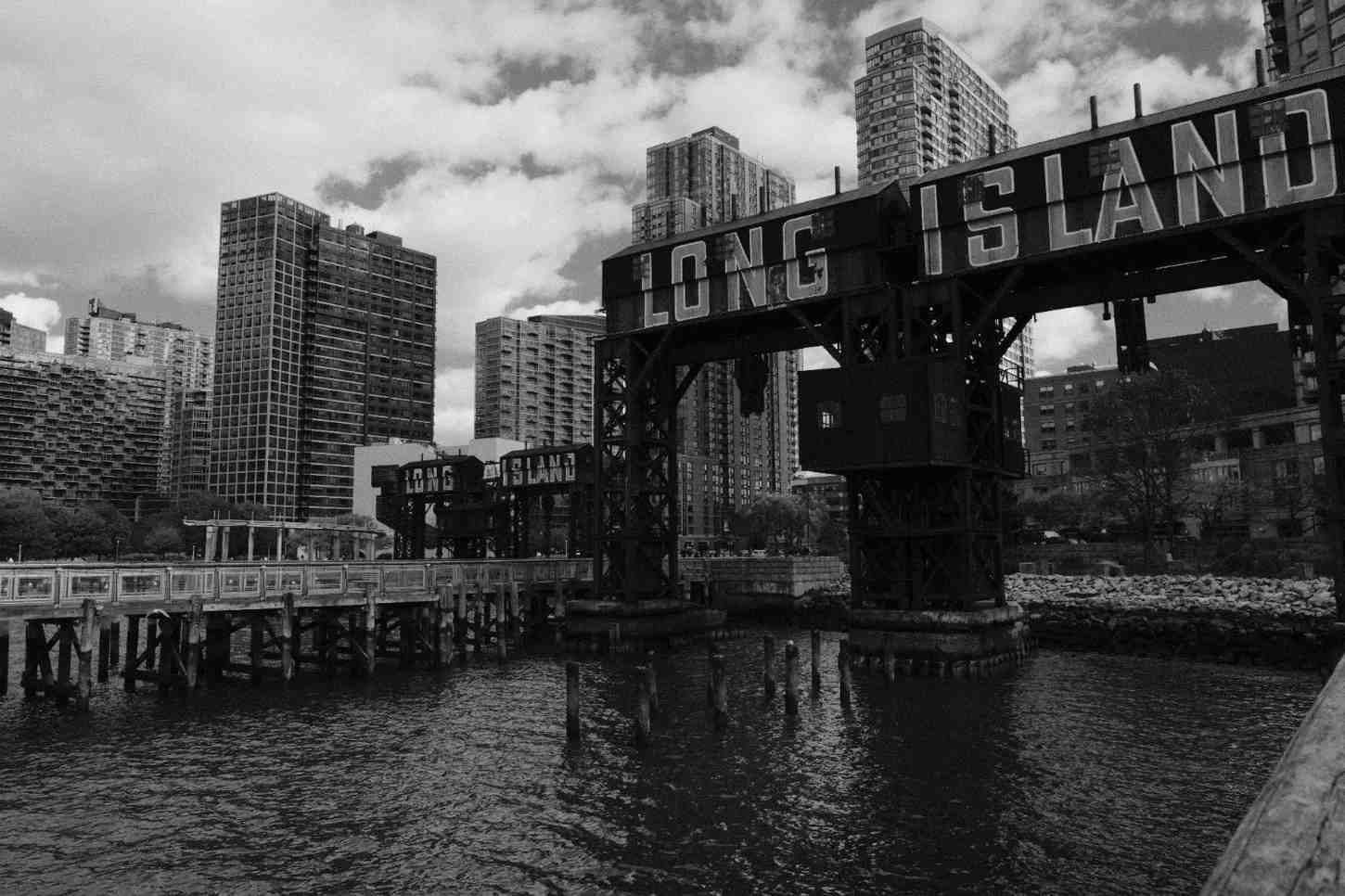
Long Island stretches 118 miles east of Manhattan into the Atlantic, and the further east you go, the more the character of the place changes. The western end, Nassau County and western Suffolk, is dense suburban commuter territory.
The North Fork is wine country, with more than 50 wineries producing cool-climate varietals along the Long Island Sound shore. The South Fork is where the Hamptons begin, a stretch of beach towns with a long history as a summer destination for New Yorkers, ranging from the family-friendly beaches of Westhampton to the fishing-town character that Montauk has managed to hold onto despite the attention.
Fire Island, a barrier island off the South Shore with no cars allowed, is the most atmospheric beach destination in the New York metropolitan area.
Top Things to Do
1. Drive the North Fork wine trail: The North Fork Wine Trail runs along Route 25 from Riverhead east to Orient Point, passing wineries including Bedell Cellars, Paumanok Vineyards, and Macari Vineyards. The landscape is flat and open, with vineyard rows running close to the road and Long Island Sound visible in the distance. Most wineries are open for tastings from Thursday through Sunday, and many have outdoor seating.
2. Spend a day at a South Fork beach: The South Fork’s ocean-facing beaches, particularly Coopers Beach in Southampton, Atlantic Avenue Beach in Amagansett, and the town beaches around East Hampton, are among the most consistently well-kept on the East Coast. The water is cool but swimmable from June through September. Montauk Point State Park at the eastern tip has a lighthouse and dramatic cliff-top views across the Atlantic.
3. Take the ferry to Fire Island: Fire Island is a 32-mile barrier island with no paved roads and no cars. The ferry from Bay Shore takes about 30 minutes to the community of Ocean Beach, from which you can walk west along the boardwalk to Fire Island National Seashore, one of the most undeveloped stretches of Atlantic beach remaining on the East Coast. The Sunken Forest, a maritime holly forest in a low swale behind the dunes, is a 20-minute walk from the ferry dock.
Don’t Leave Without…
Lobster rolls and local oysters at a fish shack in Montauk or Greenport on the North Fork. The oysters from the bays behind the North Fork are exceptional, particularly in the fall, and inexpensive compared to what the same product costs in Manhattan restaurants two hours west.
RV Practical Info
- Campsites: Hither Hills State Park in Montauk is the best-positioned RV campground on Long Island, directly on the ocean, 1.5 miles west of Montauk village. It books out months in advance for summer dates.
- Roads: The Sunrise Highway and Montauk Highway are the main east-west routes on the South Fork and are straightforward for RVs. Avoid the Hamptons on summer Friday afternoons; the traffic from Manhattan is significant.
- Fire Island: The island is not accessible by RV or car. Park in Bay Shore and take the ferry.
Who Is It Best For?
- Beach lovers who want ocean swimming with good facilities and Atlantic surf
- Wine travelers interested in the North Fork as an alternative to the Finger Lakes
- Road-trippers finishing a New York State loop who want to end at the coast before returning to NYC.
Recommended Budget
- Campsite: $35 to $60 per night at Hither Hills State Park in Montauk
- Meals: $25 to $60; Montauk fish shacks are good value, but the Hamptons restaurant scene is not
- Activities: $10 to $20 for ferry tickets and state park entry
Expert Tips for a New York RV Road Trip
1. Don’t underestimate New York State’s size: New York City to Niagara Falls is a 6.5-hour drive. Adding the Adirondacks from Niagara adds another 4 hours. Build at least 10 days into a full-state loop; trying to cover everything in a week means spending more time driving than arriving.
2. Plan your NYC approach carefully: Manhattan is off-limits for an RV. The most practical base is Liberty Harbor RV Park in Jersey City, New Jersey, with direct PATH train service to the World Trade Center in 15 minutes. Book well in advance; it fills on summer weekends.
3. State parks are the best value campgrounds in New York: The New York State Parks system is well-maintained and widespread. Sites typically cost $25 to $45 per night, significantly cheaper than private campgrounds. Reserve through ReserveAmerica, often months ahead for peak-season dates at popular sites like Watkins Glen and North-South Lake.
4. Fall is the best season for a New York road trip: September and October bring cooler temperatures, reduced crowds at state parks, and foliage that peaks in the Adirondacks in early October and rolls south through the Hudson Valley and Catskills through late October. Niagara Falls boat tours run through October, and Finger Lakes wineries are at their most active during harvest.
5. The Finger Lakes and Adirondacks work well as a combined route: Drive north from NYC through the Hudson Valley to Albany, cut west to the Finger Lakes, continue west to Niagara Falls, then loop northeast through the Adirondacks and back south. This circuit covers the major highlights without major backtracking and totals around 800 miles.
6. Watkins Glen State Park books out fast: The campground inside Watkins Glen State Park is one of the most in-demand in the state, sitting within walking distance of the gorge trail. Book 6 months ahead for June through August dates. The gorge itself opens at 7 am; arriving at opening gives you an hour on the trails before the day-tripper crowds arrive.
7. Stock up before the Adirondacks: Once past Lake Placid or Saranac Lake, large grocery stores become sparse. Fill your RV kitchen at a supermarket in Plattsburgh, Glens Falls, or Lake Placid before heading into the interior. The park has many communities, but full supermarkets are not guaranteed in smaller towns.
Plan Your New York Trip with Indie Campers
Planning a New York road trip is one thing; having the right vehicle and the flexibility to change course as you go is what makes it work. Indie Campers is the go-to choice for RV rental in the USA and serves road-trippers who want a broad fleet, genuine booking flexibility, and the freedom to start and finish in different cities without the logistics headache.
- Cancel up to 31 days before pick-up with no penalty: Book now and pay the full amount only 30 days before your departure date. If your plans shift, a New York itinerary that changes direction is not a problem. You are not locked in.
- Pick up and drop off at different locations across 70+ pick-up and drop-off points: Start in New York City, drive north through the Hudson Valley, cut west through the Finger Lakes to Niagara Falls, and drop off somewhere else entirely, without retracing a single kilometre.
- Choose from more than 8,000 RVs, motorhomes, and campervans worldwide: From compact campervans for two on a Finger Lakes wine trail to larger motorhomes for families at Niagara Falls, there is a vehicle that fits the trip you are planning.
Whether you are booking your first campervan trip or your tenth, the process is fully digital, support is available 24/7, and unlimited mileage applies across the company-owned fleet.
Book your New York RV rental with Indie Campers
Everything You Need to Know About New York Road Trips
| Place | Region | Vibe | Best For | Top Things to Do | Budget/Day | Top Campground | RV Rating | Wild Camping? | Best Stay |
| New York City | NYC | Iconic | First-timers | Brooklyn Bridge, The Met, High Line, food | 💰💰💰💰 | Liberty Harbor RV Park (NJ) | ★★★☆☆ | No | Indie Campers |
| Niagara Falls | Western NY | Dramatic | Families | Maid of the Mist, Cave of the Winds, gorge trail | 💰💰 | Niagara Falls State Park Campground | ★★★★☆ | No | Indie Campers |
| Finger Lakes | Central NY | Scenic | Wine and hiking | Watkins Glen gorge, wine trail, Taughannock Falls | 💰💰 | Watkins Glen State Park | ★★★★★ | No | Indie Campers |
| The Adirondacks | Upstate NY | Wild | Hiking and paddling | High Peaks, Lake Placid, paddling, Route 73 | 💰💰 | Meadowbrook State Campground | ★★★★☆ | Designated sites only | Indie Campers |
| Hudson Valley | Mid-NY | Historic | Couples and foodies | Dia Beacon, Sleepy Hollow, Roosevelt estates | 💰💰💰 | Mills-Norrie State Park | ★★★☆☆ | No | Indie Campers |
| The Catskills | Mid-NY | Artsy | Hikers and weekenders | Kaaterskill Falls, swimming holes, Phoenicia | 💰💰 | North-South Lake Campground | ★★★★☆ | No | Indie Campers |
| Saratoga Springs | Capital Region | Elegant | History and spas | Mineral springs, SPAC, horse racing | 💰💰💰 | Moreau Lake State Park | ★★★☆☆ | No | Indie Campers |
| Letchworth State Park | Western NY | Natural | Hikers and photographers | Triple falls, gorge trails, hot air balloon rides | 💰 | Letchworth State Park Campground | ★★★★★ | No | Indie Campers |
| Thousand Islands | Northern NY | Waterside | Boating and history | Boat tours, Boldt Castle, Alexandria Bay | 💰💰 | Kring Point State Park | ★★★★☆ | No | Indie Campers |
| Long Island | NYC surrounds | Coastal | Beach lovers | Hamptons beaches, Montauk, Fire Island | 💰💰💰 | Hither Hills State Park | ★★★☆☆ | No | Indie Campers |
FAQs About the Best Places to Visit in New York
What are the best places to visit in New York?
The best places to visit in New York span both the city and the state. New York City, Niagara Falls, the Finger Lakes, the Adirondacks, and the Hudson Valley are the five destinations that give the most varied experience across a single road trip.
For a first visit, New York City combined with either the Finger Lakes or the Adirondacks covers the full range of what New York State offers, from urban to wilderness.
What is the best time of year to visit New York?
The best time of year to visit New York for a road trip is September through October, when fall foliage peaks across the Adirondacks, Catskills, and Hudson Valley, campsite crowds drop, and temperatures sit comfortably in the 15 to 20°C range for hiking.
Summer, from June through August, gives the longest days and warmest water temperatures, but fills state park campgrounds months in advance. Winter works well for New York City, but it closes many upstate facilities.
How many days do you need in New York?
You need at least 10 to 14 days to cover New York State’s main regions by RV at a reasonable pace. New York City alone deserves 4 to 5 days for a first-time visitor; a Finger Lakes circuit from NYC and back takes about 5 days; and adding the Adirondacks and Hudson Valley rounds out a 12 to 14-day trip. Shorter visits work well if you focus on one region rather than trying to cover the entire state.
What is New York best known for?
New York is best known for New York City, one of the most visited cities in the world, but the state is equally defined by Niagara Falls, the Adirondack wilderness, the Finger Lakes wine region, and the Hudson Valley’s historic estates and arts scene. Outside the city, New York State has more protected land than any other state in the northeastern US, with the Adirondack Park alone covering six million acres.
Is New York worth visiting?
New York is worth visiting for both the city and the state. The concentration of major experiences, from the Statue of Liberty and the Metropolitan Museum of Art in New York City to Niagara Falls, the Adirondack High Peaks, and the Finger Lakes wine country, is matched by very few destinations in the country.
An RV road trip through the state covers five or six genuinely distinct landscapes and cultures within 800 to 1,000 miles.
What are the best day trips from New York City?
The best day trips from New York City include Sleepy Hollow and the Hudson Valley, about 1 hour north, the Catskills, about 2.5 hours, and Cold Spring on the Hudson, accessible by Metro-North rail in 80 minutes for a mix of hiking and a riverside town.
The Hudson Valley wine region around Millbrook is a 2-hour drive and works well as a full day out of the city.
Is New York expensive for an RV road trip?
New York City is expensive for an RV road trip, with campsite fees of $60 to $90 per night at the nearest practical RV park in New Jersey.
Upstate New York, by contrast, is quite affordable; New York State park campgrounds cost $25 to $45 per night, and many of the best attractions, including hiking in the Adirondacks, gorge trails in the Finger Lakes, and the mineral springs at Saratoga, are free or low-cost.
A full New York road trip averages $100 to $180 per person per day, including campsite, fuel, and meals.
What is the best place to visit in New York for couples?
The best place to visit in New York for couples is the Hudson Valley, which combines river scenery, farm-to-table restaurants, Dia Beacon, and the historic estate drives along Route 9 in a compact, manageable route.
The Finger Lakes is the strongest alternative, with winery tastings on lake-view terraces and gorge hikes that work well at a slow pace. Both regions are within 2 to 4 hours of New York City and easy to cover in 3 to 4 days.
What is the best place to visit in New York with family?
The best place to visit in New York with family is Niagara Falls, where the Maid of the Mist tour is accessible for children of all ages, the Cave of the Winds is actively exciting, and the surrounding state park is compact and easy to navigate in half a day.
Letchworth State Park is the best alternative, with triple waterfalls, wide gorge rim trails, a summer swimming pool, and hot air balloon rides that work well for families with older children.
What is the best place to visit in New York with kids?
The best place to visit in New York with younger kids is Letchworth State Park, where the gorge trail along the rim is manageable for children, the pool is a reliable summer activity, and the campground has good facilities without requiring a long drive into remote territory.
Niagara Falls is the most dramatic option for kids who can handle a boat-based experience; the Cave of the Winds platform, within 20 feet of Bridal Veil Falls, is the activity most likely to produce a genuine reaction.
What is the best place to visit in New York with friends?
The best place to visit in New York with friends is the Finger Lakes, where the combination of gorge hiking at Watkins Glen, winery tastings along Seneca Lake, and campfire evenings at state park campgrounds works well for a group with mixed interests.
The region is concentrated enough that a group can cover it in 3 to 4 days without excessive driving. New York City works well for groups who want nightlife and restaurant diversity, particularly across Brooklyn’s neighborhoods.
What are the best places to visit in New York for first-timers?
The best places to visit in New York for first-timers are New York City, Niagara Falls, and either the Finger Lakes or the Hudson Valley.
New York City is a non-negotiable first visit; Niagara Falls is the most dramatically immediate natural landmark; and the Finger Lakes or Hudson Valley adds a scenic, slower-paced counterweight to the city experience.
This three-stop circuit covers the range of what New York State is about in 10 to 12 days.
What are the best places to visit in New York for solo travellers?
The best places to visit in New York for solo travellers are New York City, where solo travel is genuinely easy, and the city’s café, bar, and cultural scene is designed for individual visitors, and the Adirondacks, where solo hiking and paddling on the interior lakes offer real solitude.
Saratoga Springs is a strong addition; the city’s mineral springs, racetrack, and downtown restaurant scene are all comfortably navigated alone, and the campground at Moreau Lake State Park is a practical base nearby.
What are the best places to visit in New York for nature?
The best places to visit in New York for nature are the Adirondacks, the Finger Lakes, and Letchworth State Park. The Adirondacks cover six million acres with 2,000 miles of trails, 3,000 lakes and ponds, and 46 peaks above 4,000 feet.
The Finger Lakes contain 19 waterfalls at Watkins Glen alone, and add 100+ miles of scenic lake shoreline. Letchworth delivers the most dramatic single gorge in the state. Together, the three regions form the backbone of any nature-focused New York road trip.