Key Takeaways (TL;DR)
- Why Stay in San Francisco by RV: San Francisco sits at the center of one of the best road trip regions in North America. The city itself is compact and walkable, but what surrounds it – the Marin Headlands, Point Reyes, the Pacific Coast Highway, Napa Valley, and the Sierra Nevada – makes it a solid base for weeks of exploration. RV campsites within 30 minutes of downtown exist in multiple directions, and the Bay Area’s mild year-round climate means overnight stays are comfortable in any season.
- Top Places to Stay in San Francisco in 2026: Marin Headlands, Half Moon Bay, Point Reyes National Seashore, East Bay Hills (Oakland/Berkeley), Santa Cruz Mountains, South Bay Peninsula, Napa Valley, Mount Tamalpais, Pacifica, Angel Island.
- Don’t Miss Overnight Experience: Waking up at a Marin Headlands campsite with the Golden Gate Bridge framed between the hills at dawn – the fog layer below, the city visible on the far shore, and the light turning the bridge’s towers copper before the morning fully arrives. You can only get that when you sleep there.
- Ideal Trip Length: 7-14 days. The Bay Area rewards time. A week covers San Francisco, the Marin Coast, and one inland direction; two weeks lets you push south to Big Sur or east toward Yosemite.
- How to Choose the Right Base: If you want walkable city access and iconic views, the Marin Headlands or Pacifica are the right picks – both are within 30 minutes of downtown. For wilder, quieter camping, Point Reyes and the Santa Cruz Mountains have genuine wilderness sites within 1-2 hours. The East Bay works well if you’re using Oakland or Berkeley as your urban base.
- Recommended Budget Per Person/Night: $30-65/night, excluding RV rental. Most Bay Area campgrounds and RV parks fall in this range, with state park sites at the lower end and private parks with full hookups near the top. Marin Headlands sites through Recreation.gov are among the best value at $25-35/night.
- Watch Out For: Recreation.gov reservations for Marin Headlands, Point Reyes, and state park campgrounds open 6 months in advance and fill within days – sometimes hours. San Francisco’s city streets aren’t built for RVs; park outside the core and use public transit or a smaller vehicle to get into town. Fog is a year-round fixture on the coast; don’t count on summer nights being warm.
- Where To Stay: RV rentals from Indie Campers are a natural fit for the Bay Area – the region’s best spots are spread across a wide geography, and having your accommodation move with you beats any hotel.
- Best For: Road-trippers who want a major city within reach alongside wild coastline, redwood forest, and wine country.
Table of Contents
- Top Places to Stay in San Francisco in 2026: at a Glance
- Best Places to Stay in San Francisco
- What to Pack for a San Francisco RV Stay
- Final Expert Tips for Staying in San Francisco by RV
- Stay in San Francisco with Indie Campers
- Everything You Need to Know About Staying in San Francisco by RV
- FAQs About Where to Stay in San Francisco
Top Places to Stay in San Francisco in 2026: at a Glance
| Area / Town | Country | Setting | Best For | Campsite Type | Average Temp | Nightly Cost | Crowd Level | RV-Friendly |
| Marin Headlands | USA | Coastal / Hilltop | Views & City Access | Primitive + RV sites | 14°C (57°F) | $25-35 | Moderate | Yes |
| Half Moon Bay | USA | Coastal Cliffs | Beach & Surf | State Park + private | 15°C (59°F) | $35-55 | Moderate | Yes |
| Point Reyes National Seashore | USA | Wild Coast / Forest | Nature & Seclusion | Hike-in + drive-in | 13°C (55°F) | $20-30 | Low-Moderate | Limited |
| East Bay (Oakland/Berkeley) | USA | Urban Fringe / Hills | City Access + Budget | Private RV parks | 17°C (63°F) | $45-65 | Low | Yes |
| Santa Cruz Mountains | USA | Redwood Forest | Hikers & Nature Lovers | State park | 15°C (59°F) | $30-45 | Moderate | Yes |
| South Bay Peninsula | USA | Suburban / Bayfront | Families | Full-hookup parks | 16°C (61°F) | $45-65 | Low | Yes |
| Napa Valley | USA | Wine Country | Couples & Foodies | Winery + private | 18°C (64°F) | $40-60 | Low-Moderate | Yes |
| Mount Tamalpais | USA | Alpine / Forest | Hikers & Photographers | State park | 12°C (54°F) | $25-35 | Low | Limited |
| Pacifica | USA | Coastal Suburb | Surfers & City Commuters | Private RV park | 15°C (59°F) | $50-70 | Low | Yes |
| Angel Island | USA | Island / Bay | Walkers & History Buffs | Tent + environmental | 14°C (57°F) | $30-40 | Low | No |
Best Places to Stay in San Francisco
1. Marin Headlands, California
Why Stay Here
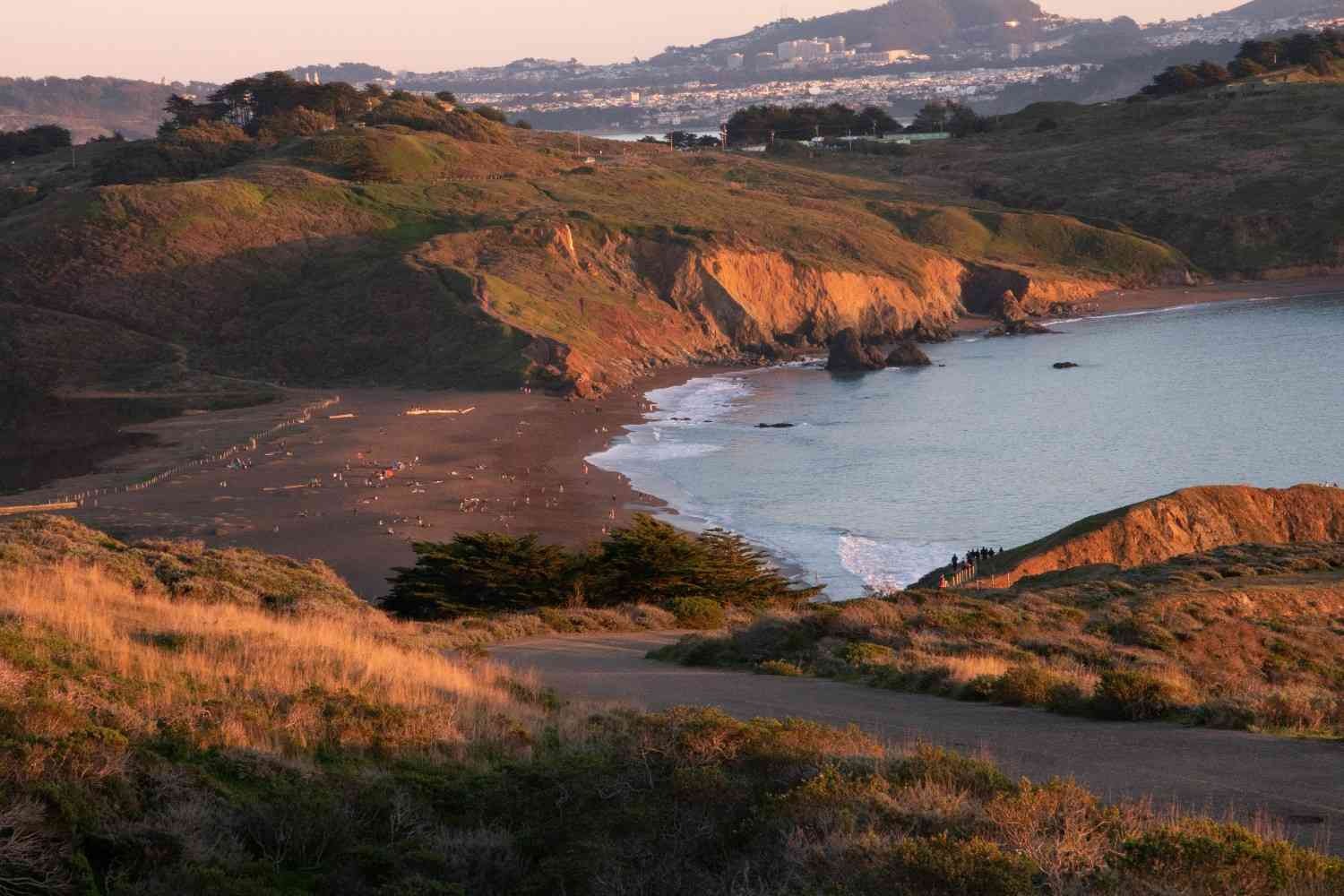
The Marin Headlands are the first thing you see when you cross the Golden Gate Bridge heading north, steep coastal hills dropping to rocky beaches and battered sea cliffs where the Pacific meets the bay entrance.
For travelers deciding where to stay in San Francisco who want a national park environment within 20 minutes of downtown, the Marin Headlands is the best answer in the Bay Area.
At dusk, the hills above Rodeo Beach glow amber and the city lights come up across the water in a slow gradient. At dawn, before the fog burns off, you’re often sitting in your own cloud layer while San Francisco sits clear and gold on the far shore. The view from Hawk Hill, 1.5 miles from the main campsite, is one of the most photographed skylines in the world, and from a campsite, you get it without the tour buses.
The headlands were part of a military defense zone and still contain Cold War-era gun batteries, bunkers, and installations open to visitors. That mix of wild coastal scenery and twentieth-century military history gives the area a character you won’t find at a typical campground.
It’s also one of the best hawk migration watchpoints in North America. From mid-September through November, tens of thousands of raptors, golden eagles, sharp-shinned hawks, Cooper’s hawks, funnel over Hawk Hill. Naturalists at the counting station are usually happy to tell you what they’re seeing.
Top Campsites and Overnight Spots
- Bicentennial Campground (Marin Headlands): The closest RV-accessible campground to San Francisco – three sites perched on a ridge above the headlands with partial bay views. Maximum vehicle length is 21 feet; if you’re in a larger rig, Kirby Cove is a better fit. No hookups, but there’s a water spigot and pit toilets. Book through Recreation.gov; sites go fast. For the cost, it’s hard to beat.
- Kirby Cove Campground: Tucked into a narrow canyon that leads to a sheltered cove beach directly below the Golden Gate Bridge’s north tower. Four sites sit under old eucalyptus and Monterey cypress trees planted during the military era. Two of the four spots take RVs up to 35 feet. No hookups, and access is via a 1.5-mile one-way road from the main headlands loop. Book 6 months ahead – it’s one of the most sought-after campsites in the Bay Area.
- Hawk Camp and Haypress Backpacker Camps: Hike-in only, so they’re not suited to vehicle camping. That said, if you’re traveling light or in a smaller campervan and want a night away from the wheels, Hawk Camp sits at 1,000 feet on the ridge with 360-degree views. It’s free with a Recreation.gov reservation.
- Rob Hill Campground (Presidio, San Francisco): Technically inside San Francisco city limits, in the Presidio – the former military base now managed by the NPS at the south end of the Golden Gate Bridge. Group and individual tent sites only; no RV parking or hookups overnight. Worth knowing about if others in your group aren’t in the RV.
- Battery Alexander Overnight (by permit): A former artillery battery that occasionally hosts ranger-led astronomy programs overnight. Not a regular campground, but worth checking with the Marin Headlands Visitor Center if you’re around during a clear-sky period.
Don’t Leave Without…
Walking from your campsite to Rodeo Beach in the dark, 20 minutes before sunrise. The cove faces west and often holds fog until 9 AM – but on clear mornings, the Golden Gate appears across the water in the first light with the city rising behind it. No ferry, no tour, no alarm clock required.
RV Practical Info
- Road access: Conzelman Road to Bicentennial Campground has steep switchbacks with a 25 mph limit. It’s fine for campervans up to 21 feet but not suitable for Class A motorhomes or anything over 25 feet. Kirby Cove has a lower weight limit on its access road – check before driving in. Coming off the freeway via Alexander Avenue is straightforward for most RV sizes.
- Campsite availability: Book through Recreation.gov, 6 months in advance. Kirby Cove and Bicentennial both fill within hours of the reservation window opening. Midweek stays in winter are sometimes available on shorter notice.
- Hook-up and facilities: No electrical hookups anywhere in the Marin Headlands. Water is available at Bicentennial. Pit toilets at all sites. The nearest dump station is at Candlestick RV Park in San Francisco, about 30 minutes south.
- Parking in town: Leave the RV at camp and take the MUNI 76X bus from the Sausalito Ferry Terminal into downtown San Francisco on weekends. Or cycle the bike path across the Golden Gate Bridge – it’s 4.5 miles to the Ferry Building.
- Wild camping rules: No wild camping in the Golden Gate National Recreation Area. All overnight stays need a Recreation.gov reservation. Rangers patrol regularly, especially on weekends.
Who Is It Best For?
- Couples who want the most dramatic urban campsite in the US without paying San Francisco hotel rates
- Photographers who want to shoot the Golden Gate at dawn from the north shore before day-trippers arrive
- First-time Bay Area visitors who want city access alongside real wild coast and hiking
- Hikers using the Marin Headlands trail network as a base for multi-day trips
Recommended Nightly Budget
- Campsite pitch: $25-35/night (Recreation.gov reservation required; no walk-in pricing)
- Electric hookup: Not available
- Showers: Not on-site; Sausalito public facilities are 3 miles north
- Daily total (excluding RV rental): $25-35/night
2. Half Moon Bay, California
Why Stay Here
Half Moon Bay is 28 miles south of San Francisco on the Pacific Coast Highway – close enough that you can see the Bay Area skyline on clear days from the clifftops, far enough that it runs at its own pace. It’s a working agricultural town as much as a coastal one; the farm stands selling pumpkins in October and artichokes in spring aren’t for tourists – that’s just what they grow here.
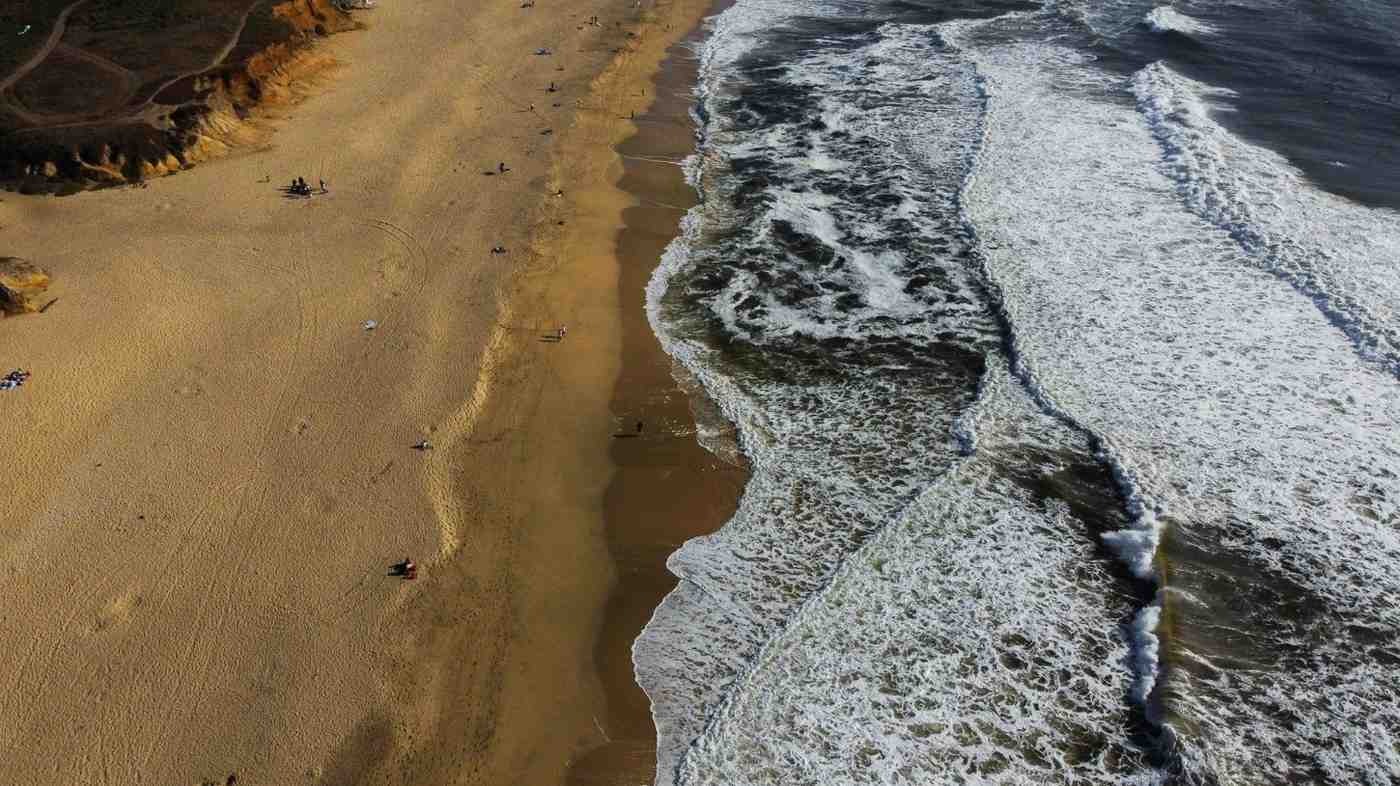
The coast runs north-south along a string of state beaches with wide flat sand, consistent surf, and dramatic cliff-edge bluffs. When the fog holds back, the sunsets from the bluff-top campsites at Half Moon Bay State Beach are some of the best on the California coast. You’re within 150 meters of the water.
The town itself is a walkable main street of four blocks – coffee shops, a brewery, good seafood. It works well as a base for both coastal and redwood exploration. The Pescadero Marsh preserve, 10 miles south, is one of the more undervisited birding spots on the Pacific Flyway. The Santa Cruz Mountains are accessible in under 30 minutes.
Top Campsites and Overnight Spots
- Half Moon Bay State Beach Campground: The main option – 52 sites in two loops (Francis Beach and Venice Beach), both within sight and sound of the Pacific. Most sites have electric hookups (30/50-amp), and the level paved pull-throughs fit rigs up to 40 feet. From your RV door, you’re three minutes’ walk from the sand. Book through ReserveCA.gov; you’ll want to do that 6 months ahead for weekends.
- Pelican Point RV Park: A private park 1.5 miles north of the state campground, tucked behind the coastal dunes with full hookups (water, electric, sewer). Facilities are better – laundry, Wi-Fi, showers – and it’s easier to book. Nightly costs run $55-75, but you won’t be competing for a six-month reservation window.
- San Mateo County Memorial Park (La Honda, inland): 20 minutes east of Half Moon Bay in the redwood belt of the Santa Cruz Mountains. If you want to alternate between coast and forest on the same trip, this makes that easy. No hookups, but water and flush toilets are available. First-come, first-served on weekdays.
- Costanoa KOA Resort: 15 miles south near Pescadero, this full-service resort has hookup sites, lodge rooms, tent glamping, and a spa. It’s at the expensive end ($65-120/night for RV sites), but the heated pool is open year-round and it sits next to the Año Nuevo State Reserve for elephant seal viewing when they’re in season.
Don’t Leave Without…
Walking the Coastal Trail north from Francis Beach campground at 6 AM before the fog lifts. The path runs along the bluff edge looking straight out to sea. In summer, gray whales and their calves move north close to shore, and you’ll have a clear view from the cliff without needing a boat.
RV Practical Info
- Road access: Highway 1 south from San Francisco is smooth and wide all the way to Half Moon Bay – no issues for any size RV. The old Devil’s Slide coastal section has been replaced by a tunnel; the original cliff road is now a cycling path.
- Campsite availability: ReserveCA.gov opens 6 months ahead for Half Moon Bay State Beach. Summer weekends fill fast. Weekday stays in spring and fall are often bookable with 2-4 weeks’ notice. Pelican Point and Costanoa are generally easier to get on shorter notice.
- Hook-up and facilities: Half Moon Bay State Beach has 30/50-amp electric at most sites. Full hookup (water and sewer) only at Pelican Point and Costanoa. There’s a dump station at the state beach.
- Parking in town: Main Street handles vans and smaller Class C motorhomes fine. If you’re in a bigger rig, park at the state beach and walk – the town’s flat and compact.
- Wild camping rules: No wild camping on the San Mateo County coast. State beaches are patrolled nightly.
Who Is It Best For?
- Surfers and beach-focused travelers who want Pacific Coast access with good facilities
- Budget-conscious road-trippers who want a quieter, more local version of the Bay Area
- Couples who want coastal sunsets and morning farm-stand breakfasts without paying resort prices
Recommended Nightly Budget
- State Beach campsite: $35-55/night (hookup sites at the higher end)
- Private RV parks: $55-75/night with full facilities
- Daily add-ons: $10-20 for farm stand produce; $20-35 for dinner in town
3. Point Reyes National Seashore, California
Why Stay Here
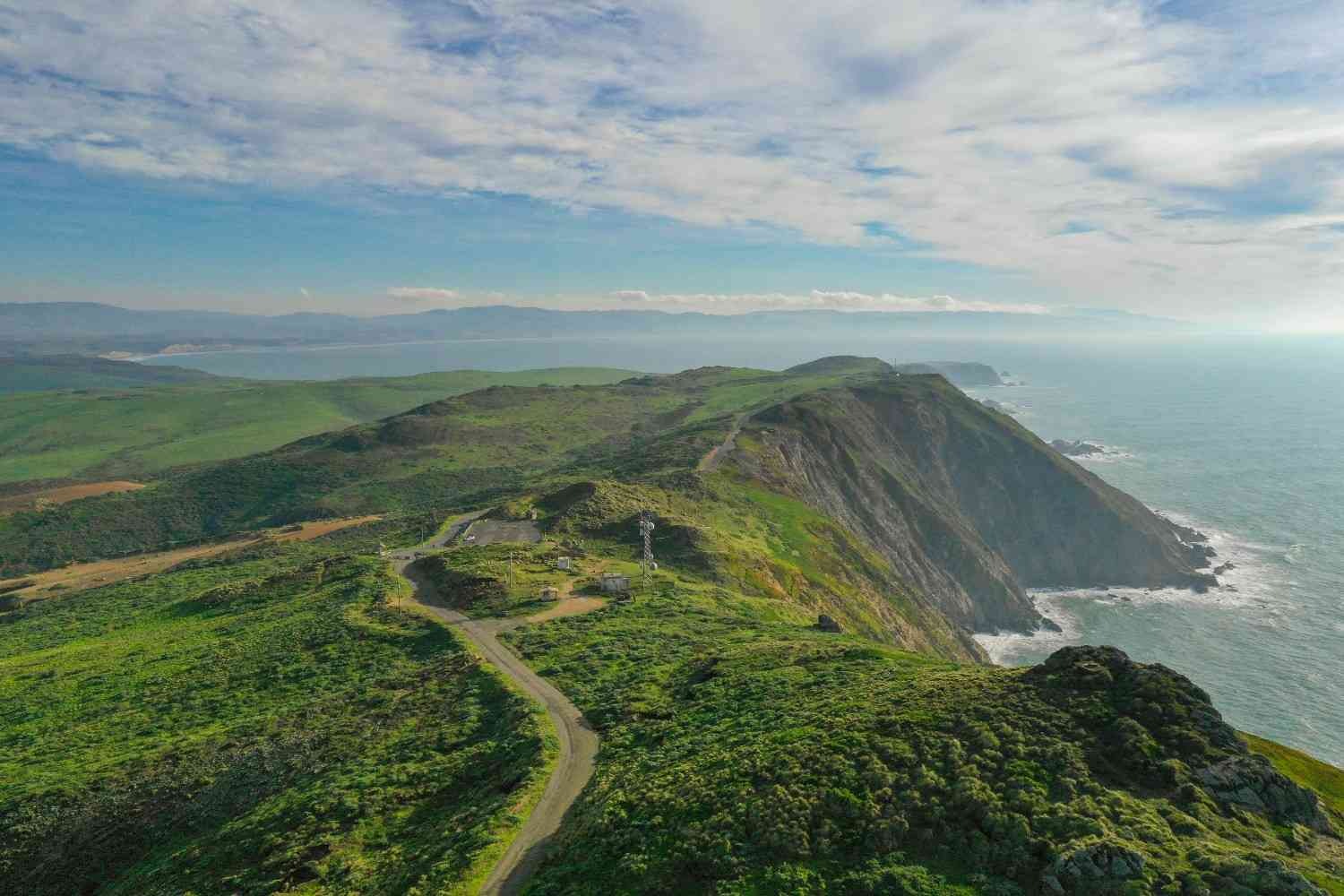
Point Reyes is a wild peninsula 40 miles north of San Francisco that feels genuinely remote, something that surprises a lot of first-time visitors. The national seashore covers 71,000 acres: long beaches open to direct Pacific swell, a forested interior with fern-lined trails, historic dairy farms still operating under NPS lease, and some of the best coastal wildlife watching on the West Coast.
For nature-focused travelers figuring out where to stay in San Francisco’s wider orbit, Point Reyes is one of the best places to stay near the city on the entire California coast.
At the far tip, the Point Reyes Lighthouse is where the fog almost never clears, where the Pacific comes in hard and cold, and where gray whales pass close to shore during winter and spring migration. The lighthouse sits 300 steps below the visitor center on a staircase cut into the cliffs.
Tule elk herds roam freely across the Tomales Point Trail area on the north end of the peninsula. You can walk among a herd of 50 or more elk in full antler, grazing within arm’s length of the trail. No barriers, no guides, just elk and coastal grassland.
Staying inside or near the seashore changes the whole experience. Day-trippers show up after 10 AM; by 6 PM the park’s quiet. Morning light on Limantour Beach, with the hills reflected in the estuary and nobody else around, is what makes the drive worth it.
Top Campsites and Overnight Spots
- Coast Camp (Point Reyes): A hike-in camp 1.8 miles from the trailhead at Laguna parking, on a bluff above the beach with views straight out to the Pacific. Four individual sites and one group site; chemical toilets and a water faucet on-site. It’s not accessible by vehicle, though a Class B van could use the bike-in route. Reserve through Recreation.gov well ahead.
- Sky Camp (Point Reyes): Set at 1,025 feet on Mount Wittenberg, with wide coastal views on clear days. It’s a 1.4-mile hike from the Bear Valley parking area. Cooler and foggier than the coastal sites, which makes it more atmospheric. Individual and group sites available. Popular with photographers.
- Wildcat Camp (Point Reyes): The longer option – 5.5 miles via the Coast Trail. Remote and rarely crowded midweek. It’s in a meadow near the ocean with a creek nearby and water on-site. The right pick if you want to carry gear and get away from everyone.
- Samuel P. Taylor State Park (Lagunitas): The best RV-accessible base near Point Reyes – 5 miles east of the park boundary in a redwood canyon along Lagunitas Creek. Sites take RVs up to 31 feet, and some loops have electric hookups. A good alternative base for Point Reyes day trips without needing to hike in.
- Nick’s Cove RV Sites (Marshall, Tomales Bay): Private waterfront RV sites on the east shore of Tomales Bay, 20 minutes northeast of Point Reyes. Limited availability (6-8 sites), full hookups, and direct bay access. Good for kayak launches into the bay for harbor seal and bird watching.
Don’t Leave Without…
Walking the Bear Valley Trail to Arch Rock at dawn – 8.4 miles round trip through forest, meadow, and cliff to a natural sea arch where the creek meets the ocean. Before day visitors arrive, the only sounds are waves and ravens. If you have time, drive the extra 15 minutes to Pierce Point Ranch and walk Tomales Point Trail into the tule elk herd before breakfast.
RV Practical Info
- Road access: Sir Francis Drake Boulevard, the main road into the park, handles Class C motorhomes and campervans well. The road to the lighthouse is narrow and steep – stick to 20 feet maximum, which is also the limit for the parking lot there. Some gravel roads in the northern sections have the same 20-foot limit.
- Campsite availability: All Point Reyes hike-in camps book through Recreation.gov, opening 6 months ahead. Samuel P. Taylor books through ReserveCA.gov. Weekends fill faster than weekdays.
- Hook-up and facilities: No hookups at any Point Reyes NPS camp. Samuel P. Taylor has electric hookups in its main loop. Water is available at all Point Reyes campsites. Chemical or vault toilets throughout.
- Parking in town: Inverness, the closest town to the park, handles vans easily. Point Reyes Station, 5 miles east, has a single main street with parking for Class B and small Class C vehicles only.
- Wild camping rules: Strictly prohibited throughout the national seashore. All overnight stays need a Recreation.gov reservation at a designated site.
Who Is It Best For?
- Nature lovers and wildlife watchers who want tule elk, harbor seals, and migrating whales in one place
- Hikers who want real trail time within 1.5 hours of a major city
- Photographers chasing coastal fog, morning light, and wildlife that doesn’t need a telephoto lens
Recommended Nightly Budget
- NPS hike-in camp: $20-30/night via Recreation.gov
- Samuel P. Taylor (RV sites): $35-50/night with hookups
- Nick’s Cove private sites: $65-90/night (full hookups, bay views)
4. East Bay: Oakland and Berkeley, California
Why Stay Here
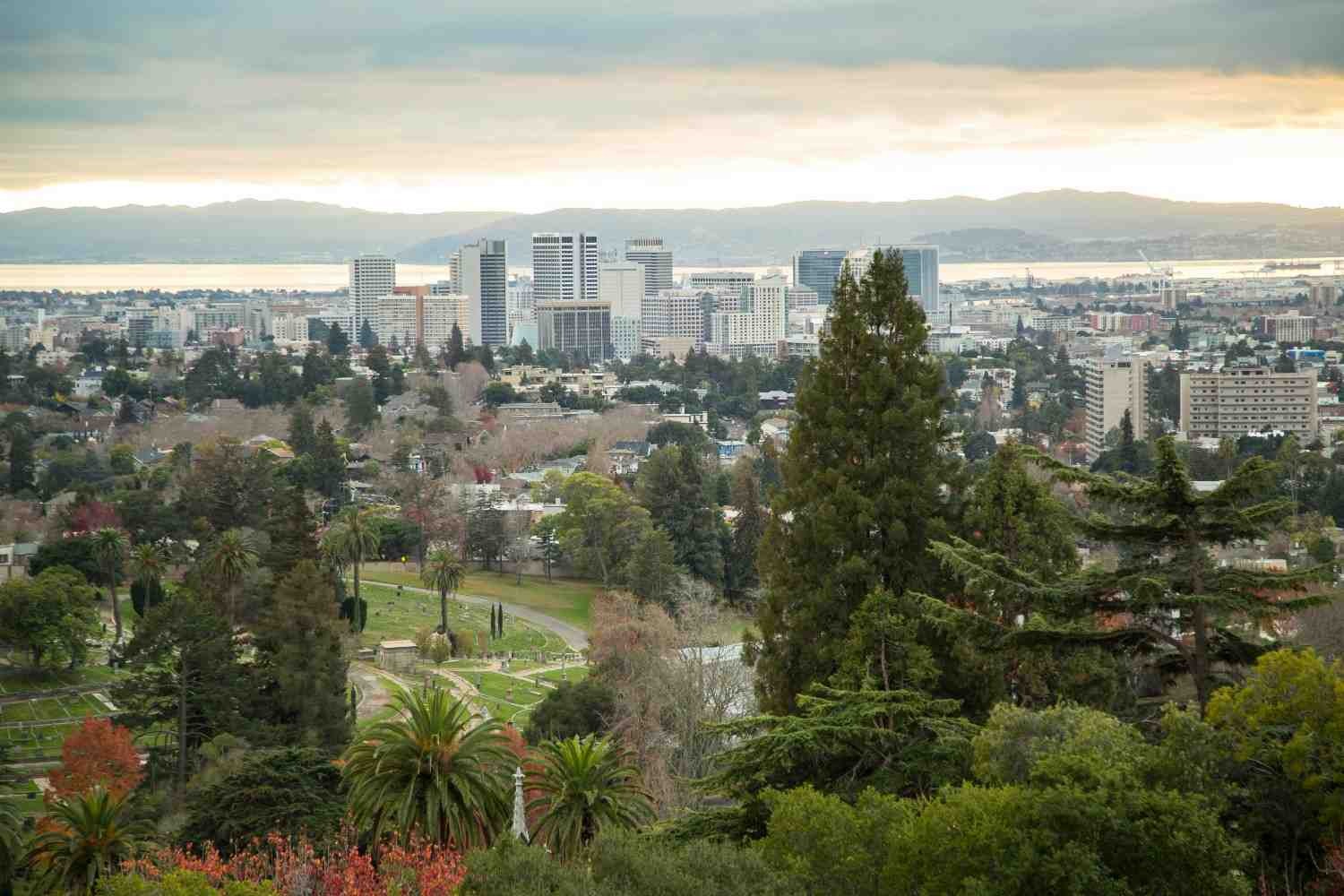
The East Bay – Oakland, Berkeley, Emeryville, and the hills behind them – is the least-talked-about but most practical RV base in the Bay Area. Overnight costs are lower, streets handle bigger vehicles more comfortably, the Bay Bridge puts downtown San Francisco 15 minutes away, and the Oakland hills have hiking in regional parkland that most tourists never find.
Berkeley has one of the most genuine food cultures in California. The Gourmet Ghetto on Shattuck Avenue, the Tuesday farmers market on Center Street, and the UC Berkeley campus give the city a concentration of good independent restaurants and coffee shops at every price point. The UC Botanical Garden – one of the most diverse plant collections in the US – is open year-round and rarely crowded.
Oakland’s Temescal and Rockridge neighborhoods feel genuinely local compared to San Francisco. The 19th Street arts corridor, the Lake Merritt shoreline, and the Fruitvale Mexican market district give the city a depth of character that rewards a few days of exploration.
The hills behind both cities – Tilden Regional Park, Redwood Regional Park, and Anthony Chabot Regional Park – cover tens of thousands of acres with equestrian trails, eucalyptus groves, and ridge-line views across both the bay and the Central Valley. Almost entirely a local scene.
Top Campsites and Overnight Spots
- Anthony Chabot Regional Park Campground (Castro Valley): The most RV-accessible East Bay campground – 75 sites with water and 30-amp electric hookups, pull-throughs up to 45 feet, flush toilets, showers, and a dump station. It’s in the hills above Oakland with hiking straight from the campground. For larger rigs, this is the best-equipped option within reasonable distance of the city. Book through Hipcamp or the East Bay Regional Parks District.
- Roberts Regional Recreation Area (Redwood Regional Park): A smaller, more atmospheric option in the redwood-lined canyon above Oakland. Sites take RVs up to 30 feet; no hookups, but water and vault toilets are available. You’re a 10-minute drive from BART for transit into San Francisco. Less competition than Marin campgrounds because fewer people know it’s there.
- Berkeley Marina RV Park (Berkeley): A private park on the Berkeley waterfront, right on the bay, with full hookups (water, electric, sewer) and clear views of San Francisco and the Golden Gate across the water. It’s roughly 8 miles from San Francisco – one of the closest RV-accessible spots to the city. Walk to Cesar Chavez Park, rent kayaks nearby, and take BART from downtown Berkeley into the city.
- Tilden Regional Park Group Campground: A group camping area in the Berkeley hills, bookable through the East Bay Regional Parks District. You can walk to the Botanic Garden, the Environmental Education Center, and 35 miles of regional trails directly from the campsite.
Don’t Leave Without…
Taking BART from 19th Street Oakland to Powell Street in San Francisco for a full day in the city without moving your RV – then coming back in time to watch the sunset from the hills above the bay, with the city you’ve just been in glowing across the water.
RV Practical Info
- Road access: I-80 and I-580 are wide and smooth all the way into the East Bay. Highway 13 through the hills to the Chabot campground is well-maintained and handles large Class A motorhomes fine.
- Campsite availability: Anthony Chabot books through the East Bay Regional Parks District website and is generally much easier to get than Marin or state park options. Berkeley Marina RV Park takes reservations year-round with shorter lead times.
- Hook-up and facilities: Full hookups at Berkeley Marina RV Park. Water and 30-amp electric at Chabot. No hookups at Roberts or Tilden.
- Parking in town: Oakland and Berkeley streets handle Class B and Class C vehicles reasonably well. Don’t try to park a Class A in the Temescal or Rockridge shopping areas; leave it at camp and take BART or cycle.
- Wild camping rules: No wild camping in East Bay Regional Parks. All overnight stays need park district reservations.
Who Is It Best For?
- Budget-conscious road-trippers who want San Francisco access without competing for Marin and state park sites
- Foodies and urban explorers who want genuine neighborhood life in Oakland and Berkeley alongside natural escapes
- Travelers with larger rigs (35+ feet) who need hookup sites and pull-throughs that aren’t available at the national park options
Recommended Nightly Budget
- Chabot Regional Park (hookups): $45-60/night
- Berkeley Marina RV Park (full hookups): $55-70/night
- Roberts/Tilden (no hookups): $30-40/night
5. Santa Cruz Mountains, California
Why Stay Here
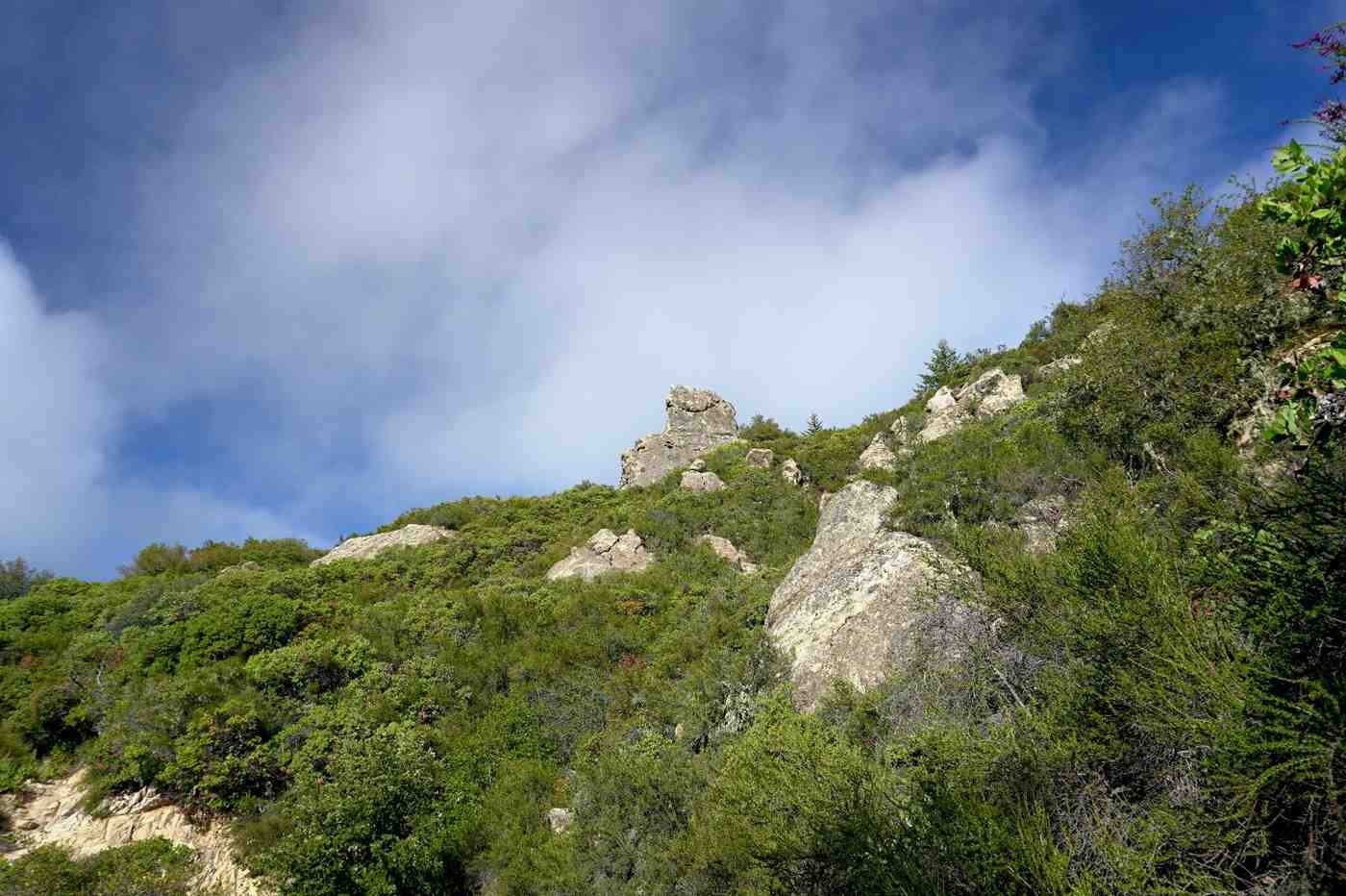
The Santa Cruz Mountains are a 70-mile range running parallel to the coast between San Francisco and Santa Cruz, covered in coast redwood forest, Douglas fir, and oak woodland. Big Basin Redwoods State Park – California’s oldest state park, currently being restored after the 2020 CZU Lightning Complex fire – sits at the heart of it. Castle Rock State Park, Henry Cowell, and the Forest of Nisene Marks fill in around it.
Camping in the redwoods is a different experience from camping at the coast or in the valley. The trees muffle sound, hold moisture, and create a permanent twilight at ground level. Coastal redwoods grow to over 300 feet here, and the oldest are over 1,500 years old. You feel that.
The mountain towns – Los Gatos, Felton, Boulder Creek, Bonny Doon – run at a slower, independent pace. The Santa Cruz wine region, producing good Pinot Noir from high-altitude vineyards with cool ocean influence, runs along the western slopes. Santa Cruz at the south end mixes a working surf culture, a boardwalk amusement park, UC campus architecture, and some of the best taquerias on the California coast.
Top Campsites and Overnight Spots
- Big Basin Redwoods State Park (Boulder Creek): The most significant camping destination in the Santa Cruz Mountains, though it’s still reopening after the 2020 wildfire. As of 2026, limited tent and RV sites are coming back in phases – check current status before you plan around it. When it’s open, the setting is exceptional: campsites under old-growth redwoods with creeks running between them. Reserve through ReserveCA.gov.
- Henry Cowell Redwoods State Park (Felton): The most reliably open redwood campground near the Bay Area. 112 sites, with some hookup options. The old-growth grove is a 10-minute walk from the campsite, and the 0.8-mile grove trail takes you among trees over 1,400 years old. Felton has a small but decent restaurant and bar scene. Reserve through ReserveCA.gov.
- Sanborn County Park (Saratoga): A Santa Clara County park in the hills above Silicon Valley, on the eastern slope of the range. 36 sites, some with electric hookup, in a second-growth redwood and oak canyon. Quieter than the state parks and easier to book. Silicon Valley is 15 minutes away.
- Uvas Canyon County Park (Morgan Hill): In the south Santa Cruz Mountains, less trafficked than Big Basin. There’s a waterfall trail network and a creek-side campground with basic facilities. Sites handle RVs up to 28 feet.
- Costanoa KOA (Pescadero): Full-service resort at the western base of the range where it meets the coast. Covered in the Half Moon Bay section; it also works as a base for Santa Cruz Mountain day trips from the coastal side.
Don’t Leave Without…
An early walk through the Big Basin old-growth grove – or Henry Cowell’s equivalent – before 8 AM, when the only light filters down through a 200-foot canopy and the only sounds are wrens and woodpeckers. Follow it with coffee in Felton and a drive up Highway 9 through the mountain towns to Saratoga Gap for the ridge-line view of the South Bay.
RV Practical Info
- Road access: Highway 9 from the valley to Boulder Creek and Big Basin is scenic but narrow and winding – keep to 28 feet maximum on this route. For bigger rigs, approach Big Basin from the coast via Highway 236 off Highway 1. Henry Cowell via Highway 9 from Santa Cruz town is considerably easier.
- Campsite availability: ReserveCA.gov, 6 months ahead for peak season. Big Basin availability depends on which sections have reopened – check current status before booking.
- Hook-up and facilities: Limited electric hookups at Henry Cowell and Sanborn County. Most Big Basin sites have no hookups. Dump stations at Henry Cowell.
- Parking in town: Santa Cruz city center has RV parking on Beach Street near the Boardwalk. Boulder Creek and Felton main streets work for Class B vans and small Class C rigs.
- Wild camping rules: No dispersed camping in Santa Cruz Mountains State Parks. All overnight stays need reservations.
Who Is It Best For?
- Hikers who want genuine old-growth redwood forest within 1.5 hours of downtown San Francisco
- Families with children who want a forest experience alongside accessible parks and trails
- Travelers on the Bay Area-to-Big Sur run who want a stop between San Francisco and Monterey
Recommended Nightly Budget
- Henry Cowell / Big Basin: $35-50/night with hookups; $25-35 without
- Sanborn County: $35-45/night
- Add-on costs: $5-15 for day-use fees at adjacent parks
6. South Bay Peninsula, California
Why Stay Here
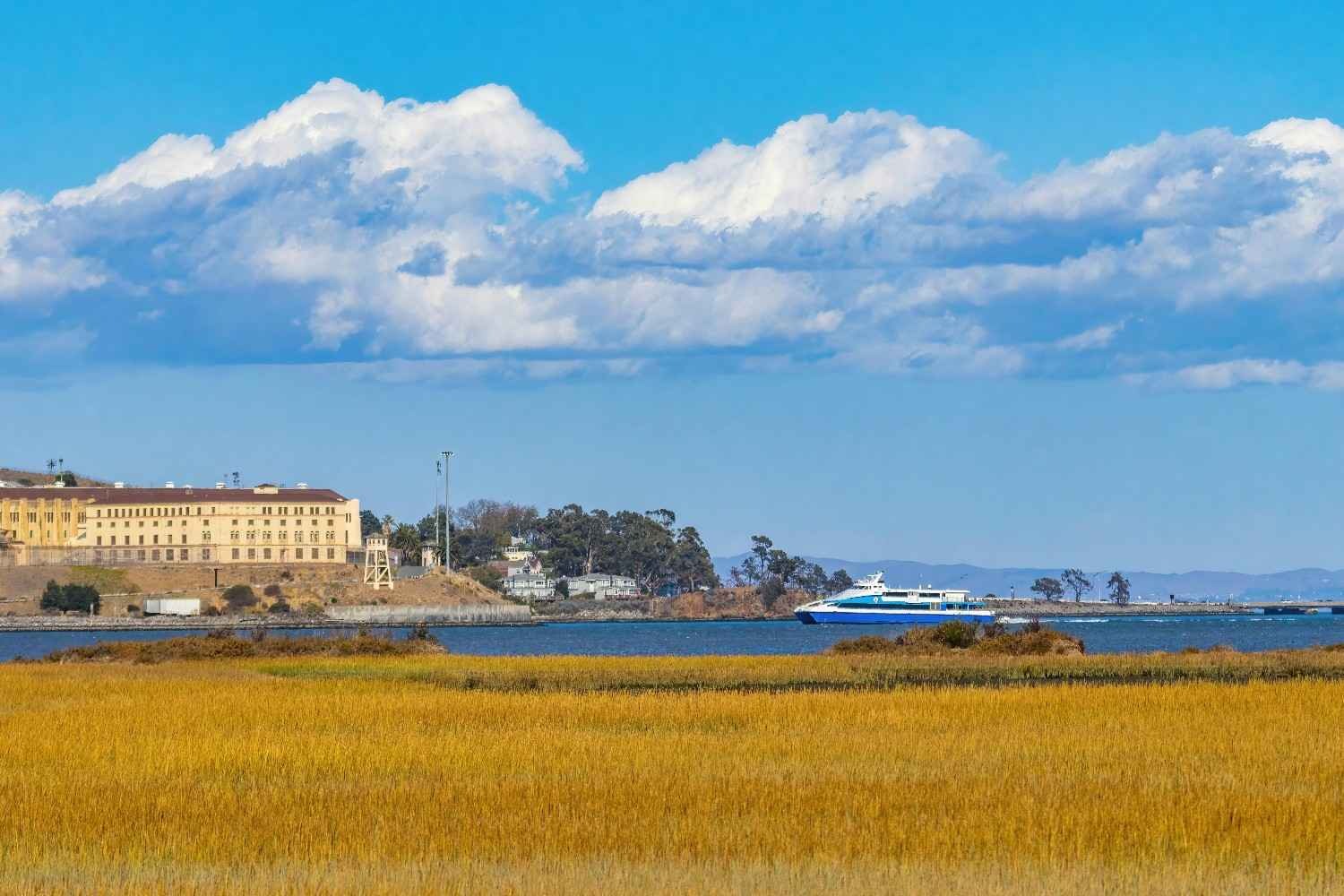
The South Bay Peninsula, the narrow strip of land between San Francisco Bay and the Pacific running south from the city through Daly City, San Mateo, Palo Alto, and down to San Jose, is the most practical and least glamorous RV base in the Bay Area.
For travelers with larger rigs deciding where to stay in San Francisco who need full hookups, pull-through sites, and reliable availability without competing for Recreation.gov windows, the South Bay is the straightforward answer.
Its real advantage is its position: San Francisco to the north, Half Moon Bay to the west, the Santa Cruz Mountains to the south, and Silicon Valley to the east.
The Palo Alto Baylands Nature Preserve, one of the largest remaining stretches of tidal marsh in San Francisco Bay, is open year-round for birding and kayaking. Stanford’s campus is worth half a day. Mountain View and Sunnyvale have a strong Vietnamese food corridor (Little Saigon), a lot of craft breweries, and easy access to South Bay trail networks.
San Jose, at the south end, has the Municipal Rose Garden (10,000 plants in bloom from April through November), the Tech Museum of Innovation, and a revived downtown dining scene around San Pedro Square Market.
Top Campsites and Overnight Spots
- Coyote Valley RV Resort (San Jose): The largest and best-equipped RV park on the peninsula – over 200 sites, full hookups (30/50-amp), pool, laundry, Wi-Fi, and a dump station. It’s near Coyote Creek and the Coyote Valley Open Space Preserve, with hiking right from the property. Easy freeway access off US-101. If you want a well-run full-service park in the South Bay, this is it.
- Trailer Villa RV Park (San Jose): A smaller private park on the bank of Coyote Creek, with good access to south-end Bay Trail cycling and easy freeway connectivity. Full hookups, clean facilities, pull-throughs for rigs up to 45 feet. A sensible choice if you’re mainly using the South Bay as a stop rather than a destination.
- Candlestick RV Park (San Francisco, southern end): Just inside San Francisco city limits at the southern tip of the peninsula, near the old Candlestick Park stadium site. Full hookups, and it’s the closest RV park to downtown San Francisco at about 8 miles. MUNI bus connects to the city center. The location is industrial, but it does the job.
- Memorial Park (Portola Valley): A Santa Clara County park in the hills above Palo Alto, in a second-growth redwood canyon with 40 drive-in sites and electric hookups. Quiet and peaceful. Good if you want to be near Stanford or Silicon Valley without paying Palo Alto hotel rates.
Don’t Leave Without…
Cycling the Bay Trail from the Palo Alto Baylands to the Dumbarton Bridge and back – flat, paved, and car-free, running along the bay shoreline with long views toward the East Bay hills and Mount Diablo. The morning light on the water and the constant bird activity along the marsh make this one of the Bay Area’s most underrated cycling routes.
RV Practical Info
- Road access: US-101 and I-280 handle large rigs smoothly along the full length of the peninsula. Exit roads to individual campgrounds are well-signed and generally wide.
- Campsite availability: South Bay private parks are much easier to book than Marin or state campgrounds – most take reservations year-round with 1-4 weeks’ notice, and walk-in spots are available on weekdays.
- Hook-up and facilities: Full hookups with sewer at Coyote Valley and Trailer Villa. Electric and water at Memorial Park.
- Parking in town: Downtown Palo Alto and San Jose both have designated large-vehicle parking near their main pedestrian areas. Call ahead to check current RV access rules.
- Wild camping rules: No overnight parking on Peninsula streets; use designated parks.
Who Is It Best For?
- Travelers with large Class A rigs who need full-hookup, pull-through sites with dump stations
- Road-trippers using the Bay Area as a stop between the northern coast and Big Sur/Monterey
- Families who want a low-key base with good facilities and straightforward city access
Recommended Nightly Budget
- Coyote Valley RV Resort: $55-75/night (full hookups)
- Candlestick RV Park: $65-85/night (full hookups, closest to SF)
- Memorial Park: $35-50/night with electric
7. Napa Valley, California
Why Stay Here
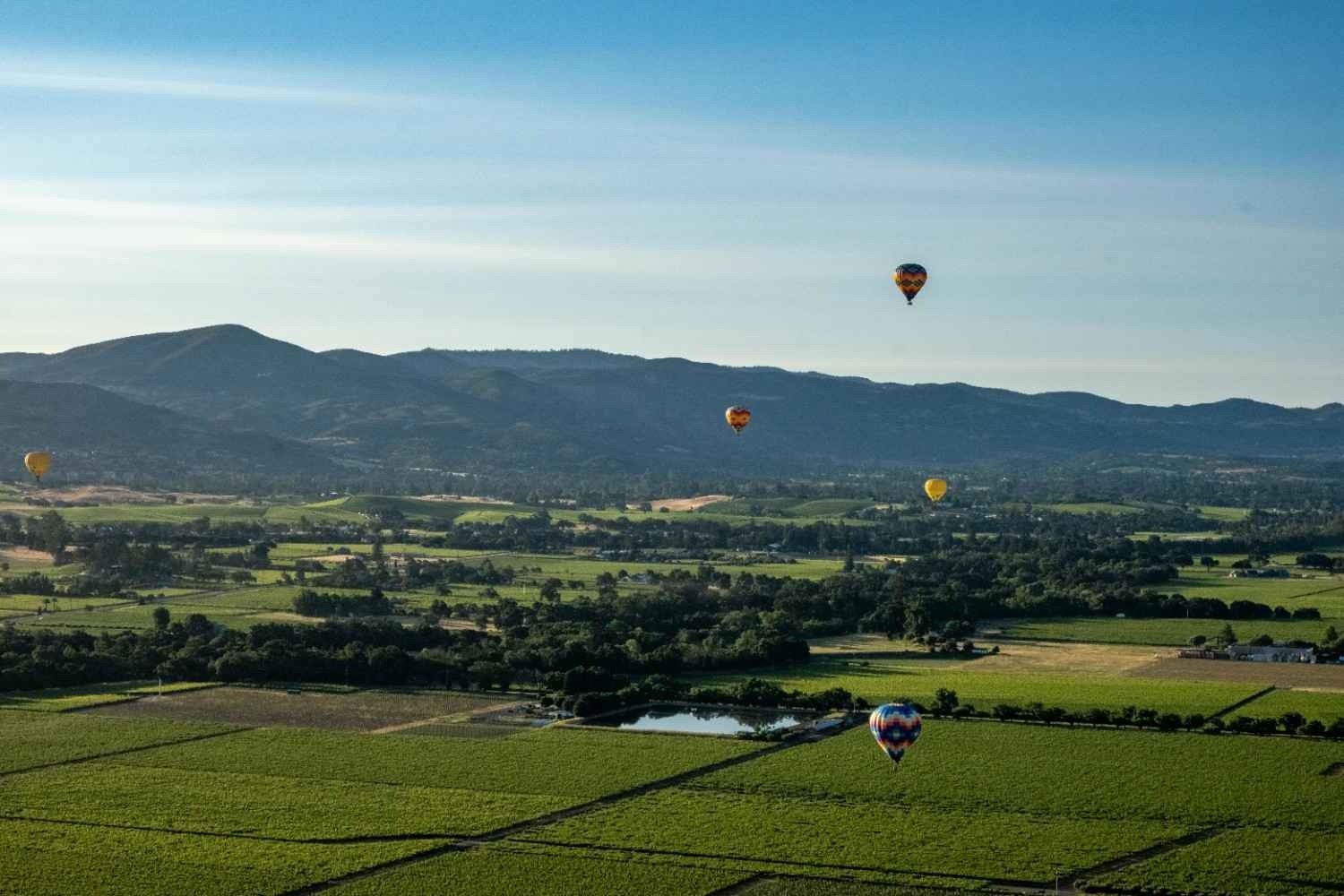
Napa Valley is 50 miles northeast of San Francisco – a straightforward drive up Highway 29 through Vallejo and the Carneros wine region. The valley runs 30 miles long and 5 miles wide, flanked by the Vaca Mountains to the east and the Mayacamas range to the west. It has over 400 wineries producing some of the most celebrated Cabernet Sauvignon and Chardonnay outside of France.
Staying in Napa instead of day-tripping changes things considerably. Wine country evenings – when the visitors have driven back to San Francisco and the valley light goes gold across the vineyard rows – belong to the people who slept there. Dinner at a tasting-room table with a bottle of Napa red and nothing but vineyard crickets in the background is a version of California that a same-day visit doesn’t deliver.
Napa is also a serious food destination. The Oxbow Public Market in downtown Napa has butchers, fishmongers, cheese shops, and a coffee roaster all in one space, open daily. St. Helena, the valley’s most refined town, has restaurants that hold their own against anything in San Francisco.
The Napa River Trail runs along the valley floor and is cyclable from Napa city to Yountville through vineyards and woodland. Bothe-Napa Valley State Park at the north end has hiking into Douglas fir and redwood forest – a complete change from the Cabernet and limestone below.
Top Campsites and Overnight Spots
- Bothe-Napa Valley State Park Campground (Calistoga): The only state campground in the valley itself – 50 sites in a shaded canyon at the north end near Calistoga, with some hookup options. You can walk directly into Douglas fir and redwood hiking from the campsite. It’s one of the most pleasant and underbooked campgrounds near San Francisco. Reserve through ReserveCA.gov.
- Napa Valley RV Resort (American Canyon): A full-service private park near the valley’s southern entrance, with full hookups, pool, laundry, and shade. Good for access to both the Carneros wine district and Napa city. Lower prices than mid-valley options.
- Wine Country RV Resort (Kenwood, Sonoma): Technically in Sonoma Valley rather than Napa, but 30 minutes away via Oakville/Trinity Road and worth including. Full hookups in a vineyard setting, quieter than Napa-facing parks, with good access to Sonoma Valley’s smaller, less-toured wineries.
- Calistoga Spa Camping Area: Several Calistoga spas with geothermal pools offer RV parking deals for guests who pay for spa access. Not conventional campgrounds, but a practical option if you want to combine a soak in volcanic hot spring water with an overnight near the north end of the valley. Check directly with individual spas.
Don’t Leave Without…
Getting to a winery tasting room right at opening – usually 10 AM – before the tour buses from San Francisco arrive. Schramsberg for sparkling wine, Stag’s Leap Wine Cellars for Cabernet, or Stony Hill (by appointment) for Chardonnay – any of these in the morning quiet, with the hills still holding mist, is a tone that day-tripping doesn’t reach.
RV Practical Info
- Road access: Highway 29 from Vallejo is a wide, four-lane divided highway all the way to St. Helena. North of St. Helena through Calistoga it narrows, but Class A motorhomes are fine. The Silverado Trail runs parallel on the east side of the valley – less congested and equally well-surfaced.
- Campsite availability: Bothe-Napa Valley State Park books through ReserveCA.gov and has better midweek availability than coastal parks. Private parks take direct reservations year-round.
- Hook-up and facilities: Full hookups at Napa Valley RV Resort and Wine Country RV Resort. Limited electric hookups at Bothe-Napa State Park; no sewer hookup there.
- Parking in town: Downtown Napa has a dedicated RV parking area near the Oxbow Market. St. Helena and Yountville main streets need smaller vehicles; use the campsite as your base.
- Wild camping rules: No dispersed camping in Napa County. Use designated campgrounds.
Who Is It Best For?
- Couples who want wine country evenings without paying valley hotel and inn prices
- Foodies who want the Oxbow Market, St. Helena restaurants, and winery tasting rooms all in one valley
- Travelers heading from the Bay Area toward the Sonoma Coast or Lake Tahoe, using Napa as a first overnight stop
Recommended Nightly Budget
- Bothe-Napa State Park: $35-55/night with hookups
- Napa Valley RV Resort: $50-70/night (full hookups)
- Wine tasting: $40-80/person for a full 3-4 winery day
8. Mount Tamalpais, California
Why Stay Here
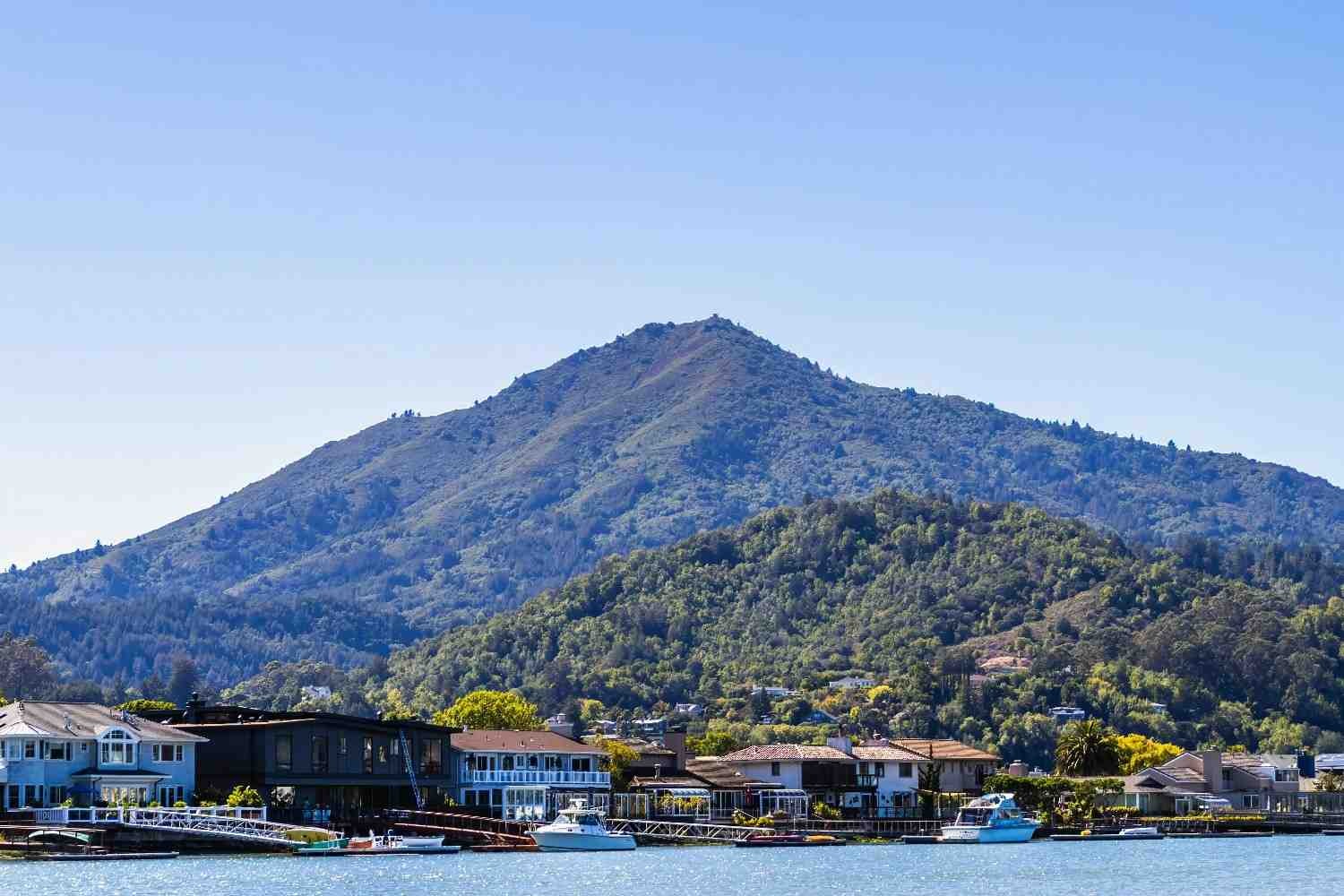
Mount Tamalpais – “Mt. Tam” – is the defining natural feature of Marin County, a 2,571-foot peak overlooking San Francisco Bay from the north. Its watershed feeds some of the Bay Area’s oldest protected old-growth redwood stands, and on a clear day the summit takes in everything from the Sierra Nevada to the Pacific.
Camping on Mt. Tam is a different experience from camping on the coast. The forests are quieter, mornings are colder, and the fog sits in the valleys below while the ridges catch the first sun. The trail networks fanning out from the summit cover almost any direction for a full-day loop. The Mountain Theater – an open-air stone amphitheater on the north slope – has been hosting outdoor theater and concerts since 1913.
The small towns at the mountain’s base – Mill Valley, Fairfax, San Anselmo – are among the most independently food-forward small towns in California. The Tuesday Marin Farmers Market is the best in the Bay Area. There are independent bookshops and coffee roasters that make the base-of-mountain area worth half a day on its own.
Top Campsites and Overnight Spots
- Pantoll Campground (Mt. Tamalpais State Park): The main vehicle-accessible campground on the mountain – 16 sites, first-come-first-served, at 1,500 feet on the south slope. Direct trailhead access to the Dipsea Trail, the Matt Davis Trail, and the Steep Ravine Trail. Sites take RVs up to 21 feet; no hookups. Get there by 10 AM on weekends to secure a spot. Showers available.
- Steep Ravine Environmental Campsites: Six primitive sites and 9 rustic cabins on a coastal bluff above the ocean, just below the mountain’s southern base at Rocky Point. Walk-in only (0.1 miles from parking). No hookups. These are among the most sought-after overnight spots in the Bay Area – book through ReserveCA.gov 6 months ahead. The campfire ring and Pacific views make them worth the effort.
- Alice Eastwood Group Camp: A group site in a shaded canyon below Pantoll, accessible by vehicle. For groups of 12-50. A practical option for larger travel parties.
- Bootjack Picnic Area Day Parking (overflow overnight in limited circumstances): Occasionally used for overflow camping when the park authorizes it; check with Mt. Tamalpais State Park rangers before counting on this.
Don’t Leave Without…
Waking before sunrise at Pantoll and walking 20 minutes up the East Peak fire road to the summit ridgeline for first light. On clear mornings in late fall and winter, the fog fills the valleys below while the Sierra Nevada peaks are visible 160 miles east. No other accessible Bay Area location puts you at that altitude with city views and an ocean horizon at the same time.
RV Practical Info
- Road access: Pantoll Road from Highway 1 at Stinson Beach is steep and narrow – keep to 21 feet maximum, and even at that length the switchbacks need careful low-gear driving. The East Ridgecrest Boulevard approach from Fairfax is wider but still winding. Don’t attempt the summit road in any RV.
- Campsite availability: Pantoll is first-come-first-served – get there before 10 AM on weekends, earlier in summer. Steep Ravine books through ReserveCA.gov 6 months ahead.
- Hook-up and facilities: No hookups at any Mt. Tamalpais site. Showers at Pantoll. Vault toilets at Steep Ravine.
- Parking in town: Mill Valley’s downtown handles vans and small Class B rigs comfortably. Fairfax’s main street is better for day-use parking.
- Wild camping rules: No dispersed camping in Mt. Tamalpais State Park. Use designated sites.
Who Is It Best For?
- Hikers who want extensive trail access from a single overnight base
- Photographers who want first-light ridge views above the Bay Area fog layer
- Travelers with smaller rigs (Class B vans, campervans) who can handle the narrow access roads and want real mountain immersion close to the city
Recommended Nightly Budget
- Pantoll (no hookups): $25-35/night (first-come-first-served)
- Steep Ravine: $30-40/night (reservation required)
- Trailhead access is free; no significant add-on costs
9. Pacifica, California
Why Stay Here
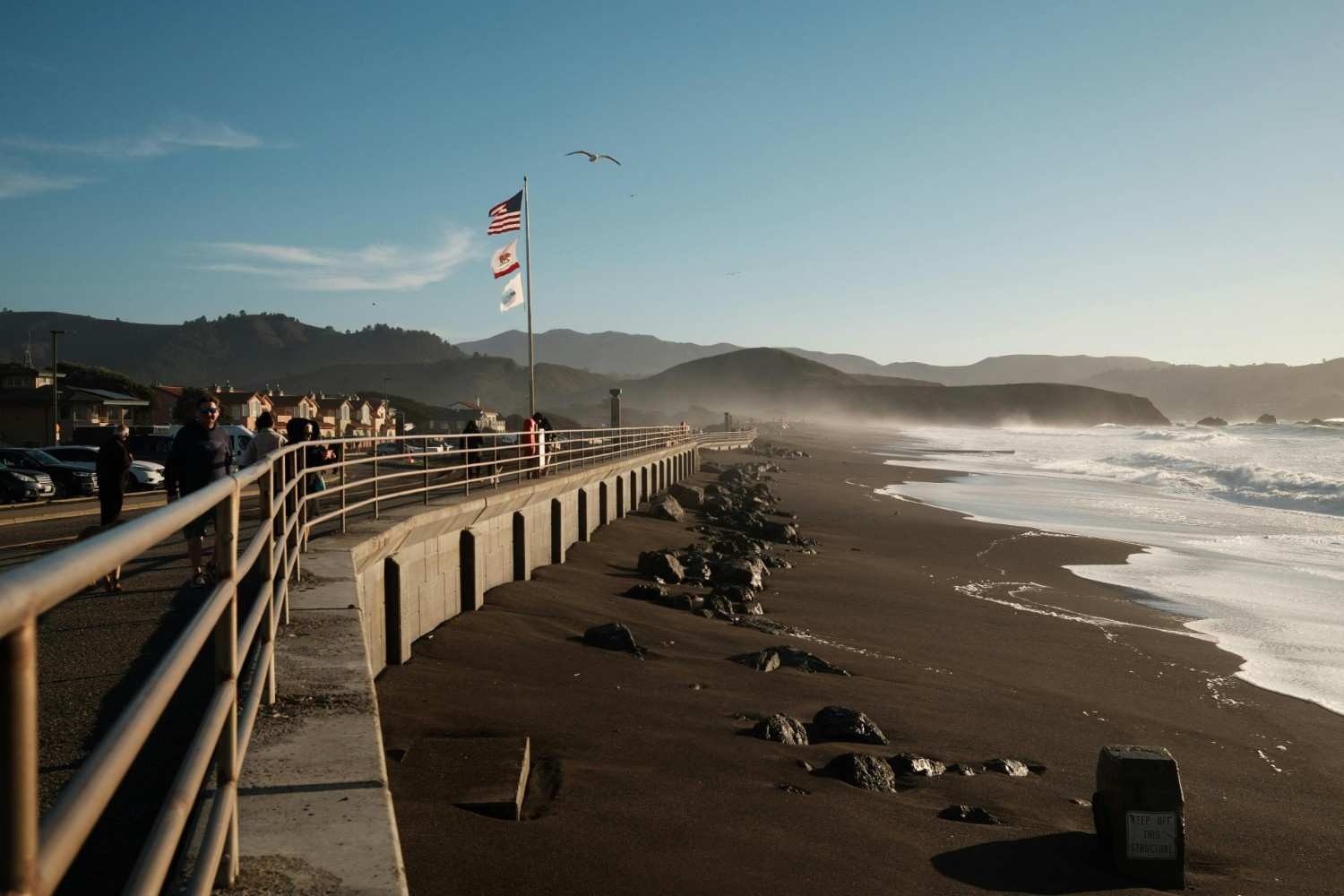
Pacifica is the first town south of San Francisco on the Pacific coast – 12 miles from downtown, sitting in a sheltered coastal valley between the San Francisco headlands and Montara Mountain. If you want San Francisco city access with the Pacific right outside, and you don’t want to pay city prices, Pacifica is the practical answer.
The beach break at Linda Mar is one of the more consistent year-round surf spots in the Bay Area. The Mori Point section of the Golden Gate National Recreation Area, just north of town, has bluff-top hiking above the ocean with city views. The Sweeney Ridge trail at the south end leads to the ridgeline where Spanish explorer Gaspar de Portolá first sighted San Francisco Bay in 1769.
The town is unpretentious: taquerias, a surf shop, a divey oyster bar on the pier that locals know better than any guide, and a farmers market on Saturday mornings. It’s not a destination – it’s a base.
Top Campsites and Overnight Spots
- Pacifica RV Park (Pacifica): A private park directly behind Linda Mar State Beach, with full hookups (water, electric, sewer) and sites taking rigs up to 45 feet. It’s under five minutes’ walk to the surf break. It’s not a scenic campground – it sits between a freeway and the beach – but for what it offers, it’s hard to argue with. BART connections at Daly City station, 10 minutes north, put downtown San Francisco 40 minutes away without moving your RV.
- Montara State Beach Campground (Montara): 10 miles south of Pacifica, just north of Half Moon Bay, with bluff-top sites directly above the ocean. More scenic than Pacifica RV Park, but smaller and harder to book. Sites take RVs up to 24 feet; no hookups. First-come-first-served on weekdays.
- Rancho Corral de Tierra (NPS day-use area): Not a campground, but the trailhead for the Montara Mountain trail network. Worth noting if you want to hike into the Santa Cruz Mountain front range from a coastal base.
Don’t Leave Without…
An early morning at Linda Mar Beach – surfing, walking, or watching – before the marine layer burns off and the crowds show up. The north end break is gentler and suits beginners; the south end gets more consistent shape. Then walk or drive the Devil’s Slide coastal trail (the former cliff highway, now a walking and cycling path) before breakfast for the best stretch of San Francisco coastal bluff.
RV Practical Info
- Road access: Highway 1 south from San Francisco to Pacifica is direct and handles all RV sizes well. The Devil’s Slide tunnel, opened in 2013, replaced the old cliff road and is fully accessible for large vehicles.
- Campsite availability: Pacifica RV Park takes direct bookings year-round with 1-4 weeks’ notice for peak periods. Walk-in availability on weekdays in winter.
- Hook-up and facilities: Full hookups at Pacifica RV Park. No hookups at Montara State Beach.
- Parking in town: The Linda Mar commercial strip handles vans and Class C rigs. The pier area has limited large-vehicle parking – walk from the campground.
- Wild camping rules: No wild camping on the San Mateo County coastline.
Who Is It Best For?
- Surfers who want a well-located base near consistent Bay Area breaks
- Travelers who want straightforward San Francisco city access from an RV campground without competing for Marin sites
- Road-trippers on tight schedules who need a reliable full-hookup spot within easy reach of downtown
Recommended Nightly Budget
- Pacifica RV Park (full hookups): $55-70/night
- Montara State Beach (no hookups): $30-40/night
10. Angel Island, California
Why Stay Here
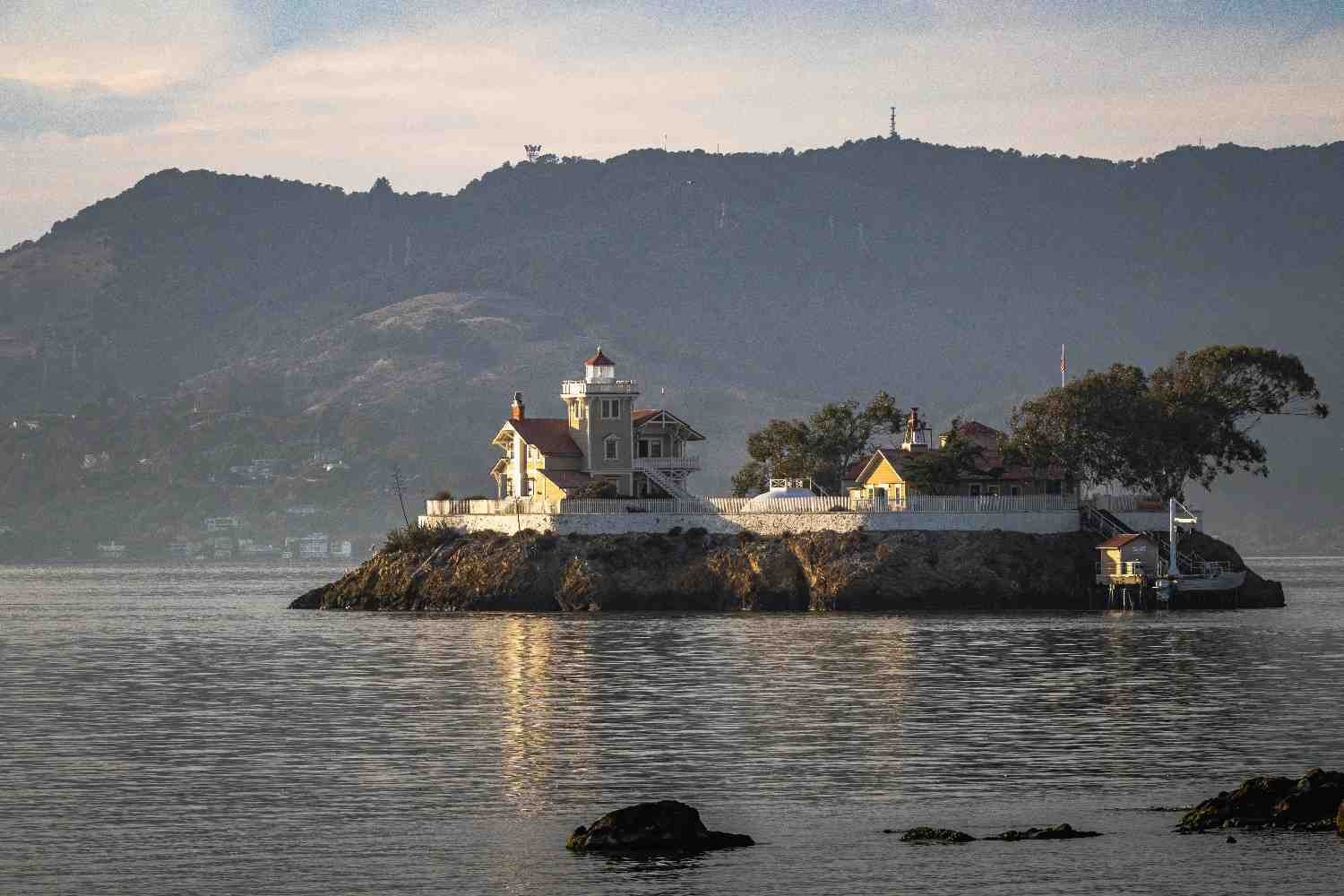
Angel Island sits in the center of San Francisco Bay, visible from both the city waterfront and the Marin Headlands, and reachable only by ferry from Tiburon or San Francisco’s Pier 41. It’s the largest island in the bay, 740 acres of grassy hillside, eucalyptus forest, and historic military buildings.
For couples and small groups working out where to stay in San Francisco who want one genuinely unusual night surrounded by water on all sides, Angel Island is the most distinctive option in the Bay Area.
Camping here means spending the night with San Francisco, Marin, Oakland, and Mount Tamalpais all visible at once from the perimeter trail. The city lights come up at dusk and reflect across the bay from a completely quiet hillside.
The island has a layered history: an immigration station that processed one million people between 1910 and 1940; a military defense position through both World Wars; and an internment site for Japanese Americans during WWII. The restored immigration barracks still have poetry carved into the walls by Chinese detainees, one of the most affecting historical sites in California.
No motor vehicles are permitted on the island. You can rent bicycles at the ferry landing. The 5-mile perimeter road takes about 2 hours on foot.
This isn’t an RV destination, it’s a one-night experience for travelers who want to step outside the road-trip format entirely. Park a Class B van at the Tiburon ferry terminal (free overnight in the designated long-stay lot) and camp on the island.
Top Campsites and Overnight Spots
- Angel Island Environmental Campsites (Sites 1-9): Nine individual sites scattered around the island’s perimeter at different elevations – some face San Francisco, some face Marin, some face the East Bay. Each is walk-in only (0.2-0.5 miles from the ferry landing). Picnic table, food locker, and vault toilet at each site. No hookups or showers. Water at the Visitor Center. Reserve through ReserveCA.gov.
- Angel Island Group Campsites: Two group sites for 10-30 people, with the same facilities as individual sites. Well-suited for larger travel groups.
Don’t Leave Without…
The North Garrison ridge walk at dusk, which gives you San Francisco, the Golden Gate, Marin, and the East Bay all at once as the lights come up. Then an early morning circuit of the full perimeter trail before the first ferry arrives – roughly 2 hours of having the island to yourself.
RV Practical Info
- Road access: No RVs on the island. Park at the Tiburon ferry terminal long-stay lot (free; check current regulations with the Tiburon Harbormaster) or at Ayala Cove day-use parking. The ferry from Tiburon to Angel Island runs several times daily; the crossing takes 10 minutes.
- Campsite availability: ReserveCA.gov. High demand on summer weekends; midweek in spring and fall is much more accessible.
- Hook-up and facilities: None. Bring all water, food, and supplies from the mainland. No open fires; bring a gas stove.
- Parking at the ferry: Tiburon has a designated overnight parking area for campers taking the early ferry.
- Wild camping rules: Only designated campsites permitted on the island.
Who Is It Best For?
- Couples and small groups who want one car-free night in the middle of San Francisco Bay as part of a larger Bay Area trip
- History travelers who want to spend proper time at the immigration station
- Experienced campers who want an unusual, city-surrounded wilderness night in their itinerary
Recommended Nightly Budget
- Angel Island campsite: $30-40/night (ReserveCA.gov reservation)
- Round-trip Tiburon ferry: $20-25/person
- Daily total: $50-65/night for a couple, all-in
What to Pack for a San Francisco RV Stay
San Francisco’s weather doesn’t follow the calendar. The city averages 14°C year-round at the coast, and summer fog can keep temperatures under 12°C while inland cities are baking.
Camping within 30 miles of the coast needs the same gear in July as in November.
| Category | Items | Why You Need It |
| Clothing | Merino wool base layers, mid-weight fleece, waterproof shell jacket, light down jacket for evenings | Coastal fog drops the felt temperature 8-10°C below the forecast at exposed campsites; Marin Headlands and Pacifica run reliably colder than San Francisco itself |
| Footwear | Waterproof hiking boots, trail runners, sandals, wetsuit booties (if surfing) | Coastal trails are wet year-round; Half Moon Bay and Santa Cruz surf needs booties in any season except late summer |
| Sun protection | SPF 50+ sunscreen, sunglasses, hat | UV is high even on overcast days, especially at elevation (Mt. Tamalpais, Point Reyes ridgelines) |
| RV Essentials | Electric hookup adapter (30-amp standard at CA state parks), condensation squeegee, leveling blocks, headlamp | Marine layer creates heavy condensation inside the van overnight; CA state park hookups are 30-amp; coastal sites are often unlevel |
| Overnight Comfort | Extra blankets, sleeping bag liner, draft excluder for van doors | Nightly lows at coastal campsites regularly reach 8-10°C even in midsummer; headlands and mountain sites run colder still |
| Connectivity | Downloaded offline maps (Google Maps/Maps.me), Park4Night, AllTrails, ReserveCA.gov app | Cell coverage is poor at Point Reyes, Mt. Tamalpais, and parts of the Santa Cruz Mountains |
| Country-Specific | America the Beautiful Pass ($80 covers all NPS sites) | Covers Golden Gate NRA, Point Reyes NPS, and Muir Woods; it pays for itself immediately in the Bay Area |
| Water & Cooking | 10L fresh water container, compact stove, insulated flask | Many state park sites have water but limited hookups; an insulated flask makes morning coffee before sunrise hikes practical |
Expert Tips for Staying in San Francisco by RV
- Book Marin Headlands and Point Reyes campgrounds 6 months ahead – exactly. Recreation.gov opens reservation windows 6 months in advance, and Kirby Cove, Bicentennial, and Point Reyes walk-in camps fill within hours of release. Set a calendar alarm for exactly 6 months before your target date and be online when the window opens.
- Don’t drive an RV into San Francisco proper. Parking enforcement for oversized vehicles is active, the hills are genuinely dangerous for high-center-of-gravity vehicles in wet conditions, and the city’s better explored on foot or by transit anyway. BART, MUNI, and the ferry network connect all the major campsite areas to the city center in 20-45 minutes.
- Plan for fog, not temperature. The National Weather Service forecast for San Francisco consistently underestimates how cold the exposed coastal campsites get. The Marin Headlands, Pacifica, Half Moon Bay, and Point Reyes are all subject to marine layer that can keep overnight temperatures 6-8°C below the city forecast. Bring more insulation than you think you’ll need.
- Use Tiburon as your staging town for Marin. Most visitors approach the Marin Headlands through Sausalito, which is scenic but congested. Tiburon has easy RV parking, a quiet waterfront, the Angel Island ferry, and a back-route into the Marin Headlands via Paradise Drive that skips most of the Sausalito traffic.
- Get to popular coastal trailheads by 8 AM. Rodeo Beach (Marin), Limantour Beach (Point Reyes), and the Bear Valley trailhead all fill to parking capacity by 10 AM on weekends from April through October. Getting there at dawn secures parking and gives you the best light.
- Stock up before heading north of Marin. Between Point Reyes Station and Bodega Bay at the start of the Sonoma Coast, full-service supermarkets are sparse. The Point Reyes Station general store has good local provisions at premium prices; do your main shop in San Rafael or Fairfax before heading north.
- Take the San Francisco Bay Ferry at least once. The ferry routes from Oakland, Vallejo, Alameda, and Tiburon all converge on the Ferry Building. Park your RV at an East Bay campground and take the ferry across – the Vallejo route passes directly under the bridge approaches and through the industrial bay channel in a way that no road does.
- Check Big Basin’s current status before you plan around it. The 2020 CZU Fire burned much of the park, and sections are reopening in phases as of 2026. Some trails and campsites are fully open; others aren’t. The California State Parks website has the most current breakdown.
- Napa and Sonoma campgrounds are much easier to book than coastal ones. If you’re flexible on direction, basing yourself in Napa Valley or the Sonoma hills gets you reliable campsite availability, good evening food options, and easy Bay Area city access via Highway 37 and I-80 – without the Recreation.gov reservation pressure of the coastal parks.
- For larger rigs, the South Bay is the practical answer. Class A motorhomes over 35 feet have limited options in the Marin Headlands and Santa Cruz Mountain parks. Coyote Valley RV Resort and Candlestick RV Park both take large rigs with full hookups, dump stations, and city transit connections. The Bay Area works for every size of vehicle – the itinerary just looks different.
Plan Your San Francisco Trip with Indie Campers
The Bay Area is a genuinely good road trip region, but its best spots are spread across a wide geography that no single campsite can reach. The Marin Headlands are north, Point Reyes is further north, Half Moon Bay is south, Napa is northeast, and Santa Cruz is south-southeast. An RV that moves with you between those zones isn’t just convenient – it’s the right tool for this trip.
And if you want to keep going, you can pick up in San Francisco and drop off in Los Angeles after driving the Pacific Coast Highway – no backtracking required.
Indie Campers has 7,000+ vehicles across North America, Europe, and Oceania, so finding the right size for the Bay Area’s varied roads and campgrounds is straightforward. With pickup locations in San Francisco, you’re in the geographic center of the region with every direction open from day one. 24/7 support is included across all rentals, which matters when you’re parked at a remote Point Reyes campsite or navigating Napa after dark.
The fleet covers every type of Bay Area overnight:
- A class B RV rental fits the narrow access roads to Kirby Cove, Pantoll on Mt. Tamalpais, and the Point Reyes park roads – the spots with the most dramatic overnight experiences
- A class B RV rental suits families who want a campground base at Henry Cowell Redwoods or Coyote Valley with full living and cooking space
- A class B RV rental works for travelers who want the South Bay or Napa full-hookup parks for longer stays
All company-owned vehicles include unlimited mileage – covering the Bay Area’s spread from Point Reyes to Santa Cruz and beyond adds up fast. Book now with no payment due until 30 days before pick-up, and cancel free up to 31 days before departure if your plans change.
San Francisco dates fill quickly once spring arrives, so securing your vehicle early costs nothing and guarantees availability, explore our available RV rentals in San Francisco and start planning your itinerary.
Everything You Need to Know About Staying in San Francisco by RV
| Area / Town | Setting | Best For | Top Campsites / Overnight Spots | Nightly Budget | RV-Friendly Rating | Wild Camping? | Best Way To Stay |
| Marin Headlands | Coastal / Hilltop | Views & City Access | Bicentennial, Kirby Cove | 💰 | ★★★★☆ | No | Indie Campers RV |
| Half Moon Bay | Coastal Cliffs | Beach & Surf | Half Moon Bay State Beach, Pelican Point RV | 💰💰 | ★★★★★ | No | Indie Campers RV |
| Point Reyes NS | Wild Coast | Nature & Wildlife | Coast Camp, Samuel P. Taylor SP | 💰 | ★★★☆☆ | No | Indie Campers RV |
| East Bay (Oakland/Berkeley) | Urban Fringe / Hills | City Access + Budget | Anthony Chabot, Berkeley Marina RV | 💰💰 | ★★★★★ | No | Indie Campers RV |
| Santa Cruz Mountains | Redwood Forest | Hikers | Henry Cowell, Big Basin (check status) | 💰💰 | ★★★☆☆ | No | Indie Campers RV |
| South Bay Peninsula | Suburban / Bayfront | Families & Large Rigs | Coyote Valley RV Resort, Candlestick | 💰💰💰 | ★★★★★ | No | Indie Campers RV |
| Napa Valley | Wine Country | Couples & Foodies | Bothe-Napa SP, Napa Valley RV Resort | 💰💰 | ★★★★☆ | No | Indie Campers RV |
| Mount Tamalpais | Alpine / Forest | Hikers & Photographers | Pantoll, Steep Ravine | 💰 | ★★★☆☆ | No | Indie Campers RV |
| Pacifica | Coastal Suburb | Surfers & City Commuters | Pacifica RV Park | 💰💰💰 | ★★★★☆ | No | Indie Campers RV |
| Angel Island | Island / Bay | Walker & History | Angel Island Environmental Sites | 💰💰 | N/A (ferry only) | No | Indie Campers RV (mainland park) |
FAQs About Where to Stay in San Francisco
Where can I rent an RV to stay in San Francisco?
You can rent an RV to stay in San Francisco through Indie Campers, which has a Bay Area pickup location. The San Francisco fleet includes Class B campervans suited to the Marin Headlands access roads and larger Class C and Class A motorhomes for South Bay and East Bay full-hookup parks. Booking is fully digital with flexible cancellation up to 31 days before pick-up. Spring and summer dates fill quickly – book early.
What is the cheapest area to stay in San Francisco by RV?
The cheapest area to stay near San Francisco by RV is the Marin Headlands, where Recreation.gov campsites run $25-35/night with no hookup fees. Mount Tamalpais (Pantoll, first-come-first-served) and Point Reyes hike-in camps are similarly priced. East Bay Regional Parks offer the best mix of low cost and hookup availability, with Anthony Chabot Regional Park coming in at $45-60/night including electric – considerably less than full-hookup South Bay parks at $55-85.
What is the best area to stay in San Francisco for coastal access?
The best area to stay near San Francisco for coastal access is the Marin Headlands – Kirby Cove puts you directly beneath the Golden Gate Bridge, and Bicentennial Campground is 15 minutes from Rodeo Beach. Half Moon Bay State Beach is the best option for larger RVs with hookups who want direct Pacific access. Point Reyes is the right call for travelers who want wild, uncrowded coastline over proximity to the city.
What is the best place to stay in San Francisco for couples?
Napa Valley is the best base for couples staying near San Francisco – specifically Bothe-Napa State Park or a private RV park near Calistoga, with winery access and vineyard evenings at a fraction of valley hotel costs. Kirby Cove in the Marin Headlands is the most dramatic single-night option for couples who want a Golden Gate Bridge view from a campfire. Steep Ravine on Mt. Tamalpais, with its ocean-facing bluff sites, is the most atmospheric choice for a quiet night above the coast.
What is the best place to stay in San Francisco with family?
The best place to stay near San Francisco with a family is either Half Moon Bay State Beach (beach access, hookups, easy driving) or Coyote Valley RV Resort in the South Bay (full facilities, pool, pull-through sites). Half Moon Bay suits families who want beach time and farm-stand mornings; Coyote Valley suits families who need more space, hookups, and easier logistics. Henry Cowell Redwoods is the best family pick for a redwood forest experience.
What is the best place to stay in San Francisco with kids?
For families with young children, Half Moon Bay State Beach is the best option – flat, safe beach, electric hookups, and a town with taquerias and ice cream in walking distance. The Marin Headlands are great for older children interested in wildlife and hiking, though the first-come-first-served or hard-to-book sites make logistics trickier with unpredictable kids’ schedules. Angel Island as a one-night side trip works well for children aged 8 and up who can manage a short hike with a backpack.
What is the best place to stay near San Francisco with friends?
For a group, the East Bay is the most practical base – Anthony Chabot Regional Park has group sites, Oakland and Berkeley have a good evening food scene, and BART gets everyone to San Francisco without coordinating multiple vehicles. Napa Valley works well for food and wine-focused groups, with group campsites at Bothe-Napa State Park and wineries within cycling distance of the campground.
What are the best places to stay in San Francisco for first-timers?
For first-time Bay Area visitors, the Marin Headlands (iconic view, quick city access) and Half Moon Bay (reliable hookup campsite, mix of coast and city) are the two best RV bases. Both are easier to book than wilderness options and put you within 30-45 minutes of downtown San Francisco for day trips. Pacifica RV Park is the most straightforward pick if you want full hookups, surf access, and direct city proximity without reservation pressure.
What are the best places to stay near San Francisco for solo travelers?
For solo RV travelers, Berkeley Marina RV Park is the most functional base – full hookups, bay views, BART access to San Francisco in 40 minutes, and a waterfront cycling loop right from the park. Oakland and Berkeley’s Temescal and Rockridge neighborhoods have a strong café and bar culture that’s welcoming to solo visitors. Marin Headlands campsites are excellent for solo hikers who want morning solitude before the day-trippers arrive.
What are the best places to stay near San Francisco for nature lovers?
Point Reyes National Seashore and the Marin Headlands together make the Bay Area one of the best urban-adjacent nature destinations in North America. Point Reyes has tule elk, gray whale migration, harbor seals, and over 100 miles of hiking trails within 1.5 hours of the city. Mount Tamalpais has old-growth redwood forest and raptor migration. The Santa Cruz Mountains (Henry Cowell, Big Basin) offer redwood camping within an hour of downtown.