Last Updated: May 14, 2026
Key Takeaways (TL;DR)
- Why Stay in Chicago in 2026: Chicago rewards road-trippers who base themselves here. It’s the natural launch point for Great Lakes itineraries, and camping just outside the city can give you real access to the lakefront, neighborhoods, and forest preserves, without paying downtown hotel rates.
- Top Places to Stay in Chicago in 2026: Millennium Park area (Grant Park), Lincoln Park, Wicker Park / Bucktown, Hyde Park, Evanston, Oak Park, Pilsen / Bridgeport, The 606 / Logan Square, Indiana Dunes National Lakeshore, Starved Rock State Park.
- Don’t Miss Overnight Experience: Waking up at Illinois Beach State Park with Lake Michigan twenty steps from your rig, the water still, the sky pale blue, and the beach empty before 7 AM. Day-trippers don’t arrive until 10, so you can have that shoreline to yourself.
- Ideal Trip Length: 5-10 days. That covers Chicago proper plus at least one or two state park overnight stops, Indiana Dunes or Starved Rock, both an easy drive and the most scenic camping in the region.
- How to Choose the Right Base: Stay close to the lakefront if you want walkable access to the Loop and museum campus. Head north to Lincoln Park for a neighborhood feel, or go south to Hyde Park if you’re focused on the University of Chicago area and the Museum of Science and Industry. For pure nature, Indiana Dunes or Starved Rock can put you within 90 minutes of real outdoor access.
- Recommended Budget Per Person/Night: $35-$65/night covering campsite pitch and hookups, excluding RV rental. Chicago-area private campgrounds cost more than state parks; Indiana Dunes and Starved Rock are considerably better value.
- Watch Out For: There are almost no campgrounds inside Chicago city limits, so it’s not San Francisco or Portland for in-city RV parking. The closest genuine campsite to downtown is about 30 miles out. Grant Park’s Millennium Campground is an exception, and it can fill fast from Memorial Day through Labor Day.
- Where To Stay: RV rentals are the most practical way to stay in the Chicago area without paying city hotel rates. The smartest approach is to treat Chicago as a starting point rather than a destination to drive back from. Pick up in Chicago, cover the neighborhoods and the Dunes, then drop off in Milwaukee, Detroit, or Minneapolis without retracing a single mile. Not sure your plans will hold? You can lock in your vehicle and pay nothing until 30 days before pick-up.
- Best For: First-time Midwest road-trippers, families combining city culture with Great Lakes nature, couples who want Chicago’s food and architecture alongside campground morning quiet.
Table of Contents
- Top Areas to Stay in Chicago in 2026: at a Glance
- Best Places to Stay in Chicago by RV
- What to Pack for a Chicago RV Stay
- Expert Tips for Staying in Chicago by Campervan
- Stay in Chicago with Indie Campers
- Everything You Need to Know: Chicago RV Stays at a Glance
- FAQs About Where to Stay in Chicago
Top Areas to Stay in Chicago in 2026: at a Glance
| Area / Town | Setting | Best For | Campsite Type | Avg Temp (Summer) | Nightly Cost | Crowd Level | RV-Friendly |
| Millennium Park / Grant Park | Urban lakefront | First-timers, culture lovers | Private lot/permit | 26°C (79°F) | $55-70 | High | Limited |
| Lincoln Park | Residential, lakefront | Couples, city explorers | Private RV parks nearby | 26°C (79°F) | $50-65 | Moderate | Limited |
| Wicker Park / Bucktown | Neighborhood, inland | Foodies, nightlife | Private RV parks nearby | 26°C (79°F) | $45-60 | Moderate | Limited |
| Hyde Park | Residential, south | History buffs, museum visitors | Private RV parks nearby | 25°C (77°F) | $45-60 | Low | Limited |
| Evanston (North Shore) | Suburban, lakefront | Families, cyclists | Private campgrounds | 24°C (75°F) | $45-60 | Low | Yes |
| Oak Park (West Suburb) | Residential, walkable | Architecture enthusiasts | RV parks nearby | 25°C (77°F) | $40-55 | Low | Yes |
| Pilsen / Bridgeport | Neighborhood, south side | Foodies, art lovers | Private RV parks nearby | 25°C (77°F) | $45-60 | Low | Limited |
| The 606 / Logan Square | Neighborhood, northwest | Cyclists, locals | Private RV parks nearby | 26°C (79°F) | $45-60 | Moderate | Limited |
| Indiana Dunes National Lakeshore | Coastal, natural | Nature lovers, families | State / NPS campground | 25°C (77°F) | $35-50 | Moderate | Yes |
| Starved Rock State Park | River canyon, forest | Hikers, outdoor enthusiasts | State campground | 23°C (73°F) | $30-45 | Moderate | Yes |
Best Places to Stay in Chicago by RV
Chicago’s proximity to three distinct camping ecosystems, urban forest preserves, Great Lakes shoreline, and river canyon parks makes it one of the most varied RV bases in the Midwest.
Whether you’re here for the city or using it as a jumping-off point for a broader Great Lakes loop, the locations below give you real options at every distance and budget.
1. Millennium Park Area / Grant Park, Chicago
Why Stay Here
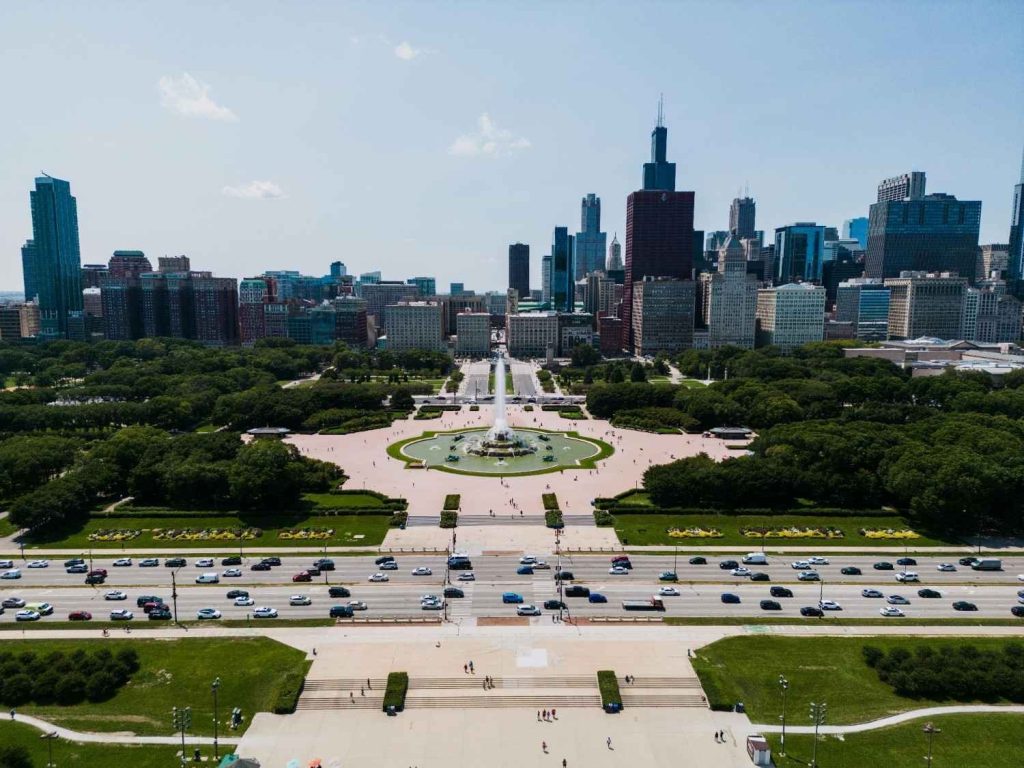
Grant Park sits right on the lakefront, a mile east of the Loop, with free summer concerts at Pritzker Pavilion, the Art Institute on Michigan Avenue, and the Museum Campus just to the south.
The Field Museum, Shedd Aquarium, and Adler Planetarium are all within walking distance, so for first-time visitors working out where to stay in Chicago, anchoring your trip around Grant Park is the most straightforward answer.
Chicago changes after the day-trippers leave, and Grant Park is the best example of that shift. The lakefront path goes quiet after 9 PM, the city skyline reflects on the lake, and Navy Pier’s lights are visible to the north. Most visitors miss this version of the city because they’re checking into hotels ten blocks west, but you can get it because you stayed.
There’s one practical catch. Chicago’s lakefront doesn’t have an open campsite; what exists is a small permit-based option at specific events, or the nearest private RV parks in the suburbs. The lakefront is still worth anchoring your trip around, even if your rig is parked 20 to 30 minutes out.
Top Campsites and Overnight Spots
- Chicago Northwest KOA (Des Plaines, ~25 miles northwest): The closest full-service KOA to central Chicago. Pull-through sites for larger rigs, electric, water, and sewer hookups, and a free shuttle to a nearby CTA Blue Line station, so you don’t have to drive in. Open year-round with heated shower facilities.
- Chicago Metro KOA (Elgin, ~40 miles northwest): Bigger sites, a pool, and more outdoor space than Des Plaines, so it’s a good fit for families who want something to do on-site between city days. Electric hookups on most sites. The Metra Union Pacific/Northwest line gets you downtown from nearby stations.
- Windy City RV (Hodgkins, ~15 miles southwest): One of the closest private RV parks to downtown. Facilities are basic, with water, electric hookups, and dump stations, but the shorter drive can matter when you’re coming back after a long day in the city. Book ahead for summer.
- Burnidge Forest Preserve (Kane County, ~45 miles west): A good option if you want trees and quiet over amenities. Facilities are limited, so it suits fully self-contained rigs, and the camping is free or low-cost in a proper forested setting.
- Illinois Beach State Park (Zion, ~50 miles north): Technically a stretch from the Grant Park orbit, but this is the best lakefront camping near Chicago. Direct Lake Michigan access, electric hookups, and a beach that earns its reputation, so reserve well ahead for summer stays.
Don’t Leave Without…
Walking the Riverwalk at sunrise, specifically the stretch between Lake Shore Drive and the Franklin/Orleans bridge, when the buildings are catching the first light, and the only people out are cyclists and the odd river tour boat on its first run. Few American cities can look this good at 6 AM.
RV Practical Info
- Road access: I-90/94 and I-290 are your main approaches, and both handle RVs well. Skip the Dan Ryan (I-94 south) during rush hour; traffic can be bad from 7-9 AM and 4-7 PM.
- Campsite availability: Nothing in Grant Park itself. Nearest sites are 15-50 miles out. Book summer weekends by April.
- Hookups and facilities: Full hookups (30/50-amp, water, sewer) at private parks; Cook County Forest Preserves are more basic, with electric-only or dry camping.
- Parking in the city: Don’t drive your RV into the Loop or along Michigan Avenue. Streets are narrow, there’s constant delivery traffic, and on-street parking for RVs doesn’t exist. Park at your campsite and take the Metra or CTA rail in.
- Wild camping: Not permitted in Chicago city limits. Cook County and DuPage County forest preserves have designated sites only.
Who Is It Best For?
- First-time visitors who want maximum access to museums, architecture, and the lakefront
- Couples looking to do a city trip without hotel costs, happy to drive 20-30 minutes from their campsite
- Road-trippers using Chicago as the start or end of a Great Lakes loop
Recommended Nightly Budget
- Private RV parks (KOA, Windy City RV): $55-75/night with full hookups
- Forest preserve camping: $20-35/night, basic facilities
- Illinois Beach State Park: $35-50/night with electric hookup
- Add-on costs: $10-15 for a daily CTA or Metra pass; parking fees if you’re driving to trailheads or museums
2. Lincoln Park, Chicago (North Side)
Why Stay Here
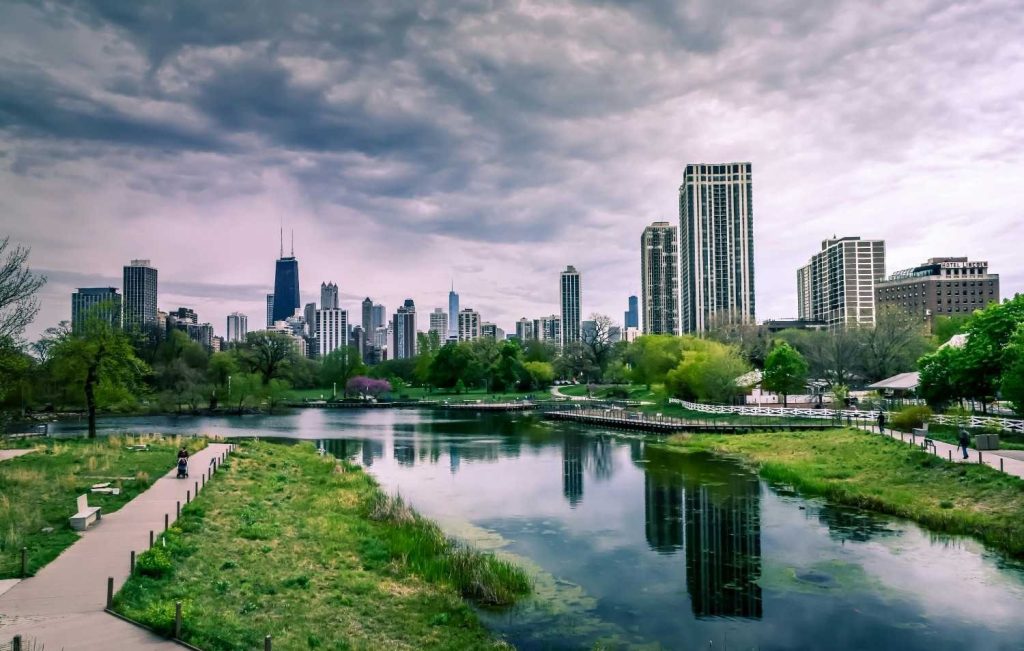
Lincoln Park doesn’t get enough credit. It’s a 1,200-acre park running four miles along the northern lakefront, with a free zoo, conservatory, beaches, and one of the best urban cycling paths in the country. The neighborhood around it, also called Lincoln Park, is full of cafes, bookshops, and independent restaurants that locals actually use.
Staying near here can put you in a genuinely residential version of the city. You’re not in the Loop or River North, but you’re three miles from both by bike along the lakefront trail, so the tradeoff is worth it if you’d rather explore on your own terms. Coffee from a neighborhood cafe and a walk through the park before the zoo opens make for a quieter entry point into Chicago than the downtown grid.
In summer, the park hosts the Chicago Folk and Roots Festival, Green City Market on Saturdays, and free outdoor concerts at the theater. If any of those overlap with your trip, build a slow day around them.
Top Campsites and Overnight Spots
- Chicago Northwest KOA (Des Plaines): The most practical base for Lincoln Park access, about 25 minutes northwest on I-94. Free shuttle to the Blue Line CTA for direct access to downtown and the North Side. Full hookups.
- North Shore Campground (Waukegan, ~35 miles north): A smaller private campground with electric and water hookups, quieter and cheaper than the KOA options, and the Metra North Central line connects to downtown from nearby stations.
- Skokie Lagoons Camping (Cook County Forest Preserve, Glencoe): Limited camping in the forest preserve system north of the city. Basic facilities, mostly suited to tents and smaller campervans, but free or low-cost, which makes it worth knowing about.
- Wilmette / Evanston RV overflow areas: A handful of church and business parking lots in the northern suburbs offer informal overnight spots through iOverlander. No hookups, but they can be useful when campgrounds are full, and you need a single night. Indie Campers’ peer-to-peer marketplace hosts also cover the northern suburbs for flexible one-night options worth checking first.
Don’t Leave Without…
An early Saturday at Green City Market in Lincoln Park, where Illinois and Wisconsin farmers bring produce, cheese, and meat directly to Chicago’s best chefs. It opens at 7 AM and moves quickly, so then walk north to the Alfred Caldwell Lily Pool, a prairie-style water garden from 1936 that almost nobody finds.
RV Practical Info
- Road access: Exit on Fullerton or Diversey off I-94. The approach roads are wide. Don’t try to park or pass through the park itself in a large rig.
- Campsite availability: No camping in Lincoln Park. Nearest sites are 25-40 miles out. Take the CTA Red Line or the lakefront bike path in from your campsite.
- Parking: Metered street parking nearby doesn’t fit RVs. Leave your rig at the campsite.
- Hookup facilities: Full hookups at Des Plaines KOA; partial hookups at North Shore Campground.
- Wild camping: Not permitted in the park or on-street.
Who Is It Best For?
- Couples who want a residential Chicago experience away from the tourist core
- Cyclists who want to use the lakefront trail as their main way around
- Families with young kids, since the Lincoln Park Zoo is free and worth a morning
Recommended Nightly Budget
- Des Plaines KOA: $60-75/night with full hookups
- North Shore Campground: $45-55/night
- Forest preserve (basic): $20-30/night
- Daily transport: $10-15 CTA unlimited day pass
3. Wicker Park / Bucktown, Chicago
Why Stay Here
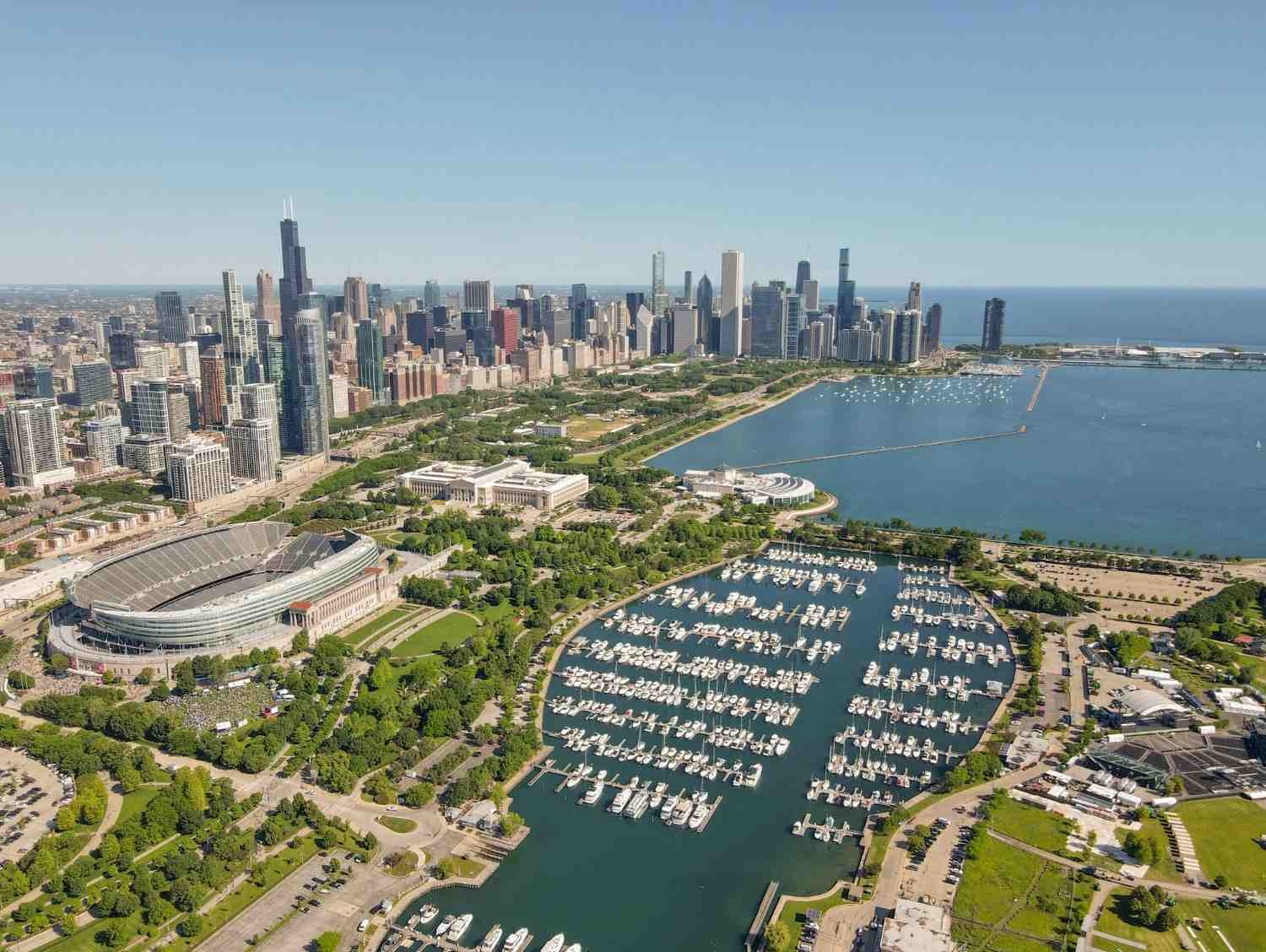
Wicker Park is where Chicago’s independent food and music scene is most concentrated. The intersection of Milwaukee, Damen, and North Avenues has been the center of the city’s creative energy since the 1990s, the neighborhood that shaped the Midwest post-rock sound and still packs more independent restaurants, record shops, and live music venues per block than almost anywhere else in the city.
For travelers deciding where to stay in Chicago who want the city’s actual character over its tourist face, Wicker Park is the neighborhood that delivers it.
The residential streets west of the main strips are beautiful, with greystone two-flats, quiet alleys, and trees that close over the streets in summer. In the evenings, the outdoor seating on Division Street fills early, and the crowd tends to be local rather than tourist-facing, which gives the area a different feel from River North or the Museum Campus.
For RV visitors, Wicker Park works better as a destination than a base. You’ll park at a suburban campsite and come in on the Blue Line CTA, where the Damen stop puts you right in the middle of it, and which campsite direction makes sense will depend on which part of the city you’re spending the most time in.
Top Campsites and Overnight Spots
- Windy City RV (Hodgkins): The closest private RV park to Wicker Park, about 20 minutes southwest on I-290. Basic facilities, functional hookups, and Blue Line access from the Forest Park terminal nearby.
- Chicago Northwest KOA (Des Plaines): Further out but better facilities, with Blue Line access from O’Hare terminal, then inbound to the Damen stop.
- Itasca Sports Complex Camping (Itasca, ~30 miles west): Quiet suburban camping with electric hookups in DuPage County. The Metra Union Pacific West line gets you downtown from the Itasca station.
- Western suburbs, private hosts: Several wineries and breweries in DuPage and Kane Counties offer free one-night stays through peer-to-peer platforms. Indie Campers’ own marketplace hosts in the western suburbs are worth checking first, since they offer a broader range of vehicle-compatible spots without a separate membership.
Don’t Leave Without…
An evening at Thalia Hall in Pilsen, a restored 1892 concert venue with one of the best-sounding rooms in the Midwest. Or, if the timing lines up, the Green Mill Cocktail Lounge in Uptown. It’s been running since 1907, was Al Capone’s preferred booth, and still has live jazz seven nights a week until 4 or 5 AM.
RV Practical Info
- Road access: I-290 (Eisenhower) and I-90/94 (Kennedy) are your routes into the western suburbs. Plan for congestion coming into the city during the morning rush.
- Campsite availability: Nothing in the neighborhood itself. Suburban campgrounds 15-40 miles west are what you’re working with.
- Hookups: Windy City RV and Itasca offer electric/water; KOA offers full hookups.
- Getting into the neighborhood: Blue Line CTA from O’Hare or Forest Park terminals. Damen Station is the right stop for Wicker Park.
- Wild camping: Not permitted.
Who Is It Best For?
- Food and music enthusiasts who want Chicago’s independent scene over the tourist track
- Couples making a city-specific trip with a clear neighborhood focus
- Road-trippers who want to explore beyond the standard Chicago landmarks
Recommended Nightly Budget
- Windy City RV: $45-60/night
- Private host stays (western suburbs): Free to low-cost via peer-to-peer platforms; check Indie Campers’ marketplace first
- Meals in neighborhood: $20-40 for dinner; street food and taquerias $10-15
- CTA: $10-15 day pass
4. Hyde Park, Chicago (South Side)
Why Stay Here
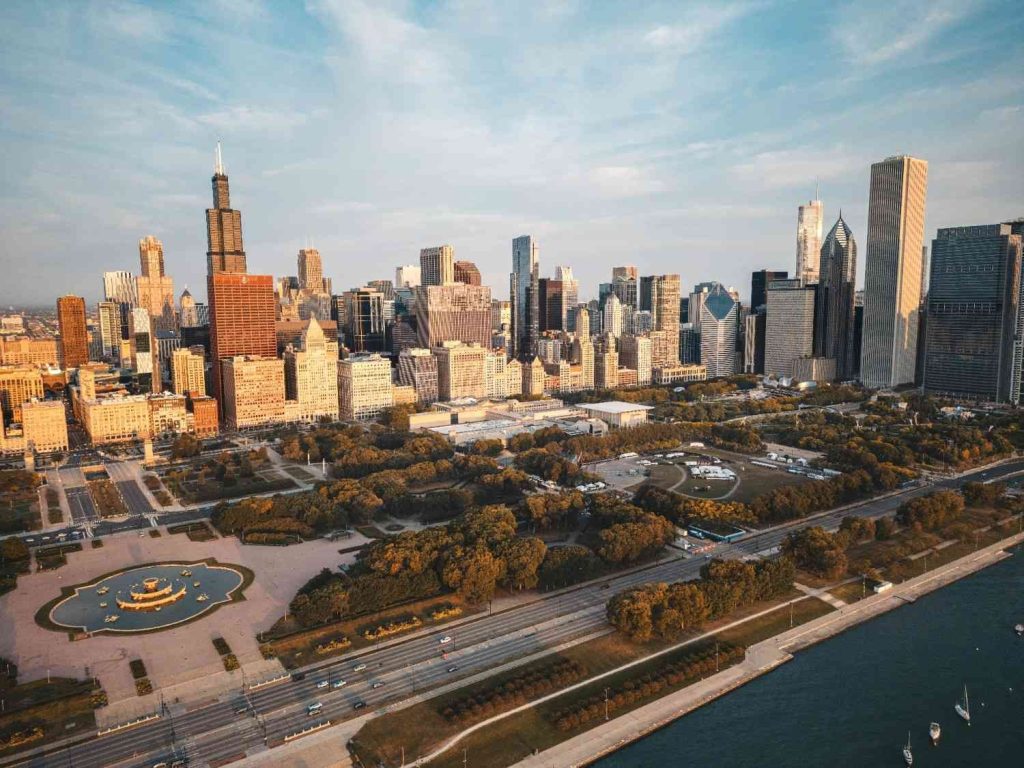
The University of Chicago defines Hyde Park, and its presence shapes everything about the neighborhood, including the architectural density, the bookshop culture, how people talk in cafes, and the quality of the museums. The Museum of Science and Industry is here, in the former Palace of Fine Arts from the 1893 World’s Columbian Exposition, and Barack Obama’s home is two blocks from campus.
Frank Lloyd Wright’s Robie House (1910) is on Woodlawn Avenue, the university’s Gothic campus was modeled on Oxford, and the Midway Plaisance, a mile-long green corridor left over from the 1893 World’s Fair, connects west to Washington Park. The architectural density alone can justify a full day.
In summer, Hyde Park hosts the 57th Street Art Fair (May, one of the oldest in the country) and the Chicago Folk and Roots Festival nearby. If you want a less-visited, intellectually dense corner of Chicago, this is it.
Top Campsites and Overnight Spots
- Chicago Southland KOA (Calumet City, ~20 miles south): The closest full-service campground to Hyde Park. Full hookups (30/50-amp), pool, and laundry, and the Metra Electric District line from nearby Harvey or Homewood stations gets you into Hyde Park directly.
- Indiana Dunes National Lakeshore (Porter, IN, ~50 miles east): If you want to pair Hyde Park with real outdoor access, Indiana Dunes is just across the state line via I-90 or US-12. See the full section below.
- Burnidge Forest Preserve (Kane County): A low-cost option further west for a night in transit. Better as a stopover than a base camp.
Don’t Leave Without…
The view from Promontory Point at sunset. Bring food from the Medici on 57th or a neighborhood grocery, sit on the limestone terrace above the lake, and watch the skyline go pink from the south. Local families have been doing exactly this since 1937, and then walking north along the lakefront path back toward the Museum of Science and Industry as the lights come on.
RV Practical Info
- Road access: I-90/94 Dan Ryan Expressway runs through the south side. Exit at 57th Street or Stony Island Avenue, and both are fine for RVs.
- Campsite availability: No campground in Hyde Park itself. Calumet City KOA is the nearest full-service option at ~20 miles. Indiana Dunes is further, but worth it if you’re pairing both.
- Hookups: Calumet City KOA has full hookups; Indiana Dunes NPS campground has electric hookups at some sites.
- Getting into the neighborhood: The Metra Electric District line runs frequently from south suburban stations to the 55th-56th-57th Street station in Hyde Park.
- Wild camping: Not permitted.
Who Is It Best For?
- Museum visitors and architecture enthusiasts, since the Museum of Science and Industry and Robie House can justify a full day between them
- History-focused travelers interested in the 1893 World’s Fair legacy, Obama’s Chicago, and the civil rights landmarks of the south side
- Travelers who want a quieter, neighborhood-scale Chicago over the downtown core
Recommended Nightly Budget
- Calumet City KOA: $55-70/night with full hookups
- Indiana Dunes NPS: $35-50/night with electric hookup
- Meals: $15-25 at neighborhood restaurants and cafes
- Museum of Science and Industry: $25-30 per adult entry
5. Evanston (North Shore)
Why Stay Here
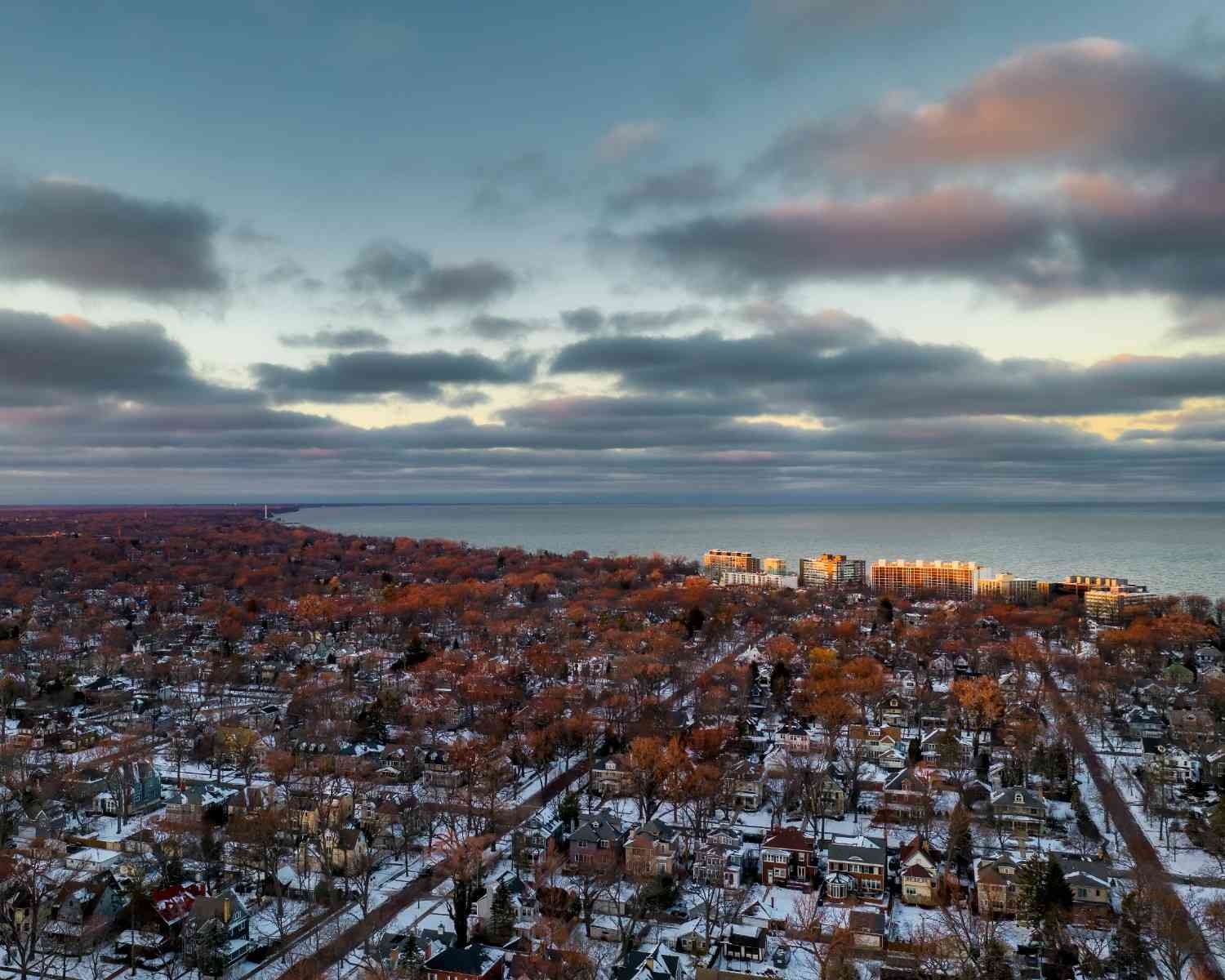
Evanston is Chicago’s first suburb to the north, separated by a border that’s invisible on the street but clear in character. The city of 75,000 sits on a stretch of lakefront that most Chicago visitors never see, quieter than the city beaches, with less infrastructure and more room, and Northwestern University’s campus runs along the shore for a mile.
Downtown Evanston is a grid of independent coffee shops, restaurants, and bookstores. Historically dry (alcohol sales were banned until 1972), it has a thoughtful, slightly academic feel, since this is where people who wanted lake access without the city’s density ended up. The independent food scene is strong, and the Saturday farmers market is one of the best in the region.
For RV travelers, Evanston can work as either a base or as a north-shore staging point before continuing up toward Kenosha, Milwaukee, or Green Bay. The Metra Purple Line gets you downtown in about 25 minutes, so the commute is manageable either way.
Top Campsites and Overnight Spots
- North Shore Campground (Waukegan, ~15 miles north of Evanston): Electric and water hookups, pull-through sites for larger rigs, laundry facilities. Affordable and functional for North Shore access, with the Metra North Central line connecting to downtown from Waukegan.
- Illinois Beach State Park (Zion, ~25 miles north): The best lakefront camping north of Chicago. Electric hookup sites, direct lake access, and a beach that earns the drive. Book via Illinois DNR, as summer sites can fill fast. The north unit has more facilities; the south unit is quieter.
- Lake County Forest Preserves (Various locations, Lake County, IL): Several forest preserve campgrounds in Lake County offer low-key overnight stays in wooded settings with electric hookups. Van Patten Woods and Chain O’ Lakes are the easiest for RVs.
- Van Patten Woods (Wadsworth, Lake County, ~30 miles north): Full hookup sites in a large Lake County forest preserve. Showers, restrooms, and a quieter atmosphere than state parks making it a good pick for families who want outdoor access near the lake.
Don’t Leave Without…
The Saturday Evanston Farmers Market on University Place, the largest in the region, running May through November. Then walk over to the Northwestern lakefront campus (free to walk through) and follow the path north past the athletic fields to the beach at Lighthouse Landing, which offers the best unobstructed view of the Chicago skyline from outside the city.
RV Practical Info
- Road access: I-94 (Edens Expressway) runs north from Chicago through Evanston and up the North Shore. Well-maintained and fine for RVs. Exit at Dempster Street or Howard Street for central Evanston.
- Campsite availability: No camping within Evanston. Illinois Beach State Park and North Shore Campground are your options, both 15-25 miles north.
- Hookups: Full hookups at North Shore Campground; electric-only at Illinois Beach; full hookups at Van Patten Woods.
- Parking in Evanston: Several municipal lots fit larger vehicles on weekdays. More flexibility here than in Chicago. Skip on-street parking on Northwestern home game days.
- Wild camping: Not permitted in Lake County or within municipal limits.
Who Is It Best For?
- Families who want a quieter lake experience than the city beaches
- Cyclists using the North Shore trail system
- Road-trippers heading north toward Milwaukee or Green Bay
Recommended Nightly Budget
- Illinois Beach State Park: $35-50/night with electric hookup
- North Shore Campground: $45-58/night with electric/water
- Van Patten Woods: $30-45/night with full hookups
- Meals: $15-25 for casual Evanston dining; BYOB restaurants are common and can keep the bill down
6. Oak Park (West Suburb)
Why Stay Here
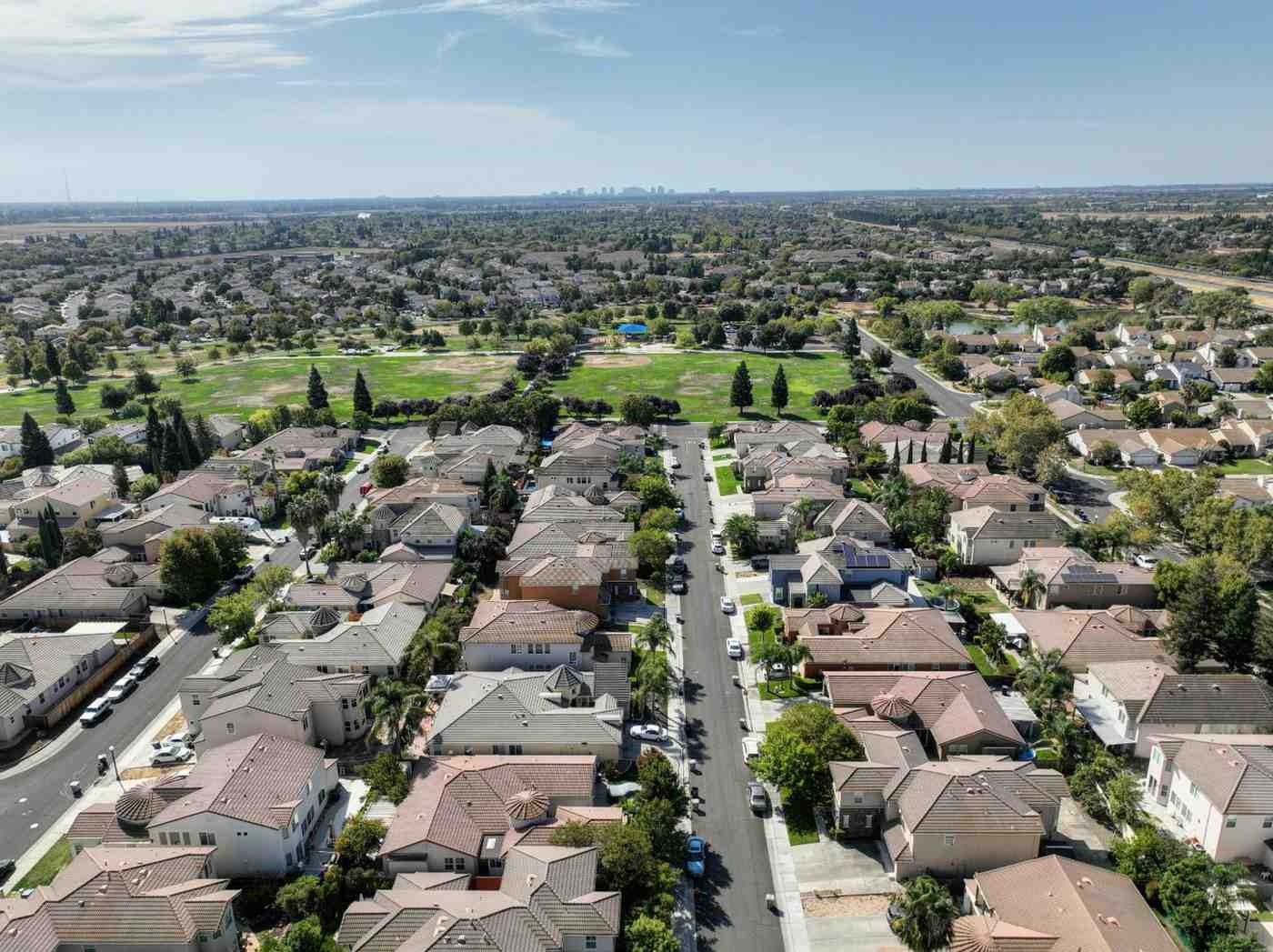
Oak Park is 10 miles west of the Loop, and it has a specific claim to fame. It contains 25 buildings designed by Frank Lloyd Wright, more than anywhere else on earth, plus Ernest Hemingway’s birthplace. Wright lived and worked here from 1889 to 1909, his Prairie Style years, and the residential streets around his home and studio can feel like a working architectural museum.
The neighborhood is walkable and full of independent restaurants, yet almost entirely overlooked by international visitors who don’t realize it’s 25 minutes on the Green Line CTA. That’s the real attraction, since it’s a genuinely historic destination with interesting things to see and almost no tourist crowd to fight through.
For RV travelers, Oak Park works well as a strong half-day or full-day excursion from a western suburban campsite, or as the main event if you’re coming specifically for the architecture.
Top Campsites and Overnight Spots
Windy City RV (Hodgkins, ~10 miles south): The closest campsite to Oak Park. Basic but functional, with electric and water hookups and a dump station, and a short drive or rideshare to the Green Line CTA gets you there in 20 minutes.
Itasca Sports Complex Camping (Itasca, ~15 miles northwest): Quiet, well-maintained, electric hookups. Metra Union Pacific West stops at Itasca with connections to downtown and Oak Park.
St. James Farm Forest Preserve (Warrenville, DuPage County): A DuPage County forest preserve with minimal facilities but low cost and quiet surroundings. Worth checking when the other options are full.
Don’t Leave Without…
A self-guided walk through the Frank Lloyd Wright historic district. Pick up a map at the Frank Lloyd Wright Trust visitor center on Forest Avenue. The Heurtley House (1902) and Unity Temple (1905, open for tours) are the two buildings that can stop people in their tracks, even those who don’t particularly follow architecture. Then eat at one of the BYOB restaurants on Lake Street, like Buzz Café or The Lake Street Kitchen, where locals eat rather than tourists.
RV Practical Info
- Road access: I-290 (Eisenhower Expressway) connects directly to Oak Park. Exit at Austin Boulevard or Harlem Avenue, and both are easy for RVs.
- Campsite availability: Windy City RV and Itasca are 10-15 miles out. No camping within Oak Park itself.
- Hookups: Windy City RV offers electric and water; Itasca offers electric. Both have dump stations.
- Parking: Oak Park has several municipal lots that fit RVs. Easier than Chicago. For the Wright Home and Studio, use the designated lot on Forest Avenue.
- Wild camping: Not permitted.
Who Is It Best For?
- Architecture and design enthusiasts, since the Wright buildings are the main draw
- Literary visitors since Hemingway’s birthplace and childhood home are both open for tours.
- Day-trippers who want a walkable historic neighborhood without the scale of the city
Recommended Nightly Budget
- Windy City RV: $45-60/night
- Itasca Camping: $35-50/night
- Wright Home and Studio tour: $22-35 per adult
- Meals: $15-25 at Oak Park BYOB restaurants; cheaper than anything comparable downtown
7. Pilsen / Bridgeport, Chicago (South Side)
Why Stay Here
Pilsen is Chicago’s Mexican-American cultural center, and it’s one of the most visually striking neighborhoods in the city. The main commercial strip on 18th Street is dense with murals, many of them serious works commissioned or supported by the National Museum of Mexican Art, which is here and is free to enter. The food is outstanding, with taquerias, panaderías, and sit-down restaurants serving regional Mexican cooking that rivals anything you’d find in Mexico City.
Bridgeport sits just to the east, one of the oldest Irish-American neighborhoods in the country and home to five Chicago mayors. Together, the two neighborhoods form a south-side pocket that most tourists never reach, which is precisely what makes an afternoon here feel like finding the actual city rather than the version built for visitors.
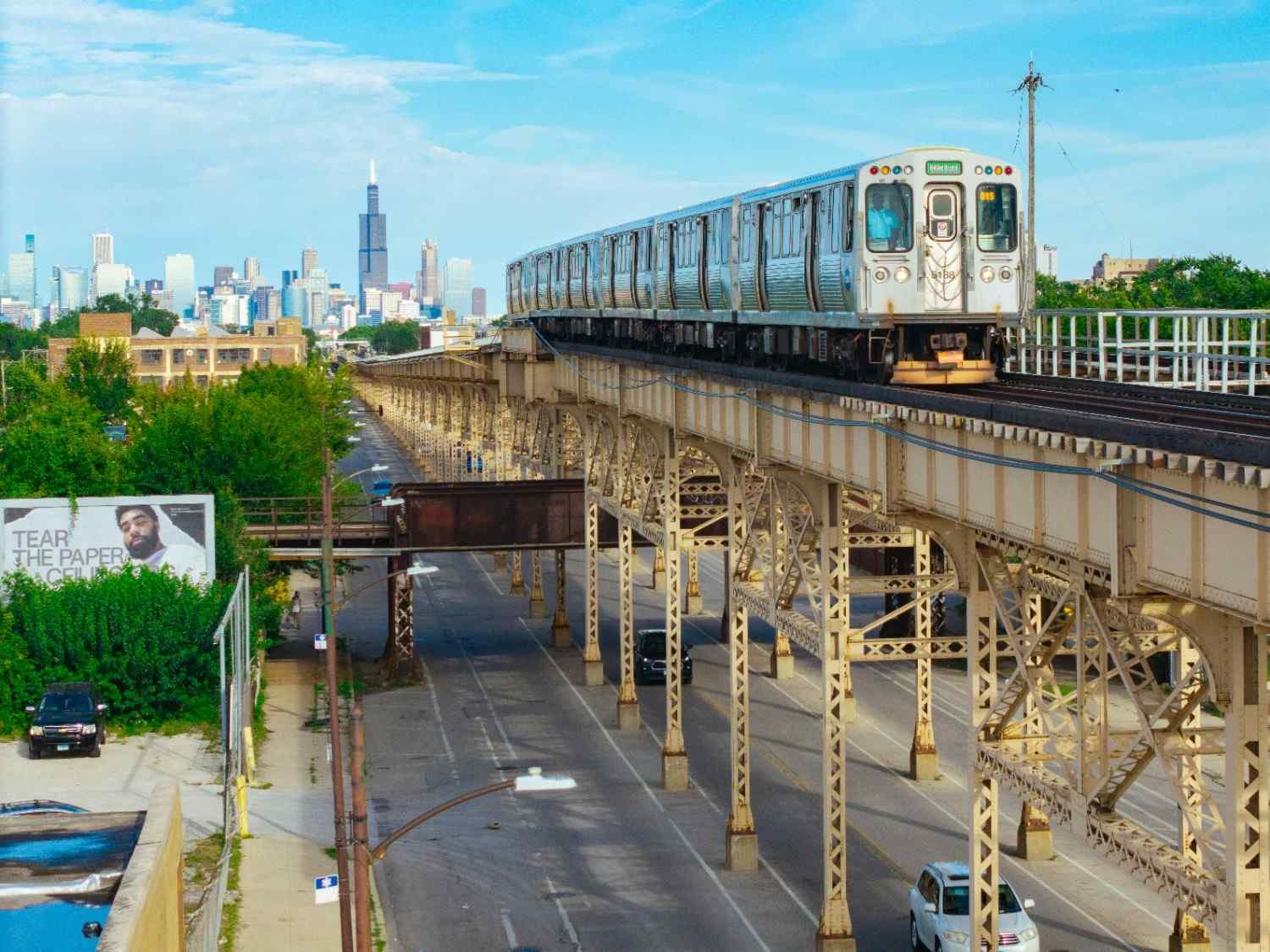
For RV travelers, Pilsen makes most sense as a focused half-day or full-day destination, combined with a nearby campsite to the south or west, since the Orange Line CTA stops at 18th Street directly.
Top Campsites and Overnight Spots
- Chicago Southland KOA (Calumet City, ~20 miles south): Full hookups (30/50-amp), pool, and laundry. The most practical campsite for south-side Chicago access, with the Metra Electric District line connecting south suburban stations to the city.
- Windy City RV (Hodgkins, ~15 miles southwest): Basic but functional, and a shorter drive to Pilsen than most campground options. Electric and water hookups, dump station, so book ahead for summer.
- Palos Forest Preserve Campgrounds (Palos Hills, ~20 miles southwest): Cook County forest preserve camping in the Palos Hills area, wooded, affordable, and functional for self-sufficient rigs. Electric hookups at some sites.
- Burnidge Forest Preserve (Kane County, ~35 miles west): A quiet overnight in a forested setting if you want to keep costs down. Better as a single night in transit than a multi-day base.
Don’t Leave Without…
A late morning on 18th Street, starting with coffee at a Mexican bakery, then a walk through the National Museum of Mexican Art before the afternoon crowds arrive. The permanent collection covers 3,000 years of Mexican art and is free, so grab lunch at a taqueria on 18th Street, where the al pastor and carnitas can be some of the best in Chicago. If you’re visiting on a Saturday, the Maxwell Street Market, a few blocks northeast, is one of the city’s great remaining street markets.
RV Practical Info
- Road access: I-55 and I-90/94 are the main approaches from the south and west. Exit at Damen/Ashland for Pilsen. Road conditions on the main corridors are fine for RVs.
- Campsite availability: No campground within Pilsen or Bridgeport. Calumet City KOA and Windy City RV are the closest practical options at 15-20 miles.
- Hookups: Full hookups at Calumet City KOA; electric and water at Windy City RV.
- Getting into the neighborhood: Orange Line CTA from the southwest. The 18th Street station puts you right on the main strip.
- Wild camping: Not permitted.
Who Is It Best For?
- Food travelers who want regional Mexican cooking rather than restaurant-row Chicago
- Art and mural enthusiasts, since Pilsen’s public murals are worth a dedicated walking morning
- Travelers looking for a south-side Chicago experience that most itineraries miss entirely
Recommended Nightly Budget
- Calumet City KOA: $55-70/night with full hookups
- Windy City RV: $45-60/night
- Meals: $10-20 for taqueria dining on 18th Street; one of the best-value eating streets in Chicago
- National Museum of Mexican Art: Free entry
8. The 606 / Logan Square, Chicago (Northwest Side)
Why Stay Here
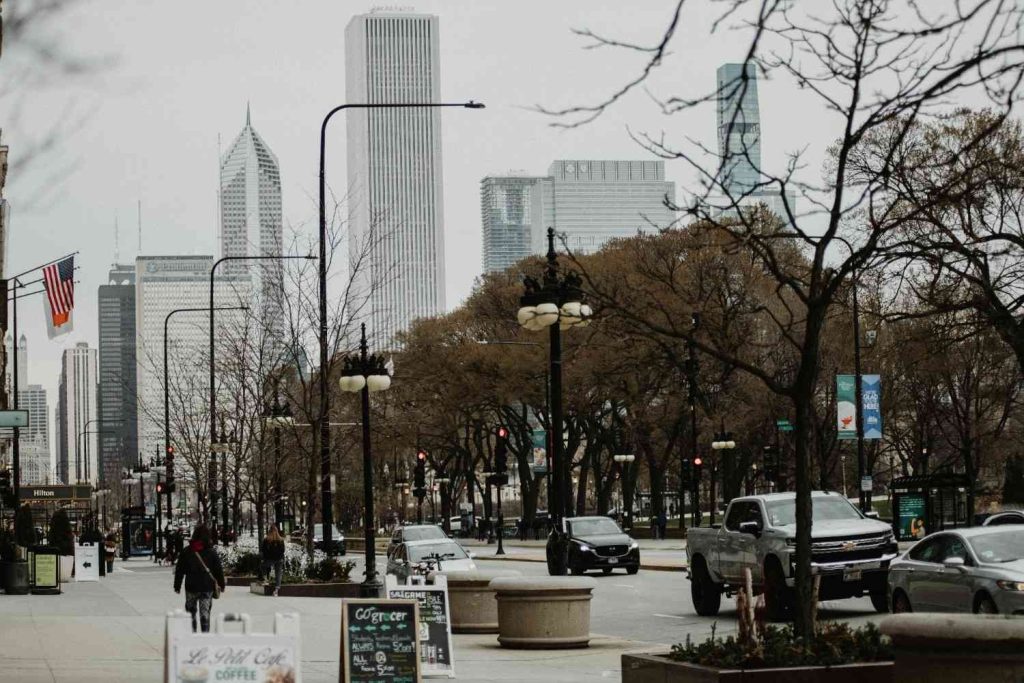
The 606 is a 2.7-mile elevated trail built on a former rail line, running through four northwest side neighborhoods: Humboldt Park, Wicker Park, Bucktown, and Logan Square. It opened in 2015 and quickly became one of the best urban trail corridors in the Midwest, wide, tree-lined, entirely car-free, and surrounded by some of Chicago’s most active street-level food and coffee scenes.
For road-trippers who’ve already been to Chicago and want a more local version of the city, this is where to stay in Chicago on a return trip.
Logan Square anchors the western end of the trail, and the neighborhood has one of the strongest independent restaurant and bar cultures in the city. It’s the kind of place where chefs open their own projects after years working in fine dining, so the result is a mix of serious cooking at accessible prices. The Logan Square Farmers Market runs Sunday mornings on the boulevard from May through October.
For RV travelers, Logan Square can work well as a full day and evening destination, easily reached from northwest suburban campsites via the Blue Line CTA at the Logan Square or California stations.
Top Campsites and Overnight Spots
- Chicago Northwest KOA (Des Plaines, ~25 miles northwest): The most practical campsite for Logan Square and the 606 corridor. Free CTA Blue Line shuttle from Des Plaines, full hookups, and year-round facilities.
- Itasca Sports Complex Camping (Itasca, ~30 miles west): Quiet suburban camping with electric hookups. The Metra Union Pacific West line connects to the city from Itasca, and the Blue Line picks up from O’Hare for Logan Square access.
- Skokie Lagoons Camping (Cook County Forest Preserve, Glencoe): Basic camping in a wooded preserve north of the city, free or low-cost. Better for fully self-contained rigs.
- Western suburbs, private hosts: Wineries and breweries in DuPage and Kane Counties offer informal overnight stays through peer-to-peer platforms. Indie Campers’ own marketplace hosts are a good first stop, covering the western suburbs with vehicle-compatible spots and no separate membership required.
Don’t Leave Without…
The Sunday Logan Square Farmers Market on Milwaukee Avenue and Logan Boulevard, one of the most local-feeling markets in the city, with Illinois farms, local bakeries, and a crowd that’s neighborhood residents rather than tourists. Then walk the 606 eastward through Bucktown and Wicker Park, since the elevated perspective over the rooftops and the city’s northwest side is unlike anything you’d see from street level.
RV Practical Info
- Road access: I-90/94 (Kennedy) is the main approach from the northwest suburbs. The Blue Line CTA follows the Kennedy corridor closely, so park your rig and take the train in.
- Campsite availability: No camping in Logan Square or along the 606. Northwest suburban campgrounds, 20-35 miles out, are your options.
- Hookups: Full hookups at Des Plaines KOA; electric/water at Itasca; basic or none at forest preserve sites.
- Getting into the neighborhood: Blue Line CTA from O’Hare. Logan Square station and California station both work for the 606 and the restaurant strip on Milwaukee Avenue.
- Wild camping: Not permitted.
Who Is It Best For?
- Cyclists who want to ride the 606 and explore the northwest side neighborhoods at their own pace
- Food and coffee enthusiasts, since Logan Square’s restaurant scene is one of the city’s strongest.
- Road-trippers who’ve done central Chicago before and want a more local version of the city
Recommended Nightly Budget
- Chicago Northwest KOA: $60-75/night with full hookups
- Itasca Camping: $35-50/night
- Meals: $15-30 at Logan Square restaurants; lower than comparable neighborhoods in Wicker Park
- CTA: $10-15 unlimited day pass
9. Indiana Dunes National Lakeshore, Indiana
Why Stay Here
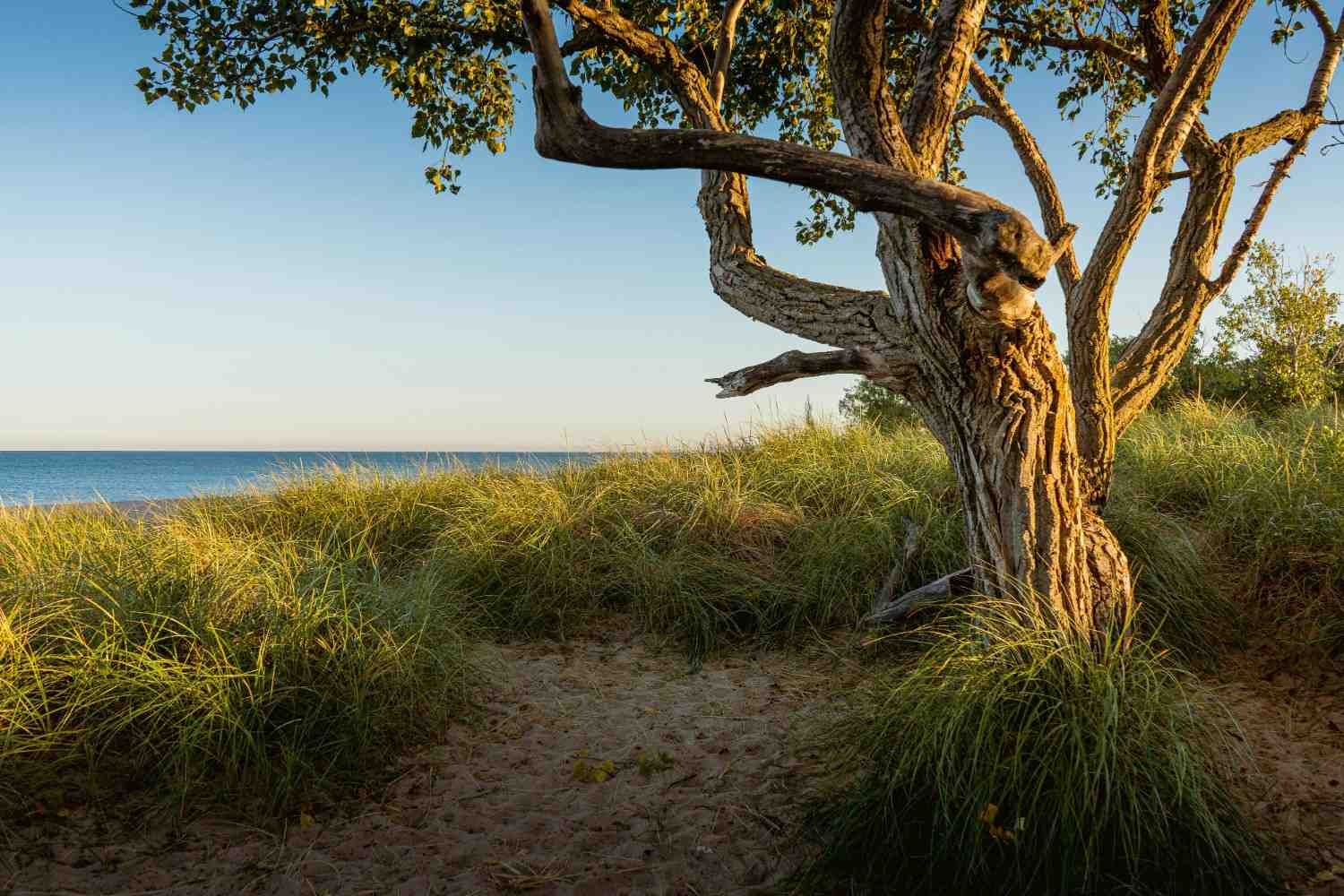
Indiana Dunes is 50 miles east of the Loop across the state line, and it can catch people off guard, since most Chicago regulars have never been. The National Park protects 15 miles of Lake Michigan shoreline, with sand dunes, oak savannas, bogs, and beaches, plus the restored Bailly Homestead and Chellberg Farm, which show what this shoreline looked like before industrialization changed the region.
The dunes rise to 123 feet above the lake. Mount Baldy is the most dramatic, an active dune that moves 4 feet per year and has swallowed houses. The 3-Dune Challenge (Mount Jackson, Mount Holden, Mount Tom) is a strenuous 1.5-mile route, and the lake views from the ridgelines are not what most people expect to find this close to Chicago.
For RV travelers, this is the best overnight option within 90 minutes of Chicago for real outdoor access. The campground works, lake access is direct, and on summer weekends when Chicago is packed, the park is comparatively quiet.
Top Campsites and Overnight Spots
- Dunewood Campground (NPS, Porter, IN): The main NPS campground inside Indiana Dunes National Park. Electric hookups available, and wooded sites are a short drive from the beach access points. Book through Recreation.gov, since summer weekends can fill 6 months out. Showers and restrooms on-site.
- Indiana Dunes State Park Campground (Chesterton, IN): Right next to the national park, with electric hookups, a swimming beach, and bathhouse facilities. Often has availability when Dunewood is full, so reserve through Indiana DNR.
- Lakeview Campground (Michigan City, IN, ~15 miles east): A private campground east of the main park with full hookups (electric, water, sewer). Good for larger rigs that need more space, and close to Washington Park Beach in Michigan City.
- Yogi Bear’s Jellystone Park (Millbrook, IN): A full-facility private park about 20 miles from the dunes. Family-oriented, with pools, playgrounds, and WiFi. Full hookups. Higher nightly rate, but the facilities are all there.
Don’t Leave Without…
A sunrise at West Beach. Get there before 5:30 AM in summer, walk the boardwalk over the dunes to the lake, and watch the Chicago skyline light up from across the water. The city is 35 miles west, and on a clear morning, you can pick out the Willis Tower. It’s a strange and genuinely beautiful sight, dunes and scrub oak with a skyscraper horizon.
RV Practical Info
- Road access: US-20 and I-94 both get you to the park from Chicago. Exit at Portage or Chesterton for the main campground and beach access. Roads within the park handle standard-length RVs without problems.
- Campsite availability: Summer weekends can book out 6 months ahead on Recreation.gov. Weekday stays are much easier. September-October and May are the sweet spots if you have flexibility.
- Hookups: Electric hookups at Dunewood; electric/water/sewer at state park and private campgrounds.
- Lake access: West Beach and Central Avenue Beach are the most popular. No beach access fee with an NPS pass.
- Wild camping: Not permitted.
Who Is It Best For?
- Nature lovers and hikers who want the real Great Lakes outdoors without leaving the Chicago region
- Families who want beach swimming and dune climbing alongside a city trip
- Road-trippers using Chicago as a jumping-off point east toward Detroit or Cleveland
Recommended Nightly Budget
- Dunewood NPS campground: $25-35/night (electric hookup sites are priced higher)
- Indiana Dunes State Park: $35-50/night with electric hookup
- Private campgrounds (full hookup): $50-70/night
- NPS park entry: $25 per vehicle (7 days); America the Beautiful pass covers this
10. Starved Rock State Park, Illinois
Why Stay Here
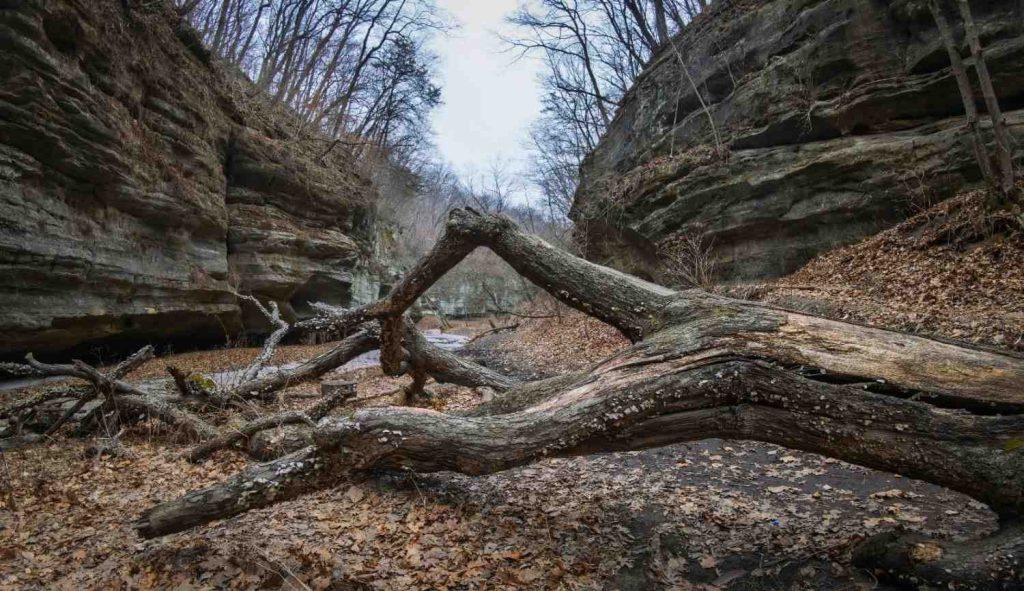
Starved Rock is 90 miles southwest of Chicago in the Illinois River Valley, and it’s underrated even within the Midwest. The park protects 18 canyons carved into 500-million-year-old St. Peter sandstone, with narrow gorges, vertical walls, seasonal waterfalls, and canyon floors covered in ferns and moss. Spring brings snowmelt waterfalls, and fall can turn the canyon rims gold and orange.
It gets a fraction of the visitors that similar parks in the West attract. All 18 canyons are connected by a trail network of roughly 13 miles, ranging from flat rim walks to scrambling canyon floors, and the Illinois River at the park’s base draws bald eagles in winter, making this one of the better eagle-watching spots in the Midwest from January through March.
As an overnight stop, Starved Rock pairs naturally with a Chicago itinerary, whether you’re doing one or two nights here after the city before pushing south toward St. Louis, or using it as a standalone Midwest nature trip off the national park circuit.
Top Campsites and Overnight Spots
- Starved Rock State Park Campground (Utica, IL): The park’s own campground, well-maintained and right next to the trail network. Electric hookups on most sites, full shower and restroom facilities. Book through Illinois DNR online, since summer weekends fill up and weekdays and shoulder season are much more open.
- Illini State Park Campground (Marseilles, IL, ~10 miles east): An adjacent state park along the Illinois River with electric hookups and less demand than Starved Rock. A good backup if the main campground is full. Some sites have river views.
- Pine Ridge Campground (Utica, IL, private): Right at the state park entrance. Full hookups including sewer, WiFi, and more space for larger rigs, so it’s a good pick if you want maximum facilities without driving far.
- Eagle Cliff Campground (Ottawa, IL, ~8 miles west): Private campground on the Illinois River with full hookups. Works well for both Starved Rock and the adjacent Matthiessen State Park, which has its own canyon system and far fewer visitors.
Don’t Leave Without…
Hiking into French Canyon at dawn. The narrows at the base are about six feet wide, the walls rise 50 feet, and light drops in from above as a column. If there’s been rain or you’re visiting in spring, the waterfall will be running, and it’s one of the most enclosed and beautiful spaces in Illinois. Then walk the rim trail east to Wildcat Canyon, where the views open up completely over the river valley below.
RV Practical Info
- Road access: I-80 west from Chicago to Route 178 south (Utica exit). About 90 minutes from downtown. Roads within the park work for standard-length RVs; some canyon trailhead lots are tighter.
- Campsite availability: Summer and fall weekends can book out weeks ahead. Weekdays in spring and fall are the best value and the least crowded.
- Hookups: Electric hookups at the state park campground; full hookups at Pine Ridge and Eagle Cliff.
- Facilities: Full showers and restrooms at the state park campground. Dump stations available.
- Parking: Canyon trailhead parking is free for campsite guests; day visitors pay a vehicle entry fee.
- Wild camping: Not permitted.
Who Is It Best For?
- Hikers who want real sandstone canyon scenery within 90 miles of Chicago
- Nature lovers coming in winter or spring for the waterfalls and eagle watching
- Road-trippers pushing south toward Springfield, St. Louis, or the Mississippi River
Recommended Nightly Budget
- Starved Rock State Park campground: $30-45/night with electric hookup
- Pine Ridge / Eagle Cliff private: $45-60/night with full hookups
- Matthiessen State Park day use: $5-10 vehicle entry on days you drive over separately
- Meals: Cooking in the RV makes sense here; the lodge restaurant at Starved Rock is worth one dinner ($25-40/person)
What to Pack for a Chicago RV Stay
Chicago’s climate can swing between seasons and sometimes within a single week. The lake moderates summer heat but creates wind chill and lake-effect conditions that catch people off guard, so the short answer is to pack for variability.
Clothing
- Lightweight layers for warm daytime temperatures (average 26-28°C in peak summer)
- A mid-weight fleece or light insulating layer, since lake wind can drop the temperature noticeably even in July
- Waterproof rain jacket, as Chicago weather can turn fast, and afternoon thunderstorms are common from June to August
- Comfortable walking shoes that work on city streets and forest preserve trails
RV Essentials
- 30/50-amp power adapter, since Chicago-area campgrounds vary; bring both
- Leveling blocks, as Illinois terrain is mostly flat, but some forest preserve sites can be uneven
- Condensation cloth or squeegee, since summer humidity can create real interior condensation overnight
- Water pressure regulator, standard at KOA and private parks
- State/NPS park passes, since America the Beautiful covers Indiana Dunes and Starved Rock entry fees
City Navigation
- Download the Ventra app (CTA/Metra digital transit pass) before you leave, as it’s faster than buying tickets at stations.
- Offline maps for Cook, DuPage, Lake, and Porter Counties, since rural preserve areas can have patchy cell coverage
- Campercontact and Park4Night for finding overnight spots that don’t appear on the main booking platforms
Illinois / Indiana Specific
- Illinois doesn’t require emissions stickers, but confirm your rental meets state standards for extended stays.
- Indiana uses a separate campground reservation system (Indiana DNR) from Illinois DNR, so it’s worth setting up both accounts before your trip.
- Mosquito repellent, since forest preserve camping near water (Chain O’ Lakes, Skokie Lagoons) can see significant mosquito activity from May to August.
- Headlamp, since you’ll often be setting up camp after dark, especially at busier parks, where you take whatever site is left
Expert Tips for Staying in Chicago by Campervan
1. Use the Metra and CTA instead of driving into the city. Chicago’s freeways handle RVs fine, but the moment you exit into neighborhoods or the Loop, streets can narrow, delivery trucks block lanes, and there’s nowhere to park a large vehicle. Leave your rig at the campsite, buy a day pass, and let the train system handle the rest. It covers every neighborhood in this guide.
2. Book Indiana Dunes and Starved Rock weekends by January. Summer weekends at both parks can fill 4-6 months ahead. If your trip includes either, and it should, book through Recreation.gov (Indiana Dunes NPS) or Illinois DNR as soon as the reservation window opens. Weekdays are far easier to secure and often available just days out.
3. The America the Beautiful Annual Pass pays for itself quickly. At $80, it covers Indiana Dunes National Park vehicle entry, all federal recreation areas, and most state-adjacent sites. If your trip includes Indiana Dunes, Starved Rock, and any national forest stops, the pass can cover itself within 48 hours.
4. Chicago’s 26 miles of public beach are free, so use them. Montrose Beach (north side) and 63rd Street Beach (south side) are the best for swimming and the most accessible by CTA from suburban campgrounds. In summer, they’re the equal of any Great Lakes beach.
5. Check the Bears and Cubs home game schedule before you drive. Big game days can cause citywide traffic stoppages. If your route in or out of the city overlaps with a game at Soldier Field or Wrigley Field, add 60-90 minutes to your plan. North shore campgrounds tend to feel Cubs games most; southern campgrounds are more insulated.
6. Get to Indiana Dunes beach before 7 AM. The park opens at 6 AM. If you’re camped at Dunewood NPS campground, walk to the beach early, and you can have the Lake Michigan shoreline to yourself. The same beach holds 10,000 visitors on a Saturday afternoon, so the difference is significant.
7. Matthiessen State Park is Starved Rock without the crowds. If Starved Rock campgrounds are full or the trails are busy on weekends, Matthiessen State Park is 2 miles away. It has its own canyon system, shorter but comparable, sees far fewer people, and has free parking. Combine it with an early-morning Starved Rock canyon walk before day-trippers arrive.
8. Use Indie Campers’ marketplace hosts for low-cost overnight stops in the region. The Indie Campers peer-to-peer marketplace includes private hosts across the Illinois and Indiana wine country, particularly in southern Michigan and northwest Indiana. If you’re extending the trip north toward Michigan, checking the marketplace for host listings along the eastern Lake Michigan shoreline can add overnight variety at little or no extra cost beyond your rental.
9. Cook County Forest Preserve camping is cheap and underused. The Cook County Forest Preserve District runs campgrounds throughout the Chicago suburban ring that most visitors never find. They’re basic, electric hookups, restrooms, nothing more, but they cost $15-25/night and often have availability when everything else is full. Call ahead rather than booking online; the reservation system isn’t as polished as Recreation.gov.
10. Arrive at Chicago-area campgrounds by 2 PM on summer Fridays. KOA and private parks in the metro area can fill from 3 PM onward on Fridays as city residents arrive for the weekend. If you’re coming in on a Friday, aim to be checked in before early afternoon, or arrive Thursday evening and get settled before the rush.
Stay in Chicago with Indie Campers
Chicago works better as an RV destination than most people expect. The campground ring is functional, the train system covers what the roads can’t, and the combination of the city’s best neighborhoods, 26 miles of free lakefront, and nearby state parks gives you a range that no hotel-based trip can match.
Indie Campers operates one of the world’s leading RV rental marketplaces, with 7,000+ vehicles across 80+ locations in Europe, North America, and Oceania. If this is your first time renting an RV, Indie Campers is built for exactly that. The booking is fully online, every vehicle is clearly described by type and size, and 24/7 support is available for the entire duration of your trip.
- Choose from 7,000+ vehicles: Whether you want a compact class B RV rental for two people navigating suburban campgrounds, or a full class C RV rental for a family trip combining Chicago with Indiana Dunes, there’s a vehicle that fits your trip. A class A RV rental is the right call for a longer Great Lakes loop where you want more living space.
- Pick up in Chicago, drop off anywhere: Leave the car at home. Pick up in Chicago and drop off in Milwaukee, Detroit, or Minneapolis without backtracking. Drive to Indiana Dunes, Starved Rock, and back with no mileage counting on Indie Campers’ own fleet.
- Book now, pay later. Cancel up to 31 days out, no penalty: Chicago summer weekends can book fast. Lock in your rig now and pay nothing until 30 days before pick-up. Cancel without charge if plans change. No hidden fees.
- 24/7 support on the road: Questions mid-trip? Support is available around the clock, by phone or chat, for the full duration of your rental.
Book your RV rental in Chicago and start building your Great Lakes itinerary today.
Everything You Need to Know: Chicago RV Stays at a Glance
| Area / Town | Setting | Best For | Top Campsites / Overnight Spots | Nightly Budget | RV-Friendly Rating | Wild Camping? | Best Way to Stay |
| Millennium Park / Grant Park | Urban lakefront | First-timers, culture | Chicago NW KOA; Illinois Beach SP | 💰💰💰 ($55-75) | ★★★☆☆ | No | Indie Campers RV |
| Lincoln Park | Residential lakefront | Couples, cyclists | Des Plaines KOA; North Shore CG | 💰💰💰 ($45-65) | ★★★☆☆ | No | Indie Campers RV |
| Wicker Park / Bucktown | Neighborhood, inland | Foodies, music | Windy City RV; Private hosts (P2P) | 💰💰 ($45-60) | ★★★☆☆ | No | Indie Campers RV |
| Hyde Park | Residential, south | History, museums | Calumet City KOA; Indiana Dunes | 💰💰💰 ($45-70) | ★★★☆☆ | No | Indie Campers RV |
| Evanston | Suburban, lakefront | Families, cyclists | Illinois Beach SP; Van Patten Woods | 💰💰 ($35-58) | ★★★★☆ | No | Indie Campers RV |
| Oak Park | Suburban, walkable | Architecture lovers | Windy City RV; Itasca | 💰💰 ($35-60) | ★★★☆☆ | No | Indie Campers RV |
| Pilsen / Bridgeport | Neighborhood, south | Foodies, art lovers | Calumet City KOA; Windy City RV | 💰💰 ($45-70) | ★★★☆☆ | No | Indie Campers RV |
| The 606 / Logan Square | Neighborhood, northwest | Cyclists, food lovers | Chicago NW KOA; Itasca | 💰💰💰 ($45-75) | ★★★☆☆ | No | Indie Campers RV |
| Indiana Dunes NL | Coastal, natural | Nature lovers, families | Dunewood NPS; Indiana Dunes SP | 💰💰 ($25-70) | ★★★★★ | No | Indie Campers RV |
| Starved Rock SP | River canyon, forest | Hikers, outdoors | Starved Rock SP CG; Pine Ridge | 💰💰 ($30-60) | ★★★★☆ | No | Indie Campers RV |
FAQs About Where to Stay in Chicago
Where can I rent an RV to stay in Chicago in 2026?
You can rent an RV to stay in Chicago through Indie Campers, which has pickup locations across the Midwest, including Chicago itself, plus nearby cities like Milwaukee and Indianapolis. A Chicago pickup puts you right at the edge of the campground ring and within an easy drive of Indiana Dunes National Lakeshore to the east.
Compact campervans work well for urban-adjacent camping, while larger motorhomes are the better fit for families combining a city trip with state park overnight stops.
What is the cheapest area to stay in Chicago by RV?
The cheapest option near Chicago is Starved Rock State Park, 90 miles southwest, where state campground sites with electric hookups run $30-45/night. Closer in, Cook County Forest Preserve campgrounds are the lowest-cost choice at $15-25/night for basic electric camping.
The Indiana Dunes NPS campground at $25-35/night gives you the best value if lakefront access matters.
What is the best area to stay in Chicago for coastal access?
Indiana Dunes National Lakeshore is the best answer, since Dunewood NPS campground puts you within a 5-minute walk of Lake Michigan. Illinois Beach State Park (Zion, north of Chicago) is the second-best option with direct lakefront camping.
Both have electric hookup sites bookable through Recreation.gov and Illinois DNR.
What is the best place to stay in Chicago for couples?
The best place to stay in Chicago for couples is a western suburban campsite (Windy City RV or Itasca) paired with days in Wicker Park and Oak Park. You get a quiet campsite with easy CTA access to the neighborhoods that feel most like Chicago’s actual character rather than its tourist face.
If you’d rather be outdoors, Indiana Dunes is the better call, since sunrise on the lake and dune hiking can make for a strong couple of days.
What is the best place to stay in Chicago with family?
The best place to stay in Chicago with family is Indiana Dunes National Lakeshore, with beach swimming, dune climbing, and short hikes that work for kids of different ages, plus a campground that has proper hookups and facilities.
If you want to stay closer to the city, Chicago Northwest KOA in Des Plaines has a pool, on-site activities, and a CTA shuttle that puts the Field Museum, Shedd Aquarium, and Lincoln Park Zoo within reach as day trips.
What is the best place to stay in Chicago with kids?
The best place to stay in Chicago with kids is Chicago Northwest KOA (Des Plaines), which has a pool, on-site activities, and a Blue Line CTA shuttle for the Field Museum and Shedd Aquarium.
The Indiana Dunes are the best outdoor option for kids. The dune climb at Mount Baldy and swimming in the lake are what families tend to remember most from trips to the Chicago area.
What is the best place to stay in Chicago with friends?
The best place to stay in Chicago with friends is a western suburban campsite (Windy City RV or Itasca) used as a base for evenings in Wicker Park and Bucktown. Milwaukee Avenue and Division Street have the right density of bars, restaurants, and music venues, and the Blue Line CTA can handle the ride back without anyone needing to drive.
Starved Rock is the better call for groups who want a nature trip, with good hiking by day and the lodge bar in the evening.
What are the best places to stay in Chicago for first-timers?
The best places to stay in Chicago for first-timers are campgrounds with easy CTA or Metra access to the Loop, Millennium Park, and the Museum Campus. Chicago Northwest KOA (Des Plaines) is the most reliable, since the free CTA shuttle removes the main logistical complication.
Add Indiana Dunes for a day or two if you want to see the side of the Chicago region that most itineraries skip.
What are the best neighborhoods to stay in Chicago for a road trip?
The best neighborhoods to stay in Chicago for a road trip base are Lincoln Park and Logan Square on the north and northwest sides, both within 25 minutes of suburban campgrounds and well-served by CTA. Wicker Park and Bucktown are the right picks if you want the densest concentration of restaurants and live music.
Hyde Park and Pilsen work best as focused day destinations from a south-side campsite rather than full-trip bases.
What is the best area to stay in Chicago for tourists?
The best area to stay in Chicago for tourists is the Grant Park and Museum Campus corridor, which puts you within walking distance of the Art Institute, Field Museum, Shedd Aquarium, and the lakefront path. The nearest campsite with transit access is Chicago Northwest KOA in Des Plaines, about 25 miles out.
Lincoln Park is the best second choice, with a free zoo, lakefront cycling, and a neighborhood feel that tends to be less tourist-heavy.
Where to stay in Chicago first time visiting?
If it’s your first time visiting Chicago, stay at a campsite with direct CTA access to the Loop and museum campus. Chicago Northwest KOA (Des Plaines) is the most practical choice, since the free Blue Line shuttle removes the hardest part of getting around without a car.
Spend your first two days in Grant Park and the Museum Campus, then add a half-day in Lincoln Park and a half-day in Wicker Park before heading out to Indiana Dunes for a lakefront overnight.
What is the best place to stay in Chicago with family?
The best place to stay in Chicago with family is Indiana Dunes National Lakeshore for outdoor days, and Chicago Northwest KOA in Des Plaines for city days. Indiana Dunes gives kids a real beach, dune climbing at Mount Baldy, and short hikes through a national park.
The Des Plaines KOA has a pool, on-site activities, and a CTA shuttle that puts the Field Museum, Shedd Aquarium, and Lincoln Park Zoo within easy reach.
Where to stay in Chicago with family on an RV trip?
Families staying in Chicago by RV should split their time between the Chicago Northwest KOA in Des Plaines and Indiana Dunes National Lakeshore. The KOA gives you full hookups, a pool, and a free transit shuttle into the city.
Indiana Dunes, 50 miles east across the state line, adds a Lake Michigan beach, dune hikes, and NPS campground access, and five to seven nights can cover both comfortably.
What are the best places to stay in Chicago for solo travelers?
The best places to stay in Chicago for solo travelers are North Shore campgrounds (Illinois Beach, Van Patten Woods), combined with time in Evanston and Lincoln Park. These are neighborhoods where exploring on foot, sitting in a cafe, and cycling are all natural ways to spend a day, so the campsite-to-neighborhood commute feels worth it.
Starved Rock is also a good option for solo hikers who want structured trails and a campground that tends to draw other outdoor-focused travelers.
What are the best places to stay in Chicago for nature lovers?
The best places to stay near Chicago for nature lovers are Indiana Dunes National Lakeshore and Starved Rock State Park. Indiana Dunes protects 15 miles of Lake Michigan shoreline with dune ecosystems, oak savannas, and bogs that most people don’t associate with Illinois, while Starved Rock has 18 sandstone canyons, seasonal waterfalls, and some of the Midwest’s best bald eagle watching in winter.
Both are within 90 miles of the city and offer a genuinely different landscape from anything you’ll find in the metro area.