Last Updated: July 30, 2026
Planning a Nice France 3-day itinerary? This guide covers Vieux Nice, the Promenade des Anglais, and how to eat your way through the French Riviera’s food scene.
Three days is plenty of time to see the city’s best landmarks without rushing between them.
Here’s a quick overview before the full hour-by-hour plan:
Key Takeaways
- Iconic Stops: The Promenade des Anglais, Castle Hill, and Cours Saleya market
- Hidden Gems: The Cimiez neighborhood and the Port Lympia waterfront
- Recommended Transport: Pick up an Indie Campers RV parked at a nearby park and ride lot, then use the tram to reach central Nice
- Recommended Budget: $150 to $300 per person for 3 days, covering accommodation, food, transport, and entry tickets
- Best Time to Go: Spring (April to May) for mild weather and manageable crowds
Table of Contents
- Nice France Itinerary 3 Days: At a Glance
- Why You’ll Love a 3-Day Trip to Nice
- Best Time to Visit Nice
- Are 3 Days Enough to Visit Nice?
- How to Get Around Nice
- The Best 3-Day Itinerary in Nice, France
- Exploring Nice’s Regions: Alternative Itineraries
- Map of Your 3-Day Nice Itinerary
- Budgeting for Your Trip: How Much Is a Trip to Nice for 3 Days?
- Plan Your Dream Road Trip to Nice with Indie Campers
- Nice France Itinerary 3 Days: Your Final Planning Recap
- FAQs About Nice Itinerary 3 Days
Nice France Itinerary 3 Days: At a Glance
| Day | Location(s) | Top Highlights |
| Day 1 | Vieux Nice and the Promenade des Anglais | Cours Saleya market, Castle Hill, the Promenade. Try socca. |
| Day 2 | Cimiez and the Museums | Matisse Museum, Chagall Museum, Cimiez Monastery. Try pissaladière. |
| Day 3 | Port Lympia and Mont Boron | Port Lympia, MAMAC, Mont Boron viewpoint. Try pan bagnat. |
Why You’ll Love a 3-Day Trip to Nice?
Nice does not feel like the rest of France. Pastel buildings and Italian-influenced architecture line the old town, a legacy of the city’s long history as part of the Kingdom of Sardinia.
The city only joined France in 1860.
That layered history is part of what makes a Nice France itinerary so rewarding. A short trip still covers Baroque churches, Belle Époque promenades, and modern art museums. Few cities this size pack in such a mix of architectural styles within walking distance of each other.
Getting an RV campervan from Indie Campers adds real flexibility to this trip. Parking in central Nice is expensive and scarce.
Parking on the edge of the city and taking the tram works better than hunting for a spot near Vieux Nice. That same RV can carry you on to Èze, Monaco, or Cannes once Nice wraps up, all within an hour along the coast.
Food and culture are tightly linked here. Nice gave the world socca, a chickpea flour pancake cooked on a griddle, along with salade niçoise and pissaladière, an onion tart topped with anchovies and olives.
Even a short walk through the Cours Saleya market means passing stalls piled with olives, candied fruit, and fresh flowers.
That’s the balance this guide is built around: enough structure to see Nice’s icons, enough room to eat your way through them.
Best Time to Visit Nice
The season you visit shapes both the crowds you’ll deal with and how comfortable it feels to walk along the coast.
Spring (March to May)
Spring brings mild temperatures and blooming gardens, making it one of the most comfortable seasons for walking the Promenade des Anglais.
Crowds stay manageable compared to summer, and the Nice Carnival wraps up by early spring most years.
- Average Temperatures: 52 to 68°F (11 to 20°C)
- What to expect: mild and generally sunny weather, moderate crowds, and mid-range prices.
Summer (June to August)
Summer in Nice gets hot, and the beaches and Promenade fill up with both tourists and locals escaping the heat. August is peak season across the whole French Riviera, so book accommodation and museum tickets further in advance.
- Average Temperatures: 68 to 84°F (20 to 29°C)
- What to expect: hot and sunny weather, heavy crowds, and peak-season prices.
Autumn (September to November)
Autumn brings cooler, comfortable weather along with quieter beaches and shorter lines at the main museums. The sea stays warm enough for swimming well into September.
- Average Temperatures: 55 to 72°F (13 to 22°C)
- What to expect: mild and increasingly cool weather, moderate crowds, and mid-range prices.
Winter (December to February)
Winter is mild by French standards, and the Nice Carnival in February brings parades and lights to the Promenade des Anglais. Outside of Carnival season, this is the quietest and cheapest time to visit.
- Average Temperatures: 44 to 56°F (7 to 13°C)
- What to expect: cool and occasionally rainy weather, light crowds outside Carnival, and low-season prices.
Spring and autumn both offer the easiest balance of good weather and manageable crowds for a first visit.
Are 3 Days Enough to Visit Nice?
Yes, 3 days in Nice is enough to see the city’s main landmarks and still leave room for slow, beachside mornings. The trick is picking a focused route instead of trying to add too many day trips on top of an already packed schedule.
This itinerary spends day one in Vieux Nice and along the Promenade des Anglais. Day two moves to Cimiez among the museums, and day three heads to Port Lympia and Mont Boron.
With that structure, you’ll see Castle Hill, the Matisse and Chagall museums, and the harbor views from Mont Boron, along with plenty of time for proper meals.
A common mistake is trying to squeeze in Monaco or Cannes as a day trip on top of these three days. That usually means rushing through both Nice and whichever second stop you add, leaving little time to properly enjoy either one.
Save that extension for a fourth day instead. This 3 days in Nice itinerary leaves enough room to actually enjoy the city rather than race through it.
How to Get Around Nice?
Central Nice does not run a strict limited traffic zone like some Italian cities, but parking near Vieux Nice is expensive and hard to find. Street parking in the red zone around the Promenade and old town costs around €3.50 an hour, and central garages charge €28 to €35 a day.
Nice makes up for this with a genuinely useful tram network. A single ticket costs €1.70 and covers 74 minutes of travel with transfers.
The tram connects the airport, the city center, and the port in one network that runs from early morning until well after 11 PM.
Buy a reusable card called La Carte from any tram stop machine for a refundable €2 deposit, then load it with individual trips or a multi-trip pass.
An RV still works well for the trip overall, since it beats booking separate hotels if Nice is one stop on a longer French Riviera route. Park at one of the park and ride lots on the edge of the city, then take the tram in for the day.
Several of these park and ride lots offer free parking with a round-trip tram ticket. That makes them one of the best-value options for a road trip through the region.
Nice operates nine such lots around the city, with roughly 3,200 spaces combined.
Booking RV rentals in Nice through Indie Campers gives you unlimited mileage on company-owned vehicles. Extending your trip along the coast to Cannes or Monaco costs nothing extra in mileage fees.
If Nice is one stop on a longer route, our RV rentals in France cover pickup locations across the country, from Paris to Lyon to Bordeaux.
The Best 3-Day Itinerary in Nice, France
Here’s how to spend each day of your Nice, France 3-day itinerary:
Day 1: Vieux Nice and the Promenade des Anglais
Morning (9 AM): Cours Saleya Market and Vieux Nice
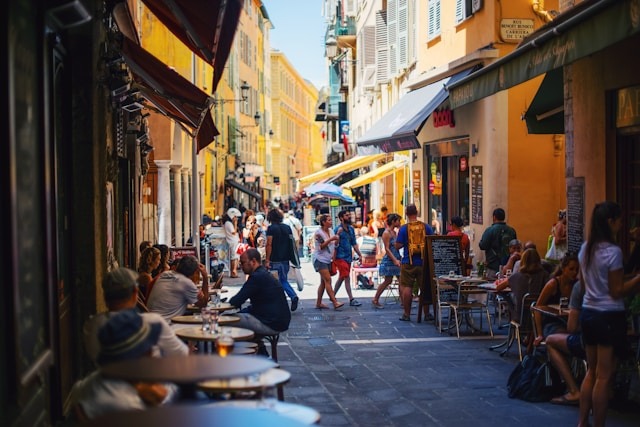
Start at Cours Saleya, the market square at the heart of Vieux Nice that has run daily since the 19th century. Flower stalls, produce vendors, and small food stands fill the square each morning, though it closes earlier on Mondays for an antiques market instead.
The flower market alone has operated on this same spot since 1897, making it one of the oldest continuously running markets on the entire Riviera.
Wander the narrow streets behind the market, where Baroque churches and pastel buildings show off Nice’s Italian architectural roots.
The Cathédrale Sainte-Réparate, right off the square, is worth a quick look inside, with a Baroque interior that feels far grander than its modest exterior suggests.
Give yourself about two hours for the market and the surrounding streets.
Practical tip: Visit the market before 10 AM, since the best produce and flowers sell out and the square gets crowded by midday.
Afternoon (12 PM): Castle Hill and Lunch
For lunch, find a small spot near the market and order socca, a chickpea flour pancake cooked on a hot griddle. It’s served with a dusting of black pepper.
It’s a Nice street food staple that costs only a few euros.
Locals have been making it this way since at least the 19th century, when dockworkers needed a cheap, filling meal between shifts. Afterward, climb Castle Hill, the wooded park on the site of a former medieval fortress overlooking the old town and the bay.
A free elevator near the Promenade saves you the climb if you’d rather save your energy for later. It runs from the junction of rue des Ponchettes and quai des États-Unis.
At the top, the views over Nice and the Baie des Anges rank among the best in the city.
The park also includes an artificial waterfall and the ruins of the old fortress, destroyed in the early 18th century. King Louis XIV ordered it demolished following a prolonged siege.
Practical tip: The elevator gets busy in the late morning, so either go early or take the stairs if you don’t mind a short climb.
Evening (6 PM): The Promenade des Anglais and Dinner
As the afternoon fades, walk along the Promenade des Anglais, the palm-lined seafront that has defined Nice’s image since the 19th century.
Wealthy English visitors originally funded its construction in the 19th century, which is how the walkway got its name. The tradition of a leisurely seaside stroll here has continued ever since.
Watch the sunset over the Baie des Anges from one of the benches or beach clubs along the way.
For dinner, head back into Vieux Nice and try salade niçoise, the composed salad of tomatoes, olives, anchovies, and hard-boiled eggs. The dish carries the city’s name around the world.
Locals are famously particular about what does and does not belong in an authentic version, with cooked vegetables like potatoes and green beans considered a common mistake. The original recipe relied only on raw, seasonal produce.
Ending your first night with a plate of salade niçoise and a view back toward the water is a fitting way to close out the day.
Day 2: Cimiez and the Museums
Morning (9 AM): The Matisse Museum
Start your second day in Cimiez, a hillside neighborhood north of the center reached by a short tram and bus ride. The Matisse Museum sits inside a 17th-century villa surrounded by olive groves, and it houses one of the largest collections of the artist’s work anywhere.
Matisse lived in Nice for much of his later life. The museum’s collection spans his career from early paintings to the cut-out works he made near the end of his life.
He is buried in the Cimiez Monastery cemetery up the hill, which makes the neighborhood something of a pilgrimage site for fans of his work. Several of the olive trees in the surrounding park even appear in his paintings.
Give yourself about ninety minutes for the museum and the surrounding olive grove park.
Practical tip: The Nice museum pass covers entry to the Matisse Museum and nine other municipal museums for €15 over four days. It pays for itself after two stops and works out cheaper than paying for single tickets at almost every museum in the city.
Afternoon (12:30 PM): Cimiez Monastery and Lunch
After the museum, walk to the Cimiez Monastery, a working Franciscan monastery with gardens that offer one of the best panoramic views over Nice. The gardens are free to visit and rarely crowded, even in peak season.
The monastery church still holds three notable altarpieces by the Bréa family of painters, whose work shaped religious art across the region in the 15th century.
Have lunch at a small cafe in Cimiez before heading to your next stop, since options directly around the Matisse Museum are limited.
Spend the rest of the afternoon at the Marc Chagall Museum, a short walk or bus ride back toward the center. It holds the largest public collection of Chagall’s biblical-themed work anywhere.
The museum was built specifically to house these works, based on a plan Chagall himself helped develop. It opened in 1973 while the artist was still alive to see it completed.
Practical tip: the Chagall Museum is run separately from the municipal museum pass, so budget an extra €8 for entry outside of exhibition periods.
Evening (6 PM): Aperitif and Dinner Near the Center
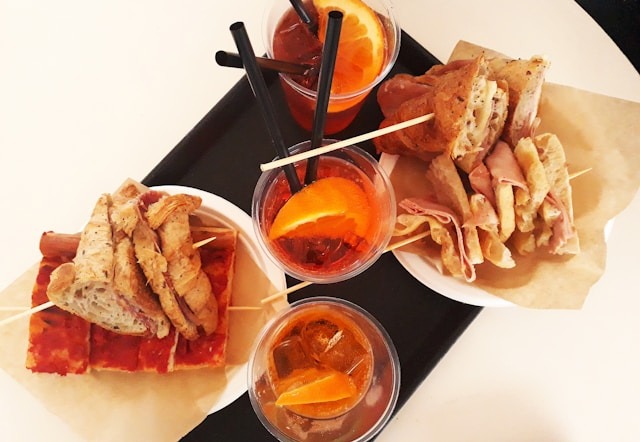
In the evening, head back toward the city center and find a spot for an aperitif, the French tradition of a pre-dinner drink paired with small bites. Place Masséna, with its checkerboard pavement and red buildings, makes a good spot to sit and watch the city go by.
The seven statues along the square light up after dark, part of an art installation by Spanish artist Jaume Plensa.
For dinner, try pissaladière, an onion tart topped with anchovies and black olives that Nice adapted from its Ligurian neighbors across the border. The dish traces back to a similar onion-based paste from the nearby Italian coast, adapted over generations into its current form.
The name comes from ‘pissalat’, a fermented anchovy paste once spread beneath the onions.
Watching the fountains at Place Masséna light up as evening settles in is one of the best ways to end a day in Nice.
Day 3: Port Lympia and Mont Boron
Morning (9 AM): Port Lympia
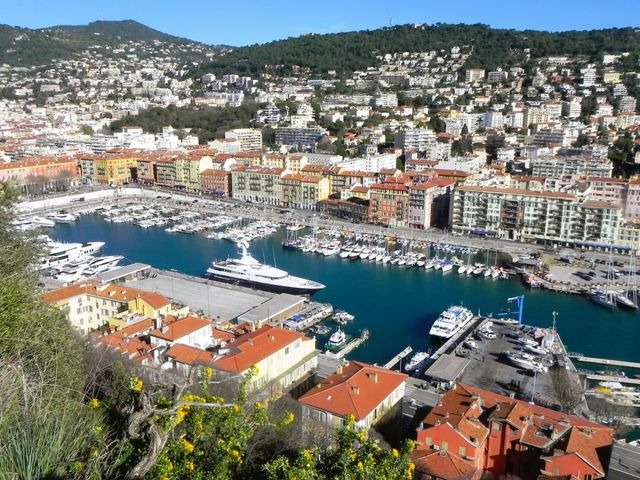
Start your final day at Port Lympia, Nice’s colorful harbor east of Castle Hill, lined with pastel buildings and fishing boats alongside private yachts. The port has operated since the 18th century and still feels more local than the tourist-heavy Promenade.
It has fewer souvenir shops and more everyday businesses, like ship chandlers and small fish markets that supply the city’s restaurants.
Walk the perimeter of the port for views back toward Castle Hill and the old town.
Give yourself about an hour to explore the port before heading to your next stop.
Practical tip: the port area has fewer tourists than Vieux Nice, so it’s a good spot for a quieter coffee break away from the crowds.
Afternoon (12:30 PM): MAMAC and Lunch
For lunch, find a bistro near the port and order a pan bagnat, a round bread sandwich stuffed with the same ingredients as salade niçoise. It’s designed to be eaten by hand, making it a practical lunch for a day of sightseeing.
The name literally translates to “bathed bread” for the way the olive oil soaks into the crust after resting for a few hours.
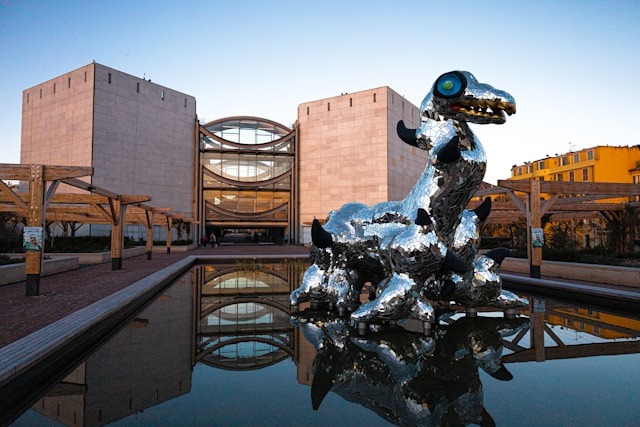
Afterward, visit MAMAC, the Museum of Modern and Contemporary Art, housed in a striking marble building near the Promenade du Paillon park. The collection focuses on French and American art from the 1960s onward, including major Nouveau Réalisme works.
Artists closely tied to Nice itself, like Yves Klein and Arman, were both born in the city and helped define the movement.
Practical tip: MAMAC is included in the municipal museum pass, so it pairs well with your Matisse Museum visit from day two.
Evening (5:30 PM): Mont Boron and Final Dinner
Head east from the port to Mont Boron, a hill overlooking Nice with hiking paths and views that stretch toward Villefranche-sur-Mer and the Cap Ferrat peninsula. The climb takes about 30 to 40 minutes at a steady pace, or you can drive partway up if you’d rather save your legs for the walk down.
A small road winds most of the way to the summit. Watch the sunset from the viewpoint before heading back down for your final dinner.
For your last meal in Nice, head back to Vieux Nice or the port and order a final round of socca or a full niçoise seafood platter.
Closing out your trip with a view over the Baie des Anges from Mont Boron is a memorable way to end three days in Nice.
Exploring Nice’s Regions: Alternative Itineraries
If 3 days leaves you wanting more, here are two ways to extend the trip along the French Riviera.
4-Day Nice and Èze Itinerary
This version keeps the same 3 days in Nice, then uses your RV to reach Èze, a medieval hilltop village less than 30 minutes away.
Èze is one of the most photographed villages on the entire Riviera, with stone streets that wind up to a ruined castle at the summit.
- Day 1 to 3: Nice, Vieux Nice, Cimiez, and Port Lympia
- Day 4: Èze, the medieval village and the exotic garden at the summit
5-Day Nice and Monaco Itinerary
For travelers who want to add a taste of Monaco’s glamour, this variant extends the trip with a stop in the tiny principality. It’s home to the Monte Carlo Casino and the Prince’s Palace.
Monaco packs an entire country into under 2 square kilometers, making it an easy add-on for a single day.
- Day 1 to 3: Nice, Vieux Nice, Cimiez, and Port Lympia
- Day 4: Èze, the medieval village and the exotic garden at the summit
- Day 5: Monaco, the Prince’s Palace, the Oceanographic Museum, and Monte Carlo
Map of Your 3-Day Nice Itinerary
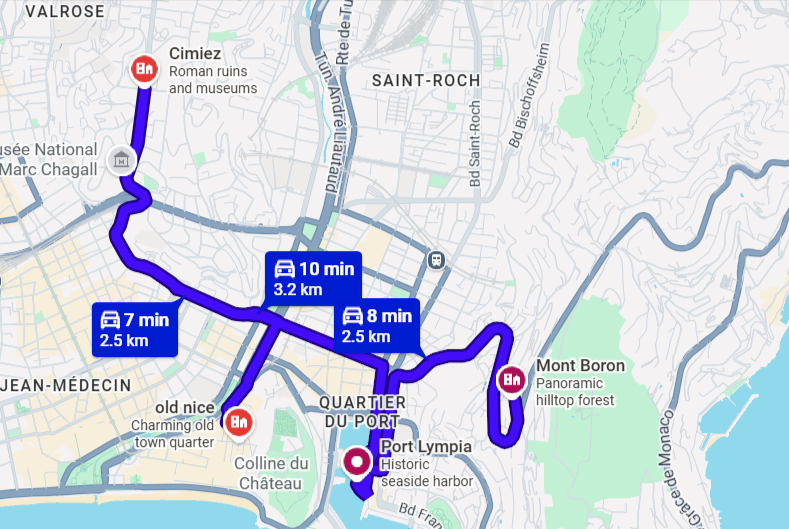
This route splits into three distinct zones. Day one covers Vieux Nice and the Promenade des Anglais, both clustered together along the coast at the center of the city.
That makes the whole day walkable without any transport at all.
Day two heads north into Cimiez, a hillside neighborhood reached by tram and a short bus connection, before returning to the center for the evening.
Day three moves east, from Port Lympia around the base of Castle Hill to Mont Boron further along the coast.
If you’re basing yourself at a park and ride lot outside the center, add the tram ride to Vieux Nice. That ride becomes the starting and ending point of each day’s route.
Budgeting for Your Trip: How Much Is a Trip to Nice for 3 Days?
A trip to Nice can fit almost any budget. Traveling by RV helps keep accommodation and food costs down compared to booking hotels and restaurants for every meal.
Since parking near Vieux Nice runs expensive, basing yourself at a park and ride lot outside the center is one of the easiest ways to save.
Nice also tends to run pricier than other parts of France, especially near the Promenade and in Vieux Nice. The whole French Riviera carries a premium during peak season.
Prices ease noticeably once you move even a few blocks back from the water.
| Category | Budget | Mid-Range | High-End |
| Accommodation | $25 to $45 | $45 to $90 | N/A |
| Food and Drink | $35 to $55 | $55 to $100 | $100+ |
| Attractions | $10 to $25 | $25 to $50 | $50+ |
| Transport | $10 to $20 | $20 to $35 | $35+ |
| Daily Total | $80 to $145 | $145 to $275 | $275+ |
| 3-Day Total | ~$240 to $435 | ~$435 to $825 | ~$825+ |
- Budget Traveler: Stay at a campsite outside the city center and cook some meals in the RV. You can stick to free sights like the Promenade, Castle Hill, and the Cimiez Monastery gardens, and use the museum pass instead of paying for entries separately.
- Mid-Range Traveler: Mix cooking in the RV with sit-down meals, and pay for the museum pass and the Chagall Museum. Add a proper aperitif each evening, since this is the most common approach for a first-time visit, balancing cost with a real taste of the city.
- High-End Traveler: Book dinners at well-known restaurants along the Promenade and pay for a guided tour of the old town. Round out your itinerary with a day trip to Èze or Monaco with a private driver. Budget for a beach club day pass and a seafood-focused tasting menu on at least one night too.
Plan Your Dream Road Trip to Nice with Indie Campers
Indie Campers gives you a large fleet of campervans and motorhomes, one-way rentals across 70+ locations, and unlimited mileage on company-owned vehicles.
That means your Nice trip can extend along the coast to Èze, Monaco, or Cannes without extra planning or added fees.
Flexible cancellation up to 31 days before pick-up gives you room to change plans. A book now, pay later option also means you can lock in your dates without paying the full amount upfront.
This works best for travelers who want Nice as one stop on a bigger French Riviera road trip rather than an isolated city break. Park at a lot outside the center, take the tram in to explore, and let the same vehicle carry you on to your next stop when you’re ready.
Whether you’re a first-time renter or an experienced road-tripper, the same digital booking process applies. Browse the fleet, compare vehicle sizes, and pick the pickup point that fits your route best.
Book your campervan with Indie Campers today!
Nice France Itinerary 3 Days: Your Final Planning Recap
| Category | Details |
| Best Time to Go | Spring (April to May), for mild weather and manageable crowds |
| Recommended Budget | $150 to $300 per person for 3 days |
| Areas to Visit | Vieux Nice and the Promenade (day 1), Cimiez (day 2), Port Lympia and Mont Boron (day 3) |
| Best Restaurants | Small spots near Cours Saleya (socca); bistros near Port Lympia (pan bagnat) |
| What to Visit? | Day 1: Cours Saleya, Castle Hill, the Promenade / Day 2: Matisse Museum, Cimiez Monastery, Chagall Museum / Day 3: Port Lympia, MAMAC, Mont Boron |
| Recommended Transport | RV parked at a park and ride lot, then the tram into central Nice |
| Total Distance | Approx. 6 to 9 miles (10 to 14 km) on foot and by tram across the three days |
| Must-Try Foods | Socca, salade niçoise, pissaladière, pan bagnat |
| Accommodation | Campsite pitch with RV: $25 to $90 per night |
| Perfect For | First-time visitors wanting classic Riviera landmarks alongside a real taste of Niçoise food |
| Museum Pass | €15 for 4 days, covers 10 municipal museums including Matisse and MAMAC, not Chagall |
FAQs About Nice Itinerary 3 Days
How much is a trip to Nice for 3 days?
A trip to Nice for 3 days costs around $150 to $300 per person in the mid-range budget. That figure includes accommodation, food, local transport, and entry tickets to the main sights. It does not include RV rental, which is priced separately based on vehicle type and season. Basing yourself outside the city center is one of the easiest ways to bring that daily cost down.
Is 3 days enough to see Nice?
Yes, 3 days is enough to see Nice if you focus on one area per day instead of trying to cover the whole French Riviera. This itinerary spends day one in Vieux Nice and along the Promenade, day two in Cimiez among the museums, and day three around Port Lympia and Mont Boron. That split lets you see the major landmarks and still fit in a proper meal at every stop. Most first-time visitors find this pace comfortable rather than rushed.
What are the top 3 places to visit in Nice for first-timers?
The top 3 places to visit in Nice for first-timers are the Promenade des Anglais, Castle Hill, and Cours Saleya market. The Promenade anchors the city’s image with its palm-lined seafront. Castle Hill offers the best panoramic view over the old town and the bay. Cours Saleya adds a daily dose of local life through its flower and food market, especially in the early morning hours before the crowds arrive.
What is the most beautiful spot in Nice?
The most beautiful spot in Nice is widely considered to be the viewpoint at the top of Castle Hill. From there, the old town, the port, and the Baie des Anges all come into view at once. The Cimiez Monastery gardens and the Mont Boron viewpoint are close runners-up. Each offers a different kind of beauty, from a sweeping coastal panorama to quiet garden views. Sunset is generally considered the best time to catch any of these three spots at their finest.
What is the best way to travel in Nice for 3 days?
The best way to travel in Nice for 3 days is by tram within the city. Combine that with an RV parked at a park and ride lot outside the center. Central parking near Vieux Nice runs €3.50 an hour or more, which the tram and a park and ride lot avoid entirely. This combination gives you the flexibility of a road trip without the hassle or cost of parking in the old town.
What is Nice best known for?
Nice is best known for the Promenade des Anglais, its palm-lined seafront along the Baie des Anges, and for being the unofficial capital of the French Riviera. The city is also famous for dishes like socca and salade niçoise. Its ties to artists like Henri Matisse and Marc Chagall run deep too, since both have dedicated museums here. Its pastel Italian-influenced architecture in Vieux Nice sets it apart from cities further north in France. The city also hosts one of the largest carnival celebrations in the world every February.
Do I need to book Nice attractions in advance?
Booking ahead is not essential for most of Nice’s main sights, though the Matisse and Chagall museums can get busy during summer and around exhibition openings. The Nice museum pass, which covers the Matisse Museum and MAMAC among others, is worth buying online before your trip to save time. If you’re visiting during the Nice Carnival in February, book accommodation and any parade seating well in advance. Restaurant reservations are also worth making for dinner along the Promenade during peak summer months.
Is renting an RV worth it for a Nice trip?
Renting an RV is worth it for a Nice trip if you’re combining the city with other stops along the French Riviera. Nice itself only takes 3 days to enjoy properly. The RV works as your accommodation and transport for the rest of the route, while you park it at a lot outside the center for the Nice portion. For a Nice-only weekend with no other stops, a hotel or short-term apartment may be simpler. The math tends to favor the RV once your trip includes Èze, Monaco, or another nearby destination.