Last Updated: July 31, 2026
Planning a 3-day Madrid itinerary is easier than it looks, because Spain’s capital packs its best sights into a tight, walkable centre. Three days is enough to tour the Royal Palace, spend a morning in the Prado, eat your way through La Latina, and still keep a full day for Toledo, the walled imperial city an hour south.
This Madrid travel guide maps all three days hour by hour, with named sights, neighbourhoods, and restaurants, then adds the day trips that most city-break visitors never reach. It ends with a clear budget and the practical stuff: how to get around, when to go, and where a campervan fits.
The route is built around a campervan, which rolls your transport and your bed into one booking. Here is the honest part most guides skip: you don’t drive it into central Madrid. You park at a campsite on the edge of town, ride the metro in for the city days, then point the van at Toledo, Segovia, or El Escorial when you want to leave the crowds behind.
Key Takeaways
- Iconic stops: the Royal Palace, the Prado Museum, and Plaza Mayor are the three you don’t skip on a first trip.
- Hidden gems: the walled city of Toledo and the Roman aqueduct at Segovia, both easy campervan day trips that public transport makes fiddly.
- Recommended transport: the metro inside the city, plus a campervan rental from Indie Campers for the day trips, since it combines accommodation and transport and supports one-way pick-up and drop-off.
- Recommended budget: €300 to €850 per person for the 3 days, plus the campervan hire, covering campsites, fuel, food, and attractions.
- Best time to go: spring (April to June) or autumn (September to October) for warm days and thinner crowds than the July and August heat.
3 Day Madrid Itinerary at a Glance
| Day | Area | Top Highlights |
| Day 1 | Habsburg & Bourbon Madrid | Royal Palace, Almudena Cathedral, Plaza Mayor, Puerta del Sol, Mercado de San Miguel. Try a bocadillo de calamares. |
| Day 2 | Art & the Retiro | The Prado, Reina Sofía, Retiro Park, Puerta de Alcalá, Gran Vía, Temple of Debod at sunset. Try cocido madrileño. |
| Day 3 | Toledo by campervan | Toledo Cathedral, the Alcázar, the Jewish Quarter, the Mirador del Valle viewpoint. Try carcamusas and marzipan. |
Table of Contents
- Why You’ll Love 3 Days in Madrid
- Best Time to Visit Madrid
- Is 3 Days in Madrid Enough?
- How to Get Around Madrid
- The Best 3 Day Madrid Itinerary, Day by Day
- Beyond Madrid: More Day Trips by Campervan
- Map of Your 3-Day Madrid Itinerary
- Budgeting for Your Trip: How Much Does 3 Days in Madrid Cost?
- Plan Your Madrid Road Trip with Indie Campers
- 3 Day Madrid Itinerary: Your Planning Recap
- Frequently Asked Questions (FAQs)
Why You’ll Love 3 Days in Madrid
Most people treat Madrid as a stopover on the way to Barcelona or the coast, give it a night, and miss the point. Three days change that. You get the palace, the great museum collections, and the tapas crawl at a human pace, and you still have a day spare to drive out to one of Spain’s historic cities.
That spare day is where this Madrid travel guide earns its keep. A smart Madrid 3-day itinerary leans on that rhythm: two unhurried days in the centre and one on the road. The compact core frees the third day for Toledo, Segovia, or El Escorial, each within about an hour of the city and far simpler to reach with your own vehicle than by juggling trains and timetables.
The city itself splits neatly into walkable days. Old Madrid clusters around the Royal Palace and Plaza Mayor, the three great museums line up along the Paseo del Prado, and the metro stitches the gaps in minutes. You never need to drive inside Madrid, which is exactly why the campervan lives on the edge of town and comes out to play on Day 3.
Food is reason enough on its own. A squid sandwich in a Plaza Mayor bar, a slow bowl of cocido madrileño, fried cod tapas in La Latina, and roast suckling pig at a centuries-old tavern. Three days gives you time to eat properly instead of grabbing whatever is nearest to the queue.
Best Time to Visit Madrid
The season you pick shapes the trip more than anything else, from the heat to the crowds to how the evenings feel on a terrace. Madrid sits high on a plateau, so it runs hotter in summer and colder in winter than the coast. Here is what each season means for three days in the city and on the road.
Spring (April to June)
Spring is the most balanced window for this itinerary. Days are warm without the summer furnace, the Retiro and the city’s plazas fill with terraces, and the museum queues stay manageable through April and May before the peak.
- Average Temperatures: 12 to 26°C (54 to 79°F)
- What to expect: mild, sunny days, green parks, moderate crowds, mid-range prices.
Summer (July to August)
Summer is hot and dry, with temperatures that regularly top 35°C (95°F) in July and August. Many locals leave the city, some family-run restaurants close for the holidays, and the midday sun makes sightseeing a morning-and-evening affair.
- Average Temperatures: 18 to 35°C (64 to 95°F)
- What to expect: intense heat, thinner local crowds, top tourist numbers at the big sights, long light evenings. Plan indoor museums for the hottest hours.
Autumn (September to October)
Autumn rivals spring for ideal conditions. September keeps the warm evenings and open terraces while the summer heat breaks, and October brings cooler, clear days that are perfect for walking the old town and driving out to Toledo or Segovia.
- Average Temperatures: 11 to 28°C (52 to 82°F)
- What to expect: warm days, cooler nights, thinning crowds, lower prices than summer.
Winter (November to March)
Winter is cold, crisp, and quiet, with the shortest queues of the year and the lowest prices. Nights drop near freezing, and the nearby Guadarrama mountains get snow, but the city looks its best under low winter light, and the museums are close to empty.
- Average Temperatures: 2 to 12°C (36 to 54°F)
- What to expect: cold, clear days, few crowds, lowest prices, festive lights in December.
Is 3 Days in Madrid Enough?
Yes, 3 days in Madrid is enough for a first visit, and that is exactly what makes three days the sweet spot. Madrid keeps its highlights close together, which is exactly the kind of 3-day itinerary Madrid is made for. Two days cover the palace, the three great museums, and the old-town neighbourhoods without a sprint, which leaves a third day for a trip out of the city.
If you are tighter on time, Days 1 and 2 stand alone as a solid Madrid itinerary: Habsburg and Bourbon Madrid on the first day, then the art and the Retiro on the second. Add Day 3, and a city break turns into a proper look at the wider region, with Toledo’s cathedral and hilltop old town an hour down the road.
What you walk away with after three days is the full first-timer’s picture: Europe’s largest royal palace, one of the world’s finest art collections, a tangle of tapas streets, and a medieval city on a hill. It is a lot of ground, but the mix of metro and campervan keeps this Madrid itinerary 3-day plan relaxed rather than frantic.
How to Get Around Madrid
Inside the city, you don’t need to drive at all. Madrid has one of the best metro systems in Europe; a single ticket costs around €1.50 to €2.00 depending on the distance, and the central sights sit close enough to walk between. Buy a rechargeable Multi card, and you can cross the city for the price of a coffee.
Driving a large vehicle into the centre is a different story, and this is where honesty beats hype. Madrid runs a low-emission zone under its Madrid 360 plan, which restricts higher-polluting and unregistered vehicles across the city and enforces it with around 500 cameras. Foreign-registered motorhomes need to sort authorization in advance, and the central Distrito Centro is tighter still, so a campervan has no place on those streets.
The smart move is the same one that works in most big cities. Park the campervan at a campsite on the edge of town, such as Camping Osuna near Metro Canillejas to the east or Camping Alpha in Getafe to the south, and ride the metro in on your city days. You wake up with space and parking sorted, and you pay a fraction of a central hotel rate.
Where the campervan pays for itself is Day 3 and beyond. Toledo, Segovia, El Escorial, and Aranjuez all sit within about an hour of the city, and having your own vehicle means no fixed tour times and no rushing for the last train back. Indie Campers runs RV rental in Madrid with pick-up in the city, so the fleet is ready when you land, from compact campervans for couples to larger motorhomes for families.
The Best 3 Day Madrid Itinerary, Day by Day
Here is the full plan. This 3-day Madrid itinerary runs one day at a time, and each day covers a morning, afternoon, and evening, with named sights, a signature dish, and one practical tip for travelling by campervan.
Ready to build these three days yourself? Grab an RV rental in Madrid and set your own pace from day one.
Day 1: Habsburg & Bourbon Madrid
Morning (9:00 AM): The Royal Palace & Almudena Cathedral
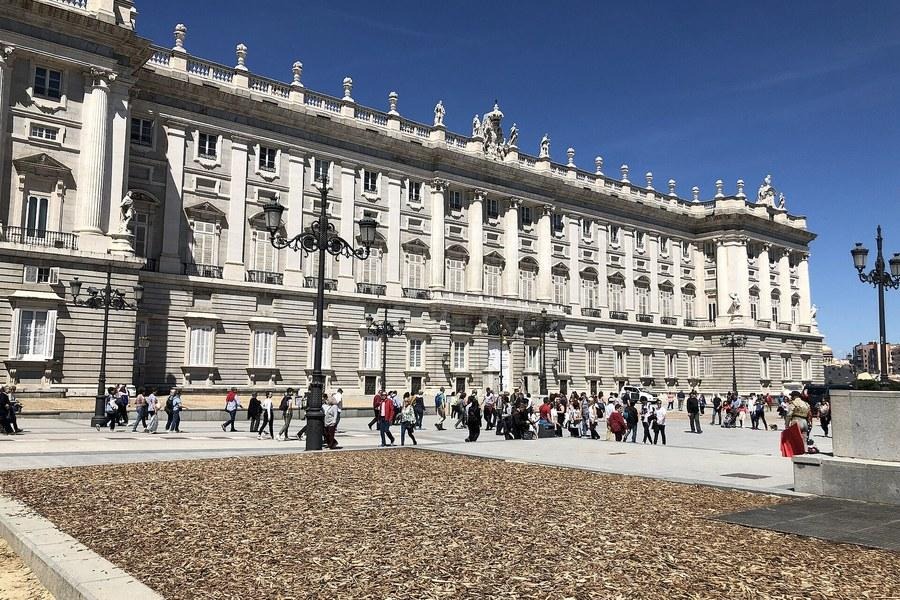
Start with the grandest sight in the city. The Royal Palace of Madrid (Palacio Real) is the largest royal palace in Western Europe by floor area, with more than 3,000 rooms, a throne room, and the armoury. General entry runs around €14, and EU citizens get in free on select late afternoons, so book a timed ticket online to skip the line.
Next door, step inside the Almudena Cathedral, free to enter with a small donation, then walk the Plaza de Oriente with its statues of Spanish kings. The palace and the square together make the best introduction to how Madrid grew from a royal seat into a capital.
Practical tip: park the campervan at a campsite outside the centre and take the metro to Ópera station. Madrid’s low-emission rules and scarce parking make the old town no place for a large vehicle.
Afternoon (1:00 PM): Plaza Mayor, Puerta del Sol & San Miguel
Walk east into the arcaded Plaza Mayor, the grand 17th-century square that has hosted markets, bullfights, and coronations. Order the local classic here, a bocadillo de calamares (a fried-squid sandwich) from one of the bars on the surrounding streets, then carry on to the Puerta del Sol, the busy plaza that marks kilometre zero for all of Spain’s roads.
For lunch proper, duck into the Mercado de San Miguel beside Plaza Mayor, a restored iron-and-glass market where dozens of stalls sell everything from Iberian ham to fresh oysters and vermouth. Graze a few counters rather than sitting down for one dish.
Evening (7:00 PM): La Latina & Cava Baja
Spend the evening in La Latina, the old quarter that is Madrid’s heartland for tapas. The Calle de la Cava Baja is the single best street for it, lined end to end with taverns, and Sunday brings the sprawling El Rastro flea market to the streets nearby.
For dinner, Casa Revuelta on Calle de Latoneros is famous for one thing done perfectly, its battered cod (bacalao), while Sobrino de Botín on Calle de Cuchilleros has served roast suckling pig since 1725 and holds the title of the world’s oldest restaurant still in operation. Finish with churros and thick hot chocolate at Chocolatería San Ginés, open around the clock since 1894.
Day 2: Art & the Retiro
Morning (9:00 AM): The Prado Museum
Give the morning to the Prado, one of the world’s great art museums, home to Velázquez’s Las Meninas, Goya’s black paintings, and a wall of Bosch. Don’t try to see it all. Pick a route, start early at your booked slot, and treat the masterpieces as stops rather than a checklist.
General admission is €15 at the Prado, and the museum opens its doors for free in the last two hours each day, though the queue for that window is long. Two to three hours inside is plenty for a first visit.
Practical tip: the Prado, the Reina Sofía, and the Thyssen sit within a 10-minute walk of each other along the Paseo del Prado, so you can pair two in a day. The Reina Sofía closes on Tuesdays, so plan around it.
Afternoon (1:00 PM): The Reina Sofía & Retiro Park
After lunch, choose your second museum. The Reina Sofía (around €12) holds Picasso’s Guernica and the country’s best modern collection, while the Thyssen-Bornemisza (around €13) fills the gap between them with everything from the Renaissance to Pop Art.
Then walk it off in the Retiro, the city’s great green park behind the Prado. See the Palacio de Cristal, a glass pavilion on a small lake, rent a rowing boat by the monument, and leave through the Puerta de Alcalá, the neoclassical gate that is one of Madrid’s symbols.
Evening (6:00 PM): Gran Vía & the Temple of Debod
Head to the Gran Vía, Madrid’s grand early-20th-century avenue of theatres, rooftop bars, and belle-époque facades, for a stroll and a drink with a view. It is the city at its most cinematic, especially once the lights come on.
Close the day at the Temple of Debod, a genuine ancient Egyptian temple gifted to Spain and rebuilt on a hill west of the centre, where the sunset over the Casa de Campo is the best free show in Madrid. For dinner, the tapas bars of nearby Malasaña serve everything from traditional croquetas to modern small plates.
Day 3: Toledo by Campervan
Morning (8:30 AM): Drive to the Walled City
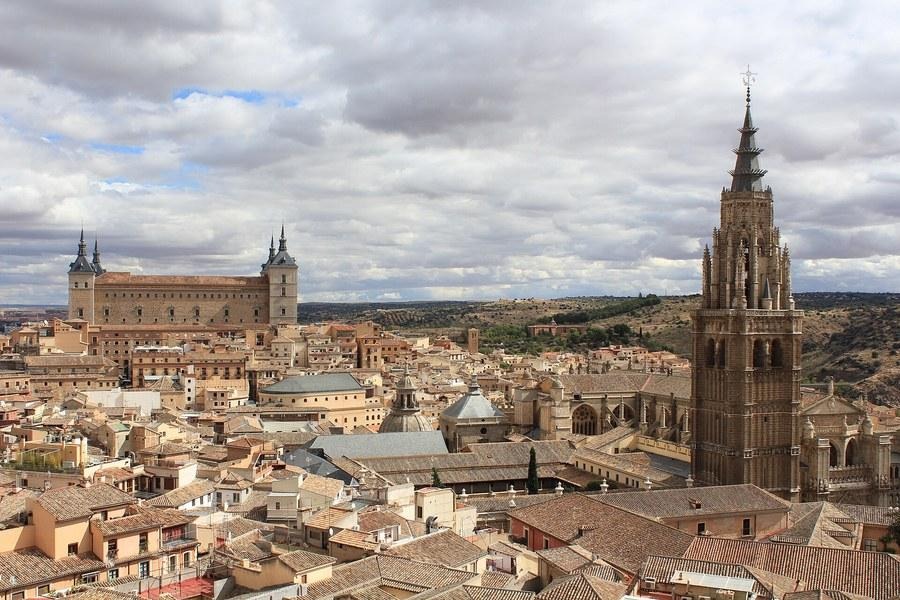
This is the day the campervan comes into its own. Point it south for Toledo, about 73 km and under an hour from Madrid on the A-42, well outside the city’s low-emission zone. Leave early to beat the coach tours that arrive mid-morning.
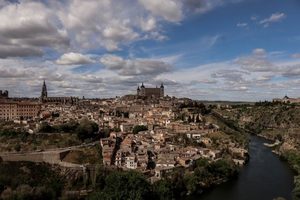
Cross the Tagus into the walled old town and head straight for the Toledo Cathedral, one of the greatest Gothic churches in Spain (around €12, including the treasury and bell tower). Nearby, the Alcázar fortress crowns the hill, and the whole medieval centre is a UNESCO World Heritage Site you can happily get lost in.
Practical tip: Toledo’s old town bans most traffic, but there is large day parking below the walls, such as the Miradero and Safont lots, with escalators and a lift up into the centre. Park there and walk in, rather than trying to drive the medieval lanes.
Afternoon (1:00 PM): The Jewish Quarter & Viewpoints
Spend the afternoon in the Judería, Toledo’s old Jewish Quarter, a maze of narrow streets that once made the city a rare meeting point of Christian, Muslim, and Jewish culture. See the Synagogue of Santa María la Blanca and the Monastery of San Juan de los Reyes, then find the El Greco Museum, dedicated to the painter who made Toledo his home.
For lunch, order carcamusas, the local pork-and-tomato stew, at a mesón in the old town, and pick up a box of Toledo’s famous marzipan from Santo Tomé to take with you. It has been made by the city’s convents since the Middle Ages.
Evening (6:00 PM): Sunset Over the Tagus
Before you drive back, cross the river to the Mirador del Valle, the viewpoint that gives the postcard shot of Toledo, its cathedral and Alcázar stacked on the hill above the Tagus. It is at its best in the low evening light.
Drive back toward your Madrid campsite as the day-trippers clear out, or, if your trip runs longer, keep heading south toward Andalusia. Close the three days with an easy dinner at your pitch or a final tapas run in the city. After a day on Toledo’s hills, an easy evening beats fighting for a table in the centre.
Beyond Madrid: More Day Trips by Campervan
Three days cover Madrid and one classic day trip to Toledo. If you have a campervan and a little more time, these are the routes out of the city that reward the drive, none of which the trains handle as cleanly.
Segovia and the Roman Aqueduct
- Distance: about 90 km northwest, roughly an hour on the A-6 and AP-61.
- Why drive it: the Roman aqueduct, standing without mortar for nearly 2,000 years, and the fairy-tale Alcázar are a short walk apart, and a van lets you stay for the famous cochinillo dinner.
- Pair it with: the walled city of Ávila, about 30 minutes further, for one of the best-preserved medieval ramparts in Europe.
El Escorial and the Mountains
- Distance: about 50 km northwest, under an hour on the A-6.
- Why drive it: the vast Royal Monastery of San Lorenzo de El Escorial sits at the foot of the Guadarrama mountains, an easy pairing with a hike or a mountain campsite.
- Pair it with: the Valle de los Caídos nearby, or a cooler-air escape from the summer city heat.
Aranjuez and the Royal Gardens
- Distance: about 50 km south, around 45 minutes on the A-4.
- Why drive it: the riverside Royal Palace of Aranjuez and its shaded gardens are a UNESCO-listed landscape, and the town is known for its strawberries and asparagus.
- Pair it with: a stop at the Tagus riverbank or the historic strawberry train route.
For a longer loop, the campervan turns Madrid into the first stop of a bigger trip. Head south and RV rental in Seville puts you on the road through Andalusia, while RV rental in Valencia points you east to the coast. Our 10-day Spain itinerary threads Madrid into a full national route, and RV rental in Spain covers pick-up points nationwide.
Map of Your 3-Day Madrid Itinerary
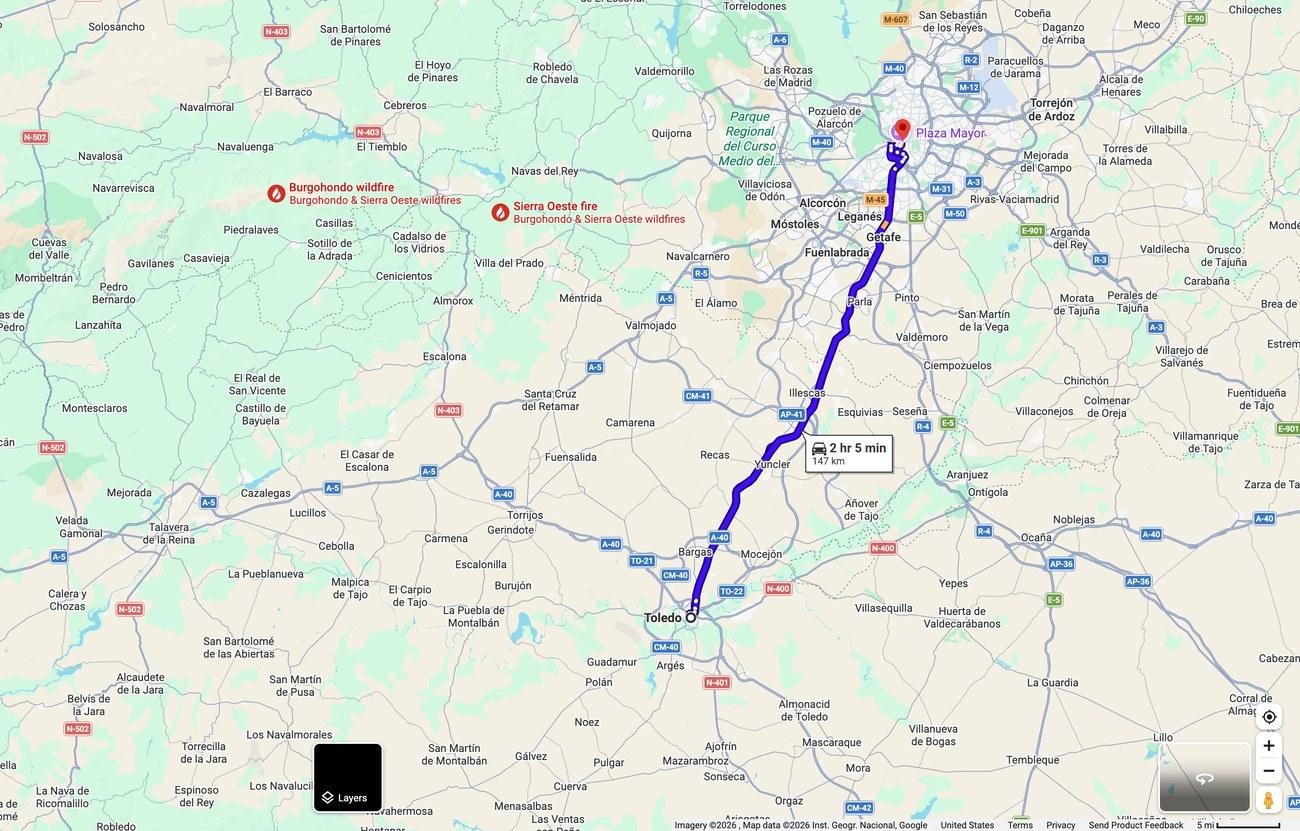
The city days form a tight loop across central Madrid: the Royal Palace and Plaza Mayor in the west, the three museums and the Retiro along the Paseo del Prado to the east, and La Latina, Gran Vía, and the Temple of Debod filling the gaps, all linked by the metro. Day 3 breaks out of that loop, heading about 73 km south to Toledo and back.
If you extend the trip, the wider driving route runs northwest to Segovia and El Escorial, or south to Aranjuez and on toward Andalusia. Total city driving is close to zero, by design; the campervan does its work on the day trips, not the boulevards.
Budgeting for Your Trip: How Much Does 3 Days in Madrid Cost?
Madrid is one of the more affordable major capitals in Western Europe, and a campervan trip pulls the biggest cost, accommodation, right down. Renting through Indie Campers replaces central hotel rooms with campsite pitches on the edge of town, which cost a fraction of a room in the centre.
Here is a realistic per-person breakdown, not counting the campervan hire itself:
| Category | Budget | Mid-Range | High-End |
| Accommodation | €15 to €25/night | €25 to €45/night | N/A (central hotels) |
| Food & Drink | €25 to €40/day | €45 to €70/day | €100+/day |
| Attractions | €10 to €20/day | €20 to €40/day | €55+/day |
| Transport (metro, fuel, parking) | €8 to €15/day | €15 to €25/day | €35+/day |
| Daily Total | €58 to €100 | €105 to €180 | €225+ |
| 3-Day Total | ~€175 to €300 | ~€315 to €540 | ~€675+ |
Budget traveler: cook most meals from market provisions, stay at a campsite outside the centre, and mix free sights (the Almudena Cathedral, the Retiro, the Temple of Debod, and the Prado’s free evening window) with one or two paid highlights. Around €300 per person for the three days is realistic.
Mid-range traveler: eat lunch out, cook some dinners in the van, and pay for the big-ticket sights like the Royal Palace and the Prado, plus a Toledo Cathedral ticket. Budget €450 to €600 per person.
High-end traveler: eat out every meal, book guided skip-the-line tours, and add a central hotel night or two. Expect €850 or more per person.
One campervan bonus worth knowing: a rechargeable metro Multi card keeps your in-city transport cheap, while the van sits at a low-cost campsite instead of racking up central parking fees.
Plan Your Madrid Road Trip with Indie Campers
Three days in Madrid is easy to overplan and easy to overspend, with central hotel rooms among the priciest part of any trip and the museum queues eating the hours you came to enjoy. The fix is to base yourself on the edge of the city and keep your transport and your bed in one booking.
That is what a campervan gives you: a low-cost pitch with space to park, the metro into the centre for the city days, and the freedom to drive to Toledo, Segovia, or El Escorial whenever you like. Company-owned vehicles come with unlimited mileage, so the day trips don’t add fees, and flexible cancellation up to 31 days before pick-up lets you lock in dates without the risk.
Book your campervan and kickstart an adventurous Madrid trip now!
3 Day Madrid Itinerary: Your Planning Recap
| Category | Details |
| Best Time to Go | Spring (April to June) and autumn (September to October) for warm days and thinner crowds. |
| Recommended Budget | €300 to €850 per person for 3 days, plus campervan hire. |
| Days in the City | 2 days for the palace, the three great museums, and the old-town neighbourhoods. |
| Day Trips | Toledo on Day 3; Segovia, El Escorial, and Aranjuez if you have longer. |
| Getting Around | Metro and walking inside the city; campervan for the day trips. |
| Best Restaurants | Sobrino de Botín, Madrid (roast suckling pig); Casa Revuelta, La Latina (cod tapas); Mercado de San Miguel (market bites). |
| Must-See Sights | Royal Palace, Plaza Mayor, the Prado, Reina Sofía, Retiro Park, Temple of Debod, Toledo. |
| Must-Try Foods | Bocadillo de calamares, cocido madrileño, churros con chocolate, cochinillo, Toledo marzipan. |
| Accommodation | Campsites on the edge of the city: roughly €15 to €45 per pitch per night. |
| Perfect For | First-time visitors and couples who want the classics plus one day in a historic city. |
Frequently Asked Questions (FAQs)
Is 3 days in Madrid enough?
Yes, 3 days in Madrid is enough for a first visit and covers the essentials without a rush. Two days handle the Royal Palace, Plaza Mayor, the Prado, the Reina Sofía, Retiro Park, and the old-town tapas neighbourhoods at a comfortable pace, and the third day leaves room for a trip to Toledo. You will not see everything, but you will see the capital’s landmarks, two of its greatest museums, and one classic day trip.
What is the best 3-day Madrid itinerary for first-timers?
The best 3-day Madrid itinerary for first-timers spreads the city over two walkable days and saves one for a day trip. Day 1 covers Habsburg and Bourbon Madrid, from the Royal Palace to Plaza Mayor and La Latina; Day 2 covers the art museums and Retiro Park, and Day 3 heads to Toledo, about 73 km south. Toledo is far easier to reach with your own vehicle than by juggling trains and shuttles.
What are the best day trips from Madrid?
The best day trips from Madrid are Toledo, Segovia, El Escorial, and Aranjuez, all within about an hour of the city. Toledo offers a walled medieval old town and a great Gothic cathedral, Segovia has a Roman aqueduct and a fairy-tale Alcázar, and El Escorial holds a vast royal monastery below the mountains. A campervan makes all of them simple self-drive days with no fixed tour times.
Can you drive a campervan into central Madrid?
No, you should not drive a campervan into central Madrid. The city runs a low-emission zone under its Madrid 360 plan that restricts higher-polluting and unregistered vehicles, enforced by around 500 cameras, and foreign-registered motorhomes need authorization in advance. Park at a campsite on the edge of the city, such as Camping Osuna near Metro Canillejas, and use the metro for the city days.
How much does 3 days in Madrid cost?
A 3-day itinerary in Madrid costs roughly €300 per person for budget travelers and €850 or more for high-end trips, not counting the campervan hire. Budget travelers save most by staying at a campsite outside the centre instead of a central hotel, cooking some meals, and mixing free sights like the Retiro and the Temple of Debod with a few paid highlights. Museum and attraction tickets run about €10 to €20 a day.
What is the best way to get around Madrid?
The best way to get around Madrid is a mix of the metro and walking inside the city, plus a campervan for the day trips. Madrid’s metro is fast and cheap, with a single ticket around €1.50 to €2.00, and the central sights are close enough to walk between. For Toledo, Segovia, or El Escorial, a campervan combines transport and accommodation and beats waiting for trains and shuttles.
When is the best time to visit Madrid?
The best time to visit Madrid is spring (April to June) or autumn (September to October), when the days are warm and the crowds are smaller than the summer peak. July and August regularly top 35°C, and many locals and family-run restaurants leave the city for the holidays. Winter is cold but quiet, with the shortest museum queues and the lowest prices of the year.
Do I need a visa to visit Madrid?
Visitors from the US, Canada, Australia, the UK, and most other non-EU countries do not need a visa for short tourist stays in Spain of up to 90 days in any 180-day period. The EU’s new ETIAS travel authorization is expected to launch in late 2026 and will not be mandatory until 2027, and it is set to cost around €20 for a multi-year permit. Check the official EU guidance for your nationality before you travel.