AI Summary
Last Updated: 12 November 2026
New Zealand is home to some of the world’s most beautiful and unique landscapes, from golden beaches to snowy mountains and turquoise lakes perfect for stargazing. With summer around the corner, there’s no better time to book your trip and your campervan. We’ve created a guide so you know where to stay at all times, with some extra tips to choose the best parks. All you’re missing is your passport!
Key Takeaways (TL;DR)
- DOC campsites in NZ are the best-value way to camp in nature. The Department of Conservation (DOC) runs over 250 vehicle-accessible campsites, and most accept campervans.
- DOC campsites’ fees depend on their category (Basic, Standard and Serviced) and season.
- Book ahead in peak season. All Serviced campsites, and some popular Standard ones, need booking from around October 1 to April 30, and non-bookable sites are first come, first served.
- Holiday parks in NZ offer the most comfort, with powered sites, hot showers, kitchens and laundries.
- Freedom camping is only for certified self-contained vehicles with a green warrant (since June 7, 2026), and only where local rules allow.
- Never sleep in your campervan in a car park or on a street where it’s not allowed. Fines start at NZ$400, and can go up in some councils.
Table of Contents
- 5 Options to Park a Campervan in NZ
- How Do Campsites Work in New Zealand?
- Tips and Etiquette for Campsites in New Zealand
- Why Indie Campers Is the Best Way to Camp in New Zealand
- FAQs About DOC Campsites NZ
5 Options to Park a Campervan in NZ
When planning your road trip, keep in mind that you can’t park overnight in many town centres, car parks, roadsides and beaches. You can check both the local council’s freedom camping rules and a campervan app, like CamperMate, to know where to stay, but these options are (almost!) always available:
- DOC campsites – Government-run campsites in national parks, forests, beaches and lakeshores.
- Holiday parks – Private campgrounds with powered sites and full facilities, in towns and at popular beaches and lakes.
- Freedom camping sites – Designated public land where certified self-contained vehicles can stay overnight for free.
- NZMCA parks – Low-cost sites for members of the New Zealand Motor Caravan Association.
- Private and farm stays – Some landowners offer campervan spots on their property, often listed on campervan apps.
How Do Campsites Work in New Zealand?
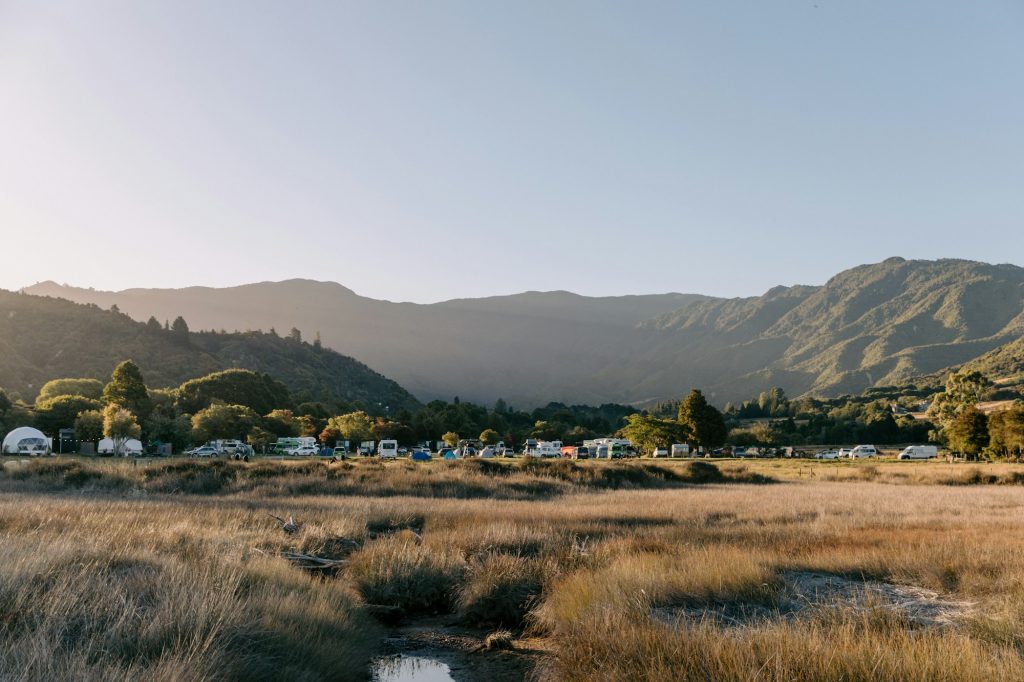
There are some differences between DOC campsites and holiday parks that can influence your choice for the night. If you prefer to freedom camp around the country, we’ve also got a guide to help you follow the country’s rules and enjoy the best landscapes.
DOC Campsites
Department of Conservation campsites are run by a New Zealand government agency, and they’re located in some of the country’s most beautiful places, from golden beaches in Northland to alpine valleys in the Southern Alps:
- Over 250 vehicle-accessible campsites, and most accept campervans.
- Some are at the end of narrow, gravel or steep roads, so check the access on each campsite’s DOC page before you go.
- Few DOC campsites have dump stations, so empty your tanks in nearby towns or holiday parks.
- Facilities vary by category, from flush toilets and hot showers to a long-drop and a stream.
- Some campsites have minimum stays or higher prices in peak season, so check the campsite’s page for the most up-to-date prices.
- Fees are per person per night, with children (5–17) usually charged about half the adult price, and infants staying for free.
How to Book DOC Campsites
All Serviced campsites require booking, and some Standard ones might too around peak season (usually October 1 to April 30). You can either do it online, through the campsite’s page on the DOC website, or at a DOC visitor centre.
You pay when you book, so keep your confirmation email as proof of booking. And keep in mind that DOC charges a fee for two adults if you book or occupy a site you don’t intend to use.
Non-bookable campsites are on a first come, first served basis, so arrive early and have a backup plan in case you can’t get a spot. You’ll pay on site at the self-registration stand, or directly with the camp warden if there is one. Park rangers check if fees have been paid, so don’t forget to display your receipt.
The DOC Campsite Pass: Is It Worth It?
The DOC Campsite Pass covers most DOC campsites, both bookable and non-bookable, with some exclusions.
Currently, only the 1-year pass is available, as the 30-night pass was discontinued in July 2025. It is valid for 365 nights, but keep in mind there is a limit of up to 7 nights (in a 30-day period) at the same campsite, and you still need to book them in advance.
Currently, the pass is mainly worth it for long trips. If you are planning a 2- or 3-week holiday that mixes holiday parks and DOC campsites, paying per night is usually cheaper, since you will need at least 15 nights at paid DOC campsites to break even.
Best DOC Campsites in NZ for Campervans
No matter your preference, there is a DOC campsite waiting for you, next to a beautiful hiking trail or with a premium view of New Zealand’s famous beaches. If you’re travelling in the summer or with a larger campervan, don’t forget to check access and booking requirements on each campsite’s DOC page.
| Campsite | Region | Why go |
|---|---|---|
| White Horse Hill | Aoraki/Mount Cook National Park | Alpine views and the start of the Hooker Valley Track |
| Momorangi Bay | Queen Charlotte Sound, Marlborough | Serviced site with hot showers and powered sites on a sheltered bay |
| Kerr Bay | Nelson Lakes National Park | Serviced lakeside site at St Arnaud, on Lake Rotoiti |
| Totaranui | Abel Tasman National Park | Golden beach camping at the northern end of the park |
| Whakapapa Holiday Park | Tongariro National Park | DOC-run serviced site close to the Tongariro Alpine Crossing |
| Peel Forest | Canterbury | Serviced site in native forest |
| Cascade Creek | Milford Road, Fiordland | Beautiful stop on the way to Milford Sound |
| Mavora Lakes | Southland/Fiordland | Mountains, lakes and beech forest |
| Waikawau Bay | Coromandel | White-sand beach camping |
| Uretiti Beach | Northland | Classic summer beach campsite |
| Matai Bay | Northland (Karikari Peninsula) | Very clear water and a sheltered bay |
| Waikahoa Bay | Mimiwhangata, Northland | Rustic beachfront camping, about NZ$20 per adult |
Holiday Parks
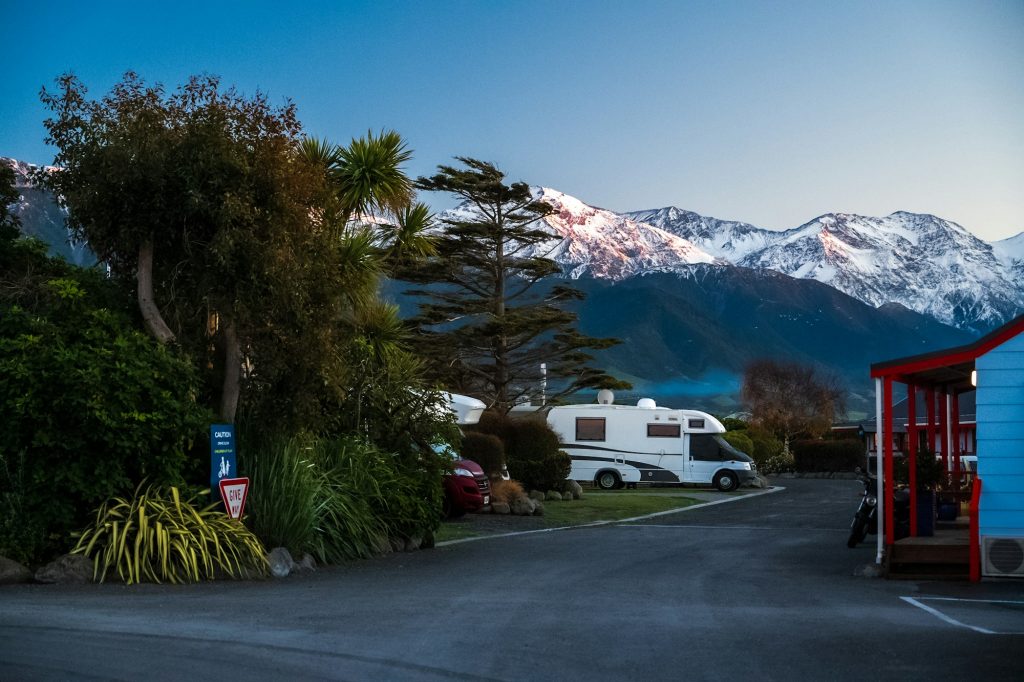
Holiday parks are New Zealand’s most common, and most comfortable, campsites for campervans. When staying at one, you usually find powered sites to charge your batteries and run heaters, hot showers and toilets, shared kitchens and barbecues, laundry areas, Wi-Fi and playgrounds. Some might even include dump stations. Large holiday park groups, such as TOP 10 Holiday Parks, also offer loyalty discounts across the country.
When to Book a Holiday Park
Parks at popular beaches and lakes book out over Christmas, New Year and long weekends, so prepare accordingly and book early for the summer.
Freedom Camping in a Campervan
Freedom camping means staying overnight on public land outside a campsite. It’s a free, often charming option, as you can fall asleep and wake up among New Zealand’s most spectacular views, but only if you adhere to the strict rules:
- Green warrant required – Your campervan must be a certified self-contained vehicle with a green warrant, as blue warrants are no longer recognised since June 7, 2026. Self-containment means a fixed toilet, water supply, wastewater storage, ventilation and rubbish storage, and you can learn more about it in our guide.
- Local rules apply – Each council sets its own freedom camping sites, night limits and seasonal restrictions, with some areas prohibited altogether.
- Conservation land – Freedom camping is generally allowed on conservation land except where explicitly prohibited with signs, and some areas are for self-contained vehicles only.
- Fines – Freedom camping on public land without a green warrant can mean a NZ$400 infringement notice, with some councils’ bylaws allowing higher fines (up to NZ$800 in Gisborne, for example).
If you want to learn more about the best apps and places to freedom camp, check our in-depth guide.
NZMCA Parks and Other Options
- NZMCA parks – The New Zealand Motor Caravan Association runs low-cost parks around the country for its members. You need membership and, in most cases, a self-contained vehicle.
- Private and farm stays – Some farms, vineyards and landowners offer low-cost campervan spots. Look for them on campervan apps.
- Great Walk campsites – These are for walkers and aren’t accessible by campervan.
Tips and Etiquette for Campsites in New Zealand
Some tips to find the best campsites for your trip:
- Download a campervan app such as CamperMate to find campsites, freedom camping spots, dump stations and fuel.
- Mix campsite types. Combine free and low-cost DOC campsites with holiday parks every few nights to charge batteries, shower and do laundry.
- Arrive early at non-bookable DOC campsites and freedom camping spots, especially in summer.
- Book holiday parks and Serviced DOC campsites ahead from December to February.
- Check road access before heading down gravel roads in a larger campervan.
- Carry cash for self-registration at non-bookable DOC campsites.
Dump stations and campervan etiquette:
- Empty grey and black water only at dump stations. Never put dump station waste in campsite toilets.
- Use dump stations at holiday parks and in towns. Few DOC campsites have them, so plan ahead.
- Take all your rubbish with you.
- Respect quiet hours and keep your music down at night.
- Leave no trace, and follow the Tiaki Promise to care for New Zealand.
Why Indie Campers Is the Best Way to Camp in New Zealand
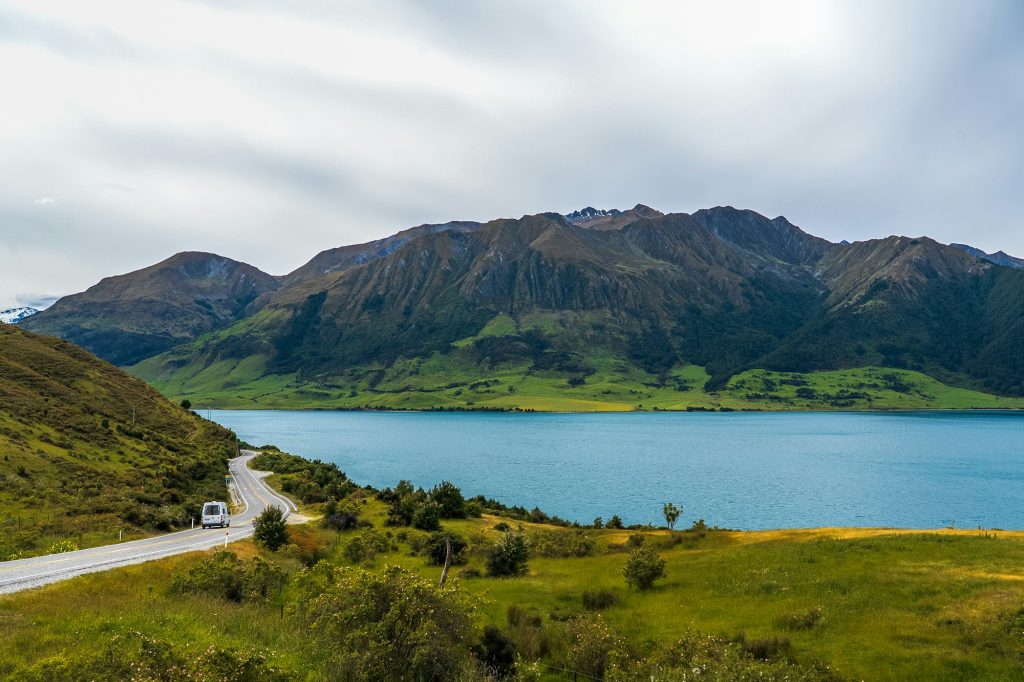
A campervan means your hotel room rides alongside you, so you can wake up by the lakes, under the stars and beside the sea, without packing and unpacking every day. And, if the weather changes, so can your plans. When you’re not restricted by reservations, you can spend an extra night wherever you fell in love with the view. You can also pick up your campervan at the Indie Campers Auckland depot and drop it off in Queenstown, and spend your time actually discovering the country instead of returning to where you started.
Whether you’re a first-time visitor, a couple or a family on a once-in-a-lifetime vacation, Indie Campers has the best campervans for you to see everything New Zealand has to offer. Book your Indie Campers campervan today and start planning your New Zealand road trip.
FAQs About DOC Campsites NZ
What are DOC campsites in NZ?
DOC campsites in NZ are campsites run by the Department of Conservation in national parks, forests, beaches and lakeshores. There are over 250 vehicle-accessible DOC campsites, and most accept campervans. They range from free Basic sites with very simple toilets to Serviced sites with hot showers and powered sites. Fees are charged per person per night and depend on the category.
How much do DOC campsites cost?
DOC campsites cost from free to about NZ$30 per adult per night, depending on the category and season. Basic campsites are free, Standard campsites usually cost about NZ$10–20, and Serviced campsites cost up to about NZ$27 unpowered or NZ$30 powered at peak times. Children are usually charged about half the adult price, and infants stay free. Some high-demand sites have higher peak-season prices.
Do you need to book DOC campsites?
You need to book all Serviced DOC campsites and some popular Standard campsites, especially in peak season from around October 1 to April 30. You can book online through each campsite’s page on the DOC website or at a DOC visitor centre. Non-bookable campsites are first come, first served, and you pay at the self-registration stand on arrival. Arrive early in summer and have a backup plan.
Is the DOC Campsite Pass worth it?
The DOC Campsite Pass is worth it mainly for long trips with many nights at paid DOC campsites. The adult pass costs NZ$295 for one year, and the child/youth pass costs NZ$147.50. At about NZ$20 a night, you’d need around 15 paid DOC nights to break even. The pass limits you to 7 nights in a 30-day period at the same campsite, and you still need to book bookable sites.
Where can I park my campervan overnight in NZ?
You can park your campervan overnight in NZ at DOC campsites, holiday parks, designated freedom camping sites (with a green warrant), NZMCA parks if you’re a member, and some private or farm stays. Many town centres, car parks, roadsides and beaches don’t allow overnight stays in vehicles. Always check local signs and council rules, and use a campervan app such as CamperMate. Fines for illegal camping start at NZ$400.
What is the difference between DOC campsites and holiday parks in NZ?
The difference between DOC campsites and holiday parks in NZ is mainly facilities and location. DOC campsites are government-run, often in remote natural spots, and range from free to about NZ$30 per adult. Holiday parks are privately run, usually in towns or at popular beaches and lakes, with powered sites, hot showers, kitchens and laundries, from about NZ$20–30 per person. Many travellers mix both.
Can I freedom camp in a rental campervan in New Zealand?
You can freedom camp in a rental campervan in New Zealand only if it’s certified self-contained with a green warrant. Since June 7, 2026, blue warrants are no longer recognised. You must also follow local council rules on where you can camp and for how many nights. Freedom camping on public land without a green warrant can mean a NZ$400 fine.
Do DOC campsites have power and dump stations?
Most DOC campsites don’t have power or dump stations. Only Serviced DOC campsites, such as Momorangi Bay and Kerr Bay, have powered sites, and only a few DOC campsites have dump stations. Plan to charge your batteries and empty your tanks at holiday parks or town dump stations every few days. Never put dump station waste into campsite toilets.