Last Updated: August 21, 2026
Planning a Greece itinerary 10 days long usually means Athens plus two Cyclades islands, a ferry timetable, and a lot of money spent moving between ports. There’s a second version of this trip that almost nobody writes about.
This guide maps a 10-day campervan loop out of Athens through Delphi, Meteora, Ancient Olympia, the Mani peninsula, and Nafplio.
That’s 7 UNESCO World Heritage sites, monasteries on sandstone pillars, and coastline where you can park with nobody else in sight.
It’s built around a campervan, which rolls transport and accommodation into one daily cost and reaches the Greece that ferry passengers never see.
Key Takeaways
- Iconic stops: The Acropolis in Athens, the oracle sanctuary at Delphi, and the monasteries of Meteora.
- Hidden gems: The Mani peninsula’s stone tower villages and the Byzantine ghost city of Mystras.
- Recommended transport: A campervan from Indie Campers, picked up and dropped off in Athens, which covers the whole mainland loop without a single ferry booking.
- Recommended budget: €1,220 to €1,900 per person for 10 days, covering campsites, food, fuel, tolls, and site admissions, plus the campervan hire.
- Best time to go: May, early June, September, or October. Warm sea, open campsites, and none of the August heat or crowds.
Greece Itinerary 10 Days: At a Glance
| Day | Area | Top Highlights |
| Day 1 | Athens | Acropolis, Plaka, Central Market. Try souvlaki from a street grill. |
| Day 2 | Athens and Cape Sounion | Acropolis Museum, Ancient Agora, sunset at the Temple of Poseidon. Try grilled octopus. |
| Day 3 | Osios Loukas and Delphi | Byzantine mosaics, the Sanctuary of Apollo, the Delphi museum. Try lamb kleftiko. |
| Day 4 | Meteora | Drive north through Thermopylae, sunset over the Meteora rocks. Try river trout. |
| Day 5 | Meteora | Great Meteoron, Varlaam, Roussanou, the monastery hiking paths. Try Vlach mountain pie. |
| Day 6 | Nafpaktos and Ancient Olympia | Venetian harbor, the Rio-Antirrio bridge, the Olympic stadium. Try Kalamata olives. |
| Day 7 | Kalamata and Gythio | Messinian coast road, Gythio waterfront, Marathonisi islet. Try fresh red mullet. |
| Day 8 | Mani peninsula | Diros Caves, Areopoli, Limeni harbor, Cape Tenaro. Try syglino pork. |
| Day 9 | Mystras and Nafplio | Byzantine ghost city, Sparta plain, Nafplio old town. Try Nemea red wine. |
| Day 10 | Mycenae, Epidaurus, Athens | Lion Gate, the ancient theater, Corinth Canal. Try loukoumades. |
Table of Contents
- Why You’ll Love a 10-Day Road Trip Through Greece
- Best Time to Visit Greece
- Are 10 Days Enough to Visit Greece?
- How to Get Around Greece
- Greek Campervan Rules You Need to Know Before You Drive
- The Best Greece Itinerary 10 Days, Day by Day
- Alternative 10 Day Greece Itinerary Routes
- Map of Your 10-Day Greece Itinerary
- Budgeting for Your Trip: How Much Does 10 Days in Greece Cost?
- Plan Your Greece Road Trip with Indie Campers
- Greece Itinerary 10 Days: Your Final Planning Recap
- Frequently Asked Questions (FAQs)
Why You’ll Love a 10-Day Road Trip Through Greece
Ten days is the point where Greece stops being a highlights reel and starts being a country. Most 10-day Greece itinerary guides spend 6 of those days on 2 islands and 2 of them in transit, which leaves about 2 days of actual sightseeing. Greek island road trips are worth doing on their own terms, but they aren’t the fastest way to see the country.
The mainland flips that ratio. Athens to Delphi is a 3-hour drive. Delphi to Meteora is another 3. Everything on this route sits within half a day of the last thing, so you spend your time looking at Greece instead of waiting for a boat.
The landscape changes faster here than almost anywhere in Europe. You start in a metro area of more than 3 million people under a 2,500-year-old temple, climb into fir forest on the flanks of Mount Parnassus, cross the Thessalian plain to a valley where monks built monasteries on top of 400-meter rock towers, then drop through olive country to a peninsula of stone villages that looks more like Yemen than the Aegean.
Greece is also busier than it has ever been, and that works in the mainland route’s favor. Inbound travel traffic reached 37.98 million visitors in 2025 according to Bank of Greece data, and the vast majority of them go to the islands. Delphi at 8:00 AM in late September is close to empty.
Then there’s the food, which shifts region by region. Athens gives you souvlaki, grilled octopus, and the market tavernas around Sokratous street. Central Greece runs to slow-cooked lamb and mountain cheese. Messinia and the Mani hand you Kalamata olives, syglino pork cured over herbs, and whatever the boats brought in that morning.
Best Time to Visit Greece
Season affects this route more than it affects an island trip, because half of it happens at altitude and half of it happens on tarmac. Here’s how each one plays out.
Spring (April to June)
Spring is the best window for a Greece 10 day itinerary. Wildflowers cover the Peloponnese in April, the archaeological sites are pleasant to walk at midday, and mountain campsites around Meteora reopen from early April.
Sea temperatures are swimmable from late May in the Mani and Messinia. Campsites are open but rarely full, so you can turn up without booking.
Average temperatures: 63 to 79°F (17 to 26°C) in Athens and the Peloponnese; 55 to 72°F (13 to 22°C) around Meteora and Delphi.
What to expect: Comfortable walking weather, green countryside, moderate crowds, and shoulder-season campervan rates. Book Acropolis entry slots at least 2 weeks ahead from May onward.
Summer (July to August)
Summer is when Greece fills up and heats up. Athens and the Peloponnese regularly pass 95°F, and the archaeological sites offer almost no shade, so anything outdoors has to happen before 10:00 AM or after 6:00 PM.
The advantage is long daylight and a warm sea. The drawback is that campsites near the coast book out, ferry-bound traffic clogs the Athens ring roads, and prices peak everywhere.
Average temperatures: 79 to 97°F (26 to 36°C) in Athens and the Peloponnese; 72 to 90°F (22 to 32°C) in the mountains.
What to expect: Intense afternoon heat, the highest prices of the year, and full campsites on the Mani coast. Reserve pitches and the Acropolis weeks ahead.
Autumn (September to October)
Autumn is the quiet favorite. The sea holds its summer warmth through most of October, the crowds thin sharply after the first week of September, and the light on the Meteora rocks in October is the best of the year.
Olive harvest starts in late October across Messinia and the Mani, which means village tavernas are busy with locals rather than tour groups.
Average temperatures: 68 to 86°F (20 to 30°C) in the south; 59 to 75°F (15 to 24°C) in the north.
What to expect: Warm sea, comfortable sightseeing, lower campervan rates, and easy campsite availability. Some smaller coastal campsites begin closing in late October.
Winter (November to March)
Winter splits the route in two. Athens and the Peloponnese stay mild and green, and the archaeological sites are close to deserted, but Meteora and Delphi sit high enough to get snow and freezing nights.
Many coastal campsites shut from November to March, so a winter version of this trip needs checked opening dates and a heated van.
Average temperatures: 48 to 59°F (9 to 15°C) in Athens and the Peloponnese; 36 to 50°F (2 to 10°C) in the mountains.
What to expect: The lowest prices and the emptiest sites of the year, shorter site opening hours, snow risk on the Meteora and Delphi roads, and reduced campsite availability.
Are 10 Days Enough to Visit Greece?
Yes, 10 days is enough to see Greece properly, as long as you pick one geographic region and drive it rather than trying to combine the mainland with 2 islands. The mistake in most itineraries is treating Greece as one destination when it’s a mainland plus thousands of islands, connected by ferries that eat half a day each way.
This route covers roughly 1,500 km in a loop from Athens and back, which averages out to about 2.5 hours of driving a day. 7 of the 10 days have almost no transit at all.
What you get is the Acropolis, Delphi, Meteora, Ancient Olympia, Mycenae, Epidaurus, and Mystras, which is 7 of the UNESCO World Heritage sites Greece is listed for, plus 3 days on the least developed coastline in southern Europe.
What you skip is Santorini, Mykonos, Crete, and Corfu. If islands are the whole point of your trip, take the alternative Cyclades route further down, which puts the van on a ferry instead. Otherwise, you’ll leave with a picture of Greece that most repeat visitors never get.
Days 1 to 5 also work as a standalone 5-day trip if your time is shorter, ending at Meteora and returning to Athens by the E75 motorway in about 4 hours.
How to Get Around Greece
A campervan is the practical way to run this route, and it’s less of a stretch than it sounds. Greek motorways are modern and well surfaced, and the E65 and A1 run near empty outside August. Nine of the 10 days on this route never come near a city center.
Public transport can’t do this trip. There’s no train to Delphi, no train to the Mani, and the KTEL intercity buses that serve Meteora and Olympia run once or twice a day with connections that force overnight stops in towns you didn’t plan to visit. Organized coach tours cover Delphi and Meteora, but they move you as a group and skip everything between.
A rental car solves the driving and creates a new problem, which is that you then book 9 hotels across 7 towns in high season. An RV rental in Athens puts the bed and the vehicle on one bill, so your accommodation cost for the whole loop is the campsite fee.
Greece has a dense network of licensed campgrounds, and this route passes good ones at every overnight stop. Most charge €15 to €30 for a van, 2 adults, and electricity, and the ones on this itinerary are open from April through October.
A few things matter for the drive itself, and our general road trip tips cover the rest. Motorway tolls are frequent and cash-friendly, fuel is more expensive than in Italy or Spain, and the Rio-Antirrio bridge on Day 6 is the single biggest one-off cost of the trip, with the passenger-car crossing at €15.90 from January 2026 and taller vehicles charged in a higher category.
One thing to plan around in Athens itself. The city runs a weekday odd and even license plate restriction inside its central ring, the daktylios, from roughly mid-October to mid-July, which is one more reason to camp on the edge of town and take the metro in on Days 1, 2, and 10.
Indie Campers operates from Athens, which is why this itinerary runs as a loop rather than a one-way route. The fleet covers a range of vehicle types, from compact campervans for couples to larger motorhomes for families, all with unlimited mileage on company-owned vehicles. You can cancel free up to 31 days before pick-up, pay the full amount 30 days out, and reach 24/7 support for the whole trip.
Greek Campervan Rules You Need to Know Before You Drive
Greece changed its camping law in 2025, and most travel guides haven’t caught up. This is the single most useful thing to know before you plan overnight stops, so it’s worth 3 minutes of reading.
Wild camping is illegal in Greece and enforced. Police can issue an immediate 300 euro fine per vehicle, or person caught camping outside a licensed site, and repeat offenses can go to court. The photogenic beach-pitch shots you’ve seen on Instagram are, in almost every case, illegal.
What the July 2025 update to the Road Traffic Code did was draw a clear line between parking and camping:
- Parking is fine: A campervan under 7.5 m long is treated like a car inside towns, with no time limit unless local signs say otherwise. Outside towns you can park indefinitely where it’s legal and safe.
- Camping is not: Awnings, tables, chairs, cooking outside, or a raised pop-top count as camping in a public space, whatever the vehicle is doing.
- Overnight sleeping needs a licensed site: Staying in the van overnight in a public area still counts as camping, so plan every night at a campground or on private property.
- Private land has a limit too: A property owner can host 1 camper at a time unless the land is licensed as a campsite.
None of this makes a Greek road trip harder, because the campsite network is good and cheap. It does mean you should book or at least identify each night’s pitch in advance rather than improvising, which is exactly how this itinerary is laid out. A couple of camping apps will show you licensed sites and their opening dates as you go.
The Best Greece Itinerary 10 Days, Day by Day
Here’s the full route, day by day, with drive times, admission costs, campsites, and a practical tip for each stage. Pick your van up at the Athens depot on the morning of Day 1 and you’ll be at the Acropolis by lunchtime.
Every stage below assumes a campervan hire in Athens as the start and end point, with licensed campsites named for each night.
Before you start, one budget note that catches almost everyone. Athens abolished its old €30 combined archaeological ticket on April 1, 2025 and moved to a tiered per-site system, so the Acropolis costs €30 and the other central sites are charged separately. Guides still quoting the combo ticket are out of date, and the difference over a 10-day trip runs to well over €100 for 2 people.
Day 1: Athens, the Acropolis, and Plaka
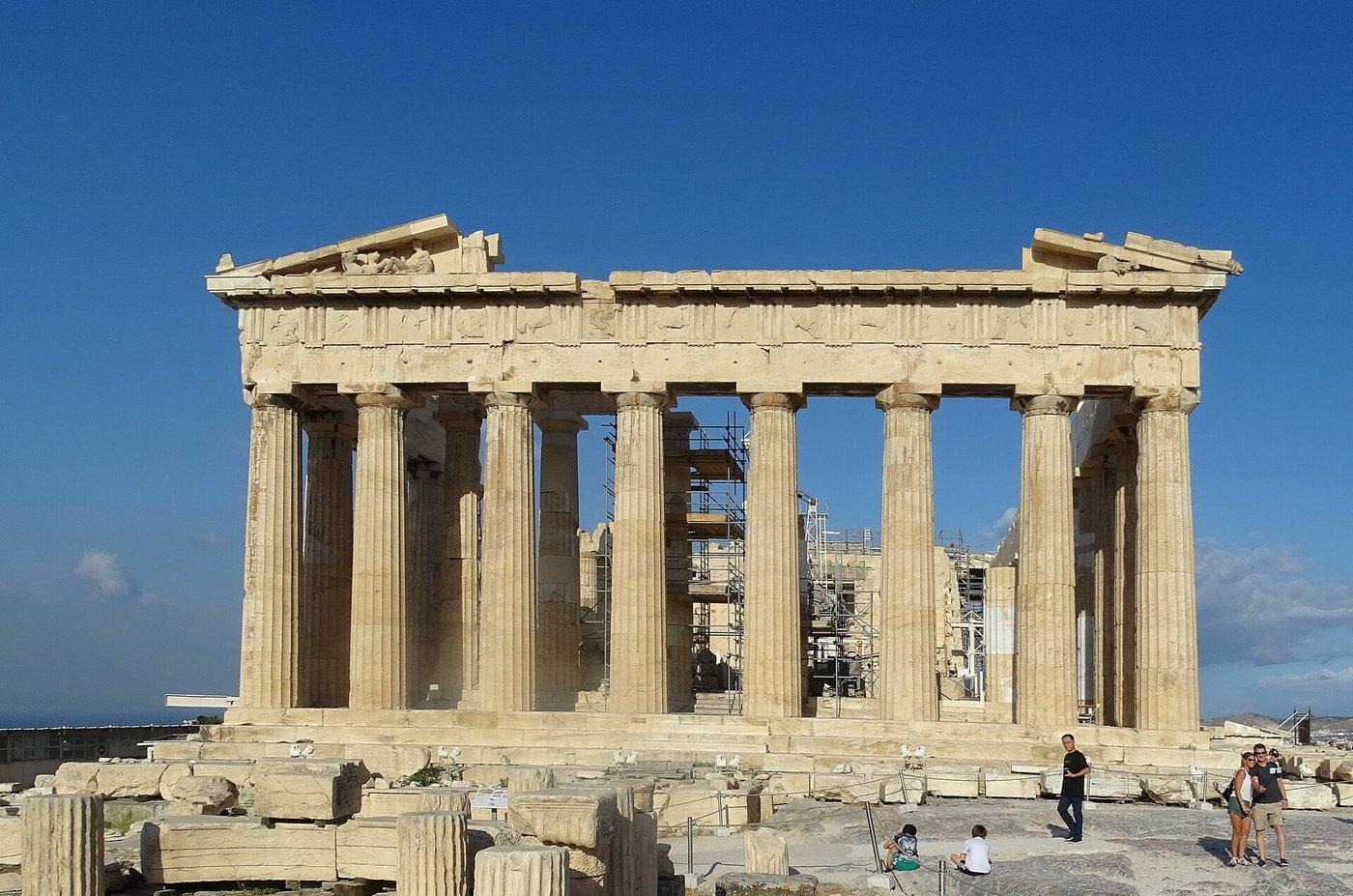
Morning (10:00 AM): Pick-up and the Acropolis
Collect the campervan, drive 20 minutes to Camping Athens on Leoforos Athinon, and take the bus or metro in from there. Parking a van in central Athens is possible but pointless when the metro runs every 5 minutes.
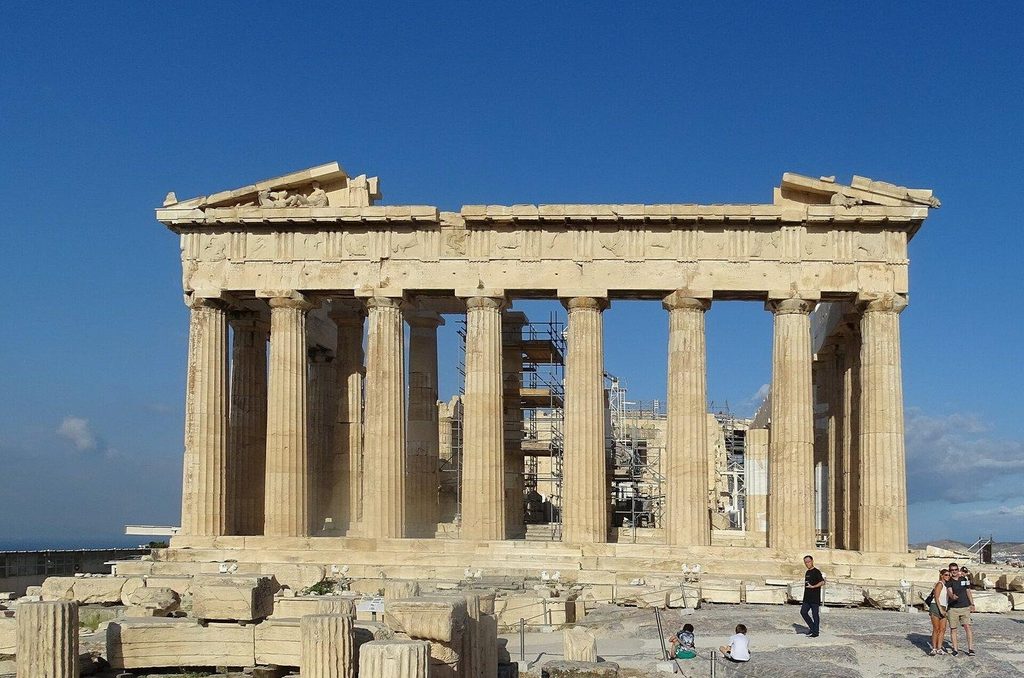
Go straight to the Acropolis. Admission is €30, entry is by timed slot booked through the official state ticket site, and daily numbers are capped at 20,000 visitors with staggered hourly allocations. The rock covers the Parthenon, the Erechtheion with its caryatid porch, the Temple of Athena Nike, and the Theater of Dionysus on the south slope.
Allow 2 hours minimum. The marble is polished slick by 2,500 years of feet, so proper shoes matter more than you’d expect.
Practical tip: Book the earliest slot available, not a midday one. Cruise groups arrive from Piraeus between 9:30 and 11:00, and the site has no shade at all.
Afternoon (1:30 PM): Central Market and Psyrri
Walk down through Monastiraki to the Varvakios Central Market on Athinas street, where the meat and fish halls have been running since 1886. It’s loud, it smells like the Aegean, and the tavernas tucked inside it are the best-value lunch in the city.
Diporto Agoras, a basement room on the corner of Sokratous and Theatrou with no sign on the door, has poured retsina from the barrel since 1887 and serves whatever was cooked that morning. A few doors up, Ta Karamanlidika tou Fani on Sokratous does Asia Minor cured meats, pastourma, and small plates with a proper wine list.
Afterwards, wander the Psyrri backstreets north of the market for street art, workshops, and the tool shops that still make up half the neighborhood.
Evening (6:30 PM): Plaka and Anafiotika
Head back up to Plaka and climb into Anafiotika, the pocket of whitewashed Cycladic houses built into the north slope of the Acropolis rock by 19th-century masons from Anafi. It’s the closest thing to an island village in central Athens, and it’s 5 minutes from the tourist strip.
For dinner, Kostas on Pentelis just off Syntagma has been grilling pork souvlaki since 1950 and closes when the meat runs out. If you want a table and a bottle, the tavernas on Mnisikleous street in Plaka do the classics with a view up to the floodlit Parthenon.
Day 2: Acropolis Museum, Ancient Agora, and Cape Sounion
Morning (9:00 AM): Acropolis Museum and Ancient Agora
Start at the Acropolis Museum, which sits over an excavated ancient neighborhood you walk across on glass floors. It costs €20 to enter, and the Parthenon Gallery on the top floor arranges the surviving frieze at the same scale and orientation as the temple 300 meters away.
Then walk 15 minutes to the Ancient Agora, the market and civic square where Socrates argued and Athenian democracy actually operated. The Temple of Hephaestus here is the best-preserved Doric temple in Greece, better than anything on the Acropolis.
Admission to the Agora is charged separately now that the combined ticket is gone, so decide in advance which sites you’re paying for.
Practical tip: The Agora is at its best in the last 2 hours before closing, when the light goes gold and the tour groups have moved on. Swap it with the museum if you’d rather not do both in one morning.
Afternoon (2:00 PM): Drive to Cape Sounion
Collect the van and drive the coast road south along the Athenian Riviera, past Glyfada, Vouliagmeni, and a string of swimming coves. It’s around 70 km and 1 hour 15 minutes to Cape Sounion, and the last 20 km hug the cliff edge.
Stop at Legrena or Kape beach for a swim on the way. Both have space to pull a van off the road, and the water south of Vouliagmeni is clear enough to see the bottom at 5 meters.
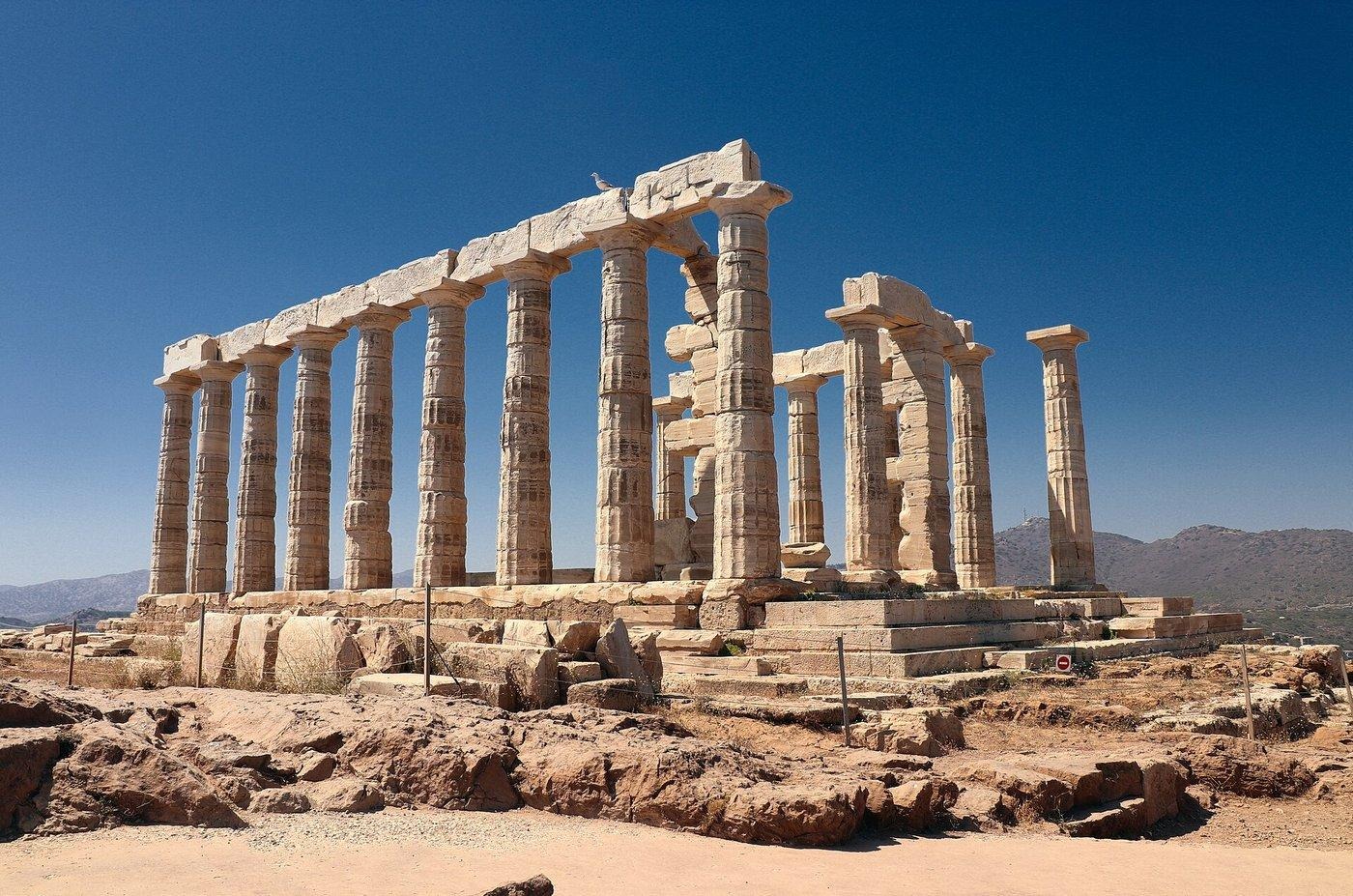
Evening (6:30 PM): Temple of Poseidon at sunset
The Temple of Poseidon stands on a headland 60 meters above the sea, built in 444 BC from local white marble, with 15 of its original 34 columns still standing. It’s the classic Greek sunset, and the site sits in the €20 admission tier.
Camp at Camping Bacchus, a few minutes back along the Sounio road, which puts you within walking distance of the temple for the following morning if you want it twice.
For dinner, the fish tavernas at the small harbor below the cape grill whatever came in that afternoon. Order the red mullet and a bottle of Assyrtiko.
Day 3: Osios Loukas Monastery and Delphi
Morning (8:30 AM): Drive north to Osios Loukas
Leave Sounio early and take the A1 north out of Athens, then cut west toward Levadia. Total driving today is around 200 km and 3 hours before detours.
Break the drive at the Monastery of Osios Loukas, a UNESCO-listed 11th-century Byzantine complex in the foothills of Mount Helicon. Its gold-ground mosaics are among the finest surviving anywhere, and there are usually more monks than visitors.
Practical tip: Fill the tank in Levadia rather than at the Delphi turn-off. Prices climb noticeably on the mountain road, and there’s no station between Distomo and Delphi village.
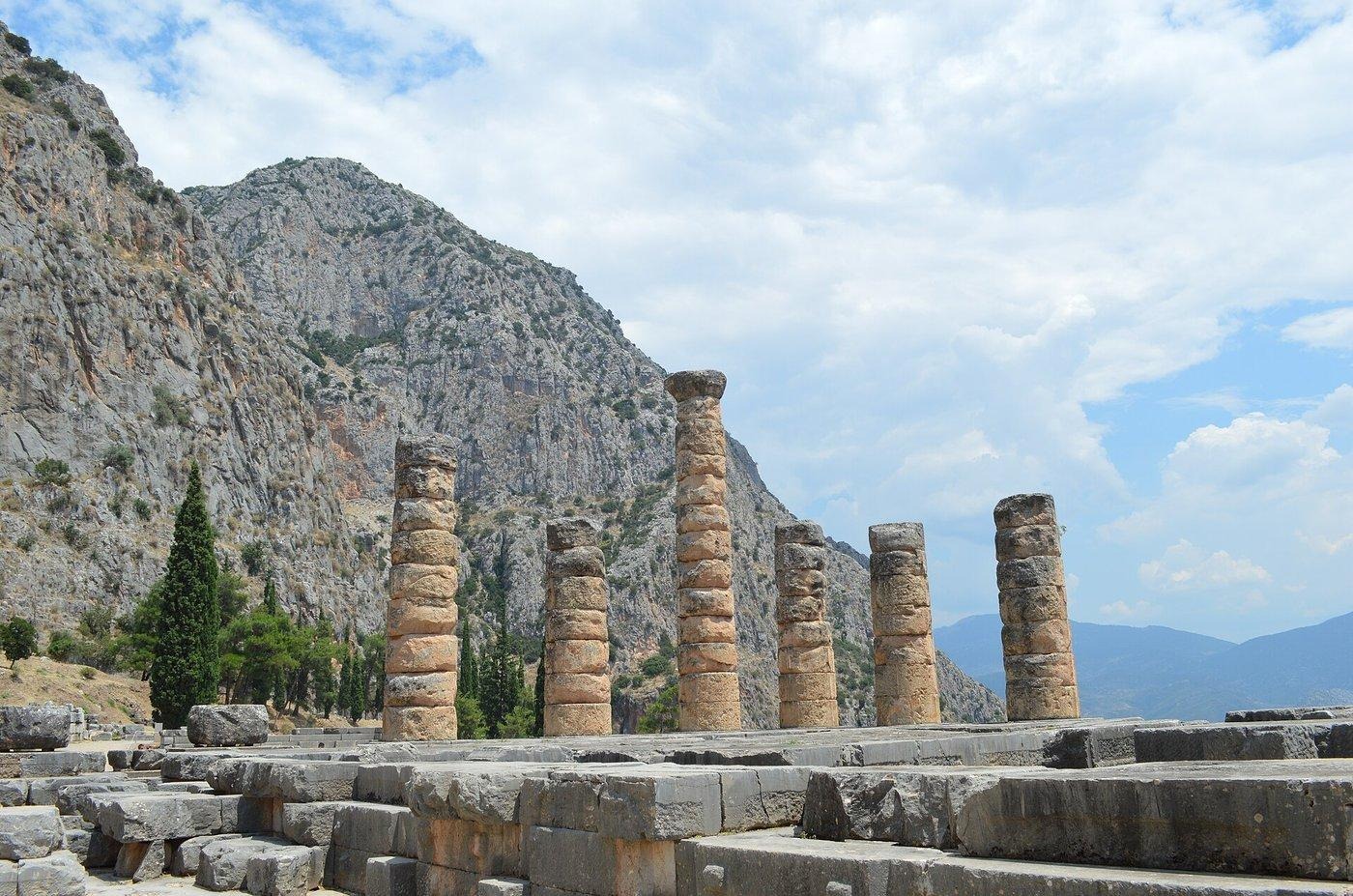
Afternoon (1:00 PM): The Sanctuary of Apollo
Delphi sits on a shelf of Mount Parnassus above a 2,000-meter-deep valley of olive trees running down to the Gulf of Corinth. For 1,000 years, this was where the Greek world came to ask the oracle what to do next.
The Sacred Way climbs past treasuries built by rival city-states to the Temple of Apollo, then the theater, then the stadium at the top where the Pythian Games were held. The site and museum share a combined ticket, one of only 4 joint tickets Greece kept after the 2025 pricing reform, in the €20 tier.
Give it 3 hours. The museum holds the bronze Charioteer of Delphi, the Sphinx of Naxos, and the twin kouroi, and it’s worth as much time as the ruins.
Evening (6:00 PM): Delphi village and the campsite
Delphi village is 1 km west of the site, a single street of tavernas terraced above the valley. Taverna Vakhos and Iniohos both look straight down the olive gorge, and both do lamb kleftiko slow-cooked in paper.
Camp at Chrissa Camping, 5 km down the road toward Itea, which is terraced into a hillside above the olive groves with the Gulf of Corinth in view. It’s one of the better-positioned campsites in mainland Greece.
Day 4: The Drive to Meteora
Morning (9:00 AM): Thermopylae and the road north
Today is a driving day with 2 good stops in it. Delphi to Kalambaka is around 230 km and 3 hours, running back east then north on the E65.
Pull off at Thermopylae, where 300 Spartans and several thousand other Greeks held the pass against the Persian army in 480 BC. The coastline has silted up 5 km since then, so the famous narrow gap is now a stretch of flat farmland, which is itself worth seeing.
Practical tip: The hot sulfur springs across the road from the Thermopylae monument are free, open, and genuinely hot. Bring a towel and 20 minutes.
Afternoon (2:00 PM): Arrive in Kastraki
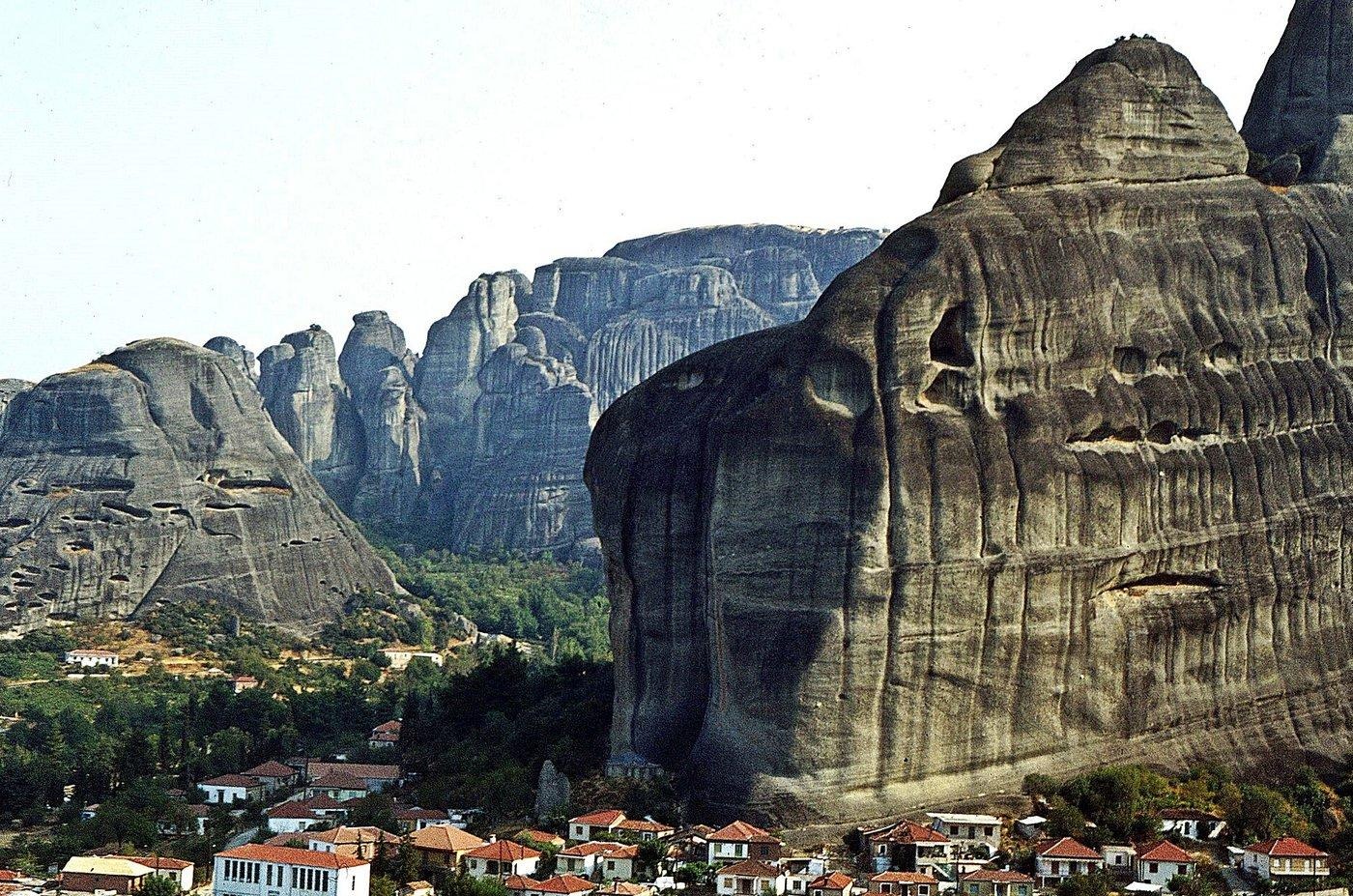
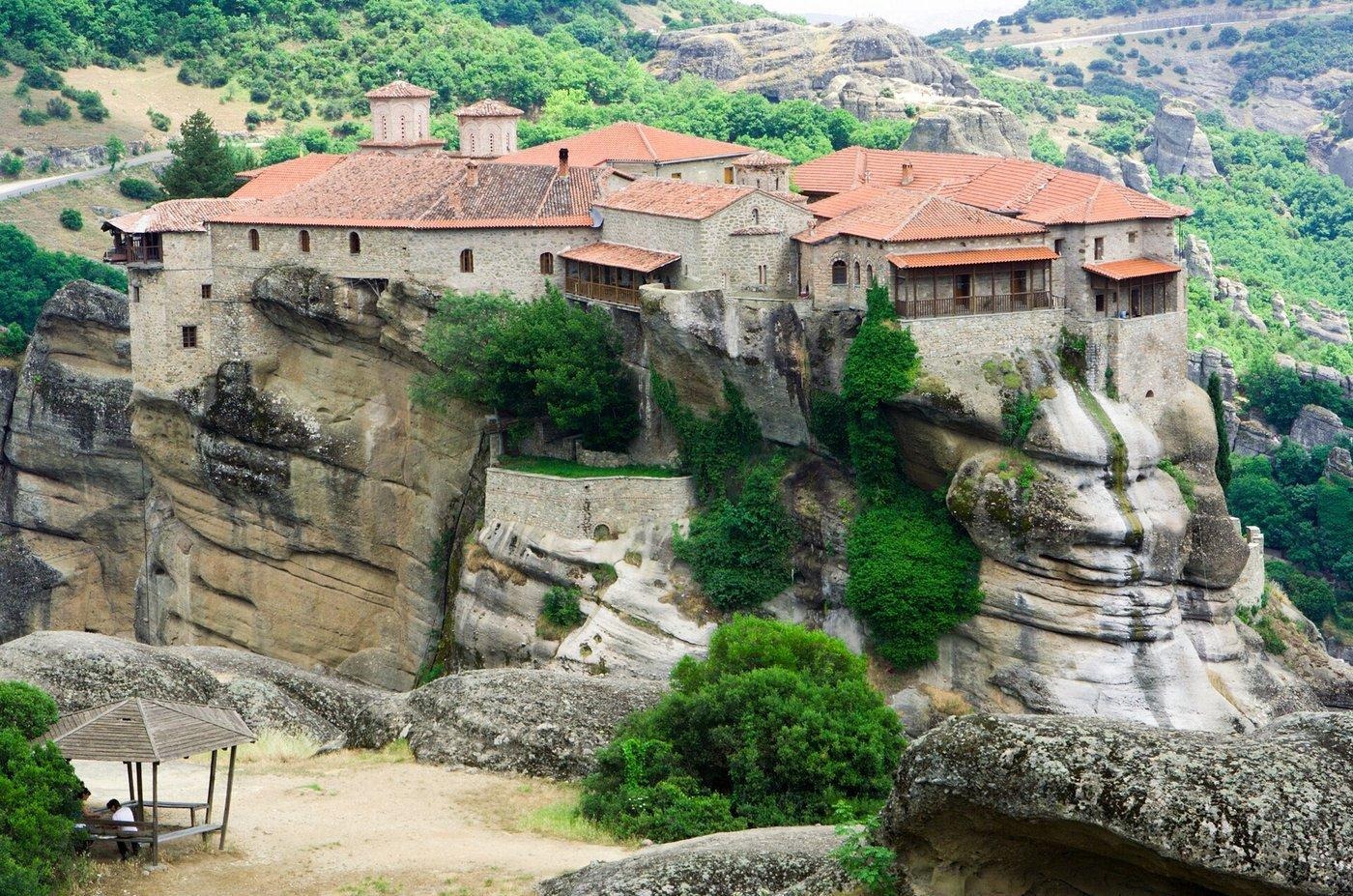
The E65 climbs onto the Thessalian plain and then the rocks appear, which is a moment nobody is quite ready for. Meteora is a cluster of sandstone and conglomerate pillars up to 400 meters tall, and monks have been living on top of them since the 14th century.
Base yourself in Kastraki rather than Kalambaka. It’s the smaller of the 2 villages, it sits right at the foot of the rocks, and Camping Vrachos Kastraki is directly under them with a pool and pitches shaded by plane trees.
Evening (7:00 PM): Sunset from the rocks
Drive or walk up to the Sunset Rock viewpoint above Kastraki for the last hour of light, when the pillars turn from gray to copper. It’s a 25-minute walk from the campsite or a 5-minute drive to the parking area below.
For dinner, Taverna to Paramithi in Kalambaka has a vine-covered patio and live music some evenings, and Valia Calda cooks the Vlach mountain food of the region, with wild greens, mushrooms, and river trout.
Day 5: The Monasteries of Meteora
Morning (8:30 AM): Great Meteoron and Varlaam
Six monasteries are still active and open to visitors. Adults pay €5 per monastery in cash at each door, and each one closes on a different day of the week, so check the current timetable the night before.
Start with the Great Meteoron, the largest and oldest, founded in the 1340s and reached by 300 steps cut into the rock. Then Varlaam next door, which still has the original winch tower and net that hauled up everything and everyone until steps were cut in the 1920s.
Dress code is enforced at all 6. Shoulders covered for everyone, and skirts for women, which the monasteries lend at the entrance if you turn up in trousers.
Practical tip: Drive the monastery loop road clockwise and arrive at the Great Meteoron for opening. Coaches from Athens and Thessaloniki reach the top road around 10:30 and the small courtyards fill fast.
Afternoon (1:00 PM): Roussanou, Trinity, and the footpaths
Roussanou sits on a narrower pillar with the most photographed approach bridge. Holy Trinity, the one from the Bond film, requires 140 steps and rewards them with the best view over Kalambaka.
The better afternoon, though, is on foot. Old monk paths link the monasteries through the pillars, and the Kastraki to Great Meteoron trail takes about 90 minutes each way with almost nobody on it.
Evening (6:30 PM): Kastraki and a second night
Stay a second night at Camping Vrachos Kastraki rather than moving on. Tomorrow is the longest drive of the trip, and Meteora after the coaches leave is a different place.
Eat at Meteoron Panorama above Kastraki for the view, or Taverna Dionisos in Kalambaka for slow-cooked lamb and a jug of local red.
Day 6: Nafpaktos, the Rio-Antirrio Bridge, and Ancient Olympia
Morning (8:00 AM): South through Central Greece
This is the long haul, around 350 km and 4 hours 30 minutes from Kastraki to Ancient Olympia. It’s also one of the best drives in Greece, dropping off the Thessalian plain and through the mountains of Aetolia-Acarnania.
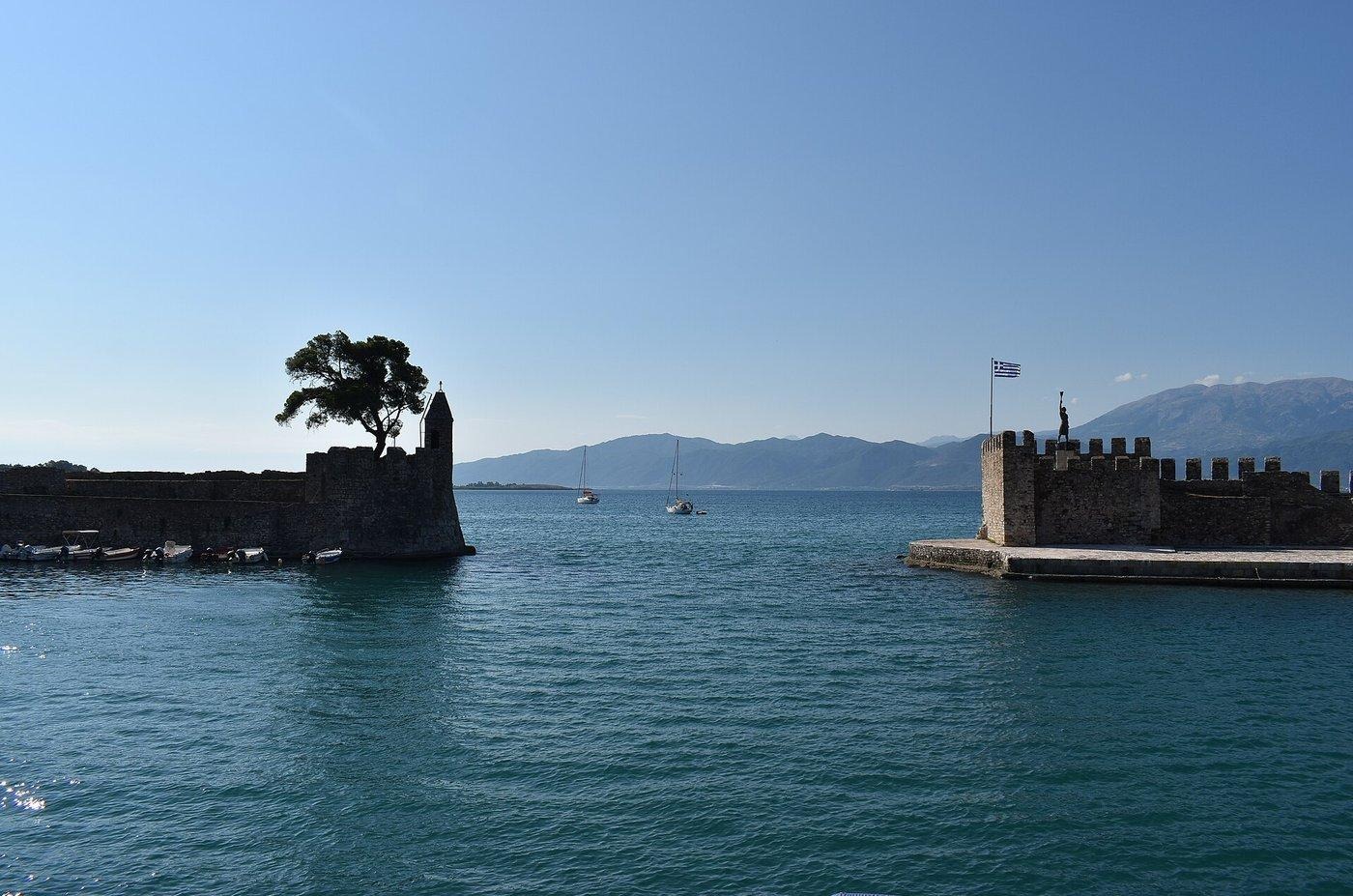
Stop at Nafpaktos on the Gulf of Corinth, a Venetian harbor so small and complete it looks like a film set, ringed by a castle wall that climbs the hill behind it. Coffee on the harbor wall costs €3 and buys you an hour.
Afternoon (1:00 PM): The Rio-Antirrio Bridge
The Charilaos Trikoupis bridge crosses 2.9 km of the Gulf of Corinth on 4 pylons standing in 65 meters of water, in an active earthquake zone. It cuts around 2 hours off the alternative drive around the gulf.
Budget for it. The passenger-car toll is €15.90 as of January 2026, and a motorhome over 2.2 meters tall pays in a higher category, so check the posted rate at the booth.
From the bridge, it’s another 1 hour 30 minutes south through Patras and along the Kyllini coast to Olympia.
Practical tip: Use the cash lanes, not the e-PASS transponder lanes, unless your van came with a tag. The dedicated lanes are enforced, and the fine is more than the toll.
Evening (6:00 PM): Ancient Olympia village
Arrive with enough light to walk the village, then camp at Camping Diana, which is a 5-minute walk from the archaeological site entrance and one of the greenest campsites on the route.
Taverna Orestis and Symposio, both in the village center, do the Peloponnesian standards. Order the pork with Kalamata olives and a plate of the local hard cheese.
Day 7: Ancient Olympia and the Coast Road to Gythio
Morning (8:00 AM): The Sanctuary of Zeus
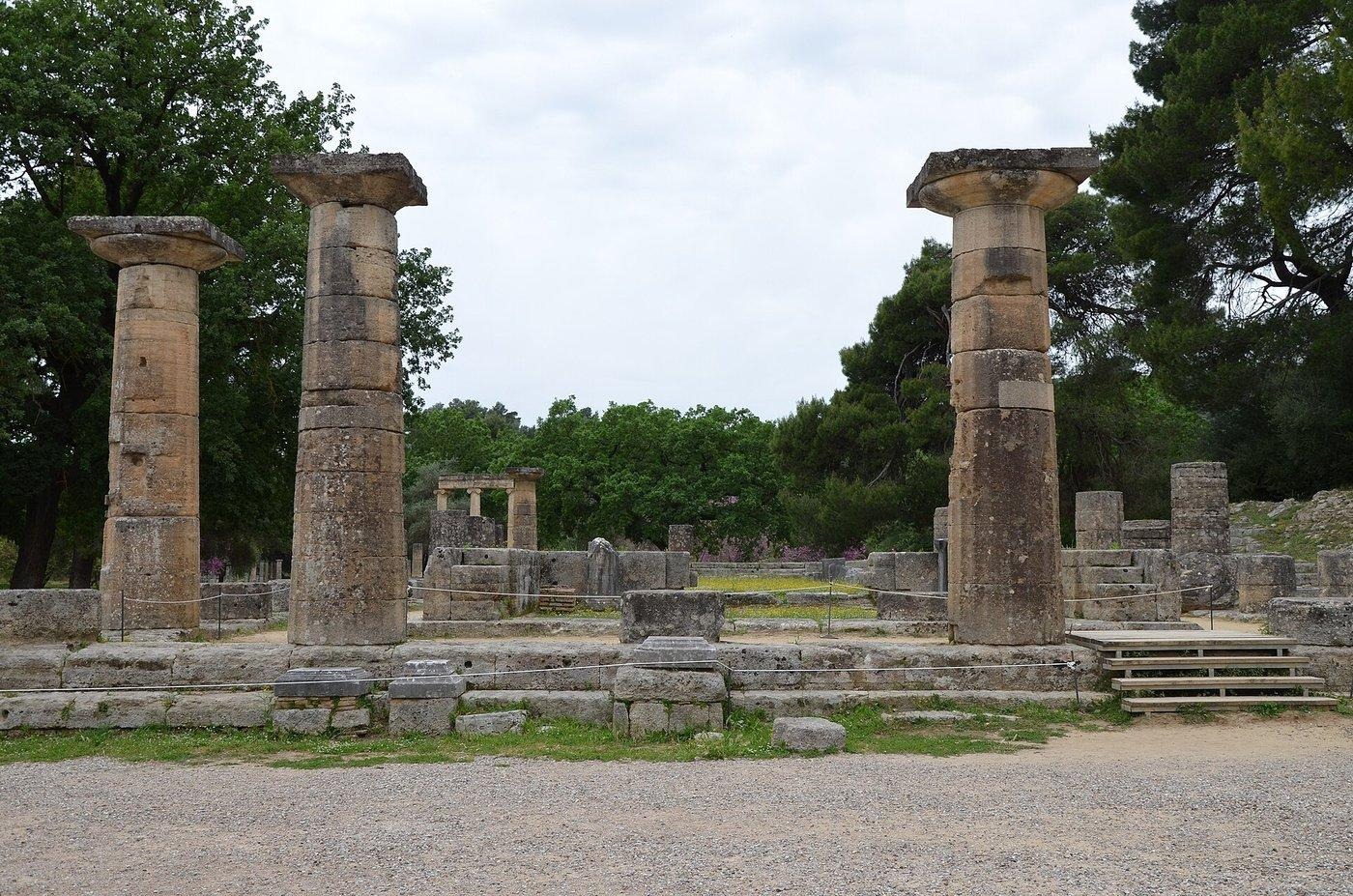
Ancient Olympia held the Games every 4 years for almost 12 centuries. The site is flatter and greener than Delphi, set among pines and plane trees along the Alfeios river, and it’s a genuinely pleasant place to spend a morning.
Walk the Temple of Zeus, where the 12-meter gold and ivory statue counted as one of the Seven Wonders, then the Temple of Hera, the workshop of Pheidias, and through the vaulted tunnel into the stadium. The track is still there at its original 192-meter length, and you’re allowed to run it.
The museum next door holds the Hermes of Praxiteles and the pediment sculptures from the Temple of Zeus. Site and museum share a joint ticket in the €20 tier.
Practical tip: Run the stadium length before 9:30. It’s the one thing everybody wants a photo of and it’s yours alone for the first hour.
Afternoon (1:00 PM): Across Messinia to the Mani
Drive southeast through Messinia to Kalamata, then follow the coast to Gythio. It’s around 230 km and 3 hours, through olive groves that produce the Kalamata olive and past the Taygetos range on your right the whole way.
Stop in Kalamata for lunch at the covered market, or push on to Gythio and eat on the water.
Evening (6:30 PM): Gythio harbor
Gythio is a working port town of pastel houses stacked up a hillside, facing a causeway out to the islet of Marathonisi, where Paris and Helen supposedly spent their first night. It’s the gateway to the Mani and much less visited than it deserves.
Camp at Camping Mani Beach just outside town on Mavrovouni beach, a 3 km sweep of sand that gets loggerhead turtle nests in summer. Akrogiali sits right on the Gythio waterfront and Trata on Prothypourgou Tzanni Tzannetaki does excellent fresh fish, both looking out at Marathonisi.
Day 8: The Mani Peninsula and Cape Tenaro
Morning (9:00 AM): Diros Caves
The Mani is the middle prong of the Peloponnese’s 3 southern peninsulas, a limestone finger of tower houses, cactus, and almost no trees, historically so hard to conquer that it stayed effectively independent under Ottoman rule.
Start at the Diros Caves, 30 minutes south of Gythio, where you’re rowed around 1.2 km through flooded galleries of stalactites in a small boat. Roughly 40 minutes on the water, and the temperature underground stays around 16°C year round.
Practical tip: Get to Diros for opening. Boat capacity is the bottleneck, not ticket sales, and by 11:00 in summer the wait can pass 2 hours with no shade in the car park.
Afternoon (12:30 PM): Areopoli and Limeni
Areopoli is the Mani’s stone capital, a grid of tower houses and vaulted alleys built for feud rather than comfort. It takes an hour to walk and has the best bakery on the peninsula.
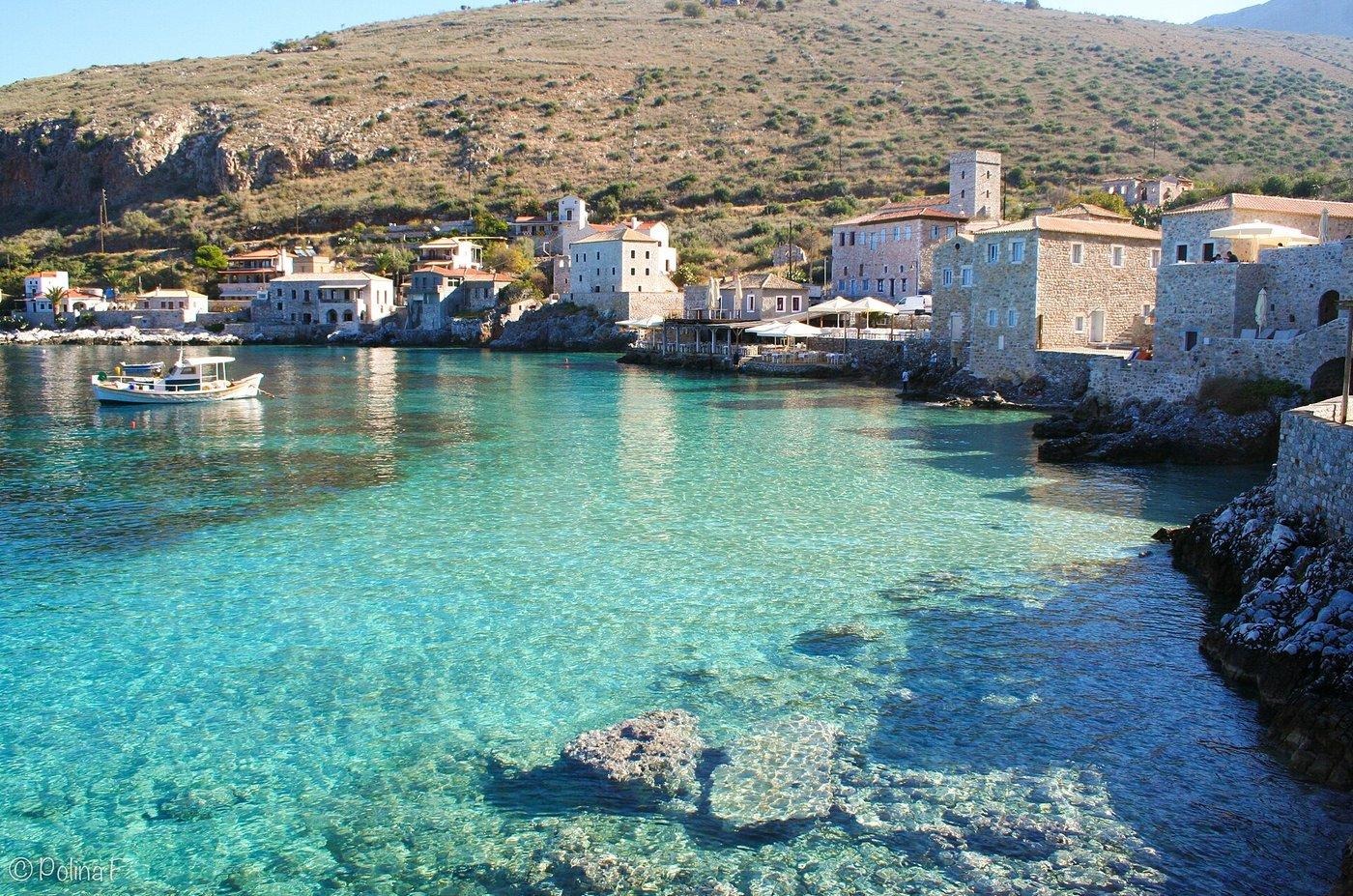
Ten minutes below it, Limeni is a handful of stone houses around a bay of impossibly clear water. Takis Fish Taverna on the harbor is one of the best fish restaurants in the Peloponnese, and you can swim off the rocks beside it between courses.
Evening (5:00 PM): Cape Tenaro and back
Drive the last 40 km south to Cape Tenaro, the southernmost point of mainland Greece and, for the ancient Greeks, one of the entrances to the underworld. The final 30 minutes are on foot along an old path to a small lighthouse, past a Roman mosaic floor lying open to the sky.
Return to Gythio for the night, around 1 hour 15 minutes back, and take a pitch at Camping Gythion Bay above the beach if you want a different view from last night. Total driving today is around 140 km.
Day 9: Mystras and Nafplio
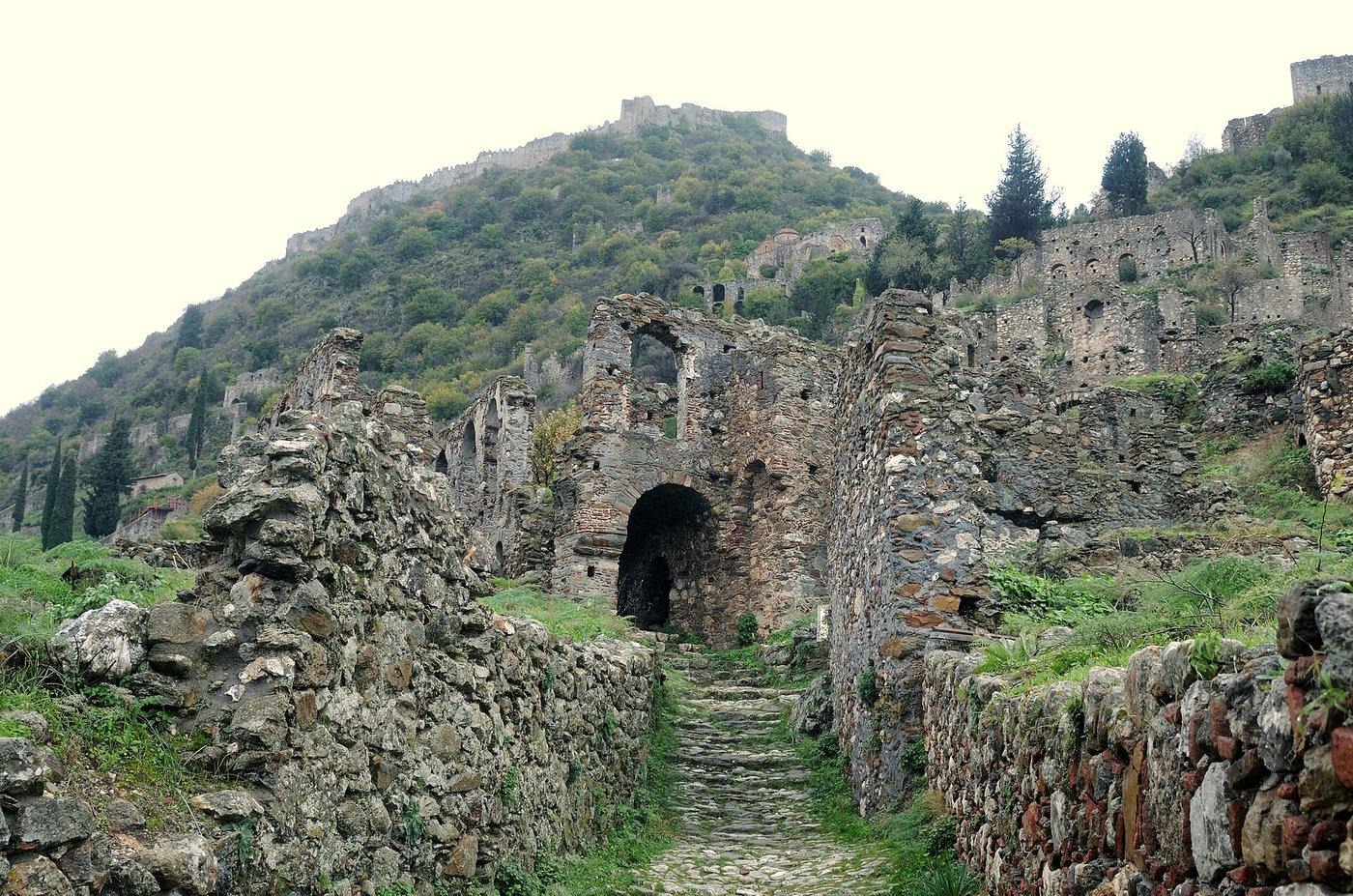
Morning (9:00 AM): The Byzantine city of Mystras
Head inland toward Sparta, then 5 km west to Mystras, which is the day’s real find. This is a complete Byzantine city built up a steep hillside in the 13th century, abandoned in the 1830s, and left standing, with palaces, churches holding intact frescoes, streets, and a castle on top.
It was the last major center of the Byzantine empire and the place where its final emperor was crowned. Allow 3 hours and start at the upper gate so you walk downhill.
Practical tip: Park at the upper entrance, walk down through the site to the lower gate, then take the 20-minute path back up along the outside wall. Doing it the other way means climbing 300 vertical meters in the sun.
Afternoon (1:30 PM): North to Nafplio
From Mystras it’s around 170 km and 2 hours 30 minutes northeast to Nafplio, over the Parnon range and down into the Argolid. The road through Tripoli is fast; the older route via Leonidio and the coast takes an extra 2 hours and is far more beautiful if you have the light.
Nafplio was the first capital of independent Greece, and it looks it. Venetian townhouses, marble streets, bougainvillea, and 3 separate fortresses.
Evening (6:00 PM): Palamidi and the old town
Climb the Palamidi fortress above the town, an early 18th-century Venetian complex of 8 self-contained bastions. There are 999 steps up from the old town by local count, or you can drive the back road to the top gate in the van.
Camp at Camping Triton II at Drepano, 20 minutes east on the Argolic Gulf. For dinner, Taverna to Paleo Archontiko on a quiet old-town side street and Taverna to Vyzantio both do proper Peloponnesian cooking, and Nemea red from 20 km up the road is the wine to order.
Day 10: Mycenae, Epidaurus, and Back to Athens
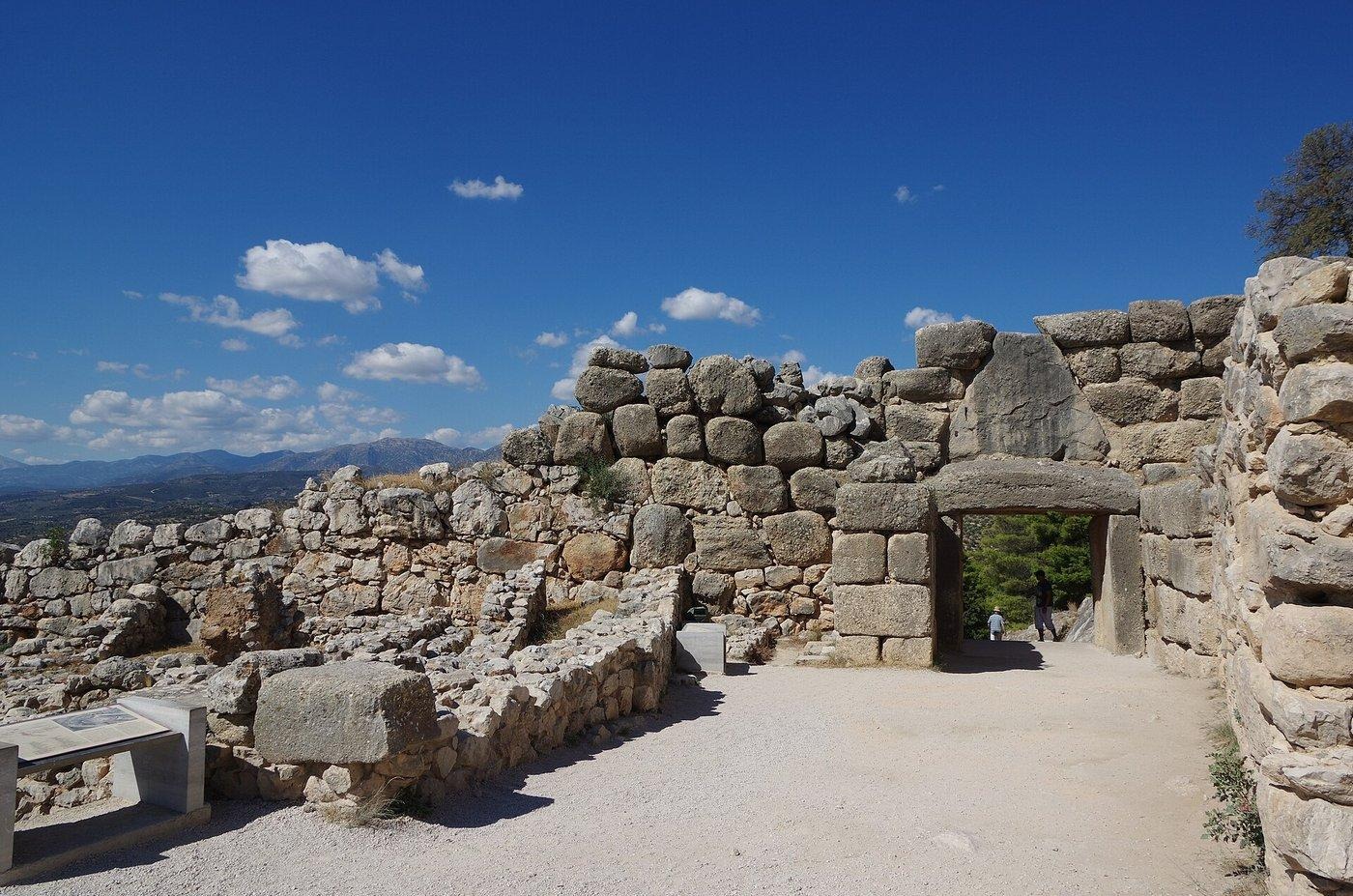
Morning (8:30 AM): Mycenae and the Lion Gate
Two of Greece’s most significant sites sit within 40 minutes of Nafplio, which makes the last day the strongest in the itinerary rather than a travel write-off.
Mycenae is Bronze Age, close to 1,000 years older than the Acropolis, and it feels it. You enter through the Lion Gate, the oldest monumental sculpture in Europe, past the grave circle where Schliemann found the gold death masks, and into the beehive vault of the Treasury of Atreus, which held the largest unsupported span in the world for more than 1,000 years.
Admission covers the site, the tomb, and the museum, and it’s one of the retained joint tickets in the €20 tier.
Practical tip: Mycenae has no shade and reflects heat off bare rock. Go at opening, and keep the Treasury of Atreus for last since it’s the only cool place on site.
Afternoon (12:30 PM): The theater at Epidaurus
Thirty minutes east, the Sanctuary of Asklepios at Epidaurus was the ancient world’s most important healing center, and its 4th-century BC theater is the best preserved in Greece. It seats around 14,000, and the acoustics are so exact that a coin dropped in the orchestra is audible on the back row.
Someone always tests it. Sit at the top for 10 minutes and let them.
Evening (4:00 PM): Corinth Canal and Athens
Drive north to the Corinth Canal, cut through 6.4 km of solid rock in the 1890s, 24 meters wide at the waterline and up to 90 meters deep. Stop on the old road bridge, look straight down, and watch a ship thread it if the timing works.
From there it’s 1 hour 15 minutes back into Athens on the A8, around 180 km for the whole day. Drop the van at the depot or take a final night at Camping Athens if your flight is early, which closes the loop where it started.
For a last dinner, the rooftop tavernas around Monastiraki put the floodlit Acropolis at eye level. Order loukoumades, the honey doughnuts, and call the trip finished.
Alternative 10 Day Greece Itinerary Routes
The mainland loop isn’t the only way to spend 10 days here. Two other routes work well with a campervan, depending on whether you want islands or mountains.
10-Day Athens and Cyclades Itinerary With the Van on the Ferry
You can take a campervan to the Greek islands, which almost nobody realizes. Conventional ferries out of Piraeus and Rafina carry vehicles, though the high-speed catamarans usually don’t, and recreational vehicles are booked as their own category rather than as a large car.
- Days 1 to 2: Athens, the Acropolis, and the Acropolis Museum, camping at Camping Athens.
- Day 3: Overnight or morning ferry from Piraeus to Paros with the van, around 4 hours on a conventional boat.
- Days 4 to 5: Paros by road, with Naoussa, the marble quarries at Marathi, and the beaches on the east coast.
- Days 6 to 7: Short hop to Naxos, the biggest and best island in the Cyclades for driving, with mountain villages, Mount Zas, and the Temple of Demeter.
- Day 8: Ferry to Santorini with the van, and drive the caldera rim road rather than fighting for a bus seat.
- Days 9 to 10: Santorini and the return ferry to Piraeus.
Book vehicle space 1 to 2 months ahead for July and August, and expect campsites on the islands to be simpler than mainland ones. This route costs more than the mainland loop because every crossing charges for the van as well as for you.
10-Day Northern Greece Itinerary
If mountains interest you more than antiquity, go north instead. This is the greenest, least touristed part of the country, and the driving is spectacular.
- Days 1 to 2: Athens, then the drive north to Meteora with a Thermopylae stop.
- Day 3: Meteora monasteries.
- Days 4 to 5: Zagori and the Vikos Gorge, the deepest gorge in the world relative to its width, with the stone villages of Papigo and Monodendri and the arched packhorse bridges.
- Day 6: Ioannina and Lake Pamvotida, plus the island monasteries in the middle of it.
- Day 7: Over the Pindus range to Meteora’s eastern side and on toward Mount Olympus.
- Days 8 to 9: Thessaloniki, the Byzantine walls, the food market, and the archaeological museum.
- Day 10: Vergina for the royal Macedonian tombs, then the drive south to Athens.
Both of these routes run out of Athens as well, since that’s where an RV rental in Greece starts. If you’d rather stitch Greece into a longer trip through the Balkans and Italy, our Croatia itinerary and the two-week Europe route both connect by ferry from Patras or Igoumenitsa.
Map of Your 10-Day Greece Itinerary
The route runs Athens, Cape Sounion, Delphi, Kalambaka for Meteora, Nafpaktos, Ancient Olympia, Gythio, Areopoli, Mystras, Nafplio, and back to Athens. That’s roughly 1,500 km over 10 days, or about 2.5 hours of driving a day.
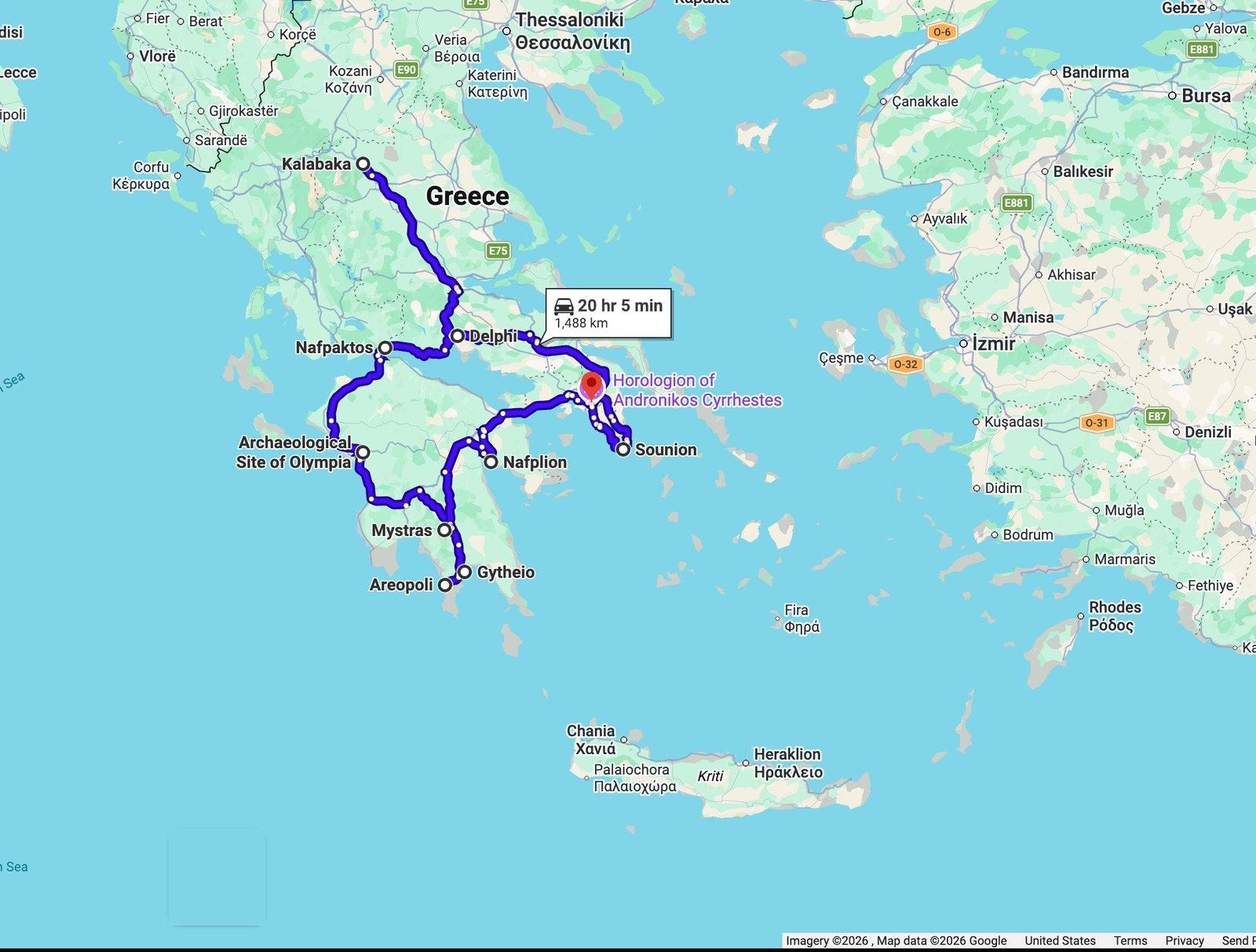
The only genuinely long day is Day 6 from Meteora to Olympia at 4 hours 30 minutes, and it breaks neatly at Nafpaktos. If you’d rather not drive it in one go, add a night at Nafpaktos or Patras and trim a day from the Mani.
Budgeting for Your Trip: How Much Does 10 Days in Greece Cost?
Greece is cheaper than Italy, Spain, or France for food and campsites, and more expensive than all 3 for fuel and archaeological admissions. The 2025 pricing reform pushed site entry up sharply, so budget more for tickets than older guides suggest.
Here’s a realistic per-person daily breakdown for a Greece 10-day itinerary, excluding the campervan hire.
| Category | Budget | Mid-Range | High-End |
| Accommodation (campsites) | €12 to €22 | €22 to €35 | N/A |
| Food and drink | €20 to €35 | €40 to €65 | €85+ |
| Attractions and activities | €15 to €30 | €35 to €55 | €70+ |
| Fuel and tolls (split) | €15 to €25 | €25 to €35 | €35+ |
| Daily total | €62 to €112 | €122 to €190 | €190+ |
| 10-day total | €620 to €1,120 | €1,220 to €1,900 | €1,900+ |
Budget travelers cook most meals in the van, use municipal and family-run campsites at €12 to €22 a night, and pick 4 or 5 paid sites rather than all of them. The Acropolis at €30 and the Delphi joint ticket are the 2 worth paying for whatever your budget; Mycenae, Olympia, and Mystras can be swapped for each other if money is tight. EU citizens aged 25 and under enter every state site free, and the first Sunday of each month from November to March is free for everyone.
Mid-range travelers eat dinner out most nights at €15 to €25 a head with wine, stay at campsites with pools and proper facilities, and pay for all the major sites. That’s €122 to €190 per person a day, which is genuinely good value for a country this expensive to reach.
High-end travelers add boat trips out of Gythio or Limeni, guided archaeology at Delphi and Mycenae, a wine tasting in Nemea, and the occasional hotel night in Nafplio or Athens when a real shower appeals. Budget €190 or more per person daily.
Plan Your Greece Road Trip with Indie Campers
Ten days in Greece falls apart on logistics rather than distance. Ferry timetables, 9 separate hotel bookings, no train to Delphi or the Mani, and a camping law that fines you €300 for pitching in the wrong place.
A campervan out of Athens removes most of that. This loop runs about 1,500 km, and every kilometer of it is covered by unlimited mileage on our own vehicles, so the Cape Tenaro detour and the drive back from Meteora cost you nothing extra. If your dates move, you can cancel for free up to 31 days before pick-up.
Indie Campers has been running road trips out of Lisbon since 2013 and now covers 80+ locations, with Athens as the Greek base.
Book your campervan and kickstart an adventurous Greece trip now!
Greece Itinerary 10 Days: Your Final Planning Recap
| Category | Details |
| Best time to go | May, early June, September, or October. Warm sea, open campsites, and no August heat or crowds. |
| Recommended budget | €1,220 to €1,900 per person for 10 days, excluding campervan hire |
| Cities and stops | Athens (2 nights), Cape Sounion (1 night), Delphi (1 night), Kastraki for Meteora (2 nights), Ancient Olympia (1 night), Gythio for the Mani (2 nights), Nafplio (1 night) |
| Best restaurants | Diporto Agoras, Athens (market cooking); Taverna Vakhos, Delphi (lamb kleftiko); Valia Calda, Kalambaka (Vlach mountain food); Takis Fish Taverna, Limeni (seafood); Taverna to Paleo Archontiko, Nafplio (Peloponnesian classics) |
| What to visit | Acropolis, Acropolis Museum, Ancient Agora, Temple of Poseidon, Osios Loukas, Delphi, Meteora monasteries, Nafpaktos, Ancient Olympia, Diros Caves, Cape Tenaro, Mystras, Palamidi, Mycenae, Epidaurus, Corinth Canal |
| Recommended transport | Campervan from Indie Campers, Athens pick-up and drop-off, unlimited mileage, licensed Greek campsites throughout |
| Total driving | Around 1,500 km (930 miles), about 2.5 hours a day |
| Must-try foods | Athens: souvlaki, grilled octopus; Delphi: lamb kleftiko; Meteora: river trout, Vlach pie; Messinia: Kalamata olives; Mani: syglino pork; Nafplio: Nemea red wine |
| Accommodation | Licensed Greek campsites, €15 to €30 a night for a van, 2 adults, and electricity |
| Perfect for | First-time visitors who want ancient Greece rather than island bars, couples and families who prefer driving to ferry queues, and anyone who has already done Santorini |
Frequently Asked Questions (FAQs)
How much does a 10-day trip to Greece cost?
A 10-day trip to Greece costs €1,220 to €1,900 per person for a mid-range campervan road trip, covering campsites at €22 to €35 a night, meals out, fuel, tolls, and admission to the major archaeological sites. Budget travelers can do it for €620 to €1,120 by cooking in the van and paying for 4 or 5 sites instead of all of them. Neither figure includes the campervan hire, which varies by vehicle and season. Site admissions are the line item people underestimate, since the Acropolis alone is €30 and most other major sites are €20.
Is 10 days enough to see Greece?
Ten days is enough to see Greece if you commit to one region and drive it rather than combining the mainland with islands. A mainland loop from Athens through Delphi, Meteora, Ancient Olympia, the Mani, and Nafplio covers around 1,500 km and takes in 7 UNESCO World Heritage sites with about 2.5 hours of driving a day. You won’t reach Santorini, Mykonos, or Crete on that route. What you get instead is the ancient and Byzantine Greece that most visitors fly straight past.
What is the best route for a 10 day Greece itinerary?
The best route for a 10 day Greece itinerary by campervan is Athens, Cape Sounion, Delphi, Meteora, Nafpaktos, Ancient Olympia, Gythio and the Mani, Mystras, Nafplio, and back to Athens. It runs about 1,500 km as a loop, so you collect and return the van at the same Athens depot with no one-way fee and no backtracking. The longest single drive is 4 hours 30 minutes from Meteora to Olympia, which breaks at Nafpaktos on the Gulf of Corinth. Every other day involves under 3 hours behind the wheel.
Can you visit Santorini and Mykonos in a 10-day Greece itinerary?
You can visit Santorini and Mykonos in 10 days, but the ferries cost you roughly 3 of those days and both islands are the most expensive and most crowded places in Greece. Piraeus to Santorini takes 5 to 8 hours on a conventional ferry, and island-to-island crossings add several more hours each. A better split is 7 days on the mainland by campervan and 3 days on one island, or the dedicated Cyclades ferry route in the alternatives section above. Adding both islands to a mainland route in 10 days leaves you rushing all of it.
Can you take a campervan on a Greek ferry?
You can take a campervan on a Greek ferry, on conventional car ferries rather than the high-speed catamarans, which usually carry only cars and motorbikes. Recreational vehicles are booked as a separate vehicle category rather than as a large car, and the fare depends on length and height. Book vehicle space 1 to 2 months in advance for July and August, since deck capacity sells out well before passenger seats. Arrive at the port at least 1 hour before departure when you’re bringing a vehicle.
Is wild camping legal in Greece?
Wild camping is illegal in Greece, and police can issue an immediate €300 fine per vehicle or person caught camping outside a licensed campsite. The July 2025 update to the Road Traffic Code allows a campervan under 7.5 m to park like a car, but sleeping overnight in a public area, cooking outside, or putting out chairs and awnings all count as camping. Overnight stays are only legal at licensed campsites or on private property, where an owner may host 1 camper at a time. Licensed campgrounds are plentiful on the mainland, with pitches at €15 to €30 a night.
Do you need to book Greek archaeological sites in advance?
You need to book the Acropolis in advance, because entry is by timed slot and daily numbers are capped at 20,000 visitors. Book it 2 weeks ahead from May to October, and buy from the official state ticket site, since resellers add a markup on top of the €30 admission. Delphi, Meteora, Olympia, Mycenae, Epidaurus, and Mystras all sell tickets at the gate with no timed entry, so those need no advance booking. Meteora monasteries take cash only at €5 per monastery.
What is the best time of year for a Greece itinerary 10 days long?
May, early June, September, and October are the best months for a Greece itinerary 10 days long, with daytime temperatures of 68 to 86°F, swimmable sea, and open campsites without August prices. July and August push Athens and the Peloponnese past 95°F, which makes unshaded sites like Mycenae and Olympia hard going after 10:00 AM. Winter keeps Athens and the Peloponnese mild but brings snow risk to the Delphi and Meteora roads, and closes many coastal campsites. Late September is the single best week if you want warm water and empty ruins.
Is Greece safe for solo travelers?
Greece is safe for solo travelers and ranks among the safer countries in Europe for visitors. Pickpocketing on the Athens metro, particularly the Piraeus and airport lines, is the most common problem, and the roads are the real risk rather than crime. Drive defensively on rural roads in the Mani and the Peloponnese, where overtaking habits are casual and hard shoulders are often gravel. Solo campervanning is straightforward here, with staffed campsites at every stop on this route.
Can you drive a campervan into central Athens?
You can drive a campervan into central Athens, but the better move is to park at a campsite on the edge and take the metro in. Athens runs a weekday odd and even license plate restriction inside its central ring, the daktylios, from about mid-October to mid-July, and central streets in Plaka and Monastiraki are narrow, one-way, and short of legal parking. Camping Athens on Leoforos Athinon puts you 20 minutes from Syntagma by public transport for the price of a campsite pitch. Every other stop on this route has parking at or near the site itself.
Do Americans need a visa for Greece?
Americans don’t need a visa for Greece for stays under 90 days in any 180-day period, but the EU’s ETIAS travel authorization is due to become a requirement after the new Entry/Exit System beds in. Launch dates have moved several times, so check official EU guidance close to your travel date rather than relying on older articles. When it arrives it will be an online form with a fee, not a visa application. A US driving license is accepted for a campervan rental in Greece alongside an International Driving Permit.