Planning the ideal New Zealand itinerary for a 7 days trip?
This guide covers the most rewarding South Island route, from Christchurch’s city base to Queenstown’s alpine playground, with a day at Lake Tekapo, Mount Cook, and Wanaka in between. Every day includes specific food stops, practical timing tips, and campsite options for road trippers.
Key Takeaways
- Iconic Stops: Milford Sound’s fiord, Queenstown’s Skyline Gondola, and Aoraki/Mount Cook’s Hooker Valley Track are some must-include spots in your New Zealand 1-week itinerary.
- Hidden Gems: Glendhu Bay on Lake Wanaka and the Church of the Good Shepherd at golden hour are some enthralling hidden gems to include in a New Zealand itinerary 7 days long.
- Recommended Transport: Campervan rental with Indie Campers; one pickup in Christchurch, one drop-off in Queenstown, with no backtracking and no hotel check-ins.
- Recommended Budget: NZD $1,800-$3,500 per person for 7 days. Covers campervan rental, fuel, campsites, food, and key activities.
- Best Time to Go: November to February (Southern Hemisphere summer) – best trail conditions, longest days, and lupines in bloom around Lake Tekapo.
Table of Contents
- New Zealand Itinerary 7 Days: At a Glance
- Why You’ll Love a 7-Day Trip to New Zealand
- Best Time to Visit New Zealand
- Are 7 Days Enough to Visit New Zealand?
- How to Get Around New Zealand?
- The Best New Zealand Itinerary: 7 Days of Adventure
- Exploring New Zealand’s Regions: Alternative Itineraries
- Map of Your 7-Day New Zealand Itinerary
- Budgeting for Your Trip: How Much Is a Trip to New Zealand for 1 Week?
- Plan Your Dream Trip with Indie Campers
- 7-Day New Zealand Itinerary: Your Final Planning Recap
- FAQs About New Zealand Itinerary 7 Days
New Zealand Itinerary 7 Days: At a Glance
| Day | Location(s) | Top Highlights |
| Day 1 | Christchurch | Botanic Gardens, Christchurch Gondola, New Regent Street. Try a flat white at C1 Espresso. |
| Day 2 | Lake Tekapo | Church of the Good Shepherd, Tekapo Springs hot pools, Mt John Observatory stargazing. Try a lakeside pie from the Four Square. |
| Day 3 | Aoraki/Mt Cook | Hooker Valley Track, Tasman Glacier viewpoint, alpine village walk. Try lamb rack at The Old Mountaineers’ Café. |
| Day 4 | Wanaka | Roy’s Peak Track, Wanaka Tree, Rippon Vineyard tasting. Try Central Otago pinot noir with a cheese board. |
| Day 5 | Queenstown | Crown Range Road arrival, Queenstown Gardens, Skyline Gondola. Try a Fergburger on the waterfront. |
| Day 6 | Milford Sound | Mirror Lakes stop, Homer Tunnel drive, Milford Sound morning cruise. Try smoked salmon on the ferry. |
| Day 7 | Queenstown | Shotover Jet or Kawarau Bungy, final waterfront walk. Try Central Otago salmon at Rata restaurant. |
Why You’ll Love a 7-Day Trip to New Zealand?
New Zealand packs a remarkable amount of variety into a compact geography. In one week on the South Island, you can wake up in a Canterbury city, drive to a glacier-fed turquoise lake, hike to the foot of the country’s highest peak, taste world-class pinot noir in a Wanaka vineyard, and arrive in Queenstown in time for a sunset gondola ride.
The landscape shifts every 90 minutes of driving. That variety is what makes a new zealand 1 week itinerary feel worth every hour of the flight to get here.
A campervan is the ideal choice of transport which makes this route work. The South Island’s best scenery sits along roads that buses don’t run and trains don’t reach. The Milford Road is a four-hour drive through Fiordland with no commercial lodging at the fiord itself.
Mount Cook’s trailhead starts where the sealed highway ends. With a campervan, you pick up in Christchurch, follow the alpine spine of the South Island southward, and drop off in Queenstown, covering the full route without doubling back or juggling hotel logistics. You stop wherever the view earns it.
New Zealand’s food culture rewards curious eaters. Central Otago produces pinot noir grapes in some of the world’s southernmost vineyards, with small wineries sitting right on the lakeshores of Wanaka and Bannockburn.
The South Island runs on Canterbury lamb, Marlborough salmon, and green-lipped mussels from the Marlborough Sounds. And every New Zealand town has a bakery worth stopping at. This week covers the food highlights alongside the hiking and the scenery.
Best Time to Visit New Zealand
The season you choose shapes trail access, campsite availability, and the scale of crowds you share the road with.
Spring (September to November)
Spring brings warming temperatures and waterfalls running full from snowmelt. By late October, the Mackenzie Basin turns green fast, and November delivers the famous lupines around Lake Tekapo; purple, pink, and red flowers spreading across the lakeshore from mid-November through December. Hiking tracks re-open after winter, and prices are lower than peak summer.
- Average Temperatures: 52-66°F (11-19°C)
- What to expect: Improving weather, some unsettled days in the mountains; shoulder-season prices; light crowds at major attractions.
Summer (December to February)
Summer is the peak season for good reason. The Hooker Valley Track at Mount Cook, Roy’s Peak in Wanaka, and the Milford Road to Milford Sound are all in prime condition. Days stretch to 9:30 PM in the south, giving you more hiking time than most destinations in the world offer. The lupines peak through December.
- Average Temperatures: 59-77°F (15-25°C)
- What to expect: Best hiking weather; highest prices and busiest campsites; book your campervan and popular sites well in advance; stunning long daylight hours.
Autumn (March to May)
Autumn is the insider’s pick. Temperatures stay comfortable into April, the South Island’s beech forests turn copper and gold, and the summer crowds disappear from mid-March onward. Central Otago’s wine harvest runs through April, and the Milford Road stays open. Expect a mix of warm days and cool evenings.
- Average Temperatures: 50-66°F (10-19°C)
- What to expect: Warm and stable weather; grape harvest season; moderate prices; some Great Walks close by late April.
Winter (June to August)
Queenstown and Wanaka’s ski resorts open in June, drawing a different type of visitor. Most of the South Island’s multi-day hiking tracks close due to snow, and the Milford Road can close in heavy snowfall. Winter works well if skiing is the priority or if budget travel with almost no crowds is the goal.
- Average Temperatures: 41-57°F (5-14°C)
- What to expect: Ski season near Queenstown; lowest prices and fewest tourists; some mountain roads can close temporarily.
Are 7 Days Enough to Visit New Zealand?
Yes, planning a New Zealand itinerary 7 days long is ideal enough to see a genuine, complete cross-section of the South Island’s best landscapes and experiences. The key is a focused, point-to-point route rather than trying to cover all of Aotearoa in a single week.
Our New Zealand itinerary for a 7 days route runs Christchurch to Queenstown along the alpine spine of the South Island. That one-directional logic means no backtracking or wasted driving days and maximum time in the places that actually matter.
You get two full alpine hiking days, a Milford Sound cruise, Central Otago wine country, and enough time in Queenstown to decide whether you want to jump off a bridge or ride a gondola instead.
You won’t see the North Island on this trip. Auckland, Hobbiton, and Rotorua deserve their own week. But the South Island route described here gives you the concentrated best of what New Zealand is most famous for. By day 7, most people are already planning when to come back for the rest.
How to Get Around New Zealand?
A campervan road trip is the most practical and cost-effective way to follow a New Zealand itinerary for 1 week on the South Island. Trains between South Island cities are limited, domestic flights skip the scenery between stops, and some of the best locations on this route have no bus service at all.
With RV rentals in New Zealand from Indie Campers, you pick up in Christchurch and drop off in Queenstown. That one-way flexibility removes any need to retrace the route. The full South Island alpine loop covers approximately 800 km, and the driving is genuinely part of the experience; the roads between Lake Tekapo and Mount Cook, and along the shores of Lake Pukaki being some of the most scenic sealed roads in the country.
Our RV rentals include unlimited mileage on company-owned vehicles, which matters on a route this long. We operate out of Christchurch, Auckland and Queenstown – offering a range of campervans, motorhomes and RVs suitable for solo travelers, couples and families. The fleet also covers compact two-berth vans up to larger motorhomes, ensuring you wake up on the lake or park next to the trailhead at campsites spread across the South Island.
The Best New Zealand Itinerary: 7 Days of Adventure
This South Island route runs Christchurch to Queenstown via the Mackenzie Basin, Aoraki/Mount Cook, Wanaka, and Milford Sound. Every day is manageable, every drive is scenic, and every stop has a reason to linger.
Day 1: City Base in Christchurch

Morning (9:00 AM): Botanic Gardens and the City Centre
Christchurch is a city still growing into its post-earthquake identity, and that process has produced something genuinely interesting: a compact CBD with street art, container-based retail districts, and rebuilt architecture sitting alongside restored heritage buildings.
Day 1 of your New Zealand 1-week itinerary will start at the Christchurch Botanic Gardens, a free 30-hectare park on the banks of the Avon River. The rose gardens, conservatories, and riverside walking paths make for a calm start after a long flight. Allow 60-90 minutes.
From the gardens, walk five minutes to New Regent Street, a pastel-painted pedestrian lane that survived the earthquakes largely intact. It’s the most photographed street in Christchurch, lined with boutique cafés and independent retailers. The heritage tram runs along it at weekends.
Practical tip: Park your campervan at the Christchurch Top 10 Holiday Park on Meadow Street (10 minutes from the CBD) before exploring on foot. Street parking in central Christchurch is metered and limited for larger vehicles.
Afternoon (1:00 PM): Cardboard Cathedral and the Arts Precinct
Lunch on New Regent Street. C1 Espresso on High Street is a Christchurch institution and does excellent flat whites alongside a menu that includes sliders and bagels. Order the brioche slider if they have it.
After lunch, head to the Transitional Cathedral (also called the Cardboard Cathedral) on Latimer Square – a striking church built from cardboard tubes and timber as a temporary replacement for the earthquake-damaged Christchurch Cathedral. It seats 700 people and is one of the more architecturally interesting buildings in the city. Entry is free and it takes about 20-30 minutes to walk through.
Spend the afternoon at Tūranga (the central library) or the Canterbury Museum – both are free and represent the city’s cultural and natural history. The Canterbury Museum has a particularly good Maori taonga (treasures) gallery on the ground floor.
Evening (5:30 PM): Christchurch Gondola and Dinner
Drive 10 minutes to the Christchurch Gondola on Bridle Path Road for a cable car ride to the Summit Station at 445 metres. The views over Lyttelton Harbour, the Canterbury Plains, and the Southern Alps on a clear evening are some of the best in the city. Rides cost around NZD $32 per adult.
Dinner back in the CBD. Gatherings on Caledonian Road does a well-regarded plant-forward tasting menu if you want something more considered. For something casual and local, the restaurants on Ox & Anchor on Oxford Terrace along the Avon River are a solid option for a first night in New Zealand.
The Avon River glows amber under the bridge lights at dusk. It’s a quiet way to end an arrival day in one of New Zealand’s most quietly resilient cities.
Day 2: Turquoise Water and Stars at Lake Tekapo

Morning (8:30 AM): Drive South via Geraldine
Leave Christchurch early and head south through the Canterbury Plains. The drive is flat and fast until you turn inland at Washdyke and begin climbing into the Mackenzie Basin. Stop at Geraldine for a coffee; it’s a small farming town 90 minutes from Christchurch with a good bakery and a cheese shop worth a browse.
From Geraldine, the landscape opens into the wide, tussock-covered Mackenzie Basin. The sky gets bigger. The hills go blue. By the time you reach Lake Pukaki, a glacier-fed lake of almost unreal turquoise color; you’ll understand why photographers choose this route over flying.
Drive 20 minutes north from Pukaki on State Highway 8 to arrive at Lake Tekapo before noon.
Afternoon (12:00 PM): Church of the Good Shepherd and the Lakeshore
Park at the Church of the Good Shepherd car park and walk to the lake edge. The stone church sits directly on the shoreline with a framed window behind the altar that looks out over the water and the Two Thumb Range beyond. It’s one of the most reproduced images in New Zealand and genuinely worth the visit.
From November through December, the lupines spread along the lakeshore in rows of purple, pink, and red. In any season, the color of the water is worth spending time in front of.
Walk 20 minutes east along the lake path to find quieter stretches of shoreline away from the car park crowds.
Lunch at the Pekapeka Café or pick up supplies from the Four Square supermarket on the main road for a lakeside spread. The meat pies from the Four Square are a genuine New Zealand institution: warm, flaky, and filling.
Practical tip: The Church of the Good Shepherd charges a voluntary donation for entry. Most people give NZD $5-$10. The car park gets full by mid-morning in summer, so arrive early or park further up the main road.
Evening (6:00 PM): Hot Pools and Stargazing
Spend an hour at Tekapo Springs outdoor hot pools (NZD $30 per adult), which look directly over the lake. After the hot pools, book an evening at Mt John Observatory through Earth & Sky (around NZD $155 per adult). Lake Tekapo sits inside the Aoraki Mackenzie International Dark Sky Reserve, the largest dark sky reserve in the Southern Hemisphere. The stars here are extraordinary.
If the observatory is fully booked, walk up Mt John Road after sunset and watch the sky without a tour; you don’t need a ticket to see the Milky Way from the top of the hill.
Camp at the Tekapo Holiday Park or a DOC site along the lake shore. The Mackenzie Basin gets cold at night even in summer, bringing an extra layer.
Day 3: Giants and Ice at Aoraki/Mount Cook National Park

Morning (8:00 AM): The Lake Pukaki Road and Arrival
The road from Tekapo to Mount Cook runs south to Lake Pukaki, then follows the western shore of the lake for 30 km with Aoraki/Mount Cook framed at the end of the valley the entire way. This is one of the great approach roads in New Zealand. The mountain reveals itself slowly as you drive north, growing larger with every curve.
Arrive at Aoraki/Mt Cook Village before 9 AM and start the Hooker Valley Track from the village car park. This is a 3-hour return walk (10 km) through the glacier valley, crossing three swing bridges to a terminal lake with floating icebergs.
The track is accessible to any reasonably fit person. At the terminal lake, you look directly up at Aoraki: 3,724 metres, the highest peak in New Zealand; from perhaps 3 km away.
Practical tip: Start before 9 AM to beat the tour buses. The valley channels a cold wind even on clear summer days, so bring a windproof layer regardless of the temperature in the car park.
Afternoon (1:00 PM): Tasman Glacier and Lunch
After the Hooker Valley Track, drive 10 minutes to the Tasman Glacier View car park. A steep 15-minute climb on a formed path reaches the terminal moraine overlook, where the 23 km glacier drops into a growing glacial lake. The scale of the retreat, visible in photographs comparing decades of change, makes it one of the more thought-provoking stops on the route.
Lunch at The Old Mountaineers’ Café in Mt Cook Village. Order the Canterbury lamb rack or the venison burger. The café is an alpine hut-style building with a deck facing the Hooker Valley and views up toward the summit. It’s the best restaurant within an hour of here.
After lunch, visit the Sir Edmund Hillary Alpine Centre in the Hermitage Hotel (entry included with a café purchase or around NZD $20 independently). The exhibition on Hillary’s 1953 Everest climb and the history of mountaineering in the Southern Alps is worth 45 minutes.
Evening (5:00 PM): Drive to Wanaka
Drive south from Mount Cook through Twizel and over the Lindis Pass to Wanaka (approximately 2.5 hours). The Lindis Pass road climbs through tussock grassland and river valleys without another building visible for stretches of 30 minutes. It’s a decompression drive after an intense hiking day.
Camp at Glendhu Bay Motor Camp on the western shore of Lake Wanaka – a campsite directly on the lake with no fence between your campervan door and the water. Sites cost around NZD $30-$50 per night.
The sunset over the Buchanan Peaks from the Glendhu Bay foreshore is one of the better campervan views in the South Island.
Day 4: Trails and Pinot in Wanaka

Morning (7:00 AM): Roy’s Peak Track
Roy’s Peak is a 16 km return hike with 1,300 metres of vertical gain, and the summit ridge gives you one of the most complete panoramas in the South Island: Lake Wanaka, Lake Hawea, the Main Divide stretching north and south, and Mt Aspiring in the distance. Start early to beat the heat on the exposed upper slopes and to reach the famous ridge photo spot before the crowds.
Allow 5-6 hours return. Bring 2 litres of water, sun protection, and good footwear. The track is well-formed but relentless; there are no flat sections once you leave the car park.
Practical tip: Roy’s Peak closes annually during lambing season from October 1 to November 10. If visiting in that window, the Isthmus Peak Track above Lake Hawea is an excellent alternative with similar views and slightly shorter distance.
Afternoon (1:30 PM): Wanaka Town and the Famous Tree
Drive down from the trailhead and walk into Wanaka town for lunch. Francesca’s Italian Kitchen on Helwick Street does solid pasta and risotto and is one of the more reliably good lunch spots in town. Order the house-made tagliatelle if it’s on the menu.
After lunch, walk to the Wanaka Tree, the lone willow growing from the lake edge a few metres from shore. It’s photographed endlessly online. In person, it’s a genuinely peaceful spot, especially after a busy morning on the trail.
Walk five minutes east to Pembroke Park for a grassy waterfront stretch that’s good for a post-lunch rest.
Browse Wanaka town itself, there are good gear shops, a small central wine bar, and a Saturday market at Pembroke Park during summer.
Evening (5:30 PM): Rippon Vineyard and Dinner
Rippon Vineyard, 5 km west of town on the lake road, sits directly above Lake Wanaka with a tasting room that’s open most summer afternoons.
Central Otago pinot noir grapes grow in some of the world’s southernmost commercial vineyards, and Rippon is one of the region’s most celebrated producers. Book a tasting (around NZD $15-$25 per person) or just turn up – availability is usually good in the late afternoon.
Dinner in Wanaka. Kika on Helwick Street has a modern New Zealand menu with local produce. Order whatever lamb dish is on that evening. Alternatively, cook dinner at the Glendhu Bay campsite with supplies from Wanaka New World, a proper supermarket on the main road with good meat and produce.
Day 5: Into Queenstown via the Crown Range
Morning (8:30 AM): Crown Range Road
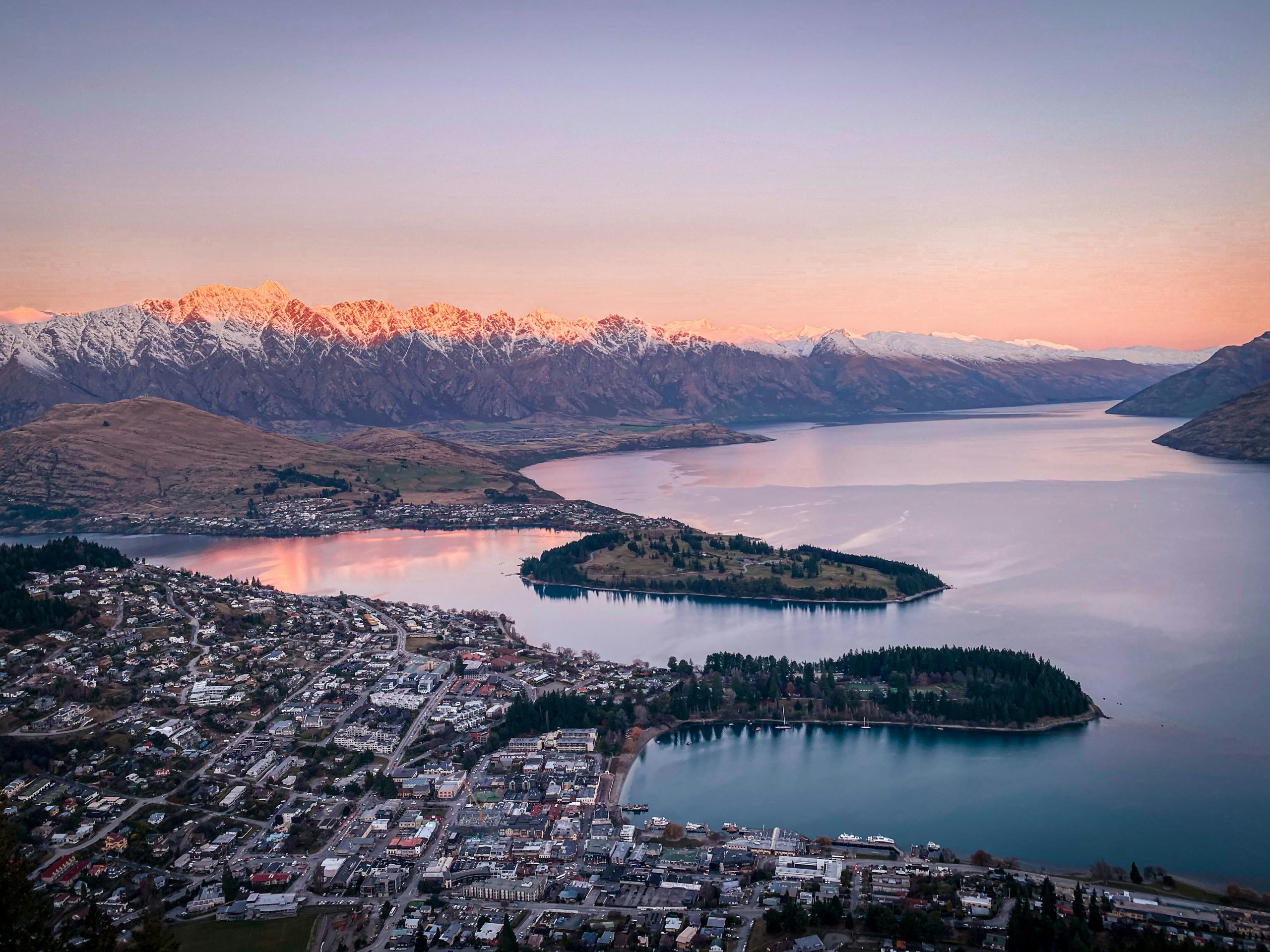
Take the Crown Range Road from Wanaka rather than the lower State Highway 6. It climbs to the top of the Crown Range through tussock plateau and alpine scenery before dropping steeply into the Kawarau Gorge toward Queenstown. Stop at the summit for the view across the Arrow Basin and the Remarkables range ahead.
The descent into Queenstown via Arrowtown is one of the better approaches to the city. Stop in Arrowtown for a coffee, the historic gold-rush town has a well-preserved main street and a café strip that’s worth 30 minutes.
Afternoon (12:00 PM): Queenstown Arrival and the Gardens
Day 5 of our New Zealand itinerary for 1 week requires you to arrive in Queenstown and park at a holiday park outside the center. Creeksyde Top 10 on Robins Road is popular and within walking distance of the CBD. Walk into Queenstown Gardens first, a green peninsula jutting into Lake Wakatipu with disc golf, rose gardens, and the lake on three sides. It’s the best free hour in Queenstown.
Walk five minutes into the CBD. Lunch at Fergburger on Shotover Street; there’s always a queue, and the queue is always worth it. The Big Al (double beef, cheese, and all the trimmings) is the standard order for a first visit.
Evening (4:30 PM): Skyline Gondola and Dinner
Buy a gondola ticket at the base of Bob’s Peak on Brecon Street (around NZD $40 per adult) or walk up the Tiki Trail in 45 minutes for free. The summit lookout at 450 metres gives you the full panorama: Queenstown, Lake Wakatipu, the Remarkables, and Cecil Peak. It’s the most reproduced view of Queenstown for good reason.
Dinner on the Queenstown waterfront. Rata on The Mall has a serious Central Otago menu – salmon from the Marlborough Sounds, Canterbury lamb, and a strong local wine list. Book ahead for dinner in summer. For something more casual, the Steamer Wharf strip has a wide range of options with lake views.
The Queenstown waterfront at night, with the mountains reflecting in the water and the gondola lights moving up Bob’s Peak, is a good reminder of why this city draws so many people.
Day 6: Milford Sound – The Fiord
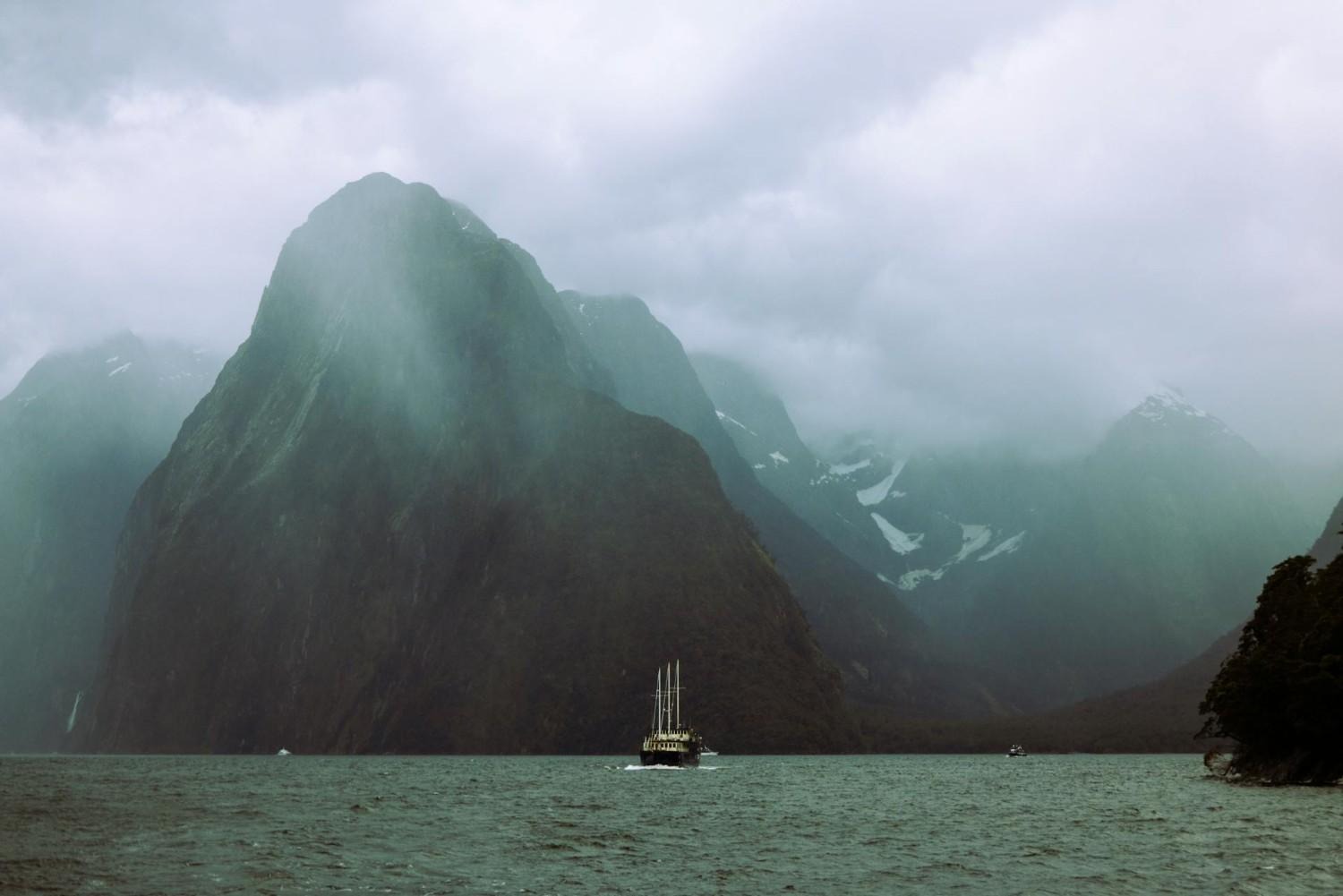
Morning (5:30 AM): Early Start for Milford
Leave Queenstown before sunrise. The drive to Milford Sound takes four hours with stops, and morning cruises have the best chance of clear visibility before afternoon cloud rolls in.
Pack breakfast in the campervan and eat it at the Mirror Lakes rest area (approximately 90 minutes past Te Anau) where the Earl Mountains reflect in still water on calm mornings.
The Milford Road is one of the great drives in New Zealand. It passes through ancient beech forest, the Homer Tunnel (a 1.2 km single-lane tunnel blasted through solid rock at 945 metres elevation), and then drops into the Milford Sound valley. Allow time for stops along the way – the Chasm walk (30 minutes return), the Monkey Creek picnic area, and the Hollyford Valley lookout are all on the road.
Practical tip: Check the Homer Tunnel traffic control schedule before leaving. The tunnel operates on alternating 30-minute one-way flow, and the wait can add 20-30 minutes if you arrive at the wrong time. The schedule is posted at the Te Anau Downs rest stop.
Afternoon (10:00 AM): Milford Sound Cruise
Book a Milford Sound cruise with Jucy Cruise, Real Journeys, or Go Orange. Standard cruises run 1.5-2 hours and travel the full 15 km length of the fiord to the Tasman Sea entrance and back. The fiord walls rise to 1,600 metres on both sides.
You pass Stirling Falls (151 metres) and Lady Bowen Falls (162 metres), both cascading directly from the cliffs into the water. Fur seals rest on the rocks at Seal Point, and dolphins appear year-round.
Bring your own lunch from the campervan or buy sandwiches and hot drinks on board. After the cruise, walk the short Foreshore Walk from the cruise terminal for views back up the fiord.
Evening (3:30 PM): Drive to Te Anau for the Night
Drive back to Te Anau (1.5 hours from Milford Sound) and camp at the Te Anau Lakeview Holiday Park. The town sits on the southern shore of Lake Te Anau, the largest lake on the South Island, and the waterfront walk at sunset takes 20 minutes.
Dinner in Te Anau: Sandfly Café (named after the infamous Fiordland sandfly) does good burgers and local fish dishes. Order the blue cod if it’s available; fresh South Island blue cod is one of the more underrated food experiences in New Zealand.
Day 7: Queenstown Finale
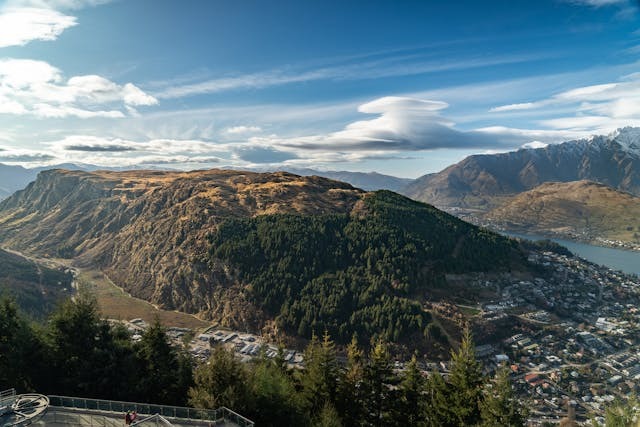
Morning (8:00 AM): Drive Back to Queenstown
The return drive to Queenstown from Te Anau takes the Queenstown-Te Anau highway through Kingston, running along the southern shore of Lake Wakatipu with the Remarkables range rising sharply on the right. It’s a beautiful last morning drive. Arrive in Queenstown by 10 AM. If you haven’t done an activity yet, this is the day for it.
Shotover Jet (NZD $149 per adult) launches a jet boat through the narrow Shotover River canyon at full speed, with 360-degree spins centimetres from the rock walls. The 25-minute experience is exactly what Queenstown built its reputation on.
Alternatively, drive 25 minutes to the Kawarau Gorge Bungy Bridge, the original AJ Hackett bungy jump location, opened in 1988. The first commercial bungy site in the world. You don’t need to jump to visit; watching is free and entertaining.
Afternoon (1:00 PM): Queenstown Hill and the Lakeshore
After the morning activity, walk the Queenstown Hill Time Walk (2.5 hours return, 500 m elevation gain) for a final high view of the city and Lake Wakatipu from above. The summit lookout is known locally as the Basket of Dreams and is one of the best free viewpoints in town.
Back at lake level, walk the Queenstown Waterfront Trail from Queenstown Bay to the Frankton Arm and back. The views of the Remarkables reflected in the lake on a calm afternoon are hard to leave behind. Return your campervan to the Queenstown depot before 5 PM.
Evening (7:00 PM): Farewell Dinner
Final dinner at Rata on The Mall (book ahead in summer) or Amisfield Winery & Bistro in Arrowtown, 20 minutes from Queenstown, one of the best winery restaurants in the South Island. The set menu rotates with the season and uses Central Otago produce throughout.
Order the Central Otago salmon, the Canterbury lamb, and a glass of Amisfield pinot noir. Raise a toast to seven days of mountains, glaciers, fiords, and one very good burger in Queenstown.
Tomorrow you fly home. The South Island gave you everything it promised.
Exploring New Zealand’s Regions: Alternative Itineraries
Not every 7-day New Zealand trip needs to follow the same South Island route. Here are two focused alternatives depending on your priorities.
7-Day North Island Itinerary
- Day 1-2: Auckland – Viaduct Harbour, Sky Tower, Waiheke Island wine tasting by ferry
- Day 3: Hobbiton + Rotorua – Hobbiton Movie Set tour in Matamata, evening hāngī dinner in Rotorua
- Day 4: Rotorua – Te Puia geothermal park, Wai-O-Tapu Thermal Wonderland, Maori cultural experience
- Day 5: Waitomo + Taupo – Glowworm Caves in Waitomo, drive to Lake Taupo, Huka Falls walk
- Day 6: Tongariro National Park – Full-day Tongariro Alpine Crossing (19 km, 6-8 hours)
- Day 7: Wellington – Te Papa Museum, Cuba Street, flat white culture; fly home from Wellington Airport
7-Day South Island (Christchurch-Based) Itinerary
- Day 1: Christchurch – City walk, Botanic Gardens, Christchurch Gondola
- Day 2: Kaikōura – Peninsula seal walk, whale watching tour, fresh crayfish lunch
- Day 3: Lake Tekapo – Lupine lakeshore, Church of the Good Shepherd, Mt John stargazing
- Day 4: Mt Cook – Hooker Valley Track, Tasman Glacier, drive to Wanaka via Lindis Pass
- Day 5: Wanaka – Roy’s Peak or Isthmus Peak hike, Rippon Vineyard tasting, Glendhu Bay camping
- Day 6: Queenstown – Skyline Gondola, Shotover Jet, Fergburger, waterfront walk
- Day 7: Queenstown departure – Morning bungy at Kawarau, farewell lunch at Amisfield Winery
Map of Your 7-Day New Zealand Itinerary
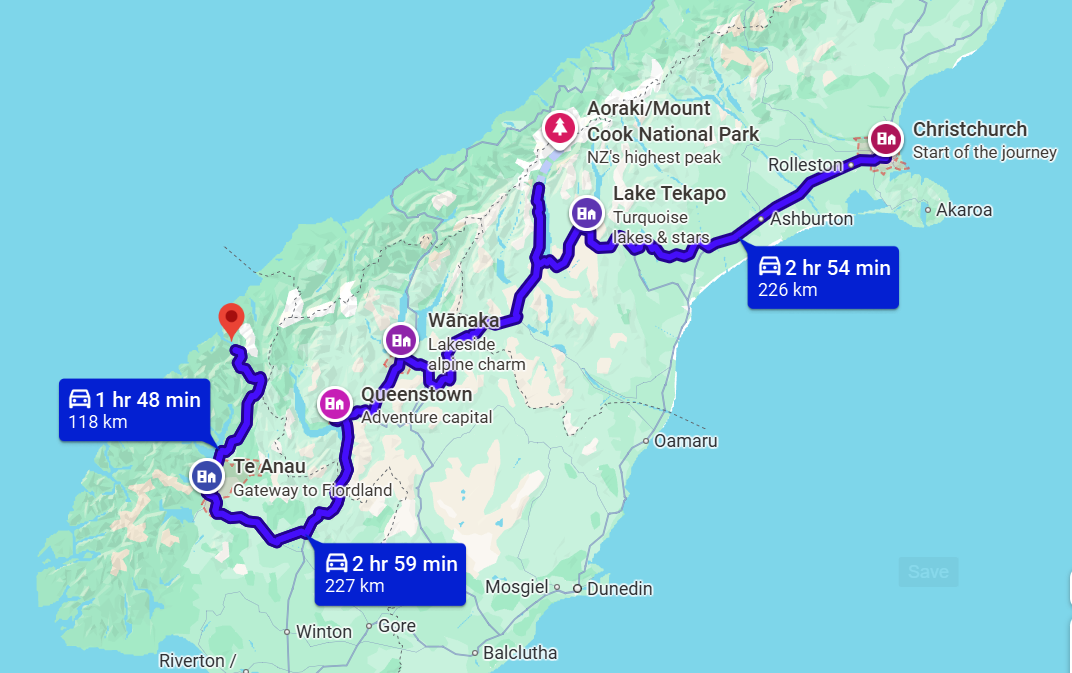
Budgeting for Your Trip: How Much Is a Trip to New Zealand for 1 Week?
A New Zealand road trip can fit a wide range of budgets. A campervan cuts your total spend significantly; your accommodation, kitchen, and transport combine into a single daily rate, replacing both hotel bills and restaurant meals.
Here’s a realistic breakdown in New Zealand Dollars (NZD) for 7 days on the South Island:
| Category | Budget | Mid-Range | High-End |
| Accommodation | NZD $10-40/night | NZD $40-100/night | NZD $120-350+/night |
| Food & Drink | NZD $20-45/day | NZD $55-110/day | NZD $130+/day |
| Attractions | NZD $20-50/day | NZD $70-140/day | NZD $180+/day |
| Transport/Fuel | NZD $25-55/day | NZD $55-90/day | NZD $90+/day |
| Daily Total | NZD $75-190/day | NZD $220-440/day | NZD $520+/day |
| 7-Day Total | ~NZD $525-1,330 | ~NZD $1,540-3,080 | ~NZD $3,640+ |
- Budget Traveler: Cook most meals in the campervan, stay at DOC free campsites or basic holiday parks (NZD $10-$25/night per site), focus on free hikes (Hooker Valley, Roy’s Peak, Queenstown Waterfront), and pick one or two paid experiences like the Milford Sound cruise. Total: NZD $525-$1,330 per person for 7 days, excluding flights and campervan rental.
- Mid-Range Traveler: Mix of campervan cooking and one sit-down meal per day, holiday parks and some serviced sites, Milford Sound cruise, Skyline Gondola, and either Shotover Jet or bungy. Total: NZD $1,540-$3,080 per person for 7 days, excluding flights and campervan rental.
- High-End Traveler: Premium campervan or boutique lodge nights in Queenstown, daily dining at South Island restaurants, helicopter tour over Mt Cook or Milford Sound, private guided hikes, and no budget constraints on activities. Total: NZD $3,640+ per person for 7 days, excluding flights.
Plan Your Dream Trip with Indie Campers
This New Zealand itinerary 7 days route works best as a point-to-point road trip, and Indie Campers makes that practical from the first booking.
Indie Campers offers one-way RV rentals in New Zealand, with pickup in Christchurch and drop-off at Queenstown. This requires no returning a vehicle around the island or wasted driving days. Our fleet consists of compact, 2-berth campervans for couples and even larger motorhomes for families and big groups. All company-owned vehicles come with unlimited mileage. Book now and pay the full amount just 30 days before your pick-up date, with free cancellation available up to 31 days prior if your plans change.
Indie Campers is the right choice for first-time campervan renters who want a straightforward digital booking process and 24/7 support during the trip, as well as experienced road-trippers who want reliable, well-maintained vehicles and genuine flexibility on route.
For a New Zealand itinerary 7 days long, a campervan is the correct option which handles DOC campsites, the Milford Road, Mount Cook’s trailheads and even the lakeside spots which make this route worth exploring.
Book your RV rentals now to kickstart an enthralling road adventure!
7-Day New Zealand Itinerary: Your Final Planning Recap
| Category | Details |
| Best Time to Go | November to February – best hiking conditions, long days, lupines in bloom at Tekapo |
| Recommended Budget | NZD $1,800-$3,500 per person for 7 days (mid-range, excluding flights) |
| Cities to Visit | Christchurch (1 day), Lake Tekapo (1 day), Mt Cook (1 day), Wanaka (1 day), Queenstown (2 days), Milford Sound (1 day) |
| Best Restaurants | The Old Mountaineers’ Café: Mt Cook (Canterbury lamb rack); Fergburger: Queenstown (Big Al); Kika: Wanaka (modern NZ menu); Rata: Queenstown (Central Otago salmon) |
| What to Visit | Christchurch Botanic Gardens; Church of the Good Shepherd; Hooker Valley Track; Roy’s Peak; Milford Sound cruise; Skyline Gondola Queenstown |
| Recommended Transport | Campervan – one-way rental from Christchurch to Queenstown; unlimited mileage |
| Total Distance | Approx. 550 miles (880 km) including the Milford Sound return day trip |
| Must-Try Foods | Christchurch: flat white at C1 Espresso; Tekapo: lakeside meat pie; Mt Cook: Canterbury lamb rack; Wanaka: Central Otago pinot noir; Queenstown: Fergburger; Te Anau: blue cod |
| Accommodation | DOC campsites and holiday parks: NZD $10-$80 per night per site (campervan) |
| Perfect For | Couples, solo adventurers, and active travelers wanting the South Island’s best alpine and fiord scenery in a single week |
FAQs About New Zealand Itinerary 7 Days Long
How much is a trip to New Zealand for 1 week?
A New Zealand itinerary 7 days long usually costs around NZD $1800-3500 per person for mid-range travel; covering campervan rental, fuel, campsites, food, and key activities like the Milford Sound cruise and Skyline Gondola. Budget travelers can manage NZD $525-$1,330 by cooking in the campervan and staying at DOC free sites. International flights from the US typically add NZD $1,200-$2,500 per person and are not included in these figures. A campervan combines accommodation and transport into one daily rate, reducing total trip cost compared to booking hotels and car hire separately.
Is 7 days enough to see New Zealand?
Yes, 7 days is enough to see a complete and deeply satisfying cross-section of New Zealand’s South Island. A focused New Zealand itinerary for 1 week from Christchurch to Queenstown usually covers glacier-fed lakes, the country’s highest peak, Central Otago wine country, Queenstown’s adventure options, and a Milford Sound cruise. You won’t cover the North Island in this time, but the South Island route described here delivers the landscapes New Zealand is most famous for without feeling rushed.
What are the top 3 places to visit in New Zealand for first-timers?
The top three places for first-time visitors to New Zealand are Queenstown (the adventure capital of the South Island with the most concentrated activities), Aoraki/Mount Cook (the country’s highest peak with accessible day hikes for non-climbers), and Milford Sound (the single most dramatic landscape in New Zealand).
What is the most beautiful spot in New Zealand?
Milford Sound is consistently rated the most beautiful spot in New Zealand, a 15 km fiord with walls rising to 1,600 metres directly from the water. Runners-up include Lake Tekapo’s turquoise glacier-fed water framed by lupines from November to December, and the Hooker Valley at dawn with Aoraki/Mount Cook reflected in the terminal lake.
What is the best way to travel in New Zealand for 7 days?
A campervan is the best option to travel when planning a New Zealand itinerary 7 days long, especially around the South Island. Trains between South Island cities are limited, domestic flights skip the most scenic routes, and the best stops on this itinerary have no bus service. A campervan from RV rentals in New Zealand with a one-way option from Christchurch to Queenstown gives you full flexibility, built-in accommodation, and access to DOC campsites at NZD $8-$15 per person per night.
Can you do New Zealand in a week without missing too much?
Yes, you can do a highly satisfying new zealand itinerary 7 days trip without missing the highlights if you focus on one island. The South Island route in this guide covers the alpine scenery, fiordland, wine country, and adventure sports that New Zealand is internationally known for. The North Island’s highlights (Auckland, Hobbiton, Rotorua, Tongariro) are a separate week-long trip and work just as well as a standalone itinerary.
What is the best South Island road trip route for 7 days?
The best South Island road trip for 7 days runs from Christchurch to Queenstown via the alpine spine: Christchurch, Lake Tekapo, Aoraki/Mount Cook, Wanaka, Queenstown, and a Milford Sound day trip from Queenstown or Te Anau. This route covers approximately 880 km, follows a single direction without backtracking, and puts you at the South Island’s most photographed landscapes each day.
Is New Zealand safe to travel alone?
This is a common question many people have while planning their New Zealand itinerary for 1 week. It must be noted that New Zealand is one of the safest countries globally – especially for solo travellers and ranks consistently in the top 5 on the ‘Global Peace Index’. Holiday parks have community kitchens and bathroom facilities that make solo travel straightforward and the traveler community on the campervan circuit is sociable. You must inform someone of your hiking plans though, as weather in the Southern Alps can change without warning.
Is renting a campervan worth it for a 7-day New Zealand trip?
Renting a campervan is a great investment for any New Zealand itinerary 1 week long, like the one above. It saves money on accommodation (holiday parks and DOC sites cost NZD $10-$80 per night versus NZD $100-$300 for hotels), cuts food costs through self-catering, and is the only transport option that handles the Milford Road, Mount Cook’s trailheads, and the lakeside DOC sites that make this route distinctive.