AI Summary
Last Updated: 24 November 2026
Planning on visiting Scotland and don’t want to miss its most stunning sites? No better option than to rent a motorhome and reach them at your own pace. If this is your first time renting and driving a motorhome, here’s all you need to know. And here is how you can book yours to tour Scotland and see the best it has to offer.
Key Takeaways (TL;DR)
- Touring Scotland in a motorhome is one of the best ways to see the Highlands, lochs, islands and coast, with your bed, kitchen and bathroom always with you.
- The best time for a campervan tour of Scotland is May, June or September, for long days, fewer crowds and (in May) fewer midges. July and August are the busiest months.
- Plan for slower driving. Many Highland roads are single-track with passing places, so allow more time than maps suggest.
- A standard car licence (category B) covers motorhomes up to 3,500 kg. Motorhomes over 3,050 kg unladen have lower speed limits: 50 mph on single carriageways and 60 mph on dual carriageways.
- Mix campsites (about £15–40 a night) with stopovers like Forestry and Land Scotland’s Stay the Night car parks (£10–13 a night).
- First-timers should allow at least 7 days. The North Coast 500 alone needs 5–7 days, and a full Highlands and Skye loop takes 10–14 days.
Table of Contents
- Why Tour Scotland in a Motorhome?
- When to Go: Best Time for a Campervan Tour of Scotland at a glance
- Best Routes for Touring Scotland in a Motorhome
- 7-Day Campervan Tour of Scotland for First-Timers
- Driving a Motorhome in Scotland: What First-Timers Need to Know
- Where to Stay When Touring Scotland in a Motorhome
- How Much Does a Motorhome Tour of Scotland Cost?
- Why Indie Campers Is the Best Way to Tour Scotland
- FAQs About Touring Scotland in a Motorhome
Why Tour Scotland in a Motorhome?
- Freedom: Change your plans with the weather, stay longer where you love it and skip what you don’t.
- Remote places: Reach lochs, glens and beaches where hotels are few and far between.
- Comfort: Your own bed, kitchen and bathroom, even on the wildest stretches of the NC500.
- Flexible budget: Mix campsites with low-cost stopovers, and cook your own meals.
- Scenery from your window: Wake up next to a loch or under the mountains.
When to Go: Best Time for a Campervan Tour of Scotland at a glance
| Season | Months | Pros | Cons |
|---|---|---|---|
| Spring | April–May | Fewer crowds, lambs and wildflowers, fewer midges | Cooler weather, some snow on high ground in April |
| Early summer | June | Very long days (up to about 18 hours of daylight in the north), puffins | Midges start, busier campsites |
| Peak summer | July–August | Warmest weather, festivals, all attractions open | Busiest roads and campsites, most midges, highest prices |
| Autumn | September–October | Autumn colours, red deer rut, fewer crowds | Shorter days, more rain, some sites start to close |
| Winter | November–March | Quiet roads, snowy mountains, Northern Lights chances | Short days, ice and snow, many campsites closed |
Our tip: For first-timers, May, June and September are the best balance of weather, daylight and quieter roads.
How Long Do You Need?
| Trip length | What you can do |
|---|---|
| 5–7 days | One region, e.g. Edinburgh to the Highlands, or the North Coast 500 at a fast pace |
| 7–10 days | Glasgow → Loch Lomond → Glencoe → Isle of Skye → Inverness, or the NC500 at a relaxed pace |
| 10–14 days | The West Highlands, Skye and the NC500, or Skye plus the Outer Hebrides |
| 3 weeks or more | A full Scotland loop: Highlands, islands, Cairngorms, east coast and Edinburgh |
Our tip: Plan to drive no more than about 2–3 hours a day. Scottish roads are slow, and you’ll want time to stop and explore.
Best Routes for Touring Scotland in a Motorhome
1. The North Coast 500
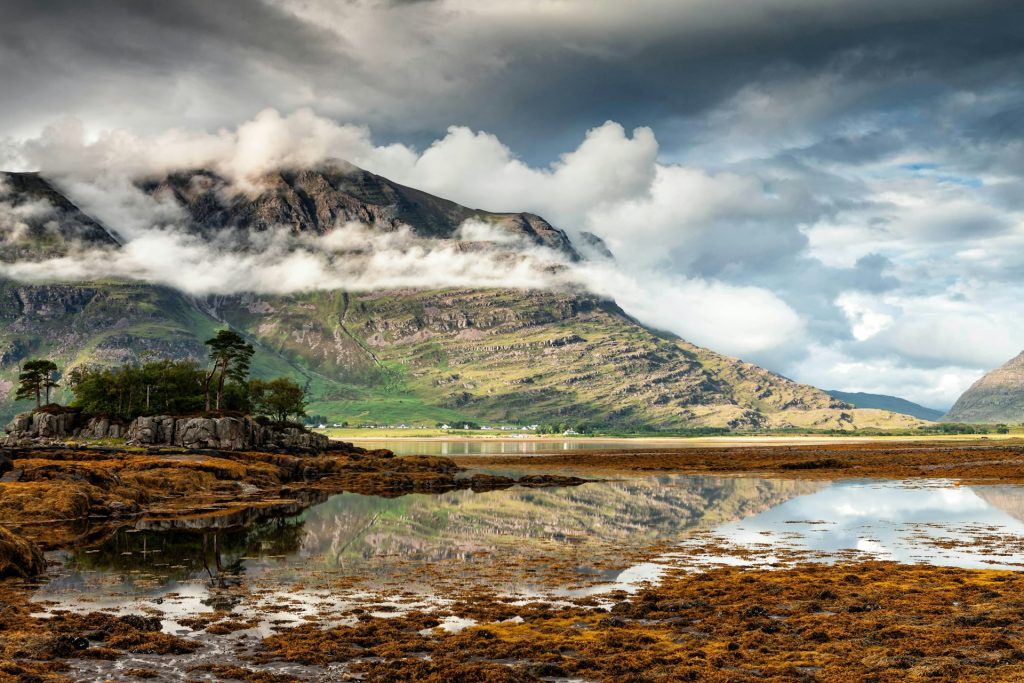
The North Coast 500 is Scotland’s most famous road trip, a loop of about 516 miles around the northern Highlands from Inverness. It takes in white-sand beaches, sea cliffs, mountains and remote villages.
- Time needed: At least 5–7 days.
- Start: Inverness.
- Highlights: Applecross, Torridon, Ullapool, Achmelvich, Durness and Smoo Cave, John o’ Groats and Dunnet Head.
- Motorhome tip: Large motorhomes and inexperienced drivers should avoid the Bealach na Bà pass to Applecross and the B869 between Lochinver and Kylesku. Take the alternative A-roads instead.
2. The West Highlands and the Isle of Skye
A classic first-timer route from Glasgow, with lochs, mountains and the Isle of Skye.
- Time needed: 7–10 days.
- Route: Glasgow → Loch Lomond → Glencoe → Fort William → Mallaig (ferry to Skye) or Eilean Donan Castle and the Skye Bridge → Isle of Skye → Inverness.
- Highlights: Glencoe, Ben Nevis, the Glenfinnan Viaduct, the Old Man of Storr, the Fairy Pools and Neist Point.
3. The Cairngorms and Speyside
A loop through Britain’s biggest national park and whisky country.
- Time needed: 4–7 days.
- Route: Edinburgh → Perthshire → Cairngorms National Park (Aviemore) → Speyside → Royal Deeside → Edinburgh.
- Highlights: Forests, mountains, reindeer, whisky distilleries and Balmoral.
4. Argyll and the Isles
Islands, forests and seafood, close to Glasgow.
- Time needed: 5–7 days.
- Route: Glasgow → Loch Lomond → Inveraray → Kintyre → Oban (ferries to Mull) → Glasgow.
- Highlights: Inveraray Castle, Kilmartin Glen, Oban seafood and island hopping.
5. The Outer Hebrides
White-sand beaches and island life on the edge of the Atlantic.
- Time needed: 7–10 days, including ferries.
- Route: Ullapool → Stornoway (ferry) → Lewis and Harris → the Uists → Barra → Oban (ferry).
- Highlights: Luskentyre Beach, the Callanish Standing Stones and Gaelic culture.
If you want to know more about Wild Camping in Scotland in a Motorhome, check our guide.
7-Day Campervan Tour of Scotland for First-Timers
Glasgow → Loch Lomond → Glencoe → Fort William → Isle of Skye → Loch Ness → Inverness
| Day | Route | Highlights | Overnight |
|---|---|---|---|
| Day 1 | Glasgow → Loch Lomond | Pick up your campervan; drive along Loch Lomond | Loch Lomond campsite or permit area (March–September) |
| Day 2 | Loch Lomond → Glencoe | Rannoch Moor, Glencoe’s mountains and hikes | Glencoe campsite |
| Day 3 | Glencoe → Fort William → Glenfinnan | Ben Nevis, the Glenfinnan Viaduct | Fort William area campsite |
| Day 4 | Fort William → Mallaig → Isle of Skye | Road to the Isles, ferry to Skye | Skye campsite |
| Day 5 | Isle of Skye | Old Man of Storr, Quiraing, Neist Point | Skye campsite |
| Day 6 | Skye → Eilean Donan → Loch Ness | Eilean Donan Castle, Urquhart Castle | Loch Ness area campsite or Stay the Night car park |
| Day 7 | Loch Ness → Inverness | Inverness city and Culloden | Drop off in Inverness (one-way) |
Driving a Motorhome in Scotland: What First-Timers Need to Know
Driving on the Left
In Scotland, as in the rest of the UK, you drive on the left. Take it slowly on your first day, and be careful at roundabouts (go clockwise and give way to the right).
Licences
- A standard car licence (category B) covers motorhomes up to 3,500 kg maximum authorised mass (MAM).
- Motorhomes over 3,500 kg need a C1 licence. UK drivers who passed their test before 1997 usually have C1.
- Visitors can usually drive in the UK on a valid overseas licence for up to 12 months.
Motorhome Speed Limits in Scotland
| Road | Motorhomes up to 3,050 kg unladen | Motorhomes over 3,050 kg unladen |
|---|---|---|
| Built-up areas | 30 mph | 30 mph |
| Single carriageway | 60 mph | 50 mph |
| Dual carriageway | 70 mph | 60 mph |
| Motorway | 70 mph | 70 mph |
Signs may show lower limits, including 20 mph in many Scottish towns.
Single-Track Roads and Passing Places
Many Highland and island roads are single-track, with passing places marked by signs.
- Pull into a passing place on your left, or wait opposite one on your right, to let oncoming traffic pass.
- Let faster vehicles overtake by pulling into a passing place.
- Never park in a passing place.
- Be ready to reverse. If you can’t reverse your motorhome accurately along a narrow road, avoid single-track roads.
- Thank other drivers with a wave.
Other Driving Tips
- Watch for wildlife and sheep on the road, especially in the Highlands.
- Fill up when you can. Petrol stations can be far apart in the north and west.
- Check the weather and road conditions, especially from October to April, when mountain roads can have snow and ice.
- Avoid steep, narrow roads in large vehicles, such as the Bealach na Bà.
Island Ferries
CalMac runs ferries to most of Scotland’s west coast islands, including Skye (Mallaig–Armadale), Mull (Oban–Craignure) and the Outer Hebrides (Ullapool–Stornoway and Oban–Barra).
- Book ahead, especially for July and August, as vehicle space fills up fast.
- Motorhome fares are based on vehicle length and cost more than car fares.
- You don’t need a ferry for Skye, which is linked to the mainland by the Skye Bridge.
Where to Stay When Touring Scotland in a Motorhome
| Option | Price per night | Best for |
|---|---|---|
| Campsites and holiday parks | About £15–40 | Hook-ups, showers, laundry; families |
| Club sites | Varies; member discounts | Well-kept sites in scenic spots |
| Full-facility aires | About £20–30 | Short stops with water and waste disposal |
| Council car park stopovers | About £10 | Budget stops |
| Stay the Night forest car parks | £10–13 | Self-contained vehicles; quiet forest spots |
| Loch Lomond permit areas | £4.50 (March–September) | Lochside overnight stays |
| Private land with permission | About £10–45 | Remote spots, legally |
Good to know: Wild camping in a motorhome isn’t a legal right in Scotland, because the Scottish Outdoor Access Code doesn’t cover vehicles. Use designated spots, follow signs and never park overnight in passing places. You can learn more about Motorhome & Campervan Sites in Scotland in our guide.
How Much Does a Motorhome Tour of Scotland Cost?
| Cost | Typical price |
|---|---|
| Motorhome hire | Varies by season and vehicle; highest in July and August |
| Campsites | About £15–40 per night |
| Stay the Night car parks | £10–13 per night |
| Ferries | Varies by route and vehicle length |
| Fuel | A motorhome uses more fuel than a car; budget for long distances in the Highlands |
| Visitor levy | 5% in Edinburgh (since July 24, 2026) and Glasgow (from January 25, 2027); 7% in Aberdeen (from April 1, 2027), on most overnight stays |
| Food | Save by cooking in your motorhome |
Packing List for a Scottish Motorhome Tour
- Waterproof jacket and trousers. Scottish weather changes fast.
- Warm layers, even in summer.
- Midge repellent and a midge net (June to September).
- Walking boots for hikes and muddy paths.
- Sunglasses and sunscreen for long summer days.
- An eye mask for the light summer nights.
- Offline maps, as mobile signal is patchy in the Highlands.
- Cash and a contactless card, for honesty boxes and small campsites.
- The RingGo app for Stay the Night car parks.
- A power bank for stopovers without hook-ups.
First-Timer Mistakes to Avoid
- Planning too much driving. Allow 2–3 hours a day, at most.
- Not booking campsites in summer. Popular sites on Skye and the NC500 fill up months ahead.
- Taking a big motorhome on the wrong roads. Avoid steep, narrow passes like the Bealach na Bà.
- Parking in passing places. Never park in them, even for a photo.
- Forgetting about midges. Pack repellent and a midge net for summer evenings in the west.
- Running low on fuel. Fill up whenever you’re below half a tank in remote areas.
- Ignoring local rules. Obey “No Overnight Parking” signs and get a permit for Loch Lomond’s Camping Management Zones in summer.
Why Indie Campers Is the Best Way to Tour Scotland
Touring Scotland in a motorhome gives you the Highlands, islands and lochs at your own pace, and Indie Campers makes it easy for first-timers. With three Scottish depots, you can pick your campervan up in Edinburgh, Glasgow or Inverness, and visit the gateway to the NC500, Skye and the Highlands. Gather your friends and your family, choose a campervan or motorhome for 2 to 6 people and travel your way. Heating kits, outdoor furniture and bedding are available, pets are welcome (one per vehicle, up to 30 kg) and 24/7 assistance is on hand.
It doesn’t matter if you’re a first-timer or a seasoned campervan traveler – you can explore Scotland’s wild places with comfort and confidence. All you need to do now is book your Indie Campers motorhome today and start planning your 2027 Scottish road trip.
FAQs About Touring Scotland in a Motorhome
Is touring Scotland in a motorhome a good idea for first-timers?
Touring Scotland in a motorhome is a great idea for first-timers, as long as you plan for slow, narrow roads. Many Highland roads are single-track with passing places, so drive no more than 2–3 hours a day. Choose a smaller campervan if you’re nervous about size. Book campsites ahead in summer, and avoid steep passes like the Bealach na Bà in a large motorhome.
What is the best time for a campervan tour of Scotland?
The best time for a campervan tour of Scotland is May, June or September. May has fewer midges and crowds, June has the longest days (up to about 18 hours of daylight in the north), and September brings autumn colours and quieter roads. July and August are the warmest and busiest months, with the most midges. Many campsites close in winter.
How long do you need to tour Scotland in a motorhome?
You need at least 7 days to tour Scotland in a motorhome, enough for a route like Glasgow to Glencoe, Skye and Inverness. The North Coast 500 alone takes 5–7 days. For the West Highlands, Skye and the NC500 together, allow 10–14 days. A full loop including the islands, Cairngorms and Edinburgh needs 3 weeks or more.
Do I need a special licence to drive a motorhome in Scotland?
You don’t need a special licence to drive most motorhomes in Scotland. A standard car licence (category B) covers motorhomes up to 3,500 kg maximum authorised mass. Heavier motorhomes, up to 7,500 kg, need a C1 licence. Visitors can usually drive in the UK on a valid overseas licence for up to 12 months.
What are the speed limits for motorhomes in Scotland?
Speed limits for motorhomes in Scotland depend on their unladen weight. Motorhomes up to 3,050 kg unladen have the same limits as cars: 60 mph on single carriageways and 70 mph on dual carriageways and motorways. Heavier motorhomes are limited to 50 mph on single carriageways and 60 mph on dual carriageways, with 70 mph on motorways. Many Scottish towns also have 20 mph limits.
Where can you stay overnight in a motorhome in Scotland?
You can stay overnight in a motorhome in Scotland at campsites (about £15–40 a night), motorhome aires and stopovers, and Forestry and Land Scotland’s Stay the Night car parks (£10–13 a night). In Loch Lomond & The Trossachs, you need a permit (£4.50 a night) from March to September. Wild camping in a vehicle isn’t a legal right, so use designated spots.
Can you take a motorhome on the North Coast 500?
You can take a motorhome on the North Coast 500, and many people do. The route is about 516 miles long and takes at least 5–7 days. Large motorhomes and inexperienced drivers should avoid the Bealach na Bà pass to Applecross and the B869 between Lochinver and Kylesku. Use passing places on single-track roads, and book campsites ahead in summer.
How do you deal with midges when touring Scotland?
To deal with midges when touring Scotland, travel in May or September, when there are fewer of them, or pack repellent and a midge net for June to August. Midges are worst in the west Highlands on calm, damp mornings and evenings. Keep motorhome doors and windows closed at dusk, and choose breezy spots by the coast.