AI Summary
Last Updated: 14 October 2026
Taking a campervan on the Interislander ferry means booking two things: a vehicle fare priced by length, and a passenger fare for every person on board. The crossing between Wellington and Picton takes about 3.5 hours, check-in closes 60 minutes before departure, and every campervan over 5.5 metres pays an extra charge for each additional 500 mm.
Planning a New Zealand road trip that covers both islands? This guide covers what the Cook Strait ferry costs in 2026, how Interislander compares with Bluebridge, how to measure and book your van, and what happens on sailing day, from the check-in lane in Wellington to the drive off in Picton.
The good news: with a rental that allows the crossing, you keep the same campervan the whole way. You drive on in one city, spend the crossing on deck watching the Marlborough Sounds, and drive off on the other island with your bed, kitchen and luggage exactly where you left them.
Key Takeaways (TL;DR)
- Two companies carry campervans across Cook Strait: Interislander (Kaitaki and Kaiārahi) and Bluebridge. Both sail Wellington to Picton and back, every day of the year.
- Interislander prices campervans up to 5.5 m as one fare, then adds a surcharge for every extra 500 mm. Measure your van, bike rack included.
- Passenger fares are separate from the vehicle fare. Every adult and child needs a ticket, the driver too.
- Interislander sells Saver, Flexible and Refundable fares. Only Refundable gives money back if you cancel.
- Vehicle check-in closes 60 minutes before departure. Once checked in, you stay in the yard with your van.
- Turn off the LPG and any vehicle alarm before you leave the car deck. You can’t go back down during the sailing.
- Interislander has run two ships since August 2025, so summer and school holiday sailings fill early. Book as soon as your dates are fixed.
Table of Contents
- Interislander Ferry Campervan Crossing: at a Glance
- How the Interislander Ferry Campervan Crossing Works
- Interislander Campervan Price in 2026
- Interislander or Bluebridge: Choosing a Cook Strait Ferry Campervan Sailing
- How to Book the Wellington to Picton Ferry with a Campervan
- Sailing Day: Check-in, Boarding and the Crossing
- Arriving with Your Campervan in New Zealand’s Picton
- Timing Your Crossing Around Peaks, Weather and Disruptions
- Everything You Need to Know About the Interislander Ferry Campervan Crossing
- Road-Trip Both Islands with Indie Campers
- FAQs About the Interislander Ferry Campervan Crossing
Interislander Ferry Campervan Crossing: at a Glance
The short version: book early, measure your van, and arrive an hour before departure.
| What you need to know | Interislander | Bluebridge |
|---|---|---|
| Route | Wellington (Kaiwharawhara terminal) to Picton | Wellington (central city, opposite Wellington Station) to Picton |
| Crossing time | About 3.5 hours | About 3.5 hours |
| Ships in 2026 | Kaitaki and Kaiārahi | Connemara and Livia |
| How campervans are priced | Base fare up to 5.5 m, plus a surcharge per extra 500 mm | Priced by vehicle type and length |
| Passenger fare | Separate, per person | Separate, per person |
| Fare types | Saver, Flexible, Refundable | Standard and flexible options |
| Vehicle check-in closes | 60 minutes before departure | Plan for 60 minutes before departure |
| Before leaving the car deck | Turn off LPG and vehicle alarms | Close gas bottles, handbrake on |
Sources: Interislander fares, Interislander Wellington vehicle check-in, Interislander on newzealand.com, Finding Alexx Bluebridge review.
How the Interislander Ferry Campervan Crossing Works
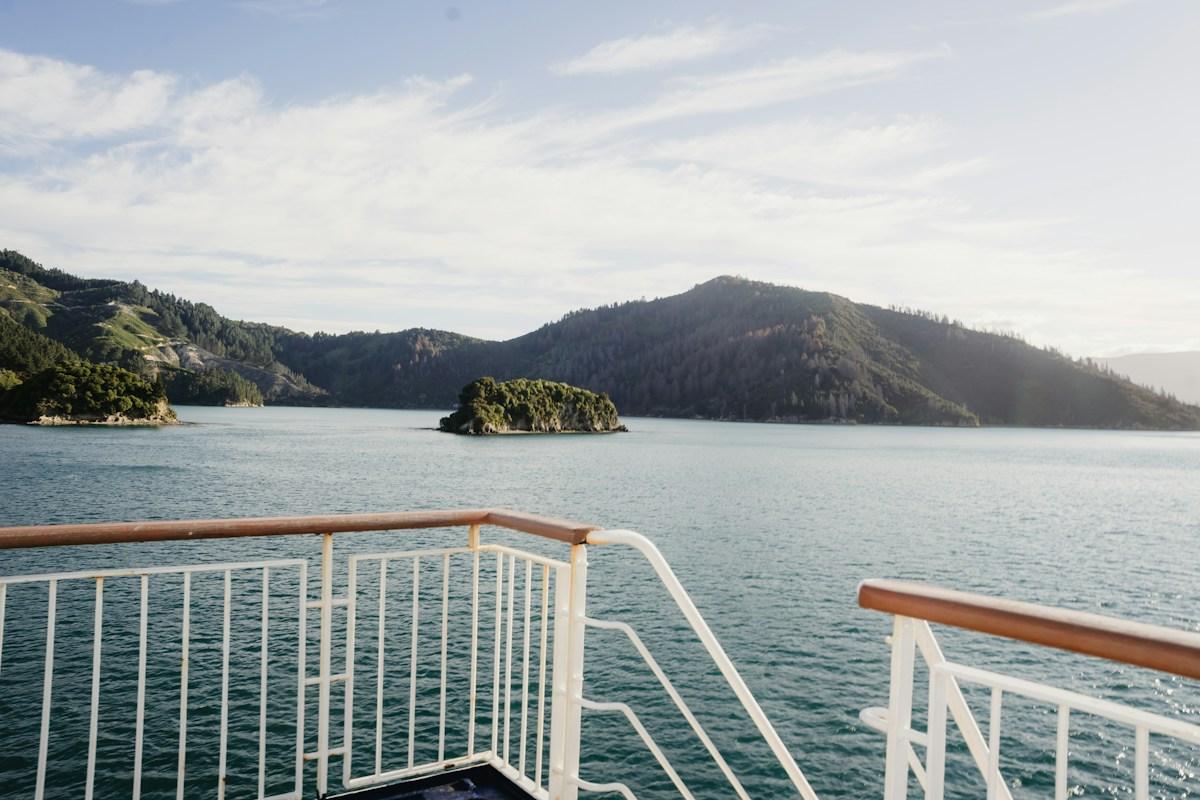
The Interislander ferry campervan crossing is a roll-on, roll-off sailing. You drive your van into the ship’s vehicle deck in Wellington or Picton, park where the marshal points, lock up and walk upstairs to the passenger lounges. About 3.5 hours later you drive off on the other island, through Wellington Harbour, across Cook Strait and into the Marlborough Sounds (newzealand.com).
The fleet is smaller than it used to be. Interislander retired its rail ferry Aratere after a final sailing from Picton on 18 August 2025, to clear the way for wharf rebuilding ahead of two new ferries due in 2029 (Interislander). Until then, campervans sail on Kaitaki or Kaiārahi.
Bluebridge is the other operator on the same route. It is privately owned by StraitNZ and says it sails between downtown Wellington and Picton about 50 times a week (Bluebridge). Both companies take campervans and motorhomes, so the choice usually comes down to price on your date and a departure time that fits your plans.
Your rental shapes the crossing as much as the ferry does. A one-way rental, picked up on one island and dropped off on the other, means you sail once and never drive back to your starting point. Indie Campers offers this between Auckland on the North Island and Christchurch or Queenstown on the South Island.
Interislander Campervan Price in 2026
The Interislander campervan price is the vehicle fare plus one passenger fare per person. There is no single fixed price: fares change by sailing, season and fare type, so the only exact figure is the quote you get in the booking engine on the day.
These published fares give you a realistic benchmark:
| Item | Published fare (NZD, one way) | Source |
|---|---|---|
| Adult passenger, 2026 | $67 to $113 | newzealand.com |
| Child passenger, 2026 | $33 to $54 | newzealand.com |
| Campervan up to 5.5 m, April to November 2025 | $257 | NewZealand.com.au fare table |
| Campervan up to 5.5 m, December 2025 to March 2026 | $317 | NewZealand.com.au fare table |
| Each extra 500 mm over 5.5 m | $58 | NewZealand.com.au fare table |
| Car, public fares checked August 2026 | about $135 to $260 | Interislander and Bluebridge public fares |
The campervan figures are the most recent public retail fares published for the 2025 to 2026 season, so use them as a starting point and get a live quote for your date. Interislander raised passenger fares in May 2026, pointing to fuel costs that stayed high from late February (Interislander).
How campervan length changes the fare
Length is the biggest variable after the date. A campervan up to 5.5 m pays the base fare, and every extra 500 mm adds a surcharge. Take a 6.5 m motorhome: it is 1 m over the limit, so it pays two surcharges. At the published summer 2025 to 2026 retail fares that works out to $317 + (2 × $58) = $433 for the vehicle, before any passengers.
Interislander asks you to book your length to the nearest 0.5 m and to include anything that sticks out, such as a bike rack. Staff check the length at check-in, and if your van is longer than booked you pay the difference or risk losing your space (Interislander). Your rental agreement or the vehicle page lists the exact length, so copy it from there.
Saver, Flexible or Refundable fares
Interislander sells three fare types on every sailing (Interislander):
| Fare type | Change your sailing | Cancel |
|---|---|---|
| Saver | Up to 1 hour before departure, for $20 per person and $30 per vehicle plus any fare difference | No refund |
| Flexible | Up to 1 hour before, free to an equal or cheaper sailing | No refund |
| Refundable | Up to 1 hour before, free to an equal or cheaper sailing | Full refund, less card fees |
Card payments carry a non-refundable 1.75% fee. Account2Account bank transfers from a New Zealand bank have no fee, and Interislander’s Cruisey Pay splits the fare into interest-free instalments. If your rental dates and depots are locked in, the Saver fare usually does the job. If your North Island days might stretch, compare the Flexible price on your sailing with the Saver price plus a $30 vehicle fee and $20 per person.
Match the ferry fare to your rental terms. Indie Campers rentals can be cancelled up to 31 days before pick-up, with the full amount due only 30 days before, while Saver and Flexible ferry fares can’t be refunded. If you book the ferry months ahead, the Refundable fare keeps both halves of the plan equally flexible.
Discounted fares exist for families, seniors aged 65 and over with a SuperGold card or photo ID, and students with valid ID. Infants under 2 travel free.
Interislander or Bluebridge: Choosing a Cook Strait Ferry Campervan Sailing
For a Cook Strait ferry campervan booking, both operators do the same job: same route, roughly the same crossing time, and room for campervans and motorhomes. The differences show up in price, terminal location and what’s on board.
| Interislander | Bluebridge | |
|---|---|---|
| Owner | KiwiRail (state-owned) | StraitNZ (private) |
| Wellington terminal | Kaiwharawhara, north of the CBD, signposted off SH1 | Central city, opposite Wellington Station |
| Car fare range (public, Aug 2026) | About $135 to $260 | About $115 to $235 |
| Discounted fares | Families, seniors, students, plus member and group rates | Member rates for motorhome associations; most rental travellers pay the public fare |
| On board | Premium Lounge, cinema, Play Zone; cabins on Kaitaki | Free Wi-Fi and movies, Pōhutukawa Lounge on Connemara |
Sources: Interislander and Bluebridge public fares (checked August 2026), Bluebridge NZMCA offer, Finding Alexx, NZDF Force4Families.
Bluebridge often quotes lower on the same day, so check it before you pay. Interislander offers more lounge and cabin options, which suits families who want a quiet room for the kids. With only two Interislander ships until 2029, the operator with space on your preferred day is often the deciding factor.
How to Book the Wellington to Picton Ferry with a Campervan
Booking the Wellington to Picton ferry with a campervan is quick once you have three details ready: your sailing date, your van’s length and the number of passengers.
- Pick a one-way rental first. Choose one that starts on one island and ends on the other, such as Auckland to Christchurch. Your depots then decide which direction you sail and on which day.
- Find your van’s exact length. Round to the nearest 0.5 m and add any bike rack (Interislander).
- Compare both operators for your date. Interislander and Bluebridge price each sailing separately, so the same day can quote differently.
- Pick a fare type. Saver if your dates are fixed, Flexible or Refundable if they might move.
- Add every passenger. The vehicle fare covers the van only, so each adult and child needs a ticket.
- Save the booking reference. You show it with photo ID at check-in. Interislander posts changes on its service alerts page, so check it the day before you sail.
You can also book at the Wellington or Picton terminal on the day, but campervan space on summer sailings often sells out well before then.

Sailing Day: Check-in, Boarding and the Crossing
Arrive at least 60 minutes before departure. At Interislander’s Wellington terminal, follow the pink signs and road markings straight to vehicle check-in, show your booking and photo ID, and collect your boarding passes (Interislander).
After check-in you stay in the yard with your van. There are toilets, vending machines and a pet exercise area. Arriving early doesn’t mean boarding first: marshals load each sailing to balance the ship, so large vehicles may go on before or after cars.
Once the marshal waves you aboard, work through this short list:
- Headlights off as soon as you’re inside the ship
- Handbrake on, and the van in Park or in gear
- LPG cylinders turned off
- Vehicle alarm and any anti-tow alarm switched off, as the ship’s motion can set them off
- Jacket, snacks, chargers and medication taken upstairs, since you can’t return to the car deck during the sailing
If anyone in your group wants to board as a foot passenger, they check in at the passenger terminal while the driver takes the van to vehicle check-in.
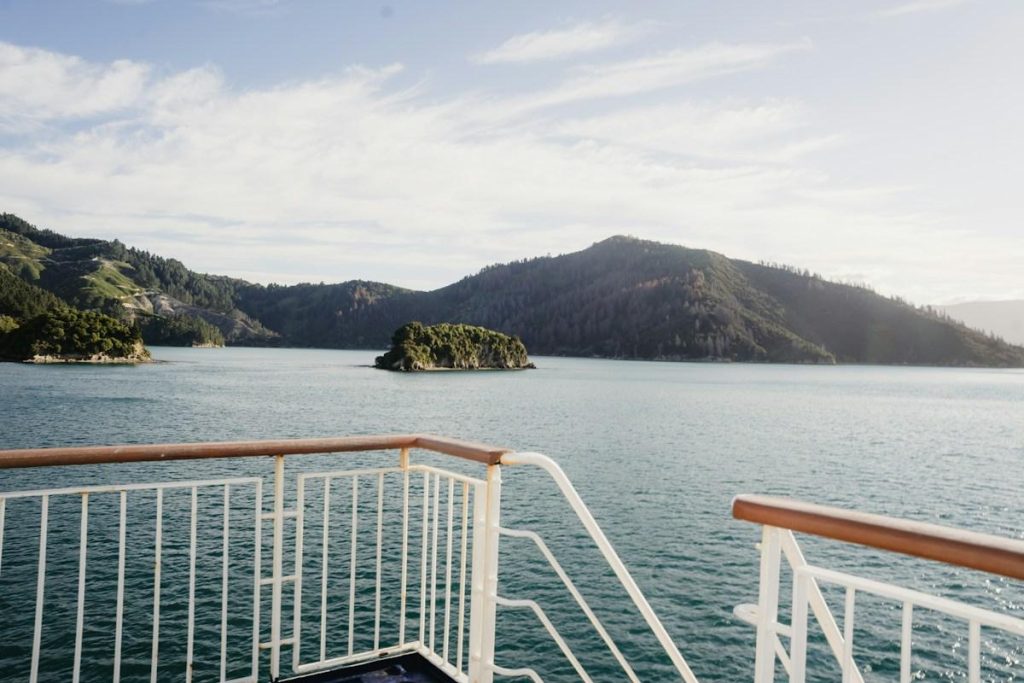
The crossing itself is the easy part. The sailing starts in Wellington Harbour, crosses the open water of Cook Strait, then winds through the Marlborough Sounds into Picton. Grab a seat on the outer deck for that final section if the weather allows.
Door to door, including check-in, allow about five hours.
Arriving with Your Campervan in New Zealand’s Picton
A campervan in New Zealand’s Picton puts you at the top of the South Island with two roads to choose from. Queen Charlotte Drive heads west along the Sounds to Havelock, known for its green-lipped mussels, and on to Nelson and the Abel Tasman. State Highway 1 runs south through the Marlborough vineyards around Blenheim, then down the coast to Kaikōura, where whale-watching boats leave from town, and on to Christchurch.
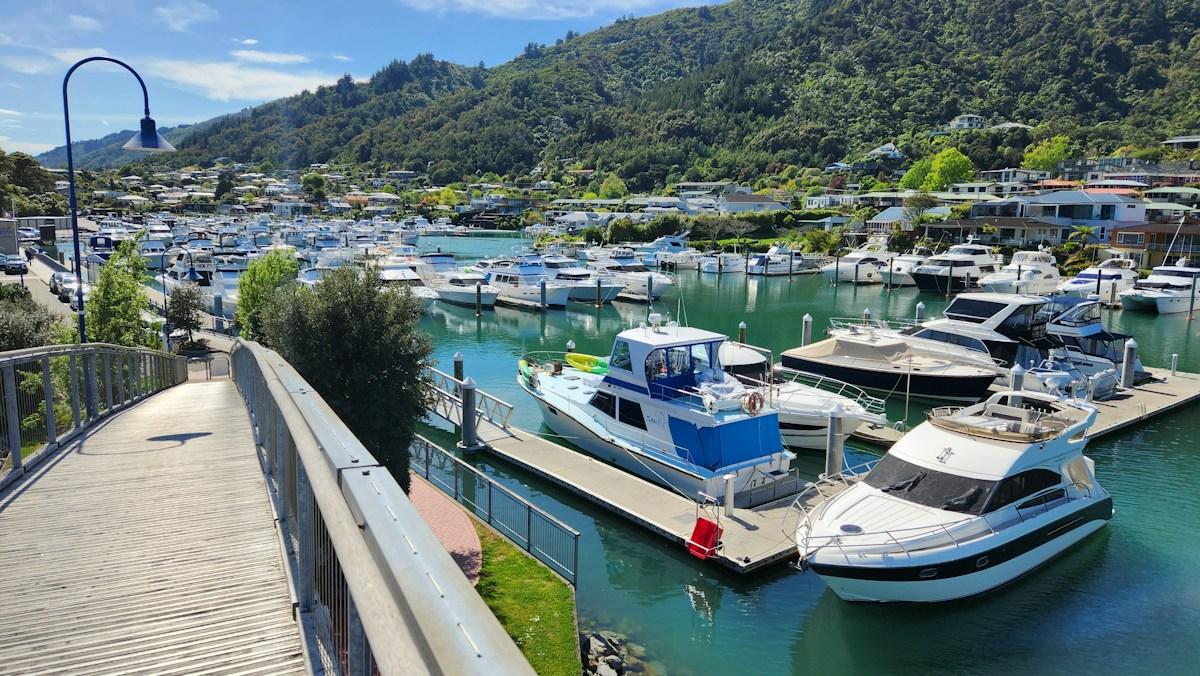
Picton is small and walkable, with holiday parks and campgrounds a short drive from the ferry. If your sailing lands in the evening, book your first night before you leave Wellington rather than looking for a spot in the dark. Arriving the other way, from Picton into Wellington, gives you the capital’s waterfront and Te Papa museum before the drive north.
Picton also sets up the classic one-way route. Pick up a campervan rental in Auckland, drive the North Island down to Wellington, cross to Picton, and finish at a campervan rental in Christchurch or Queenstown depot without driving back north.
Timing Your Crossing Around Peaks, Weather and Disruptions
One spare day between the ferry and any fixed booking on the other side, such as a flight or a campervan drop-off, absorbs most delays. Sailings run all year, and Interislander says it delivered close to 100% reliability in the 12 months before March 2026 (NZ Herald).
Delays still happen, and a two-ship fleet feels them more. In March 2026 a technical fault took Kaiārahi out of service for about a week (NZ Herald), and scheduled maintenance took each ship away for part of winter 2026 (The Press). Cook Strait weather can also cancel sailings when swells top 4 m (NZ Herald).
Three habits keep your plans on track:
- Book as early as you can for mid-December to February and for Easter, when sailings fill first.
- Leave one spare day between your ferry and any fixed booking on the other side, such as a flight or a campervan drop-off.
- Pick a Flexible or Refundable fare if you have no buffer day, so a cancelled or missed sailing can be moved without fees.
Everything You Need to Know About the Interislander Ferry Campervan Crossing
Everything in this guide, in one table you can screenshot before you book.
| Topic | What to know |
|---|---|
| Operators | Interislander (Kaitaki, Kaiārahi) and Bluebridge (Connemara, Livia) |
| Route | Wellington to Picton and Picton to Wellington, all year |
| Crossing time | About 3.5 hours |
| What you pay | Vehicle fare by length plus one passenger fare per person |
| Length rule | Base fare up to 5.5 m, surcharge per extra 500 mm; bike racks count |
| Published fares | Adults $67 to $113; campervans up to 5.5 m $257 to $317 retail (2025 to 2026), plus $58 per extra 500 mm |
| Fare types (Interislander) | Saver (paid changes, no refund), Flexible (free changes), Refundable (full refund less card fees) |
| Payment | 1.75% card fee; Account2Account has no fee; Cruisey Pay instalments |
| Check-in | Closes 60 minutes before departure; bring booking reference and photo ID |
| On the car deck | Headlights off, handbrake on, LPG off, alarms off, take what you need upstairs |
| Busiest periods | Mid-December to February and Easter |
| Disruption risk | Two Interislander ships until 2029; weather cancellations in big swells |
| Best habit | One spare day between the ferry and any fixed booking |
All prices are one way, in New Zealand dollars, and were checked in October 2026. Quote your exact sailing before you budget, because fares move with demand.
Road-Trip Both Islands with Indie Campers
The ferry is the one fixed point on a two-island trip, and Indie Campers is set up for it. One-way rentals let you pick up in Auckland and drop off in Christchurch or Queenstown, so you cross Cook Strait once and never drive back. Book now, pay later means the full rental amount is due only 30 days before pick-up, and flexible cancellation lets you cancel up to 31 days before pick-up without penalty.
That combination suits couples, families and first-time campervan travellers doing New Zealand end to end, who want the ferry date, not the rental depot, to shape the itinerary. You book and manage the rental online, company-owned vans come with unlimited mileage, and 24/7 support covers you on both islands.
Summer is peak season for ferries and campervans alike. Check campervan availability in New Zealand for your dates, then lock in the ferry the same day.
FAQs About the Interislander Ferry Campervan Crossing
How much does it cost to take a campervan on the Interislander ferry?
Taking a campervan on the Interislander ferry costs a vehicle fare plus a passenger fare for each person, and the total changes by sailing and season. Published retail fares for 2025 to 2026 put a campervan up to 5.5 m at $257 off-peak and $317 in summer (NZD), with $58 added for every extra 500 mm. Adult passenger fares listed for 2026 run from $67 to $113 one way. A couple in a 6.5 m van sailing in summer should budget around $433 for the van plus two adult tickets, then confirm with a live quote, since Interislander raised fares in May 2026.
Can I take a rental campervan on the Cook Strait ferry?
You can take a rental campervan on the Cook Strait ferry as long as your rental terms allow it. Check your rental terms before booking the sailing, since some car rental firms require you to swap vehicles at the terminal. Indie Campers offers one-way rentals between its Auckland, Christchurch and Queenstown depots, so confirm the ferry terms for your booking when you reserve. Book the ferry in your own name with the van’s exact length.
How long is the Wellington to Picton ferry with a campervan?
The Wellington to Picton ferry with a campervan takes about 3.5 hours on the water. Add at least 60 minutes for vehicle check-in before departure and time to drive off at the other end. Plan on roughly five hours from arriving at the terminal to leaving the ferry port on the other side.
Is Bluebridge or Interislander cheaper for a campervan?
Bluebridge is often cheaper than Interislander for a campervan, but the gap depends on the sailing. Public car fares checked in August 2026 ran from about $115 to $235 (NZD) on Bluebridge and $135 to $260 on Interislander. Bluebridge’s lower rates for motorhome association members don’t apply to most rental travellers, so compare both operators’ public fares for your exact date before paying.
Do you need to book the Interislander ferry in advance?
You do not have to book the Interislander ferry in advance, but campervan space on popular sailings sells out. Terminal tickets are available on the day if space remains. Interislander has run only two ships since August 2025, so mid-December to February and Easter sailings fill earliest. Booking when your rental is confirmed gives you the widest choice of times and fares.
How early should you arrive for the Interislander ferry with a campervan?
You should arrive for the Interislander ferry with a campervan at least 60 minutes before departure, because vehicle check-in closes at that point. Bring your booking reference and photo ID to collect boarding passes at the check-in booth. Arriving earlier does not get you loaded first, as marshals load each sailing to balance the ship.
Can you stay in your campervan during the ferry crossing?
You cannot stay in your campervan during the ferry crossing, as all passengers leave the vehicle deck once parked. Interislander does not let you return to your vehicle during the sailing, so take jackets, snacks, chargers and medication upstairs with you. Before leaving the van, turn off the LPG, engage the handbrake and switch off any alarm.
What happens if my ferry is cancelled during my campervan trip?
If your ferry is cancelled during your campervan trip, the operator moves you to another sailing, and your fare type decides how much flexibility you have afterwards. Interislander’s Flexible and Refundable fares allow free changes to an equal or cheaper sailing up to 1 hour before departure. Weather cancellations happen when Cook Strait swells run high, and a March 2026 fault left Interislander with one ship for about a week. One spare day between the ferry and your campervan drop-off or flight absorbs most delays.