Last Updated: July 31, 2026
One day isn’t much time for a city as big as Paris. If you’re planning a one-day in Paris itinerary with your family or loved one, this guide will cover top spots like the Eiffel Tower, the Louvre and Montmartre among others, along with recommendations on how and what to eat on your way through the city in a single day.
Here’s a quick overview before the full hour-by-hour plan:
Key Takeaways
- Iconic Stops: The Eiffel Tower, the Louvre, and Notre-Dame
- Hidden Gems: The Sainte-Chapelle stained glass and the Montmartre backstreets are standout spots that deserve a place on your one day in Paris itinerary.
- Recommended Transport: You can rent an Indie Campers RV parked outside the low emission zone, then take the metro into central Paris.
- Recommended Budget: $100 to $220 per person for the day, covering food, transport, and entry tickets
- Best Time to Go: Spring runs from April to May and is the best time for a one day in Paris itinerary, since the weather stays mild and crowds stay manageable.
Table of Contents
- One Day in Paris Itinerary: At a Glance
- Why You’ll Love a Day Trip to Paris?
- Best Time to Visit Paris
- Is One Day Enough to Visit Paris?
- How to Get Around Paris?
- The Best One Day in Paris Itinerary
- Morning: The Eiffel Tower and the Seine
- Afternoon: The Louvre and the Champs-Élysées
- Evening: Montmartre and Sacré-Cœur
- Exploring Paris and Beyond: Alternative Itineraries
- Map of Your One Day in Paris Itinerary
- Budgeting for Your Trip: How Much Is a Trip to Paris for One Day?
- Plan Your Dream Trip to Paris with Indie Campers
- One Day in Paris Itinerary: Your Final Planning Recap
- FAQs About a One Day in Paris Itinerary
One Day in Paris Itinerary: At a Glance
| Time | Location(s) | Top Highlights |
| Morning | Eiffel Tower and the Seine | Eiffel Tower, Trocadéro Gardens, Notre-Dame exterior. Try a fresh croissant. |
| Afternoon | The Louvre and the Champs-Élysées | The Louvre, Tuileries Garden, Arc de Triomphe. Try a croqué monsieur. |
| Evening | Montmartre and Sacré-Cœur | Sacré-Cœur, Place du Tertre, the Eiffel Tower light show. Try steak frites. |
Why You’ll Love a Day Trip to Paris?
Paris packs an unusual amount of variety into a small area. Grand boulevards, quiet cobblestone streets, and riverside walkways all sit within a few metro stops of each other.
That density is part of what makes a Paris in one day itinerary realistic in the first place. You do not need days to cover the city’s biggest names. You need a route that makes sense on a map.
An RV from Indie Campers adds real flexibility if Paris is one stop on a longer French road trip. Driving into the city itself is not practical, since parking is scarce and the low emission zone restricts many vehicles.
Parking on the outskirts and taking the metro in works far better. That same RV can carry you on to the Loire Valley or Normandy once your day in Paris wraps up, without a hotel booking to plan around.
Food and culture are part of the draw too. Paris gave the world the croissant, the croque monsieur, and steak frites, along with a cafe culture built around lingering over a single coffee.
Even a quick lunch near the Seine means passing bakeries with fresh bread stacked in the window.
That’s the balance this guide is built around: enough structure to see Paris’s icons, enough room to enjoy them properly.
None of this requires a car once you’re actually inside the city. The point of the RV is getting you close, not getting you around once you’ve arrived.
Best Time to Visit Paris
The season you visit shapes both the crowds you’ll deal with and how comfortable it feels to walk between landmarks.
This matters even more for a one day in Paris itinerary, since a single rainy afternoon can eat into hours you can’t get back.
Spring (March to May)
Spring brings mild temperatures and blooming gardens, making it one of the most comfortable seasons for a single packed day of sightseeing.
Crowds stay manageable compared to summer, especially in April before school holidays begin, and the Tuileries Garden and Trocadéro both look their best with flowers in full bloom.
- Average Temperatures: 46 to 66°F (8 to 19°C)
- What to expect: mild and occasionally rainy weather, moderate crowds, and mid-range prices.
Summer (June to August)
Summer in Paris gets warm and busy, with long daylight hours that give you more time to sightsee before dark.
August sees many Parisians leave the city, which means some smaller restaurants close for the month, though most major attractions stay fully open and busy with visitors.
- Average Temperatures: 64 to 79°F (18 to 26°C)
- What to expect: warm and sunny weather, heavy crowds, and peak-season prices.
Autumn (September to November)
Autumn brings cooler, comfortable weather along with noticeably shorter lines at major attractions. September in particular offers a good mix of pleasant weather and school-year crowds that thin out from summer peaks.
It’s one of the better months for a single ambitious day of sightseeing.
- Average Temperatures: 48 to 68°F (9 to 20°C)
- What to expect: mild and increasingly cool weather, moderate crowds, and mid-range prices.
Winter (December to February)
Winter is cold and often gray, but the Christmas markets and lights along the Champs-Élysées give December a festive lift.
Outside the holiday season, this is the quietest and cheapest time to visit, with shorter lines at both the Eiffel Tower and the Louvre.
- Average Temperatures: 37 to 46°F (3 to 8°C)
- What to expect: cold and occasionally rainy weather, light crowds outside the holidays, and low-season prices.
Spring and autumn both offer the easiest balance of good weather and manageable crowds for a single busy day.
Is One Day Enough to Visit Paris?
Yes, one day is enough to see Paris’s biggest landmarks if you pick a tight, efficient route instead of trying to see every neighborhood. A well-planned one day in Paris itinerary comes down to grouping stops by location, not by how famous they are.
This itinerary spends the morning around the Eiffel Tower and the Seine, the afternoon at the Louvre and along the Champs-Élysées, and the evening in Montmartre.
With that structure, you’ll see the Eiffel Tower, the Louvre, the Arc de Triomphe, and Sacré-Cœur, along with time for a proper lunch and dinner.
A common mistake is trying to add a day trip to Versailles on top of this same day. That usually means rushing through both Paris and Versailles without seeing either one properly, since Versailles alone can easily fill half a day on its own.
Save Versailles for a separate day instead. This one day in Paris itinerary leaves enough room to enjoy the city’s core rather than sprint through a checklist.
How to Get Around Paris?
Paris does not allow free access to every vehicle, which matters if you’re planning to drive any part of your one day in Paris itinerary. The city runs a low emission zone that requires a Crit’Air sticker, and driving without one risks a fine of around €68.
Parking inside the city is also scarce and expensive, and many parking structures have height barriers around 2 meters that block larger vehicles entirely. It’s worth checking a rental vehicle’s height before assuming it will fit into any given garage. Getting turned away at the entrance wastes valuable time on a day with a packed schedule.
Paris makes up for this with one of Europe’s best metro systems. A single ticket costs around €2.15. The network covers nearly every neighborhood you’ll want to visit in a single day, with trains running frequently from early morning until well past midnight.
Walking still plays a big role on a one-day trip like this one, since several of the stops sit close enough together that the metro would barely save time. Comfortable shoes matter more than any single ticket or pass.
An RV still works well for the trip overall, since it beats booking a hotel for a single night in the city. Park at a P+R lot outside the low emission zone, such as those near Vincennes or La Défense, then take the metro or RER in for the day.
This approach also means you’re not tied to a single hotel checkout time. An early start or a late finish costs you nothing extra beyond a bit less sleep.
Booking RV rentals in Paris through Indie Campers gives you unlimited mileage on company-owned vehicles. Extending your trip to the Loire Valley or Normandy costs nothing extra in mileage fees.
If Paris is one stop on a longer route, RV rentals in France cover pickup locations across the country.
The Best One Day in Paris Itinerary
Here’s how this one day in Paris itinerary comes together, hour by hour. This route assumes an early start, since fitting five major landmarks into one day leaves little room for a slow morning.
If you’re traveling with kids or prefer a gentler pace, consider dropping one stop rather than rushing through all five.
A stressful day rarely makes for good memories or good photos.
Morning: The Eiffel Tower and the Seine
Early Morning (8 AM): The Eiffel Tower
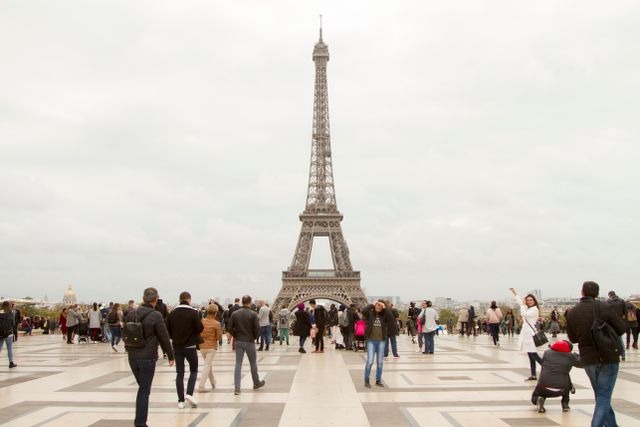
Start at the Eiffel Tower, the iron lattice landmark built for the 1889 World’s Fair and still the symbol most people picture when they think of Paris. Engineer Gustave Eiffel designed it as a temporary structure, with a permit set to expire after 20 years.
It was nearly torn down around 1909 before its value as a radio transmission tower saved it from demolition, turning it into the permanent fixture it is today.
Arriving right at opening avoids both the crowds and the midday heat in summer.
Head across the river first to the Trocadéro Gardens for the classic postcard view, then walk back across the Pont d’Iéna to the tower itself. The gardens themselves date back to the 1937 World’s Fair and offer fountains and a wide plaza that frames the tower perfectly for photos.
Climbing to the second floor by stairs costs less than the elevator and gives you a workout with a view. The summit level costs more and requires a separate ticket, but on a clear day the view stretches far beyond what the second floor offers.
Give yourself about two hours for the tower, the gardens, and the walk between them.
Practical tip: Book your Eiffel Tower ticket online in advance, since same-day tickets often sell out and walk-up lines can run over an hour.
Late Morning (10:30 AM): Along the Seine to Notre-Dame
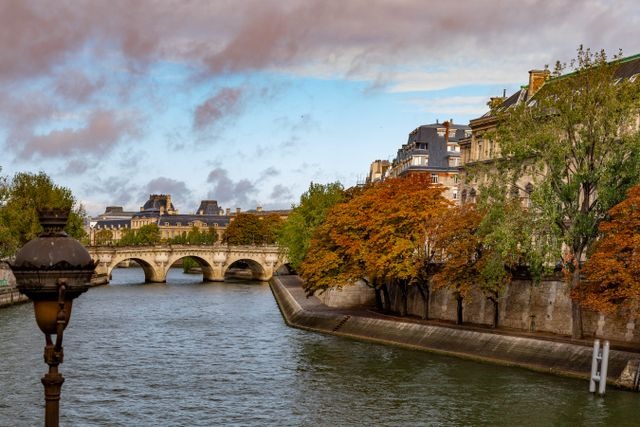
From the Eiffel Tower, walk or take the metro east along the Seine toward Île de la Cité, the small island at the heart of the city. Notre-Dame Cathedral sits here, fully reopened after the 2019 fire and the years of restoration that followed. The interior stonework and stained glass have been cleaned to a brightness many visitors say they had never seen before.
Even a quick look at the rebuilt spire and facade is worth the stop. The plaza in front offers a good photo spot without needing to go inside.
Grab a croissant or pastry from a nearby bakery to eat while you walk, since Paris bakeries open early and the smell alone is hard to resist.
Look for a boulangerie with a line of locals rather than tourists, since that’s usually a sign the bread and pastries are baked fresh on site.
Practical tip: The Sainte-Chapelle, a short walk from Notre-Dame, holds some of the oldest stained glass in Paris, with panels dating back to the 13th century. It’s often far less crowded than the cathedral itself, and the light through the windows looks best on a sunny morning.
Afternoon: The Louvre and the Champs-Élysées
Midday (12:30 PM): Lunch and the Louvre
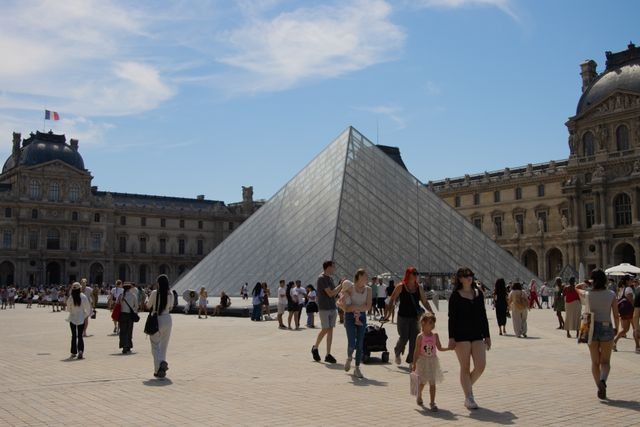
For lunch, find a cafe near the Louvre and order a croque monsieur, the grilled ham and cheese sandwich that shows up on menus across the city. Pair it with a coffee if you want to sit for a few extra minutes before an afternoon of walking. This is likely the last real chance to rest until dinner.
Afterward, visit the Louvre, the world’s largest art museum and home to the Mona Lisa, the Venus de Milo, and the Winged Victory of Samothrace. With only one day in Paris, focus on these three works rather than trying to see the entire museum, which holds more than 35,000 pieces across three wings.
The building itself started as a medieval fortress in the 12th century before becoming a royal palace. Traces of those original stone walls are still visible in the basement level today.
Give yourself about two hours inside, which is enough for a focused visit without exhausting yourself before the evening.
Practical tip: Book a timed entry slot online in advance. The Louvre no longer sells same-day tickets at the door, and slots can fill up on busy weekends, especially during the summer months.
Afternoon (3 PM): Tuileries Garden and the Champs-Élysées
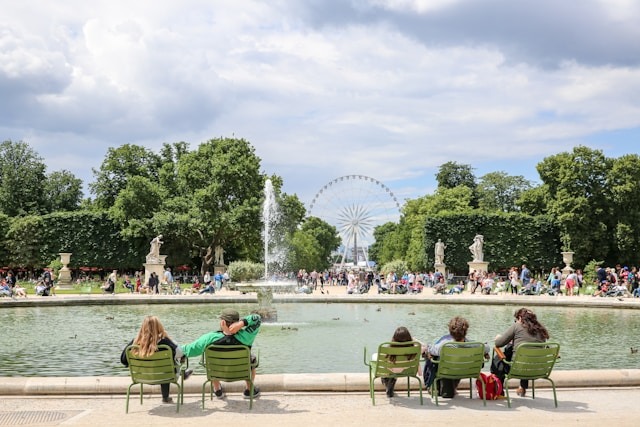
After the Louvre, walk through the Tuileries Garden, the formal park that stretches from the museum toward Place de la Concorde.
The gravel paths and fountains make a good place to rest your feet for a few minutes. The garden has looked roughly the same since it was redesigned in the 17th century by the same landscape architect behind the gardens at Versailles.
Continue on to the Champs-Élysées, the wide avenue lined with shops and cafes that leads to the Arc de Triomphe. Walking the full length takes about 30 minutes at a relaxed pace, passing flagship stores, cinemas, and outdoor cafes that stay busy well into the evening.
At the Arc de Triomphe, climb to the rooftop terrace for a view down the avenue and across the city’s rooftops. It’s a different angle than the one you’ll get from the Eiffel Tower.
On a clear day you can see all the way to the Louvre in the distance. Twelve avenues radiate outward from the monument, forming a star pattern only visible from above.
Practical tip: Buy your Arc de Triomphe ticket online to skip the ticket line at the base. Use the pedestrian underpass to reach the monument safely, since the roundabout above ground carries constant traffic.
Evening: Montmartre and Sacré-Cœur
Early Evening (6 PM): Montmartre and Sacré-Cœur
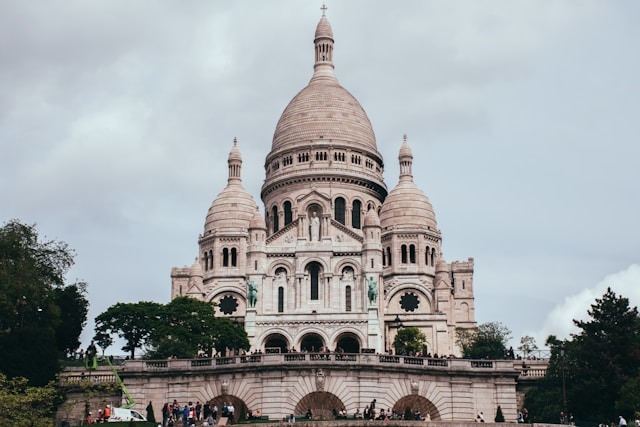
Take the metro north to Montmartre, the hilltop neighborhood once home to artists like Picasso and Toulouse-Lautrec. The Basilica of Sacré-Cœur sits at the top, its white domes visible from much of the city. It was built in the late 19th century using a self-cleaning stone that stays pale even after decades of weather.
The neighborhood kept its village-like feel even as the rest of Paris grew up around it. Many of the same narrow, sloped streets that drew painters a century ago still look much the same today.
Climb the steps to the basilica’s terrace for one of the best sunset views in Paris, especially on a clear evening. The stairs draw a mix of tired tourists and locals who treat the steps like a neighborhood gathering spot, sometimes with a guitar or a bottle of wine.
Wander down through Place du Tertre, the small square where street artists still set up easels and offer to sketch portraits, before continuing into the quieter streets below. The square has drawn working artists since the late 1800s. Most now cater to visitors, but the tradition of open-air portraits has never stopped.
Practical tip: The funicular near the base of the hill saves you the steepest set of stairs. Save your energy for the walk back down later instead, since the streets of Montmartre are steep in both directions.
Evening (8 PM): Dinner and the Eiffel Tower Light Show
For dinner, find a bistro in Montmartre or back in the city center and order steak frites. It’s the simple pairing of steak and fries that anchors most traditional French menus. It’s usually served with a small side salad and a mustard or peppercorn sauce on the side.
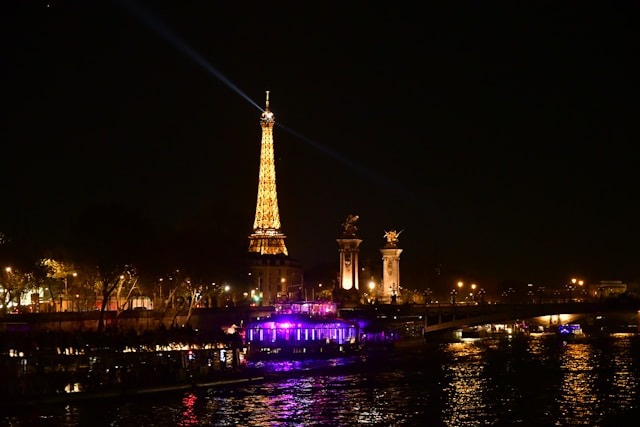
If you have the energy, make your way back toward the Eiffel Tower for the evening light show. The tower sparkles for five minutes on the hour after dark.
Watching it from the Trocadéro Gardens or from a bridge along the Seine gives you space to actually enjoy it. You’ll be away from the densest crowds at the tower’s base, and the reflection off the river adds an extra layer to the view.
Ending your one day in Paris with the tower lit up against the night sky is a fitting way to close out a packed but rewarding day.
Exploring Paris and Beyond: Alternative Itineraries
If a one day in Paris itinerary leaves you wanting more, here are two ways to extend the trip. Both variants keep the same core landmarks from this itinerary, then build outward from there.
It also contains a list of things to do in Paris, across each of the itineraries:
3-Day Paris Itinerary
This version spreads the same highlights across three days, then adds neighborhoods and museums that a single day cannot fit in. It suits travelers who want a fuller picture of the city without rushing, including time for the Musée d’Orsay and a proper Seine river cruise.
- Day 1: Eiffel Tower, the Seine, and Notre-Dame
- Day 2: The Louvre, Musée d’Orsay, and the Champs-Élysées
- Day 3: Montmartre, Le Marais, and a Seine river cruise
7-Day Paris and Loire Valley Itinerary
For travelers who want to pair the city with the French countryside, this variant uses an RV to reach the Loire Valley’s château country. It works well after a few days in Paris, since the region sits less than two hours southwest of the city by road.
- Day 1 to 3: Paris, the Eiffel Tower, the Louvre, and Montmartre
- Day 4 to 5: Loire Valley, châteaux like Chambord and Chenonceau
- Day 6 to 7: Tours or Amboise, wine tasting and the surrounding countryside
Map of Your One Day in Paris Itinerary
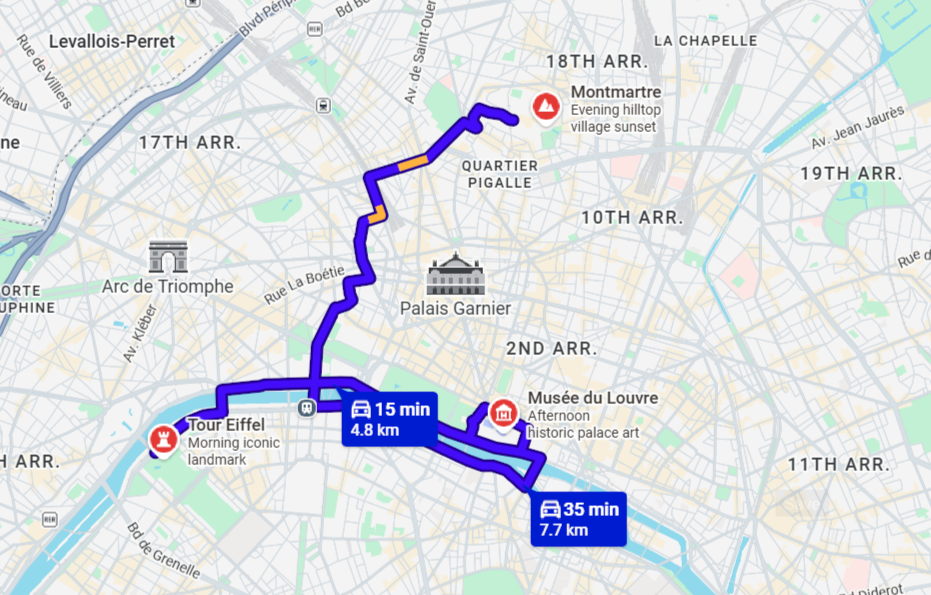
This route moves across the city in a rough loop. The morning starts in the west near the Eiffel Tower, then heads east along the Seine toward Île de la Cité. That leg of the route takes in Notre-Dame and the Sainte-Chapelle along the way.
The afternoon continues east to the Louvre, then swings back west along the Champs-Élysées to the Arc de Triomphe.
The evening heads north to Montmartre, the furthest point from the starting location. It’s also the one part of the day that benefits most from the metro rather than walking.
If you’re basing yourself at a park and ride lot outside the city, add the metro or RER connection to your first stop.
That connection becomes the start of the day.
Budgeting for Your Trip: How Much Is a Trip to Paris for One Day?
A one day in Paris itinerary can fit almost any budget. Traveling by RV helps keep accommodation costs down compared to booking a hotel for a single night in the city.
Since parking inside Paris runs expensive and complicated, basing yourself outside the low emission zone is one of the easiest ways to save.
Paris also tends to run pricier than other French cities, especially near major landmarks, since demand from visitors keeps prices high year-round.
Prices ease noticeably once you move even a few streets away from the Eiffel Tower or the Louvre.
| Category | Budget | Mid-Range | High-End |
| Food and Drink | $25 to $40 | $40 to $75 | $75+ |
| Attractions | $30 to $50 | $50 to $90 | $90+ |
| Transport | $10 to $15 | $15 to $25 | $25+ |
| Daily Total | $65 to $105 | $105 to $190 | $190+ |
- Budget Traveler: Cook breakfast in the RV before heading in for the day. You can stick to free sights like the Trocadéro Gardens, Notre-Dame’s exterior, and the Sacré-Cœur terrace. That leaves your budget open for one or two paid tickets and a simple dinner.
- Mid-Range Traveler: Mix a couple of quick cafe meals with one sit-down dinner, and pay for timed entry to both the Eiffel Tower and the Louvre. Add a metro day pass to move quickly between neighborhoods without worrying about individual tickets. You’ll be crossing the city several times over the course of the day.
- High-End Traveler: Book a guided skip-the-line tour of the Louvre and a summit ticket for the Eiffel Tower. Round out the day with a Seine river cruise and a sit-down dinner at a well-known bistro near Montmartre. Finish the night with a private car back to your RV or hotel.
Plan Your Dream Trip to Paris with Indie Campers
Indie Campers gives you a large fleet of campervans and motorhomes, one-way rentals across 70+ locations, and unlimited mileage on company-owned vehicles. That combination matters more once your one day in Paris itinerary extends into a longer trip. A rented car with mileage limits can quietly add cost to a longer route.
That means your day in Paris can be one stop on a much bigger French road trip, without extra planning or added mileage fees. Flexible cancellation up to 31 days before pick-up gives you room to change plans.
A book now, pay later option also means you can lock in your dates without paying the full amount upfront.
This works best for travelers who want Paris as a single, well-planned stop rather than the entire trip. Park outside the low emission zone, take the metro in for the day, and let the same vehicle carry you on to your next stop when you’re ready.
Whether you’re a first-time renter or an experienced road-tripper, the same digital booking process applies. Browse the full range of RV rentals to compare vehicle sizes and pick the pickup point that fits your route best.
Book your campervan with Indie Campers today!
One Day in Paris Itinerary: Your Final Planning Recap
| Category | Details |
| Best Time to Go | Spring (April to May), for mild weather and manageable crowds |
| Recommended Budget | $100 to $220 per person for the day |
| Areas to Visit | Eiffel Tower and the Seine (morning), the Louvre and Champs-Élysées (afternoon), Montmartre (evening) |
| Best Restaurants | Cafes near the Louvre (croque monsieur); bistros in Montmartre (steak frites) |
| What to Visit? | Morning: Eiffel Tower, Trocadéro, Notre-Dame / Afternoon: The Louvre, Tuileries, Arc de Triomphe / Evening: Sacré-Cœur, Place du Tertre |
| Recommended Transport | RV parked outside the low emission zone, then the metro into central Paris |
| Total Distance | Approx. 6 to 8 miles (10 to 13 km) on foot and by metro across the day |
| Must-Try Foods | Croissant, croque monsieur, steak frites |
| Accommodation | Campsite pitch with RV outside the city, or a park and ride lot for a day visit |
| Perfect For | First-time visitors wanting Paris’s biggest landmarks in a single, well-planned day |
| Low Emission Zone | Crit’Air sticker required to drive inside, fines around €68 without one |
FAQs About a One Day in Paris Itinerary
How much does a trip to Paris for one day cost?
A trip to Paris for one day costs around $100 to $220 per person in the mid-range budget. That figure includes food, local transport, and entry tickets to the main sights. It does not include RV rental, which is priced separately based on vehicle type and season. Sticking to free sights like the Trocadéro Gardens and the Sacré-Cœur terrace is one of the easiest ways to bring that cost down further.
Is one day enough to see Paris?
Yes, one day is enough to see Paris if you focus on a tight route instead of trying to visit every neighborhood. This one day in Paris itinerary spends the morning at the Eiffel Tower and the Seine. The afternoon covers the Louvre and the Champs-Élysées, and the evening moves to Montmartre. That structure lets you see the major landmarks and still fit in two proper meals. Most first-time visitors find this pace ambitious but doable, especially with tickets booked in advance.
What are the top 3 places to visit in Paris for first-timers?
The top 3 places to visit in Paris for first-timers are the Eiffel Tower, the Louvre, and Notre-Dame. The Eiffel Tower anchors the city’s skyline and offers the best rooftop views. The Louvre houses the Mona Lisa and thousands of other major works. Notre-Dame adds a dose of medieval history right at the center of the city. That’s especially true now that it has reopened after restoration and the queue to see it has settled down.
What is the most beautiful spot in Paris?
The most beautiful spot in Paris is widely considered to be the terrace at Sacré-Cœur, where the whole city spreads out below the hill of Montmartre. The Trocadéro Gardens facing the Eiffel Tower and the Pont Alexandre III bridge are close runners-up. Each offers a different kind of beauty, from a sweeping city panorama to close-up architectural detail. Sunset tends to be the best time to catch any of the three at their finest.
What is the best way to travel around Paris in one day?
The best way to travel around Paris in one day is by metro, combined with an RV parked outside the low emission zone if you’re arriving by road. Driving into the city center risks fines and parking headaches that the metro avoids entirely. This combination gives you the flexibility of a road trip without the hassle of navigating central Paris by car. A single metro ticket or day pass covers nearly every stop on this itinerary.
What is Paris best known for?
Paris is best known for the Eiffel Tower, the Louvre, and its long history as a center of art, fashion, and cuisine. The city is also famous for cafe culture, cobblestone streets, and landmarks like Notre-Dame and the Arc de Triomphe. Its layout along the Seine, with distinct neighborhoods on each bank, gives the city a shape that rewards walking as much as sightseeing. The Left Bank and Right Bank each carry their own character, from bohemian cafes to grand boulevards.
Do I need to book Paris attractions in advance?
Yes, booking Paris attractions in advance is essential for the Eiffel Tower and the Louvre. Both have moved to timed entry and no longer sell same-day tickets at the door. The Arc de Triomphe also sells out on busy weekends, so booking ahead saves time you would otherwise spend in line. If you’re visiting during summer or around a public holiday, book everything a few weeks out rather than a few days. Popular slots at both landmarks disappear quickly during peak periods.
How do I get from Paris airports to the city center?
You can get from Paris’s airports to the city center by train, bus, or taxi, depending on which airport you land at. Charles de Gaulle Airport connects to the city via the RER B train in about 35 to 50 minutes. Orly Airport connects via the Orlyval and RER B combination or a direct bus. A taxi takes a similar amount of time but costs considerably more, especially during peak traffic hours. If you’re picking up an RV, most rental locations near the airports offer a shuttle to the depot.
Is renting an RV worth it for a Paris trip?
Renting an RV is worth it for a Paris trip if you’re combining the city with other stops in France. Paris itself can work as a single well-planned day. The RV works as your accommodation and transport for the rest of the route, while you park it outside the low emission zone for the Paris portion. For a Paris-only weekend with no other stops, a hotel may be simpler than managing a larger vehicle in a dense city. The math tends to favor the RV once your trip includes the Loire Valley, Normandy, or another nearby region worth the extra driving.