Last Updated: July 31, 2026
Planning a Spain itinerary 7 days long? This guide covers Madrid, Zaragoza, and Barcelona, along with practical tips for eating and driving your way across the country.
One week is enough time to see two of Spain’s biggest cities without rushing through either one. Here’s a quick overview before the full day-by-day plan.
Key Takeaways
- Iconic Stops: The Prado Museum, the Basilica del Pilar, and the Sagrada Família
- Hidden Gems: Madrid’s Retiro Park at sunrise and Zaragoza’s El Tubo tapas district
- Recommended Transport: An RV works well for this route, since it lets you drive between cities without booking a new hotel every night.
- Recommended Budget: $700 to $1,400 per person for 7 days, covering accommodation, food, transport, and entry tickets
- Best Time to Go: Spring runs from April to May and suits a 1-week Spain itinerary well, since the weather stays mild in both Madrid and Barcelona.
Table of Contents
- Spain Itinerary 7 Days: At a Glance
- Why You’ll Love a 7-Day Trip to Spain?
- Best Time to Visit Spain
- Are 7 Days Enough to Visit Spain?
- How to Get Around Spain?
- The Best Spain Itinerary: 7 Days of Adventure
- Days 1 to 3: Madrid
- Day 4: Zaragoza
- Days 5 to 7: Barcelona
- Exploring Spain’s Regions: Alternative Itineraries
- Map of Your 7-Day Spain Itinerary
- Budgeting for Your Trip: How Much Is a Trip to Spain for 7 Days?
- Plan Your Dream Road Trip with Indie Campers
- Spain Itinerary 7 Days: Your Final Planning Recap
- FAQs About Spain Itinerary 7 Days
Spain Itinerary 7 Days: At a Glance
| Day | Location(s) | Top Highlights |
| Day 1 | Madrid | Royal Palace, Plaza Mayor. Try cocido madrileño. |
| Day 2 | Madrid | Prado Museum, Retiro Park. Try patatas bravas. |
| Day 3 | Madrid | Toledo day trip, Gran Vía. Try churros con chocolate. |
| Day 4 | Zaragoza | Basílica del Pilar, El Tubo. Try ternasco. |
| Day 5 | Barcelona | Sagrada Família, Park Güell. Try pa amb tomàquet. |
| Day 6 | Barcelona | Gothic Quarter, La Boqueria market. Try paella. |
| Day 7 | Barcelona | Barceloneta beach, Park de la Ciutadella. Try crema catalana. |
Why You’ll Love a 7-Day Trip to Spain?
Spain packs a surprising range of scenery and culture into a country this size. Snow-capped mountains, Mediterranean beaches, and cities built on centuries of layered history all sit within a day’s drive of each other.
That range is exactly what makes a Spain itinerary 7 days long worth planning around two very different cities. Madrid feels like the country’s formal, inland heart, while Barcelona leans into Mediterranean color and Catalan identity.
An RV is a genuinely practical way to cover this distance. You get the freedom to break up the long drive between Madrid and Barcelona with a stop in Zaragoza, rather than rushing straight through on a train.
Renting an RV from Indie Campers also means your accommodation travels with you. A long driving day costs you less time than checking in and out of separate hotels along the way.
Food and culture shift noticeably between these two cities, which is part of the draw. Madrid serves cocido madrileño and patatas bravas, Zaragoza built its reputation on ternasco and tapas, and Barcelona leans on Mediterranean seafood and Catalan classics like pa amb tomàquet.
A single Spain travel itinerary 7 days long cannot capture the whole country, but it can capture two of its most distinct sides.
That’s the balance this guide is built around: enough structure to see Spain’s icons, enough room to actually taste the country along the way.
Best Time to Visit Spain
The season you travel in shapes both the crowds you’ll deal with and how comfortable the driving feels between Madrid and Barcelona.
This matters on any Spain itinerary 7 days long, since the weather can shift noticeably between the inland plateau and the coast.
Spring (March to May)
Spring brings mild temperatures to both cities, making it one of the most comfortable seasons for a week of walking and driving.
Crowds stay manageable compared to summer, especially in April before school holidays begin.
- Average Temperatures: 50 to 70°F (10 to 21°C)
- What to expect: mild and generally pleasant weather, moderate crowds, and mid-range prices.
Summer (June to August)
Summer gets hot in Madrid, since the city sits inland on a high plateau, while Barcelona’s coastal position keeps it slightly cooler.
August in particular sees many locals leave Madrid for vacation, which can mean quieter streets but closed neighborhood restaurants.
- Average Temperatures: 68 to 90°F (20 to 32°C)
- What to expect: hot and sunny weather, heavy crowds, and peak-season prices.
Autumn (September to November)
Autumn brings cooler, comfortable weather and noticeably shorter lines at major attractions once September ends.
It’s also a good season for the Madrid to Barcelona drive, since summer traffic thins out along the highway.
- Average Temperatures: 52 to 72°F (11 to 22°C)
- What to expect: mild and increasingly cool weather, moderate crowds, and mid-range prices.
Winter (December to February)
Winter turns cold in Madrid, since the plateau climate brings sharper temperature swings than the coast.
Barcelona stays milder throughout, and outside the Christmas period, this is the quietest and cheapest time to visit both cities.
- Average Temperatures: 40 to 56°F (4 to 13°C)
- What to expect: cold and variable weather, light crowds outside the holidays, and low-season prices.
Spring and autumn both offer the easiest balance of good weather and manageable crowds for this route.
Are 7 Days Enough to Visit Spain?
Yes, 7 days is enough to see two of Spain’s major cities properly if you resist the urge to add a third stop. The trick is picking a focused route between Madrid and Barcelona instead of trying to also fit in Seville or Granada on the same trip.
This itinerary spends three days in Madrid, one day in Zaragoza as a midway stop, and three days in Barcelona.
With that structure, you’ll see the Prado Museum, the Royal Palace, the Basilica del Pilar, and the Sagrada Família. You’ll also have time for a proper meal at every stop.
A common mistake is trying to squeeze in Andalusia during the same week.
That usually means long extra driving days that eat into time you could spend actually enjoying Madrid or Barcelona. Save southern Spain for a separate trip instead.
This Spain itinerary 7 days long leaves enough room to enjoy both cities without turning the week into a series of rushed transfers.
How to Get Around Spain?
Spain’s major cities now run low emission zones, known locally as ZBE, and most cities with more than 50,000 residents have one in place as of 2026. This matters at both stops on a Spain itinerary 7 days long.
Driving into one without the right environmental sticker risks a fine of up to €200.
Madrid’s zone covers its historic center, and Barcelona runs one of the strictest zones in the country. Parking outside these zones and walking or using public transport in the center is the simpler choice in both cities.
An RV works well for the trip overall, since it beats booking separate hotels across two different cities. Park on the edge of each city at a park and ride lot, then explore the center on foot or by metro.
This approach also means you’re not tied to fixed check-in and checkout times. The long driving day to Barcelona costs you less than it would with a string of separate hotel bookings.
Booking RV rental in Spain through Indie Campers gives you unlimited mileage on company-owned vehicles.
That matters on a route covering more than 750 miles between Madrid and Barcelona and back.
The Best Spain Itinerary: 7 Days of Adventure
Here’s how this Spain itinerary 7 days long comes together, hour by hour:
Day 1: The Royal Palace and Plaza Mayor in Madrid
Morning (9 AM): The Royal Palace
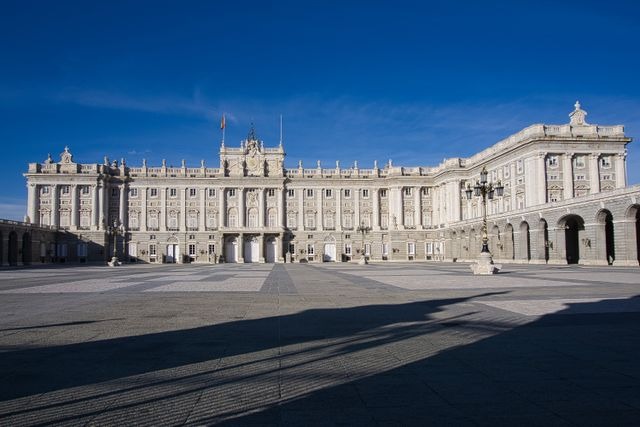
Start at the Royal Palace, the official residence of the Spanish royal family, though it’s mostly used for state ceremonies today.
With more than 3,400 rooms, it’s one of the largest royal palaces still standing in Europe. That room count even beats Buckingham Palace and the Palace of Versailles.
Give yourself about two hours for the palace and the Almudena Cathedral next door.
Practical tip: Book your palace ticket online in advance, since same-day tickets often sell out during peak season.
If you’re basing yourself outside the city, RV rental in Madrid covers several pickup points near the historic center.
Afternoon (12:30 PM): Plaza Mayor and Lunch
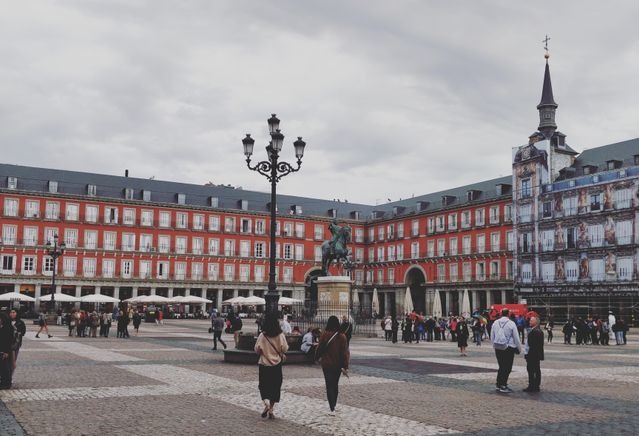
For lunch, find a spot near Plaza Mayor and order cocido madrileño, a hearty chickpea stew that’s a Madrid classic during the colder months.
Afterward, walk through Plaza Mayor itself, the grand 17th-century square that has hosted markets, bullfights, and public events for centuries.
Practical tip: The square gets busy with street performers by midday, so an earlier visit gives you clearer photos.
Evening (6 PM): Puerta del Sol and Dinner
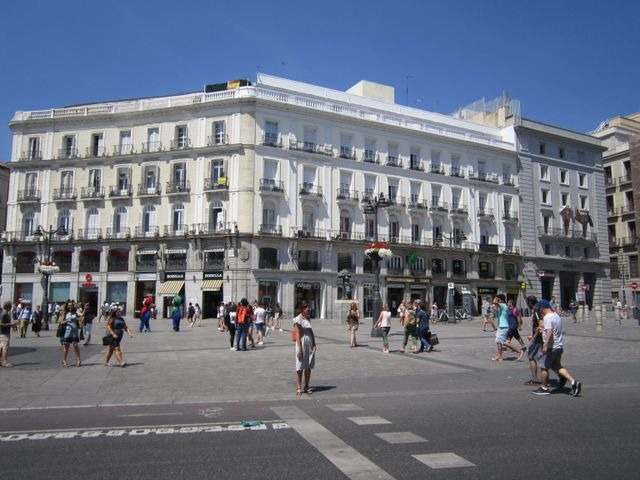
Walk to Puerta del Sol, the bustling square marking the exact center of Spain, with a small plaque on the ground to prove it.
For dinner, try patatas bravas at a nearby tapas bar, fried potatoes served with a spicy tomato sauce.
Ending your first night with a walk through Sol’s lit-up streets is a fitting close to the day.
Day 2: The Prado Museum and Retiro Park in Madrid
Morning (9 AM): The Prado Museum
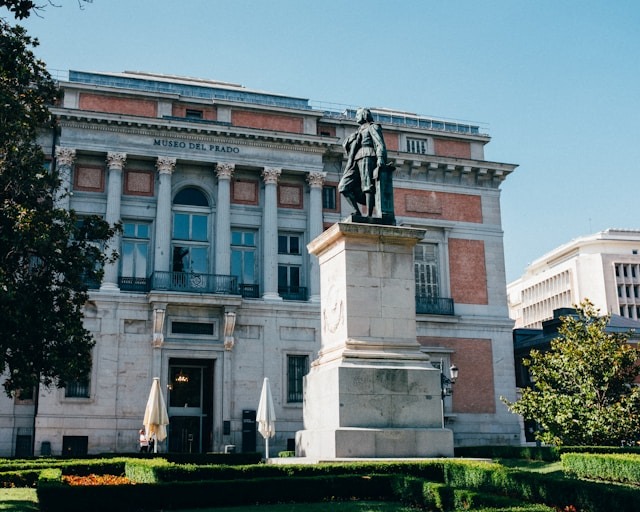
Start at the Prado Museum, home to masterpieces by Velázquez, Goya, and El Greco, and one of the most important art collections in the world. Focus on a handful of galleries rather than trying to see all of it in one visit.
Give yourself about two and a half hours here.
Practical tip: Book a timed entry ticket online, since the Prado limits the number of visitors allowed in at busy periods.
Afternoon (12:30 PM): Retiro Park
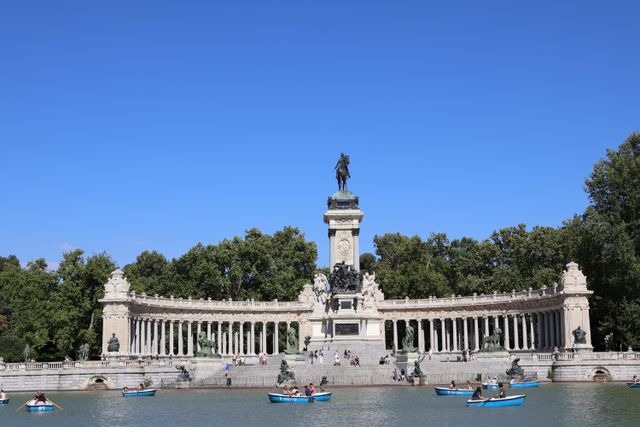
For lunch, find a cafe near the museum before walking to Retiro Park, Madrid’s largest green space and home to a lake where you can rent a rowboat.
The Crystal Palace, a 19th-century glass structure inside the park, is worth the walk to see.
Practical tip: Retiro Park is calmest early in the morning, so consider a sunrise walk if your schedule allows a second visit.
Evening (6 PM): Gran Vía and Dinner
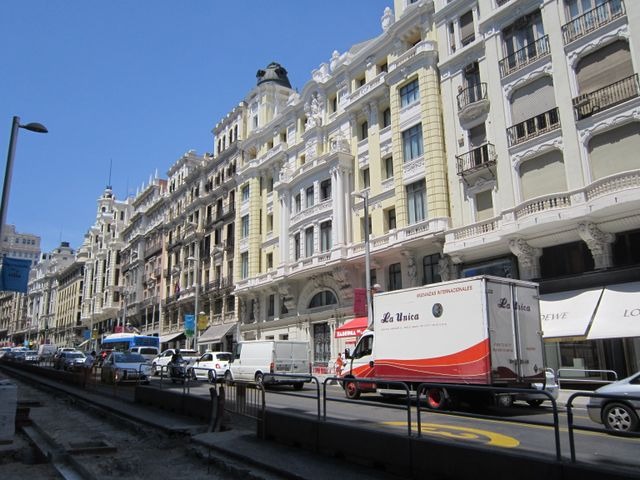
Walk down Gran Vía, Madrid’s main shopping street, lined with early 20th-century buildings and theaters.
For dinner, order churros con chocolate, the fried dough sticks dipped in thick hot chocolate that Madrid treats as a late-night tradition as much as a breakfast food.
Watching Gran Vía’s lights come on at dusk is a memorable way to end your second day in the city.
One more full day in Madrid is still ahead on this Spain itinerary 7 days long.
Day 3: Toledo Day Trip from Madrid
Morning (9 AM): Toledo
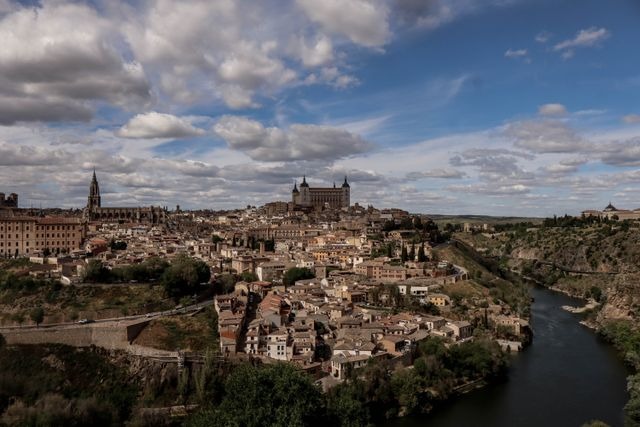
Drive about an hour south to Toledo, a walled medieval city perched above the Tagus River and once the capital of Spain.
The city’s mix of Christian, Muslim, and Jewish architecture earned it UNESCO World Heritage status, a legacy of centuries when all three cultures coexisted within the same walls.
Give yourself about three hours to explore the cathedral and the old town’s narrow streets.
Practical tip: Park outside the walls and walk in, since Toledo’s historic streets are narrow and largely closed to regular traffic.
Afternoon (1 PM): Toledo Cathedral and Lunch
For lunch, try carcamusas, a Toledo specialty of pork stewed in a tomato and pea sauce.
Afterward, visit Toledo Cathedral, one of the largest Gothic cathedrals in Spain, with an interior packed with art and gilded detail that took over two centuries to complete.
Practical tip: Toledo is famous for sword and knife craftsmanship, so a shop visit makes for an easy, distinctive souvenir stop.
Evening (6 PM): Return to Madrid and Dinner
Drive back to Madrid in the early evening and spend your last night in the city with dinner near your accommodation. Order a final round of tapas, since this is your last evening before continuing east toward Zaragoza.
Closing out three days in Madrid with a relaxed final dinner sets up a good start to tomorrow’s drive.
Day 4: The Basilica del Pilar in Zaragoza
Morning (10 AM): The Basilica del Pilar
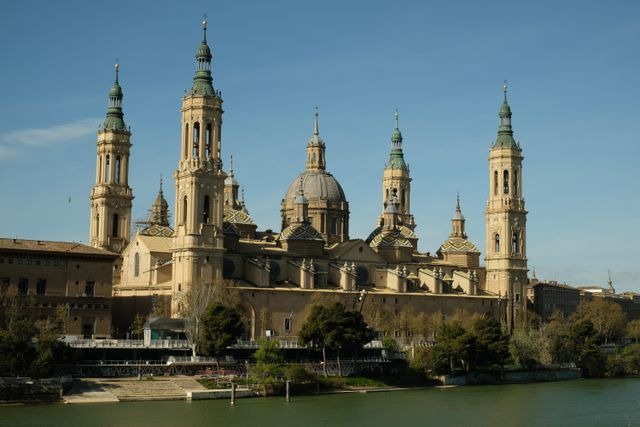
Drive east to Zaragoza, roughly the halfway point between Madrid and Barcelona, and start at the Basilica del Pilar.
The basilica sits directly on the Ebro River and is one of the most visited religious sites in Spain. Pilgrims travel from across the country every October for its patron saint’s festival.
Give yourself about an hour and a half here, including time to see the Goya frescoes inside.
Practical tip: The basilica is free to enter, making it an easy first stop after a long morning of driving.
Afternoon (12:30 PM): El Tubo and Lunch
For lunch, head into El Tubo, Zaragoza’s narrow tapas district packed with bars serving small plates. Order ternasco, a young lamb dish that’s a specialty of the Aragón region surrounding Zaragoza.
Practical tip: El Tubo works best as a bar-hopping lunch, since most spots specialize in one or two dishes rather than a full menu.
Evening (6 PM): The Aljafería Palace and Dinner
Visit the Aljafería Palace, a fortified Islamic palace from the 11th century that later became home to Spanish royalty.
The building’s blend of Moorish courtyards and later Christian additions makes it one of the best examples of layered architecture in the country. For dinner, stay in the city center and try another round of Aragonese tapas before an early night ahead of the drive to Barcelona.
Closing out your one day in Zaragoza with a walk along the Ebro River is a calm way to break up the journey.
This stop sits right between the two biggest cities on this Spain itinerary 7 days long.
Day 5: The Sagrada Família in Barcelona
Morning (9 AM): The Sagrada Família
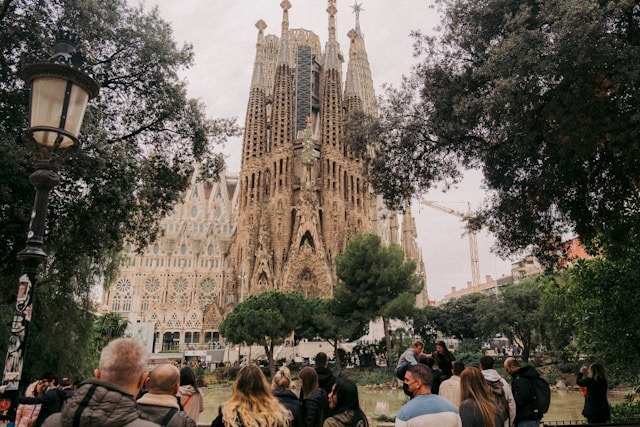
Drive to Barcelona and start at the Sagrada Família, Antoni Gaudí’s unfinished basilica that has been under construction since 1882. Gaudí himself worked on the project for over 40 years and is buried in its crypt.
RV rental in Barcelona offers pickup points close to the city, so you can park outside the low emission zone and take the metro in.
The current completion target sits well into the future, which is part of what makes the building feel like a living project rather than a finished monument.
Give yourself about two hours for the basilica and its towers.
Practical tip: Book your ticket online for a specific time slot, since walk-up access is no longer available. The site sells out days in advance during peak season.
Afternoon (12:30 PM): Park Güell
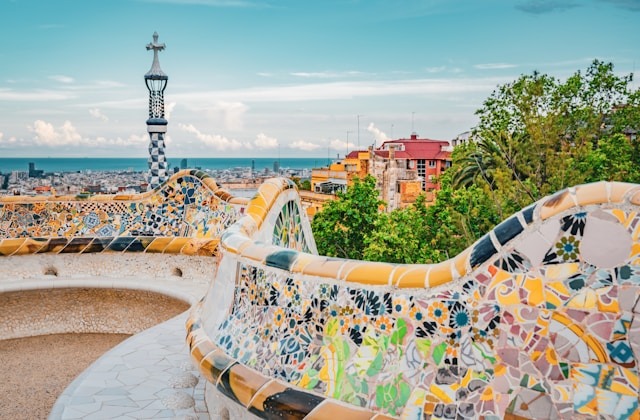
For lunch, find a cafe near the basilica before heading to Park Güell, another Gaudí project filled with mosaic-covered structures and views over the city toward the sea. The park’s monumental zone requires a separate timed ticket from the free public areas.
Practical tip: Book your Park Güell slot for the same day as the Sagrada Família if you want to see both Gaudí sites without excessive backtracking.
Evening (6PM): Passeig de Gràcia and Dinner
Walk down Passeig de Gràcia, Barcelona’s grand boulevard lined with two more Gaudí buildings, Casa Batlló and Casa Milà. For dinner, try pa amb tomàquet, bread rubbed with ripe tomato and olive oil that accompanies most Catalan meals.
Ending your first night in Barcelona with Gaudí’s buildings lit up along the boulevard is a strong introduction to the city’s architecture.
Day 6: The Gothic Quarter and La Boqueria in Barcelona
Morning (9 AM): The Gothic Quarter
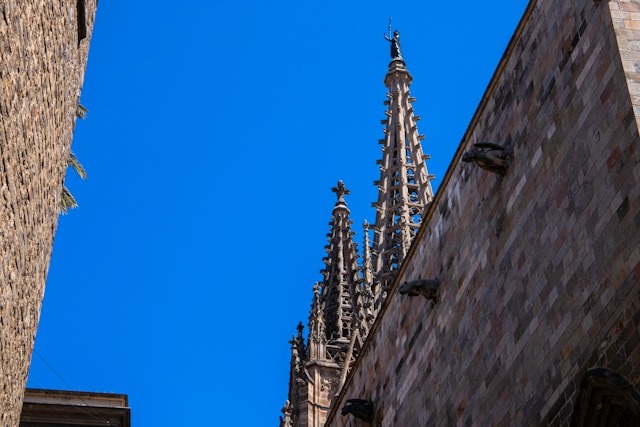
Spend your second morning wandering the Gothic Quarter, Barcelona’s medieval core of narrow stone streets and hidden squares. The Barcelona Cathedral anchors the neighborhood, with a rooftop terrace open for a small fee and a small flock of geese kept in its cloister for centuries.
Give yourself about two hours to explore without a fixed route, since getting slightly lost is part of the experience here.
Practical tip: The Gothic Quarter’s best light for photos comes in the late morning, once the sun clears the tall buildings on either side.
Afternoon (12:30 PM): La Boqueria Market
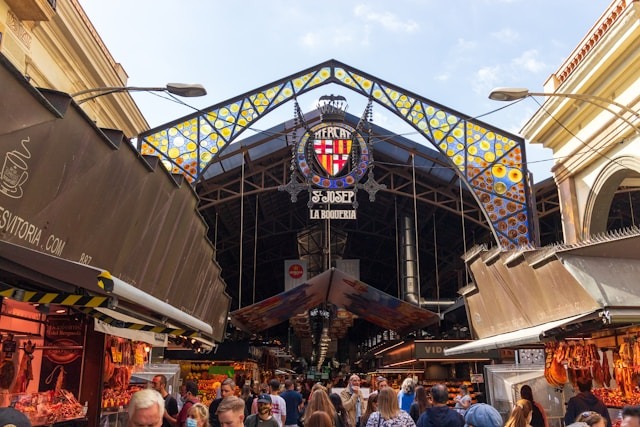
For lunch, head to La Boqueria, the famous market off La Rambla, and order paella from one of the counter stalls inside. The market has operated in some form since the 13th century, though the current building dates to the 1800s.
Practical tip: La Boqueria gets crowded with tourists near the entrance, so walk further into the market for better prices and shorter lines.
Evening (6 PM): La Rambla and Dinner
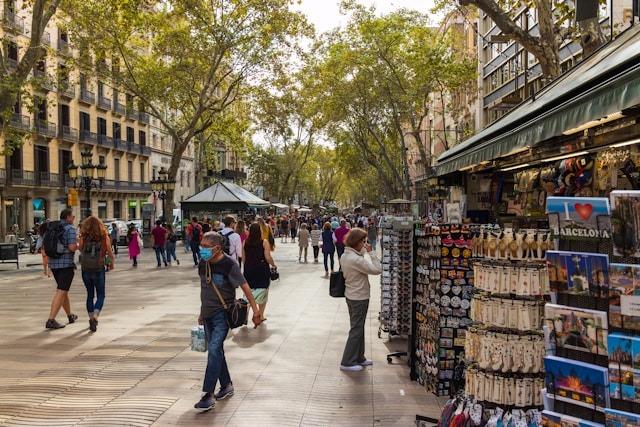
Walk the length of La Rambla, Barcelona’s most famous pedestrian street, lined with flower stalls, cafes, and street performers. For dinner, find a restaurant in the surrounding streets and try a Catalan seafood dish paired with local wine.
Closing out your second day in Barcelona with an evening stroll down La Rambla is a classic way to experience the city’s energy.
Day 7: Barceloneta Beach and Final Views in Barcelona
Morning (9 AM): Barceloneta Beach
Spend your final morning at Barceloneta Beach, Barcelona’s most central stretch of sand, backed by seafood restaurants and a lively boardwalk. A walk along the water is a good way to start your last day at a slower pace.
Give yourself about an hour and a half here before heading to lunch.
Practical tip: the beach gets crowded by midday in summer, so an early visit gives you more space to enjoy the water.
Afternoon (12:30 PM): Park de la Ciutadella
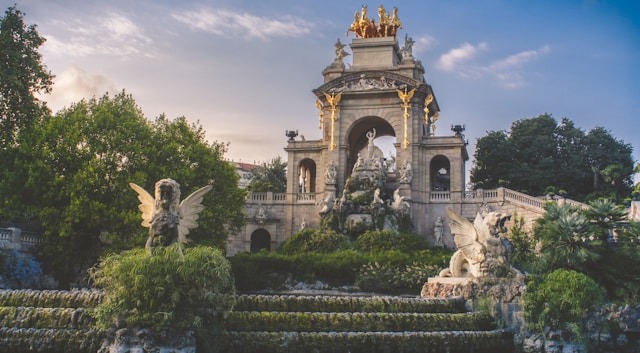
For lunch, find a seafood restaurant near the beach before walking to Park de la Ciutadella, home to a monumental fountain partly designed by a young Gaudí.
The park also houses the Catalan Parliament building and a small zoo.
Practical tip: Renting a rowboat on the park’s lake is a relaxed way to spend an hour if you have extra time before departure.
Evening (5 PM): Final Dinner and Departure
For your last meal in Spain, order crema catalana, the Catalan take on crème brûlée with a caramelized sugar crust, at a restaurant near your accommodation. Take a final walk along the waterfront before wrapping up your week in Spain.
Ending 7 days in Spain with the sea in front of you and Gaudí’s architecture behind you is a fitting close to the trip.
This one week covered so much of the country’s character in a single stretch.
Exploring Spain’s Regions: Alternative Itineraries
If a Spain itinerary 7 days long leaves you wanting more, here are two ways to explore parts of Spain this itinerary does not cover.
7-Day Northern Spain Itinerary
Northern Spain runs along a green, mountainous coastline that feels different from anywhere else in the country.
This variant covers the Basque Country, Cantabria, Asturias, and Galicia in one coastal route.
- Day 1 to 2: Bilbao, the Guggenheim Museum and the old town
- Day 3: San Sebastián, La Concha beach and pintxos bars
- Day 4: Santander, the beaches and the Magdalena Peninsula
- Day 5: Oviedo, the historic center and nearby cider houses
- Day 6 to 7: A Coruña, the Tower of Hercules and the Galician coastline
Our RV rentals in Bilbao and A Coruña cover pickup points at each end of this route.
10-Day Andalusia Itinerary
Andalusia in the south carries a different character entirely, shaped by centuries of Moorish influence. This variant covers the region’s best-known cities and their Islamic-era architecture.
- Day 1 to 2: Seville, the Alcázar and the cathedral
- Day 3: Córdoba, the Mezquita and the Jewish Quarter
- Day 4 to 5: Granada, the Alhambra and the Albaicín
- Day 6 to 7: Málaga, the beaches and the Alcazaba
- Day 8 to 10: Ronda and the white villages of the Andalusian countryside
Map of Your 7-Day Spain Itinerary
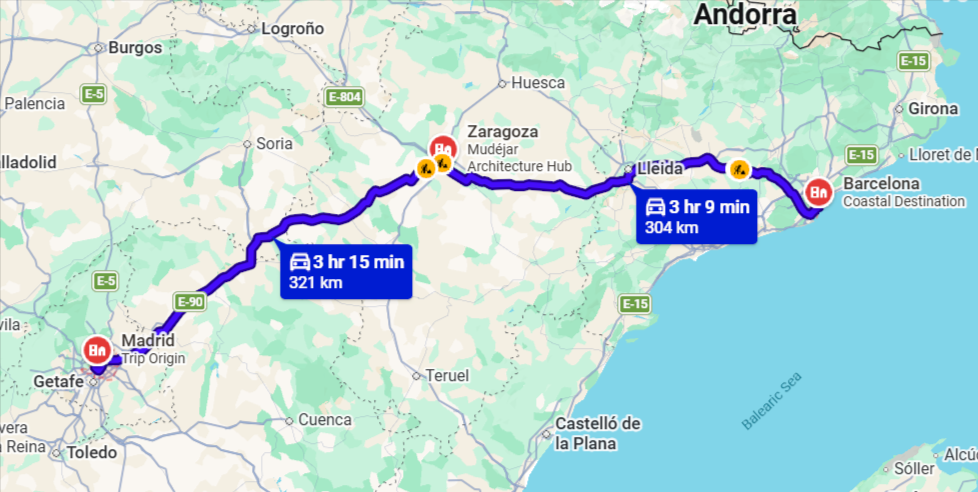
This route runs in a fairly direct line from the center of the country to the northeast coast, forming the backbone of this Spain itinerary 7 days long. The drive from Madrid to Zaragoza takes about three hours, mostly along a fast, well-maintained highway.
From Zaragoza, the continuation to Barcelona takes another three hours, making the full Madrid to Barcelona drive a manageable two-part journey rather than one long stretch.
Breaking up the drive with a day in Zaragoza, rather than rushing straight through, keeps the pace comfortable across the whole week.
Budgeting for Your Trip: How Much Is a Trip to Spain for 7 Days?
A Spain itinerary 7 days long can fit almost any budget. Traveling by RV helps keep accommodation and food costs down compared to booking hotels and restaurants for every meal.
Parking in both Madrid and Barcelona means dealing with a ZBE, which matters at every stop on this Spain itinerary 7 days long. Budgeting for campsites on the edge of each city is one of the easiest ways to plan ahead.
Costs also shift between cities.
Barcelona tends to run slightly more expensive than Madrid for accommodation, especially near the beach or the Gothic Quarter.
| Category | Budget | Mid-Range | High-End |
| Accommodation | $25 to $45 | $45 to $85 | N/A |
| Food and Drink | $30 to $50 | $50 to $90 | $90+ |
| Attractions | $15 to $30 | $30 to $55 | $55+ |
| Transport and Fuel | $10 to $25 | $25 to $40 | $40+ |
| Daily Total | $80 to $150 | $150 to $270 | $270+ |
| 7-Day Total | ~$560 to $1,050 | ~$1,050 to $1,890 | ~$1,890+ |
- Budget Traveler: Stay at campsites outside each city and cook most meals in the RV. You can stick to free sights like church exteriors, public squares, and Barceloneta Beach. Save your budget for a handful of paid tickets at the Prado and the Sagrada Família.
- Mid-Range Traveler: Mix cooking in the RV with sit-down meals at each stop. Pay for entry to the major sights like the Royal Palace, the Prado Museum, and Park Güell. Add local transport passes in both Madrid and Barcelona where a car isn’t practical.
- High-End Traveler: Book skip-the-line guided tours at the busiest attractions and dine at well-known restaurants in each city. Round out the trip with a private Toledo tour, a Gaudí architecture walking tour, and a tasting menu on at least a few nights.
Plan Your Dream Road Trip with Indie Campers
Indie Campers gives you a large fleet of campervans and motorhomes, one-way rentals across 70+ locations, and unlimited mileage on company-owned vehicles.
That combination matters most on a Spain itinerary 7 days long like this one, spanning two major cities and hundreds of miles of driving.
Flexible cancellation up to 31 days before pick-up gives you room to adjust your route if plans change. A book now, pay later option also means you can lock in your dates without paying the full amount upfront.
This works best for travelers who want to see multiple Spanish regions without managing separate hotel bookings in each city. Park outside each historic center, explore on foot or by local transport, and let the same vehicle carry you to the next stop.
Whether you’re a first-time renter or an experienced road-tripper, the same digital booking process applies.
Browse the full range of RV rentals to compare vehicle sizes and pick the pickup point that fits your route best.
Book your campervan with Indie Campers today!
Spain Itinerary 7 Days: Your Final Planning Recap
| Category | Details |
| Best Time to Go | Spring (April to May), for mild weather in both Madrid and Barcelona |
| Recommended Budget | $700 to $1,400 per person for 7 days |
| Cities to Visit | Madrid (3 days), Zaragoza (1 day), Barcelona (3 days) |
| Best Restaurants | Tapas bars near Plaza Mayor (patatas bravas); bars in El Tubo, Zaragoza (ternasco) |
| What to Visit? | Madrid: Royal Palace, Prado Museum / Zaragoza: Basilica del Pilar / Barcelona: Sagrada Família, Park Güell |
| Recommended Transport | RV parked outside each historic center, then walking or local transport |
| Total Distance | Approx. 770 to 780 miles (1,240 to 1,255 km) round trip from Madrid to Barcelona |
| Must-Try Foods | Cocido madrileño, patatas bravas, ternasco, pa amb tomàquet, crema catalana |
| Accommodation | Campsite pitch with RV: $25 to $85 per night |
| Perfect For | First-time visitors wanting a focused introduction to both central and Mediterranean Spain |
FAQs About Spain Itinerary 7 Days
How much is a trip to Spain for 7 days?
A trip to Spain for 7 days costs around $700 to $1,400 per person in the mid-range budget. That figure includes accommodation, food, local transport, and entry tickets across Madrid, Zaragoza, and Barcelona. It does not include RV rental, which is priced separately based on vehicle type and season. Sticking to free sights like church exteriors and public squares is one of the easiest ways to bring that cost down.
Is 7 days enough to see Spain?
Yes, 7 days is enough to see two of Spain’s major cities if you accept that you’re sampling the country rather than covering it completely. This itinerary spends three days in Madrid, one in Zaragoza, and three in Barcelona. That structure lets you see two distinct regions instead of rushing through a longer, more scattered route.
What are the top 3 places to visit in Spain for first-timers?
The top 3 places to visit in Spain for first-timers are Madrid, Barcelona, and Toledo. Madrid anchors the country’s art and history through the Prado Museum and the Royal Palace. Barcelona adds Gaudí’s architecture and a Mediterranean coastline unlike anywhere else on this itinerary. Toledo, an easy day trip from Madrid, brings centuries of layered Christian, Muslim, and Jewish history into view.
What is the most beautiful spot in Spain?
The most beautiful spot in Spain is widely considered to be the interior of the Sagrada Família. Colored light pours through stained glass onto the towering stone columns inside. The Alhambra in Granada and the Royal Palace in Madrid are close runners-up, though both sit outside this particular route. Each offers a different kind of beauty, from Gaudí’s organic architecture to centuries-old royal grandeur.
What is the best way to travel in Spain for 7 days?
The best way to travel in Spain for 7 days is by RV, parked outside each city’s low emission zone. From there, walking or local transport covers the rest once you’re inside. Driving into a ZBE without the right sticker risks a fine of up to €200, which parking on the edge of each city avoids entirely. This combination gives you the flexibility of a road trip without the hassle of navigating narrow historic streets by car.
What is Spain best known for?
Spain is best known for its regional diversity, with each area carrying its own food, architecture, and identity. The country is also famous for landmarks like the Sagrada Família, the Alhambra, and Madrid’s Golden Triangle of art museums. Its food culture varies so much by region that a Spain itinerary 7 days long can feel like visiting two different countries through Madrid and Barcelona alone.
Do I need to book Spain’s attractions in advance?
Yes, booking attractions in advance is essential for the Sagrada Família and Park Güell, since both sell out regularly during peak season. The Prado Museum and the Royal Palace also benefit from advance booking to skip long walk-up lines. If you’re visiting during summer, book everything at least a few weeks ahead rather than a few days.
How do I register my RV for Spain’s low emission zones?
Registering your RV for Spain’s low emission zones usually means submitting your vehicle’s emissions details online before entering cities like Madrid or Barcelona. Most rental companies can confirm which DGT environmental label your vehicle qualifies for before your trip starts. Foreign vehicles sometimes need separate online registration, so checking the specific city’s rules a few days before arrival is worth the extra step. Parking outside the zone entirely avoids the registration process in most cases.
Is renting an RV worth it for a 7-day Spain trip?
Renting an RV is worth it for a 7-day Spain trip if you’re visiting multiple cities. It replaces two or three separate hotel bookings with one flexible base. The RV works as your accommodation and transport across the whole route, while you park it outside each historic center to explore on foot. For a trip focused on one city alone, a hotel and public transport combination may be simpler. The math tends to favor the RV once your itinerary includes a drive between regions like this one.