Last Updated: August 21, 2026
Planning a 10-day Croatia itinerary means choosing between two genuinely different countries that happen to share a border. There’s the coast, with 1,244 islands and walled harbor towns, and there’s the karst interior, with waterfall parks and canyons that most visitors never reach.
This guide covers both on a single Split-to-Zagreb route, roughly 975 km (605 miles) of driving plus two short car-ferry crossings. You’ll walk Dubrovnik’s walls, kayak off Hvar, hike a canyon in the Velebit mountains, and finish at the Plitvice Lakes before dropping the van in Zagreb.
It’s built around a campervan, because Croatia’s best days happen where the buses don’t go, and because parking once outside a medieval old town beats hunting for a hotel with guest parking inside a pedestrian zone.
Key Takeaways
- Iconic stops: Diocletian’s Palace in Split, Dubrovnik’s city walls, and the boardwalks at Plitvice Lakes.
- Hidden gems: the glass Skywalk at 1,228 m above the Makarska Riviera, and the Velika Paklenica canyon in the Velebit mountains.
- Recommended transport: a one-way campervan from Indie Campers, picked up in Split and dropped in Zagreb, which is the only domestic one-way pairing in the country and saves you driving the same 410 km of motorway twice.
- Recommended budget: €520 to €1,750 per person for the 10 days, covering campsites, food, fuel, tolls, ferries, and park tickets, excluding the campervan itself.
- Best time to go: May, June, September, or October, when the coast sits at 20 to 26°C, campsites cost less, and Plitvice tickets drop from €40 to €23.
Croatia Itinerary 10 Days: At a Glance
| Day | Location(s) | Top Highlights |
| Day 1 | Split | Diocletian’s Palace, Riva promenade, Marjan Forest Park. Try black cuttlefish risotto. |
| Day 2 | Omiš and Makarska | Cetina canyon rafting, Biokovo Skywalk at 1,228 m. Try grilled sardines. |
| Day 3 | Ston and Dubrovnik | Ston’s defensive walls, Mali Ston oysters, Pelješac Bridge. Try fresh oysters. |
| Day 4 | Dubrovnik | The 1,940 m city walls, sea kayaking below the ramparts, Mount Srđ. Try kopun. |
| Day 5 | Drvenik to Hvar | Coastal D8 drive, 35-minute car ferry, Stari Grad’s stone lanes. Try gregada fish stew. |
| Day 6 | Hvar | Hvar Town, Fortica fortress, kayaking the Pakleni Islands. Try Plavac Mali wine. |
| Day 7 | Trogir and Skradin | Ferry back to Split, Trogir’s old town, Krka park approach. Try peka-baked lamb. |
| Day 8 | Krka, Šibenik, Zadar | Skradinski Buk waterfalls, Šibenik cathedral, Zadar’s Sea Organ. Try Šibenik risotto. |
| Day 9 | Paklenica | Velika Paklenica canyon hike, Manita peć cave, drive to Plitvice. Try Lika lamb. |
| Day 10 | Plitvice and Zagreb | Plitvice lake circuit at opening, Zagreb’s Upper Town, drop-off. Try štrukli. |
Table of Contents
- Croatia Itinerary 10 Days: At a Glance
- Why You’ll Love a 10-Day Trip to Croatia
- Best Time to Visit Croatia
- Are 10 Days Enough to Visit Croatia?
- How to Get Around Croatia
- The Best Croatia Itinerary 10 Days: Day by Day
- Driving and Camping Rules for a Croatia Road Trip
- Exploring Croatia’s Regions: Alternative 10 Day Croatia Itineraries
- Map of Your 10-Day Croatia Itinerary
- Budgeting for Your Trip: How Much Does 10 Days in Croatia Cost?
- Plan Your Croatia Road Trip with Indie Campers
- 10-Day Croatia Itinerary: Your Final Planning Recap
- Frequently Asked Questions (FAQs)
Why You’ll Love a 10-Day Trip to Croatia
Ten days is the point where Croatia stops being a beach holiday and starts being a road trip. You get the headline coast, the islands, and the interior, and you still have time to spend a full day inside a national park instead of racing through it on the way to somewhere else.
If you want the shorter version of this trip, our 7-day Croatia itinerary sticks to the Zagreb, Plitvice, Split, and Dubrovnik core. The 10-day version below adds an island, two waterfall parks, and a canyon hike.
The country is small enough to make that work. Croatia covers 56,594 km² with about 1,777 km of mainland coastline and 1,244 islands, only 48 of them inhabited, and the whole coastal spine runs on one motorway, the A1. Every day on this route involves two or three hours of driving at most, and one long haul north from Dubrovnik.
There’s a second reason to build the trip this way, and the numbers make it obvious. Croatia recorded 110.1 million overnight stays in 2025, according to the Croatian National Tourist Board, and 104.6 million of those were on the Adriatic coast against 5.6 million inland, Zagreb included. The interior is not less interesting; it’s less visited, which is exactly why the Plitvice and Paklenica days feel different from the Hvar ones.
The food shifts with the terrain, too. On the coast you eat grilled fish, Mali Ston oysters, and black risotto stained with cuttlefish ink, while the Lika highlands around Plitvice run on lamb, potatoes, and soft Basa cheese made on nearby farms.
The country’s cooking is getting proper attention as well, since the 2026 MICHELIN Guide Croatia added a new star in Istria to 12 reconfirmed stars and kept the two-star Agli Amici in Rovinj.
Best Time to Visit Croatia
Croatia has one of the sharpest high seasons in Europe, and the month you pick changes your budget as much as your weather. Park tickets, campsite rates, and ferry demand all swing hard between June and October, so here’s what each season actually looks like on this route.
Spring (April to June)
Spring is the best window for this itinerary. The waterfall parks run at full flow after the winter rain, the coast warms up through May, and you can hike Paklenica or Biokovo in the middle of the day without suffering for it.
Prices are the other argument. Plitvice’s adult ticket sits at €23 in April and May before jumping to €40 in June, and Krka charges €20 in April and May against €40 from June onwards.
- Average temperatures: 15 to 24°C on the coast, 10 to 20°C inland around Zagreb and Plitvice
- What to expect: full waterfalls, thin crowds, cheaper campsites, and sea temperatures that only turn swimmable from late May
Summer (July to August)
Summer is peak season, and it comes with real trade-offs. Coastal highs commonly hit 28 to 32°C, the A1 and the car ferries carry their heaviest load of the year, and the campsites on the Dalmatian coast sell out weeks ahead.
You get long evenings, warm sea, and festivals in every coastal town, but the canyon hikes become early-morning-only propositions and Plitvice tickets peak at €40.
- Average temperatures: 28 to 32°C on the coast, 25 to 30°C inland
- What to expect: the warmest sea of the year, the highest prices, and vehicle ferry slots that need booking 6 to 8 weeks ahead
Autumn (September to October)
September is the quiet winner. The sea stays swimmable through the month, the crowds thin out sharply after the first week, and the light on the Makarska Riviera and the Pelješac vineyards is at its best.
October drops park prices back down and brings truffle season to Istria, though the coastal water gets cold and some island ferry crossings thin out to a winter schedule.
- Average temperatures: 22 to 28°C in September, 17 to 23°C in October
- What to expect: warm sea in September, cheaper campsites, lower park tickets from October, and the fullest color in the Plitvice forest
Winter (November to March)
Winter turns this into a different trip. Plitvice charges just €10 and Krka €7, and you’ll have the boardwalks almost to yourself, but some trail and boardwalk sections close for ice and the island ferry timetables shrink.
Zagreb is the season’s real draw, with the Advent u Zagrebu Christmas market running through December, while Dalmatia stays mild enough for old-town walking without being warm enough to swim.
- Average temperatures: 8 to 15°C on the coast, 0 to 8°C inland
- What to expect: the lowest prices of the year, the fewest visitors, reduced ferry schedules, and possible closures on higher park trails
Are 10 Days Enough to Visit Croatia?
Yes, 10 days is enough to see the Dalmatian coast, one island, the two best waterfall parks, and Zagreb, provided you follow one geographic line instead of doubling back. The mistake most 10-day plans make is treating Istria and Dalmatia as one trip, and they aren’t. Istria sits 400 km and about four and a half hours from Split, so folding it in costs you two days of driving for one day of hill towns.
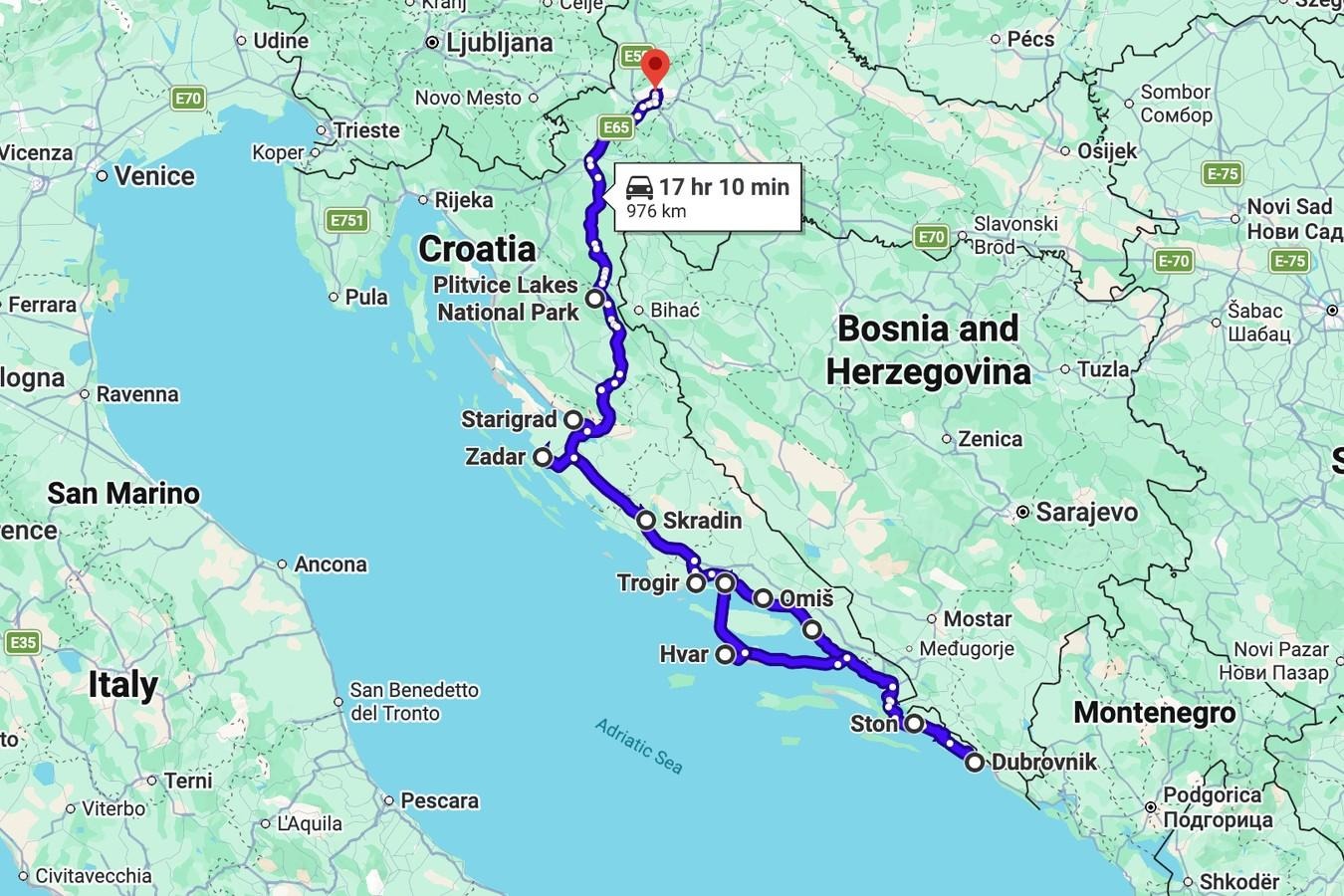
This route runs south from Split to Dubrovnik, hops out to Hvar, then works north through Krka, Zadar, Paklenica, and Plitvice to Zagreb. That’s about 975 km with one long driving day, the return north from Dubrovnik, and no repeated ground.
What you leave out is worth saying plainly. You won’t see Istria, Rovinj, or the truffle villages of Motovun; you won’t reach Korčula or Vis, and you won’t get the Zagorje hill country north of Zagreb. What you will get is the full coast-to-interior contrast, which is the thing most people go to Croatia for and the thing a two-base bus-and-ferry trip can’t deliver.
How to Get Around Croatia
A campervan is the strongest option here, and the reason is geographic rather than sentimental. Croatia’s road network hangs off a single spine, the A1 motorway from Zagreb down past Split, and everything worth seeing sits somewhere off it. Buses run reasonably well between coastal towns, but they thin out into the interior and effectively vanish at the trailheads in Paklenica and Northern Velebit.
Trains are worse. There’s no coastal rail line at all south of Split, which rules out the entire Dalmatian coast and Dubrovnik.
A rental car fixes the access problem and creates a new one, since you’re then booking a hotel in Split, another in Dubrovnik, another on Hvar, and another near Plitvice, in a country where island accommodation sells out months ahead.
An RV rental in Split rolls the bed and the transport into one daily cost and lets you park at the edge of each old town and walk in.
Croatia’s campsite network makes this practical. Licensed sites are dense along the Dalmatian and Istrian coasts, most take motorhomes, and many run a camper service point for water filling and chemical toilet emptying. That density matters more here than in most countries, because wild camping in Croatia is a genuine legal risk rather than a tolerated gray area, which is covered further down.
Indie Campers runs two Croatian depots, Split on the coast and Zagreb in the interior, and the one-way between them is the only domestic pairing in the country. Every rental includes unlimited mileage with no daily cap, a Basic Protection Plan, 24/7 road assistance, cancellation up to 31 days before pickup at no penalty, and book now, pay later.
The Best Croatia Itinerary 10 Days: Day by Day
This is the day-by-day version of the route, with driving distances, park prices, campsites, and the one practical detail per day that’s easy to get wrong. Times are a guide rather than a schedule, and most days leave room to stay longer somewhere that earns it.
Day 1: Arrive in Split
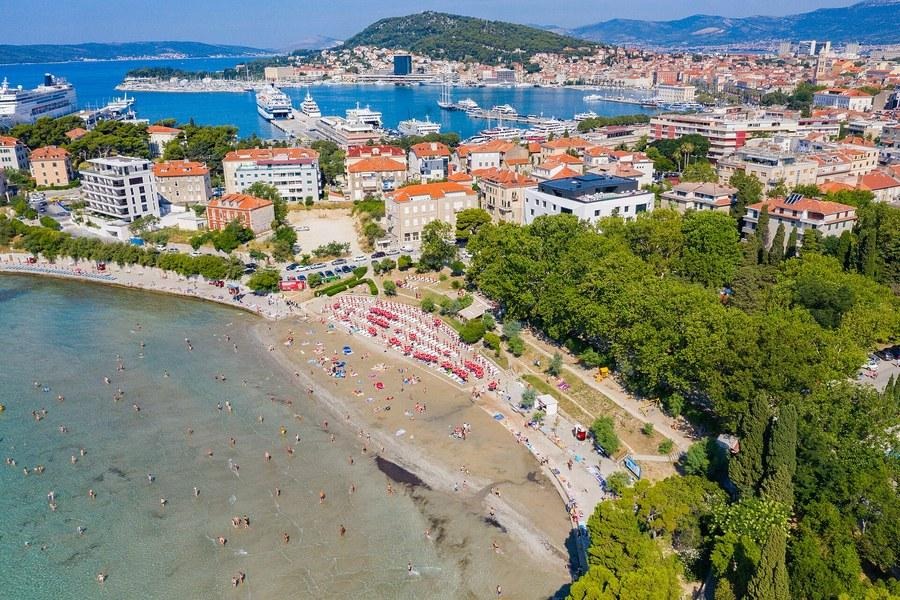
Morning (10:00 AM): Diocletian’s Palace and the Old Town
Most international flights into Dalmatia land at Split Airport, which sits about 25 km from the Indie Campers depot, roughly 25 to 30 minutes away. Pick up the van, then head straight for Camping Stobreč Split, 7 km from the old town and the closest campsite to the center, and leave the vehicle there for the day.
Split’s old town is a Roman palace that a city grew inside. Diocletian’s Palace was built as a retirement complex around 300 AD, and its cellars, peristyle, and cathedral bell tower are now woven into an inhabited street grid rather than fenced off as a ruin. Climb the bell tower first while the light is still low, then walk out through the Golden Gate.
Afternoon (1:30 PM): Riva Promenade and Marjan Forest Park
Lunch belongs at Konoba Fetivi in the Varoš district, a family-run tavern with a Michelin Bib Gourmand and a seafood menu that changes with the catch. Villa Spiza on Petra Kružića is the other local pick, with a daily handwritten menu, though it takes cash only and the queue moves slowly.
After eating, walk the Riva waterfront and then climb into Marjan Forest Park on the peninsula west of the center. The pine trail up to the Telegrin viewpoint takes about 45 minutes and puts the whole palace grid, the harbor, and the islands of Brač and Hvar in one frame.
Evening (7:00 PM): Bačvice and Dinner
Bačvice beach, five minutes east of the old town, is where Split actually goes in the evening. The water is shallow enough that locals play picigin, a shin-deep ball game invented on this exact stretch of sand, and the bars behind it fill up after sunset.
Practical tip: leave the campervan at Stobreč and take the bus or walk in along the coast path. Split’s palace core is closed to general vehicle traffic, and the perimeter parking fills early in summer.
Day 2: Cetina Canyon and the Biokovo Skywalk
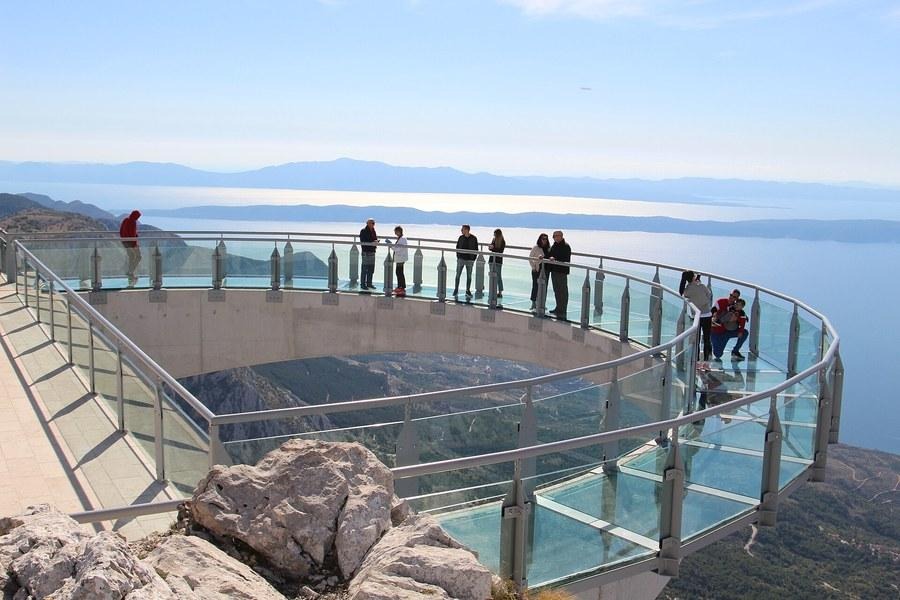
Morning (9:00 AM): Rafting the Cetina River from Omiš
Omiš is only 25 km down the coast from Split, about half an hour, and it sits where the Cetina River cuts out of a limestone gorge straight into the Adriatic. Half-day rafting trips run from spring through early autumn on the stretch above town, and they’re mild enough for first-timers while still involving actual whitewater.
If rafting isn’t your thing, the hike up to Fortica Mirabela above the old town takes 20 minutes and looks straight down the gorge.
Afternoon (2:00 PM): Biokovo Nature Park and the Skywalk
Drive 40 km southeast to Makarska, then turn inland. The Biokovo road starts about 6 km east of Makarska on the Makarska to Vrgorac state road and climbs 23 km up the mountain, ending at Sv. Jure at 1,762 m, the highest paved road in Croatia.
The Skywalk sits 13 km up from the entrance reception, about a 30-minute drive, at an elevation of 1,228 m. It’s a semicircular glass viewpoint 8.5 m in diameter that projects about 11 metres past the cliff edge, and on a clear day you can see across the Adriatic to Italy.
Adult tickets are €15 from June to September and €10 in April, May, and October, per the Biokovo Nature Park price list, and they’re sold online only.
Evening (6:00 PM): Makarska Riviera
Come down off the mountain and settle in on the Makarska Riviera, where Camp Baško Polje sits in pine forest right behind the beach. Konoba Kalalarga, in an alley off Makarska’s main square, grills whatever the boats brought in that morning. If you want the region’s best meal, Restoran Jeny up in Gornji Tučepi holds a Michelin star and looks down the whole coastline.
Practical tip: the Biokovo road admits only 20 vehicles every full hour, so book a timed slot and arrive 5 minutes early. It’s a narrow, single-lane, two-way mountain road with passing lay-bys roughly every 300 metres; buses are barred outright, and larger motorhomes should confirm their exact height and length before committing to the climb.
Day 3: Ston, the Pelješac Bridge, and Dubrovnik
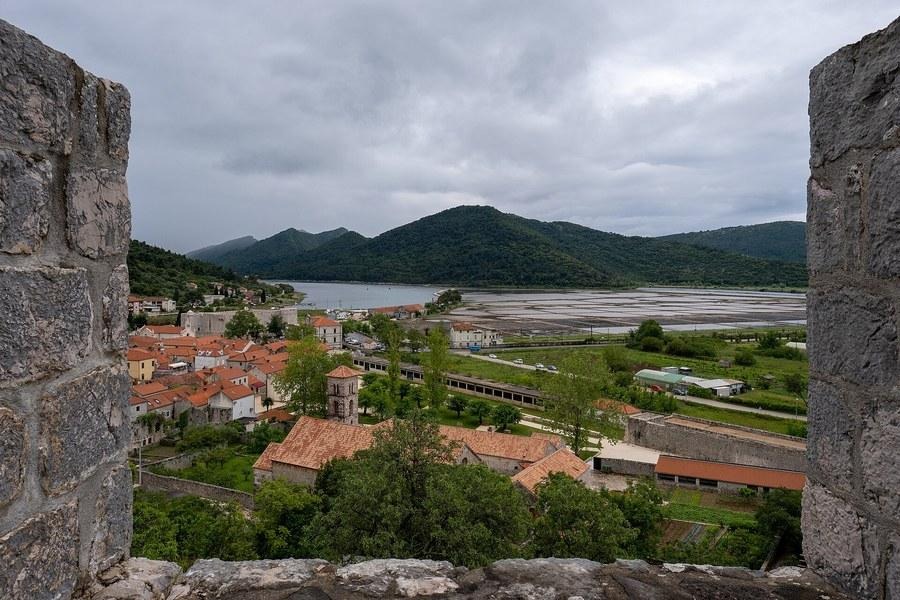
Morning (9:00 AM): The Coastal D8 to Ston
The drive from Makarska to Ston runs 90 km along the D8 coastal road, past Brela’s pebble coves and the Neretva delta, and it’s the kind of stretch where a 90-minute drive turns into three hours because you keep stopping. Budget for that.
Ston’s reward is its walls. The defensive system above the town climbs the hillside in a long stone zigzag built to protect the Republic of Dubrovnik’s salt pans, which are still worked today and still visible from the ramparts.
Afternoon (1:00 PM): Mali Ston Oysters and the Pelješac Bridge
Mali Ston, a kilometre north, grows the oysters that Croatians consider the country’s best. Kapetanova Kuća sits directly on the waterfront and is the region’s landmark seafood restaurant, serving oysters from the bay and a cuttlefish-ink risotto that’s worth ordering even if you’ve had one that week.
From Ston it’s 60 km on to Dubrovnik, and the Pelješac Bridge, opened in 2022, keeps the whole drive inside Croatia for a €10 toll. Before it existed, this leg meant two border crossings through Bosnia and Herzegovina.
Evening (6:00 PM): Arriving in Dubrovnik
Camping Solitudo on the Babin Kuk peninsula is the only campsite in Dubrovnik, with sea-facing pitches under pines and a bus into the old town. Book it well ahead in summer, because there is no second option.
Head into the old town for the evening, when the day-trip crowds and the cruise passengers have gone, and the Stradun’s limestone paving has that polished glow. Restaurant Kopun on Boškovićeva does the city’s namesake capon dish from a historic Dubrovnik recipe.
Practical tip: park at Solitudo and take the bus. Dubrovnik’s old town is entirely pedestrian, the approach roads are steep and narrow, and the perimeter lots are neither cheap nor campervan-friendly in high season.
Day 4: Dubrovnik’s Walls, Sea Kayaks, and Mount Srđ
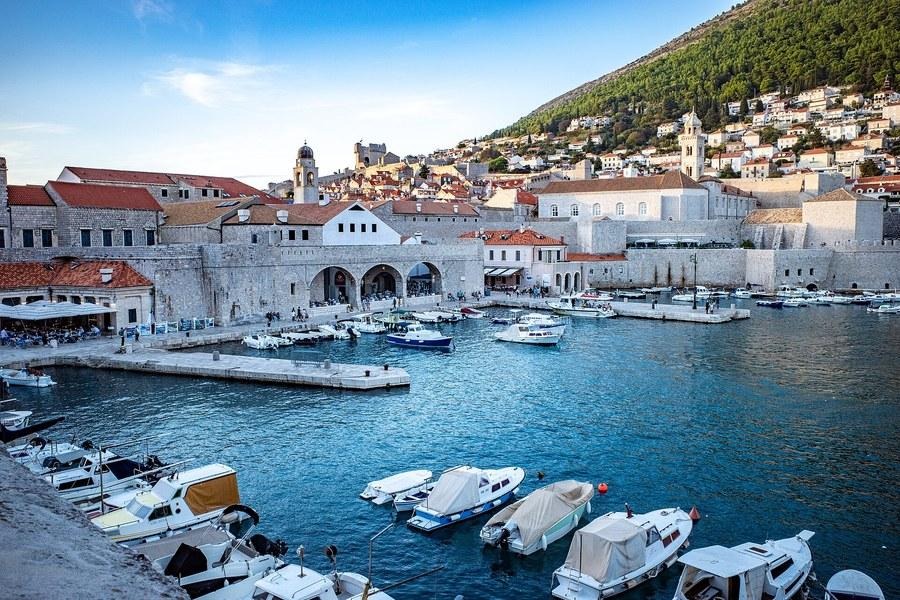
Morning (8:00 AM): Walking the City Walls
Be at the Pile gate when the walls open at 8:00 AM. The circuit is worth the early alarm twice over, once for the light and once for the temperature, because there is no shade up there by ten.
Dubrovnik’s city walls run 1,940 m around the old town, reach 25 m high at points, and measure 4 to 6 m thick on the landward side. The system took its current shape in the 13th century and was finished in 1660 with the Bastion of St Stephan, and it includes 16 towers, three fortresses, and six bastions. The full loop takes 90 minutes to two hours at a walking pace with stops.
Afternoon (1:00 PM): Sea Kayaking Below the Ramparts
The best view of the walls is from the water. Guided sea-kayak trips leave from Pile beach, paddle along the outside of the fortifications, cross to Lokrum island, and stop at a sea cave for a swim, and most run around three hours.
It’s the single best-value activity in Dubrovnik, and it solves the afternoon heat problem. Lunch afterwards at Nautika, on the point below the Lovrijenac fortress, if you want the view, or at any of the konobas up the side stairs off the Stradun if you want the bill to be smaller.
Evening (6:00 PM): Mount Srđ at Sunset
The cable car climbs from just behind the old town to the fort on Mount Srđ at 412 m, and the view down onto the walled city with Lokrum behind it is the postcard shot. The drive up the switchback road is also open if you’d rather take the van, though the parking at the top is limited.
Practical tip: buy the walls ticket online for a specific morning slot in July and August. Walk-up queues at the Pile entrance regularly run 40 minutes in peak season, which erases the whole point of arriving early.
Day 5: The Coast Road North and the Ferry to Hvar
Morning (8:00 AM): Retracing the D8 to Drvenik
This is the one long driving day. Dubrovnik to the ferry port at Drvenik is about 150 km, three hours or so with the Pelješac Bridge and the coastal stretch past Ston, and it’s the same road you came down. Leave early, because you’re aiming for a ferry.
Break the drive at Ston again if you skipped the walls on the way south, or push straight through to Drvenik and eat at the harbor.
Afternoon (1:00 PM): The 35-Minute Crossing to Hvar
Drvenik to Sućuraj is a Jadrolinija car ferry, line 632, and the crossing takes about 35 minutes. It’s the shortest vehicle route to Hvar; it runs year-round, and in high season it sails roughly 11 times a day.
Sućuraj sits on Hvar’s eastern tip, which means about 75 km of island road west to Hvar Town. That drive is the underrated part of the island, a single ridge road with lavender fields, dry-stone terraces, and almost no traffic.
Evening (6:00 PM): Stari Grad and Camp
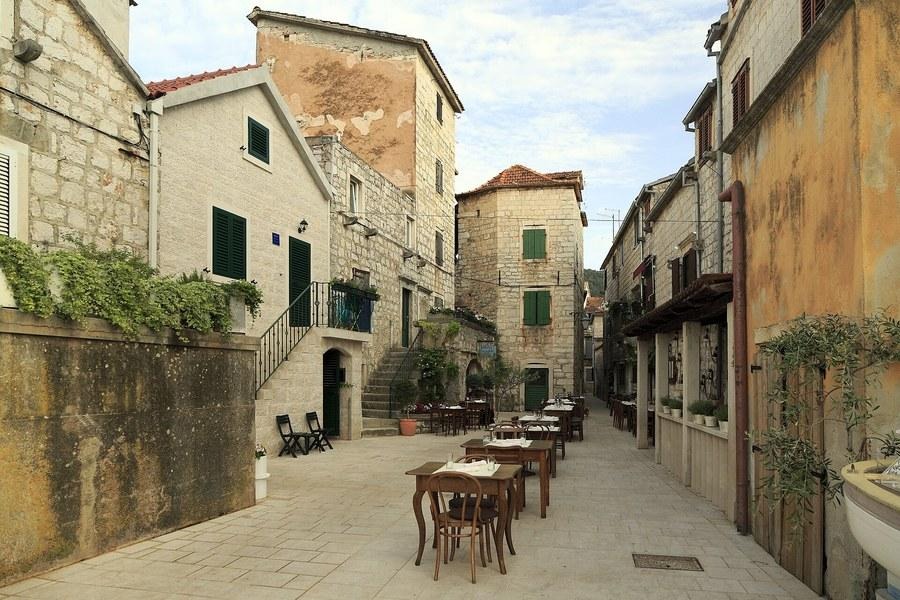
Stop in Stari Grad, Croatia’s oldest town and a settlement founded by Greek colonists in 384 BC. Its stone lanes and shaded courtyards are quieter than Hvar Town’s, and the agricultural plain behind it still follows the Greek land-division grid laid out 2,400 years ago.
Camping Mala Milna, on the south coast between Stari Grad and Hvar Town, has pitches for motorhomes right by the water on three small bays.
Practical tip: book the vehicle slot on the Drvenik ferry, especially from June to September. Passenger space is rarely the problem; vehicle deck space is, and Jadrolinija’s Split and Hvar routes are among the busiest in the Adriatic.
Day 6: Hvar Town, Fortica, and the Pakleni Islands
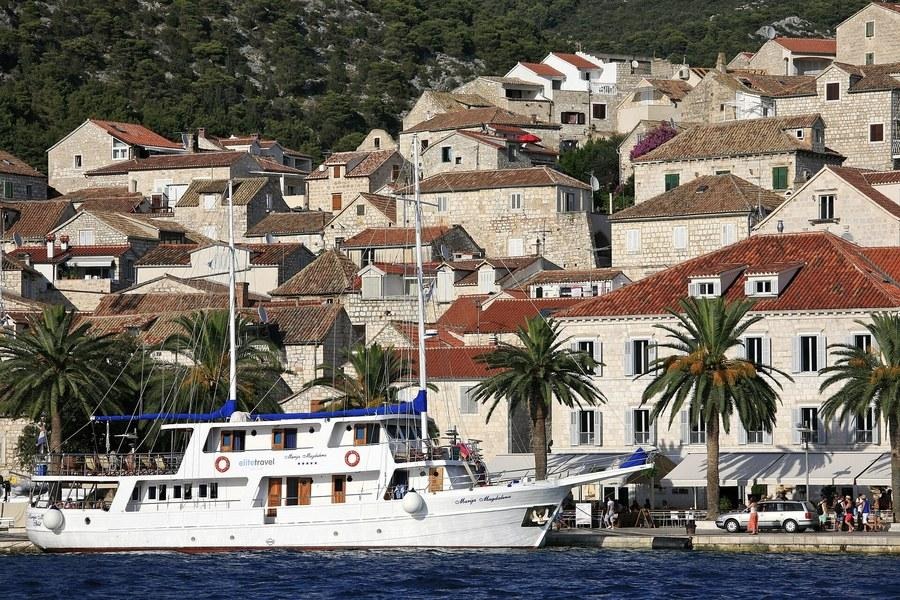
Morning (9:00 AM): Hvar Town and the Fortica Fortress
Hvar Town’s main square opens onto the harbor with a 16th-century cathedral at one end and the oldest municipal theatre in Europe, dating to 1612, at the other. It fills up by mid-morning, so start with the climb instead.
The Fortica fortress sits above the town, reached by 20 minutes of stepped lanes through the old walls, and looks down over the harbor and the scatter of the Pakleni Islands beyond it.
Afternoon (12:00 PM): Kayaking and Swimming the Pakleni Islands
The Pakleni archipelago sits 20 minutes offshore, a chain of pine-covered islets with clear shallow water between them. Kayak rentals and guided paddles leave from the Hvar Town waterfront, and half a day gets you across to Jerolim or Marinkovac and back with a swim stop or two.
Water taxis run the same route if you’d rather not paddle, and Palmižana on Sveti Klement has a marina restaurant and a botanical garden that make a good lunch target.
Evening (7:00 PM): Wine and Dinner in the Old Town
Hvar’s interior grows Plavac Mali, the red grape behind most serious Dalmatian wine, and the island’s producers pour it in tasting rooms around Jelsa and Vrboska. Konoba Menego, on the steps above Hvar Town’s square, is the traditional choice for dinner, with cured meats, cheese, and slow-cooked island dishes served in a stone-walled room.
Practical tip: check the Stari Grad to Split ferry timetable tonight and book tomorrow’s crossing. Line 635 takes about two hours and is the main vehicle link back to the mainland, and missing the sailing you want costs you the Trogir stop.
Day 7: Back to the Mainland, Trogir, and Krka’s Doorstep
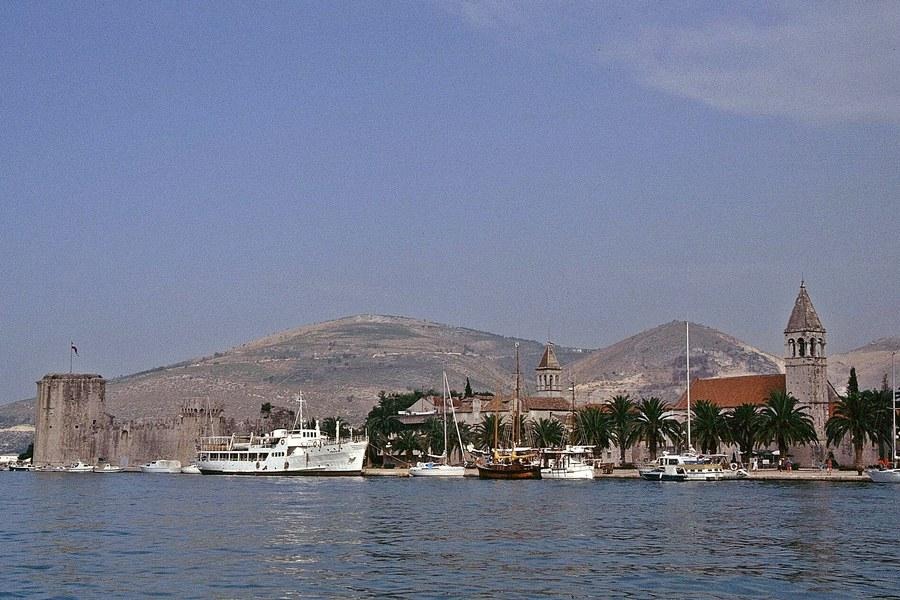
Morning (8:00 AM): The Ferry to Split
The Stari Grad to Split crossing takes roughly two hours on Jadrolinija line 635, and it’s a pleasant way to spend a morning, with Brač sliding past on one side and the Split skyline building on the other. Arrive at the port 45 minutes ahead with a vehicle.
Afternoon (12:00 PM): Trogir’s Old Town
Trogir is 30 km west of Split and sits on a small island between the mainland and Čiovo, joined by bridges at both ends. Its old town is a dense Venetian and Romanesque grid, small enough to walk in an hour and detailed enough to spend three in, with the Kamerlengo fortress on the waterfront and the carved portal of St Lawrence’s cathedral as the two set pieces.
Konoba Trs, in a narrow alley in the old town, is the Michelin Guide entry here, with Mediterranean cooking under exposed stone and a courtyard for warm evenings.
Evening (5:00 PM): Positioning for Krka
Drive 60 km north to the Krka National Park area and camp there overnight so you can be at the falls when they open. Camping Krka, on the edge of the village of Lozovac, sits just over 2 km from the park entrance with 40 pitches and hookups for motorhomes.
Practical tip: Krka has two main land entrances, Lozovac and Skradin, and they behave differently. Lozovac puts you above the falls with a shuttle bus down, while Skradin is a boat approach from the marina. Camping near Lozovac means you can walk in early and skip the bus queue entirely.
Day 8: Krka Waterfalls, Šibenik, and Zadar
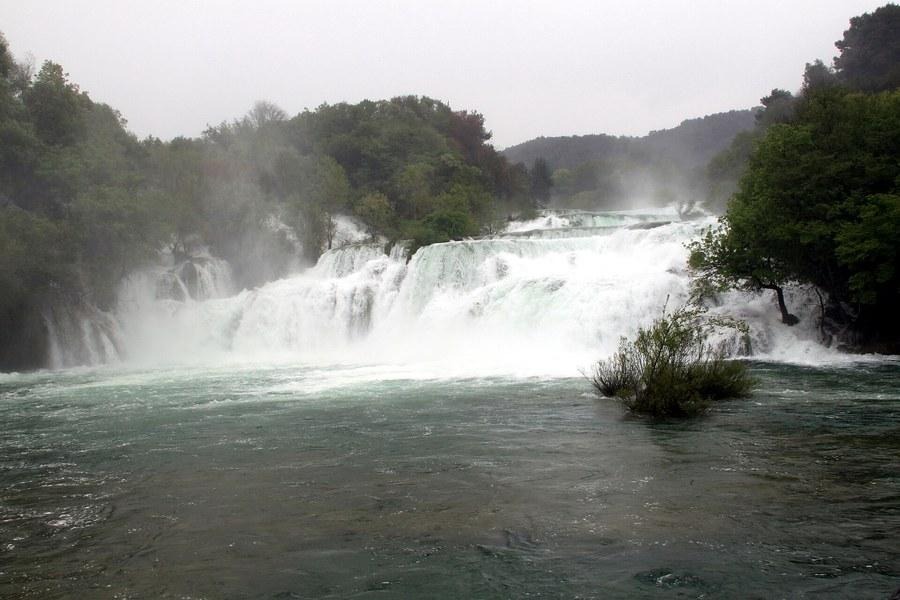
Morning (8:30 AM): Skradinski Buk
Skradinski Buk is the reason Krka gets compared to Plitvice, and it’s the better of the two for a short visit. The falls drop over 17 travertine steps into a wide basin, and the boardwalk loop around them takes 90 minutes to two hours, passing restored watermills that show how the river powered this valley for centuries.
Adult entry for all land locations is €40 from June to September, €20 in April, May, and October, and €7 through the winter months, according to Krka’s 2026 price list. That June price step is the single strongest argument for a shoulder-season trip.
Afternoon (1:00 PM): Šibenik
Šibenik is 25 km south and gets skipped by almost every 10-day plan, which is the reason to stop. The Cathedral of St James is built entirely of stone, with no brick or timber in its structure, and its frieze of 71 carved heads shows the faces of ordinary 15th-century townspeople.
Pelegrini, on the cathedral steps, holds one Michelin star and builds its menus from producers around the city, with its own olive oil and wine collaborations.
Evening (6:00 PM): Zadar and the Sea Organ
Zadar is 75 km further north. Its Roman forum sits in the middle of the old town, and its waterfront holds two installations worth timing your evening around: the Sea Organ, which turns wave motion into sound through pipes under the marble steps, and the Greeting to the Sun, a solar-powered light circle set into the pavement beside it.
Dinner at Foša, at the foot of the city walls opposite the small harbor, which the Michelin Guide lists for its classic Dalmatian seafood. Falkensteiner Premium Camping Zadar sits 3 km out of town.
Practical tip: get to the Sea Organ 30 minutes before sunset and stay for 20 minutes after. The organ’s tone depends entirely on swell, so a flat evening sounds almost silent while a breezy one is loud enough to hear from the far end of the promenade.
Day 9: Paklenica Canyon and the Drive to Plitvice
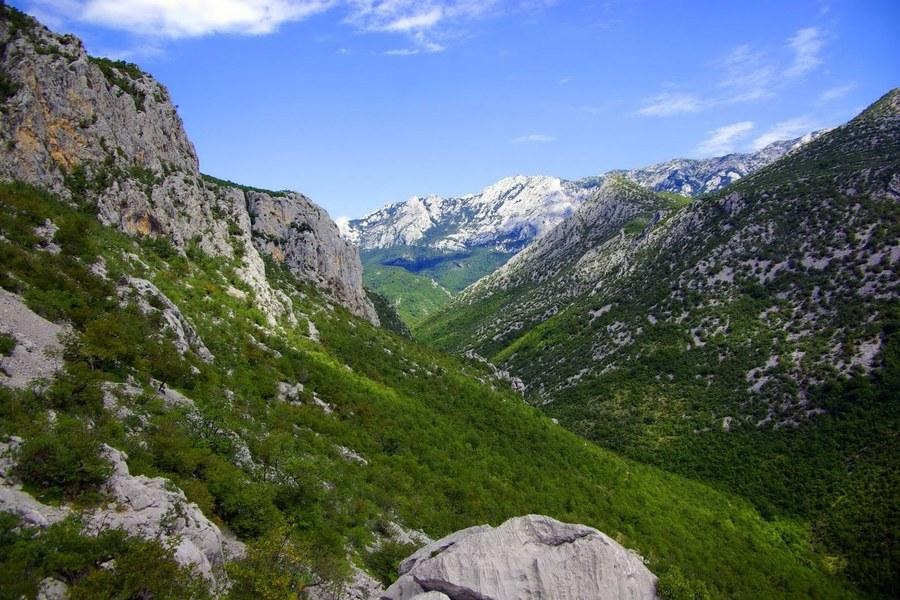
Morning (8:00 AM): Hiking Velika Paklenica
Paklenica is only 40 km from Zadar, about 40 minutes, which makes one of Croatia’s best canyon hikes an easy morning rather than an expedition. The park was proclaimed in 1949, sits inside the Velebit Mountain Biosphere Reserve, and became a UNESCO World Heritage Site on 7 July 2017.
The Velika Paklenica canyon walk starts wide and gravelly and narrows into vertical limestone walls that climbers work all season. Paklenica’s hiking trails run 150 to 200 km in total, and the park holds about 600 marked climbing routes from grade 3 to 8b+, which makes it the most visited climbing site in the country.
Afternoon (1:00 PM): Manita Peć Cave and the Velebit Ridge
Manita peć is the only show cave in the park open to the public, and it sits at 570 m with a walk up from the Velika Paklenica parking lot of about an hour and a half. Guided visits run on set times, so check the day’s schedule at the entrance before starting the climb.
Behind it the Velebit ridge rises to Vaganski vrh at 1,757 m and Sveto brdo at 1,753 m, both full-day summits rather than afternoon walks. If you want the view without the day, the trail to the Lugarnica forester’s house and back is enough.
Evening (5:00 PM): North to Plitvice
It’s about 110 km from Paklenica to the Plitvice Lakes, roughly two hours inland on the A1 and then the D1 through the Lika highlands, and the landscape changes completely. Beech forest replaces bare karst, and the temperature drops several degrees.
Camp Korana, run by the national park, sits a few kilometres north of Entrance 1 and is the practical overnight for an early start. Eat at Lička Kuća by Entrance 1, which has served Lika cooking since 1972, with spit-roasted lamb, local potatoes, and soft Basa cheese from nearby farms.
Practical tip: fill the tank before leaving the coast. Fuel stations thin out through the Lika interior, and diesel runs about €1.45 to €1.60 per litre.
Day 10: Plitvice Lakes and the Drive to Zagreb
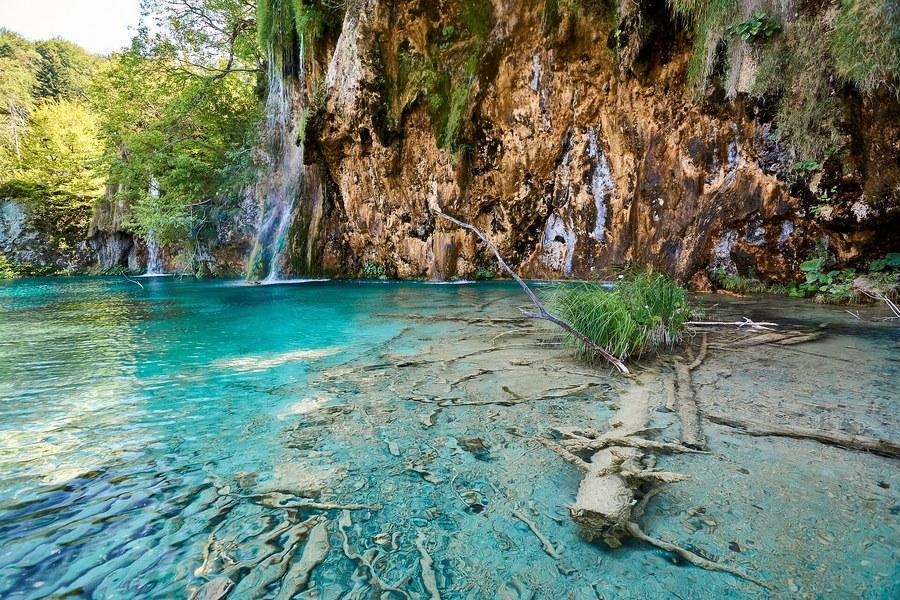
Morning (7:30 AM): The Lake Circuit
Be at the entrance when the park opens. Plitvice is a chain of 16 terraced lakes connected by waterfalls, and the boardwalks that cross them are narrow enough that a mid-morning arrival means walking in a queue rather than a forest.
The 2026 adult ticket costs €40 from June through September, €23 in April, May, and October, and €10 from November to March, per Plitvice’s official price list. The price includes the electric boat across Lake Kozjak and the panoramic train, both of which you’ll use. The park caps entries by the hour, so book online for a specific slot.
Afternoon (1:00 PM): The Drive to Zagreb
Plitvice to Zagreb is 130 km and about an hour and 45 minutes on the A1. It’s the easiest drive of the trip and the one where the country visibly changes, from karst plateau to central European farmland and then into a city of Austro-Hungarian facades.
Drop the van at the Zagreb depot, roughly 17 km from Zagreb Airport, or keep it until the following morning if your flight is early.
Evening (5:00 PM): Zagreb’s Upper Town
Zagreb’s Gornji Grad is the right place to end this trip, because it’s the opposite of everything you’ve just driven through. The funicular from Tomićeva Street is the shortest public cable railway in the world, at 66 metres, and it lands you beside the Lotrščak Tower where a cannon has been fired at noon every day since 1877.
Walk to St Mark’s Church for the tiled coat-of-arms roof, then down Tkalčićeva for dinner. Vinodol, on pedestrian Teslina Street, serves the continental side of Croatian cooking, with peka-baked lamb and veal that has nothing to do with the coast.
Practical tip: keep an hour of buffer before drop-off. Zagreb’s city centre has restricted and one-way streets that a 6-metre van does not enjoy, and the depot run from the centre is easier before evening traffic builds.
Driving and Camping Rules for a Croatia Road Trip
Croatia’s driving rules have a few specifics that catch visitors out, and its camping law is stricter than most of the Mediterranean. Getting these right before you leave the depot saves money and avoids a fine that no itinerary accounts for.
Tolls, Vignettes, and the A1 Motorway
Croatia does not use a vignette on its motorways, so a sticker bought for Slovenia or Austria does nothing here.
- Ticket and gate tolls: The A1 charges by distance. You take a ticket entering the motorway and pay on the way out, and the Zagreb to Split run costs roughly €27 to €35 for a car-class vehicle.
- Motorhome class: Larger vehicles are frequently charged at a higher toll class depending on height and axle count, so budget toward the top of that range.
- Payment: Carry euros as well as a card, because not every toll lane accepts cards. Croatia adopted the euro on 1 January 2023, so there’s no kuna to worry about.
- The Pelješac Bridge: The Split to Dubrovnik drive stays inside Croatia across this bridge for a €10 toll.
- Slovenia: If your route touches Slovenia, that country needs its own vignette, roughly €8 to €16 for a week, and it’s completely separate from Croatian tolls.
Wild Camping and Where You Can Legally Sleep
Wild camping in Croatia is illegal in most places, and it’s enforced. Fines are real, protected areas are patrolled, and this is not the tolerated overnight-parking culture you’ll find in parts of France or Scandinavia.
The upside is that the licensed network is dense enough that you never need to risk it. Coastal Dalmatia and Istria have campsites every few kilometres, most take motorhomes, and many run a camper service point for water and waste. Book ahead from June to September, particularly on the islands and around Dubrovnik, where Camping Solitudo is the only option in the city.
Taking a Campervan on a Croatian Car Ferry
Two crossings on this route carry your vehicle, and both need the same preparation.
- Book the vehicle slot, not just the seat: Passenger space is rarely the constraint, and vehicle deck space on the Hvar and Brač routes sells out weeks ahead in July and August.
- Confirm your dimensions: Car ferries take campervans without issue, but larger motorhomes should check size and weight limits with the operator before a peak-season sailing.
- Arrive early: 45 minutes ahead of departure with a vehicle is the working minimum, and an hour is safer in August.
Croatian Road Rules Worth Knowing
- Speed limits: 130 km/h on motorways, 110 on expressways, 90 on open roads, and 50 in urban areas, dropping to 30 in some designated zones.
- Headlights: Required on at all times, day and night, all year.
- Mandatory equipment: A warning triangle, a reflective vest, and a first aid kit must be in the vehicle.
- Alcohol limit: 0.05% generally, and 0.00% for drivers under 24 or with less than two years of licence experience.
- Licence and age: EU and EEA licences are valid as issued, while non-EU visitors should carry an International Driving Permit alongside their home licence. Minimum rental age is typically 21, with a young-driver surcharge common under 25.
- Old town access: Dubrovnik, Split’s palace core, and Rovinj all restrict vehicles in their pedestrian centres. Park at the perimeter and walk in.
Exploring Croatia’s Regions: Alternative 10 Day Croatia Itineraries
The route above is the best single pass through the country, but it isn’t the only good one. If you’ve already done Dalmatia, or you’re flying into a different airport, these two versions of a 10-day Croatia itinerary work just as well.
10-Day Istria and Continental Croatia Itinerary
- Day 1 to 2: Pick up your RV rental in Zagreb, spend two days on the Upper Town, the Dolac market, and a day trip north into the Zagorje hills for Trakošćan castle and the baroque old town of Varaždin.
- Day 3: Drive 270 to 290 km west to Istria, about three hours via the A1 and A8, and settle on the coast near Poreč.
- Day 4 to 5: Work the Istrian interior, with Motovun and Grožnjan as the two hill towns and truffle country in between. Time this for October if food is the point, since white truffles peak that month.
- Day 6: Rovinj for the Venetian harbor and the old town, then south to Pula for the Roman amphitheatre, one of the six largest still standing.
- Day 7: Brijuni National Park by boat from Fažana, then north to the Učka mountain road for the drive back east.
- Day 8: Head inland to Plitvice Lakes for the full lake circuit, roughly 300 km from Istria.
- Day 9: Continue to the Lika highlands or Northern Velebit for a day of hiking with almost no other visitors.
- Day 10: Return the van in Zagreb, 130 km from Plitvice.
10-Day Southern Dalmatia and Islands Itinerary
- Day 1 to 2: Pick up in Split, spend two days on Diocletian’s Palace, Marjan, and a Trogir afternoon.
- Day 3 to 4: Ferry to Brač for Zlatni Rat beach at Bol and the climb up Vidova gora, the highest point on any Adriatic island at 778 m.
- Day 5 to 6: Cross to Hvar for Hvar Town, the Fortica fortress, the Pakleni Islands, and the lavender fields of the interior.
- Day 7: Ferry on to Korčula for the walled old town and a tasting of Grk and Pošip, the island’s two white grapes.
- Day 8: Cross to the Pelješac peninsula at Orebić, drive the Dingač wine road, and stop for oysters at Mali Ston.
- Day 9: Dubrovnik for the walls, a sea kayak, and Mount Srđ.
- Day 10: Drive the 230 km back to Split for drop-off, or fly out of Dubrovnik and arrange the return leg at booking.
Map of Your 10-Day Croatia Itinerary
Budgeting for Your Trip: How Much Does 10 Days in Croatia Cost?
Croatia sits at the affordable end of a European coastal road trip, with fuel and campsite costs below Western European equivalents. Two things push a Croatian budget up faster than a Spanish or Portuguese one, and both are on this route, since national park tickets are expensive in summer and every island crossing carries a vehicle fee.
Here’s a realistic per-person daily breakdown for a Croatia 10-day itinerary, excluding the campervan rental itself.
| Category | Budget | Mid-Range | High-End |
| Campsites | €10 to €20 | €20 to €35 | €40+ |
| Food and Drink | €20 to €35 | €40 to €65 | €90+ |
| Parks and Activities | €10 to €25 | €25 to €45 | €60+ |
| Fuel, Tolls, and Ferries | €12 to €20 | €20 to €30 | €35+ |
| Daily Total | €52 to €100 | €105 to €175 | €225+ |
| 10-Day Total | ~€520 to €1,000 | ~€1,050 to €1,750 | ~€2,250+ |
- Budget traveler: You’ll cook most meals in the van, use municipal and mid-tier campsites, and travel in May or October so Plitvice costs €23 instead of €40, and Krka costs €20 instead of €40. Marjan, the Ston walls, the Zadar waterfront, Hvar’s Fortica climb, and the D8 coast road are all free or close to it.
- Mid-range traveler: You’ll eat out once a day, stay at well-equipped coastal sites with pools and beach access, pay peak park prices, and add the paid extras that make this route what it is, including the Biokovo Skywalk at €15, the Dubrovnik walls, a guided sea kayak, and one Cetina rafting trip.
- High-end traveler: You’ll book premium resort campsites, eat at Michelin-listed places like Pelegrini in Šibenik or Jeny above Tučepi, add a private boat day around the Pakleni Islands, and travel in July or August when everything costs the most.
Two costs sit outside the table. Ferry crossings for a vehicle plus two passengers run roughly €60 to €120 round trip, and the Split to Zagreb one-way carries a repositioning fee that varies by season and vehicle class.
Plan Your Croatia Road Trip with Indie Campers
Ten days in Croatia asks a lot of your logistics. The coast and the interior are genuinely separate trips, the islands need a vehicle ferry, and the accommodation on Hvar and in Dubrovnik books out months ahead, which is how a good route turns into four hotel reservations and a rental car you’re paying to leave in a car park.
One booking removes most of that. Indie Campers runs depots in Split and Zagreb, and the one-way between them means you cover the Dalmatian coast, the islands, and Plitvice without driving the same 410 km of A1 twice. Unlimited mileage matters on a 975 km route, and cancelling is free for up to 31 days before pickup matters when ferry and campsite plans shift with the weather.
Book your campervan and kickstart an adventurous Croatia trip now!
10-Day Croatia Itinerary: Your Final Planning Recap
| Category | Details |
| Best Time to Go | May, June, September, or October for 20 to 26°C coastal days, cheaper campsites, and park tickets at roughly half the summer price |
| Recommended Budget | €520 to €1,750 per person for 10 days, excluding the campervan rental |
| Cities and Stops | Split (1 night), Makarska Riviera (1 night), Dubrovnik (2 nights), Hvar (2 nights), Krka and Skradin (1 night), Zadar (1 night), Plitvice (1 night), Zagreb (drop-off) |
| Best Restaurants | Konoba Fetivi, Split (Dalmatian seafood); Kapetanova Kuća, Mali Ston (oysters); Konoba Menego, Hvar Town (island cooking); Pelegrini, Šibenik (one Michelin star); Lička Kuća, Plitvice (Lika lamb and Basa cheese) |
| What to Visit | Diocletian’s Palace, Biokovo Skywalk, Ston walls, Dubrovnik city walls, Mount Srđ, Hvar Town and Fortica, Pakleni Islands, Trogir old town, Skradinski Buk, Šibenik cathedral, Zadar Sea Organ, Velika Paklenica, Plitvice Lakes, Zagreb Upper Town |
| Recommended Transport | Campervan rental via Indie Campers, one-way Split to Zagreb, unlimited mileage, licensed Croatian campsites throughout |
| Total Distance | Approx. 975 km (605 miles) plus two car-ferry crossings |
| Must-Try Foods | Split black cuttlefish risotto; Mali Ston oysters; Dubrovnik kopun; Hvar gregada and Plavac Mali wine; Lika lamb, potatoes, and Basa cheese; Zagreb štrukli |
| Accommodation | Croatian licensed campsites, €10 to €40 per pitch per night, with wild camping illegal in most places |
| Perfect For | First-time visitors who want the coast and the interior in one trip, hikers and paddlers, couples and families who’d rather not manage four hotel bookings |
Frequently Asked Questions (FAQs)
How much does a 10-day trip to Croatia cost?
A 10-day trip to Croatia costs roughly €1,050 to €1,750 per person for a mid-range campervan road trip, covering campsites, food, fuel, tolls, ferries, and park entry. Budget travelers can do it for €520 to €1,000 by cooking in the van and traveling in May or October, when Plitvice charges €23 instead of €40, and Krka charges €20 instead of €40. Neither figure includes the campervan rental, which varies by vehicle size and season.
Is 10 days enough to see Croatia?
Yes, 10 days is enough to see the Dalmatian coast, one island, two waterfall parks, and Zagreb on a single Split to Zagreb route of about 975 km. You’ll cover Split, Dubrovnik, Hvar, Krka, Zadar, Paklenica, and Plitvice without repeating ground. You won’t reach Istria, which sits 400 km from Split, or the outer islands like Vis and Korčula.
What is the best route for a 10 day Croatia itinerary?
The best route for a 10-day Croatia itinerary runs Split to Omiš to Makarska to Ston to Dubrovnik, then out to Hvar by car ferry, back through Trogir to Krka, Šibenik, Zadar, Paklenica, and Plitvice, finishing in Zagreb. That’s roughly 975 km with one long driving day, the 150 km return north from Dubrovnik. It uses the Split to Zagreb one-way, so you never drive the same stretch of A1 twice.
Do I need a car for a Croatia itinerary 10 days long?
Yes, you need your own vehicle for this route, because there is no coastal rail line south of Split and buses do not reach the trailheads at Paklenica or the Biokovo mountain road. A campervan also removes the four separate accommodation bookings a 10-day multi-stop trip otherwise needs. Indie Campers runs depots in Split and Zagreb with unlimited mileage on company-owned vehicles.
Should I start in Split or Zagreb for a 10-day Croatia trip?
Start in Split if the coast and the islands are the priority, since the depot sits 25 km from Split Airport and puts you within two hours of Krka, Hvar, and the Makarska Riviera. Start in Zagreb if you want Istria, Plitvice, and the continental interior, or if you plan a cross-border drop-off in Vienna, Venice, Bologna, or Munich. The Split to Zagreb one-way covers 410 km and works in either direction.
What is the best month to visit Croatia?
September is the best month to visit Croatia, with sea temperatures still swimmable, coastal days around 22 to 28°C, and crowds thinning sharply after the first week. May and June are close behind, with the waterfall parks at their fullest flow and Plitvice tickets at €23 rather than the €40 charged from June through September. July and August bring 28 to 32°C coastal heat, the year’s highest prices, and vehicle ferry slots that sell out weeks ahead.
Can I wild camp in Croatia with a campervan?
No, wild camping in Croatia is illegal in most places, and it’s actively enforced, with fines and patrols in and around protected areas. Use licensed campsites instead, which are dense along the Dalmatian and Istrian coasts and cost €10 to €40 per pitch per night. Many run a camper service point for water filling and chemical toilet emptying, and most take motorhomes without a size problem.
How do Croatian motorway tolls work for a campervan?
Croatian motorway tolls work on a ticket-and-gate system rather than a vignette, so you take a ticket entering the A1 and pay by distance when you exit. The Zagreb to Split run costs roughly €27 to €35 for a car-class vehicle, and motorhomes are often charged at a higher class based on height and axle count. Carry euros as well as a card, because not every toll lane accepts cards, and buy a separate Slovenian vignette at €8 to €16 per week if your route transits Slovenia.
Do I need to book Croatian ferries and park tickets in advance?
Yes, both need advance booking on this route. Vehicle deck space on the Jadrolinija crossings to Hvar and Brač sells out weeks ahead from June to September, so reserve the slot rather than turning up. Plitvice caps entries by the hour and sells out early-morning summer slots days in advance, and Biokovo admits only 20 vehicles per hour with tickets sold online only.