Last Updated: July 30, 2026
Planning 2 days in Venice? This guide covers the must-see landmarks, the lagoon islands, and how to get around a city where cars cannot go at all.
Here’s a quick overview of what to expect:
Key Takeaways
- Iconic Stops: St. Mark’s Square, the Rialto Bridge, and the Grand Canal
- Hidden Gems: Cannaregio’s quiet backstreets and the lace-making island of Burano
- Recommended Transport: RV to the mainland, then vaporetto into the city, since Venice’s historic center is car-free
- Recommended Budget: $150 to $300 per person for 2 days, covering accommodation, food, transport, and entry tickets
- Best Time to Go: Spring (April to May) for mild weather and fewer crowds than the summer peak
Table of Contents
- Venice Itinerary 2 Days: At a Glance
- Why You’ll Love a 2-Day Trip to Venice
- Best Time to Visit Venice
- Are 2 Days Enough to Visit Venice?
- How to Get Around Venice?
- The Best Venice 2-Day Itinerary: 2 Days of Adventure
- Day 1: San Marco and Rialto in Venice
- Day 2: Dorsoduro, Cannaregio, and the Islands in Venice
- Exploring Venice’s Regions: Alternative Itineraries
- Map of Your 2-Day Venice Itinerary
- Budgeting for Your Trip: How Much Is a Trip to Venice for 2 Days?
- Plan Your Dream Trip with Indie Campers
- 2-Day Venice Itinerary: Your Final Planning Recap
- FAQs About Venice Itinerary 2 Days
Venice Itinerary 2 Days: At a Glance
Before diving into the hour-by-hour plan, here’s a quick snapshot of how the 2-day Venice itinerary breaks down:
| Day | Location(s) | Top Highlights |
| Day 1 | San Marco and Rialto | St. Mark’s Basilica, Doge’s Palace, Rialto Bridge. Try sarde in saor. |
| Day 2 | Dorsoduro, Cannaregio and the Islands | Gallerie dell’Accademia, Murano, Burano. Try risotto al nero di seppia. |
Why You’ll Love a 2-Day Trip to Venice?
Venice does not look like anywhere else. Streets are canals, taxis are boats, and each of its six sestieri, or districts, has its own mood, from grand squares in San Marco to quiet backstreets in Cannaregio.
A short trip still feels varied rather than repetitive.
An RV makes the lead-up easier to enjoy. Since Venice’s historic center only allows foot and boat traffic, your RV becomes a base camp on the mainland or lagoon edge. From there, you can extend the trip into the Veneto countryside or another Italian city without booking a new hotel every night. That flexibility is hard to match with trains or fixed hotel stays.
Food ties it together. Cicchetti bars serve small plates of seafood alongside a glass of local wine, and the Aperol Spritz, invented nearby in the Veneto region, shows up on nearly every menu.
Two days in Venice gives you enough time to see the landmarks and still slow down for a proper meal.
That’s the balance this 2-day Venice itinerary is built around: enough structure to see the highlights, enough breathing room to enjoy them.
Best Time to Visit Venice
The season you choose shapes both the crowds you’ll face and what the city feels like underfoot. Venice draws visitors year-round, but the difference between a quiet February morning and a packed August afternoon in St. Mark’s Square is significant enough to plan around.
Spring (March to May)
Spring brings mild days and blooming window boxes across the city, making it one of the most comfortable times to walk long distances.
Note that Venice’s day-tripper access fee applies on many weekends between April and July, though it does not apply if you’re staying overnight.
This is generally regarded as one of the best times to visit Venice, since the weather cooperates without the peak-summer crowds.
- Average Temperatures: 50 to 68°F (10 to 20°C)
- What to expect: mild and occasionally rainy weather, moderate crowds, and mid-range prices.
Summer (June to August)
Summer is Venice at its busiest and most humid, with long days that suit an early start before the heat and crowds build. It’s also the most expensive season for accommodation near the canals.
The Festa del Redentore in mid-July draws a large fireworks crowd along the Giudecca Canal, which is worth timing your visit around if you enjoy a lively atmosphere.
- Average Temperatures: 70 to 86°F (21 to 30°C)
- What to expect: hot and humid weather, heavy crowds, and peak-season prices.
Autumn (September to November)
Autumn cools down gradually and includes the Regata Storica, a historic gondola race held on the Grand Canal in early September.
Crowds thin out noticeably by late October, making this a strong pick if you want a quieter version of the same sights.
- Average Temperatures: 52 to 72°F (11 to 22°C)
- What to expect: mild and increasingly crisp weather, moderate crowds, and mid-range prices.
Winter (December to February)
Winter is quiet and atmospheric, with morning fog rolling off the lagoon and far fewer visitors, except during Carnevale in February when the city fills with elaborate masks and costumes.
Outside of Carnevale, this is the cheapest and calmest time to visit, and many find the empty squares and canals genuinely striking.
- Average Temperatures: 37 to 50°F (3 to 10°C)
- What to expect: cold and often foggy weather, light crowds outside Carnevale, and low-season prices.
If you had to pick one season, spring and autumn both deliver the best balance of comfortable walking weather and manageable crowds, without the price spike that comes with summer.
Are 2 Days Enough to Visit Venice?
Yes, 2 days in Venice is enough to see the highlights and still enjoy the city at a relaxed pace. The trick is picking a focused route instead of trying to cover every sestiere.
This itinerary spends day one in the San Marco and Rialto core, then day two exploring Dorsoduro, Cannaregio, and the lagoon islands.
With that structure, you’ll see St. Mark’s Basilica, the Doge’s Palace, the Rialto Bridge, and at least two of the colorful lagoon islands, all without rushing between them. You’ll also have time for a proper sit-down meal each evening instead of grabbing food between sights.
A common mistake is trying to add too many day trips on top of the main city, like squeezing in Verona or the Dolomites within the same 2 days. Save those for a longer trip, and let this Venice travel guide focus on doing Venice itself well.
In the next few sections, we’ll dive deeper into how exactly those 2 days come together.
How to Get Around Venice?
Venice’s historic center bans cars and motorhomes entirely, so getting around inside the city means walking and taking the vaporetto, the local water bus. That’s part of what makes Venice unlike anywhere else on a road trip.
A single vaporetto ticket costs around $9 and covers 75 minutes of travel, while a 24-hour pass runs about $25 and pays for itself if you’re island-hopping to Murano and Burano. The ACTV app shows live vaporetto times, useful since boats get crowded during peak hours.
If your visit falls on one of Venice’s 2026 access fee dates, mostly weekends between April and July, register online in advance. Staying overnight, including at a campsite outside the historic center, exempts you from paying, though you still need to complete the registration.
An RV still makes sense for the trip overall, since it beats juggling trains and separate hotel bookings for a wider Italy route. Park it once, at a campsite on the mainland or lagoon edge, and use it as your base while you explore Venice by boat.
Camping Fusina offers a direct vaporetto to the Zattere waterfront in about 25 minutes. Tronchetto and Piazzale Roma sit closer to the center but charge more for larger vehicles, while Mestre is a cheaper park-and-ride option a short train or bus ride away.
If your route continues to Murano and Burano, Punta Sabbioni puts you closer to the islands.
Venice’s historic center spans roughly 3 miles end to end, so most stops on this itinerary are within a 20-minute walk of each other. Pack comfortable, broken-in shoes, since cobblestones and small bridges add up over two full days.
Booking RV rentals in Venice through Indie Campers gives you unlimited mileage on company-owned vehicles, so you can drive the extra distance to a lagoon-side campsite without watching a mileage cap.
If Venice is one stop on a longer route, RV rentals in Italy cover pickup locations across the country, from Milan to Rome to Florence.
A smaller campervan is worth considering for the Venice leg, since Mestre and Marghera have narrow streets and limited traffic zones that larger motorhomes can find tight.
The Indie Campers fleet includes compact options built for exactly this kind of driving.
The Best Venice Itinerary: 2 Days of Adventure
If a gondola ride is on your list, late afternoon on day one is a good window to fit one in, since rates and crowds both ease slightly compared to midday.
Here’s how to spend each day, hour by hour:
Day 1: San Marco and Rialto in Venice
If you’re staying at a campsite like Camping Fusina, catch the first vaporetto of the morning to the Zattere stop, then walk about 15 minutes toward San Marco to beat the biggest crowds.
On a rainy day, the Basilica and Doge’s Palace both work well as covered alternatives to outdoor sightseeing, so this day holds up regardless of weather.
Morning (9 AM): St. Mark’s Square and Basilica
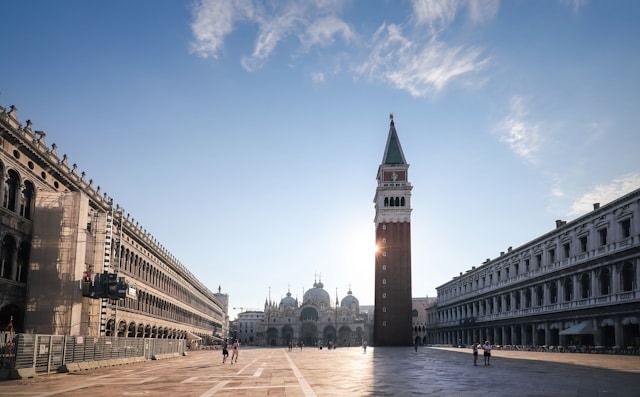
Start at St. Mark’s Square, the wide-open heart of Venice and the first place most visitors head to. Napoleon reportedly called it “the drawing room of Europe” after conquering the city in 1797, and it’s easy to see why once you’re standing in it.
The Basilica di San Marco sits at one end, its domes and gold mosaics dating back to the 11th century, when Venice used the church to display treasures brought home from Constantinople.
Go inside to see the mosaic ceilings up close, then climb the Campanile bell tower next door for a rooftop view over the lagoon and the red rooftops of the city. Look for the Torre dell’Orologio, the astronomical clock tower on the square’s edge, with its two bronze figures that strike the hour.
Give yourself about two hours for the square, the basilica, and the tower combined, and expect some of that time to go toward people-watching in one of Europe’s most photographed public spaces.
Practical tip: book a skip-the-line ticket for the Basilica online before you go. The regular queue can run past an hour during peak season.
Afternoon (12:30 PM): Cicchetti Lunch and Doge’s Palace
For lunch, head to a cicchetti bar like All’Arco near the Rialto Market. Order a plate of baccalà mantecato, a whipped salt cod spread served on small toasts, alongside a glass of local wine. It’s the Venetian version of tapas, and standing at the bar with locals is part of the experience.
While you’re near the market, take a few minutes to walk through the Rialto Market stalls themselves, where fishmongers still sell the day’s catch each morning.
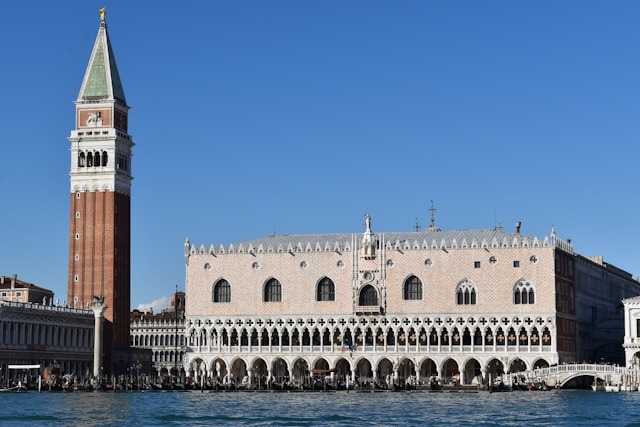
After lunch, walk back to St. Mark’s Square for the Doge’s Palace, the former residence of Venice’s ruling doge and one of the city’s most striking Gothic buildings. The palace also housed the government offices and courts that ran the Venetian Republic for centuries, which is part of why the building feels more like a small city than a single residence.
Cross the Bridge of Sighs inside the palace, the enclosed walkway that once led prisoners from their cells to trial. The pink and white facade also makes for one of the best photo spots in the square.
Practical tip: A combined ticket covering the Doge’s Palace and several other civic museums often costs less than paying for each site separately, so check the combined pass before buying individual tickets.
Evening (6 PM): Rialto Bridge and Dinner in San Polo
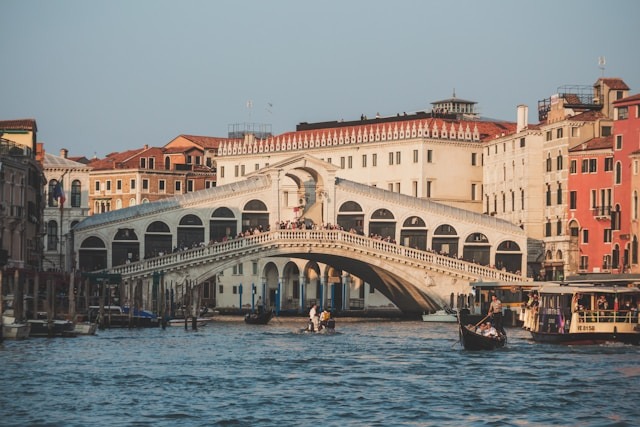
As the light softens, walk to the Rialto Bridge, Venice’s oldest bridge over the Grand Canal and still its busiest meeting point. Built in stone in the late 16th century after several wooden versions collapsed or burned, it remained the only way to cross the Grand Canal on foot for centuries.
Watch the gondolas and vaporettos pass underneath as the sun goes down. If you have time, walk down to the water’s edge on either side for a lower-angle view of the bridge itself.
For dinner, cross into the San Polo district and try sarde in saor, sardines marinated in a sweet and sour onion mixture. The dish dates back centuries as a way to preserve fish for long sea voyages.
Many small trattorias in San Polo serve it as a starter, paired with a glass of local Soave wine. Ending the night on a quiet San Polo street, with the sound of water lapping against the buildings, is the kind of moment that sums up why people fall for Venice.
Day 2: Dorsoduro, Cannaregio, and the Islands in Venice
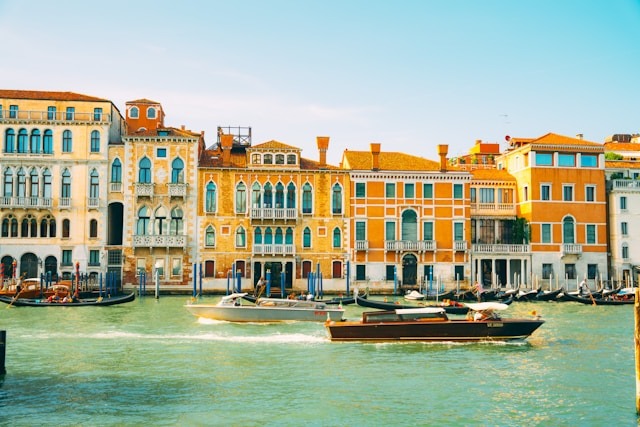
Today covers more ground than day one, so wear comfortable shoes and expect a mix of walking and vaporetto rides.
If the weather turns, the Gallerie dell’Accademia and Museo del Vetro on Murano both make solid indoor stops.
Morning (9 AM): Gallerie dell’Accademia and Zattere Waterfront
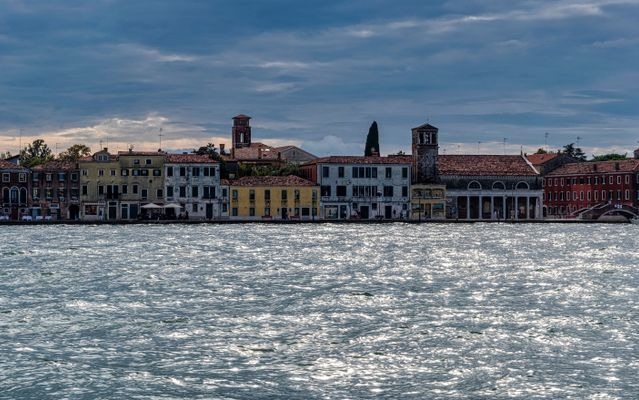
Spend your second morning in Dorsoduro, a quieter district known for its art and university crowd. The Gallerie dell’Accademia houses the largest collection of Venetian paintings anywhere, spanning the 14th through 18th centuries.
If you have extra time, the Peggy Guggenheim Collection nearby covers modern art in a former canal-side palazzo and makes a good alternative or addition. The unfinished building itself, once home to American art collector Peggy Guggenheim, is almost as interesting as the Picasso and Pollock works inside.
Afterward, walk along the Zattere waterfront, a long promenade facing the Giudecca Canal and one of the few spots in Venice with wide open views instead of narrow streets.
It’s a good spot to slow down with a coffee and watch the boat traffic before heading to the islands.
Practical tip: the Gallerie dell’Accademia gets busy by midday, so aim to arrive right at opening.
Afternoon (12 PM): Murano and Burano by Vaporetto
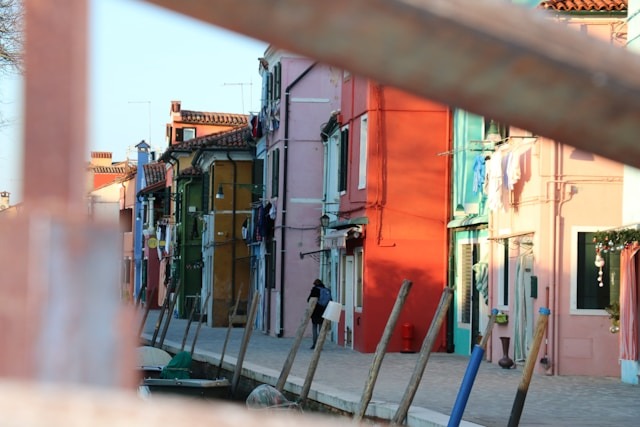
Catch a vaporetto to Murano, the island famous for glassblowing since the 13th century. Watch a glassblowing demonstration at one of the furnaces along the main canal, then browse the shops for handmade pieces.
The Museo del Vetro on the island covers the history of Venetian glassmaking if you want more context before shopping.
From there, continue to Burano, known for its rows of brightly painted houses and centuries-old lace-making tradition. The Museo del Merletto, housed in the island’s old lace school, explains how that tradition shaped the local economy for generations.
Grab lunch at a spot like Trattoria al Gatto Nero and order the risotto al nero di seppia, a squid ink risotto that turns the whole dish black and tastes like the sea.
The colorful houses against the canals make Burano one of the most photographed spots in the lagoon, so leave time to wander the side streets away from the main canal too.
Practical tip: the vaporetto between Murano and Burano runs less frequently than routes closer to the city center, so check the timetable before you plan your return.
Evening (5:30 PM): Cannaregio and Dinner by the Canal
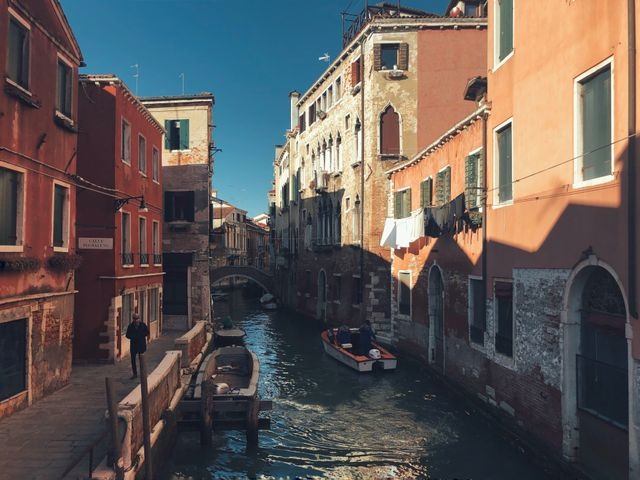
Take the vaporetto back toward Cannaregio, Venice’s largest and most residential district and home to more locals than any other sestiere. Walk through the Jewish Ghetto, established in 1516 and one of the oldest in Europe.
From there, continue to the Fondamenta della Misericordia, a canal-side strip lined with bars and restaurants where locals gather in the evening.
Have dinner at one of the canal-side spots along the fondamenta, and finish with a spritz as the lights reflect off the water. This district moves at a slower pace than San Marco, with fewer souvenir shops and more everyday Venetian life.
You’ll see kids playing in small squares, neighbors chatting over their balconies, and laundry hanging between buildings.
It’s a calmer, more local end to the trip than the crowds around St. Mark’s Square, and a good reminder that Venice still feels lived-in once you step off the main routes.
That contrast between grand landmarks and quiet neighborhood streets is exactly what makes this Venice 2-day itinerary worth the trip.
Exploring Venice’s Regions: Alternative Itineraries
If 2 days leaves you wanting more, here are two ways to extend the trip.
4-Day Venice and the Veneto Itinerary
This version keeps the same 2 days in Venice, then uses your RV to reach two nearby cities that rarely make it onto a first-time visitor’s list.
Both Padua and Verona sit less than an hour’s drive from a mainland Venice campsite, which makes this extension easy to add without much extra planning.
- Day 1 to 2: Venice, San Marco and Rialto, then Dorsoduro and the islands
- Day 3: Padua, home to the frescoed Scrovegni Chapel and a lively university atmosphere
- Day 4: Verona, the setting for Romeo and Juliet, with a well-preserved Roman arena
3-Day Venice Islands Itinerary
For travelers who want to go deeper into the lagoon itself rather than the mainland, this variant trades day trips to other cities for more time on the water.
It suits anyone who finds Murano and Burano the highlight of their trip and wants a slower pace around the islands.
- Day 1: Venice, San Marco and Rialto
- Day 2: Murano for glassblowing and Burano for lace and colorful houses
- Day 3: Torcello, the lagoon’s original settlement, followed by a half day on the Lido beach
If you’re planning a longer route through Italy, our 7-day Italy itinerary covers how to connect Venice with other major cities by road.
Map of Your 2-Day Venice Itinerary
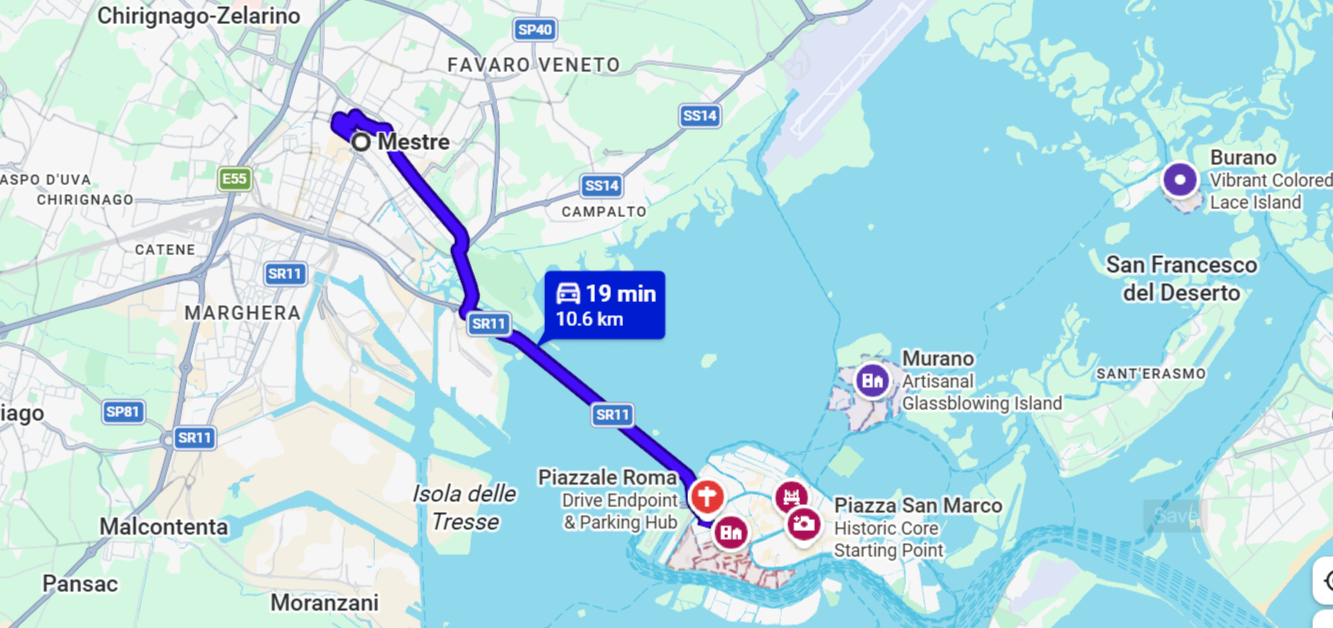
This 2 days in Venice itinerary keeps the route compact. Day one covers San Marco and Rialto on foot, both a short walk from each other, so you won’t need a single vaporetto ride until evening.
Day two moves further out, from Dorsoduro to Murano and Burano by vaporetto, then back to Cannaregio for dinner.
If you’re basing yourself at a mainland or lagoon-side campsite, add the vaporetto or bus connection from your campsite to Piazzale Roma or Zattere.
That connection becomes the starting and ending point of each day’s route.
Budgeting for Your Trip: How Much Is a Trip to Venice for 2 Days?
A trip to Venice can fit almost any budget, and traveling by RV helps keep accommodation and food costs down compared to booking hotels and restaurants for every meal.
Since Venice itself charges some of the highest hotel rates in Italy, parking your RV at a lagoon-side or mainland campsite is one of the biggest savings in this Venice travel guide.
For attractions, the Venezia Unica City Pass bundles entry to several museums and civic sites with public transport. It can work out cheaper than buying vaporetto tickets and museum entries separately if you’re planning to see more than two or three paid sights.
Most restaurants, shops, and the vaporetto system accept cards, though it’s worth carrying some cash for smaller cicchetti bars and market stalls that still prefer it.
| Category | Budget | Mid-Range | High-End |
| Accommodation | $25 to $45 | $45 to $90 | N/A |
| Food and Drink | $30 to $50 | $50 to $90 | $90+ |
| Attractions | $15 to $30 | $30 to $60 | $60+ |
| Transport | $10 to $20 | $20 to $35 | $35+ |
| Daily Total | $80 to $145 | $145 to $275 | $275+ |
| 2-Day Total | ~$160 to $290 | ~$290 to $550 | ~$550+ |
- Budget Traveler: Stays at a campsite like Camping Fusina, cooks some meals in the RV, and sticks to cicchetti bars and free sights like St. Mark’s Square and the Rialto Bridge. This traveler skips paid museums in favor of walking routes and the free views from public bridges.
- Mid-Range Traveler: Mixes cooking in the RV with sit-down meals, pays for entry to the Doge’s Palace and Gallerie dell’Accademia, and adds a vaporetto day pass for island-hopping. This is the most common approach for a first-time 2-day Venice itinerary, since it balances cost with comfort.
- High-End Traveler: Books a canal-view dinner each night, pays for a private water taxi instead of the vaporetto, and adds skip-the-line guided tours of the main sights. This traveler also budgets for a Grand Canal gondola ride, which is not essential but remains one of the most requested Venice experiences.
Plan Your Dream Trip with Indie Campers
Indie Campers gives you a large fleet of campervans and motorhomes, one-way rentals across 70+ locations, and unlimited mileage on company-owned vehicles.
That means your Venice trip can extend into the Veneto countryside without extra planning. Flexible cancellation up to 31 days before pick-up and a book now, pay later option means you can lock in your dates without paying upfront.
This works best for travelers who want Venice as one stop on a bigger Italian road trip rather than an isolated city break.
Pick up your RV, park it at a lagoon-side campsite, and use it as a home base while you explore Venice by boat and on foot. From there, the same vehicle carries you on to Padua, Verona, or wherever your route takes you next.
Whether you’re a first-time renter or an experienced road-tripper, the same digital booking process applies. Browse the fleet, compare vehicle sizes, and pick the pickup point that fits your route.
Book your campervan with Indie Campers today
2-Day Venice Itinerary: Your Final Planning Recap
| Category | Details |
| Best Time to Go | Spring (April to May), for mild weather and moderate crowds |
| Recommended Budget | $150 to $300 per person for 2 days |
| Districts to Visit | San Marco and Rialto (day 1), Dorsoduro, Cannaregio, and the islands (day 2) |
| Best Restaurants | All’Arco, San Polo (cicchetti); Trattoria al Gatto Nero, Burano (squid ink risotto) |
| What to Visit? | Day 1: St. Mark’s Basilica, Doge’s Palace, Rialto Bridge / Day 2: Gallerie dell’Accademia, Murano, Burano |
| Recommended Transport | RV to a mainland campsite, then vaporetto and walking within the city |
| Total Distance | Approx. 2 to 3 miles (3 to 5 km) on foot within Venice, plus vaporetto crossings |
| Must-Try Foods | Sarde in saor, baccalà mantecato, risotto al nero di seppia, Aperol Spritz |
| Accommodation | Campsite pitch with RV: $25 to $90 per night |
| Perfect For | First-time visitors wanting the classic sights alongside a taste of local island life |
| Access Fee | $5 to $10 on designated 2026 dates between April and July, waived if staying overnight |
FAQs About Venice Itinerary 2 Days
How much is a trip to Venice for 2 days?
A trip to Venice for 2 days costs around $150 to $300 per person in the mid-range budget. That figure includes accommodation, food, local transport, and entry tickets to the main sights. It does not include RV rental, which is priced separately based on vehicle type and season. Booking a campsite over a hotel near the canals is one of the easiest ways to bring that daily cost down.
Is 2 days enough to see Venice?
Yes, 2 days is enough to see Venice if you focus on one core area per day instead of trying to cover the whole city. This itinerary spends day one around San Marco and Rialto, then day two in Dorsoduro, Cannaregio, and the lagoon islands. That split lets you see the major landmarks and still fit in island-hopping to Murano and Burano. Most first-time visitors leave satisfied with this pace rather than feeling rushed.
What are the top 3 places to visit in Venice for first-timers?
The top 3 places to visit in Venice for first-timers are St. Mark’s Square, the Rialto Bridge, and the island of Burano. St. Mark’s Square anchors the city’s history and its most famous buildings. The Rialto Bridge offers the best view of daily life on the Grand Canal. Burano adds a colorful, slower-paced contrast to a short, vaporetto ride away – and it rarely disappoints even travelers who have seen dozens of Instagram photos of it beforehand.
What is the most beautiful spot in Venice?
The most beautiful spot in Venice is widely considered to be the view of the Grand Canal from the Rialto Bridge at sunset, when the light hits the water and the surrounding palaces. Burano’s rows of painted houses and Dorsoduro’s Zattere waterfront are close runners-up. Each offers a different kind of beauty, from grand architecture to quiet, colorful streets. Which one feels most beautiful often comes down to whether you prefer a lively view or a quiet one.
What is the best way to travel in Venice for 2 days?
The best way to travel in Venice for 2 days is on foot within the historic center and by vaporetto for crossings to the islands. Cars and RVs cannot enter Venice itself, so the smartest approach for a broader Italy trip is parking an RV at a mainland or lagoon-side campsite and using it as your base. This combines the flexibility of a road trip with easy access to Venice’s boat-only core. A 24-hour vaporetto pass is usually the most cost-effective option if you’re island-hopping on day two.
What is Venice best known for?
Venice is best known for its canals, gondolas, and car-free historic center built across more than 100 small islands. The city is also famous for St. Mark’s Basilica, the Rialto Bridge, and its centuries-old traditions of glassblowing on Murano and lace-making on Burano. Its position in the lagoon has shaped everything from its architecture to its seafood-heavy cuisine. Even the city’s founding, built on wooden piles driven into the mud starting in the 5th century, remains a point of local pride.
Do I need to book Venice attractions in advance?
Yes, booking Venice attractions in advance is worth it, especially for St. Mark’s Basilica and the Doge’s Palace during spring and summer. Skip-the-line tickets can save over an hour of queuing during peak months, and many sell out entirely on the busiest weekends. If you’re visiting on one of Venice’s designated access fee days in 2026, you’ll also need to register online in advance, even if you’re exempt as an overnight guest.
How do I get from Venice Marco Polo Airport to the city center?
You can get from Venice Marco Polo Airport to the city center by public bus, water taxi, or the Alilaguna airport ferry, which runs directly to St. Mark’s Square. The bus is the cheapest option and takes about 20 minutes to Piazzale Roma, where you can connect to a vaporetto. The Alilaguna ferry takes longer, around 70 to 90 minutes depending on the route, but skips the transfer entirely. If you’re picking up an RV, most rental locations near the airport offer a shuttle to the depot.
Is renting an RV worth it for a Venice trip?
Renting an RV is worth it for a Venice trip if you’re combining the city with other stops in Italy, since Venice itself only takes 2 days to enjoy properly. The RV works as your accommodation and transport for the rest of the route, while you park it at a mainland or lagoon-side campsite for the Venice portion. For a Venice-only weekend with no other stops, a hotel or short-term apartment may be simpler. The math tends to favor the RV once your trip includes three or more destinations.