Last Updated: May 12, 2026
Key Takeaways (TL;DR)
- Why Stay in New York in 2026: New York State is one of the most varied RV destinations in North America – within a few hours of New York City, you can park in a forested Catskills campsite, wake up beside a Finger Lakes vineyard, or catch the sunrise over the Adirondacks. An RV gets you into overnight spots that hotels can’t touch, and New York’s campground network is among the best-run in the eastern US.
- Top Places to Stay in New York in 2026: Hudson Valley, Catskills, Finger Lakes, Adirondacks, Long Island, Fire Island, Thousand Islands, Niagara Falls Region, Lake Erie & Western New York, New York City Metro & Palisades.
- Don’t Miss Overnight Experience: Waking up at a lakeside pitch in the Adirondacks before dawn, when the mist is still on the water and the loons are calling – an hour before day-trippers arrive, you have the whole scene to yourself.
- Ideal Trip Length: 10-14 days covers the major regions without rushing. A focused Finger Lakes or Hudson Valley loop works well in 5-7 days.
- How to Choose the Right Base: If you want to stay close to New York City, Hudson Valley campsites sit 60-90 minutes from Manhattan and give you easy access to some of the state’s best restaurants and day-trip destinations. For wilder nights and quieter mornings, head to the Adirondacks or Catskills. If wine and food are the priority, the Finger Lakes wins.
- Recommended Budget Per Person/Night: $25-$65/night, excluding RV rental costs. State park sites are at the lower end; private campgrounds with full hookups run higher.
- Watch Out For: New York State campgrounds fill weeks ahead for summer weekends – especially in the Adirondacks and on Long Island. Most sites open in mid-May and close around Columbus Day in October.
- Where To Stay: An RV rental from Indie Campers is the most practical way to get around New York’s spread-out campsite network – you’ve got your bed, kitchen, and storage with you, so you can move between regions without repacking every night.
- Best For: Road-trippers who want to use New York City as a starting point, outdoor enthusiasts chasing the state’s lakes and mountains, and wine-and-food travelers working their way through the Finger Lakes and Hudson Valley.
Table of Contents
- Top Places to Stay in New York in 2026: at a Glance
- Best Places to Stay in New York
- What to Pack for a New York RV Stay
- Final Expert Tips for Staying in New York by RV
- Plan Your New York Stay with Indie Campers
- Everything You Need to Know About Staying in New York by RV
- FAQs About Where to Stay in New York
Top Places to Stay in New York in 2026: at a Glance
| Area / Town | Setting | Best For | Campsite Type | Avg Temp (Summer) | Nightly Cost | Crowd Level | RV-Friendly |
| Hudson Valley | River & hills | City escapes, food | State park, private | 26°C (79°F) | $30-$55 | Moderate | Yes |
| Catskills | Mountain & forest | Hiking, quiet nights | State park, private | 24°C (75°F) | $25-$50 | Moderate | Yes |
| Finger Lakes | Lake & vineyard | Wine, cycling | Private, state park | 27°C (81°F) | $35-$65 | Moderate | Yes |
| Adirondacks | Wilderness lake | Nature, canoeing | State park, backcountry | 22°C (72°F) | $25-$45 | Low-Moderate | Mixed |
| Long Island (East End) | Coastal beach | Beach, seafood | State park, private | 28°C (82°F) | $40-$65 | High | Mixed |
| Fire Island | Barrier island | Beach, wildlife | National Seashore | 27°C (81°F) | $25-$35 | Moderate | Restricted |
| Thousand Islands | River & island | Boating, kayaking | State park | 25°C (77°F) | $25-$45 | Low | Yes |
| Niagara Falls Region | Falls & gorge | Families, spectacle | Private, state park | 25°C (77°F) | $30-$60 | Moderate | Yes |
| Lake Erie & Western NY | Lake & farmland | Off-the-beaten-path | State park, private | 26°C (79°F) | $25-$50 | Low | Yes |
| NYC Metro & Palisades | River & parkway | City access, day trips | State park, private | 27°C (81°F) | $35-$65 | Moderate | Mixed |
Best Places to Stay in New York
1. Hudson Valley, New York
Why Stay Here
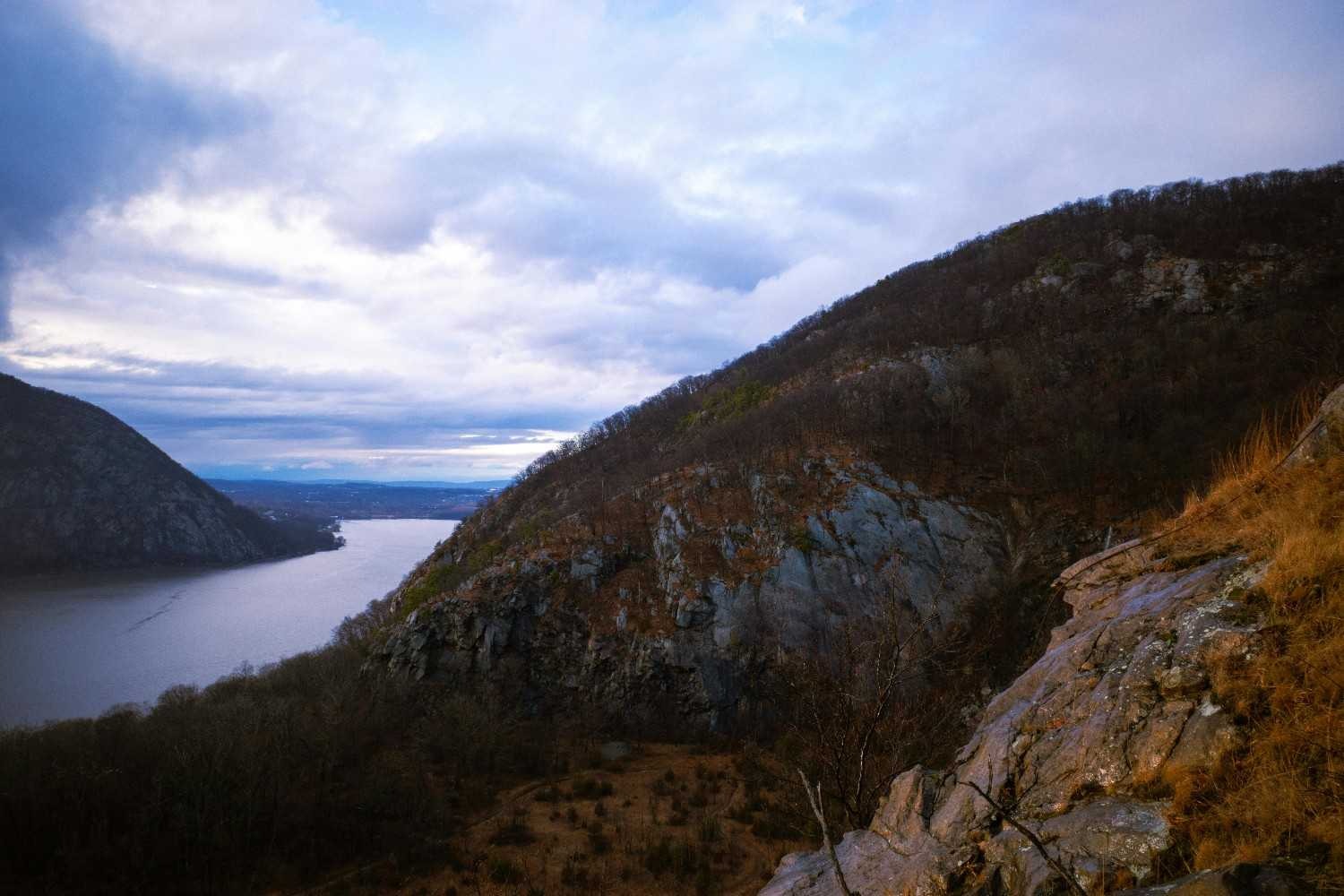
The Hudson Valley is where New York City goes to breathe. The river, wide, tidal, and lined with Dutch-era farmsteads and stone mansions, runs 150 miles from Manhattan to Albany, and the countryside on either bank shifts between orchards, vineyards, and forested hills that turn spectacular in autumn. For travelers deciding where to stay in New York within easy reach of the city, the Hudson Valley is the natural first answer.
Once the day-trippers head back to the city, the campgrounds along the Hudson’s western edge go quiet in a way that feels genuinely remote, even though you’re two hours from Times Square.
An RV makes particular sense here because the valley’s highlights are spread across a 90-mile corridor. Rhinebeck, Hudson, Woodstock, Cold Spring, Beacon: none of them are more than 45 minutes apart, so you can follow what interests you rather than committing to a single town.
At dusk, the light on the Catskill escarpment above the river’s west bank is something painters have been chasing since the 1830s. The Hudson River School was born here, and the source material is still intact. Mornings at riverside campsites bring mist on the water and occasional bald eagles working the shallows.
Top Campsites and Overnight Spots
- Taconic State Park Campground (Copake Falls): A large state campground on the Massachusetts border, with pitches set among hardwood forest and access to the Bash Bish Falls trail – one of the best waterfall hikes in the region. Electric hookups at a portion of sites. It’s well-run and stays accessible for larger rigs on the main loops.
- Mongaup Pond Campground (Sullivan County): A state-operated site on a small lake, within easy driving range of Woodstock and the western Hudson Valley’s restaurant corridor. Rowboat rentals on-site. No electric hookups, but the setting – a quiet woodland lake – more than makes up for the primitive facilities.
- Mills-Norrie State Park (Staatsburg): The best-positioned campground in the valley: pitches sit directly on the Hudson River’s eastern bank, within cycling distance of Rhinebeck and Roosevelt Hyde Park. It’s flat, well-maintained, and handles larger rigs. River sunsets from the bank are exceptional.
- Arrowhead Marina & RV Park (Accord): A private park with full hookups (electric, water, sewer), a pool, and WiFi – handy if you need connectivity while on the road. Located in the Rondout Valley, between Kingston and the Catskills. Better facilities than most state options in the area.
- Margaret Lewis Norrie State Park Campground (Staatsburg): Part of the same complex as Mills-Norrie, with woodland sites set slightly inland from the river. Great access to the Hyde Park trail network and the Vanderbilt Mansion grounds. Less crowded than the riverfront sections.
Don’t Leave Without…
An early morning at the Rhinebeck Farmers Market (Saturdays, year-round) before the crowds arrive – local cheesemakers, Catskills bread bakers, and Hudson Valley apple orchards are set up by 9 AM.
Buy provisions for the next leg of the trip at the source, and eat breakfast standing up at a market stall in a 19th-century town square.
RV Practical Info
- Road access: Route 9 along the Hudson’s east bank handles RVs without issue. Route 9W on the west bank is equally manageable. Smaller county roads to individual campgrounds are generally well-maintained but can be tight – check site-specific dimensions before you turn off the main road.
- Campsite availability: Most Hudson Valley state campgrounds open in mid-May and close around Columbus Day. Summer weekend sites book up weeks in advance on ReserveAmerica. Mid-week is much easier to secure.
- Hook-up and facilities: State parks offer electric hookups at a portion of sites; full hookups are found mainly at private parks. Dump stations at most state campgrounds.
- Parking in town: Rhinebeck, Cold Spring, and Beacon all have parking lots accessible for RVs on the edge of the town center. Don’t attempt the historic district streets of Hudson or Woodstock in a larger motorhome – park at the campground and drive in with a smaller vehicle or take the Trailways bus.
- Wild camping rules: Not permitted on state land in the Hudson Valley. Use designated campgrounds and aires.
Who Is It Best For?
- Travelers picking up in New York City who want a comfortable first night close to Manhattan
- Food and drink explorers – the valley has one of the highest concentrations of serious restaurants per square mile in the state
- Cyclists who want to ride the Walkway Over the Hudson and the rail trail corridor
- Couples looking for scenic overnight spots with easy access to Rhinebeck and Hudson’s independent dining scene
Recommended Nightly Budget
- State park pitches: $25-$40/night (electric hookup sites cost a little more)
- Private campgrounds with full hookups: $45-$65/night
- Weekends run $5-$10 more at popular sites; mid-week is consistently cheaper
- Some sites add a $5 reservation fee through ReserveAmerica
2. Catskills, New York
Why Stay Here
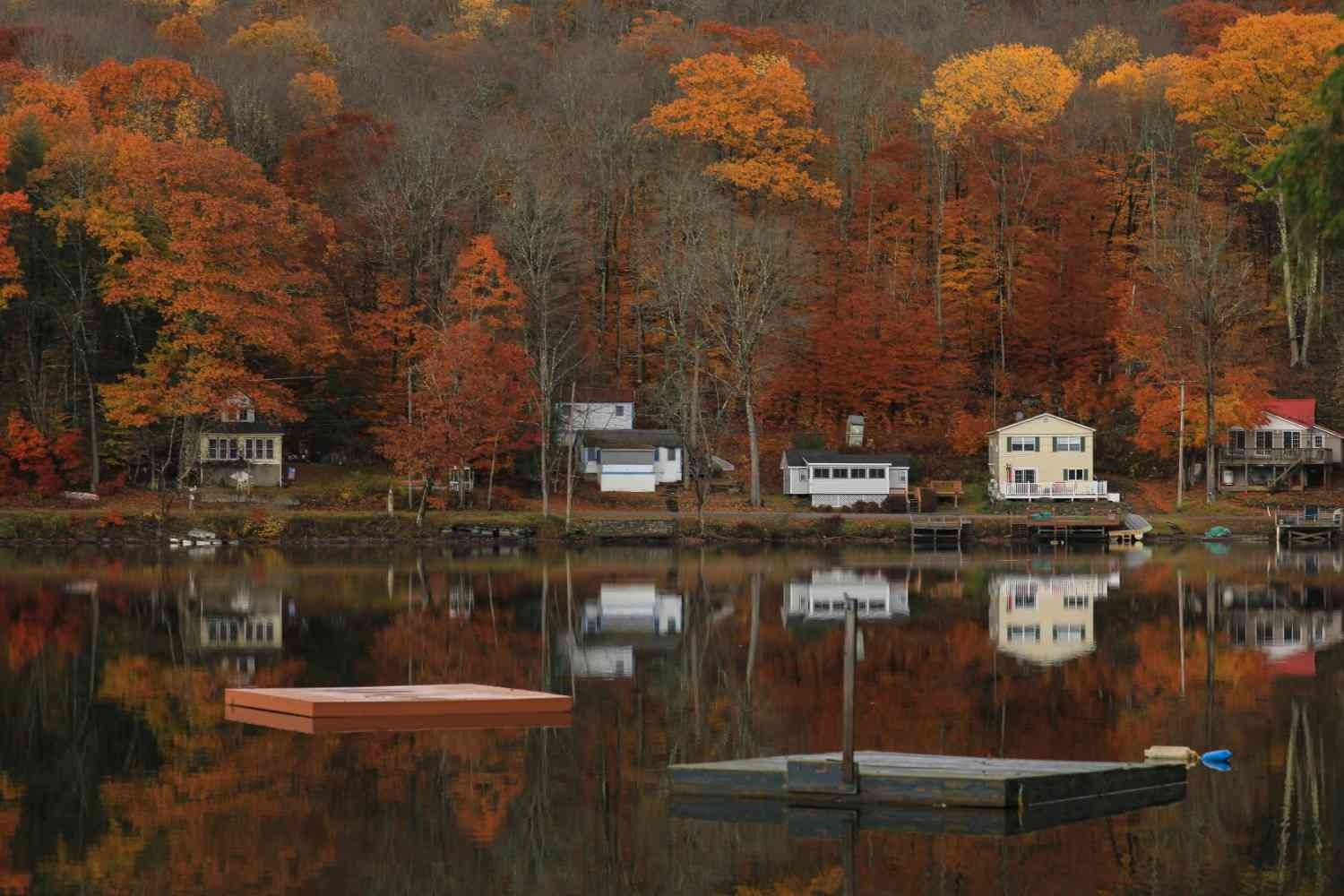
The Catskills are the Hudson Valley’s wilder neighbor – a 700,000-acre patchwork of state forest, hardwood ridgelines, and clear mountain streams that rise sharply from the valley’s western edge. The mountain towns each have their own personality: Woodstock holds onto its arts-colony atmosphere, Phoenicia is all tubing and kayaking on the Esopus Creek, and Andes and Margaretville keep their agricultural identity firmly in place.
Overnight in the Catskills feels genuinely remote in a way the valley doesn’t. Campsites sit in forest clearings or beside streams, the stars are properly visible, and the morning air after a cold night smells of pine and damp leaves.
Summer daytime temperatures average around 24°C – cooler than the valley and considerably more bearable than the city.
The Catskills have also quietly become one of the stronger food destinations in upstate New York, with serious restaurants, farm distilleries, and artisan producers clustered around Woodstock, Livingston Manor, and the Neversink Valley.
Top Campsites and Overnight Spots
- North-South Lake Campground (Haines Falls): The flagship Catskills state campground – perched at 2,200 feet with access to the escarpment trail system and Kaaterskill Falls. Sites are forested, electric hookups are on most loops, and the views from the campground edge across the Hudson Valley to the Berkshires are exceptional. It fills quickly on summer weekends.
- Woodland Valley Campground (Phoenicia): A state campground set in a narrow valley alongside Woodland Creek, popular with hikers tackling the Wittenberg-Cornell-Slide trail. No electric hookups, but the setting – riverside, heavily wooded, completely quiet after 10 PM – is among the best in the Catskills. It works for rigs up to about 22 feet.
- Kenneth L. Wilson Campground (Woodstock): The closest state campground to Woodstock village, with a small swimming lake and well-maintained electric hookup sites. Good for anyone who wants campsite access alongside easy entry into Woodstock’s shops, galleries, and restaurants. Larger loops handle motorhomes.
- Beaverkill Campground (Livingston Manor): A state site along the Beaverkill River – one of the most celebrated fly-fishing rivers in the eastern US. Basic facilities with no electric hookups, but the river access is immediate and the setting is beautiful. Livingston Manor and Roscoe are both within 20 minutes for food and supplies.
- Little Pond Campground (Hardenburgh): A remote state campground on the western edge of the Catskill Preserve, well away from the more touristed zones near Woodstock and Phoenicia. It’s far less crowded and a good pick if you want a mountain campground largely to yourself on a summer weekend. Approach roads are manageable for mid-size rigs.
Don’t Leave Without…
Tubing the Esopus Creek through Phoenicia on a warm afternoon – you rent an inner tube from Town Tinker Tube Rental, the creek carries you downstream, and a bus brings you back to start.
It’s been running since 1969 and is the closest thing the Catskills have to a local institution that isn’t a bar.
RV Practical Info
- Road access: Route 28 is the main road through the central Catskills and handles RVs well. The mountain roads above Haines Falls and toward North-South Lake need care – grades are steep and some switchbacks are tight for vehicles over 30 feet.
- Campsite availability: Catskills state campgrounds use the same ReserveAmerica system as the rest of New York State. North-South Lake fills fastest – book 2-3 weeks out for summer weekends. Beaverkill and Little Pond are much easier to get.
- Hook-up and facilities: Electric hookups at North-South Lake and Kenneth L. Wilson. Woodland Valley and Beaverkill are primitive. Dump stations at all major state campgrounds. Shower facilities vary – check before you arrive.
- Parking in town: Woodstock village has a large parking lot on Tannery Brook Road that handles RVs. Phoenicia has street parking for smaller motorhomes. Skip the narrow village streets in larger rigs.
- Wild camping rules: Wild camping on state land in the Catskill Preserve requires pitches to be 150 feet from water, roads, and trails. Groups under ten don’t need a permit for stays under three nights. Fires are permitted in designated areas only.
Who Is It Best For?
- Hikers working through the Catskill 3500 Club peaks (35 summits above 3,500 feet)
- Fly-fishing enthusiasts along the Beaverkill and Willowemoc rivers
- Anyone who wants remote, forested overnight spots within 2.5 hours of New York City
- Food and craft-drink travelers following the Catskills’ growing distillery and restaurant trail
Recommended Nightly Budget
- State park sites (no hookup): $25-$35/night
- State park electric hookup sites: $35-$45/night
- Private campgrounds near Woodstock: $45-$60/night
- Wild camping on state land: free with responsible practice
3. Finger Lakes, New York
Why Stay Here
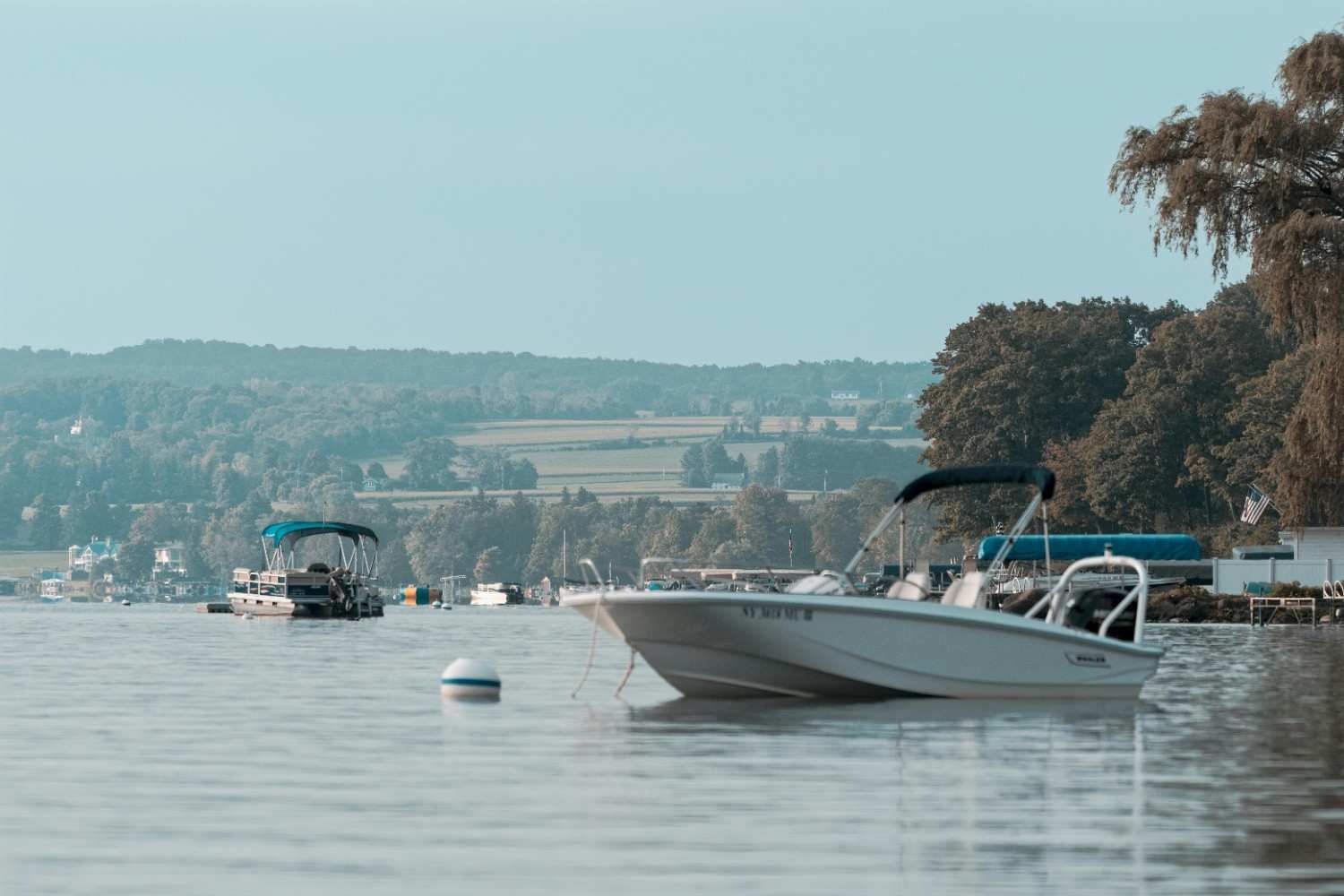
The Finger Lakes are eleven long, narrow glacial lakes cutting north-south through central New York State. The landscape is unlike anywhere else in the eastern US: steep-sided lake valleys, gorges with multiple waterfalls, and hillside vineyards producing some of the finest Riesling and Pinot Noir grown outside of Germany and Burgundy. The Finger Lakes is one of the best places to stay in New York if wine, water, and serious food are the priorities.
Overnight, the lake towns go quiet in a way that beach resorts never quite manage. By 9 PM in Watkins Glen or Seneca Falls, the day-trippers are gone and the villages belong to whoever’s sleeping in them.
Pitches near the lakeshore give you the water, long, cold, and remarkably clear, without the crowds that roll in after 10 AM.
The wine trail is genuinely RV-friendly: most Finger Lakes wineries have parking lots big enough for motorhomes, and several will let you stay overnight in the lot if you ask at the tasting room. The food scene in Ithaca, Trumansburg, and Geneva has grown considerably over the past decade, making this one of the strongest food and drink destinations in the state.
Top Campsites and Overnight Spots
- Watkins Glen State Park Campground: Right at the entrance to Watkins Glen gorge – one of the great geological spectacles in the eastern US. The gorge trail passes 19 waterfalls in under two miles. Sites are forested, some with electric hookups, and the evening after day visitors leave is the best time to walk the gorge. Book well in advance for summer weekends.
- Taughannock Falls State Park Campground (Trumansburg): Campsites on a bluff above Cayuga Lake, with access to Taughannock Falls – which drops 215 feet, taller than Niagara. Electric hookup sites are available and the campground handles larger rigs on the main loops. The lake views from upper sites are outstanding.
- Watkins Glen International Campground: The infield and surrounding campground at the famous racing circuit – open for camping outside race weekends and a genuinely unusual option. Full hookups available, flat terrain, and you can walk or cycle the circuit when it’s not in use. A 10-minute drive into Watkins Glen village.
- Sampson State Park Campground (Romulus): A large state campground on Seneca Lake’s east shore, with sites right on the water. Electric hookups throughout; the waterfront sites go first. Swimming beach on-site. Central position for the Seneca Lake wine trail and within easy reach of both Geneva and Watkins Glen.
- Buttermilk Falls State Park Campground (Ithaca): A state campground within walking distance of Ithaca and Cornell University, with the Buttermilk Creek gorge running through the site. Good for anyone who wants easy access to Ithaca’s restaurants and cafés alongside a natural setting. The gorge hike is best in the morning before the day-use crowds arrive.
Don’t Leave Without…
A morning at a Seneca Lake winery before 11 AM – when the tasting rooms have just opened, the parking lots are empty, and the lake is visible through the vines.
Lamoreaux Landing and Hermann J. Wiemer both open early. Tasting Riesling with a lake view and nobody else in the room is a genuinely different thing from the afternoon crowd.
RV Practical Info
- Road access: Route 14 along Seneca Lake’s west shore and Route 89 along Cayuga Lake’s west shore are both well-maintained and easy for RVs. The gorge roads into Watkins Glen and Taughannock need care on the approach – follow the park-designated RV routes and avoid steep descents into the gorge floors in larger vehicles.
- Campsite availability: Watkins Glen State Park is the most competitive – book it in January for summer weekends. Sampson and Taughannock are easier to get mid-week. The Watkins Glen International campground is usually available outside major race weekends.
- Hook-up and facilities: Most Finger Lakes state campgrounds have electric hookups. Full hookups at private parks near Watkins Glen and Ithaca. Dump stations at all state campgrounds. Showers at Sampson, Watkins Glen, and Taughannock.
- Parking in town: Ithaca’s Commons area has RV-accessible parking on the western end. Watkins Glen village has a large lot at the state park entrance. Geneva and Seneca Falls both have accessible downtown parking for RVs.
- Wild camping rules: Not permitted in state park campgrounds. Some state forest land in the region allows dispersed camping – check DEC guidance for specific tracts.
Who Is It Best For?
- Wine enthusiasts – the Finger Lakes is one of the most compelling wine regions in North America
- Cyclists using the lakeside routes and the Cayuga Lake Scenic Byway
- Families who want a swimming lake campsite without the Long Island crowds
- Hikers targeting the gorge trails around Ithaca and Watkins Glen
Recommended Nightly Budget
- State park electric hookup sites: $35-$50/night
- Waterfront state park sites: a little higher, $45-$55/night
- Private campgrounds with full hookups: $50-$65/night
- Winery overnight parking (informal): varies, often free with a wine purchase
4. Adirondacks, New York
Why Stay Here
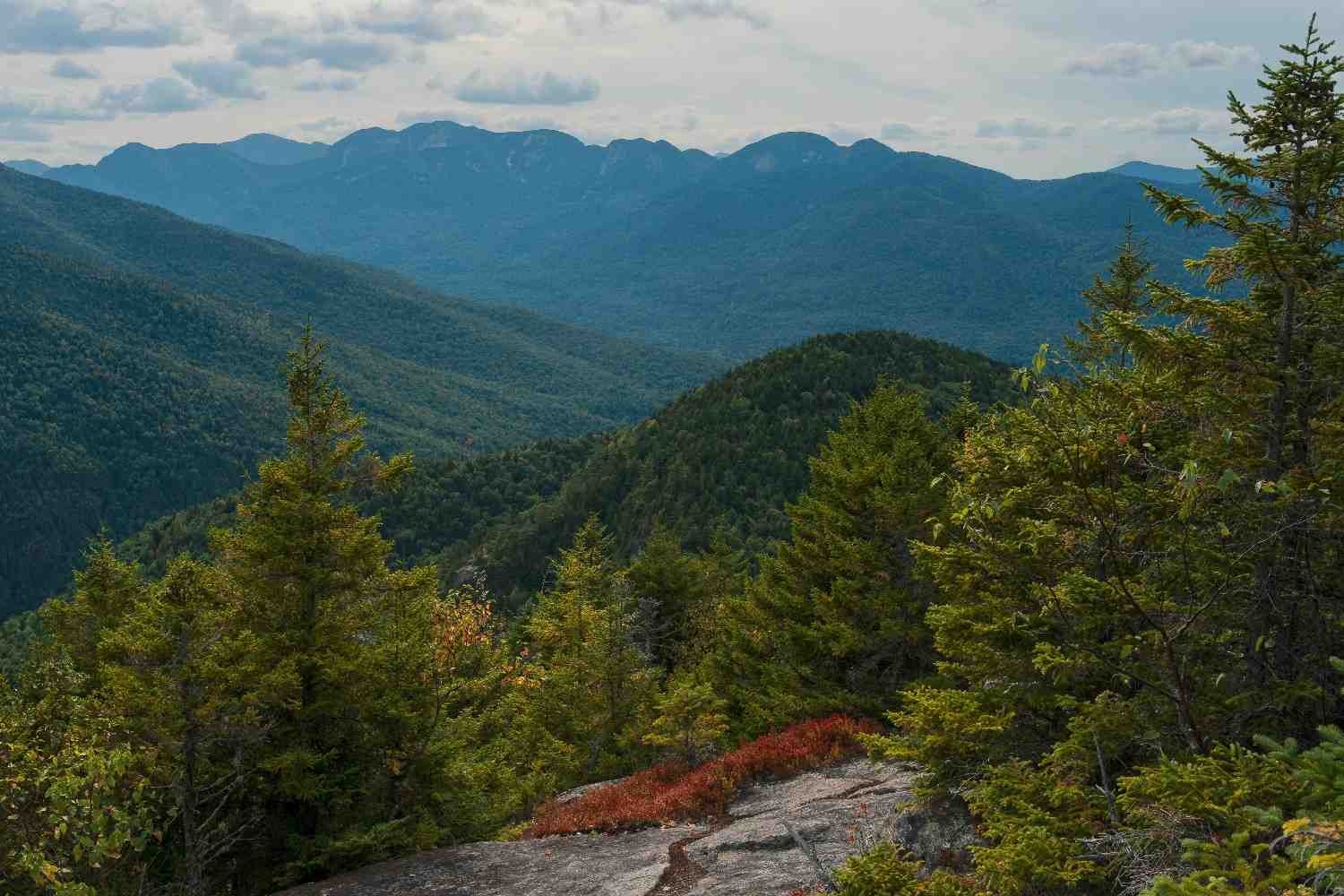
The Adirondack Park is the largest publicly protected area in the contiguous United States – 6.1 million acres of forest, wetland, and lake land in the northeastern corner of New York State. Inside its boundary sit 2,800 lakes and ponds, 30,000 miles of rivers and streams, and 46 peaks above 4,000 feet.
It’s a place of genuine scale, and overnight, when the motorboats are docked and the trailheads are empty, that scale becomes personal.
The best Adirondack campsites are on the water. A pitch at the edge of a lake – whether at a developed state campground or a backcountry lean-to – puts the wilderness right in front of you at 5 AM, when the mist is still heavy on the water and the loons start calling. That’s what makes the Adirondacks worth a full week of a longer road trip.
The towns – Lake Placid, Saranac Lake, Old Forge, Tupper Lake – are all small, all serious about outdoor culture, and all within range of at least one good lakeside restaurant. The 1980 Winter Olympics infrastructure in Lake Placid is still in use, and the sports culture here – skiing, rock climbing, kayaking, biathlon – gives the towns a genuinely active feel.
Top Campsites and Overnight Spots
- Fish Creek Pond Campground (Tupper Lake): One of the largest and best-equipped state campgrounds in the Adirondacks, on the shores of Upper Saranac Lake. Full hookup sites for RVs; canoe and kayak rentals on-site; direct access to the St. Regis Canoe Area. It’s the most RV-accessible option in the northern Adirondacks without giving up the lake setting.
- Limekiln Lake Campground (Inlet): A quieter state campground on a smaller lake in the central Adirondacks, with electric hookup sites and a sandy beach. Within easy reach of Old Forge’s outfitters and paddle rentals. Less competitive to book than the more famous sites further north.
- Paradox Lake Campground (Severance): A state campground on the southeastern edge of the park with lake access, electric hookups, and a quieter feel than the heavily booked northern sites. A good entry point if you’re coming from the Hudson Valley or Vermont.
- Lake George Battleground Campground: A state campground within walking distance of Lake George village, with full hookups and RV-friendly loops. Lake George itself is busier and more commercial than the interior Adirondacks, but the setting is beautiful and it makes a good first-night option before heading deeper into the park.
- Backcountry Lean-tos (Various): The Adirondacks have more than 1,000 designated lean-to shelters, accessible on foot or by canoe. These three-sided wooden shelters with a roof and a fire ring are free on a first-come basis (three-night maximum). For RV travelers willing to leave the vehicle at a trailhead, a night at an Adirondacks lean-to is one of the genuinely irreplaceable overnight experiences in the eastern US.
Don’t Leave Without…
A pre-dawn canoe launch from Fish Creek Pond or Limekiln Lake before the sun’s fully up – when the lake is completely still and the loon calls echo across the water with nothing competing.
Take a thermos. It’s the Adirondacks at their most themselves.
RV Practical Info
- Road access: Route 30 runs north-south through the center of the park and Route 3 crosses the northern section – both handle RVs comfortably. Secondary roads to specific campgrounds can be narrow – Fish Creek and Limekiln are accessible for standard RVs, but check individual site specs for larger rigs over 35 feet.
- Campsite availability: Fish Creek books out in hours when the reservation window opens – plan 2-3 months ahead for summer. Southern and central campgrounds are easier to get mid-week. Lean-tos are first-come, first-served and can’t be reserved.
- Hook-up and facilities: Full hookups at Fish Creek and Lake George. Electric hookups at most major state campgrounds. Primitive sites only at backcountry lean-tos. Dump stations at all major campgrounds.
- Parking in town: Lake Placid has RV-accessible parking near the Olympic Center and Mirror Lake. Old Forge has a large lot at the chamber of commerce building. Saranac Lake’s main street handles mid-size rigs.
- Wild camping rules: Backcountry camping is permitted on state forest land at sites 150 feet from water, roads, and trails. Groups of nine or fewer don’t need a permit for stays of three nights or less at the same spot. Campfires must be in established rings or on bare mineral soil.
Who Is It Best For?
- Paddlers – the Adirondacks have some of the best canoe routes in North America, including the 740-mile Northern Forest Canoe Trail
- Hikers targeting the 46 High Peaks
- Wildlife watchers: loons, moose, black bears, and bald eagles are all present in good numbers
- Anyone who wants a genuine wilderness overnight in a state less than three hours from New York City
Recommended Nightly Budget
- State park electric hookup sites: $30-$45/night
- Full hookup sites (Fish Creek, Lake George): $40-$55/night
- Backcountry lean-tos: free
- Canoe rentals add $40-$75/day for anyone wanting to reach island or waterway lean-tos
5. Long Island’s East End (The Hamptons & North Fork), New York
Why Stay Here
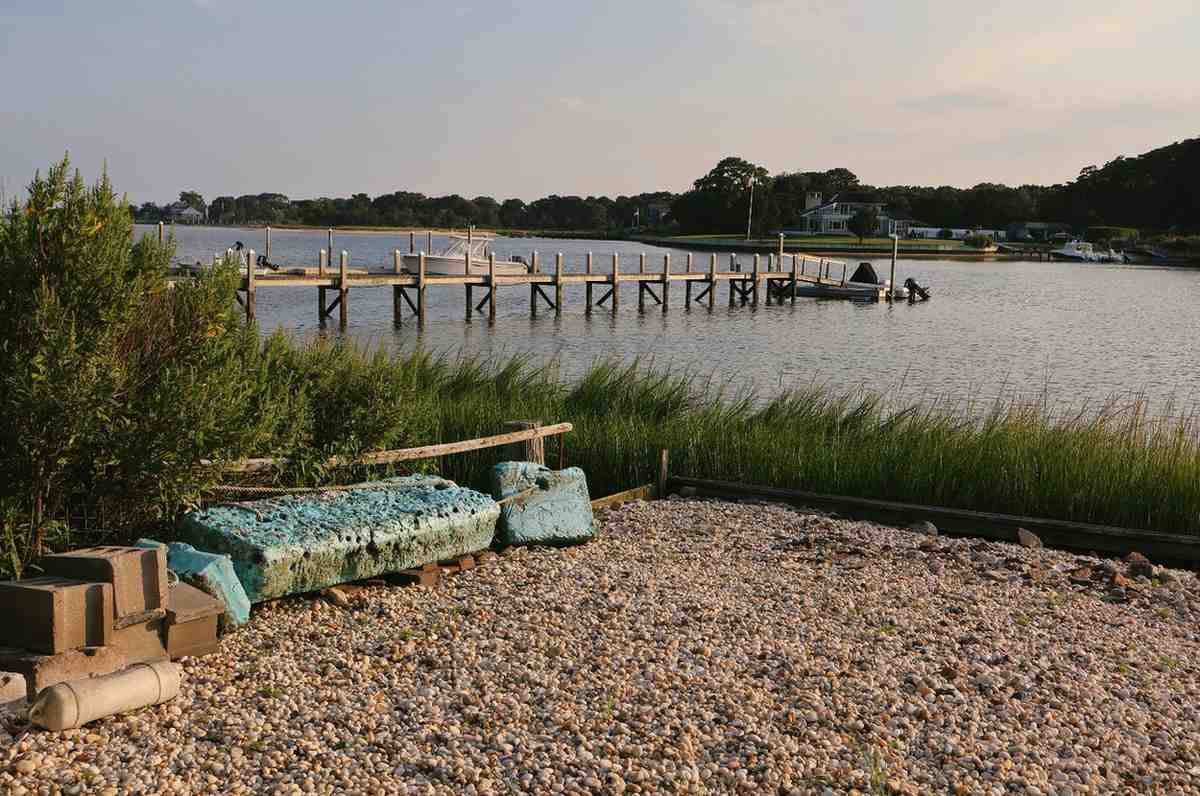
The East End of Long Island is two places at once: the Hamptons on the South Shore, with ocean beaches, summer houses, and excellent seafood; and the North Fork on the Long Island Sound, with a wine trail, farm stands, and a quieter character that the South Fork lost decades ago.
Both are within 2.5 hours of New York City, and both are best experienced overnight, when the day-trip traffic has turned around.
Staying by RV on the East End is a specific proposition – campsite options are limited compared to the state’s interior, but the ones that exist put you within cycling distance of ocean beaches and farmstands. Summer weekends bring heavy traffic on the Long Island Expressway and Route 27, but the campgrounds themselves are quiet after dark, and waking up to a Sound or ocean view is worth it.
The North Fork wine trail is a genuine draw – 60+ wineries in a 30-mile corridor, many with picnic grounds and RV-accessible parking. Harvest season (September-October) is particularly good, when the vineyards are active and the summer crowds have thinned.
Top Campsites and Overnight Spots
- Hither Hills State Park Campground (Montauk): The most sought-after campsite on the South Fork – oceanfront pitches directly on the Atlantic, within walking distance of Montauk village. Electric hookups on select sites; ocean-view sites go the instant reservations open. The campground sits behind the dunes, so you can hear the ocean all night. One of the best campsite locations on the entire East Coast.
- Orient Beach State Park (Orient): A state campground at the very tip of the North Fork, with Sound views and a long sandy beach. A quieter alternative to Hither Hills, with a more local feel and far less competition for reservations. Good base for the North Fork wine trail and the Greenport village ferry to Shelter Island.
- Cedar Point County Park Campground (East Hampton): A Suffolk County campground in a wooded setting on Northwest Harbor, with electric hookup sites and access to a small beach on the creek side. More affordable than state park rates and less crowded, with easy access to both the Hamptons and the North Fork.
- Wildwood State Park Campground (Wading River): A large state campground on Long Island Sound’s north shore, west of the East End wine country but a useful overnight stop for travelers building a longer Long Island itinerary. Electric hookups throughout, accessible to mid-size RVs.
- Heckscher State Park Campground (East Islip): A state campground on the Great South Bay, on the southern shore – good for travelers who want a first or last-night camp close to New York City before driving east. Electric hookup sites, bay views, and close to Fire Island ferry terminals.
Don’t Leave Without…
An early morning walk on the Montauk beach before anyone else arrives – the lighthouse visible to the east, the Atlantic doing its Atlantic thing, and the East End at its most elemental, stripped of the summer season’s performance.
Get there at first light and you’ll have it to yourself.
RV Practical Info
- Road access: The Long Island Expressway (I-495) handles RVs to Exit 70, after which Route 27 (Sunrise Highway) and Route 25 (North Fork route) take over. Route 27 east of Southampton narrows and carries heavy summer weekend traffic – avoid Friday afternoons and Sunday evenings.
- Campsite availability: Hither Hills sites release 9 months in advance and the oceanfront loops go within minutes. Book as early as the system allows, or go mid-week. Orient Beach and Cedar Point are more accessible.
- Hook-up and facilities: Electric hookups at Hither Hills (partial), Orient Beach, and Wildwood. Full hookups at Cedar Point County Park. Dump stations at all campgrounds. Showers available, though quality varies.
- Parking in town: Montauk village has RV-accessible parking near the train station. Southampton and East Hampton have limited large-vehicle parking – leave the RV at the campground and cycle or taxi into the village center.
- Wild camping rules: Not permitted on Long Island. Use designated campgrounds and county parks.
Who Is It Best For?
- Beach-focused travelers who want ocean access without hotel prices
- Wine enthusiasts following the North Fork wine trail at their own pace
- Cyclists – the North Fork has a flat, scenic cycling corridor between wineries and farm stands
- Seafood lovers – the East End’s lobster, oysters, and clam chowder are among the best in New York State
Recommended Nightly Budget
- Hither Hills (electric): $40-$55/night (peak summer premium applies)
- Orient Beach and Cedar Point: $35-$50/night
- County park campgrounds: $30-$45/night
- Summer weekends add $5-$10 across all sites
6. Fire Island National Seashore, New York
Why Stay Here
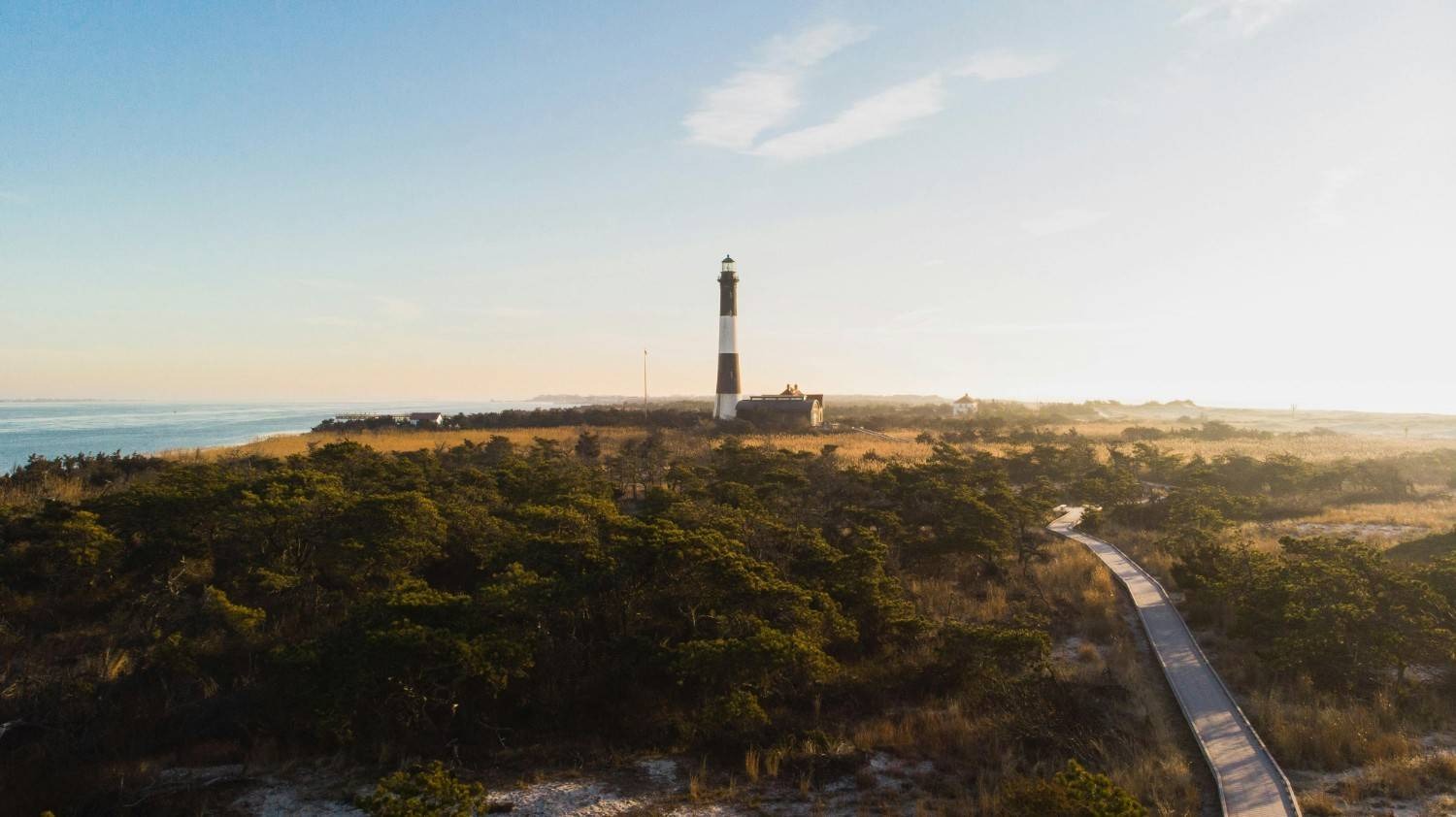
Fire Island is a 32-mile barrier island off Long Island’s south shore, reachable only by ferry or on foot. No private cars are allowed on the island, which is both what makes it special and what makes it slightly inconvenient for RV travelers. It is also one of the most distinctive answers to where to stay in New York for anyone who wants a genuinely car-free, crowd-free Atlantic shore experience.
You park at the mainland ferry terminal lot (Bay Shore or Patchogue work well), take the ferry to the island, and walk to the campground. The campground sits in the wilderness area, accessible only by foot trail from the ferry landing.
It’s a bit of extra effort. But what you get is one of the most distinctive overnight experiences on the East Coast: a National Seashore campground where you carry everything in, pitch your tent on a designated site, and wake up to the Atlantic on one side and the Great South Bay on the other. No roads, no cars, no noise beyond the ocean.
The Watch Hill wilderness campground is one of the best primitive campgrounds on the East Coast. The island also has the Sunken Forest, a centuries-old holly and serviceberry forest in a depression behind the primary dunes, and miles of boardwalks through the dune system. In the off-season (September to October), it’s particularly good.
Top Campsites and Overnight Spots
- Watch Hill Campground (Fire Island National Seashore): The main campground for visitors arriving by ferry from Patchogue. Sites are primitive – no electric, no water hookups – but the National Park Service maintains the facilities well. Sites split between bay-side and ocean-facing exposures. A small marina and store operate during the season. Reservations through Recreation.gov open 6 months in advance.
- Wilderness Area Backcountry Sites: Beyond Watch Hill, the Fire Island Wilderness area has designated backcountry sites accessible only on foot. No facilities; pack in and pack out. The dune and scrub-forest walking is exceptional in early morning and evening light.
Don’t Leave Without…
An evening on the ocean-facing beach at Watch Hill after 6 PM, when the day visitors have taken the ferry back and the beach belongs entirely to campers.
The Atlantic at Fire Island has strong surf and the sunsets – with the barrier island dune silhouette and the water turning orange – are genuinely striking.
RV Practical Info
- Road access: Drive to the ferry terminals at Bay Shore, Patchogue, or Sayville on Long Island. RV parking is available in the long-term lots at Bay Shore (the best option – the ferry runs directly to Watch Hill). Parking is around $10-$15/day.
- Campsite availability: Watch Hill reservations open 6 months in advance and fill quickly for summer weekends. Mid-week sites are easier to get. Backcountry sites are first-come, first-served.
- Hook-up and facilities: No hookups at any Fire Island campground. Water available at Watch Hill; primitive only in the backcountry. Plan your power needs accordingly – your RV’s leisure battery handles refrigeration overnight in the mainland lot.
- Parking in town: Fire Island communities (Ocean Beach, Saltaire) are walkable from ferry docks. No vehicle access on the island.
- Wild camping rules: Permitted only in designated backcountry sites in the wilderness area. No fires outside designated rings. Pack out all waste.
Who Is It Best For?
- Travelers who want a car-free island experience combined with the flexibility of RV travel
- Beach campers willing to carry their gear to reach one of the most undeveloped beaches in the New York metro area
- Birdwatchers – Fire Island is a significant stopover on the Atlantic Flyway migration corridor
Recommended Nightly Budget
- Watch Hill campground: $25-$35/night (reservation fee additional)
- Mainland RV parking at ferry terminal: $10-$15/day
- Backcountry sites: free
- Ferry round-trip: approximately $10-$20 per person
7. Thousand Islands Region, New York
Why Stay Here
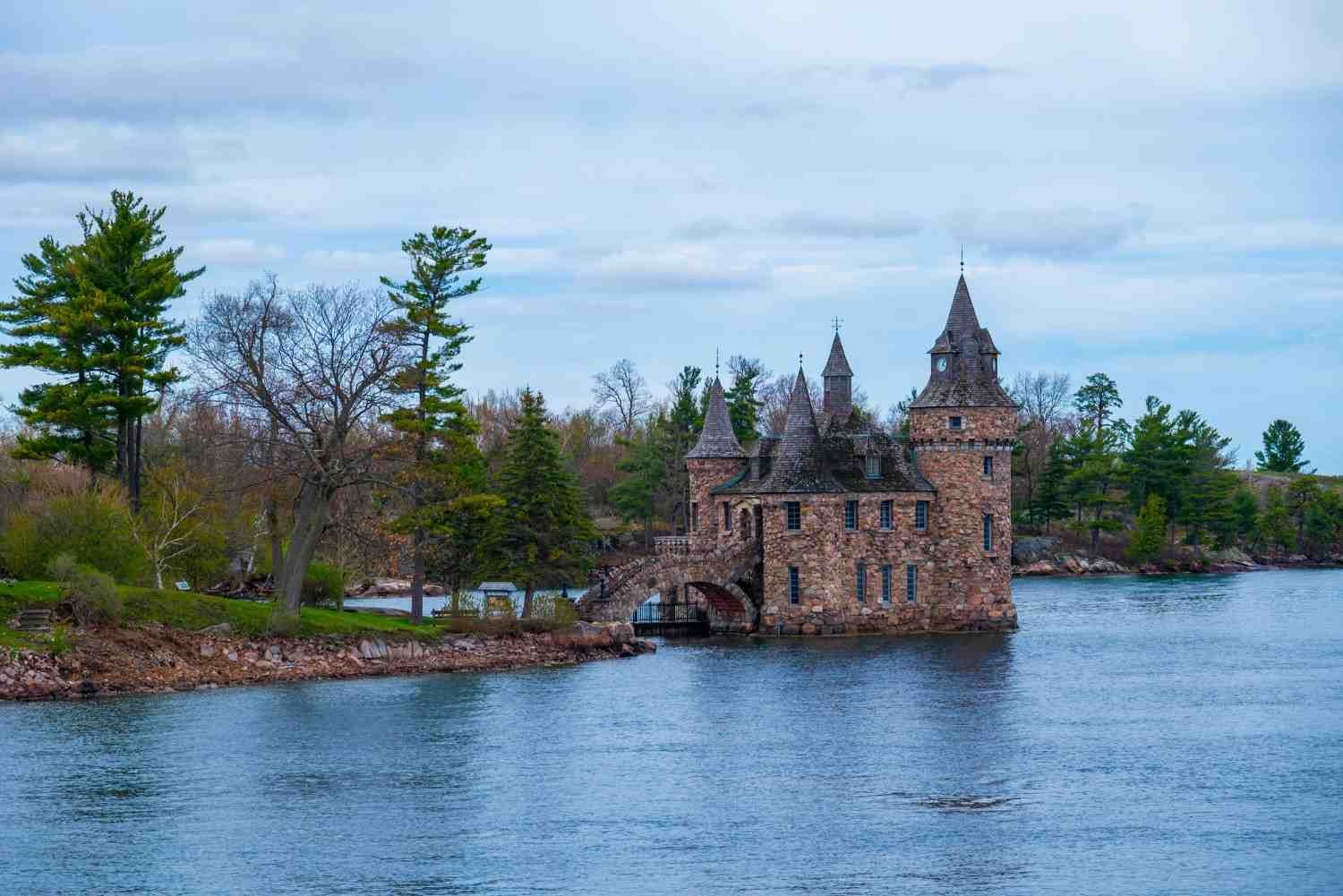
The Thousand Islands are 1,864 islands – some large enough for a hotel, others barely above the waterline – scattered across a 50-mile stretch of the St. Lawrence River where it leaves Lake Ontario and begins its run toward the Atlantic.
The region sits in the far northern corner of New York State, on the Canadian border, with the feel of a place that knows it’s at the edge of things.
The river culture here is its own world: ornate Victorian “castle” architecture from the robber-baron-era summer cottages (some open for tours), a working fishing tradition (muskie and bass draw serious anglers from across the region), and a boat culture that takes the waterway as seriously as any mountain community takes its peaks.
Overnight, with a campsite on the river, the St. Lawrence has a breadth and stillness that’s unlike any lake – you can see Canada from the pitch, and the lights of the bridge between Alexandria Bay and Ivy Lea reflect on the water after dark.
Top Campsites and Overnight Spots
- Burnham Point State Park Campground (Cape Vincent): A state campground directly on Lake Ontario’s north shore with electric hookup sites and boat launch access. The most open and windswept setting in the region – a good pick if you want lake views rather than river access.
- Kring Point State Park Campground (Ogdensburg): A state campground on a small peninsula jutting into the St. Lawrence, with water views on three sides. Electric hookup sites and a small beach. One of the better-positioned campgrounds in the region, with direct river access for kayaks and canoes.
- Wellesley Island State Park Campground: The largest campground in the region, on Wellesley Island – accessible by car via the Thousand Islands International Bridge. Full hookups, a marina, and direct access to the island’s hiking trails and Nature Center. The best option for families or larger groups who want full facilities.
- Grass Point State Park Campground (Morristown): A smaller, quieter state campground on the river with electric hookups and a boat launch. Less crowded than Wellesley Island and closer to the quieter sections of the river, away from Alexandria Bay’s tourist traffic.
- Mary Island State Park (Boat Access Only): A primitive campground accessible only by private boat or water taxi – an island campsite with no facilities and no mainland connection. For RV travelers who want to add a genuine off-grid island night to the itinerary, water taxis run from Alexandria Bay.
Don’t Leave Without…
A sunset kayak through the smaller channels between islands as the light drops – when the Victorian cottage windows light up on the inhabited islands and the water turns to copper.
Kayak rentals are available in Alexandria Bay and Clayton.
RV Practical Info
- Road access: Interstate 81 runs directly through the region and handles all RV sizes. Secondary roads to the campgrounds are manageable, and the International Bridge to Wellesley Island is accessible for motorhomes.
- Campsite availability: The Thousand Islands region is less competitive than the Adirondacks or Catskills. Mid-week and shoulder-season sites at most campgrounds are available with a week’s notice. Wellesley Island fills faster on summer weekends.
- Hook-up and facilities: Full hookups at Wellesley Island; electric hookups at Kring Point, Burnham Point, and Grass Point. Dump stations at all major campgrounds. Showers at Wellesley Island.
- Parking in town: Alexandria Bay has RV-accessible parking at the municipal lot near the ferry dock. Clayton – the most pleasant town in the region – has parking behind the Antique Boat Museum.
- Wild camping rules: Not permitted on New York State parkland. Backcountry camping on state-designated islands requires a permit.
Who Is It Best For?
- Boaters and kayakers who want direct water access from the campsite
- History enthusiasts – Boldt Castle and the Victorian island architecture are a genuine spectacle
- Travelers building a longer New York State loop that includes the Adirondacks and the North Country
- Anglers – the St. Lawrence has excellent muskie and bass fishing
Recommended Nightly Budget
- State park electric hookup sites: $30-$45/night
- Full hookup sites at Wellesley Island: $40-$55/night
- Primitive island sites (where accessible): $15-$25/night plus any water taxi cost
8. Niagara Falls Region, New York
Why Stay Here
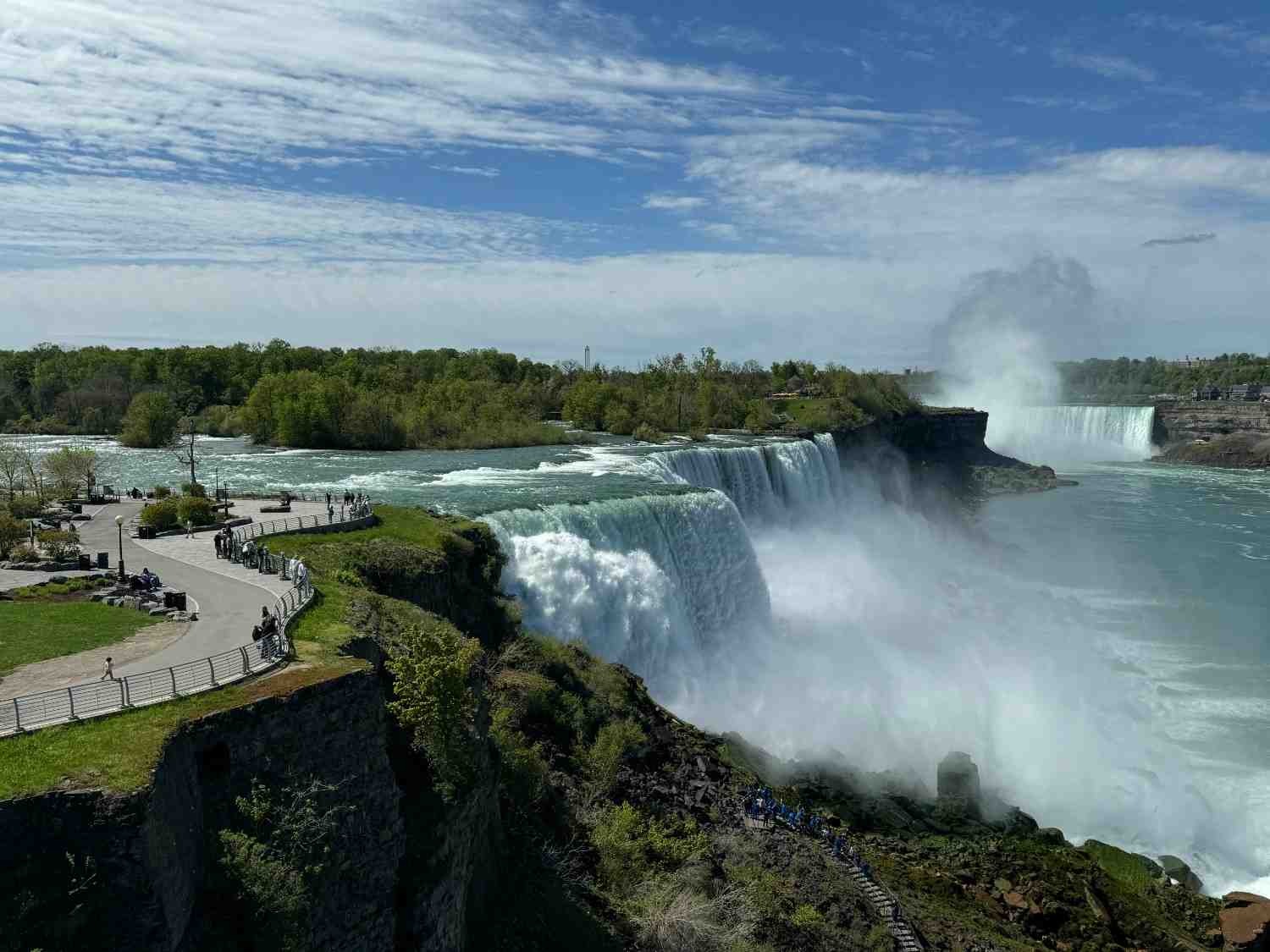
Niagara Falls is not subtle, which is exactly the point. Three billion gallons of water per day drop over the brink of the American and Horseshoe Falls, generating a roar audible miles away and a permanent mist that soaks anything standing close enough to see it clearly.
It’s one of the great natural spectacles on the planet, and it’s surrounded by decades of tourist infrastructure that you learn to navigate around.
The smart move for overnight travelers is to stay far enough from the main tourist zone for quiet evenings, but close enough to reach the falls at dawn, before the crowds. The mist rises particularly dramatically in early morning with the light behind it.
The Niagara Wine Trail stretches south along Lake Erie and northeast into the Finger Lakes corridor – a useful connecting route if you’re doing a longer New York circuit.
Top Campsites and Overnight Spots
- Four Mile Creek State Park Campground (Youngstown): The best-positioned campground for Niagara Falls visitors – a state park on Lake Ontario’s southern shore, 20 minutes north of the falls, with electric hookup sites and lake views. Much quieter than anything in Niagara Falls proper, and the access road runs through the scenic Lewiston-Queenston area. A solid base for a two-night falls itinerary.
- Niagara Falls KOA Holiday (Niagara Falls, NY): A large private campground about five miles from the falls, with full hookups, a heated pool, and shuttle service to the park. The most convenient option if you want to visit the falls at different times of day and evening.
- Golden Hill State Park Campground (Barker): A state campground on Lake Ontario’s south shore, 30 miles east of Niagara Falls. Quieter and more scenic than options near the falls themselves, with a historic lighthouse and lake beach. Better suited for travelers building Niagara into a longer Lake Erie or western New York itinerary.
- Darien Lakes State Park Campground (Darien Center): A state campground 35 miles southeast of Niagara Falls, with electric hookups and proximity to Darien Lake Theme Park. Useful for family itineraries combining the falls with a theme park day.
Don’t Leave Without…
The Cave of the Winds at Goat Island, which puts you at the base of the Bridal Veil Falls on a series of wooden walkways soaked in spray. The Hurricane Deck platform stands directly beside the falling water – you won’t stay dry, and it’s entirely worth it.
Go first thing in the morning when the lines are manageable.
RV Practical Info
- Road access: I-190 runs directly to Niagara Falls from Buffalo. The road into Niagara Falls State Park handles RVs, but parking at the park itself is limited for larger vehicles. Park at the campground and use the shuttle service or cycle to the park entrance.
- Campsite availability: Four Mile Creek and the KOA are the most in-demand for summer weekends – book 4-6 weeks in advance. Golden Hill is usually available with a week’s notice.
- Hook-up and facilities: Full hookups at the KOA; electric hookups at Four Mile Creek and Golden Hill. Dump stations at all sites. Showers throughout.
- Parking in town: Large RV parking is available at the Niagara Falls State Park Visitor Center lot, but it fills early on summer weekends. The city of Niagara Falls has metered RV parking on the side streets near the park entrance.
- Wild camping rules: Not permitted in the Niagara Falls region.
Who Is It Best For?
- Families with children – Niagara Falls is one of the most universally engaging natural spectacles for all ages
- Travelers completing a cross-New York State loop from the Hudson Valley through the Finger Lakes to Niagara
- International visitors for whom Niagara Falls is a bucket-list stop – the RV puts the Canadian side (accessible via the international bridges) within easy reach
Recommended Nightly Budget
- Four Mile Creek (electric): $35-$50/night
- KOA Holiday (full hookups): $50-$70/night
- Golden Hill (electric): $30-$45/night
- Niagara Falls State Park entry: $4-$7 per person (parking additional)
9. Lake Erie & Western New York
Why Stay Here
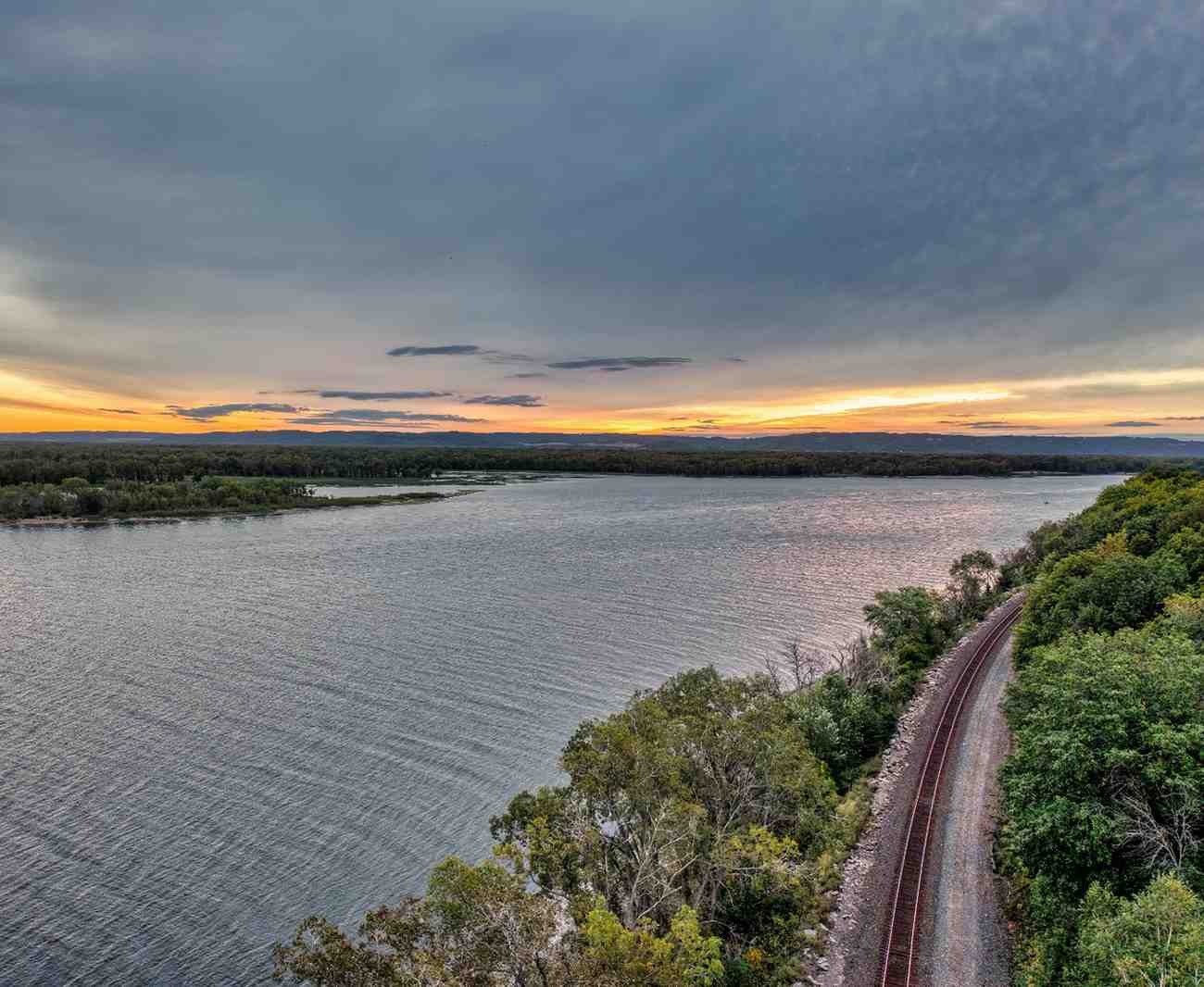
The Lake Erie shoreline in western New York is one of the most underrated stretches of freshwater coast in the eastern US. The lake is the shallowest and warmest of the Great Lakes, and by July its southern shore reaches swimming temperatures that most Great Lakes beaches can’t match.
The campgrounds along the Erie coast sit within easy reach of Buffalo – a mid-size city with a serious food scene, a revitalized waterfront, and the unexpected cultural weight of a place that once defined American industrial ambition.
This isn’t a region that markets itself hard, which is precisely what makes it appealing for RV travelers. The campgrounds are far less competitive to book than the Adirondacks or Long Island, the roads are manageable, and the combination of lake access, wine country (the Lake Erie Wine Trail stretches 50 miles east of Buffalo), and proximity to Niagara Falls makes western New York a natural anchor for a longer cross-state itinerary.
Overnight, a lakeside pitch in Allegany or on the Erie shore gives you a particular kind of quiet – the water sounds different from the ocean, less urgent, more constant – and the summer light on the lake in the late evening, when the water turns to hammered copper, is one of the better visual rewards in New York State.
Top Campsites and Overnight Spots
- Evangola State Park Campground (Irving): A state campground directly on Lake Erie’s south shore with electric hookup sites and a sand beach. The water here is noticeably warmer than the Finger Lakes and good for swimming from June onward. Sites are forested, the approach roads handle RVs well, and the campground is consistently quieter than comparable lakeshore options elsewhere in the state.
- Lake Erie State Park Campground (Brocton): A compact state campground on a bluff above Lake Erie with views across the water on clear days. Electric hookup sites throughout; well-maintained facilities. A useful base for the Lake Erie Wine Trail – most of the major wineries are within 30 minutes of the park.
- Allegany State Park Campground (Salamanca): The largest state park in New York – 65,000 acres of Allegheny Plateau forest in the state’s southwestern corner, on the Pennsylvania border. The park has two campground areas (Red House and Quaker) with electric hookups, a small lake with a beach, and an extensive network of hiking and cycling trails. One of the most underbooked major campgrounds in the state; mid-week sites are almost always available.
- Woodlawn Beach State Park (Hamburg): A small state park on Lake Erie’s shore south of Buffalo with day-use beach access and limited overnight sites. A good base for exploring Buffalo’s waterfront and cultural institutions – the Albright-Knox Art Gallery (now Buffalo AKG Art Museum) and the Canalside district are 25 minutes north.
- Chautauqua Lake KOA (Stow): A private campground on Chautauqua Lake – a warm-water lake in the southwestern corner of the state, separate from Lake Erie. Full hookups, boat launch access, and close to the Chautauqua Institution, which has been running a summer program of lectures, concerts, and performances since 1874.
Don’t Leave Without…
A Buffalo chicken wing at a dive bar on the city’s west side – not a restaurant version, a bar version, served in a plastic basket at 10 PM with blue cheese dressing that came out of a tub.
The dish was invented here in 1964, and the bar format remains the correct context. The Anchor Bar on Main Street is the official origin story, but the neighborhood bars do it with less tourist theater.
RV Practical Info
- Road access: Interstate 90 (New York State Thruway) runs directly along the Lake Erie corridor from Buffalo west. Secondary roads to Evangola and Lake Erie State Park are well-maintained and accessible for standard motorhomes. Allegany State Park’s approach roads are wider and more manageable than many Adirondack equivalents.
- Campsite availability: Western New York campgrounds are far less competitive than the state’s eastern regions. Allegany State Park sites are available with a week’s notice even in summer. Evangola and Lake Erie State Park fill faster on summer weekends but are rarely a problem mid-week.
- Hook-up and facilities: Electric hookups throughout the state campgrounds. Allegany State Park has the most complete facilities – showers, dump stations, camp store. Evangola has good beach-adjacent facilities.
- Parking in town: Buffalo has RV-accessible parking in the Canalside and Larkinville districts. The city’s grid streets handle larger vehicles well outside of the downtown core. Avoid the older narrow streets in the Allentown and Elmwood neighborhoods.
- Wild camping rules: Not permitted on New York State parkland in this region. Use designated campgrounds.
Who Is It Best For?
- Travelers building a Niagara Falls to Finger Lakes cross-state loop who want an overnight stop between the two
- Wine enthusiasts following the Lake Erie Wine Trail’s 30+ producers along the southern shore
- Budget-conscious road-trippers who want lakeshore camping at prices well below the state’s more famous destinations
- Buffalo food and culture visitors who’d rather camp than pay for a hotel
Recommended Nightly Budget
- State park electric hookup sites: $30-$45/night
- Allegany State Park: $28-$40/night (one of the better-value state campgrounds in New York)
- Private campgrounds (KOA Chautauqua): $45-$65/night with full hookups
- Mid-week rates are consistently 10-15% lower across all sites in this region
10. New York City Metro & Palisades, New York/New Jersey
Why Stay Here
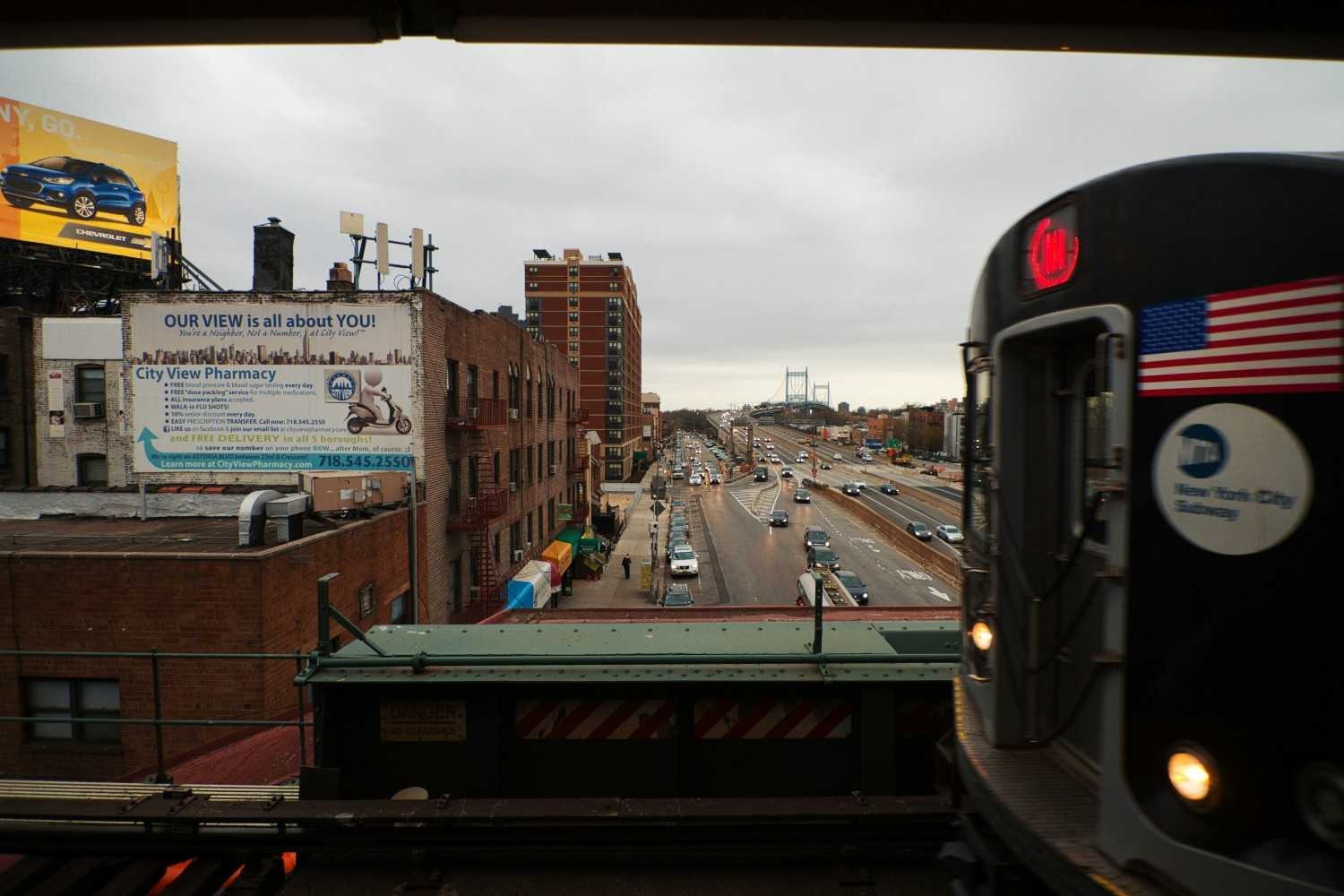
Most travelers treat New York City as a pickup and drop-off point, then drive away. That’s understandable – but there’s a ring of campgrounds within 30-60 minutes of Manhattan that make it entirely possible to use the city as an active destination from an RV base.
A campsite pitch in the New Jersey Palisades or the Hudson Highlands costs a fraction of any hotel within 20 miles of Midtown, and getting into the city by ferry, train, or PATH is genuinely easy.
The Palisades themselves – the dramatic 500-foot basalt cliff face running along the New Jersey bank of the Hudson – are one of the most striking natural features visible from New York City, and the parkland on top of the cliffs is quiet, wooded, and largely unknown to visitors who stay on the Manhattan side of the river. From certain campsite positions, you can see the Manhattan skyline at night – which is an unusual thing to wake up to in a motorhome.
This works particularly well if you want to spend one or two full days in the city – museums, neighborhoods, food – without the cost and inflexibility of hotel bookings for those nights. It also suits road-trippers who are beginning or ending a longer New York State loop and want a first or last night close to the city.
Top Campsites and Overnight Spots
- Harriman State Park – Beaver Pond Campground (Sloatsburg, NY): The best campground in the New York metropolitan area – 46,000 acres of state park 35 miles north of Manhattan, with multiple trails, lakes, and a campground that takes RVs on specific loops. Electric hookups available; accessible via I-87. Train service from Tuxedo station gets you to Penn Station in under an hour. Book well in advance for summer weekends.
- Palisades Interstate Park – Campground at Alpine (Alpine, NJ): A campground on top of the Palisades cliffs in New Jersey, directly across the Hudson from Yonkers and the Bronx. The site is forested and quiet; getting into Manhattan via the George Washington Bridge or the NJ Transit bus takes 35-45 minutes. One of the most usefully located campgrounds in the entire northeastern US for city access. Sites fill fast – reserve as soon as the window opens.
- Delaware Water Gap National Recreation Area (Columbia, NJ): A National Recreation Area 75 miles west of New York City, with multiple campgrounds along the Delaware River. Dingmans Campground and Otter Lake Camp Resort are the most RV-accessible options. Full hookup sites at the private campgrounds; primitive NPS sites along the river. A solid base for day trips into the city combined with hiking and kayaking on the river.
- Liberty Harbor RV Park (Jersey City, NJ): A private RV park in Jersey City, directly across the Hudson from Lower Manhattan – the Statue of Liberty and the Manhattan skyline are both visible from the park. Full hookups, a ferry terminal within walking distance, and Manhattan access without Manhattan parking logistics. The most expensive option in this section, but the most convenient for city-focused travelers.
- Croton Point Park Campground (Croton-on-Hudson, NY): A Westchester County campground on a peninsula in the Hudson River, 35 miles north of Manhattan. Electric hookups throughout; Metro-North train service from Croton-Harmon station reaches Grand Central in 60 minutes. A quieter, more scenic alternative to the New Jersey options, with river views and easy access to the Hudson Valley’s restaurants and historic sites.
Don’t Leave Without…
An evening in Manhattan arrived at by ferry from the New Jersey waterfront – the skyline approach by water, as the towers grow and the light changes on the Hudson, is the best possible version of entering New York City.
Then a late dinner in the West Village or the Lower East Side, and the last ferry back after midnight. Sleep in the RV with the city’s glow still on the horizon.
RV Practical Info
- Road access: The metro area’s highways (I-87, I-95, NJ Turnpike, Garden State Parkway) all handle RVs, but congestion during peak hours is real. Plan arrivals and departures outside the 7-9 AM and 4-7 PM windows. The George Washington Bridge is the key crossing for New Jersey campgrounds – its lower level handles RVs and is less congested than the upper level.
- Campsite availability: Liberty Harbor books quickly and is worth reserving 2-3 months out for summer. Harriman and Alpine Palisades open their reservation windows 9 months in advance – use the same strategy as for other New York State campgrounds. Croton Point is less competitive.
- Hook-up and facilities: Full hookups at Liberty Harbor and most Delaware Water Gap private campgrounds. Electric hookups at Harriman and Croton Point. Primitive sites at NPS locations in the Water Gap.
- Parking in town: Don’t drive the RV into Manhattan. Use the campground as your base and commute by ferry, train, PATH, or NJ Transit bus. Metro-North, NJ Transit, and the Staten Island Ferry all work well for travelers staying in the outer ring of campgrounds.
- Wild camping rules: Not permitted anywhere in the metropolitan corridor. Use designated campgrounds throughout.
Who Is It Best For?
- Travelers who want to spend real time in New York City without hotel costs
- First-time visitors to New York who are starting a longer New York State road trip and want the city as an opening chapter
- Road-trippers finishing a cross-state itinerary who want a last night close to the city before returning the vehicle
- International visitors for whom Manhattan is a non-negotiable stop alongside a broader New York State itinerary
Recommended Nightly Budget
- Harriman State Park (electric): $35-$50/night
- Palisades Alpine Campground (electric): $30-$45/night
- Liberty Harbor RV Park (full hookups): $65-$90/night – the premium reflects direct city access and the ferry terminal at the door
- Croton Point (electric): $35-$50/night
- Metro-North or NJ Transit commuter train into Manhattan: $10-$18 round trip per person
What to Pack for a New York RV Stay
Summer temperatures across New York State range from around 22°C in the Adirondacks to 28°C on Long Island’s ocean beaches – but nights in the mountains drop noticeably, and shoulder season (May, September, October) requires proper layering.
| Category | Items | Why You Need It |
| Clothing | Light merino base layers, mid-weight fleece, waterproof shell, hiking trousers, swim gear | Adirondack and Catskill nights drop to 10-14°C even in July; merino handles both the cold and the humid warmth without needing frequent washing |
| Footwear | Waterproof hiking boots, trail runners, sandals, water shoes | Gorge trails in Watkins Glen and the Catskills are wet year-round; ankle support matters on Adirondack terrain |
| RV Essentials | 30/50-amp power adapter (campsite hookups vary), leveling blocks, water pressure regulator, extension cord, condensation cloth | New York state campgrounds use both 30 and 50-amp posts – carry adapters for both; morning condensation is significant in forested sites |
| Outdoor Gear | Insect repellent (DEET or permethrin), headlamp, trekking poles, dry bags | Black flies and mosquitoes are serious in the Adirondacks and Catskills from May through July; gorge trails are slippery |
| Navigation | Downloaded offline maps (Google/Maps.me), AllTrails, ReserveAmerica app | Cell service is unreliable in the Adirondack interior and parts of the Catskills – download maps before you leave the campground |
| Campsite Comfort | Extra blankets, a portable fan, campfire cooking gear | Mountain nights need proper insulation; summer days in the Hudson Valley and Finger Lakes can push 30°C – a fan makes sleeping in a parked RV far more comfortable |
| New York-Specific | State park pass (Empire Pass) if visiting multiple state parks, ReserveAmerica account set up in advance | The Empire Pass ($80/year) covers day-use fees at all New York State parks and reduces nightly campsite costs at some facilities |
Expert Tips for Staying in New York by RV
1. Get the Empire Pass before you arrive. New York’s Empire Pass ($80/year) covers day-use vehicle entry at all state parks and state historic sites. If your itinerary includes three or more state parks, it pays for itself straight away. Buy it online through the New York State Parks website before your trip begins.
2. Set ReserveAmerica reservations the moment the booking window opens. New York state campground reservations open exactly nine months in advance. For Hither Hills, Fish Creek Pond, and North-South Lake, that window slams shut within minutes of opening. Set a calendar reminder and be at your keyboard at exactly 9 AM EST on the day your target date becomes available.
3. Plan Adirondack routes around your RV’s size. Some of the most scenic roads in the park – particularly the approaches to remote campgrounds – are rated for vehicles up to 20 or 22 feet. If you’re in a larger motorhome, check the New York State DEC campground specs for length restrictions before you route through the park. Wellesley Island and Fish Creek handle full-size rigs; some interior campgrounds don’t.
4. Go mid-week in the Hudson Valley and Catskills. These regions are within two hours of New York City, which means Friday evening to Sunday afternoon sees significant traffic at campgrounds and town centers in summer. A Tuesday-Thursday itinerary gets you the same destinations with far less competition for sites and parking.
5. Bring cash for farm stands and local markets. The Hudson Valley, North Fork, and Finger Lakes all have farm stands that run cash-only or with card minimums. A morning at a Finger Lakes farmstand or a North Fork produce market – picking up provisions for cooking in the RV – is one of the better things to do in either region, and it goes smoother with small bills.
6. Arrive at state park campsites in the afternoon, not after dark. Most New York state campgrounds have ranger check-in until around 9 PM. Arriving after dark in an unfamiliar forested campground to find your pitch is miserable. Aim for 3-6 PM so you can navigate in daylight and sort the hookups before you need a headlamp.
7. Add a Canadian day-trip from the Thousand Islands or Niagara. Both regions sit directly on the US-Canada border, and both Canadian sides are worth the crossing. The Canadian Horseshoe Falls at Niagara are larger and more dramatic than the American Falls. The Rideau Canal system, accessible from Kingston, Ontario (directly across from the Thousand Islands), is a UNESCO World Heritage waterway. Make sure your passport is current and carry proof of your RV rental agreement at the border crossing.
8. Plan for black flies in the Adirondacks in May and June. Black fly season in the northern Adirondacks typically runs from mid-May through mid-June. It’s not dangerous, but it’s relentless – full coverage clothing and DEET repellent are non-negotiable for hiking during this window. By late June, the black flies clear and the region becomes considerably more pleasant.
9. Treat the Finger Lakes wine trail as a route, not a destination. The most enjoyable approach is to stay at a lakeside campground and spend two or three consecutive days visiting wineries north and south of your base. It takes the pressure off fitting everything into a single day and gives you the option of sitting in a vineyard at 5 PM with nobody rushing you out.
10. Keep your tank levels managed in the Adirondacks interior. The Adirondacks Park is large enough that you can end up 40 miles from a fuel station or dump station if you haven’t planned ahead. Fill the fuel tank in Lake Placid, Saranac Lake, or Old Forge before heading into more remote areas, and check your water, gray, and black tanks before reaching campsites with limited facilities.
Plan Your New York Stay with Indie Campers
New York State rewards RV travel in a way that hotels can’t replicate. The campground variety – from oceanfront Atlantic sites at Montauk to wilderness lake pitches in the Adirondacks – exists across a 400-mile corridor that no other mode of travel covers as naturally as an RV.
Indie Campers puts the vehicles, one-way flexibility, and digital booking in one place, so you’re planning the trip, not the logistics.
Find the right vehicle for New York’s varied terrain
With over 7,000 RV rentals worldwide, there’s a vehicle for every kind of New York road trip. A Class B RV rental handles the tighter Catskill and Adirondack campground roads well – good for couples chasing trails.
A Class C RV rental gives families the space they need for a longer cross-state tour. If you’re covering serious distance and want more room to live in, a class A RV rental is the most comfortable option for extended stays.
Pick up and drop off across 70+ locations
One-way rentals mean you can pick up in New York City and drop off in Buffalo, Niagara Falls, or anywhere else along the route – no backtracking required.
You don’t pay in full until 30 days before pick-up
That means you can lock in your vehicle now while campsite reservations fall into place, without committing your budget today.
If plans change, you can cancel up to 31 days before pick-up. 24/7 support is included throughout the trip, so if anything comes up on the road, you’re not dealing with it alone.
Explore our available RV rentals in New York and start planning your itinerary.
Everything You Need to Know About Staying in New York by RV
| Area / Town | Setting | Best For | Top Campsites | Nightly Budget | RV-Friendly Rating | Wild Camping? | Best Way to Stay |
| Hudson Valley | River & hills | Food, city escape | Mills-Norrie SP, Arrowhead Marina | 💰💰 | ★★★★☆ | No | Indie Campers RV |
| Catskills | Mountain forest | Hiking, nature | North-South Lake, Woodland Valley | 💰💰 | ★★★☆☆ | Restricted | Indie Campers RV |
| Finger Lakes | Lake & vineyard | Wine, swimming | Watkins Glen SP, Sampson SP | 💰💰 | ★★★★☆ | No | Indie Campers RV |
| Adirondacks | Wilderness lake | Paddling, peaks | Fish Creek Pond, Limekiln Lake | 💰💰 | ★★★☆☆ | Restricted | Indie Campers RV |
| Long Island East End | Ocean & Sound | Beach, wine | Hither Hills SP, Orient Beach SP | 💰💰💰 | ★★★☆☆ | No | Indie Campers RV |
| Fire Island | Barrier island | Beach, wildlife | Watch Hill NPS Campground | 💰 | ★★☆☆☆ | Restricted | Indie Campers RV |
| Thousand Islands | River & island | Kayaking, history | Wellesley Island SP, Kring Point SP | 💰💰 | ★★★★☆ | No | Indie Campers RV |
| Niagara Falls Region | Falls & gorge | Families, spectacle | Four Mile Creek SP, KOA Holiday | 💰💰 | ★★★★☆ | No | Indie Campers RV |
| Lake Erie & Western NY | Lake & farmland | Wine trail, budget | Evangola SP, Allegany SP | 💰💰 | ★★★★☆ | No | Indie Campers RV |
| NYC Metro & Palisades | River & parkway | City access | Liberty Harbor RV, Harriman SP | 💰💰💰 | ★★★☆☆ | No | Indie Campers RV |
FAQs About Where to Stay in New York
Where can I rent an RV to stay in New York?
You can rent an RV to stay in New York through Indie Campers, with pickup available in New York City and surrounding locations. The RV rental fleet includes compact campervans for two people and larger motorhomes for families or groups.
One-way rentals are available if you want to pick up in New York City and drop off somewhere further west, like Buffalo or Niagara Falls, after covering the full state.
Booking well in advance is recommended for summer travel, as New York City pickup slots are in high demand.
What is the cheapest area to stay in New York by RV?
The cheapest area to stay in New York by RV is the Catskills, where state campground sites without electric hookups start at $25/night and wild camping is permitted on state forest land at no cost.
The Thousand Islands and Adirondacks are similarly affordable, with state park pitches in the $30-$45 range.
Long Island’s East End is the most expensive, driven by summer demand for the Hither Hills oceanfront sites.
What is the best area to stay in New York for coastal access?
The best area to stay in New York for coastal access is Montauk and the Hither Hills State Park campground, where ocean-facing sites put you a short walk from the Atlantic.
The North Fork’s Orient Beach State Park offers Long Island Sound access with far less competition for reservations.
Fire Island’s Watch Hill campground gives you direct dune and ocean access, though it requires a ferry crossing to reach.
What is the best place to stay in New York for couples?
The Finger Lakes is the best place to stay in New York for couples – lakeside campsites at Watkins Glen or Taughannock Falls, mornings at wineries before the crowds arrive, and evenings in Ithaca’s independent restaurant scene make for a genuinely appealing combination.
The Hudson Valley is a strong alternative, particularly for couples who want to mix outdoor overnights with excellent food and easy access to the valley’s historic towns.
What is the best place to stay in New York with family?
The Thousand Islands region is the best place to stay in New York with a family – Wellesley Island State Park has full hookup sites, a marina, a nature center, and direct access to water activities that keep children of all ages busy.
Niagara Falls is the other strong family option: the Cave of the Winds, Maid of the Mist boat tours, and the scale of the falls itself are reliably impressive for kids.
Both regions have campgrounds that handle larger family-size motorhomes without the size restrictions you’ll hit in parts of the Adirondacks.
What is the best place to stay in New York with kids?
The best place to stay in New York with young kids is the Finger Lakes, specifically at Watkins Glen State Park or Taughannock Falls State Park. The gorge waterfall trails are short enough for children but spectacular enough to hold their attention, and the campground swimming areas are safe and supervised.
Niagara Falls is an equally strong option for sheer spectacle – nothing needs to be explained; the falls do the work themselves.
What is the best place to stay in New York with friends?
The Finger Lakes wine trail is the best area to stay in New York with a group of friends – vineyards, lake swimming, and Ithaca’s restaurant and bar scene give you enough variety for a long weekend.
Campgrounds like Sampson State Park on Seneca Lake have large group sites with fire pits and direct lake access.
The Hudson Valley is a strong second for groups who want farm dinners, whiskey distillery visits, and access to the valley’s growing cocktail bar scene.
What are the best places to stay in New York for first-timers?
The Hudson Valley and the Finger Lakes are the best starting points for first-time RV travelers in New York. Both regions have well-run state campgrounds with good facilities, manageable road access without the narrow lanes of the Adirondacks, and enough to do – restaurants, wineries, waterfall trails – to fill a week without covering excessive distances.
If you’re arriving in New York City, Hudson Valley campgrounds make a comfortable first night before you decide whether to head north toward the Adirondacks or west toward the lakes.
What are the best places to stay in New York for solo travelers?
The Catskills and the Adirondacks are the best areas for solo RV travelers in New York. Both have a strong hiking culture where solo travelers are entirely normal, campground communities are welcoming, and towns like Woodstock, Lake Placid, and Saranac Lake have the café and bar culture that makes evenings alone comfortable.
The Catskills’ proximity to New York City also means you can easily head back to the city if the solo campground dynamic becomes less appealing mid-trip.
What are the best places to stay in New York for nature lovers?
The Adirondacks are the strongest nature destination for overnight RV travelers in New York – the park’s scale, its waterways, and the genuine wilderness character of its backcountry make it unlike anything else in the eastern US.
The Catskills are a strong second for hikers focused on the High Peaks.
Fire Island’s National Seashore campground offers a very different kind of nature – barrier island ecology, migratory birds, and the specific wildness of a car-free Atlantic shore.