Last Updated: May 9, 2026
Key Takeaways (TL;DR)
- Why Go to Milan: Milan is Italy’s most forward-facing city, with fashion weeks, fine art museums, a live music scene, and a food culture that mixes Lombard tradition with genuine international ambition. It rewards travelers who arrive with curiosity and skip the tourist shortcuts.
- Top Places to Visit in Milan 2026: Duomo District, Brera, Navigli, Porta Venezia, Castello Sforzesco, Lake Como, Bergamo, Isola and Porta Nuova, Ticinese, Monza.
- Don’t Miss Experience: Climbing to the Duomo’s rooftop terraces at dusk, when the late sun turns the white marble gold and the Alps emerge from the haze above the city skyline, from a vantage point most visitors standing at ground level never discover.
- Ideal Trip Length: 4 to 7 days. This gives you time to explore the city’s distinct neighborhoods while fitting in at least one or two day trips to the surrounding lakes or hill towns.
- How to Choose the Right Area: Head to Brera and the Duomo district for culture and architecture. Choose Navigli and Ticinese for food, aperitivo, and a more local evening pace. Use Milan as a base for lake access; Como and Maggiore are both under an hour away by road.
- Recommended Budget Per Person: €80 to €160 per day. This covers meals, museum entries, and local transport, excluding RV rental. Milan is Italy’s most expensive city, but eating in the right neighborhoods keeps costs reasonable.
- Watch Out For: The ZTL (Zona a Traffico Limitato) and Area C congestion charge in the city center. Driving an RV into central Milan without the correct permit results in automatic fines, so park outside the restricted zone and use the metro.
- Where To Stay: Indie Campers RV rentals are the most practical base for Milan and the broader Lombardy region. Park at a campsite in the northern suburbs or near the lakes, and use the city’s metro and regional rail to move around without touching the ZTL.
- Best For: First-time visitors to northern Italy, design and fashion enthusiasts, foodies who want Lombard cuisine at its most authentic, and road-trippers using Milan as a gateway to the Italian Lakes.
Table of Contents
- Top Places to Visit in Milan 2026: at a Glance
- Best Places to Visit in Milan
- What to Pack for a Milan and Lombardy Road Trip
- Final Expert Tips for Visiting Milan
- Explore Milan and Beyond with Indie Campers
- Everything You Need to Know About Milan RV Road Trips
- FAQs About Where to Go in Milan
Top Places to Visit in Milan 2026: at a Glance
| Area / Destination | Type | Vibe | Best For | Top Activities | Avg Temp (Summer) | Ideal Stay | Crowd Level | RV-Friendly |
| Duomo District | City Center | Grand and Historic | First-timers | Duomo, Galleria, La Scala | 28°C (82°F) | 1 to 2 Days | Very High | No |
| Brera | Neighborhood | Artistic and Refined | Culture lovers | Pinacoteca, galleries, aperitivo | 28°C (82°F) | 1 Day | Moderate | No |
| Navigli | Neighborhood | Local and Relaxed | Foodies | Canals, aperitivo, markets | 28°C (82°F) | Half day and evening | Moderate | No |
| Porta Venezia and Corso Buenos Aires | Neighborhood | Diverse and Lively | Shoppers | Gardens, Liberty buildings, multicultural food | 28°C (82°F) | Half to 1 Day | Low to Moderate | No |
| Castello Sforzesco and Sempione | Park and Museum | Regal and Green | Families | Castle, Michelangelo, park | 28°C (82°F) | Half to 1 Day | Moderate | No |
| Lake Como Day Trip | Day Trip | Dramatic and Scenic | Couples, drivers | Boat tours, Bellagio, lakeside villages | 26°C (79°F) | 1 to 2 Days | High | Yes |
| Bergamo Day Trip | Day Trip | Medieval and Compact | History buffs | Città Alta, funicular, walls | 27°C (81°F) | 1 Day | Moderate | Yes |
| Isola and Porta Nuova | Neighborhood | Modern and Trendy | Design fans | Bosco Verticale, Fondazione Feltrinelli | 28°C (82°F) | Half Day | Low | No |
| Ticinese | Neighborhood | Authentic and Gritty | Off-the-beaten-path | Basilica Sant’Ambrogio, aperitivo | 28°C (82°F) | Half Day | Low | No |
| Monza Day Trip | Day Trip | Historic and Motorsport | Racing fans, parkgoers | Royal Villa, F1 circuit, park | 27°C (81°F) | 1 Day | Low to Moderate | Yes |
Best Places to Visit in Milan
1. The Duomo District, Milan
The Vibe
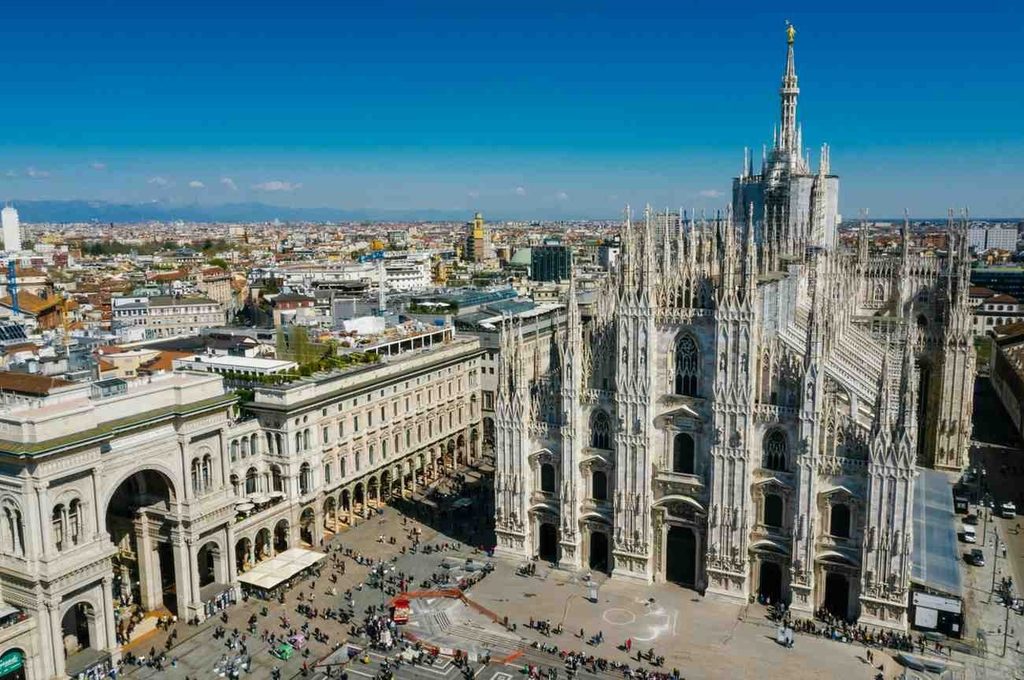
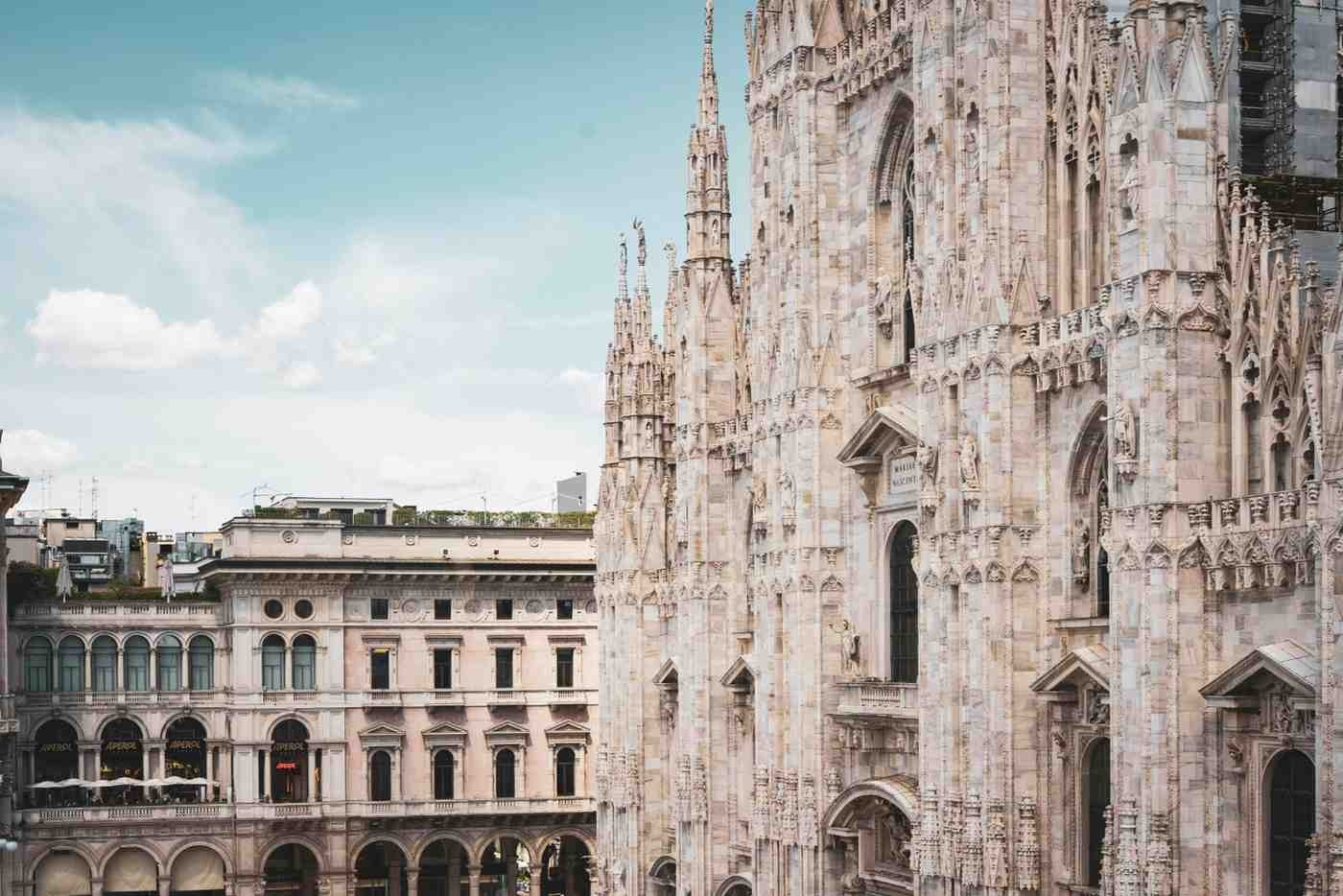
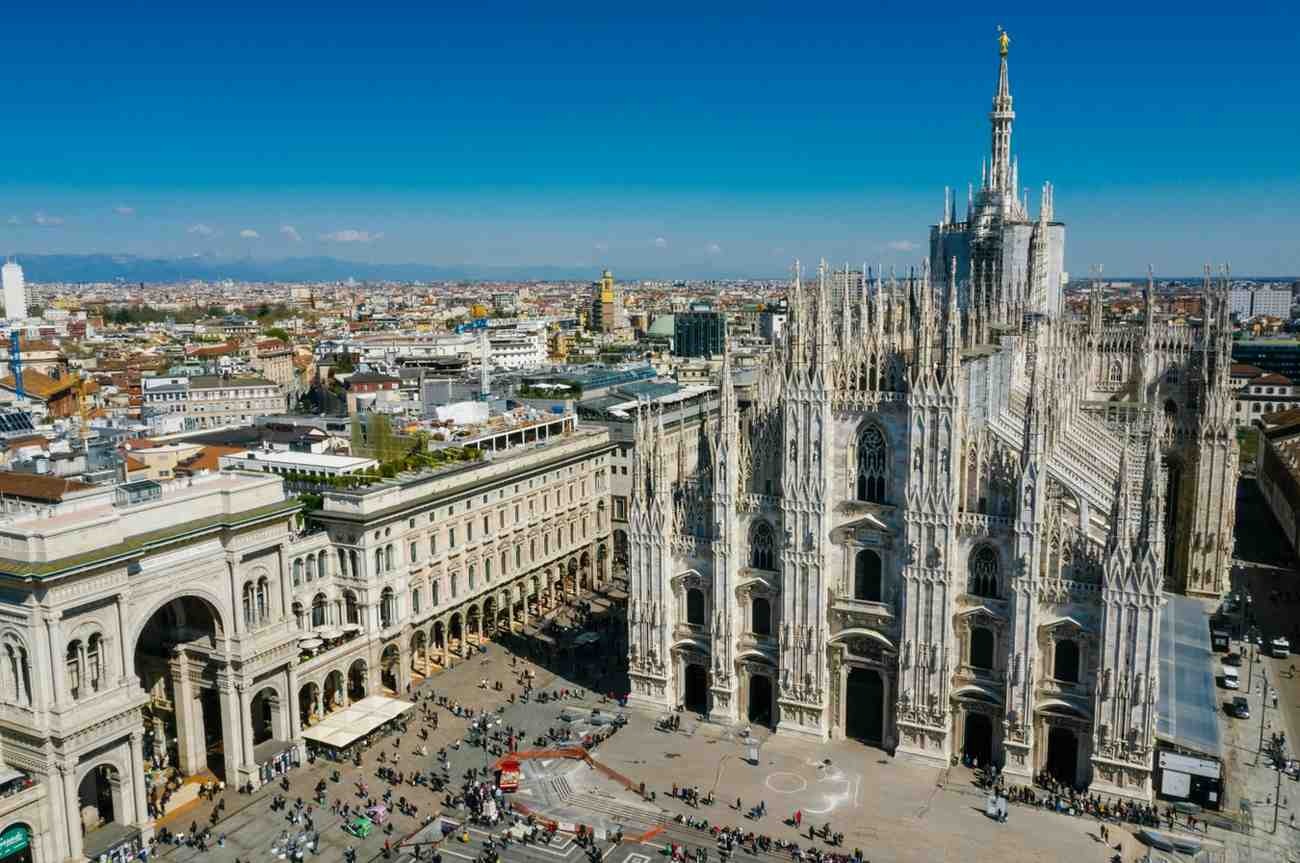
The Duomo is Milan’s magnetic center: a Gothic cathedral 600 years in the making, covered in 3,400 statues and 135 marble spires, and still capable of stopping first-time visitors in their tracks. The piazza in front of it is one of the great public squares in Europe; wide, marble-paved, and framed on three sides by neoclassical arcades.
What makes this district more than a tourist checkpoint is the Galleria Vittorio Emanuele II next to it, a 19th-century iron-and-glass shopping arcade that functions simultaneously as a luxury mall, a coffee institution, and one of the finest pieces of commercial architecture in Italy. Locals spin their heels on the mosaic bull in the floor for good luck.
The same square also houses La Scala, the world’s most famous opera house, which has premiered works by Verdi, Puccini, and Rossini. Milanese identity in this area is proud and slightly performative.
This is a city that cares intensely about how things look: buildings, windows, the cut of a jacket, the arrangement of pastries in a bar. The Duomo district is where that aesthetic self-consciousness is at its most concentrated.
Top Things to Do
1. Climb the Duomo Terraces: Most visitors look up at the Duomo from the piazza. The better decision is to go up. The rooftop terraces are accessible by elevator or stairs and put you at the level of the spires, with a 360-degree view of the city and, on clear days, the Alps to the north. The sculptural detail visible close up, including stone saints, carved tracery, and gargoyles, is remarkable. Arrive early morning or late afternoon to avoid the peak rush and get the best light.
2. Visit La Scala and Its Museum: The Teatro alla Scala is open for tours of the auditorium on most mornings before rehearsals begin. The Museo Teatrale alla Scala next door holds portraits, costumes, instruments, and historical programs tracing the opera house’s history from its 1778 opening. If you’re visiting in the opera season (December through July), booking tickets for a performance months in advance is worth the effort.
3. Walk Through Galleria Vittorio Emanuele II: Beyond the shops (Prada, Louis Vuitton, Gucci), the architecture itself is the attraction. The glass barrel vault, the central octagonal dome, and the mosaic floor are among the finest examples of 19th-century Italian civic design. The Camparino bar at the piazza entrance serves the best Campari Spritz in the city at a price that reflects the address.
4. Visit the Museo del Novecento: The 20th-century art museum occupies the Arengario building on the edge of the piazza. The collection covers Italian modernism from Futurism through Arte Povera, with particular strength in the Futurist works of Umberto Boccioni and Carlo Carrà. The building wraps around a spiral ramp with views into the piazza below.
5. Explore the Archaeological Area Beneath the Piazza: Under the piazza and the Palazzo Reale, excavations have revealed Roman-era remains and early Christian baptistery ruins. The Cripta e Tesoro del Duomo includes the cathedral’s treasury and the underground archaeological zone. For history-focused visitors, this adds significant depth to what can otherwise be a surface-level circuit.
Don’t Leave Without…
A single espresso standing at the bar in Caffè Zucca (also called Caffè Miani), inside the Galleria Vittorio Emanuele II. It has been serving coffee since 1839, the interior is all gilded mosaic and dark wood, and the espresso is excellent. Standing at the bar costs considerably less than sitting down, and that is how you drink coffee in Milan.
RV Practical Info
- Area C: The inner city is covered by Area C, a congestion charge zone active on weekdays from 7:30 AM to 7:30 PM. Non-resident vehicles must purchase a daily pass (around €5) to enter. Larger commercial vehicles face higher charges.
- ZTL zones: Many streets within the historic center are ZTL (restricted traffic zones) active at various hours. Cameras enforce automatically. Do not attempt to park your RV in the center.
- Recommended base: Camping Village Città di Milano in the north of the city is well-connected to the metro and open year-round. Use the M3 (yellow line) for direct access to the Duomo.
- Parking: No legal RV stopping exists within the Area C zone, so do not attempt to park near Piazza del Duomo.
- Scenic route nearby: After the city, drive northwest on the A8 toward Lake Maggiore. The first views of the pre-Alpine lakes appear within 45 minutes.
Who Is It Best For?
- First-time visitors to Milan who want the landmark circuit done properly
- Architecture and design enthusiasts who will spend real time on the Duomo terraces
- Opera lovers with tickets to La Scala
- Travelers with limited time who want high cultural density in a small area
Recommended Budget
- Museum entries: €5 to €15 (Duomo terraces elevator €14; Museo del Novecento €10; La Scala museum €9)
- Meals: €15 to €35 for lunch; evening dining nearby runs €30 to €60
- Coffee: Stand at the bar for €1.50; sitting adds a table surcharge of €3 to €5 at tourist-facing venues
2. Brera, Milan
The Vibe
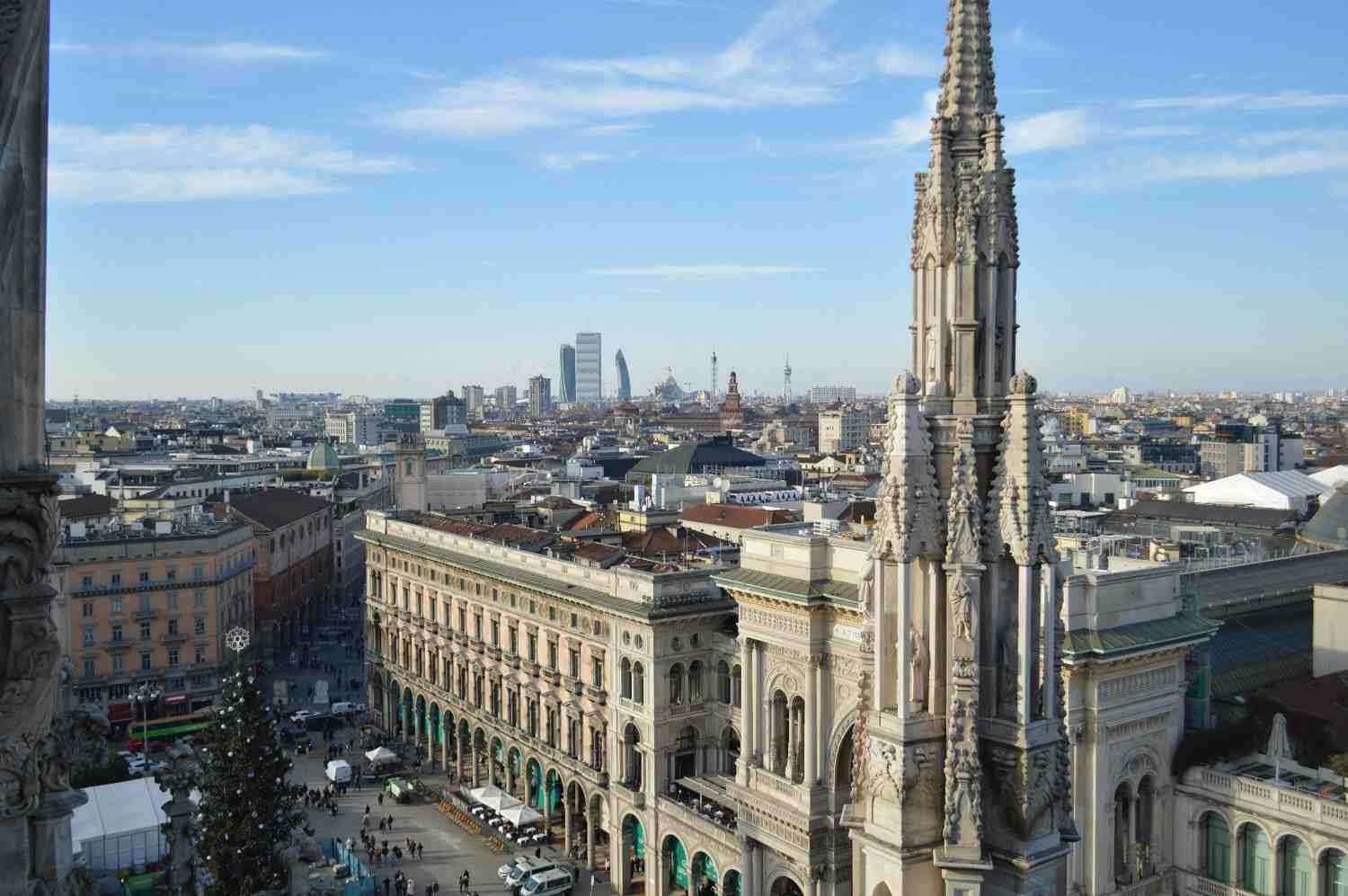
Brera is the neighborhood that most closely matches the Milan of imagination: narrow cobblestone streets, art galleries, antique dealers, ivy-covered walls, and aperitivo bars that fill at 6 PM with a crowd of academics, designers, and gallery owners.
It occupies a small area north of the Duomo, and its character is unmistakably artistic without being affected. The anchor is the Pinacoteca di Brera, one of the most important painting galleries in Italy, which gives the neighborhood its cultural credibility.
The real texture of Brera, though, is in the streets; Via Fiori Chiari, Via Madonnina, the Orto Botanico di Brera tucked behind the academy, and the particular quality of afternoon light on the stone facades.
Brera resisted the generic retail pressure that transformed many other Milan neighborhoods and retains a concentration of independent bookshops, small galleries, ceramics studios, and wine bars. It is the part of Milan where you can genuinely slow down.
Top Things to Do
1. Visit the Pinacoteca di Brera: The gallery occupies the upper floor of the Palazzo di Brera and holds one of the finest collections of northern Italian painting in the world.
The highlights include Mantegna’s Lamentation over the Dead Christ (a perspective masterpiece that stops almost every visitor), Raphael’s Betrothal of the Virgin, and major works by Caravaggio, Piero della Francesca, and Giovanni Bellini.
The rooms are manageable in two to three hours and rarely overwhelmed by visitors outside summer weekends.
2. Walk Via Fiori Chiari and Via Madonnina: These two streets form the social and visual center of Brera. On Friday evenings the antique market sets up along Via Fiori Chiari, and the aperitivo bars along both streets run a free buffet with a drink order, which is one of Milan’s better-value evening rituals.
The architecture is 18th and 19th century, low-rise by Milanese standards, with balconies and shuttered windows that look exactly as they should.
3. Explore the Orto Botanico di Brera: The small botanical garden behind the Palazzo di Brera is free to enter and almost unknown to non-Italian visitors. It was founded in the 18th century to supply medicinal plants to the pharmacy of the Ospedale Maggiore. Today it is a calm, shaded space with labeled specimens and a greenhouse section that is entirely at odds with the pace of the city outside.
4. Browse Independent Galleries: Brera has the highest concentration of independent contemporary art galleries in Milan.
Most are open Tuesday to Saturday and admission is free. The quality varies, but several, including Galleria Caterina Tognon and Lorenzelli Arte, consistently show serious work. The gallery circuit between Via Pontaccio and Via Solferino is walkable in an afternoon.
5. Aperitivo at a Local Bar: Aperitivo in Milan is a ritual: pay for a drink (Campari, Aperol Spritz, or a Negroni) and access a buffet of cicchetti, cured meats, cheeses, and small bites. Brera does this better than most neighborhoods.
Bar Brera on Via Brera and El Tombon de San Marc on Via San Marco are two solid options with local rather than tourist clientele.
Don’t Leave Without…
Spending time in front of Mantegna’s Lamentation in the Pinacoteca without moving on too quickly. The foreshortening, with Christ’s body viewed from the feet, is one of the most technically audacious paintings of the Renaissance, executed around 1480. Give it ten minutes. Most people give it thirty seconds.
RV Practical Info
- Access: Brera sits inside the Area C zone. Park the RV outside the zone (at Camping Villa Torretta or the northern park-and-ride facilities) and take the metro.
- Metro: The M2 (green line) at Lanza and Moscova stops puts you on the edge of the neighborhood. From the Duomo area, it is a 15-minute walk north.
- Campsites nearby: Camping Village Città di Milano (10 km north on the A4 direction) is the closest year-round option with metro connections.
- Scenic route: From Brera, continue on the A9 northwest to reach Como in under an hour; a natural progression for any Lombardy road trip itinerary.
Who Is It Best For?
- Art lovers who want serious Italian painting in a human-scale gallery
- Couples looking for aperitivo, cobblestone streets, and good wine
- Slow travelers who want a neighborhood that rewards walking over sightseeing
- Return visitors to Milan who already know the major monuments
Recommended Budget
- Pinacoteca di Brera: €15 (free on the first Sunday of the month)
- Aperitivo with drink: €8 to €14 (includes buffet at most traditional venues)
- Lunch in Brera: €15 to €25 for a trattoria lunch with a glass of wine
3. Navigli, Milan
The Vibe
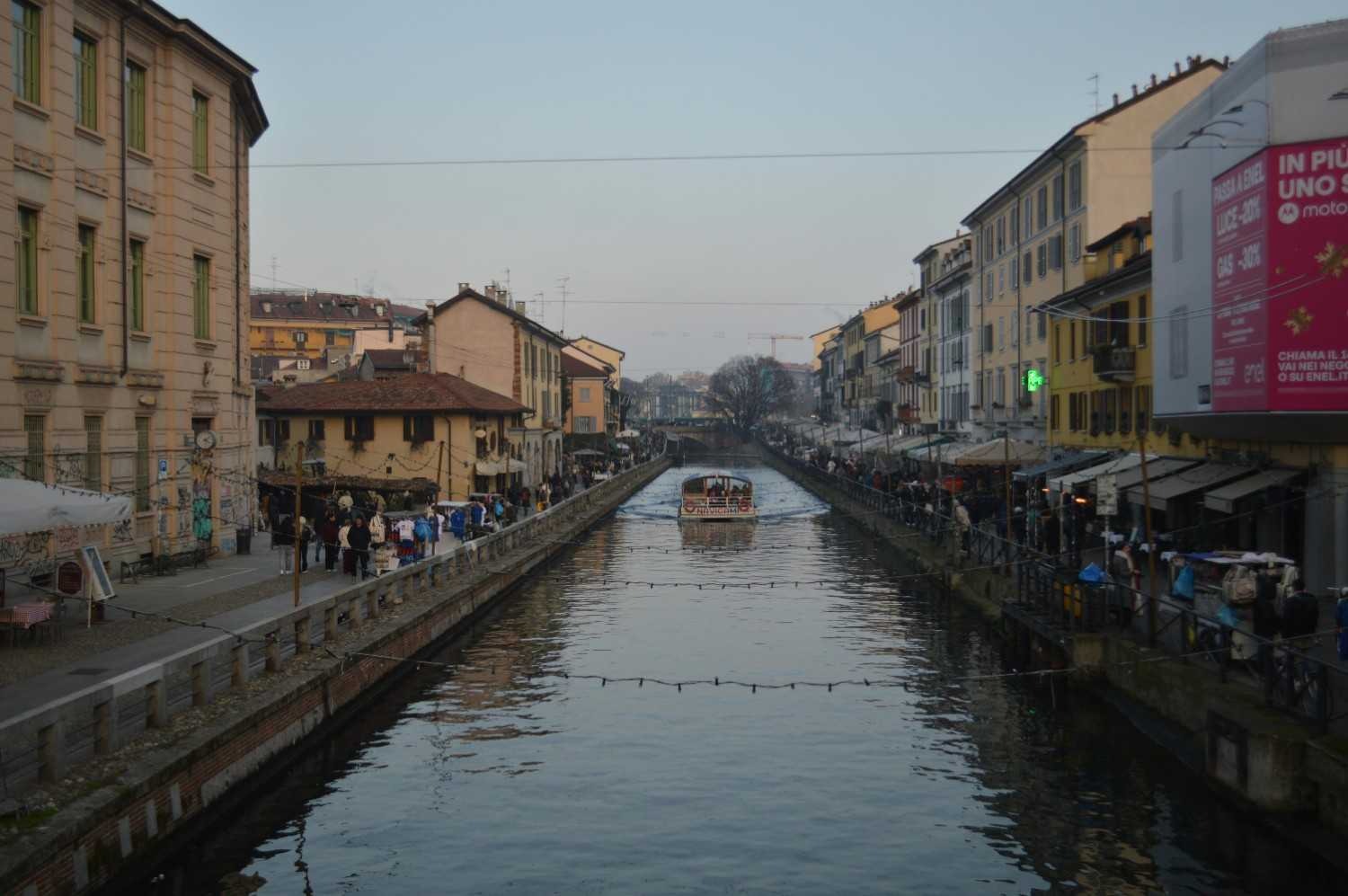
Navigli is Milan’s canal district: two navigable waterways, the Naviglio Grande and the Naviglio Pavese, cutting through the southwestern edge of the city with towpaths, low bridges, houseboats, and some of the most genuine aperitivo culture in northern Italy.
The canals are a medieval engineering project commissioned by Gian Galeazzo Visconti; Leonardo da Vinci contributed to the hydraulic lock system in the late 15th century. Today the canal banks are lined with bars, osterias, vintage clothing shops, antique dealers, and a Sunday flea market that draws serious collectors from across Lombardy.
The neighborhood has a more mixed, younger character than Brera. Students from the nearby Politecnico di Milano, artists with studios in the converted industrial buildings, and food writers who come specifically for the Lombard trattoria circuit all share the same streets. It is more relaxed and less curated than the areas closer to the Duomo, and better for it.
Top Things to Do
1. Walk the Naviglio Grande Towpath: The main canal runs from the Darsena basin westward toward Abbiategrasso and eventually reaches Pavia via the Ticino river.
Within the city, the towpath between the Darsena and the Alchimia bridge is the most atmospheric stretch; the combination of water, low-rise buildings, and the density of bars and restaurants is unlike anywhere else in the city. Go in the early evening when the light is on the water and aperitivo is beginning.
2. Sunday Antique Market (Mercatone dell’Antiquariato): On the last Sunday of every month, the banks of the Naviglio Grande host one of the largest antique markets in northern Italy, with around 400 dealers selling vintage furniture, 20th-century design objects, vintage fashion, ceramics, and books.
It starts early and the best pieces go quickly. Genuinely interesting finds exist here alongside the usual tourist-facing stalls.
3. Eat at a Lombard Trattoria: The Navigli area has the highest concentration of traditional Lombard restaurants in Milan. Look for places serving risotto alla milanese (saffron risotto, traditionally made with bone marrow), osso buco (braised veal shank), and cassoeula (pork and savoy cabbage). Trattoria Madonnina on Via Gentilino and Ristorante Rinomata on the Alzaia Naviglio Grande are two options that have maintained quality over multiple decades.
4. Explore the Darsena: The Darsena is the basin where the two main canals meet, historically Milan’s inner harbor. It was renovated in 2015 and is now a broad waterfront space with a weekend market, bars, and space to sit beside the water.
It is less immediately atmospheric than the canal banks themselves, but it is a useful orientation point and one of the few genuinely open public spaces in this part of the city.
5. Browse Vintage and Design Shops: The side streets running off the Naviglio Grande contain the best concentration of vintage fashion, mid-century design furniture, and independent design studios in Milan.
Via Cola di Rienzo and Via Corsico are worth an afternoon. Several serious design dealers operate here alongside younger independent labels that have not yet moved to the more expensive districts.
Don’t Leave Without…
Ordering a Negroni at one of the canal-side bars at aperitivo hour and watching the light drop across the water. If you have time, eat at Osteria del Binari on Via Tortona nearby. It occupies a converted railway workers’ building and serves some of the best Lombard home cooking in the city.
RV Practical Info
- ZTL and parking: The Navigli area sits within or immediately adjacent to the ZTL zone. The closest legal motorhome parking is along Via Legioni Romane to the southwest or at the Parco Anfiteatro camper area near the outer ring. Check current ZTL maps before driving.
- Best access: Take the M2 (green line) to Porta Genova FS, which exits almost onto the Naviglio Grande. From most campsites to the north or east, this is a 20 to 30 minute metro ride.
- Day trips: From the Navigli, the A7 south takes you toward Pavia in 40 minutes; a beautiful Lombard city with a university older than most European countries and a covered medieval bridge over the Ticino river.
Who Is It Best For?
- Food-focused travelers who want Lombard cuisine in its most authentic current form
- Vintage shopping and antique market enthusiasts
- Travelers who want a local evening atmosphere away from tourist-facing bars
- Design and architecture professionals interested in Milan’s industrial-to-creative conversion areas
Recommended Budget
- Aperitivo: €8 to €12 per drink including buffet
- Trattoria dinner: €25 to €40 per person with wine
- Sunday market: Free entry; budget €20 to €100 depending on what you’re looking for
4. Porta Venezia and Corso Buenos Aires, Milan
The Vibe
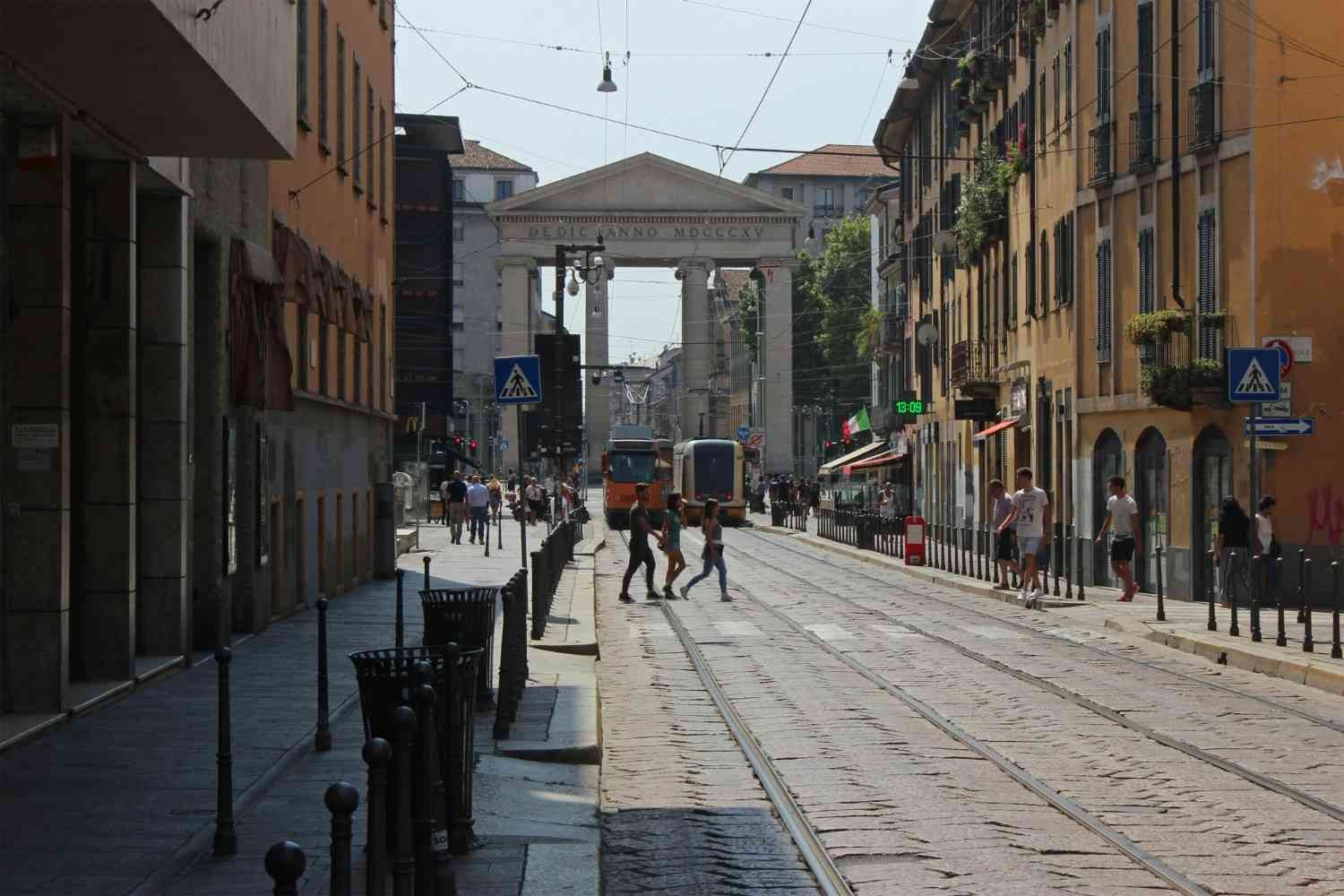
Porta Venezia is Milan at its most genuinely multicultural. The neighborhood east of the old city walls has been a zone of transition and immigration since the 19th century, and today it holds one of the most ethnically diverse communities in the city alongside boutiques, gay bars, Ethiopian restaurants, and the Liberty-style architecture of Via Malpighi and the surrounding streets.
The Giardini Pubblici Indro Montanelli, Milan’s oldest public park, anchors the neighborhood on the western side with shaded paths, a small lake, and the Natural History Museum. Corso Buenos Aires, running northeast from Porta Venezia, is the longest commercial street in Italy, with a kilometre-and-a-half of continuous shops covering every price point from high-street chains to independent tailors.
It is primarily a local shopping street, not a tourist circuit, and reflects a cross-section of Milanese daily commercial life. The neighborhood’s character is relaxed and inclusive, less self-conscious about appearance than Brera or the Duomo district.
The Mondrian Bar on Via Lecco and the cluster of aperitivo bars around Piazza Oberdan give it a lively evening energy that draws a mostly local crowd.
Top Things to Do
1. Walk the Giardini Pubblici Indro Montanelli: The public gardens were laid out in the 1780s and redesigned in the English landscape style in the 19th century. They are the best green space in the inner city: large enough to lose the sound of traffic, with mature plane trees, a duck pond, and a playground that fills with families on weekend mornings.
The Natural History Museum and the Planetarium are both inside the park and worth an hour each.
2. Explore Liberty Architecture on Via Malpighi and Corso Venezia: Milan has a significant collection of Art Nouveau (Liberty-style) buildings concentrated around Porta Venezia. The Casa Galimberti on Via Malpighi is the most photographed, with its ceramic tile facade depicting animals and flowers.
Corso Venezia is lined with palazzo-scale 19th and early 20th-century buildings that represent Milan’s prosperity in the pre-war period. Architecture walkers can spend two hours in this area without running out of material.
3. Shop Corso Buenos Aires: The street runs 1.5 km and covers every category of retail: high-street clothing, Italian design labels, shoe shops, bookshops, and food stores. The density is highest near the Piazzale Loreto end. It is entirely unglamorous and entirely Milanese; this is where residents actually buy things.
4. Eat at an Ethiopian or North African Restaurant: The Porta Venezia area has the best concentration of East African and North African restaurants in Milan. Via Padova, a few blocks north, has a range of options that reflect the neighborhood’s Eritrean, Ethiopian, Moroccan, and Senegalese communities. These are genuine working restaurants, not tourist-facing fusion concepts.
5. Evening Bar Culture Around Piazza Oberdan: The cluster of bars on and around Piazza Oberdan and the streets east of the gardens form the informal center of Porta Venezia’s evening scene. The crowd is mixed, international, and far less fashion-industry-focused than in other parts of the city. Go between 6 and 9 PM for aperitivo and stay for dinner.
Don’t Leave Without…
Visiting the Padiglione d’Arte Contemporanea (PAC), the contemporary art pavilion in the public gardens. It runs four to five rotating exhibitions per year, frequently featuring international artists shown in Italy for the first time. The building was designed by Ignazio Gardella in 1953 and is a fine piece of postwar Italian architecture in its own right.
RV Practical Info
- ZTL: Porta Venezia sits inside the Area C zone. Park outside the ring and use the M1 (red line) at Porta Venezia station.
- Campsites: Autopark Milano (northeast of the city, near the M1 line) is a practical base for this part of Milan specifically.
- Scenic route: The A4 autostrada east from Porta Venezia’s direction reaches Bergamo in 40 minutes; a natural half-day extension from this base.
Who Is It Best For?
- Travelers interested in multicultural urban neighborhoods rather than postcard Milan
- Architecture enthusiasts focusing on Liberty and early 20th-century Milanese design
- Shoppers who want a practical, resident-focused retail experience
- Visitors spending several days in Milan who have covered the major monuments and want a different register
Recommended Budget
- Park entry: Free
- PAC exhibition: €8 to €12
- Lunch or dinner in the neighborhood: €12 to €25 (considerably cheaper than the Duomo district)
5. Castello Sforzesco and Parco Sempione, Milan
The Vibe
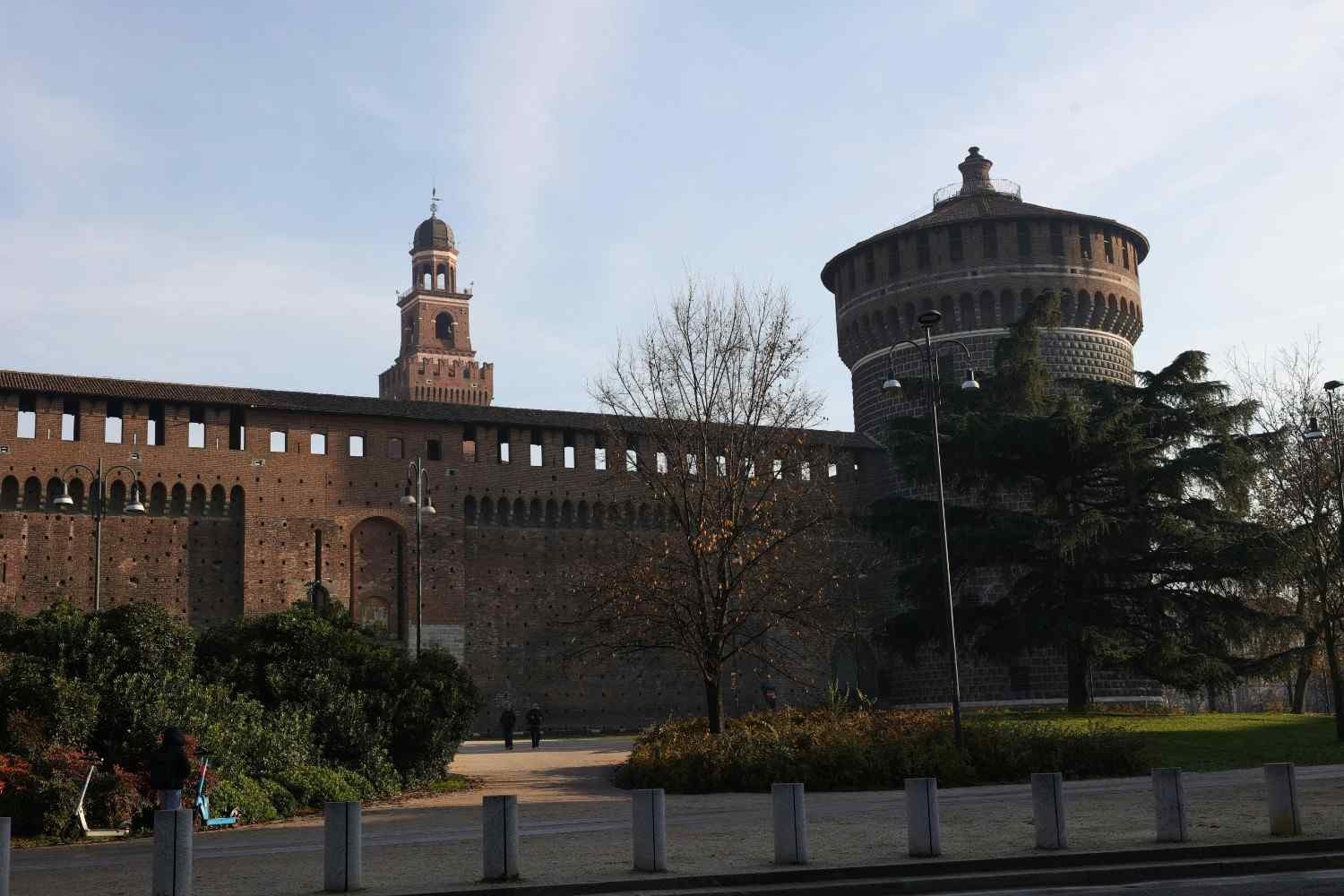
The Castello Sforzesco is a 15th-century brick fortress built by Francesco Sforza, Duke of Milan, on the foundations of an earlier Visconti stronghold.
It occupies an enormous footprint at the northern end of the city’s historic center and contains seven separate museums, including the Museo d’Arte Antica, which holds Michelangelo’s final work, the Pietà Rondanini, carved until a few days before his death in 1564.
The castle is one of Milan’s most significant buildings and the least rushed of the city’s major monuments.
Behind the castle, Parco Sempione spreads across 47 hectares and is by far the largest green space within the city limits. Designed in the English landscape tradition in the 1880s, it includes a small lake, the Torre Branca (a 1930s steel viewing tower), the Arco della Pace triumphal arch at the far end, and the Triennale di Milano design museum along the eastern edge.
The area is genuinely popular with Milanese rather than tourists alone. Families use the park on weekends, joggers circle the paths in the mornings, and the café terrace at the Triennale is one of the better places to have a coffee in the city.
Top Things to Do
1. Visit the Pietà Rondanini: Michelangelo was working on this sculpture six days before he died at 88. It is unfinished, completely different in style from his earlier work, and deeply moving: a late, stripped-down meditation on the body and grief that looks nothing like the polished perfection of the Vatican Pietà.
The dedicated room in the Museo d’Arte Antica frames it well. It is one of the genuinely great works of art in Milan, and far fewer people see it than see the Last Supper.
2. Walk Parco Sempione: The park is most beautiful in early morning and evening. The Torre Branca (a 108-metre steel tower built for the 1933 Triennale) is open at limited hours and gives views across the park toward the castle and the Alps.
The artificial lake at the center attracts herons and is a rare still point in the city. The park’s southern edge connects directly to the Arco della Pace via a straight boulevard.
3. Visit the Triennale di Milano: The design museum on the park’s eastern edge runs rotating exhibitions on architecture, industrial design, fashion, and graphic design, with a permanent collection documenting Italian design from the 1930s to the present.
The café terrace looks out directly onto the castle walls and is one of the better museum cafés in the city. Check the exhibition calendar before visiting as the programming quality is consistently high.
4. Explore the Castle Museums: Beyond the Pietà, the castle’s collections include Egyptian and prehistoric archaeology, applied arts from the medieval to the 19th century, a significant musical instrument museum, and the Biblioteca Trivulziana, one of the most important private libraries in Italy, with manuscripts by Leonardo da Vinci.
The archaeology rooms and the Sala delle Asse (a room with a ceiling fresco attributed to Leonardo) are the highlights beyond the Michelangelo.
5. Arco della Pace and Corso Sempione: The triumphal arch at the far end of the park was commissioned by Napoleon in 1807 and finished by the Austrians in 1838, long after Napoleon was gone.
It is a fine piece of neoclassical architecture, particularly in the late afternoon when the carriages and horses on its bronze top catch the low sun. The broad Corso Sempione boulevard leads northwest from here toward the Fieramilano exhibition center.
Don’t Leave Without…
A late-afternoon coffee on the Triennale terrace with the castle walls directly opposite. It is the most relaxed and least tourist-facing coffee stop in the vicinity of any of Milan’s major monuments.
RV Practical Info
- Parking: Parco Sempione has no RV parking. The castle is within the Area C zone. Use the M1 (red) or M2 (green) line to Cadorna or Lanza and walk from there.
- Campsites: The same northern options as above apply. The M2 Cadorna connection makes this area accessible from most northern-suburban campsites in 20 to 25 minutes.
- Day trip extension: The A8 from the direction of Parco Sempione runs northwest to Varese in 40 minutes, which connects to Lake Maggiore via the SS33; a useful route for road trippers heading from Milan toward the lakes.
Who Is It Best For?
- Visitors who want a combination of significant art and genuine green space
- Families with children who need outdoor space alongside cultural content
- Design enthusiasts who want to see the Triennale in its best setting
- Anyone who wants to see a major Michelangelo with a fraction of the Vatican crowds
Recommended Budget
- Castello Sforzesco museums: €5 (combined ticket for all museums)
- Triennale exhibition: €12 to €15
- Torre Branca: €4
- Meals in the area: €15 to €30; the Triennale café charges restaurant prices but the location earns it
6. Lake Como Day Trip from Milan
The Vibe
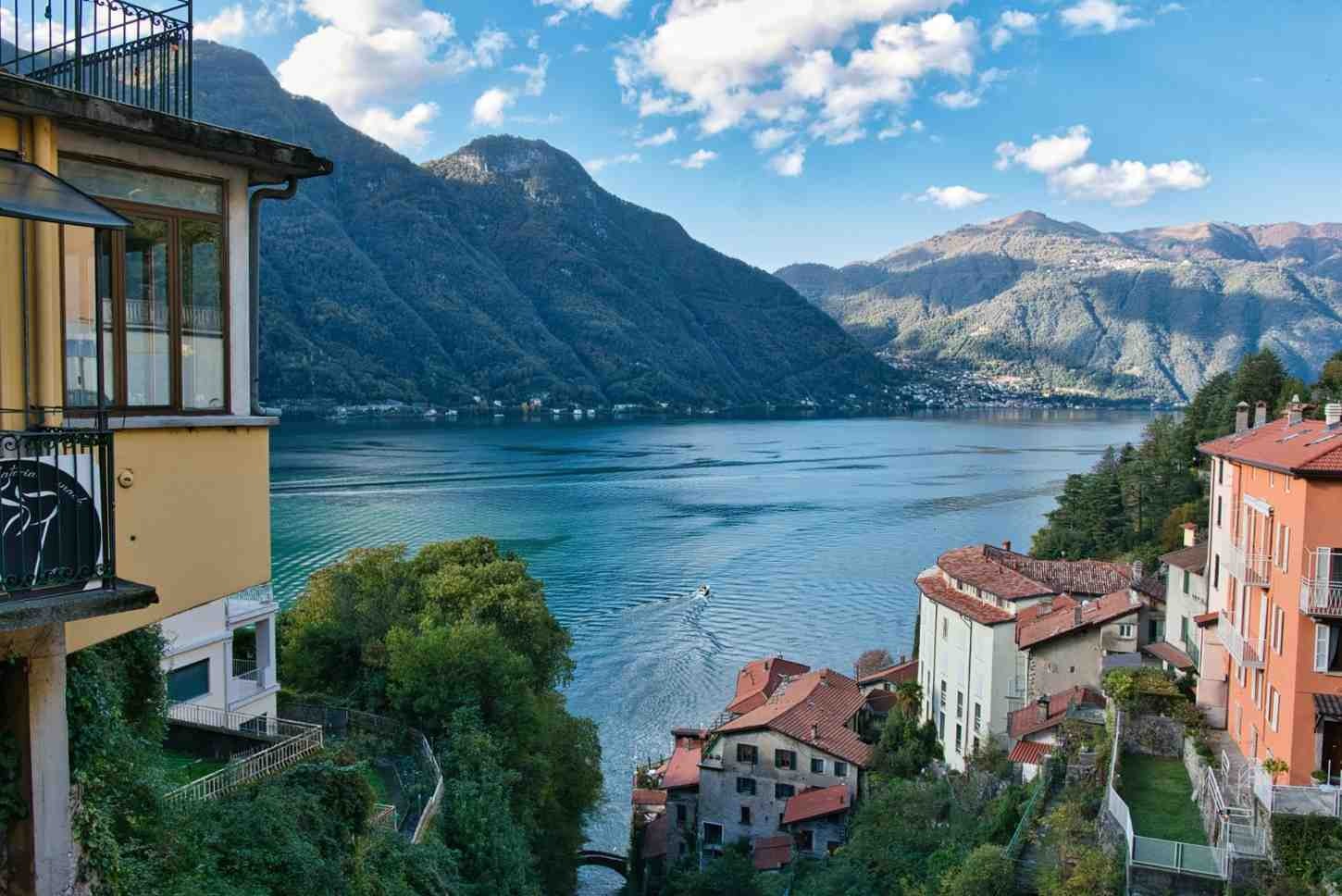
Lake Como is 50 kilometers north of Milan, and the contrast between the two is almost theatrical. The city gives way to autostrada, then to small industrial towns, then suddenly to a deep, finger-shaped glacial lake flanked by steep wooded mountains with the Alps visible above them.
The water is an extraordinary shade of blue-green, and the combination of climate, topography, and the accumulated architectural ambition of several centuries of villa construction has produced one of the most visually striking landscapes in Europe. Como town sits at the southern tip of the lake’s western branch.
Bellagio occupies the promontory between the two northern branches and is the most celebrated of the lake towns: a compact maze of stone steps, wisteria-draped terraces, and grand villa gardens above the water.
The lake is also Lombardy’s road trip backbone; a scenic drive around its perimeter passes through dozens of smaller villages, ferryboat crossings, and mountain roads that rise steeply above the shore.
Top Things to Do
1. Explore Bellagio: The town is small enough to cover in two hours on foot but rewards a half-day. The stepped lanes of Via Salita Serbelloni and Via Garibaldi are the most photogenic, and the public gardens of the Villa Melzi (open from spring through October) are the finest on the lake. The ferry from Como town runs regularly and costs around €10 each way. Arrive by 9 AM in peak season before the day visitors from Milan arrive.
2. Take the Ferry Across the Lake: The car ferry between Varenna (eastern shore) and Bellagio or Menaggio (western shore) is a 10-minute crossing that lets you see the lake from the water and access the road along the less-visited eastern shore.
The eastern shore, known as the Lario orientale, is quieter, less developed, and has some of the best cycling roads on the lake. Varenna itself is worth stopping in: a small lakeside village with a 10th-century church and a fish restaurant that justifies the detour.
3. Drive the Western Shore Road (SS340): The lakeside road from Como to Menaggio runs along the western shore with consistent lake views, passing through Cernobbio, Tremezzo, and the gardens of Villa Carlotta.
In summer the road can be busy, but early morning or off-season drives are outstanding. The Villa Carlotta gardens are open from late March through October and contain one of the best collections of azaleas and rhododendrons in Europe.
4. Walk the Greenway del Lago di Como: The 10-kilometer Greenway trail between Colonno and Cadenabbia on the western shore follows old mule paths above and below the SS340, passing gardens, small chapels, and viewpoints above the lake.
The path is largely car-free and accessible to all fitness levels. It takes 3 to 4 hours at a relaxed pace and ends near the Villa Carlotta gardens.
5. Swim at Lezzeno or Oliveto Lario: The eastern shore has several free public lidos and lakeside swimming spots that are considerably less crowded than the western shore beaches.
Lezzeno and Oliveto Lario are the best options for RV travelers because the road above each has layby parking and water access is straightforward. The lake water is clean and, by July and August, warm enough for comfortable swimming.
Don’t Leave Without…
A plate of missoltini at a lakeside osteria in Varenna or Lenno. This is dried agoni, a small lake fish cured in salt and bay leaves then grilled. It is the traditional fish preparation of the Como lake culture and almost impossible to find outside the lake region.
RV Practical Info
- Access from Milan: The A9 autostrada from Milan reaches Como in under an hour. For Bellagio and the central lake, continue on the SS340 or take the ferry from Varenna (accessible via the eastern SS36).
- Motorhome parking: The Área di Sosta Camper Como near the lakefront in Como town has spaces and basic facilities. Camping Bellagio is on the Bellagio promontory and is open from April through October; book ahead in summer.
- Road widths: The SS340 through the village centers (particularly between Cadenabbia and Lenno) is narrow for larger motorhomes. Check your vehicle length before committing to this route. The SS36 on the eastern shore is more accommodating.
- Scenic route: From Como, continue north through the lake and cross into Switzerland via the Maloja or Splügen passes for a two-day alpine itinerary.
Who Is It Best For?
- Couples looking for dramatic scenery and lakeside walks
- Drivers who want a scenic road trip north of Milan
- Families who want outdoor swimming and boat rides in a spectacular setting
- Anyone spending more than three days in Milan who wants a half-day or full-day change of pace
Recommended Budget
- Ferry Como to Bellagio: €10 each way
- Villa Carlotta gardens: €10
- Lakeside lunch: €20 to €40
- Campsite at Bellagio: €30 to €50 per night in season
7. Bergamo Day Trip from Milan
The Vibe
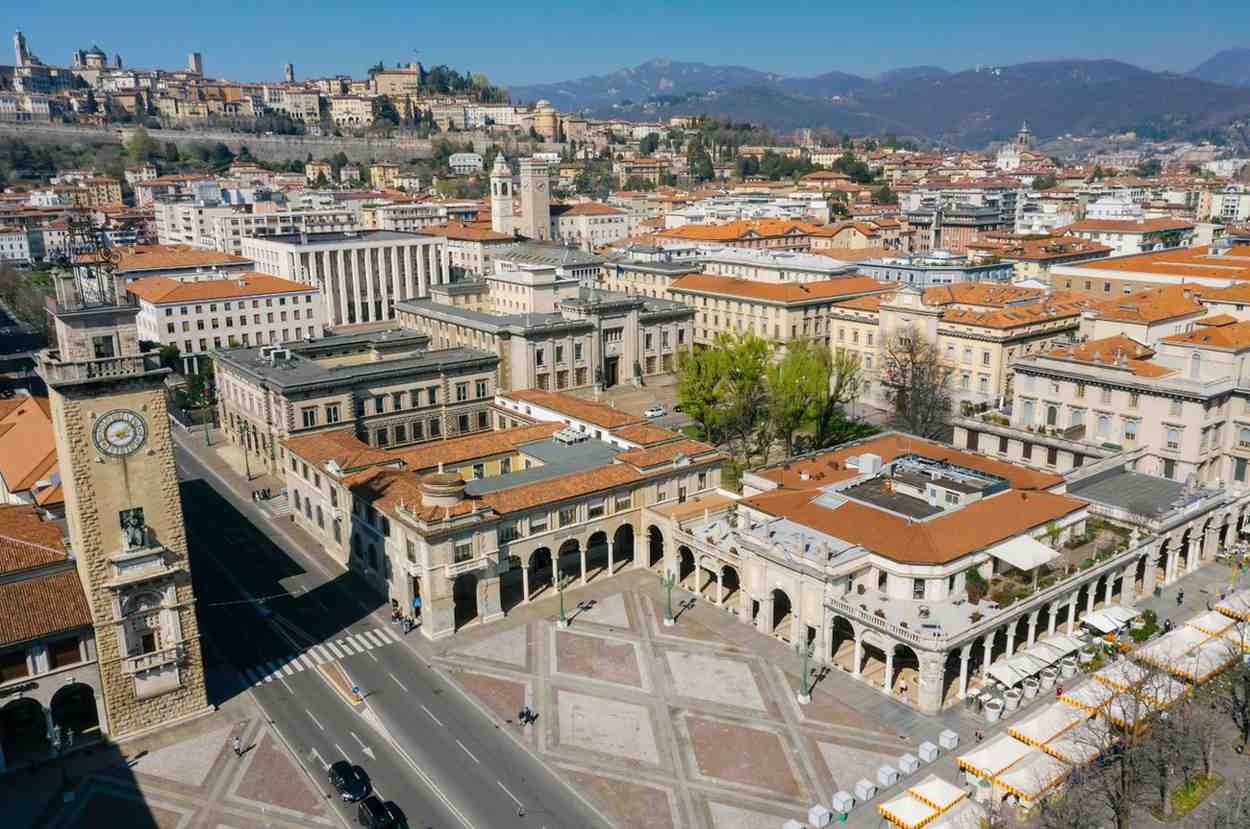
Bergamo sits on a hill 50 kilometers northeast of Milan: the lower modern town at the base, the Città Alta (upper city) on top, surrounded by Venetian walls so well-preserved that UNESCO added them to its World Heritage list in 2017.
The Città Alta is a medieval city in almost complete form; a compact grid of stone streets, Romanesque churches, a 12th-century baptistery, and the Piazza Vecchia at the center, which the architect Le Corbusier reportedly called the most beautiful piazza in Europe. Bergamasque identity is distinct from Milanese.
The city was part of the Venetian Republic for 400 years, and the Venetian heraldic lion appears throughout the upper city on buildings, fountains, and gates. The local dialect is so different from standard Italian that non-Italians sometimes assume it is a different language altogether.
The food is Lombard in character but with its own emphases: polenta, casoncelli (a stuffed pasta with butter and sage), and the local salami, cured with wine and spices in a style specific to the Bergamo valleys. The Città Alta can be covered in three to four hours on foot. The lower city (Città Bassa) has the train station, good cafés, and several fine 20th-century buildings. The two are connected by a funicular.
Top Things to Do
1. Walk the Venetian Walls: The 16th-century walls enclose the entire Città Alta and can be walked along the top for much of their circuit, around 6 kilometers in total. The views from the bastions extend north to the Bergamo Alps and south across the Po plain toward Milan. The walls are free to access and best walked in the late afternoon light.
2. Visit the Cappella Colleoni: This is one of the finest Renaissance funerary chapels in northern Italy, built between 1472 and 1476 by Giovanni Antonio Amadeo for the Venetian condottiere Bartolomeo Colleoni.
The polychrome marble facade is remarkable, and the interior contains Tiepolo frescoes and the gilded equestrian statue of Colleoni himself. It stands in Piazza Duomo at the center of the Città Alta and is free to enter.
3. Piazza Vecchia: The main square of the Città Alta is framed by the 12th-century Torre Civica (which you can climb for a fee), the Palazzo della Ragione, and the Biblioteca Civica Angelo Mai. The combination of Romanesque, Gothic, and Renaissance stonework around a single space is exactly what Le Corbusier was responding to. Go in the morning before the day-trippers from Milan arrive.
4. Take the Funicular: Two funiculars connect the city. The first runs from the Città Bassa to the Città Alta in a few minutes and is the main access point for most visitors. The second continues from the Città Alta up to San Vigilio, a hilltop with a small castle and panoramic views north into the Bergamo Alps. Both funiculars operate on standard transit tickets and are included in the Bergamo mobility card.
5. Eat Casoncelli: The stuffed pasta of Bergamo, casoncelli alla bergamasca, is made with a filling of ground meat, bread, eggs, cheese, and spices, then served with melted butter, sage, and crispy pancetta. It is distinct from any other stuffed pasta in Italy. Several restaurants on and around Piazza Vecchia serve it as their primary first course.
Don’t Leave Without…
Buying a slice of polenta e osei at Pasticceria Nessi on Via Borfuro in the Città Alta. This is Bergamo’s most famous pastry: a marzipan cake shaped to look like a plate of polenta with small birds on top. It has been made in the same form since the 19th century and is entirely a Bergamo creation.
RV Practical Info
- Access from Milan: The A4 autostrada east from Milan reaches Bergamo in 40 to 50 minutes. Exit at Bergamo Est for the lower city.
- RV parking: There is a designated camper area at Piazzale Marconi near the lower city with overnight facilities. Several campsites in the Bergamo valley to the north offer better full-facility options.
- Città Alta access: Do not drive an RV into the Città Alta. The roads are extremely narrow and access is restricted. Park in the Città Bassa and take the funicular up.
- Scenic route: From Bergamo, the Valle Seriana and Valle Brembana both run north into the Bergamo Alps, with good scenic driving through small mountain towns and year-round campsite facilities.
Who Is It Best For?
- History and architecture lovers who want a medieval city without the Venice crowds
- Day-trippers from Milan who want a significant change of scenery in under an hour
- Foodies interested in Lombard regional cooking at its most distinct
- Road-trippers heading east from Milan toward Lake Garda or the Dolomites
Recommended Budget
- Funicular: €1.50 per ride (Città Bassa to Città Alta); €2.50 to San Vigilio
- Cappella Colleoni: Free
- Lunch with casoncelli: €20 to €35
- Day parking at Piazzale Marconi: €5 to €10
8. Isola and Porta Nuova, Milan
The Vibe
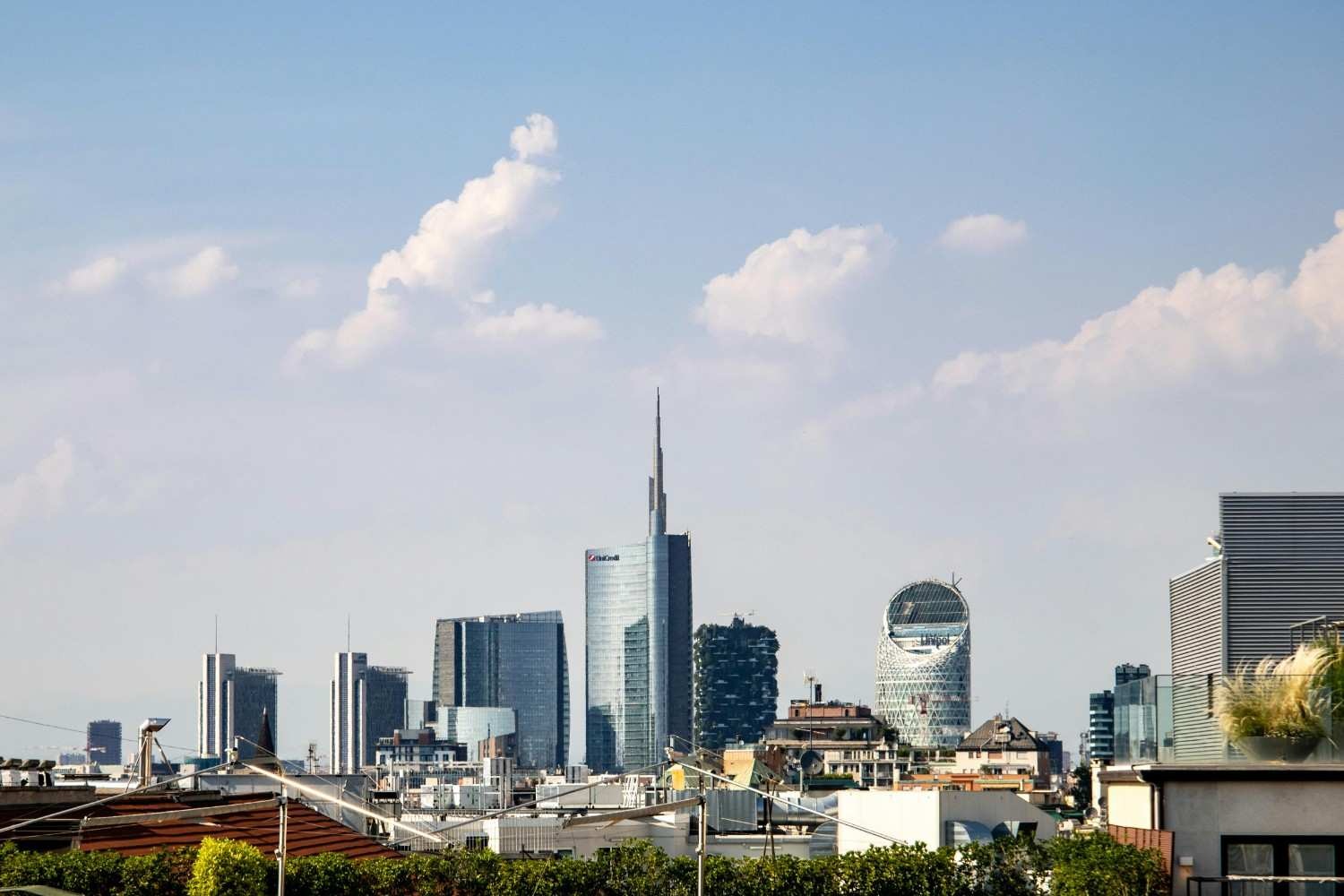
Isola and Porta Nuova represent what Milan chose to do with its industrial northern fringe in the 2010s, and the result is one of the more compelling pieces of contemporary urban architecture in Italy.
The Bosco Verticale (Vertical Forest), two residential towers whose facades are covered with 800 trees and 14,000 plants, sits at the edge of the Porta Nuova development and has become one of the most reproduced architectural images in contemporary Italy. The Unicredit Tower next to it is the tallest building in Italy at 231 meters.
Isola, the neighborhood immediately north of the development, kept its working-class character through the construction boom and now has the kind of creative friction that comes from independent bars, tattoo studios, experimental galleries, and Vietnamese restaurants sitting against the backdrop of one of the most expensive skylines in Italy. It is not polished. That is the point.
Top Things to Do
1. See the Bosco Verticale: The towers by Stefano Boeri Architetti won the International Highrise Award in 2014 and have been widely imitated since. They are not open to the public internally, but viewing them from the Biblioteca degli Alberi park below (itself a well-designed public green space) gives the full impact.
Go in spring when the trees are in full leaf, or in autumn when the canopy turns. The park surrounding them is one of the better urban design projects in recent Italian history.
2. Visit Fondazione Giangiacomo Feltrinelli: The cultural foundation of Italy’s largest independent publisher occupies a Herzog and de Meuron building at the southern edge of the Porta Nuova development.
The ground floor is a large independent bookshop with one of the best English-language sections in Milan. The upper floors host lectures, readings, and exhibitions throughout the year, many of which are free. The building itself, all glass and angled steel frames, is worth seeing from the street.
3. Walk the Isola Neighborhood: The streets north of the Bosco Verticale, including Via Carmagnola, Via Jacopo dal Verme, and Via Porro Lambertenghi, retain the residential scale and character that the Porta Nuova development swept away on the other side of the tracks.
Independent wine bars, Japanese ramen shops, vintage record stores, and street art coexist in the same block. Go in the evening when the neighborhood has most energy.
4. Aperitivo at the Bosco Verticale Base: The cluster of bars and restaurants at street level in the Porta Nuova development caters to the financial and tech company workers who occupy the towers above.
It is expensive by Milanese standards, but the urban design quality of the setting is unlike anything elsewhere in the city. Ceresio 7 on Via Ceresio (slightly north, in Isola proper) is the standout option if budget allows.
5. Walk the Elevated Parkway: The Sopraelevata Ludovico, a former elevated motorway now converted into a pedestrian park strip, runs along the edge of the Isola neighborhood and gives views across the Porta Nuova skyline and back toward the Duomo’s spires.
It is a 15-minute walk end to end, but the views are genuinely good and the urban contrast (industrial highway to urban park) is a compressed version of what happened to Milan’s northern fringe in a decade.
Don’t Leave Without…
A visit to Eataly on the southern edge of the development, not for the tourist-facing food hall (though the cheese and pasta sections are genuinely good), but for the top-floor restaurant that has views across the Porta Nuova skyline and serves a lunch menu that represents Italian regional food at a reliable standard.
RV Practical Info
- Metro: M2 (green line) at Garibaldi FS or M5 (lilac line) at Isola drop you directly into the neighborhood. From any northern campsite, this is a 20 to 35 minute journey.
- Parking: No camper parking exists in this area. Arrive by metro.
- Best timing: Weekday mornings or evenings. Weekend afternoons are crowded in the Porta Nuova park. The Isola neighborhood is most alive Thursday to Saturday evening.
Who Is It Best For?
- Architecture and design travelers who want to see contemporary Italian urbanism at its best and its most contradictory
- Visitors on a second or third trip who know the historic center well
- Anyone interested in the intersection of real estate, design, and urban culture
- Foodies looking for the highest concentration of international restaurant options outside the Duomo circuit
Recommended Budget
- Bosco Verticale area and library park: Free
- Fondazione Feltrinelli exhibitions: Free to €8
- Dinner in Isola: €20 to €40 per person
- Eataly lunch: €20 to €35
9. Ticinese, Milan
The Vibe
Ticinese is the part of Milan south of the Navigli, centered on the Basilica di Sant’Ambrogio and the stretch of Corso di Porta Ticinese that runs from the Roman columns of the Colonne di San Lorenzo down to the Naviglio Grande.
It is among the oldest continuously inhabited parts of the city; the Roman amphitheatre was here, the early Christian basilicas are here, and the medieval city walls ran through this area. The density of historical layers is higher per square meter than anywhere else in Milan. It is also, contradictorily, a neighborhood that keeps its head down.
There are fewer tourists than in Brera, fewer design industry workers than in Isola, and a more mixed social character. The aperitivo culture around Porta Ticinese and the Colonne di San Lorenzo, where in summer people gather on the steps of the 3rd-century Roman columns to drink cans of beer at sunset, is entirely its own thing.
Top Things to Do
1. Basilica di Sant’Ambrogio: This is Milan’s most significant early Christian church, founded by Bishop Ambrose in 379 AD and rebuilt in its current Romanesque form between the 9th and 12th centuries.
The atrium, the golden altar (Paliotto d’Oro, 835 AD), and the Sacello di San Vittore in Ciel d’Oro (with a 5th-century mosaic portrait of Ambrose himself) are the highlights. It is less visited than the Duomo and in many respects more historically significant.
2. Colonne di San Lorenzo: A colonnade of 16 Roman columns from the 2nd to 3rd century AD, still standing in front of the early Christian basilica of San Lorenzo.
They are the most visible Roman-era remains in the city and the unofficial gathering place of Milanese informal culture, particularly from late afternoon onward when students, workers, and visitors collect on the steps with bottles of prosecco.
3. Walk Corso di Porta Ticinese: The street between the Roman columns and the Navigli is one of the better independent retail streets in the city: vintage clothing, concept stores, ceramics, wine bars, and barbers on a human scale that is increasingly rare in central Milan. It is most alive on Saturday mornings.
4. Visit the Museo Diocesano: In the cluster of cloisters beside Sant’Ambrogio and behind the basilica of Sant’Eustorgio, the Diocesan Museum holds a collection of sacred art from the Middle Ages through the 18th century, including works by Bergognone, Tiepolo, and several painted processional altarpieces that give a clear picture of Milanese religious culture. The cloisters themselves are worth visiting. Few tourists find it.
5. Aperitivo Around the Colonne The informal aperitivo around the Roman columns is one of the most distinctive Milan experiences, entirely different in tone from the bar-service culture of Brera or the Navigli. People buy drinks from nearby shops and gather on the ancient steps. In summer it starts around 6 PM and runs until 9. It costs nothing.
Don’t Leave Without…
Visiting Sant’Eustorgio, the Dominican basilica at the far end of the corso. The Portinari Chapel (1462 to 1468), added to the church’s left side, is one of the finest early Renaissance chapels in northern Italy: a perfect cube of painted walls and dome frescoes by Vincenzo Foppa, rarely included on standard Milan itineraries and almost always empty.
RV Practical Info
- Access: The M2 at Sant’Ambrogio drops you directly onto the neighborhood. The area is adjacent to the ZTL zone; do not drive the corso in an RV.
- Best timing: Morning for the churches (cooler and quieter); early evening for the aperitivo culture around the columns.
- Campsites: The same northern options apply; Ticinese is 20 to 25 minutes from the M2 Garibaldi connection that most northern campsites serve.
Who Is It Best For?
- History travelers with a specific interest in early Christian and Roman-era Milan
- Visitors who want local aperitivo culture without tourist-facing pricing
- Slow travelers who want a residential neighborhood with real cultural depth
- Art historians focused on Lombard painting from the 15th and 16th centuries
Recommended Budget
- Sant’Ambrogio and Sant’Eustorgio: Free (donations expected)
- Museo Diocesano: €8
- Informal aperitivo at the columns: €3 to €5 (bring your own from a nearby shop)
- Dinner in Ticinese: €18 to €30 per person
10. Monza Day Trip from Milan
The Vibe
Monza is 15 kilometers north of Milan: close enough to reach in 20 minutes by train, different enough to justify the journey. The city is best known internationally for the Formula 1 Italian Grand Prix at the Autodromo Nazionale Monza, one of the oldest racing circuits in the world, which holds its race each September.
The circuit occupies only part of the enormous Royal Park of Monza, which at 685 hectares is one of the largest enclosed parks in Europe; a 19th-century royal estate with formal gardens, an arboretum, a golf course, and long roads available for walking and cycling. The city of Monza has a distinct identity beyond the race circuit.
The Duomo di Monza holds the Iron Crown of Lombardy, one of the most historically significant royal artifacts in Europe, used to crown emperors from Charlemagne through Napoleon. The city center is Lombard in character, smaller and more manageable than Milan, and worth an hour or two alongside the park.
Top Things to Do
1. Walk or Cycle in the Royal Park: The Parco di Monza is free to enter on foot and by bicycle, and the internal road network covers enough distance to fill a half-day without repetition.
The formal gardens around the Royal Villa are the most photographed, but the park’s true character is in its forest sections, where large mixed woodland creates a complete break from the urban environment. Bike rental is available at multiple points inside the park.
2. Drive or Walk the Autodromo Circuit: When no racing or testing is scheduled, it is possible to walk sections of the Monza circuit on organized visits and some open days. The banking of the old high-speed oval (no longer used for racing) is particularly striking: a steeply banked concrete structure now largely reclaimed by vegetation. The Museo dell’Autodromo is inside the circuit and covers the history of the track from its 1922 opening.
3. See the Iron Crown in the Duomo: The Iron Crown of Lombardy is a 6th-century royal crown, allegedly incorporating a nail from the Crucifixion in its iron inner band, which gives it its name. It was used in the coronation of Holy Roman Emperors for centuries. The crown is displayed in a dedicated chapel in the Duomo, which is itself a fine Romanesque-Gothic building with a striking striped marble facade.
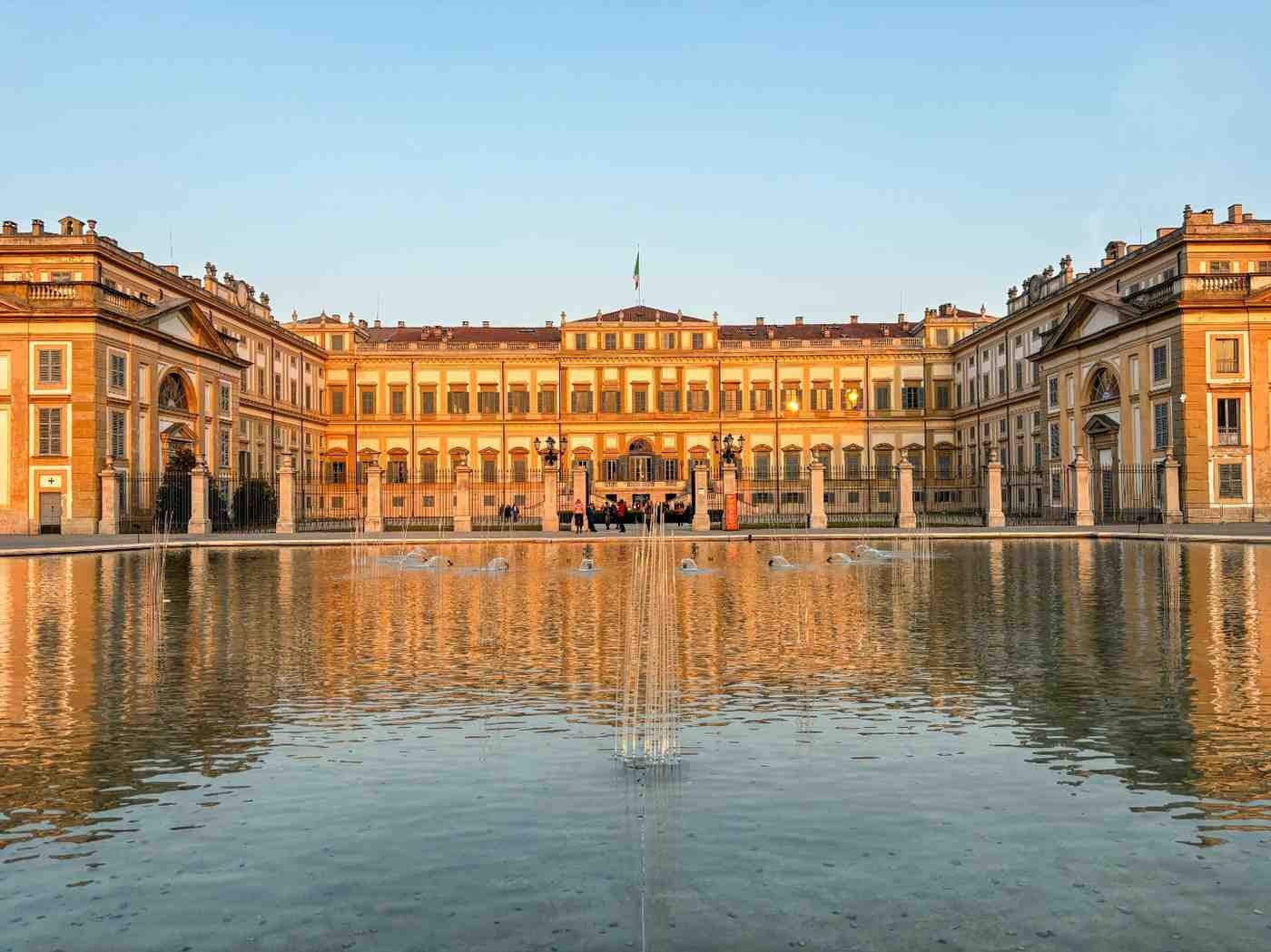
4. Visit the Royal Villa: The Villa Reale, built for Napoleon’s stepson Eugène de Beauharnais in the early 19th century, is one of the finest neoclassical palaces in northern Italy. The interior is currently undergoing long-term restoration, but the exterior and the formal Italian gardens fronting the villa are open and form one of the visual centerpieces of the park.
5. Eat at a Monzese Trattoria: Monza has a small but genuine restaurant culture distinct from Milan. Look for restaurants serving risotto alla monzese (made with luganega sausage rather than saffron) and cassoeula in season. Via Carlo Alberto and the streets around the central Piazza Roma have the best concentration of traditional options.
Don’t Leave Without…
Walking the old concrete banking of the Curva Sopraelevata, the steeply banked track section from the original 1922 circuit design. Now unused and heavily vegetated, it is a remarkable piece of industrial archaeology and one of the stranger walks available anywhere near Milan.
RV Practical Info
- Access: The A4 from Milan reaches Monza in 20 minutes. The SS36 Valassina road runs north directly through Monza toward Lecco and Lake Como; a natural route for combining Monza with a Lake Como day.
- RV parking in Monza: There is motorhome parking at the Autodromo during non-race periods. The main Parco di Monza has large car parks at its gates that accommodate motorhomes. During the Formula 1 Grand Prix in September, all parking books out months in advance.
- Campsite: Camping Autodromo near the circuit is open seasonally (primarily race-period months). For longer stays, Milan’s northern campsites are the more reliable base.
- Scenic route: From Monza, continue north on the SS36 through Lecco to reach the eastern branch of Lake Como in under 40 minutes; a natural extension into the lake district.
Who Is It Best For?
- Motorsport enthusiasts who want to walk a legendary Formula 1 circuit
- Families who need outdoor space and cycling options close to the city
- Travelers combining Milan with Lake Como who want a low-key stop en route
- Visitors with an interest in royal architecture and European historical artifacts
Recommended Budget
- Parco di Monza entry: Free (by foot and bike)
- Autodromo museum: €5 to €8
- Duomo Iron Crown: Free
- Trattoria lunch in Monza: €15 to €25
What to Pack for a Milan and Lombardy Road Trip
Milan’s climate varies considerably by season. The Po plain is humid and can be fiercely hot in summer (above 30°C) and foggy and cold in winter. Pack for the season you are visiting, not the season you would prefer.
| Category | Items | Why You Need It |
| Clothing (Summer: June to August) | Lightweight breathable layers, one smart-casual outfit for evening, comfortable walking shoes, sunglasses, light jacket for evenings | Milan nights cool down; museums and churches are air-conditioned; Milanese dress standards are higher than most European cities |
| Clothing (Spring and Autumn) | Mid-layer fleece, waterproof jacket, warm layers for lake visits, sturdy walking shoes | Lake Como is cooler than the city; mountain day trips require warmer layers |
| Clothing (Winter: November to February) | Heavy insulating jacket, thermal layers, waterproof boots, hat and gloves | Po valley fog is dense; temperatures drop to near freezing; canal-side evenings are cold |
| RV Essentials | Area C daily pass (purchased online before entry), Type F plug adapters, levelling blocks, Italian motorway Telepass or cash for tolls | Area C and ZTL enforcement is automatic; Italian campsite hookups use standard European sockets |
| City Navigation | ATM Milan app (for Area C), metro day passes, Trenitalia app for lake and Bergamo day trips | The metro is the most practical way to reach central Milan from any peripheral campsite |
| Activity-Specific Gear | Bike lock and helmet for Monza park cycling, binoculars for birdwatching in Parco Sempione, sunscreen for lake days | Lake reflections intensify UV; cycling in Monza park is a half-day activity |
Expert Tips for Visiting Milan
1. Buy Area C access before you drive into the city center: The congestion charge zone applies 7:30 AM to 7:30 PM on weekdays. Failing to buy a daily pass (around €5) results in an automatic fine.
Purchase it online in advance at the ATM Milan website or at authorized tobacconists the day before you plan to drive in. Most RV road trippers in Milan are better served not driving into Area C at all and using the metro from a peripheral campsite.
2. Plan your campsite based on metro access, not distance: Milan’s northern suburb campsites on the M3 and M1 lines put you 25 to 35 minutes from the Duomo. Southern campsites require multiple transfers. Camping Village Città di Milano on the northern M3 ring is the most practical base for first-time visitors.
3. The Last Supper requires booking months in advance: Leonardo da Vinci’s Last Supper in the refectory of Santa Maria delle Grazie is released in time windows of 15 minutes per group, and tickets sell out months ahead.
Book before you finalize your travel dates, not after. The painting is on a wall inside a dining room, not a gallery, and the visit lasts no more than 15 minutes; the booking difficulty is what elevates its status.
4. The best aperitivo is free: Aperitivo buffets with a drink order are still standard practice in Navigli, Ticinese, and most local neighborhood bars. A single drink (€8 to €12) includes access to a spread that can function as a light meal. This is one of the genuinely good reasons to time your evenings around the 6 to 8 PM window.
5. Day trips work best with an early start: Lake Como, Bergamo, and Monza all become considerably busier from 10 AM onward in the warmer months. Leaving your campsite at 7:30 to 8 AM puts you at the ferry dock in Como or the Città Alta funicular before the day-trip crowds arrive from Milan’s main train station.
6. Milan’s museum free days are worth planning around: The Pinacoteca di Brera is free on the first Sunday of every month. Several state museums participate in the national free-Sunday program (domenica al museo), which typically falls on the first Sunday of the month from October through March. Check the MiC (Ministry of Culture) website for current eligibility before your visit.
7. Use the regional rail for day trips, not the car: For Bergamo and Monza specifically, the Trenord regional rail is faster, cheaper, and less stressful than driving. Bergamo is 50 minutes from Milano Centrale (€5.50 each way); Monza is 15 minutes (€2.50). Both stations connect to the city centers without further transport. Save the RV for the lake drives where the road is the experience.
8. Avoid the peak fashion week period if crowds concern you: Milan Fashion Week runs twice a year, in February (Autumn/Winter collections) and September (Spring/Summer collections). The city fills with press, buyers, and observers and hotel and campsite prices spike. The museums and neighborhoods are unchanged, but restaurants book out and the general energy of the city shifts. Plan around these windows if you want the standard Milan experience.
Plan Your Milan Trip with Indie Campers
Milan rewards slow exploration on foot. The neighborhoods are compact, the metro is fast, and the historic center is largely off-limits to vehicles anyway.
The RV earns its place the moment you leave the city: Lake Como is 50 kilometers north, Bergamo is 40 kilometers northeast, and from either you can continue into the Alps, across to Lake Garda, or south toward the Apennines without retracing a single kilometer.
That is the logic of a Milan-based road trip. Use the city as your cultural anchor for two or three days, then pick up your RV rental in Milan and let Lombardy open up around you. With one-way rentals across 70+ locations, you can start in Milan and finish in Florence, Venice, or Rome without ever doubling back:
- Choose from 7,000+ vehicles. From a compact campervan for two to a larger motorhome for families, find the right vehicle for a Lombard lakes circuit or a longer Italian road trip.
- One-way rentals across 70+ locations. Pick up in Milan and drop off wherever the route takes you.
- Flexible cancellation and Book Now, Pay Later. Reserve your vehicle today and pay the full amount 30 days before your trip. Cancel up to 31 days before pick-up without penalty.
Book your RV rental in Milan and start your Lombardy road trip.
Everything You Need to Know About Milan RV Road Trips
| Destination | Country | Vibe | Best For | Top Things to Do | Budget/Day | Top Campgrounds | RV Rating | Wild Camping? | Best Stay |
| Duomo District | Italy | Grand and Historic | First-timers | Duomo terraces, La Scala, Galleria | 💰💰💰 | Camping Village Città di Milano | ★★★☆☆ | No | Indie Campers |
| Brera | Italy | Artistic and Refined | Culture lovers | Pinacoteca, aperitivo, galleries | 💰💰 | Camping Village Città di Milano | ★★★☆☆ | No | Indie Campers |
| Navigli | Italy | Local and Relaxed | Foodies | Canals, trattoria, antique market | 💰💰 | Camping Villa Torretta | ★★★☆☆ | No | Indie Campers |
| Porta Venezia | Italy | Diverse and Lively | Shoppers | Gardens, Liberty architecture, shopping | 💰💰 | Autopark Milano | ★★★☆☆ | No | Indie Campers |
| Castello Sforzesco | Italy | Regal and Green | Families | Michelangelo, castle museums, park | 💰💰 | Camping Village Città di Milano | ★★★☆☆ | No | Indie Campers |
| Lake Como | Italy | Dramatic and Scenic | Couples | Bellagio, ferry, lakeside drive | 💰💰💰 | Camping Bellagio | ★★★★☆ | No | Indie Campers |
| Bergamo | Italy | Medieval and Compact | History buffs | Città Alta, funicular, Cappella Colleoni | 💰💰 | Camper Area Bergamo Bassa | ★★★★☆ | No | Indie Campers |
| Isola and Porta Nuova | Italy | Modern and Trendy | Design fans | Bosco Verticale, Fondazione Feltrinelli | 💰💰💰 | Camping Village Città di Milano | ★★★☆☆ | No | Indie Campers |
| Ticinese | Italy | Authentic and Gritty | Off-path travelers | Sant’Ambrogio, Roman columns, aperitivo | 💰 | Camping Villa Torretta | ★★★☆☆ | No | Indie Campers |
| Monza | Italy | Historic and Motorsport | Racing fans | F1 circuit, Royal Park, Iron Crown | 💰💰 | Camping Autodromo Monza | ★★★★☆ | No | Indie Campers |
FAQs About Where to Go in Milan
Where can I rent an RV in Milan?
You can rent an RV in Milan through Indie Campers, which operates a pickup location in the city and offers a range of campervans, motorhomes, and RVs. RV rental in Milan is available year-round, with vehicles suited to city-base travel and longer Lombard road trips.
Booking in advance is recommended, especially for summer months when demand across northern Italy is high. Milan is also a natural starting point for one-way rentals heading south to Rome, east to Venice, or north into Switzerland.
What is the warmest area to visit in Milan?
Milan as a whole sits in the Po valley, which gives it a continental climate: hot, humid summers and cold, foggy winters. Within the city, the Porta Venezia and Ticinese neighborhoods have the best outdoor spaces for warm-weather sitting.
For warmth relative to the broader region, Lake Garda (90 minutes east) has a milder microclimate than Milan in all seasons and is a better base for winter visitors who want lake access with more reliable sunshine.
What is the coldest area near Milan in winter?
The Bergamo Alps and the areas north of Lake Como are the coldest destinations accessible from Milan, with snowfall from November through March at altitude.
The city itself sits in dense Po valley fog (nebbia) from November to February, which can make driving slow and atmospheric in equal measure. Monza and the Po plain south of Milan are marginally colder in fog than the lakeside areas, which benefit from the thermal regulation of the water.
What is the best place to visit in Milan for couples?
Brera is the best neighborhood in Milan for couples, with its cobblestone streets, aperitivo culture, and the Pinacoteca di Brera for a shared cultural afternoon. Lake Como is the best day trip for couples; the ferry between Varenna and Bellagio, a lakeside lunch, and an evening back in the city covers the full range of what the Lombardy region offers.
For an evening in the city, the Navigli canal-side restaurants, when the crowds thin and the trattoria atmosphere becomes more intimate, are the most genuinely romantic option.
What is the best place to visit in Milan with family?
Castello Sforzesco and Parco Sempione work well for families, combining one of Milan’s most significant monuments with 47 hectares of park for children to run in.
Monza is the best day trip for families; the Royal Park is free, has cycling rentals, and keeps children occupied for a full day without structured activities. The Triennale design museum has children’s programming throughout the year and a café terrace that functions as a reliable lunch stop.
What is the best place to visit in Milan with kids?
Monza’s Royal Park is the best option for children in the wider Milan area: free entry, cycling paths, a large forested area, and proximity to the Autodromo museum, which covers Formula 1 history in a way that captures most children’s attention.
Within Milan, Parco Sempione and the natural history museum in the Giardini Pubblici are both well-suited to children under 12. Lake Como boat trips work well for older children and teenagers.
What is the best place to visit in Milan with friends?
Navigli is the best area in Milan for a group, with aperitivo bar hopping along the canal banks, a Sunday antique market for mixed interest groups, and a concentration of trattoria options that keep food-focused and non-food-focused travelers equally satisfied.
The Duomo district and Brera work well for a first-day cultural circuit, but evenings are better spent in Navigli or Ticinese where the pace is more social and the pricing is lower. For a day trip, Bergamo works well for groups; the Città Alta is compact enough to cover together without anyone needing to split off.
What are the best places to visit in Milan for first-timers?
The Duomo District, Brera, and Castello Sforzesco cover the core of what makes Milan worth visiting: Gothic architecture, a major painting gallery, and the most important late Michelangelo outside Rome, all within walking distance of each other.
First-time visitors should also add at least one evening in Navigli to see the local-facing side of the city. If time allows, one day trip to Bergamo gives first-timers a medieval Lombard city that complements rather than duplicates the Milan experience.
What are the best places to visit in Milan for solo travelers?
Brera and Ticinese are the most comfortable neighborhoods for solo travelers in Milan; both have strong café and bar cultures where spending time alone is entirely normal and where conversation can develop organically.
The Pinacoteca di Brera is one of the better solo museum experiences in Italy: the scale is human, the collection is outstanding, and the crowds are manageable. For day trips, Bergamo works particularly well for solo travel; the Città Alta is compact and completely walkable, and the funicular and city walls circuit can fill a satisfying half-day independently.
What are the best places to visit near Milan for nature?
Lake Como is the most dramatically scenic natural area accessible from Milan, with glacial lake water, steep wooded hillsides, and Alpine peaks visible from the shore. The Parco del Ticino, along the river west of Milan, is the city’s most accessible natural corridor; the wetland and forest reserve between Milan and Pavia has cycling paths, birds, and river walks within 30 minutes of the city by car.
For mountain environments, the Bergamo Alps to the northeast offer accessible hiking from Bergamo’s valley towns from late spring through autumn, with campsite infrastructure throughout the Valle Seriana and Valle Brembana.