Key Takeaways (TL;DR)
- Why Go In August: The best places to visit in Europe in August offer vibrant festival energy, guaranteed beach weather, and unique high-altitude hiking opportunities that are inaccessible earlier in the year.
- Top Places to Visit in Europe in August 2026: Edinburgh, Reykjavik, Munich, Zurich, Cornwall.
- Don’t Miss Experience: Watching the Royal Edinburgh Military Tattoo fireworks illuminate the castle ramparts against a dark Scottish summer sky.
- Ideal Trip Length: 10-14 days. This allows you to explore coastal regions or mountain passes at a relaxed pace without fighting peak-season traffic daily.
- How to Choose the Right City: Prioritize Northern Europe or the Alps if you want to avoid sweltering heat (keywords: where to go in Europe in August not too hot), or head to the Atlantic coast for surfing and sea breezes.
- Recommended Budget Per Person: €100-€180/day. August is peak season, so expect higher costs for campsites, fuel, and activities.
- Watch Out For: Many businesses in Southern Europe (Italy, France) close for “ferragosto” or annual holidays, and popular beaches will be extremely crowded.
- Where To Stay: Indie Campers RV rentals provide the flexibility to change plans if a location is too crowded and access to nature-focused campsites away from overheated city centers.
- Best For: Families seeking maximizing school holidays, festival-lovers, and outdoor enthusiasts looking for perfect hiking conditions in the Alps and Scandinavia.
Table of Contents
- Top Cities and Countries to Visit in Europe in August 2026: at a Glance
- Best Places to Visit in Europe in August
- What Should You Pack for a Europe Roadtrip in August
- Start Your European Adventure with Indie Campers
- Everything You Need to Know About Europe RV Roadtrips in August
- FAQs About Where To Go in Europe in August
Top Cities and Countries to Visit in Europe in August 2026: at a Glance
| City | Country | Vibe | Best For | Top Activities | Average Temperature | Ideal Stay Length | Crowd Level | RV-Friendly |
|---|---|---|---|---|---|---|---|---|
| Edinburgh | UK (Scotland) | Festive & Historic | Festival Goers | Fringe Festival, Castle | 19°C (66°F) | 5–7 Days | High | Yes |
| Reykjavik | Iceland | Wild & Scenic | Nature Lovers | Ring Road, Glaciers | 13°C (55°F) | 7–10 Days | Moderate | Yes |
| Munich | Germany | Relaxed & Green | Surfers/Beer Lovers | English Garden, Surfing | 24°C (75°F) | 3–4 Days | Moderate | Yes |
| Zurich | Switzerland | Alpine & Clean | Hikers/Swimmers | Lake Swimming, Uetliberg | 24°C (75°F) | 3–5 Days | Moderate | Mixed |
| Newquay | UK (Cornwall) | Coastal & Laid-back | Surfers/Families | Boardmasters, Beaches | 20°C (68°F) | 5–7 Days | High | Yes |
| Amsterdam | Netherlands | Canal & Creative | Cyclists/Art Lovers | Canal Boats, Rijksmuseum | 22°C (72°F) | 3–5 Days | High | Mixed |
| Barcelona | Spain | Vibrant & Mediterranean | Architecture/Beach Lovers | Sagrada Família, Beaches | 29°C (84°F) | 4–6 Days | Very High | Mixed |
| Vienna | Austria | Imperial & Elegant | Culture/History Buffs | Schönbrunn, Opera Screenings | 26°C (79°F) | 3–5 Days | Moderate | Yes |
| Copenhagen | Denmark | Nordic & Design-Led | Foodies/Cyclists | Tivoli, Harbour Baths | 20°C (68°F) | 3–5 Days | Moderate | Yes |
| Lisbon | Portugal | Soulful & Sun-Drenched | Culture/Food Lovers | Alfama, Sintra, Fado | 29°C (84°F) | 4–6 Days | High | Mixed |
Best Places to Visit in Europe in August
1. Edinburgh, Scotland (UK)
The Vibe
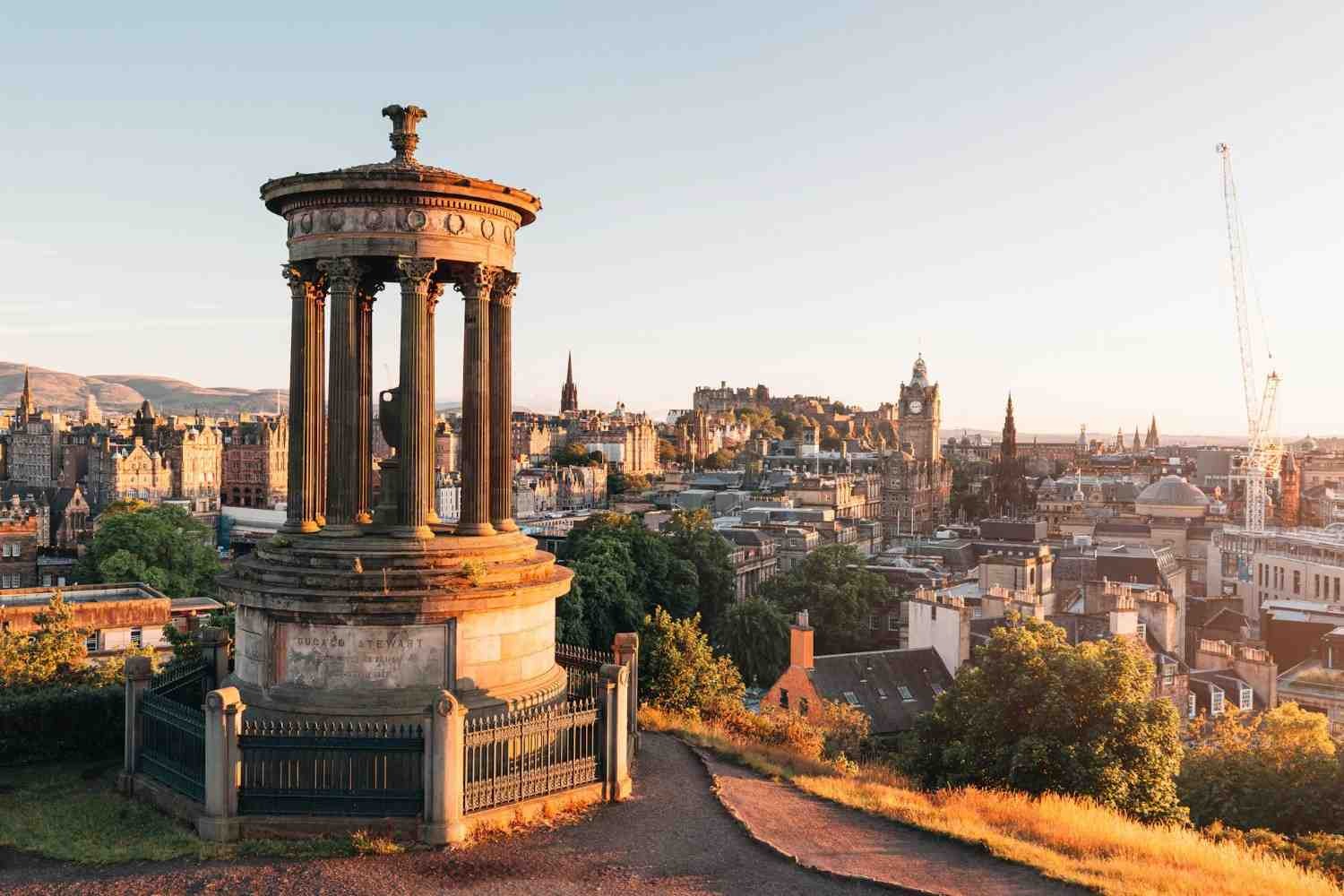
Edinburgh in August is electric. The city transforms into the world’s arts capital, hosting the famous Fringe Festival and the International Festival simultaneously. The cobbled streets of the Royal Mile are packed with street performers, tourists, and locals, creating a buzzing atmosphere that feels like a month-long party. While busy, the energy is infectious and unique to this specific month.
Beneath the festival frenzy, Edinburgh has a deeply layered cultural identity that rewards curious visitors. This is a city shaped by Enlightenment thinkers, literary giants like Robert Burns and Sir Walter Scott, and a proud Celtic heritage that still pulses through its music sessions in traditional pubs.
Scots are famously warm and direct: don’t be surprised if a stranger strikes up a genuine conversation. The tension between Scotland’s ancient Highland traditions and its forward-thinking, cosmopolitan outlook gives the city a fascinating dual character. This is most visible in August when the whole world arrives and Edinburgh opens its arms wide.
Top Things to Do
1. Experience the Fringe Festival
The world’s largest arts festival takes over the city for most of August. You can see comedy, theater, dance, and circus acts in venues ranging from grand theaters to the back rooms of pubs. Many shows are free or “pay what you want.”
2. Watch the Royal Edinburgh Military Tattoo
Held on the esplanade of Edinburgh Castle, this spectacular show features military bands from around the world. The combination of bagpipes, drums, and fireworks against the backdrop of the illuminated castle is unforgettable.
3. Hike Arthur’s Seat
Escape the festival crowds by hiking up this ancient volcano. It offers panoramic views of the city and the Firth of Forth. It’s a great spot to get some fresh air and perspective on the bustling city below.
4. Explore the Royal Mile
Walk from the Castle down to Holyrood Palace. During August, this street is the heart of the festival action, with hundreds of performers vying for attention. It’s chaotic, loud, and incredibly fun.
5. Visit the National Museum of Scotland
If you need a break from the noise or the occasional Scottish rain shower, this museum offers fascinating exhibits on everything from Scottish history to science and technology. It’s free and centrally located.
Don’t Leave Without…
Trying haggis, neeps, and tatties at a traditional pub. If that sounds too adventurous, go for a deep-fried Mars bar – a local novelty.
Also, catch a spontaneous street performance on the Royal Mile; sometimes the best shows aren’t the ones you buy tickets for.
RV Practical Info
- Road Conditions: City center traffic is heavy and slow during the festival. Avoid driving the RV into the Old Town.
- Parking: Use park-and-ride facilities like Ingliston or Straiton. Parking in the center is expensive and scarce.
- Campsites: Mortonhall Caravan & Camping Park is a popular choice with good bus links to the city. Book months in advance for August.
- Wild Camping: Scotland allows wild camping, but restrictions apply near Loch Lomond and in busy areas. Always follow the “Leave No Trace” code.
Who Is It Best For?
- Culture Vultures: Nowhere else offers this density of arts and performance.
- Families: Kids love the street performers and family-friendly shows.
- History Buffs: The castle and historic streets are stunning, even amidst the festival.
Recommended Budget
€120–€180 per person/day. Here are the estimated costs:
- Accommodation: €50–80 (campsites inflate prices in August).
- Meals: €30–50.
- Activities: €20–50 (tickets add up).
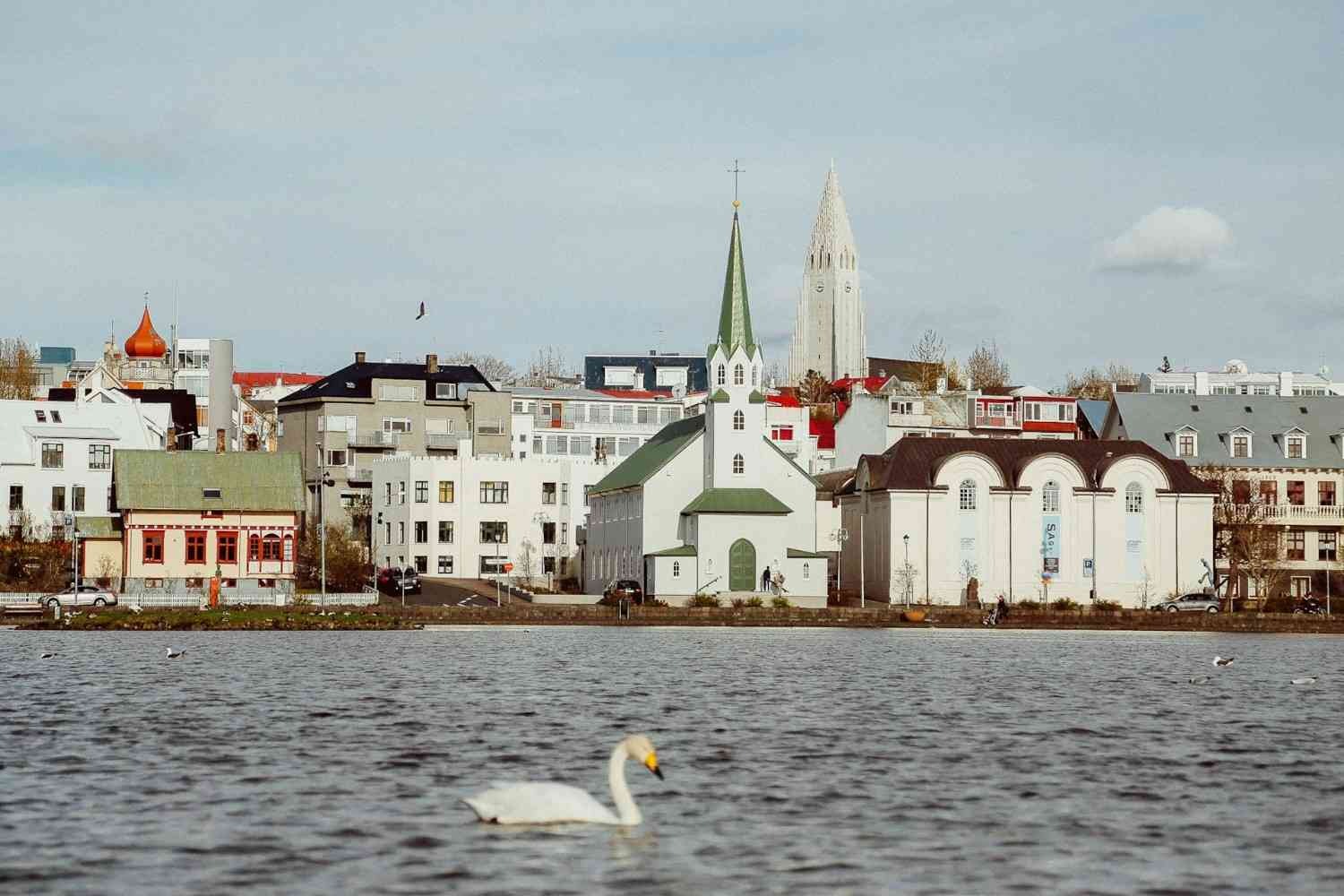
2. Reykjavik & The Ring Road, Iceland
The Vibe
August in Iceland is mild and green. It’s the tail end of summer, meaning the days are still long, but the midnight sun is starting to fade. Towards the end of the month, you might even catch the northern lights making their first enthusiastic appearance.
The vibe in Iceland during August is adventurous and raw. This is the perfect time for road trips, as all mountain roads (F-roads) are open, granting access to the wild and stunning interior highlands.
Culturally, Iceland punches far above its weight for a nation of just 370,000 people. Reykjavik stands out as a creative and artistic hub. Its streets are adorned with bold murals, its record stores and indie music venues are legendary, and the country has produced internationally acclaimed artists and authors at an almost implausible rate.
Icelanders have a deep connection with their folklore. Stories of the “hidden people” (Huldufólk) are still part of the cultural fabric and are not entirely dismissed even today. There’s also a strong egalitarian social culture here – people are informal, titles are rarely used, and even the President can be found grocery shopping without a security detail.
This unpretentious, community-first attitude gives Iceland a unique charm. Traveling here feels genuinely different from anywhere else in Europe.
Top Things to Do
1. Drive the Ring Road
This iconic route circles the entire island, connecting major sights like Skógafoss waterfall and the Jökulsárlón glacier lagoon. In August, the driving conditions are ideal, with no snow or ice on the main road.
2. Whale Watching in Húsavík
Head north to the whale-watching capital of Europe. August is a prime month to spot humpback, minke, and blue whales feeding in the bay. The success rate for sightings is very high.
3. Hike in Landmannalaugar
Accessible only in summer, this highland area is famous for its colorful rhyolite mountains and natural hot springs. You need a 4×4 camper or a bus transfer to get here, but the hiking trails are world-class.
4. Soak in the Blue Lagoon or Sky Lagoon
Relax in geothermal waters. While the Blue Lagoon is famous, the newer Sky Lagoon near Reykjavik offers a stunning infinity edge looking out over the ocean. It’s a perfect way to end a hiking trip.
5. Explore the Golden Circle
Visit Þingvellir National Park, the Geysir geothermal area, and Gullfoss waterfall. These are close to Reykjavik and can be done in a single day loop.
Don’t Leave Without…
Eating a hot dog from Bæjarins Beztu Pylsur in Reykjavik. It’s an institution. Also, take a dip in a local public swimming pool; it’s where Icelanders socialize, and every town has one.
RV Practical Info
- Road Conditions: Main roads are excellent. F-roads (highlands) require a 4×4 vehicle.
- Campsites: You must camp in designated campsites; wild camping is illegal with a vehicle. The Camping Card can save money.
- Weather: Be prepared for anything. Wind and rain can happen even in August.
- Safety: Always check road.is and safetravel.is for weather warnings before setting out each day.
Who Is It Best For?
- Nature Lovers: The landscapes are unlike anywhere else on Earth.
- Adventure Seekers: Hiking glaciers and volcanoes is accessible.
- Road Trippers: The Ring Road is a bucket-list drive.
Recommended Budget
€130–€200 per person/day. Here are the estimated costs:
- Accommodation: €40–60 (campsite fees per person).
- Meals: €40–60 (food is expensive; cook in your RV).
- Fuel: High costs due to distances covered.
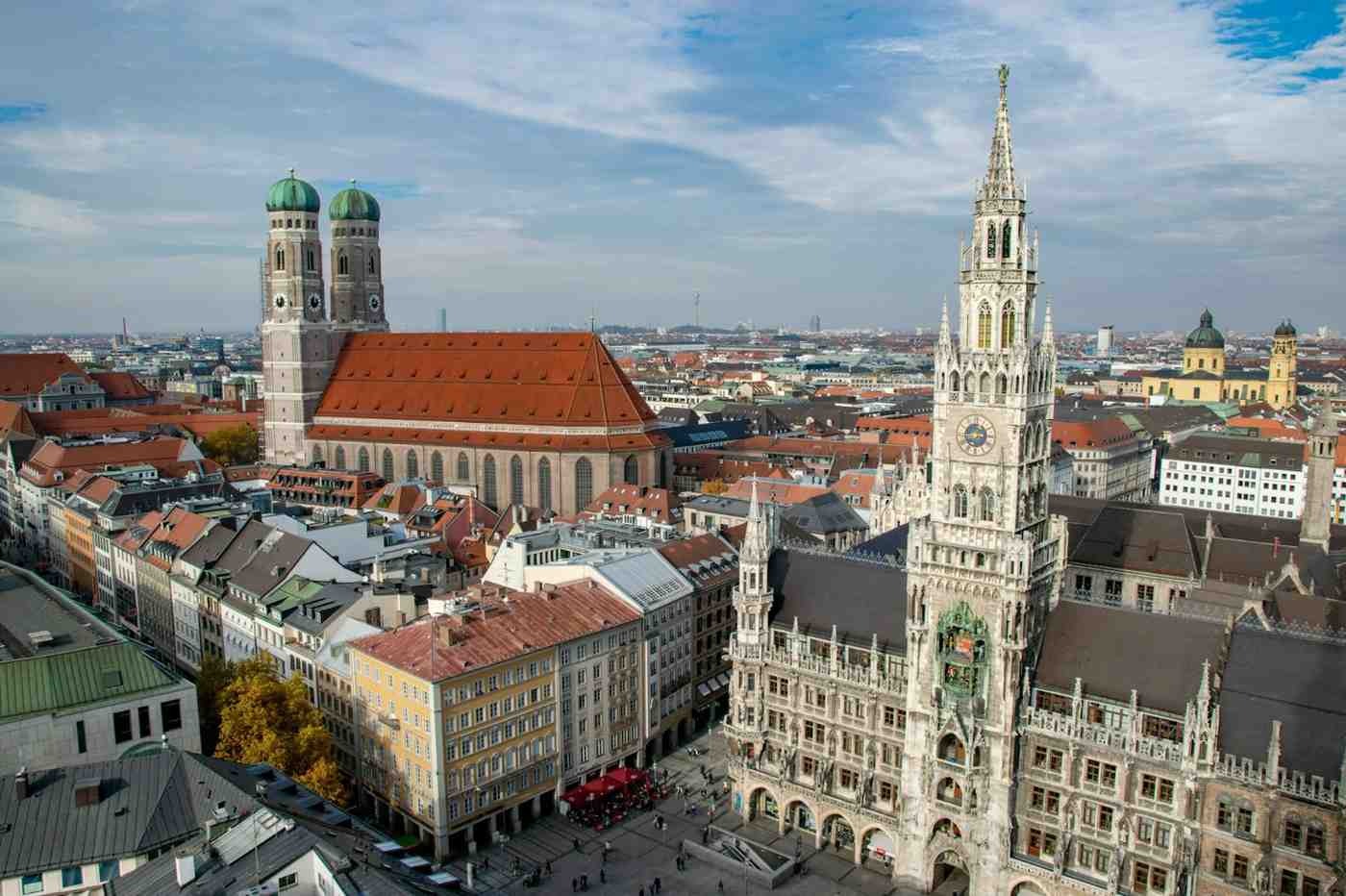
3. Munich, Germany
The Vibe
Munich in August is surprisingly relaxed. Many locals are away on holiday, leaving the city’s beer gardens and parks to visitors who enjoy the warm, sunny weather. The vibe is one of “Gemütlichkeit” – coziness and good cheer. It’s a fantastic urban stop where you can surf a river wave in the morning and drink a liter of beer under a chestnut tree in the afternoon.
Munich is the cultural capital of Bavaria, and that distinction matters – Bavarians are fiercely proud of their regional identity, which is quite distinct from the broader German one. This pride shapes the city’s character and makes it unique within Germany.
This is a city of world-class museums, including the Deutsches Museum, the largest science and technology museum on Earth, and the Pinakothek trio of art galleries. Munich also boasts a thriving classical music scene and a history of artistic patronage stretching back centuries.
Yet Munich never feels stuffy. The same city that hosts the opera also hosts the Eisbach surfers. It’s Catholic in tradition, convivial in spirit, and obsessively well-organised – a combination that somehow produces a place that feels both civilised and joyfully unpretentious at the same time.
Top Things to Do
1. Surfing the Eisbach Wave
Watch surfers tackle the standing wave at the entrance to the English Garden. It’s a unique spectacle in the middle of a landlocked city. Experienced surfers can join the queue.
2. Relax in the English Garden
This massive park is larger than New York’s Central Park. Locals gather here to sunbathe (sometimes nude in designated areas), play sports, and swim in the cool streams. It’s the city’s summer living room.
3. Visit a Beer Garden
Head to the Chinesischer Turm (Chinese Tower) or the Augustiner-Keller. Bring your own food (it’s allowed in the self-service areas) and buy fresh beer from the tap. It’s a quintessential Bavarian experience.
4. Explore Marienplatz and the Glockenspiel
See the heart of the city and watch the famous clock chimes re-enact historical stories. The surrounding streets are great for shopping and admiring architecture.
5. Nymphenburg Palace
Walk through the sprawling palace grounds and see how Bavarian royalty lived. The park is beautiful in August, with fountains running and gardens in full bloom.
Don’t Leave Without…
Eating a “Steckerlfisch” (grilled fish on a stick) at a beer garden or festival. It’s a delicious, smoky summer treat.
RV Practical Info
- Low Emission Zone: Munich has a strict environmental zone (Umweltzone). Ensure your RV has the green sticker to enter the city center.
- Parking: Park at the Allianz Arena or designated P+R lots on the outskirts and take the U-Bahn (subway) in.
- Campsites: Campingplatz Thalkirchen is located near the river and the zoo, with good transit links to the center. It gets busy, so arrive early.
Who Is It Best For?
- Beer Enthusiasts: The beer garden culture is at its peak.
- Urban Surfers: The Eisbach is legendary.
- Relaxed Travelers: It’s a major city that doesn’t feel stressful in August.
Recommended Budget
€90–€140 per person/day. Here are the estimated costs:
- Accommodation: €30–50.
- Meals: €30–50.
- Transport: €10–15.
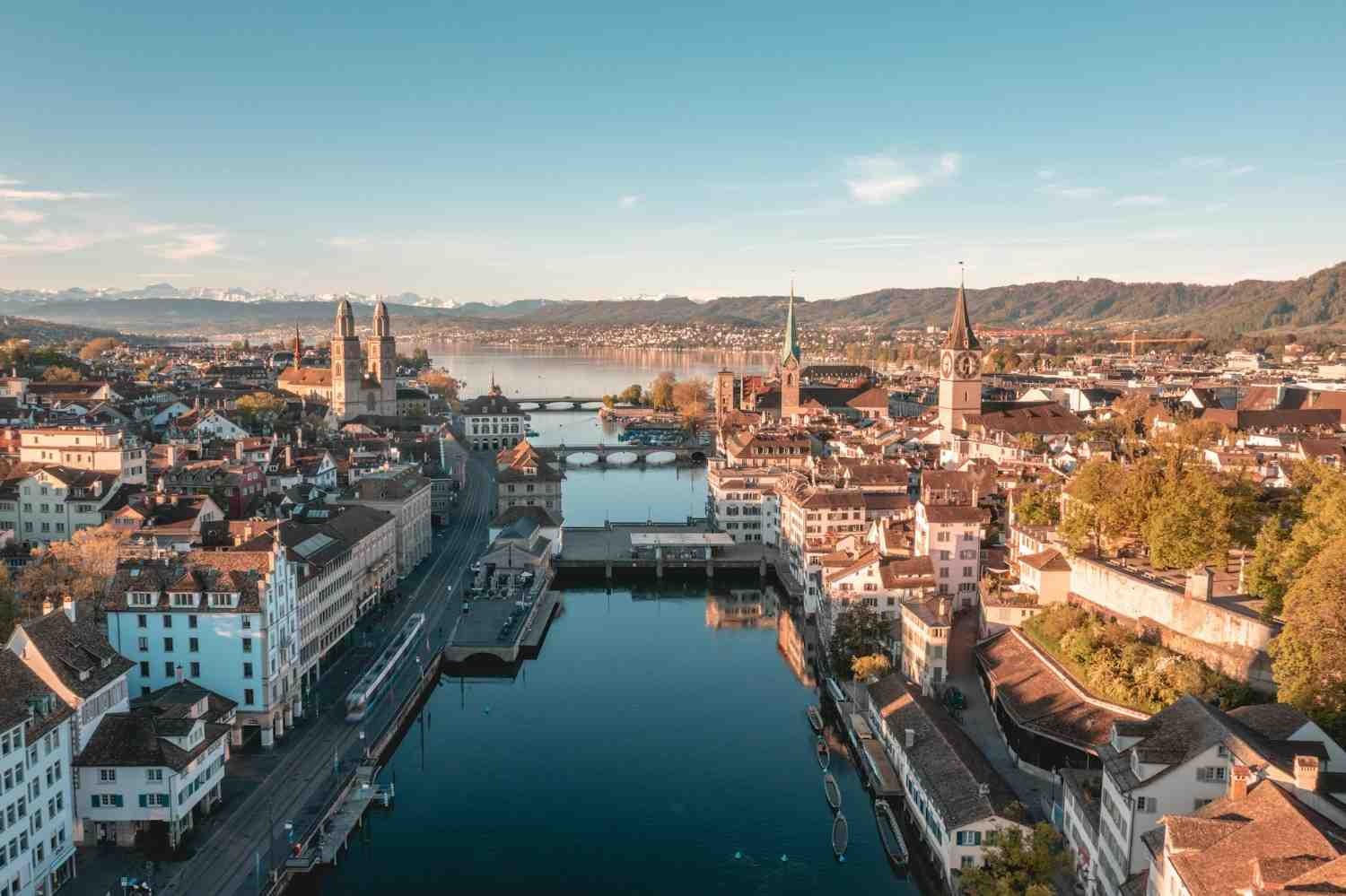
4. Zurich & The Swiss Alps, Switzerland
The Vibe
Zurich in August is all about the water. The city sits on a lake and a river, and the locals treat both like a giant swimming pool. The vibe is sophisticated yet active. The weather is generally warm and sunny, perfect for combining city culture with alpine hiking nearby. It’s an ideal starting point for a road trip into the mountains to escape the heat.
Despite its reputation as a global banking hub, Zurich has a surprisingly rich and eclectic cultural soul. It was the birthplace of the Dada art movement, and the city still has a strong avant-garde undercurrent visible in its independent galleries, live music venues, and vibrant LGBTQ+ scene.
The Langstrasse neighbourhood, once considered rough around the edges, is now one of Europe’s coolest urban districts, packed with bars, street art, and independent restaurants. Zurich also has over 50 museums for a city of fewer than 450,000 people – a remarkable density.
Swiss culture here values precision and quality, but August strips away some of that formality. Locals pour into the streets, the Badis, and the parks, and the city feels genuinely alive in a way that surprises many first-time visitors.
Top Things to Do
1. Swim in a “Badi”
Zurich’s “Badis” are open-air river and lake baths. By day, they are for swimming and sunbathing; by night, many turn into open-air bars (Barfussbar). Frauenbadi is historic and beautiful.
2. Hike Uetliberg
Take the train or hike up Zurich’s home mountain for a view over the city, the lake, and the distant Alps.
It’s an easy escape to nature right on the city’s doorstep.
3. Street Parade
If you visit in mid-August (check dates, usually the second Saturday), you might catch the Street Parade, the world’s largest techno party.
It’s loud, colorful, and massive.
4. Day Trip to Rhine Falls
Drive your RV north to see Europe’s largest waterfall.
In August, the water flow is strong, and you can take a boat ride to the rock in the middle of the falls.
5. Explore the Old Town (Altstadt)
Wander the medieval streets on both sides of the Limmat river.
Visit the Grossmünster church and window shop along the Bahnhofstrasse.
Don’t Leave Without…
Eating Luxemburgerli macaroons from Sprüngli. They are lighter and airier than their French counterparts.
Also, drinking from the city’s 1,200 fountains – the water is clean and cold.
RV Practical Info
- Tolls: You need a vignette (sticker) to drive on Swiss motorways. It costs 40 CHF.
- Driving: Mountain passes are open and beautiful, but can be narrow. Drive carefully.
- Camping: Fischers Fritz is a campsite right on Lake Zurich, offering a cool vibe and a great restaurant.
- Costs: Switzerland is expensive. Cooking in your RV helps manage the budget significantly.
Who Is It Best For?
- Hikers: Easy access to world-class trails.
- Swimmers: The lake culture is fantastic.
- Luxury Travelers: Even camping feels upscale here.
Recommended Budget
€140–€200 per person/day. Here are the estimated costs:
- Accommodation: €50–80.
- Meals: €50–80 (dining out is pricey).
- Activities: €20–40.
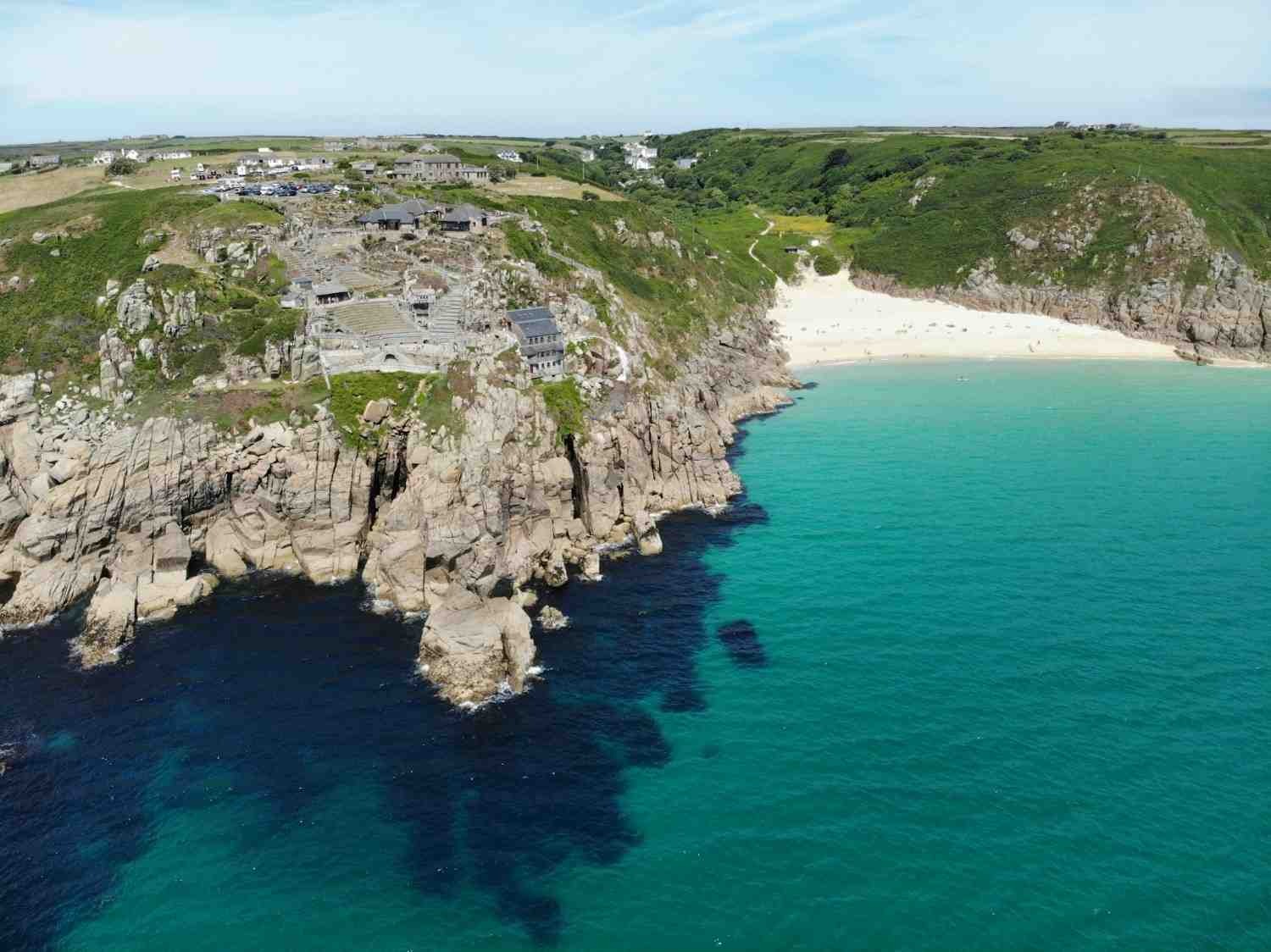
5. Cornwall (Newquay), UK
The Vibe
Cornwall in August is the UK’s California. It’s a top surf destination, with laid-back towns, dramatic cliffs, and golden beaches. The vibe is busy but happy, filled with families and surfers. The Boardmasters Festival in Newquay brings music and surf pros together, creating an energetic peak to the summer. It’s one of the best places to visit in Europe in August for beach lovers who don’t want blistering Mediterranean heat.
But Cornwall is more than just a pretty coastline – it’s a place with its own distinct cultural identity stretching back thousands of years. The Cornish are a Celtic people with their own language (Kernewek), which is actively being revived, and a strong sense of being separate from the rest of England.
This unique identity shows in everything from local food to a thriving arts scene, especially in the fishing villages of St Ives and Mousehole. These spots have attracted painters and sculptors since the early 20th century, and the Tate St Ives gallery is a world-class detour.
There’s also a deep maritime heritage here. Smuggling stories, tin mining history, and seafaring traditions are woven into the landscape and local consciousness. Spend a little time beyond the beaches, and you’ll find Cornwall rewards curiosity in ways the average summer tourist never discovers.
Top Things to Do
1. Surf at Fistral Beach
This is the home of British surfing. Rent a board or take a lesson.
The waves are consistent, and the atmosphere is iconic.
2. Visit the Eden Project
Explore massive biomes housing the world’s largest indoor rainforest.
It’s an architectural marvel and a great educational stop, located in a reclaimed china clay pit.
3. Walk the South West Coast Path
You don’t have to do the whole thing.
Just pick a section near Bedruthan Steps or Tintagel for breathtaking views of the Atlantic crashing against the rocks.
4. Eat a Cornish Pasty
Grab a traditional pasty (meat and veg in pastry) from a bakery.
It’s the ultimate portable lunch for a day on the coast. Beware of seagulls – they will try to steal it!
5. St Michael’s Mount
Walk across the causeway at low tide to this castle-topped island near Penzance.
It looks like something out of a fairytale.
Don’t Leave Without…
Trying a cream tea.
Remember the local rule in Cornwall: jam first, then clotted cream on your scone (In neighboring Devon, they do it the other way around!).
RV Practical Info
- Roads: Cornish lanes are notoriously narrow and often lined with high hedges. Take your time, especially in a larger motorhome.
- Parking: Beach car parks fill up by 10 AM in August. Arrive early or park further out.
- Camping: There are hundreds of campsites, from basic fields to luxury parks. Trevornick Holiday Park is well-regarded and near Holywell Bay.
- Booking: Essential to book campsites months in advance for August.
Who Is It Best For?
- Surfers: The best waves in the UK.
- Families: Classic beach holiday destination.
- Road Trippers: The coastal drives are stunning.
Recommended Budget
€100–€150 per person/day. Here are the estimated costs:
- Accommodation: €40–60.
- Meals: €30–50.
- Activities: €20–40 (surf lessons, entry fees).
6. Amsterdam, The Netherlands
The Vibe
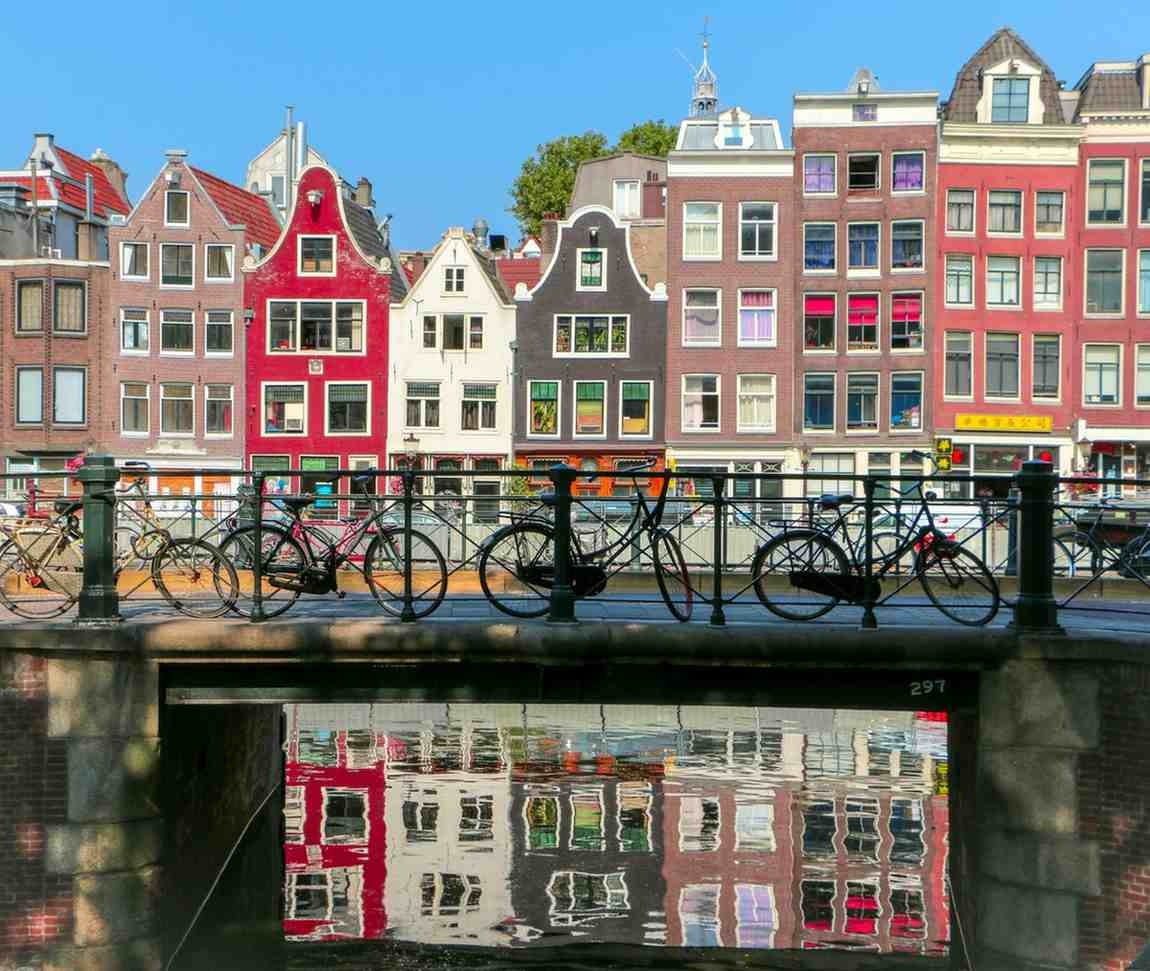
Amsterdam in August is lively and sun-drenched, by Dutch standards at least. The city’s famous canal terraces are packed with locals and visitors soaking up the warmth. The parks, especially Vondelpark, become sprawling outdoor living rooms where musicians, picnickers, and cyclists mingle freely. The weather is pleasant without being overwhelming, and the long evenings mean there’s always time for one more drink by the water.
Amsterdam’s cultural identity is built on a centuries-old tradition of tolerance, trade, and radical openness. This was the city that sheltered religious refugees, published banned books, and built a global trading empire. That spirit of pragmatic liberalism still defines everyday life here.
It’s also one of Europe’s great art cities. Rembrandt, Vermeer, and Van Gogh all have deep roots here, and the Rijksmuseum and Van Gogh Museum are genuinely world-class.
But Amsterdam is far from stuffy. It’s a city of diverse neighborhoods – from the historic Jewish Quarter to the charming Jordaan and the post-industrial NDSM Wharf – each with its own unique personality. Locals cycle everywhere, often with children, dogs, and shopping on board. The humble bicycle is the true symbol of the city’s no-nonsense, egalitarian culture.
Top Things to Do
1. Cycle the Canal Ring
Rent a bike on day one and don’t stop. The UNESCO-listed canal ring is best explored on two wheels, weaving between houseboats, bridges, and flower stalls. It’s also simply the most efficient way to get around – locals will quietly judge you for taking a taxi.
2. Visit the Rijksmuseum and Van Gogh Museum
These two museums sit side by side in Museumplein and are arguably the finest art museums in Northern Europe. Book tickets well in advance for August – queues without a booking can be brutal.
3. Explore the Jordaan Neighbourhood
This former working-class district is now Amsterdam’s most charming quarter, filled with independent galleries, boutiques, and brown cafés (bruine kroegen). It’s the ideal place to escape the tourist trail and find a quiet beer.
4. Take a Canal Boat at Sunset
Skip the daytime group tours and rent a small electric boat for the evening. The canals at golden hour, lined with gabled houses and weeping willows, are something genuinely magical.
5. Day Trip to Haarlem or Keukenhof
Haarlem is just 20 minutes by train and feels like Amsterdam without the crowds – a beautiful historic city in its own right. Note: Keukenhof gardens are closed in August (they’re a spring attraction), but the wider flower-growing region around Lisse is still worth a drive-through.
Don’t Leave Without…
Eating a raw herring (haring) with diced onion from a street stall. It sounds intimidating, but it’s delicious and deeply local. Hold it by the tail, tilt your head back, and commit.
RV Practical Info
- Driving: Do not drive an RV into central Amsterdam. The narrow streets, low bridges, and aggressive cycling traffic make it genuinely dangerous and stressful.
- Parking: Use large P+R facilities on the city outskirts (Amsterdam ArenA, Sloterdijk) and take the metro or tram in.
- Campsites: Camping Zeeburg sits on an island between the city and the IJmeer lake – it’s quirky, well-located, and popular with younger travellers. Book ahead.
- Canals: Many roads alongside canals have no barriers. Take extreme care when parking near water, especially at night.
Who Is It Best For?
- Cyclists and active travellers who want an urban base.
- Art and culture lovers.
- Families comfortable navigating a busy city on bikes.
Recommended Budget
€120–€170 per person/day. Here are the estimated costs:
- Campsite fees: €45–70 (Camping Zeeburg is the most convenient option but fills up fast in summer – book well ahead).
- Meals: €35–55.
- Activities/Transport: €20–45.
7. Barcelona, Spain
The Vibe
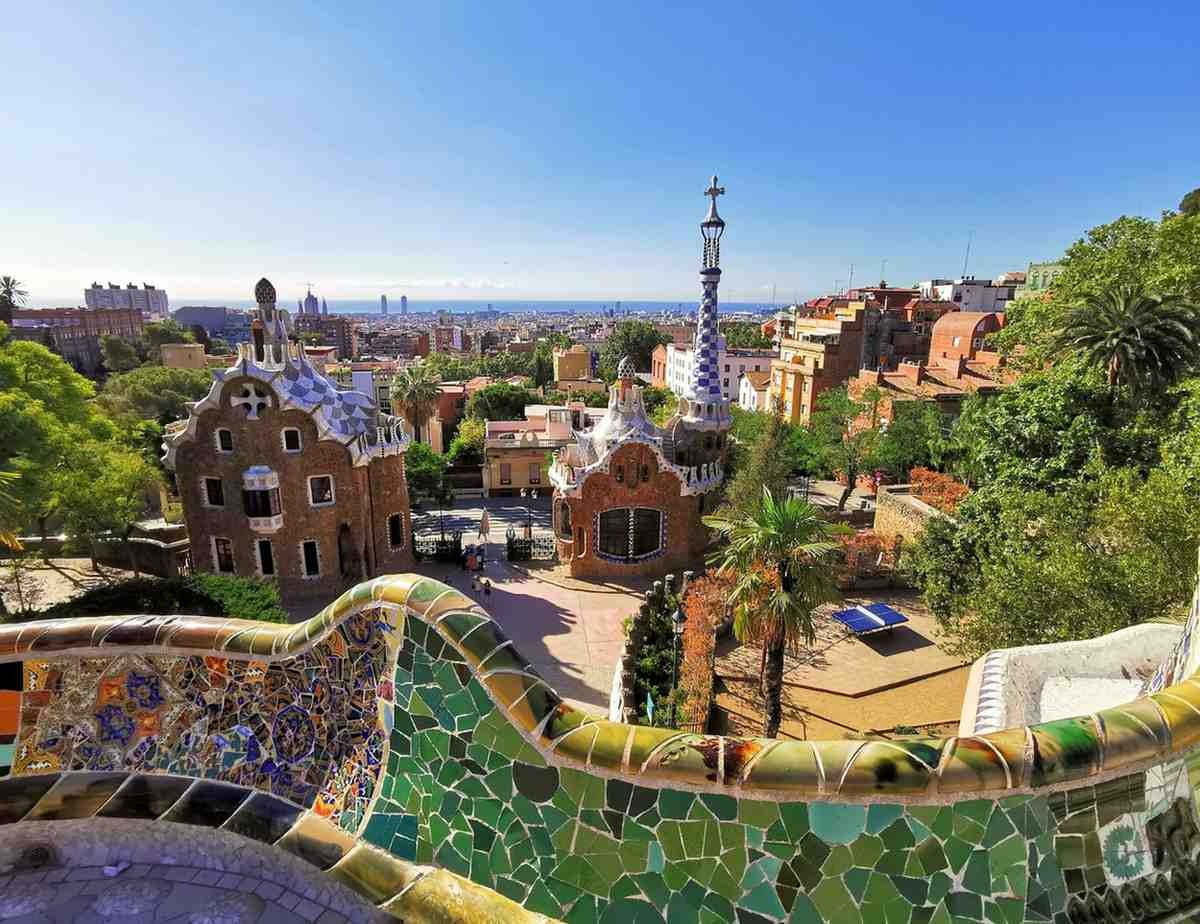
Barcelona in August is hot, hedonistic, and endlessly energetic. Much of the city’s population flees for the coast, which actually makes the city’s neighbourhoods – particularly the Gothic Quarter and Gràcia – feel more navigable than in the shoulder season. The beaches are busy from morning to midnight, the rooftop bars are electric, and the Mediterranean light gives everything a warm, almost cinematic glow. Evenings start late here; dinner before 9 PM marks you out as a tourist instantly.
Barcelona is a city with a dual identity that it wears proudly. It is simultaneously a great Spanish metropolis and the capital of Catalonia – a nation within a nation, with its own language, traditions, and political consciousness. This tension gives the city an intellectual and creative energy that has made it one of Europe’s great cultural engines.
Architecture alone makes it extraordinary: Antoni Gaudí’s buildings – the Sagrada Família, Park Güell, Casa Batlló – are unlike anything else on Earth, the product of a deeply idiosyncratic genius rooted in Catalan Modernisme. Barcelona also has a world-class food scene, from its legendary Boqueria market to its constellation of Michelin-starred restaurants, and a music scene ranging from classical at the Palau de la Música to cutting-edge electronic clubs in Poblenou.
Top Things to Do
1. Visit the Sagrada Família
Gaudí’s unfinished basilica is one of the most extraordinary buildings in the world. Even after more than 140 years of construction, it still surprises. Book tickets and a time slot weeks in advance – turning up without one in August is a wasted trip.
2. Walk Las Ramblas and the Gothic Quarter
Las Ramblas is touristy, yes – but the Gothic Quarter behind it is a medieval labyrinth worth getting lost in. Look beyond the souvenir shops and find the Roman ruins, hidden plazas, and neighbourhood bars.
3. Hit Barceloneta Beach (Early)
The city beach is lively and well-serviced, but it gets extremely crowded by midday. Arrive by 9 AM to secure a spot, or head to the less-visited beaches north of the city like Bogatell or Mar Bella.
4. Explore the Eixample Neighbourhood
This grid-planned district is home to most of Gaudí’s other major works – Casa Batlló, Casa Milà (La Pedrera) – as well as Barcelona’s best food and fashion. The modernista architecture on virtually every block makes an aimless walk here deeply rewarding.
5. Day Trip to Montserrat
Drive or take the rack railway up to this dramatic mountain monastery rising above the plains. The hiking trails offer extraordinary views, and the basilica houses a revered statue of the Black Madonna.
Don’t Leave Without…
Eating pan con tomate – bread rubbed with tomato, garlic, and olive oil. It sounds deceptively simple, but done well it is one of the great pleasures of Catalan cuisine, and forms the base of almost every meal.
RV Practical Info
- Low Emission Zone: Barcelona has a ZBE (Zona de Baixes Emissions). Check whether your vehicle complies before entering the city.
- Parking: Overnight RV parking in the city is very limited. Use designated motorhome areas on the outskirts.
- Campsites: Camping Tres Estrellas and Camping Barcelona are located south of the city near Castelldefels beach, with good transport links. Book far in advance.
- Heat: August temperatures regularly exceed 30°C. Ensure your RV has adequate ventilation or air conditioning.
Who Is It Best For?
- Architecture enthusiasts – nowhere else compares.
- Beach lovers who also want serious culture.
- Foodies willing to eat on Spanish time.
Recommended Budget
€110–€160 per person/day. Here are the estimated costs:
- Campsite fees: €35–60 (sites like Camping Tres Estrellas near Castelldefels are popular and need to be booked far in advance for August).
- Meals: €35–55.
- Activities: €25–50 (Gaudí sites have fixed entry fees that add up across a stay).
8. Vienna, Austria
The Vibe
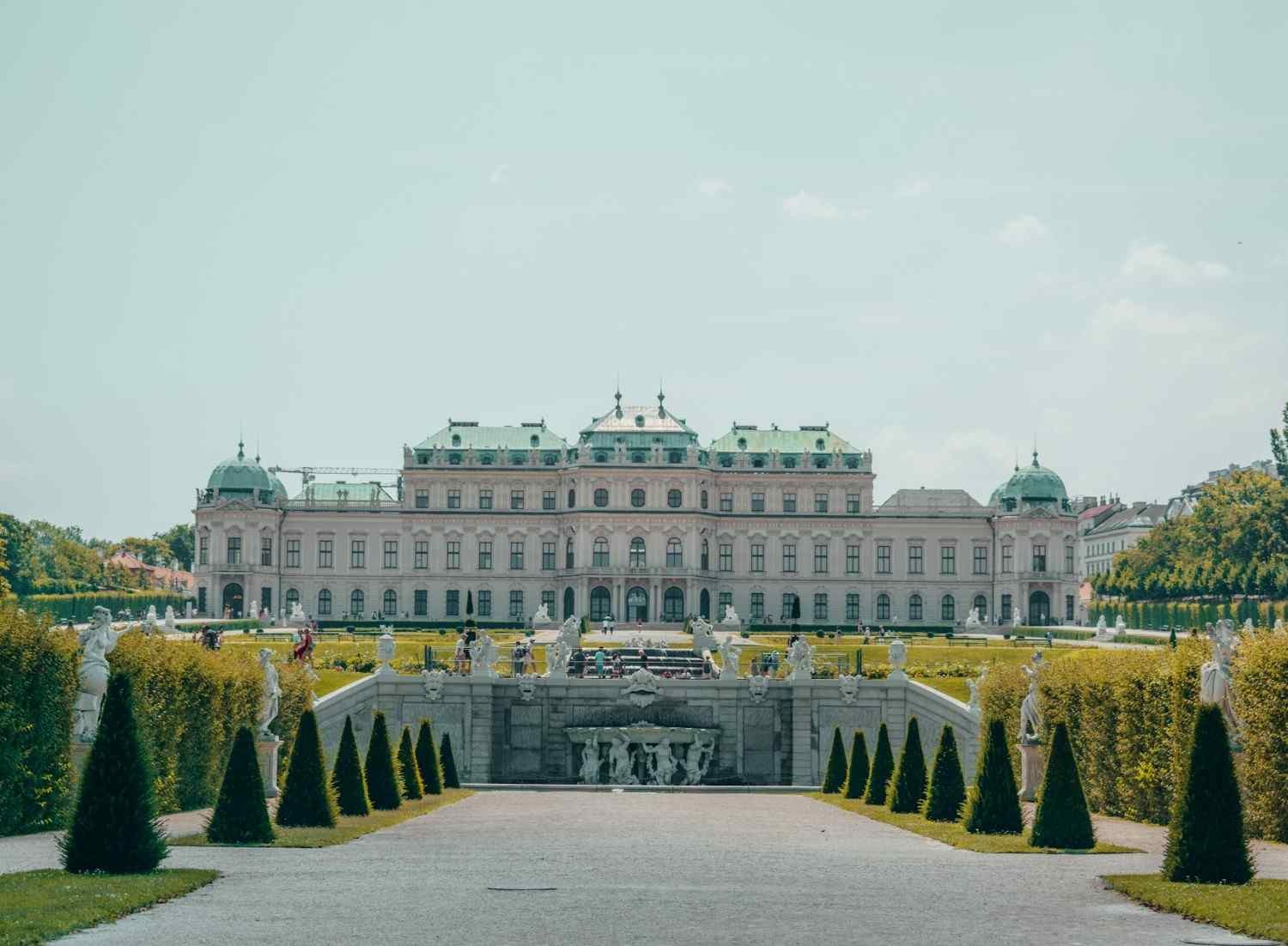
Vienna in August is warm, gracious, and surprisingly uncrowded relative to its size. Many Viennese head to the lakes or mountains in summer, leaving behind a city that feels pleasantly open. The grand boulevards, imperial palaces, and sprawling parks take on a golden quality in the summer light.
The café culture – which Viennese treat as practically a human right – is at its most enjoyable when you can sit outside under a chestnut tree with a Melange and a slice of Apfelstrudel and watch the world pass by.
Vienna has one of the densest cultural CVs of any city on Earth. It was the capital of the Habsburg Empire for six centuries, and that legacy is visible in every ornate facade, every gilded concert hall, and every meticulously maintained garden.
Mozart, Beethoven, Schubert, Brahms, and Mahler all lived and worked here. Klimt, Schiele, and the Secession movement revolutionised art from these streets. Freud developed psychoanalysis in a flat you can still visit.
Yet Vienna is not merely a museum of its past. It has a thriving contemporary arts scene, one of Europe’s best restaurant cultures (including a Naschmarkt that is a destination in itself), and a coffee house tradition that UNESCO has recognised as an Intangible Cultural Heritage.
The Viennese relationship with death and melancholy – famously captured in the concept of Wiener Schmäh – gives even the most elegant moments here an undercurrent of ironic self-awareness.
Top Things to Do
1. Schönbrunn Palace and Gardens
The Habsburg summer residence is spectacular and the gardens are free to wander. Come in the evening for the best light and far fewer crowds than during the midday peak.
2. Vienna State Opera or Open-Air Screenings
The main opera season pauses in August, but the Wiener Staatsoper broadcasts free opera and ballet screenings on a giant outdoor screen on Karajan-Platz – one of the great free cultural experiences in Europe.
3. Visit the Kunsthistorisches Museum
One of the finest art history museums in the world, housing the Habsburg imperial collections – Bruegel, Velázquez, Vermeer, and Cellini’s famous salt cellar. A full day here barely scratches the surface.
4. Prater Park and the Riesenrad
The vast Prater park is the city’s green lung, perfect for cycling. The 1897 Riesenrad (giant Ferris wheel) offers iconic views over the city. The surrounding Wurstelprater funfair is brilliantly old-fashioned and fun for families.
5. Swim at the Old Danube (Alte Donau)
Vienna’s locals don’t go to the beach – they go to the Alte Donau, a calm oxbow lake on the edge of the city with bathing beaches, paddleboard rentals, and lakeside restaurants. It’s a wonderful, very local way to spend a hot August afternoon.
Don’t Leave Without…
Sitting in a traditional Viennese coffee house – Café Central, Café Landtmann, or the atmospheric Café Hawelka – and ordering a Melange (a coffee with milk) and a piece of Sachertorte. Linger as long as you like; no one will rush you. That’s the whole point.
RV Practical Info
- Vignette: Austria requires a motorway toll sticker. Purchase online before arrival or at border crossings and petrol stations.
- Parking: Drive to park-and-ride facilities on the U-Bahn lines. The Vienna U-Bahn is excellent and runs until the early hours.
- Campsites: Camping Wien West and Camping Neue Donau are the two main options, both well-connected to the centre by public transport.
- City Driving: The Ringstrasse is manageable, but the inner city (Innere Stadt) is largely restricted. Stick to public transport once parked.
Who Is It Best For?
- Classical music and art lovers.
- History buffs fascinated by imperial Europe.
- Travellers who want a slow, café-paced city break.
Recommended Budget
€110–€160 per person/day. Here are the estimated costs:
- Campsite fees: €35–55 (Camping Wien West and Camping Neue Donau are both well-connected to the centre by U-Bahn).
- Meals: €35–55.
- Activities: €25–50 (several major museums and the outdoor opera screenings are free, which helps the budget considerably).
9. Copenhagen, Denmark
The Vibe
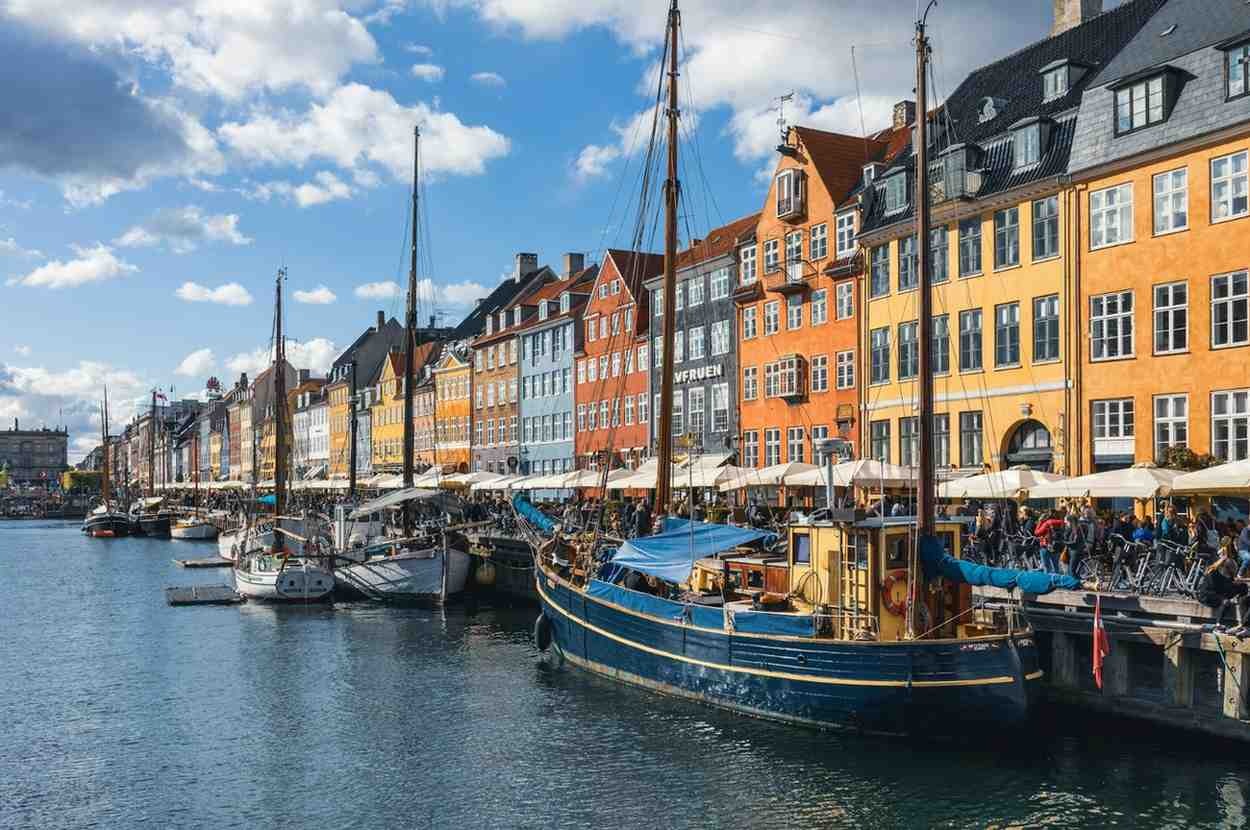
Copenhagen in August is about as good as Northern European city life gets. The days are long, the light is extraordinary – that famous Nordic clarity that makes everything look slightly more beautiful than it should – and the city pours itself outside with an almost religious enthusiasm. Harbour baths fill with swimmers, rooftop bars do brisk business, and the streets around Nørrebro and Vesterbro buzz from morning to midnight. It never gets oppressively hot, making it ideal for walking and cycling for hours without wilting.
Copenhagen is the city that made “hygge” a global buzzword, but there’s far more to its cultural identity than cosy candles. This is one of the most design-conscious cities in the world. Danish design, from furniture to architecture to food presentation, has influenced aesthetics globally since the mid-20th century. You feel that obsession with considered beauty everywhere, from the signage on a bakery to the layout of a public park.
The New Nordic food movement was born here, and Copenhagen’s restaurant scene – anchored by Noma’s legacy and now expanded into hundreds of brilliant mid-range and street-food spots – is one of the world’s best.
Danes are also deeply egalitarian; the concept of Janteloven (don’t think you’re better than anyone else) shapes a social culture that is warm, informal, and refreshingly free of pretension, even in its most sophisticated spaces.
Top Things to Do
1. Explore Nyhavn
The colourful 17th-century harbour front is Copenhagen’s most photographed scene and rightly so. It’s busy in August, but genuinely beautiful – grab a beer from a kiosk, sit on the quay, and watch the boats.
2. Cycle Everywhere
Copenhagen has arguably the best cycling infrastructure in the world. Renting a bike here isn’t just transport – it’s how you understand the city. Cycle out to the Frederiksberg Gardens, down the harbour waterfront, or across the bridge to Amager Beach Park.
3. Visit Tivoli Gardens
The world’s second-oldest amusement park (opened 1843) is a magical mixture of rides, gardens, open-air concerts, and restaurants. August evenings here, with the illuminations on and live music drifting across the paths, are genuinely enchanting.
4. Swim at the Copenhagen Harbour Baths
Locals swim in the harbour – and it’s genuinely clean enough to do so. The Islands Brygge Harbour Bath is the most popular, with diving platforms and lanes. It’s a wonderfully democratic experience – suits, students, and retirees all sharing the same water.
5. Day Trip to Kronborg Castle
Drive or take the train north to Helsingør and visit the castle that inspired Shakespeare’s Elsinore in Hamlet. The surrounding coastline and the Louisiana Museum of Modern Art (on the way back) make for a brilliant full day.
Don’t Leave Without…
Eating a smørrebrød – the open-faced rye bread sandwich – at a traditional lunch restaurant. And picking up a pastry (the Danes invented what the rest of the world calls a “Danish”) from a great local bakery like Hart or Juno the Bakery.
RV Practical Info
- Driving: Copenhagen is very cycle-friendly and consequently has significant dedicated cycling infrastructure that narrows road lanes. Drive carefully and always check before opening doors.
- Parking: Use parking facilities south of the city near the metro and take the train or metro into the centre.
- Campsites: Camping Charlottenlund Nord is well-located north of the city, near a beach and with metro access. DCU Copenhagen is another solid option.
- Vignette: Denmark does not require a motorway vignette, but the Øresund Bridge to Sweden has a toll if you’re extending your trip.
Who Is It Best For?
- Design and food enthusiasts.
- Cyclists and active urban travellers.
- Families looking for a safe, clean, easy city to navigate.
Recommended Budget
€130–€185 per person/day. Here are the estimated costs:
- Campsite fees: €40–65 (Camping Charlottenlund Nord is well-located with metro access – book early as it fills quickly in August).
- Meals: €45–65 (Copenhagen is one of Europe’s pricier cities – self-catering in your RV is highly recommended for at least half your meals).
- Activities/Transport: €20–40.
10. Lisbon, Portugal
The Vibe
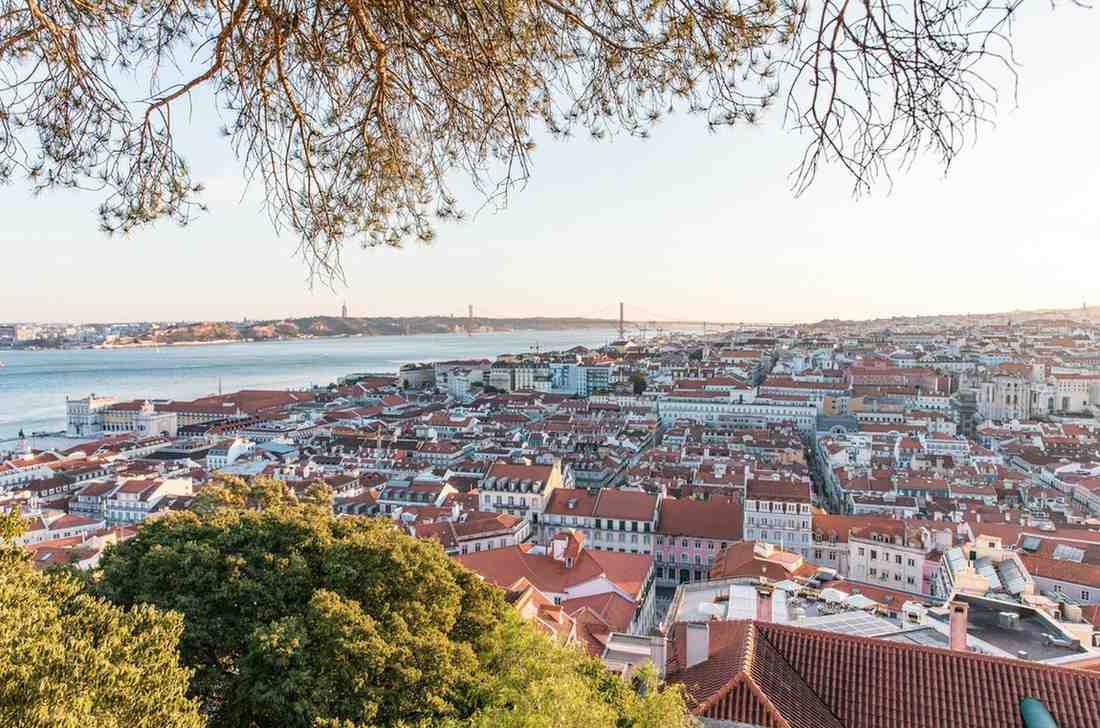
Lisbon in August is warm, bright, and deeply alive. The city sprawls across seven hills above the Tagus estuary, and the light here – reflected off the river, bouncing off terracotta rooftops and azulejo tiles – is unlike anywhere else in Europe.
Evenings are long and languid. As the temperature drops, locals gather in the Alfama and Mouraria neighbourhoods. The smell of grilled sardines drifts through the alleyways, and someone, somewhere, is always playing fado. It’s a city that moves at its own unhurried pace and rewards those who match it.
Portugal’s capital also carries a weight of history – and a particular melancholy – that shapes its entire cultural character. The Portuguese concept of saudade, an untranslatable longing for things lost or absent, is not just a poetic idea. It’s a lived emotional register that permeates fado music, literature, and everyday conversation.
Lisbon was once the centre of one of history’s great maritime empires, and the Age of Discovery is still present everywhere. You’ll see it in the Manueline stonework of the Jerónimos Monastery, in the cultural mix of the neighbourhoods, and in the azulejo tiles depicting navigators and discoveries.
Yet, modern Lisbon is also dynamic and fast-changing. There’s a booming creative scene in LX Factory, a world-class contemporary art museum (MAAT), and a food scene that has moved confidently beyond bacalhau (salted cod – though that’s still essential eating) into some of Europe’s most exciting modern cooking.
Top Things to Do
1. Explore the Alfama
Lisbon’s oldest neighbourhood tumbles down the hillside below the castle in a maze of narrow cobbled streets, miradouros (viewpoints), and old tiled houses. Get deliberately lost here in the early morning before the tour groups arrive.
2. Ride Tram 28
The iconic yellow tram rattles through the oldest and hilliest parts of the city. It’s authentically functional rather than a tourist gimmick – locals use it daily. Go early morning or late evening to avoid the worst of the August crowds.
3. Day Trip to Sintra
Drive your RV to this extraordinary UNESCO-listed town in the hills above Lisbon, home to fantasy palaces, medieval castles, and lush forest. Arrive at opening time. By midday in August, the main sites are overwhelmed with visitors.
4. Visit the Jerónimos Monastery and Belém Tower
The Manueline monastery is one of Portugal’s most spectacular buildings, built to celebrate Vasco da Gama’s voyage to India. Nearby, pick up a pastel de nata (custard tart) from Pastéis de Belém – the original since 1837 – and eat it warm, dusted with cinnamon.
5. LX Factory on a Sunday
This repurposed industrial complex hosts a brilliant Sunday market alongside permanent restaurants, bookshops, and creative studios. It’s a wonderful snapshot of contemporary Lisbon’s creative energy.
Don’t Leave Without…
Listening to live fado in a small, serious house in the Alfama. Skip the tourist restaurants with fado as background entertainment – find a smaller venue where the music is the point. The silence an audience holds during a great fado performance is one of the most powerful experiences in European music.
RV Practical Info
- Driving: Lisbon’s hills are genuinely steep, and some streets in the historic centre are extremely narrow. Avoid driving the RV into the Alfama – it’s simply not navigable.
- Parking: Use large parking areas near Parque das Nações or on the south bank (Almada) and cross by ferry – a scenic option that avoids the city traffic entirely.
- Campsites: Parque de Campismo de Lisboa is the main city campsite, located in the Monsanto park with bus links to the centre. It’s well-equipped and popular.
- Heat: Lisbon in August regularly reaches 30–35°C. Plan strenuous sightseeing for the morning, and follow the locals’ lead by resting in the early afternoon.
Who Is It Best For?
- Culture lovers drawn to music, history, and architecture.
- Food and wine enthusiasts – Portuguese cuisine is one of Europe’s most underrated.
- Travellers who want southern warmth without the frantic pace of Barcelona or Rome.
Recommended Budget
€90–€140 per person/day. Here are the estimated costs:
- Campsite fees: €30–50 (Parque de Campismo de Lisboa is the main city option, well-equipped and more affordable than most western European capitals).
- Meals: €30–50.
- Activities/Transport: €20–35.
What Should You Pack for a Europe Roadtrip in August
| Category | Items to Pack | Why You Need It |
|---|---|---|
| Clothing Layers | Lightweight rain jacket, breathable t-shirts, shorts, fleece/sweater | Weather changes fast – especially in the UK, Iceland, and mountain regions – even in the height of summer. Evenings in the Alps or Scotland can get surprisingly chilly. |
| Swimwear | Swimsuit, rash vest, quick-dry shorts | Essential for beaches in Cornwall, lake swimming in Zurich, geothermal pools in Iceland, and harbour baths in Copenhagen. |
| Footwear | Comfortable walking shoes, sandals, water shoes | August means long days on foot across cobblestones, hiking trails, and sandy beaches – your feet will thank you for variety. |
| Sun Protection | SPF 50+ sunscreen, sunglasses, wide-brim hat | The August sun is intense, especially at altitude in the Alps or near water. UV levels are higher than they feel on warm but overcast days. |
| RV Essentials | Leveling blocks, CEE power adapter (blue plug), quick-dry towels, reusable water bottle | Campsites aren’t always flat; power connections vary across Europe; tap water is safe to drink in all five destinations. |
| Insect Repellent | DEET-based spray or natural alternative | Midges are a serious nuisance in the Scottish Highlands; mosquitoes appear near lakes in Switzerland and Germany in August. |
| Cooking Gear | Spice kit, sharp knife, cutting board, reusable bags | Cooking in your RV saves significant money – especially in expensive destinations like Iceland, Switzerland, and Copenhagen. |
| Rain Gear | Compact umbrella, waterproof trousers | Sudden showers are common in the UK, Iceland, and mountainous regions even in peak summer. Don’t be caught out. |
| Maps and Apps | Offline maps (Google Maps/Maps.me), Park4Night, Campercontact, road.is (Iceland) | Essential for remote areas with poor signal – particularly the Scottish Highlands, Icelandic interior, and Alpine passes. |
| Documents and Admin | Swiss vignette (40 CHF), Austrian vignette, Green sticker for German cities (Umweltzone), European Health Insurance Card | Missing the right sticker or document at a border or city checkpoint can mean fines. Sort these before you leave. |
Start Your European Adventure with Indie Campers
August is the perfect time for an unforgettable European road trip.
Whether you’re exploring Cornwall’s scenic coast, Munich’s historic streets, or Edinburgh’s rolling hills, a campervan gives you the freedom to travel your way.
Indie Campers makes it easy to plan your adventure with modern, reliable vehicles:
- Find the perfect campervan: Choose from over 7,000 RVs, motorhomes, and campervans across Europe, North America, and Oceania – ideal for solo travelers, couples, or families.
- One-way trips: Start and finish your journey at over 70 locations, including major hubs in the UK, Spain, Italy, and beyond – no backtracking required!
- Flexible cancellation: Cancel up to 31 days before pick-up and enjoy peace of mind while planning your trip.
- Book now, pay later: Secure your booking today and pay the full balance just 30 days before your departure with our Flexible Cancellation plan.
All rentals come with unlimited mileage, 24/7 roadside assistance, a kitchenette, and bedding. Travel comfortably in your fully equipped campervan and make this August your best adventure yet.
Everything You Need to Know About Europe RV Roadtrips in August
| City | Country | Vibe | Best For | Top Things to Do | Recommended Budget/Day | Top Campgrounds & Motorhome Stops | RV-Friendly Rating | Wild Camping Allowed? | Best Place To Stay |
|---|---|---|---|---|---|---|---|---|---|
| Edinburgh | UK | Historic | Culture | Fringe, Castle | €120–180 | Mortonhall Caravan Park | ⭐⭐⭐ | Yes (Restricted) | Indie Campers RV |
| Reykjavik | Iceland | Wild | Nature | Ring Road, Whales | €130–200 | Reykjavik Campsite | ⭐⭐⭐⭐⭐ | No | Indie Campers RV |
| Munich | Germany | Relaxed | Beer/Surf | English Garden | €90–140 | Campingplatz Thalkirchen | ⭐⭐⭐⭐ | No | Indie Campers RV |
| Zurich | Switzerland | Alpine | Hiking | Lake Swim, Uetliberg | €140–200 | Fischers Fritz | ⭐⭐⭐ | No | Indie Campers RV |
| Newquay | UK | Coastal | Surf | Surfing, Eden Project | €100–150 | Trevornick Holiday Park | ⭐⭐⭐⭐ | No | Indie Campers RV |
| Amsterdam | Netherlands | Canal & Creative | Cycling/Art | Canal Boat, Rijksmuseum | €120–170 | Camping Zeeburg | ⭐⭐⭐ | No | Indie Campers RV |
| Barcelona | Spain | Vibrant & Mediterranean | Architecture/Beach | Sagrada Família, Barceloneta | €110–160 | Camping Tres Estrellas | ⭐⭐ | No | Indie Campers RV |
| Vienna | Austria | Imperial & Elegant | Culture/History | Schönbrunn, Alte Donau | €110–160 | Camping Wien West | ⭐⭐⭐⭐ | No | Indie Campers RV |
| Copenhagen | Denmark | Nordic & Design-Led | Food/Cycling | Tivoli, Harbour Baths | €130–185 | Camping Charlottenlund Nord | ⭐⭐⭐⭐ | No | Indie Campers RV |
| Lisbon | Portugal | Soulful & Sun-Drenched | Culture/Food | Alfama, Sintra, Fado | €90–140 | Parque de Campismo de Lisboa | ⭐⭐⭐ | No | Indie Campers RV |
FAQs About Where To Go in Europe in August
Where can I rent an RV in Europe in August?
You can rent an RV in Europe in August from Indie Campers, which has depots in over 70 locations including major hubs like London, Edinburgh, Munich, Zurich, and Reykjavik. Booking early for August is crucial as demand is high.
What is the best place to visit in Europe in August for couples?
The best place to visit in Europe in August for couples is the Greek Islands or the coast of Croatia, but for a cooler romantic escape, Edinburgh offers a unique festival atmosphere and cozy historic streets. Walking up Arthur’s Seat at sunset provides a memorable romantic view.
Where to go in Europe in August not too hot?
If you want to avoid the heat, head to Scandinavia (Norway, Sweden, Iceland) or the UK (Scotland, Cornwall). The Alps in Switzerland and Austria also offer cooler temperatures at higher altitudes, making them perfect for active travelers who dislike the sweltering Mediterranean heat.
What is the best place to visit in Europe in August with family?
Munich is fantastic for families in August due to its safe, clean parks, interactive museums, and the relaxed atmosphere of the English Garden. Alternatively, Cornwall in the UK offers classic beach days and family-friendly attractions like the Eden Project.
What are the best cities to visit in Europe in August?
The best cities to visit in Europe in August include Edinburgh for its world-class festivals, Munich for its outdoor summer lifestyle, and Zurich for its unique river and lake swimming culture. These cities come alive in summer with outdoor events and happy locals.