Last Updated: May 12, 2026
Key Takeaways (TL;DR)
- Why Stay in New Zealand by Campervan: New Zealand’s freedom camping culture and huge network of Department of Conservation (DOC) sites make it one of the most RV-friendly countries on earth. A campervan gets you to lakefront pitches, glacier viewpoints, and fjordland pullouts that no hotel can reach and puts you exactly where you need to be the moment the light turns golden.
- Top Places to Stay in New Zealand 2026: Queenstown, Abel Tasman, Bay of Islands, Coromandel Peninsula, Aoraki/Mount Cook, Marlborough Sounds, Rotorua, Kaikōura, Fiordland/Te Anau, Hawke’s Bay.
- Don’t Miss Overnight Experience: Waking at a DOC campsite on the shore of Lake Pukaki at 5:30 AM, stepping outside to find Aoraki/Mount Cook reflected perfectly in still, glacier-blue water, with no one else in sight for miles.
- Ideal Trip Length: 14-21 days. New Zealand’s two islands reward slow travel; rushing between must-see points wastes both fuel and the country’s strongest asset – being somewhere extraordinary overnight.
- How to Choose the Right Base: Head to the South Island if dramatic alpine and fjord landscapes are the priority. Choose the North Island for geothermal activity, Maori culture, and warmer coastal access. Combine both for a complete picture of the country.
- Recommended Budget Per Person/Night: NZD $15-55/night (approx. USD $9-33), excluding RV rental costs. DOC sites are NZD $8-21; private holiday parks with full facilities run NZD $25-55 per site.
- Watch Out For: Peak summer (December-February) and school holiday periods fill DOC sites and holiday parks fast – particularly around Queenstown, Milford Sound, and Abel Tasman. Book popular sites 4-8 weeks in advance. Freedom camping rules vary by district; check the Campermate app before stopping overnight.
- Where To Stay: An RV rental in New Zealand through Indie Campers is the most practical overnight option for the country – self-contained vehicles qualify for freedom camping at a far wider range of locations, and built-in bedding and cooking facilities mean you won’t need hotels at all.
- Best For: Road-trippers who want maximum flexibility, nature lovers chasing wild overnight locations, and first-timers who want to cover both islands at their own pace without fixed accommodation.
Table of Contents
- Where to Stay in New Zealand: The Campervan Traveler’s Guide in 2026
- Best Places to Stay in New Zealand
- What to Pack for a New Zealand RV Stay
- Final Expert Tips for Staying in New Zealand by Campervan
- Stay in New Zealand with Indie Campers
- Everything You Need to Know About Staying in New Zealand by RV
- FAQs About Where to Stay in New Zealand
Top Places to Stay in New Zealand 2026: At a Glance
| Area / Town | Island | Setting | Best For | Campsite Type | Average Temp | Nightly Cost (NZD) | Crowd Level | RV-Friendly |
| Queenstown | South | Alpine lake | Adventure & couples | Holiday parks + DOC | 12-22C | $25-55 | High | Yes |
| Abel Tasman | South | Coastal forest | Hikers & kayakers | DOC + private | 14-22C | $15-45 | High | Yes |
| Bay of Islands | North | Island-studded bay | Families & sailors | Holiday parks | 16-24C | $25-50 | Moderate | Yes |
| Coromandel Peninsula | North | Coastal & forested | Beach lovers | DOC + holiday parks | 15-23C | $15-45 | Moderate | Yes |
| Aoraki/Mount Cook | South | Alpine glacier | Stargazers & hikers | DOC (Mackenzie) | 5-18C | $15-30 | Low-Moderate | Yes |
| Marlborough Sounds | South | Drowned valleys | Cyclists & foodies | DOC + marinas | 13-21C | $15-40 | Low-Moderate | Yes |
| Rotorua | North | Geothermal plateau | Families & culture | Holiday parks | 10-21C | $25-50 | Moderate | Yes |
| Kaikōura | South | Coastal mountains | Wildlife & divers | Holiday parks + DOC | 10-20C | $15-45 | Low-Moderate | Yes |
| Fiordland/Te Anau | South | Fjord wilderness | Walkers & nature | DOC + Te Anau parks | 8-18C | $15-35 | Moderate | Yes |
| Hawke’s Bay | North | Wine country coast | Foodies & couples | Holiday parks | 12-24C | $20-45 | Low | Yes |
Best Places to Stay in New Zealand: The 2026 Guide
1. Queenstown, South Island
Why Stay Here
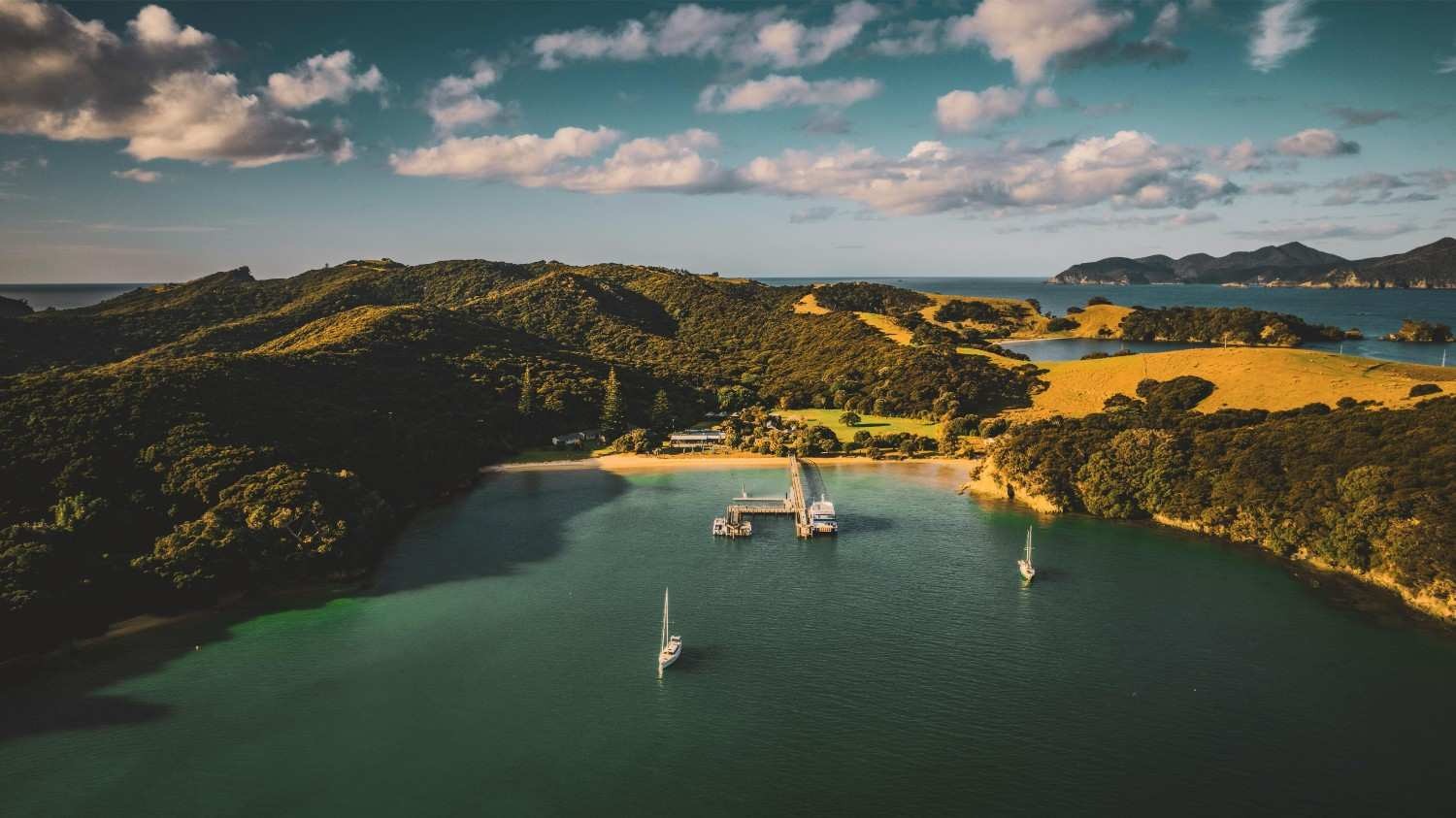
Queenstown at night looks like a jewelry box dropped between mountains. The town sits on the edge of Lake Wakatipu, surrounded by the Remarkables range and the Ben Lomond massif, and after the day-trippers clear, the bungy crowds, the jet boat lines, the gondola queues, what remains is one of the most beautiful lake-town settings on earth.
For anyone working out where to stay in New Zealand and wanting a base that combines dramatic scenery with a genuinely strong restaurant and wine culture, Queenstown is the answer.
At dusk in summer, the Remarkables catch the last light and turn salmon-pink, then deep blue, while the water below mirrors it all with unsettling clarity.
The character of Queenstown is adventure-forward without apology. This is where the commercial adrenaline tourism industry in New Zealand effectively began. AJ Hackett’s first commercial bungy jump happened here in 1988, and the industry has never stopped growing. But the town also has exceptional restaurants, a serious wine culture driven by Central Otago Pinot Noir from vineyards just 20 minutes away, and a lakefront that rewards a slow morning walk more than any thrill ride.
For campervan travelers, Queenstown offers a strong concentration of campsite options, from well-equipped holiday parks with full hook-ups to DOC sites around Lake Wakatipu and the Glenorchy corridor, that makes it one of the easiest bases in the country. The surrounding circuit of Arrowtown, Glenorchy, and the Kawarau Gorge gives you 3 to 4 days of driving before you’ve repeated a road.
Top Campsites and Overnight Spots
- Queenstown Lakeview Holiday Park: The best-positioned private campsite in the Queenstown basin – a short walk from the waterfront, with full hook-up sites, good shower facilities, and views of the lake from the upper terraces. Book ahead for December-February; sites on the lake-view terrace are limited.
- Twelve Mile Delta DOC Campsite: Located 12 km north of Queenstown along the Glenorchy road, this DOC site sits directly on the western shore of Lake Wakatipu beneath beech forest. It has basic toilets but no hook-ups – self-contained vehicles only. The combination of lake access, mountain backdrop, and silence 15 minutes from a major town is extraordinary. Available on a first-come, first-served basis.
- Glenorchy Holiday Park: At the head of Lake Wakatipu, 45 km north of Queenstown, Glenorchy is where the landscape transitions from alpine lake to river flat and mountain wilderness. The holiday park here is small, friendly, and positioned for access to the Rees and Dart River valleys. It becomes the base of choice for travelers heading toward Milford via the Hollyford Road.
- Moke Lake DOC Campsite: A 10 km drive from Queenstown on an unsealed road (accessible to most campervans in good conditions), Moke Lake is a hidden subalpine lake with a DOC campsite at its shore. Self-contained only. In morning light before the wind picks up, the lake is perfectly still and reflects the surrounding tussock hills. One of the best quiet overnight spots near a major tourist center in the country.
- Arrowtown Campground: The historic gold-rush town of Arrowtown, 21 km from Queenstown, has a campground along the Arrow River under old sycamore trees. In autumn (March-May), the town is famous for its foliage display. The campground has basic facilities, is well located for exploring the historic main street, and sits beside a swimming hole in the river.
Don’t Leave Without…
Driving the Glenorchy road at first light – before 7 AM in summer – when Lake Wakatipu is still and the Humboldt and Richardson ranges at the valley’s head emerge from mist in layers. Stop at the Wilson Bay picnic area, which has a small boat ramp and complete silence. This 90-minute return drive is the best version of Queenstown that most visitors never see.
RV Practical Info
- Road access: State Highway 6 through the Kawarau Gorge handles campervans well. The road to Glenorchy is sealed and manageable, though narrow in places. The Hollyford Road beyond Glenorchy is unsealed and suited to high-clearance vehicles only.
- Campsite availability: Holiday parks are busy from November to March. DOC sites around Moke Lake and Twelve Mile Delta are first-come, first-served and self-contained only. Arrive by 3 PM in peak season.
- Hook-up and facilities: Full hook-ups available at Queenstown Lakeview and Glenorchy Holiday Park. DOC sites are basic (pit toilets, no water at some sites – fill your tank before leaving Queenstown).
- Parking in town: There’s no RV parking on Queenstown’s central lakefront. Use the holiday park as a base and walk or take the town bus in. The park-and-ride area at Frankton is accessible by shuttle.
- Freedom camping: Not permitted within the Queenstown Lakes District without a certified self-contained vehicle. Fines are actively enforced. Check the Campermate app for designated freedom camping zones, which are mostly outside the main Queenstown basin.
Who Is It Best For?
- Couples looking for a lakeside base with good restaurants and wine within reach
- Adventure travelers who want Queenstown’s activities without paying for nightly hotel rates
- Road-trippers building an itinerary that takes in Glenorchy, Wanaka, and Fiordland
Recommended Nightly Budget
- DOC sites (Twelve Mile Delta, Moke Lake): NZD $8-15 per site
- Holiday parks (Queenstown Lakeview): NZD $40-55 per site with hook-ups
- Electric hook-up add-on: Typically included in holiday park rates
- Note: Peak season (December-February) and school holidays add 15-25% to holiday park rates
2. Abel Tasman, South Island
Why Stay Here
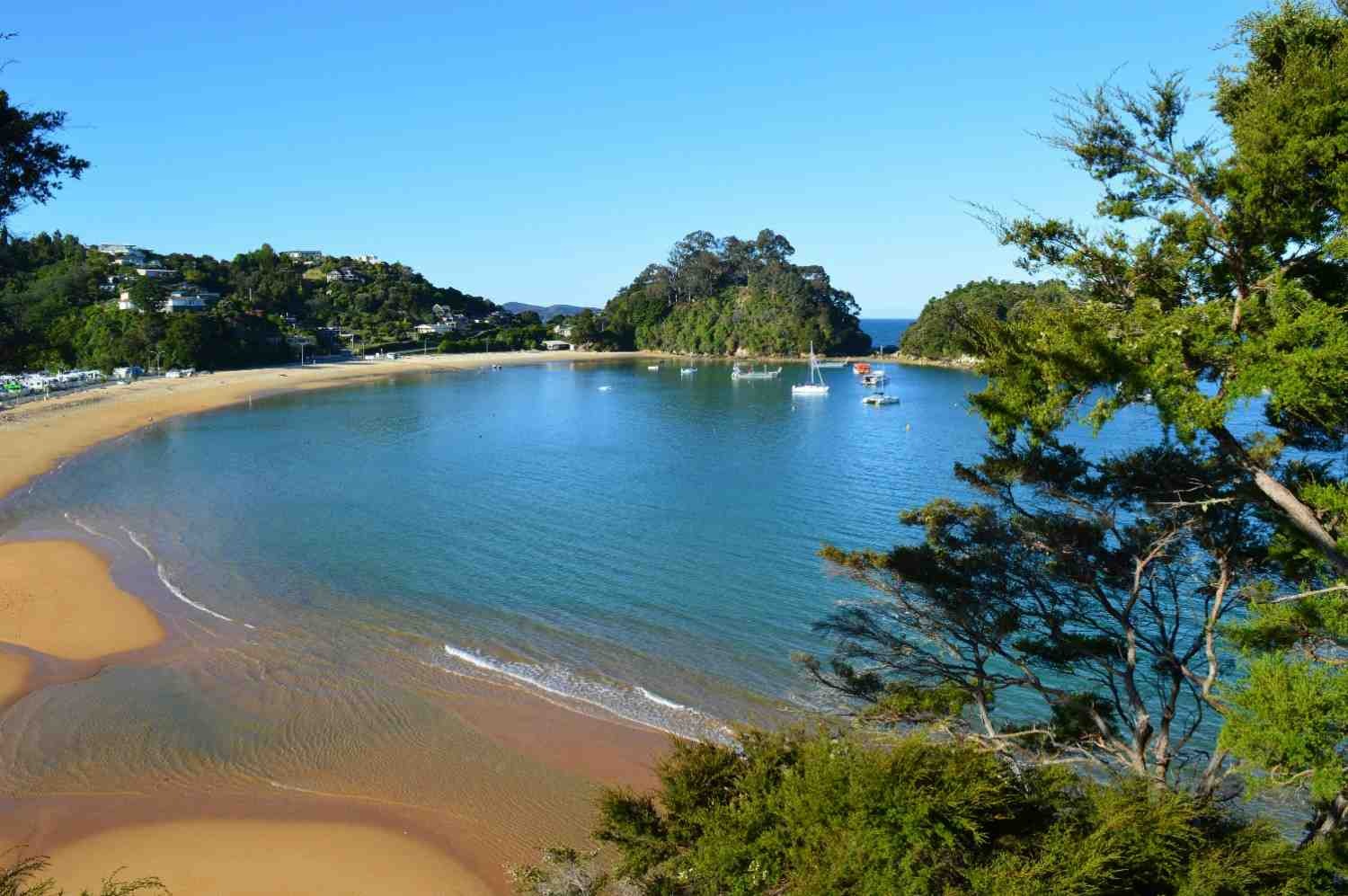
Abel Tasman is New Zealand’s smallest national park and arguably its most beautiful coastal wilderness. The park’s 23 km coastal track runs through a coastline of golden-sand coves, granite headlands, and tidal inlets – all backed by native regenerating bush. In the morning, before the water taxis and kayak tours start running from Marahau, the beaches at Bark Bay and Tōtaranui are completely empty. A campervan on the edge of this park puts you 10 minutes from that silence.
The setting in summer is extraordinary: clear water the color of shallow Caribbean sea, but cold enough to feel clean rather than tepid. Fur seals haul out on the rocks at Tonga Island. Oystercatchers and variable oystercatchers work the tidal flats at low tide. The bush behind the beaches is dense and regenerated – pohutukawa on the headlands, native beeches up the valleys.
The gateway towns of Motueka and Marahau have enough services – a good supermarket in Motueka, a solid cafe strip, fuel – to make provisioning your campervan easy. The park itself has three DOC campsites accessible by vehicle, with many more reachable only on foot or by water taxi. Staying here means waking to birdsong and salt air without hotel prices.
Top Campsites and Overnight Spots
- Marahau Beach Camp: At the very start of the Abel Tasman Coastal Track, Marahau Beach Camp is a private campsite with good facilities – hook-up sites, clean showers, a camp kitchen – positioned 200 meters from the beach. Water taxis and kayak hire depart from just outside the gate. This is the default base for travelers doing day sections of the coastal track.
- Tōtaranui DOC Campsite: The largest campsite in Abel Tasman National Park, accessible by road (unsealed, 22 km from Takaka – tight for larger motorhomes but passable for most campervans). Sites sit in a stand of native bush directly behind a long golden-sand beach. Facilities include toilets, cold showers, and water. Book well in advance for summer – this site fills within hours of bookings opening in October.
- Awaroa DOC Campsite: Accessible only on foot or by water taxi – not driveable – this campsite is included here because it’s the most spectacular overnight option in the park. If you have a towable kayak or plan to use water taxis, spending a night at Awaroa Bay (accessible only across a tidal inlet) while the rest of the park sleeps is a rare thing.
- Kaiteriteri Beach Camp: 8 km south of Marahau on a headland above Kaiteriteri Beach, this large campsite has full facilities and a strong community atmosphere in summer. The beach below is one of the most photographed in the South Island. Better suited to families and social campers than those seeking quiet.
- Shambhala Retreat, Motueka: A smaller, more peaceful private campsite 6 km south of Motueka in an orchard setting. Quieter than the beach camps, with good hook-up facilities. Useful when Marahau-area sites are full.
Don’t Leave Without…
Rising before 6 AM and driving to the Marahau boat ramp to watch the tide fill the estuary at first light. Spoonbills and white herons work the shallow channels, the Astrolabe Roadstead is mirror-flat, and Adele Island sits in complete silence offshore. It lasts about 45 minutes before the kayak operators arrive to set up. Pack a flask.
RV Practical Info
- Road access: SH60 through the Takaka Hill to Tōtaranui is the main challenge – the hill section has tight switchbacks and steep grades. Motorhomes over 7.5 meters should approach from the Marahau side rather than via Takaka. The unsealed road to Tōtaranui is 22 km and takes 45 minutes – manageable but slow.
- Campsite availability: Tōtaranui DOC campsite requires advance booking December-February (book through DOC website). Marahau area private camps are first-come, first-served except over Christmas/New Year.
- Hook-up and facilities: Full hook-ups at Marahau Beach Camp and Kaiteriteri. DOC sites have toilets and water but no electricity.
- Parking in town: Motueka has a central carpark suitable for campervans. Marahau’s water taxi car park handles oversized vehicles but fills fast in summer.
- Freedom camping: Not permitted in the national park or Marahau area. Designated freedom camping zones exist further south toward Nelson – check Campermate.
Who Is It Best For?
- Hikers doing day sections of the Abel Tasman Coastal Track
- Families wanting a safe, calm swimming beach in a national park setting
- Kayakers who want direct access to a multi-day coastal route
Recommended Nightly Budget
- DOC sites (Tōtaranui): NZD $15-21 per person per night
- Private campsite (Marahau Beach Camp): NZD $35-50 per site
- Note: Tōtaranui DOC rates are per-person; a couple in a campervan pays double the listed rate
3. Bay of Islands, North Island
Why Stay Here
The Bay of Islands is 144 islands, islets, and rocks scattered across a drowned river system at the top of the North Island, one of New Zealand’s most historically significant places and one of its most rewarding overnight destinations by campervan. The Waitangi Treaty Grounds, where the founding document of modern New Zealand was signed in 1840, sit at the edge of the bay. Kororāreka (Russell), the country’s first European town, faces across the water from Paihia.
For travelers deciding where to stay in New Zealand who want warm coastal water, genuine history, and easy family-friendly driving, the Bay of Islands is the North Island’s strongest case.
At dusk from a campsite above Paihia, the bay turns a deep blue-green and the lights of Russell’s hillside houses reflect in the water between anchored yachts. The pace slows after the cruise boats dock and the dolphin tour operators put their signs away. What’s left is a genuinely beautiful, historically layered bay town that rewards staying over leaving before dark.
In summer, the water here is warm enough for comfortable swimming, 22 to 24°C, which makes the Bay of Islands one of the few places in New Zealand where sea swimming is genuinely enjoyable without a wetsuit. The motorhome circuit connecting Paihia, Kerikeri, and the Hokianga gives you 5 to 7 days of driving before any road gets repeated.
Top Campsites and Overnight Spots
- Waitangi Top 10 Holiday Park: Directly across the road from the Waitangi Treaty Grounds, this is the best-positioned holiday park in the Bay of Islands. The short walk to the grounds and a 5-minute drive to Paihia’s waterfront make it a strong all-round base. Full hook-up sites, clean facilities, and a good camp kitchen.
- Haruru Falls Reserve Campsite: 5 km upstream from Paihia on the Waitangi River, this DOC-managed campsite sits next to the horseshoe Haruru Falls in native bush. Quieter and greener than the waterfront options. Toilets but no hook-ups. The falls are a 2-minute walk from any pitch.
- Kerikeri Domain Campsite: In the second-largest town in Northland, 20 km inland from Paihia, the Kerikeri campsite is positioned near the Stone Store – the country’s oldest stone building – and the surrounding mission settlement. Useful for exploring the Kerikeri basin’s trails, orchards, and artisan food producers without the waterfront premium.
- Matauri Bay DOC Campsite: On the east coast of the Northland peninsula, 45 minutes north of Paihia, Matauri Bay is a stunning sweep of pale sand backed by pohutukawa with a DOC campsite at its southern end. The Rainbow Warrior memorial on the headland above the bay commemorates the Greenpeace vessel sunk by French agents in Auckland Harbour in 1985. Quiet outside January.
- Tapeka Point Reserve: A council-managed area at the northern tip of the peninsula above Paihia, with a flat grassed area suitable for self-contained vehicles. Faces north across the outer bay. No facilities. Limited numbers. The sunrise view is exceptional.
Don’t Leave Without…
Taking the passenger ferry from Paihia to Russell before 8 AM – before the daily dolphin cruises fill the terminal – and walking to Flagstaff Hill above the town for a view across the full bay at first light. Russell’s main street has a cafe that opens at 7:30 AM. It’s an hour-long detour that puts the scale of the bay in context.
RV Practical Info
- Road access: SH1 north from Auckland to Paihia is well-maintained and handles campervans without issue. The Northland peninsula roads beyond Paihia are sealed but narrower – allow extra time on east-coast routes.
- Campsite availability: Bay of Islands sites are busy during Auckland school holidays (late January-February). Paihia-area holiday parks require advance booking from December 20 to February 5. Matauri Bay DOC site is reliably available outside January.
- Hook-up and facilities: Full hook-ups at Waitangi Top 10 and most Paihia holiday parks. DOC sites have toilets and water. Some remote DOC sites have no facilities at all – fill tanks before leaving Paihia.
- Parking in town: Paihia’s waterfront carpark has oversized vehicle bays. Paihia town center is walkable from the Waitangi holiday park.
- Freedom camping: Northland Regional Council has designated freedom camping areas – consult the council’s interactive map or Campermate before stopping. Self-contained certification is required for most sites.
Who Is It Best For?
- Families wanting warm sea swimming, dolphin spotting, and easy driving distances
- History enthusiasts interested in early colonial and Maori history
- Road-trippers building a Northland loop from Auckland as a trip opener or closer
Recommended Nightly Budget
- DOC sites (Haruru Falls, Matauri Bay): NZD $8-15 per site
- Holiday parks (Waitangi Top 10): NZD $35-50 per site with hook-ups
- Ferry to Russell: NZD $20-25 return per vehicle (worthwhile for a day crossing)
4. Coromandel Peninsula, North Island
Why Stay Here
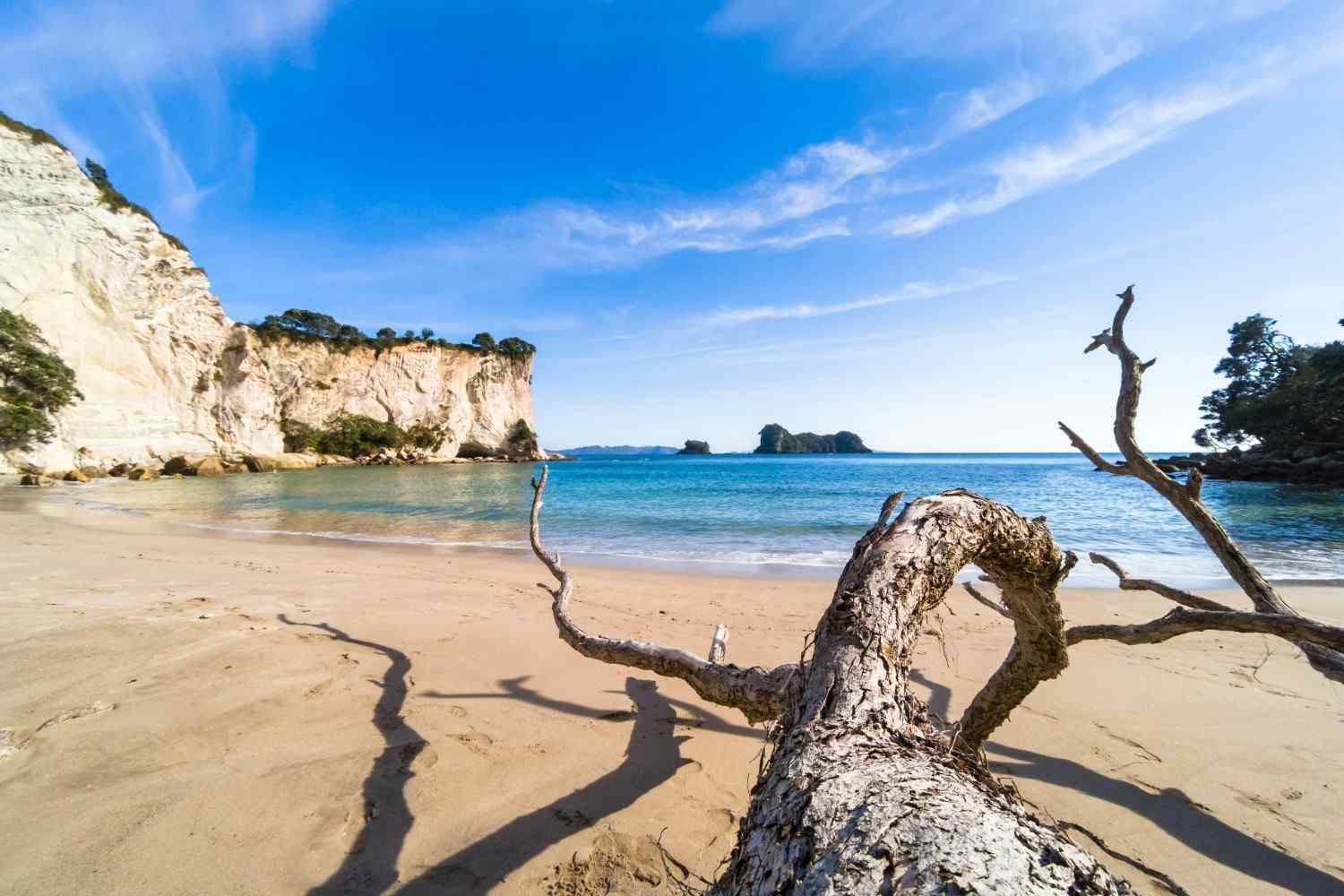
The Coromandel Peninsula juts north from the Hauraki Plains 90 minutes from Auckland, and its contrast with the city is dramatic: dense native forest covering steep volcanic ridgelines, a coastline of sheltered eastern beaches and exposed west coast surf, and an alternative community character that’s resisted mainstream development since the 1970s. The peninsula’s single-lane sealed roads take time – this isn’t a place to rush, and that’s precisely the point.
Camping here means switching between eastern beaches and western forest almost daily. The east coast – Hot Water Beach, Hahei, Cathedral Cove – delivers the famous Coromandel postcard images: turquoise coves, volcanic rock arches, and fine white sand. The west coast around Coromandel Town is quieter, older, and more interested in its own character. The drive across the peninsula via the Tapu-Coroglen Road is one of the best unsealed scenic drives in the North Island.
In summer (December-February), the east coast is crowded. The best version of this peninsula is January weekdays or any visit in March, when the water is still warm, the school crowds have gone, and the beachside cafes have breathing room.
Top Campsites and Overnight Spots
- Hahei Holiday Resort: The closest campsite to Cathedral Cove, which is accessible only on foot (35-minute walk) or by kayak since vehicle access was removed in 2020. Hahei Holiday Resort has powered and unpowered sites, clean facilities, and a strong beach-town atmosphere. Book months in advance for Christmas-January.
- Hot Water Beach Holiday Park: A short walk from the tidal geothermal beach where visitors dig their own hot pools at low tide, this campsite is small, well-run, and directly connected to one of the North Island’s most unusual experiences. Arrive at the beach 1 hour before low tide, hire a spade from the surf shop, and dig. The water below the sand can reach 64C – position carefully.
- Opito Bay Campground: On the east coast north of Hahei, Opito Bay is a community campsite in a sheltered bay facing the Mercury Islands. Quieter than the Hahei-Hot Water corridor, with a loyal following of New Zealand families who’ve been returning for decades. Basic facilities. Swimming is excellent.
- Coromandel Town Holiday Park: On the west coast in the peninsula’s main town, this campsite is the base for exploring Driving Creek Railway, the Kauri forest walks, and the ferry to Great Barrier Island. Quieter than east coast options and closer to the peninsula’s craft and artisan food culture.
- Wentworth Valley Campground (DOC): An inland DOC campsite in the Wentworth Valley, 10 km south of Whangamatā, surrounded by regenerating native bush. Good for a night between east coast beaches. Basic facilities. The Wentworth Falls walk departs from the campsite.
Don’t Leave Without…
Rising before 6 AM and walking the Cathedral Cove track before the first group tours start at 9 AM. At dawn, the Cathedral arch frames a sea that’s still golden from the sun clearing the horizon behind Mercury Bay. Two other people, maximum. By 10 AM, there’ll be hundreds.
RV Practical Info
- Road access: SH25 up the east coast and SH25A from Thames handle campervans without issue. The Tapu-Coroglen Road across the peninsula is unsealed and tight in places – passable for most campervans in dry conditions, not advised for larger motorhomes. The road north of Coromandel Town to Port Jackson is unsealed and extremely narrow – for small campervans only.
- Campsite availability: East coast sites require advance booking December-January. West coast and inland DOC sites are reliably available outside of school holidays.
- Hook-up and facilities: Full hook-ups at Hahei Holiday Resort and Hot Water Beach Holiday Park. DOC sites are basic; some have only pit toilets. Fill tanks in Whitianga or Thames.
- Parking in town: Whitianga has a central carpark for oversized vehicles near the ferry wharf. Hahei village has no parking for campervans in the town center.
- Freedom camping: Restricted across the peninsula. Thames-Coromandel District Council has specific designated sites – check the council website or Campermate before stopping overnight.
Who Is It Best For?
- Families wanting safe swimming beaches within day-trip distance of Auckland
- Beach lovers prioritizing coastal variety – east-coast coves versus west-coast sunsets
- Road-trippers adding a peninsula loop to a North Island circuit
Recommended Nightly Budget
- DOC sites (Wentworth Valley): NZD $8-15 per site
- Holiday parks (Hahei, Hot Water Beach): NZD $35-50 per site
- Spade hire at Hot Water Beach: NZD $5-10 per visit (worth it)
5. Aoraki/Mount Cook, South Island
Why Stay Here
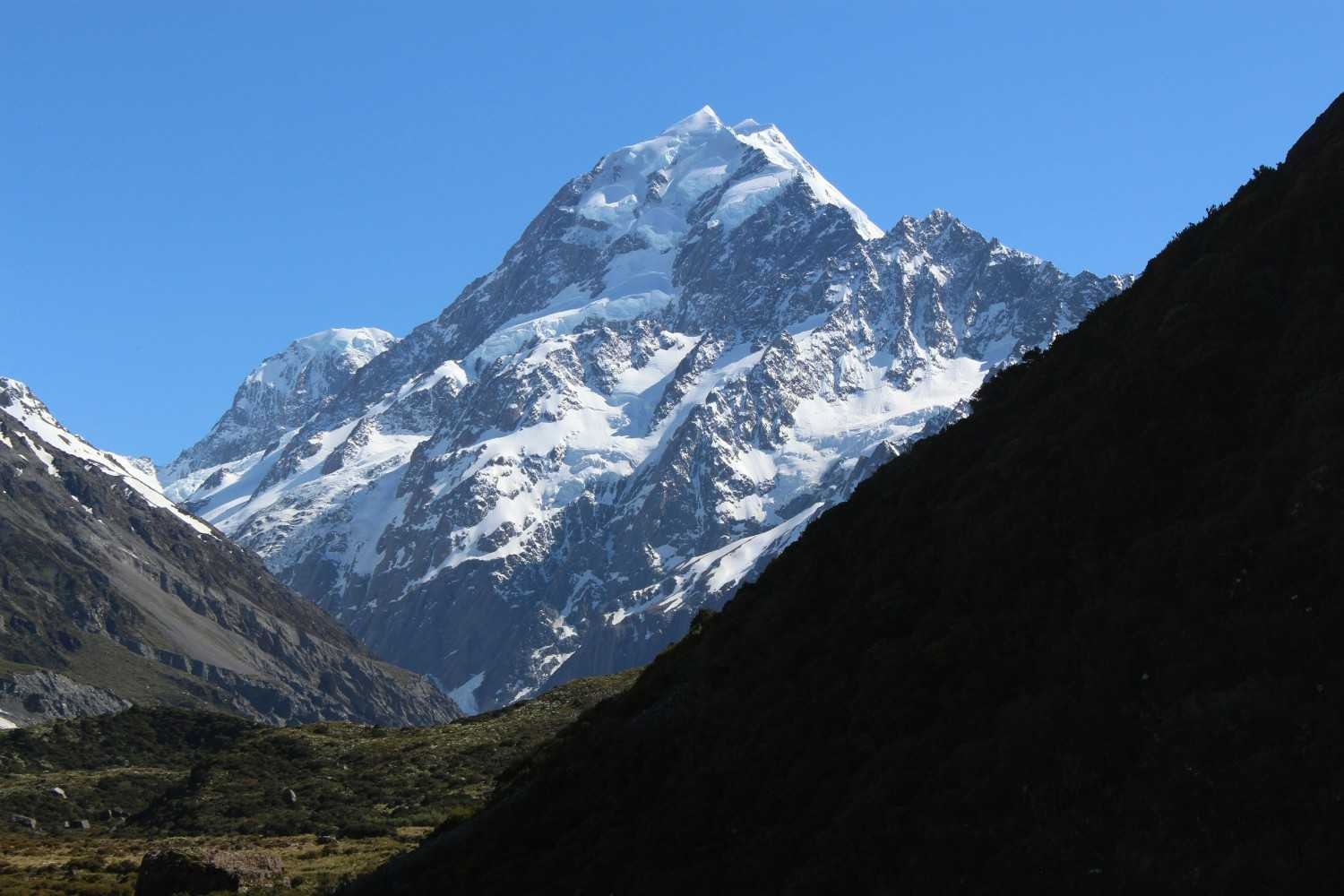
Aoraki/Mount Cook is New Zealand’s highest peak at 3,724 metres, and the Mackenzie Basin surrounding it is one of the most extraordinary landscapes in the country – an inland plateau of turquoise glacier-fed lakes, tawny tussock, and mountain ranges that change color across the day. The light here behaves differently than anywhere else in New Zealand: crisper, more severe, capable of turning Lake Pukaki an almost fluorescent blue-green when the sun hits it at the right angle.
The Mackenzie Basin is an International Dark Sky Reserve, the largest in the southern hemisphere. On a clear night, you don’t see a faint smudge of Milky Way – you see a dense, textured band of light stretching from horizon to horizon. The Southern Cross, the Magellanic Clouds, and the core of the galaxy are all visible with the naked eye. Staying in a campervan at a DOC site in the basin – at Lake Tekapo or Lake Pukaki – with the engine off and every light out is one of the genuinely extraordinary overnight positions available anywhere in the world.
For campervan travelers, the Mackenzie is one of the most rewarding overnight destinations in the country. The DOC campsite at White Horse Hill puts you in the valley below Aoraki itself, a 5-minute walk from the start of the Hooker Valley Track. The free self-contained overnight stop at Lake Pukaki’s southern end is one of the best value overnight positions in New Zealand.
Top Campsites and Overnight Spots
- White Horse Hill DOC Campsite: The DOC campsite at the head of the Aoraki/Mount Cook valley, 3 km from Mount Cook village. Basic facilities – flush toilets and water but no electricity. The Hooker Valley Track starts 5 minutes from the campsite and delivers one of the most dramatic valley walks in the country, with glacier views from a swing bridge above a moraine lake. Book ahead October-March.
- Glentanner Park Centre: 15 km south of Mount Cook village on the shores of Lake Pukaki, Glentanner is a full-facility holiday park with powered sites, a camp kitchen, and excellent views north toward the mountain. The base for helicopter flights onto the Tasman Glacier and skydiving operations.
- Lake Pukaki Lakeside Reserve: A council-managed area at the southern end of the lake where a short detour off SH8 delivers a lakeside gravel area with toilet facilities. Stunning views north toward Aoraki. Self-contained vehicles only. Free. One of the best free overnight stops in New Zealand.
- Mackenzie Country Holiday Park, Twizel: In the town of Twizel, 53 km from Mount Cook, this full-facility holiday park is a useful base for exploring the basin without paying the premium of Mount Cook-area accommodation. Good facilities, reliable availability, and a strong community feel.
Don’t Leave Without…
Waking at 4:30 AM at Lake Pukaki and walking to the water’s edge. In calm conditions, Aoraki’s reflection in the still lake is perfect – peak-for-peak mirrored in glacier-blue water, with the Milky Way still overhead and the horizon beginning to lighten. This 30-minute window, before the wind picks up and the tour buses arrive, is the Mackenzie Basin at its most powerful.
RV Practical Info
- Road access: SH8 from Tekapo to Twizel is excellent. The Mount Cook Road (SH80) from Twizel is sealed, well-maintained, and handles campervans well. Wind is the main hazard in the Mackenzie – gusts above 80 km/h are common and dangerous for high-sided vehicles. Check weather.gov.nz before driving.
- Campsite availability: White Horse Hill DOC campsite books out November-March. Glentanner has good availability year-round. Lake Pukaki Lakeside Reserve is first-come, first-served and fills by 4 PM in summer.
- Hook-up and facilities: Full hook-ups at Glentanner and Twizel holiday parks. White Horse Hill has flush toilets and water only – no electricity.
- Parking in town: Mount Cook village has a large public carpark at Aoraki/Mount Cook Visitor Centre suitable for all vehicle sizes. Free.
- Freedom camping: The Mackenzie District has several designated self-contained freedom camping sites. Check Campermate or the Mackenzie District Council website for current locations. The lakeside reserve areas at Pukaki and Tekapo are among the best.
Who Is It Best For?
- Stargazers and astrophotographers seeking New Zealand’s best dark-sky locations
- Hikers doing the Hooker Valley Track or Mueller Hut route
- Photographers chasing the Lake Pukaki Aoraki reflection – one of the most photographed scenes in the country
Recommended Nightly Budget
- DOC sites (White Horse Hill): NZD $15-21 per person per night
- Lakeside Reserve (Pukaki): Free for self-contained vehicles
- Holiday parks (Glentanner, Twizel): NZD $30-45 per site
6. Marlborough Sounds, South Island
Why Stay Here
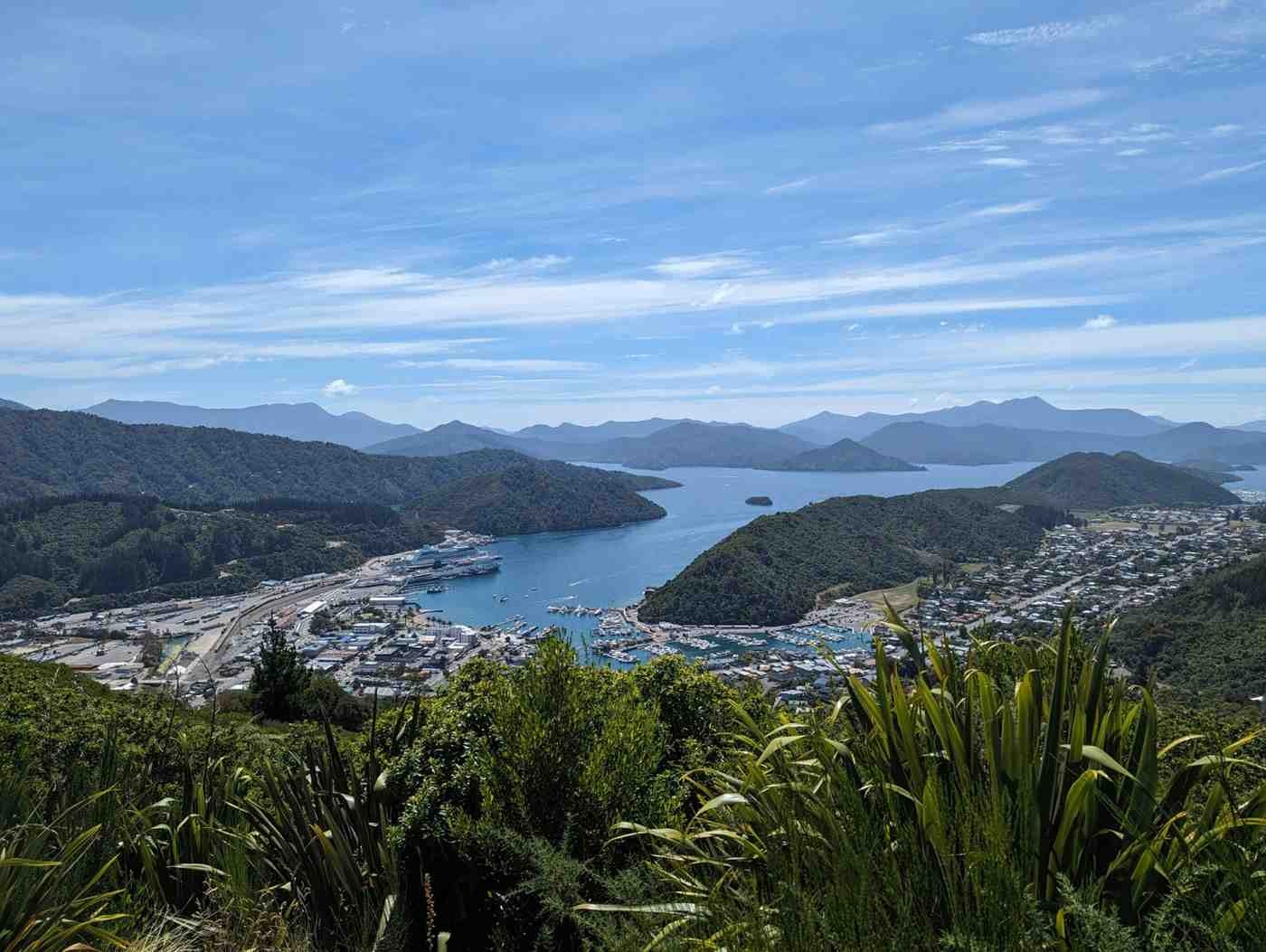
The Marlborough Sounds is a 4,000 km2 network of drowned river valleys – narrow sea inlets, forested ridgelines, and isolated coves – at the top of the South Island. The Interislander and Bluebridge ferries from Wellington arrive at Picton, right in the heart of it, which makes this many travelers’ first South Island stop. It’s a strong opening act.
Staying in the Sounds means being surrounded by water without being on a beach in the conventional sense – these are sheltered marine waterways rather than ocean-facing shores. At dusk from a campsite above Queen Charlotte Sound, the inlets catch the last light and the ridge forests go dark while the water below stays bright. The silence is unusual; no surf noise, no wind off the open sea. The occasional mussel boat heading back to Havelock is the only movement.
The Marlborough wine region – Sauvignon Blanc country, specifically the Wairau and Awatere valleys – sits just south of Picton. Combining two days in the Sounds with two days on the wine trail, with a stop at a working mussel farm between, is a 4-day circuit that rewards slow travel.
Top Campsites and Overnight Spots
- Momorangi Bay Motor Camp: 25 km from Picton on Queen Charlotte Drive, Momorangi Bay is a sheltered inlet with a small motor camp that has powered sites, clean facilities, and a jetty for swimming or kayaking. One of the few campground-accessible sites directly on Queen Charlotte Sound. Book ahead in January.
- Anakiwa DOC Campsite: At the southern end of the Queen Charlotte Track, Anakiwa is a DOC campsite reachable by road or by completing the final section of the 73 km coastal walking track from Meretoto/Ship Cove. Basic facilities. A water taxi back to Picton departs from Anakiwa’s wharf.
- Kenepuru Sound Campground (DOC): Accessible via the Kenepuru Road – a long, winding, sealed road that rewards with near-complete solitude and dramatic ridgeline views over the Sounds. Several DOC sites along the Kenepuru arm are accessible by road; Portage and Kenepuru Saddle are the most established.
- Waikawa Bay Holiday Park: 4 km east of Picton on a sheltered bay, this park is the most convenient full-facility option for travelers arriving or departing on the Interislander ferry. Powered sites, good facilities, and a 10-minute drive to Picton’s waterfront shops.
- Whatamango Bay DOC Campsite: A small DOC site on Queen Charlotte Sound, 8 km from Picton by road. Quiet, basic facilities, and a grassed flat area above a sheltered swimming beach. Self-contained-friendly. One of the closest genuinely peaceful overnight spots to Picton.
Don’t Leave Without…
Buying a dozen Marlborough Sounds green-lipped mussels – farmed in the inlets you’ll have been driving alongside – at the Havelock waterfront and steaming them in white wine and garlic on your campervan cooker with the sliding door open and the sound stretching out in front of you. New Zealand’s best mussels cost NZD $8-12 per kilogram at Havelock seafood stalls.
RV Practical Info
- Road access: Queen Charlotte Drive from Picton to Havelock is sealed, scenic, and narrow in places – allow 75 minutes for a drive that maps suggest takes 45. Take time. Kenepuru Road is sealed but winding; not advised for motorhomes over 7 meters.
- Campsite availability: Marlborough Sounds sites are well-stocked year-round. January is the busiest month; most DOC sites remain available with mid-afternoon arrival.
- Hook-up and facilities: Full hook-ups at Waikawa Bay and Momorangi Bay. DOC sites have toilets and water; no electricity.
- Parking in town: Picton’s central car park has dedicated RV bays near the ferry terminal. Free for day use.
- Freedom camping: Marlborough District Council has limited designated freedom camping sites – primarily around the Wairau Valley and toward Nelson. The Sounds DOC sites are the practical alternative.
Who Is It Best For?
- Cyclists doing the Queen Charlotte Track (many campervans drive ahead and meet walkers/riders at each end)
- Food and wine travelers combining Marlborough Sounds with the Wairau Valley wine trail
- Travelers arriving by Interislander ferry who want a slow first night before heading south
Recommended Nightly Budget
- DOC sites (Whatamango Bay, Anakiwa): NZD $8-15 per site
- Holiday parks (Waikawa Bay, Momorangi): NZD $35-48 per site
- Mussel feast at Havelock: NZD $8-12 per kg – buy double what you think you need
7. Rotorua, North Island
Why Stay Here
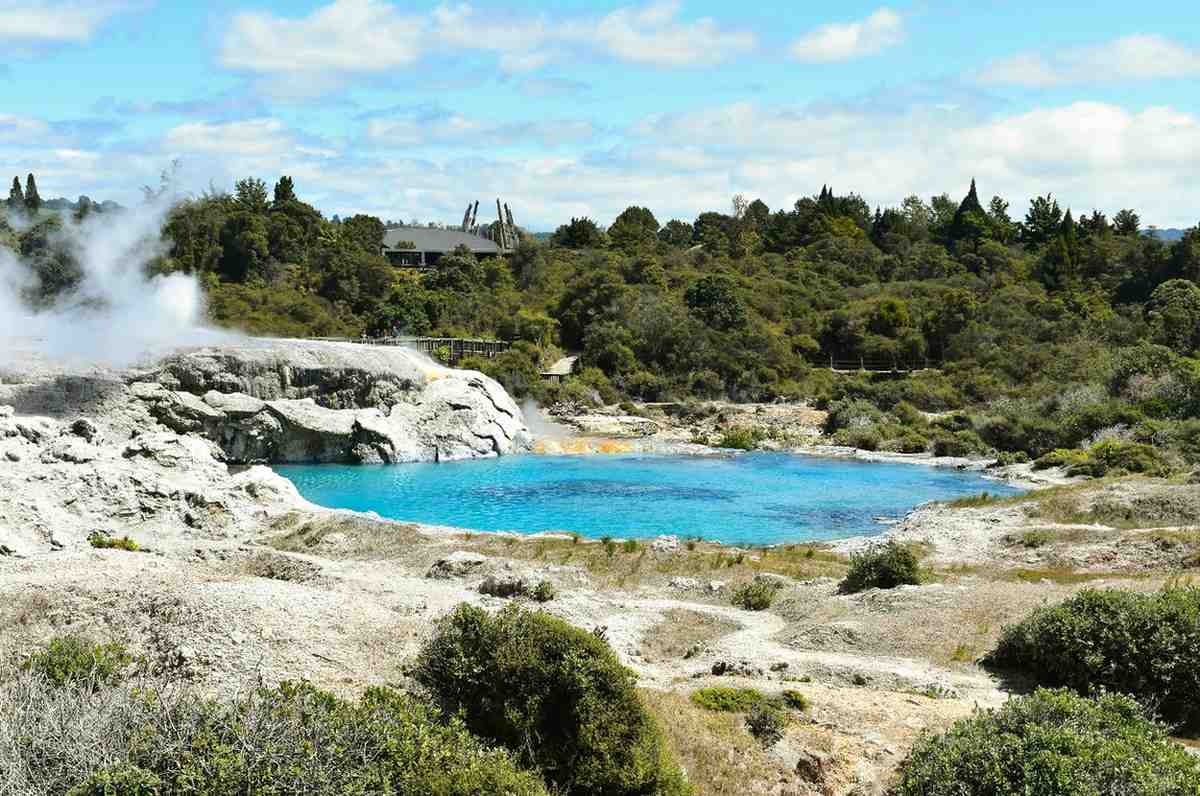
Rotorua smells of sulfur and that, counterintuitively, is part of its appeal. The geothermal activity beneath the city isn’t a background feature – it is the city. Steam vents through footpath cracks, boiling mud pools sit in public parks, and geysers erupt on schedules you can plan your day around. The Whakarewarewa Valley, where the Ngati Tuhourangi Ngati Wahiao hapu have lived among geothermal features for centuries, is one of the most culturally layered places in New Zealand.
For campervan travelers, Rotorua is the most practical base for Central North Island exploration. The city has full-service holiday parks with hook-ups, a well-stocked supermarket strip, and enough RV-friendly day trips – the Wai-O-Tapu thermal wonderland, the Redwood forests, the Waimangu Volcanic Valley – to fill 4-5 days without repeating a route.
Overnight in a Rotorua holiday park, you’ll hear nothing unusual. The steam is largely odorless after dark, the city quiets by 10 PM, and the morning birdsong in the lakeside parks is as ordinary as anywhere in New Zealand. The extraordinary happens during the day.
Top Campsites and Overnight Spots
- Rotorua Top 10 Holiday Park: Located 4 km from the city center on the edge of Whakarewarewa Forest, this is the best full-facility base in Rotorua. Hook-ups, a camp kitchen, clean bathrooms, and direct access to the mountain bike trails and redwood walks. Regular free shuttles to the city center.
- Lakefront Holiday Park: On the southern shore of Lake Rotorua – a volcanic caldera lake – this campsite offers powered sites with lake views and a 2 km walk along the lakefront promenade to the Government Gardens and museum. Useful for travelers who want urban walkability over forest access.
- Wai-O-Tapu Thermal Campground: A private campsite 24 km south of Rotorua at the entrance to the Wai-O-Tapu Thermal Wonderland – the most visually striking geothermal area in New Zealand, with coloured pools from sulfur, arsenic, and silica deposits. Staying here gets you in before the tour buses arrive.
- Lake Tarawera DOC Landing: A ferry and boat service accesses the shore of Lake Tarawera (the lake produced by the 1886 Tarawera eruption). The landing area accommodates small campervans and self-contained vehicles overnight. Remote and quiet. The walk to Hot Water Beach on the lake’s eastern shore (2 hours one-way) is excellent.
- Hinehopu DOC Campsite: On the northeastern shore of Lake Rotoehu, 25 km from central Rotorua, this DOC campsite offers lakeside pitches in a bush setting. Warm lake water, good swimming, and basic facilities. A different version of the Rotorua experience – quiet and local.
Don’t Leave Without…
Attending a hangi and cultural performance at Te Puia or a similar Ngati Tuhourangi venue. The performance isn’t a tourist sideshow – it’s a living expression of moteatea, waiata-a-ringa, and haka with cultural protocols the guides take seriously. The hangi meal afterwards is cooked the traditional way in a geothermal steam pit.
RV Practical Info
- Road access: SH5 from Auckland to Rotorua is excellent. SH38 south toward Wairoa is unsealed and not suitable for large motorhomes. The Thermal Explorer Highway (SH5/1) is the backbone route through the region.
- Campsite availability: Holiday parks in Rotorua operate year-round with good availability outside school holidays. Wai-O-Tapu campground is reliable year-round.
- Hook-up and facilities: Full hook-ups and excellent facilities at Rotorua Top 10 and Lakefront Holiday Park. DOC sites are basic – flush toilets and water at Hinehopu.
- Parking in town: Rotorua central has a large free carpark near the Government Gardens and museum. Fenton Street (the main tourist strip) has pull-in parking for campervans.
- Freedom camping: Rotorua District Council has approved freedom camping areas – check Campermate for current sites. The area around the lake has enforcement patrols; self-contained certification is required.
Who Is It Best For?
- Families with children who want geothermal spectacle and warm lake swimming
- Cultural travelers interested in Maori history, language, and performing arts
- Road-trippers building a Central North Island loop through Taupo, Tongariro, and the Coromandel
Recommended Nightly Budget
- DOC sites (Hinehopu): NZD $8-15 per site
- Holiday parks (Top 10, Lakefront): NZD $35-50 per site with hook-ups
- Cultural evening (hangi and performance): NZD $100-130 per person – budget for it
8. Kaikōura, South Island
Why Stay Here
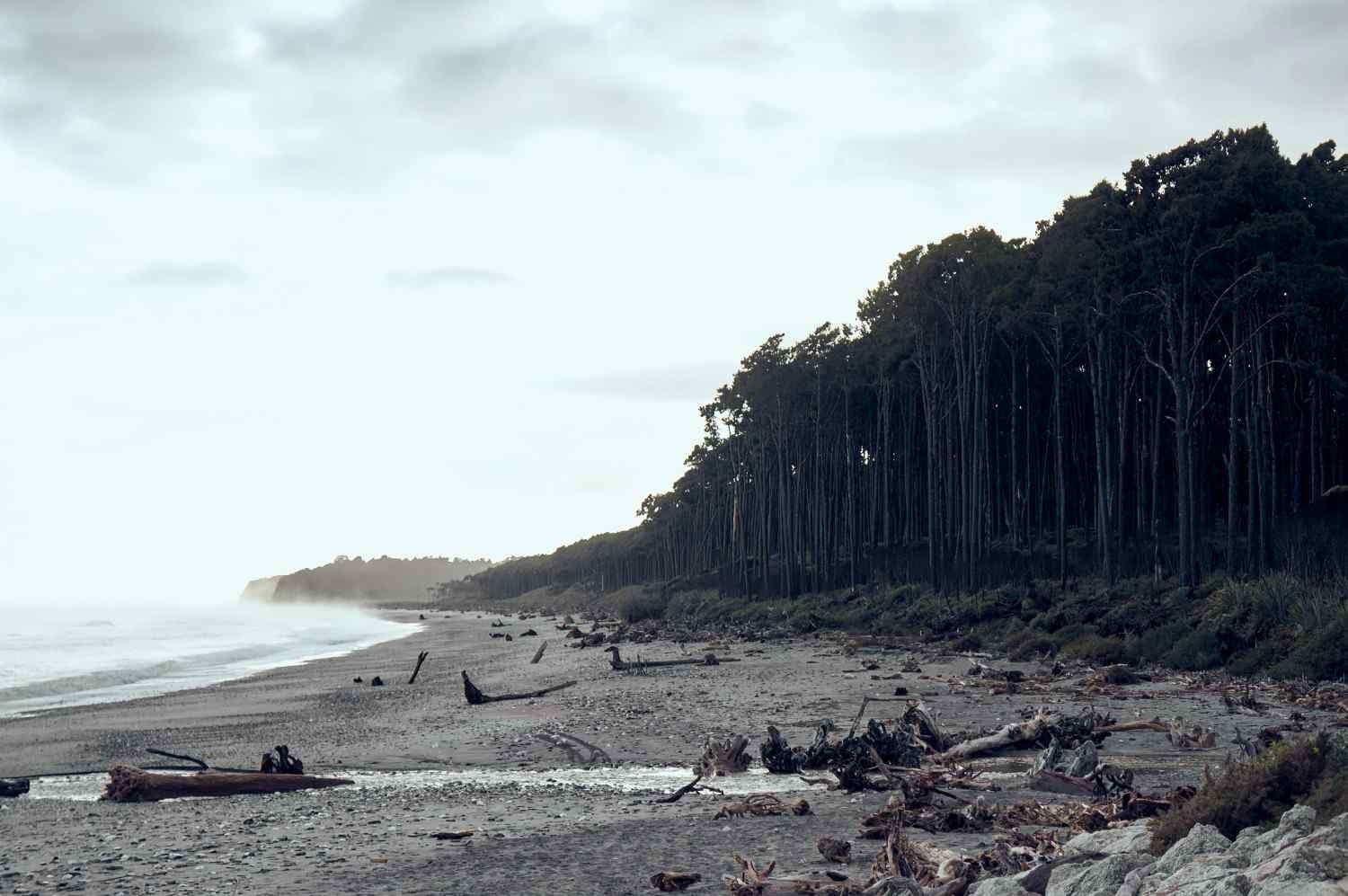
Kaikōura is a small coastal town 180 km northeast of Christchurch where the Seaward Kaikōura Range drops almost directly into the Pacific Ocean. The narrow strip of coast between the mountains and the sea is geologically unusual: a deep offshore submarine canyon brings cold, nutrient-rich water close to shore, which supports an entire marine food web in what is essentially a coastal town’s backyard. Sperm whales, dusky dolphins, New Zealand fur seals, and Hutton’s shearwaters are all year-round residents.
For wildlife-focused travelers figuring out where to stay in New Zealand, Kaikōura is one of the best places to stay in New Zealand on the South Island.
For campervan travelers, Kaikōura is a natural overnight stop on the Christchurch-Marlborough run and is worth planning at least two nights around. The coastal campsite options put you 10 minutes from the whale watch departure point, 5 minutes from a seal colony, and directly beside a stretch of coast that produces extraordinary wildlife encounters with no effort required.
The 2016 earthquake that struck Kaikōura uplifted the coastline by up to 2 meters, exposing new rock platforms and extending the town’s crayfish grounds. The local crayfish (rock lobster) is exceptional, one of the best value seafood stops in New Zealand relative to what the same product would cost in a restaurant in Auckland or Wellington.
Top Campsites and Overnight Spots
- Kaikōura TOP 10 Holiday Park: On the northern edge of town, 10 minutes’ walk from the whale watch departure point, this park has full hook-ups, clean facilities, and a relaxed atmosphere year-round. The better powered sites face toward the mountains. Good camp kitchen for preparing crayfish bought from the roadside stalls on SH1 south of town.
- Donegal House Campsite: 4 km south of Kaikōura township, a privately run campsite on the Ohau Stream – a stream that connects a fur seal colony in the Kaikōura Ranges to the ocean. From October to June, young fur seals play in the stream’s pools, often within a few meters of the campsite. One of the most unusual and rewarding camping settings in the South Island.
- Hapuku River Mouth DOC Campsite: 10 km north of Kaikōura, a small DOC campsite at the mouth of the Hapuku River with beach access and mountain views. Basic toilets. Good for a quiet night if Kaikōura’s holiday parks are full.
- Kaikōura Motels and Holiday Park (South): South of town on the road toward Christchurch, a smaller holiday park with powered sites and a quieter atmosphere than the main TOP 10. Useful during peak periods when the northern park is full.
- Point Kean Seal Colony Area: The peninsula tip east of town has a public area where NZ fur seals haul out on rocks within walking distance of the road. No camping here, but the carpark is suitable for a self-contained day stop and the colony is extraordinary at low tide.
Don’t Leave Without…
Buying a whole cooked crayfish from one of the roadside stalls on SH1 south of Kaikōura – look for the signs between Rakautara and Oaro – and eating it at a picnic table facing the Kaikōura Range. Crayfish here cost NZD $50-80 for a whole animal versus $150-200+ in a Wellington restaurant. Bring melted butter.
RV Practical Info
- Road access: SH1 between Christchurch and Kaikōura was heavily damaged in the 2016 earthquake and fully reopened in December 2017 after an extraordinary engineering effort. The road is now excellent, with several new coastal tunnels and viewpoints. Well-suited to all vehicle sizes.
- Campsite availability: Kaikōura is busy January-March but available year-round. The Donegal House site near the seal stream is small – book ahead October-March.
- Hook-up and facilities: Full hook-ups at Kaikōura TOP 10 and south-town holiday park. DOC sites at Hapuku are basic (pit toilets only).
- Parking in town: Kaikōura’s waterfront promenade has an oversized vehicle carpark near the whale watch visitor center. Good for day parking.
- Freedom camping: Kaikōura District has designated freedom camping areas on the coast north and south of town – check Campermate. Significant enforcement.
Who Is It Best For?
- Wildlife travelers who want accessible whale and dolphin encounters from a base
- Seafood lovers who want to eat crayfish direct from the source at reasonable prices
- Road-trippers on the Christchurch-Picton corridor who need a strong overnight stop
Recommended Nightly Budget
- DOC sites (Hapuku): NZD $8-15 per site
- Holiday parks (Kaikōura TOP 10): NZD $35-48 per site
- Whale watching tour: NZD $165-180 per adult – book 48 hours ahead in peak season
- Roadside crayfish: NZD $50-80 per animal – budget your best meal of the trip here
9. Fiordland/Te Anau, South Island
Why Stay Here
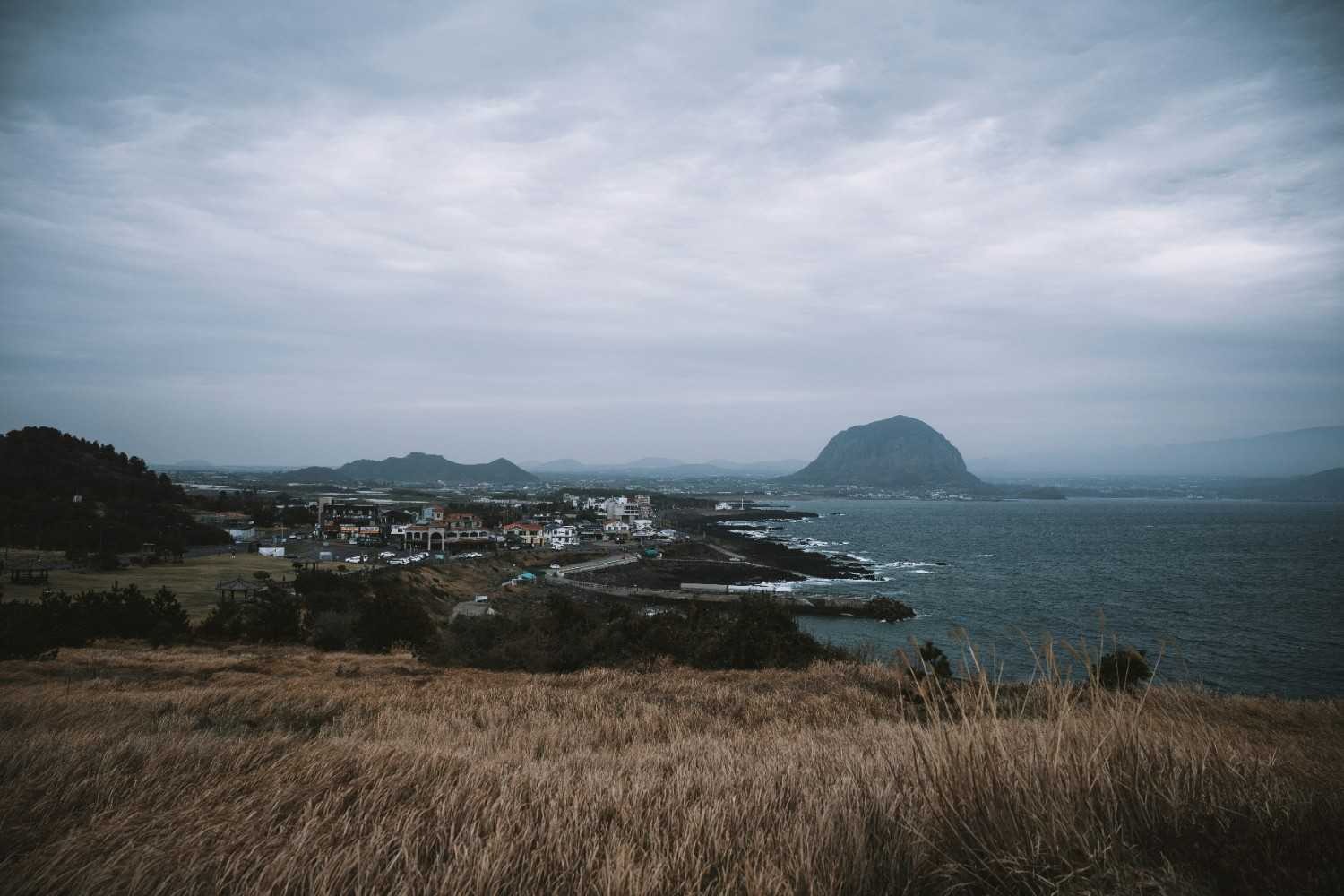
Te Anau is a lakeside town of 1,900 people at the edge of the largest national park in New Zealand – Fiordland, 1.26 million hectares of temperate rainforest, glacier-carved fjords, and alpine terrain that remains among the least modified wilderness landscapes on earth. The town is the staging point for Milford Sound, Doubtful Sound, the Milford Track, and the Kepler Track.
At dusk from a campsite on the Te Anau lakefront, Lake Te Anau – the largest lake in the South Island – fills the view westward, with the Murchison Mountains opposite and Fiordland beginning behind them. The light in the evening goes green from the reflections of the forest. It’s a genuinely beautiful place to sleep, separate from what you can reach during the day.
Staying in Te Anau rather than rushing through to Milford Sound is the better decision. The Milford Road is one of the greatest drives in the world – 119 km through cascading waterfalls, glacially polished rock walls, and the Homer Tunnel – and doing it at your own pace from a Te Anau base, rather than in a line of day-tour coaches, makes it a different trip entirely.
Top Campsites and Overnight Spots
- Te Anau Lakeview Kiwi Holiday Park: The best-positioned holiday park in Te Anau, 600 meters from the waterfront. Full hook-up sites, good facilities, a camp kitchen, and easy walking to Te Anau’s main street shops and the DOC visitor center for Fiordland permits. The standard base for campervan travelers exploring Fiordland.
- Milford Sound Lodge: The only accommodation inside Milford Sound itself, 119 km from Te Anau along the Milford Road. The campsite here has powered and unpowered sites in the rain shadow of the Darran Mountains at the head of the sound. Staying at Milford overnight – when day tour coaches are gone – transforms it entirely. Mist, waterfalls, and complete silence after 5 PM. Book 3-6 months ahead.
- Kepler Track Campground (DOC): For travelers walking the 60 km Kepler Track circuit, the DOC huts and campsites along the track are accessible from Te Anau. The lakeside campsites on the track’s initial section are among the most scenic in the country. Booking required through the Great Walks booking system.
- Mavora Lakes Campground (DOC): 60 km north of Te Anau on an unsealed road (accessible to most campervans in dry conditions), the North Mavora Lake DOC campsite is one of the most remote driveable overnight sites in Fiordland. No facilities except a basic toilet. The lake is the filming location for Nen Hithoel in The Lord of the Rings. In clear conditions, the reflection of the Livingstone Mountains in the lake is extraordinary.
- Te Anau DOC Motor Camp: Adjacent to the Te Anau glow worm caves on the eastern lake shore, this smaller DOC-managed camp has powered and unpowered sites with a quieter character than the main holiday parks. Direct lake access and a good position for sunrise photography over the water.
Don’t Leave Without…
Driving the Milford Road to the Homer Tunnel at the point when the light is hitting the rock walls directly – roughly 10 AM in summer – then pulling into one of the avalanche shelter carparks and walking 10 minutes up the valley to a point where you can see three separate waterfalls simultaneously falling from the walls above. No tour bus stops here.
RV Practical Info
- Road access: The Milford Road (SH94) is a standard sealed highway – well-maintained and fully accessible to campervans. The Homer Tunnel is single-lane with traffic signals; queues of 15-20 minutes are normal in summer. Avalanche risk in winter – check NZTA road conditions before driving after heavy rain or snow.
- Campsite availability: Milford Sound Lodge books out October-April. Te Anau holiday parks are available year-round; reserve December-January. Mavora Lakes is reliably available as a first-come, first-served site.
- Hook-up and facilities: Full hook-ups at Te Anau Lakeview and most Te Anau holiday parks. Milford Sound Lodge has a limited number of powered sites. DOC sites at Mavora are basic.
- Parking in town: Te Anau township has a large free carpark suitable for campervans near the main street. Milford Sound visitor terminal has a large vehicle carpark – arrive before 9 AM in summer.
- Freedom camping: Southland District Council has designated freedom camping areas around Te Anau township. Self-contained vehicles only. Check Campermate for the current list.
Who Is It Best For?
- Walkers doing the Milford Track, Kepler Track, or day sections of Fiordland’s Great Walks
- Photographers chasing Milford Sound at dawn before tour coaches arrive
- Road-trippers completing the Queenstown-Te Anau-Invercargill-Dunedin southern circuit
Recommended Nightly Budget
- DOC sites (Mavora Lakes): NZD $8-15 per site, or free at some remote locations
- Holiday parks (Te Anau Lakeview): NZD $35-50 per site
- Milford Sound Lodge (powered): NZD $50-75 per site – worth every dollar for overnight access to Milford
- Milford Sound cruise: NZD $80-120 per adult – essential; book ahead
10. Hawke’s Bay, North Island
Why Stay Here
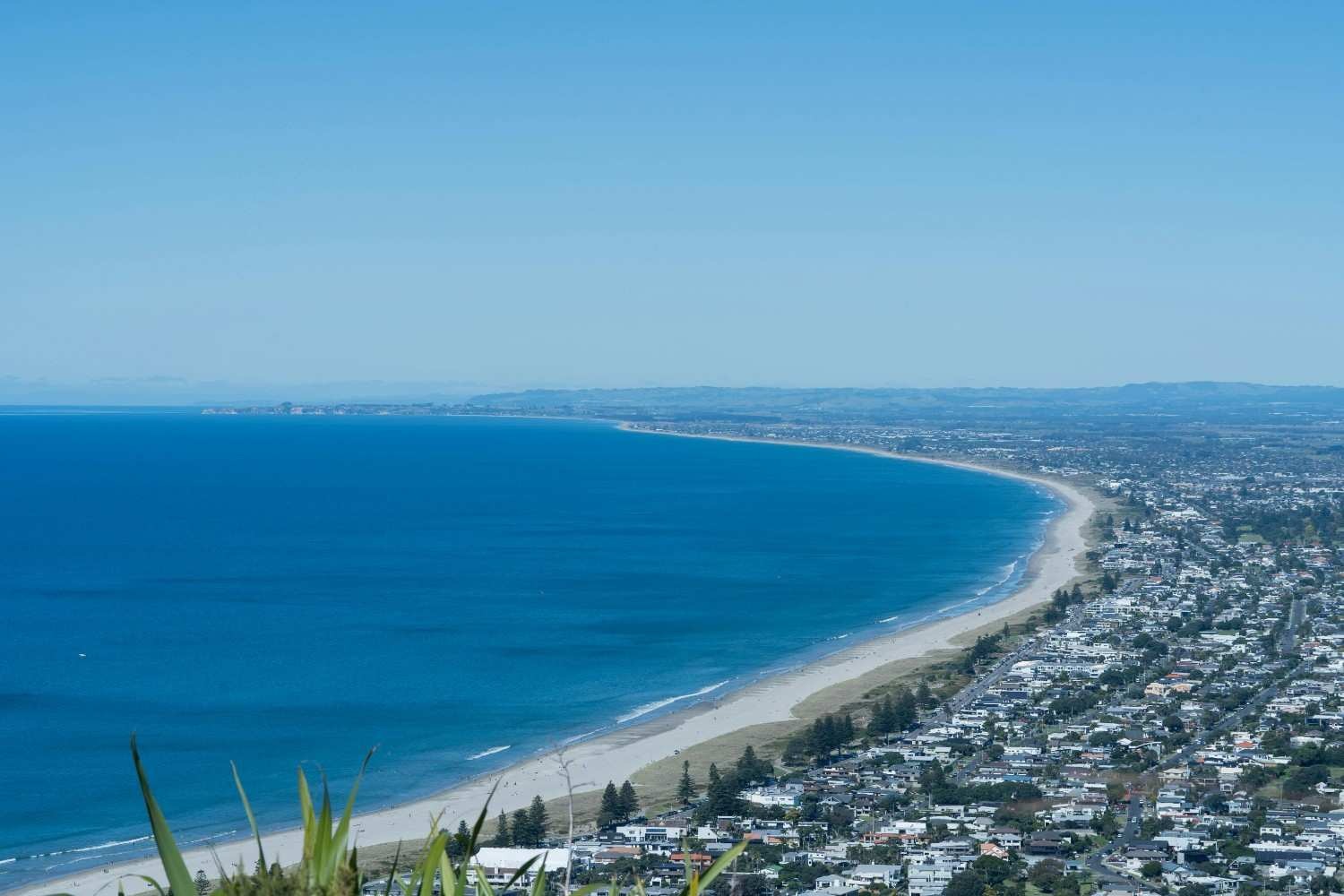
Hawke’s Bay is New Zealand’s wine country in the classical sense: rolling hills planted in Cabernet Sauvignon, Syrah, and Chardonnay; Art Deco architecture in the city of Napier rebuilt entirely after the 1931 earthquake; and a food culture built on what grows within 40 km of where you’re eating. It’s also one of New Zealand’s sunniest regions, with Napier recording more sunshine hours annually than anywhere else in the country.
For couples and food-focused travelers deciding where to stay in New Zealand, Hawke’s Bay is the most rewarding answer on the North Island.
Camping in Hawke’s Bay means sleeping in orchard and vineyard country. The winery campsite culture here is more developed than anywhere else on the North Island. Several estates allow campervans to stay overnight in exchange for tasting room visits and cellar door purchases. It’s a relaxed, genuinely adult version of New Zealand travel.
The coast east of Napier, particularly around Clifton and Cape Kidnappers, is dramatically different from the wine country inland. The Gannet Colony at Cape Kidnappers, accessible by tractor tour or a long coastal walk, is the world’s largest mainland gannet nesting colony, with 20,000 or more birds arriving each October to breed and departing by April.
Top Campsites and Overnight Spots
- Kennedy Park Resort, Napier: The largest holiday park in Hawke’s Bay and one of the best-equipped in the North Island. Full hook-ups, a heated pool, a good camp kitchen, and 3 km from central Napier. Napier’s Art Deco precinct, the National Aquarium, and the Mission Estate (New Zealand’s oldest winery) are all within easy reach.
- Clifton Bay Motor Camp: On the coast 20 km south of Napier, Clifton Bay is the departure point for the Cape Kidnappers gannet colony tractor tours. The motor camp here is small and well-positioned – staying overnight means you’re on the first tractor at 9 AM before the Napier day-trippers arrive.
- Te Mata Peak Reserve Campground: At the base of Te Mata Peak, the distinctive limestone cliff ridge above Havelock North that offers the best panoramic view of the Hawke’s Bay plains and coast. A small campground operated by the local council gives direct access to the summit walk at dawn, before the peak fills with morning runners and families.
- Black Barn Winery Campsite: Several Hawke’s Bay wineries – including in the Havelock North and Clifton areas – allow self-contained campervans to stay overnight in exchange for cellar door purchases. Black Barn Bistro is one of New Zealand’s best winery restaurants. Ask at the cellar door; the arrangement is informal but reliable.
- Waikare DOC Site, Boundary Stream: 60 km inland from Napier in the Hawke’s Bay hill country, the Boundary Stream Mainland Island (a predator-free sanctuary) has a DOC campsite used by birdwatchers targeting kiwi, kokako, and kaka reintroduced to the reserve. Quiet and basic.
Don’t Leave Without…
Booking the 4-hour tractor tour to Cape Kidnappers gannet colony and arriving at the breeding colony at the headland when the morning light is head-on from the east. 20,000 gannets at close range – some landing within arm’s reach – against a Pacific horizon is unlike anything else in New Zealand wildlife. NZD $65-80 per adult.
RV Practical Info
- Road access: SH2 from Wellington or Taupo to Napier is an excellent main highway. The Clifton coastal road south to Cape Kidnappers is narrow but sealed and passable for campervans. The Esk Valley and Tutaekuri River roads inland are well-maintained.
- Campsite availability: Hawke’s Bay is relatively under-visited compared to the South Island circuit, and campsite availability is good year-round outside of the Art Deco Festival weekend (February) when Napier fills completely.
- Hook-up and facilities: Full hook-ups at Kennedy Park. Clifton Bay motor camp has basic electric sites. Winery campsites are self-contained only.
- Parking in town: Napier’s city center has a large free carpark near the waterfront. Havelock North’s village has adequate campervan parking near the shops.
- Freedom camping: Hawke’s Bay Regional Council and Napier City Council have designated freedom camping areas. Check Campermate. Self-contained certification required.
Who Is It Best For?
- Wine and food travellers who want to combine cellar door visits with overnight winery stays
- Wildlife enthusiasts targeting the Cape Kidnappers gannet colony
- Road-trippers building a central North Island loop through Taupo, Napier, and the Coromandel
Recommended Nightly Budget
- DOC sites (Boundary Stream): NZD $8-15 per site
- Holiday parks (Kennedy Park): NZD $35-50 per site with hook-ups
- Winery campsite: Free or NZD $15-25 with cellar door purchase expectation
- Cape Kidnappers tractor tour: NZD $65-80 per adult – book 24-48 hours ahead in season
What to Pack for a New Zealand RV Stay
New Zealand’s climate is famously variable – “four seasons in one day” is a local saying, not a cliche. The overnight temperature range between a summer night at Lake Pukaki (3-5C) and a Bay of Islands evening (18-20C) is more than 15 degrees.
| Category | Items | Why You Need It |
| Clothing | Merino wool base layers, mid-layer fleece, waterproof hardshell, light down jacket, shorts and T-shirts | Merino handles temperature swings without bulk and resists odor between laundry stops. The South Island at altitude requires full winter layering regardless of season. |
| Footwear | Waterproof hiking boots, trail runners, camp sandals | New Zealand’s DOC tracks often involve stream crossings and muddy approaches. Waterproof boots aren’t optional for Fiordland or Westland. |
| RV Essentials | Campermate app (essential for freedom camping), self-containment certificate paperwork, levelling blocks, 15A power adapter (NZ standard), condensation cloth | Self-containment certification opens up your overnight options across New Zealand – carry the paperwork. The Campermate app is the standard tool for finding freedom camping sites. |
| Overnight Comfort | Extra blankets or 3-season sleeping bag liner, reliable gas or diesel night heater | South Island nights are cold year-round at elevation. White Horse Hill at Mount Cook drops to near-freezing in January. |
| Kitchen Supplies | Quality cooler or 12V fridge, reusable bags, basic spice kit, cast iron pan | New Zealand’s supermarket network thins south of Queenstown and inland. Stock up in larger towns. |
| Sun and Insect Protection | SPF 50+ sunscreen, polarized sunglasses, insect repellent (sandflies) | New Zealand’s UV index is among the highest in the world due to ozone thinning. Sandflies in Fiordland and the West Coast are genuinely fierce – DEET-based repellent only. |
| Navigation | Downloaded offline maps (Maps.me or Google Maps offline), AllTrails, DOC website bookmarks | Cell coverage is non-existent in Fiordland, the Mackenzie Basin’s remote areas, and most of the West Coast. Download everything before leaving a town. |
| Country-Specific | NZ power adapter (Type I, same as Australia), fresh water container for DOC sites, waste disposal bag for self-contained certification | NZ uses Type I sockets. DOC sites often have no water – carry a 20L backup container. Self-contained vehicles must demonstrate grey water and black water containment. |
Final Expert Tips for Staying in New Zealand by Campervan
1. Understand self-containment certification – it doubles your options. A certified self-contained vehicle can legally freedom camp at hundreds of designated sites that regular vehicles can’t use. Indie Campers’ self-contained vehicles carry the relevant certification. When booking, confirm self-contained status and carry the paperwork – some wardens check.
2. Book DOC Great Walk campsites months ahead. Sites on the Milford Track, Kepler Track, Routeburn Track, and Abel Tasman Coastal Track open for booking in late May for the following summer season. The most popular dates – December 26 to January 20 – sell out within hours of the booking window opening. Plan the trip around your campsite booking, not the other way around.
3. Download Campermate before you fly. The Campermate app (free) lists all freedom camping sites in New Zealand with real-time user updates, facilities information, and self-containment requirements. It’s the single most useful tool for campervanning in New Zealand and works offline once the maps are downloaded.
4. Sandflies in Fiordland and the West Coast are severe – prepare accordingly. New Zealand’s sandflies (namu) are tiny, silent, and their bites welt and itch for days. In Fiordland, Westland, and the Sounds, they emerge in numbers at dusk and dawn and around still water. DEET-based repellent applied before you open the campervan door is the only effective solution. Don’t plan to eat dinner with the door open.
5. The ferry crossing between islands requires advance booking. The Interislander and Bluebridge ferries between Wellington and Picton can sell out for vehicle spaces weeks in advance in January and February. Book your ferry crossing – including the vehicle – before you finalize your New Zealand dates. Missing a ferry crossing disrupts an entire South Island itinerary.
6. Milford Road’s weather and road conditions change fast. The Milford Road through Homer Tunnel can close for hours after heavy rain due to avalanche risk and flooding. Check NZTA’s journey planner (journeys.nzta.govt.nz) before setting out from Te Anau each morning. Build flexibility into your Fiordland days rather than committing to fixed departure times.
7. Stock up before heading to remote South Island areas. Supermarkets in Queenstown, Wanaka, Te Anau, and Twizel are the last serious provisioning points before remote stretches. Milford Sound has no supermarket. The West Coast has small grocery stores with limited stock and premium prices. Do a full shop before leaving a major town.
8. NZ fuel prices are higher than Australia and North America – plan fill-ups. Remote areas like the Milford Road approach and inland Northland have no fuel. Queenstown, Te Anau, Twizel, and Greymouth are the key fill points for South Island remote circuits. Never set out with under half a tank toward Milford or the Haast Pass.
9. Use the Interislander ferry to Picton as a trip structure. Many effective New Zealand campervan itineraries fly into Auckland, do the North Island circuit north to south, take the ferry to Picton, do the South Island north to south (or in a loop), and fly home from Christchurch or Queenstown. This avoids backtracking and works well with Indie Campers’ one-way rental option.
10. One-way rentals between Auckland and Christchurch or Queenstown are the most efficient structure. Pick up in Auckland, drop off in Queenstown or Christchurch – the linear route covers the strongest material on both islands without repeating any driving. Book early; one-way availability between the major centers goes fast in October for the summer season.
Stay in New Zealand with Indie Campers
New Zealand is one of the best countries in the world for campervanning, and the overnight stop is the strongest argument for choosing an RV over any other mode of travel. The DOC campsite system, the freedom camping network, and the country’s culture of outdoor independence all point toward self-contained road travel as the natural way to see what New Zealand actually is.
Here is what Indie Campers offers for a New Zealand trip:
- More than 7,000 vehicles to choose from worldwide. The New Zealand RV rental fleet includes Class B campervans suited for two people navigating the Milford Road and Coromandel’s single-lane roads, Class C motorhomes for families who need more living space, and Class A motorhomes for extended trips with full onboard facilities. All company-owned vehicles come with unlimited mileage – useful in a country where Auckland to Queenstown is 1,500 km before you’ve added a single detour.
- Pick up and drop off in different locations. Pick up in Auckland and drop off in Queenstown or Christchurch – no backtracking, no repeated roads, no U-turn in the middle of the South Island. The one-way option makes it possible to cover both islands in a single linear route without doubling back.
- Lock in your vehicle now, pay later. Full payment isn’t due until 30 days before pick-up – so you can secure peak-season availability now, before vehicles book up, without the financial commitment today. Book early, decide later.
- Cancel up to 31 days before pick-up, no penalty. New Zealand weather changes without warning, the Milford Road closes after heavy rain, and ferry crossings can shift a whole South Island itinerary. Flexible cancellation means you’re not locked in if conditions on the ground change your plans.
- 24/7 support, entirely online. If something goes wrong on the Homer Tunnel approach at 11 PM or the forecast turns on the Mackenzie, support is available – no phone trees, no business hours. Browse the fleet, manage your booking, and reach the team entirely online.
Browse the New Zealand fleet and find your base for the country’s best overnight locations.
Everything You Need to Know About Staying in New Zealand by RV
| Area / Town | Island | Setting | Best For | Top Campsites / Overnight Spots | Nightly Budget | RV-Friendly Rating | Wild Camping Allowed? | Best Way To Stay |
| Queenstown | South | Alpine lake | Couples & adventure | Twelve Mile Delta DOC, Queenstown Lakeview | 3x$ | 4-star | Restricted | Indie Campers RV |
| Abel Tasman | South | Coastal forest | Hikers & kayakers | Tōtaranui DOC, Marahau Beach Camp | 2x$ | 3-star | No | Indie Campers RV |
| Bay of Islands | North | Island bay | Families | Waitangi Top 10, Matauri Bay DOC | 2x$ | 4-star | Restricted | Indie Campers RV |
| Coromandel Peninsula | North | Coastal & forest | Beach lovers | Hahei Holiday Resort, Wentworth Valley DOC | 2x$ | 3-star | Restricted | Indie Campers RV |
| Aoraki/Mount Cook | South | Alpine glacier | Stargazers & hikers | White Horse Hill DOC, Lake Pukaki Reserve | 1x$ | 5-star | Yes (self-contained) | Indie Campers RV |
| Marlborough Sounds | South | Drowned valleys | Cyclists & foodies | Momorangi Bay, Whatamango Bay DOC | 2x$ | 4-star | Restricted | Indie Campers RV |
| Rotorua | North | Geothermal plateau | Families & culture | Rotorua Top 10, Wai-O-Tapu Campground | 2x$ | 4-star | Restricted | Indie Campers RV |
| Kaikōura | South | Coastal mountains | Wildlife & seafood | Kaikōura TOP 10, Donegal House | 2x$ | 4-star | Restricted | Indie Campers RV |
| Fiordland/Te Anau | South | Fjord wilderness | Walkers & photographers | Milford Sound Lodge, Te Anau Lakeview | 2x$ | 4-star | Restricted | Indie Campers RV |
| Hawke’s Bay | North | Wine country | Foodies & couples | Kennedy Park, Clifton Bay Motor Camp | 2x$ | 4-star | Restricted | Indie Campers RV |
FAQs About Where to Stay in New Zealand
Where can I rent an RV to stay in New Zealand?
You can rent an RV to stay in New Zealand through Indie Campers, with pickup locations in Auckland, Christchurch, and Queenstown – the three main entry points for international travelers. Auckland is the natural starting point for a North Island circuit or a two-island trip heading south. Christchurch is the best base for a South Island-only trip, while Queenstown suits travelers flying in specifically for the southern lakes and Fiordland. One-way rentals between Auckland and Queenstown or Christchurch are available, covering the full country without backtracking.
What is the cheapest area to stay in New Zealand by campervan?
The cheapest area to stay in New Zealand by campervan is the Mackenzie Basin around Aoraki/Mount Cook, where the Lake Pukaki Lakeside Reserve offers free self-contained overnight parking and DOC sites at White Horse Hill cost NZD $15-21 per person per night. Hawke’s Bay and Northland outside the Bay of Islands main cluster also offer lower-cost DOC and council sites averaging NZD $8-15. Holiday parks across the South Island’s more remote areas – Fiordland, Westland, Kaikōura – average NZD $30-45, below the NZD $45-55 holiday park rates near Queenstown and the Coromandel.
What is the best area to stay in New Zealand for coastal access?
The best area to stay in New Zealand for coastal access by campervan is Kaikōura on the South Island, where DOC and holiday park sites sit directly on a coast that produces whale, dolphin, and seal encounters within 10 minutes of any campsite. Abel Tasman is the best choice for beach camping within a national park. The Bay of Islands offers the warmest coastal water in the country at 22-24C in summer. For dramatic cliff and surf coastline, the Coromandel Peninsula’s east coast and the Catlins in the South Island’s far south both deliver outstanding campervan-accessible coastal stops.
What is the best place to stay in New Zealand for couples?
The best place to stay in New Zealand for couples is Hawke’s Bay, where winery campsites, excellent restaurants, and Art Deco Napier create a genuinely romantic overnight circuit without the crowds of Queenstown. Queenstown itself is the strongest choice for couples who want a mix of adventure activities with exceptional dining and lake scenery. The Marlborough Sounds – particularly a night at Momorangi Bay or Whatamango Bay with fresh mussels from Havelock – is the most peaceful and intimate option for couples who want to be genuinely away.
What is the best place to stay in New Zealand with family?
The best place to stay in New Zealand with family is Rotorua, which combines geothermal spectacle, warm lake swimming, Maori cultural experiences, and well-equipped holiday parks with camp kitchens and playgrounds. The Bay of Islands is the strongest alternative – warm sea swimming, dolphin boat trips, and easy driving between Paihia’s services and the outer islands make it ideal for children of all ages. Tōtaranui in Abel Tasman suits active families who want a national park beach without committing to long walks.
What is the best place to stay in New Zealand with kids?
The best place to stay in New Zealand with kids is Rotorua – erupting geysers, bubbling mud, and a warm lake that’s safe to swim in keep children engaged across 3-4 days without repetition. For younger children (under 10), the Coromandel Peninsula’s Hot Water Beach offers the uniquely engaging activity of digging your own hot pool at low tide. Queenstown’s gondola, luge rides, and lake activities give older children a strong activity base without relying on difficult hiking.
What is the best place to stay in New Zealand with friends?
The best place to stay in New Zealand with friends is Queenstown, where the concentration of adventure activities, restaurants, bars, and a buzzing lakefront make it the most social base in the country for group travel. For friends who prefer a more relaxed trip, Abel Tasman’s coastal track days combined with beachside evenings at Marahau suit groups of all fitness levels. Hawke’s Bay wine trail days, with multiple cellar door stops followed by a shared campfire dinner, is the best option for food-focused friend groups.
What are the best places to stay in New Zealand for first-timers?
The best places to stay in New Zealand for first-timers are the Queenstown-Te Anau-Milford Sound circuit on the South Island, and the Auckland-Rotorua-Coromandel loop on the North Island. Both are well-serviced, have strong campsite networks, and deliver the experiences New Zealand is internationally known for – alpine lakes, geothermal activity, Maori culture, and dramatic coastal scenery – without requiring difficult navigation or remote travel. Starting with Auckland as a pickup point and spending the first night at a Coromandel or Bay of Islands campsite eases you into the country’s outdoor culture naturally.
What are the best places to stay in New Zealand for solo travelers?
The best places to stay in New Zealand for solo travelers are Queenstown for social campsite culture and structured activity options, and Te Anau for access to Fiordland’s Great Walks where track huts and campsites create a natural community of solo walkers. Kaikōura suits solo travelers who want wildlife encounters without needing a travel partner – whale watching tours, seal colony walks, and crayfish from a roadside stall are all easily done alone. Rotorua’s well-equipped holiday parks have active camp kitchens where solo travelers consistently meet other road-trippers.
What are the best places to stay in New Zealand for nature lovers?
The best places to stay in New Zealand for nature lovers are Fiordland/Te Anau for fjordland wilderness, Aoraki/Mount Cook for alpine and glacier landscapes, and Kaikōura for marine wildlife density. Abel Tasman’s Tōtaranui campsite delivers fur seals, rare shorebirds, and native bush in one of the country’s most accessible national park settings.