Key Takeaways (TL;DR)
Planning the perfect road trip starts long before you hit the highway – it starts with packing.
Whether you are a first-timer or a seasoned nomad, having a solid RV packing list can make or break your trip. Forgetting a toothbrush is annoying, but forgetting a sewer hose adapter? That’s a real problem.
Here is a quick summary of what this guide covers:
- The Essentials: Safety gear, documents, and tools you absolutely cannot leave without.
- Kitchen & Cooking: How to stock a tiny kitchen efficiently without sacrificing great meals.
- Comfort & Sleeping: Bedding, clothing, and personal items to make your RV feel like home.
- Outdoor Living: Chairs, mats, and grill gear to enjoy the great outdoors.
- Maintenance: Technical gear like leveling blocks, hoses, and surge protectors.
- Entertainment: Keeping everyone happy on rainy days and long drives.
- Indie Campers Solution: Renting from us means many of these items (like kitchen kits and bedding) can be added to your booking, saving you packing time.
Table of Contents
- RV Packing List: At a Glance
- Why You Need a Master RV Packing List
- The Absolute Essentials: Documents and Safety
- RV Setup and Maintenance Gear
- The Complete RV Kitchen Packing List
- Bedroom and Bathroom Necessities
- Outdoor Living: Enjoying the Campsite
- Clothing and Personal Items
- Entertainment and Electronics
- Food and Pantry Staples
- Don’t Forget the Pets!
- Get Road-Ready with Indie Campers
- Frequently Asked Questions (FAQs)
RV Packing List: At a Glance
| Category | Must-Have Items | Key Tips |
|---|---|---|
| Documents & Safety | Driver’s license, insurance, first aid kit, flashlights, fire extinguisher, tool kit | Keep documents in dedicated folder; safety gear isn’t exciting until you need it |
| RV Setup & Maintenance | Water hose (drinking-safe), water pressure regulator, sewer hose, electrical adapter, surge protector, leveling blocks, wheel chocks | Never use garden hose for drinking water; most rental companies include these items |
| Kitchen | Frying pan, saucepot, cutting board, melamine dishes, utensils, dish soap, trash bags, can opener | Choose versatile items; square containers stack better than round ones |
| Bedroom & Bathroom | Sheets (check mattress size), pillows, blankets, RV toilet paper (non-negotiable), quick-dry towels, toiletries | RV-specific toilet paper prevents black tank clogs |
| Outdoor Living | Camping chairs, outdoor rug/mat, portable grill, firewood (buy locally), marshmallow sticks | Outdoor mat is a game-changer for keeping dirt outside |
| Clothing | Layers, rain jacket, hiking boots, sandals, swimwear, hat, sunglasses | Use “5-4-3-2-1” method for 7-day trips; soft duffel bags over hard suitcases |
| Entertainment | Phone chargers, portable speaker, books, board games/cards, camera | Download maps and music offline before leaving |
| Food & Pantry | Spices, oil, coffee, condiments, snacks, canned goods, pasta, rice | Focus on one-pot meals and versatile ingredients |
| Pets | Leash, collar with updated tags, food and bowls, bed/blanket, waste bags | Collapsible bowls save space; tick/flea prevention essential |
Why You Need a Master RV Packing List
The open road is calling. You have your route planned, your campsites booked, and your playlist queued up.
However, there is one crucial step left: packing.
Unlike a hotel stay where you just need clothes and toiletries, an RV trip requires a bit more preparation. You are essentially taking a small house with you, which means you need to think about everything from forks and knives to leveling blocks and water hoses.
Creating a comprehensive RV packing list is the best way to ensure you have a stress-free adventure.
It saves you from that sinking feeling when you realize you left the can opener at home right as you are about to make chili. It also helps you avoid overpacking, which is a common mistake. Space in an RV is limited, so every item needs to earn its place.
This guide breaks down what to bring on RV trip adventures into manageable categories. We will cover the must-haves, the nice-to-haves, and the things you can probably leave behind.
Whether you are renting a campervan for a weekend or setting out on a cross-country month-long journey, this list has you covered.
The Absolute Essentials: Documents and Safety
Before we get into the fun camping gear, let’s talk about the boring-but-critical stuff.
These are the items that keep you legal, safe, and prepared for emergencies. You should have a dedicated folder or pouch for these documents so they are always easy to find.
Important Documents
- Driver’s License: Make sure it is valid and not expired. If you are renting, all drivers need to present their licenses.
- Vehicle Registration and Insurance: Keep physical copies in the glove box. Digital copies on your phone are a great backup, but don’t rely on them entirely in case your battery dies.
- Reservation Confirmations: Printouts or screenshots of your campground bookings. Cell service can be spotty in remote parks, so you don’t want to rely on loading an email when you arrive.
- Roadside Assistance Info: Have the number saved in your phone and written down. If you are renting from Indie Campers, we provide 24/7 assistance info.
- RV User Manual: If you are new to the vehicle, this is your bible. It tells you how to operate the slide-outs, the awning, and the control panel.
Safety First
Safety equipment isn’t exciting until you need it – then it’s the most important thing in the world.
- First Aid Kit: Stock it with bandages, antiseptic wipes, pain relievers, blister pads, allergy medicine, and any personal prescriptions.
- Fire Extinguisher: Your RV should come with one, but double-check that it is charged and accessible.
- Flashlights and Headlamps: Bring extra batteries. Headlamps are especially useful for hands-free tasks like hooking up utilities in the dark.
- Tool Kit: You don’t need a full mechanic’s shop, but a basic set of screwdrivers, pliers, a wrench, a hammer, and duct tape can fix a surprising number of issues.
- Emergency Road Kit: Jumper cables, reflective triangles or flares, and a tire pressure gauge.
RV Setup and Maintenance Gear
This section differentiates RV camping packing list needs from standard tent camping.
An RV requires specific equipment to function correctly at a campsite. If you are renting, check with the rental company first – many of these items are often included with the vehicle.
Hooking Up
When you pull into a campsite with “full hookups,” you need the right gear to connect your rig to the water, electricity, and sewer systems.
Fresh Water Hose
Make sure you have a dedicated drinking-safe hose. You can usually spot these by their white or blue color. They are specifically designed to be lead-free and BPA-free, keeping your water clean and fresh.
Never use a standard garden hose for your drinking water. These can leach harmful chemicals and metals into your supply, and no one wants water that tastes like rubber! Once you’re geared up, check out our guide on how to find free RV water fill stations to keep your tank topped up on the road.
Water Pressure Regulator
Think of a water pressure regulator as a guardian for your RV’s plumbing. Why do you need one? Well, water pressure at different campgrounds can be unpredictable – sometimes it’s a gentle trickle, and other times it’s a powerful blast.
High water pressure can be a real problem, potentially damaging your RV’s internal pipes, leading to leaks or even bursts. That’s a headache you definitely want to avoid on your trip!
Luckily, the solution is simple. This small but essential device easily screws onto the campground’s water spigot before you attach your freshwater hose. It automatically controls the water flow, ensuring a steady and safe pressure reaches your RV’s plumbing system. It’s a small investment that offers huge peace of mind, protecting your home on wheels from costly damage.
Sewer Hose (Stinky Slinky)
When it comes to managing your RV’s waste, a reliable sewer hose is non-negotiable. This is one piece of gear where you don’t want to cut corners, as a leak or break can turn a great trip into a messy disaster. Look for a high-quality, durable hose that won’t easily puncture or crack.
For a smoother and cleaner dumping process, get a hose with clear elbow connectors. This lets you see when the water runs clear, so you know for sure that your tank is fully rinsed.
It’s a simple feature that takes all the guesswork out of the process, making one of the less glamorous parts of RVing a lot more manageable.
Having the right sewer hose makes all the difference in keeping your travels clean, simple, and stress-free.
Sewer Hose Support
Many campgrounds require this handy tool to keep your RV sewer hose elevated off the ground. By doing so, it ensures a clean and organized setup that complies with campground regulations.
This device not only keeps your hose off the ground but also creates a consistent slope, allowing gravity to efficiently handle waste flow. The elevated design prevents kinks or obstructions in the hose, ensuring smoother operation and reducing the risk of backups.
Whether you’re setting up for a weekend trip or an extended stay, using a hose support system can save you time and trouble. It’s an essential addition to any RV setup, providing both convenience and peace of mind.
Disposable Gloves
Safety and cleanliness are key when you’re out on the open road. When it’s time to handle the sewer hose or empty your tanks, you’ll want a reliable barrier between you and the grime.
Keep a box of heavy-duty disposable gloves right in your exterior storage compartment so they’re always within reach. Trust us on this one – it makes the whole process much more hygienic and worry-free.
Once you’re finished, simply toss them away and get back to the fun part of your adventure
Electrical Adapter (Dogbone)
Picture this: you’ve found the perfect campsite, the sun is setting, and you’re ready to plug in and relax. But then you realize the campground’s electrical hookup doesn’t match your RV’s plug. Don’t let a simple power mismatch ruin your vibe!
This is where an electrical adapter, often called a “dogbone” because of its shape, becomes a road trip hero. This handy tool allows you to safely connect your RV to a power source with a different amperage, bridging the gap between your rig and the campsite.
For example, if your RV runs on a 30-amp system but the pedestal only offers a 50-amp outlet, you’re good to go. The same is true if you have a 50-amp RV and need to plug into a 30-amp service.
It’s an essential piece of gear that ensures you can power up your home on wheels no matter where you park. Plus, having one on hand means you’ll never have to worry about being left in the dark. Pack a dogbone and keep the adventure glowing
Surge Protector
Plug this into the campground pedestal before you attach your RV cord. It acts as a shield, protecting your vehicle’s sensitive electronics from sudden power surges or faulty wiring at the park. Think of it as insurance for your tech; it keeps your appliances running smoothly so you can focus on the fun.
Campsite power isn’t always stable, and a single spike could fry your microwave or AC. By using a surge protector, you’re adding an essential layer of safety to your setup. Just plug it in, check the light indicators, and enjoy total peace of mind while you relax under the stars
Leveling and Parking
A level RV is essential for comfort (nobody likes sleeping at an angle) and for your fridge to work properly.
- Leveling Blocks: These look like giant Legos. You drive onto them to raise the wheels on one side of the vehicle.
- Wheel Chocks: These rubber wedges go in front of and behind your tires to stop the RV from rolling away.
- Bubble Level: If your RV doesn’t have auto-leveling, a small carpenter’s level helps you get it just right.
The Complete RV Kitchen Packing List
Cooking your own meals is one of the best parts of van life. You save money and get to eat healthy, delicious food with a view.
However, RV kitchens are small. You need to be strategic.
Cookware
Focus on versatile items. A pot that can boil pasta and also make soup is better than two separate pots.
- Frying Pan: A cast-iron skillet is durable and great for campfires, but a non-stick pan is easier to clean inside.
- Saucepan: For boiling water, heating soup, or making sauces.
- Pot with Lid: Large enough for pasta or chili.
- Baking Sheet: Small enough to fit in the RV oven (if you have one).
- Cutting Board: Plastic or bamboo is best. Avoid glass as it can shatter during transit.
- Knife Set: A chef’s knife and a paring knife are usually all you need. Keep them in protective sheaths.
Dinnerware and Utensils
- Plates and Bowls: Melamine or enamelware is perfect because it’s lightweight and virtually unbreakable. Avoid ceramic.
- Cups and Mugs: Insulated tumblers are great for both hot coffee and cold drinks.
- Cutlery: Forks, spoons, and knives. A set for 4 is usually sufficient.
- Cooking Utensils: Spatula, ladle, large serving spoon, tongs (great for the grill too), and a can opener.
- Bottle Opener/Corkscrew: Essential for evening relaxation!
Kitchen Cleanup and Storage
- Dish Soap and Sponges: Biodegradable soap is best.
- Dish Towels: Bring more than you think you need. They get used for drying dishes, wiping hands, and cleaning spills.
- Trash Bags: Small ones for the bathroom, large ones for the kitchen.
- Ziploc Bags/Tupperware: For storing leftovers. Square containers stack better in small fridges than round ones.
- Paper Towels: A roll or two for quick cleanups.
- Lighter/Matches: For lighting the stove or the campfire.
Bedroom and Bathroom Necessities
Making your RV feel like home is all about the bed and bath setup.
A good night’s sleep is crucial for enjoying your adventure.
Bedding
If you are renting from Indie Campers, you can often add a bedding kit to your booking.
If you are bringing your own:
- Sheets: Fitted and flat sheets. Check the mattress size of your RV – some are “short queen” or unique bunk sizes.
- Comforter or Sleeping Bag: A sleeping bag is easy to roll up, but a comforter feels more like home.
- Pillows: Bring your favorites from home for better sleep.
- Extra Blankets: It can get chilly at night, even in the summer.
Bathroom Toiletries
- RV Toilet Paper: This is non-negotiable. You must use quick-dissolving toilet paper designed for RV septic systems. Regular household TP can clog your black tank, leading to a very messy and expensive problem.
- Quick-Dry Towels: Microfiber towels dry much faster than heavy cotton ones, which is helpful in a damp RV environment.
- Shower Caddy: To carry your toiletries to the campground shower block if you prefer more space.
- Flip Flops: Essential for using communal campground showers.
- Toilet Chemicals: Drop-ins or liquid designed to break down waste and control odors in the black tank.
- Personal Toiletries: Shampoo, soap, toothpaste, toothbrush, deodorant, hairbrush, etc.
Outdoor Living: Enjoying the Campsite
You didn’t rent an RV just to stay inside! The space outside your door is your living room.
Here is what to bring on RV trip adventures to maximize that outdoor space.
Camp Comfort
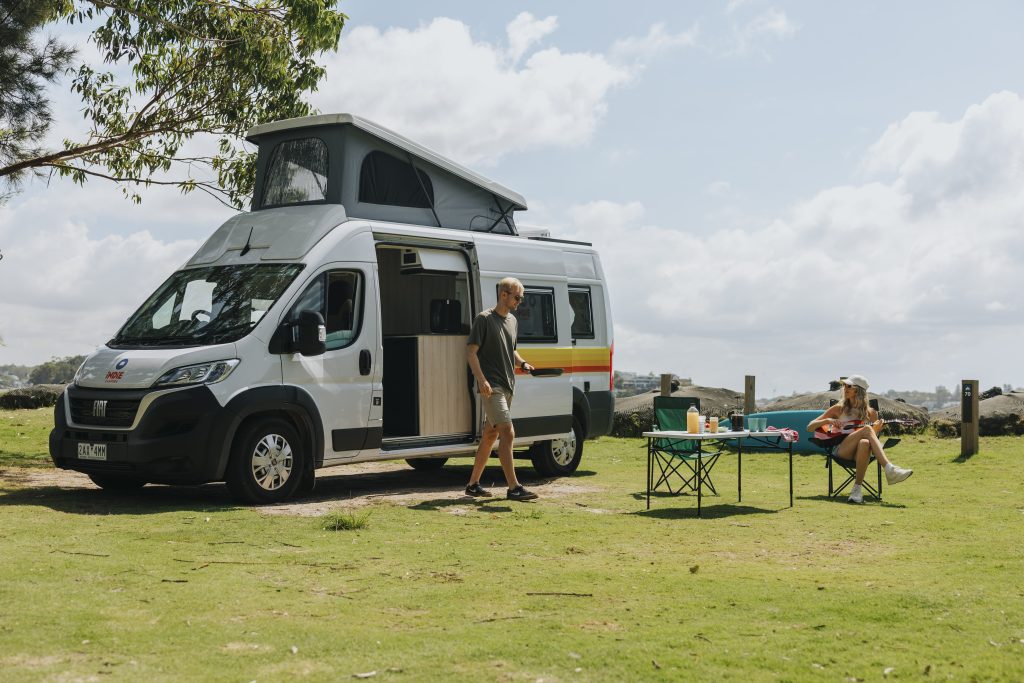
- Camping Chairs: Most RVs don’t come with outdoor chairs, so bring one for every person.
- Outdoor Rug/Mat: This is a game-changer. It defines your patio space and, more importantly, keeps dirt and sand from being tracked inside the RV.
- Folding Table: Helpful for cooking outside or holding drinks if the picnic table is dirty or too far away.
- Hammock: If you are staying in a wooded area, a hammock is the ultimate relaxation tool.
Outdoor Cooking
- Portable Grill: Many RVers prefer cooking outside to keep heat and smells out of the rig. A small propane grill or a charcoal grill works wonders.
- Firewood: Buy this locally near your campground to prevent the spread of invasive insects.
- Marshmallow Roasting Sticks: For s’mores, obviously.
- Tablecloth and Clips: Campground picnic tables can be rough or dirty. A plastic tablecloth makes it clean and inviting. Clips keep it from blowing away in the wind.
Clothing and Personal Items
Packing clothes for an RV trip is all about layers and versatility. You don’t have a massive closet, so bring items that can be mixed and matched.
Clothing Strategy
- Layers: Weather can change fast. Bring t-shirts, long-sleeve shirts, flannels, and a fleece or hoodie.
- Rain Gear: A waterproof jacket is essential. You still have to go outside to hook up utilities or walk the dog even if it rains.
- Comfortable Shoes: Hiking boots for the trails, sneakers for walking around town, and slip-on shoes (like Crocs or sandals) for quick trips in and out of the RV.
- Swimwear: You never know when you’ll find a great lake, river, or campground pool.
- Hat and Sunglasses: Protection from the sun is key, especially while driving.
- Laundry Bag: A dedicated cloth bag to keep dirty clothes separated from clean ones.
Entertainment and Electronics
While the goal is often to unplug, having some entertainment for rainy days or long drives is smart.
- Chargers: For phones, tablets, cameras, and laptops. A multi-port USB charger is very handy.
- Portable Speaker: For music around the campfire (keep the volume respectful of neighbors).
- Books/E-Reader: Perfect for quiet mornings with coffee.
- Board Games/Cards: A deck of cards takes up zero space and provides hours of fun. Classic games like Uno or Bananagrams are great travel companions.
- Camera: To capture the memories.
- Downloaded Maps/Music: Don’t rely on streaming. Download your playlists and Google Maps areas offline before you leave home.
Food and Pantry Staples
Grocery shopping is usually the first stop after picking up the RV. However, having a basic RV packing list camping checklist for food helps you shop efficiently.
Pantry Basics
- Spices: Salt, pepper, garlic powder, and your favorite spice blend.
- Oil and Vinegar: Small bottles are best.
- Coffee/Tea: And sugar/creamer if you use them.
- Condiments: Ketchup, mustard, mayo, hot sauce.
- Snacks: Granola bars, nuts, chips, jerky (great for hiking).
- Canned Goods: Beans, soup, tuna (easy meals).
- Dry Goods: Pasta, rice, oatmeal, bread.
Fresh Food
- Proteins: Eggs, bacon, burgers, hot dogs, chicken.
- Dairy: Milk, cheese, butter, yogurt.
- Fruits & Veggies: Apples, bananas, oranges (sturdy fruit), carrots, peppers, onions.
- Water: Even if your RV has a tank, many people prefer bringing a few gallons of bottled water or a filtered pitcher for drinking.
Don’t Forget the Pets!
If you are bringing your furry co-pilot, they need a bag too.
- Leash and Collar: Most campgrounds require pets to be on a leash at all times.
- Food and Bowls: Collapsible bowls save space.
- Bed/Blanket: A familiar scent helps them settle in a new place.
- Waste Bags: Pick up after your pet!
- Tick/Flea Prevention: Essential if you are hiking in nature.
- Up-to-date Tags: Ensure your phone number is on their collar in case they get lost.
Get Road-Ready with Indie Campers
Does this list feel overwhelming? It doesn’t have to be.
When you book an RV adventure with Indie Campers, we take a huge chunk of the packing off your plate.
We offer a wide range of vehicles, from compact campervans perfect for couples to spacious Class C motorhomes that fit the whole family. But we don’t just give you the keys; we help you gear up.
You can customize your trip by adding our curated extras directly to your booking:
- Kitchen Kit: Includes pots, pans, cutlery, plates, and cooking utensils.
- Bedding Kit: Fresh sheets, pillows, and duvets.
- Cleaning Kit: All the basics to keep the van tidy.
- Outdoor Furniture: Tables and chairs for your campsite.
This means you can fly in, pick up your van, buy some groceries, and hit the road immediately. No need to haul sleeping bags through the airport or buy a frying pan you’ll only use for a week.
We have over 80 locations worldwide, and every rental comes with unlimited mileage, giving you the freedom to explore as far as your heart desires.
Ready to start packing? Choose your dream vehicle and get ready for the road trip of a lifetime.
Frequently Asked Questions (FAQs)
What should you not pack in an RV?
First, swap rigid suitcases for soft duffel bags; hard luggage is tough to store in small cabinets. Leave the glass containers behind, too. They often break on bumpy backroads, so stick with plastic or metal instead. While it’s tempting to bring heavy appliances like air fryers, they hog precious counter space and power. Finally, never pack your own firewood. Buy it locally to help protect the environment from invasive bugs.
How do I organize my RV packing list?
The best way to organize your packing list is by room or activity. Start by grouping items for your kitchen and pantry, then move on to bedroom and bathroom essentials. After that, list your outdoor gear, tools, and maintenance items, and finally, your personal clothing. To keep things tidy, use packing cubes for your clothes and clear plastic bins for any loose items in the storage bays.
What is the most forgotten item on an RV trip?
Surprisingly, it’s often the small, specific tools. A tire pressure gauge capable of reading higher RV pressures is frequently forgotten. Leveling blocks are another common oversight for newbies; without them, you might spend the night sleeping on a slant. Also, don’t forget a lighter for the stove or campfire!
Do I need special toilet paper for an RV?
Yes, absolutely. You must use RV-specific toilet paper. It is designed to break down rapidly in water. Regular household toilet paper is too thick and can clog your RV’s black tank and sewer valves, leading to clogs that are difficult (and gross) to fix.
What food should I pack for an RV trip?
Focus on “one-pot” meals and versatile ingredients to keep things simple. For breakfast, consider easy options like oatmeal, eggs, yogurt, or fruit. Lunch can be quick and convenient with sandwiches, wraps, salads, or leftovers. Dinners are best kept simple with tacos, pasta, stir-fry, or grilled meats and veggies. When it comes to snacks, choose compact options such as trail mix, hummus, or cheese sticks. Avoid purchasing large bulk packages unless you have ample storage space, as pantry and fridge space is often limited.
Can I drink the water in my RV?
Technically, yes, if you are filling the fresh water tank from a potable source. However, many RVers prefer not to drink directly from the tank because it can sometimes have a plastic taste or become stale. It is safe for showering and washing dishes. For drinking and cooking, many people bring bottled water or use a high-quality water filter pitcher.
What tools do I need for an RV?
A basic toolkit is essential for any RV trip. Make sure to pack a multi-bit screwdriver, an adjustable wrench, pliers, and a hammer. It’s also a good idea to bring duct tape, electrical tape, and zip ties for quick fixes. Finally, don’t forget to check your RV manual for the right type of fuses to include, and always have a tire pressure gauge on hand.
How much clothes should I pack for a 7 day RV trip?
A great rule of thumb is the “5-4-3-2-1” packing method. Try packing five pairs of underwear and socks, four shirts (a mix of short and long sleeves), three bottoms like shorts or pants, two pairs of shoes for hiking and relaxing at camp, and one trusty jacket or fleece. Remember, most campgrounds have laundry facilities, so you can always wash clothes mid-trip and save that precious closet space.