AI Summary
Your no-nonsense guide to using portable heaters in campervans, caravans & RVs – safely.
Why Everyone Is Asking: “Is a Portable Heater Safe in My Campervan?”
Imagine this:
You’re parked in the mountains, it’s close to freezing, and your van doesn’t have a diesel heater. Winter is short, you’re on the road now – and the easiest solution seems to be:
“I’ll just buy a small ceramic or fan heater from the shop… is it safe to use inside my van?”
This exact scenario appears constantly in vanlife and caravanning groups. People want something:
- Fast to buy
- Easy to use
- Safe (especially if they’ve lived through a fire before)
- That won’t burn the van down while they sleep
The good news: yes, portable heaters can be safe in a campervan!
but only if you choose the right type, use it in the right context, and respect a few non-negotiable safety rules.
This guide pulls together:
- Real experiences from long-term caravanners and vanlifers
- Expert RV electrical advice
- The pros and cons of each heater type
- A clear “Do / Don’t” checklist you can actually follow
1. The Short Answer: Are Portable Heaters Safe in a Campervan?
Yes, if…
- The heater is designed for indoor use
- You’re plugged into a proper mains hookup (for electric heaters)
- There’s space around the heater and nothing flammable near it
- You have a working smoke alarm and CO detector (for fuel heaters)
- You don’t leave it running unsupervised or in unsafe situations
No, or “very risky”, if…
- You’re using a heater not meant for enclosed spaces (e.g. patio, kerosene, DIY hacks)
- It’s running off undersized wiring, cheap extension leads or small inverters
- You’re using gas stoves or ovens “as heaters”
- You block vents, cover the heater with clothes/blankets, or ignore basic safety
2. The Main Types of Portable Heaters – From Safest to Riskiest
Let’s go through the most common options you’ll see vanlifers use or ask about.
2.1 Electric Portable Heaters (Fan, Ceramic, Panel, Oil Column)
Best for: People staying at powered campsites, caravans on mains power, winter road trips with regular hookups.
Typical examples:
- Small ceramic fan heaters (like the De’Longhi one that travellers often grab in a pinch)
- Simple floor fan heaters from supermarkets – very common
- Electric panel heaters that gently warm the air
- Oil-filled column heaters, which many people love for the “soft, non-dry” heat
Pros
- No combustion → no direct carbon monoxide risk
- Many models have:
- Tip-over safety switch
- Overheat protection
- Thermostat → cycles on and off instead of running full power constantly
- Perfect for:
- Quick warm-up in the evening or morning
- Keeping a caravan at a cozy 20 to 23ºC when plugged into power
- People who dislike loud, forced-air RV furnaces
Cons & Risks
- Electric load: Most portable heaters are 1500 W ≈ 12.5 A.
If your RV wiring or campground supply is marginal, continuous full-power draw can:- Overload circuits
- Heat up weak connections
- Trip breakers (best case) – or, in the worst case, contribute to a fire if the wiring is already compromised.
- Only realistic on mains power.
Running a 1500 W heater from batteries/inverters is simply not practical for more than very short bursts. - Air can feel “dry” or “dusty” to some people, especially with older fan heaters.
Safety Tips for Electric Heaters in Campervans
- Use one electric heater per circuit – don’t run toaster + kettle + heater on the same outlet.
- Prefer heaters with:
- Tip-over switch
- Thermostat (so they cycle on/off)
- Overheat protection
- Keep them:
- On a flat, stable surface
- Well away from bedding, curtains, cushions, plastic panels
- Avoid cheap multi-plugs and long, thin extension leads inside the van.
- In freezing temps: keep your built-in furnace low to protect pipes & tanks, and use the electric heater mainly for comfort.
Verdict:
Safest portable option when you’re hooked up to power.
Great as a main heater on campsites, or as a quiet supplement to an RV furnace.
2.2 Diesel Air Heaters (e.g. Webasto, Autoterm)
Best for: Full-time vanlifers, off-grid winter trips, remote camping, ski trips.
These aren’t exactly “plug in and move around” portable, but they are a common decision point when people ask:
“Should I buy a portable electric heater now, or wait to install a diesel heater?”
Pros
- Combustion happens outside the living space; warm air is blown inside.
- Very fuel-efficient; often 0.1 to 0.2 L diesel per hour on low.
- Can run all night when installed correctly.
- Ideal for off-grid and very cold environments.
Cons & Risks
- Installation quality = everything.
Poor DIY installs (bad exhaust routing, leaks, no clearances) can be dangerous. - More expensive upfront than a €20 fan heater.
- Diesel emissions & future restrictions in some low-emission zones.
Verdict:
One of the best long-term heating solutions, but not a “quick fix”.
If you mostly travel a few cold nights per year, a small electric heater on campsites may be enough. For serious winter vanlife, a properly installed diesel heater is hard to beat.
2.3 Gas / Propane Heaters (e.g. “Buddy” style heaters, gas furnaces)
Best for: Short bursts of heat, off-grid situations, vans already set up with gas systems.
Pros
- Strong, fast heat output.
- Great for short warm-up sessions: evenings, mornings, or taking the chill off the air.
- Fuel is often already on board for cooking.
Cons & Risks
- Produce carbon monoxide and consume oxygen.
- Increase condensation inside the van.
- Require good ventilation and CO detectors.
- Never safe to sleep with a portable propane heater running.
You’ll see a lot of seasoned campers say something like:
“We use a small electric heater in caravan parks and the diesel (or gas) heater when we’re free camping.”
Verdict:
Can be used safely with strict rules: ventilation, CO alarm, never while sleeping, no DIY hacks.
Better suited for built-in systems than for random portable units.
2.4 Wood-Burning Stoves & “DIY” Heaters (Flowerpot, Tea Lights, etc.)
They look romantic on Instagram, but in real life:
- Require serious installation (chimney, clearances, shielded walls).
- Pose obvious fire risks in tiny spaces full of wood, fabric and plastic.
- Need constant attention and good ventilation.
DIY heater hacks (flowerpot + candles, etc.) are sometimes suggested for “emergencies”, but:
- They produce very little heat.
- They can create hot surfaces, poor airflow and CO build-up.
Verdict:
Not recommended for most campervans!
If you go down this path, it must be designed and installed to marine/wood-stove safety standards – not as a quick experiment on a trip.
3. What Real Campers Actually Do (Summarising the Comments You Found)
From long threads of caravanners and vanlifers, you see a few clear patterns:
- Many people in Australia and the UK use small fan or ceramic heaters in caravans and pop-tops when they’re on power:
- They love how they cycle with a thermostat,
- Keep things at 20 to 24°C comfortably,
- And are quieter than running the A/C or furnace fan all night.
- Others swear by oil column heaters for a softer, less “dry” heat and low noise.
- A lot of experienced travellers combine:
- Electric heater on powered campsites, and
- Diesel or gas heater when free camping.
- Safety instincts are strong:
- People explicitly look for tip-over switches.
- Those who’ve experienced a house fire are understandably extra cautious and still feel comfortable with modern electric heaters once they understand the features.
- Several point out that good airflow and vents in the caravan/RV make using a small electric heater feel safer and more pleasant than cranking the aircon.
In short:
Most long-term travellers do use small electric heaters inside vans and caravans and feel safe doing so as long as they’re on a proper power hookup and use basic common sense.
4. The Hidden Risks: Why Space Heaters Cause So Many Fires in Homes & RVs
Safety organisations point out that space heaters are involved in a large share of heating-related home fires. The reasons are almost always the same:
- Too close to flammable materials
– bedding, sofas, curtains, clothes. - Continuous full-power draw
– especially with non-thermostat heaters that run at 1500 W for hours. - Old or compromised wiring
– loose connections behind outlets, cheap power strips, underrated extension leads. - Poor placement in tiny spaces
– where a heater can be kicked, covered or knocked over.
In RVs and campervans, there are extra points to consider:
- Some rigs rely on the central furnace to keep the underbelly, tanks and pipes above freezing.
If you only heat the bedroom with a portable heater, the rest of the plumbing may still freeze. - RV park wiring can sometimes be marginal, if everyone is running cheap heaters on full blast, breakers can trip and connections overheat.
The takeaway isn’t “never use electric heaters”.
It’s: Use a good one, in a smart way, in the right context.
5. Non-Negotiable Safety Checklist for Portable Heaters in Campervans
You can turn this into a safety box in the blog:
Always:
- Use heaters approved for indoor use
- Keep at least 1 metre clearance around the heater
- Choose models with:
- Tip-over protection
- Overheat shut-off
- Thermostat
- Plug into a proper campsite power hookup or a correctly rated circuit
- Install and regularly test:
- Smoke alarm
- Carbon monoxide detector (if you use any fuel-burning appliance)
- Keep a small fire extinguisher within reach
Never:
- Use cookers / stovetops / ovens as heaters
- Run a propane portable heater while sleeping
- Cover the heater with clothes, towels or blankets
- Run a 1500 W heater from a small inverter or a thin extension lead for hours
- Ignore weird smells, buzzing noises or discoloured outlets, switch off and investigate
6. How This Fits With Indie Campers Vehicles
If you’re renting with Indie Campers, your heating options are usually:
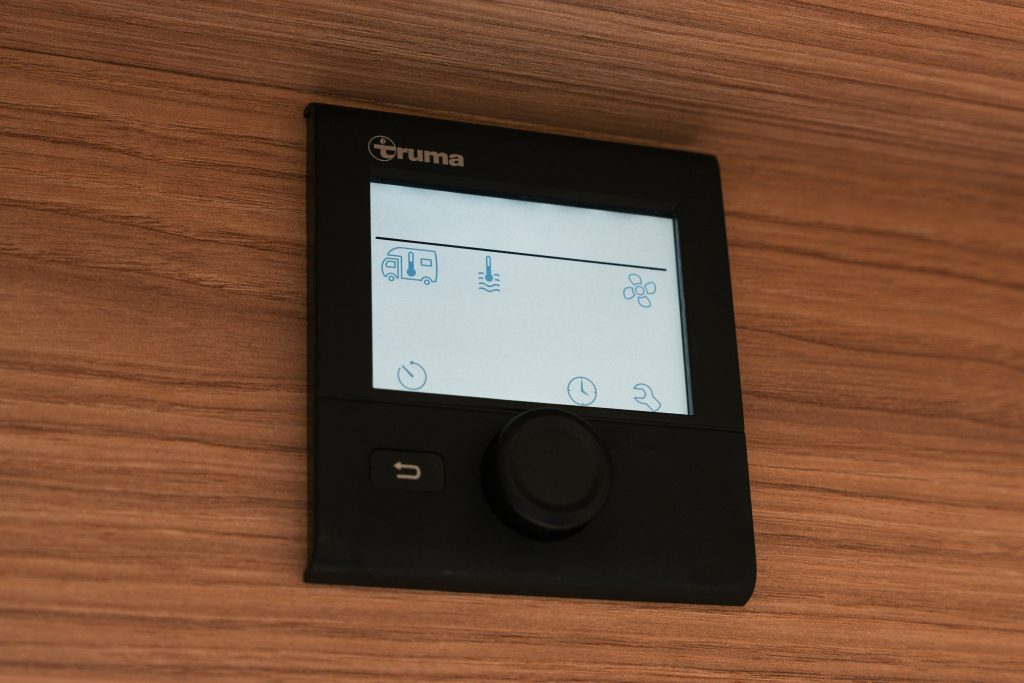
- Built-in TRUMA or similar diesel/gas heaters (for air + water)
- Gas air heaters in some vehicles
- 220V water boilers (for hot water only)
- Optional 220V portable fan heaters at some depots (for use when plugged into a campsite)
Best Practice for Renters
- Use the built-in heater as your main night-time heat source.
- Add a portable 220V heater when you’re:
- On a campsite with mains power
- Want a quick boost of heat in morning/evening
- Prefer something quieter than the main furnace
- Combine with:
- Thermal window covers
- Good bedding
- A hot water bottle
- Light overnight ventilation to manage condensation
7. FAQ – Fast Answers for Worried Campers
Is a 1500 W heater enough to heat a campervan?
Yes, for a small/medium van with reasonable insulation, a 1500 W electric heater can keep things comfortable in many winter conditions, especially if you also insulate windows and use good bedding.
Is it safe to leave an electric heater on all night?
In theory, a modern, certified heater with thermostat, tip-over switch and clear space around it can run at night. In practice, many travellers prefer:
- Lower settings
- Extra bedding
- Or using the van’s built-in heating system overnight instead.
Can I run a portable electric heater off my van battery and inverter?
Realistically, no. A 1500 W heater will drain even a good leisure battery extremely fast. Electric heaters are for shore power, not off-grid heating.
Do I really need a CO detector if I’m only using electric heat?
If you only use electric appliances, the CO risk is low but most vans also have gas cooking, fridges or diesel heaters. A CO detector is cheap and adds a big safety layer.
What’s more important: a heater or insulation?
Insulation is the true MVP. Without it, you’ll always be fighting heat loss.
A well-insulated van + modest heater > badly insulated van + powerful heater.
8. Final Verdict: Are Portable Heaters for Campervans Safe?
Yes, if you:
- Pick the right type of heater for your travel style
- Use it in the right conditions (mains power vs off-grid, mild vs deep winter)
- Follow basic safety rules (clearances, detectors, wiring, no DIY shortcuts)
Safest combo most travellers end up with:
- Electric portable heater on powered campsites
- Diesel or built-in gas heating for free camping and extreme cold
- Good insulation, window covers, and solid bedding as the foundation
Used wisely, a portable heater turns your campervan from a cold metal box into a cozy winter cabin on wheels without compromising safety!