Key Takeaways
Planning a trip to New Zealand? This New Zealand itinerary 14 days guide covers both islands – from the geothermal wonders of the North to the fiords and glaciers of the South, with a whole lot of incredible driving in between.
Here’s a quick overview of what to expect:
- Iconic Stops: Auckland’s volcanic skyline, Hobbiton’s rolling hills, Rotorua’s geothermal parks, Queenstown’s lake views, and Milford Sound’s dramatic fiords.
- Hidden Gems: The glowworm caves at Waitomo, the mirror lakes at Wanaka, and the wild West Coast road between Franz Josef and Greymouth.
- Recommended Transport: Campervan rental with Indie Campers is the most flexible and cost-effective way to cover both islands, combining your accommodation and transport in one.
- Recommended Budget: NZD $150-$250 per person per day. Covers campsites, food, fuel, and attractions (excludes RV rental).
- Best Time to Go: November to March (New Zealand summer) – best weather, all roads open, and the country’s landscapes at their most vivid.
2-Week New Zealand Itinerary: At a Glance
| Day | Location(s) | Top Highlights |
| Day 1 | Auckland | Sky Tower views, Waitemata Harbour walk, try a Māori hāngī |
| Day 2 | Matamata (Hobbiton) | Hobbiton Movie Set tour, rolling Waikato farmland, Shire’s Rest café |
| Day 3 | Rotorua | Te Puia geothermal park, Wai-O-Tapu thermal wonderland, try rewena bread |
| Day 4 | Waitomo & Taupo | Glowworm Caves, Lake Taupo sunset, Huka Falls |
| Day 5 | Tongariro National Park | Tongariro Alpine Crossing (19km), Emerald Lakes, try kumara soup |
| Day 6 | Wellington | Te Papa Museum, Wellington waterfront, flat white at Customs café |
| Day 7 | Picton → Kaikōura | Cook Strait ferry, Kaikōura whale watching, fresh crayfish |
| Day 8 | Christchurch | Botanic Gardens, Cardboard Cathedral, try a Canterbury lamb pie |
| Day 9 | Aoraki/Mt. Cook | Hooker Valley Track, Tasman Glacier views, Hermitage hotel stargazing |
| Day 10 | Wanaka | Roys Peak hike, Puzzling World, dinner at Francesca’s Italian Kitchen |
| Day 11 | Queenstown | Skyline Gondola, Fergburger, bungee jumping at Kawarau Bridge |
| Day 12 | Milford Sound | Te Anau drive, Milford Sound cruise, Mirror Lakes stop |
| Day 13 | Franz Josef Glacier | West Coast drive, glacier hike or helicopter flight, Knights Point Lookout |
| Day 14 | Greymouth → Christchurch | TranzAlpine Scenic Train or SH73 drive, depart from Christchurch |
Table of Contents
- Why You’ll Love a 14-Day Trip to New Zealand
- Best Time to Visit New Zealand
- Are 14 Days Enough to Visit New Zealand?
- How to Get Around New Zealand?
- The Ultimate New Zealand Itinerary: 14 Days of Adventure
- New Zealand South Island 2-Week Itinerary: Alternative Route
- Map of Your 14-Day New Zealand Itinerary
- Budgeting for Your Trip: How Much Does 2 Weeks in New Zealand Cost?
- Plan Your New Zealand Road Trip with Indie Campers
- 14-Day New Zealand Itinerary: Final Planning Recap
- FAQs About New Zealand Itinerary 14 Days
Why You’ll Love a 14-Day Trip to New Zealand?
New Zealand packs more landscapes into one country than almost anywhere else on Earth. In a space of two weeks, you can be standing in a volcanic crater, walking through a real-life hobbit village or watching a pod of sperm whales surface off coast and even cruise through a fiord with waterfalls on both sides.
The North Island and South Island feel genuinely different: one warm, volcanic, and Māori-culture-rich; the other cold, alpine, and wild. A well-planned, 2-week New Zealand itinerary gives you just enough time to experience both.
A road trip, especially in a campervan, keeps you mobile and the costs manageable. What’s more, you wake up exactly where you want to be. Indie Campers operate out of Auckland, Christchurch, and Queenstown – so whether you’re doing a full loop or a one-way South Island run, there’s a pickup point around to get you started.
In addition, the food and culture are worth the trip on their own, with New Zealand’s food scene being an absolute banger: think fresh crayfish pulled from the Kaikōura coast, slow-cooked lamb from Canterbury farms, and some of the best flat whites you’ll ever drink.
Māori culture is woven into everything: place names, food, art, and hospitality. Spending 14 days here means you eat well, drive through extraordinary scenery every day, and come home with a very long list of reasons to go back again.
Best Time to Visit New Zealand
The season you choose shapes everything: from road access in the national parks to how long you’ll spend standing in line at Hobbiton.
Here’s a quick breakdown to help figure the best time to plan your 2-week New Zealand itinerary:
Summer (December to February)
New Zealand summer is the most popular time to visit, and for good reason. The days are long, the weather is warm and reliable, and all major roads and hikes; including the Tongariro Alpine Crossing and the Milford Sound road, are fully open.
- Average Temperatures: 61-77°F (16-25°C) North Island; 50-68°F (10-20°C) South Island
- What to expect: Summer brings the best overall weather, but also the largest crowds and highest prices across campsite bookings, attractions and even RV rentals. When planning your 2-week New Zealand itinerary, don’t forget to book at least 3 months in advance
Autumn (March to May)
Autumn is a strong runner-up to summer. Temperatures remain mild through March and April, the summer crowds thin out, and the South Island’s beech forests turn amber and gold. The Tongariro Crossing is still doable through April, and Milford Sound’s waterfalls are at their most dramatic after autumn rainfall.
Here’s what you need to plan your New Zealand itinerary for 14 days:
- Average Temperatures: 50-68°F (10-20°C) North Island; 43-61°F (6-16°C) South Island
- What to expect: Autumn in New Zealand usually has fewer crowds compared to summer, with lower prices and spectacular fall colors, especially around Wanaka and Queenstown being major attractions.
Spring (September to November)
Spring is an underrated, and often overlooked season for a road trip in New Zealand. It is during this time of the year that Lupin flowers bloom in stunning purple and pink around Lake Tekapo in October and November, and alpine road access improves steadily throughout the season.
Here’s what you need to keep in mind:
- Average Temperatures: 50-64°F (10-18°C) North Island; 43-57°F (6-14°C) South Island
- What to expect?: Has a lot of unpredictable weather early in the season, improving conditions through November, while the lupin blooms near Tekapo, one of the country’s most-photographed natural events.
Winter (June to August)
Winter is a good option for budget travelers and skiers. Queenstown and Wānaka transform into ski resort towns, and the South Island’s mountains look spectacular under snow. That said, some alpine roads and hikes close during this period, which makes the full 14-day loop difficult to complete.
Here’s a quick snapshot of what to expect:
- Average Temperatures: 41-54°F (5-12°C) North Island; 34-50°F (1-10°C) South Island
- What to expect: Lowest prices, fewest tourists, ski season in full swing – but limited access to alpine roads and some national park hikes.
Are 14 Days Enough to Visit New Zealand?
Yes, 14 days is the sweet spot for a first visit to New Zealand. It’s enough time to cover both the islands properly without rushing through every stop in a blur.
Many travelers try to see the entire country in a week and end up spending most of it behind the wheel. Two weeks lets you slow down where it counts – a full day at Milford Sound, a proper hike at Mt. Cook, two nights in Queenstown – while still covering the highlights from Auckland in the north to the West Coast glaciers in the south.
The key is a smart route that minimizes backtracking. This New Zealand 2-week itinerary follows a one-way path: fly into Auckland, travel south through the North Island, take the ferry across, and work your way down the South Island to Christchurch for departure.
In 14 days, you’ll see geothermal steam vents, one of the world’s great day hikes, a real hobbit village, whale watching, glaciers, and fiords. By the end, you’ll have a shortlist of everything you want to come back for.
How to Get Around New Zealand?
When it comes to exploring New Zealand, a campervan is the most practical way to do this itinerary, and in New Zealand, it’s also one of the most enjoyable.
Public transport between the major highlights is either slow, infrequent, or completely non-existent. Buses connect some cities, but getting to Tongariro, Milford Sound, Mt. Cook, or Franz Josef without your own vehicle is genuinely difficult. Renting a car solves the logistics problem – but then you’re paying separately for accommodation every night in a country where hotels and even hostels are expensive.
This is where we recommend exploring the option of an RV rental in New Zealand. The best part is you can travel on your schedule, stop wherever you want and sleep at one of the 2,000+ campsites in New Zealand, locations which aren’t accessible otherwise.
Indie Campers offers a plethora of such options: from compact vans perfect for couples and larger RVs for families. What’s more, they even have pickup locations in Auckland, Christchurch and Queenstown – making one-way rentals an ideal option to move around.
Pick up in Auckland and drop off in Christchurch; which is exactly what this 14-day route is designed for. All rentals on company-owned vehicles include unlimited mileage, so you won’t think twice about the 290km detour to Milford Sound.
The Ultimate New Zealand Itinerary: 14 Days of Adventure
Two weeks, two islands, one road trip.
This detailed New Zealand guide will give you a daywise plan to follow before you spend time creating your New Zealand
Day 1: Arrive in Auckland

Morning (9:00 AM): Sky Tower & the City
Most international flights into New Zealand land in Auckland, and then arrive in the early morning. After clearing customs, pick up your campervan from the Indie Campers depot and head into the city.
Your first stop is the Sky Tower; at 1,076 feet (328m), the observation deck gives you an instant orientation of the city: the Waitemata Harbour to the east, Rangitoto Island sitting in the harbour like a near-perfect cone, and the Waitakere Ranges to the west. Tickets cost NZD $32 for adults; book online to skip the queue. On a clear morning, you can see all the way to the Coromandel Peninsula.
Practical tip: The Sky Tower is a low-effort, high-reward first activity . It is an ideal first attraction to check out, especially if you’re jet-lagged from a long-haul flight.
Afternoon (1:00 PM): Ponsonby & the Waterfront
For lunch, you can then head to Ponsonby Road; Auckland’s best stretch for food, lined with cafés, restaurants, and bakeries. Try a flat white and a New Zealand lamb and mint pie. After lunch, walk the Waitemata Harbour waterfront from the Viaduct Basin east toward Mission Bay – about 45 minutes and a good way to feel the city’s relationship with the water.
Evening (6:00 PM): Māori Hāngī Dinner
For your first dinner in New Zealand, try a hāngī – the traditional Māori method of slow-cooking meat and vegetables in an earth oven. Tāmaki Māori Village runs a cultural evening with hāngī dinner included; book ahead, as sessions fill quickly.
Slow-cooked chicken, lamb, potato, and kumara; is an earthy, filling, and a genuine introduction to Māori culture. Tonight you end the day with the harbour lights on the water and the start of something genuinely exciting.
Day 2: Hobbiton & the Waikato

Morning (8:00 AM): Drive to Matamata
From Auckland, it’s roughly 2 hours south to Matamata. The drive takes you through the Waikato – New Zealand’s dairy heartland, and the rolling green hills look exactly like Middle Earth before you even arrive.
The Hobbiton Movie Set tour is a 2-hour guided walk through 44 hobbit holes built into the hillside at Alexander Farm, ending at the Green Dragon Inn for a complimentary drink. Tickets cost NZD $49 per adult and must be booked weeks in advance during peak season. Don’t just turn up and hope for the best.
Practical tip: First tours at 9:00 AM are less crowded and the morning light on the hillside is better for photos.
Afternoon (1:00 PM): Cambridge & the Drive South
After Hobbiton, drive 30 minutes to Cambridge, a market town on the Waikato River with good cafés and a Saturday market. Lunch here, then head 1.5 hours south toward Rotorua.
Evening (5:00 PM): Rotorua Arrival
You’ll arrive in Rotorua in the late afternoon. The sulfur smell is immediate, it’s the thermal activity, and you’ll stop noticing it within the hour. Walk down to Lake Rotorua at dusk: steam rising off the water, Māori carvings along the lakefront, and a quiet first taste of what makes this region different from everywhere else on the trip.
Day 3: Rotorua’s Geothermal World
Morning (9:00 AM): Te Puia
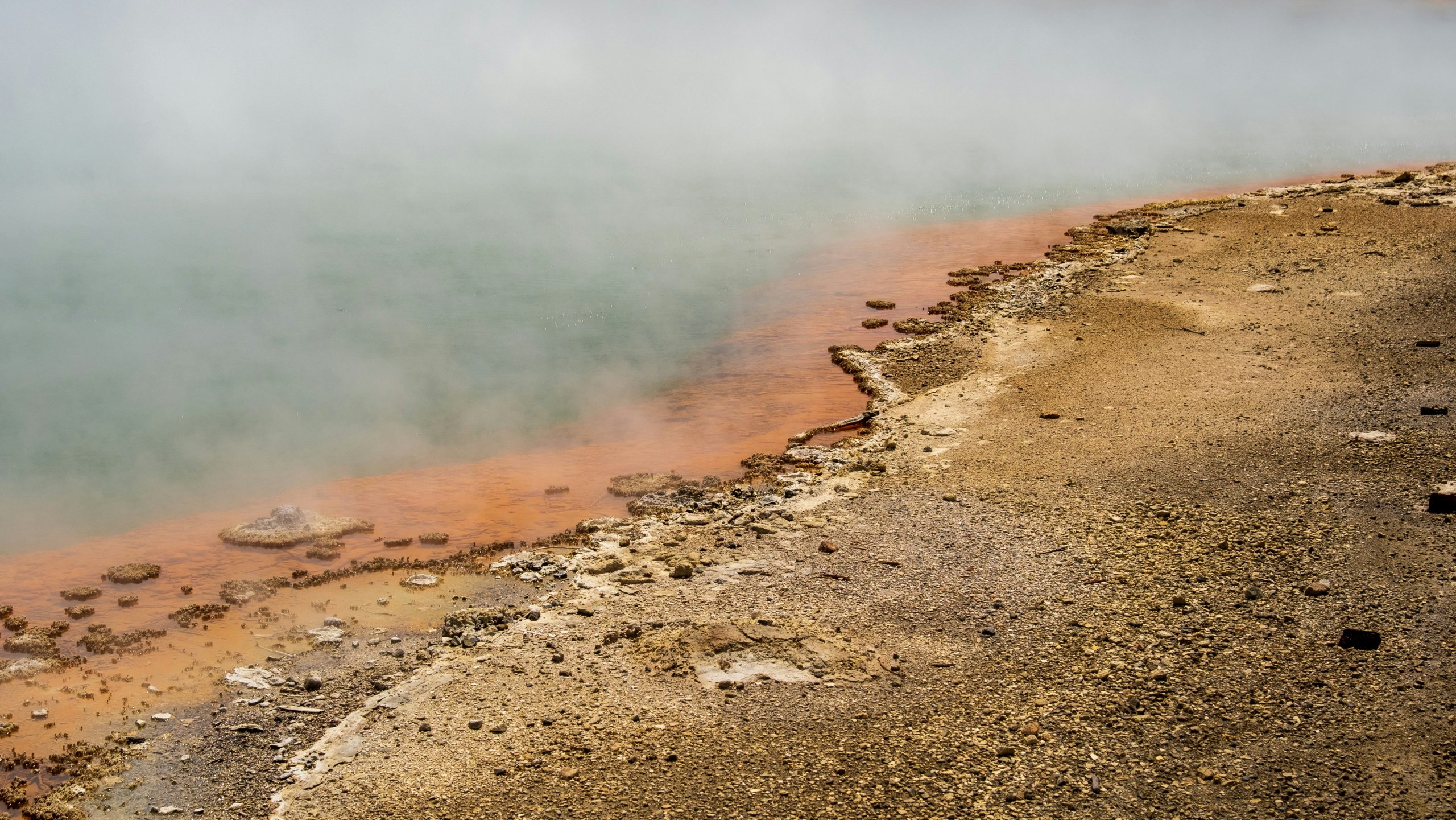
Te Puia is the best place to experience both Māori culture and geothermal activity in one stop. Pōhutu Geyser – the largest active geyser in the Southern Hemisphere – erupts up to 20 times a day and shoots water 100 feet (30m) into the air.
The park also includes the New Zealand Māori Arts and Crafts Institute, where master carvers and weavers work in public view. Book ahead: NZD $70 for adults, morning session includes a cultural performance.
Afternoon (1:00 PM): Wai-O-Tapu
About 30km south of Rotorua, Wai-O-Tapu Thermal Wonderland is the most visually spectacular geothermal park in the country. The Champagne Pool is a bright orange-rimmed acid lake, the Artist’s Palette is a field of yellow and green mineral deposits, and the whole place looks like a painter left their palette in the middle of a volcanic field. Plan 2 hours; NZD $38 per adult.
For lunch, Capers Epicurean on Eruera Street in Rotorua is a local favorite: good cabinet food and proper coffee.
Evening (6:00 PM): Government Gardens & Dinner
Walk through Government Gardens in the evening – steam rises through the grass between the flower beds, which is exactly as strange as it sounds. For dinner, Terrace Kitchen on Fenton Street does excellent rewena bread (traditional Māori sourdough made with potato starter) and locally sourced lamb.
Day 4: Waitomo Glowworm Caves & Taupo
Morning (8:30 AM): Drive to Waitomo
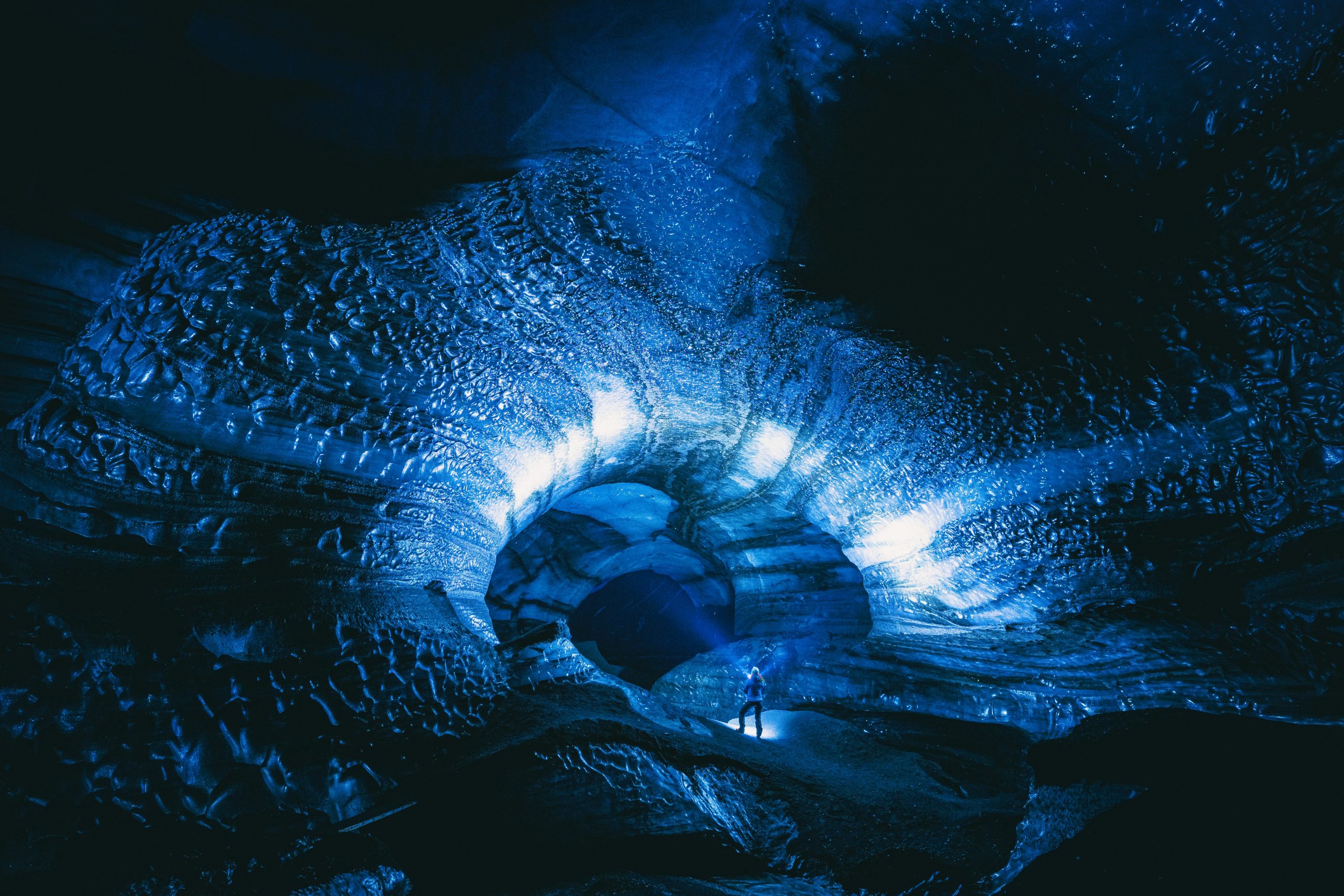
From Rotorua, it’s 1.5 hours northwest to Waitomo. The Waitomo Glowworm Caves tour takes you through limestone caverns by foot and then by boat – in total darkness, drifting under a ceiling of thousands of glowworms (Arachnocampa luminosa, found only in New Zealand and Australia).
The effect is like floating under a living starfield. Standard tickets are NZD $57; tours run every 30 minutes. Book ahead – this fills up fast in summer.
Afternoon (1:00 PM): Huka Falls & Taupo
From Waitomo, drive 1.5 hours east to Taupo. Stop at Huka Falls on the way into town – the Waikato River is compressed into a 15-meter-wide channel and launches 11 meters over a ledge at 220,000 liters per second. It’s free, roadside, and extraordinary. For lunch, Dixie Browns on the main street does excellent burgers and is a local institution.
Evening (5:00 PM): Lake Taupo at Sunset
Lake Taupo sits inside the caldera of a supervolcano. Late afternoon, with the Tongariro volcanoes visible in the distance on a clear day, is one of the best views on the North Island. Park up at a lakeside campsite for the night – several are right on the water.
Day 5: Tongariro Alpine Crossing
Morning (6:00 AM): The Crossing
Today is the big one. The Tongariro Alpine Crossing; 19.4km through active volcanic terrain, past the Emerald Lakes, along the edge of Red Crater, over the slopes of Mt. Ngauruhoe (Mount Doom); is consistently ranked among the best one-day hikes in the world. The full walk takes 6-8 hours.
You can’t park at the trailhead during peak season, shuttle buses run from Taupo and National Park Village from 6:00 AM. Book the shuttle the day before; NZD $30-$45 return. Bring layers, a waterproof jacket, sturdy boots, sun protection, lunch, and 2 liters of water. Mountain weather changes fast.
Evening (5:00 PM): National Park Village
After the crossing, you’ll be dropped back near National Park Village. Schnapps Bar & Restaurant is the post-hike default and delivers exactly what you need: the venison burger and chips after 8 hours on a volcano. Sleep well.
Day 6: Wellington & the Cook Strait Ferry

Morning (9:00 AM): Drive to Wellington
From National Park Village, it’s about 3.5 hours south to Wellington. New Zealand’s capital is known for wind and coffee – and the coffee reputation is entirely deserved. Customs Brew Bar on Ghuznee Street and Fidel’s Café on Cuba Street are both worth stopping at. Make sure to try the eggs Benedict because the food scene here punches above the city’s size big time.
Afternoon (1:00 PM): Te Papa & Cuba Street
Te Papa Tongarewa is New Zealand’s national museum and it’s free. Set aside 2-3 hours – the Māori exhibits are genuinely world-class, and the natural history floor includes a colossal squid and a walk-through earthquake simulator. After Te Papa, walk Cuba Street – Wellington’s bohemian main strip, full of record shops, independent cafés, and street art.
Evening (5:30 PM): Interislander Ferry
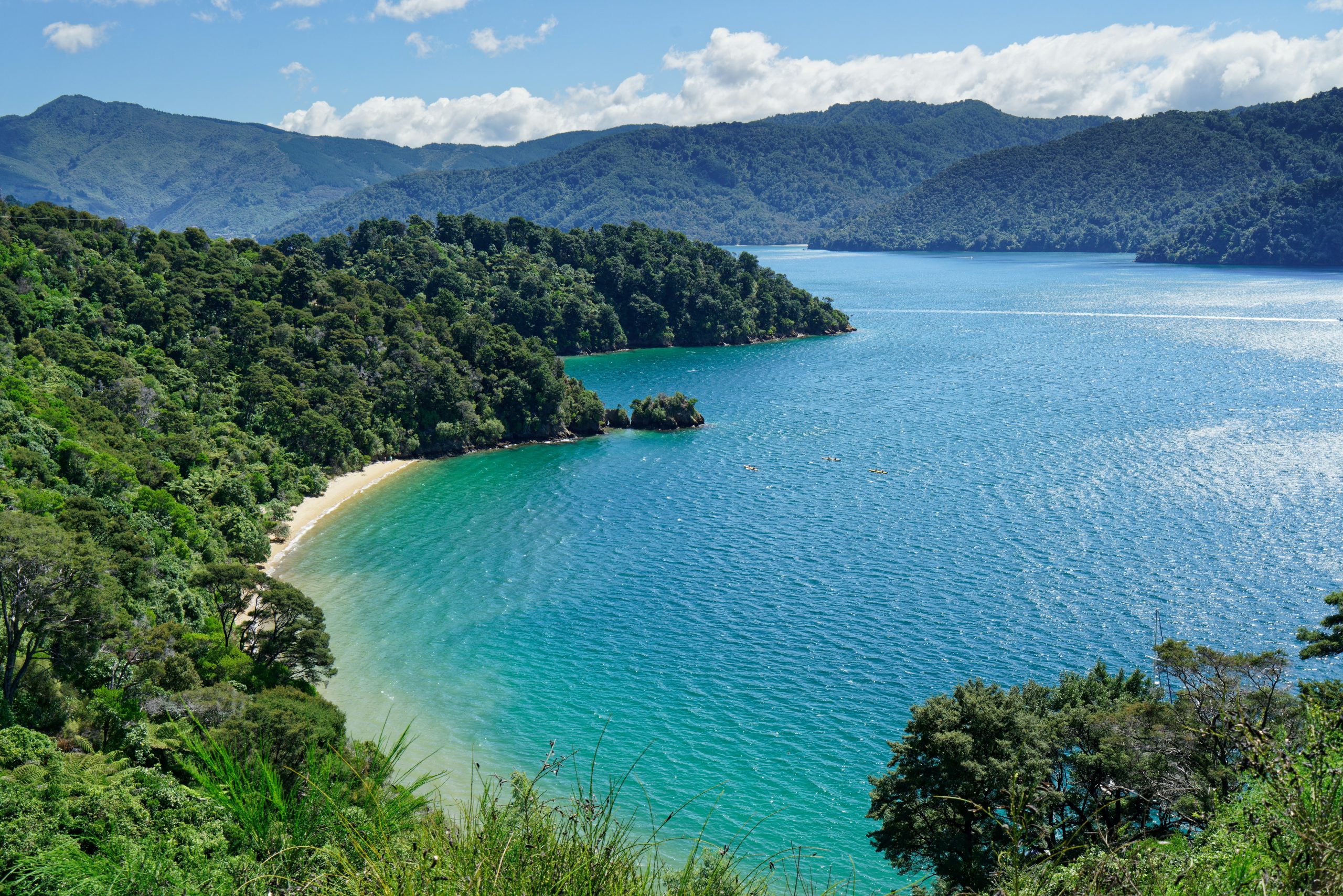
Book the Interislander ferry from Wellington to Picton in advance. The crossing takes 3.5 hours; campervans drive on. The scenery through the Marlborough Sounds at the end is worth staying on deck for.
Day 7: Picton to Kaikōura
Morning (9:00 AM): Picton & the Drive South
Make sure you arrive in Picton early morning. Have breakfast at Le Café on the marina, then drive south on State Highway 1 toward Kaikōura 2.5 hours. The road hugs the coastline for much of the way, and the stretch between Clarence and Kaikōura – where the Kaikōura Ranges drop almost directly into the sea – is one of the most dramatic coastal drives in the country.
Afternoon (1:00 PM): Whale Watching in Kaikōura
Kaikōura sits above deep ocean trenches that produce some of the richest marine biodiversity in the southern hemisphere. The result: sperm whales, year-round. Whale Watch Kaikōura runs boat tours with a sighting guarantee (80% refund if no whale). Book at least a few days ahead in summer; NZD $165 per adult.
For lunch, get a crayfish from one of the roadside stalls on the main highway. Kaikōura rock lobster is pulled fresh from the ocean and half the price you’d pay in a restaurant. Crack it open at a picnic table with the mountains behind you – one of the best things you’ll eat on this trip.
Evening (5:00 PM): Ōhau Point & Camp
Stop at Ōhau Point seal colony on the way back into town – fur seals hauling out on the rocks in large numbers, often with pups. It’s free, roadside, and regularly skipped by travelers moving too fast. Camp in Kaikōura tonight: mountains on one side, ocean on the other.
Day 8: Christchurch
Morning (9:00 AM): Drive to Christchurch
Two hours south on SH1 brings you to Christchurch – the South Island’s main hub, still rebuilding from the 2011 earthquake. The rebuild has produced a genuinely interesting city: unexpected murals, container architecture, and some of the best new restaurants in New Zealand.
Afternoon (1:00 PM): Botanic Gardens & Cardboard Cathedral
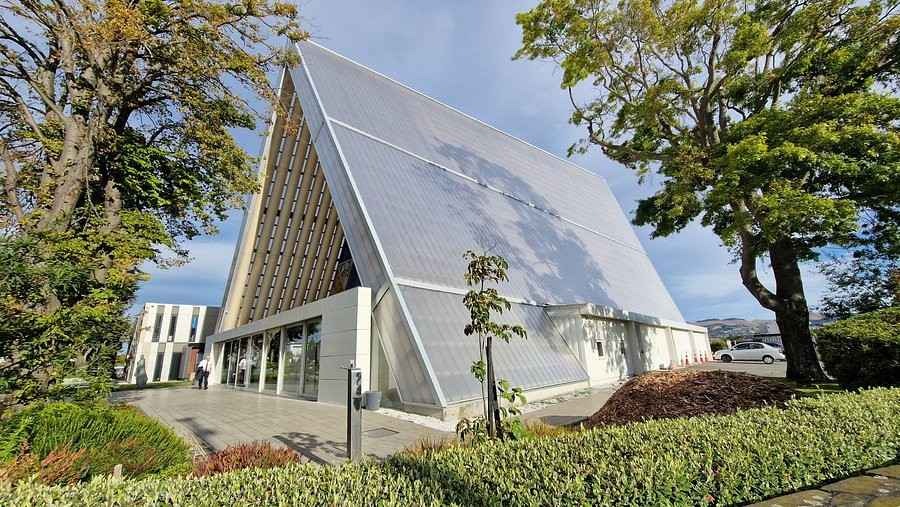
Start at the Christchurch Botanic Gardens – free, large, and spectacular in summer. Walk from there to the Transitional Cardboard Cathedral, built from cardboard tubes after the original was damaged in the earthquake.
It’s beautiful inside and a symbol of what the city went through. For lunch, the Little High Eatery on Lichfield Street is a food hall with multiple kitchens – Fiddlesticks does excellent Canterbury lamb dishes.
Evening (5:00 PM): New Regent Street
New Regent Street is Christchurch’s prettiest stretch – Spanish Mission architecture, a tram running down the center, and a line of good restaurants. Have dinner here. A Canterbury lamb pie from Vic’s Bakery is under NZD $10 and one of the more satisfying things you’ll eat this week.
Day 9: Aoraki/Mt. Cook
Morning (8:00 AM): Drive via Lake Tekapo
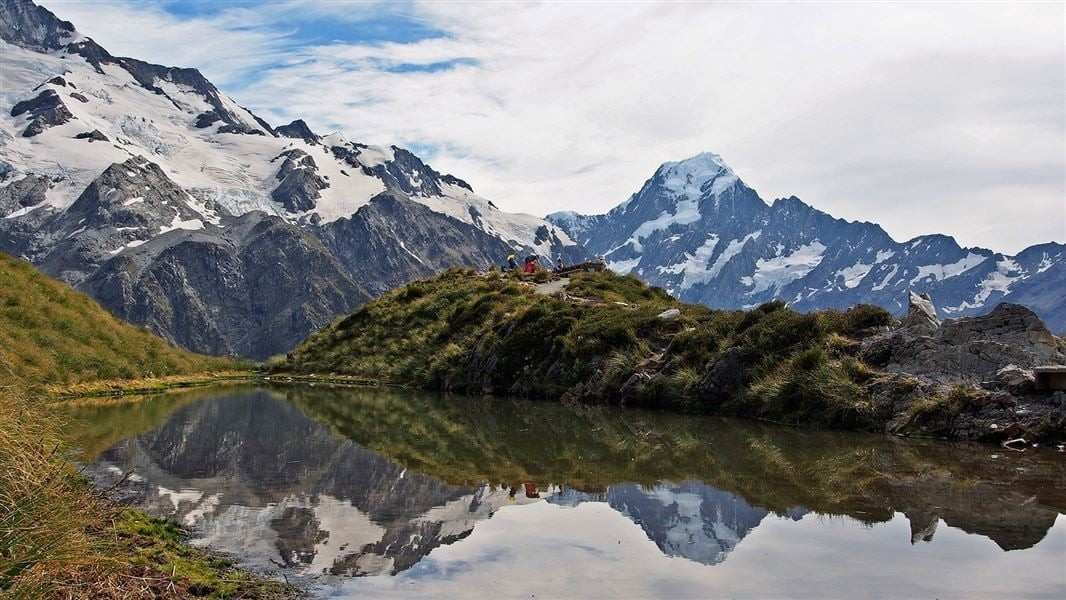
From Christchurch, it’s 3.5 hours to Aoraki/Mt. Cook via State Highway 1 south, then inland through the Mackenzie Basin. Stop at Lake Tekapo on the way – the lake’s turquoise color comes from glacial flour suspended in the water, and the Church of the Good Shepherd with Mt. Cook, visible through the window, is one of the most photographed scenes in New Zealand. In November, the surrounding fields are covered in pink and purple lupins.
Afternoon (1:00 PM): Hooker Valley Track
At Mt. Cook Village, the Hooker Valley Track is non-negotiable: 10km return (3 hours), three swing bridges, two glacier lakes, and Aoraki/Mt. Cook (3,724m – the highest mountain in Australasia) ahead of you the entire way. No technical skill required; trail shoes work fine in summer.
Evening (7:00 PM): Stargazing
The Mackenzie Basin is part of the Aoraki Mackenzie International Dark Sky Reserve – one of the largest in the world. On a clear night, the Milky Way is visible with the naked eye and the Southern Cross is directly overhead. Set up outside the campervan and look up. This is one of the most impressive things you’ll do in New Zealand.
Day 10: Wanaka
Morning (9:00 AM): Drive via Lindis Pass
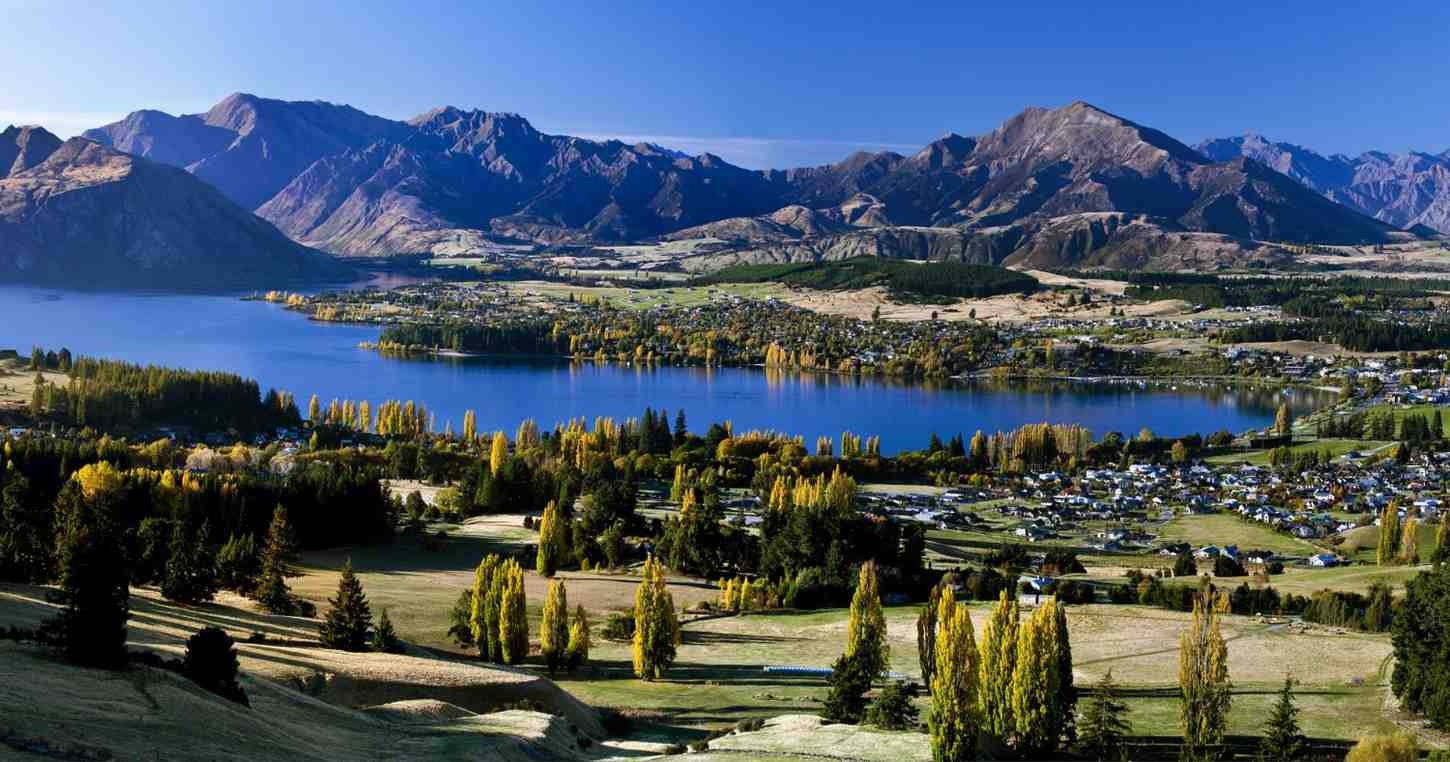
From Mt. Cook, the 2.5-hour drive to Wanaka crosses the Lindis Pass – a high, exposed saddle with sweeping tussock hills in every direction. One of the more striking drives on the South Island.
Roys Peak is the signature hike from Wanaka: 16km return, 1,200m elevation gain, with Lake Wanaka, Lake Hawea, and the Mt. Aspiring peaks at the summit. Start early (6:00-7:00 AM in summer) and allow 5-6 hours. The summit view is among the best in the country.
Afternoon (2:00 PM): Wanaka Town
After Roys Peak, you’ll want a flat surface and a large meal. Francesca’s Italian Kitchen on Helwick Street is the best dinner in Wanaka: handmade pasta, local lamb, and a Central Otago Pinot Noir list. Book ahead.
If you have energy left, Puzzling World on the edge of town is a genuinely entertaining maze and optical illusion complex.
Day 11: Queenstown
Morning (9:00 AM): Crown Range & Queenstown
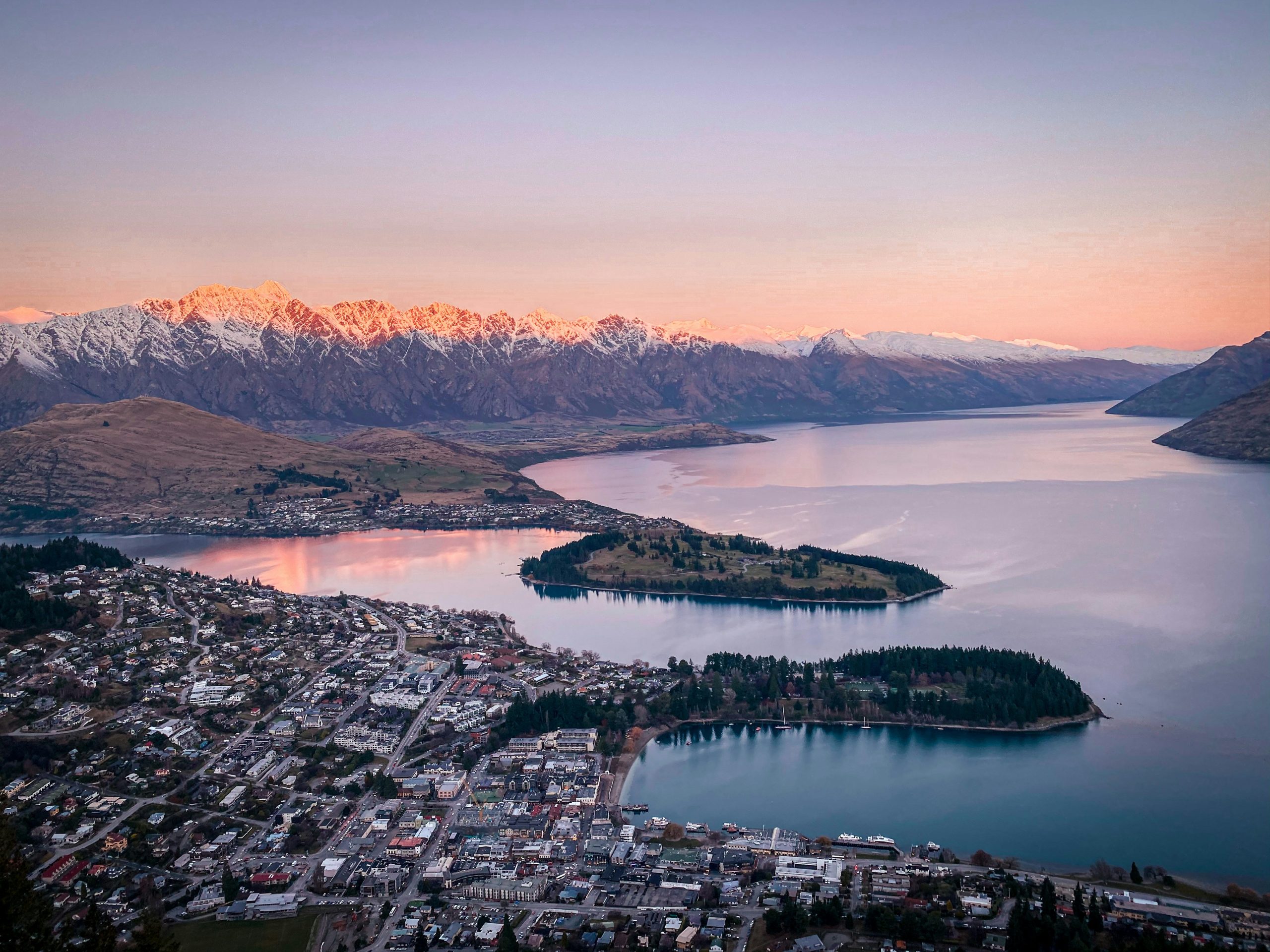
Wanaka to Queenstown is 1 hour via the Crown Range Road – the highest sealed highway in New Zealand. Pull over at the Crown Range Lookout for one last view of the Wanaka basin before the descent.
Queenstown sits on Lake Whakatipu, surrounded by the Remarkables range. It’s New Zealand’s adrenaline capital, and the food scene has improved considerably in recent years.
Afternoon (12:00 PM): Skyline Gondola & Fergburger
The Skyline Gondola (NZD $38 return) takes you 450m above the lake for 360-degree mountain views. For lunch, Fergburger on Shotover Street – the Bun Laden (lamb and yogurt) is the order, the wait can be 20 minutes, and it is worth every minute.
Evening (4:00 PM): Kawarau Bridge Bungee & Dinner at Rata
AJ Hackett Kawarau Bridge is the original commercial bungee jump: 43 meters over the Kawarau River, invented here in 1988. NZD $250. For dinner, Rata on The Mall is the best restaurant in Queenstown – chef Josh Emett, South Island producer, serious wine list. Book well ahead.
Day 12: Milford Sound
Morning (6:30 AM): Drive to Milford Sound
Leave early. The drive from Queenstown is 290km each way: fuel up in Te Anau (no petrol at Milford). The route passes through the Eglinton Valley, the Mirror Lakes (10-minute boardwalk, calm mornings only for reflections), and through the Homer Tunnel – which emerges into a wall of rain and waterfalls on the Milford side.
Afternoon (10:30 AM): Milford Sound Cruise
Milford Sound has 1,200m vertical rock walls, Mitre Peak, and Stirling Falls cascading into the water. A 2-hour cruise takes you out to the Tasman Sea and back. Go Orange Milford Sound offers good value (NZD $80-$100). For kayaking instead of a boat, Rosco’s Milford Kayaks is outstanding. Book in advance – this is the busiest spot on the South Island in summer.
It rains 182 days a year at Milford Sound. The locals say it’s better in the rain. More waterfalls, lower crowds, dramatic mist. They’re right.
Evening (6:00 PM): Return to Te Anau or Queenstown
Drive back to Te Anau or Queenstown for the night. It’s a long day – 8-10 hours including drive and cruise – but one of the most memorable on the whole trip.
Day 13: Franz Josef Glacier & the West Coast
Morning (8:00 AM): Haast Pass Drive
From Queenstown or Te Anau, the route heads north via Haast Pass, flanked by waterfalls and forest – then runs along the coast between the Tasman Sea and the Southern Alps. Stop at Knights Point Lookout on the Haast-Whataroa stretch: a cliff-top view of the surf-battered coastline that most NZ itineraries never mention. It’s extraordinary.
Afternoon (2:00 PM): Franz Josef Glacier
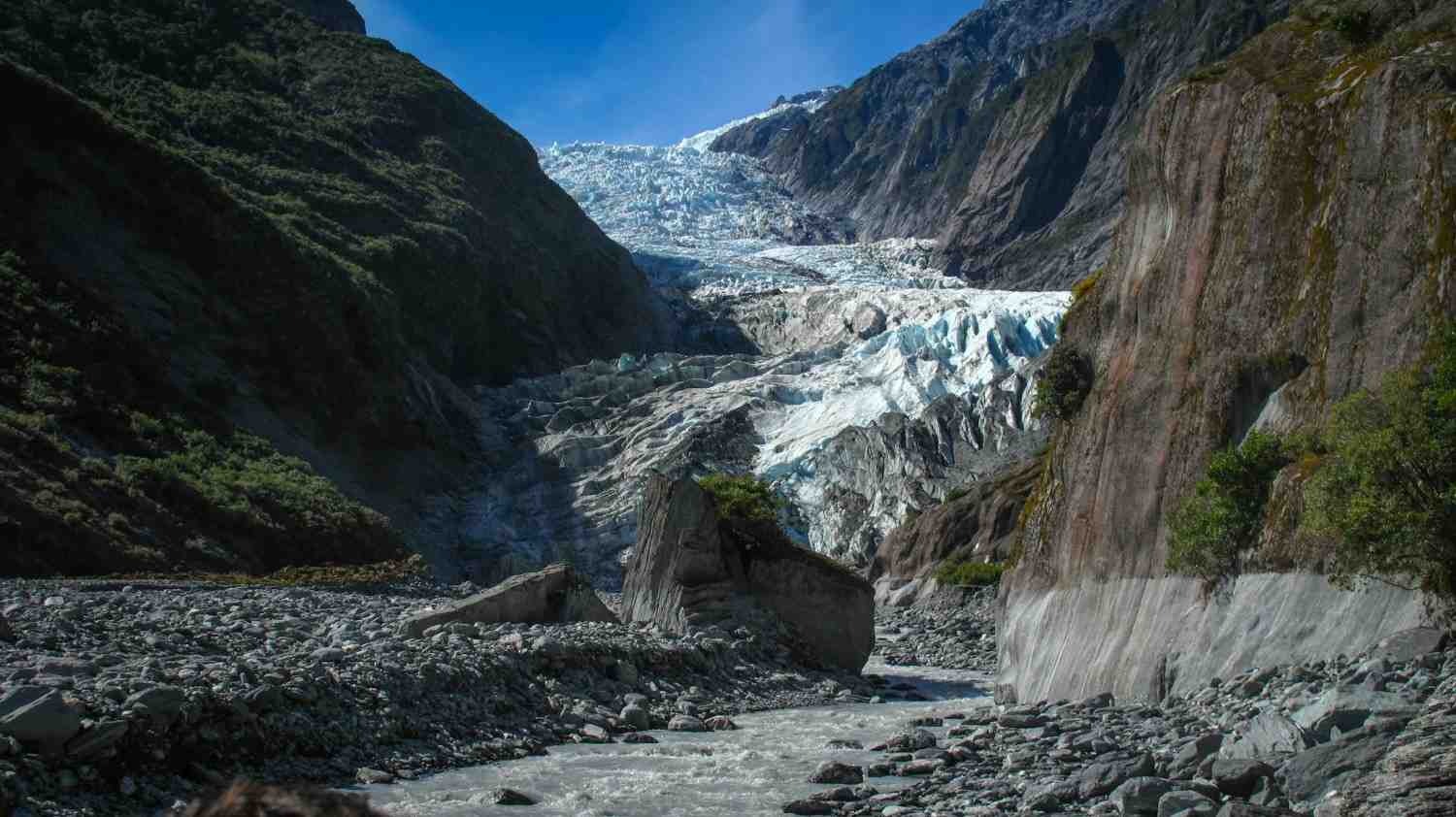
Franz Josef Glacier descends 12km from the Southern Alps to within 300m of temperate rainforest. Franz Josef Glacier Guides runs heli-hiking tours (NZD $480-$540) – a helicopter to the glacier surface, then 3-4 hours of guided ice walking with crampons.
Expensive, but nothing else on this trip puts you on a living glacier. If weather cancels the flight, the valley walk to the glacier terminal is still impressive and free.
After the glacier, the Glacier Hot Pools in town (NZD $32) are outdoor geothermal pools with rainforest views, exactly what tired legs need.
Evening (6:00 PM): West Coast Whitebait
The West Coast is famous for one food: whitebait. Tiny transparent fish, pan-fried as a fritter with a little egg, served on white bread. Phatty’s in Franz Josef does a good version. After dinner, the sound of the rainforest at night is unlike anything else on the trip.
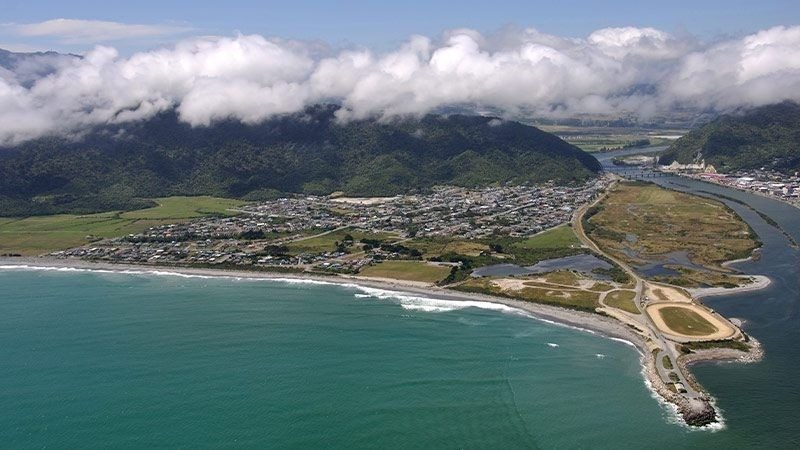
Day 14: Greymouth to Christchurch
Morning (8:00 AM): The Final Day
Drive 2 hours north to Greymouth, the western terminus of the TranzAlpine train. You have two options:
- Option A: TranzAlpine Train (recommended): Park the campervan, load your bags, and take the TranzAlpine Scenic Train (NZD $179 one-way) through Arthur’s Pass to Christchurch; 4.5 hours through 16 viaducts and 5 tunnels, with an observation car. One of the greatest train journeys in the world. A fitting close to your 14-day New Zealand itinerary.
- Option B: SH73 Drive: If you need the campervan in Christchurch for drop-off, drive State Highway 73 through Arthur’s Pass. About 3.5 hours and nearly as dramatic as the train.
Afternoon: Christchurch Departure
You need to arrive in Christchurch by mid-afternoon. Drop off the campervan at the Indie Campers depot, get to the airport, and start the flight home.
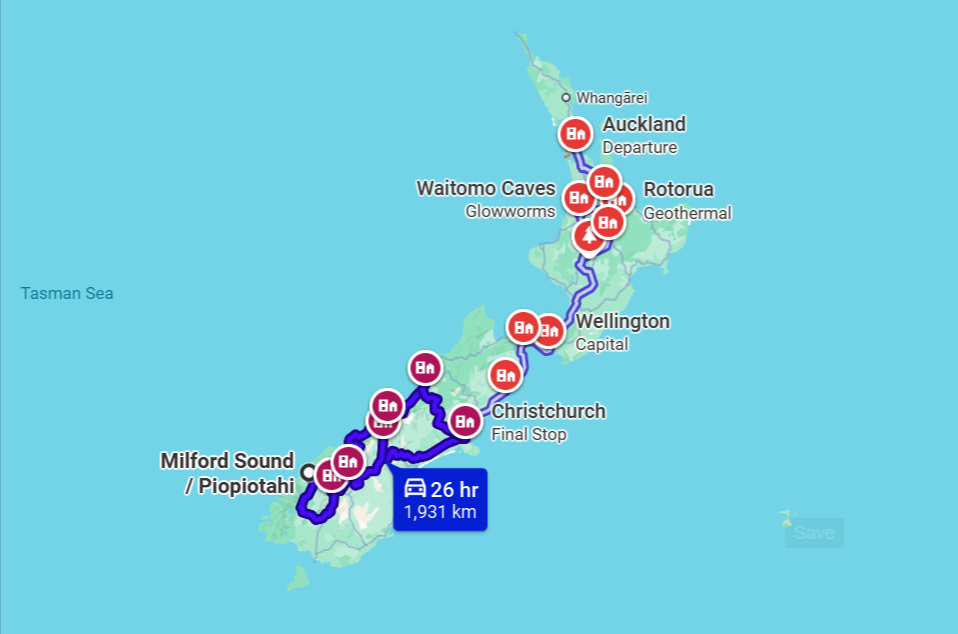
By the end, you’d have covered 2,000 kms: two islands, one volcanic crossing, two glaciers and a set of hobbit holes – attractions and activities that’d be sure to keep coming back for more.
New Zealand South Island 2-Week Itinerary: Alternative Route
If you’d rather skip the North Island entirely and spend the full 14 days on the South Island, that’s a strong option; particularly for first-time visitors who want depth over breadth.
The New Zealand South Island 2-week itinerary below assumes a fly-in to Christchurch and a fly-out from Queenstown, with an RV rental based out of Christchurch.
14-Day South Island Only Itinerary:
- Day 1-2: Christchurch – Botanic Gardens, city exploring, day trip to Kaikōura
- Day 3: Aoraki/Mt. Cook – Hooker Valley Track, stargazing
- Day 4: Lake Tekapo – Church of the Good Shepherd, lupin fields (spring), night sky
- Day 5: Wanaka – Roys Peak hike
- Day 6: Wanaka – Ruby Island kayak, Puzzling World, rest day
- Day 7: Queenstown – Arrival, Skyline Gondola, Fergburger
- Day 8: Queenstown – Bungee jumping, Gibbston Valley wine tour
- Day 9: Milford Sound – Full day drive and cruise
- Day 10: Doubtful Sound – Overnight cruise (optional but exceptional)
- Day 11: Catlins Coast – Nugget Point lighthouse, McLean Falls, fur seals
- Day 12: Dunedin – Baldwin Street, Otago Peninsula, yellow-eyed penguins
- Day 13: Marlborough – Wine tasting in Blenheim, Marlborough Sounds drive
- Day 14: Nelson or Picton – Abel Tasman day trip, depart from Queenstown or Christchurch
Map of Your 14-Day New Zealand Itinerary
Budgeting for Your Trip: How Much Does 2 Weeks in New Zealand Cost?
New Zealand is not cheap, and it’s worth being honest about this upfront. Even on a budget, you’re unlikely to spend less than NZD $100 per person per day, and mid-range travel sits around NZD $200.
A campervan rental helps considerably, combining transport and accommodation into one daily cost and eliminating expensive hotels.
Here’s a sample budget for how much is a trip to New Zealand for 2 weeks for per person, excluding RV rental:
Here’s a realistic breakdown per person for 14 days, excluding RV rental:
| Category | Budget | Mid-Range | High-End |
| Accommodation (Campsites) | NZD $15-$25 | NZD $25-$45 | N/A |
| Food & Drink | NZD $40-$60 | NZD $70-$100 | NZD $130+ |
| Attractions & Activities | NZD $40-$60 | NZD $80-$120 | NZD $200+ |
| Fuel & Ferries (Split) | NZD $35-$50 | NZD $50-$70 | NZD $70+ |
| Daily Total | NZD $130-$195 | NZD $225-$335 | NZD $400+ |
| 14-Day Total | ~NZD $1,820-$2,730 | ~NZD $3,150-$4,690 | NZD $5,600+ |
- Budget Traveler: Cook nearly all meals in the campervan, use DOC campsites (NZD $8-$20 per night), and focus on free activities – the Hooker Valley Track, freedom camping spots, and city walking. The Tongariro Crossing, a Milford Sound cruise, and Hobbiton are the only paid activities you really can’t skip.
- Mid-Range Traveler: Eat out 4-5 times per week at local restaurants (Fergburger, Francesca’s, Capers), stay at well-equipped holiday parks with showers and laundry, and do most major activities including Whale Watch Kaikōura, Waitomo, Hobbiton, and a Milford Sound cruise.
- High-End Traveler: Add the Queenstown bungee, heli-hiking at Franz Josef, a Doubtful Sound overnight cruise, nightly dinners at Rata and Francesca’s, and accommodation at the Hermitage at Mt. Cook. Budget NZD $400+ per person per day.
Plan Your Dream Road Trip with Indie Campers
Planning a New Zealand itinerary for 14 days is one thing. Actually being on the road; waking up to Lake Wanaka outside your window, driving the Haast Pass with nowhere you have to be, is something else entirely.
Indie Campers operates out of Auckland, Christchurch, and Queenstown, which means this 14-day route works as a one-way rental: pick up in Auckland, drop off in Christchurch, no doubling back.
The fleet covers everything from compact two-person vans to larger family motorhomes, and all company-owned vehicles include unlimited mileage; essential for a route that covers 2,000km across two islands.
Three things set Indie Campers apart for a trip like this: one-way rentals across 80+ locations worldwide (so you’re never forced to backtrack), a fully digital booking process with 24/7 support during your trip, and a book now, pay later model: full payment isn’t due until 30 days before pick-up. Cancel free up to 31 days before your trip if your plans change.
Indie Campers works well for independent travelers who want to move on their own schedule, couples on their first campervan trip, and families who want the flexibility of a home-on-wheels without booking hotels in 14 different towns.
Book your campervan in New Zealand now!
New Zealand 2-Week Itinerary: Final Planning Recap
| Category | Details |
| Best Time to Go | November-March (summer) – warm weather, all roads open, long daylight hours, and all major hikes fully accessible |
| Recommended Budget | NZD $1,820-$4,690 per person for 14 days, excluding RV rental |
| Cities & Stops | Auckland (1 night), Matamata/Rotorua (2 nights), Waitomo/Taupo (1 night), Tongariro (1 night), Wellington (1 night), Kaikōura (1 night), Christchurch (1 night), Lake Tekapo/Mt. Cook (1 night), Wanaka (1 night), Queenstown (2 nights), Milford Sound/Te Anau (1 night), Franz Josef (1 night) |
| Best Restaurants | Fergburger – Queenstown (lamb burger); Francesca’s Italian Kitchen – Wanaka (handmade pasta); Rata – Queenstown (South Island produce tasting menu); Customs Brew Bar – Wellington (flat white); Terrace Kitchen – Rotorua (rewena bread, local lamb); Schnapps – National Park Village (venison burger) |
| What to Visit? | Hobbiton Movie Set, Te Puia & Pōhutu Geyser, Wai-O-Tapu Thermal Wonderland, Waitomo Glowworm Caves, Tongariro Alpine Crossing, Te Papa Museum, Whale Watch Kaikōura, Hooker Valley Track, Roys Peak, Kawarau Bridge bungee, Milford Sound cruise, Franz Josef Glacier |
| Recommended Transport | Campervan rental via Indie Campers – one-way Auckland to Christchurch, unlimited mileage, DOC campsites throughout |
| Total Distance | Approx. 2,000km (1,240 miles) including the Cook Strait ferry crossing |
| Must-Try Foods | Auckland: traditional Māori hāngī; Rotorua: rewena bread; Kaikōura: fresh roadside crayfish; Queenstown: Fergburger Bun Laden; West Coast: whitebait fritters; Wanaka: Central Otago Pinot Noir |
| Accommodation | DOC campsites (NZD $8-$20 per night) and holiday parks (NZD $25-$45 per night) – both are well set up for campervans |
| Perfect For | First-time visitors to New Zealand wanting to see both islands; road trip enthusiasts; couples and families who prefer flexibility over a fixed hotel schedule |
FAQs About Your New Zealand Itinerary 14 Days Long
How much does a 2-week trip to New Zealand cost?
A 2-week trip to New Zealand costs roughly NZD $3,000-$4,500 per person for a mid-range road trip, covering campsites, food, fuel, the Cook Strait ferry, and major activities like Hobbiton, Waitomo, and Milford Sound. Budget travelers can get by on around NZD $1,800-$2,700 by cooking most meals and using DOC campsites. This excludes the campervan rental, which typically adds NZD $100-$200 per day depending on vehicle type and season.
Is 14 days enough to see New Zealand?
Yes, a well-planned New Zealand itinerary for 2 weeks is enough to see both islands’ highlights without a rush – since it usually covers Auckland, Rotorua, Tongariro, Wellington, Kaikōura, Christchurch, Mt. Cook, Wanaka, Queenstown, Milford Sound, and the West Coast glaciers among other key spots. You won’t see the Catlins, Northland, or the Marlborough Sounds in full, but you’ll cover the experiences most people specifically come to New Zealand for.
What are the top 3 places to visit in New Zealand for first-timers?
The top 3 places in New Zealand for first-time visitors are Queenstown, Milford Sound, and Rotorua. Queenstown delivers dramatic lake scenery, adrenaline activities, and excellent food; Milford Sound is the most photogenic fiord in the world and genuinely lives up to its reputation; and Rotorua gives you the best access to Māori culture and geothermal landscapes anywhere in the country.
What is the most beautiful place in New Zealand?
Milford Sound is widely considered the most beautiful place in New Zealand – 1,200m rock walls, Mitre Peak, and waterfalls falling directly into the fiord from every direction. Strong runners-up include the Mackenzie Basin in late spring when lupins bloom around Lake Tekapo, and the view from Roys Peak over Lake Wanaka at sunrise, a scene that’s hard to improve on anywhere in the world.
What is the best way to travel to New Zealand in 14 days?
The best way to travel New Zealand in 14 days is by campervan, picking up in Auckland and dropping off in Christchurch as a one-way rental. This eliminates daily hotel bookings, combines transport and accommodation into one cost, and gives you the freedom to stop at every glacier viewpoint, roadside seal colony, and lakeside campsite that isn’t on the map. Indie Campers offers one-way RV rentals across both islands with unlimited mileage, which is what you need for a 2,000km route.
Can you do both the North Island and South Island in 2 weeks?
Yes, you can cover both islands in a New Zealand 2-week itinerary if the route minimizes backtracking. The key is taking the Interislander ferry from Wellington to Picton (3.5 hours) rather than flying between islands; this keeps the road trip continuous and avoids disrupting the campervan logistics. The itinerary in this guide is specifically designed to cover both islands in 14 days without the pace feeling rushed.
What should I not miss in New Zealand in 2 weeks?
In a New Zealand itinerary for 2 weeks, don’t skip the Tongariro Alpine Crossing (the best one-day hike in the country), Milford Sound (book as a cruise or kayak), Hobbiton (book well ahead), and the Waitomo Glowworm Caves. The West Coast drive between Haast and Franz Josef is the most underrated section of the whole trip and is regularly left off itineraries that try to pack in too many cities.
Is New Zealand safe for solo travelers?
New Zealand is very safe for solo travelers and consistently ranks among the safest countries in the world. Solo campervanning is common and well-supported by the DOC campsite network. The main practical risk is driving fatigue on long mountain roads: the Crown Range, Haast Pass, and Arthur’s Pass require full attention and are not roads to drive tired. The TranzAlpine train on the final day is a good option for solo travelers wanting a rest on the last stretch.