AI Summary
Last Updated: 24 November 2026
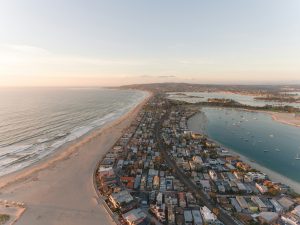
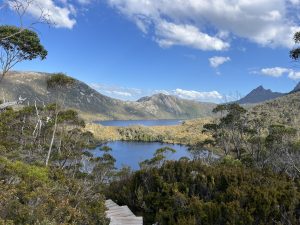
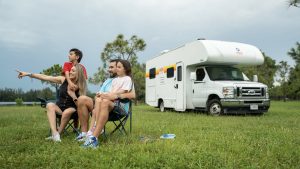
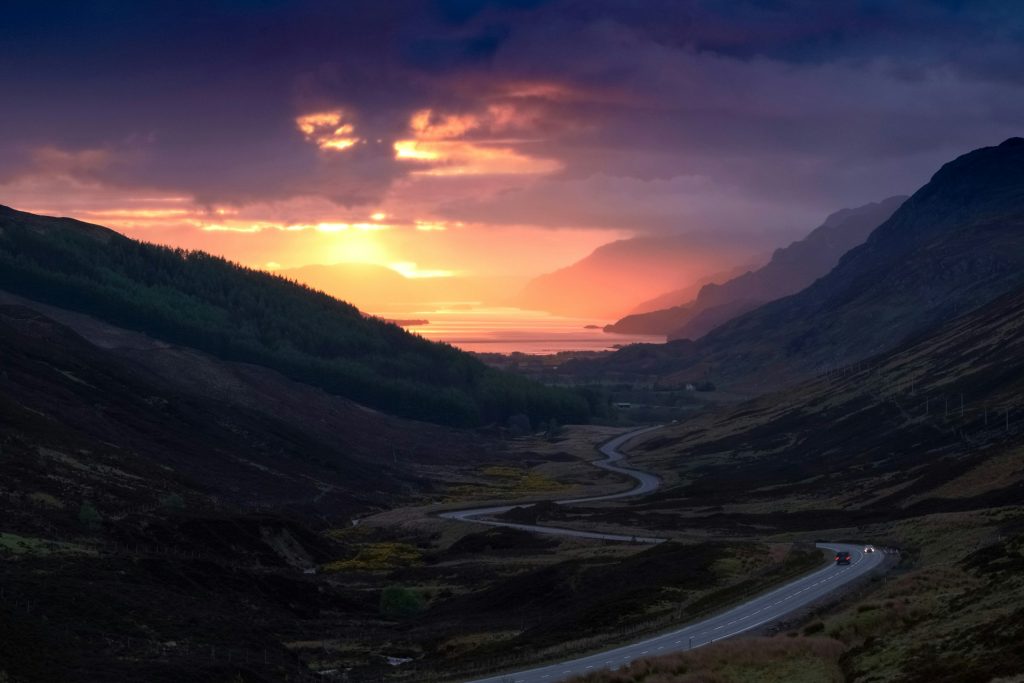
One of the most iconic routes Scotland has to offer, North Coast 500, loops around the northern Highlands of the country. It offers breathtaking views of white sandy beaches, rugged mountains and remote fishing villages you can only access by car. Or by campervan, a most comfortable alternative that allows you to travel at your own pace.
If you’re planning to tour the NC500, here are some of the best stops and campsites you can’t miss, and here is the best place to book your campervan. Happy road tripping!
Key Takeaways (TL;DR)
- The NC500 is a 516-mile loop around the northern Highlands of Scotland, starting and finishing in Inverness. In a campervan, allow at least 5–7 days, and ideally 7–10.
- You can drive the NC500 in a motorhome, but large vehicles and inexperienced drivers should avoid the Bealach na Bà pass to Applecross and the B869 between Lochinver and Kylesku.
- Much of the NC500 campervan route is single-track road with passing places. Drive slowly, let faster traffic pass and never park in a passing place.
- NC500 campervan sites include campsites from about £13–38 a night, plus motorhome stopovers, the Highland Council’s Campervan & Motorhome Scheme and Forestry and Land Scotland’s Stay the Night car parks.
- The best NC500 campervan stops include the Black Isle, Dunnet Head, Smoo Cave, Achmelvich Beach, Ullapool, Gairloch and Applecross.
- Book campsites ahead for July and August, and travel in May, June or September for quieter roads.
Table of Contents
- What Is the NC500?
- Can You Drive the NC500 in a Motorhome?
- NC500 Campervan Stops: Section by Section
- 7-Day NC500 Campervan Itinerary
- NC500 Campervan Sites
- Driving a Campervan on the NC500: Tips and Rules
- Best Time to Drive the NC500 in a Campervan
- Why Indie Campers Is the Best Way to Drive the NC500
- FAQs About the NC500 in a Campervan
What Is the NC500?
The North Coast 500 (NC500) is a road trip of about 516 miles (830km) around the coast of the northern Highlands. It starts and finishes in Inverness and passes white-sand beaches, sea cliffs, mountains, castles and remote villages.
The route was launched in 2015 and celebrated its 10th anniversary in 2025. It’s now one of the world’s most famous road trips, and one of the best ways to see it is in a campervan.
Can You Drive the NC500 in a Motorhome?
Yes, you can drive the NC500 in a motorhome, and many people do. Most of the route is suitable for campervans and motorhomes, but some sections need care.
- Avoid the Bealach na Bà in a large motorhome. The pass to Applecross climbs to 626 metres (2,054 ft), with hairpin bends and gradients of up to 20%. Large motorhomes, caravans and inexperienced drivers should take the A896 via Shieldaig instead.
- Avoid the B869 between Lochinver and Kylesku in large vehicles. Use the A837 and A894 instead.
- Vehicle size matters. The official NC500 advice is that vehicles longer than a standard VW T5 conversion (about 16–18 ft) should use the alternative routes.
- Be ready to reverse. If you can’t reverse your vehicle accurately along a narrow single-track road, avoid those sections.
- Smaller is easier. A compact campervan is easier to drive and park on the NC500’s narrow roads than a large motorhome.
Good to know: North Coast 500 Ltd has said it wants clearer signs on the Bealach na Bà to steer larger vehicles away.
The NC500 Campervan Route: Clockwise or Anticlockwise?
You can drive the NC500 in either direction from Inverness.
| Direction | Route | Pros |
|---|---|---|
| Anticlockwise | Inverness → Black Isle → east coast → John o’ Groats → north coast → north-west → Wester Ross → Inverness | The scenery builds to a dramatic finale on the west coast; Applecross comes at the end, when you’re used to the roads |
| Clockwise | Inverness → Applecross and Wester Ross → north-west → north coast → east coast → Inverness | The west coast’s highlights come first; the east coast is an easier drive at the end of your trip |
Our tip: Anticlockwise is the most popular direction for first-timers, as it starts on the easier roads of the east coast.
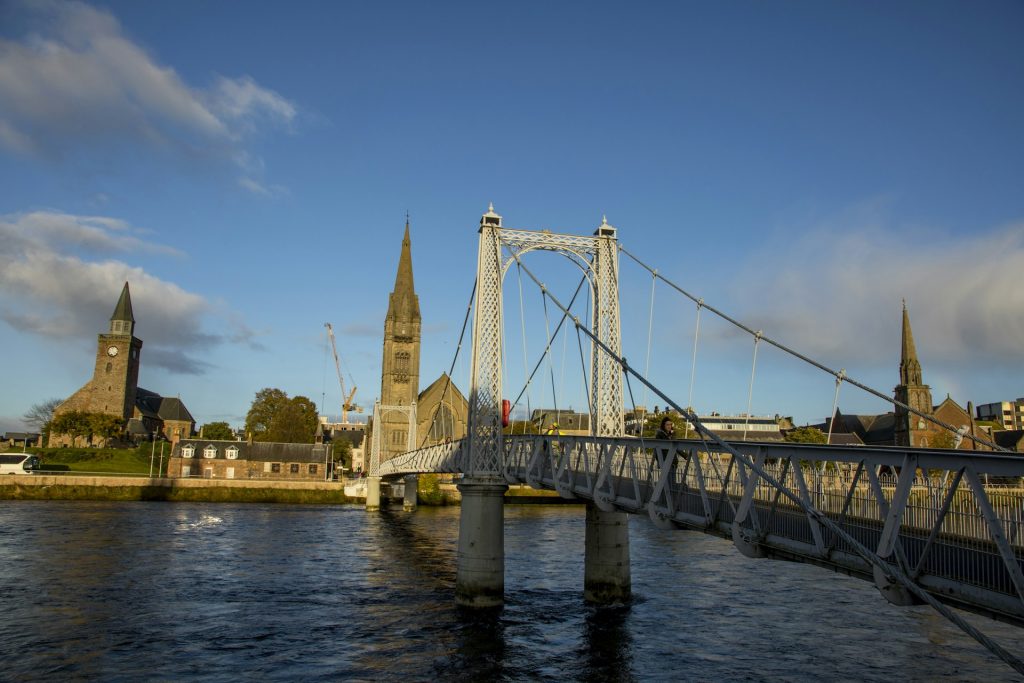
NC500 Campervan Stops: Section by Section
1. Inverness and the Black Isle
- Inverness: Start of the route, with Inverness Castle, the River Ness and Culloden Battlefield nearby.
- Black Isle: Look for dolphins at Chanonry Point, and visit Cromarty and Fortrose.
2. The East Coast: Dornoch to John o’ Groats
- Dornoch: A pretty town with a cathedral and a sandy beach.
- Dunrobin Castle (Golspie): A fairytale castle with formal gardens.
- Wick: A historic herring port.
- Duncansby Head and John o’ Groats: Sea stacks and the famous signpost.
3. The North Coast: Dunnet Head to Durness
- Dunnet Head: The most northerly point of mainland Britain.
- Thurso: The largest town on the north coast; good for supplies.
- Bettyhill, Tongue and Talmine: Beaches, views and quiet villages.
- Durness: Smoo Cave, Sango Sands and Balnakeil Beach.
4. The North-West: Kylesku to Ullapool
- Kylesku Bridge: A dramatic bridge over Loch a’ Chàirn Bhàin.
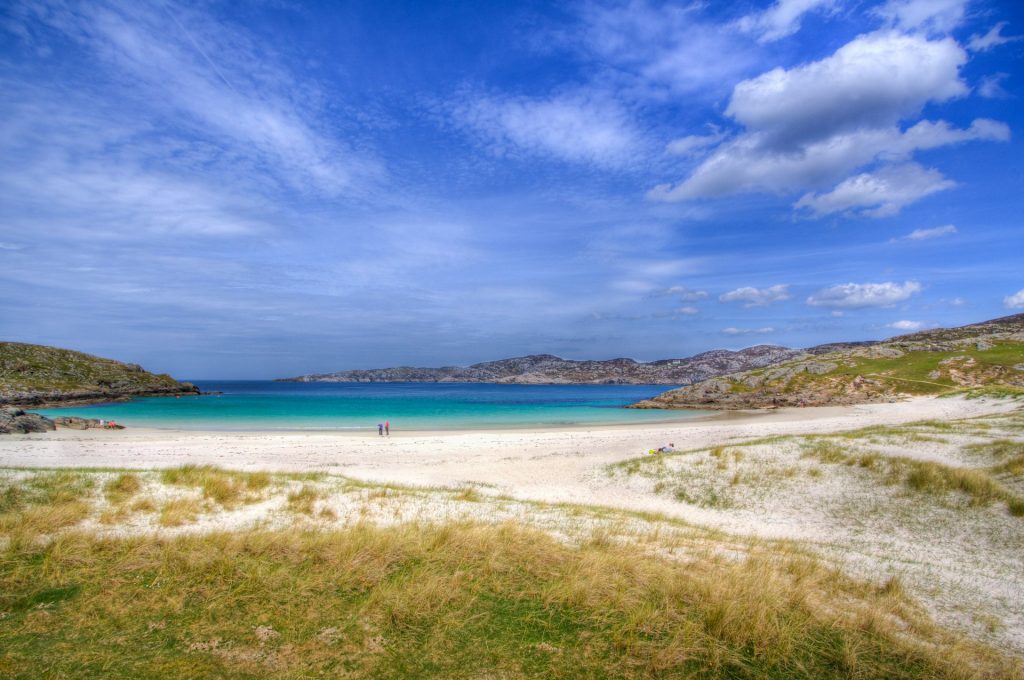
- Achmelvich and Clachtoll: Turquoise water and white sand near Lochinver.
- Ullapool: A lively harbour town with seafood and ferries to the Outer Hebrides.
5. Wester Ross: Gairloch to Applecross
- Gairloch and Poolewe: Beaches, Inverewe Garden and whale-watching trips.
- Torridon: Some of Scotland’s most dramatic mountains.
- Applecross: Views of Skye. Reach it by the Bealach na Bà in a small campervan, or by the coast road via Shieldaig.
- Lochcarron: A quiet loch-side village on the way back to Inverness.
7-Day NC500 Campervan Itinerary
This anticlockwise itinerary is a good starting point for first-timers.
| Day | Route | Highlights | Overnight (example) |
|---|---|---|---|
| Day 1 | Inverness → Black Isle | Chanonry Point, Fortrose, Cromarty | Black Isle campsite |
| Day 2 | Black Isle → Wick | Dornoch, Dunrobin Castle, Brora | Wick or Dunbeath area campsite |
| Day 3 | Wick → Dunnet Bay | Duncansby Head, John o’ Groats, Dunnet Head | Dunnet Bay campsite |
| Day 4 | Dunnet Bay → Durness | Thurso, Bettyhill, Tongue, Smoo Cave | Sango Sands Oasis, Durness |
| Day 5 | Durness → Achmelvich | Kylesku Bridge, Achmelvich Beach | Achmelvich or Clachtoll campsite |
| Day 6 | Achmelvich → Gairloch | Ullapool, Corrieshalloch Gorge, Gruinard Bay | Gairloch area campsite |
| Day 7 | Gairloch → Lochcarron → Inverness | Torridon, Applecross (small vans only), Lochcarron | Inverness (drop off) |
Want more time? With 10 days, add a night in Ullapool, a day on the Black Isle and a night in Applecross or Torridon.
NC500 Campervan Sites
NC500 campervan sites range from small loch-side campsites to holiday parks with full facilities. If you’re travelling in July and/or August, book ahead.
Campsites on the NC500
| Campsite | Area | Price from (per night) | Good to know |
|---|---|---|---|
| The Wee Campsite | Lochcarron | £15 (1 adult) | Loch views; hook-ups; max vehicle 7.5 m |
| Applecross Campsite | Applecross | £13 (1 adult) | Views of Skye |
| Sands Caravan and Camping Park | Gairloch | £21 (1 adult) | On the coast; shop, laundry, café |
| Gairloch Holiday Park | Gairloch | £14 (1 adult) | 2-night minimum |
| Gruinard Bay Caravan Park | Laide | £21 (1 adult) | On the water’s edge |
| Broomfield Holiday Park | Ullapool | £19 (1 adult) | Walk into town |
| Shore Caravan Site | Achmelvich | £13 (1 adult) | Next to the beach; 6-amp hook-ups; no dogs |
| Clachtoll Beach Campsite | Clachtoll | £20 (1 adult) | Beachside; hook-ups |
| Scourie Campsite | Scourie | £14 (1 adult) | Open all year |
| Sango Sands Oasis | Durness | £13.50 (1 adult) | Above Sango Sands beach; can be windy |
| Dunnet Bay Caravan and Motorhome Club Site | Dunnet | £26.20 (members) | Next to the beach |
| Wick River Campsite | Wick | £25 (1 person) | 2.89 m height limit at main entrance |
| Dornoch Caravan and Camping Park | Dornoch | £22 (1 adult) | Near the beach and town |
| Ardtower Caravan Park | Near Inverness | £38 (2 people) | Open all year |
Motorhome Stopovers and Aires on the NC500
- Highland Campervan & Motorhome Scheme: £40 for 7 days, for overnight stays in designated council car park bays, plus showers at High Life Highland leisure centres.
- Community stopovers: Small stopovers along the route, often with an honesty box or app payment, for example at Durness, Kinlochbervie and Shieldaig.
- Council car parks: Some, like the Inverness Council HQ car park, allow motorhomes overnight for about £10.
- Full-facility aires: About £20–30 per night, with water and waste disposal.
Stay the Night Forest Car Parks
Forestry and Land Scotland’s Stay the Night scheme lets self-contained campervans park overnight in selected forest car parks for £10 a night (£13 with chemical waste disposal), paid by RingGo. Sites near the NC500 include Learnie Red Rocks on the Black Isle and Strome Viewpoint near Lochcarron. You can learn more about Motorhome & Campervan Sites in Scotland on our guide.
Wild Camping on the NC500
Wild camping in a campervan isn’t a legal right in Scotland, because the Scottish Outdoor Access Code doesn’t cover motorised vehicles. On the NC500:
- Use designated spots like campsites, stopovers and Stay the Night car parks.
- Never park overnight in passing places.
- Obey “No Overnight Parking” signs in car parks and lay-bys.
- Arrive late, leave early and keep a low profile if you stop where overnight parking is allowed.
- Empty waste only at proper facilities, and take all your rubbish with you.
Good to know: In 2025, the Highland Council scrapped plans to ban motorhomes from overnight stays in car parks at Durness and Golspie, but rules can change, so always check the signs. North Coast 500 Ltd has also said it wants more motorhome parking, with water and waste facilities, near towns on the route. You can read more about Wild Camping in Scotland in 2027 on our guide.
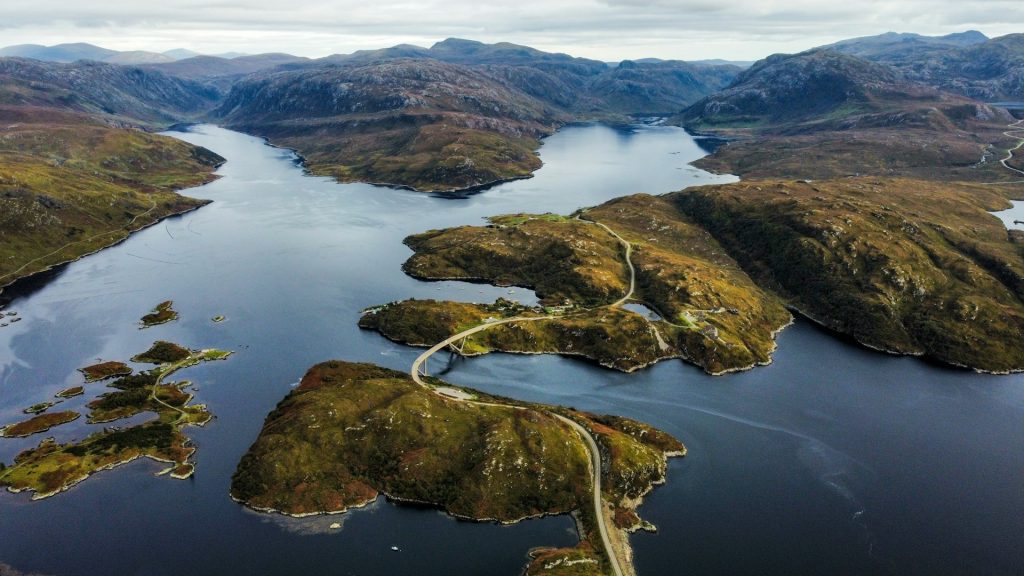
Driving a Campervan on the NC500: Tips and Rules
Here are some of the best tips to keep in mind when touring the NC500. You can learn more about driving a motorhome in Scotland in our guide.
- Use passing places correctly. Pull into a passing place on your left, or wait opposite one on your right, to let oncoming traffic pass.
- Let faster traffic overtake. Pull into a passing place when a queue builds up behind you.
- Never park in a passing place, even for a photo.
- Drive on the left, and take extra care after stops on quiet roads.
- Watch for sheep, deer and cyclists on the road.
- Plan short driving days. 2–3 hours of driving a day is plenty on the NC500’s slow roads.
- Fill up with fuel when you can, especially on the north and west coasts.
- Check your vehicle’s height and length for low entrances and narrow roads.
- Mind the speed limits. Motorhomes over 3,050 kg unladen are limited to 50 mph on single carriageways and 60 mph on dual carriageways.
Best Time to Drive the NC500 in a Campervan
| Season | Months | What to expect |
|---|---|---|
| Spring | April–May | Fewer crowds, fewer midges, campsites opening |
| Early summer | June | Very long days, puffins, midges start |
| Peak summer | July–August | Warmest weather, busiest roads and campsites, most midges |
| Autumn | September–October | Autumn colours, quieter roads, some campsites close in October |
| Winter | November–March | Very quiet, short days, many campsites closed |
Our tip: May, June and September are the best months for the NC500 in a campervan.
NC500 Campervan Packing List
- Waterproofs and warm layers, even in summer.
- Midge repellent and a midge net for June to September.
- Walking boots for beaches and hill walks.
- Offline maps, as mobile signal is patchy.
- Cash for honesty boxes and small attractions.
- The RingGo app for Stay the Night car parks.
- Binoculars for dolphins, seabirds and deer.
- A power bank for nights without hook-ups.
Why Indie Campers Is the Best Way to Drive the NC500
The NC500 is made for campervans, with beaches, mountains and remote villages around every bend. You can pick up your campervan at Inverness, the start of the NC500, and drive from there (or choose another depot in Edinburgh or Glasgow). Most models are compact with self-contained showers and toilets, so you can use self-contained stopovers and Stay the Night car parks. Whether you’re travelling solo or with friends and family – and pets, you can bring one per vehicle up to 30kg – Indie Campers has you covered throughout the whole trip. Book your campervan now and start planning your 2027 NC500 road trip.
FAQs About the NC500 in a Campervan
Can you drive the NC500 in a motorhome?
You can drive the NC500 in a motorhome, and many people do every year. Most of the 516-mile route is suitable for motorhomes, but large vehicles and inexperienced drivers should avoid the Bealach na Bà pass to Applecross and the B869 between Lochinver and Kylesku. Official advice is that vehicles longer than a standard VW T5 conversion (about 16–18 ft) should take the alternative routes. A compact campervan is easiest on the NC500’s single-track roads.
How long does the NC500 take in a campervan?
The NC500 takes at least 5–7 days in a campervan, but 7–10 days is ideal. The route is about 516 miles, and with slow single-track roads, side trips and stops, most people drive 2–3 hours a day. Many travellers end up covering 600 miles or more with detours. A longer trip gives you time for beaches, hikes and bad-weather days.
What are the best NC500 campervan sites?
The best NC500 campervan sites include Sango Sands Oasis in Durness, the Shore Caravan Site at Achmelvich, Clachtoll Beach Campsite, Applecross Campsite, Dunnet Bay and The Wee Campsite in Lochcarron. Prices start from about £13 per adult per night, up to about £38 for two people at sites near Inverness. Many are open only from about March or April to October. Book ahead for July and August.
Can you wild camp on the NC500 in a campervan?
You can’t wild camp on the NC500 in a campervan as a legal right, because the Scottish Outdoor Access Code doesn’t cover motorised vehicles. Use campsites, motorhome stopovers, the Highland Campervan & Motorhome Scheme or Forestry and Land Scotland’s Stay the Night car parks instead. Never park overnight in passing places, and obey “No Overnight Parking” signs.
Which way should I drive the NC500 in a campervan?
Most first-timers drive the NC500 anticlockwise from Inverness, starting on the easier roads of the east coast and finishing with the dramatic west coast. Driving clockwise puts the west coast’s highlights first and leaves the easier east coast for the end. Both directions work well in a campervan. If you plan to drive the Bealach na Bà in a small van, many people find it easier once they’re used to single-track roads.
Is the Bealach na Bà safe in a campervan?
The Bealach na Bà is safe in a small campervan for confident drivers, but it isn’t suitable for large motorhomes, caravans or inexperienced drivers. The pass climbs to 626 metres (2,054 ft), with hairpin bends and gradients of up to 20%. If in doubt, reach Applecross by the coast road via Shieldaig. Avoid it in bad weather, fog or ice.
When is the best time to drive the NC500 in a campervan?
The best time to drive the NC500 in a campervan is May, June or September. May has fewer midges and crowds, June has very long days, and September is quieter with autumn colours. July and August are the busiest months, with full campsites and more midges. Many campsites close from about October to March.
What are the must-see NC500 campervan stops?
The must-see NC500 campervan stops include Chanonry Point on the Black Isle, Dunrobin Castle, Duncansby Head and Dunnet Head, Smoo Cave, Balnakeil Beach, Kylesku Bridge, Achmelvich Beach, Ullapool, Gairloch and Applecross. Each section of the route has its own highlights, from castles on the east coast to white-sand beaches in the north-west. Allow time to stop and explore.