Last Updated: August 21, 2026
Planning a Croatia itinerary 5 days long? This guide maps a tight adventure loop out of Split, from rafting in the Cetina canyon and a glass skywalk 1,228 m above the sea to the waterfalls of Krka and a ferry hop to Brač.
Five days is short enough that the route matters more than the sight list. Most 5-day plans stretch from Plitvice to Dubrovnik and lose two days to driving, so this one stays in Central Dalmatia, where the legs run 30 to 70 minutes.
The whole loop is built around a campervan, which rolls your bed and your transport into one booking, so the canyon, the mountain road, and the island ferry all run on your clock.
Key Takeaways
- Iconic stops: Diocletian’s Palace in Split, the Skradinski Buk waterfalls in Krka National Park, and the Biokovo Skywalk above Makarska.
- Adventure highlights: Grade 3 rafting on the Cetina River, an 8-wire zipline over the Omiš canyon, and a hike up Vidova Gora on Brač.
- Hidden gems: Nugal, the cliff-backed beach you can only reach on foot, and Skradin, the river town behind Krka’s falls.
- Recommended transport: a campervan rental from Indie Campers, picked up in Split, since it combines accommodation and transport and puts the ferry ports and canyon roads on your own schedule.
- Recommended budget: €600 to €1,300 per person for the 5 days, plus the campervan hire, covering campsites, fuel, ferries, park entry, food, and activities.
- Best time to go: late May to June, or September, for warm sea temperatures, open park roads, and thinner crowds than the July and August peak.
Croatia Itinerary 5 Days: At a Glance
| Day | Area | Top Highlights |
| Day 1 | Split | Diocletian’s Palace, the bell tower, Marjan Forest Park, sea kayaking under the Marjan cliffs. Try pašticada. |
| Day 2 | Krka National Park | Skradinski Buk boardwalks, the boat to Visovac island, Skradin’s riverside old town. Try skradinski rižot. |
| Day 3 | Omiš and the Cetina | Grade 3 rafting through the canyon, the zipline, the 45-minute climb to Fortica fortress. Try grilled sea bass. |
| Day 4 | Makarska Riviera and Biokovo | Croatia’s highest paved road, the glass Skywalk at 1,228 m, the walk down to Nugal beach. Try lamb peka. |
| Day 5 | Brač island | Ferry to Sumartin, Vidova Gora, Zlatni Rat, afternoon windsurfing in Bol. Try vitalac and Bol octopus. |
Table of Contents
- Why You’ll Love a 5-Day Adventure Trip to Croatia
- Best Time to Visit Croatia
- Are 5 Days Enough to Visit Croatia?
- How to Get Around Croatia
- The Best Croatia Itinerary 5 Days, Day by Day
- Alternative Croatia Itineraries
- Map of Your 5-Day Croatia Itinerary
- Driving and Ferry Rules for a Campervan in Croatia
- Budgeting for Your Trip: How Much Does 5 Days in Croatia Cost?
- Plan Your Croatia Road Trip with Indie Campers
- Croatia Itinerary 5 Days: Planning Recap
- Frequently Asked Questions (FAQs)
Why You’ll Love a 5-Day Adventure Trip to Croatia
Central Dalmatia packs a Roman city, a river canyon, a 1,762 m mountain, and an island beach into a radius you can cross in an hour. That density is the whole argument for spending 5 days here instead of racing the length of the coast.
The crowds now arrive earlier and stay later, which changes how you plan. Croatia’s tourist board counted 4.5 million visitors between January and the end of May 2026, generating more than 14 million overnight stays, a 7% rise on the year before. Shoulder-season Dalmatia is no longer empty, so early starts and pre-booked park slots do more for your trip than any shortcut.
A campervan is what makes this particular loop work. The activities here start at odd hours and in odd places: a rafting put-in above Omiš, a ferry ramp in Makarska, a park gate that admits a fixed number of vehicles each hour, and none of them line up with a bus timetable. You sleep 50 m from the water for the price of a parking space, cook when the restaurants are still shut, and reach the trailhead before the tour vans.
Then there’s the food, which changes every 40 km. Split does pašticada, beef braised for hours in prošek and prunes. Skradin cooks a risotto for 12 hours over an open fire. Omiš grills whatever came off the boat that morning, the Biokovo villages do lamb under a peka bell, and Brač has vitalac, an old shepherds’ dish of lamb offal wrapped in caul fat and turned over embers.
Best Time to Visit Croatia
Season decides more than the weather on this route, because two of the five days depend on roads and boats that only run part of the year. Here’s what each window means for a 5-day trip.
Spring (April to June)
Spring is the strongest window. The Biokovo park road and the Krka boat lines are both open from April 1, park tickets sit at their shoulder-season rate, and the coastal trails are comfortable rather than baking.
Average Temperatures: 16 to 26°C (61 to 79°F)
What to expect: green canyon walls, moderate crowds, mid-range prices. The sea is cold in April and swimmable by late June.
Summer (July to August)
Summer is peak season, with the warmest sea and the busiest everything. Krka’s entry price triples, ferry decks for vehicles sell out on the Brač lines, and campsites near Zlatni Rat fill weeks ahead.
Average Temperatures: 28 to 33°C (82 to 91°F)
What to expect: hot days, packed parks, top prices. Book ferries, campsites, and Biokovo slots well ahead, and start every walk before 9:00 AM.
Autumn (September to October)
Autumn is the other sweet spot, and September is arguably the best single month. The sea is at its warmest after the summer, the crowds thin out from the first week, and both the mountain road and the park boats keep running through October 31.
Average Temperatures: 18 to 27°C (64 to 81°F)
What to expect: warm swimming, lower prices, shorter queues at Skradinski Buk, and rafting levels that hold up on the Cetina.
Winter (November to March)
Winter shuts down the adventure half of this route. Biokovo Nature Park only sells tickets from April 1 to October 31, Krka’s boat excursions and shuttle buses stop after October, and most Dalmatian campsites close for the season.
Average Temperatures: 8 to 15°C (46 to 59°F)
What to expect: cheap, quiet cities, occasional bura wind, and a route that shrinks to Split, Trogir, and the parks you can reach on foot.
Are 5 Days Enough to Visit Croatia?
Five days is enough for one Croatian region, and not enough for the whole coast. That distinction is where most 5-day plans go wrong.
Look at the driving before you commit. Split to Plitvice Lakes runs about 250 km, roughly 3 hours each way, and Split to Dubrovnik is another 230 km and 3 to 3.5 hours. String both onto a 5-day trip, and you’ve spent two full days moving and seen each stop through a car window. The Central Dalmatia loop below covers about 350 km in total, and no single leg takes more than an hour.
So build a Croatia 5-day itinerary around one region and go deep. This route gives you a Roman city, a national park, a canyon, a mountain road, and an island, all inside a 90-minute radius of the Split depot. If you have a week rather than 5 days, our one-week Croatia route adds Plitvice and Dubrovnik at a pace that still works.
What you walk away with after 5 days in Croatia is a proper feel for one stretch of Dalmatia rather than a photo album of highway exits. You’ll have rafted a canyon, swum off an island, walked over a cliff on glass, and eaten in four towns that each cook differently.
How to Get Around Croatia
Drive, and use the ferries as part of the road. Croatia’s coast is a single highway with island spurs, and the ferry network is state-run and vehicle-friendly, so a campervan can cross to Brač as easily as it drives to Omiš.
Public transport covers the cities and skips almost everything else on this itinerary. Buses reach Split, Makarska, and Bol, but they don’t reach the rafting put-in above Omiš, the Biokovo park gate 6 km inland, or the campsite where you want to be at 7:00 AM. Krka is bus-reachable from Šibenik and awkward from Split.
Two practical rules shape every day. First, Croatia doesn’t allow wild camping, so your overnight stops belong at registered campsites, which cost €15 to €45 a pitch and are plentiful along this coast. Second, the old towns of Split, Omiš, and Bol are pedestrian or tight, so you park the van outside and walk or take a local bus in.
Indie Campers runs RV rental in Split, which puts pick-up 20 minutes from the airport and inside the loop you’re driving, with a range of vehicle types from compact campervans for couples to larger motorhomes for families. Company-owned vehicles come with unlimited mileage, which matters on a route with two ferry legs and a mountain road, and flexible cancellation up to 31 days before pick-up, plus book now, pay later lets you hold summer dates without paying for them yet.
The Best Croatia Itinerary 5 Days, Day by Day
Here’s the full plan, day by day. Each day has a morning, afternoon, and evening, with real prices, two named places to eat, a campsite, drive times, and one practical tip for travelling by campervan.
Pick up the van in Split on the morning of Day 1 if you can, since every day after that starts early. Indie Campers has depots in Split and Zagreb, so a Zagreb campervan rental also works as a one-way start if you’re flying into the capital.
Day 1: Split, Roman Walls and Sea Kayaks
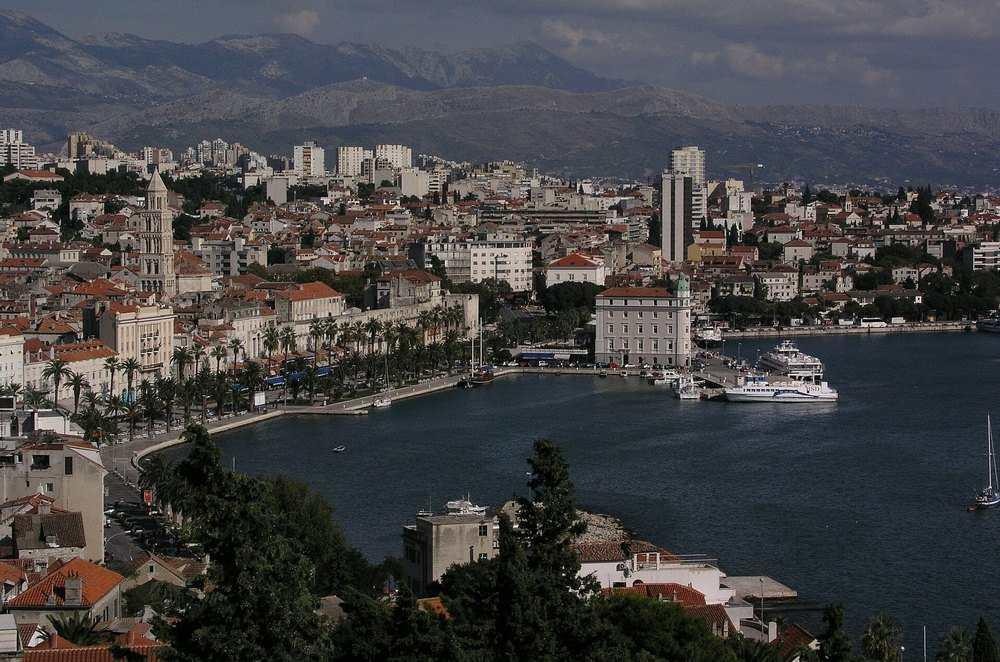
Morning (9:00 AM): Diocletian’s Palace
Start inside the palace, because Split’s old town is the palace. The emperor Diocletian retired here around 305 AD, and the medieval city grew inside his walls, so you’re walking through a Roman floor plan filled with bars, apartments, and market stalls.
Head to the Peristyle courtyard first, then climb the bell tower of the Cathedral of St. Domnius (a combined ticket with the cathedral and crypt runs around €10) for the rooftop view. The substructures underneath, once the palace basement and now a vaulted stone hall, cost about €8.
Practical tip: base yourself at Camping Stobreč Split, 6 km east of the centre on its own beach, and take the number 60 bus in. The old town is pedestrian and the waterfront has no space for a van.
Afternoon (1:00 PM): Marjan and a Kayak
Walk west along the Riva promenade into Marjan Forest Park, the pine-covered headland that Split treats as its gym. The path up to the Telegrin viewpoint takes about 40 minutes from the old town and looks straight across to Brač, Šolta, and Hvar, the three islands you’ll see all week.
Then get on the water. Sea kayak tours leave from Kašjuni beach on Marjan’s south side and paddle along the cliffs to hidden coves, roughly 3 hours for €40 to €55 with gear and a guide. Bring water shoes, because Dalmatian beaches are pebble, not sand.
Evening (7:00 PM): Konoba Dinner in the Old Town
Eat where the locals do rather than on the Riva. Konoba Fetivi on Tomića Stine does simple Dalmatian fish and a good brudet, the tomato and fish stew you mop up with polenta, while Villa Spiza on Kružićeva is a tiny counter with a blackboard menu that changes daily.
Order pašticada if you see it, the beef stewed in prošek wine, prunes, and vinegar that Split serves with gnocchi. Finish with a walk through the Peristyle after dark, when the courtyard empties and the acoustics turn every busker into an opera singer.
Day 2: Krka National Park and Skradin
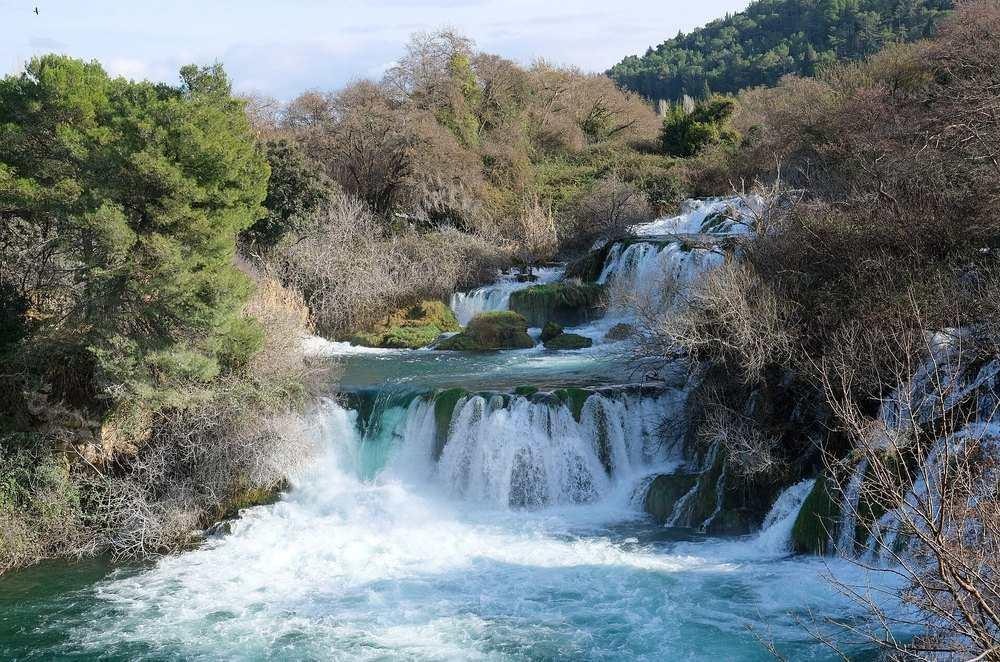
Morning (8:00 AM): Skradinski Buk
Drive north to Krka National Park, about 70 km and 50 minutes from Split on the A1. Krka spreads across 109 km² and seven waterfalls, and the one everyone comes for is Skradinski Buk, a wide staircase of cascades you circle on 1.9 km of boardwalk.
Timing and price both reward planning. Krka’s 2026 price list puts an adult ticket at €40 from June to September, dropping to €30 after 3:00 PM, against €20 in April, May, and October and €7 in winter. An afternoon entry in high summer saves you €10 and half the crowd.
Practical tip: enter at Skradin and take the park boat rather than driving to the Lozovac gate. Van parking in Skradin is easier, the boat ride is included in your ticket from April 1 to October 31, and you arrive at the falls by water.
Afternoon (1:00 PM): Visovac and the River
Add the boat excursion to Visovac, the tiny island in the middle of the river with a Franciscan monastery, a library of illuminated manuscripts, and cypress trees on all sides. The 2-hour trip from Skradinski Buk costs around €15 on top of your entry ticket.
Swimming is no longer allowed at Skradinski Buk, so if you want to get in the water, the marked area at Roški Slap upstream is the place. The park also maintains 388 km of bike routes, and renting a bike at the Krka eco campus in Puljane runs €15 for an hour or €40 for the day.
Evening (6:30 PM): Skradin’s 12-Hour Risotto
Stay in Skradin for dinner, a small stone town at the head of the river where yachts moor under the old walls. Its dish is skradinski rižot, a beef risotto stirred over a low fire for the better part of 12 hours until it’s almost a sauce.
Konoba Dalmatino on Obala Bana Pavla Šubića serves it a few doors from the water, and Konoba Toni on Ulica dr. Franje Tuđmana is the other reliable address. Order it a day ahead where you can, then drive the 50 minutes back to your pitch at Stobreč.
Day 3: Omiš, Rafting and the Cetina Canyon
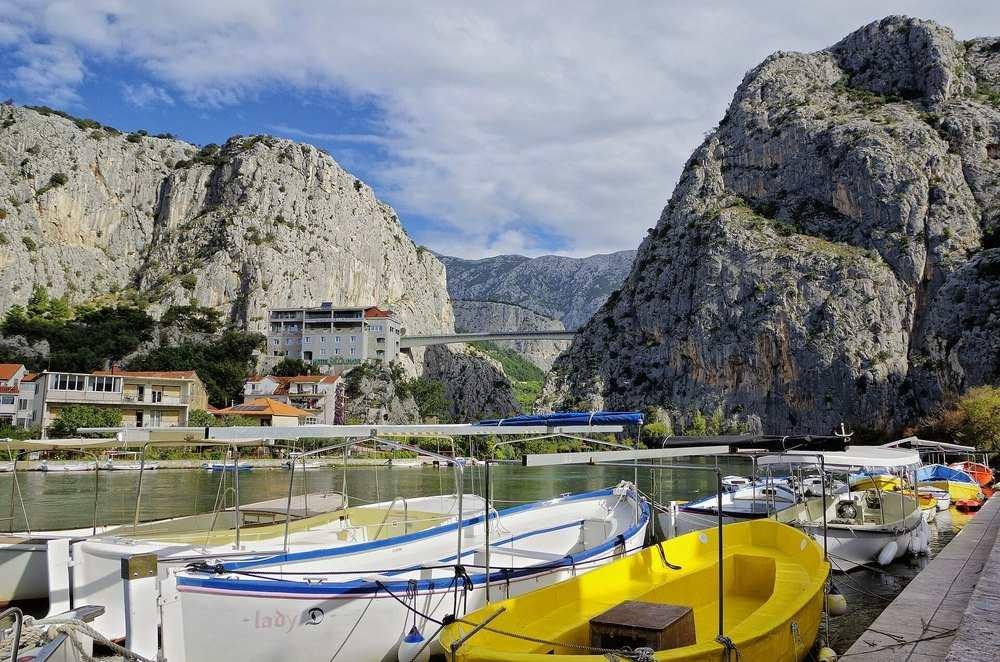
Morning (9:00 AM): Grade 3 on the Cetina
Drive 27 km southeast to Omiš, a pirate town wedged where the Cetina River cuts through a limestone wall to the sea. Rafting trips run about 9 km of Grade 3 water in roughly 3 hours, put in near Penšići above the canyon, and cost €40 to €60 with wetsuit, helmet, and guide.
The river is cold, clear, and busy with rapids, small waterfalls, and calm stretches where you can swim. Most operators run a morning and an afternoon departure and shuttle you back to Omiš, so it’s a half day rather than a full one.
Practical tip: park the van at Camping Galeb, on the beach at the river mouth in Omiš, and walk to the meeting points. The canyon road up to Radmanove Mlinice narrows fast and has almost nowhere to turn a motorhome around.
Afternoon (2:00 PM): Zipline and Fortica
Cross the river for the zipline, which strings 8 wires over the canyon for more than 2,100 m of cable, the longest of them 700 m and 150 m above the ground. The booking office sits on Josipa Pupačića, and the full course takes about 3 hours including the transfer up.
If you’d rather use your legs, the climb to Fortica fortress takes about 45 minutes on a steep marked path from the town and delivers a 360° view over Omiš, the canyon, and Brač, Hvar, and Šolta. Mirabela, the 13th-century tower right above the old town, is a 15-minute scramble for a fraction of the effort.
Evening (7:30 PM): Fish by the Harbour
Omiš eats well for a town of 6,000. Restoran Puljiz on Knezova Kačića has been family-run in the old town for decades and does whole grilled fish by the kilo, and Konoba Barba Niko down at the harbour keeps it simpler with fried anchovies, octopus salad, and house wine.
Ask what came in that morning and take the fish, priced per kilo and grilled whole with olive oil, garlic, and parsley. Then walk the seafront back to the campsite, which takes ten minutes and passes half the town doing the same thing.
Day 4: Biokovo Skywalk and the Makarska Riviera
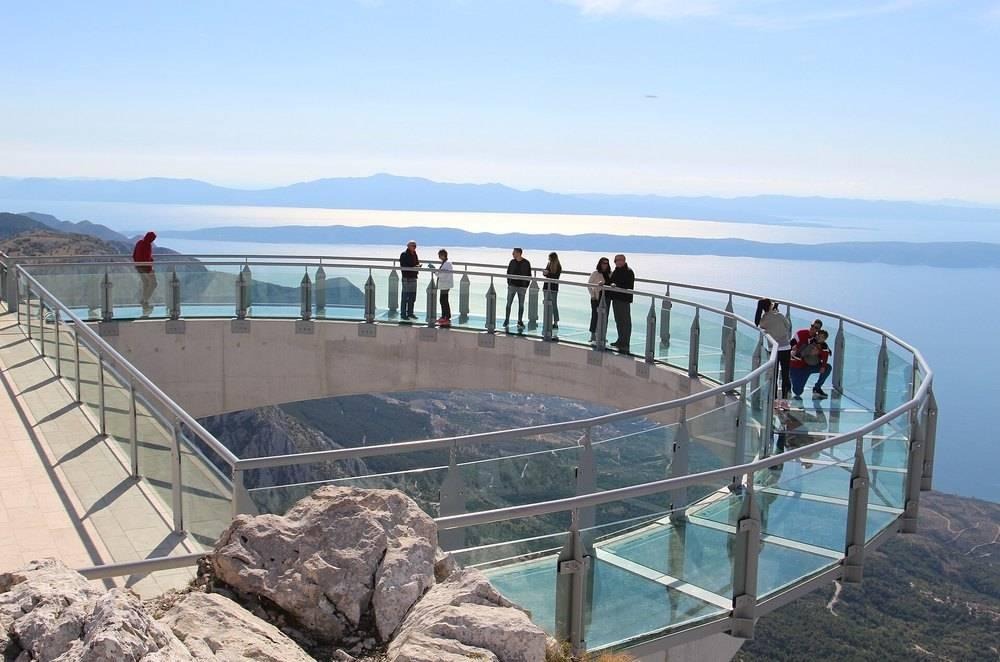
Morning (8:30 AM): Croatia’s Highest Paved Road
Drive 35 km south to Makarska, then turn inland for the Biokovo park gate, 6 km east of town. From the reception at 365 m, the Biokovo road climbs 23 km to the peak of Sv. Jure at 1,762 m, making it the highest paved road in Croatia, and it’s one lane wide with passing bays about every 300 m.
Book online before you go, because tickets are sold only on the park website and entry is capped at 20 vehicles every full hour. Adult entry is €10 from April to May and in October, and €15 from June to September.
Practical tip: this is the one day to leave the campervan behind. Buses are banned from the Biokovo road and the lay-bys are car-sized, so take a taxi or an agency minibus from Makarska if you’re driving anything longer than a compact van. The park says as much itself.
Afternoon (12:30 PM): The Skywalk at 1,228 m
The reason to come up here is Skywalk Biokovo, a semicircular glass viewing deck at 1,228 m that hangs about 11 m out beyond the cliff edge. On a clear, windy day you can see across the Adriatic to Italy, and straight down through the floor to the rocks.
It’s the first skywalk in Croatia, and it’s managed tightly, with 30 visitors on the glass at a time and a 10-minute limit per group. Allow 30 minutes each way for the drive from the gate, and keep going up to Sv. Jure if the weather holds.
Evening (6:00 PM): Nugal Beach and a Peka
Back at sea level, walk to Nugal, the cliff-backed pebble cove about 30 minutes on foot from Makarska through the pines of Osejava Forest Park. There’s no road in, which is exactly why it stays quiet in August.
For dinner, Kalalarga on Makarska’s old main lane is the tavern locals name first, and Bounty at the far end of the town beach is the sunset table. Order lamb or octopus peka, cooked for hours under an iron bell buried in embers, and ask in the afternoon since it needs notice. Sleep at Camping Baško Polje, in a pine forest by the beach at Baška Voda.
Day 5: Brač Island, Vidova Gora and Zlatni Rat
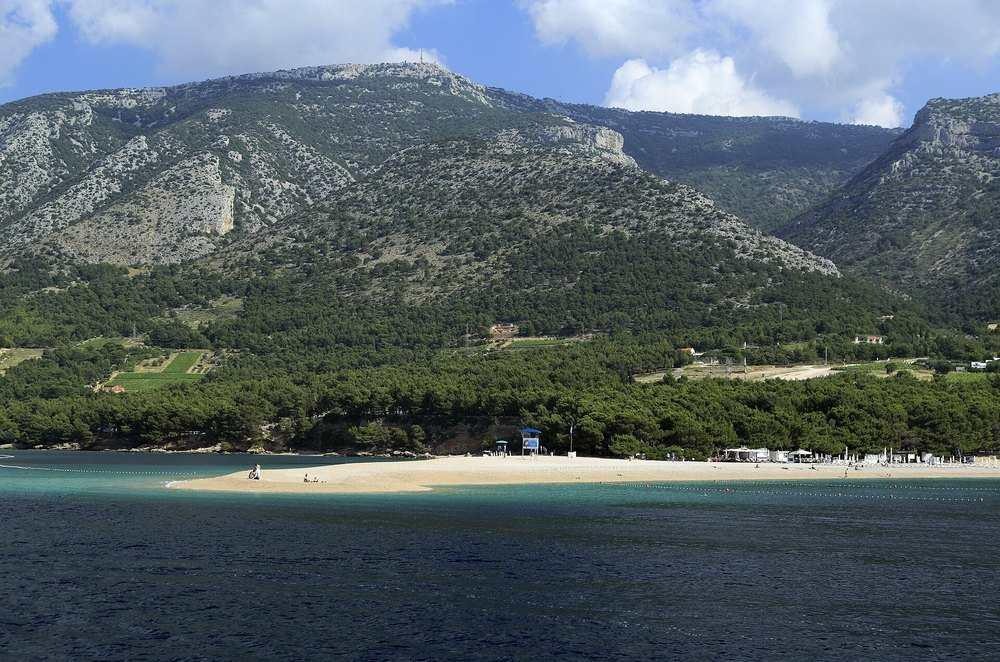
Morning (7:30 AM): Ferry to Sumartin
Drive back into Makarska for the car ferry to Sumartin on Brač, line 638, which takes about an hour. It’s a reservation line, so your vehicle ticket holds a place on a named sailing, and in July and August you want to be at the ramp 45 minutes early.
From Sumartin, cross the island to Bol, roughly 30 km of good road through olive terraces and stone villages. Stop in Pučišća if you have time, a working harbour whose stonemasonry school still cuts the white Brač limestone that built Diocletian’s Palace.
Practical tip: book both ferry legs, Makarska to Sumartin and Supetar back to Split, before you leave the mainland, and give yourself a 3-hour buffer before your drop-off slot. Vehicle decks are the first thing to sell out in peak week.
Afternoon (12:00 PM): Vidova Gora and Zlatni Rat
Drive or hike up Vidova Gora, the highest point on any Adriatic island, for the view that sells Brač, straight down onto the white spit of Zlatni Rat curling into a blue channel. The marked trail from Bol takes about 90 minutes up and 60 down, and the road takes 20 minutes.
Then go and swim off it. Zlatni Rat is pebble, shelves steeply, and shifts shape with the current, and the maestral wind that picks up most summer afternoons has made the channel here one of Europe’s better windsurfing spots. Board and sail rental at the Borak end runs about €30 for 2 hours, with lessons from €50.
Evening (5:00 PM): Bol Dinner, Then the Supetar Ferry
Eat before you sail. Taverna Riva on the Bol waterfront is the long-standing address for slow-cooked Dalmatian food, and Konoba Dinko a few streets back does grilled local octopus and calamari with less of a view and a shorter bill.
If you’re staying the night instead, Camping Kito is a 10-minute walk from Zlatni Rat under old pines and olives. Otherwise, drive the 20 km to Supetar and take the 50-minute ferry to Split, then return the van with a full tank and a clean kitchen to avoid extra fees.
Alternative Croatia Itineraries
The loop above is the adventure version, built for short drives and long days outdoors. Here are two ways to reshape the same 5 days if your priorities are different.
5-Day Northern Croatia Route: Zagreb, Plitvice, and Split
- Day 1: Pick up the van in Zagreb, walk the Upper Town and Dolac market, then drive 2 hours south to a campsite near Plitvice Lakes National Park.
- Day 2: Plitvice’s boardwalks from opening time, following the Program C route over the terraced lakes, then 2.5 hours down to the coast.
- Day 3: Zadar, the Sea Organ, and the Roman forum, with a swim at Kolovare beach.
- Day 4: Paklenica National Park for the Velika Paklenica gorge and a climb or a canyon hike among Croatia’s best-known rock faces.
- Day 5: Krka’s waterfalls in the morning, then into Split for drop-off.
5-Day Southern Dalmatia Route: Split to Dubrovnik
- Day 1: Split’s palace and Marjan, sleeping outside the city.
- Day 2: down the coast to Omiš for the Cetina canyon and the zipline.
- Day 3: the Pelješac Bridge, the wine road at Dingač, and Ston’s walls and oysters.
- Day 4: Dubrovnik’s city walls at opening time, the Old Town, and the cable car up Mount Srđ at sunset.
- Day 5: Lokrum island or Fort Lovrijenac, then the drive back north.
Map of Your 5-Day Croatia Itinerary
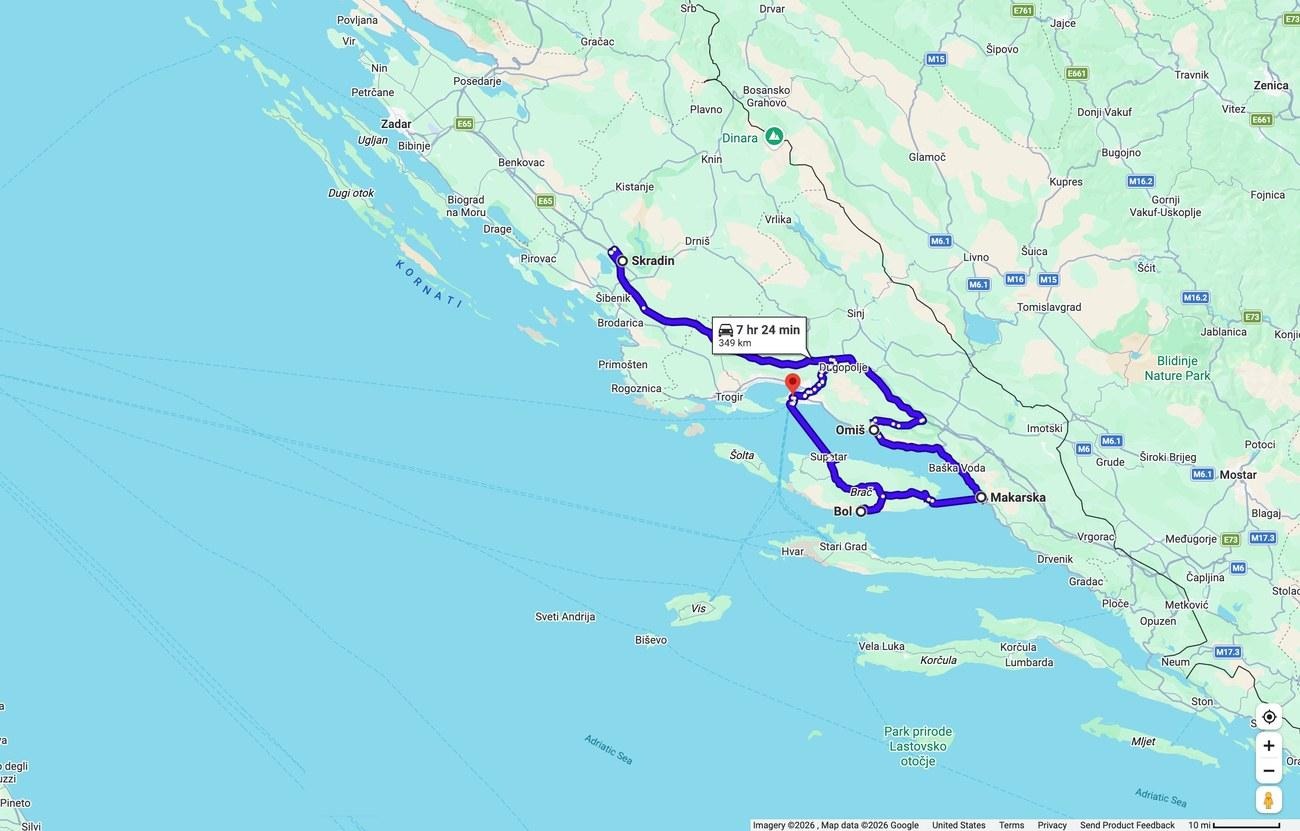
The route runs as a loop from Split, north to Krka and Skradin, southeast down the coast to Omiš and Makarska, up the Biokovo road, then across to Brač by ferry and back to Split by ferry. Total driving is roughly 350 km (215 miles) once you add the Biokovo climb and the island roads, with two short ferry crossings and no single driving leg over an hour. Indie Campers covers the north and the islands too, so the same loop stretches into Istria or the Kvarner coast if you have longer.
Driving and Ferry Rules for a Campervan in Croatia
Croatia is straightforward to drive and has a few local rules that catch first-timers out. These are the ones that affect this route.
- Tolls: the A1 motorway is tolled, and a campervan usually sits in a higher vehicle category than a car, so the Split to Krka run costs a little more than you’d expect. Booths take cards and euros, and Croatia has used the euro since 2023.
- Ferries: Jadrolinija’s car ferries are cheap and frequent, and some lines, including Makarska to Sumartin, are reservation lines where your ticket holds a vehicle space. Book ahead in July and August and arrive 45 minutes early with a van.
- The coastal road: the old Adriatic Highway, the Jadranska Magistrala, is spectacular and narrow, with blind bends above the sea. Take it for the views on the Omiš to Makarska leg and use the A1 when you need to cover ground.
- Mountain roads: the Biokovo road bans buses outright and admits 20 vehicles an hour, and the Cetina canyon road above Omiš has few turning places. Leave a big motorhome at the campsite for both.
- Camping: wild camping is against the law in Croatia, including sleeping in a vehicle outside a registered site. Campsites on this coast run €15 to €45 a pitch and are easy to book on the day outside peak season.
- Old towns: Split, Omiš, Skradin, and Bol all have pedestrian centres. Park at your campsite and walk or take the bus rather than circling for a space you won’t find.
Budgeting for Your Trip: How Much Does 5 Days in Croatia Cost?
Croatia is no longer a budget destination, but a campervan trip keeps the two highest costs, beds and transport, inside one number. Campsite pitches run a fraction of an August hotel room on the same beach.
Here’s a realistic per-person breakdown, not counting the campervan hire itself:
| Category | Budget | Mid-Range | High-End |
| Accommodation (campsites) | €15 to €25/night | €25 to €45/night | N/A (hotels) |
| Food & Drink | €25 to €40/day | €45 to €75/day | €100+/day |
| Activities & Park Entry | €15 to €30/day | €35 to €65/day | €80+/day |
| Fuel, Tolls & Ferries | €10 to €20/day | €20 to €35/day | €40+/day |
| Daily Total | €65 to €115 | €125 to €220 | €220+ |
| 5-Day Total | ~€325 to €575 | ~€625 to €1,100 | ~€1,100+ |
Budget traveler: shop the Split and Makarska markets and cook in the van, pick one paid adventure rather than three, and enter Krka after 3:00 PM in summer for the €30 rate. Around €600 per person for the 5 days is realistic.
Mid-range traveler: eat out once a day, pay for rafting and the zipline, and add the Visovac boat and a windsurf rental on Brač. Budget €900 to €1,200 per person.
High-end traveler: eat out every meal, book guided rafting and a private Biokovo transfer, and add a hotel night in the Split old town at the end. Expect €1,300 or more per person.
One saving is easy to miss. Croatia’s nightly tourist tax scales with your accommodation type, and campsites sit near the bottom of the range, so five nights at a pitch costs a couple of euros per person in tax against several times that in a coastal hotel.
Plan Your Croatia Road Trip with Indie Campers
Five days in Dalmatia only works if the logistics do. Book a hotel in Split, and you’ll spend two of those days on coach tours to Krka and Biokovo that leave when the operator says so, and you’ll still be paying peak-season rates for a room you barely use.
A campervan turns the same 5 days into one booking. You wake up at the beach outside Split, drive to the rafting put-in before the tour buses leave town, and roll onto the Brač ferry with your bed already made.
Company-owned vehicles come with unlimited mileage, which covers the ferry legs and the mountain road without a surcharge, and you can cancel free up to 31 days before pick-up while paying nothing until 30 days out.
Book your campervan and kickstart an adventurous Croatia trip now!
Croatia Itinerary 5 Days: Planning Recap
| Category | Details |
| Best Time to Go | Late May to June, or September, for warm sea, open park roads, and thinner crowds. |
| Recommended Budget | €600 to €1,300 per person for 5 days, plus campervan hire. |
| Days in the City | 1 day in Split, with the other 4 in the parks, the canyon, and on Brač. |
| Adventure Activities | Cetina rafting (€40 to €60), the Omiš zipline, sea kayaking in Split (€40 to €55), windsurfing in Bol (from €30). |
| Best Restaurants | Konoba Fetivi and Villa Spiza, Split; Konoba Dalmatino, Skradin; Restoran Puljiz, Omiš; Kalalarga, Makarska; Taverna Riva, Bol. |
| Recommended Transport | Campervan rental from Split; it combines accommodation and transport and handles the ferry legs. |
| Total Driving | About 350 km (215 miles) across 5 days, plus two ferry crossings. |
| Must-Try Foods | Pašticada, skradinski rižot, grilled fish, lamb peka, vitalac, Brač octopus. |
| Accommodation | Campsites: €15 to €45 per pitch per night. |
| Perfect For | Couples and small groups who want active days, short drives, and one region done properly. |
Frequently Asked Questions (FAQs)
How many days do you need in Croatia?
You need at least 5 days in Croatia to see one region properly, and 7 to 10 days to combine the coast with Plitvice Lakes or Dubrovnik. Five days works well in Central Dalmatia, where Split, Krka National Park, the Cetina canyon, Biokovo, and Brač all sit within 90 minutes of each other. Anything shorter than 4 days leaves you inside one city, since the drives between regions run 3 hours or more.
Is 5 days enough for Croatia?
Yes, 5 days is enough for Croatia if you commit to a single region instead of the whole country. The loop in this guide covers about 350 km in total and fits a Roman city, a waterfall park, a rafting canyon, a 1,762 m mountain road, and an island beach into the 5 days. Trying to add both Plitvice and Dubrovnik pushes the same trip past 700 km and costs you two days of driving.
What is the best way to get around Croatia in 5 days?
A campervan is the best way to get around Croatia in 5 days, because it covers transport and accommodation and reaches the places buses don’t, like the Biokovo park gate, the Cetina put-in, and the campsites next to the ferry ports. Croatia’s coastal roads and Jadrolinija car ferries are easy to drive and take vehicles on nearly every island line. Public buses connect Split, Makarska, and Bol, but they run to schedules that don’t match early park entries or activity start times.
Should I start a 5-day Croatia itinerary in Split or Zagreb?
Start in Split for a coastal 5-day Croatia itinerary and in Zagreb only if you want Plitvice Lakes early. Split puts you inside Central Dalmatia from hour one, with Krka 50 minutes north, Omiš 30 minutes south, and the Brač ferries at the end of the promenade. From Zagreb you’ll spend most of Day 1 driving south, which is fine over 7 days and costly over 5.
Can you drive a campervan on the Biokovo road?
You can drive a campervan on the Biokovo road, but only a small one comfortably, since the 23 km climb is single-lane with passing bays roughly every 300 m. Buses are banned outright, trucks need special permission, and the park admits 20 vehicles every full hour with tickets sold online only. With a larger motorhome, park in Makarska and take a taxi or an agency minibus to the Skywalk instead.
Can you take a campervan on a Croatian ferry?
Yes, you can take a campervan on a Croatian ferry, and Jadrolinija’s car ferries price vehicles by length. The Makarska to Sumartin crossing on Brač is a reservation line, so buying a ticket holds a deck space on a specific sailing, while Split to Supetar runs frequently and takes about 50 minutes. In July and August, book vehicle space ahead and arrive at the ramp 45 minutes before departure.
Is wild camping allowed in Croatia?
Wild camping is not allowed in Croatia, and that includes sleeping in a campervan outside a registered campsite. Enforcement is strongest exactly where you want to be, along the coast and inside national parks, and fines are steep enough to spoil a 5-day budget. Registered sites are dense along this route and cost €15 to €45 a pitch, with beachfront options at Stobreč, Omiš, Baška Voda, and Bol.
When is the best time to visit Croatia?
The best time to visit Croatia is late May to June or September, when the sea is warm, the park roads are open, and the crowds are lighter than in July and August. Krka charges €40 for an adult ticket from June to September against €20 in May and October, and Biokovo Nature Park only sells tickets between April 1 and October 31. Winter closes most of this route, including the mountain road, the park boats, and the majority of coastal campsites.
Is Croatia expensive to visit?
Croatia is mid-range for Europe now, and the parks are the line item that surprises people rather than the food. A campervan trip runs about €600 per person for 5 days at the budget end and €900 to €1,200 mid-range, excluding the hire itself, because campsite pitches cost €15 to €45 against summer hotel rates on the same beach. Cooking two meals a day in the van and entering Krka after 3:00 PM in high season are the two easiest savings.
Do I need a visa to visit Croatia?
Visitors from the US, Canada, Australia, the UK, and most other non-EU countries don’t need a visa for tourist stays in Croatia of up to 90 days in any 180-day period. Croatia is in both the Schengen area and the euro zone, so there are no border checks from Slovenia or Hungary and no currency to change. The EU’s ETIAS travel authorization is expected to start in late 2026 and won’t be mandatory straight away, so check official EU guidance for your nationality before you book.