Last Updated: August 21, 2026
Key Takeaways
Planning a Spain itinerary 14 days long? Two weeks is enough time to cross the country from Madrid to Barcelona, with Andalusia and the coast in between.
Here’s the short version before the day-by-day details:
- Iconic Stops: The Alhambra, Seville’s Alcazar, and Barcelona’s Sagrada Familia.
- Hidden Gems: Ronda’s cliffside bridge and Cordoba’s Mezquita.
- Recommended Transport: RV rental, since it covers your ride, your hotel, and your kitchen in one.
- Recommended Budget: $1,600 to $3,000 per person for 14 days. Covers RV rental, fuel, food, and entrance fees.
- Best Time to Go: Spring or fall (April, May, September, October), for warm weather without the summer heat.
Table of Contents
- Spain Itinerary 14 Days: At a Glance
- Why You’ll Love a 14-Day Trip to Spain?
- Best Time to Visit Spain
- Are 14 Days Enough to Visit Spain?
- How to Get Around Spain?
- The Best Spain Itinerary 14 Days Long
- Days 1 to 4: Madrid, Toledo, and Cordoba
- Days 5 to 9: Seville, Ronda, and Granada
- Days 10 to 14: The Coast, Valencia, and Barcelona
- Exploring Spain’s Regions: Alternative Itineraries
- Map of Your 14-Day Spain Itinerary
- Budgeting for Your Trip
- Plan Your Dream Spanish Road Trip with Indie Campers
- Spain Itinerary 14 Days Long: Your Final Planning Recap
- FAQs About Spain Itinerary 14 Days
Spain Itinerary 14 Days: At a Glance
Here’s a quick look at this 2-week Spain itinerary before the full breakdown below:
| Day | Location(s) | Top Highlights |
| Day 1 | Madrid | Pick up your RV, visit the Prado Museum. Try patatas bravas in a tapas bar. |
| Day 2 | Madrid to Toledo | Toledo Cathedral, old town walls. Try roast suckling pig. |
| Day 3 | Toledo to Cordoba | Long scenic drive south, evening in Cordoba. Try salmorejo. |
| Day 4 | Cordoba | The Mezquita, an old Jewish quarter. Try flamenquin. |
| Day 5 | Cordoba to Seville | Seville’s Alcazar, cathedral. Try seafood tapas. |
| Day 6 | Seville | Flamenco show, Plaza de Espana. Try oxtail stew. |
| Day 7 | Seville to Ronda | Ronda’s cliffside bridge, old town. Try grilled lamb. |
| Day 8 | Ronda to Granada | Arrival in Granada, Albaicin neighborhood. Try free tapas with drinks. |
| Day 9 | Granada | The Alhambra, Generalife gardens. Try piononos. |
| Day 10 | Granada to the Coast | Nerja beach town, coastal caves. Try grilled sardines. |
| Day 11 | Coast to Valencia | Long drive north, City of Arts and Sciences. Try authentic paella. |
| Day 12 | Valencia | Central Market, old town streets. Try horchata with fartons. |
| Day 13 | Valencia to Barcelona | Coastal drive, Sagrada Familia. Try pan con tomate. |
| Day 14 | Barcelona | Park Guell, Barceloneta beach, drop off your RV. Try one last plate of tapas. |
Why You’ll Love a 14-Day Trip to Spain?
Spain packs Moorish palaces, whitewashed villages, and Mediterranean beaches into one country.
In two weeks, you can wander a royal fortress, hike through a cliffside town, and eat paella by the sea, all connected by open road on this Spain itinerary 14 days long.
An RV is the ideal way to see this kind of variety. Spain’s smaller towns don’t always have a wide choice of hotels near the main sights. Having your own kitchen and bed means you can adjust your route without losing a reservation.
You can stop at a roadside viewpoint in Andalusia, linger an extra hour in a hilltop village, or add a beach stop that wasn’t on the original plan. This freedom is what makes a 2-week Spain itinerary feel like a real road trip instead of a fixed tour schedule.
The food matches the diversity. Tapas bars line nearly every street corner, and regional dishes shift completely as you move from Madrid to Andalusia to the coast.
This Spain itinerary 14 days plan builds in enough time to enjoy all three: the drive, the sights, and the plate in front of you.
Best Time to Visit Spain
The season you pick shapes how comfortable the driving feels and how crowded the major sights get on this Spain itinerary 14 days long.
Spring (April to May)
Spring brings mild temperatures and blooming courtyards across Andalusia, without the crushing summer heat.
It’s a strong choice for anyone building a 2-week Spain itinerary around comfortable walking weather at the Alhambra and beyond.
- Average Temperatures: 60 to 75°F (16 to 24°C)
- What to expect: Mild, mostly dry weather, moderate crowds, mid-range prices on RV rentals and lodging.
Summer (June to August)
Summer is peak season, with long daylight hours and every beach town in full swing.
Southern Spain also gets brutally hot during this stretch of a 2-week Spain itinerary, which can make midday sightseeing uncomfortable.
- Average Temperatures: 80 to 100°F (27 to 38°C)
- What to expect: Very hot, dry days in the south, heavy crowds everywhere, the highest prices of the year.
Autumn (September to October)
Early autumn keeps the warmth of summer while the heat and crowds both ease off fast.
Many travelers consider this the best balance of comfort and value.
- Average Temperatures: 65 to 80°F (18 to 27°C)
- What to expect: Warm days with cooler evenings, light to moderate crowds, mid-range prices.
Winter (November to March)
Winter is quiet almost everywhere except the ski resorts, with far fewer tourists and lower prices across the board.
Some coastal towns feel sleepy this time of year, so this season suits travelers focused on cities rather than beaches.
- Average Temperatures: 45 to 60°F (7 to 16°C)
- What to expect: Cool, occasionally rainy weather, minimal crowds, the lowest prices of the year.
Are 14 Days Enough to Visit Spain?
Yes, a Spain itinerary 14 days long is enough for a full first trip across the country. The key is picking one clear route instead of trying to see the entire country. Spain is roughly twice the size of the United Kingdom, so no two-week trip covers every region.
This Spain itinerary 14 days route runs from Madrid through Andalusia to the Mediterranean coast, ending in Barcelona. That focus means real time at each stop instead of a rushed checklist.
By the end of the trip, you’ll have explored a royal fortress, walked the streets of at least four historic old towns, and eaten your way across three distinct regional cuisines on this 2-week Spain itinerary.
How to Get Around Spain?
Spain’s train network is excellent between major cities, but it skips most of the small towns and coastal villages that make a 2-week Spain itinerary worthwhile by road.
An RV solves that directly, since it gets you to hilltop villages and beach coves that a train schedule simply can’t reach.
Renting a campervan also saves money on a Spain itinerary 14 days long, where hotel costs add up fast across fourteen nights.
You can cook your own breakfast, pack lunch for a day of sightseeing, and save restaurant meals for when you actually want a sit-down dinner. There’s no need to book every night’s stay months ahead either, since you can adjust your route if a town turns out to be worth an extra hour.
RV rental in Spain through Indie Campers supports one-way trips, which suits this route well since it starts in Madrid and ends in Barcelona. That one-way setup matters most at pickup, since where you start shapes the whole route ahead.
Renting an RV in Madrid makes a natural starting point, since the capital sits at the center of Spain’s highway network heading south.
The Best Spain Itinerary 14 Days Long
Here’s how to spend each day on this Spain itinerary 14 days long, from pickup in Madrid to your last night in Barcelona:
Day 1: Starting Off in Madrid
Morning (9 AM): RV Pickup and the Prado
Start your trip by picking up your RV in Madrid. Take an hour to get familiar with the vehicle before you head into the city.
Visit the Prado Museum once you’re set, home to major works by Velazquez and Goya. Give yourself at least two hours, since the collection is large enough to fill a full morning.
Practical Tip: Buy your Prado ticket online in advance, since the line at the entrance can run long by mid-morning.
Afternoon (1 PM): Retiro Park and Lunch
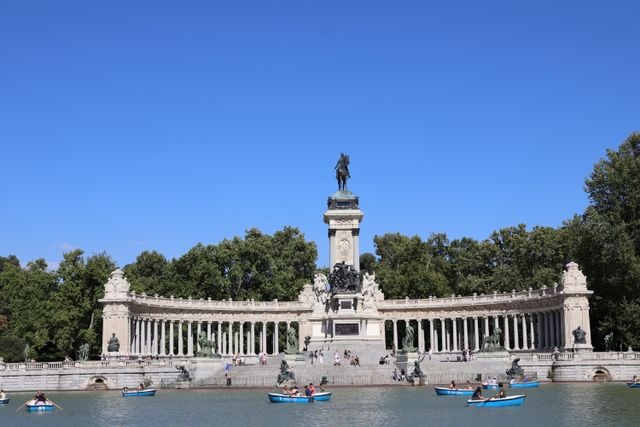
Grab lunch at a tapas bar near the museum, since patatas bravas and jamon are easy, quick options for a first meal.
Spend the afternoon walking through Retiro Park, one of Madrid’s largest green spaces, where locals row boats on the central lake.
Practical Tip: Rent a rowboat on the lake if you have time, since it’s one of Madrid’s more relaxed afternoon activities.
Evening (6 PM): Gran Via and Dinner
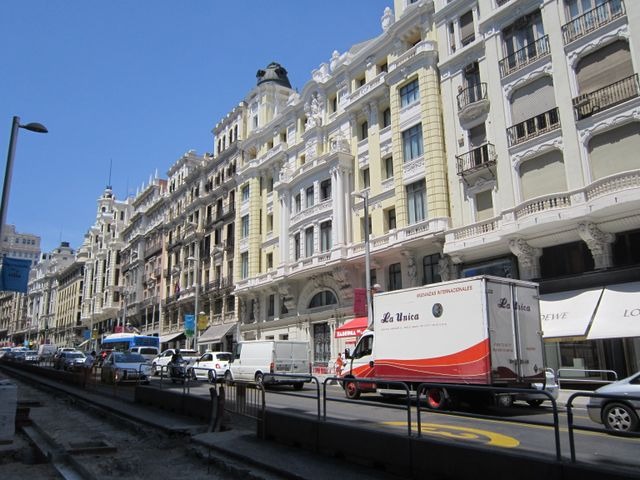
Walk down Gran Via as the evening lights come on, Madrid’s main boulevard lined with early 20th-century buildings. For dinner, order cocido madrileño, a hearty chickpea stew, at a traditional restaurant near the city center.
Practical Tip: Book your first night’s RV parking spot before you arrive, since central Madrid has limited options close to downtown.
Day 2: Madrid to Toledo
Morning (9 AM): The Drive to Toledo
Leave Madrid and drive south to Toledo, a trip of less than an hour on the highway.
Walk into the old town through one of its medieval gates, since the city’s walls and layout have barely changed in centuries.
Practical Tip: Park outside the old town walls, since the narrow streets inside aren’t built for RVs.
Afternoon (1 PM): Toledo Cathedral
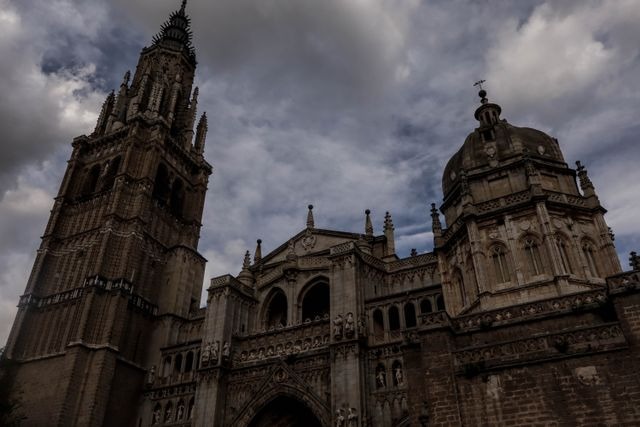
Visit Toledo Cathedral, one of the largest Gothic cathedrals in Spain, with an interior packed with religious art.
Grab lunch at a small restaurant nearby and order roast suckling pig, a dish the region is known for.
Practical Tip: Wear comfortable shoes, since Toledo’s old town streets are steep and cobblestoned throughout.
Evening (6 PM): Sunset Over the Tagus
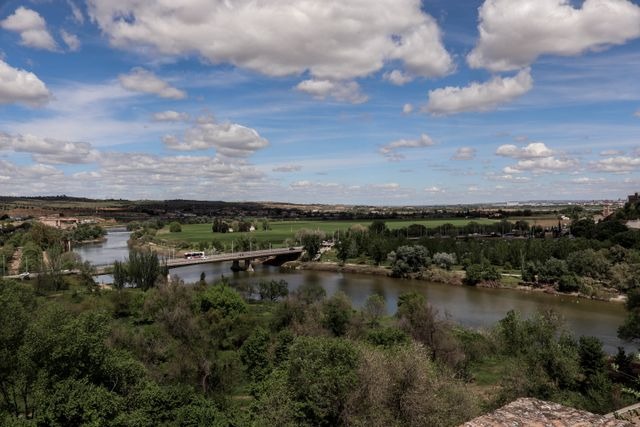
Head to the Mirador del Valle for sunset, a viewpoint across the river that frames the entire old town. For dinner, order marzipan for dessert after a light meal, since Toledo is famous for the sweet almond treat.
Practical Tip: Arrive at the viewpoint at least 30 minutes before sunset, since the parking area fills up on clear evenings.
Day 3: Toledo to Cordoba
Morning (9 AM): The Drive South
Leave Toledo and drive south toward Cordoba, a trip of roughly three hours through the plains of Castilla-La Mancha.
Stop part way for a coffee break if needed, since this stretch has fewer attractions than the cities on either end.
Practical Tip: Fuel up before leaving Toledo, since gas stations thin out on this rural stretch.
Afternoon (1 PM): Arrival in Cordoba
Arrive in Cordoba and grab lunch at a restaurant near the old quarter, where salmorejo, a cold tomato soup, is the dish to order. Spend the afternoon walking the narrow streets of the Jewish quarter, lined with white walls and flower-filled patios.
Practical Tip: Visit the patios in the morning or late afternoon, since many close during the hottest hours of the day.
Evening (6 PM): Cordoba by Night
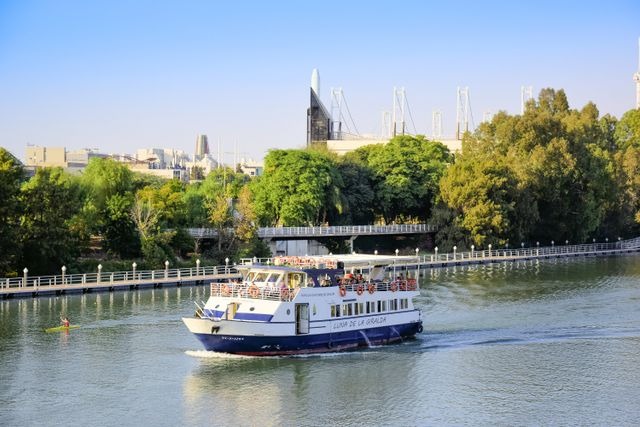
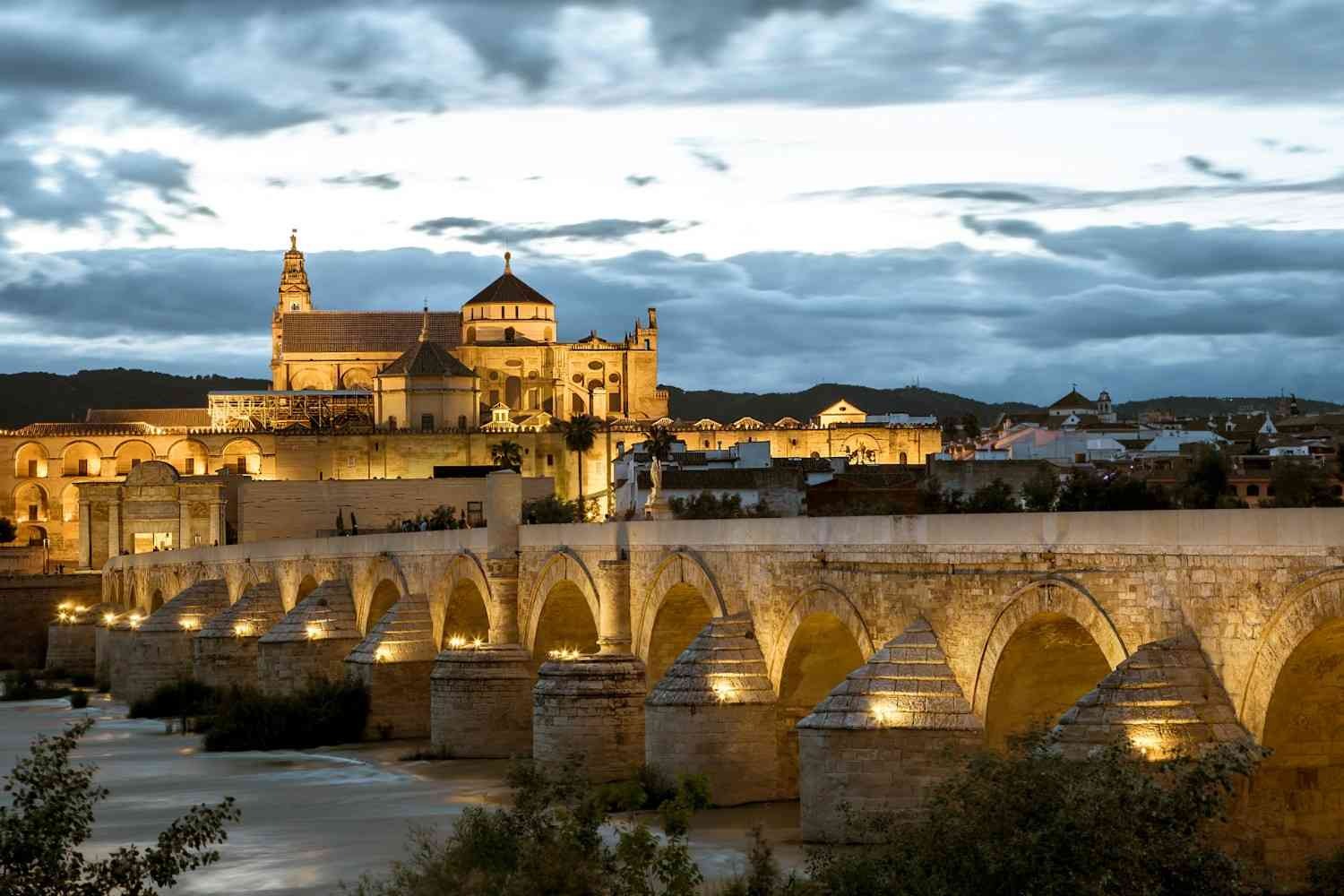
Walk along the Guadalquivir River as the light fades, with the old Roman bridge lit up against the water.
For dinner, order flamenquin, a fried pork and ham roll that’s a Cordoba specialty, at a restaurant in the old town.
Practical Tip: Book RV parking ahead of time in summer, since Cordoba’s old town area gets busy with evening visitors.
Day 4: Cordoba
Morning (9 AM): The Mezquita
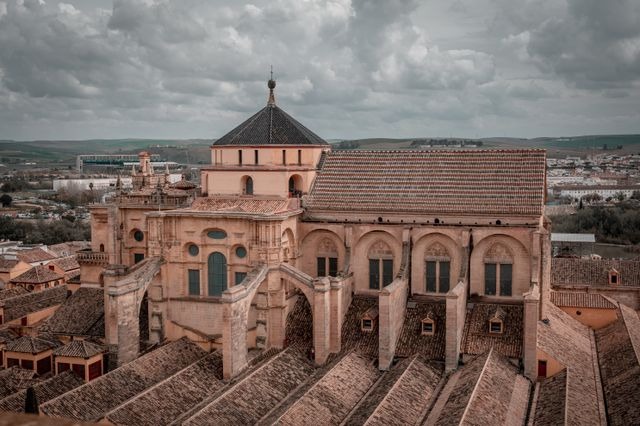
Spend the morning at the Mezquita, a mosque turned cathedral known for its forest of striped arches and columns.
Give yourself at least 90 minutes, since the building’s scale takes time to fully appreciate.
Practical Tip: Visit right at opening time, since the site gets crowded with tour groups by mid-morning.
Afternoon (1 PM): The Alcazar Gardens
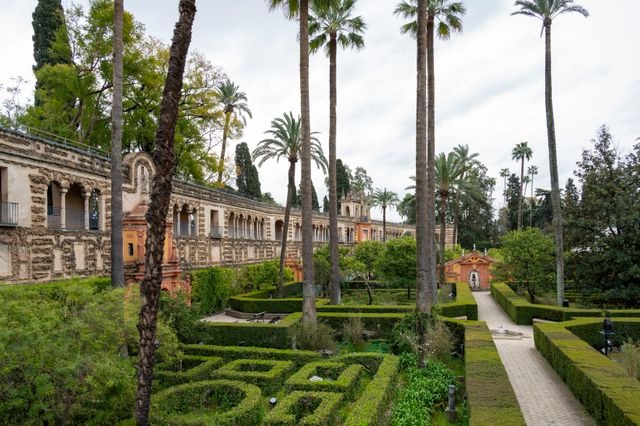
Grab lunch near the Mezquita before heading to the Alcázar de los Reyes Cristianos, a fortress with terraced gardens and reflecting pools.
Walk the gardens slowly, since the fountains and clipped hedges make for one of the more photogenic stops in the city.
Practical Tip: Visit the gardens in the late afternoon, since the fountains often run on a schedule that’s better later in the day.
Evening (6 PM): Final Evening in Cordoba
Spend the evening back in the old Jewish quarter, quieter now that the day-trip crowds have left.
For dinner, order oxtail stew at a local restaurant, a dish that shows up on menus across Andalusia.
Practical Tip: Charge your devices overnight, since tomorrow’s drive to Seville includes several stops worth photographing.
Day 5: Cordoba to Seville
Morning (9 AM): The Drive to Seville
Leave Cordoba and drive to Seville, a trip of about an hour and a half on the highway.
Head straight to the Real Alcazar once you arrive, a royal palace with Islamic architecture layered under centuries of later additions.
Practical Tip: Book your Alcazar ticket online in advance, since same-day tickets often sell out in peak season.
Afternoon (1 PM): Seville Cathedral
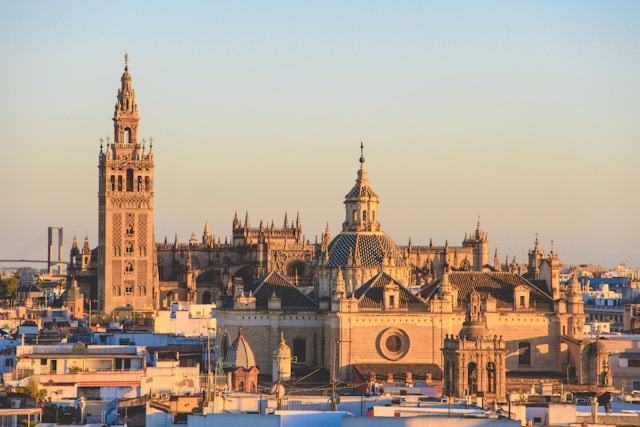
Grab lunch at a tapas bar near the cathedral, since seafood tapas are a reliable choice in this part of the city.
Visit Seville Cathedral afterward, the largest Gothic cathedral in the world, and climb the Giralda tower for views over the rooftops.
Practical Tip: Climb the Giralda in the late afternoon, since the ramp gets warm and crowded at midday.
Evening (6 PM): Barrio Santa Cruz
Wander through Barrio Santa Cruz as evening falls, Seville’s old Jewish quarter with narrow streets and hidden courtyards.
For dinner, order jamon iberico and manchego cheese at a small bar in the neighborhood, a simple but satisfying combination.
Practical Tip: Book RV parking before you arrive, since central Seville has limited options close to the historic center.
Day 6: Seville
Morning (9 AM): Plaza de Espana
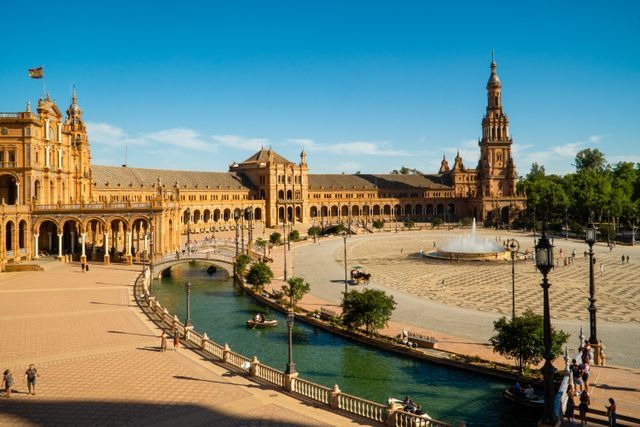
Spend the morning at Plaza de Espana, a sweeping semicircular building with tiled alcoves representing each Spanish province.
Rent a rowboat on the plaza’s canal if you have time, since it’s a relaxed way to see the building from the water.
Practical Tip: Visit early, since the plaza gets busy with tour groups once the day heats up.
Afternoon (1 PM): Maria Luisa Park
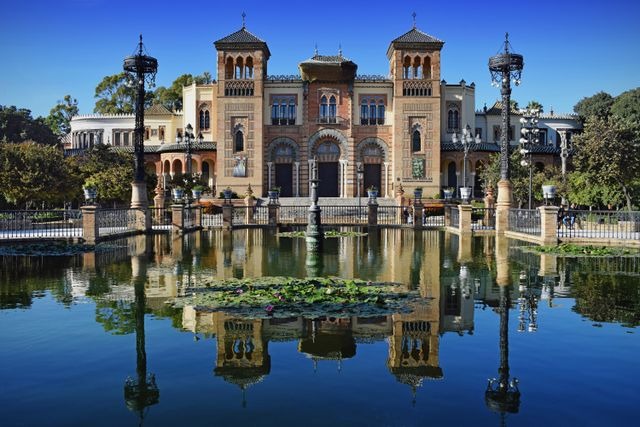
Grab lunch near the plaza before walking through Maria Luisa Park, Seville’s shaded green space right next door.
Spend the afternoon exploring the park’s tiled fountains and quiet paths, a good break from the midday sun.
Practical Tip: Bring water on this walk, since shade is inconsistent and Seville afternoons run hot for much of the year.
Evening (6 PM): Flamenco Show
Book a flamenco show for the evening, since Seville is considered the art form’s birthplace and hosts some of its best performances.
For dinner, order oxtail stew or grilled fish beforehand at a restaurant near the venue.
Practical Tip: Reserve your flamenco tickets a day ahead, since the smaller, more authentic venues sell out fast.
Day 7: Seville to Ronda
Morning (9 AM): The Drive to Ronda
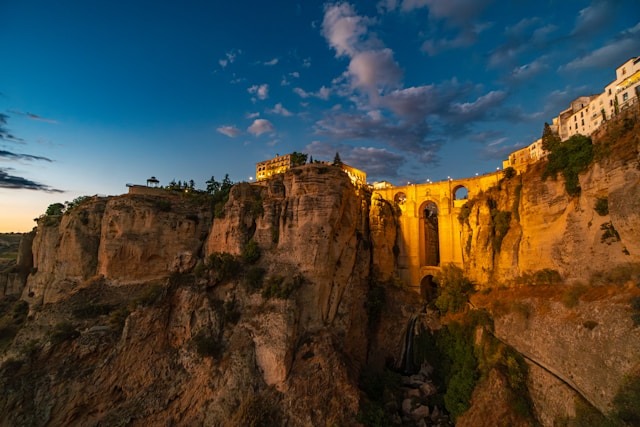
Leave Seville and drive toward Ronda, a trip of about two hours through rolling countryside.
Head straight to Puente Nuevo once you arrive, the stone bridge that spans a deep gorge splitting the town in two.
Practical Tip: Park outside the old town, since Ronda’s streets near the bridge get narrow and crowded with cars.
Afternoon (1 PM): Ronda’s Old Town
Grab lunch at a restaurant with a gorge view, since several spots in Ronda serve exactly that alongside grilled lamb.
Walk through the old town’s Moorish quarter, where the streets wind past whitewashed houses and small squares.
Practical Tip: Visit the viewpoint below the bridge for a different angle, since most photos only show the top view.
Evening (6 PM): Sunset at the Gorge
Return to the bridge for sunset, when the gorge walls turn a deep orange in the fading light.
For dinner, order grilled lamb chops at a restaurant in the old town, a dish the region does well.
Practical Tip: Fill your RV’s tank in Ronda, since services thin out on the mountain road toward Granada.
Day 8: Ronda to Granada
Morning (9 AM): The Mountain Drive
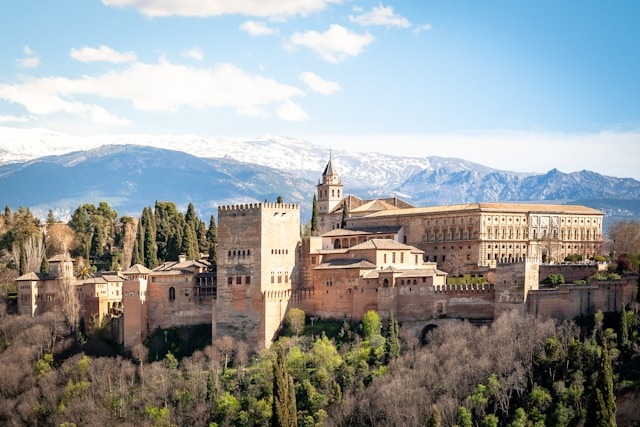
Leave Ronda and drive toward Granada, a scenic trip of about two and a half hours through the mountains.
Stop at a roadside viewpoint along the way if the weather allows, since this stretch offers some of the best mountain scenery on the route.
Practical Tip: Take this drive slowly, since the road has sharp curves through the mountains.
Afternoon (1 PM): Arrival in Granada
Arrive in Granada and grab lunch in the Albaicin neighborhood, Granada’s old Moorish quarter on a hill facing the Alhambra.
Order a round of drinks at a local bar, since Granada is one of the few Spanish cities that still serves a free tapa with every drink.
Practical Tip: Wear good shoes for the Albaicin, since the streets are steep and paved with uneven stone.
Evening (6 PM): Mirador de San Nicolas
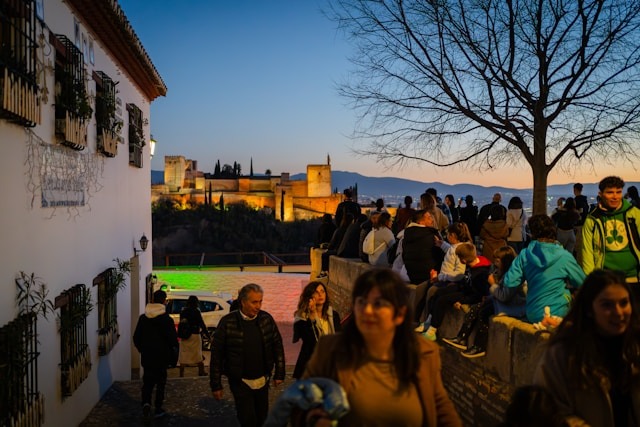
Walk up to the Mirador de San Nicolas for sunset, the viewpoint with the classic postcard shot of the Alhambra against the mountains.
For dinner, order piononos, a small syrup-soaked cake that originated in a nearby town, for dessert.
Practical Tip: Arrive at the viewpoint early, since it fills up fast on clear evenings.
Day 9: Granada
Morning (9 AM): The Alhambra
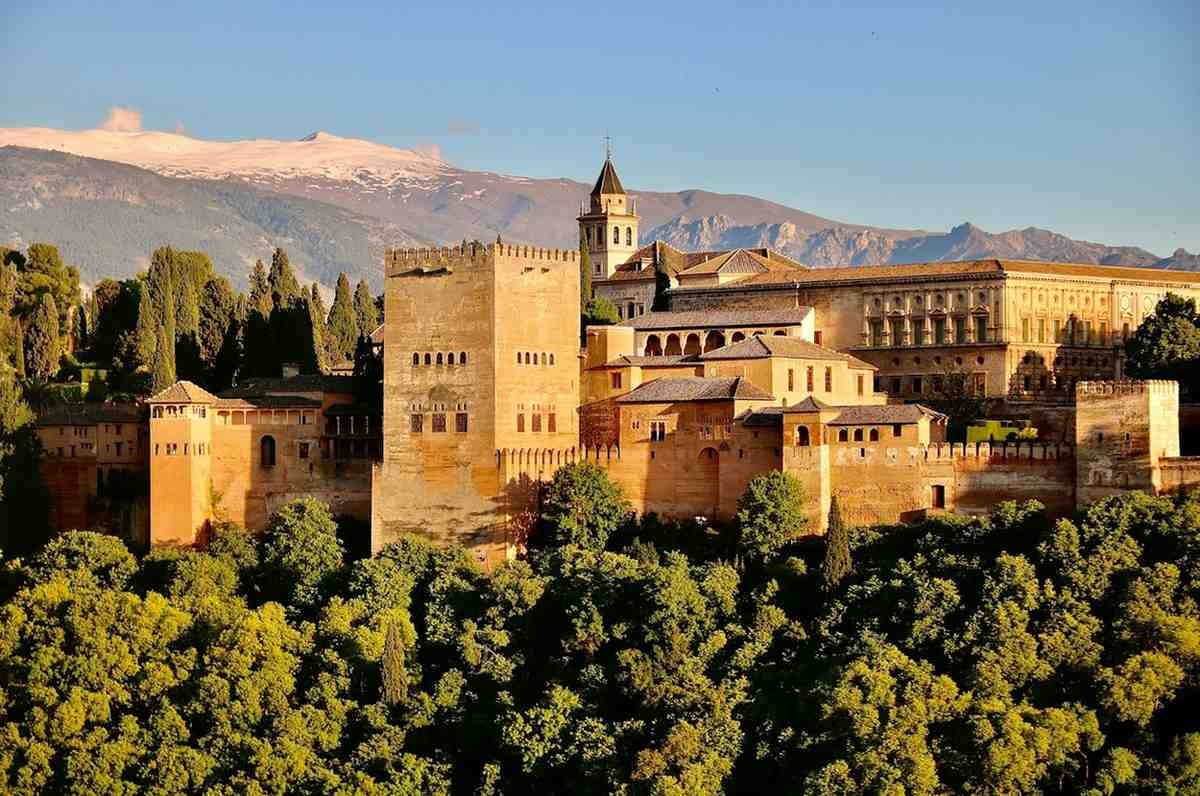
Spend the morning at the Alhambra, the Moorish palace and fortress complex that draws visitors from across the world.
Focus your visit on the Nasrid Palaces, since their intricate carved plasterwork is the highlight most people come for.
Practical Tip: Book your Alhambra ticket weeks in advance, since daily entry is capped and sells out fast in peak season.
Afternoon (1 PM): The Generalife Gardens
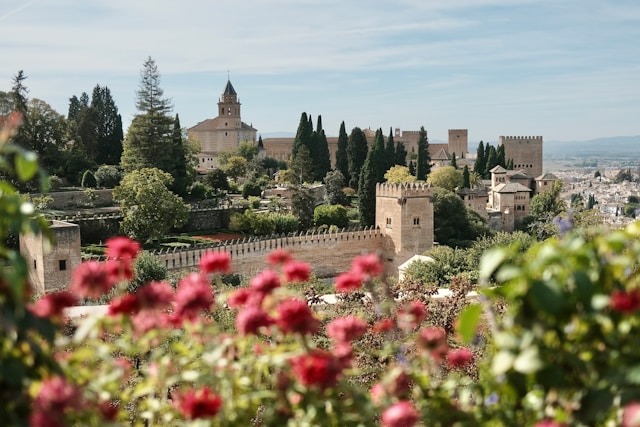
Grab a light lunch inside the complex before walking through the Generalife, the Alhambra’s summer palace and gardens.
Spend time in the gardens’ shaded courtyards, since the fountains and cypress hedges make for a calm contrast to the palace itself.
Practical Tip: Wear a hat, since much of the Alhambra grounds sit in open sun for long stretches.
Evening (6 PM): Final Evening in Granada
Spend the evening back in Albaicin, watching the Alhambra light up from across the valley.
For dinner, order another round of free tapas with drinks, a fitting way to close out your time in the city.
Practical Tip: Take photos of your route for tomorrow, since the drive to the coast has several worthwhile stops along the way.
Day 10: Granada to the Coast
Morning (9 AM): The Drive to Nerja
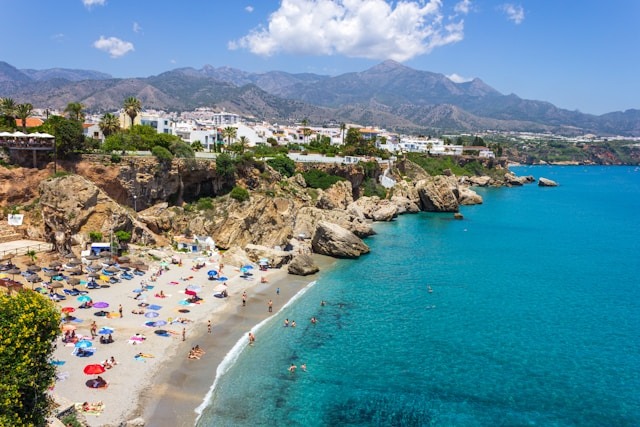
Leave Granada and drive south to Nerja, a trip of about an hour and a half toward the Mediterranean coast.
Head to the Balcon de Europa once you arrive, a clifftop promenade with views over the sea.
Practical Tip: Visit the Balcon de Europa in the morning, since it gets crowded with day-trippers by early afternoon.
Afternoon (1 PM): Nerja Caves
Grab lunch at a beachfront restaurant and order grilled sardines, a coastal specialty served on skewers.
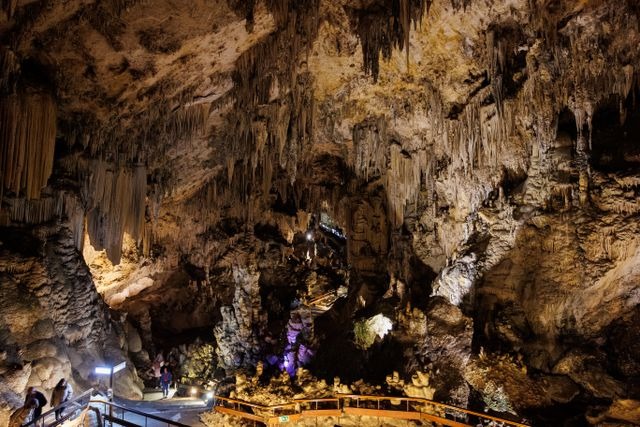
Visit the Nerja Caves in the afternoon, a series of large limestone caverns just outside town.
Practical Tip: Bring a light jacket for the caves, since the temperature inside stays cool year-round.
Evening (6 PM): Beach Evening
Spend the evening in Nerja’s Burriana Beach, a relaxed stretch of sand with beachfront restaurants along the promenade.
For dinner, order fried fish at one of the beach chiringuitos, a casual way to close out a coastal day.
Practical Tip: Charge your devices tonight, since tomorrow’s drive to Valencia is the longest of the trip.
Day 11: Coast to Valencia
Morning (8 AM): The Long Drive North
This is the longest driving day of the trip, so start early. The route runs along the Mediterranean coast toward Valencia.
Break the drive with a stop in Alicante or Elche if you want to stretch your legs, since both sit roughly at the halfway point.
Practical Tip: Stock up on groceries before leaving the coast, since prices and selection vary along this stretch.
Afternoon (2 PM): Arrival in Valencia
Arrive in Valencia in the afternoon and head straight to the City of Arts and Sciences, a futuristic complex of museums and structures.
Walk through the complex’s public plazas, since the architecture itself is worth seeing even without entering every building.
Practical Tip: Visit the complex in the late afternoon, since the white structures reflect harsh light at midday.
Evening (6 PM): First Paella in Valencia

Spend the evening in Valencia’s old town, a good introduction before a longer stay tomorrow.
For dinner, order authentic paella valenciana, since Valencia is where the dish originated and takes its name.
Practical Tip: Order paella for two people minimum, since most restaurants prepare it as a shared dish rather than an individual portion.
Day 12: Valencia
Morning (9 AM): Central Market
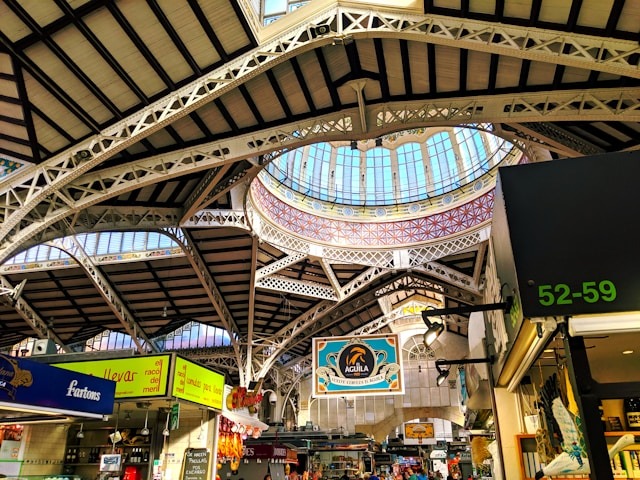
Spend the morning at the Central Market, a covered market hall filled with produce, cured meats, and small food stalls.
Grab breakfast or an early snack here, since it’s one of the best spots in the city for fresh, casual food.
Practical Tip: Visit the market before noon, since many stalls close in the early afternoon.
Afternoon (1 PM): Valencia’s Old Town
Walk through Valencia’s old town, where the Silk Exchange and cathedral sit within a few blocks of each other.
Grab a horchata with fartons at a cafe, a local drink and pastry pairing worth trying at least once.
Practical Tip: Try horchata cold rather than at room temperature, since that’s how it’s traditionally served.
Evening (6 PM): Turia Gardens
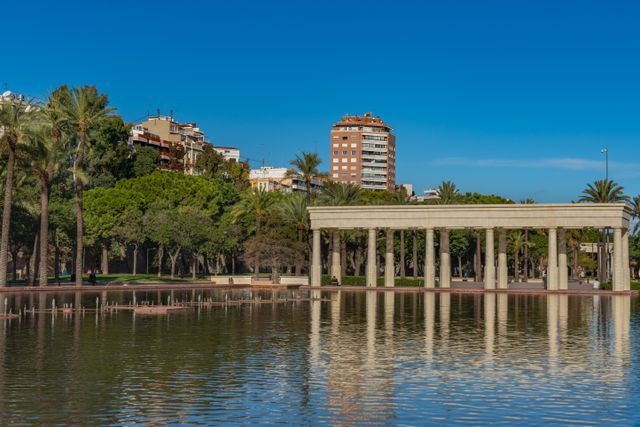
Spend the evening walking through the Turia Gardens, a long park built in a former riverbed that runs through the city.
For dinner, order another regional rice dish beyond paella, since Valencia’s rice tradition goes well beyond the one dish most visitors know.
Practical Tip: Rent a bike for part of the Turia Gardens path, since it’s one of the easiest ways to cover the park’s length.
Day 13: Valencia to Barcelona
Morning (9 AM): The Coastal Drive
Leave Valencia and drive north toward Barcelona, a trip of roughly three and a half hours along the coast.
Stop in Tarragona if you have extra time, since the town has well-preserved Roman ruins worth a short visit.
Practical Tip: Fuel up before leaving Valencia, since prices tend to climb closer to Barcelona.
Afternoon (2 PM): Arrival and the Sagrada Familia
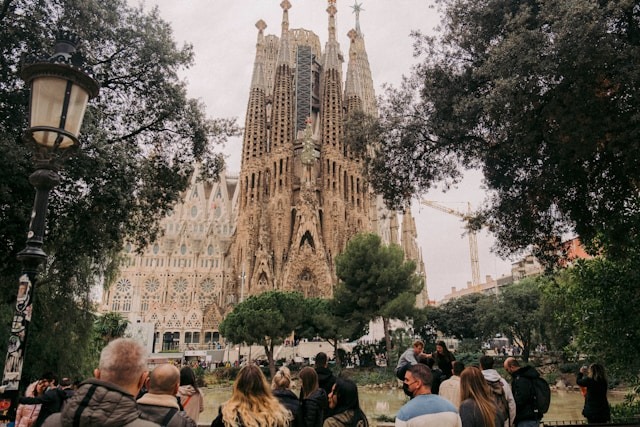
Arrive in Barcelona and head straight to the Sagrada Familia, Gaudi’s unfinished basilica that still dominates the skyline.
Grab lunch nearby before or after your visit, since the surrounding neighborhood has plenty of casual tapas options.
Practical Tip: Book your Sagrada Familia ticket online well in advance, since walk-up entry usually isn’t available.
Evening (6 PM): Gothic Quarter
Spend the evening wandering Barcelona’s Gothic Quarter, a maze of medieval streets packed with small squares and shops.
For dinner, order pan con tomate alongside grilled seafood at a restaurant in the neighborhood.
Practical Tip: Book RV parking ahead of time in Barcelona, since central options are limited and fill up fast.
Day 14: Barcelona
Morning (9 AM): Park Guell
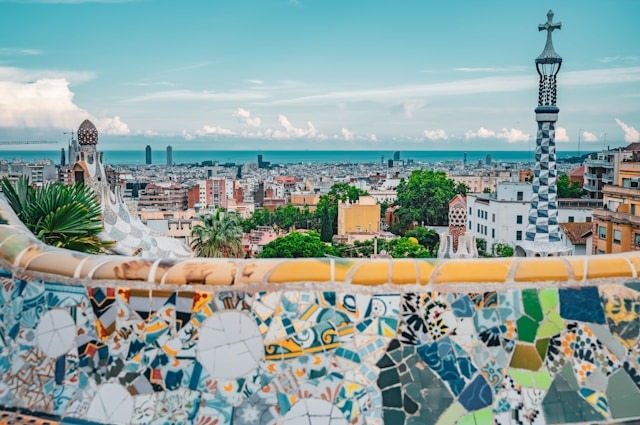
Spend the morning at Park Guell, another Gaudi landmark with mosaic-covered terraces overlooking the city.
Give yourself at least 90 minutes, since the park’s upper terrace has some of the best views in Barcelona.
Practical Tip: Book your Park Guell ticket in advance, since the monumental zone caps daily visitor numbers.
Afternoon (1 PM): Barceloneta Beach
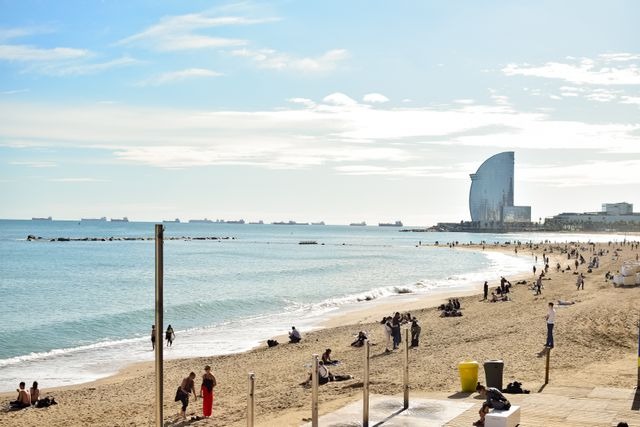
Grab lunch near the beach and order fresh seafood, since Barceloneta’s waterfront restaurants specialize in exactly that.
Spend the afternoon on Barceloneta Beach, a wide stretch of sand that fills up fast on warm days.
Practical Tip: Do a final check of your RV’s cabinets and fridge before your last night, since small items are easy to forget.
Evening (6 PM): Final Night and RV Drop-Off
Return your RV in Barcelona and spend your last evening in the city on foot.
RV rentals in Barcelona have drop-off points close to downtown, making this final step easy after two weeks on the road. For a final dinner, order one more round of tapas at a restaurant near your hotel, a fitting close to a trip built around regional food.
Practical Tip: Take photos of your RV’s fuel gauge and interior before drop-off, since it’s a quick way to avoid any dispute over the vehicle’s condition.
Exploring Spain’s Regions: Alternative Itineraries
If this route doesn’t quite match your interests, here are two shorter regional itineraries built from the same road network, each a lighter alternative to the full Spain itinerary 14 days route above.
7-Day Andalusia Itinerary
- Day 1: Seville, pick up your RV and explore the Alcazar.
- Day 2: Cordoba, the Mezquita and old Jewish quarter.
- Day 3: Ronda, the cliffside bridge and old town.
- Day 4: Granada, arrival and the Albaicin neighborhood.
- Day 5: Granada, a full day at the Alhambra.
- Day 6: Nerja, beach time and the coastal caves.
- Day 7: Malaga, return drive and RV drop-off.
7-Day Basque Country and Northern Spain Itinerary
Pick up your vehicle through RV rentals in Bilbao to start this northern loop.
- Day 1: Bilbao, pick up your RV and visit the Guggenheim Museum.
- Day 2: San Sebastian, pintxos bars and the beach promenade.
- Day 3: San Sebastian, a full day exploring the old town.
- Day 4: Pamplona, historic streets and the bullring.
- Day 5: Rioja wine country, vineyard visits and tastings.
- Day 6: Santander, coastal views and beach walks.
- Day 7: Bilbao, return drive and RV drop-off.
Map of Your 14-Day Spain Itinerary
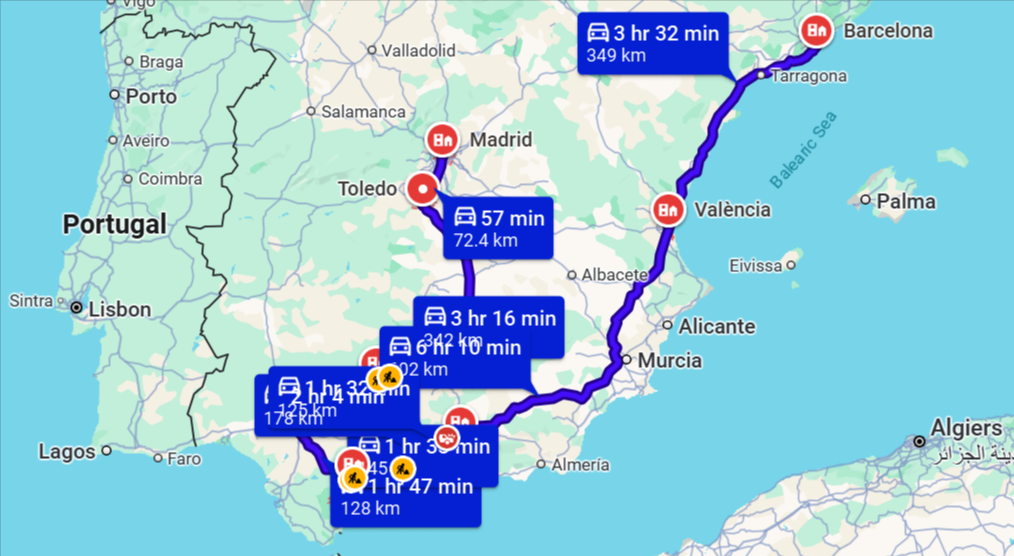
Budgeting for Your Trip: How Much Is a Trip to Spain for 2 Weeks?
A road trip through Spain can fit almost any budget, and renting an RV cuts your biggest costs since it combines your accommodation and much of your food prep into one payment.
That saving matters most on a Spain itinerary 14 days long, where fourteen nights of hotel stays would otherwise add up fast.
| Category | Budget | Mid-Range | High-End |
| Accommodation | $25 to $50 | $50 to $100 | N/A |
| Food & Drink | $25 to $45 | $45 to $80 | $80+ |
| Attractions | $20 to $40 | $40 to $85 | $120+ |
| Transport/Fuel | $35 to $55 | $55 to $85 | $85+ |
| Daily Total | $105 to $190 | $190 to $350 | $350+ |
| 14-Day Total | ~$1,470 to $2,660 | ~$2,660 to $4,900 | ~$4,900 |
- Budget Traveler: Stick mostly to public campgrounds and RV parks. You can cook the majority of your meals in the Indie Campers RV, while prioritizing free stops like viewpoints and old town walks over paid attractions.
- Mid-Range Traveler: Mix cooking with the occasional tapas meal out. You can pay for entry to sites like the Alhambra and the Real Alcazar, while staying at a mix of public and private campgrounds.
- High-End Traveler: Eat out regularly and book a private flamenco show or guided Alhambra tour. You can add premium experiences without worrying much about cost.
Plan Your Dream Spanish Road Trip with Indie Campers
Indie Campers makes this kind of trip simple, with unlimited mileage on every company-owned fleet rental and a fully digital booking process from start to finish.
You can also cancel up to 31 days before pick-up if your plans change, and full payment isn’t due until 30 days before your trip starts.
This setup works well for first-time visitors planning a Spain itinerary 14 days long who want road trip flexibility without months of prep. It also suits experienced travelers who already know they want a one-way rental between two cities.
Browse our complete range of RV rentals to start building your own Spain itinerary 14 days long, built around the stops that matter most to you.
Book your RV with Indie Campers →
Spain Itinerary 14 Days Long: Your Final Planning Recap
Here’s every detail from this Spain itinerary 14 days long in one place, for quick reference while you plan:
| Category | Details |
| Best Time to Go | Spring or fall (April, May, September, October), for warm weather without summer heat |
| Recommended Budget | $1,600 to $3,000 per person for 14 days |
| Cities to Visit | Madrid (1 day), Toledo (1 day), Cordoba (2 days), Seville (2 days), Ronda (1 day), Granada (2 days), Valencia (2 days), Barcelona (2 days) |
| Best Restaurants | Tapas bar near Barrio Santa Cruz, Seville (jamon iberico); restaurant in the old town, Ronda (grilled lamb) |
| What to Visit | Day 4, Cordoba: The Mezquita / Day 9, Granada: The Alhambra / Day 13, Barcelona: Sagrada Familia |
| Recommended Transport | RV rental, for one-way flexibility between Madrid and Barcelona |
| Total Distance | Approx. 1,050 miles (1,690 km) |
| Must-Try Foods | Córdoba: salmorejo, flamenquín / Granada: free tapas, piononos / Valencia: paella valenciana |
| Accommodation | RV camping and RV parks: $25 to $70 per person per night |
| Perfect For | First-time visitors and food lovers wanting Spain’s cities, coast, and countryside in one trip |
FAQs About Spain Itinerary 14 Days
How much is a trip to Spain for 2 weeks?
A trip to Spain for 2 weeks typically costs between $1,600 and $3,000 per person for a mid-range budget. This covers RV rental, fuel, food, and entrance fees at sites like the Alhambra and the Real Alcazar. It excludes your flight to Madrid. Budget travelers who cook most meals can bring this closer to $1,200 per person.
Is 14 days enough to see Spain?
Yes, 14 days is enough to see a well-chosen route across Spain, as long as you pick one path instead of the whole country. This Spain itinerary 14 days plan runs from Madrid through Andalusia to Barcelona, fitting comfortably into two weeks by RV. You’ll see royal palaces, whitewashed villages, and Mediterranean beaches without rushing.
What are the top 3 places to visit in Spain for first-timers?
The top 3 places to visit in Spain for first-timers are Madrid, Seville, and Barcelona. Madrid gives you world-class art museums and a central starting point for the whole trip. Seville offers Moorish architecture and the birthplace of flamenco. Barcelona rounds out the trip with Gaudi’s landmarks and a Mediterranean coastline.
What is the most beautiful spot in Spain?
The Alhambra in Granada is widely considered one of the most beautiful spots in Spain, thanks to its intricate Moorish architecture set against the mountains. Ronda’s cliffside bridge runs a close second. Barcelona’s Park Guell is a third strong contender, especially for its mosaic-covered terraces overlooking the city.
What is the best way to travel in Spain for 14 days?
The best way to travel in Spain for 14 days is by RV, since it combines transport and accommodation into one flexible package. Trains connect major cities well, but they skip the small towns and coastal villages that make this route worthwhile. An RV lets you adjust your schedule around each stop. Indie Campers supports one-way rentals between Madrid and Barcelona for this route.
Can you drive from Madrid to Barcelona in 14 days with stops?
Yes, driving from Madrid to Barcelona in 14 days with stops is exactly what this itinerary is built around. The route covers roughly 1,050 miles, manageable at a relaxed pace with real time at each stop. Rushing the same route in fewer days usually means skipping the smaller towns that make the trip memorable.
Do you need a car to see Andalusia properly?
You do need a car or RV to see Andalusia properly, since public buses between smaller towns like Ronda run infrequently. Renting your own vehicle lets you reach Cordoba, Ronda, and the coastal towns on your own schedule rather than around a bus timetable. A standard RV handles the region’s main highways without any issue.
How many days do you need for Barcelona alone?
Two full days is a reasonable amount of time for Barcelona alone, enough to see the Sagrada Familia, Park Guell, and the Gothic Quarter without rushing. Visitors with more time often add a third day for the beach or a day trip to Montserrat. This itinerary allocates two full days to Barcelona at the end of the trip.
Is renting an RV in Spain worth it?
Renting an RV in Spain is worth it for most travelers doing a multi-stop road trip like this one, since it removes the need to book separate hotels in towns with limited lodging. It also cuts food costs, since you can cook most meals instead of eating out, and the extra fuel cost is usually offset by what you save on accommodation.