Last Updated: May 12, 2026
Key Takeaways (TL;DR)
- Why Stay in Las Vegas by RV in 2026: Las Vegas is one of the few major American cities where you can park your RV within minutes of a casino and wake up the next morning in the desert. RV parks near the Strip run year-round, and Hoover Dam, Red Rock Canyon, and Valley of Fire are all within a day-trip drive.
- Top Places to Stay in Las Vegas in 2026: The Strip (South and Center), Downtown/Fremont Street, Boulder Highway, Red Rock Canyon, Valley of Fire, Henderson/Lake Mead.
- Don’t Miss Overnight Experience: Falling asleep at Red Rock Canyon Campground with nothing but sandstone ridges visible from your site, then waking at dawn to hike the canyon before the day-trippers arrive from the Strip 20 miles east.
- Ideal Trip Length: 5-10 days. Three days covers the Strip and Downtown properly. Add two to four more days to reach Red Rock Canyon, Valley of Fire, Lake Mead, and Hoover Dam without feeling rushed.
- How to Choose the Right Base: Stay near the Strip if casinos and shows are your main draw. Go to Red Rock Canyon or Valley of Fire if you want the outdoor side of the trip to matter as much as the city. Boulder Highway sits in between: close to Downtown, with full hookups, and much cheaper than Strip parks.
- Recommended Budget Per Person/Night: $30-$70/night for RV sites, depending on location and hookup type. Strip-adjacent parks run $50-$90/night. Desert campgrounds cost $25-$35/night.
- Watch Out For: Las Vegas summer heat is no joke – the city averages 41°C in July, which makes outdoor activity genuinely dangerous between 10 AM and 6 PM. Make sure your rental has a solid AC system. Also, some Strip-adjacent parks enforce a “10-year RV rule” (your vehicle needs to be 10 years old or newer). Check before you book.
- Where To Stay: Indie Campers RV rentals work well for Las Vegas because you’ve got a kitchen and a bed wherever you park – no hotel booking needed when you move between the Strip, Red Rock Canyon, and Valley of Fire.
- Best For: First-time Vegas visitors who’d rather skip hotel resort fees, road-trippers using Las Vegas as a Southwest basecamp, and families who want city entertainment and desert exploration on the same trip.
Table of Contents
- Top Places to Stay in Las Vegas in 2026: at a Glance
- Best Places to Stay in Las Vegas for Campervan Travelers
- What to Pack for a Las Vegas RV Stay
- Final Expert Tips for Staying in Las Vegas by RV
- Stay in Las Vegas with Indie Campers
- Everything You Need to Know About Staying in Las Vegas by RV
- FAQs About Where to Stay in Las Vegas
Top Places to Stay in Las Vegas in 2026: at a Glance
| Area / Town | Setting | Best For | Campsite Type | Avg Temp (May) | Nightly Cost | Crowd Level | RV-Friendly |
| The Strip (Center/South) | Urban resort | Entertainment-first visitors | Full-hookup resort | 30°C (86°F) | $55-$90 | High | Yes (resort parks) |
| Boulder Highway / Sam’s Town | Urban/suburban | Budget-conscious Strip access | Full-hookup park | 30°C (86°F) | $35-$55 | Moderate | Yes |
| Downtown / Fremont Street | Urban/historic | Value seekers, gamblers | Full-hookup park | 30°C (86°F) | $35-$55 | Moderate | Yes |
| Red Rock Canyon | Desert wilderness | Hikers, nature lovers | Dry camping, no hookups | 27°C (81°F) | $33-$34 | Low-Moderate | Yes (limited RV sites) |
| Valley of Fire State Park | Red sandstone desert | Photography, solitude | Hookup and dry sites | 33°C (91°F) | $25-$35 | Low | Yes |
| Henderson / Lake Mead | Lakeside desert | Water recreation, families | Full hookup and dry | 31°C (88°F) | $25-$55 | Low-Moderate | Yes |
Best Places to Stay in Las Vegas for Campervan Travelers
1. The Strip (Center and South), Las Vegas
Why Stay Here
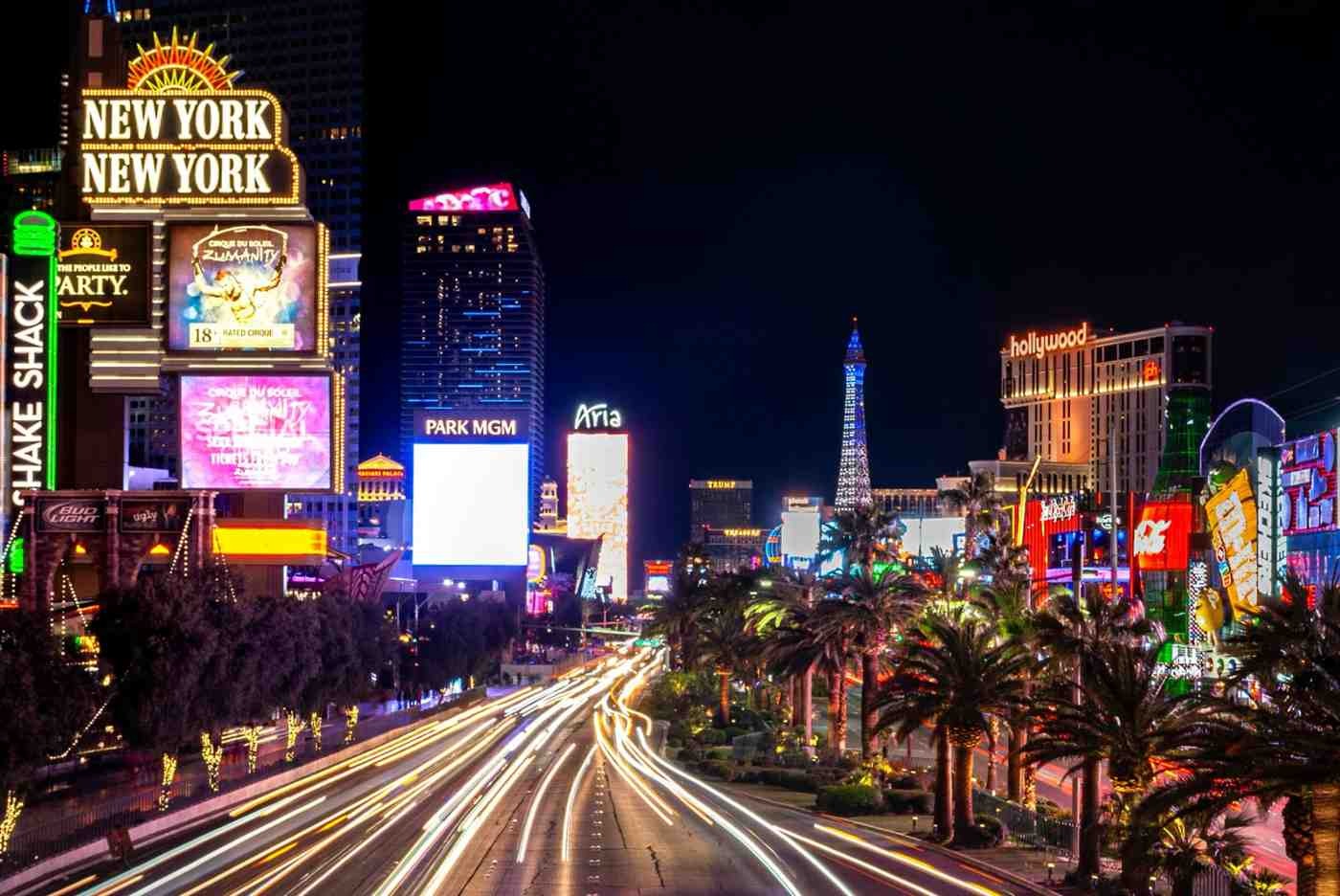
Staying near the Strip as a campervan traveler is a genuinely different experience from anything else in Nevada. By day, you drive out to Red Rock Canyon or Valley of Fire. By evening, you’re walking to the Bellagio fountains, the Sphere, or the MGM Grand, and you sleep in your own bed in a park that costs a fraction of what the surrounding hotels charge.
The Strip runs 4.2 miles down Las Vegas Boulevard from the Sahara in the north to Mandalay Bay in the south. The Center Strip – from the Bellagio south to Caesars Palace and Paris – is the most walkable and most photographed stretch. The South Strip, anchored by MGM Grand, New York-New York, and Allegiant Stadium, is where things tend to get busiest for sports and concert weekends.
For RV travelers, your options sit a short distance off the Boulevard – not on the main drag, but within a 10 to 20-minute rideshare. The key park here is Las Vegas RV Resort, a full-hookup property close enough to the South Strip that you can walk there in cooler months.
What makes the Strip worth choosing as a base is how much free stuff there is. The Bellagio Conservatory, the ARIA Gallery, the Venetian’s Grand Canal, and the shows inside most casino hotels cost nothing to walk through. The light show at the Fremont Street Experience (technically Downtown, but a 15-minute drive) is free, too. If your group wants Las Vegas for the spectacle – and that’s a perfectly good reason to visit – being close to the Boulevard makes sense.
Spring and autumn are the best times for a Strip-adjacent RV stay. October and November temperatures drop to 18-24°C, which makes walking the famous outdoor stretch genuinely comfortable. In January and February, evenings can hit 5°C, so make sure your heating system works before you arrive.
Top Campsites and Overnight Spots
- Las Vegas RV Resort: The closest full-amenity RV park to the South Strip. You get full hookups (30/50-amp), a pool, a hot tub, and a fitness center. The property has a vehicle age rule – your RV generally needs to be 10 years old or newer. Sites are spacious, and security is good. Walking to the Strip works in cooler months; in summer, use rideshare. Nightly rates run $55-$90 depending on season and site type.
- Oasis Las Vegas RV Resort: Consistently rated as the best-run RV resort in the city. There are 379 full hookup sites, 30/50-amp power, a pool, sauna, and a 50s-themed diner on site. The grounds are landscaped with palm trees and are better maintained than most Strip-adjacent alternatives. It’s on Boulder Highway near the South Strip. The resort enforces a 20-year vehicle rule. Nightly cost: $50-$80.
- The RV Park at Circus Circus: If you want to walk straight from your campsite into a casino, this is where to stay. It sits inside the Circus Circus Hotel complex on the North Strip. The pool is a bonus for families. The tradeoff is noise: you’re right in the middle of it. Expect $45-$75/night.
- Hitchin’ Post RV Park: North of the main Strip action, this full-hookup park is about 15 minutes from the Center Strip by Uber. It’s quieter than the resort parks, well-reviewed for cleanliness, and next to a bar and steakhouse. Good if you want a calmer night after a day on the Boulevard. Rates: $40-$60/night.
- Las Vegas Motorcoach Resort: A luxury Class A-only property. If you’re in a premium motorhome and want resort-level service – outdoor kitchen slabs, multiple pools, marble shower facilities – this is the top option in Las Vegas. It’s expensive ($100+/night) and restricted to specific vehicle types, but what you get matches what you pay.
Don’t Leave Without…
Walking to the Bellagio fountains at 11 PM on a weekend when the show syncs to opera or big band, with the columns reaching 46 meters and the crowd around the water going completely quiet. It’s free and happens every 15 minutes. From most Strip RV parks, an Uber gets you there in under 10 minutes.
RV Practical Info
- Road Access: I-15 gets you directly to the South Strip. US-95 connects to the North Strip. Las Vegas Boulevard is wide and manageable, but don’t drive your RV down the Strip on weekend evenings – traffic moves extremely slowly.
- Campsite Availability: Strip-area RV resorts run year-round. Booking 2-4 weeks ahead is fine for most of the year. Major event weekends (New Year’s Eve, Super Bowl week, Formula 1 in November) sell out months in advance.
- Hook-up and Facilities: All the parks listed above have 30/50-amp full hookups, water, and waste disposal on-site. Pool and bathroom facilities at all properties.
- Parking in Town: Don’t drive your RV down Las Vegas Boulevard. Park at the campground and use rideshare, the Las Vegas Monorail (runs along the east side of the Strip), or the free resort shuttles where available.
- Wild Camping: Not legal anywhere in or around Las Vegas city limits.
Who Is It Best For?
- First-time visitors who want the full Strip experience without paying hotel resort fees
- Entertainment-focused travelers who’ll spend most evenings in casinos, shows, or restaurants
- Couples who want to walk the Boulevard without a long commute back to camp
Recommended Nightly Budget
- RV Park Pitch: $50-$90/night depending on site type and season
- Electric Hookup: Included in most resort park rates
- Major events (F1, NYE, CES): Add 50-100% to standard nightly rates; book months ahead
2. Boulder Highway / Sam’s Town Area, Las Vegas
Why Stay Here
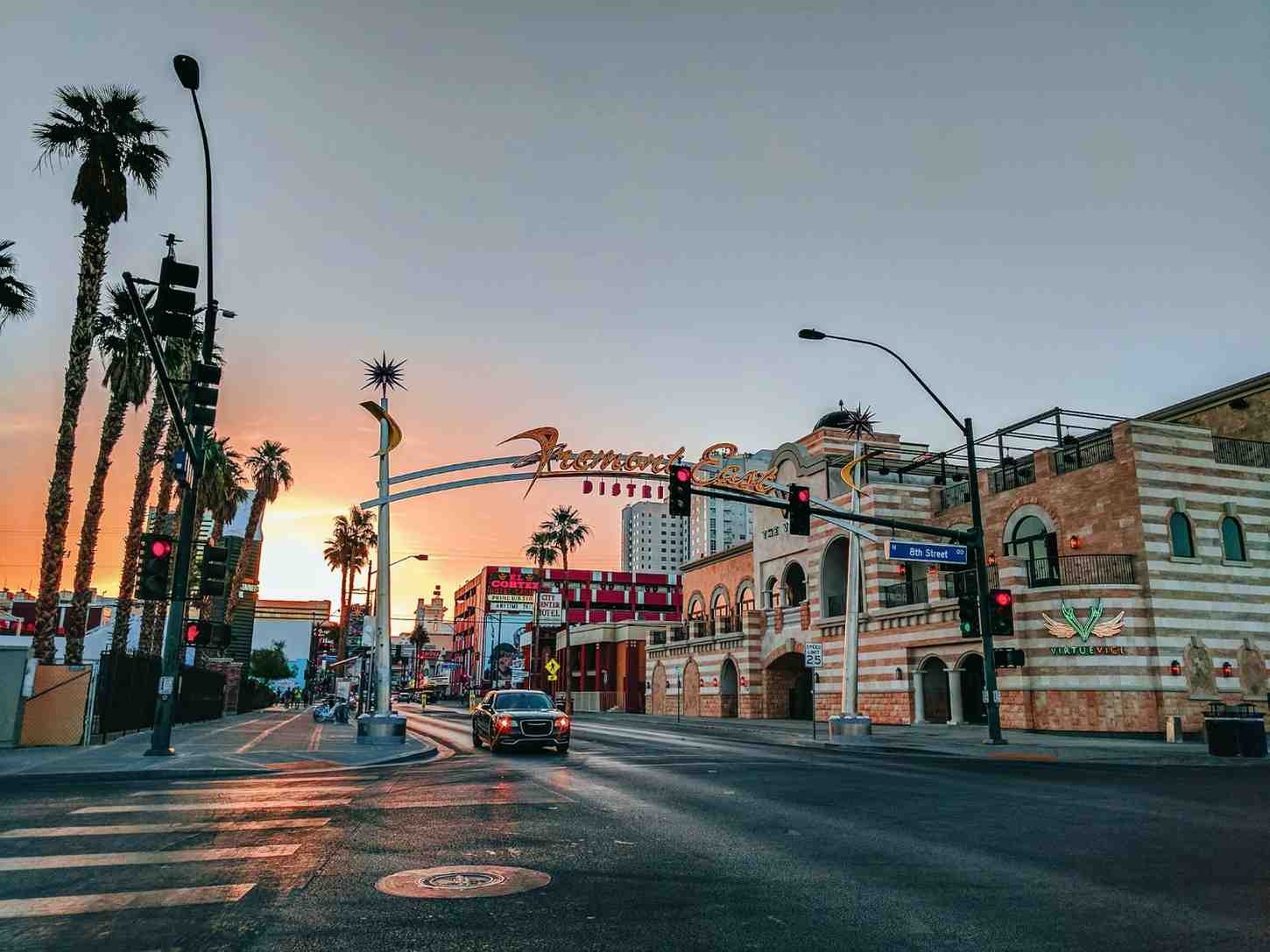
Boulder Highway runs southeast from Downtown Las Vegas toward Henderson, following the old road to Hoover Dam. It’s not glamorous, but it works – and if you want Strip access, full hookups, and a much lower nightly bill than Strip resorts, this is where to be.
The area around Sam’s Town Hotel and Casino has two Las Vegas KOA Journey campgrounds within half a mile of each other. The KOA at Sam’s Town is consistently among the highest-rated RV parks in Nevada. You’re 10 minutes east of the Strip by car, close to large grocery stores, near Fremont Street, and not far from the southeast road toward Lake Mead.
Boulder Highway also gives you a genuine look at a Las Vegas that most first-time visitors miss entirely – neighborhood casinos built for locals, convenience stores open at 3 AM, and the city’s large Filipino and Latin communities whose food culture spills into the surrounding streets.
If you’re coming into Las Vegas from the Colorado River or Grand Canyon direction (US-93 via Hoover Dam), Boulder Highway is the natural way in. It makes sense to spend two or three nights here before heading to the Strip, or to use it as your base if Hoover Dam and Lake Mead matter more to you than casino entertainment.
Top Campsites and Overnight Spots
- Las Vegas KOA Journey at Sam’s Town – Boulder Highway Park: Pull-through sites up to 70 feet, full hookups (30/50-amp), shaded sites, grassy areas, on-site showers, laundry, and a dog run. Sam’s Town Casino is right next door – it has a poker room, restaurants, and a bowling alley within walking distance. This park consistently earns top reviews from travelers who’ve stayed at multiple KOAs across the country. Nightly rates: $38-$58.
- Las Vegas KOA Journey at Sam’s Town – Nellis Boulevard Park: The northern of the two KOA properties, near Nellis AFB in North Las Vegas. A bit further from the Strip but quieter, with the same facilities. Good if you’re heading to or from I-15 north toward Utah. Rates: $35-$55/night.
- King’s Row RV Park: A family-owned park 4 miles from the Strip and close to Fremont Street. It has shaded sites – genuinely rare in Las Vegas – plus 24-hour security, laundry, and a rec hall. No luxury amenities, but the price is low, and it has a real neighborhood feel. Open to families with children for stays up to 3 days. Rates: $30-$45/night.
- Duck Creek RV Park: On the south Boulder Highway corridor, this large park enforces a 10-year vehicle age rule and has full hookups, free Wi-Fi, a general store, and DVD rental. It’s more residential in character – lots of long-term residents – but short-term stays are welcome. Good for budget travelers who want a stable, no-frills base. Rates: $35-$50/night.
- Arizona Charlie’s Boulder RV Park: Next to the Arizona Charlie’s Boulder casino, this park has full hookups at competitive rates and casino access with free players’ club perks. The facilities are functional rather than resort-grade. Worth considering if you’d rather gamble at a locals’ casino than a Strip megaresort. Rates: $30-$45/night.
Don’t Leave Without…
Taking a morning drive east on Boulder Highway past the old motels and slot machine bars to see the city the Strip never shows you, then turning around and spending the evening on Fremont Street, where the neon cowboy signs, vintage casinos, and the Viva Vision LED canopy overhead feel like where the Las Vegas story actually started.
RV Practical Info
- Road Access: Boulder Highway (NV-582) connects directly to I-515 and US-95. Easy to get in from either direction, and the road handles RVs without any trouble.
- Campsite Availability: Both KOA properties run year-round and take same-week bookings outside major event periods. Book 1-2 weeks ahead in spring (March-May) and October-November when visitor numbers are high.
- Hook-up and Facilities: Full hookups at all major parks. Showers, laundry, and dump stations on site.
- Parking in Town: Drive to the Strip or Fremont Street and park in a designated large vehicle lot, or take an Uber. Some parks near Fremont Street have service road access if you’d rather walk.
- Wild Camping: Not permitted on Boulder Highway or the surrounding area.
Who Is It Best For?
- Budget road-trippers who want Strip access without Strip prices
- Travelers arriving from the Hoover Dam / Grand Canyon direction (US-93)
- Families who want full facilities, nearby grocery stores, and an easy commute to Downtown and the Strip
Recommended Nightly Budget
- RV Park Pitch: $35-$58/night at KOA properties
- Budget parks (King’s Row, Duck Creek): $30-$45/night
- Electric/Water Hookup: Included in all nightly rates at major parks
3. Downtown / Fremont Street, Las Vegas
Why Stay Here
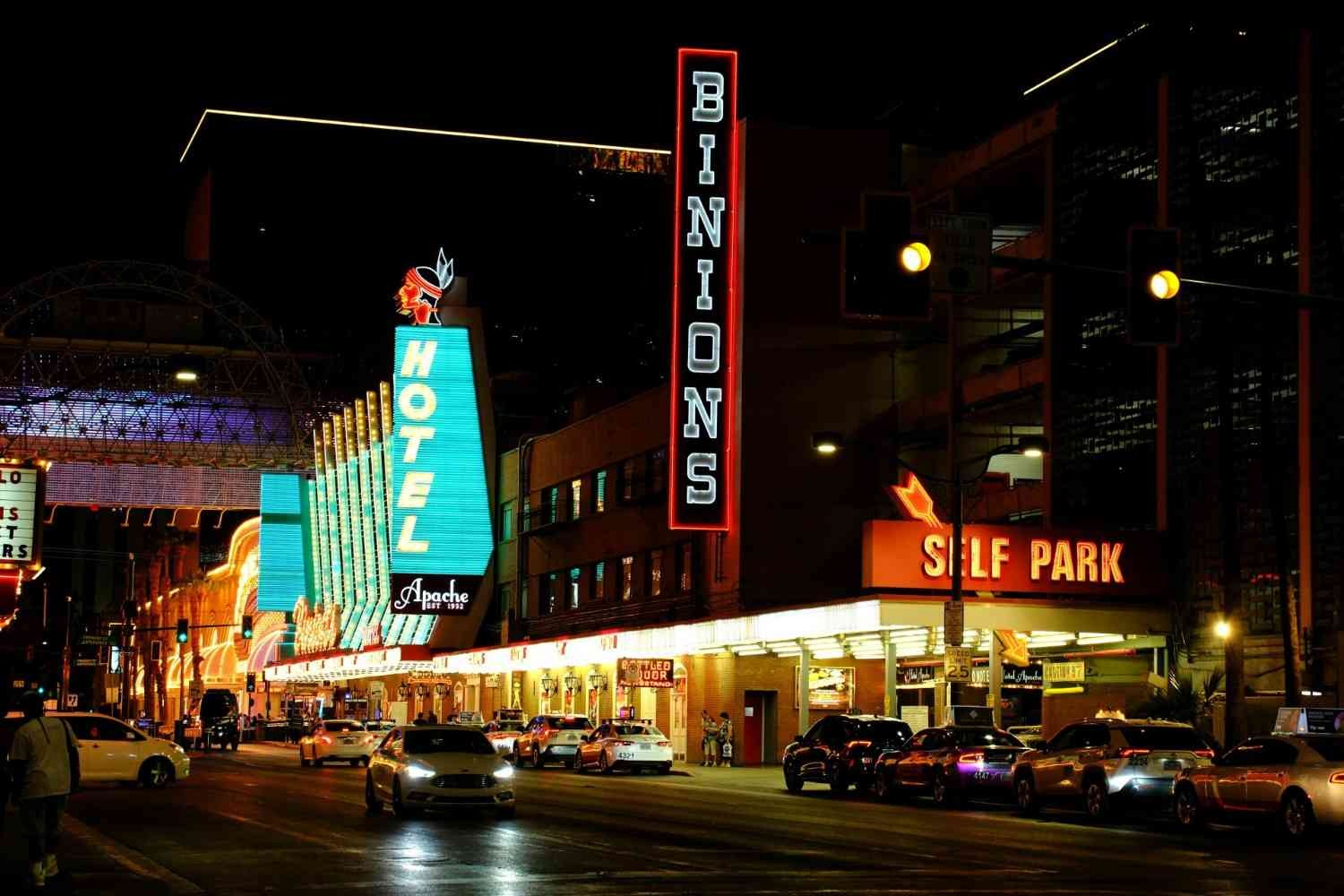
Downtown Las Vegas is where the city began. The neon signs, the Golden Nugget, Binion’s Gambling Hall, and the original casino hotels that defined Las Vegas in the 1940s and 50s are all within a few blocks of each other. The Viva Vision LED canopy – 1,500 feet long, 90 feet above the pedestrian mall – runs free light shows every hour after dark.
For RV travelers, Downtown has two real advantages over the Strip: it’s cheaper, and it feels more like a real city. Table minimums at Fremont Street casinos are generally lower, which suits anyone who wants to gamble without the $25 minimum bet pressure common on the Strip. The Mob Museum, the Neon Museum, and the Arts District – a few blocks south, with galleries, craft breweries, and coffee shops – give the area genuine character that the Strip doesn’t really have.
The one thing to know is that walkability drops off quickly once you leave the Fremont Street corridor. The surrounding blocks aren’t built for foot traffic after dark. Stick to Fremont Street itself and the Arts District during the day, and use rideshare for late-night returns to camp.
No full-service RV campground sits within walking distance of Fremont Street, but it’s easy to reach from multiple park locations by rideshare – usually 10 minutes or less.
Top Campsites and Overnight Spots
- Las Vegas KOA at Sam’s Town (Boulder Highway): The best combination of facilities and Downtown access. A 10-minute drive gets you to Fremont Street. Full hookups, showers, and laundry year-round. Rates: $38-$58/night. (Full details in the Boulder Highway section above.)
- King’s Row RV Park: The closest established RV park to Fremont Street – about 10 minutes by car. Family-owned, secure, and genuinely inexpensive for its location. Most Las Vegas RV parks are open desert lots; King’s Row has actual shade trees, which makes a real difference. Rates: $30-$45/night.
- Road Runner RV Park: North of Downtown near North Las Vegas, this budget-friendly park has full hookups and year-round access. Fewer amenities than the resort properties, but solid for travelers who care most about price and proximity to Fremont Street. Rates: $28-$42/night.
- Silver City RV: A no-frills park north of the Strip with competitive nightly rates. Close to US-95, which connects Downtown to the North Strip and Red Rock Canyon. No pool, but the hookups are reliable. Rates: $30-$45/night.
- Thousand Trails Las Vegas: is a membership-affiliated campground with full hookups, a pool, and consistently good cleanliness reviews. Off I-15 with decent access to both Downtown and the Strip. A good fit if campground amenities matter more to you than nightlife proximity. Rates: $35-$55/night for non-members.
Don’t Leave Without…
An evening at the Neon Museum Boneyard after dark. The tour of restored and unrestored vintage Las Vegas signs – the original Stardust, Caesars Palace, Moulin Rouge – runs by appointment and looks striking in low light. The story connecting neon sign-making to how the city built its identity is more interesting than it sounds.
RV Practical Info
- Road Access: US-95 and I-515 connect directly to the Downtown area. Las Vegas Boulevard North runs straight in from the Strip.
- Campsite Availability: Downtown corridor parks run year-round. Availability is generally easier than Strip-adjacent resorts, except during CES in January, which draws 150,000+ attendees and fills everything.
- Hook-up and Facilities: Full hookups at all recommended parks. Showers and laundry at KOA and Thousand Trails.
- Parking in Town: The free Downtown Loop electric shuttle runs along Fremont Street. Most parks are under 10 minutes by rideshare.
- Wild Camping: Not legal in Downtown Las Vegas or the surrounding area.
Who Is It Best For?
- Gamblers who want lower table minimums and a more local casino atmosphere
- Travelers who want to visit the Mob Museum, Neon Museum, or Arts District
- Road-trippers who want to compare the Strip and Downtown across a multi-night stay
Recommended Nightly Budget
- RV Park Pitch: $30-$58/night depending on park and season
- Electric/Water Hookup: Included in all listed park rates
- Budget tip: CES week in January and New Year’s weekend require booking 3-6 months ahead
4. Red Rock Canyon, Nevada

Why Stay Here
Red Rock Canyon is the best argument for bringing a campervan to Las Vegas rather than flying in and checking into a hotel. The campground sits in a quiet desert bowl 20 miles west of the Strip, inside the Red Rock Canyon National Conservation Area, surrounded by cream and rust-colored sandstone formations that look nothing like the city you drove out of.
Getting up at Red Rock before sunrise – before the day-trippers arrive from the Strip, before the heat builds in summer – is one of the more memorable nights you’ll have in the American Southwest. The light on the Calico Hills shifts from grey to orange to deep red between 6 and 8 AM. Bighorn sheep cross the hillsides. It’s quiet in a way the Strip is not.
The 13-mile one-way Scenic Drive through the conservation area starts 3 miles from the campground. The sandstone climbing routes here are among the most visited in Nevada. Hiking trails run from short walks to full-day ridge traverses. Spring (March-May) and autumn (September-November) are the best times to be here: temperatures stay between 15-27°C and the light is good in the mornings.
One important constraint: the campground closes June 1 through August 31 because of extreme summer heat. If you’re visiting in summer, you’ll need to stay in a city park and drive out for day use.
Top Campsites and Overnight Spots
- Red Rock Canyon Campground – RV Sites (RV1-RV6): Six designated RV sites inside the conservation area campground. No hookups – this is dry camping only. You get vault toilets, drinking water, picnic tables, and fire rings. There’s no dump station on site; the nearest one is several miles east in the city. RV site fees: $33-$34/night via Recreation.gov. Reservations required September through May. Open September 1 – May 31 only.
- Important size note: Class A and Class C motorhomes don’t fit in standard individual sites #46-53. Check site dimensions before booking; RV sites RV1-RV6 are the ones built for motorhomes and trailers.
- Red Rock Canyon Campground – Standard Sites: 53 individual sites with picnic tables, grills, and fire rings. Some have shade structures. A better option for smaller campervans that fit in a standard site. Same pricing and reservation requirements as the RV sites. There are 3 fully accessible sites.
- Backcountry Camping Above 5,000 Feet: Dispersed camping is allowed in the Red Rock Canyon NCA above 5,000 feet. No facilities, and you’ll need a permit from the BLM. This is for self-sufficient travelers with a fully stocked, self-contained RV.
- Nearest Full-Hookup Alternative (Summer Only): When Red Rock closes June-August, the closest full hookup options are back in the city. Drive out for day use (you’ll need a separate reservation for the Scenic Drive) and return to your Boulder Highway or Strip campground by midday before the heat peaks.
Don’t Leave Without…
Arriving at the Calico Hills trailhead at sunrise, before the timed entry period begins at 8 AM. The rocks shift from grey to vivid orange-red in the first hour of daylight, and in spring (March-April), wildflowers cover the lower canyon floor in yellow and purple. You’ll have the area to yourself before the first day-trippers arrive from Las Vegas.
RV Practical Info
- Road Access: Charleston Boulevard (NV-159) connects directly to the campground from the 215 Beltway. The road is in good condition and handles RVs fine. Take exit 26 (Charleston Blvd) westbound.
- Campsite Availability: Open September 1 – May 31 only. Reservations required through Recreation.gov. Weekends fill 2-4 weeks ahead in prime season (March-May). Weekday sites are often available 1-2 weeks out.
- Hook-up and Facilities: No electrical, water, or sewer hookups. Drinking water is available. Vault toilets. No showers on site.
- Timed Entry: You’ll need a separate timed entry reservation each day you plan to drive the Scenic Drive. Book via Recreation.gov – spring weekends sell out fast.
- Cell Service: Limited inside the canyon. Download offline maps and trail data before you leave your city campground.
- Wild Camping: Allowed above 5,000 feet on BLM land with proper permits.
Who Is It Best For?
- Hikers and climbers who want a desert campground within 30 minutes of a major city
- Photographers who want dawn light on the Calico Hills
- Travelers who want desert mornings and city evenings on the same trip – something an RV makes possible that a hotel can’t
Recommended Nightly Budget
- RV Sites (RV1-RV6): $33-$34/night via Recreation.gov
- Standard Sites: $33-$34/night
- Timed Entry Scenic Drive: $15 per vehicle per day
- No hookup costs – dry camping only; budget for generator fuel if your RV needs it
5. Valley of Fire State Park, Nevada
Why Stay Here
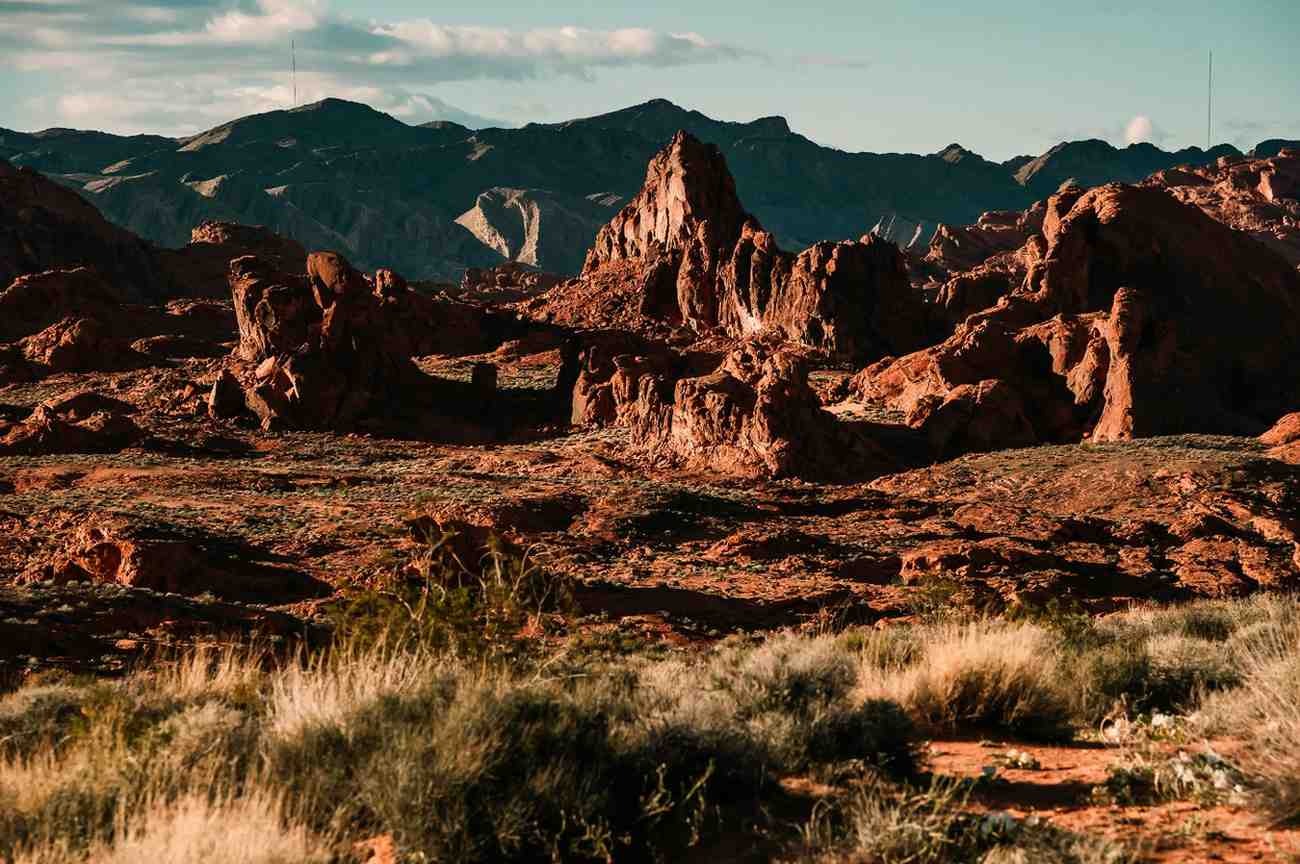
Valley of Fire is Nevada’s oldest and largest state park, covering 46,000 acres of red and orange Aztec sandstone formations 50 miles northeast of Las Vegas. The name is accurate: at midday in summer, the rock radiates heat, and the sandstone glows deep red against the blue desert sky. The formations – beehive shapes, natural arches, petrified wood, and 3,000-year-old Anasazi petroglyphs. Don’t look like anywhere else in Nevada.
For RV travelers, Valley of Fire has something Red Rock Canyon doesn’t: hookup sites year-round, shaded picnic areas at campsites, and a dump station on-site. The two campgrounds (Atlatl Rock and Arch Rock) hold 72 sites combined, and many can fit large rigs.
The park sits between Lake Mead National Recreation Area (15 minutes south) and the Valley of Fire Highway, which connects to I-15 north of Las Vegas. If you’re driving between Las Vegas and Utah, it works well as an overnight stop – the Zion/Bryce Canyon/Grand Canyon circuit is a natural extension of any Las Vegas RV trip.
The park closes December 1-14 each year for maintenance. Summers are manageable if your RV has solid air conditioning, but temperatures frequently top 40°C, so get your outdoor time in before 9 AM and after 5 PM.
Top Campsites and Overnight Spots
- Atlatl Rock Campground: The larger of the two campgrounds, near the Atlatl Rock petroglyph site – one of the park’s most accessible rock art panels, reached via a short staircase to a raised viewing platform. Sites have shaded picnic tables, grills, water, and restrooms. Electric hookup sites cost an additional $10/night over the base fee. Reserve through the Nevada State Parks website. Base rate: $20 (Nevada residents) / $25 (out-of-state) per vehicle/night.
- Arch Rock Campground: The more scenic of the two, deeper in the park near the red sandstone formations. Similar facilities to Atlatl Rock – shaded tables, grills, water, restrooms – and some pitches look directly out at the eroded sandstone. Electric hookup sites available. Same base rate as Atlatl Rock.
- Group Camping Areas: Three group sites hold up to 45 people each, available by reservation. Good for large travel groups or multiple RVs traveling together.
- Fire Wave Trail (Sunset Access): Not a campsite, but worth planning your evening around. The Fire Wave Trail (1.5 miles round trip) leads to a swirling sandstone formation where striations of pink, white, and red rock converge. The colors are most vivid in the hour before sunset. Leave camp at 5 PM in spring and autumn, hike out, and walk back in the last light. The trailhead is a short drive from Atlatl Rock Campground.
Don’t Leave Without…
Waking before sunrise and driving to the White Domes area in the northern section of the park. As the sun clears the horizon, the domed formations – white Aztec sandstone capped with bright red Moenkopi rock – catch the light at an angle that holds for about 40 minutes before the harshness of midday sets in. It’s a 10-minute drive from either campground, no hiking required.
RV Practical Info
- Road Access: NV-169 (Valley of Fire Highway) connects the park to I-15 at exit 75. The road is well-paved and handles large RVs without issue. The entrance from Lake Mead Recreation Area via Northshore Road also works.
- Campsite Availability: Both campgrounds are reservable through Nevada State Parks and run year-round (except December 1-14 for the annual closure). Book 2-4 weeks ahead for spring weekends.
- Hook-up and Facilities: Electric hookup sites at both campgrounds for $10/night above the base fee. Dump station and showers on site. Water available at campsites.
- Parking: Large RVs can reach both campgrounds without trouble. Check individual site dimensions when reserving – some have length restrictions.
- Wild Camping: Not permitted within the park. Dispersed camping is available in some BLM areas just outside the park boundaries.
- Note: Trails on the main park route (Fire Wave, White Domes, Seven Wonders Loop) close on high heat days in summer.
Who Is It Best For?
- Photographers and hikers who want dramatic sandstone landscapes and a reliable campsite to return to
- Road-trippers heading between Las Vegas and southern Utah (Zion, Bryce Canyon)
- Families who want a hookup campsite in a remarkable landscape without a long drive from Las Vegas
Recommended Nightly Budget
- Dry Site (tent/RV): $20 (NV resident) / $25 (non-NV) per vehicle/night
- Electric Hookup Add-On: $10/night additional
- Day Use Entry: $15 per vehicle (non-NV)
- Total Nightly Cost: $35 for a non-Nevada RV traveler with an electric hookup
6. Henderson / Lake Mead, Nevada
Why Stay Here
Henderson is Nevada’s second-largest city, 16 miles southeast of Las Vegas, between the Strip and Lake Mead. For road-trippers, it’s the gateway to the Lake Mead National Recreation Area – the largest reservoir in the United States, created by Hoover Dam on the Colorado River.
Lake Mead’s water level has shifted considerably over the past decade due to drought in the Colorado River Basin. It fluctuates year to year, so check current conditions through the National Park Service before you plan any water activities – boat ramp access and shoreline access change with the lake level.
That said, Lake Mead is still a remarkable outdoor destination. Walking across the Hoover Dam is free, and it’s one of the most impressive pieces of infrastructure on the continent. The canyon below the dam on the Nevada-Arizona border has kayaking and paddleboard access that most Las Vegas visitors never find. Boulder Beach – the main swimming area – is 4 miles north of Boulder City and open year-round.
Henderson itself is calm and suburban – a sharp contrast to the Strip. Green Valley Ranch is a locals-favorite casino resort with a pool that rivals Strip properties at a much lower cost. The city has good supermarkets, pharmacies, and RV services, which makes it a practical stop before heading further into Nevada or Arizona.
For RV travelers, this area works well as a 2-3 night stop on a Southwest circuit: Lake Mead campgrounds give you remarkable scenery with minimal facilities, while Henderson’s full-hookup parks put you close to I-11 for easy onward travel.
Top Campsites and Overnight Spots
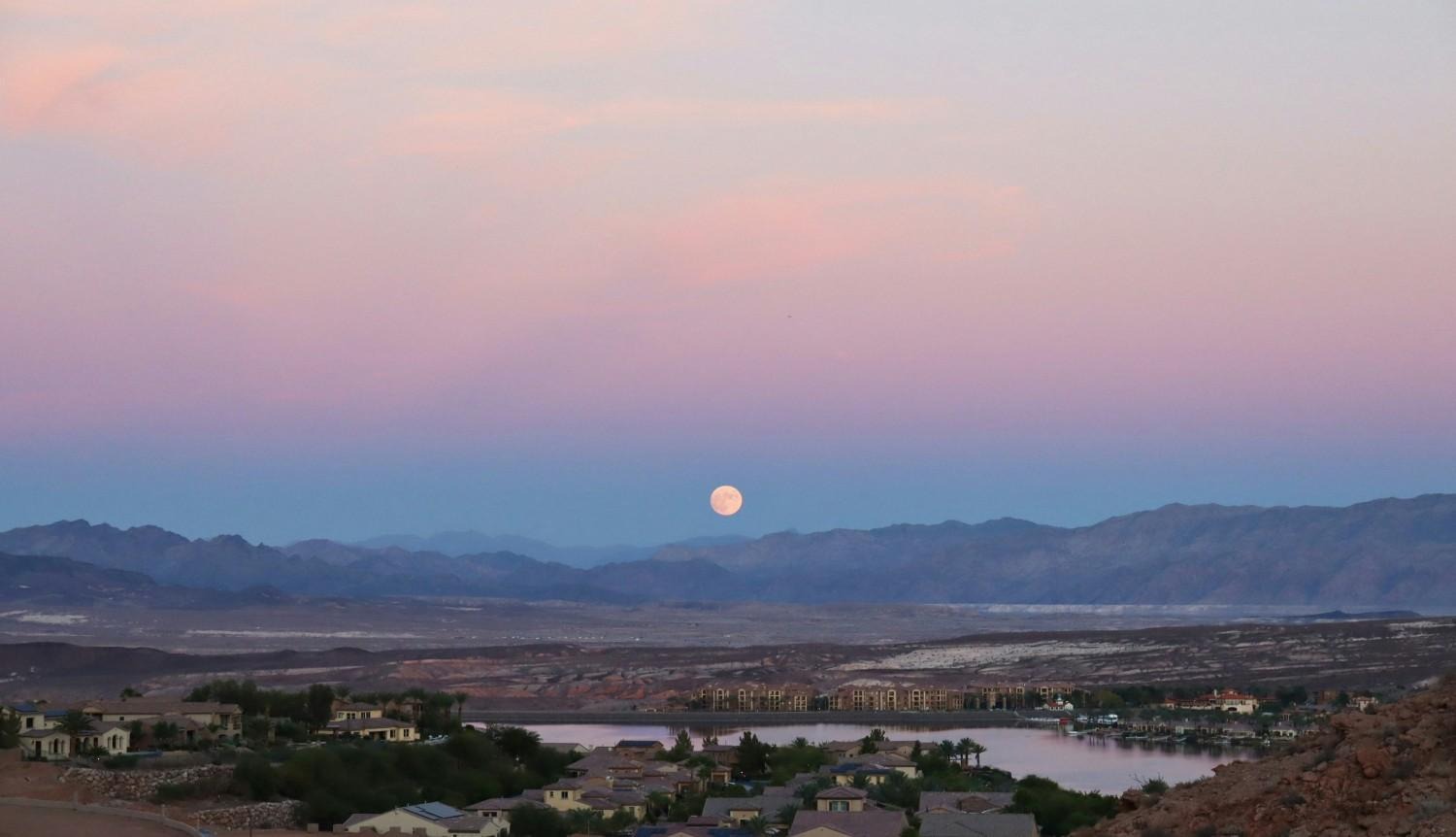
- Lake Mead RV Village: On the southern shore of Lake Mead, this is one of only two spots on the lake with RV hookup facilities. Sites are within walking distance of the beach, and the park has a camp store with fishing supplies and a private boat ramp. The sunset from the campground is one of the quieter visual rewards near Las Vegas – the water turns deep copper and the surrounding desert hills go violet as the light fades. Rates: $30-$55/night.
- Boulder Beach Campground (Lake Mead NRA): Inside the National Recreation Area, near Boulder Beach on a first-come, first-served basis. Basic facilities – vault toilets, water, picnic tables – no hookups. Open year-round. You’re right on the lakeshore. The America the Beautiful Pass gets you a discount on camping fees. Nightly rate: $20/night.
- Las Vegas Bay Campground: A quieter campground further north along the Nevada lakeshore, near where Las Vegas Wash enters the lake. More remote than Boulder Beach, with fewer visitors and darker skies at night. No hookups, but big enough for large rigs. Nightly rate: $20/night.
- Willow Beach Campground and RV Park: on the Arizona side of the Colorado River below Hoover Dam, this park sits in a steep canyon with the river running past the sites. It’s a 30-minute drive from Boulder City but feels entirely remote. Hookups available. The trout fishing in the cold-water release below the dam is excellent. Rates: $25-$40/night.
- Canyon Trail RV Park, Boulder City: in Boulder City – the town built for Hoover Dam workers – this Good Sam-rated park has full hookups, free Wi-Fi, and a communal BBQ area. Boulder City is genuinely quiet; no casinos are permitted within city limits, which makes it unusual in Nevada. 10/10/10 rating from Good Sam. Rates: $35-$55/night.
Don’t Leave Without…
Walking across the Mike O’Callaghan-Pat Tillman Memorial Bridge (the Hoover Dam Bypass Bridge) at dawn, when the canyon below is still in shadow, and the dam is visible from the pedestrian walkway 890 feet above the Colorado River. It’s free, requires no reservation, and most visitors skip it entirely to do the dam tour instead. The view down the canyon from the bridge is one of the most dramatic in Nevada.
RV Practical Info
- Road Access: US-93 and I-11 connect Henderson and Boulder City to Las Vegas. NV-147 (Lake Mead Parkway) runs directly to the Recreation Area. Roads are good throughout and handle RVs without trouble.
- Campsite Availability: Lake Mead NRA campgrounds are first-come, first-served and rarely fill except on holiday weekends. Canyon Trail RV Park and Lake Mead RV Village take reservations year-round.
- Hook-up and Facilities: Full hookups at Canyon Trail, Lake Mead RV Village, and Willow Beach. No hookups at Lake Mead NRA public campgrounds.
- Lake Access: Check current water levels and open boat ramp status at nps.gov/lake before planning water activities.
- Hoover Dam Tour: The Power Plant Tour costs $30/adult (2026 pricing). The walk across the dam deck is free. Book tour tickets online at usbr.gov to avoid queues.
- Wild Camping: Dispersed camping is allowed in some BLM areas around Lake Mead outside the Recreation Area. Check BLM Nevada for current permits.
Who Is It Best For?
- Families who want swimming, boating, and fishing close to Las Vegas without city noise
- Road-trippers combining Las Vegas with a Grand Canyon or Arizona circuit (US-93 is the direct route)
- Budget travelers who want a basic campsite close to the Hoover Dam without paying resort park prices
Recommended Nightly Budget
- Lake Mead NRA Public Campgrounds: $20/night (no hookups)
- Canyon Trail RV Park (Boulder City): $35-$55/night with full hookups
- Lake Mead RV Village: $30-$55/night
- Hoover Dam Power Plant Tour: $30/adult (optional but worthwhile)
What to Pack for a Las Vegas RV Stay
The climate here changes a lot between seasons, and summer heat requires specific preparation. What you need in November is not what you need in June.
| Category | Items | Why It Matters |
| Climate Control | Portable fan (12V), AC unit check, sleeping bag liner | Summer nights in Las Vegas can stay above 30°C; your campground AC will work harder here than anywhere else |
| Sun Protection | SPF 50+ sunscreen, wide-brim hat, UV-rated sunglasses, long-sleeve UV shirt | Desert UV is intense, and reflected heat from rock and pavement makes it worse |
| Footwear | Waterproof hiking boots, sandals, closed-toe trail runners | Red Rock and Valley of Fire trails have loose rock, sand, and uneven terrain – not the place for flip-flops |
| Hydration | 4 liters of minimum water carry per person per day (desert), insulated thermos, electrolyte tablets | Thirst lags behind dehydration in the desert. Carry more than you think you’ll need. |
| Navigation | Downloaded offline maps (Maps.me, AllTrails), paper map of Lake Mead NRA | Cell service is spotty or absent at Red Rock Canyon and inside Valley of Fire |
| RV Essentials | 30/50-amp adapter (check your rental), levelling blocks, condensation cloth, surge protector | Las Vegas RV parks use both amp ratings; confirm your adapter before you arrive |
| Campsite Cooking | Cast-iron skillet, cooler with ice, reusable bags | Cooking in your RV saves real money – Strip restaurants are expensive, and cooking at a desert campsite in the evening is genuinely pleasant |
| Overnight Comfort | Extra blanket (for winter visits, Nov-Feb), earplugs for Strip-adjacent parks | Winter nights in Las Vegas drop to 5-10°C; Strip parks can be loud with nearby entertainment |
| Desert-Specific | Boots (not sandals) on trails, headlamp for pre-dawn starts | Getting out early is essential in summer; starting before 7 AM keeps you ahead of the dangerous heat |
Expert Tips for Staying in Las Vegas by RV
1. Use Las Vegas as a basecamp, not only a destination: Your RV rental gives you access to five very different experiences from a single city pickup: the Strip, Downtown, Red Rock Canyon, Valley of Fire, and Lake Mead/Hoover Dam. A 7-night stay that rotates between two or three campgrounds – two nights at a Strip park, two nights at Red Rock, two nights at Valley of Fire – gives you a completely varied trip.
2. In summer, build your day around the heat: From June through August, outdoor activity between 10 AM and 6 PM is genuinely risky. Get all your hiking done before 9 AM, come back to your campground by midday, and head out again after 5 PM. The Strip and casino interiors are air-conditioned, and there’s plenty to do in the afternoon. This isn’t a compromise – it’s how people who live here handle summer.
3. Book Red Rock Canyon campsite reservations early: Spring weekends (March-May) at Red Rock fill 3-4 weeks in advance. There are only 6 designated RV sites, which means they go fast. Set a Recreation.gov alert or check opening windows when the 6-month booking horizon opens. If your preferred dates are gone, midweek stays in April or early May are much easier to get.
4. The 10-year vehicle rule at premium RV resorts is real: Oasis Las Vegas RV Resort, Las Vegas Motorcoach Resort, and some other high-end properties require visiting RVs to meet a minimum vehicle age standard (generally no vehicles older than 10-20 years). Indie Campers vehicles are modern fleet units that clear these requirements – but confirm your rental year with the specific park before you book.
5. Valley of Fire requires a timed entry for the Scenic Drive – book ahead: Like Red Rock’s Scenic Drive, Valley of Fire’s main road gets heavy spring visitor traffic, and some areas require advance booking. Campground reservations go through the Nevada State Parks system, not Recreation.gov, so it’s a separate booking process from any federal campground on your itinerary.
6. CES (January), F1 (November), and New Year’s Eve push all RV park rates up sharply: The Consumer Electronics Show fills Las Vegas every early January with 150,000+ attendees. The Formula 1 race weekend in November and New Year’s Eve do the same. If your dates overlap with any of these, book your RV park 3-4 months ahead or expect to pay 50-100% over standard rates – and near the Strip, you might not find anything available at all.
7. Hoover Dam and the Grand Canyon West are genuinely easy day trips: Hoover Dam is 30 miles from the Strip (about 45 minutes). Grand Canyon West – the Skywalk – is 125 miles (about 2 hours). Both work well as day trips from a Las Vegas RV base. In both cases, an early start beats the midday heat and the tour crowds at once. Leave your campsite by 7 AM, and you’ll reach Hoover Dam before the first coach tours arrive from Strip hotels.
8. Stock your RV kitchen before heading to desert campgrounds: Red Rock Canyon and Valley of Fire have no camp stores and no food vendors. The nearest grocery stores are 20-30 minutes away. Shop at a Smith’s or Walmart in Henderson or Spring Valley before you set off. A stocked campervan kitchen turns a dry-camping site into a comfortable base – and saves you the cost and time of driving back into town mid-stay.
Stay in Las Vegas with Indie Campers
Las Vegas is one of the most practical RV destinations in North America. The interstate access is straightforward, the campground infrastructure is good, and nowhere else in the American West can you park next to a casino one night and wake up in a desert canyon the next.
What makes it work as an RV trip is having a vehicle, booking terms, and support that keep up with wherever you decide to go. Indie Campers solves this:
You find the right vehicle: Choose from over 7,000 campervans, motorhomes, and RVs worldwide, with Class A RV rentals, Class B campervans, and Class C motorhomes available for Las Vegas pickup. Compact B-class vans are a good fit for first-time renters and fit desert roads and smaller campground sites easily. Class C motorhomes work well for families who need more sleeping room.
Class A rigs give you a full kitchen and living space for longer stays. All company-owned vehicles include unlimited mileage, which matters when your itinerary covers the Strip, Red Rock Canyon, Valley of Fire, and Hoover Dam in a single trip.
Get one-way flexibility: Pick up in Las Vegas and drop off in Los Angeles, Salt Lake City, Denver, Phoenix, or any of 70+ locations across North America – without backtracking. The Southwest circuit from Las Vegas through Utah’s national parks and back to California is one of the best road trips in the country, and that network makes it straightforward to run it as a one-way route.
Book with confidence: Flexible cancellation up to 31 days before pickup means plans can change without penalty. Book Now Pay Later (full payment due 30 days before departure) lets you lock in your vehicle without tying up your budget months in advance. And if something comes up while you’re out at Red Rock Canyon or Valley of Fire, 24/7 support is available online throughout your trip.
Find your Las Vegas RV rental and plan your Southwest road trip.
Everything You Need to Know About Staying in Las Vegas by RV
| Area / Town | Setting | Best For | Top Campsites / Overnight Spots | Nightly Budget | RV Rating | Wild Camping | Best Way to Stay |
| The Strip (Center/South) | Urban resort | Entertainment-first | Las Vegas RV Resort, Oasis Las Vegas, RV Park at Circus Circus | 💰💰💰 ($55-$90) | ★★★★☆ | No | Indie Campers RV |
| Boulder Highway / Sam’s Town | Urban/suburban | Budget Strip access | Las Vegas KOA at Sam’s Town, King’s Row RV Park | 💰💰 ($35-$58) | ★★★★☆ | No | Indie Campers RV |
| Downtown / Fremont Street | Urban/historic | Value and local culture | KOA Sam’s Town, King’s Row, Road Runner RV Park | 💰💰 ($30-$55) | ★★★☆☆ | No | Indie Campers RV |
| Red Rock Canyon | Desert wilderness | Hikers, photographers | Red Rock Canyon Campground (BLM/NCA) | 💰 ($33-$34) | ★★★★☆ | Restricted | Indie Campers RV |
| Valley of Fire State Park | Sandstone desert | Photography, families | Atlatl Rock, Arch Rock Campgrounds | 💰 ($25-$35) | ★★★★☆ | No | Indie Campers RV |
| Henderson / Lake Mead | Lakeside desert | Water recreation, Southwest circuits | Canyon Trail RV Park, Lake Mead RV Village, Boulder Beach CG | 💰-💰💰 ($20-$55) | ★★★☆☆ | Restricted | Indie Campers RV |
FAQs About Where to Stay in Las Vegas
Where can I rent an RV to stay in Las Vegas?
You can rent an RV in Las Vegas through Indie Campers, which has a Las Vegas pickup location with Class A, B, and C vehicles. Las Vegas is a central hub for Southwest road trips, and Indie Campers supports one-way rentals – pick up in Las Vegas and drop off in Los Angeles, Salt Lake City, or Phoenix. You can book fully online, and cancellation is free up to 31 days before pickup.
What is the cheapest area to stay in Las Vegas by RV?
The cheapest options are Lake Mead National Recreation Area campgrounds ($20/night, no hookups) and Valley of Fire State Park ($25-$35/night with optional electric hookup). If you want to stay closer to the city, King’s Row RV Park and Road Runner RV Park on the Boulder Highway and North Las Vegas corridors charge $28-$45/night – noticeably less than Strip-adjacent resort parks.
What is the best area to stay in Las Vegas for desert access?
Red Rock Canyon is the best base for desert access – the campground is inside the conservation area, 20 miles from the Strip. For Valley of Fire and Lake Mead, Henderson and Boulder City are a practical midpoint with full-hookup options closer to both. If you want to be inside the park itself, Valley of Fire’s Atlatl Rock and Arch Rock campgrounds put you right in the middle of the sandstone formations.
What is the best place to stay in Las Vegas for couples?
Red Rock Canyon Campground is the strongest choice for couples traveling by RV. Waking at dawn in a quiet desert bowl, hiking the Calico Hills before breakfast, and driving to the Strip for an evening show is a combination no hotel in Las Vegas can offer. For couples who want the city experience first, Las Vegas RV Resort near the South Strip has resort amenities and a pool alongside easy Strip access.
What is the best place to stay in Las Vegas with family?
Las Vegas KOA at Sam’s Town on Boulder Highway is the most practical base for families. Full hookups, a dog run, laundry, and nearby grocery stores make the logistics easy, and it’s a short drive to both the Strip and Downtown. If your family would rather spend time outdoors than in casinos, Valley of Fire State Park campgrounds are a better fit – the Atlatl Rock petroglyphs and the Fire Wave Trail hold kids’ attention well.
What is the best place to stay in Las Vegas with kids?
Valley of Fire State Park is the top choice for families with young children. The campground has hookup sites, a dump station, and natural features that engage kids without requiring long hikes. The Fire Wave Trail (1.5 miles) works for most children over 6, and the Atlatl Rock petroglyph site is a short walk from camp. Boulder Beach at Lake Mead – about 30 minutes away – adds a swimming option with water temperatures of 25-30°C through summer.
What is the best place to stay in Las Vegas with friends?
Las Vegas KOA at Sam’s Town is the most practical base for a group RV trip. Multiple rigs can park on adjacent sites, the facilities (showers, laundry, dog run, full hookups) handle a group well, and being close to both the Strip and Downtown means people in your group can split toward whatever they feel like each evening. For groups who want a full resort feel, Oasis Las Vegas RV Resort has the space and amenities for multiple vehicles.
What are the best places to stay in Las Vegas for first-timers?
Strip-adjacent parks like Las Vegas RV Resort or the RV Park at Circus Circus are the most straightforward choice for a first Las Vegas visit – you’re close to the iconic experiences right away. Two nights near the Strip followed by one night at Red Rock Canyon Campground, gives you a solid introduction to both sides of Las Vegas: the spectacle and the desert.
What are the best places to stay in Las Vegas for solo travelers?
Boulder Highway KOA or King’s Row RV Park both work well for solo travelers – they’re safe, well-reviewed, and a quick rideshare from the Strip and Downtown. Red Rock Canyon Campground is a good choice if you want a quieter base and prefer getting onto the trails early before tour groups arrive. KOA properties tend to have common areas where it’s easy to meet other travelers.
What are the best places to stay in Las Vegas for nature lovers?
Valley of Fire State Park and Red Rock Canyon are the two strongest options if you’re coming to Las Vegas for the desert as much as the city. Valley of Fire’s campgrounds put you inside one of Nevada’s most visually distinctive landscapes.
Red Rock Canyon Campground sits in a bowl surrounded by the climbing routes and sandstone ridges that draw outdoor travelers from across the country. Both require advance reservations in peak season (March-May, September-November).