Last Updated: May 9, 2026
Key Takeaways (TL;DR)
- Why Visit Chicago: Chicago packs more into its lakefront than almost any other American city. World-class architecture, free museums, a nationally recognized food scene, and direct access to Indiana Dunes National Park all sit within reach, making it one of the strongest starting points for a Great Lakes road trip.
- Best Places to Visit in Chicago in 2026: Millennium Park, the Art Institute of Chicago, the Chicago Riverwalk, Wicker Park, the Museum Campus, Pilsen, Lincoln Park, the Chicago Architecture River Cruise, the West Loop, and Hyde Park.
- Don’t Miss Experience: Standing on the Marin Headlands equivalent of Chicago – the lakefront at Promontory Point in Hyde Park at sunrise, looking north toward the full downtown skyline rising above Lake Michigan with no buildings behind you and no one else around.
- Ideal Trip Length: 5 to 7 days. The city fills 3 to 4 days comfortably, and the surrounding region – Indiana Dunes, Galena, Milwaukee, and the Door County Peninsula – rewards 2 to 3 more.
- Best Time to Visit: May through June and September through October offer the best combination of weather and crowd levels. Summer (July and August) is warm and lively, but the lakefront is packed. Winter brings the Chicago wind in full force and temperatures that regularly drop below -10°C.
- Recommended Budget Per Person: $100 to $180 per day, covering transit, meals, and activities. Many of Chicago’s strongest attractions – the lakefront, Millennium Park, Lincoln Park Zoo, the Riverwalk – cost nothing. An RV rental cuts accommodation costs significantly and opens up the national parks and lake shorelines surrounding the city.
- Watch Out For: Chicago’s weather changes fast. A clear 22°C afternoon can turn to a 10°C wind-driven evening within an hour on the lakefront. Pack a wind layer regardless of the season. The lake effect amplifies whatever the weather is doing.
- Where to Stay: Indie Campers RV rentals give you the freedom to camp near the Indiana Dunes one night and position yourself for a Wisconsin shoreline drive the next, without booking hotels in one of the most in-demand cities in the Midwest.
- Best For: Architecture enthusiasts, food lovers, history travelers, families, and road-trippers using Chicago as a hub to explore the Great Lakes region.
Table of Contents
- Best Places to Visit in Chicago: at a Glance
- Best Places to Visit in Chicago
- What Should You Pack for a Chicago Road Trip
- Expert Tips for Visiting Chicago
- Why Book Your Chicago RV with Indie Campers
- Everything You Need to Know About Where to Go in Chicago
- FAQs About Where to Go in Chicago
Best Places to Visit in Chicago: at a Glance
| Place | Neighborhood | Vibe | Best For | Top Activities | Avg Temp (Sept) | Ideal Stay | Crowd Level | RV-Friendly |
| Millennium Park | Loop | Open and iconic | Everyone | Cloud Gate, Jay Pritzker Pavilion, lakefront | 20°C (68°F) | 2 to 3 hrs | High | Nearby |
| Art Institute of Chicago | Grant Park | World-class and focused | Art lovers | Impressionist galleries, Modern Wing | 20°C (68°F) | 3 to 4 hrs | Moderate | Nearby |
| Chicago Riverwalk | Loop / River North | Lively and architectural | Architecture fans | River cruise, kayak, Riverwalk dining | 20°C (68°F) | 2 to 3 hrs | Moderate | Nearby |
| Wicker Park | Northwest Side | Hip and walkable | Food and nightlife | Dining, bars, record shops, The 606 | 20°C (68°F) | Half day | Moderate | Street parking |
| Museum Campus | Near South Side | Educational and scenic | Families | Field Museum, Shedd Aquarium, Adler Planetarium | 19°C (66°F) | Full day | Moderate | On-site parking |
| Pilsen | Lower West Side | Colorful and local | Culture and food | Murals, Mexican food, National Museum of Mexican Art | 20°C (68°F) | Half day | Low | Street parking |
| Lincoln Park | North Side | Green and family-friendly | Families | Free zoo, Conservatory, lakefront beach | 20°C (68°F) | Half to full day | Moderate | Nearby |
| Architecture River Cruise | Chicago River | Iconic and educational | Architecture fans | 90-min skyline cruise, docent-led tour | 20°C (68°F) | 90 min | Moderate | Nearby |
| West Loop | Near West Side | Vibrant and food-forward | Food lovers | Randolph Street restaurants, Fulton Market | 20°C (68°F) | Evening | High (evenings) | Street parking |
| Hyde Park | South Side | Historic and intellectual | History and culture | Museum of Science and Industry, Promontory Point | 19°C (66°F) | Half day | Low | Street parking |
Best Places to Visit in Chicago
1. Millennium Park and the Chicago Lakefront
The Vibe
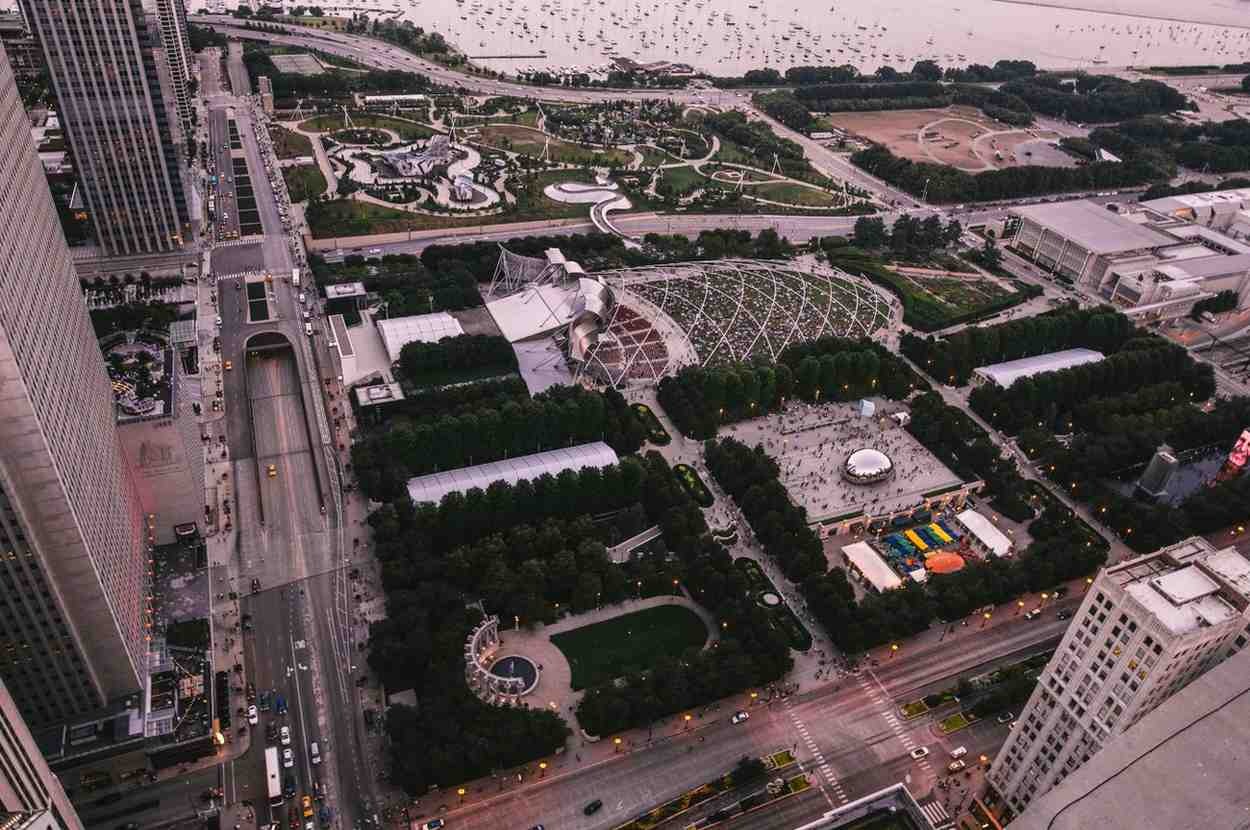
Millennium Park opened in 2004 on the northeastern edge of the Loop and draws around 25 million visitors per year, making it the most visited park in the Midwest. The 9.9-acre park sits between Michigan Avenue and Lake Michigan and is completely free to enter.
It functions as the city’s main public square – a place where residents and visitors use the same space without a clear dividing line between them.
The park connects directly to the 18.5-mile Lakefront Trail, which runs north and south along Lake Michigan from Ardmore Avenue to 71st Street.
The trail is accessible year-round and is the most direct way to understand both the scale of the city and its relationship to the lake. On a clear day in September, the view south from the Navy Pier stretch looking back at the Loop skyline is as good as any city view in the US.
Top Things to Do
- Visit Cloud Gate: The 110-ton polished stainless steel sculpture by Anish Kapoor reflects the skyline in a curved, distorted panorama from every angle. It is one of the most photographed public artworks in the world. Arrive before 8 am to see it without a crowd pressing in on all sides.
- Attend a free concert at the Jay Pritzker Pavilion: The Frank Gehry-designed bandshell hosts free outdoor concerts throughout summer, including the Grant Park Music Festival – a full classical orchestra series running weekly from June through August. The great lawn holds up to 11,000 people. Bring a blanket and arrive by 6 pm for a 7:30 pm start.
- Walk the Lakefront Trail north to Navy Pier: From Millennium Park, the trail runs 1.3 miles north to Navy Pier past Ohio Street Beach and the DuSable Harbor. The walk takes 25 minutes and ends at the pier’s entrance, where Ferris wheel views and lake boat tours depart.
- Cycle the full trail on a clear morning: Bike rental stations operate along the trail year-round. The stretch from Millennium Park south to Promontory Point in Hyde Park runs 7 miles of uninterrupted lakefront and gives a clean read of the city’s geography from the water’s edge.
- Visit Crown Fountain: Two 50-foot glass block towers face each other across a shallow reflecting pool at the park’s southern end. The towers project video portraits of Chicago residents and periodically emit water jets. It is free, accessible to young children, and busy on warm afternoons.
- Sit at Lurie Garden: A 5-acre planted garden at the park’s southern edge designed by landscape architects Gustafson Guthrie Nichol. The garden is best in late spring (when prairie perennials are in bloom) and in September when the grasses turn. It is quiet enough on weekday mornings to sit without interruption.
Don’t Leave Without…
Watching the sun come up over Lake Michigan from the Lakefront Trail just east of the park, where the water and sky are the same shade of grey before the light separates them. It is free, requires nothing, and is better than any paid sunrise experience in the city.
RV Practical Info
- Parking: Grant Park North Garage on Millennium Park Plaza is the most practical option for large vehicles. Arrive by 9 am on weekends.
- Cycling: Divvy bike-share stations operate along the lakefront year-round. Day passes cost $15 and cover unlimited 3-hour rides.
- Campsite nearby: Windy City Camping Retreat in Hillside is 20 minutes west by highway, open year-round, with CTA Blue Line access into the city.
- Scenic route: Ride the Lakefront Trail south from Millennium Park to Promontory Point in Hyde Park. The 7-mile route passes Museum Campus, the South Shore Cultural Center, and ends at a limestone promontory with a 270-degree lake view.
Who Is It Best For?
- Families who want a free, full-day activity at the center of the city
- Cyclists looking for a flat, car-free lakefront route in either direction
- Anyone visiting Chicago for the first time who wants to orient themselves at street level
Recommended Budget
- Millennium Park: Free
- Bike rental (Divvy day pass): $15
- Pritzker Pavilion concerts: Free
2. Art Institute of Chicago
The Vibe
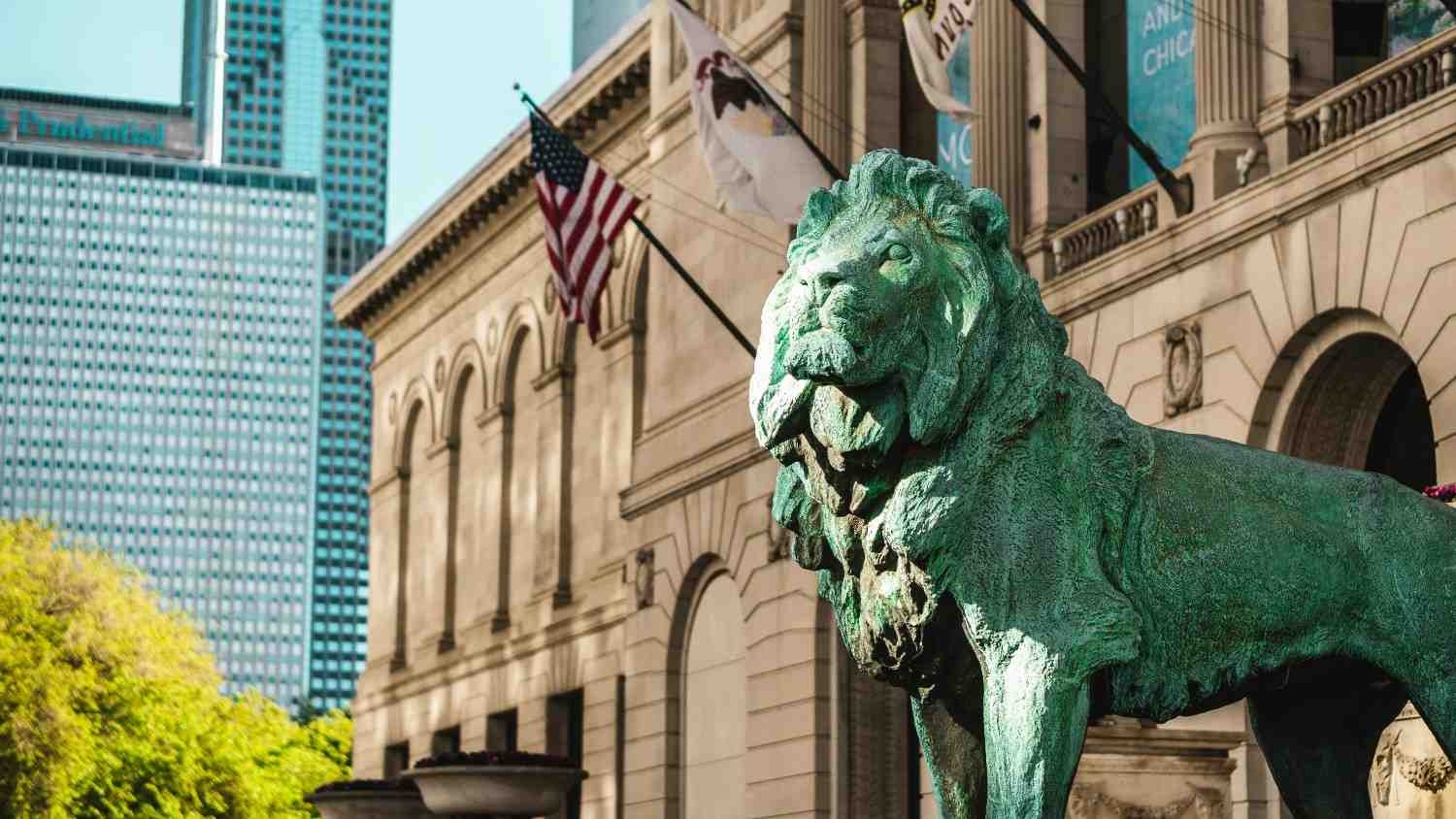
The Art Institute of Chicago sits inside Grant Park, one block south of Millennium Park, and holds one of the finest permanent art collections in the US.
Founded in 1879, the museum covers 14 acres across two interconnected buildings: the original Beaux-Arts structure on Michigan Avenue and the Renzo Piano-designed Modern Wing, which opened in 2009 and connects to Millennium Park via the Nichols Bridgeway pedestrian bridge.
The Impressionist and Post-Impressionist galleries on the second floor are the museum’s center of gravity. Georges Seurat’s A Sunday on La Grande Jatte, Grant Wood’s American Gothic, and Edward Hopper’s Nighthawks all hang permanently here, in rooms that feel proportionate to the work rather than overwhelming.
The medieval European armor collection on the ground floor is exceptional and consistently undervisited.
Top Things to Do
- Walk the Impressionist galleries: The second-floor European galleries contain one of the deepest collections of French Impressionism outside Paris. The Seurat alone justifies the ticket. Allow at least 90 minutes for this floor.
- Visit the Modern Wing: The Piano-designed wing houses the museum’s 20th and 21st-century collection, including strong holdings of Picasso, Matisse, and contemporary American artists. The building itself – its roof structure, the way light enters the galleries – is worth studying independently of the collection.
- Cross the Nichols Bridgeway: The pedestrian bridge connects the Modern Wing’s third floor directly to Millennium Park. The bridge gives elevated views over the park and the surrounding skyline that are not available from street level.
- Spend time with the Thorne Miniature Rooms: A set of 68 miniature period room interiors, built at 1:12 scale, installed in the lower level of the museum. They are technically remarkable and receive far fewer visitors than the Impressionist floors despite being genuinely extraordinary.
- Browse the museum shop: The Art Institute’s shop on the ground floor stocks one of the better selections of art books, prints, and design objects in the city. Worth a visit independently of the museum proper.
Don’t Leave Without…
Standing in front of A Sunday on La Grande Jatte and looking at the individual dots of paint from about 30 centimeters away, then stepping back to 3 meters and watching them resolve into the scene. The pointillist technique is something photographs don’t capture accurately; the painting in person is a different experience.
RV Practical Info
- Parking: Grant Park North Garage is the nearest large vehicle option, two blocks north. Metered street parking on Michigan Avenue turns over quickly on weekdays.
- Timing: Thursday evenings after 5 pm offer free Illinois resident admission. Mid-week mornings in May and September are the least crowded.
- Campsite nearby: Windy City Camping Retreat in Hillside, accessed via the CTA Blue Line to the Loop.
- Scenic route: Walk from the Art Institute south through Grant Park to the Museum Campus for a natural full-day pairing of the city’s two major cultural concentrations.
Who Is It Best For?
- Art lovers who want extended time with a major Impressionist collection without summer-peak pressure
- Architecture travelers interested in the building itself, alongside the collection
- Anyone pairing the Art Institute with Millennium Park as a single Michigan Avenue day.
Recommended Budget
- Adult admission: $25 to $35; book online to guarantee entry
- Illinois residents on Thursday evenings: Free after 5 pm
- Allow a minimum of 3 hours; a full visit takes the better part of a day
3. The Chicago Riverwalk and Architecture River Cruise
The Vibe
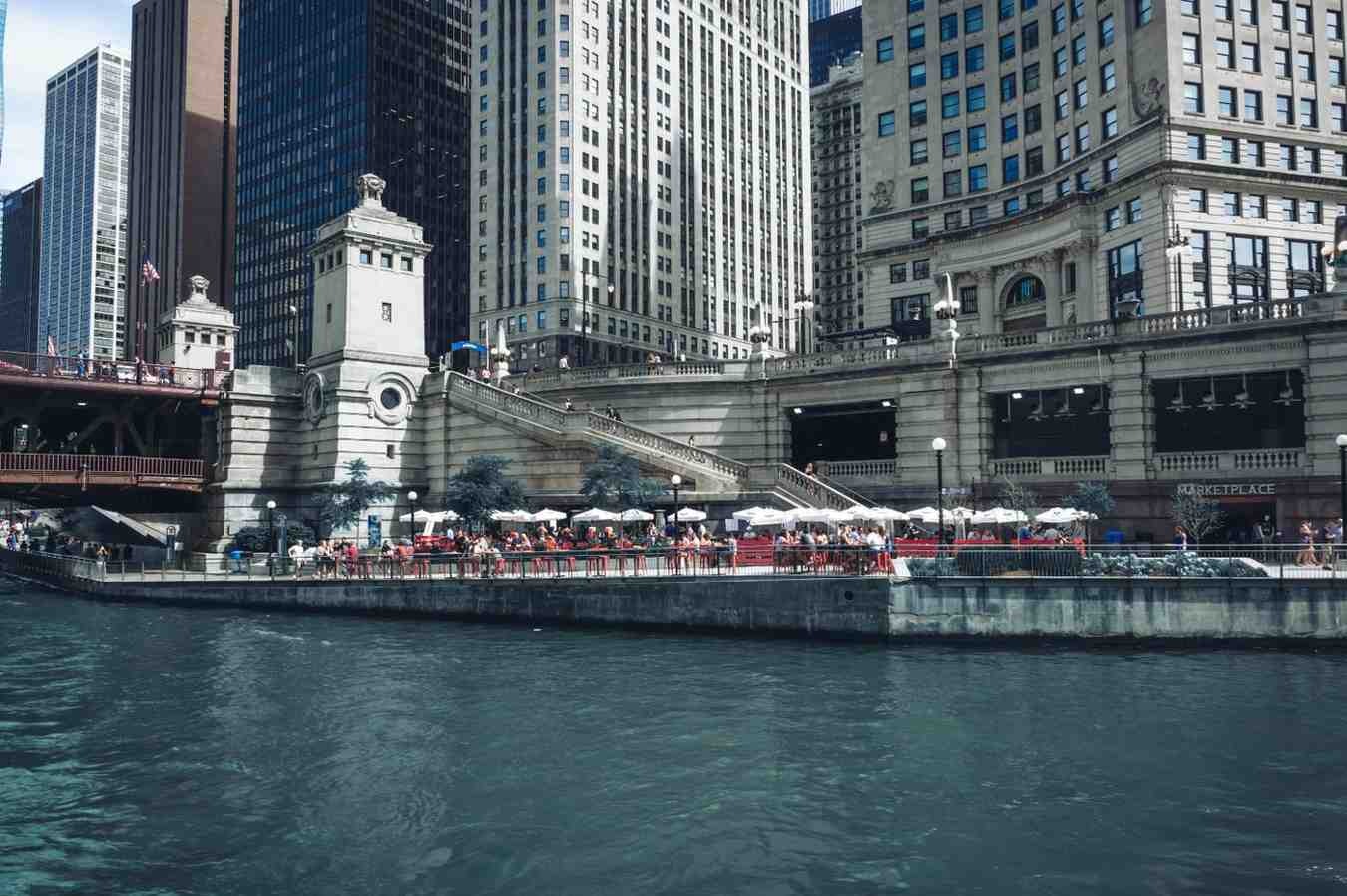
The Chicago River runs east-west through the center of the city before turning south toward the Loop. The Riverwalk runs 1.25 miles along the south bank from Lake Shore Drive to Lake Street, lined with outdoor restaurants, kayak rental points, public art, and direct views of some of the most significant buildings in American architectural history.
Chicago is the city where the modern skyscraper was invented. The 1885 Home Insurance Building, generally credited as the first skyscraper in the world, stood here until its demolition in 1931.
The buildings that replaced it and the generations of towers that followed – Marina City, the Tribune Tower, the Wrigley Building, the Willis Tower – are concentrated within a few blocks of the river in a way that makes the Riverwalk an open-air architecture museum.
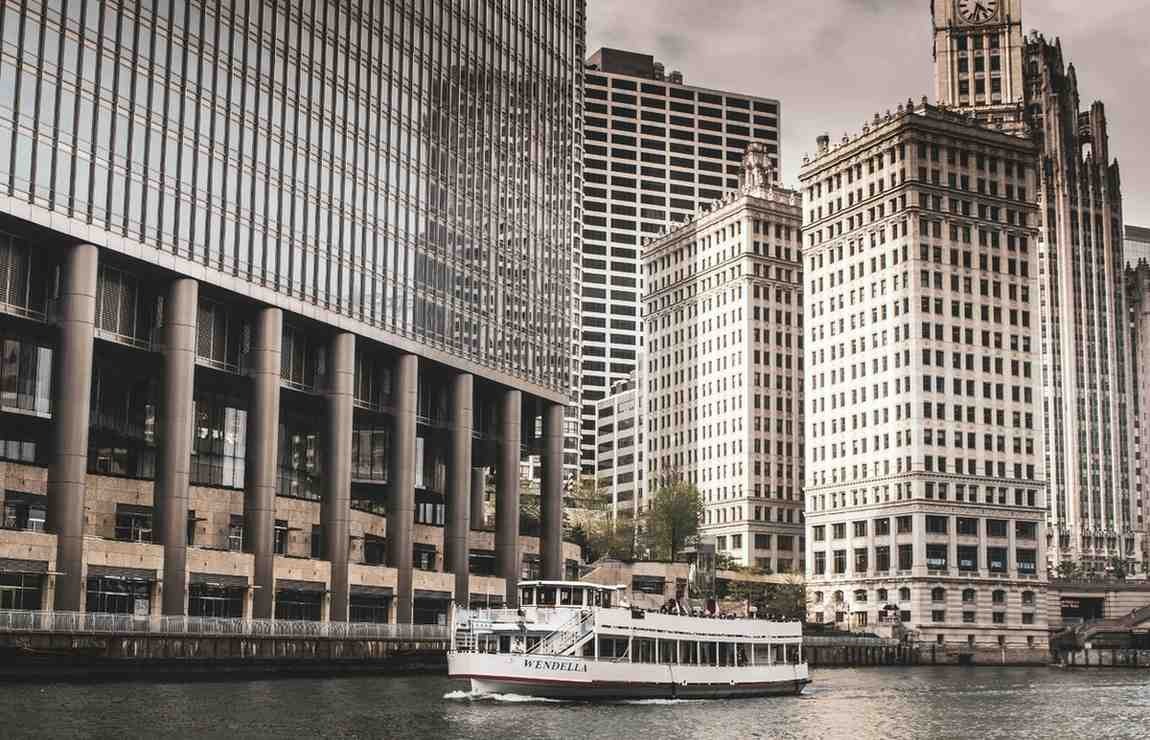
The 90-minute Architecture River Cruise operated by the Chicago Architecture Center gives the most systematic overview of this from the water, with trained docents covering the history, design, and engineering of specific buildings as the boat moves through the river. It is the single best introduction to what makes Chicago architecturally distinct.
Top Things to Do
- Take the Chicago Architecture Center River Cruise: The CAC’s tour aboard Chicago’s First Lady Cruises covers 40-plus buildings with commentary from trained docent guides. Tickets run $47 to $54. Book in advance from May through October. This is the best 90 minutes available in Chicago for anyone with an interest in architecture, urban planning, or city history.
- Walk the Riverwalk from Lake Shore Drive to Lake Street: The walk takes about 20 minutes at a direct pace and 45 minutes if you stop at the kayak docks, the river gardens, and the cove seating areas. The eastern end near the lake offers the widest views; the western end near Lake Street has the densest architectural framing overhead.
- Kayak the river: Urban Kayaks operates from the Riverwalk at State Street, renting single and tandem kayaks by the hour. Paddling east toward the lake gives a low-angle perspective on the river canyon of towers that is different from anything available from the walkway above.
- Visit the Chicago Architecture Center on the Riverwalk: The CAC’s Michigan Avenue location has a permanent exhibition on Chicago architecture, including a detailed architectural model of the city that shows the full skyline in relief. Entry to the exhibition is $12 for adults. Walking tour tickets for neighborhood architecture tours are also available here.
- Eat on the Riverwalk: Several restaurants operate riverside decks along the Riverwalk’s mid-section. The outdoor seating faces the water and the south face of the river canyon. River North’s restaurant density continues above the riverbank on Wacker Drive for a wider selection.
- Watch the river dye on St. Patrick’s Day: On the Saturday before St. Patrick’s Day, the Chicago Plumbers Union dyes the Chicago River bright green using a vegetable-based dye. The effect lasts approximately five hours. It is one of Chicago’s most genuinely specific public events and draws large crowds to the Riverwalk and Michigan Avenue bridges.
Don’t Leave Without…
Standing on the Michigan Avenue Bridge (officially DuSable Bridge) at dusk, looking west along the river. The Wrigley Building is lit on the north bank, the Tribune Tower rises to its right, and the river reflects both of them. It is the postcard view of Chicago that photographs accurately.
RV Practical Info
- Parking: Millennium Lakeside Garage on Columbus Drive is the nearest large vehicle option, a 10-minute walk to the Riverwalk’s eastern end.
- Access: The Riverwalk is accessible from stairs and elevators at each of the cross-street bridges (Michigan, Dearborn, Clark, LaSalle, Wells). All are step-free.
- Campsite nearby: Windy City Camping Retreat in Hillside is the most practical base for Riverwalk visits, via the CTA Blue Line to the Clark/Lake station.
- Scenic route: Walk from the Riverwalk east along the Lakefront Trail to Millennium Park, north to Navy Pier, and back south along the lakefront. The full circuit covers 4 miles.
Who Is It Best For?
- Architecture and design travelers who want a systematic overview of Chicago’s skyline from the water
- Anyone first-time visitor who needs a single activity that explains the city’s identity
- Food travelers who want outdoor waterfront dining without leaving the city center
Recommended Budget
- Architecture River Cruise: $47 to $54 per adult
- CAC exhibition: $12 adults
- Kayak rental: $30 to $45 per hour
4. Wicker Park and The 606 Trail

The Vibe
Wicker Park sits about 2 miles northwest of the Loop and represents Chicago’s most concentrated independent creative neighborhood. The commercial center is the six-point intersection of Milwaukee, Damen, and North Avenues – a collision of three diagonal streets that produces a layout unlike anything in the surrounding grid.
The area’s dense independent restaurant, bar, record shop, and vintage clothing scene has stayed remarkably consistent across two decades of development pressure.
The 606 Trail, which opened in 2015 on a disused railway embankment, runs 2.7 miles through Wicker Park and the adjacent Bucktown, Logan Square, and Humboldt Park neighborhoods.
The trail sits 17 feet above street level, giving views across rooftops and connecting access points that drop into each neighborhood’s commercial strips. It is one of Chicago’s most successful recent infrastructure projects and makes Wicker Park a natural starting point for an afternoon that moves between neighborhoods on foot or by bike.
Top Things to Do
- Walk Milwaukee Avenue from the six-corners to Damen: The commercial stretch between the six-point intersection and Damen Avenue concentrates the neighborhood’s best independent retail and food options. Reckless Records at 1532 N Milwaukee is the city’s best independent record shop. Myopic Books at 1564 N Milwaukee has been operating as a used bookshop since 1991.
- Ride or walk The 606 from Wicker Park to Humboldt Park: The eastern access point at Damen and Milwaukee is the most convenient for Wicker Park visitors. Riding or walking west to the trail’s end at Ridgeway Avenue and back takes about 90 minutes at a relaxed pace. Access points at Damen, Western, and Kedzie drop into neighborhood retail if you want to break the route.
- Eat on Division Street: The stretch of Division Street between Damen and Western has some of the strongest mid-price restaurant options in the neighborhood. The Bristol, Violet Hour (cocktail bar), and Dove’s Luncheonette represent different points on the price and style spectrum within a few blocks of each other.
- Browse Reckless Records: Three floors of vinyl and CDs organized by genre, with a particularly deep selection of Chicago house, jazz, and independent rock. Staff picks are posted throughout the store and are generally reliable. Worth an hour.
- Walk the neighborhood grid south of North Avenue: The residential blocks between North and Division Avenues contain some of the best-preserved Victorian and Italianate brick houses in Chicago. The neighborhood gentrified late enough that demolitions were limited. The stretch along Caton, Schiller, and Pierce Streets is the strongest for architecture.
- Drink at The Violet Hour: A craft cocktail bar on Damen with no exterior signage, opened in 2007 and still among the most respected in the city. The bar opens at 6 pm. Arrive early on weekends to avoid a queue.
Don’t Leave Without…
Walking The 606 at the point where it crosses the Damen Avenue overpass and looking south. The view takes in the rooftops of Wicker Park and Bucktown with the Loop skyline directly ahead.
On a clear afternoon, the distance between the neighborhood’s two-flat brick buildings and the glass towers downtown is one of the more striking pieces of Chicago geography available from ground level.
RV Practical Info
- Parking: Street parking is available on residential side streets off Milwaukee Avenue. Metered spots in Milwaukee turn over frequently on weekdays.
- 606 access: The Damen Avenue trailhead has a small surface lot. Bike rental is available at the Divvy station at Damen and North.
- Campsite nearby: Windy City Camping Retreat in Hillside, 20 minutes west via I-290, accessed by the CTA Blue Line to the Damen stop.
- Scenic route: Walk from the Wicker Park six-corners north along Milwaukee Avenue to the Logan Square Boulevard, turn east along the Chicago boulevard system, and return via the 606 Trail. The loop takes about two hours.
Who Is It Best For?
- Music and record collectors who want access to Chicago’s best independent record shops
- Food and bar travelers looking for a walkable neighborhood with strong independent options.
- Cyclists using The 606 to move between neighborhoods without returning to street level.
Recommended Budget
- The 606 Trail: Free
- Reckless Records: Free to browse; budget varies by purchases
- Meals on Division Street: $18 to $35 per person at mid-range restaurants
- Violet Hour cocktails: $16 to $22 per drink
5. Museum Campus
The Vibe
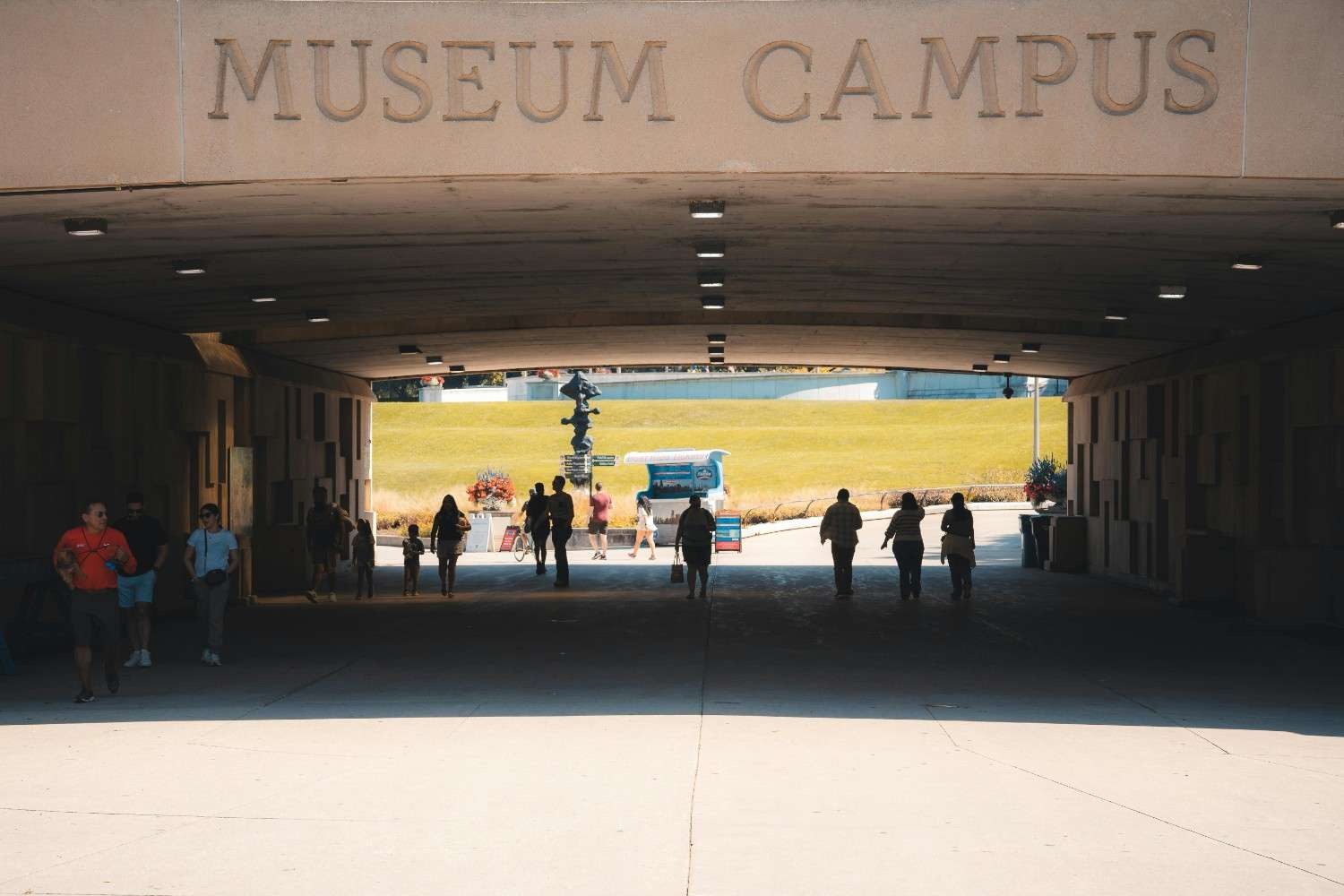
The Museum Campus occupies a lakefront peninsula 1.5 miles south of the Loop, jutting into Lake Michigan at the foot of Solidarity Drive. Three of Chicago’s major institutions sit within a short walk of each other on landscaped grounds with unobstructed skyline views across the lake. The combination makes it the most concentrated cultural destination in the city and the strongest full-day option for families.
The view from the Museum Campus grounds looking north is also one of the most commonly reproduced images of the Chicago skyline. The full downtown profile, from the Willis Tower to the John Hancock building, rises above the lakefront without any foreground obstruction. This is the perspective that appears in promotional photography of the city. In person, it is better.
Top Things to Do
- Visit the Field Museum: One of the largest natural history museums in the world, with permanent exhibitions covering ancient Egypt, Native North American cultures, the evolution of life, and the geology of gems and jade. Sue, the most complete T. rex skeleton ever found, stands in the main hall. Adult entry runs $30 to $40, depending on what exhibitions are included. Budget half a day.
- Visit the Shedd Aquarium: A freshwater and marine aquarium established in 1930, with dolphin, beluga whale, and otter exhibits alongside a large coral reef tank. Entry starts at $40 for adults, though online booking packages the three institutions together at a discount. The beluga whale exhibit is the most popular; arrive before 11 am to avoid the main crowd at the tank.
- Visit the Adler Planetarium: The oldest planetarium in the western hemisphere, opened in 1930 on the same campus. Strong exhibitions on space exploration history and current astronomy. The theater dome shows change seasonally. Entry runs $15 to $30. The eastern terrace of the Adler – facing back toward the city – gives the most dramatic unobstructed skyline view on the entire campus.
- Walk the campus grounds: The landscaped paths between the three institutions pass along the lakefront, with benches facing the water and clear views of Northerly Island (a former airport runway converted into a nature area and concert venue). The walk from the Field Museum to the Adler Planetarium takes 12 minutes.
- Photograph the skyline from the Adler terrace: The eastern terrace of the Adler Planetarium is the most reliably photographed skyline viewpoint in Chicago, particularly at blue hour (20 to 30 minutes after sunset, when the sky is deep blue and the city lights are fully on). Walk out to the peninsula’s end for the widest framing.
- Combine with a walk along the Lakefront Trail to Millennium Park: The trail runs 1.5 miles north from the Museum Campus to Millennium Park. The walk takes 25 to 30 minutes and gives a continuous view of the skyline evolving as you move closer to the Loop.
Don’t Leave Without…
Spending 20 minutes at the Adler Planetarium terrace at dusk, when the skyline starts to light up from east to west and the lake goes flat and dark below it. It is the best free view in Chicago, and it costs nothing beyond the walk from the museum.
RV Practical Info
- Parking: The Museum Campus parking garage on McFetridge Drive handles large vehicles. Arrive by 9:30 am on weekends to avoid the full-capacity closure that operates on peak summer days.
- Transit: The #146 bus from State Street runs to the Museum Campus from the Loop. The walk from the Roosevelt CTA station takes 15 minutes along the lakefront path.
- Campsite nearby: Windy City Camping Retreat in Hillside; the #147 express bus connects the lakefront to downtown transit connections.
- Scenic route: Walk north along the Lakefront Trail from the Museum Campus to Millennium Park and the Art Institute, then continue to Navy Pier. The full route covers 3 miles.
Who Is It Best For?
- Families with children who want a full day of varied indoor and outdoor activity
- First-time visitors who want the classic Chicago skyline photograph from the Adler terrace
- Anyone combining natural history, marine life, and astronomy in a single location
Recommended Budget
- Field Museum: $30 to $40 per adult, $20 to $25 per child
- Shedd Aquarium: From $40 per adult
- Adler Planetarium: $15 to $30 per adult
- Campus grounds and skyline view: Free
6. Pilsen
The Vibe
Pilsen sits on Chicago’s Lower West Side, about 3 miles southwest of the Loop, and is the city’s largest Mexican-American neighborhood. The area has been home to successive Central American and Mexican immigrant communities since the 1960s, and the visual culture that came with them covers nearly every surface. More than 150 large-scale murals document Chicano history, political movements, and community life across the neighborhood’s garage doors, building sides, and retaining walls.
18th Street is Pilsen’s main commercial artery, lined with taquerias, panaderías, and independent restaurants that collectively make this one of the most authentic and affordable places to eat in Chicago.
The neighborhood also holds the National Museum of Mexican Art on West 19th Street – the largest Latino cultural institution in the US – with free admission and a permanent collection covering 3,000 years of Mexican and Mexican-American art.
Top Things to Do
- Visit the National Museum of Mexican Art: The museum at 1852 W 19th Street is the largest Latino-focused museum in the country, with a permanent collection of 10,000 objects spanning pre-Columbian artifacts, folk art, Day of the Dead altars, and contemporary Mexican-American visual art. Admission is free. Allow 90 minutes for a focused visit.
- Walk 18th Street: The main commercial strip between Halsted and Western Avenues is the most direct route through the neighborhood’s daily life. Bakeries, produce markets, and taquerias open early and run through the evening. The street is best on weekend mornings when the activity level is highest.
- Follow the Pilsen Mural Tour: The murals are concentrated in three areas: the 18th Street Corridor, Halsted Street near the Blue Line viaduct, and the residential blocks south of 18th. The community organization Enlace Chicago publishes a free walking map available at the National Museum of Mexican Art.
- Eat at Carnitas Uruapan: The restaurant at 1725 W 18th Street has been serving carnitas in Pilsen since 1975. The meat is slow-cooked in copper vats and sold by weight. A pound of carnitas with tortillas, salsa, and guacamole feeds two people for under $20. Arrive before noon on weekends; the best cuts sell out.
- Walk the 18th Street viaduct murals: The stretch of 18th Street passing under the railroad viaduct between Halsted and Racine is covered in large-format murals on both sides of the underpass. This is the densest single concentration of mural work in the neighborhood and takes about 20 minutes to walk and photograph properly.
- Visit the Zhou B Art Center: A converted industrial building on South Sangamon Street housing artist studios, galleries, and exhibition space. The first Friday of each month is an open studios event. The building’s architecture – brick factory structure with freight elevators intact – is as interesting as the art inside.
Don’t Leave Without…
Eating a carnitas taco on the sidewalk outside Carnitas Uruapan on a Saturday morning, with the viaduct murals visible at one end of the block and 18th Street traffic moving past. It is one of the more distinctly Chicago neighborhood experiences available for under $5.
RV Practical Info
- Transport: Take the CTA Pink Line to the 18th Street station. Street parking is available throughout Pilsen, but becomes competitive on weekend afternoons during events.
- Food timing: Carnitas Uruapan opens at 8 am daily and sells out of the best cuts by early afternoon on weekends. The National Museum of Mexican Art is closed on Mondays.
- Campsite nearby: Chicago Southland / Sauk Trail Woods (Cook County Forest Preserve) is 30 minutes south; Windy City Camping Retreat in Hillside is 25 minutes northwest.
- Scenic route: Walk north from 18th Street through Pilsen to the Western Avenue CTA station, ride the Pink Line one stop to the 18th Street station, and return along the Pilsen street grid south of the tracks. The loop covers the full width of the neighborhood in about two hours.
Who Is It Best For?
- Food travelers who want to eat well without spending much
- Culture and street art travelers interested in Chicago’s Latino community history
- Anyone looking for a low-cost, low-crowd neighborhood afternoon as an alternative to the lakefront
Recommended Budget
- National Museum of Mexican Art: Free
- Meals on 18th Street: $8 to $18 at neighborhood taquerias and restaurants
- Mural tour: Free
7. Lincoln Park
The Vibe
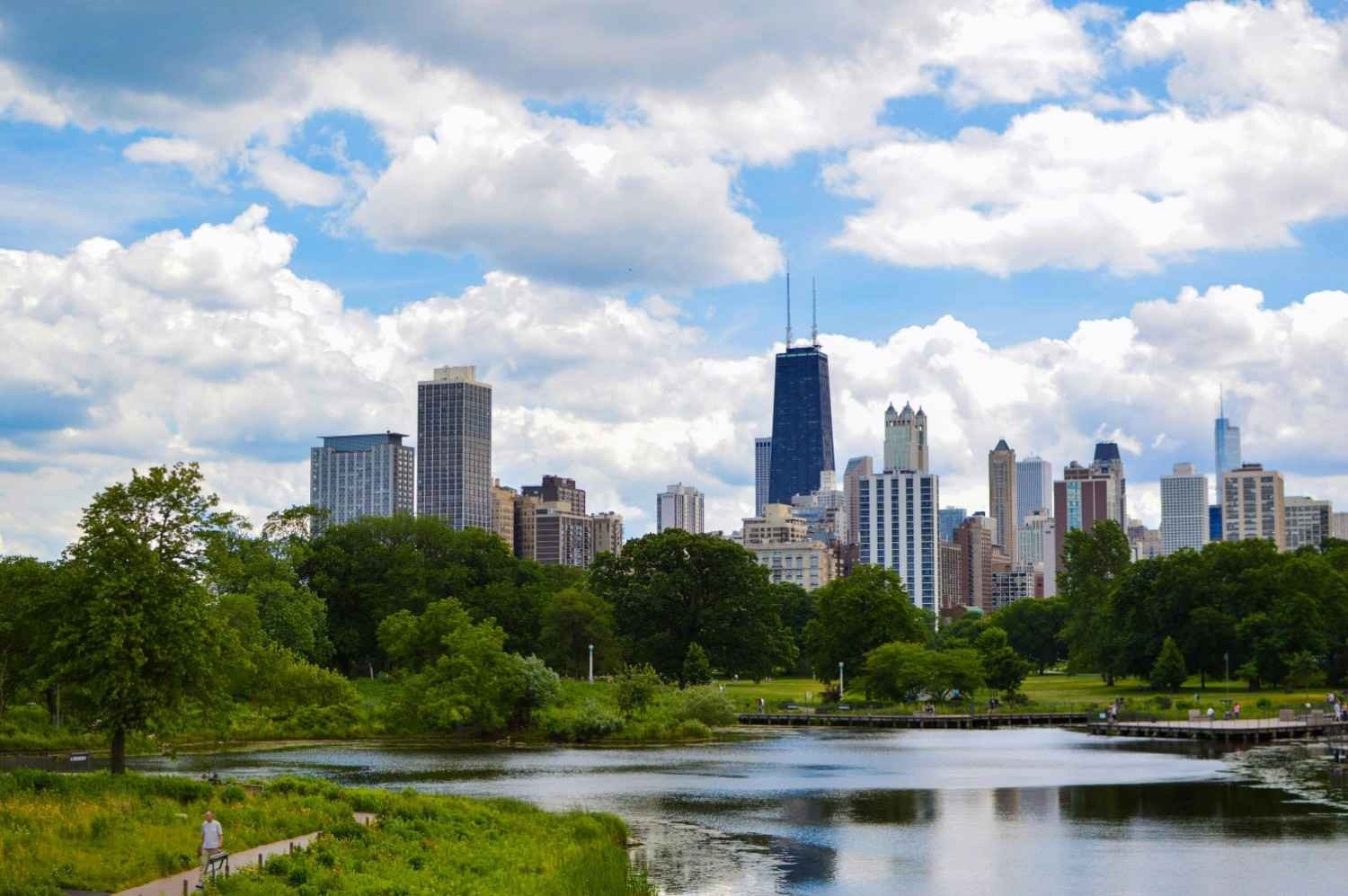
Lincoln Park is Chicago’s largest public park, running 7 miles along the North Side lakefront between North Avenue and Ardmore Avenue. The park is continuous with the lakefront path and contains one of the last free major-city zoos in the US, a working conservatory, multiple beaches, a Nature Museum, and sports facilities that would anchor their own parks in most other cities.
The Lincoln Park Zoo, established in 1868, holds over 200 species across 35 acres and is open daily year-round without an admission charge.
It is the most consistently visited free attraction in Chicago and one of the few public spaces in the city where the full cross-section of the city’s population uses the same ground on the same afternoon. The zoo’s great ape house and African savanna exhibit are the strongest sections.
The neighborhood that shares the park’s name – Lincoln Park the neighborhood – runs along the park’s western edge and has some of the most walkable streets on the North Side, with the best concentration centered on Armitage Avenue and Halsted Street.
Top Things to Do
- Walk through Lincoln Park Zoo: The zoo covers a wide range of species without feeling overwhelming in scale. The Regenstein African Journey exhibit and the Kovler Lion House are the main draws. The children’s zoo section in the southern half is designed for younger visitors with hands-on animal interaction. Open daily, 365 days per year, at no cost.
- Visit the Lincoln Park Conservatory: The Victorian greenhouse adjacent to the zoo contains four glass houses – a Palm House, Fern Room, Orchid House, and Show House. Entry is free. The Fern Room, with its 50-foot palms and prehistoric-looking tree ferns, is the strongest single space. The Conservatory is warm year-round, which makes it particularly useful in winter.
- Walk Lakefront Beach from North Avenue to Fullerton: North Avenue Beach (1,600 feet of sand on Lake Michigan) connects north to Fullerton Beach via a paved path along the lakefront. In summer, the beach is staffed by lifeguards from Memorial Day through Labor Day. The water temperature peaks at around 22°C in August.
- Cycle the Lakefront Trail through the park: The trail passes through Lincoln Park between the park’s western sports fields and the lake, giving a clean 7-mile corridor before the trail continues north into Rogers Park. The section through Lincoln Park is shaded by mature trees for most of the route.
- Visit the Peggy Notebaert Nature Museum: The museum at 2430 N Cannon Drive focuses on the ecology of the Chicago region, with a strong butterfly haven – a 2,700-square-foot glasshouse containing hundreds of free-flying butterflies. Entry runs $19 for adults and $12 for children. Best visited on a weekday morning.
- Eat on Armitage Avenue: The stretch of Armitage Avenue between Halsted and Sheffield has a concentration of independent restaurants, coffee shops, and bars that serve the neighborhood’s residents rather than the tourist-facing venues near the zoo. The area is walkable from the zoo’s south exit.
Don’t Leave Without…
Watching the flamingo colony at the zoo’s southern lake around 4 pm on a September afternoon, when the light is long, and the bird section is almost empty of visitors. The flamingos have been in Lincoln Park Zoo since 1930 and are entirely comfortable at close range. It is one of the more unexpected encounters available in a major American city without a ticket.
RV Practical Info
- Parking: The Cannon Drive parking lot inside the park is the most practical for zoo visits. Street parking on Fullerton and Clark is competitive on weekends.
- Transit: The CTA Brown and Purple Lines serve the Fullerton stop, a 10-minute walk to the zoo. The #151 bus runs along Lake Shore Drive from the Loop to the park’s southern entrance.
- Campsite nearby: Windy City Camping Retreat in Hillside; the CTA Blue Line connects to multiple North Side transfer points.
- Scenic route: Walk from the zoo north along the lakefront path to Fullerton Beach, continue to the North Pond nature area, and return south through the park’s interior past the Conservatory. The loop takes about 90 minutes.
Who Is It Best For?
- Families with children who want a free, full-day activity with genuine animal variety
- Cyclists using the Lakefront Trail as a backbone and connecting into the park.
- Visitors combining Lincoln Park with the Wicker Park and Bucktown neighborhoods on a North Side day
Recommended Budget
- Lincoln Park Zoo: Free
- Lincoln Park Conservatory: Free
- Peggy Notebaert Nature Museum: $19 adults, $12 children
- Meals on Armitage: $15 to $30
8. The Architecture River Cruise and Chicago Architecture Center
The CAC operates walking tours of the Loop, the Gold Coast, the South Loop, and several other neighborhoods, each lasting 90 minutes to two hours.
The Loop Interior Architecture tour, which accesses several private lobbies not generally open to the public, is the strongest option for architecture travelers. Tickets run $20 to $25 per person. The CAC’s website publishes a current schedule at architecture.org.
The permanent exhibition at the Michigan Avenue center includes a 23-foot architectural model of Chicago’s downtown that shows the full skyline in physical relief. It is the clearest single visualization of the city’s geography available anywhere in Chicago. Entry to the exhibition is $12 for adults and free for CAC members.
9. West Loop and Fulton Market
The Vibe
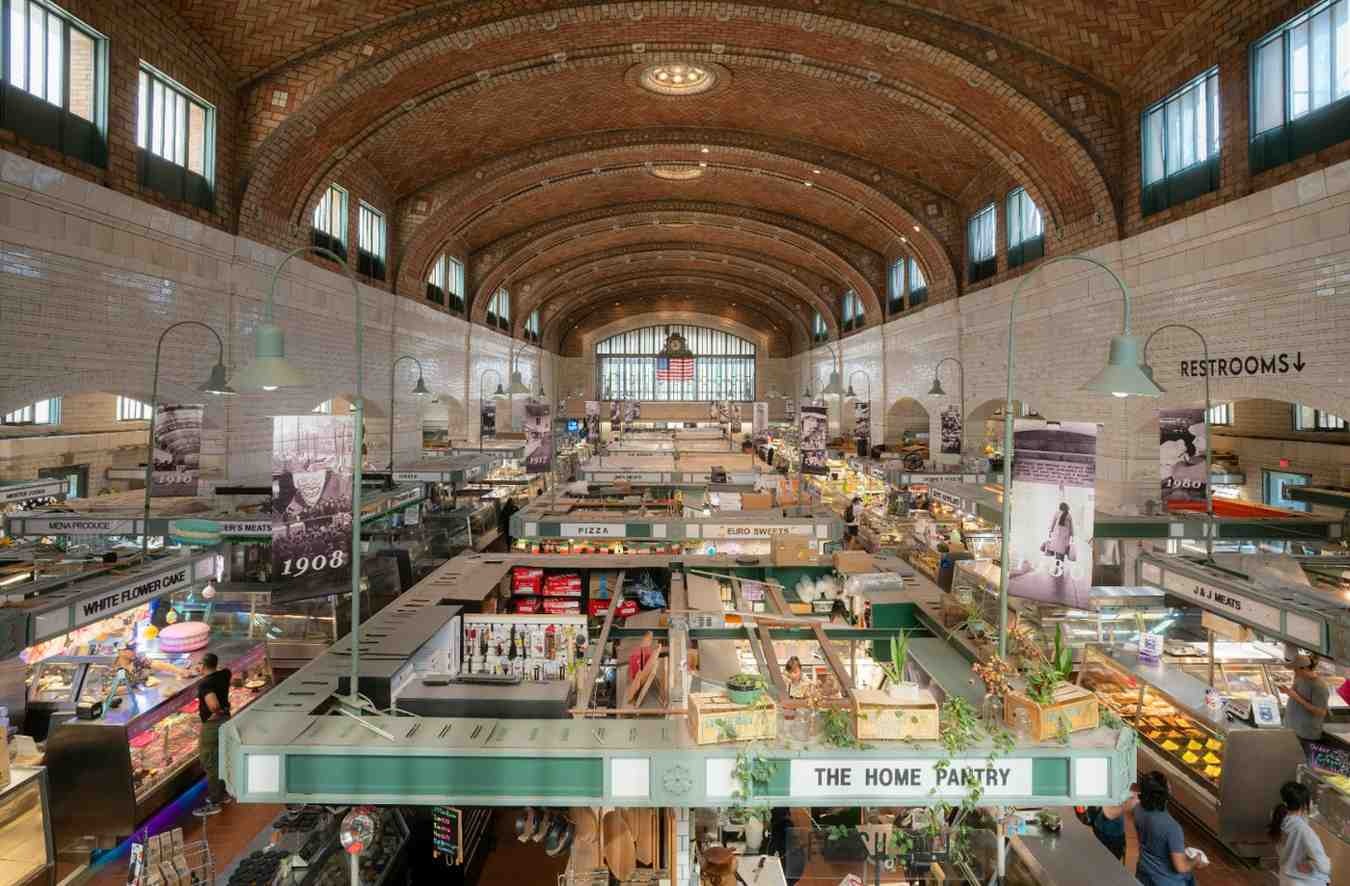
The West Loop sits directly west of the Loop across the Chicago River’s south branch, centered on Randolph Street between Halsted and Morgan. The neighborhood contains the highest concentration of nationally recognized restaurants in Chicago, including several James Beard Award winners, and has held that status consistently since the early 2010s.
Randolph Street’s Restaurant Row is the commercial center; the adjacent Fulton Market District, a former meatpacking area, has expanded the food and hospitality density significantly over the past decade.
The West Loop operates primarily in the evenings. Arriving for dinner between 5:30 and 6 pm gives the best chance of walking into a bar seat or early table without a reservation at most mid-tier restaurants. The neighborhood’s character changes fast between daytime (quiet, logistics-oriented) and evening (among the most active dining corridors in the Midwest).
Top Things to Do
- Eat on Randolph Street: The stretch from Halsted to Morgan holds Greek Islands (one of Chicago’s oldest Greek restaurants), Little Goat Diner, Girl & the Goat, and several of the city’s most consistent mid-price options. Reservations are required at the most popular venues on weekends; walk-in bar seating is generally available on weeknights until 7:30 pm.
- Walk through the Fulton Market District: The blocks north of Randolph Street toward Lake Street contain the converted cold-storage and meatpacking buildings that now house hotel lobbies, restaurant concepts, and food production facilities. The architecture is industrial brick and steel; the overlay of contemporary hospitality is sometimes jarring and sometimes interesting.
- Visit Soho House Chicago: The West Loop location of the members’ club occupies a former belt factory on Green Street, with a rooftop pool visible from the street. Non-members can access the ground-floor bar and café. The building’s restoration is one of the better adaptive reuse projects in the neighborhood.
- Drink at a West Loop bar before dinner: The stretch of Randolph and Washington streets has enough pre-dinner bar options at different price points to make a neighborhood aperitivo circuit practical. Federales, EL Ideas’ bar, and the Publican Quality Meats counter are the most commonly referenced.
- Walk to the Skydeck at Willis Tower: From the West Loop, Willis Tower is a 10-minute walk east on Adams Street. The Skydeck on the 103rd floor includes glass-floored observation boxes that extend 4.3 feet beyond the building’s exterior. Entry runs $30 to $35 for adults. The view on a clear day covers four states.
- Browse the Randolph Street Market: A monthly antiques and vintage market runs on the last weekend of each month at the UIC Pavilion, 10 minutes south of the West Loop. The market covers two indoor halls and an outdoor section with vendors specializing in mid-century furniture, vintage clothing, and architectural salvage.
Don’t Leave Without…
Arriving on Randolph Street at 6 pm on a Tuesday or Wednesday evening, when the restaurants are full but the street is walkable, and the bar seats at three or four restaurants are still available. The energy on the block at that hour – kitchen exhaust, outdoor seating, the noise from open restaurant fronts – is the best version of the neighborhood.
RV Practical Info
- Parking: The West Loop has several surface lots and garages on Des Plaines Street. The ABM Parking lot on Randolph handles large vehicles. Street parking is possible on weeknights on the Fulton Market side streets.
- Transit: The CTA Green and Pink Lines serve the Morgan stop on Lake Street, one block north of Randolph. The CTA Blue Line’s Clinton stop is three blocks south.
- Campsite nearby: Windy City Camping Retreat in Hillside is directly accessible via I-290 west, 20 minutes from the West Loop.
- Scenic route: Walk east from the West Loop along Randolph Street across the Chicago River, through the Loop on Washington Street, and south to the Art Institute. The route passes through the core of the city’s architectural district.
Who Is It Best For?
- Food travelers who want the city’s strongest restaurant density in a single walkable stretch
- Evening visitors who want an active neighborhood without the tourist overlay of River North
- Anyone combining dinner in the West Loop with the Willis Tower observation deck
Recommended Budget
- Willis Tower Skydeck: $30 to $35 per adult
- Dinner on Randolph Street: $40 to $80 per person at mid-range restaurants
- Bar access: $12 to $18 per cocktail
10. Hyde Park
The Vibe
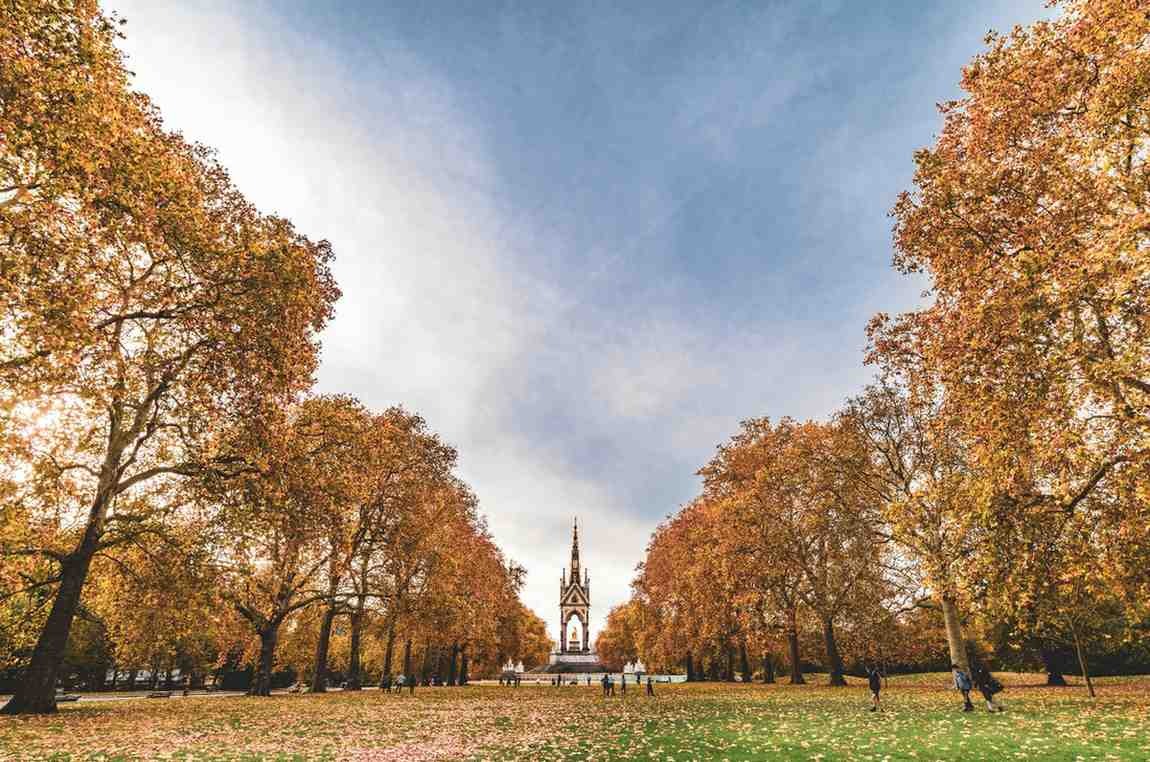
Hyde Park sits 7 miles south of the Loop on the Lake Michigan shoreline and functions as Chicago’s most consistently intellectual neighborhood – home to the University of Chicago, the Museum of Science and Industry, the Obama Presidential Center (currently under construction and expected to open in 2026), the DuSable Black History Museum, and one of the most intact collections of Prairie-style architecture in the US.
The neighborhood has a different tempo from the North Side. Streets are quieter, the lakefront is less developed, and the concentration of bookshops, coffee shops, and independent restaurants on 53rd and 57th Streets serves a predominantly university-adjacent population.
Promontory Point, a limestone promontory in Burnham Park at the northern edge of Hyde Park, gives a 270-degree panoramic view of the lakefront and skyline that most Chicago visitors never find.
Top Things to Do
- Visit the Museum of Science and Industry: The largest science museum in the western hemisphere, housed in the former Palace of Fine Arts building from the 1893 World’s Columbian Exposition.
- The permanent collection covers a German U-boat submarine (captured in World War II and installed in the museum), a full-scale coal mine replica, a working model train layout that runs through a miniature version of the US landscape, and a 40-foot domed IMAX theater. Adult entry runs $21.95 to $30.95, depending on included exhibitions.
- Walk to Promontory Point: The limestone promontory at 5491 S Shore Drive extends into Lake Michigan and gives a 270-degree view of the lakefront. Looking north from the point, the full downtown skyline rises above the lake in an unobstructed line. The point is best at sunrise and at golden hour before sunset. Almost no tourists reach it. Parking is available on S Shore Drive.
- Walk the Frank Lloyd Wright Robie House: The Robie House at 5757 S Woodlawn Avenue was completed in 1910 and is one of the defining works of Prairie-style architecture and of 20th-century residential design. The building’s long, low rooflines, cantilevered overhangs, and art glass windows influenced the trajectory of modern architecture worldwide. Guided tours run daily and cost $20 for adults; book through the Frank Lloyd Wright Trust.
- Browse 57th Street Books: The independent bookshop on 57th Street has been operating in Hyde Park since 1979 and is one of the best browsing bookshops in Chicago, with particularly strong sections in history, architecture, and social science. The below-street-level shop is open until 9 pm on weekdays.
- Walk the University of Chicago campus: The main quadrangle of the University of Chicago was built in the Gothic Revival style beginning in 1890, giving the campus an architectural coherence unusual in American universities. The Cobb Gate entrance on Ellis Avenue and the Rockefeller Memorial Chapel are the strongest set pieces. Maps are available at the visitor center on Ellis.
- Eat on 53rd Street: The commercial strip at 53rd and Hyde Park Boulevard is the neighborhood’s main food corridor. Medici on 57th (established 1962) is the Hyde Park institution; Valois cafeteria at 1518 E 53rd Street is the neighborhood diner where Barack Obama ate regularly during his years in Hyde Park.
Don’t Leave Without…
Standing at Promontory Point at dusk, looking north at the city. The view covers the same skyline as the Adler Planetarium terrace but from 7 miles further south, which compresses the buildings differently and shows the full arc of the lakefront from Hyde Park to the downtown towers. It takes 15 minutes to find it and 30 minutes to decide to leave.
RV Practical Info
- Parking: Street parking is available throughout Hyde Park. The Museum of Science and Industry has a dedicated lot on S Cornell Avenue. Promontory Point has free parking on S Shore Drive.
- Transit: The Metra Electric District line runs from Millennium Station (underground at Randolph and Michigan) to the 55th-56th-57th Street station in 18 minutes. This is the most practical way to reach Hyde Park from downtown without driving.
- Campsite nearby: Chicago Southland / Calumet Sag RV camping (Palos Hills) is 30 minutes southwest; Windy City Camping Retreat is 35 minutes northwest.
- Scenic route: Walk from the Metra station east along 57th Street through the university campus to Promontory Point, then north along the lakefront path to the Museum of Science and Industry, and back along 57th Street. The circuit takes about two hours.
Who Is It Best For?
- History and architecture travelers who want to visit Frank Lloyd Wright’s most significant residential building and a university campus in the same afternoon
- Families with older children and teenagers who can engage with the Museum of Science and Industry’s depth
- Anyone who wants the best Chicago skyline view that most visitors miss entirely
Recommended Budget
- Museum of Science and Industry: $21.95 to $30.95 per adult
- Robie House tour: $20 per adult
- Promontory Point: Free
- Meals on 53rd and 57th Streets: $12 to $25
What Should You Pack for a Chicago Road Trip
Chicago’s weather varies considerably by season and microclimate. A September afternoon on the lakefront can be 10°C cooler than the same afternoon in Pilsen or the West Loop, two miles west and sheltered from the lake wind.
The surrounding region adds further range: Indiana Dunes can be warm and sunny while downtown Chicago is overcast and cool on the same morning.
| Category | Items | Why You Need It |
| Clothing | Wind-blocking outer layer, mid-weight fleece, waterproof shell, light layers for warm inland days, comfortable walking shoes with grip | Chicago’s lakefront wind is stronger than the temperature suggests; cobblestones in the Loop are slippery after rain; a 20°C afternoon can drop to 10°C after dark |
| RV Essentials | Illinois E-ZPass transponder, CTA Ventra card (works on bus, train, and rail), national parks annual pass ($80), paper road atlas for Great Lakes routes | E-ZPass covers Chicago-area toll roads; cell coverage is patchy in Indiana Dunes backcountry; the national parks pass pays for itself at Indiana Dunes and Mississippi Palisades in a single trip |
| Hiking Gear | Daypack with 2L water capacity, sun protection for open lakefront walks, warm hat for winter lakefront, binoculars for Indiana Dunes birding | Indiana Dunes trails run through exposed sand ridges; the lakefront trail is wind-exposed year-round; the Dunes attract over 300 bird species during spring and fall migration |
| Food and Budget | Grocery stock for RV cooking, cash for Pilsen taquerias and Randolph Street market vendors, a reusable bag for the Green City Market | Chicago restaurant prices are high in the West Loop and River North; cooking in your RV significantly offsets daily costs; Green City Market in Lincoln Park operates Saturdays through October. |
Expert Tips for Visiting Chicago
- 1. Go south for the views most visitors miss: Hyde Park’s Promontory Point and the Museum Campus are both better skyline viewpoints than Navy Pier, less visited, and accessible by Metra in under 20 minutes from downtown. If a clear skyline photograph matters, plan a morning or dusk trip south rather than staying on the Navy Pier waterfront.
- 2. Use the CTA and Metra for the city; use your RV for everything beyond it: The CTA Red Line runs north-south from Howard Street to 95th Street, covering the lakefront neighborhoods, the Loop, and Hyde Park. The Metra lines extend to Evanston, Oak Park, and the Indiana state line. Driving an RV into Pilsen, Wicker Park, or the West Loop at dinner hour is slow and unnecessary. Park near a transit point and ride in.
- 3. Book Architecture River Cruise tickets at least a week ahead in summer: The Chicago Architecture Center’s river cruise sells out on weekends from May through October. Mid-week departures at 9 am and 10 am are the easiest to get without advance planning. If this is a priority, book before finalizing the rest of the itinerary.
- 4. The Green City Market is worth reorganizing a Saturday morning for: The Green City Market at Lincoln Park runs Saturdays from 7 am to 1 pm and is the best representation of the Chicago region’s food production system. Midwest farms, cheese producers, and specialty food vendors sell directly to the public. Arrive before 9 am. It is a better single-morning experience of Chicago’s food culture than any individual restaurant.
- 5. Indiana Dunes rewards a full day, not a quick stop: Indiana Dunes National Park is 50 miles southeast of downtown Chicago via the South Shore commuter rail line. The park covers 15,000 acres of dunes, beach, and wetland, with 50 miles of trail. It is commonly treated as a half-day add-on and is consistently underestimated. An RV makes overnighting at the park’s Dunewood Campground practical, which opens the trail network and beach access at times when day-trippers have left.
- 6. September and October are the right months: Chicago summer (July and August) is warm and well-attended. The lakefront is busy, restaurants are booked, and the accommodation market is at peak pricing. September and October bring the same 18 to 22°C temperatures without the peak crowd level. The fall color along the Chicago boulevard system and in the parks is an additional draw from mid-October.
- 7. The Chicago Card is not always the best value: The Chicago CityPASS or Go Chicago Card bundles attractions at a headline discount, but the selection is fixed and weighted toward the most tourist-facing sites. If your itinerary includes the Shedd Aquarium, the Field Museum, and the Skydeck, the bundle value is real. If it includes Pilsen, The 606, Promontory Point, and Lincoln Park Zoo, which are mostly free, pay per entry instead.
- 8. Morning is the right time for the lakefront and viewpoints: Millennium Park, the Adler Planetarium terrace, Promontory Point, and the Lakefront Trail all see their heaviest foot traffic between 10 am and 3 pm in summer. Arriving at any of these before 8:30 am gives you the view, parking, and photography light without the crowd. The same logic applies to The Bean: it is a fundamentally different experience before 8 am than at noon.
Plan Your Chicago RV Trip with Indie Campers
Chicago sits at the center of the Great Lakes road network, and Indie Campers is the only rental provider with one-way drop-offs across the full regional circuit – from Milwaukee and Door County in the north to Indianapolis and Nashville in the south.
The interstate network puts Green Bay, Milwaukee, Detroit, Minneapolis, and St. Louis within a day’s drive. Indiana Dunes National Park is 50 miles south. The Great Lakes shoreline extends for weeks of driving in either direction. With Indie Campers, you get to:
- Choose from 8,000+ vehicles with unlimited mileage on the owned fleet: A compact campervan works well for two people covering the lakefront neighborhoods and Indiana Dunes. A larger motorhome suits families tackling the full Great Lakes loop over a full week.
All owned-fleet vehicles include unlimited mileage, which matters on a route from Chicago north through Milwaukee to Door County and back via the Lake Michigan shoreline. Beyond the owned fleet, the peer-to-peer marketplace adds privately hosted vehicles across the Chicago area and surrounding region, expanding the range of vehicle types and price points available for your route.
- Pick up in Chicago, drop off somewhere else entirely: With one-way RV rental in the USA available from 70+ locations, you can drive north through Green Bay to Minneapolis, east through Detroit to Toronto, or south through St. Louis to Nashville, without retracing a single mile. No other provider covers that circuit the same way.
- Book now, pay later, cancel if plans change: Chicago’s spring and fall weather is unpredictable, and itineraries change. With Book Now Pay Later, you can lock in your dates without handing over the full amount until 30 days before you leave. Cancellations are accepted up to 31 days before departure with no penalty on the Flexible Cancellation option.
- 24/7 support if you need it: Whether it is a vehicle question at Indiana Dunes or a route change north of Milwaukee, support is available around the clock through the Indie Campers app.
Browse campervans and RVs for your Chicago road trip
Everything You Need to Know About Where to Go in Chicago
| Place | Area | Best For | Top Thing to Do | Cost/Day | Top Campground | RV-Friendly | Wild Camping? | Best Stay |
| Millennium Park | Loop | Everyone | Cloud Gate, Lakefront Trail | Free | Windy City Camping Retreat | Nearby | No | Indie Campers |
| Art Institute of Chicago | Grant Park | Art lovers | Impressionist galleries | $25-$35 | Windy City Camping Retreat | Nearby | No | Indie Campers |
| Chicago Riverwalk | Loop / River North | Architecture fans | Architecture River Cruise | $47-$54 cruise | Windy City Camping Retreat | Nearby | No | Indie Campers |
| Wicker Park / The 606 | Northwest Side | Food and cycling | The 606 Trail, Reckless Records | Free-$18 | Windy City Camping Retreat | Street parking | No | Indie Campers |
| Museum Campus | Near South Side | Families | Field Museum, Adler Terrace | $30-$55 | Windy City Camping Retreat | On-site parking | No | Indie Campers |
| Pilsen | Lower West Side | Culture and food | National Museum of Mexican Art, carnitas | Free-$18 | Chicago Southland / Calumet Sag | Street parking | No | Indie Campers |
| Lincoln Park | North Side | Families | Free zoo, Conservatory | Free | Windy City Camping Retreat | Nearby | No | Indie Campers |
| West Loop | Near West Side | Food lovers | Randolph Street restaurants | $40-$80 dinner | Windy City Camping Retreat | Surface lots | No | Indie Campers |
| Hyde Park | South Side | History and views | Promontory Point, Robie House | Free-$30 | Chicago Southland / Calumet Sag | Street parking | No | Indie Campers |
| Indiana Dunes | 50 miles SE | Nature | Dunes trail, Lake Michigan beach | Free (park entry) | Dunewood Campground (in-park) | Yes | No | Indie Campers |
FAQs About Where to Go in Chicago
What are the best places to visit in Chicago?
The best places to visit in Chicago are Millennium Park, the Art Institute of Chicago, the Museum Campus, the Mission District – wait, that’s San Francisco – Pilsen, and the Chicago Architecture River Cruise.
Together, these cover the city’s public spaces, art collection, cultural neighborhoods, waterfront, and the architectural identity that makes Chicago distinct from every other American city. For first-timers, the Riverwalk, Millennium Park, and the Museum Campus form a strong introduction to the city’s geography and character in two days.
What is the best time of year to visit Chicago?
The best time of year to visit Chicago is September and October, when average temperatures reach 18 to 22°C and the lakefront is clear of the peak summer crowd. Summer (July and August) is warm and active but brings the heaviest visitor numbers and highest accommodation pricing.
November through March brings cold that regularly drops below -10°C with lake-effect wind; several outdoor attractions and campgrounds reduce operating hours or close.
How many days do you need in Chicago?
Five to seven days gives enough time to cover the main city neighborhoods and one or two day trips to the surrounding region.
Three days is the minimum for the city itself, covering the lakefront, a major museum or two, a neighborhood beyond the tourist corridor, and the Architecture River Cruise. Add two to three days for Indiana Dunes, Milwaukee, or a drive north along the Lake Michigan shoreline toward Door County.
What is Chicago best known for?
Chicago is best known for its architecture, deep-dish pizza, the blues and house music scenes, the Chicago Bulls and Bears, Lake Michigan, and the 1893 World’s Columbian Exposition that shaped the city’s public institutions.
Chicago is the city where the modern skyscraper was invented and where the greatest concentration of significant 20th-century American architecture sits within a walkable downtown. The city also produced the electric blues tradition associated with Muddy Waters and Howlin’ Wolf, and the house music genre that emerged from South Side clubs in the early 1980s.
Is Chicago worth visiting in 2026?
Chicago is worth visiting in 2026. The city’s architectural character, food scene, free lakefront, and access to the Great Lakes region are consistently strong reasons to visit, regardless of broader conditions.
The neighborhoods – Pilsen, Wicker Park, Hyde Park, the West Loop – are lively, walkable, and represent the best of the city beyond the tourist-facing waterfront. The Obama Presidential Center in Hyde Park is expected to open in 2026, adding a significant new cultural destination to the South Side.
What are the best day trips from San Francisco – I mean, from Chicago?
The best day trips from Chicago are Indiana Dunes National Park (50 miles southeast via the South Shore Rail Line), Milwaukee (90 miles north on I-94), Galena (160 miles northwest on US-20), and the Illinois & Michigan Canal Corridor (45 miles southwest on I-55).
Indiana Dunes requires a timed parking reservation on peak summer weekends through Recreation.gov. The drive north to Milwaukee along Lake Michigan’s western shoreline is one of the stronger short road trips in the Midwest, with good brewery stops and a strong downtown food scene at the end.
Is Chicago expensive?
Chicago is one of the more expensive US cities, but it sits below New York, San Francisco, and Los Angeles across most cost categories. A mid-range restaurant dinner for two in the West Loop averages $80 to $120 without drinks. Hotel rooms in central neighborhoods average $180 to $300 per night in September and October.
Parking in the Loop costs $30 to $50 per day. An RV rental cuts accommodation costs significantly, particularly when camping at Windy City Camping Retreat or Indiana Dunes’ Dunewood Campground, where nightly fees run $25 to $45.
What is the best place to visit in Chicago for couples?
The best place to visit in Chicago for couples is the Architecture River Cruise at dusk, followed by dinner in the West Loop. The cruise gives 90 minutes on the water with the skyline moving past, and the West Loop’s Randolph Street has enough variety to suit different tastes and budgets within a few blocks.
For something quieter, Hyde Park’s Promontory Point at sunset – with the skyline reflecting in the lake and almost no other visitors – is one of the most atmospheric spots in the city.
What is the best place to visit in Chicago with family?
The best place in Chicago for families is the Museum Campus, which covers a full day with the Field Museum, Shedd Aquarium, and Adler Planetarium across a compact, walkable campus with the city’s best lakefront skyline view built into the walk between buildings.
Families with younger children should add Lincoln Park Zoo (free, open year-round, 10 minutes north on the Lakefront Trail) for a second day.
What is the best place to visit in Chicago with kids?
The best place in Chicago with kids is the Museum of Science and Industry in Hyde Park, which holds the broadest range of interactive, hands-on exhibitions in a single building of any museum in the city.
The captured German U-boat, the working coal mine replica, and the model train layout hold children’s attention across a wide age range for three to four hours. Combine it with a stop at Promontory Point for a lake view before heading back by Metra.
What is the best place to visit in Chicago with friends?
The best place in Chicago with friends is Pilsen on a Saturday afternoon, followed by the West Loop for dinner. A circuit through the National Museum of Mexican Art, the mural corridors on 18th Street, and Carnitas Uruapan covers the afternoon at low cost.
Dinner on Randolph Street accommodates groups with different tastes across a compact area with enough restaurant variety to suit most preferences.
What are the best places to visit in Chicago for first-timers?
The best places to visit in Chicago for first-timers are Millennium Park, the Architecture River Cruise, the Museum Campus, and Pilsen. These four cover the city’s public space, architectural identity, cultural depth, and neighborhood character in a logical geographic sequence.
Add the West Loop for dinner on day one, Lincoln Park Zoo for a free morning on day two, and the Art Institute on day three for a strong introduction across a first visit of three to five days.
What are the best places to visit in Chicago for solo travelers?
The best places in Chicago for solo travelers are the Art Institute of Chicago (where moving through galleries at your own pace and your own time is entirely normal) and Wicker Park (where the neighborhood’s independent shops, café culture, and The 606 Trail are well-suited to solo exploration without the social pressure of a group restaurant booking).
Hyde Park’s bookshops on 57th Street and the University of Chicago campus are also easy, self-directed solo environments where spending several hours alone is entirely unremarkable.
What are the best places to visit near San Francisco – I mean, near Chicago?
The best places to visit near Chicago are Indiana Dunes National Park (50 miles southeast), Milwaukee and its lakefront (90 miles north), Galena’s 19th-century downtown (160 miles northwest), and Door County, Wisconsin (250 miles north on the Lake Michigan peninsula).
Indiana Dunes is the strongest single-day option, accessible by South Shore Rail Line without a car and covering 15,000 acres of dunes, wetland, and beach. Door County requires two to three days to see properly and rewards an RV itinerary that moves between state parks and small harbors at a slow pace.