Last Updated: May 9, 2026
Key Takeaways (TL;DR)
- Why Visit San Francisco: San Francisco packs an extraordinary range of experiences into 49 square miles. Victorian neighborhoods, food markets, old-growth redwoods, and one of the finest coastal drives in the country all sit within reach, making it one of the strongest starting points for a California road trip.
- Best Places to Visit in San Francisco in 2026: Golden Gate Park, the Ferry Building Marketplace, Alcatraz Island, Lands End, the Mission District, Chinatown and North Beach, Fisherman’s Wharf, the Castro, Haight-Ashbury, and Twin Peaks.
- Don’t Miss Experience: Driving across the Golden Gate Bridge at dawn before the fog burns off, then pulling over at the Marin Headlands on the north side and looking back at the city rising from a white sea of cloud.
- Ideal Trip Length: 5 to 8 days. The city fills 3 to 4 days comfortably, and the surrounding Bay Area, covering Point Reyes, Napa Valley, and the Santa Cruz coast, rewards 2 to 4 more. Best Time to Visit: September and October are the warmest months, with temperatures reaching 18 to 22°C and consistently clear skies. Summer (June through August) is often foggy and cool. Locals call it “Fogust.”
- Recommended Budget Per Person: $120 to $220 per day, covering meals, transit, and activities. An RV rental cuts accommodation costs significantly and opens up the national parks and coastline surrounding the city.
- Watch Out For: San Francisco’s microclimates shift fast. The Mission District can sit at 20°C while the Sunset District, two kilometers west, is 12°C and foggy. Pack layers regardless of the season.
- Where to Stay: Indie Campers RV rentals give you the freedom to sleep near the coast one night and redwood forest the next, without booking hotels in one of the most expensive cities in the US.
- Best For: First-time US road-trippers, food lovers, outdoor hikers, and anyone who wants a major American city with national park access from the city limits.
Table of Contents
- Best Places to Visit in San Francisco: at a Glance
- Best Places to Visit in San Francisco
- What Should You Pack for an SF Road Trip
- Final Expert Tips for Visiting San Francisco
- Why Book Your San Francisco RV with Indie Campers
- Everything You Need to Know About Where to Go in San Francisco
- FAQs About Where to Go in San Francisco
Best Places to Visit in San Francisco: at a Glance
| Place | Neighborhood | Vibe | Best For | Top Activities | Avg Temp | Ideal Stay | Crowd Level | RV-Friendly |
| Golden Gate Park | Inner Sunset | Green and Cultural | Nature lovers | de Young Museum, Bison Paddock, cycling | 16°C (61°F) | Half to full day | Moderate | Nearby |
| Ferry Building | Embarcadero | Foodie and Local | Food lovers | Saturday farmers market, Cowgirl Creamery | 16°C (61°F) | 2 to 3 hrs | Moderate | Nearby |
| Alcatraz Island | San Francisco Bay | Historic and Eerie | History buffs | Cell house audio tour | 14°C (57°F) | Half day | High | Boat access |
| Lands End | Outer Richmond | Coastal and Wild | Hikers | Sutro Baths, cliff trail | 14°C (57°F) | 2 to 3 hrs | Low | Nearby |
| Mission District | The Mission | Colorful and Local | Food and street art | Dolores Park, murals, taquerias | 18°C (64°F) | Half day | Moderate | Nearby |
| Chinatown and North Beach | Downtown | Historic and Lively | Culture lovers | City Lights, dim sum, Coit Tower | 15°C (59°F) | Half day | Moderate | Nearby |
| Fisherman’s Wharf | Northern Waterfront | Lively and Scenic | First-timers | Sea lions, Hyde Street Pier, cable car | 15°C (59°F) | 2 to 3 hrs | High | Nearby |
| The Castro | Castro | Vibrant and Proud | Culture lovers | Castro Theatre, LGBTQ+ history | 18°C (64°F) | Half day | Moderate | Nearby |
| Haight-Ashbury | Upper Haight | Retro and Eclectic | History and shopping | Amoeba Music, Painted Ladies | 15°C (59°F) | 2 to 3 hrs | Moderate | Nearby |
| Twin Peaks | Central SF | Panoramic and Quiet | Views | Summit viewpoint, city panorama | 13°C (55°F) | 1 to 2 hrs | Low | Yes |
Best Places to Visit in San Francisco
1. Golden Gate Park
The Vibe
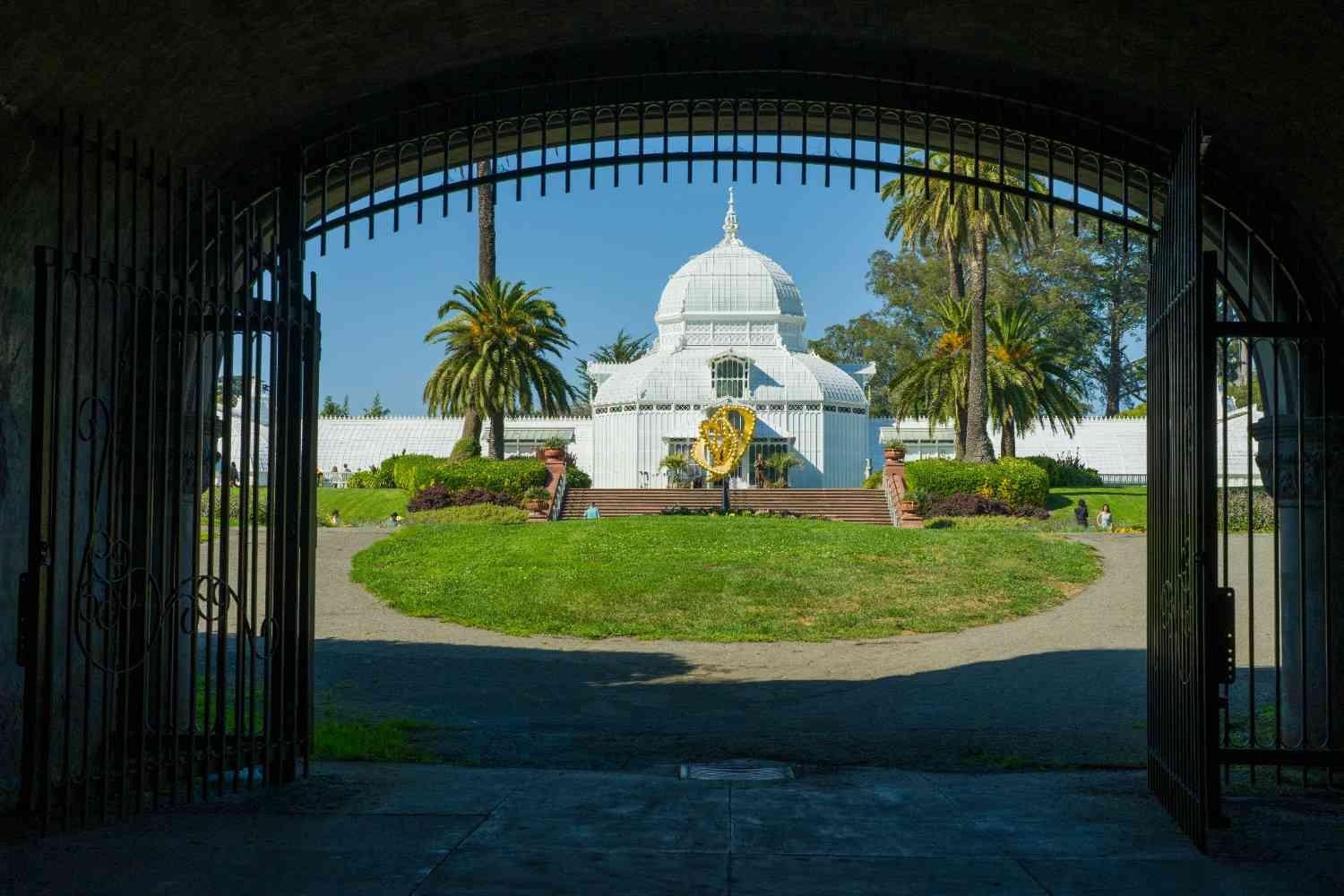
Golden Gate Park stretches 4 km across the western half of the city and is significantly larger than Central Park in New York. Built on sand dunes starting in 1870, the park now contains lakes, a working bison paddock, a Japanese tea garden, two major museums, and a botanical garden with over 7,500 plant species. It is the green backbone of San Francisco, used daily by residents across every neighborhood.
The park is divided into distinct zones. The eastern end, near the Haight, is busiest and includes the main museums and the Panhandle strip. The western end opens onto Ocean Beach and the Pacific, and is far quieter. On Sundays, the main road through the park closes to cars entirely. Rent a bike from one of the shops on Haight Street and ride through to Ocean Beach; the trip takes about 20 minutes and ends at the Pacific Ocean.
Top Things to Do
Visit the de Young Museum: One of the strongest collections of American art in the country, housed in a distinctive copper-clad building with a free observation tower offering a 360-degree view over the park and skyline. Tickets run $15 to $30; booking online is recommended.
Walk to the Bison Paddock: A herd of American bison has lived in the western section of the park since 1899. The paddock is free to visit and completely unexpected in the middle of a city of 900,000 people.
Explore the Japanese Tea Garden: The oldest public Japanese garden in the US, originally built for the 1894 California Midwinter International Exposition. Entry costs $13 for adults and is cheapest before 10 am on weekdays.
Cycle the park on Sundays: JFK Promenade closes to traffic every Sunday and becomes a wide, flat cycling corridor from the Panhandle to Ocean Beach. Bike rental shops on Stanyan Street open from 9 am.
Visit the California Academy of Sciences: A living rainforest dome, a 4-story coral reef aquarium, a planetarium, and a natural history museum under one rooftop garden. Budget half a day. Tickets run $30 to $45.
Sit at Stow Lake: A circular lake with a small island at its center, connected by two stone bridges. Rowboats and pedal boats can be rented from the boathouse. In the afternoon, the lake is quiet enough to hear the birds over the city noise.
Don’t Leave Without…
Catching a Sunday drum circle at Hippie Hill, the grassy slope near the Haight-Ashbury entrance. It runs most Sunday afternoons and has been a feature of park life since the 1960s, requiring nothing from you except showing up.
RV Practical Info
- Parking: Street parking around the park’s eastern end is competitive. The lot at Fulton and 10th Avenue is the most reliable option on weekdays.
- Cycling: Bike rental is the best way to cover the full length of the park, especially on Sundays when the main road closes.
- Campsite nearby: Rob Hill Campground sits inside the Presidio adjacent to the park, open year-round for tent and small vehicle camping, with reservations required through the Presidio Trust website.
- Scenic route: Ride from the park’s eastern entrance all the way west to Ocean Beach, then turn south along the Great Highway toward Fort Funston for coastal views above the Pacific.
Who Is It Best For?
- Families who want a full day of varied activities without covering long distances
- Cyclists looking for a flat, car-free Sunday route through the center of the city
- Museum visitors who want to combine art and natural history in one afternoon
Recommended Budget
- Museums: $15 to $45 per person, depending on the institution
- Bike rental: $30 to $50 for a half day
- Japanese Tea Garden: $13 adults, $6 children
2. Ferry Building Marketplace
The Vibe
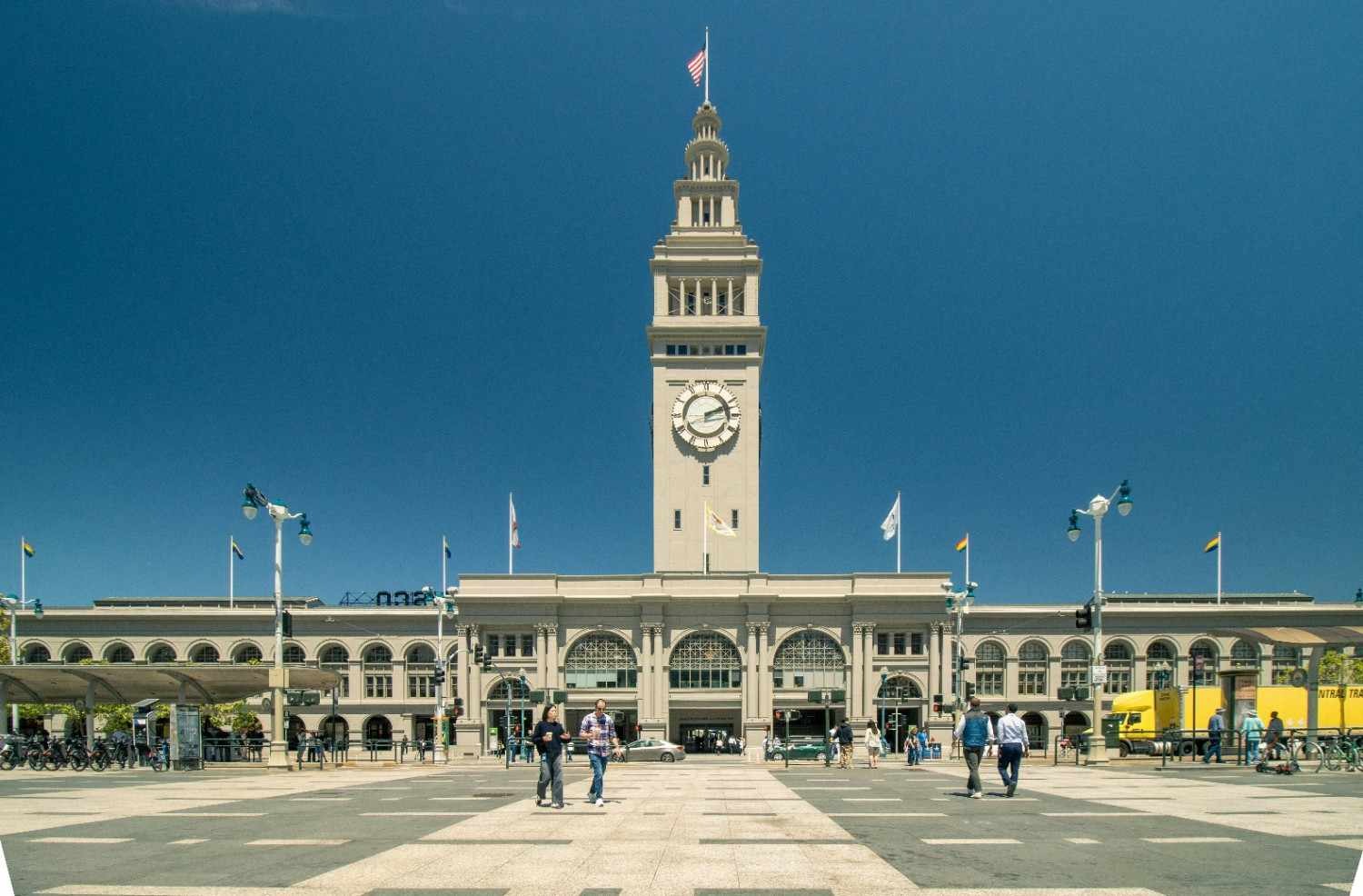
The Ferry Building sits at the foot of Market Street on the Embarcadero waterfront and functions as both a working ferry terminal and one of the best food markets in the United States. Built in 1898 and topped by a 75-metre clock tower, the building survived the 1906 earthquake largely intact and was restored in 2003 after decades of being obscured by a freeway demolished following the 1989 Loma Prieta earthquake.
Inside, a long arcade of stalls and restaurants runs the length of the building. Acme Bread, Cowgirl Creamery, Blue Bottle Coffee (which started in the Ferry Building before expanding nationally), and a rotating selection of oyster bars and specialty producers operate from fixed stalls. The Saturday farmers market is the main event, with around 100 California farms and producers selling directly to the public along the Embarcadero from 8 am to 2 pm.
Top Things to Do
Shop the Saturday farmers market: 100 producers selling directly from California farms, running 8 am to 2 pm every Saturday along the Embarcadero. Arrive before 10 am for the best selection and before the crowds build.
Eat at Cowgirl Creamery: One of the defining artisan cheese operations in California, selling its own production alongside a curated selection of California and imported cheeses. The Red Hawk washed-rind cheese is the standout.
Take the ferry to Sausalito: Ferries depart from the building every 30 to 60 minutes for the 30-minute crossing to Sausalito. The ride gives the best views of the bay, Alcatraz, and the Golden Gate Bridge from the water.
Try oysters at the Hog Island stall: Hog Island Oyster Co. farms its oysters in Tomales Bay, 90 minutes north of the city. The stall at the Ferry Building serves them raw at the counter, shucked to order.
Walk the Embarcadero north to the Bay Bridge: The waterfront promenade runs from the Ferry Building to the Bay Bridge, passing Piers 14, 7, and 1.5. The walk takes 20 minutes and offers clear views of the East Bay skyline.
Have coffee and watch the ferries: Blue Bottle’s original location inside the building is the most atmospheric of their cafes. Order a Gibraltar (espresso with a small amount of steamed milk) and watch the Sausalito and Larkspur ferries come and go.
Don’t Leave Without…
Picking up a loaf of Acme Bread’s pain de campagne on a Saturday morning, still warm from the oven, and eating it with butter and a coffee on one of the waterfront benches facing the bay. It is the simplest and one of the most satisfying things you can do in San Francisco.
RV Practical Info
- Parking: Do not drive to the Ferry Building. Street parking along the Embarcadero is timed and heavily enforced. Use the BART to Embarcadero station or take a rideshare from wherever you are parked.
- Ferry access: The terminal connects to Sausalito, Larkspur, Oakland, Alameda, and Vallejo. Bikes are allowed on most routes, opening up cycling routes in Marin County.
- Campsite nearby: Kirby Cove Campground in the Marin Headlands sits directly across the bay, bookable through Recreation.gov, with a clear view of the Golden Gate Bridge from the campsite.
- Scenic route: Take the ferry to Sausalito, rent a bike, and cycle back across the Golden Gate Bridge into the city. The crossing takes about 45 minutes and ends at the bridge’s south end with easy access back to the city.
Who Is It Best For?
- Food lovers who want direct access to California’s best producers
- First-time visitors who want an easy, walkable introduction to the waterfront
- Anyone passing through on a Saturday when the farmers’ market is running
Recommended Budget
- Farmers market shopping: $20 to $40 for breakfast and snacks
- Ferry to Sausalito: $14 each way for adults
- Oysters at Hog Island: $20 to $30 per person for a half dozen
3. Alcatraz Island
The Vibe
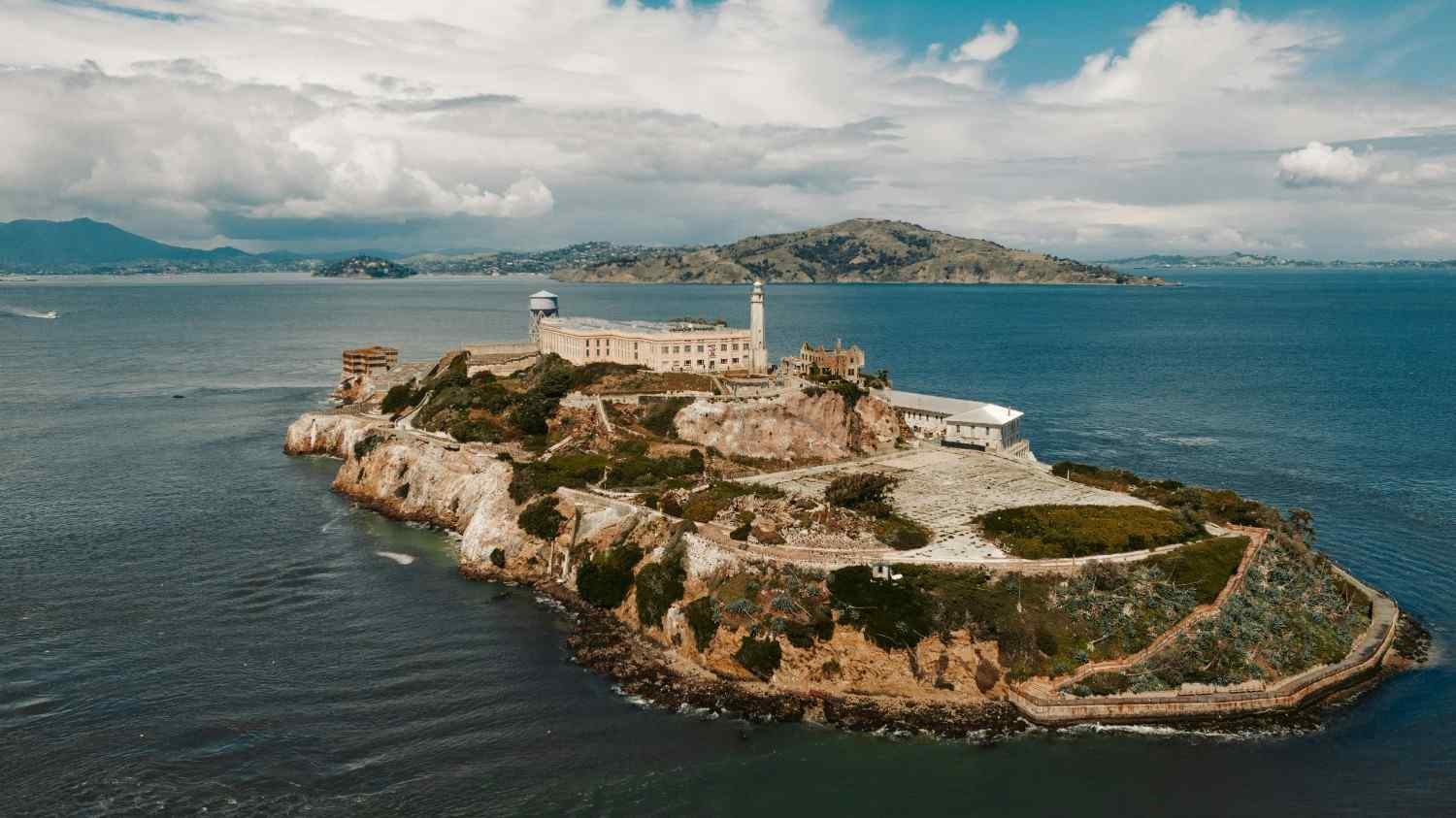
Alcatraz sits 2.4 km offshore in San Francisco Bay and operated as a federal penitentiary from 1934 to 1963. It held Al Capone, George “Machine Gun” Kelly, and Robert Stroud among its 1,576 total inmates and saw 14 documented escape attempts, none of which were confirmed successful.
The island had already served as a military fortification and military prison before its federal penitentiary era, and layers of that history are visible throughout the site.
The island was occupied by Native American activists for 19 months from 1969 to 1971 in a protest over federal land rights, and that chapter is covered in detail on the site. Today, Alcatraz is part of the Golden Gate National Recreation Area and is one of the most visited sites in California.
The cell house audio tour is the reason to come; narrated by former guards and inmates, it walks you through daily prison life in specific detail, including solitary confinement, the prison industries, and the circumstances of the 1962 escape.
Top Things to Do
Take the cell house audio tour: The 45-minute tour is included with ferry tickets and covers the daily routine, famous inmates, escape attempts, and the prison’s closure. Start at the morning count boards near the entrance.
Walk the Agave Trail: A nature trail along the island’s southern edge passes historic military ruins and gardens maintained by volunteers. In spring, the trail borders one of the largest Western gull nesting colonies on the California coast.
Attend an evening tour: Night tours run Thursday through Monday and include areas not open during the day, including the hospital ward, the morgue, and the recreation yard after dark.
Explore the ruins of the Warden’s House: The warden’s mansion burned during the Native American occupation and was never rebuilt. The shell of the building sits open to the sky at the top of the island, with clear views toward the Golden Gate Bridge and Marin Headlands.
Visit the Native American exhibition: The exhibition in the former dining hall documents the 1969 to 1971 occupation in detail, including original photographs, manifestos, and firsthand accounts from participants.
Walk the perimeter road: A road circles the lower section of the island and passes the original military guardhouse, the dock area, and the water tower. It adds 30 minutes to the visit and puts the island’s physical layout in context.
Don’t Leave Without…
Standing in the middle of the cell house for a few minutes with the audio guide paused. The cells are 1.5 metres wide and 2.7 metres long, and seeing that scale in person, rather than in photographs, is what makes the history of the place register.
RV Practical Info
- Access: Ferries depart from Pier 33 on the Embarcadero, 15 minutes walk from the Ferry Building. There is no vehicle access to the island.
- Tickets: Day tours cost $47.95 for adults; evening tours cost $59.90. Book through Alcatraz Cruises at alcatrazcruises.com.
- Book ahead: Alcatraz sells out 2 to 3 weeks in advance in summer and on weekends year-round. Mid-week visits in January through March are the easiest to secure without advance planning.
- Campsite nearby: Kirby Cove Campground in the Marin Headlands has clear views of the island from the beach at low tide.
Who Is It Best For?
- History lovers who want a well-produced, detailed account of 20th-century American criminal justice
- First-time visitors to San Francisco looking for a half-day activity that covers the bay by boat
- Families with children ages 10 and up who can engage with the audio tour format
Recommended Budget
- Day ferry and tour: $47.95 per adult, $28.95 per child (ages 5 to 11)
- Evening tour: $59.90 per adult
- Allow 2.5 to 3 hours total, including the ferry crossing
4. Lands End
The Vibe
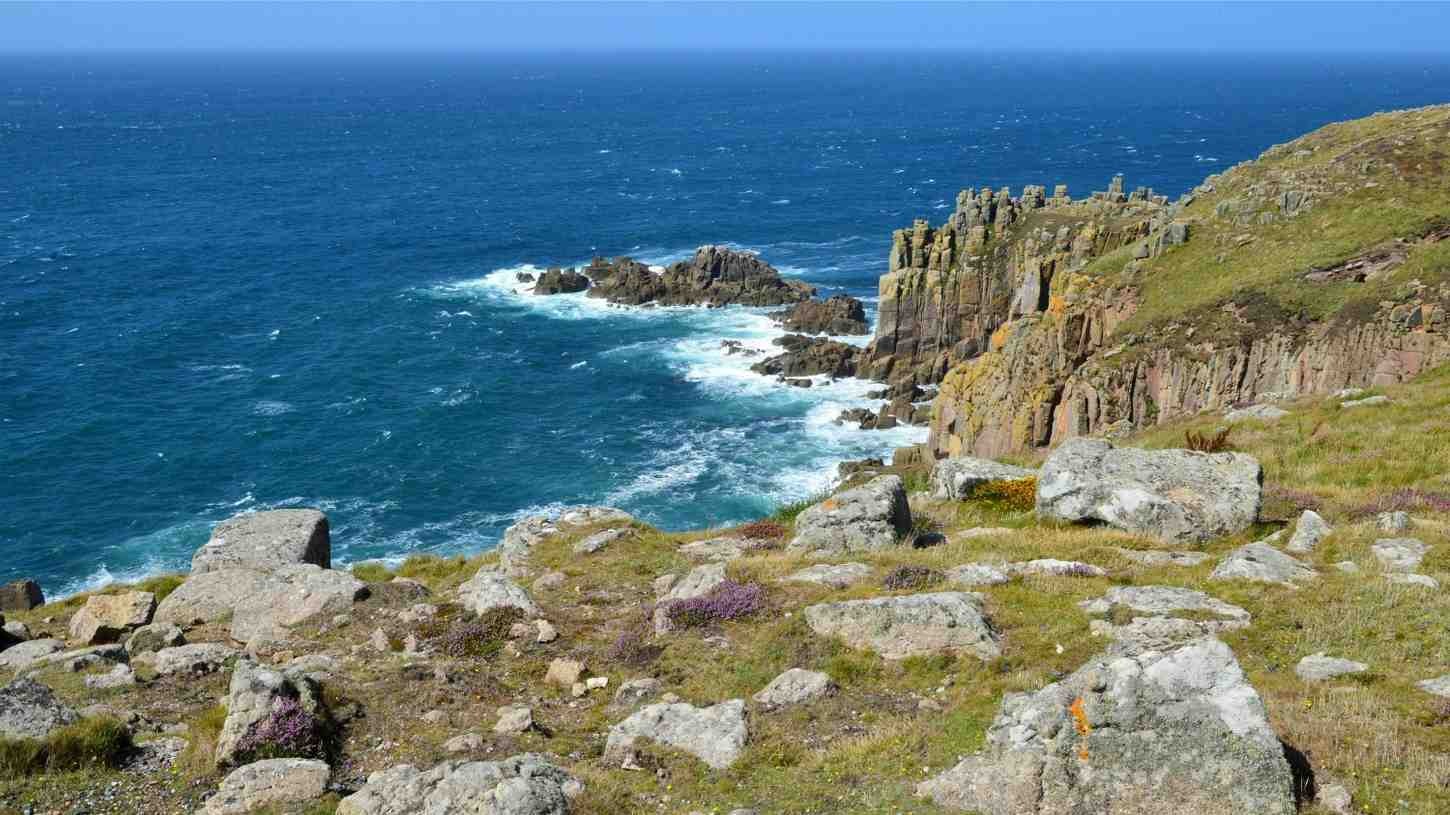
Lands End is the northwestern tip of San Francisco, where the bay meets the Pacific at a rocky, wind-exposed headland. It sits within the Golden Gate National Recreation Area and is one of the few places in the city where the urban fabric disappears completely. The trail runs through Monterey cypress trees above sea cliffs, with views across to the Marin Headlands and the open ocean simultaneously.
The area was the site of a series of shipwrecks in the 19th and early 20th centuries, and the remains of several hulls are visible at low tide from the trail. The Sutro Baths at the eastern end of the trail were built in 1896 as the world’s largest indoor swimming complex, capable of holding 10,000 bathers.
They burned in 1966, and the concrete pools that remain fill with seawater at high tide. In terms of accessible coastal walking within a major city, Lands End has very few equivalents in the US.
Top Things to Do
Walk the Lands End Trail: The main trail runs 3.7 km along the cliff edge from the Sutro Baths ruins to Eagle’s Point, then continues to the Labyrinth overlook and down to the Legion of Honor. The views take in the Marin Headlands, the Golden Gate Bridge, and the open Pacific simultaneously.
Explore the Sutro Baths ruins: The concrete remains of the 19th-century bathing complex sit at the base of the cliffs next to Merrie Way. At high tide, the pools fill with seawater. Early morning fog makes the site particularly atmospheric and significantly quieter than midday.
Find the stone labyrinth: A stone walking labyrinth sits on a rocky outcrop at Mile Rock Beach overlook, built and rebuilt by volunteers over many years. It is not signposted; follow the lower path from the main trail and look for the flat rock formation above the cliff.
Visit the Legion of Honor: The museum at the western end of Lincoln Park holds a strong collection of European decorative arts and paintings, including works by Rembrandt, Monet, and Rodin. The Thinker sits in the courtyard. Entry runs $20 for adults.
Watch for shipwreck remains: At low tide, the metal frames of ships wrecked on the rocky shoreline in the late 1800s are visible from the trail. The Parallel overlook has the clearest view. Check the SF tide chart before going, aiming for a tide of 0.5 metres or lower.
Watch the sunset from Point Lobos: The viewpoint above the Sutro Baths ruins faces directly west across the Pacific. On clear evenings, the light on the water and cliffs is at its most dramatic in the 20 minutes before and after sunset.
Don’t Leave Without…
Standing at Mile Rock Beach viewpoint and looking directly out to sea. On a clear day, there is no land between you and Japan. On a foggy afternoon, the horn of a passing container ship is the only indication that anything is out there at all.
RV Practical Info
- Parking: The Lands End Lookout visitor center parking lot on Point Lobos Avenue is the main access point. It fills quickly on weekends; arrive before 9 am or after 3 pm for the best chance of a spot.
- Weather: The headland is consistently colder and windier than downtown. Bring a wind layer regardless of the temperature in the city.
- Campsite nearby: Rob Hill Campground in the Presidio is the closest campsite to Lands End, 2 km east.
- Scenic route: Walk east from the Sutro Baths through Lincoln Park to the Legion of Honor, then loop back along the road through the park. The full circuit takes about two hours.
Who Is It Best For?
- Hikers who want coastal trail access without leaving the city
- Photographers looking for sunset views above the Pacific with the bridge in frame
- Anyone who wants a quiet, uncrowded alternative to the more visited northern waterfront
Recommended Budget
- Trail access: Free
- Legion of Honor entry: $20 adults, $6 youth (18 and under)
- Parking: Free at the Lands End Lookout lot
5. Mission District
The Vibe
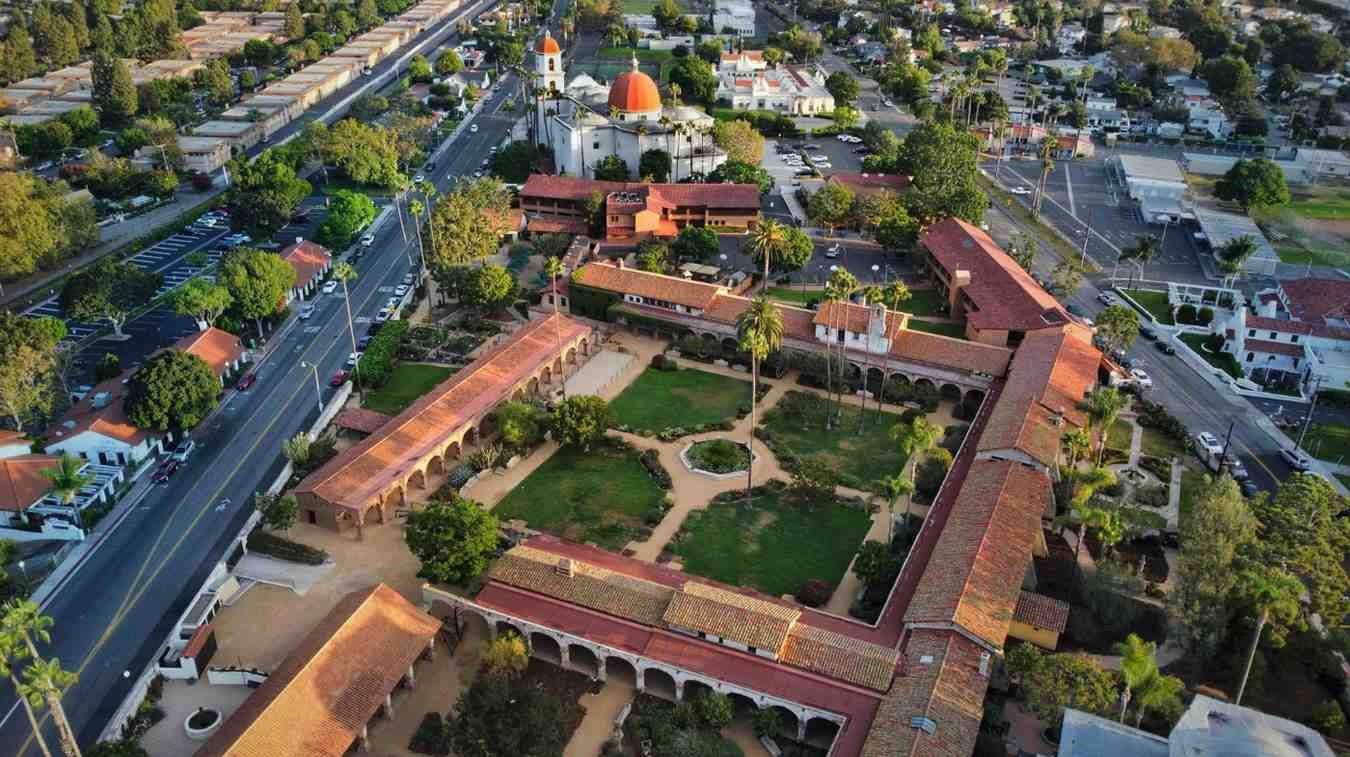
The Mission is San Francisco’s flattest, sunniest, and most culturally layered neighborhood. It has been home to successive waves of immigration, primarily Central American and Mexican communities from the 1960s onwards, and the food and visual culture they brought with them define the neighborhood’s character today. The Mission sits in a microclimate pocket sheltered from the Pacific fog, which makes it 3 to 5°C warmer than the western neighborhoods on most days.
Dolores Park is the social center of the neighborhood: a grassy hillside with views toward the downtown skyline and Bay Bridge. On warm weekends, it fills with residents from across the city in a cross-section you won’t find anywhere else. The Mission Murals, concentrated along Balmy Alley and Clarion Alley, form one of the largest outdoor mural collections in the US, covering several decades of political and community art.
Top Things to Do
Walk Balmy Alley: A narrow alley between 24th and 25th Streets lined with murals on every garage door and wall surface. The work spans from the 1970s to the present and covers Chicano history, political movements, and community life in the Mission.
Eat at La Taqueria: The winner of a James Beard America’s Classics award, La Taqueria on Mission Street serves burritos without rice, using a higher ratio of meat and beans than most Mission taquerias. The carnitas burrito is the standard order. Expect a line at lunch.
Sit at Dolores Park: The park runs along Dolores Street between 18th and 20th Streets. The upper path along the eastern edge has the best views toward downtown. Bi-Rite Creamery is one block north on 18th Street, worth the queue.
Walk Clarion Alley: Between Mission and Valencia Streets, Clarion Alley is a shorter and more frequently updated mural corridor than Balmy Alley. New pieces appear several times per year, and the content is more politically current.
Visit Mission Dolores: The oldest intact building in San Francisco, built in 1791. The Adobe Chapel has survived every earthquake that has hit the city. The adjacent cemetery holds the graves of early California settlers and was used as a filming location in Alfred Hitchcock’s Vertigo. Entry costs $7.
Eat late at El Farolito: El Farolito on 24th Street operates until 3:30 am on weekends. The quesabirria tacos, served with a cup of consommé for dipping, are the item worth ordering. The line moves quickly.
Don’t Leave Without…
Ordering a burrito at La Taqueria and eating it on the steps outside on Mission Street. The combination of a proper Mission burrito, the 24th Street foot traffic, and the particular afternoon light in the Mission is one of the most distinctly San Francisco experiences available for under $15.
RV Practical Info
- Transport: Take BART to 16th Street Mission or 24th Street Mission stations. Street parking in the Mission is competitive and not worth the time spent looking.
- Food timing: La Taqueria closes at 8 pm on weekdays and 9 pm on weekends. El Farolito runs until 3:30 am on Friday and Saturday.
- Campsite nearby: Brisbane Aquatic Center RV Park sits 15 minutes south of the Mission by highway, open year-round.
- Scenic route: Walk south from Dolores Park along Valencia Street to 24th Street, turn east to Mission Street, walk north past the murals, and return via 16th Street. The loop covers the core of the neighborhood in about two hours.
Who Is It Best For?
- Food travelers who want to eat well without spending much
- Anyone interested in street art and the political history of San Francisco’s Latino community
- Couples looking for a lively, walkable afternoon with good coffee, food, and a park
Recommended Budget
- Meals: $12 to $20 for tacos or a burrito at a Mission taqueria
- Dolores Park: Free
- Mission Dolores: $7 adults
6. Chinatown and North Beach
The Vibe
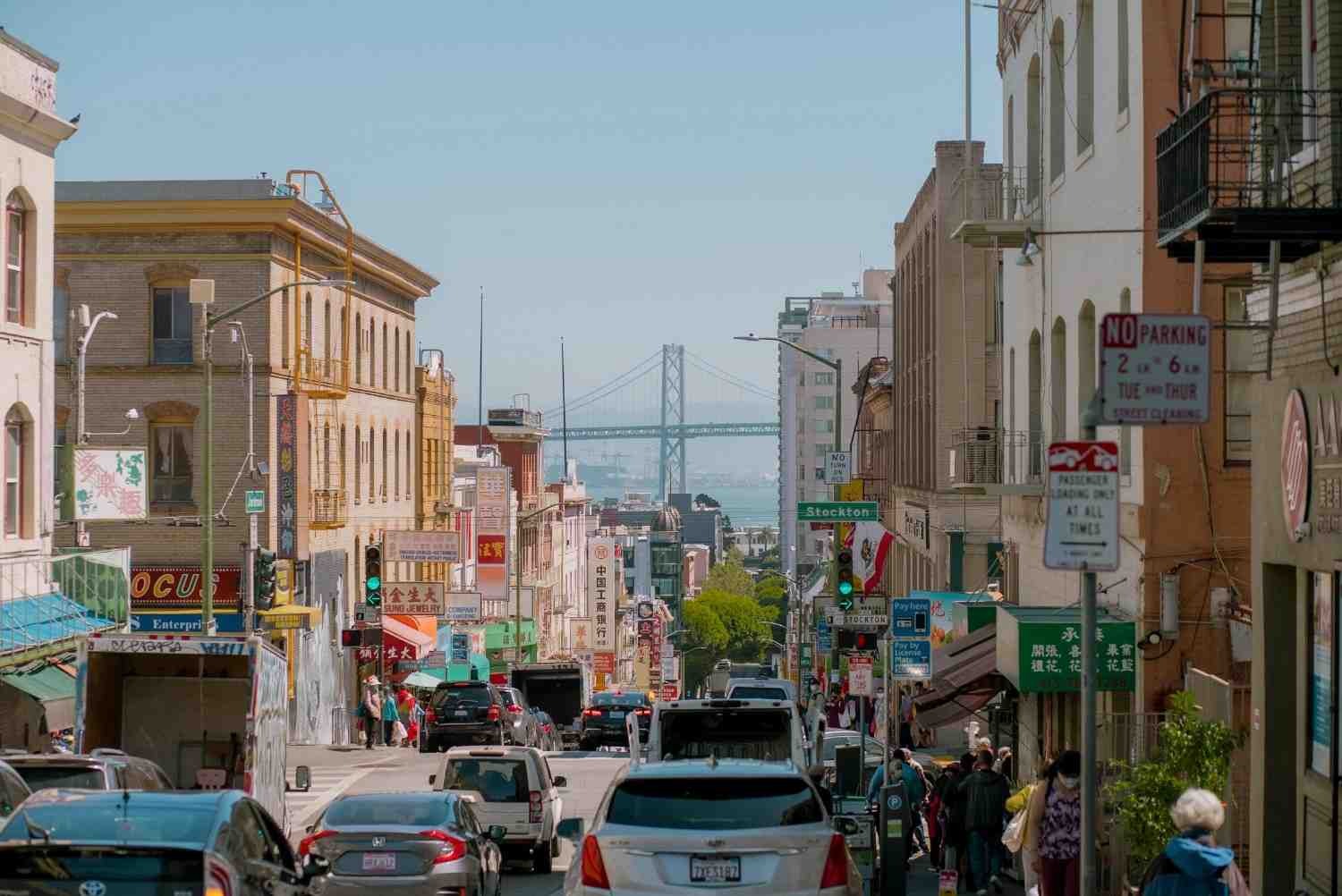
San Francisco’s Chinatown, established in 1848, is the oldest in North America and the most densely populated urban neighborhood in the US. Grant Avenue, running from Dragon Gate at Bush Street to Broadway, is the main commercial artery.
Beneath the tourist-facing shops on Grant, the neighborhood’s daily life plays out on the parallel streets: herb shops, dim sum halls, produce markets, and social clubs that have operated for generations.
North Beach sits directly north of Chinatown and was San Francisco’s Italian neighborhood before it became the birthplace of the Beat Generation in the 1950s. Lawrence Ferlinghetti opened City Lights Books on Columbus Avenue in 1953 and published Allen Ginsberg’s Howl from the back of the shop in 1956, setting off a legal obscenity trial that the bookshop won.
The two neighborhoods share a border at Broadway and work well together as a half-day walking circuit. Start with dim sum, move through Chinatown to Columbus Avenue, and end at Coit Tower for the view.
Top Things to Do
Eat dim sum in Chinatown: The best dim sum halls are on the side streets off Grant, particularly on Pacific and Sacramento. Hang Ah Tea House, claimed to be the oldest dim sum restaurant in the US, is on Pagoda Place. Go before noon for the full selection.
Browse City Lights Books: The bookshop at 261 Columbus Avenue has been independently owned since 1953 and is one of the most historically significant bookshops in the US. The basement poetry room is worth a browse. The Beat Museum is two doors east at 540 Broadway.
Climb Coit Tower: The 64-metre tower at the top of Telegraph Hill was built in 1933 and contains WPA murals depicting California life during the Depression. The elevator to the top costs $12 for adults. The 360-degree view from the observation deck takes in the bay, Alcatraz, and the bridge.
Drink at Caffè Trieste: Opened in 1956, Caffè Trieste is one of the oldest espresso bars in the US. Francis Ford Coppola reportedly wrote parts of The Godfather screenplay at a table here. The espresso is straightforward and good.
Walk the Filbert Street Steps: A series of wooden steps descends from Telegraph Hill down the eastern face to the Embarcadero. The steps pass through private gardens and underneath a wild parrot colony that has lived on the hill for over 40 years. The descent takes 15 minutes and ends at the waterfront.
Visit the Chinese Historical Society Museum: Located on Clay Street, the museum covers the history of Chinese immigration to California from the Gold Rush through the 20th century. Entry costs $10 for adults, and the collection is well-curated and not large enough to overwhelm.
Don’t Leave Without…
Getting a coffee and almond cookie from one of the Chinatown bakeries on Stockton Street in the early morning, when the neighborhood is at its most local, and the produce delivery trucks are still double-parked outside the markets.
RV Practical Info
- Access: The Vallejo Street Garage at 766 Vallejo is the most convenient parking option. BART to Montgomery Street station is the most practical transit link.
- Walking: The two neighborhoods are compact and entirely walkable. The Chinatown circuit covers about 1.5 km, and the walk from Dragon Gate to Coit Tower adds another 800 metres of mostly uphill terrain.
- Campsite nearby: Kirby Cove Campground in the Marin Headlands is 20 minutes north by car across the Golden Gate Bridge.
- Scenic route: Walk from Dragon Gate through Chinatown to Columbus Avenue, north along Columbus to City Lights, east to Coit Tower, and then down the Filbert Steps to the Embarcadero. The route ends at the waterfront, where you can catch a ferry or walk south to the Ferry Building.
Who Is It Best For?
- History and literary travelers who want to follow the Beat Generation’s geography
- Food travelers who want authentic dim sum in one of the oldest Chinese communities in the US
- First-time visitors looking for a compact, walkable half-day that covers a lot of ground
Recommended Budget
- Dim sum: $15 to $25 per person
- Coit Tower: $12 adults
- City Lights and Caffè Trieste: Free to browse and under $6 for coffee
7. Fisherman’s Wharf
The Vibe
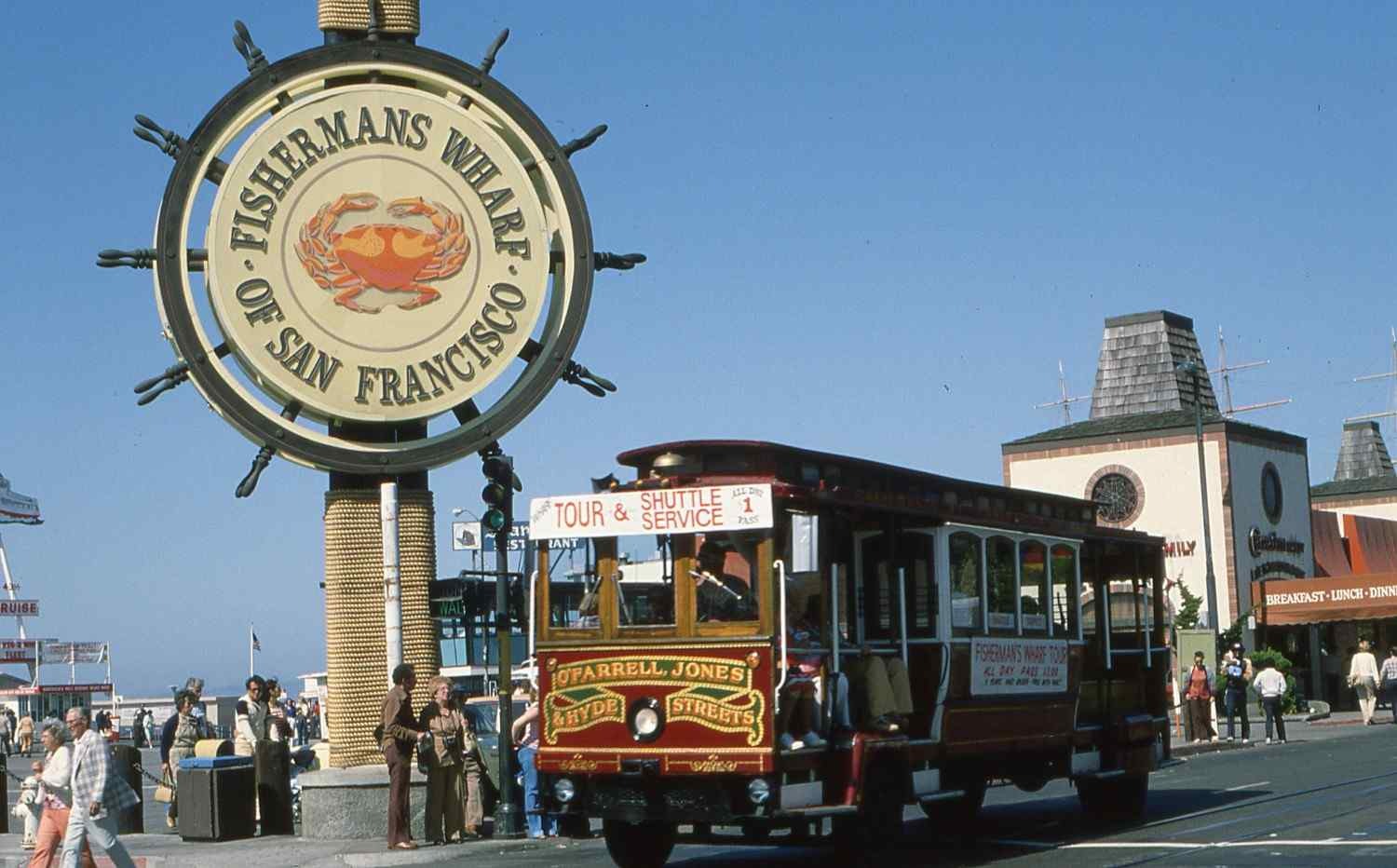
Fisherman’s Wharf is the northern waterfront district that runs from Pier 39 east to the Hyde Street cable car turnaround. It is the most tourist-focused area of San Francisco, built around a working fishing harbor that has been commercial since the 1800s.
The honest assessment: it is not where most San Franciscans spend their time, but it delivers several things genuinely worth doing, particularly the views of the bay, the sea lion colony at Pier 39, and the historic ships at Hyde Street Pier.
Approaching Fisherman’s Wharf as a set of specific stops for specific things, rather than a neighborhood to wander, is the most practical way to use the time. The clam chowder served in sourdough bread bowls from the stalls along the waterfront is a San Francisco tradition.
Boudin Bakery at Jefferson and Taylor Streets has been making sourdough in San Francisco since 1849, using the same starter culture, and the bread is genuinely good regardless of the tourist surroundings.
Top Things to Do
Watch the sea lions at Pier 39: Several hundred California sea lions took up residence on the K-Dock floating platforms at Pier 39 in 1990 and have stayed. The colony fluctuates between 300 and 900 animals depending on the season. The viewing area is free, and the sea lions are there year-round.
Visit the Hyde Street Pier: The National Park Service’s Hyde Street Pier holds six historic vessels, including the 1886 square-rigged sailing ship Balclutha, open for self-guided tours. The ships are in excellent condition and give a clear picture of the maritime trade that built San Francisco. Entry costs $15 for adults.
Eat clam chowder in sourdough: The bread bowls at Boudin Bakery on Jefferson Street are the standard version, with Dungeness crab available in season (November through June). Order at the counter inside rather than from the tourist-facing stalls for a slightly shorter wait.
Take the Powell-Hyde cable car: The cable car line from Powell and Market runs west and north to Fisherman’s Wharf and is the only cable car route to offer bay views from the car itself on the Hyde Street descent. The ride costs $8 per person each way and is worth doing once. Expect a 20 to 40-minute wait at Powell and Market.
Walk to Ghirardelli Square: The former chocolate factory at the western end of Fisherman’s Wharf has been converted into a shopping and restaurant complex. Ghirardelli still operates an ice cream shop there serving its own chocolate, and the original factory equipment is visible inside the building.
Visit the USS Pampanito: A World War II fleet submarine moored at Pier 45, open for self-guided tours. The submarine served in the Pacific theater from 1943 to 1945, sinking six Japanese vessels. The interior is remarkably intact. Entry costs $20 for adults.
Don’t Leave Without…
Standing on the end of one of the Fisherman’s Wharf piers at the edge of the bay on a clear morning, with the Golden Gate Bridge to your left, Alcatraz ahead, and the Marin Headlands behind the bridge. Whatever you think of the tourist infrastructure around it, the view from the water’s edge in this part of the city is the best available from ground level anywhere in San Francisco.
RV Practical Info
- Parking: The Anchorage Square Garage at 540 Jefferson Street is the largest option, open daily. Arrive before 10 am on weekends.
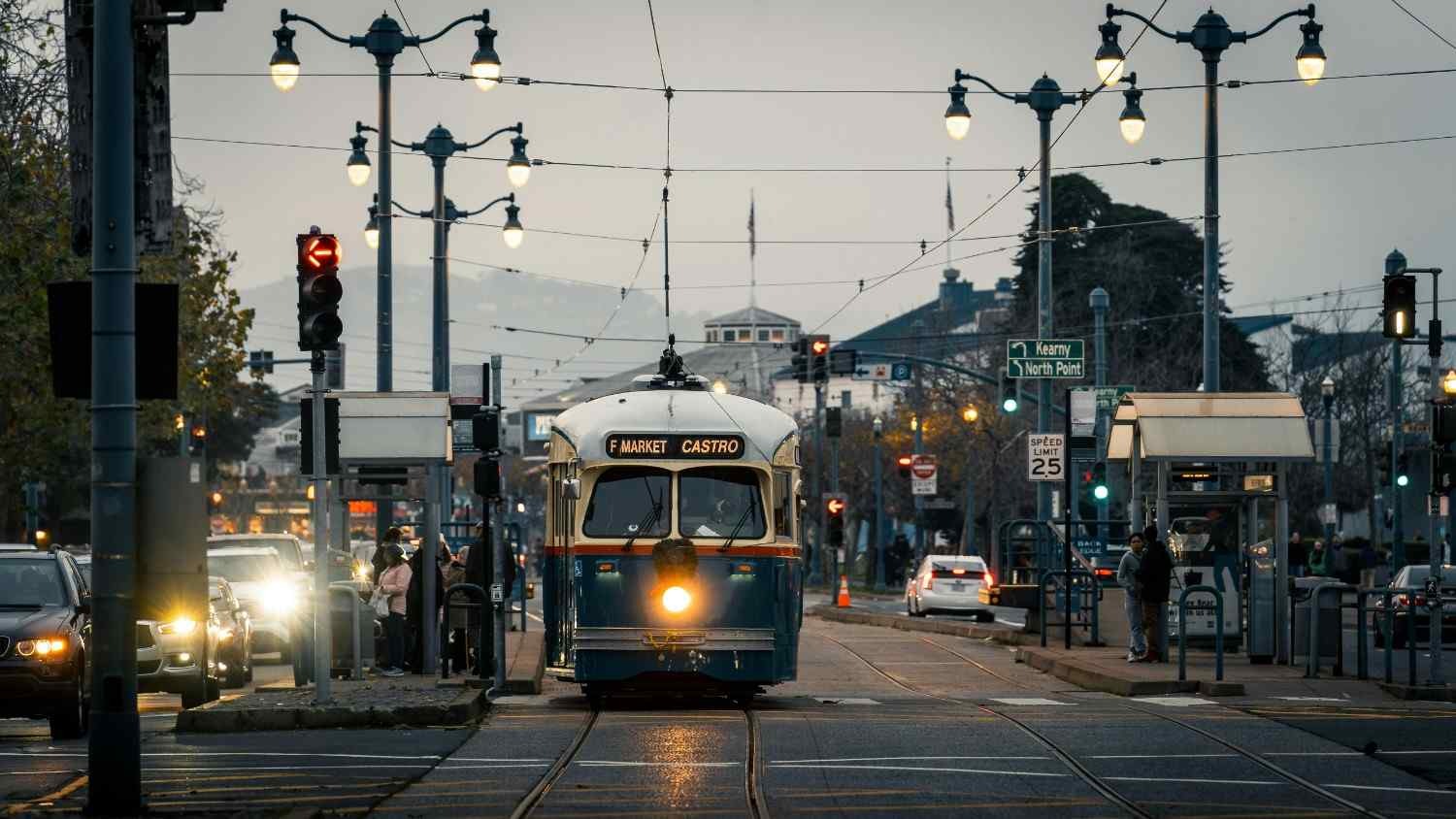
- Transport: The F-Market historic streetcar runs along the Embarcadero from Market Street to Fisherman’s Wharf. The Powell-Hyde cable car connects the Wharf to Union Square.
- Campsite nearby: Kirby Cove Campground in the Marin Headlands is the nearest campsite, with views of the Wharf and bridge from across the bay.
- Scenic route: Walk east from Fisherman’s Wharf along the Embarcadero waterfront to the Ferry Building. The 2.5 km walk passes the piers on the right and the Bay Bridge at the far end.
Who Is It Best For?
- First-time visitors who want to cover the bay view and sea lions in one area
- Families with children who respond well to the sea lion colony and submarine tour
- Anyone who wants to ride the cable car at least once during their visit
Recommended Budget
- Sea lions: Free
- Hyde Street Pier: $15 adults
- Cable car: $8 per ride
- Clam chowder: $12 to $18 per bowl
8. The Castro
The Vibe
The Castro is one of the first and most prominent LGBTQ+ neighborhoods in the world, with roots going back to the early 1970s when gay bars and community organizations began establishing themselves in what was then a working-class Irish Catholic neighborhood.
Harvey Milk, the first openly gay elected official in California, ran a camera shop on Castro Street and was elected to the city’s Board of Supervisors in 1977 before his assassination in 1978.
The neighborhood’s significance goes beyond San Francisco. The Castro became a national reference point for LGBTQ+ rights during the AIDS crisis of the 1980s and 1990s, when community organizations here developed models of activist healthcare that influenced US policy.
The NAMES Project, which created the AIDS Memorial Quilt, was founded in the Castro in 1987. Today, the Castro is a lively, confident neighborhood with good restaurants, independent shops, and a strong sense of its own history.
Top Things to Do
Visit the Castro Theatre: The 1,400-seat Art Deco movie palace at 429 Castro Street shows classic films, revival screenings, and themed double features year-round. The organist performs before evening shows. Tickets run $15 to $20.
Walk Harvey Milk Plaza and Castro Street: The plaza at the corner of Castro and Market has a large Pride flag and a plaque marking Harvey Milk’s campaign headquarters. The GLBT Historical Society Museum at 4127 18th Street covers the neighborhood’s history in depth. Entry is $5.
Browse Cliff’s Variety: On Castro Street since 1936, Cliff’s Variety sells hardware, costumes, art supplies, and a genuinely surprising range of goods in a single shop. It is one of the few shops of its type left in San Francisco.
Eat at Catch: An established Castro restaurant serving seafood and California cuisine. The brick interior and sidewalk tables on Market Street are both worth having on a clear afternoon.
Walk up to Corona Heights Park: A rocky outcrop above the Castro with a summit that gives 360-degree views over the city, the bay, and Twin Peaks. The climb takes 10 minutes from the park entrance on Museum Way.
See a late-night showing at the Castro Theatre: The theater frequently programs midnight screenings of cult films and classic horror. These screenings attract a strongly participatory audience and are a different experience from the daytime revivals.
Don’t Leave Without…
Catching a live organ performance at the Castro Theatre before an evening screening. The Wurlitzer rises hydraulically from the stage, the organist plays for 15 minutes, and the audience is warm toward the tradition. It is one of the few remaining examples of this format still operating in the US.
RV Practical Info
- Transport: Take the Muni Metro K, L, or M lines to Castro Station or the F-Market streetcar along Market Street. Street parking is available on side streets off Castro, but disappears quickly on evenings and weekends.
- Walking distance: The Castro is 15 minutes on foot from Dolores Park in the Mission and 20 minutes from Haight-Ashbury, making a connected afternoon circuit practical.
- Campsite nearby: Brisbane Aquatic Center RV Park is the most practical option, 15 minutes south by highway.
- Scenic route: Walk from the Castro along 18th Street through Dolores Park to the Mission, continuing east to the BART station at 16th and Mission. The walk takes 30 minutes and passes through three distinct neighborhoods.
Who Is It Best For?
- History travelers interested in LGBTQ+ civil rights and political history
- Movie lovers who want to see a classic film in one of the best-preserved Art Deco theaters in the US
- Anyone exploring the Mission and Haight-Ashbury who wants to extend the walk into a third neighborhood
Recommended Budget
- Castro Theatre: $15 to $20 per ticket
- GLBT Historical Society Museum: $5 adults
- Meals: $20 to $40 at Castro restaurants
9. Haight-Ashbury
The Vibe
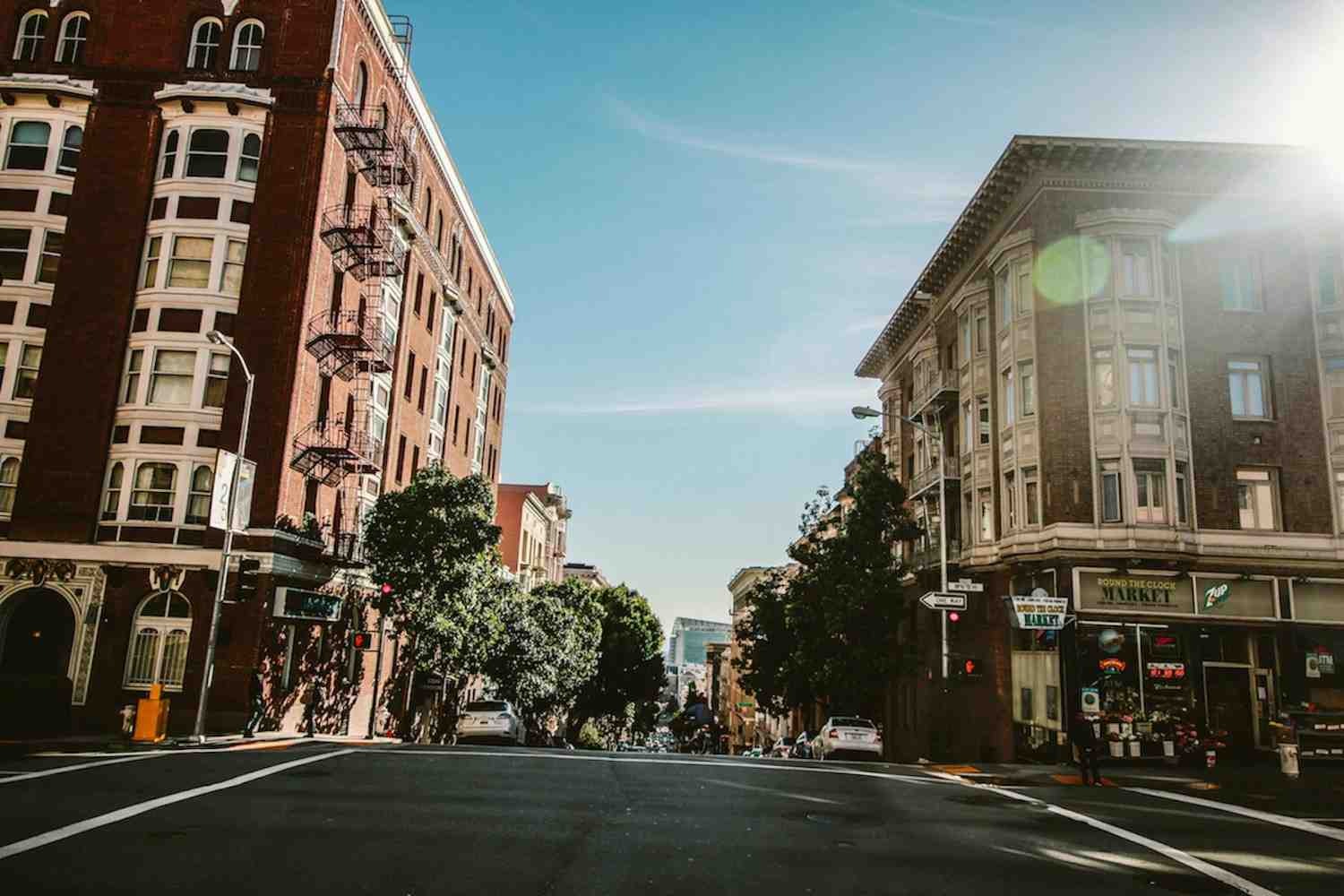
Haight-Ashbury sits at the eastern edge of Golden Gate Park and is the neighborhood most associated with the 1960s counterculture.
The intersection of Haight and Ashbury Streets was the center of the Summer of Love in 1967, when an estimated 100,000 young people gathered in San Francisco over several months, making the neighborhood a national focal point for the anti-war movement, experimental music, and communal living.
The Victorian row houses on Haight, Ashbury, and the surrounding blocks are some of the best-preserved in San Francisco. The famous Painted Ladies, a row of vividly painted Victorian houses at Steiner and Hayes Streets in the adjacent Alamo Square neighborhood, are visible from a park bench across the grass and are best photographed at sunrise before the tour groups arrive.
The neighborhood’s vintage clothing and record stores attract their own crowd, independent of the historical tourism. Amoeba Music, a block-long independent record store at Haight and Stanyan, is one of the largest independent music shops remaining in the US.
Top Things to Do
Browse Amoeba Music: The San Francisco location of Amoeba is the largest of the chain’s three stores, with an inventory covering vinyl, CDs, cassettes, and memorabilia across multiple rooms. The used section is deep and well-organized; staff picks are generally reliable.
Visit the Painted Ladies at Alamo Square: The painted Victorian houses at Steiner and Hayes are best photographed from the park bench row facing north toward the houses, with the downtown skyline rising behind them. Arrive before 9 am to avoid the tour groups.
Walk Haight Street from the park to Divisadero: The commercial strip between Stanyan and Divisadero passes through the heart of the neighborhood. The independent shops include vintage clothing (Wasteland at Haight and Masonic is the largest), bookshops, and independent cafés.
Find 710 Ashbury: The Grateful Dead’s communal house from 1966 to 1968 is a private residence on Ashbury Street marked by a small plaque. Janis Joplin’s house at 635 Ashbury is one block south.
Eat at Magnolia Brewing: A brewpub at Haight and Masonic serving California ales brewed on-site alongside a solid pub food menu. The farmhouse saison is the best beer on tap. The interior is a restored Victorian commercial building with original details intact.
Walk through Buena Vista Park: A steep, wooded park on the southern edge of Haight-Ashbury with summit views over the city and bay. The park is largely undeveloped and frequented mostly by local dog walkers. The climb takes 10 minutes.
Don’t Leave Without…
Standing at the corner of Haight and Ashbury Streets and acknowledging that, whatever you think of the mythology around it, one summer in this neighborhood genuinely changed the direction of American music, fashion, and politics. The corner is busier with foot traffic than most people expect, and the street signs are the most stolen in San Francisco.
RV Practical Info
- Parking: Street parking on Haight Street is heavily restricted. The Golden Gate Park underground garage on Fulton Street, at the north end of the park, is 10 minutes on foot from Amoeba.
- Combination with Golden Gate Park: Haight-Ashbury sits directly adjacent to the park’s eastern entrance. A morning in the park followed by an afternoon on Haight Street makes a natural full-day circuit.
- Campsite nearby: Rob Hill Campground in the Presidio is the nearest campsite, accessible in 15 minutes by car through the Presidio.
- Scenic route: Walk from Amoeba west along Haight Street into Golden Gate Park, cut through to the Panhandle, and return along Oak Street back to the Haight. The loop takes about 90 minutes, including the park section.
Who Is It Best For?
- Music and record collectors who want access to one of the best independent record stores in the US
- History travelers interested in the 1960s counterculture and its geography
- Photographers looking for Victorian architecture without the Painted Ladies tourist crowd
Recommended Budget
- Amoeba Music: Free to browse; budget varies by purchases
- Painted Ladies: Free
- Meals: $18 to $30 at Haight Street restaurants and brewpubs
10. Twin Peaks
The Vibe
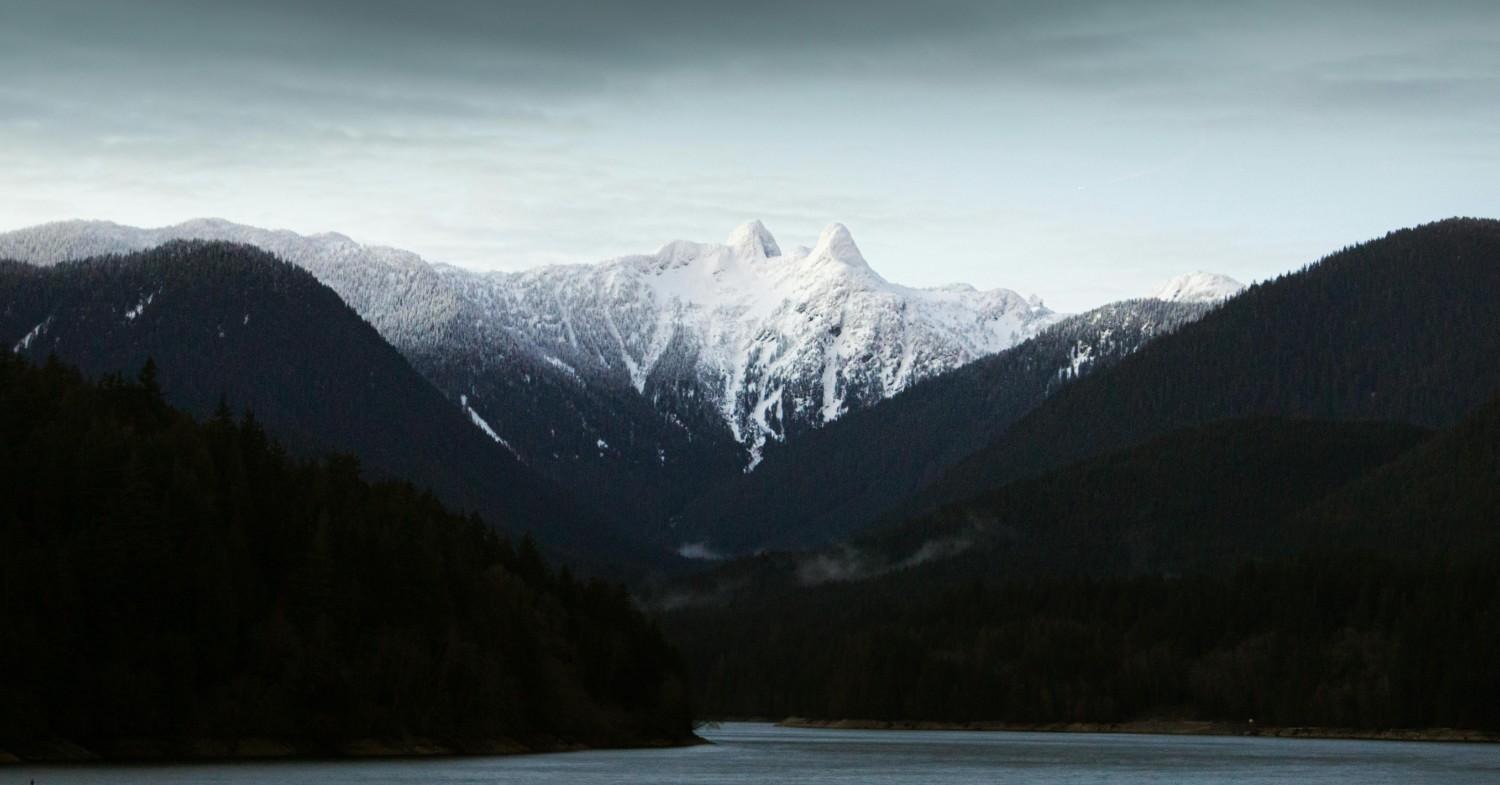
Twin Peaks is a pair of hills rising 282 metres above the center of San Francisco, connected by a road that loops between the two summits. The area is largely undeveloped parkland within the city limits, with a viewpoint at the north summit that gives a 360-degree panorama of San Francisco, the bay, and the surrounding geography. No other accessible point in the city matches it.
The hills sit in the geographic center of San Francisco, which makes the panorama comprehensive in a way that viewpoints from the city’s edges are not. From Twin Peaks on a clear day, you can see the Golden Gate Bridge, Alcatraz, the Bay Bridge, the downtown skyline, the Mission District below, the Marin Headlands, Mount Tamalpais, and the Pacific Ocean simultaneously.
On foggy days, the city disappears below a white layer, and the peaks become an island above the clouds.
The best visits are early morning, before the tour buses arrive at around 10 am, or at sunset, when the light on the bay and skyline is at its most photogenic. It is cold and windy at the summits year-round; a fleece and wind layer are not optional.
Top Things to Do
Watch sunrise from Christmas Tree Point: The paved viewpoint at the north summit is the main viewing platform. Arrive before 7 am to have the platform to yourself and catch the light on the bay turning from grey to gold. Tour buses begin arriving around 10 am.
Walk the summit loop: A paved trail connects the two summits in about 20 minutes of walking. The southern summit (Eureka Peak) is slightly higher and has fewer visitors. The trail surface is good but wind-exposed.
Watch the fog roll in: In summer, afternoon fog moves in from the Pacific across the Sunset District and sometimes stops just below the Twin Peaks summits, filling the western half of the city with cloud while the eastern neighborhoods stay clear. Watching it move across the city from above is one of the most distinctly San Francisco natural phenomena.
Drive the loop road at night: The road around the two summits stays open until midnight. At night, the city lights spread in every direction, and the Bay Bridge’s light display is visible from the eastern viewpoint. The parking area at Christmas Tree Point is the best night vantage point.
Look for the city grid from above: San Francisco’s street grid, which follows the compass in most neighborhoods but shifts at odd angles in others, is most clearly understood from above. The diagonal of Market Street, the curves of the Embarcadero, and the flat grid of the Mission all become legible from Twin Peaks in a way they are not at street level.
Walk down to the Corona Heights outcrop: The rocky promontory of Corona Heights Park sits below and north of Twin Peaks and is accessible by trail. The small plateau at the top gives a different perspective on the Castro and upper Market Street neighborhoods below.
Don’t Leave Without…
Staying until after the sun drops below the horizon on a clear evening. The 15 minutes of afterglow, when the sky turns deep blue, and the city lights come on below you, is the best time Twin Peaks offers to photographers and to anyone who wants a view of San Francisco that does not involve a postcard framing or a tourist crowd.
RV Practical Info
- Driving access: Twin Peaks Boulevard is open to private vehicles and has a parking lot at Christmas Tree Point on the north summit. An RV or large vehicle should use the pull-in area at the base rather than attempting the summit loop road.
- Transit: The 37-Corbett bus runs from the Castro to Twin Peaks. The ride takes 10 minutes.
- Time to allow: 45 minutes to one hour for the viewpoint and summit walk. Add 30 minutes for the walk down to Corona Heights.
- Campsite nearby: Brisbane Aquatic Center RV Park is 20 minutes south; Rob Hill Campground in the Presidio is 20 minutes northwest.
Who Is It Best For?
- Photographers who want the city-wide panoramic view at sunrise or sunset
- Anyone visiting for the first time who wants to understand San Francisco’s geography before exploring at street level
- Evening visitors looking for a free, low-effort view that competes with any paid observation deck in the city
Recommended Budget
- Twin Peaks viewpoint: Free
- Parking: Free at Christmas Tree Point lot
- Time investment: 45 minutes to one hour for a full visit
What Should You Pack for an SF Road Trip
San Francisco’s weather varies considerably within the city itself, and the surrounding region adds further range. The coast at Half Moon Bay can sit at 12°C while Napa Valley, 90 minutes away, reaches 32°C on the same afternoon in September. Pack for both.
| Category | Items | Why You Need It |
| Clothing | Wind layer, mid-weight fleece, waterproof shell, light t-shirts for inland days, comfortable walking shoes with grip | SF microclimates shift fast; Lands End and Twin Peaks are cold year-round; cobblestones on the Embarcadero are slippery after fog |
| RV Essentials | California FasTrak transponder, Bay Area Clipper card, national parks annual pass ($80), paper Bay Area road atlas | FasTrak covers Bay Bridge and Golden Gate tolls; Clipper card works on BART, Muni, and ferries; cell coverage is patchy in Point Reyes |
| Hiking Gear | Daypack with 2L water capacity, sun protection for inland valleys, warm hat for Twin Peaks, and Lands End | Point Reyes trails run long and exposed; Muir Woods is always cool under the canopy |
| Food and Budget | Grocery stock for RV cooking, cash for farmers’ markets, and dim sum halls | SF restaurant prices rank among the highest in the US; cooking in your RV covers most daily meal costs |
Expert Tips for Visiting San Francisco
1. Go west for the real weather. The neighborhoods on the western side of the city (Sunset, Richmond, Outer Mission) sit in the direct path of Pacific fog and run 5 to 8°C cooler than the Mission and Castro.
If warmth is the priority, plan mornings in the western neighborhoods and afternoons in the eastern ones when the fog has usually cleared.
2. Use BART and Muni for the inner city, and your RV for everything beyond it. BART connects the city to Oakland, Berkeley, and San Jose. Muni covers the city itself, including the cable cars and historic streetcars on the F-Market line.
Driving an RV into the Mission, Chinatown, or Fisherman’s Wharf is a poor use of time. Park near a BART station on the city’s edge and use transit for the day.
3. Book Alcatraz and Muir Woods well ahead. Alcatraz sells out 2 to 3 weeks in advance during summer and on weekends year-round. Muir Woods requires a timed parking or shuttle reservation that also fills quickly from April through October. If these are priorities, sort the reservations before finalizing the rest of your itinerary.
4. The Saturday farmers market at the Ferry Building is worth reorganizing your schedule for. The market runs from 8 am to 2 pm and is at its best between 8 and 10 am. If you are in San Francisco on a Saturday, plan to be at the Ferry Building when it opens.
It is a better representation of Bay Area food culture than any single restaurant in the city.
5. Napa and Point Reyes reward a full day each. Both destinations are commonly treated as quick day trips, but contain more than a single day covers well. Napa has enough tasting rooms, towns, and food stops for two days of unhurried exploration.
Point Reyes covers 71,000 acres, and the lighthouse alone is a 25-minute walk each way from the parking area. An RV makes overnighting at either location practical and inexpensive compared to local accommodations.
6. Fog is most reliable in summer, least reliable in autumn. September and October offer the most consistent, clear weather in San Francisco, with afternoon temperatures reaching 20 to 22°C. Visiting in July or August brings the famous fog, which blankets the western neighborhoods from early morning and often returns by late afternoon. If clear skies matter, plan for autumn.
7. The FasTrak transponder is not optional. The Golden Gate Bridge no longer accepts cash tolls. The Bay Bridge is electronic-only going west to east. If your RV rental does not include an active FasTrak device, arrange one before crossing either bridge, as fines for missed tolls arrive by mail weeks after the trip.
8. Morning is the best time for the popular viewpoints. Twin Peaks, Lands End, the Painted Ladies, and the Marin Headlands viewpoint across the Golden Gate Bridge all see their heaviest visitor traffic between 10 am and 3 pm. Arriving at any of these before 9 am gives you the view without the crowd, better light for photography, and parking without the wait.
Plan Your San Francisco Trip with Indie Campers
Planning a California road trip used to mean dealing with scattered local operators, opaque pricing, and rental terms that locked you into a single pick-up and drop-off point. Indie Campers consolidates all of that into one platform — a broad fleet, transparent pricing, flexible terms, and 24/7 support on the road — so you can focus on the trip instead of the logistics. You get to:
Choose from 7,000+ vehicles, including unlimited mileage on the owned fleet: A compact campervan works well for two people covering the Marin Headlands and Point Reyes. A larger motorhome suits families tackling Napa, the Santa Cruz coast, and the redwoods over a full week. All owned-fleet vehicles include unlimited mileage, which matters on a route like the Pacific Coast Highway to Los Angeles.
Pick up in San Francisco, drop off somewhere else entirely: With one-way RV rental in the USA available from 70+ locations, you can drive Highway 1 south to Los Angeles or head north through the Avenue of the Giants toward Portland, without retracing a single kilometre.
Book now, pay at pick-up, cancel if plans change: Full payment is only due 30 days before your pick-up date, and flexible cancellation is available up to 31 days before pick-up. If something comes up, you are not locked in.
24/7 support if you need it on the road: Whether it is a vehicle question on the Marin headlands or a last-minute route change, support is available around the clock through the Indie Campers app.
Find your San Francisco campervan.
Everything You Need to Know About Where to Go in San Francisco
| Place | Area | Best For | Top Thing to Do | Cost/Day | Top Campground | RV-Friendly | Wild Camping? | Best Stay |
| Golden Gate Park | Inner Sunset | Nature and culture | de Young Museum, cycling | Free to $35 | Rob Hill Campground | Nearby | No | Indie Campers |
| Ferry Building | Embarcadero | Food lovers | Saturday farmers market | Free | Kirby Cove Campground | Nearby | No | Indie Campers |
| Alcatraz | San Francisco Bay | History | Cell house audio tour | $47.95 | Kirby Cove Campground | Boat only | No | Indie Campers |
| Lands End | Outer Richmond | Hikers | Sutro Baths, cliff trail | Free | Rob Hill Campground | Nearby | No | Indie Campers |
| Mission District | The Mission | Food and murals | Taquerías, Balmy Alley | Free | Brisbane RV Park | Nearby | No | Indie Campers |
| Chinatown and North Beach | Downtown | History and culture | City Lights, dim sum, Coit Tower | Free to $12 | Kirby Cove Campground | Nearby | No | Indie Campers |
| Fisherman’s Wharf | Northern waterfront | First-timers | Sea lions, Hyde Street Pier | Free to $20 | Kirby Cove Campground | Nearby | No | Indie Campers |
| The Castro | Castro | LGBTQ+ history | Castro Theatre, Milk Plaza | $5 to $20 | Brisbane RV Park | Nearby | No | Indie Campers |
| Haight-Ashbury | Upper Haight | Music and history | Amoeba Music, Painted Ladies | Free | Rob Hill Campground | Nearby | No | Indie Campers |
| Twin Peaks | Central SF | Views | Sunrise panorama, summit walk | Free | Rob Hill Campground | Summit Road only | No | Indie Campers |
FAQs About Where to Go in San Francisco
What are the best places to visit in San Francisco?
The best places to visit in San Francisco are Golden Gate Park, Alcatraz Island, the Ferry Building Marketplace, Lands End, and the Mission District. Together, these cover the city’s natural scenery, maritime history, food culture, and most distinctive neighborhoods in a logical geographic sequence.
For first-timers, the Ferry Building, Mission District, and Lands End coastal trail form a strong introduction to what makes San Francisco different from other US cities.
What is the best time of year to visit San Francisco?
The best time of year to visit San Francisco is September and October, when average temperatures reach 18 to 22°C and skies are consistently clear. Summer (June through August) is famously foggy, with morning and afternoon fog banks covering the western half of the city most days.
December through February brings the rainy season with average rainfall of 100 to 130 mm per month, though temperatures stay mild at 10 to 14°C.
How many days do you need in San Francisco?
Five to seven days gives enough time to cover the main city neighborhoods and one or two day trips to the surrounding area. Three days is the minimum for the city itself, covering the waterfront, a major neighborhood or two, and Alcatraz.
Add two to three days for Muir Woods, Point Reyes, or a drive down the Pacific Coast Highway to Half Moon Bay and Santa Cruz.
What is San Francisco best known for?
San Francisco is best known for the Golden Gate Bridge, the cable cars, Alcatraz, the Painted Ladies Victorian houses, and its role as the center of the 1960s counterculture and the 1970s LGBTQ+ rights movement.
The city also has a national reputation for its food scene, particularly the Ferry Building farmers market, its Mission District taquerias, and its concentration of Michelin-starred restaurants per capita.
Is San Francisco worth visiting in 2026?
San Francisco is worth visiting in 2026. The city’s natural setting, food culture, and surrounding national park access remain strong reasons to visit regardless of conditions in the downtown core.
The neighborhoods (the Mission, North Beach, the Castro, the Richmond) are lively, walkable, and offer the best version of the city away from the tourist-heavy waterfront. September and October are the best months for weather and for crowd levels that fall well below summer peaks.
What are the best day trips from San Francisco?
The best day trips from San Francisco are Muir Woods (19 km north), Point Reyes National Seashore (48 km north), Napa Valley (90 km northeast), and Half Moon Bay (48 km south on Highway 1).
Muir Woods requires a timed entry reservation booked through Recreation.gov. The Pacific Coast Highway south to Half Moon Bay and Santa Cruz is one of the finest coastal drives in California and takes 90 minutes to three hours, depending on stops.
Is San Francisco expensive?
San Francisco is one of the most expensive cities in the US. A mid-range restaurant dinner for two averages $80 to $120 without wine, hotel rooms in central neighborhoods average $250 to $400 per night in September and October, and parking in the city center can cost $40 to $60 per day.
An RV rental significantly reduces accommodation costs, particularly when camping at Marin Headlands or other sites within 30 minutes of the city, where nightly campsite fees run $35 to $55.
What is the best place to visit in San Francisco for couples?
The best place to visit in San Francisco for couples is Lands End at sunset, when the coastal trail above the Sutro Baths ruins offers cliff views with the Golden Gate Bridge in frame and a few other visitors around.
For an evening, North Beach combines Caffè Trieste’s 1950s espresso bar atmosphere with dinner along Columbus Avenue, followed by a film at the Castro Theatre.
What is the best place to visit in San Francisco with family?
The best place in San Francisco for families is Golden Gate Park, which covers a half-day with the California Academy of Sciences, the de Young Museum observation tower, the bison paddock, and the Japanese Tea Garden across a short walking circuit.
Families with older children (10 and up) should add Alcatraz, booking ferry tickets at least two weeks ahead.
What is the best place to visit in San Francisco with kids?
The best place in San Francisco with kids is Fisherman’s Wharf for the sea lion colony at Pier 39 (free), combined with the California Academy of Sciences in Golden Gate Park (tickets $25 for children).
The Academy combines a living rainforest dome, a coral reef aquarium, and a planetarium under one roof and holds younger children’s attention well for three to four hours.
What is the best place to visit in San Francisco with friends?
The best place in San Francisco with friends is the Mission District, where moving between taquerias and bars on 24th Street suits group travel well.
A circuit from Dolores Park in the afternoon to Balmy Alley for the murals and then La Taqueria or El Farolito for food covers the neighborhood’s highlights in an evening and accommodates groups with different interests.
What are the best places to visit in San Francisco for first-timers?
The best places to visit in San Francisco for first-timers are the Ferry Building, the Mission District, Alcatraz, and Lands End. These four cover the city’s food culture, neighborhood character, history, and coastal scenery without requiring a car.
Add the Castro Theatre for an evening and Twin Peaks for a sunrise or sunset view to complete a strong first-time itinerary across four or five days.
What are the best places to visit in San Francisco for solo travellers?
The best places in San Francisco for solo travellers are the Ferry Building (easy to navigate at your own pace, with the Saturday market providing a natural social environment) and the Mission District (a neighborhood where solo dining, café work, and walking feel entirely normal).
North Beach’s City Lights Books and Caffè Trieste have attracted solo visitors since the 1950s and remain welcoming spaces for spending a morning alone.
What are the best places to visit in San Francisco for food?
The best places in San Francisco for food are the Mission District (taquerias, bakeries, coffee), the Ferry Building (farmers market, artisan producers, Hog Island oysters), the Inner Richmond (Cantonese dim sum, Vietnamese pho, Burmese restaurants), and Hayes Valley (contemporary California cuisine, wine bars).
San Francisco has the highest concentration of Michelin-starred restaurants per capita of any US city outside New York. For the most value, a Mission burrito at La Taqueria ($12 to $14) and a passionfruit tartlet from Tartine Bakery ($6) cover two of the most distinctive food experiences the city offers.