The southern lights don’t follow a schedule. They don’t care about your hotel check-in time, your campsite booking, or your alarm clock. They show up , often with less than an hour’s notice, and they disappear just as fast. That’s exactly why a campervan is the best possible base for chasing the Aurora Australis.
No curfews. No minimum booking nights. No racing back from a remote headland because reception closes at 10pm. You park somewhere dark, keep one eye on the app, and when the sky lights up, you’re already there.This guide covers the best aurora-chasing spots across both New Zealand and Australia, the apps and tools you actually need, and everything you should know before you hit the road with your eyes on the southern sky.
Why the aurora australis is having a moment right now
The sun runs on an 11-year cycle, and right now, through 2025 and into 2026, we’re at or near solar maximum. That means more solar flares, more geomagnetic storms, and more opportunities to see the southern lights at latitudes that would normally miss out entirely.
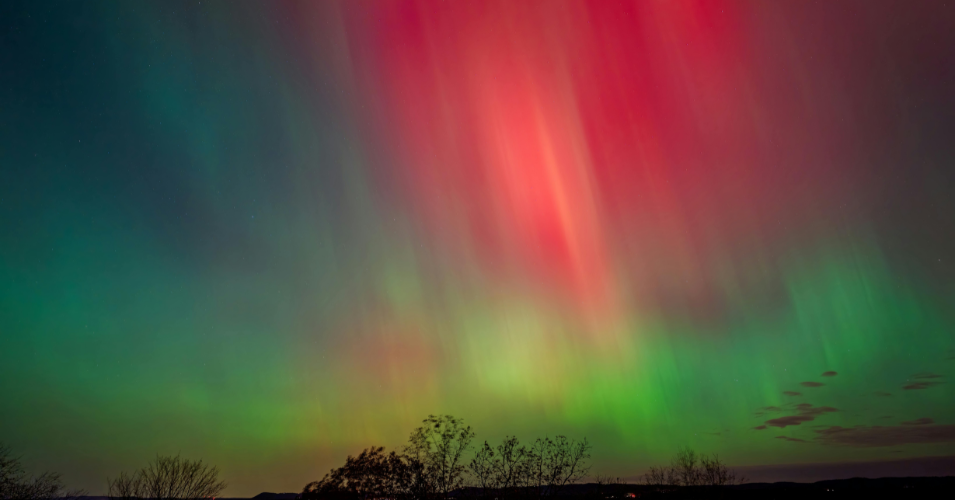
In May 2024, a G5 geomagnetic storm, the most powerful in over 20 years, lit up skies across southern Australia and New Zealand in shades of green, pink and violet. People in Melbourne, Adelaide, and even parts of Sydney saw the aurora with their naked eye. Since then, significant displays have become far more frequent.
💡 Key fact: Aurora activity is expected to remain elevated through 2025–2026 before gradually declining. If you’ve been thinking about an aurora road trip, the window is now.
New Zealand: the best aurora-chasing destinations
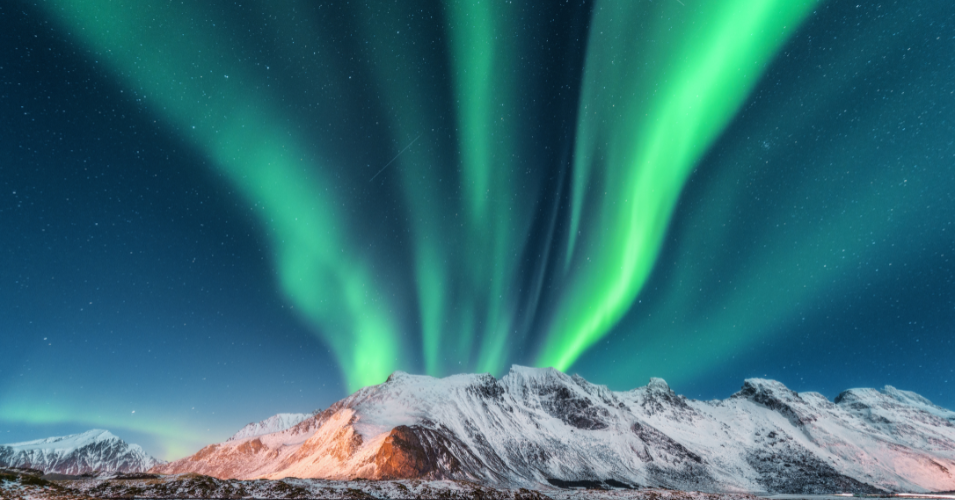
New Zealand sits in one of the best positions on Earth for aurora viewing from landmass. Less light pollution than Australia, a southerly latitude, and an open horizon toward Antarctica make the South Island in particular a world-class destination for southern lights chasers.
Lake Tekapo, Canterbury
Lake Tekapo sits inside the Aoraki Mackenzie International Dark Sky Reserve, one of the largest dark sky reserves in the world. Its high altitude, minimal light pollution and wide open southern horizon make it arguably New Zealand’s premier aurora-viewing spot. On a strong night, the reflection of the aurora in the lake’s glacial blue waters is something that sticks with you.
The area is best explored with a campervan hired from Christchurch, about two hours’ drive, making it a natural first-night stop on a South Island aurora loop. The Church of the Good Shepherd is a popular photography spot, but for serious dark-sky viewing, head further along the lake shore away from the village lights.
The Catlins, Southland
The Catlins coast is remote, rugged, and sits at one of New Zealand’s southernmost accessible latitudes. Curio Bay, Nugget Point Lighthouse and Slope Point (the South Island’s southernmost tip) all offer clear views to the southern horizon with almost zero light pollution. The aurora doesn’t need to be particularly strong to be visible here.
The Catlins is also exceptional campervan territory, freedom camping spots, dramatic coastal scenery and abundant wildlife make this a worthwhile destination even if the aurora doesn’t cooperate.
Invercargill and Bluff
Invercargill is the southernmost city in New Zealand, and the surrounding Southland plains offer unobstructed southern views. Drive 30 minutes south to Bluff, New Zealand’s southernmost town, for dramatic coastline and dark skies. The Stirling Point lookout is a reliable aurora-chasing spot.
Queenstown and Wanaka
These are your bases, not your viewing spots. Hiring a campervan from Queenstown gives you a mobile base to chase the best conditions, drive toward Glenorchy, along the Crown Range, or to any high point away from town lights when geomagnetic activity spikes.
Dunedin and the Otago Peninsula
Dunedin is a solid aurora base with relatively easy access to dark sky locations. Hoopers Inlet and Sandfly Bay on the Otago Peninsula are favourite local spots, with wide southern views and calm conditions.
Australia: where to see the southern lights
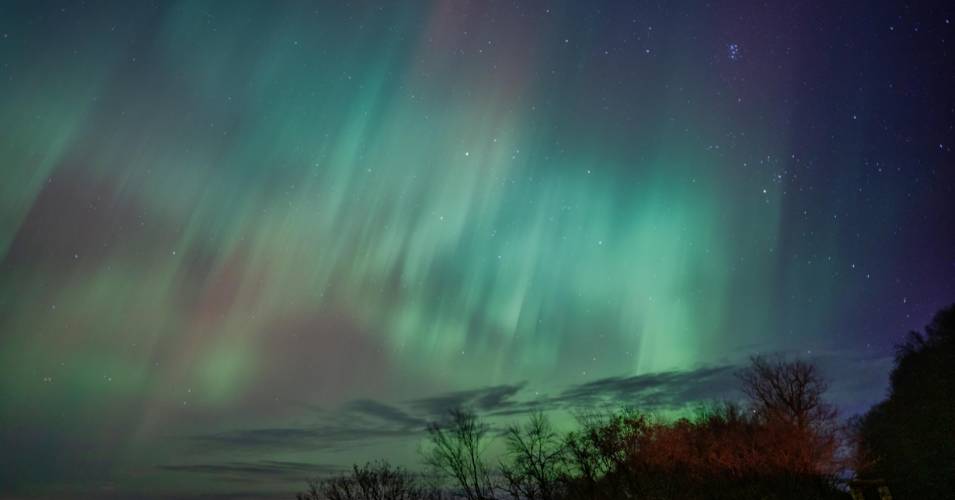
Australia is more spread out and more urbanised than New Zealand, which means light pollution is more of a challenge. But for those in the southern states, the aurora australis is increasingly accessible, especially during the current solar maximum. Whether you’re starting a road trip from Melbourne or exploring Victoria’s coastline, you’re well placed for a southern lights chase.
Tasmania : the clear number one
Tasmania is Australia’s aurora capital, and it’s not close. Its southerly latitude, clean southern ocean air, and relatively low light pollution make it the most reliable aurora destination in Australia. The good news: Tasmania is extraordinary campervan territory regardless of the aurora.
Prime aurora-viewing spots include:
- Cradle Mountain and Dove Lake: high altitude, remote, minimal light pollution
- Mount Wellington / kunanyi: elevated views over Hobart, faces south
- Bruny Island: dark, accessible, clear southern horizon
- Tinderbox Marine Reserve: popular with Hobart photographers
- South Arm Peninsula: one of the darkest accessible spots near the capital
- The Huon Valley and Highland Lakes: excellent for darker sky conditions
Hobart sits geomagnetically much closer to the south pole than its geographic latitude suggests, making even the city outskirts a viable viewing spot during strong displays. See our guide to 4 days in Tasmania by campervan for a ready-made itinerary you can adapt around aurora conditions.
Victoria
During moderate to strong geomagnetic activity (Kp 5+), Victoria is well-placed for aurora viewing. The Great Ocean Road route puts you within easy reach of several prime locations:
- Wilsons Promontory: the southernmost tip of mainland Australia, exceptional dark skies
- Cape Schanck and Cape Otway: coastal, south-facing, accessible from Melbourne
- Phillip Island: popular and dark, especially the south coast
- Queenscliff and Point Lonsdale: good southern horizon over the ocean
- Tidal River at Wilsons Promontory: one of the best mainland spots
🚐 Campervan tip: Wilsons Promontory has campground facilities and makes an excellent multi-night aurora base. Hire from Melbourne, around 2.5 hours away. Park up, set your alerts, and explore the national park by day.
South Australia
South Australia sees aurora activity during stronger storms. Head south of Adelaide to the Fleurieu Peninsula, Kangaroo Island, or Yorke Peninsula for the best chance. The Coorong is another worthwhile destination, wide open skies, minimal light pollution, and extraordinary landscapes whether the aurora shows or not.
Western Australia
Aurora sightings from WA are rare but not impossible during major geomagnetic events. Albany and Esperance, with their dark skies and south-facing ocean views, offer the best chance on the west coast. If you’re planning a trip through WA, hiring from Perth and heading south puts you in the right position if activity spikes.
Queensland and New South Wales
During extreme geomagnetic storms (Kp 8–9), the aurora has been spotted as far north as Brisbane and Byron Bay. If a major event is forecast while you’re on an east coast road trip, travelling Sydney to Byron Bay or Brisbane to Cairns, head to a dark beach and check the southern horizon. You might get lucky.
The apps and tools you actually need
We cover more must-have tools in our guide to essential camping apps for your Australian road trip, but for aurora specifically, these are the ones to focus on:
My Aurora Forecast & Alerts
The most popular aurora app for southern hemisphere chasers, available on iOS and Android. Set your location, configure a Kp threshold alert (Kp 4 or 5 for Tasmania and southern NZ; Kp 6+ for Victoria), and it will notify you when conditions look promising.
SpaceWeatherLive
The most comprehensive aurora tracking platform, with detailed Kp index graphs, solar wind data, the auroral oval map, and a 27-day forecast. The free version carries ads; the subscription ($9.99/year) removes them. Indispensable for serious chasers who want to understand what’s driving the activity.
Bureau of Meteorology Space Weather Services (Australia)
The Australian Bureau of Meteorology’s Space Weather Services division posts real-time aurora conditions and issues alerts for the Australian region. Subscribe to their email alerts at sws.bom.gov.au/Aurora — this is the official source that media and amateur chasers both rely on.
Understanding the Kp index
The Kp index measures geomagnetic disturbance on a scale of 0 to 9. Here’s what it means in practice for southern hemisphere viewing:
- Kp 3–4: Possible in southern Tasmania and southernmost NZ on a very clear night
- Kp 5–6: Visible from Tasmania, southern NZ, and coastal Victoria
- Kp 7+: Widespread viewing across southern Australia and most of NZ
- Kp 9: Extreme storm, visible as far north as Brisbane and Perth
📱 Pro tip: A negative Bz reading (the sun’s magnetic field orientation) is as important as a high Kp. When both Kp is elevated AND Bz is strongly negative, that’s when the best displays happen. SpaceWeatherLive shows this data in real time.
Why a campervan beats a hotel for aurora chasing
The fundamental problem with staying in a hotel or Airbnb while chasing the aurora is that it fixes you in one place.
A campervan changes the equation entirely:
- No check-in curfews: aurora activity peaks between 10pm and 2am. You’re not racing anyone’s clock.
- Mobility, clouds rolling in? Drive 40 minutes to find clear skies. Better forecast spot 80km away? Go there.
- Warmth and comfort during the wait, being able to brew a coffee, check the apps from inside, and step out when the lights appear is a significant quality-of-life upgrade.
- Dark sky access, campervans can legally freedom camp at some remote spots far from light pollution, right on the southern horizon.

Practical tips for your aurora campervan trip
Best time of year
Winter (May to August) is the classic aurora season, longer nights mean more dark hours for viewing. But the aurora australis can appear year-round, and during the current solar maximum, strong displays have occurred in summer months too. The equinox periods (March and September) see elevated geomagnetic activity and are worth targeting.
Best time of night
Aurora displays are typically brightest between 10pm and 2am local time. A display generally lasts between one and three hours, though particularly strong events can persist longer.
Moon phase matters
A bright full moon washes out faint aurora displays. Aim for nights when the moon is less than 25% illuminated, or time your viewing for before moonrise or after moonset. SpaceWeatherLive includes moon phase data alongside aurora forecasts.
Camera settings for aurora photography
Your eyes will often see the aurora as a faint grey-white glow. Your camera will reveal the full colour. A 10–15 second exposure at ISO 1600–3200 with a wide-angle lens (f/2.8 or faster) is a good starting point. Modern smartphones in night mode capture aurora well during moderate to strong displays.
Further reading and road trip inspiration
If you’re building a longer itinerary around aurora chasing, these routes pair well: the Tasmania loop is the obvious choice for Australian aurora hunters, while the Great Ocean Road puts you within striking distance of Wilsons Promontory and Cape Otway. For broader inspiration, our top road trips in Australia by RV covers the country’s best driving routes, most of which pass through areas with genuine aurora potential. And if you’re looking for somewhere specific to sleep, our favourite campsites for 2025 includes dark-sky-friendly overnight spots throughout the south.
The honest truth about aurora chasing
You might go out three nights in a row and see nothing. Cloud cover, weak activity, or just bad timing, aurora chasing requires patience. But when it happens, it’s one of those experiences that earns a permanent spot in your memory.
The travellers who see the aurora most often aren’t the ones who chose the best hotel. They’re the ones who stayed flexible, chased the clear skies, and had somewhere warm to wait.
🚐 Ready to plan your aurora trip? Our campervans are fully self-contained and available year-round. Hire from Queenstown or Christchurch for a New Zealand aurora loop, or from Melbourne or Hobart for the Tasmania and Great Ocean Road circuit. Check out our favourite campsites for 2025 for dark-sky-friendly overnight spots along the way.